Biography by Thom Jurek
Chico
Freeman is a composer, bandleader, educator, and multi-reedist from
Chicago. The scion of the late saxophonist Von Freeman, he has issued
dozens of recordings as a leader, and played on hundreds more. While a
member of Elvin Jones' group, he issued his debut album, Morning Prayer,
for Japan's WhyNot label, and then signed to India Navigation for
1977's Chico, the first of a handful of now-classic albums for the
label. Freeman's tenor tone is gritty and exuberant, yet intimate and
resonant, capable of anguished cries and tender affirmations inside a
moment. His music has been informed by the Chicago blues he played in
clubs as a teen, bop and hard bop played by his dad, and bandleaders he
served -- including Charles Mingus and Dizzy Gillespie -- John
Coltrane's modal inventions, and the AACM's free excursions. Further, he
learned about the interplay of Afro-Latin rhythms from Latin
bandleaders he worked for including Tito Puente, Eddie Palmieri, Ray
Barretto, Chucho Valdes, and Celia Cruz, to name scant few. Freeman's
seminal Tradition in Transition was issued in 1982, after he played a
major role in the famed Central Park Young Lions concert and film. He
later played R&B with Michael Jackson and Earth, Wind & Fire,
among others, and founded the Leaders, a jazz group of top-flight jazz
composers and soloists. In 1990, he co-founded Roots with Nathan Davis,
Sam Rivers, and Blythe, and played with smooth jazz, world fusion
collective Brainstorm. In 1996, he issued the influential The Emissary, a
post-bop world jazz outing. Freeman released a series of acclaimed
albums during the 21st century including 2002's Out of Many Comes the
One, 2012's Elvin, and 2015's Spoken Into Existence.
Freeman was
born Earl Lavon Freeman, Jr., and nicknamed "Chico" by his dad. He
started playing piano at age five, and began playing trumpet at ten,
inspired by seeing his father sit in with the Miles Davis Quintet in
Chicago. Though he was exposed to jazz early on, many of Freeman's early
professional gigs were in Chicago clubs as a teen with blues artists
including Memphis Slim and Lucky Carmichael. He switched to tenor sax
while at Northwestern University, where he studied math, advanced
composition, and theory. While studying for his master's in composition
and theory at Governor State University with Muhal Richard Abrams,
Freeman taught at the Association for the Advancement of Creative
Musicians' (AACM) music school. He also played and studied with Fred
Anderson, Adegoke Steve Colson, and his uncle, jazz-funk guitarist
George Freeman. As a graduate student, he was the principal soloist in
the university's big band and toured Brazil with them during the '70s.
He won awards at the Notre Dame Jazz Festival in 1973.
After
completing his master's, Freeman moved to New York, where he found work
with Elvin Jones, Sun Ra, Sam Rivers, Jack DeJohnette, and Don Pullen.
He began leading his own bands during the mid- to late '70s. Freeman
released his debut, Morning Prayer, for Japan's WhyNot in 1976, and a
year later signed a multi-album, non-exclusive deal with the independent
India Navigation. Chico appeared in 1977 with a band that included
pianist Abrams, drummer Steve McCall, and bassist Cecil McBee. Freeman
also recorded for Les Koenig's Contemporary label during the period,
issuing Beyond the Rain in 1978. This early period was prolific. Between
1977 and 1982, the two labels issued half a dozen albums of remarkable
and lasting consistency and innovation: India Navigation released Kings
of Mali, Spirit Sensitive, and The Outside Within, while Contemporary
put forth Peaceful Heart, Gentle Spirit, and Destiny's Dance. Freeman
also managed to issue his Black Saint leader debut, No Time Left, and
Freeman & Freeman with his dad.
The year 1982 proved seminal
in the saxophonist's career. He was part of the then-controversial
Columbia album Fathers & Sons; he and Von were showcased on one side
while Ellis and Wynton Marsalis led the other. Freeman played a major
role in the filming of the Young Lions event that year in Central Park,
showcasing the talents of rising jazz stars that included Bobby
McFerrin, Marsalis, Paquito D'Rivera, Kevin Eubanks, and Anthony Davis
at the dawn of the "new traditionalists" era. Freeman, always influenced
by jazz history, reflected it and his new discoveries on the acclaimed
Tradition in Transition for Elektra Musician and The Search, his final
outing for India Navigation.
Freeman's relationship with Elektra
continued on Tangents, featuring McFerrin, in 1984. When superstar bands
were being organized by promoters in Europe, Freeman founded the
Leaders, an all-star sextet of internationally recognized bandleaders.
The original lineup included Cecil McBee, Kirk Lightsey, Lester Bowie,
Arthur Blythe, and Famoudou Don Moye; they set the standard for eclectic
and innovative music from a band comprised entirely of composers. The
group issued Mudfoot for Blackhawk in 1986, the same year Freeman
released The Pied Piper for the label, a quartet outing with former boss
Jones, McBee, and pianist Kenny Kirkland. He followed a year later with
Tales of Ellington, cut in several sessions with a variety of top-shelf
musicians including Jones, McBee, Herbie Lewis, Larry Willis, Cables,
and John Purcell. In 1988, the Leaders issued Out Here Like This... on
Black Saint, and followed with Unforseen Blessings a year later, while
Freeman cut Lord Riff and Me for WhyNot; the latter remained unreleased
until 2010.
In 1989, Freeman entered a new phase in his career.
He released You'll Know When You Get There with Von on Black Saint, and
formed the electric band Brainstorm consisting of himself,
vocalist/keyboardist Delmar Brown, percussionist Norman Hedman, drummer
Archie Walker, and bassist Chris Walker. He produced their debut album,
The Mystical Dreamer, recorded in Paris for In+Out. It drew positive
reviews in Europe for its mix of Afro-Latin rhythms and harmonies, funk
and hip-hop energy, post-bop tradition, and technological polish.
American critics simply didn't get it. Undaunted, Brainstorm released
the live Sweet Explosion in 1990, with a new rhythm section including
drummer Tommy Campbell and bassist Alex Blake. That same year, Freeman
contributed to Kip Hanrahan's Tenderness as part of an astonishing
lineup. 1991 saw Freeman play sideman to British pop singer Mari Wilson
on The Rhythm Romance, and vibraphonist Jay Hoggard on Days Like These.
He also co-led and produced Luminous with Blythe.
In 1992,
Freeman formed another leader-based collective called Roots with Blythe,
Sam Rivers, Nathan Davis, Pullen, Santi Debriano, and Campbell. Their
debut album was entitled Roots Salutes the Saxophone in honor of the
100th anniversary of Adolphe Sax's reed instrument. He also released Up
and Down, for Black Saint, a trio offering with bassist Tiziana
Ghiglioni and pianist Mal Waldron. Brazilian jazz percussion hero and
former Weather Report drummer Dom Um Romão recruited Freeman for the
album Saudades on Water Lily Acoustics. Freeman led a pair of outings
the following year -- Groovin' Late with Kenny Barron, Freddie Waits,
and Debriano, and the third Brainstorm outing, Threshold -- followed by
Roots' second album, Stablemates, with drummer Idris Muhammad in the
lineup.
The Leaders resumed recording in 1994 with Slipping and
Sliding for Italy's Soundhill Records and continued to tour the globe.
The Chico Freeman Quintet with Arthur Blythe released a pair of
critically lauded albums over the next two years: The Unspoken Word for
Ronnie Scott's Jazz House label and Focus for Contemporary, while Roots
released Saying Something on In+Out. Freeman issued The Emissary in
1996, an electro-acoustic outing that crossed post-bop, African, and
Latin sounds. European critics flipped for its seamless meld of sounds
and rhythms. For the remainder of the decade, Freeman worked as a
sideman in the studio and on-stage. He played on dates by Carmen Lundy
and Blythe, in Sam Rivers' Rivbea All-Star Orchestra, with DeJohnette on
Festival, and released Von Freeman's 75th Birthday Celebration: Live at
The Blue Note, featuring his father as guest soloist.
From the
beginning of the new century, Freeman was a resident of the European
Union, though he visited the States often to tour. His first date as a
leader in the 21st was Oh, By the Way by Chico Freeman y Guataca, a
Latin jazz ensemble he assembled with old friend Hilton Ruiz on piano.
In 2003, Freeman returned the favor; he played on the pianist's
acclaimed Enchantment, while the other tenor player on the session was
Joe Henderson. A new incarnation of the Leaders released the widely
acclaimed Spirits Alike for Double Moon Records in 2006. It featured
trumpeter Eddie Henderson replacing the deceased Bowie, drummer Billy
Hart, alto saxophonist Bobby Watson, and pianist Fred Harris; only McBee
and Freeman remained from the original lineup. That year also saw the
release of Out of Many Comes the One, with the saxophonist leading a
post-bop-cum-world-jazz quintet that featured Russian pianist Misha
Tsiganov.
Freeman spent the next several years wandering Europe
and teaching. In 2010, Candid finally released Lord Riff and Me after 21
years in the vault. Originally recorded for WhyNot in 1989, it included
Von and Chico on the front line with Hart, McBee, and Cables. Its issue
was celebrated throughout the world's jazz community. That same year,
David Murray & Chico Freeman with Ozay appeared from ITM. The
Turkish vocalist was backed by the two saxophonists, drummer Pheeroan Ak
Laff, Lightsey and D.D. Jackson on piano, Calvin Jones on bass, and
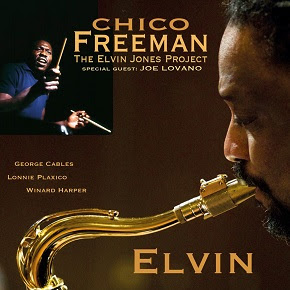
Billy Bang on violin. In 2012, Elvin: The Elvin Jones Project appeared,
upon which Freeman was joined by an A-list American rhythm section of
Cables on piano, bassist Lonnie Plaxico, and Winard Harper on drums,
with tenorist Joe Lovano guesting on two tracks.
In 2015, the
saxophonist worked with the Austrian Jive Music label to release the
widely acclaimed Spoken Into Existence, by the Chico Freeman 4-Tet.
Produced by the saxophonist, the lineup included bassist Heiri Känzig,
with whom Freeman formed a creative partnership; a few months later, the
pair issued The Arrival, a duo offering on Switzerland's Intakt
Records. Freeman and his uncle George Freeman collaborated on the
acclaimed All in the Family for the Chicago-based Southport Records
label with Hamid Drake, bassist Harrison Bankhead, and guitarist Mike
Allemana.
In early 2016, Chico Freeman guested on Greek fusion
guitarist Lefteris Christofis' ManTis as part of an international
quartet. That same year, Dawid Kostka Quartet & Chico Freeman, Live
at Aquanet Jazz Festival, Poznań was released on Poland's Era Jazzu
label. In 2018, Freeman played in the large studio band that Kip
Hanrahan assembled for the American Clave release Crescent Moon Waning.
In
March 2020, Freeman caught the last flight out of Moscow before the
borders closed due to COVID-19; however, he had no way of traveling to
the U.S. Locked down in Europe and self-quarantined, he watched the
pandemic's effects unfold across the globe. Desiring to contribute in
some way, he reached out to his online musical family to do something to
help heal and inspire. Freeman chose the Bill Withers' song "You Just
Can't Smile It Away." He enlisted Texas gospel singer Yatron in Texas,
keyboardist Jeremy Mage in Switzerland, and synthesist Jan Pulsford in
London. After cutting the track, Merlyn Bruce mixed it at London's
Mothership Studios for release by Efficacy Recordings. The label and
Freeman designated all proceeds from the track be donated to the charity
Chicago HOPES for Kids.
https://www.allmusic.com/artist/chico-freeman-mn0000110829#biography
///////
Biografía de Thom Jurek
Chico
Freeman es compositor, director de orquesta, educador y reedista
múltiple de Chicago. Descendiente del difunto saxofonista Von Freeman,
ha publicado docenas de grabaciones como líder y ha tocado en cientos
más. Mientras era miembro del grupo de Elvin Jones, lanzó su álbum
debut, Morning Prayer, para el sello WhyNot de Japón, y luego firmó con
India Navigation para Chico de 1977, el primero de un puñado de álbumes
ahora clásicos para el sello. El tono tenor de Freeman es arenoso y
exuberante, pero íntimo y resonante, capaz de gritos angustiados y
tiernas afirmaciones en un momento. Su música ha sido informada por el
blues de Chicago que tocó en clubes cuando era adolescente, el bop y el
hard bop tocados por su padre y los directores de orquesta a los que
sirvió, incluidos Charles Mingus y Dizzy Gillespie, los inventos modales
de John Coltrane y las excursiones gratuitas de la AACM. Además,
aprendió sobre la interacción de los ritmos afrolatinos de directores de
orquesta latinos para los que trabajó, incluidos Tito Puente, Eddie
Palmieri, Ray Barretto, Chucho Valdés y Celia Cruz, por nombrar algunos.
La tradición seminal de Freeman en Transición se publicó en 1982,
después de que desempeñara un papel importante en el famoso concierto y
película de Central Park Young Lions. Más tarde tocó R & B con
Michael Jackson y Earth, Wind & Fire, entre otros, y fundó the
Leaders, un grupo de jazz de compositores y solistas de jazz de primer
nivel. En 1990, cofundó Roots con Nathan Davis, Sam Rivers y Blythe, y
tocó con smooth jazz, el colectivo mundial de fusión Brainstorm. En
1996, publicó el influyente The Emissary, una salida de jazz mundial
posterior al bop. Freeman lanzó una serie de álbumes aclamados durante
el siglo XXI, incluidos Out of Many Comes the One de 2002, Elvin de 2012
y Spoken Into Existence de 2015.
Freeman nació Earl Lavon
Freeman, Jr., y su padre lo apodó "Chico". Comenzó a tocar el piano a
los cinco años y comenzó a tocar la trompeta a los diez, inspirado por
ver a su padre sentarse con el Quinteto Miles Davis en Chicago. Aunque
estuvo expuesto al jazz desde el principio, muchos de los primeros
conciertos profesionales de Freeman fueron en clubes de Chicago cuando
era adolescente con artistas de blues como Memphis Slim y Lucky
Carmichael. Cambió al saxo tenor mientras estaba en la Universidad
Northwestern, donde estudió matemáticas, composición avanzada y teoría.
Mientras estudiaba su maestría en composición y teoría en la Universidad
Governor State con Muhal Richard Abrams, Freeman enseñó en la escuela
de música de la Asociación para el Avance de los Músicos Creativos
(AACM). También tocó y estudió con Fred Anderson, Adegoke Steve Colson y
su tío, el guitarrista de jazz-funk George Freeman. Como estudiante de
posgrado, fue el solista principal de la big band de la universidad y
realizó una gira por Brasil con ellos durante los años 70. Ganó premios
en el Festival de Jazz de Notre Dame en 1973.
Después de
completar su maestría, Freeman se mudó a Nueva York, donde encontró
trabajo con Elvin Jones, Sun Ra, Sam Rivers, Jack DeJohnette y Don
Pullen. Comenzó a liderar sus propias bandas a mediados y finales de los
70. Freeman lanzó su debut, Morning Prayer, para Whynot de Japón en
1976, y un año después firmó un contrato de varios álbumes y no
exclusivo con la independiente India Navigation. Chico apareció en 1977
con una banda que incluía al pianista Abrams, el baterista Steve McCall y
el bajista Cecil McBee. Freeman también grabó para el sello
contemporáneo de Les Koenig durante ese período, publicando Beyond the
Rain en 1978. Este primer período fue prolífico. Entre 1977 y 1982, los
dos sellos publicaron media docena de álbumes de notable y duradera
consistencia e innovación: India Navigation lanzó Kings of Mali, Spirit
Sensitive y The Outside Within, mientras que Contemporary lanzó Peaceful
Heart, Gentle Spirit y Destiny's Dance. Freeman también logró emitir su
debut como líder de Black Saint, No Time Left, y Freeman & Freeman
con su papá.
El año 1982 resultó fundamental en la carrera del
saxofonista. Formó parte del entonces controvertido álbum de Columbia
Fathers & Sons; él y Von se exhibieron en un lado, mientras que
Ellis y Wynton Marsalis dirigieron el otro. Freeman jugó un papel
importante en la filmación del evento Young Lions ese año en Central
Park, mostrando el talento de estrellas emergentes del jazz que incluían
a Bobby McFerrin, Marsalis, Paquito D'Rivera, Kevin Eubanks y Anthony
Davis en los albores de la era de los "nuevos tradicionalistas".
Freeman, siempre influenciado por la historia del jazz, lo reflejó y sus
nuevos descubrimientos en la aclamada Tradición en Transición para
Elektra Musician y The Search, su última salida para Navegar por la
India.
La relación de Freeman con Elektra continuó en Tangents,
con McFerrin, en 1984. Cuando las bandas superestrellas estaban siendo
organizadas por promotores en Europa, Freeman fundó the Leaders, un
sexteto de estrellas de líderes de bandas reconocidos
internacionalmente. La formación original incluía a Cecil McBee, Kirk
Lightsey, Lester Bowie, Arthur Blythe y Famoudou Don Moye; establecieron
el estándar para la música ecléctica e innovadora de una banda
compuesta íntegramente por compositores. El grupo emitió Mudfoot para
Blackhawk en 1986, el mismo año en que Freeman lanzó The Pied Piper para
el sello, una salida de cuarteto con el exjefe Jones, McBee y el
pianista Kenny Kirkland. Siguió un año después con Tales of Ellington,
grabado en varias sesiones con una variedad de músicos de primer nivel,
incluidos Jones, McBee, Herbie Lewis, Larry Willis, Cables y John
Purcell. En 1988, los Líderes emitieron Aquí Así... en Black Saint, y
siguió con Unforseen Blessings un año después, mientras que Freeman
grabó Lord Riff and Me para WhyNot; este último permaneció inédito hasta
2010.
En 1989, Freeman entró en una nueva fase de su carrera.
Lanzó You'll Know When You Get There con Von en Black Saint, y formó la
banda eléctrica Brainstorm compuesta por él mismo, el
vocalista/tecladista Delmar Brown, el percusionista Norman Hedman, el
baterista Archie Walker y el bajista Chris Walker. Produjo su álbum
debut, The Mystical Dreamer, grabado en París para In + Out. Obtuvo
críticas positivas en Europa por su mezcla de ritmos y armonías
afrolatinas, energía funk y hip-hop, tradición post-bop y pulido
tecnológico. Los críticos estadounidenses simplemente no lo entendieron.
Sin desanimarse, Brainstorm lanzó el Sweet Explosion en vivo en 1990,
con una nueva sección rítmica que incluía al baterista Tommy Campbell y
al bajista Alex Blake. Ese mismo año, Freeman contribuyó a la ternura de
Kip Hanrahan como parte de una alineación asombrosa. En 1991, Freeman
interpretó al acompañante de la cantante pop británica Mari Wilson en
The Rhythm Romance, y al vibrafonista Jay Hoggard en Days Like These.
También codirigió y produjo Luminous con Blythe.
En 1992, Freeman
formó otro colectivo basado en líderes llamado Roots con Blythe, Sam
Rivers, Nathan Davis, Pullen, Santi Debriano y Campbell. Su álbum debut
se tituló Roots Salutes the Saxophone en honor al centenario del
instrumento de lengüeta de Adolphe Sax. También lanzó Up and Down, para
Black Saint, una oferta de trío con la bajista Tiziana Ghiglioni y el
pianista Mal Waldron. El héroe brasileño de percusión de jazz y ex
baterista de Weather Report, Dom Um Romão, reclutó a Freeman para el
álbum Saudades en Water Lily Acoustics. Freeman dirigió un par de
salidas al año siguiente: Groovin ' Late con Kenny Barron, Freddie Waits
y Debriano , y la tercera salida de Lluvia de ideas, Threshold, seguida
del segundo álbum de Roots, Stablemates, con el baterista Idris
Muhammad en la alineación.
The Leaders reanudaron la grabación en
1994 con Slipping and Sliding para Soundhill Records de Italia y
continuaron recorriendo el mundo. El Quinteto Chico Freeman con Arthur
Blythe lanzó un par de álbumes aclamados por la crítica durante los
siguientes dos años: The Unspoken Word para el sello Jazz House de
Ronnie Scott y Focus for Contemporary, mientras que Roots lanzó Saying
Something en In + Out. Freeman lanzó The Emissary en 1996, una salida
electroacústica que cruzó sonidos post-bop, africanos y latinos. Los
críticos europeos voltearon por su perfecta fusión de sonidos y ritmos.
Durante el resto de la década, Freeman trabajó como acompañante en el
estudio y en el escenario. Tocó en fechas de Carmen Lundy y Blythe, en
la Rivbea All-Star Orchestra de Sam Rivers, con DeJohnette en el
Festival, y lanzó Von Freeman's 75th Birthday Celebration: Live at The
Blue Note, con su padre como solista invitado.
Desde principios
del nuevo siglo, Freeman era residente de la Unión Europea, aunque
visitaba los Estados a menudo para hacer giras. Su primera cita como
líder en el 21 fue Oh, By the Way de Chico Freeman y Guataca, un
conjunto de jazz latino que armó con su viejo amigo Hilton Ruiz al
piano. En 2003, Freeman le devolvió el favor; tocó en el aclamado
Enchantment del pianista, mientras que el otro tenor en la sesión fue
Joe Henderson. Una nueva encarnación de The Leaders lanzó los aclamados
Spirits por igual para Double Moon Records en 2006. Contó con el
trompetista Eddie Henderson reemplazando al difunto Bowie, el baterista
Billy Hart, el saxofonista alto Bobby Watson y el pianista Fred Harris;
solo McBee y Freeman permanecieron de la formación original. Ese año
también vio el lanzamiento de Out of Many Comes the One, con el
saxofonista liderando un quinteto de jazz post-bop-cum-world que contó
con la pianista rusa Misha Tsiganov.
Freeman pasó los siguientes
años vagando por Europa y enseñando. En 2010, Candid finalmente lanzó
Lord Riff and Me después de 21 años en The vault. Grabado originalmente
para WhyNot en 1989, incluía a Von y Chico en primera línea con Hart,
McBee y Cables. Su edición fue celebrada en toda la comunidad jazzística
del mundo. Ese mismo año, David Murray y Chico Freeman con Ozay
aparecieron en ITM. El vocalista turco fue respaldado por los dos
saxofonistas, el baterista Pheeroan Ak Laff, Lightsey y D. D. Jackson al
piano, Calvin Jones al bajo y Billy Bang al violín. En 2012, apareció
Elvin: The Elvin Jones Project, al que se unió Freeman con una sección
rítmica estadounidense de primera categoría de Cables al piano, el
bajista Lonnie Plaxico y Winard Harper a la batería, con el tenor Joe
Lovano como invitado en dos pistas.
En 2015, el saxofonista
trabajó con el sello austriaco Jive Music para lanzar el aclamado Spoken
Into Existence, de Chico Freeman 4-Tet. Producida por el saxofonista,
la formación incluía al bajista Heiri Känzig, con quien Freeman formó
una asociación creativa; unos meses más tarde, la pareja lanzó The
Arrival, una oferta de dúo en Intakt Records de Suiza. Freeman y su tío
George Freeman colaboraron en el aclamado All in the Family para el
sello Southport Records, con sede en Chicago, con Hamid Drake, el
bajista Harrison Bankhead y el guitarrista Mike Allemana.
A
principios de 2016, Chico Freeman invitó al guitarrista de fusión griego
Lefteris Christofis a ManTis como parte de un cuarteto internacional.
Ese mismo año, Dawid Kostka Quartet & Chico Freeman, Live at Aquanet
Jazz Festival, Poznań fue lanzado en el sello polaco Era Jazzu. En
2018, Freeman tocó en la gran banda de estudio que Kip Hanrahan reunió
para el lanzamiento estadounidense de Clave Crescent Moon Waning.
En
marzo de 2020, Freeman tomó el último vuelo fuera de Moscú antes de que
se cerraran las fronteras debido al COVID-19; sin embargo, no tenía
forma de viajar a EE.UU. Encerrado en Europa y en cuarentena automática,
observó cómo se desarrollaban los efectos de la pandemia en todo el
mundo. Deseando contribuir de alguna manera, se acercó a su familia
musical en línea para hacer algo que lo ayudara a sanar e inspirar.
Freeman eligió la canción de Bill Withers " You Just Can't Smile It
Away."Reclutó al cantante de gospel de Texas Yatron en Texas, al
tecladista Jeremy Mage en Suiza y al sintetizador Jan Pulsford en
Londres. Después de cortar la pista, Merlyn Bruce la mezcló en los
estudios Mothership de Londres para su lanzamiento por Efficacy
Recordings. El sello y Freeman designaron que todas las ganancias de la
pista fueran donadas a la organización benéfica Chicago HOPES for Kids.
https://www.allmusic.com/artist/chico-freeman-mn0000110829#biography
chicofreeman.com ...