Showing posts with label Jimmy Jones. Show all posts

Tuesday, December 30, 2025

Cannonball Adderley • Pyramid


Review by Scott Yanow
Cannonball Adderley is in generally good form on this 1974 recording. His Quintet at the time featured cornetist Nat Adderley, keyboardist Hal Galper, bassist Walter Booker and drummer Roy McCurdy. Guests on some selections include guitarist Phil Upchurch, keyboardist George Duke and (on "Bess, Oh Where's My Bess") veteran pianist Jimmy Jones. The emphasis is on recent group originals including the three part "Suite Cannon," two Galper compositions and Cannonball's "Pyramid." Nothing too earthshattering occurs but this is an improvement over many of Adderley's Capitol recordings. 
https://www.allmusic.com/album/pyramid-mw0000031982

///////


Reseña de Scott Yanow
Cannonball Adderley se encuentra en buena forma en esta grabación de 1974. Su quinteto en ese momento estaba formado por el cornista Nat Adderley, el teclista Hal Galper, el bajista Walter Booker y el baterista Roy McCurdy. Entre los invitados que participan en algunas selecciones se encuentran el guitarrista Phil Upchurch, el teclista George Duke y (en «Bess, Oh Where's My Bess») el veterano pianista Jimmy Jones. Se hace hincapié en los temas originales recientes del grupo, entre los que se incluyen la «Suite Cannon» en tres partes, dos composiciones de Galper y «Pyramid» de Cannonball. No ocurre nada demasiado trascendental, pero supone una mejora con respecto a muchas de las grabaciones de Adderley para Capitol. 
https://www.allmusic.com/album/pyramid-mw0000031982


Tuesday, February 11, 2025

Cannonball Adderley • Pyramid


Review
by Scott Yanow
Cannonball Adderley is in generally good form on this 1974 recording. His Quintet at the time featured cornetist Nat Adderley, keyboardist Hal Galper, bassist Walter Booker and drummer Roy McCurdy. Guests on some selections include guitarist Phil Upchurch, keyboardist George Duke and (on "Bess, Oh Where's My Bess") veteran pianist Jimmy Jones. The emphasis is on recent group originals including the three part "Suite Cannon," two Galper compositions and Cannonball's "Pyramid." Nothing too earthshattering occurs but this is an improvement over many of Adderley's Capitol recordings.
https://www.allmusic.com/album/pyramid-mw0000031982

///////


Reseña
por Scott Yanow
Cannonball Adderley está en buena forma en esta grabación de 1974. Su quinteto de entonces estaba formado por el cornetista Nat Adderley, el teclista Hal Galper, el bajista Walter Booker y el batería Roy McCurdy. Entre los invitados en algunas selecciones se incluyen el guitarrista Phil Upchurch, el teclista George Duke y (en "Bess, Oh Where's My Bess") el veterano pianista Jimmy Jones. El énfasis está en los recientes originales del grupo, incluyendo la "Suite Cannon" en tres partes, dos composiciones de Galper y "Pyramid" de Cannonball. No hay nada demasiado sorprendente, pero es una mejora con respecto a muchas de las grabaciones de Adderley en Capitol.
https://www.allmusic.com/album/pyramid-mw0000031982


Saturday, February 8, 2025

Cat Anderson & His Orchestra • Cat's in the Alley


William Alonzo “Cat” Anderson (1916–1981) was a musician in the Ellington tradition - He was first trumpet man with Duke for more than twenty years, being best known for his amazingly consistent high-note work - On 'Cat on a Hot Tin Horn,' his first LP as a leader, Cat’s upper-register is handsomely displayed, along with some brash, bluesy trumpet work and a glimpse of his lyrical qualities - Also on display are his talents as a composer and arranger, along with the redoutable Ernie Wilkins, of a big band, which featured a dazzling all-star group of jazzmen - But as vigorous and technically dazzling as Anderson’s excursions into the upper register were, they too often overshadowed the fact that he was a trumpet player with a rich and varied palette of expression at his command -

For the second LP included in this CD set, entitled 'Ellingtonia,' Cat assembled some of the finest Ellington musicians - The tunes chosen were in the soft swing vein and done essentially as a tribute to Duke Ellington.

///////


William Alonzo "Cat" Anderson (1916-1981) fue un músico de la tradición de Ellington - Fue el primer trompetista de Duke durante más de veinte años, siendo más conocido por su increíblemente consistente trabajo en los agudos - En "Cat on a Hot Tin Horn", su primer LP como líder, el registro superior de Cat se muestra de forma magnífica, junto con un trabajo de trompeta descarado y bluesy y un atisbo de sus cualidades líricas - También se muestra su talento como compositor y arreglista, junto con el redoutable Ernie Wilkins, de una big band, que contaba con un deslumbrante grupo de jazzistas - Pero por muy vigorosas y técnicamente deslumbrantes que fueran las incursiones de Anderson en el registro superior, con demasiada frecuencia eclipsaban el hecho de que era un trompetista con una rica y variada paleta de expresión a sus órdenes -

Para el segundo LP incluido en este CD, titulado "Ellingtonia", Cat reunió a algunos de los mejores músicos de Ellington - Las melodías elegidas estaban en la onda del swing suave y se hicieron esencialmente como homenaje a Duke Ellington.


Thursday, February 6, 2025

Paul Gonsalves • Ellingtonia Moods And Blues


Review
by Cub Koda  
Paul Gonsalves was considered some kind of new genius of the tenor saxophone after he blew an astounding 27 choruses with Duke Ellington's Orchestra on the Duke's "Diminuendo and Crescendo in Blue" at the 1956 Newport Jazz Festival. As part of RCA's reissue series to celebrate Ellington's 100th birthday, Ellingtonia Moods & Blues brings back a 1960 date featuring Gonsalves and other Ellington soloists. Although nominally credited to Gonsalves, this, in fact, is a co-chaired date with Johnny Hodges. Hodges shares the composing, arranging and -- as always -- swinging soloing. Add the fine trumpet work of Ray Nance and the swinging trombone work of Booty Wood -- both contributing just the right blend to offset the two saxophonists -- and this makes for one potent date. The rhythm section is solid and supportive, with great playing from Jimmy Jones on piano, Al Hall on bass, and Oliver Jackson on drums. Gonsalves plays his usual breathy tenor, full of warmth and depth, caressing his notes in much the same time-honored manner as Hodges, making their solos on the Duke's "Daydream" a study in both similarities and contrasts. The set also features three seldom-heard Gonsalves tunes ("Chocataw" and "The Line-Up") and a Hodges tune ("D.A. Blues"), along with songs that Hodges co-wrote for the Ellington band, like "I'm Beginning to See the Light." This is jazz from the days when albums were recorded in one day, and that was a good thing.
https://www.allmusic.com/album/ellingtonia-moods-blues-mw0000248164

///////


Reseña
por Cub Koda  
Paul Gonsalves fue considerado una especie de nuevo genio del saxo tenor después de que soplara la asombrosa cifra de 27 coros con la Orquesta de Duke Ellington en el "Diminuendo and Crescendo in Blue" del Duque en el Festival de Jazz de Newport de 1956. Como parte de la serie de reediciones de RCA para celebrar el centenario de Ellington, Ellingtonia Moods & Blues recupera una cita de 1960 en la que aparecen Gonsalves y otros solistas de Ellington. Aunque nominalmente está acreditada a Gonsalves, se trata, de hecho, de una fecha coproducida con Johnny Hodges. Hodges comparte la composición, los arreglos y, como siempre, los solos. Añádase el buen trabajo de trompeta de Ray Nance y el swing del trombón de Booty Wood -ambos contribuyen con la mezcla justa para compensar a los dos saxofonistas- y esto hace que sea una fecha potente. La sección rítmica es sólida y de apoyo, con una gran interpretación de Jimmy Jones al piano, Al Hall al bajo y Oliver Jackson a la batería. Gonsalves toca su tenor habitual, lleno de calidez y profundidad, acariciando sus notas de la misma manera que Hodges, haciendo de sus solos en "Daydream" de Duke un estudio de similitudes y contrastes. El disco también incluye tres temas de Gonsalves poco escuchados ("Chocataw" y "The Line-Up") y un tema de Hodges ("D.A. Blues"), junto con canciones que Hodges co-escribió para la banda de Ellington, como "I'm Beginning to See the Light". Esto es jazz de los días en que los álbumes se grababan en un día, y eso era algo bueno.
https://www.allmusic.com/album/ellingtonia-moods-blues-mw0000248164


Tuesday, December 24, 2024

Johnny Hodges • The Smooth One


Review
by Scott Yanow
This attractive double LP from 1979 includes two complete sessions by altoist Johnny Hodges that were previously unissued at the time. Most unusual is that Hodges contributed 15 of the 19 compositions; the others are "My Melancholy Baby," "Lotus Blossom," and two by clarinetist Jimmy Hamilton. Despite the unfamiliar material, the music is very much in the Duke Ellington style, with an emphasis on blues, ballads, and riff tunes. In addition to Hodges, the other main soloists are trumpeter Harold "Shorty" Baker, tenor saxophonist Ben Webster (on the first date), and trumpeter/violinist Ray Nance (on the second).
https://www.allmusic.com/album/a-smooth-one-mw0000874567

///////


Reseña
por Scott Yanow
Este atractivo doble LP de 1979 incluye dos sesiones completas del contralto Johnny Hodges que no habían sido editadas en su momento. Lo más inusual es que Hodges contribuyó con 15 de las 19 composiciones; las otras son "My Melancholy Baby", "Lotus Blossom" y dos del clarinetista Jimmy Hamilton. A pesar del material poco familiar, la música está muy en el estilo de Duke Ellington, con énfasis en blues, baladas y melodías con riffs. Además de Hodges, los otros solistas principales son el trompetista Harold "Shorty" Baker, el saxofonista tenor Ben Webster (en la primera fecha) y el trompetista/violinista Ray Nance (en la segunda).
https://www.allmusic.com/album/a-smooth-one-mw0000874567


Thursday, August 8, 2024

Big Joe Turner • Big Joe Rides Again


Review by Scott Yanow
With the exception of one selection ("Pennies from Heaven") left over from his 1956 record The Boss of the Blue, the music on this album was all recorded in September 1959. Veteran blues singer Big Joe Turner returns to his roots, belting out blues and early standards while accompanied by an octet arranged by Ernie Wilkins. Among the key sidemen are the great tenor Coleman Hawkins, trombonist Vic Dickenson, trumpeter Paul Ricard and altoist Jerome Richardson; and the highlights include "Nobody in Mind," "Rebecca" and "Don't You Make Me High." An excellent outing for Turner, whose boisterous style would be largely unchanged over his half-century career.
https://www.allmusic.com/album/big-joe-rides-again-mw0000651666
 
 
Biography
by Matt Collar
A monumental figure in American music, Big Joe Turner was the premiere blues shouter of the post-war era with a roaring voice and hard-swinging style that prefigured rock & roll. Turner started performing in the late 1920s as a singer for Bennie Moten, Count Basie, and others. Over the next couple of decades, he helped define the boogie-woogie, R&B, and jump-blues styles, alongside the likes of Louis Jordan, Wynonie Harris, and Roy Brown. In the early '50s, he laid down the template for rock & roll with hits like "Chains of Love," "Honey Hush," and the landmark "Shake, Rattle & Roll." His style proved an enormous influence on the first generation of rock & roll artists (many of whom covered the songs Turner made famous). Turner continued to perform well into the '70s, having solidified his legendary status by the time of his passing in 1985.

Born Joseph Vernon Turner, Jr. in 1911 in Kansas City, Missouri, Turner was a product of his hometown's swinging, wide-open jazz and blues scene. Blessed with both a big voice and large stature (hence the nickname) Turner looked more than mature enough by his teens to gain entry to various K.C. night clubs. He ended up simultaneously tending bar and singing the blues before hooking up with boogie piano master Pete Johnson during the early '30s. Theirs was a partnership that would endure for 13 years.

The pair initially traveled to New York at John Hammond's behest in 1936. On December 23, 1938, they appeared in the fabled Spirituals to Swing concert at Carnegie Hall on a bill with Big Bill Broonzy, Sonny Terry, the Golden Gate Quartet, and Count Basie. Turner and Johnson performed "Low Down Dog" and "It's All Right, Baby" in that historic show, kicking off a boogie-woogie craze that landed them a long-running slot at the Cafe Society (along with piano giants Meade "Lux" Lewis and Albert Ammons).

As 1938 came to a close, Turner and Johnson waxed the thundering "Roll 'Em Pete" for Vocalion. It was a thrilling uptempo number anchored by Johnson's crashing 88s, and Turner would re-record it many times over the decades. Turner and Johnson waxed their seminal blues "Cherry Red" the next year for Vocalion with trumpeter Hot Lips Page and a full combo in support. In 1940, the massive shouter moved over to Decca and cut "Piney Brown Blues" with Johnson rippling the ivories. But not all of Turner's Decca sides teamed him with Johnson; Willie "The Lion" Smith accompanied him on the mournful "Careless Love," while Freddie Slack's Trio provided backing for "Rocks in My Bed" in 1941.

Turner ventured out to the West Coast during the war years, building quite a following while ensconced on the L.A. circuit. In 1945, he signed on with National Records and cut some fine small combo platters under Herb Abramson's supervision. Turner remained with National through 1947, belting an exuberant "My Gal's a Jockey" that became his first national R&B smash. Contracts didn't stop him from waxing an incredibly risqué two-part "Around the Clock" for the aptly named Stag imprint (as Big Vernon) in 1947. There were also solid sessions for Aladdin that year that included a wild vocal duel with one of Turner's principal rivals, Wynonie Harris, on the ribald two-part "Battle of the Blues."

Most West Coast indie labels in the late '40s boasted at least one or two Turner titles in their catalogs. The shouter bounced from RPM to Down Beat/Swing Time to MGM (all those dates were anchored by Johnson's piano) to the Texas-based Freedom (which moved some of their masters to Specialty) to Imperial in 1950 (his New Orleans backing crew there included a young Fats Domino on piano). But apart from the 1950 Freedom 78 "Still in the Dark," none of Turner's records were selling particularly well. When Atlantic Records bosses Abramson and Ahmet Ertegun fortuitously dropped by the Apollo Theater to check out Count Basie's band one day, they discovered that Turner had temporarily replaced Jimmy Rushing as the Basie band's frontman, and he was having a tough go of it. Atlantic picked up his spirits by picking up his recording contract, and Turner's heyday was about to begin.

At Turner's first Atlantic date in April of 1951, he imparted a gorgeously world-weary reading to the moving blues ballad "Chains of Love" (co-penned by Ertegun and pianist Harry Van Walls) that restored him to the uppermost reaches of the R&B charts. From there, the hits came in droves: "Chill Is On," "Sweet Sixteen" (yeah, the same downbeat blues B.B. King's usually associated with; Turner did it first), and "Don't You Cry" were all done in New York, and all hit big.

Turner had no problem whatsoever adapting his prodigious pipes to whatever regional setting he was in. In 1953, he cut his first R&B chart-topper, the storming rocker "Honey Hush" (later covered by Johnny Burnette and Jerry Lee Lewis), in New Orleans, with trombonist Pluma Davis and tenor saxman Lee Allen in rip-roaring support. Before the year was through, he stopped off in Chicago to record with slide guitarist Elmore James' considerably rougher-edged combo and hit again with the salacious "T.V. Mama."

Prolific Atlantic house writer Jesse Stone was the source of Turner's biggest smash of all, "Shake, Rattle and Roll," which proved his second chart-topper in 1954. With the Atlantic brain trust reportedly chiming in on the chorus behind Turner's rumbling lead, the song sported enough pop possibilities to merit a considerably cleaned-up cover by Bill Haley & the Comets (and a subsequent version by Elvis Presley that came a lot closer to the original's leering intent).

Suddenly, at the age of 43, Turner was a rock star. His jumping follow-ups -- "Well All Right," "Flip Flop and Fly," "Hide and Seek," "Morning, Noon and Night," "The Chicken and the Hawk" -- all mined the same good-time groove as "Shake, Rattle and Roll," with crisp backing from New York's top session aces and typically superb production by Ertegun and Jerry Wexler.

Turner turned up on a couple episodes of the groundbreaking TV program Showtime at the Apollo during the mid-'50s, commanding center stage with a joyous rendition of "Shake, Rattle and Roll" in front of saxman Paul "Hucklebuck" Williams' band. Nor was the silver screen immune to his considerable charms: Turner mimed a couple of numbers in the 1957 film Shake Rattle & Rock (Fats Domino and Mike "Mannix" Connors also starred in the flick).

Updating the pre-war number "Corrine Corrina" was an inspired notion that provided Turner with another massive seller in 1956. But after the two-sided hit "Rock a While"/"Lipstick Powder and Paint" later that year, his Atlantic output swiftly faded from commercial acceptance. Atlantic's recording strategy wisely involved recording Turner in a jazzier setting for the adult-oriented album market; to that end, a Kansas City-styled set (with his former partner Johnson at the piano stool) was laid down in 1956 and remains a linchpin of his legacy.

Turner stayed on at Atlantic into 1959, but nobody bought his violin-enriched remake of "Chains of Love" (on the other hand, a revival of "Honey Hush" with King Curtis blowing a scorching sax break from the same session was a gem in its own right). The '60s didn't produce too much of lasting substance for the shouter -- he actually cut an album with longtime admirer Haley and his latest batch of Comets in Mexico City in 1966.

By the tail-end of the decade, Turner's essential contributions to blues history were beginning to receive proper recognition; he cut LPs for BluesWay and BluesTime. During the '70s and '80s, Turner recorded prolifically for Norman Granz's jazz-oriented Pablo label. These were super-relaxed impromptu sessions that often paired the allegedly illiterate shouter with various jazz luminaries in what amounted to loosely run jam sessions. Turner contentedly roared the familiar lyrics of one or another of his hits, then sat back while somebody took a lengthy solo. Other notable album projects included a 1983 collaboration with Roomful of Blues, Blues Train, for Muse. Although health problems and the size of his humongous frame forced him to sit down during his latter-day performances, Turner continued to tour until shortly before his death in 1985. They called him the Boss of the Blues, and the appellation was truly a fitting one: when Turner shouted a lyric, you were definitely at his beck and call.
https://www.allmusic.com/artist/big-joe-turner-mn0000060726/biography

///////

Reseña de Scott Yanow
Con la excepción de una selección ("Pennies from Heaven") que quedó de su disco de 1956 The Boss of the Blue, la música de este álbum fue grabada en septiembre de 1959. El veterano cantante de blues Big Joe Turner regresa a sus raíces, cantando blues y estándares tempranos acompañado por un octeto arreglado por Ernie Wilkins. Entre los sidemen dominantes están el gran tenor Coleman Hawkins, el trombonista Vic Dickenson, el trompetista Paul Ricard y el trompetista Jerome Richardson; y los puntos culminantes incluyen "Nobody in Mind", "Rebecca" y "Don't You Make Me High". Una excelente salida para Turner, cuyo estilo bullicioso no se modificaría en gran medida a lo largo de su carrera de medio siglo.
https://www.allmusic.com/album/big-joe-rides-again-mw0000651666 


Biografía
por Matt Collar
Big Joe Turner, una figura monumental de la música estadounidense, fue el principal cantante de blues de la época de posguerra, con una voz rugiente y un estilo duro que prefiguró el rock & roll. Turner empezó a actuar a finales de los años 20 como cantante de Bennie Moten, Count Basie y otros. Durante las dos décadas siguientes, ayudó a definir los estilos boogie-woogie, R&B y jump-blues, junto a músicos como Louis Jordan, Wynonie Harris y Roy Brown. A principios de los años 50, estableció la plantilla del rock & roll con éxitos como "Chains of Love", "Honey Hush" y el emblemático "Shake, Rattle & Roll". Su estilo ejerció una enorme influencia en la primera generación de artistas de rock & roll (muchos de los cuales versionaron las canciones que Turner hizo famosas). Turner continuó actuando hasta bien entrada la década de los 70, habiendo consolidado su estatus de leyenda en el momento de su fallecimiento en 1985.

Nacido como Joseph Vernon Turner, Jr. en 1911 en Kansas City, Missouri, Turner era un producto de la escena de jazz y blues de su ciudad natal. Dotado de una gran voz y una gran estatura (de ahí su apodo), Turner parecía lo suficientemente maduro en su adolescencia como para entrar en varios clubes nocturnos de Kansas City. Acabó atendiendo el bar y cantando blues al mismo tiempo, antes de unirse al maestro del piano boogie Pete Johnson a principios de los años 30. La suya fue una asociación que perduró durante 13 años.

La pareja viajó inicialmente a Nueva York a instancias de John Hammond en 1936. El 23 de diciembre de 1938, aparecieron en el legendario concierto Spirituals to Swing en el Carnegie Hall, junto a Big Bill Broonzy, Sonny Terry, el Golden Gate Quartet y Count Basie. Turner y Johnson interpretaron "Low Down Dog" y "It's All Right, Baby" en ese histórico espectáculo, iniciando una locura por el boogie-woogie que les valió un espacio de larga duración en el Cafe Society (junto con los gigantes del piano Meade "Lux" Lewis y Albert Ammons).

A finales de 1938, Turner y Johnson grabaron para Vocalion la estruendosa "Roll 'Em Pete". Se trata de un emocionante número uptempo anclado por los estruendosos 88s de Johnson, y Turner lo volvería a grabar muchas veces a lo largo de las décadas. Turner y Johnson grabaron su blues seminal "Cherry Red" al año siguiente para Vocalion con el trompetista Hot Lips Page y un combo completo de apoyo. En 1940, el enorme gritón se pasó a Decca y grabó "Piney Brown Blues" con Johnson tocando los marfiles. Pero no todos los temas de Turner en Decca se hicieron con Johnson; Willie "The Lion" Smith le acompañó en el lúgubre "Careless Love", mientras que el Freddie Slack's Trio le acompañó en "Rocks in My Bed" en 1941.

Turner se aventuró en la Costa Oeste durante los años de la guerra, y consiguió un buen número de seguidores mientras estaba instalado en el circuito de Los Ángeles. En 1945, firmó con National Records y grabó algunas pequeñas placas de combo bajo la supervisión de Herb Abramson. Turner permaneció con National hasta 1947, cantando un exuberante "My Gal's a Jockey" que se convirtió en su primer éxito nacional de R&B. Los contratos no le impidieron grabar un tema increíblemente atrevido en dos partes, "Around the Clock", para el sello Stag (como Big Vernon) en 1947. También hubo sólidas sesiones para Aladdin ese año, que incluyeron un salvaje duelo vocal con uno de los principales rivales de Turner, Wynonie Harris, en el desgarrador bipartito "Battle of the Blues".

La mayoría de los sellos discográficos independientes de la Costa Oeste a finales de los años 40 contaban con al menos uno o dos títulos de Turner en sus catálogos. El cantante pasó de RPM a Down Beat/Swing Time, a MGM (todas esas fechas estaban ancladas por el piano de Johnson), a Freedom, con sede en Texas (que trasladó algunos de sus discos a Specialty), a Imperial en 1950 (su equipo de apoyo de Nueva Orleans incluía a un joven Fats Domino al piano). Pero aparte del Freedom 78 de 1950 "Still in the Dark", ninguno de los discos de Turner se vendía especialmente bien. Cuando los jefes de Atlantic Records, Abramson y Ahmet Ertegun, se pasaron un día por el Apollo Theater para ver a la banda de Count Basie, descubrieron que Turner había sustituido temporalmente a Jimmy Rushing como líder de la banda de Basie, y que lo estaba pasando mal. Atlantic le levantó el ánimo al firmar su contrato de grabación, y el apogeo de Turner estaba a punto de comenzar.

En la primera cita de Turner con Atlantic, en abril de 1951, ofreció una magnífica lectura de la conmovedora balada de blues "Chains of Love" (coescrita por Ertegun y el pianista Harry Van Walls) que le devolvió a los primeros puestos de las listas de R&B. A partir de ahí, los éxitos se sucedieron: "Chill Is On", "Sweet Sixteen" (sí, el mismo blues deprimente con el que se suele asociar a B.B. King; Turner lo hizo primero), y "Don't You Cry" se hicieron en Nueva York, y todos triunfaron.

Turner no tuvo ningún problema en adaptar sus prodigiosas gaitas a cualquier entorno regional en el que se encontrara. En 1953, grabó en Nueva Orleans su primer éxito en las listas de R&B, el asombroso tema rockero "Honey Hush" (que más tarde fue versionado por Johnny Burnette y Jerry Lee Lewis), con el trombonista Pluma Davis y el saxo tenor Lee Allen como apoyo. Antes de que terminara el año, se detuvo en Chicago para grabar con el combo del guitarrista de slide Elmore James, considerablemente más duro, y golpeó de nuevo con la salaz "T.V. Mama".

El prolífico guionista de Atlantic Jesse Stone fue la fuente del mayor éxito de Turner, "Shake, Rattle and Roll", que fue su segundo éxito en las listas de éxitos de 1954. Con la colaboración de los cerebros de Atlantic en el estribillo tras la estruendosa voz principal de Turner, la canción tenía suficientes posibilidades pop como para merecer una versión considerablemente mejorada de Bill Haley & the Comets (y una versión posterior de Elvis Presley que se acercaba mucho más a la intención lasciva del original).

De repente, a los 43 años, Turner era una estrella del rock. Sus siguientes canciones - "Well All Right", "Flip Flop and Fly", "Hide and Seek", "Morning, Noon and Night", "The Chicken and the Hawk"- explotaron el mismo ritmo de buen tiempo que "Shake, Rattle and Roll", con el apoyo de los mejores ases de la sesión de Nueva York y una producción magnífica de Ertegun y Jerry Wexler.

Turner apareció en un par de episodios del innovador programa de televisión Showtime at the Apollo a mediados de los 50, dominando el escenario con una alegre interpretación de "Shake, Rattle and Roll" al frente de la banda del saxofonista Paul "Hucklebuck" Williams. Tampoco la pantalla de cine fue inmune a sus considerables encantos: Turner hizo la mímica de un par de números en la película de 1957 Shake Rattle & Rock (Fats Domino y Mike "Mannix" Connors también protagonizaron la película).

La actualización del número de preguerra "Corrine Corrina" fue una idea inspirada que proporcionó a Turner otro éxito de ventas en 1956. Pero después del éxito de dos caras "Rock a While"/"Lipstick Powder and Paint" de ese mismo año, su producción en Atlantic perdió rápidamente la aceptación comercial. La estrategia de grabación de Atlantic consistió en grabar a Turner en un entorno más jazzístico para el mercado de los álbumes orientados a los adultos; para ello, en 1956 se grabó un conjunto al estilo de Kansas City (con su antiguo compañero Johnson al piano) que sigue siendo uno de los pilares de su legado.

Turner permaneció en Atlantic hasta 1959, pero nadie compró su remake de "Chains of Love", enriquecido con violín (por otro lado, un revival de "Honey Hush" con King Curtis soplando un abrasador corte de saxo de la misma sesión fue una joya por derecho propio). Los años 60 no produjeron demasiada sustancia duradera para el gritón; de hecho, grabó un álbum con su admirador de siempre, Haley, y su última hornada de Comets en Ciudad de México en 1966.

A finales de la década, las contribuciones esenciales de Turner a la historia del blues empezaron a recibir el reconocimiento adecuado; grabó LPs para BluesWay y BluesTime. Durante los años 70 y 80, Turner grabó prolíficamente para el sello Pablo, orientado al jazz, de Norman Granz. Se trataba de sesiones improvisadas muy relajadas que a menudo emparejaban al supuestamente analfabeto gritón con varias luminarias del jazz en lo que equivalía a sesiones de improvisación sin rumbo fijo. Turner rugía alegremente las conocidas letras de uno u otro de sus éxitos y luego se sentaba mientras alguien hacía un largo solo. Otros proyectos discográficos notables fueron una colaboración en 1983 con Roomful of Blues, Blues Train, para Muse. Aunque los problemas de salud y el tamaño de su enorme cuerpo le obligaron a sentarse durante sus últimas actuaciones, Turner siguió de gira hasta poco antes de su muerte en 1985. Le llamaban el Jefe del Blues, y el apelativo era realmente acertado: cuando Turner gritaba una letra, estabas definitivamente a su disposición.
https://www.allmusic.com/artist/big-joe-turner-mn0000060726/biography


Friday, June 28, 2024

Ruby Braff • Linger Awhile


Review by Ken Dryden
This compilation combines tracks from three separate early-'50s recording sessions. Braff, heard on trumpet rather than cornet, is in great form, and is joined by Vic Dickenson, Nat Pierce, and now-obscure tenor saxophonist Samuel Margolis on a swinging "Sweet Sue." Two tracks come from a Dickenson-led date; the best is a very relaxed take on "I Cover the Waterfront." Only one selection comes from a meeting of Braff and fellow trumpeter Buck Clayton, but it's a gem -- an extended look at "I Can't Get Started." As with many Vanguard reissues of recent vintage, the only complaint is that each of the record dates merited a separate re-release instead of this enjoyable but piecemeal anthology CD.
https://www.allmusic.com/album/linger-awhile-mw0000258734

///////

Reseña de Ken Dryden
Esta recopilación combina temas de tres sesiones de grabación independientes de principios de los 50. Braff, a la trompeta en lugar de a la corneta, está en plena forma, y se le unen Vic Dickenson, Nat Pierce y el saxofonista tenor Samuel Margolis, ahora en paradero desconocido, en un swing "Sweet Sue". Dos temas proceden de una cita liderada por Dickenson; el mejor es una versión muy relajada de "I Cover the Waterfront". Sólo una selección proviene de una reunión de Braff y su compañero trompetista Buck Clayton, pero es una joya: una extensa mirada a "I Can't Get Started". Como con muchas reediciones de Vanguard de época reciente, la única queja es que cada una de las fechas de grabación merecía una reedición separada en lugar de este CD antológico agradable pero fragmentario.
https://www.allmusic.com/album/linger-awhile-mw0000258734


Thursday, June 20, 2024

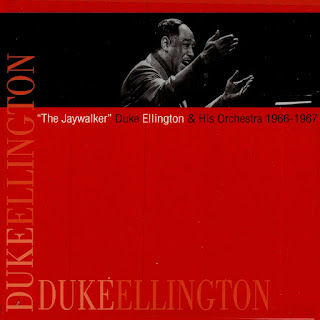
Duke Ellington • The Jaywalker


Biography by William Ruhlmann
Duke Ellington was the most important composer in the history of jazz as well as being a bandleader who held his large group together continuously for almost 50 years. The two aspects of his career were related; Ellington used his band as a musical laboratory for his new compositions and shaped his writing specifically to showcase the talents of his bandmembers, many of whom remained with him for long periods. Ellington also wrote film scores and stage musicals, and several of his instrumental works were adapted into songs that became standards. In addition to touring year in and year out, he recorded extensively, resulting in a gigantic body of work that was still being assessed a quarter century after his death.

Ellington was the son of a White House butler, James Edward Ellington, and thus grew up in comfortable surroundings. He began piano lessons at age seven and was writing music by his teens. He dropped out of high school in his junior year in 1917 to pursue a career in music. At first, he booked and performed in bands in the Washington, D.C., area, but in September 1923 the Washingtonians, a five-piece group of which he was a member, moved permanently to New York, where they gained a residency in the Times Square venue The Hollywood Club (later The Kentucky Club). They made their first recordings in November 1924, and cut tunes for different record companies under a variety of pseudonyms, so that several current major labels, notably Sony, Universal, and BMG, now have extensive holdings of their work from the period in their archives, which are reissued periodically.

The group gradually increased in size and came under Ellington's leadership. They played in what was called "jungle" style, their sly arrangements often highlighted by the muted growling sound of trumpeter James "Bubber" Miley. A good example of this is Ellington's first signature song, "East St. Louis Toodle-oo," which the band first recorded for Vocalion Records in November 1926, and which became their first chart single in a re-recorded version for Columbia in July 1927.

The Ellington band moved uptown to The Cotton Club in Harlem on December 4, 1927. Their residency at the famed club, which lasted more than three years, made Ellington a nationally known musician due to radio broadcasts that emanated from the bandstand. In 1928, he had two two-sided hits: "Black and Tan Fantasy"/"Creole Love Call" on Victor (now BMG) and "Doin' the New Low Down"/"Diga Diga Doo" on OKeh (now Sony), released as by the Harlem Footwarmers. "The Mooche" on OKeh peaked in the charts at the start of 1929.

While maintaining his job at The Cotton Club, Ellington took his band downtown to play in the Broadway musical Show Girl, featuring the music of George Gershwin, in the summer of 1929. The following summer, the band took a leave of absence to head out to California and appear in the film Check and Double Check. From the score, "Three Little Words," with vocals by the Rhythm Boys featuring Bing Crosby, became a number one hit on Victor in November 1930; its flip side, "Ring Dem Bells," also reached the charts.

The Ellington band left The Cotton Club in February 1931 to begin a tour that, in a sense, would not end until the leader's death 43 years later. At the same time, Ellington scored a Top Five hit with an instrumental version of one of his standards, "Mood Indigo" released on Victor. The recording was later inducted into the Grammy Hall of Fame. As "the Jungle Band," the Ellington Orchestra charted on Brunswick later in 1931 with "Rockin' in Rhythm" and with the lengthy composition "Creole Rhapsody," pressed on both sides of a 78 single, an indication that Ellington's goals as a writer were beginning to extend beyond brief works. (A second version of the piece was a chart entry on Victor in March 1932.) "Limehouse Blues" was a chart entry on Victor in August 1931, then in the winter of 1932, Ellington scored a Top Ten hit on Brunswick with one of his best-remembered songs, "It Don't Mean a Thing (If It Ain't Got That Swing)," featuring the vocals of Ivie Anderson. This was still more than three years before the official birth of the swing era, and Ellington helped give the period its name. Ellington's next major hit was another signature song for him, "Sophisticated Lady." His instrumental version became a Top Five hit in the spring of 1933, with its flip side, a treatment of "Stormy Weather," also making the Top Five.

The Ellington Orchestra made another feature film, Murder at the Vanities, in the spring of 1934. Their instrumental rendition of "Cocktails for Two" from the score hit number one on Victor in May, and they hit the Top Five with both sides of the Brunswick release "Moon Glow"/"Solitude" that fall. The band also appeared in the Mae West film Belle of the Nineties and played on the soundtrack of Many Happy Returns. Later in the fall, the band was back in the Top Ten with "Saddest Tale," and they had two Top Ten hits in 1935, "Merry-Go-Round" and "Accent on Youth." While the latter was scoring in the hit parade in September, Ellington recorded another of his extended compositions, "Reminiscing in Tempo," which took up both sides of two 78s. Even as he became more ambitious, however, he was rarely out of the hit parade, scoring another Top Ten hit, "Cotton," in the fall of 1935, and two more, "Love Is Like a Cigarette" and "Oh Babe! Maybe Someday," in 1936. The band returned to Hollywood in 1936 and recorded music for the Marx Brothers' film A Day at the Races and for Hit Parade of 1937. Meanwhile, they were scoring Top Ten hits with "Scattin' at the Kit-Kat" and the swing standard "Caravan," co-written by valve trombonist Juan Tizol, and Ellington was continuing to pen extended instrumental works such as "Diminuendo in Blue" and "Crescendo in Blue." "If You Were in My Place (What Would You Do?)," a vocal number featuring Ivie Anderson, was a Top Ten hit in the spring of 1938, and Ellington scored his third number one hit in April with an instrumental version of another standard, "I Let a Song Go out of My Heart." In the fall, he was back in the Top Ten with a version of the British show tune "Lambeth Walk."

The Ellington band underwent several notable changes at the end of the 1930s. After several years recording more or less regularly for Brunswick, Ellington moved to Victor. In early 1939 Billy Strayhorn, a young composer, arranger, and pianist, joined the organization. He did not usually perform with the orchestra, but he became Ellington's composition partner to the extent that soon it was impossible to tell where Ellington's writing left off and Strayhorn's began. Two key personnel changes strengthened the outfit with the acquisition of bassist Jimmy Blanton in September and tenor saxophonist Ben Webster in December. Their impact on Ellington's sound was so profound that their relatively brief tenure has been dubbed "the Blanton-Webster Band" by jazz fans. These various changes were encapsulated by the Victor release of Strayhorn's "Take the 'A' Train," a swing era standard, in the summer of 1941. The recording was later inducted into the Grammy Hall of Fame.

That same summer, Ellington was in Los Angeles, where his stage musical, Jump for Joy, opened on July 10 and ran for 101 performances. Unfortunately, the show never went to Broadway, but among its songs was "I Got It Bad (And That Ain't Good)," another standard. The U.S. entry into World War II in December 1941 and the onset of the recording ban called by the American Federation of Musicians in August 1942 slowed the Ellington band's momentum. Unable to record and with touring curtailed, Ellington found an opportunity to return to extended composition with the first of a series of annual recitals at Carnegie Hall on January 23, 1943, at which he premiered "Black, Brown and Beige." And he returned to the movies, appearing in Cabin in the Sky and Reveille with Beverly. Meanwhile, the record labels, stymied for hits, began looking into their artists' back catalogs. Lyricist Bob Russell took Ellington's 1940 composition "Never No Lament" and set a lyric to it, creating "Don't Get Around Much Anymore." The Ink Spots scored with a vocal version (recorded a cappella), and Ellington's three-year-old instrumental recording was also a hit, reaching the pop Top Ten and number one on the recently instituted R&B charts. Russell repeated his magic with another 1940 Ellington instrumental, "Concerto for Cootie" (a showcase for trumpeter Cootie Williams), creating "Do Nothin' Till You Hear from Me." Nearly four years after it was recorded, the retitled recording hit the pop Top Ten and number one on the R&B charts for Ellington in early 1944, while newly recorded vocal cover versions also scored. Ellington's vintage recordings became ubiquitous on the top of the R&B charts during 1943-1944; he also hit number one with "A Slip of the Lip (Can Sink a Ship)," "Sentimental Lady," and "Main Stem." With the end of the recording ban in November 1944, Ellington was able to record a song he had composed with his saxophonist, Johnny Hodges, set to a lyric by Don George and Harry James, "I'm Beginning to See the Light." The James recording went to number one in April 1945, but Ellington's recording was also a Top Ten hit.

With the end of the war, Ellington's period as a major commercial force on records largely came to an end, but unlike other big bandleaders, who disbanded as the swing era passed, Ellington, who predated the era, simply went on touring, augmenting his diminished road revenues with his songwriting royalties to keep his band afloat. In a musical climate in which jazz was veering away from popular music and toward bebop, and popular music was being dominated by singers, the Ellington band no longer had a place at the top of the business; but it kept working. And Ellington kept trying more extended pieces. In 1946, he teamed with lyricist John Latouche to write the music for the Broadway musical Beggar's Holiday, which opened on December 26 and ran 108 performances. And he wrote his first full-length background score for a feature film with 1950's The Asphalt Jungle.

The first half of the 1950s was a difficult period for Ellington, who suffered many personnel defections. (Some of those musicians returned later.) But the band made a major comeback at the Newport Jazz Festival on July 7, 1956, when they kicked into a version of "Dimuendo and Crescendo in Blue" that found saxophonist Paul Gonsalves taking a long, memorable solo. Ellington appeared on the cover of Time magazine, and he signed a new contract with Columbia Records, which released Ellington at Newport, the best-selling album of his career. Freed of the necessity of writing hits and spurred by the increased time available on the LP record, Ellington concentrated more on extended compositions for the rest of his career. His comeback as a live performer led to increased opportunities to tour, and in the fall of 1958 he undertook his first full-scale tour of Europe. For the rest of his life, he would be a busy world traveler.

Ellington appeared in and scored the 1959 film Anatomy of a Murder, and its soundtrack won him three of the newly instituted Grammy Awards, for best performance by a dance band, best musical composition of the year, and best soundtrack. He was nominated for an Academy Award for his next score, Paris Blues (1961). In August 1963, his stage work My People, a cavalcade of African-American history, was mounted in Chicago as part of the Century of Negro Progress Exposition.

Meanwhile, of course, he continued to lead his band in recordings and live performances. He switched from Columbia to Frank Sinatra's Reprise label (purchased by Warner Bros. Records) and made some pop-oriented records that dismayed his fans but indicated he had not given up on broad commercial aspirations. Nor had he abandoned his artistic aspirations, as the first of his series of sacred concerts, performed at Grace Cathedral in San Francisco on September 16, 1965, indicated. And he still longed for a stage success, turning once again to Broadway with the musical Pousse-Café, which opened on March 18, 1966, but closed within days. Three months later, the Sinatra film Assault on a Queen, with an Ellington score, opened in movie houses around the country. (His final film score, for Change of Mind, appeared in 1969.)

Ellington became a Grammy favorite in his later years. He won a 1966 Grammy for best original jazz composition for "In the Beginning, God," part of his sacred concerts. His 1967 album Far East Suite, inspired by a tour of the Middle and Far East, won the best instrumental jazz performance Grammy that year, and he took home his sixth Grammy in the same category in 1969 for And His Mother Called Him Bill, a tribute to Strayhorn, who had died in 1967. "New Orleans Suite" earned another Grammy in the category in 1971, as did "Togo Brava Suite" in 1972, and the posthumous The Ellington Suites in 1976.

Ellington continued to perform regularly until he was overcome by illness in the spring of 1974, succumbing to lung cancer and pneumonia. His death did not end the band, which was taken over by his son Mercer, who led it until his own death in 1996, and then by a grandson. Meanwhile, Ellington finally enjoyed the stage hit he had always wanted when the revue Sophisticated Ladies, featuring his music, opened on Broadway on March 1, 1981, and ran 767 performances.

The many celebrations of the Ellington centenary in 1999 demonstrated that he continued to be regarded as the major composer of jazz. If that seemed something of an anomaly in a musical style that emphasizes spontaneous improvisation over written composition, Ellington was talented enough to overcome the oddity. He wrote primarily for his band, allowing his veteran players room to solo within his compositions, and as a result created a body of work that seemed likely to help jazz enter the academic and institutional realms, which was very much its direction at the end of the 20th century. In that sense, he foreshadowed the future of jazz and could lay claim to being one of its most influential practitioners.
https://www.allmusic.com/artist/duke-ellington-mn0000120323#biography

///////

Biografía de William Ruhlmann
Duke Ellington fue el compositor más importante de la historia del jazz, además de ser un director de orquesta que mantuvo unido a su gran grupo de forma continua durante casi 50 años. Los dos aspectos de su carrera estaban relacionados; Ellington usó su banda como laboratorio musical para sus nuevas composiciones y moldeó su escritura específicamente para mostrar el talento de los miembros de su banda, muchos de los cuales permanecieron con él durante largos períodos. Ellington también escribió bandas sonoras de películas y musicales teatrales, y varias de sus obras instrumentales se adaptaron a canciones que se convirtieron en estándares. Además de girar año tras año, grabó extensamente, lo que resultó en un gigantesco cuerpo de trabajo que aún se estaba evaluando un cuarto de siglo después de su muerte.

Ellington era hijo de un mayordomo de la Casa Blanca, James Edward Ellington, y por lo tanto creció en un entorno confortable. Comenzó a tomar lecciones de piano a los siete años y estaba escribiendo música en su adolescencia. Abandonó la escuela secundaria en su tercer año en 1917 para seguir una carrera en la música. Al principio, reservó y actuó en bandas en el área de Washington, DC, pero en septiembre de 1923 The Washingtonians, un grupo de cinco integrantes del que él era miembro, se mudó permanentemente a Nueva York, donde obtuvieron una residencia en el lugar de Times Square, Hollywood Club (más tarde Kentucky Club). Hicieron sus primeras grabaciones en noviembre de 1924 y grabaron melodías para diferentes compañías discográficas bajo una variedad de seudónimos, de modo que varios sellos importantes actuales, en particular Sony, Universal y BMG, ahora tienen extensas existencias de su trabajo de la época en sus archivos, que se reeditan periódicamente.

El grupo aumentó gradualmente de tamaño y quedó bajo el liderazgo de Ellington. Tocaron en lo que se llamó estilo "jungla", sus arreglos astutos a menudo resaltados por el gruñido apagado del trompetista James "Bubber" Miley. Un buen ejemplo de esto es la primera canción característica de Ellington, "East St. Louis Toodle-oo", que la banda grabó por primera vez para Vocalion Records en noviembre de 1926, y que se convirtió en su primer sencillo en una versión regrabada para Columbia en julio de 1927.

La Ellington band se mudó a la parte alta de la ciudad al Cotton Club en Harlem el 4 de diciembre de 1927. Su residencia en el famoso club, que duró más de tres años, convirtió a Ellington en un músico conocido a nivel nacional debido a las transmisiones de radio que emanaban del quiosco de música. En 1928, tuvo dos éxitos bilaterales :" Black and Tan Fantasy"/"Creole Love Call" en Victor (ahora BMG) y "Doin' the New Low Down"/"Diga Diga Doo" en OKeh (ahora Sony), lanzado como por the Harlem Footwarmers. "The Mooche" de OKeh alcanzó su punto máximo en las listas de éxitos a principios de 1929.

Mientras mantenía su trabajo en el Cotton Club, Ellington llevó a su banda al centro para tocar en el espectáculo musical de Broadway Girl, con la música de George Gershwin, en el verano de 1929. El verano siguiente, la banda se ausentó para dirigirse a California y aparecer en la película Check and Double Check. A partir de la partitura, "Three Little Words", con la voz de The Rhythm Boys con Bing Crosby, se convirtió en un éxito número uno en Victor en noviembre de 1930; su otra cara," Ring Dem Bells", también llegó a las listas de éxitos.

La Ellington band abandonó el Cotton Club en febrero de 1931 para comenzar una gira que, en cierto sentido, no terminaría hasta la muerte del líder 43 años después. Al mismo tiempo, Ellington obtuvo un éxito entre los Cinco primeros con una versión instrumental de uno de sus estándares, "Mood Indigo" lanzado en Victor. La grabación fue incluida más tarde en el Salón de la Fama de los Grammy. Como "the Jungle Band", la Orquesta Ellington trazó en Brunswick más tarde en 1931 con "Rockin' in Rhythm" y con la larga composición "Creole Rhapsody", presionada en ambos lados de un sencillo de 78, una indicación de que los objetivos de Ellington como escritor comenzaban a extenderse más allá de las obras breves. (Una segunda versión de la pieza fue una entrada en la lista de Victor en marzo de 1932.) "Limehouse Blues "fue una entrada en las listas de Victor en agosto de 1931, luego, en el invierno de 1932, Ellington obtuvo un éxito entre los Diez primeros en Brunswick con una de sus canciones más recordadas," It Don't Mean a Thing (If It Ain't Got That Swing)", con la voz de Ivie Anderson. Todavía faltaban más de tres años para el nacimiento oficial de la era del swing, y Ellington ayudó a dar nombre al período. El siguiente gran éxito de Ellington fue otra canción característica para él, " Sophisticated Lady. Su versión instrumental se convirtió en un éxito entre los Cinco Primeros en la primavera de 1933, con su otra cara, un tratamiento de "Stormy Weather", también entre los Cinco primeros.

La Orquesta Ellington hizo otro largometraje, Asesinato en las Vanidades, en la primavera de 1934. Su interpretación instrumental de "Cocktails for Two" de la partitura alcanzó el número uno en Victor en mayo, y llegaron a los cinco primeros con ambos lados del lanzamiento de Brunswick "Moon Glow" / "Solitude" ese otoño. La banda también apareció en la película Belle of the Nineties de Mae West y tocó en la banda sonora de Many Happy Returns. Más tarde, en el otoño, la banda volvió a estar entre los Diez primeros con "Saddest Tale", y tuvieron dos éxitos entre los Diez primeros en 1935, "Merry-Go-Round" y "Accent on Youth". Mientras este último anotaba en el hit parade en septiembre, Ellington grabó otra de sus composiciones extendidas, "Reminiscing in Tempo", que abarcaba ambos lados de dos 78. Sin embargo, incluso cuando se volvió más ambicioso, rara vez salía del hit parade, anotando otro éxito entre los Diez primeros, "Cotton", en el otoño de 1935, y dos más, "Love Is Like a Cigarette" y "Oh Babe! Quizás Algún día", en 1936. La banda regresó a Hollywood en 1936 y grabó música para la película de los Hermanos Marx Un día en las carreras y para Hit Parade de 1937. Mientras tanto, estaban anotando éxitos entre los diez primeros con "Scattin' at the Kit-Kat " y el estándar de swing "Caravan", coescrito por el trombonista de válvulas Juan Tizol, y Ellington continuaba escribiendo obras instrumentales extendidas como "Diminuendo in Blue" y " Crescendo in Blue.""Si Estuvieras en Mi Lugar (¿Qué Harías?)," un número vocal con Ivie Anderson, fue un éxito entre los Diez primeros en la primavera de 1938, y Ellington obtuvo su tercer éxito número uno en abril con una versión instrumental de another standard, "I Let a Song Go out of My Heart."En el otoño, volvió a estar entre los diez primeros con una versión de la canción del programa británico "Lambeth Walk."

La banda de Ellington sufrió varios cambios notables a fines de la década de 1930. Después de varios años grabando más o menos regularmente para Brunswick, Ellington se mudó a Victor. A principios de 1939 Billy Strayhorn, un joven compositor, arreglista y pianista, se unió a la organización. No solía tocar con la orquesta, pero se convirtió en el compañero de composición de Ellington hasta el punto de que pronto fue imposible saber dónde terminó la escritura de Ellington y comenzó la de Strayhorn. Dos cambios de personal clave fortalecieron el equipo con la adquisición del bajista Jimmy Blanton en septiembre y del saxofonista tenor Ben Webster en diciembre. Su impacto en el sonido de Ellington fue tan profundo que su relativamente breve mandato ha sido apodado "the Blanton-Webster Band" por los fanáticos del jazz. Estos diversos cambios fueron encapsulados por el lanzamiento de Victor de "Take the 'A' Train " de Strayhorn, un estándar de la era del swing, en el verano de 1941. La grabación fue incluida más tarde en el Salón de la Fama de los Grammy.

Ese mismo verano, Ellington estuvo en Los Ángeles, donde su musical teatral, Jump for Joy, se estrenó el 10 de julio y tuvo 101 presentaciones. Desafortunadamente, el espectáculo nunca fue a Broadway, pero entre sus canciones estaba" I Got It Bad (And That Ain't Good)", otro estándar. La entrada de Estados Unidos en la Segunda Guerra Mundial en diciembre de 1941 y el inicio de la prohibición de grabar convocada por la Federación Estadounidense de Músicos en agosto de 1942 frenaron el impulso de la Ellington Band. Incapaz de grabar y con las giras restringidas, Ellington encontró la oportunidad de volver a la composición extendida con el primero de una serie de recitales anuales en el Carnegie Hall el 23 de enero de 1943, en los que estrenó "Black, Brown and Beige."Y regresó al cine, apareciendo en Cabin in the Sky y Reveille con Beverly. Mientras tanto, los sellos discográficos, obstaculizados por los éxitos, comenzaron a buscar en los catálogos atrasados de sus artistas. El letrista Bob Russell tomó la composición de Ellington de 1940 "Never No Lament" y le puso una letra, creando " Don't Get Around Much Anymore."The Ink Spots anotó con una versión vocal (grabada a capella), y la grabación instrumental de Ellington de tres años también fue un éxito, alcanzando el Top Ten pop y el número uno en las listas de R&B recientemente instituidas. Russell repitió su magia con otro instrumental de Ellington de 1940, " Concerto for Cootie "(un escaparate para el trompetista Cootie Williams), creando "Do Nothin' Till You Hear from Me."Casi cuatro años después de su grabación, la grabación retitulada llegó al Top Ten del pop y al número uno en las listas de R&B de Ellington a principios de 1944, mientras que las versiones vocales recién grabadas también anotaron. Las grabaciones antiguas de Ellington se volvieron omnipresentes en la cima de las listas de R&B durante 1943-1944; también alcanzó el número uno con "A Slip of the Lip (Can Sink a Ship)", "Sentimental Lady" y "Main Stem. Con el fin de la prohibición de grabar en noviembre de 1944, Ellington pudo grabar una canción que había compuesto con su saxofonista, Johnny Hodges, con letra de Don George y Harry James: "Estoy empezando a Ver la Luz."La grabación de James llegó al número uno en abril de 1945, pero la grabación de Ellington también fue un éxito entre los Diez primeros.

Con el final de la guerra, el período de Ellington como una fuerza comercial importante en los discos llegó a su fin en gran medida, pero a diferencia de otros grandes líderes de bandas, que se disolvieron a medida que pasaba la era del swing, Ellington, que era anterior a la era, simplemente siguió de gira, aumentando sus ingresos por carretera disminuidos con sus regalías de composición para mantener a flote a su banda. En un clima musical en el que el jazz se alejaba de la música popular hacia el bebop, y la música popular estaba dominada por cantantes, la Ellington Band ya no tenía un lugar en la cima del negocio; pero siguió funcionando. Y Ellington siguió probando piezas más extensas. En 1946, se asoció con el letrista John Latouche para escribir la música del musical Beggar's Holiday de Broadway, que se estrenó el 26 de diciembre y tuvo 108 funciones. Y escribió su primera partitura de fondo de larga duración para un largometraje con The Asphalt Jungle de 1950.

La primera mitad de la década de 1950 fue un período difícil para Ellington, quien sufrió muchas deserciones de personal. (Algunos de esos músicos regresaron más tarde.) Pero la banda hizo un gran regreso en el Festival de Jazz de Newport el 7 de julio de 1956, cuando lanzaron una versión de "Dimuendo and Crescendo in Blue" que encontró al saxofonista Paul Gonsalves tomando un solo largo y memorable. Ellington apareció en la portada de la revista Time y firmó un nuevo contrato con Columbia Records, que lanzó Ellington at Newport, el álbum más vendido de su carrera. Liberado de la necesidad de escribir éxitos y estimulado por el mayor tiempo disponible en el disco LP, Ellington se concentró más en composiciones extendidas durante el resto de su carrera. Su regreso como intérprete en vivo generó mayores oportunidades para realizar giras, y en el otoño de 1958 realizó su primera gira a gran escala por Europa. Por el resto de su vida, sería un viajero ocupado por el mundo.

Ellington apareció y compuso la banda sonora de la película Anatomy of a Murder de 1959, y su banda sonora le valió tres de los Premios Grammy recién instituidos, a la mejor interpretación de una banda de baile, la mejor composición musical del año y la mejor banda sonora. Fue nominado a un Premio de la Academia por su siguiente partitura, Paris Blues (1961). En agosto de 1963, su obra teatral My People, una cabalgata de la historia afroamericana, se montó en Chicago como parte de la Exposición Century of Negro Progress.

Mientras tanto, por supuesto, continuó liderando a su banda en grabaciones y presentaciones en vivo. Cambió de Columbia al sello Reprise de Frank Sinatra (comprado por Warner Bros.Records) e hizo algunos discos orientados al pop que consternaron a sus fanáticos, pero indicaron que no había renunciado a amplias aspiraciones comerciales. Tampoco había abandonado sus aspiraciones artísticas, como indicaba el primero de su serie de conciertos sagrados, realizado en Grace Cathedral de San Francisco el 16 de septiembre de 1965. Y aún anhelaba un éxito teatral, volviendo una vez más a Broadway con el musical Pousse-Café, que se inauguró el 18 de marzo de 1966, pero cerró a los pocos días. Tres meses después, la película de Sinatra Asalto a una reina, con partitura de Ellington, se estrenó en cines de todo el país. (Su última partitura cinematográfica, for Change of Mind, apareció en 1969.)

Ellington se convirtió en un favorito de los Grammy en sus últimos años. Ganó un Grammy en 1966 a la mejor composición original de jazz por "In the Beginning, God", parte de sus conciertos sagrados. Su álbum de 1967 Far East Suite, inspirado en una gira por Medio y Lejano Oriente, ganó el Grammy a la mejor interpretación instrumental de jazz ese año, y se llevó a casa su sexto Grammy en la misma categoría en 1969 por And His Mother Called Him Bill, un tributo a Strayhorn, quien había muerto en 1967. "New Orleans Suite" ganó otro Grammy en la categoría en 1971, al igual que "Togo Brava Suite" en 1972, y el póstumo The Ellington Suites en 1976.

Ellington continuó actuando regularmente hasta que fue superado por una enfermedad en la primavera de 1974, sucumbiendo al cáncer de pulmón y la neumonía. Su muerte no puso fin a la banda, que fue asumida por su hijo Mercer, quien la dirigió hasta su propia muerte en 1996, y luego por un nieto. Mientras tanto, Ellington finalmente disfrutó del éxito teatral que siempre había deseado cuando la revista Sophisticated Ladies, con su música, se estrenó en Broadway el 1 de marzo de 1981 y tuvo 767 funciones.

Las numerosas celebraciones del centenario de Ellington en 1999 demostraron que seguía siendo considerado como el principal compositor de jazz. Si eso parecía una anomalía en un estilo musical que enfatiza la improvisación espontánea sobre la composición escrita, Ellington tenía el talento suficiente para superar la rareza. Escribió principalmente para su banda, permitiendo a sus jugadores veteranos espacio para tocar en solitario dentro de sus composiciones, y como resultado creó un cuerpo de trabajo que parecía probable que ayudara al jazz a ingresar al ámbito académico e institucional, que era en gran medida su dirección a fines del siglo XX. En ese sentido, presagiaba el futuro del jazz y podía presumir de ser uno de sus practicantes más influyentes.
https://www.allmusic.com/artist/duke-ellington-mn0000120323#biography


dukeellington.com/orchestra ...


Thursday, May 30, 2024

Thad Jones • Mad Thad


Review by Jim Todd
Though still a member of the Count Basie band, Thad Jones began to make his mark as a forward-thinking bop trumpeter and writer with recordings such as these from 1956 and 1957. Like its companion release, The Jones Boys, the performances are from a gathering of the leader's namesakes and members of the Basie band. The Detroit connection is also represented by pianist Tommy Flanagan and bassist Doug Watkins, along with Thad and his brother Elvin (on drums for four tracks). The music is cool, swinging bop that has affinities with the transitional sounds of Jones' contemporaries Miles Davis and Clifford Brown. The Basie influence is evident in the insistent, economic pulse of the rhythm section. The young leader's tart, inviting sound finds good company in the energetic, swinging, imaginative work of saxophonists Frank Foster and Frank Wess (who switches to flute for a track). Trombonist Henry Coker sets up some closely voiced Gil Evans-like harmonies on three tracks. The performances are from a December 1956 quintet date that includes two tracks arranged and conducted by Quincy Jones, and from a January 1957 sextet session. The CD includes a ballad medley from the 1957 session that was originally put out on a release shared with Sonny Rollins. With the exception of the medley, the performances have the energy and impact of early bop informed by the harmonic innovations that were evolving in the latter half of the 1950s. The medley ("Flamingo," "If You Were Mine," "I'm Through With Love," "Love Walked In"), on the other hand, has a traditional swing conception that doesn't mesh well with the progressive tendencies of the other tracks.
https://www.allmusic.com/album/mad-thad-mw0000671734

///////


Reseña de Jim Todd
Aunque todavía era miembro de la banda de Count Basie, Thad Jones comenzó a dejar su huella como trompetista y compositor de bop de vanguardia con grabaciones como éstas de 1956 y 1957. Al igual que el disco que lo acompaña, The Jones Boys, las interpretaciones proceden de una reunión de homónimos del líder y miembros de la banda de Basie. La conexión con Detroit también está representada por el pianista Tommy Flanagan y el bajista Doug Watkins, junto con Thad y su hermano Elvin (a la batería en cuatro temas). La música es fresco, swinging bop que tiene afinidades con los sonidos de transición de los contemporáneos de Jones, Miles Davis y Clifford Brown. La influencia de Basie es evidente en el pulso insistente y económico de la sección rítmica. El sonido ácido y atractivo del joven líder encuentra buena compañía en el trabajo enérgico, oscilante e imaginativo de los saxofonistas Frank Foster y Frank Wess (que cambia a la flauta en un tema). El trombonista Henry Coker establece algunas armonías cercanas a Gil Evans en tres temas. Las interpretaciones pertenecen a un quinteto de diciembre de 1956 que incluye dos temas arreglados y dirigidos por Quincy Jones, y a una sesión de sexteto de enero de 1957. El CD incluye un popurrí de baladas de la sesión de 1957 que se publicó originalmente en una edición compartida con Sonny Rollins. Con la excepción del popurrí, las interpretaciones tienen la energía y el impacto del bop temprano informado por las innovaciones armónicas que estaban evolucionando en la segunda mitad de la década de 1950. El popurrí («Flamingo», «If You Were Mine», «I'm Through With Love», «Love Walked In»), por otra parte, tiene una concepción de swing tradicional que no encaja bien con las tendencias progresivas de los otros temas.
https://www.allmusic.com/album/mad-thad-mw0000671734


Tuesday, May 7, 2024

Sonny Stitt • New York Jazz


 By SAMUEL CHELL
May 29, 2006
"Genius" is a misunderstood, overused term. In music there have been only a few geniuses—visionaries who have tapped into the original, vital stream that we might consider musical consciousness and changed it—Bach, Beethoven, Mozart, Armstrong, Parker, Coltrane. Sonny Stitt was not one of the geniuses, nor one of the innovators. Rather, he took the complex language of Charlie Parker and created a syntax and rhetoric that the rest of us could understand and even employ. The 2003 reissue of New York Jazz (Verve, 1956), one of an estimated 150 sessions recorded under the saxophonist's name, appears to have passed beneath the radar screen of many who follow this music, but it's simply consummate saxophone playing by a musician driven by a need for completeness and perfection.

One of the big myths among even those players who respect Stitt's playing is that his so-called "commercial" recordings—the early Roosts and Verves on which he turns in five or six flawless gems on each side of the record—can be overlooked in favor of his earlier pairings with Gillespie and Rollins, or his later virtuosic work on Muse and Cobblestone. On the contrary, it's on these miniature performances where Sonny's brilliance is especially apparent. Allowing himself no more than a couple of choruses, he still manages to construct logically complete, emotionally satisfying solos with a beginning, middle and end, time and time again. Just listen to what he does with "Alone Together"—first on tenor, then switching horns and taking the tune out with another textbook solo on alto.

This studio reissue is also especially welcome because it finds Stitt in the company of an ideal rhythm section. Jo Jones was the prototypical straight-ahead swinging drummer during his Basie tenure; Jimmy Jones was always the self-effacing accompanist for Sarah Vaughan; and Ray Brown could be whatever the occasion demanded. All three merely lay down a harmonic/rhythmic track and stay out of Sonny's way—as it should be.
https://www.allaboutjazz.com/new-york-jazz-sonny-stitt-verve-music-group-review-by-samuel-chell.php

///////


 Por SAMUEL CHELL
29 de mayo de 2006
"Genio" es un término mal entendido y usado en exceso. En la música sólo ha habido unos pocos genios-visionarios que han aprovechado la corriente vital original que podríamos considerar la conciencia musical y la han cambiado -Bach, Beethoven, Mozart, Armstrong, Parker, Coltrane. Sonny Stitt no fue uno de los genios, ni uno de los innovadores. Más bien, tomó el complejo lenguaje de Charlie Parker y creó una sintaxis y retórica que el resto de nosotros podía entender e incluso emplear. La reedición de 2003 de New York Jazz (Verve, 1956), una de las 150 sesiones que se calcula que se grabaron con el nombre del saxofonista, parece haber pasado por debajo de la pantalla de radar de muchos de los que siguen esta música, pero se trata simplemente de un saxofón consumado tocado por un músico impulsado por la necesidad de completar y perfeccionar.

Uno de los grandes mitos incluso entre los músicos que respetan la música de Stitt es que sus grabaciones llamadas "comerciales" - las primeras Roosts and Verves, en las que presenta cinco o seis gemas perfectas a cada lado del disco - pueden pasarse por alto en favor de sus primeros emparejamientos con Gillespie y Rollins, o su posterior trabajo virtuoso en Muse y Cobblestone. Por el contrario, es en estas actuaciones en miniatura donde la brillantez de Sonny es especialmente evidente. Permitiéndose no más que un par de coros, se las arregla para construir solos lógicamente completos y emocionalmente satisfactorios con un principio, medio y final, una y otra vez. Escuchen lo que hace con "Alone Together", primero en el tenor, luego cambiando de corno y quitando el tono con otro solo de libro de texto en alto.

Esta reedición de estudio también es especialmente bienvenida porque encuentra a Stitt en compañía de una sección rítmica ideal. Jo Jones fue el prototipo de batería de swing en su etapa de Basie; Jimmy Jones fue siempre el acompañante de Sarah Vaughan; y Ray Brown podía ser lo que la ocasión requiriera. Los tres se limitaban a establecer una pista armónica y rítmica y se apartaban del camino de Sonny, como debía ser.
https://www.allaboutjazz.com/new-york-jazz-sonny-stitt-verve-music-group-review-by-samuel-chell.php


Tuesday, April 2, 2024

The Jones Boys • The Jones Boys


Review by Ken Dryden
The Jones Boys was a session conceived by Leonard Feather featuring a number of musicians named "Jones," though none of them are related. This session, originally recorded for Period and reissued as a part of Fantasy's Original Jazz Classics limited-edition series, has a rhythm section consisting of pianist Jimmy Jones, bassist Eddie Jones, and drummer Jo Jones. Thad Jones' muted trumpet carries a swinging version of Rodgers & Hammerstein's "No Other Love," followed by a lush interpretation of "You Leave Me Breathless" and the trumpeter's tasty original "Blues for the Joneses." The somewhat obscure trumpeter Reunald Jones (best known for his section work in the bands of Count Basie, Chick Webb, and Don Redman) and Quincy Jones (heard on flügelhorn) join Thad Jones on several selections, including Quincy's fireworks-filled "The Jones Bash" and the funky blues "Jones Beach." This very desirable CD should be snapped up before it becomes a collector's item once more.

///////

Revisión por Ken Dryden
The Jones Boys fue una sesión concebida por Leonard Feather con varios músicos llamados "Jones", aunque ninguno de ellos está relacionado. Esta sesión, grabada originalmente para Period y reeditada como parte de la serie de edición limitada Fantasy's Original Jazz Classics, tiene una sección rítmica compuesta por el pianista Jimmy Jones, el bajista Eddie Jones y el baterista Jo Jones. La silenciosa trompeta de Thad Jones contiene una versión oscilante de "No Other Love" de Rodgers & Hammerstein, seguida de una interpretación exuberante de "You Leave Me Breathless" y el sabroso "Blues for the Joneses" original del trompetista. El trompetista un tanto oscuro Reunald Jones (mejor conocido por su trabajo de sección en las bandas de Count Basie, Chick Webb y Don Redman) y Quincy Jones (escuchado en flügelhorn) se unen a Thad Jones en varias selecciones, incluido el fuego de Quincy "The Jones Bash "y el funky blues" Jones Beach ". Este muy deseable CD se debe agregar antes de que se convierta en un objeto de colección una vez más.


Thursday, March 28, 2024

Johnny Hodges • Johnny Hodges And All The Duke's Man


"Never the world's most highly animated showman or greatest stage personality, but a tone so beautiful it sometimes brought tears to the eyes, this was Johnny Hodges. Because of this great loss, our band will never sound the same. Johnny Hodges sometimes sounded beautiful, sometimes romantic, and sometimes people spoke of his tone as being sensuous. With the exception of a year or so, almost his entire career was with us. So far as our wonderful listening audience was concerned, there was a great feeling of expectancy when they looked up and saw Johnny Hodges sitting in the middle of the saxophone section, in the front row. I am glad and thankful that I had the privilege of presenting Johnny Hodges for forty years, night after night. I imagine I have been much envied, but thanks to God....” Duke Ellington eulogy.

John Cornelius Hodges was born on the 25th July 1906 in Cambridge, Mass. He started his musical career playing drums and piano before taking up the saxophone at the age of 14, beginning on the soprano and later the alto. Originally self-taught he was given lessons by Sydney Bechet, whom he got to know through his sister. He followed Bechet into Willie 'The Lion' Smith's quartet at the Rhythm Club (around 1924), then played in the house band with Bechet's Club ‘Basha’ in Harlem. He continued to live in Boston and traveled to New York at weekends playing with such musicians as Bobby Sawyer (1925), Lloyd Scott (1926), then from late 1926 with the great Chick Webb at The Paddock Club and The Savoy Ballroom, etc. followed by a short stint with Luckey Roberts.

In May 1928 Johnny joined Duke Ellington's orchestra and he remained a mainstay of the group for the next 40 years. From his first recording in 1928 he revealed his authority and technical mastery of the saxophone, playing with a broad, sweeping tone and producing impressive, cascading runs. In the opinion of many people, he soon became Duke's most valuable soloist. He made hundreds of recordings with Duke and from 1937 led his own small studio group drawn from the orchestra which made many successful series of recordings for Victor and other labels. Titles included “Jeep's Blues,” “Hodge Podge,” “The Jeep is Jumpin” all of which were co-written with Duke. Also in this period of great creativity he played in many other small groups with musicians such as Lionel Hampton, Teddy Wilson, etc., producing classics of the period.

Johnny was one of the many stars of the Ellington band of the 40s producing solos of immense authority on songs such as “Things Ain't What They Used To Be,” “Don't Get Around Much Any More,” “Passion Flower,” etc. From the 40s he concentrated on the alto leaving the soprano alone completely and in this period he regularly won the popularity polls run by magazines such as Downbeat, Metronome, and Esquire.

In March 1951 Johnny left Duke to form his own small group taking with him Lawrence Brown and Sonny Greer and in their first recording session they produced a hit record of “Castle Rock.” Johnny disbanded the group in the spring of 1955 and after a brief spell of TV work on the Ted Steele Show, rejoined Duke in August of that year where, apart from a few brief periods, he remained for the rest of his life. In the spring of 1958 he worked with Billy Strayhorn and in 1961 went to Europe with some of the other band members in a group called The Ellington Giants.

He continued to record prolifically with musicians such as Wild Bill Davis, Earl Hines, and even one session with Lawrence Welk. Duke and Billy Strayhorn continued to write compositions and arrangements featuring Johnny's unique sound and talents leaving a wonderful legacy of recorded music for the enjoyment of successive generations of enthusiasts. He won the admiration of many saxophonists such as Ben Webster and even John Coltrane who played in one of the small groups in 1953-4 said that Johnny was always one of his favorite players.

In his later years Johnny used fewer and fewer notes, remaining close to the melody in ballads and improvising simple but telling riffs on the faster numbers, many of which were based on the blues . The power of his playing came from his sound and his soul, generating immense swing and building the dramatic tension from chorus to chorus. His last attempt at recording was the monumental “New Orleans Suite,” but he would not live to see the final product.

Johnny Hodges died of a heart attack in New York City on the 11th May 1970.
Source: James Nadal
https://www.allaboutjazz.com/musicians/johnny-hodges/

///////

"Nunca fue el showman más animado del mundo o la personalidad teatral más grande, pero un tono tan hermoso que a veces hacía llorar a los ojos, este era Johnny Hodges. Debido a esta gran pérdida, nuestra banda nunca sonará igual. Johnny Hodges a veces sonaba hermoso, a veces romántico y, a veces, la gente hablaba de su tono como sensual. Con la excepción de un año más o menos, casi toda su carrera estuvo con nosotros. En lo que respecta a nuestra maravillosa audiencia oyente, hubo una gran sensación de expectativa cuando levantaron la vista y vieron a Johnny Hodges sentado en el medio de la sección de saxofones, en la primera fila. Estoy contento y agradecido de haber tenido el privilegio de presentar a Johnny Hodges durante cuarenta años, noche tras noche. Me imagino que me han envidiado mucho, pero gracias a Dios...."Elogio de Duke Ellington.

John Cornelius Hodges nació el 25 de julio de 1906 en Cambridge, Massachusetts. Comenzó su carrera musical tocando la batería y el piano antes de comenzar a tocar el saxofón a los 14 años, comenzando con la soprano y luego con el alto. Originalmente autodidacta, Sydney Bechet le dio lecciones, a quien conoció a través de su hermana. Siguió a Bechet al cuarteto de Willie' The Lion ' Smith en el Rhythm Club (alrededor de 1924), luego tocó en la banda de la casa con el Club 'Basha' de Bechet en Harlem. Continuó viviendo en Boston y viajaba a Nueva York los fines de semana tocando con músicos como Bobby Sawyer (1925), Lloyd Scott (1926), luego desde finales de 1926 con el gran Chick Webb en el Paddock Club y el Savoy Ballroom, etc. seguido de una breve temporada con Luckey Roberts.

En mayo de 1928, Johnny se unió a la orquesta de Duke Ellington y siguió siendo un pilar del grupo durante los siguientes 40 años. Desde su primera grabación en 1928 reveló su autoridad y dominio técnico del saxofón, tocando con un tono amplio y amplio y produciendo carreras impresionantes en cascada. En opinión de mucha gente, pronto se convirtió en el solista más valioso de Duke. Hizo cientos de grabaciones con Duke y, a partir de 1937, dirigió su propio pequeño grupo de estudio extraído de la orquesta, que realizó muchas series exitosas de grabaciones para Victor y otros sellos. Los títulos incluyeron "Jeep's Blues", "Hodge Podge"," The Jeep is Jumpin", todos los cuales fueron coescritos con Duke. También en este período de gran creatividad tocó en muchos otros pequeños grupos con músicos como Lionel Hampton, Teddy Wilson, etc., produciendo clásicos de la época.

Johnny fue una de las muchas estrellas de la Ellington Band de los años 40 produciendo solos de inmensa autoridad en canciones como "Things Ain't What They Used To Be"," Don't Get Around Much Anymore"," Passion Flower", etc. A partir de los años 40 se concentró en el alto dejando completamente sola a la soprano y en este período ganó regularmente las encuestas de popularidad que manejan revistas como Downbeat, Metronome y Esquire.

En marzo de 1951 Johnny dejó Duke para formar su propio pequeño grupo llevándose consigo a Lawrence Brown y Sonny Greer y en su primera sesión de grabación produjeron un exitoso disco de " Castle Rock. Johnny disolvió el grupo en la primavera de 1955 y después de un breve período de trabajo televisivo en The Ted Steele Show, se reincorporó a Duke en agosto de ese año, donde, aparte de unos breves períodos, permaneció por el resto de su vida. En la primavera de 1958 trabajó con Billy Strayhorn y en 1961 se fue a Europa con algunos de los otros miembros de la banda en un grupo llamado Ellington Giants.

Continuó grabando prolíficamente con músicos como Wild Bill Davis, Earl Hines e incluso una sesión con Lawrence Welk. Duke y Billy Strayhorn continuaron escribiendo composiciones y arreglos con el sonido y los talentos únicos de Johnny, dejando un maravilloso legado de música grabada para el disfrute de sucesivas generaciones de entusiastas. Se ganó la admiración de muchos saxofonistas como Ben Webster e incluso John Coltrane, quien tocó en uno de los grupos pequeños en 1953-4, dijo que Johnny siempre fue uno de sus músicos favoritos.

En sus últimos años, Johnny usó cada vez menos notas, permaneciendo cerca de la melodía en las baladas e improvisando riffs simples pero contundentes en los números más rápidos, muchos de los cuales se basaban en el blues . El poder de su interpretación provino de su sonido y su alma, generando un swing inmenso y construyendo la tensión dramática de coro en coro. Su último intento de grabación fue la monumental "Suite de Nueva Orleans", pero no viviría para ver el producto final.

Johnny Hodges murió de un ataque al corazón en la ciudad de Nueva York el 11 de mayo de 1970.
Fuente: James Nadal
https://www.allaboutjazz.com/musicians/johnny-hodges/