Showing posts with label George Van Eps. Show all posts

Thursday, March 26, 2026

Heinie Beau ⁄ Milt Bernhart • Rare and Obscure Jazz Albums Moviesville Jazz the Sound of Bernhart


Review from Fresh Sound Records / Rare and Obscure Jazz Albums (liner notes by Jordi Pujol):
Heinie Beau (1911-1987) was not only a fine instrumentalist on clarinet, alto sax and flute, but also one of Hollywood's finest independent arrangers, working for Tommy Dorsey, Red Nichols, Axel Stordahl, Paul Weston, Peggy Lee, and others, as well as contributing to major TV, radio and motion picture scores. "Moviesville Jazz" is mood music in the jazz idiom, with each track loaded with excellent solos by top Hollywood studio musicians, held together by Beau's compositions and orchestrations. Milt Bernhart (1926-2004) came up through the bands of Boyd Raeburn, Buddy Franklin, Jimmy James, Teddy Powell and ultimately Stan Kenton. After leaving Kenton, he devoted himself entirely to Hollywood studio work. "The Sound of Bernhart" features five different groups playing mostly standards plus two originals, with arrangements by Calvin Jackson and Fred Katz, ranging from lusty jazz blowing to trombone paired with classically scored cellos. An out-and-out tour de force offering great variety, musical interest and wonderful changes of pace.
https://www.freshsoundrecords.com/heinie-beau-milt-bernhart-albums/54010-moviesville-jazz-the-sound-of-bernhart-2-lp-on-1-cd.html

///////


Reseña de Fresh Sound Records / Rare and Obscure Jazz Albums (notas de Jordi Pujol):
Heinie Beau (1911-1987) era no solo un fino instrumentista en clarinete, saxo alto y flauta, sino también uno de los mejores arreglistas independientes de Hollywood, trabajando para Tommy Dorsey, Red Nichols, Axel Stordahl, Paul Weston, Peggy Lee y otros, además de contribuir a programas de televisión, radio y cine. "Moviesville Jazz" es música de ambientación en el idioma jazzístico, con cada tema repleto de excelentes solos de los mejores músicos de estudio de Hollywood, cohesionados por las composiciones y orquestaciones de Beau. Milt Bernhart (1926-2004) creció musicalmente en las bandas de Boyd Raeburn, Buddy Franklin, Jimmy James, Teddy Powell y finalmente Stan Kenton. Tras dejar a Kenton, se dedicó por completo al trabajo de estudio en Hollywood. "The Sound of Bernhart" presenta cinco grupos distintos tocando principalmente standards más dos originales, con arreglos de Calvin Jackson y Fred Katz, que van desde el jazz más vivaz hasta el trombón acompañado de violonchelos con escritura de influencia clásica. Un álbum sin concesiones que ofrece gran variedad, interés musical y maravillosos cambios de registro.
https://www.freshsoundrecords.com/heinie-beau-milt-bernhart-albums/54010-moviesville-jazz-the-sound-of-bernhart-2-lp-on-1-cd.html


Saturday, June 14, 2025

George Van Eps • Seven-String Guitar


Info: http://www.classicjazzguitar.com/articles/article.jsp?article=34


George Van Eps (August 7, 1913 – November 29, 1998) (often called "the Father of the Seven String Guitar") was an American swing and mainstream jazz guitarist.


Thursday, February 20, 2025

George Van Eps-Howard Alden • Keepin' Time


Review
by Scott Yanow
Guitarists George Van Eps (a veteran of the 1930's) and Howard Alden (36 at the time of this recording) had made three prior CD's before cutting a fine quartet date with bassist Michael Moore and drummer Jake Hanna. The two guitarists can easily be told apart for Van Eps (the inventor of the seven-string guitar) plays some of the most beautiful chords in the world while Alden often contributes single-note solos. Highlights of the disc include Alden's two renditions of Van Eps songs ("The Chant" and "Kay's Fantasy"), Van Eps' two features and such swing standards as "Blue Skies," "How High The Moon," "I Cover The Waterfront" and a duet rendition of "More Than You Know." All of the music is quite relaxed (with nothing over a slow-medium pace) but has plenty of inner fire.
https://www.allmusic.com/album/keepin-time-mw0000188555

///////


Reseña
por Scott Yanow
Los guitarristas George Van Eps (un veterano de los años 30) y Howard Alden (36 años en el momento de esta grabación) habían grabado tres CD's anteriores antes de grabar un buen cuarteto con el bajista Michael Moore y el batería Jake Hanna. Es fácil distinguir a los dos guitarristas, ya que Van Eps (el inventor de la guitarra de siete cuerdas) toca algunos de los acordes más bellos del mundo, mientras que Alden contribuye a menudo con solos de una sola nota. Lo más destacado del disco son las dos interpretaciones de Alden de canciones de Van Eps ("The Chant" y "Kay's Fantasy"), las dos características de Van Eps y estándares del swing como "Blue Skies", "How High The Moon", "I Cover The Waterfront" y una interpretación a dúo de "More Than You Know". Toda la música es bastante relajada (nada más allá de un ritmo lento-medio) pero tiene mucho fuego interior.
https://www.allmusic.com/album/keepin-time-mw0000188555


Sunday, February 16, 2025

Howard Alden-George Van Eps • Seven And Seven


Review
by Ken Dryden
This is the third of four studio dates featuring guitarists George Van Eps and Howard Alden together, except that they are both on seven-string instruments and without a rhythm section this time around. Alden's step up to the more versatile instrument enables him to use a bassline when needed while also enabling him to achieve chord voicings that weren't possible on a six-string instrument. Like their earlier collaborations, this CD concentrates on well-hewn standards that have great melodies which provide inspiration for lyrical improvisations, ranging from a relatively easygoing "Ja-Da" to a shimmering "Skylark." Van Eps goes it alone on his newly written "Salute to Basie" and a very soft "Last Night When We Were Young." Fans of jazz guitar should snap up this gem, along with all other dates by George Van Eps and Howard Alden (whether they're together or featured individually).
https://www.allmusic.com/album/seven-seven-mw0000106767

///////


Reseña
por Ken Dryden
Esta es la tercera de las cuatro fechas de estudio en las que aparecen juntos los guitarristas George Van Eps y Howard Alden, con la diferencia de que en esta ocasión ambos tocan instrumentos de siete cuerdas y sin sección rítmica. El paso de Alden a un instrumento más versátil le permite utilizar una línea de bajo cuando es necesario, al tiempo que le permite lograr voicings de acordes que no eran posibles con un instrumento de seis cuerdas. Al igual que sus colaboraciones anteriores, este CD se concentra en estándares bien tallados que tienen grandes melodías que sirven de inspiración para improvisaciones líricas, que van desde un relativamente fácil "Ja-Da" a un brillante "Skylark". Van Eps va por libre en su recién escrita "Salute to Basie" y una muy suave "Last Night When We Were Young". Los fans de la guitarra de jazz deberían hacerse con esta joya, junto con todas las demás citas de George Van Eps y Howard Alden (tanto si están juntos como si aparecen individualmente).
https://www.allmusic.com/album/seven-seven-mw0000106767


Thursday, February 13, 2025

Howard Alden-George Van Eps • 13 Strings


Review
by Daniel Gioffre  
One of the strongest guitar-based jazz records of the 1990s, 13 Strings (so named because of the combination of Van Eps' seven-string instrument and Alden's conventional six-stringer) swings with a relaxed confidence born of equal parts experience and sheer mastery. This record marks Van Eps' return to recording after a period of over 20 years, and his playing displays nary a cobweb nor an uncertainty. His comping retains the same pianistic character that it exhibited 40 years previously on Mellow Guitar, and his solo statements reveal an improviser comfortable weaving complicated, multi-voiced lines. Van Eps' former student, Howard Alden, is no less spectacular, and his voice on his instrument is as seasoned as his teacher's. The tracks are broken down into quartet, duet, and solo performances. On the quartet selections, bassist Dave Stone and drummer Jake Hanna, in addition to laying down minimalist grooves that would set any toe to tapping, make important solo contributions of their own, creating memorable, melodic statements whenever the spotlight is handed over to them. Although the guitarists sound wonderful in all settings, the most satisfying moments on this record are their duets, especially the Ray Noble compositions "I Hadn't Anyone Till You" and "The Touch of Your Lips," where the two guitarists really let their musicianship shine (some of the obvious familiarity with this material may be due to the fact that Van Eps worked with Noble in the 1930s). The songs that Alden and Van Eps have chosen are mainly old standards, with four Gershwin songs in contrast to only one original composition, Van Eps' own "Queerology," which receives a ravishing solo guitar treatment from Alden. Despite the age and familiarity of the material, the tracks never seem old hat, not because they are radically deconstructed, but, rather, because the musicians don't seem to play these songs so much as breathe them. Lines, chords, and countermelodies fly with such relaxed ease that the listener is almost duped into believing that this isn't incredibly complicated music, as ornate as any Baroque chamber concerto. This is jazz that is both classic and classy, and 13 Strings is a wonderful demonstration of the talents of four musicians whose self-assured knowledge of the idiom is unparalleled.
https://www.allmusic.com/album/13-strings-mw0000675053

///////

Revisar
por Daniel Gioffre
13 Strings (llamado así por la combinación del instrumento de siete cuerdas de Van Eps y el instrumento de seis cuerdas convencional de Alden) es uno de los discos de jazz con base de guitarra más fuertes de la década de 1990 y se balancea con una confianza relajada que nace de la experiencia y el dominio absoluto a partes iguales. . Este disco marca el regreso de Van Eps a la grabación después de un período de más de 20 años, y su forma de tocar no muestra ni una telaraña ni una incertidumbre. Su compilación conserva el mismo carácter pianístico que exhibió 40 años antes en Mellow Guitar, y sus declaraciones en solitario revelan un improvisador cómodo tejiendo líneas complicadas y de múltiples voces. El ex alumno de Van Eps, Howard Alden, no es menos espectacular, y su voz en su instrumento es tan experimentada como la de su maestro. Las pistas se dividen en actuaciones de cuarteto, dúo y solista. En las selecciones del cuarteto, el bajista Dave Stone y el baterista Jake Hanna, además de establecer ritmos minimalistas que pondrían a cualquier dedo a tocar, hacen importantes contribuciones en solitario, creando declaraciones melódicas memorables cada vez que se les entrega el centro de atención. Aunque los guitarristas suenan maravillosos en todos los escenarios, los momentos más satisfactorios de este disco son sus duetos, especialmente las composiciones de Ray Noble "I Had'n't Everyone Till You" y "The Touch of Your Lips", donde los dos guitarristas realmente se desahogan. brillo musical (parte de la familiaridad obvia con este material puede deberse al hecho de que Van Eps trabajó con Noble en la década de 1930). Las canciones que Alden y Van Eps han elegido son principalmente viejos estándares, con cuatro canciones de Gershwin en contraste con una sola composición original, "Queerology" de Van Eps, que recibe un deslumbrante tratamiento de guitarra solista de Alden. A pesar de la edad y la familiaridad del material, las pistas nunca parecen anticuadas, no porque estén radicalmente deconstruidas, sino porque los músicos no parecen tocar estas canciones tanto como respirarlas. Las líneas, los acordes y las contramelodías vuelan con una facilidad tan relajada que el oyente casi se engaña haciéndole creer que no se trata de una música increíblemente complicada, tan ornamentada como cualquier concierto de cámara barroco. Esto es jazz que es a la vez clásico y con clase, y 13 cuerdas es una maravillosa demostración del talento de cuatro músicos cuyo conocimiento seguro de sí mismo del idioma no tiene paralelo.
https://www.allmusic.com/album/13-strings-mw0000675053


Wednesday, November 6, 2024

Harry James ‎• Juke Box Jamboree


One of the most popular bandleaders of the wartime era, Harry James is best remembered today for his colorful trumpet playing and as the husband of pin-up girl Betty Grable. Born in a run-down hotel next to the city jail in Albany, Georgia, Harry's parents were circus performers -- his mother a trapeze artist and his father the bandleader.

James began playing drums at age seven and took up the trumpet at ten, performing for the Christy Brothers circus band. James' family later settled in Beaumont, Texas, and he began playing for local dance bands while in high school. In 1935 he joined Ben Pollack's orchestra, leaving in December 1936 for Benny Goodman. During his time with Goodman, James became very popular with the jazz crowd for his colorful, ear-shattering, trumpet playing. He became so popular that when he decided to leave Goodman in December 1938 to form his own band Goodman himself financed the outfit.

Harry James and His Music Makers debuted in February 1939 at the Benjamin Franklin Hotel in Philadelphia. They made their first recordings for Brunswick. Connie Haines was the female vocalist. In June of that year James hired an inexperienced Frank Sinatra as his male vocalist. The orchestra did well in New York, but its high-swinging sound wasn't well-received outside the city. A trip to Los Angeles proved financially disastrous, and the band struggled to make it through a booking at the Sherman Hotel in Chicago. Tommy Dorsey was in Chicago at the same time and was having problems with his male vocalist.

He offered Sinatra a job. With Sinatra's wife expecting and the band's financial future uncertain James let him go. He was soon replaced by Dick Haymes, who went on to become one of the top male vocalists of the era. In early 1940 James began recording with Varsity, a minor label. Although his records weren't selling well with the public he was greatly admired by other musicians. James, however, wasn't content with his financial picture and decided to adopt a new sound. He announced he was adding a string section. Horrified reactions from the jazz crowd convinced him to abandon the idea.

However, in 1941 when he signed with Columbia the label's A&R director made the same suggestion. James followed through and recorded several schmaltzy ballads and semi-classical selections, including the now famous ''You Made Me Love You.'' Though jazz fans cringed the new sound proved popular with the public, and the band was on its way to stardom. Haymes left the band in 1942, replaced by Johnny McAfee as lead male vocalist. James had gone through a string of female vocalists -- Haines, Helen Ward, Dell Parker, Bernice Byers, and Lynn Richards -- until he hired Helen Forrest in 1941. She turned out to be one of his most valuable assets. With Harry's sentimental horn and Helen's emotional singing the band was at its peak and soon began to receive movie offers.

While working in Hollywood, James met actress Betty Grable. Though James was married to vocalist Louise Tobin at the time he fell in love with Grable and divorced Tobin. James and Grable were married on July 5, 1943. Shortly thereafter Forrest left the orchestra to begin a solo career. Helen Ward was brought back to replace her. Buddy DeVito was male vocalist. Around that time Harry's band began to suffer from the draft. James himself, who had been originally classified 4-F, was in danger of being reclassified as fit for duty.

When he was called to take his physical in February 1944 he put the band on notice, and his radio sponsor cancelled his program. James was reclassified 4-F again, however, and he called back together some of his old personnel. The new orchestra continued to be successful, with Kitty Kallen as its featured vocalist, but Harry's interest were turning away from music. He had become a regular cast member on Danny Kaye's radio series, and he and Betty were devoting a great deal of time to raising their racehorses.

He began to perform less and less. When the bottom fell out of the band business in 1946 James called it quits. He didn't stay away for long however. He formed a new outfit the following year and continued to lead bands off and on until his death. He gave his last performance in Las Vegas just nine days before dying of lymphatic cancer in July 1983.
https://www.allaboutjazz.com/musicians/harry-james/

///////

Harry James, uno de los directores de orquesta más populares de la época de la guerra, es recordado hoy en día por su colorida forma de tocar la trompeta y por ser el marido de Betty Grable, la chica de moda. Nacido en un destartalado hotel de Albany, Georgia, junto a la cárcel municipal, los padres de Harry eran artistas de circo: su madre era trapecista y su padre director de orquesta.

James empezó a tocar la batería a los siete años y la trompeta a los diez, actuando para la banda del circo de los hermanos Christy. Más tarde, la familia de James se instaló en Beaumont, Texas, y él empezó a tocar para bandas de baile locales mientras estudiaba en el instituto. En 1935 se incorporó a la orquesta de Ben Pollack, que abandonó en diciembre de 1936 para irse con Benny Goodman. Durante su estancia con Goodman, James se hizo muy popular entre el público de jazz por su colorido y estremecedor toque de trompeta. Se hizo tan popular que cuando decidió dejar a Goodman en diciembre de 1938 para formar su propia banda, el propio Goodman financió el grupo.

Harry James and His Music Makers debutó en febrero de 1939 en el Benjamin Franklin Hotel de Filadelfia. Realizaron sus primeras grabaciones para Brunswick. Connie Haines era la vocalista. En junio de ese año, James contrató a un inexperto Frank Sinatra como vocalista masculino. A la orquesta le fue bien en Nueva York, pero su sonido agudo no fue bien recibido fuera de la ciudad. Un viaje a Los Ángeles resultó desastroso desde el punto de vista económico, y la orquesta tuvo problemas para conseguir un contrato en el Sherman Hotel de Chicago. Tommy Dorsey estaba en Chicago al mismo tiempo y tenía problemas con su vocalista masculino.

Le ofreció trabajo a Sinatra. Con la mujer de Sinatra embarazada y el futuro financiero de la banda incierto, James le dejó marchar. Pronto fue sustituido por Dick Haymes, que se convirtió en uno de los mejores vocalistas masculinos de la época. A principios de 1940 James empezó a grabar con Varsity, un sello menor. Aunque sus discos no se vendían bien entre el público, era muy admirado por otros músicos. Sin embargo, James no estaba contento con su situación financiera y decidió adoptar un nuevo sonido. Anunció que iba a añadir una sección de cuerda. Las reacciones horrorizadas del público del jazz le convencieron para abandonar la idea.

Sin embargo, en 1941, cuando firmó con Columbia, el director de A&R del sello le hizo la misma sugerencia. James siguió adelante y grabó varias baladas sensibleras y selecciones semiclásicas, incluida la ahora famosa ''You Made Me Love You''. Aunque los aficionados al jazz se encogieron de hombros, el nuevo sonido resultó ser popular entre el público, y la banda se encaminó hacia el estrellato. Haymes abandonó la banda en 1942 y fue sustituido por Johnny McAfee como vocalista principal. James había pasado por una serie de vocalistas femeninas -Haines, Helen Ward, Dell Parker, Bernice Byers y Lynn Richards- hasta que contrató a Helen Forrest en 1941. Resultó ser uno de sus activos más valiosos. Con la trompa sentimental de Harry y el canto emotivo de Helen, la banda estaba en su mejor momento y pronto empezó a recibir ofertas de películas.

Mientras trabajaba en Hollywood, James conoció a la actriz Betty Grable. Aunque James estaba casado entonces con la vocalista Louise Tobin, se enamoró de Grable y se divorció de Tobin. James y Grable se casaron el 5 de julio de 1943. Poco después, Forrest dejó la orquesta para iniciar una carrera en solitario. Helen Ward volvió para sustituirla. Buddy DeVito fue el vocalista masculino. Por aquel entonces, la banda de Harry empezó a sufrir las consecuencias de la llamada a filas. El propio James, que originalmente había sido clasificado 4-F, corría el riesgo de ser reclasificado como apto para el servicio.

Cuando fue llamado para someterse a su examen físico en febrero de 1944 puso a la banda sobre aviso, y su patrocinador de radio canceló su programa. Sin embargo, James fue reclasificado de nuevo como 4-F y volvió a reunir a parte de su antiguo personal. La nueva orquesta siguió teniendo éxito, con Kitty Kallen como vocalista principal, pero el interés de Harry se estaba alejando de la música. Se había convertido en miembro habitual del reparto de la serie radiofónica de Danny Kaye, y él y Betty dedicaban mucho tiempo a criar sus caballos de carreras.

Empezó a actuar cada vez menos. Cuando el negocio de las bandas tocó fondo en 1946, James lo dejó. Sin embargo, no se mantuvo alejado mucho tiempo. Al año siguiente formó un nuevo grupo y continuó dirigiendo bandas hasta su muerte. Actuó por última vez en Las Vegas nueve días antes de morir de cáncer linfático en julio de 1983.
https://www.allaboutjazz.com/musicians/harry-james/
 

Thursday, October 3, 2024

Paul Weston • Mood for 12


Paul Weston was born, with the given name of Paul Wetstein, on March 12, 1912 in Springfield, Massachusetts. He died September 20, 1996 in Santa Monica, CA. He was a US pianist, arranger, conductor, composer and the original music director for Capitol Records.
Weston was the chief arranger for Tommy Dorsey's Orchestra from 1936 to 1940.
https://www.discogs.com/artist/299937-Paul-Weston-2

///////

Paul Weston nació, con el nombre de pila de Paul Wetstein, el 12 de marzo de 1912 en Springfield, Massachusetts. Murió el 20 de septiembre de 1996 en Santa Mónica, California. Fue un pianista, arreglista, director de orquesta y compositor estadounidense, así como el director musical original de Capitol Records.
Weston fue el principal arreglista de la orquesta de Tommy Dorsey de 1936 a 1940.
https://www.discogs.com/artist/299937-Paul-Weston-2


Saturday, August 31, 2024

Paul Weston And His Music From Hollywood • Solo Mood


Paul Weston was born, with the given name of Paul Wetstein, on March 12, 1912 in Springfield, Massachusetts. He died September 20, 1996 in Santa Monica, CA. He was a US pianist, arranger, conductor, composer and the original music director for Capitol Records.
Weston was the chief arranger for Tommy Dorsey's Orchestra from 1936 to 1940.
https://www.discogs.com/artist/299937-Paul-Weston-2


Saturday, August 17, 2024

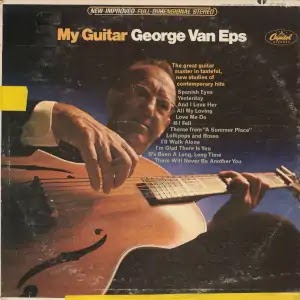
George Van Eps • My Guitar


George Van Eps was a quiet legend among jazz guitarists, one who as far back as the 1930s pioneered a harmonically sophisticated chordal/lead style that was eclipsed in influence by the single-string idioms of Charlie Christian and Django Reinhardt. Yet Van Eps, like his brassy colleague Les Paul, also stood apart from them as an iconoclastic inventor, designing a seven-string guitar in the late 1930s that adds an extra bass string. Thus, Van Eps was able to play bass lines simultaneously with chords and lead solos, a jazz equivalent of fingerpicking country guitarists like Merle Travis and Chet Atkins. Van Eps puckishly referred to his style of playing as “lap piano,” and his seven-string guitar has been adopted by a select few figures like Howard Alden and Bucky and John Pizzarelli.

Van Eps came from a talented musical family; his father Fred was a famous master of the ragtime banjo and a sound engineer, his mother played the piano, and he had three brothers, Bobby, Freddy and John, who were also professional musicians. Self-taught on the banjo, Van Eps began playing professionally at 11, and after falling under the influence of Eddie Lang two years later, he learned the guitar well enough to play alongside Lang for six months as a teenager.

From there, Van Eps worked with Freddy Martin (1931-33), Benny Goodman (1934-35) and Ray Noble (1935-36) before moving to Hollywood to become a freelance musician, author of a how-to guitar book, and instrument designer. After returning to Noble in 1940-41, Van Eps worked in his father's recording lab for two years before returning to the freelance arena, where, among other things, he worked for Paul Weston and took part in the 1950s film and TV series Pete Kelly's Blues.

Van Eps only made a handful of recordings as a leader or unaccompanied soloist, including Mellow Guitar (Columbia, 1956) and My Guitar, George Van Eps' Seven-String Guitar and Soliloquy for Capitol in the late 1960s. A bout of serious illness in the early 1970s, plus a 1977 hand injury that resulted in three broken fingers, reduced his activities.

However, Van Eps returned to the studio in 1991 for the first of three exquisite duo albums for Concord Jazz with his former student Howard Alden, mixing venerable standards with a few Van Eps originals, and he shared a solo guitar album with Johnny Smith in 1994. Even in his 80s, he remained an eloquent exponent of easygoing modern swing, dying of pneumonia on November 29, 1998.
https://www.allaboutjazz.com/musicians/george-van-eps

///////


George Van Eps fue una leyenda silenciosa entre los guitarristas de jazz, que ya en la década de 1930 fue pionero en un estilo de acordes/líderes armónicamente sofisticado que fue eclipsado en influencia por los lenguajes de una sola cuerda de Charlie Christian y Django Reinhardt. Sin embargo, Van Eps, al igual que su descarado colega Les Paul, también se desmarcó de ellos como inventor iconoclasta, diseñando a finales de los años 30 una guitarra de siete cuerdas que añade una cuerda de bajo adicional. De este modo, Van Eps podía tocar líneas de bajo simultáneamente con acordes y solos principales, un equivalente en el jazz a los guitarristas country que tocaban con los dedos, como Merle Travis y Chet Atkins. Van Eps se refería con picardía a su estilo de tocar como "lap piano", y su guitarra de siete cuerdas ha sido adoptada por algunas figuras selectas como Howard Alden y Bucky y John Pizzarelli.

Van Eps procedía de una familia de músicos con talento; su padre, Fred, era un famoso maestro del banjo ragtime y un ingeniero de sonido, su madre tocaba el piano y él tenía tres hermanos, Bobby, Freddy y John, que también eran músicos profesionales. Autodidacta del banjo, Van Eps empezó a tocar profesionalmente a los 11 años, y tras caer bajo la influencia de Eddie Lang dos años después, aprendió la guitarra lo suficientemente bien como para tocar junto a Lang durante seis meses cuando era adolescente.

A partir de ahí, Van Eps trabajó con Freddy Martin (1931-33), Benny Goodman (1934-35) y Ray Noble (1935-36) antes de trasladarse a Hollywood para convertirse en músico independiente, autor de un libro de instrucciones de guitarra y diseñador de instrumentos. Tras regresar a Noble en 1940-41, Van Eps trabajó en el laboratorio de grabación de su padre durante dos años antes de volver al terreno de los autónomos, donde, entre otras cosas, trabajó para Paul Weston y participó en la serie de cine y televisión de los años 50 Pete Kelly's Blues.

Van Eps sólo realizó un puñado de grabaciones como líder o solista sin acompañamiento, entre ellas Mellow Guitar (Columbia, 1956) y My Guitar, George Van Eps' Seven-String Guitar y Soliloquy para Capitol a finales de la década de 1960. Una grave enfermedad a principios de la década de 1970, además de una lesión en la mano en 1977 que le provocó la rotura de tres dedos, redujeron sus actividades.

Sin embargo, Van Eps volvió al estudio en 1991 para el primero de tres exquisitos álbumes a dúo para Concord Jazz con su antiguo alumno Howard Alden, mezclando venerables estándares con algunos originales de Van Eps, y compartió un álbum de guitarra solista con Johnny Smith en 1994. Incluso a sus 80 años, siguió siendo un elocuente exponente del swing moderno y desenfadado, y murió de neumonía el 29 de noviembre de 1998.
https://www.allaboutjazz.com/musicians/george-van-eps


Wednesday, June 19, 2024

George Van Eps & Howard Alden • Hand-Crafted Swing


Review by Ken Dryden
The master of the seven-string guitar, George Van Eps, joins the rising young jazz guitarist Howard Alden, which works perfectly in spite of a 45-year difference in age and different approaches to the guitar. Van Eps' chordal style meshes perfectly with Alden's single note lines in part because of the younger man's study of the senior's recordings and Alden's quick ear and gift for harmony. In any case, it was an obvious thrill for Alden to play with the experienced Van Eps, who literally invented the seven-string guitar (also played by Bucky Pizzarelli) and would soon be added to Alden's musical arsenal. The second of four CDs that they would make together prior to Van Eps' death in 1998, they play a mix of popular standards and show tunes from the 1930s, '40s and '50s. Highlights include a lyrical "What's New." a deliberate "I Could Write a Book," and an intricate "All the Things You Are," along with less frequently played chestnuts like the swinging "It's Wonderful." Van Eps is unaccompanied on both of his original compositions, "Lap Piano" and "Forty-Eight." Bassist Dave Stone and drummer Jake Hanna, who sticks to brushes, are present on most of the tracks.
https://www.allmusic.com/album/hand-crafted-swing-mw0000083163
 
///////
 
Reseña de Ken Dryden
El maestro de la guitarra de siete cuerdas, George Van Eps, se une al joven y prometedor guitarrista de jazz Howard Alden, lo que funciona a la perfección a pesar de los 45 años de diferencia de edad y los diferentes enfoques de la guitarra. El estilo de acordes de Van Eps encaja perfectamente con las líneas de una sola nota de Alden, en parte debido al estudio de las grabaciones del mayor por parte del más joven y al rápido oído y don para la armonía de Alden. En cualquier caso, fue una emoción evidente para Alden tocar con el experimentado Van Eps, que literalmente inventó la guitarra de siete cuerdas (también tocada por Bucky Pizzarelli) y que pronto se añadiría al arsenal musical de Alden. En el segundo de los cuatro CD que grabarían juntos antes de la muerte de Van Eps en 1998, interpretan una mezcla de estándares populares y melodías de espectáculos de los años 30, 40 y 50. Entre los temas más destacados se encuentran el lírico "What Eps's What", que interpreta Alden, y "What Eps", que interpreta Alden y Van Eps. Destacan la lírica "What's New", la deliberada "I Could Write a Book" y la intrincada "All the Things You Are", junto con otros temas menos frecuentes como el swing "It's Wonderful". Van Eps está solo en sus dos composiciones originales, "Lap Piano" y "Forty-Eight". El bajista Dave Stone y el batería Jake Hanna, que se ciñe a las escobillas, están presentes en la mayoría de los temas.
https://www.allmusic.com/album/hand-crafted-swing-mw0000083163