Thursday, July 31, 2025
Friday, July 25, 2025
Saturday, July 5, 2025
Tuesday, February 11, 2025
Steely Dan • Ellis Auditorium, Memphis April 30th 1974
Steely
Dan has been more of a conceptual framework for inventive music-making
than a typical rock band. Spearheaded by a pair of resourceful musical
auteurs Donald Fagen and Walter Becker - they have done nothing by the
books since launching Steely Dan in 1972. The band’s very name is a
scatological reference from a novel by Beat Generation anti-hero William
Burroughs. Though Steely Dan recorded prolifically for much of the
Seventies, they toured for only a brief spell early in that decade,
deciding they much preferred the studio to the road. This allowed them
to craft a wry, nuanced and hyper-literate series of albums - seven in
all, released from 1972 to 1980 - that are highly regarded by
connoisseurs of pop hooks, jazz harmony and desiccating wit.
Beneath
the highly polished surface of Steely Dan’s music, astute listeners
could hear a visceral love of and identification with the very soul of
jazz. Fagen and Becker referenced Duke Ellington, Stan Getz and Horace
Silver at least as much as any rock-oriented source material. Even so,
there was a certain accessible quality to songs like “Reelin’ in the
Years,” “Do It Again” and “Rikki Don’t Lose That Number” that allowed
Steely Dan to connect with rock fans, especially those who were
college-aged and “educated.
Co-founders Donald Fagen and Walter
Becker met in 1967 while attending Bard College in upstate New York.
After serving as touring musicians with Jay and the Americans and trying
their hand as staff songwriters, they formed Steely Dan in Los Angeles
as an outlet for a growing backlog of offbeat, original material that no
one else seemed inclined to record. In the beginning, Steely Dan was an
actual band with a lineup of Fagen, Becker, guitarists Denny Dias and
Jeff “Skunk” Baxter, and drummer Jim Hodder. This configuration cut the
albums Can’t Buy a Thrill, Countdown to Ecstasy and Pretzel Logic.
Though Dias remained on board through 1977’s Aja, Steely Dan were almost
completely Fagen and Becker’s fiefdom by the time of Katy Lied, their
fourth album.
On record, the duo recruited the cream of L.A.’s
jazz-pop studio scene, including Michael McDonald, Victor Feldman, Jeff
Porcaro, David Paich, and jazz stalwarts like David Sanborn, Tom Scott,
Michael Brecker, Larry Carlton, Chuck Rainey, Bernard Purdie, Phil Woods
and Wayne Shorter. Producer- engineer Gary Katz, who worked on every
album through 1980’s Gaucho, was a vital member of the Steely Dan brain
trust whose input was critical to the perfectionist, audiophile quality
of the group’s recordings. The A-list musicians provided a glossy top
coat to Steely Dan’s agreeably sleek music - an ironic vehicle for their
cutting, urbane and often black-humored lyrics.
The group also
had a serious side, too, that’s often been overlooked. “Deacon Blues”
(from Aja) presented a moving portrait of a down-at-the-heels jazzman,
“Kid Charlemagne” nervously surveyed a drug dealer’s netherworld, and
there was much to suggest that Fagen and Becker weren’t just mocking the
decadent affectations of the Seventies - though no one did that very
thing better than they. Steely Dan hit a commercial and artistic peak in
the late Seventies. The hugely popular Aja, released in the fall of
1977, had nothing to do with any musical currents that were popular at
the time, but its jazz- inflected lushness and inscrutable intelligence
appealed to listeners across the spectrum. Aja, which soared to #3, was
soon certified platinum “ it was, in fact, one of the first albums to
receive this newly created award, which recognized sales of one million
copies. Within a year of its release, Steely Dan “ whose musical
sophistication and sardonic outlook made them unlikely candidates for
Top Forty success “ charted four hit singles: “Peg,” “Deacon Blues, “FM”
and “Josie.” Rolling Stone dubbed them “the perfect musical antiheroes
for the Seventies.”
Steely Dan’s long-delayed seventh album,
Gaucho, appeared in 1980. A year later, they announced they were
breaking up. Over the next two decades, relatively little new music
surfaced from either of them. Fagen released a solo album, The Nightfly,
in 1982, but would not be heard again until 1993, when his ambitious
Kamakiriad “ produced by Becker, and representing the duo’s first real
collaboration since Gaucho “ was released. That same year, they
reincarnated Steely Dan as something it had rarely been in its previous
lifetime: a touring entity. Fagen and Becker led the “All New Steely Dan
Orchestra ‘93” on a national tour. A comprehensive box set, Citizen
Steely Dan: 1972-1980, was released late in the year. Walter Becker
issued his one and only solo album, 11 Tracks of Whack, in 1994 and
Circus Money (2008). Steely Dan hit the road again with the “Citizen
Steely Dan Orchestra ’94.” Highlights from the two tours were culled for
Alive in America, a single CD released in 1995.
In February
2000, Steely Dan released Two Against Nature, their first album of
all-new material in two decades. Later that year, Fagen and Becker
compiled and annotated a two-CD best-of, Show Biz Kids: The Steely Dan
Story. In 2001, Two Against Nature won a Grammy for Best Album and
Steely Dan was inducted into the Rock and Roll Hall of Fame. It was an
improbably successful year for a band that had been largely dormant for
the previous 20. Chalk up one more ironic conquest for the unpredictable
Steely Dan.
https://musicians.allaboutjazz.com/steelydan
Note: Walter Becker passed away in 2017.
///////
Steely
Dan ha sido más un marco conceptual para la inventiva musical que una
típica banda de rock. Encabezados por un par de ingeniosos autores
musicales, Donald Fagen y Walter Becker, no han hecho nada desde el
lanzamiento de Steely Dan en 1972. El nombre de la banda es una
referencia escatológica de una novela del antihéroe de la generación
Beat, William Burroughs. Aunque Steely Dan grabó mucho durante la mayor
parte de los años 70, a principios de esa década sólo estuvieron de gira
durante un breve período, decidiendo que preferían el estudio a la
carretera. Esto les permitió crear una serie de álbumes irónicos,
matizados e hiperliterarios -siete en total, publicados entre 1972 y
1980- que son muy apreciados por los conocedores del pop hooks, la
armonía del jazz y el ingenio desecador.
Bajo la superficie
altamente pulida de la música de Steely Dan, los astutos oyentes podían
escuchar un amor visceral e identificación con el alma misma del jazz.
Fagen y Becker se refirieron a Duke Ellington, Stan Getz y Horace Silver
al menos tanto como a cualquier material de referencia orientado al
rock. Aun así, había una cierta calidad accesible en canciones como
"Reelin' in the Years", "Do It Again" y "Rikki Don't Lose That Number"
que permitía a Steely Dan conectar con los fans del rock, especialmente
con aquellos que eran de edad universitaria y "educados".
Los
cofundadores Donald Fagen y Walter Becker se conocieron en 1967 mientras
asistían al Bard College en el norte del estado de Nueva York. Después
de servir como músicos de gira con Jay y los americanos y de probar su
mano como compositores, formaron Steely Dan en Los Ángeles como una
salida para un creciente atraso de material original fuera de ritmo que
nadie más parecía inclinado a grabar. Al principio, Steely Dan era una
banda real con una alineación de Fagen, Becker, los guitarristas Denny
Dias y Jeff "Skunk" Baxter, y el baterista Jim Hodder. Esta
configuración cortó los álbumes Can't Buy a Thrill, Countdown to Ecstasy
y Pretzel Logic. Aunque Dias permaneció a bordo durante Aja de 1977,
Steely Dan era casi completamente Fagen y el feudo de Becker en la época
de Katy Lied, su cuarto álbum.
En el disco, el dúo reclutó a lo
mejor de la escena de estudio de jazz-pop de Los Ángeles, incluyendo a
Michael McDonald, Victor Feldman, Jeff Porcaro, David Paich, y a los
estandartes del jazz como David Sanborn, Tom Scott, Michael Brecker,
Larry Carlton, Chuck Rainey, Bernard Purdie, Phil Woods y Wayne Shorter.
El productor e ingeniero Gary Katz, que trabajó en todos los álbumes
hasta Gaucho en los años 80, fue un miembro vital del grupo Steely Dan,
cuya aportación fue fundamental para la calidad perfeccionista y
audiófila de las grabaciones del grupo. Los músicos de la lista A
proporcionaron una capa superior brillante a la agradable y elegante
música de Steely Dan - un vehículo irónico para sus letras cortantes,
urbanas y a menudo de humor negro.
El grupo también tenía un lado
serio, que a menudo se ha pasado por alto. "Deacon Blues" (de Aja)
presentó un conmovedor retrato de un jazzista de poca monta, "Kid
Charlemagne" estudió nerviosamente el mundo de los bajos fondos de un
traficante de drogas, y había mucho que sugería que Fagen y Becker no
sólo se burlaban de los decadentes efectos de los setenta - aunque nadie
lo hacía mejor que ellos. Steely Dan alcanzó un pico comercial y
artístico a finales de los setenta. El enormemente popular Aja, lanzado
en el otoño de 1977, no tenía nada que ver con ninguna corriente musical
que fuera popular en ese momento, pero su exuberancia inflexionada por
el jazz y su inescrutable inteligencia atrajo a los oyentes de todo el
espectro. Aja, que alcanzó el número 3, pronto fue certificado platino "
fue, de hecho, uno de los primeros álbumes en recibir este premio
recién creado, que reconoció las ventas de un millón de copias. A un año
de su lanzamiento, Steely Dan " cuya sofisticación musical y
perspectiva sarcástica los hacía improbables candidatos al éxito en los
Top 40 " registró cuatro sencillos de éxito: "Peg", "Deacon Blues", "FM"
y "Josie". Rolling Stone los llamó "los antihéroes musicales perfectos
para los setenta".
El largamente demorado séptimo álbum de Steely
Dan, Gaucho, apareció en 1980. Un año después, anunciaron que se
separaban. Durante las dos décadas siguientes, relativamente poca música
nueva surgió de cualquiera de ellos. Fagen lanzó un álbum en solitario,
The Nightfly, en 1982, pero no se volvería a escuchar hasta 1993,
cuando salió a la luz su ambicioso Kamakiriad " producido por Becker, y
que representaba la primera colaboración real del dúo desde Gaucho ".
Ese mismo año, reencarnaron a Steely Dan como algo que raramente había
sido en su vida anterior: una entidad en gira. Fagen y Becker lideraron
la "Orquesta de Steely Dan '93" en una gira nacional. Una caja completa,
Citizen Steely Dan: 1972-1980, fue lanzada a finales de año. Walter
Becker publicó su único álbum en solitario, 11 Tracks of Whack, en 1994 y
Circus Money (2008). Steely Dan se puso en marcha de nuevo con la
"Orquesta Citizen Steely Dan '94". Lo más destacado de las dos giras fue
seleccionado para "Alive in America", un solo CD lanzado en 1995.
En
febrero de 2000, Steely Dan lanzó Two Against Nature, su primer álbum
de material totalmente nuevo en dos décadas. Más tarde ese año, Fagen y
Becker compilaron y comentaron un best of de dos CDs, Show Biz Kids: The
Steely Dan Story. En 2001, Two Against Nature ganó un Grammy al mejor
álbum y Steely Dan fue incluido en el Salón de la Fama del Rock and
Roll. Fue un año improbablemente exitoso para una banda que había estado
inactiva durante los 20 años anteriores. Anota otra irónica conquista
para el impredecible Steely Dan.
https://musicians.allaboutjazz.com/steelydan
Nota: Walter Becker falleció en 2017.
Friday, September 27, 2024
Steely Dan Reelin in the Years
The only book ever to have been published on Steely Dan, Reelin’ in the Years tells the strange tale of how Walter Becker and Donald Fagen, two cynical New York jazz fans, wormed their way into a record contract and astonished critics with their debut album, Can’t Buy a Thrill. Seven albums later, after Aja had topped charts everywhere, they were among the biggest selling acts in the world.
But Steely Dan were different from the rest of rocks megastars. They rarely gave interviews. After some early bad experiences on the road, they refused to tour. They didn’t have photographs taken. They were perfectionists. They were enigmatic. They were very rich. Their music was the coolest around.
In Reelin’ in the Years, Steely Dan archivist Brian Sweet draws back the veil of secrecy that has surrounded Becker and Fagen. Critically acclaimed on its original publication (and called “controversial and critical” by the band members themselves) this updated edition includes details of Becker and Fagen’s work in the 21st century, including their solo albums.
Monday, September 9, 2024
Steely Dan • The Definitive Collection
Steely Dan has been more of a conceptual framework for inventive music-making than a typical rock band. Spearheaded by a pair of resourceful musical auteurs Donald Fagen and Walter Becker - they have done nothing by the books since launching Steely Dan in 1972. The band’s very name is a scatological reference from a novel by Beat Generation anti-hero William Burroughs. Though Steely Dan recorded prolifically for much of the Seventies, they toured for only a brief spell early in that decade, deciding they much preferred the studio to the road. This allowed them to craft a wry, nuanced and hyper-literate series of albums - seven in all, released from 1972 to 1980 - that are highly regarded by connoisseurs of pop hooks, jazz harmony and desiccating wit.
Beneath the highly polished surface of Steely Dan’s music, astute listeners could hear a visceral love of and identification with the very soul of jazz. Fagen and Becker referenced Duke Ellington, Stan Getz and Horace Silver at least as much as any rock-oriented source material. Even so, there was a certain accessible quality to songs like “Reelin’ in the Years,” “Do It Again” and “Rikki Don’t Lose That Number” that allowed Steely Dan to connect with rock fans, especially those who were college-aged and “educated.
Co-founders Donald Fagen and Walter Becker met in 1967 while attending Bard College in upstate New York. After serving as touring musicians with Jay and the Americans and trying their hand as staff songwriters, they formed Steely Dan in Los Angeles as an outlet for a growing backlog of offbeat, original material that no one else seemed inclined to record. In the beginning, Steely Dan was an actual band with a lineup of Fagen, Becker, guitarists Denny Dias and Jeff “Skunk” Baxter, and drummer Jim Hodder. This configuration cut the albums Can’t Buy a Thrill, Countdown to Ecstasy and Pretzel Logic. Though Dias remained on board through 1977’s Aja, Steely Dan were almost completely Fagen and Becker’s fiefdom by the time of Katy Lied, their fourth album.
On record, the duo recruited the cream of L.A.’s jazz-pop studio scene, including Michael McDonald, Victor Feldman, Jeff Porcaro, David Paich, and jazz stalwarts like David Sanborn, Tom Scott, Michael Brecker, Larry Carlton, Chuck Rainey, Bernard Purdie, Phil Woods and Wayne Shorter. Producer- engineer Gary Katz, who worked on every album through 1980’s Gaucho, was a vital member of the Steely Dan brain trust whose input was critical to the perfectionist, audiophile quality of the group’s recordings. The A-list musicians provided a glossy top coat to Steely Dan’s agreeably sleek music - an ironic vehicle for their cutting, urbane and often black-humored lyrics.
The group also had a serious side, too, that’s often been overlooked. “Deacon Blues” (from Aja) presented a moving portrait of a down-at-the-heels jazzman, “Kid Charlemagne” nervously surveyed a drug dealer’s netherworld, and there was much to suggest that Fagen and Becker weren’t just mocking the decadent affectations of the Seventies - though no one did that very thing better than they. Steely Dan hit a commercial and artistic peak in the late Seventies. The hugely popular Aja, released in the fall of 1977, had nothing to do with any musical currents that were popular at the time, but its jazz- inflected lushness and inscrutable intelligence appealed to listeners across the spectrum. Aja, which soared to #3, was soon certified platinum “ it was, in fact, one of the first albums to receive this newly created award, which recognized sales of one million copies. Within a year of its release, Steely Dan “ whose musical sophistication and sardonic outlook made them unlikely candidates for Top Forty success “ charted four hit singles: “Peg,” “Deacon Blues, “FM” and “Josie.” Rolling Stone dubbed them “the perfect musical antiheroes for the Seventies.”
Steely Dan’s long-delayed seventh album, Gaucho, appeared in 1980. A year later, they announced they were breaking up. Over the next two decades, relatively little new music surfaced from either of them. Fagen released a solo album, The Nightfly, in 1982, but would not be heard again until 1993, when his ambitious Kamakiriad “ produced by Becker, and representing the duo’s first real collaboration since Gaucho “ was released. That same year, they reincarnated Steely Dan as something it had rarely been in its previous lifetime: a touring entity. Fagen and Becker led the “All New Steely Dan Orchestra ‘93” on a national tour. A comprehensive box set, Citizen Steely Dan: 1972-1980, was released late in the year. Walter Becker issued his one and only solo album, 11 Tracks of Whack, in 1994 and Circus Money (2008). Steely Dan hit the road again with the “Citizen Steely Dan Orchestra ’94.” Highlights from the two tours were culled for Alive in America, a single CD released in 1995.
In February 2000, Steely Dan released Two Against Nature, their first album of all-new material in two decades. Later that year, Fagen and Becker compiled and annotated a two-CD best-of, Show Biz Kids: The Steely Dan Story. In 2001, Two Against Nature won a Grammy for Best Album and Steely Dan was inducted into the Rock and Roll Hall of Fame. It was an improbably successful year for a band that had been largely dormant for the previous 20. Chalk up one more ironic conquest for the unpredictable Steely Dan.
https://musicians.allaboutjazz.com/steelydan
Note: Walter Becker passed away in 2017.
///////
Steely Dan ha sido más un marco conceptual para la inventiva musical que una típica banda de rock. Encabezados por un par de ingeniosos autores musicales, Donald Fagen y Walter Becker, no han hecho nada desde el lanzamiento de Steely Dan en 1972. El nombre de la banda es una referencia escatológica de una novela del antihéroe de la generación Beat, William Burroughs. Aunque Steely Dan grabó mucho durante la mayor parte de los años 70, a principios de esa década sólo estuvieron de gira durante un breve período, decidiendo que preferían el estudio a la carretera. Esto les permitió crear una serie de álbumes irónicos, matizados e hiperliterarios -siete en total, publicados entre 1972 y 1980- que son muy apreciados por los conocedores del pop hooks, la armonía del jazz y el ingenio desecador.
Bajo la superficie altamente pulida de la música de Steely Dan, los astutos oyentes podían escuchar un amor visceral e identificación con el alma misma del jazz. Fagen y Becker se refirieron a Duke Ellington, Stan Getz y Horace Silver al menos tanto como a cualquier material de referencia orientado al rock. Aun así, había una cierta calidad accesible en canciones como "Reelin' in the Years", "Do It Again" y "Rikki Don't Lose That Number" que permitía a Steely Dan conectar con los fans del rock, especialmente con aquellos que eran de edad universitaria y "educados".
Los cofundadores Donald Fagen y Walter Becker se conocieron en 1967 mientras asistían al Bard College en el norte del estado de Nueva York. Después de servir como músicos de gira con Jay y los americanos y de probar su mano como compositores, formaron Steely Dan en Los Ángeles como una salida para un creciente atraso de material original fuera de ritmo que nadie más parecía inclinado a grabar. Al principio, Steely Dan era una banda real con una alineación de Fagen, Becker, los guitarristas Denny Dias y Jeff "Skunk" Baxter, y el baterista Jim Hodder. Esta configuración cortó los álbumes Can't Buy a Thrill, Countdown to Ecstasy y Pretzel Logic. Aunque Dias permaneció a bordo durante Aja de 1977, Steely Dan era casi completamente Fagen y el feudo de Becker en la época de Katy Lied, su cuarto álbum.
En el disco, el dúo reclutó a lo mejor de la escena de estudio de jazz-pop de Los Ángeles, incluyendo a Michael McDonald, Victor Feldman, Jeff Porcaro, David Paich, y a los estandartes del jazz como David Sanborn, Tom Scott, Michael Brecker, Larry Carlton, Chuck Rainey, Bernard Purdie, Phil Woods y Wayne Shorter. El productor e ingeniero Gary Katz, que trabajó en todos los álbumes hasta Gaucho en los años 80, fue un miembro vital del grupo Steely Dan, cuya aportación fue fundamental para la calidad perfeccionista y audiófila de las grabaciones del grupo. Los músicos de la lista A proporcionaron una capa superior brillante a la agradable y elegante música de Steely Dan - un vehículo irónico para sus letras cortantes, urbanas y a menudo de humor negro.
El grupo también tenía un lado serio, que a menudo se ha pasado por alto. "Deacon Blues" (de Aja) presentó un conmovedor retrato de un jazzista de poca monta, "Kid Charlemagne" estudió nerviosamente el mundo de los bajos fondos de un traficante de drogas, y había mucho que sugería que Fagen y Becker no sólo se burlaban de los decadentes efectos de los setenta - aunque nadie lo hacía mejor que ellos. Steely Dan alcanzó un pico comercial y artístico a finales de los setenta. El enormemente popular Aja, lanzado en el otoño de 1977, no tenía nada que ver con ninguna corriente musical que fuera popular en ese momento, pero su exuberancia inflexionada por el jazz y su inescrutable inteligencia atrajo a los oyentes de todo el espectro. Aja, que alcanzó el número 3, pronto fue certificado platino " fue, de hecho, uno de los primeros álbumes en recibir este premio recién creado, que reconoció las ventas de un millón de copias. A un año de su lanzamiento, Steely Dan " cuya sofisticación musical y perspectiva sarcástica los hacía improbables candidatos al éxito en los Top 40 " registró cuatro sencillos de éxito: "Peg", "Deacon Blues", "FM" y "Josie". Rolling Stone los llamó "los antihéroes musicales perfectos para los setenta".
El largamente demorado séptimo álbum de Steely Dan, Gaucho, apareció en 1980. Un año después, anunciaron que se separaban. Durante las dos décadas siguientes, relativamente poca música nueva surgió de cualquiera de ellos. Fagen lanzó un álbum en solitario, The Nightfly, en 1982, pero no se volvería a escuchar hasta 1993, cuando salió a la luz su ambicioso Kamakiriad " producido por Becker, y que representaba la primera colaboración real del dúo desde Gaucho ". Ese mismo año, reencarnaron a Steely Dan como algo que raramente había sido en su vida anterior: una entidad en gira. Fagen y Becker lideraron la "Orquesta de Steely Dan '93" en una gira nacional. Una caja completa, Citizen Steely Dan: 1972-1980, fue lanzada a finales de año. Walter Becker publicó su único álbum en solitario, 11 Tracks of Whack, en 1994 y Circus Money (2008). Steely Dan se puso en marcha de nuevo con la "Orquesta Citizen Steely Dan '94". Lo más destacado de las dos giras fue seleccionado para "Alive in America", un solo CD lanzado en 1995.
En febrero de 2000, Steely Dan lanzó Two Against Nature, su primer álbum de material totalmente nuevo en dos décadas. Más tarde ese año, Fagen y Becker compilaron y comentaron un best of de dos CDs, Show Biz Kids: The Steely Dan Story. En 2001, Two Against Nature ganó un Grammy al mejor álbum y Steely Dan fue incluido en el Salón de la Fama del Rock and Roll. Fue un año improbablemente exitoso para una banda que había estado inactiva durante los 20 años anteriores. Anota otra irónica conquista para el impredecible Steely Dan.
https://musicians.allaboutjazz.com/steelydan
Nota: Walter Becker falleció en 2017.
www.steelydan.com ...
Colaborador / Contribuitor: Pere
Wednesday, August 14, 2024
VA • '70S Jazz Fusion
Friday, June 21, 2024
Steely Dan • Gaucho
Steely
Dan has been more of a conceptual framework for inventive music-making
than a typical rock band. Spearheaded by a pair of resourceful musical
auteurs Donald Fagen and Walter Becker - they have done nothing by the
books since launching Steely Dan in 1972. The band’s very name is a
scatological reference from a novel by Beat Generation anti-hero William
Burroughs. Though Steely Dan recorded prolifically for much of the
Seventies, they toured for only a brief spell early in that decade,
deciding they much preferred the studio to the road. This allowed them
to craft a wry, nuanced and hyper-literate series of albums - seven in
all, released from 1972 to 1980 - that are highly regarded by
connoisseurs of pop hooks, jazz harmony and desiccating wit.
Beneath
the highly polished surface of Steely Dan’s music, astute listeners
could hear a visceral love of and identification with the very soul of
jazz. Fagen and Becker referenced Duke Ellington, Stan Getz and Horace
Silver at least as much as any rock-oriented source material. Even so,
there was a certain accessible quality to songs like “Reelin’ in the
Years,” “Do It Again” and “Rikki Don’t Lose That Number” that allowed
Steely Dan to connect with rock fans, especially those who were
college-aged and “educated.
Co-founders Donald Fagen and Walter
Becker met in 1967 while attending Bard College in upstate New York.
After serving as touring musicians with Jay and the Americans and trying
their hand as staff songwriters, they formed Steely Dan in Los Angeles
as an outlet for a growing backlog of offbeat, original material that no
one else seemed inclined to record. In the beginning, Steely Dan was an
actual band with a lineup of Fagen, Becker, guitarists Denny Dias and
Jeff “Skunk” Baxter, and drummer Jim Hodder. This configuration cut the
albums Can’t Buy a Thrill, Countdown to Ecstasy and Pretzel Logic.
Though Dias remained on board through 1977’s Aja, Steely Dan were almost
completely Fagen and Becker’s fiefdom by the time of Katy Lied, their
fourth album.
On record, the duo recruited the cream of L.A.’s
jazz-pop studio scene, including Michael McDonald, Victor Feldman, Jeff
Porcaro, David Paich, and jazz stalwarts like David Sanborn, Tom Scott,
Michael Brecker, Larry Carlton, Chuck Rainey, Bernard Purdie, Phil Woods
and Wayne Shorter. Producer- engineer Gary Katz, who worked on every
album through 1980’s Gaucho, was a vital member of the Steely Dan brain
trust whose input was critical to the perfectionist, audiophile quality
of the group’s recordings. The A-list musicians provided a glossy top
coat to Steely Dan’s agreeably sleek music - an ironic vehicle for their
cutting, urbane and often black-humored lyrics.
The group also
had a serious side, too, that’s often been overlooked. “Deacon Blues”
(from Aja) presented a moving portrait of a down-at-the-heels jazzman,
“Kid Charlemagne” nervously surveyed a drug dealer’s netherworld, and
there was much to suggest that Fagen and Becker weren’t just mocking the
decadent affectations of the Seventies - though no one did that very
thing better than they. Steely Dan hit a commercial and artistic peak in
the late Seventies. The hugely popular Aja, released in the fall of
1977, had nothing to do with any musical currents that were popular at
the time, but its jazz- inflected lushness and inscrutable intelligence
appealed to listeners across the spectrum. Aja, which soared to #3, was
soon certified platinum “ it was, in fact, one of the first albums to
receive this newly created award, which recognized sales of one million
copies. Within a year of its release, Steely Dan “ whose musical
sophistication and sardonic outlook made them unlikely candidates for
Top Forty success “ charted four hit singles: “Peg,” “Deacon Blues, “FM”
and “Josie.” Rolling Stone dubbed them “the perfect musical antiheroes
for the Seventies.”
Steely Dan’s long-delayed seventh album,
Gaucho, appeared in 1980. A year later, they announced they were
breaking up. Over the next two decades, relatively little new music
surfaced from either of them. Fagen released a solo album, The Nightfly,
in 1982, but would not be heard again until 1993, when his ambitious
Kamakiriad “ produced by Becker, and representing the duo’s first real
collaboration since Gaucho “ was released. That same year, they
reincarnated Steely Dan as something it had rarely been in its previous
lifetime: a touring entity. Fagen and Becker led the “All New Steely Dan
Orchestra ‘93” on a national tour. A comprehensive box set, Citizen
Steely Dan: 1972-1980, was released late in the year. Walter Becker
issued his one and only solo album, 11 Tracks of Whack, in 1994 and
Circus Money (2008). Steely Dan hit the road again with the “Citizen
Steely Dan Orchestra ’94.” Highlights from the two tours were culled for
Alive in America, a single CD released in 1995.
In February
2000, Steely Dan released Two Against Nature, their first album of
all-new material in two decades. Later that year, Fagen and Becker
compiled and annotated a two-CD best-of, Show Biz Kids: The Steely Dan
Story. In 2001, Two Against Nature won a Grammy for Best Album and
Steely Dan was inducted into the Rock and Roll Hall of Fame. It was an
improbably successful year for a band that had been largely dormant for
the previous 20. Chalk up one more ironic conquest for the unpredictable
Steely Dan.
https://musicians.allaboutjazz.com/steelydan
Note: Walter Becker passed away in 2017.
///////
Bajo la superficie altamente pulida de la música de Steely Dan, los astutos oyentes podían escuchar un amor visceral e identificación con el alma misma del jazz. Fagen y Becker se refirieron a Duke Ellington, Stan Getz y Horace Silver al menos tanto como a cualquier material de referencia orientado al rock. Aun así, había una cierta calidad accesible en canciones como "Reelin' in the Years", "Do It Again" y "Rikki Don't Lose That Number" que permitía a Steely Dan conectar con los fans del rock, especialmente con aquellos que eran de edad universitaria y "educados".
Los cofundadores Donald Fagen y Walter Becker se conocieron en 1967 mientras asistían al Bard College en el norte del estado de Nueva York. Después de servir como músicos de gira con Jay y los americanos y de probar su mano como compositores, formaron Steely Dan en Los Ángeles como una salida para un creciente atraso de material original fuera de ritmo que nadie más parecía inclinado a grabar. Al principio, Steely Dan era una banda real con una alineación de Fagen, Becker, los guitarristas Denny Dias y Jeff "Skunk" Baxter, y el baterista Jim Hodder. Esta configuración cortó los álbumes Can't Buy a Thrill, Countdown to Ecstasy y Pretzel Logic. Aunque Dias permaneció a bordo durante Aja de 1977, Steely Dan era casi completamente Fagen y el feudo de Becker en la época de Katy Lied, su cuarto álbum.
En el disco, el dúo reclutó a lo mejor de la escena de estudio de jazz-pop de Los Ángeles, incluyendo a Michael McDonald, Victor Feldman, Jeff Porcaro, David Paich, y a los estandartes del jazz como David Sanborn, Tom Scott, Michael Brecker, Larry Carlton, Chuck Rainey, Bernard Purdie, Phil Woods y Wayne Shorter. El productor e ingeniero Gary Katz, que trabajó en todos los álbumes hasta Gaucho en los años 80, fue un miembro vital del grupo Steely Dan, cuya aportación fue fundamental para la calidad perfeccionista y audiófila de las grabaciones del grupo. Los músicos de la lista A proporcionaron una capa superior brillante a la agradable y elegante música de Steely Dan - un vehículo irónico para sus letras cortantes, urbanas y a menudo de humor negro.
El grupo también tenía un lado serio, que a menudo se ha pasado por alto. "Deacon Blues" (de Aja) presentó un conmovedor retrato de un jazzista de poca monta, "Kid Charlemagne" estudió nerviosamente el mundo de los bajos fondos de un traficante de drogas, y había mucho que sugería que Fagen y Becker no sólo se burlaban de los decadentes efectos de los setenta - aunque nadie lo hacía mejor que ellos. Steely Dan alcanzó un pico comercial y artístico a finales de los setenta. El enormemente popular Aja, lanzado en el otoño de 1977, no tenía nada que ver con ninguna corriente musical que fuera popular en ese momento, pero su exuberancia inflexionada por el jazz y su inescrutable inteligencia atrajo a los oyentes de todo el espectro. Aja, que alcanzó el número 3, pronto fue certificado platino " fue, de hecho, uno de los primeros álbumes en recibir este premio recién creado, que reconoció las ventas de un millón de copias. A un año de su lanzamiento, Steely Dan " cuya sofisticación musical y perspectiva sarcástica los hacía improbables candidatos al éxito en los Top 40 " registró cuatro sencillos de éxito: "Peg", "Deacon Blues", "FM" y "Josie". Rolling Stone los llamó "los antihéroes musicales perfectos para los setenta".
El largamente demorado séptimo álbum de Steely Dan, Gaucho, apareció en 1980. Un año después, anunciaron que se separaban. Durante las dos décadas siguientes, relativamente poca música nueva surgió de cualquiera de ellos. Fagen lanzó un álbum en solitario, The Nightfly, en 1982, pero no se volvería a escuchar hasta 1993, cuando salió a la luz su ambicioso Kamakiriad " producido por Becker, y que representaba la primera colaboración real del dúo desde Gaucho ". Ese mismo año, reencarnaron a Steely Dan como algo que raramente había sido en su vida anterior: una entidad en gira. Fagen y Becker lideraron la "Orquesta de Steely Dan '93" en una gira nacional. Una caja completa, Citizen Steely Dan: 1972-1980, fue lanzada a finales de año. Walter Becker publicó su único álbum en solitario, 11 Tracks of Whack, en 1994 y Circus Money (2008). Steely Dan se puso en marcha de nuevo con la "Orquesta Citizen Steely Dan '94". Lo más destacado de las dos giras fue seleccionado para "Alive in America", un solo CD lanzado en 1995.
En febrero de 2000, Steely Dan lanzó Two Against Nature, su primer álbum de material totalmente nuevo en dos décadas. Más tarde ese año, Fagen y Becker compilaron y comentaron un best of de dos CDs, Show Biz Kids: The Steely Dan Story. En 2001, Two Against Nature ganó un Grammy al mejor álbum y Steely Dan fue incluido en el Salón de la Fama del Rock and Roll. Fue un año improbablemente exitoso para una banda que había estado inactiva durante los 20 años anteriores. Anota otra irónica conquista para el impredecible Steely Dan.
https://musicians.allaboutjazz.com/steelydan
Nota: Walter Becker falleció en 2017.
Wednesday, March 6, 2024
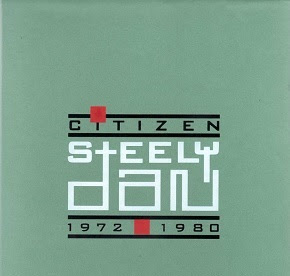
Steely Dan • Citizen [1972-1980]
Biography
by Stephen Thomas Erlewine
Most rock & roll bands are a tightly wound unit that developed their music through years of playing in garages and clubs around their hometown. Steely Dan never subscribed to that aesthetic. As the vehicle for the songwriting of Walter Becker and Donald Fagen, Steely Dan defied all rock & roll conventions. Becker and Fagen never truly enjoyed rock -- with their ironic humor and cryptic lyrics, their eclectic body of work shows some debt to Bob Dylan -- preferring jazz, traditional pop, blues, and R&B. Steely Dan created a sophisticated, distinctive sound with accessible melodic hooks, complex harmonies and time signatures, and a devotion to the recording studio. With producer Gary Katz, Becker and Fagen gradually changed Steely Dan from a performing band to a studio project, hiring professional musicians to record their compositions. Though the band didn't perform live between 1974 and 1993, Steely Dan's popularity continued to grow throughout the '70s as their albums became critical favorites and their singles became staples of AOR and pop radio stations. Even after the group disbanded in the early '80s, their records retained a cult following, as proven by the massive success of their unlikely return to the stage in the early '90s.
Walter Becker (bass) and Donald Fagen (vocals, keyboards) were the core members of Steely Dan throughout its various incarnations. The two met at Bard College in New York in 1967 and began playing in bands together shortly afterward. The duo played in a number of groups -- including the Bad Rock Group, which featured future comedic actor Chevy Chase on drums -- which ranged from jazz to progressive rock. Eventually, Becker and Fagen began composing songs together, hoping to become professional songwriters in the tradition of the Brill Building. In 1970, the pair joined Jay & the Americans' backing band, performing under pseudonyms; Becker chose Gustav Mahler, while Fagen used Tristan Fabriani. They stayed with Jay & the Americans until halfway through 1971, when they recorded the soundtrack for the low-budget film You Gotta Walk It Like You Talk It, which was produced by the Americans' Kenny Vance. Following the recording of the soundtrack, Becker and Fagen attempted to start a band with Denny Dias, but the venture was unsuccessful. Barbra Streisand recorded the Fagen/Becker composition "I Mean to Shine" on her album Barbra Joan Streisand, released in August 1971, and the duo met producer Gary Katz, who hired them as staff songwriters for ABC/Dunhill in Los Angeles, where he had just become a staff producer. Katz suggested that Becker and Fagen form a band as a way to record their songs, and Steely Dan -- who took their name from a dildo in William Burroughs' Naked Lunch -- were formed shortly afterward.
Recruiting guitarists Denny Dias and Jeff "Skunk" Baxter, drummer Jim Hodder, and keyboardist/vocalist David Palmer, Becker and Fagen officially formed Steely Dan in 1972, releasing their debut, Can't Buy a Thrill, shortly afterward. Palmer and Fagen shared lead vocals on the album, but the record's two hit singles -- the Top Ten "Do It Again" and "Reeling in the Years" -- were sung by Fagen. Can't Buy a Thrill was a critical and commercial success, but its supporting tour was a disaster, hampered by an under-rehearsed band and unappreciative audiences. Palmer left the band following the tour. Countdown to Ecstasy, released in 1973, was a critical hit, but it failed to generate a hit single, even though the band supported it with a tour.
Steely Dan replaced Hodder with Jeff Porcaro and added keyboardist/backup vocalist Michael McDonald prior to recording their third album, Pretzel Logic. Released in the spring of 1974, Pretzel Logic returned Steely Dan to the Top Ten on the strength of the single "Rikki Don't Lose That Number." After completing the supporting tour for Pretzel Logic, Becker and Fagen decided to retire from live performances and make Steely Dan a studio-based band. For their next album, 1975's Katy Lied, the duo hired a variety of studio musicians -- including Dias, Porcaro, guitarist Elliot Randall, saxophonists Phil Woods, bassist Wilton Felder, percussionist Victor Feldman, keyboardist Michael Omartian, and guitarist Larry Carlton -- as supporting musicians. Katy Lied was another hit, as was 1976's The Royal Scam, which continued in the vein of its predecessor. On 1977's Aja, Steely Dan's sound became more polished and jazzy, as they hired jazz fusion artists like Wayne Shorter, Lee Ritenour, and the Crusaders as support. Aja became their biggest hit, reaching the Top Five within three weeks of release and becoming one of the first albums to be certified platinum. Aja also gained the respect of many jazz musicians, as evidenced by Woody Herman recording an album of Becker/Fagen songs in 1978.
Following the release of Aja, ABC was bought out by MCA Records, resulting in a contractual dispute with the label that delayed until 1980 the release of their follow-up album. During the interim, the group had a hit with the theme song for the film FM in 1978. Steely Dan finally released Gaucho, the follow-up to Aja, in late 1980, and it became another Top Ten hit for the group. During the summer of 1981, Becker and Fagen announced that they were parting ways. The following year, Fagen released his solo debut, The Nightfly, which became a critical and commercial hit.
Fagen didn't record another album until 1993, when he reunited with Becker, who produced Kamakiriad. The album was promoted by the first Steely Dan tour in nearly 20 years, and while the record failed to sell, the concerts were very popular. In 1994, Becker released his solo debut, 11 Tracks of Whack, which was produced by Fagen. The following year, Steely Dan mounted another reunion tour, and in early 2000 the duo issued Two Against Nature, their first new studio album in two decades. It won the Grammy Award for Album of the Year. Steely Dan followed it in 2003 with Everything Must Go. Fagen's solo album Morph the Cat was released in 2006, and Becker released Circus Money in 2008 as Steely Dan embarked on another tour. In September 2017, it was announced that Becker had died in Maui, Hawaii. He was 67-years-old.
Fagen carried on with Steely Dan after Becker's passing, often calling the group "the Steely Dan Band." This new lineup was showcased on a pair of live albums released in September 2021: Northeast Corridor: Steely Dan Live and Donald Fagen's The Nightfly Live, both recorded between 2018 and 2019.
https://www.allmusic.com/artist/steely-dan-mn0000011707/biography
///////
Biografía
por Stephen Thomas Erlewine
La mayoría de los grupos de rock & roll son una unidad cerrada que ha desarrollado su música a lo largo de años de tocar en garajes y clubes de su ciudad natal. Steely Dan nunca se suscribió a esa estética. Como vehículo para la composición de canciones de Walter Becker y Donald Fagen, Steely Dan desafió todas las convenciones del rock & roll. Becker y Fagen nunca disfrutaron realmente del rock -con su humor irónico y sus letras crípticas, su ecléctica obra muestra cierta deuda con Bob Dylan-, prefiriendo el jazz, el pop tradicional, el blues y el R&B. Steely Dan creó un sonido sofisticado y distintivo con ganchos melódicos accesibles, armonías y compases complejos y una devoción por el estudio de grabación. Con el productor Gary Katz, Becker y Fagen transformaron gradualmente Steely Dan de una banda de conciertos a un proyecto de estudio, contratando a músicos profesionales para grabar sus composiciones. Aunque la banda no actuó en directo entre 1974 y 1993, la popularidad de Steely Dan siguió creciendo a lo largo de los años 70, a medida que sus álbumes se convertían en favoritos de la crítica y sus singles en temas básicos de las emisoras de radio AOR y pop. Incluso después de que el grupo se disolviera a principios de los 80, sus discos siguieron siendo objeto de culto, como demuestra el éxito masivo de su improbable regreso a los escenarios a principios de los 90.
Walter Becker (bajo) y Donald Fagen (voz, teclados) fueron los miembros principales de Steely Dan en sus diversas encarnaciones. Ambos se conocieron en el Bard College de Nueva York en 1967 y poco después empezaron a tocar juntos. El dúo tocó en varios grupos -incluido el Bad Rock Group, que contaba con el futuro actor cómico Chevy Chase a la batería- que abarcaban desde el jazz hasta el rock progresivo. Con el tiempo, Becker y Fagen empezaron a componer canciones juntos, con la esperanza de convertirse en compositores profesionales en la tradición del Brill Building. En 1970, se unieron a la banda de Jay & the Americans y actuaron bajo seudónimos: Becker eligió a Gustav Mahler y Fagen a Tristan Fabriani. Permanecieron con Jay & the Americans hasta mediados de 1971, cuando grabaron la banda sonora de la película de bajo presupuesto You Gotta Walk It Like You Talk It, producida por Kenny Vance, de los Americans. Tras la grabación de la banda sonora, Becker y Fagen intentaron formar un grupo con Denny Dias, pero la aventura no tuvo éxito. Barbra Streisand grabó la composición de Fagen y Becker "I Mean to Shine" en su álbum Barbra Joan Streisand, publicado en agosto de 1971, y el dúo conoció al productor Gary Katz, que los contrató como compositores de plantilla para ABC/Dunhill en Los Ángeles, donde acababa de convertirse en productor de plantilla. Katz sugirió a Becker y Fagen que formaran un grupo para grabar sus canciones, y Steely Dan -que tomó su nombre de un consolador que aparece en El almuerzo desnudo de William Burroughs- se formó poco después.
Con los guitarristas Denny Dias y Jeff "Skunk" Baxter, el batería Jim Hodder y el teclista y vocalista David Palmer, Becker y Fagen formaron oficialmente Steely Dan en 1972, y poco después publicaron su debut, Can't Buy a Thrill. Palmer y Fagen compartieron la voz principal en el álbum, pero los dos singles de éxito del disco -el Top Ten "Do It Again" y "Reeling in the Years"- fueron cantados por Fagen. Can't Buy a Thrill fue un éxito comercial y de crítica, pero su gira de presentación fue un desastre, lastrada por una banda poco ensayada y un público poco agradecido. Palmer abandonó el grupo tras la gira. Countdown to Ecstasy, publicado en 1973, fue un éxito de crítica, pero no logró generar un single de éxito, aunque la banda lo apoyó con una gira.
Steely Dan sustituyó a Hodder por Jeff Porcaro y añadió al teclista y vocalista Michael McDonald antes de grabar su tercer álbum, Pretzel Logic. Publicado en la primavera de 1974, Pretzel Logic devolvió a Steely Dan al Top Ten con la fuerza del single "Rikki Don't Lose That Number". Tras completar la gira de apoyo de Pretzel Logic, Becker y Fagen decidieron retirarse de las actuaciones en directo y convertir a Steely Dan en una banda de estudio. Para su siguiente álbum, Katy Lied (1975), el dúo contrató a varios músicos de estudio, como Dias, Porcaro, el guitarrista Elliot Randall, el saxofonista Phil Woods, el bajista Wilton Felder, el percusionista Victor Feldman, el teclista Michael Omartian y el guitarrista Larry Carlton, como músicos de apoyo. Katy Lied fue otro éxito, al igual que The Royal Scam, de 1976, que continuaba la línea de su predecesor. En Aja, de 1977, el sonido de Steely Dan se volvió más pulido y jazzístico, ya que contrataron como teloneros a artistas de jazz fusión como Wayne Shorter, Lee Ritenour y los Crusaders. Aja se convirtió en su mayor éxito, alcanzando el Top 5 a las tres semanas de su lanzamiento y convirtiéndose en uno de los primeros álbumes en obtener el certificado de platino. Aja también se ganó el respeto de muchos músicos de jazz, como demuestra el hecho de que Woody Herman grabara un álbum de canciones de Becker/Fagen en 1978.
Tras el lanzamiento de Aja, ABC fue adquirida por MCA Records, lo que provocó una disputa contractual con la discográfica que retrasó hasta 1980 el lanzamiento de su siguiente álbum. En el ínterin, el grupo obtuvo un éxito con la canción principal de la película FM en 1978. Steely Dan publicó finalmente Gaucho, la continuación de Aja, a finales de 1980, y se convirtió en otro éxito del grupo en el Top Ten. Durante el verano de 1981, Becker y Fagen anunciaron su separación. Al año siguiente, Fagen publicó su debut en solitario, The Nightfly, que se convirtió en un éxito comercial y de crítica.
Fagen no volvió a grabar otro álbum hasta 1993, cuando se reunió con Becker, que produjo Kamakiriad. El álbum se promocionó con la primera gira de Steely Dan en casi 20 años, y aunque el disco no se vendió, los conciertos fueron muy populares. En 1994, Becker lanzó su debut en solitario, 11 Tracks of Whack, que fue producido por Fagen. Al año siguiente, Steely Dan organizó otra gira de reunión y, a principios de 2000, el dúo publicó Two Against Nature, su primer álbum de estudio en dos décadas. Ganó el Grammy al Álbum del Año. Steely Dan le siguió en 2003 con Everything Must Go. El álbum en solitario de Fagen, Morph the Cat, se publicó en 2006, y Becker lanzó Circus Money en 2008, mientras Steely Dan se embarcaba en otra gira. En septiembre de 2017, se anunció que Becker había fallecido en Maui, Hawái. Tenía 67 años.
Fagen continuó con Steely Dan tras el fallecimiento de Becker, llamando a menudo al grupo "la Steely Dan Band". Esta nueva formación se presentó en un par de álbumes en directo publicados en septiembre de 2021: Northeast Corridor: Steely Dan Live y Donald Fagen's The Nightfly Live, ambos grabados entre 2018 y 2019.
https://www.allmusic.com/artist/steely-dan-mn0000011707/biography
Wednesday, February 28, 2024
Steely Dan • Aja
Steely
Dan has been more of a conceptual framework for inventive music-making
than a typical rock band. Spearheaded by a pair of resourceful musical
auteurs Donald Fagen and Walter Becker - they have done nothing by the
books since launching Steely Dan in 1972. The band’s very name is a
scatological reference from a novel by Beat Generation anti-hero William
Burroughs. Though Steely Dan recorded prolifically for much of the
Seventies, they toured for only a brief spell early in that decade,
deciding they much preferred the studio to the road. This allowed them
to craft a wry, nuanced and hyper-literate series of albums - seven in
all, released from 1972 to 1980 - that are highly regarded by
connoisseurs of pop hooks, jazz harmony and desiccating wit.
Beneath
the highly polished surface of Steely Dan’s music, astute listeners
could hear a visceral love of and identification with the very soul of
jazz. Fagen and Becker referenced Duke Ellington, Stan Getz and Horace
Silver at least as much as any rock-oriented source material. Even so,
there was a certain accessible quality to songs like “Reelin’ in the
Years,” “Do It Again” and “Rikki Don’t Lose That Number” that allowed
Steely Dan to connect with rock fans, especially those who were
college-aged and “educated.
Co-founders Donald Fagen and Walter
Becker met in 1967 while attending Bard College in upstate New York.
After serving as touring musicians with Jay and the Americans and trying
their hand as staff songwriters, they formed Steely Dan in Los Angeles
as an outlet for a growing backlog of offbeat, original material that no
one else seemed inclined to record. In the beginning, Steely Dan was an
actual band with a lineup of Fagen, Becker, guitarists Denny Dias and
Jeff “Skunk” Baxter, and drummer Jim Hodder. This configuration cut the
albums Can’t Buy a Thrill, Countdown to Ecstasy and Pretzel Logic.
Though Dias remained on board through 1977’s Aja, Steely Dan were almost
completely Fagen and Becker’s fiefdom by the time of Katy Lied, their
fourth album.
On record, the duo recruited the cream of L.A.’s
jazz-pop studio scene, including Michael McDonald, Victor Feldman, Jeff
Porcaro, David Paich, and jazz stalwarts like David Sanborn, Tom Scott,
Michael Brecker, Larry Carlton, Chuck Rainey, Bernard Purdie, Phil Woods
and Wayne Shorter. Producer- engineer Gary Katz, who worked on every
album through 1980’s Gaucho, was a vital member of the Steely Dan brain
trust whose input was critical to the perfectionist, audiophile quality
of the group’s recordings. The A-list musicians provided a glossy top
coat to Steely Dan’s agreeably sleek music - an ironic vehicle for their
cutting, urbane and often black-humored lyrics.
The group also
had a serious side, too, that’s often been overlooked. “Deacon Blues”
(from Aja) presented a moving portrait of a down-at-the-heels jazzman,
“Kid Charlemagne” nervously surveyed a drug dealer’s netherworld, and
there was much to suggest that Fagen and Becker weren’t just mocking the
decadent affectations of the Seventies - though no one did that very
thing better than they. Steely Dan hit a commercial and artistic peak in
the late Seventies. The hugely popular Aja, released in the fall of
1977, had nothing to do with any musical currents that were popular at
the time, but its jazz- inflected lushness and inscrutable intelligence
appealed to listeners across the spectrum. Aja, which soared to #3, was
soon certified platinum “ it was, in fact, one of the first albums to
receive this newly created award, which recognized sales of one million
copies. Within a year of its release, Steely Dan “ whose musical
sophistication and sardonic outlook made them unlikely candidates for
Top Forty success “ charted four hit singles: “Peg,” “Deacon Blues, “FM”
and “Josie.” Rolling Stone dubbed them “the perfect musical antiheroes
for the Seventies.”
Steely Dan’s long-delayed seventh album,
Gaucho, appeared in 1980. A year later, they announced they were
breaking up. Over the next two decades, relatively little new music
surfaced from either of them. Fagen released a solo album, The Nightfly,
in 1982, but would not be heard again until 1993, when his ambitious
Kamakiriad “ produced by Becker, and representing the duo’s first real
collaboration since Gaucho “ was released. That same year, they
reincarnated Steely Dan as something it had rarely been in its previous
lifetime: a touring entity. Fagen and Becker led the “All New Steely Dan
Orchestra ‘93” on a national tour. A comprehensive box set, Citizen
Steely Dan: 1972-1980, was released late in the year. Walter Becker
issued his one and only solo album, 11 Tracks of Whack, in 1994 and
Circus Money (2008). Steely Dan hit the road again with the “Citizen
Steely Dan Orchestra ’94.” Highlights from the two tours were culled for
Alive in America, a single CD released in 1995.
In February
2000, Steely Dan released Two Against Nature, their first album of
all-new material in two decades. Later that year, Fagen and Becker
compiled and annotated a two-CD best-of, Show Biz Kids: The Steely Dan
Story. In 2001, Two Against Nature won a Grammy for Best Album and
Steely Dan was inducted into the Rock and Roll Hall of Fame. It was an
improbably successful year for a band that had been largely dormant for
the previous 20. Chalk up one more ironic conquest for the unpredictable
Steely Dan.
https://musicians.allaboutjazz.com/steelydan
Note: Walter Becker passed away in 2017.
///////
Bajo la superficie altamente pulida de la música de Steely Dan, los astutos oyentes podían escuchar un amor visceral e identificación con el alma misma del jazz. Fagen y Becker se refirieron a Duke Ellington, Stan Getz y Horace Silver al menos tanto como a cualquier material de referencia orientado al rock. Aun así, había una cierta calidad accesible en canciones como "Reelin' in the Years", "Do It Again" y "Rikki Don't Lose That Number" que permitía a Steely Dan conectar con los fans del rock, especialmente con aquellos que eran de edad universitaria y "educados".
Los cofundadores Donald Fagen y Walter Becker se conocieron en 1967 mientras asistían al Bard College en el norte del estado de Nueva York. Después de servir como músicos de gira con Jay y los americanos y de probar su mano como compositores, formaron Steely Dan en Los Ángeles como una salida para un creciente atraso de material original fuera de ritmo que nadie más parecía inclinado a grabar. Al principio, Steely Dan era una banda real con una alineación de Fagen, Becker, los guitarristas Denny Dias y Jeff "Skunk" Baxter, y el baterista Jim Hodder. Esta configuración cortó los álbumes Can't Buy a Thrill, Countdown to Ecstasy y Pretzel Logic. Aunque Dias permaneció a bordo durante Aja de 1977, Steely Dan era casi completamente Fagen y el feudo de Becker en la época de Katy Lied, su cuarto álbum.
En el disco, el dúo reclutó a lo mejor de la escena de estudio de jazz-pop de Los Ángeles, incluyendo a Michael McDonald, Victor Feldman, Jeff Porcaro, David Paich, y a los estandartes del jazz como David Sanborn, Tom Scott, Michael Brecker, Larry Carlton, Chuck Rainey, Bernard Purdie, Phil Woods y Wayne Shorter. El productor e ingeniero Gary Katz, que trabajó en todos los álbumes hasta Gaucho en los años 80, fue un miembro vital del grupo Steely Dan, cuya aportación fue fundamental para la calidad perfeccionista y audiófila de las grabaciones del grupo. Los músicos de la lista A proporcionaron una capa superior brillante a la agradable y elegante música de Steely Dan - un vehículo irónico para sus letras cortantes, urbanas y a menudo de humor negro.
El grupo también tenía un lado serio, que a menudo se ha pasado por alto. "Deacon Blues" (de Aja) presentó un conmovedor retrato de un jazzista de poca monta, "Kid Charlemagne" estudió nerviosamente el mundo de los bajos fondos de un traficante de drogas, y había mucho que sugería que Fagen y Becker no sólo se burlaban de los decadentes efectos de los setenta - aunque nadie lo hacía mejor que ellos. Steely Dan alcanzó un pico comercial y artístico a finales de los setenta. El enormemente popular Aja, lanzado en el otoño de 1977, no tenía nada que ver con ninguna corriente musical que fuera popular en ese momento, pero su exuberancia inflexionada por el jazz y su inescrutable inteligencia atrajo a los oyentes de todo el espectro. Aja, que alcanzó el número 3, pronto fue certificado platino " fue, de hecho, uno de los primeros álbumes en recibir este premio recién creado, que reconoció las ventas de un millón de copias. A un año de su lanzamiento, Steely Dan " cuya sofisticación musical y perspectiva sarcástica los hacía improbables candidatos al éxito en los Top 40 " registró cuatro sencillos de éxito: "Peg", "Deacon Blues", "FM" y "Josie". Rolling Stone los llamó "los antihéroes musicales perfectos para los setenta".
El largamente demorado séptimo álbum de Steely Dan, Gaucho, apareció en 1980. Un año después, anunciaron que se separaban. Durante las dos décadas siguientes, relativamente poca música nueva surgió de cualquiera de ellos. Fagen lanzó un álbum en solitario, The Nightfly, en 1982, pero no se volvería a escuchar hasta 1993, cuando salió a la luz su ambicioso Kamakiriad " producido por Becker, y que representaba la primera colaboración real del dúo desde Gaucho ". Ese mismo año, reencarnaron a Steely Dan como algo que raramente había sido en su vida anterior: una entidad en gira. Fagen y Becker lideraron la "Orquesta de Steely Dan '93" en una gira nacional. Una caja completa, Citizen Steely Dan: 1972-1980, fue lanzada a finales de año. Walter Becker publicó su único álbum en solitario, 11 Tracks of Whack, en 1994 y Circus Money (2008). Steely Dan se puso en marcha de nuevo con la "Orquesta Citizen Steely Dan '94". Lo más destacado de las dos giras fue seleccionado para "Alive in America", un solo CD lanzado en 1995.
En febrero de 2000, Steely Dan lanzó Two Against Nature, su primer álbum de material totalmente nuevo en dos décadas. Más tarde ese año, Fagen y Becker compilaron y comentaron un best of de dos CDs, Show Biz Kids: The Steely Dan Story. En 2001, Two Against Nature ganó un Grammy al mejor álbum y Steely Dan fue incluido en el Salón de la Fama del Rock and Roll. Fue un año improbablemente exitoso para una banda que había estado inactiva durante los 20 años anteriores. Anota otra irónica conquista para el impredecible Steely Dan.
https://musicians.allaboutjazz.com/steelydan
Nota: Walter Becker falleció en 2017.
Tuesday, January 2, 2024
Steely Dan • Pretzel Logic
Review
by Stephen Thomas Erlewine
Countdown to Ecstasy wasn't half the hit that Can't Buy a Thrill was, and Steely Dan responded by trimming the lengthy instrumental jams that were scattered across Countdown and concentrating on concise songs for Pretzel Logic. While the shorter songs usually indicate a tendency toward pop conventions, that's not the case with Pretzel Logic. Instead of relying on easy hooks, Walter Becker and Donald Fagen assembled their most complex and cynical set of songs to date. Dense with harmonics, countermelodies, and bop phrasing, Pretzel Logic is vibrant with unpredictable musical juxtapositions and snide, but very funny, wordplay. Listen to how the album's hit single, "Rikki Don't Lose That Number," opens with a syncopated piano line that evolves into a graceful pop melody, or how the title track winds from a blues to a jazzy chorus -- Becker and Fagen's craft has become seamless while remaining idiosyncratic and thrillingly accessible. Since the songs are now paramount, it makes sense that Pretzel Logic is less of a band-oriented album than Countdown to Ecstasy, yet it is the richest album in their catalog, one where the backhanded Dylan tribute "Barrytown" can sit comfortably next to the gorgeous "Any Major Dude Will Tell You." Steely Dan made more accomplished albums than Pretzel Logic, but they never made a better one.
https://www.allmusic.com/album/pretzel-logic-mw0000192000?1653921203004
///////
Reseña
por Stephen Thomas Erlewine
Countdown to Ecstasy no fue ni la mitad del éxito que tuvo Can't Buy a Thrill, y Steely Dan respondió recortando las largas jams instrumentales que estaban dispersas en Countdown y concentrándose en canciones concisas para Pretzel Logic. Aunque las canciones más cortas suelen indicar una tendencia a las convenciones del pop, no es el caso de Pretzel Logic. En lugar de confiar en los ganchos fáciles, Walter Becker y Donald Fagen reunieron su conjunto de canciones más complejo y cínico hasta la fecha. Repleto de armónicos, contramelodías y fraseos bop, Pretzel Logic es vibrante con yuxtaposiciones musicales imprevisibles y juegos de palabras sarcásticos, pero muy divertidos. Escucha cómo el exitoso single del álbum, "Rikki Don't Lose That Number", se abre con una línea de piano sincopada que evoluciona hacia una elegante melodía pop, o cómo la canción que da título al disco pasa de ser un blues a un estribillo jazzístico: el arte de Becker y Fagen se ha convertido en algo perfecto sin dejar de ser idiosincrásico y emocionantemente accesible. Dado que las canciones son ahora lo más importante, tiene sentido que Pretzel Logic sea un álbum menos orientado a la banda que Countdown to Ecstasy, y sin embargo es el álbum más rico de su catálogo, en el que el homenaje a Dylan "Barrytown" puede sentarse cómodamente junto a la preciosa "Any Major Dude Will Tell You". Steely Dan hizo más álbumes que Pretzel Logic, pero nunca hizo uno mejor.
https://www.allmusic.com/album/pretzel-logic-mw0000192000?1653921203004
www.steelydan.com ...