Showing posts with label medieval. Show all posts

Friday, April 10, 2026

Encyclopedia of Society and Culture in the Medieval World (4 Volume set)


Grade 9 Up—This well-organized resource covers a wide range of topics relating to medieval society and meshes nicely with standard report needs. Though 71 entries may seem skimpy compared to some encyclopedias, the articles are so in-depth (the shortest is 10 pages long, and most are much longer) that these hefty volumes are almost guaranteed to contain the answer to reference requests about medieval society. Topics include agriculture, calendars and clocks, children, clothing and footwear, death and burial practices, manuscript illumination, inventions, and even scandals and corruption. Each entry begins with an overview, followed by five detailed essays addressing the topic from the viewpoints of the main cultural centers of the era: Africa, the Americas, Asia and the Pacific, Europe, and the Islamic world. Most entries also contain primary-source excerpts, sidebars, maps, and illustrations. A glossary and comprehensive index add to the ease of use. The writing is clear and straightforward, if a bit dry. A useful and important set.


Wednesday, January 21, 2026

French Gothic Ivories: Material Theologies and the Sculptor’s Craft


This volume is the first to consider the golden century of Gothic ivory sculpture (1230-1330) in its material, theological, and artistic contexts. Providing a range of new sources and interpretations, Sarah Guérin charts the progressive development and deepening of material resonances expressed in these small-scale carvings. Guérin traces the journey of ivory tusks, from the intercontinental trade routes that delivered ivory tusks to northern Europe, to the workbenches of specialist artisans in medieval Paris, and, ultimately, the altars and private chapels in which these objects were venerated. She also studies the rich social lives and uses of a diverse range of art works fashioned from ivory, including standalone statuettes, diptychs, tabernacles, and altarpieces. Offering new insights into the resonances that ivory sculpture held for their makers and viewers, Guérin's study contributes to our understanding of the history of materials, craft, and later medieval devotional practices.


Saturday, December 13, 2025

Medieval music and the art of memory


This bold challenge to conventional notions about medieval music disputes the assumption of pure literacy and replaces it with a more complex picture of a world in which literacy and orality interacted. Asking such fundamental questions as how singers managed to memorize such an enormous amount of music and how music composed in the mind rather than in writing affected musical style, Anna Maria Busse Berger explores the impact of the art of memory on the composition and transmission of medieval music. Her fresh, innovative study shows that although writing allowed composers to work out pieces in the mind, it did not make memorization redundant but allowed for new ways to commit material to memory.

Since some of the polyphonic music from the twelfth century and later was written down, scholars have long assumed that it was all composed and transmitted in written form. Our understanding of medieval music has been profoundly shaped by German philologists from the beginning of the last century who approached medieval music as if it were no different from music of the nineteenth century. But Medieval Music and the Art of Memory deftly demonstrates that the fact that a piece was written down does not necessarily mean that it was conceived and transmitted in writing. Busse Berger's new model, one that emphasizes the interplay of literate and oral composition and transmission, deepens and enriches current understandings of medieval music and opens the field for fresh interpretations.


Thursday, July 31, 2025

Music in Medieval Europe


This book presents the most recent findings of twenty of the foremost European and North American researchers into the music of the Middle Ages. The chronological scope of their topics is wide, from the ninth to the fifteenth century.
Wide too is the range of the subject matter: included are essays on ecclesiastical chant, early and late (and on the earliest and latest of its supernumerary tropes, monophonic and polyphonic); on the innovative and seminal polyphony of Notre-Dame de Paris, and the Latin poetry associated with the great cathedral; on the liturgy of Paris, Rome and Milan; on musical theory; on the emotional reception of music near the end of the medieval period and the emergence of modern sensibilities; even on methods of encoding the melodies that survive from the Middle Ages, encoding that makes it practical to apply computer-assisted analysis to their vast number.
The findings presented in this book will be of interest to those engaged by music and the liturgy, active researchers and students.
All the papers are carefully and extensively documented by references to medieval sources.


Wednesday, July 16, 2025

The Cultural Context of Medieval Music


An urgently needed guide to understanding medieval music to be used as a text for the university undergraduate, graduate students in music and interdisciplinary medieval studies, and for the professional musicologist and medievalist. This book will also be appreciated by everyone interested in early music.

Nancy van Deusen's
The Cultural Context of Medieval Music addresses the mental landscape surrounding music that, especially, was sung and experienced in the Middle Ages. Largely anonymous in its composition, and apparently lacking the motivation of fame and commerce, music within a well thought-out system of education served a purpose that goes far beyond casual entertainment or personal professional advancement. Offering experience through performance, music exemplified the basic principles not only of the material and possible measurements of the visible world―such as of objects, relationships, and movement―but also of the invisible materials of sound and time, making it an ideal medium for working with unseen substances such as concepts, imaginations, and ideas. St. Augustine in the late fourth century reinforced the importance of music for the process of learning when he wrote that nothing could be truly understood without music. This book shows how this, in fact, is the case―a message of great relevance today.


Wednesday, April 23, 2025

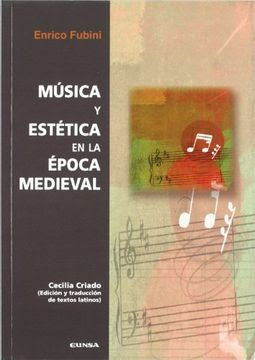
Musica y Estética En La Época Medieval [español]


¿Existe una estética de la música en la Edad Media?

No es fácil responder, puesto que la respuesta depende de la extensión y de la profundidad que se quiera otorgar al término "estética" de la música. Si por ella se entiende una reflexión en el plano filosófico sobre la música en cuanto arte, la respuesta no puede ser más que negativa. Sin embargo, si el término "estética" se define en un sentido más amplio como el conjunto de reflexiones y de pensamientos sobre la música, entonces la respuesta no puede ser más que afirmativa.

Por ello este libro se propone ofrecer al lector un panorama lo más completo posible de las más importantes líneas de pensamiento sobre la música en un periodo de más de diez siglos. Así emerge un cuadro claro y articulado, pero de una inesperada complejidad que demuestra cómo en la Edad Media se presentan ya "in nuce" los problemas que constituyeron las bases y las premisas para el nacimiento de la moderna estética musical y, al mismo tiempo, sus vínculos con el pensamiento filosófico de la Grecia antigua.

CONTENIDO

Introducción
-¿Qué se entiende en el Medievo por "estética musical"?
-El pensamiento medieval y la herencia griega
San Agustín y la ciencia "bene modulandi"
Boecio y la "musica mundana"
El valor de la educación musical a partir del siglo XI

Antología de textos

Textos de los siglos VI-VIII
-Isidorus Hispalensis: "Sententiae de musica"
-Nicetius: "De laude et utilitate spiritualium canticorum, quae fiunt in ecclesia Christiana; seu de psalmodiae bono"

Textos de los siglos IX-XI
-Adelboldus: "Epistola cum tractatu de musica instrumentali humanaque ac mundana"
-Rabanus Maurus: "De universo, liber XVIII"
-Aurelianus Reomensis: "Musica disciplina"
-Al-Farabi: "De ortu scientiarum. Dictio de cognoscenda causa unde orta est ars musice"
-Al-Farabi: "De scientiis"
-Odo: "De musica"
-Guido d'Arezzo: "Prologus in antiphonarium"
-Guido d'Arezzo: "Regulae rhytmicae in antiphonarii sui prologum prolatae"
-Henricus Augustensis: "Musica"
-Anónimo: "Scholia enchiriadis de arte musica"

Textos del siglo XII
-Anónimo: "De musica et tonis tractatus"
-Anónimo: "Fragmenta musica"
-Gundissalinus, Dominicus: "De divisione philosophiae Liber X, De Musica"
-Joannes Presbyter: "De musica antica et moderna"
-Roffredi, Guglielmo: "Summa musicae artis"

Textos del siglo XIII
-Anónimo: "Tractatus de musica"
-Anónimo: "De musica"
-Anónimo: "De expositione musice"
-Magistrum de Garlandia: "Introductio musice"
-Ieronimus de Moravia: "Tractatus de musica"
-Robert Kilwardby: "De ortu scientiarum"

Textos del siglo XIV
-Anónimo: "De musica mensurabili"
-Anónimo: "De octo tonis ubi nascuntur et oriuntur aut efficiuntur"
-Anónimo: "Metrologus liber"
-Anónimo: "Musica disciplina"
-Anónimo: "Quatuor principalia I"
-Engelbertus Admontensis: "De musica, tractatus primus"
-Johannes de Grocheo: "Theorya"
-Jacobus Leodiensis: "Speculum musicae. Liber primus"
-Marchetus de Padua: "Lucidarium, tractatus primus"
-Johannes de Muris: "De practica musica, seu de mensurabili"
-Johannes de Muris: "Speculum musicae, Liber primus"
-Philippe de Vitry: "Ars nova"
-Johannes Aegidius Zamorensis: "Ars musica"

Textos del siglo XV
-Adam de Fulda: "Musica, pars prima"
-Anónimo: "Ars musice"
-Anónimo XII: "Tractatus de musica"
-Burtius, Nicolaus: "Musices opusculum, tractatus primus"
-Carlerius, Egidius: "De cantu iubilationis armonicae et utilitate eius"
-Dionysius Lewis de Ryckel: "De arte musicali, prima pars: Musica speculativa"
-Gaffurio, Franchino: "Theorica musice, liber primus"
-Ramus de Pareia, Bartolomaeus: "Musica practica, prima pars, tractatus primus"
-Tallanderius, Petrus: "Lectura"
-Tinctoris, Johannes: "Complexus effectuum musices"
-Tinctoris, Johannes: "Diffinitorium musicae"
-Ugolino Urbevetanis: "Declaratio musicae disciplinae, liber primus"

Textos del siglo XVI
-Rossetti, Biagio: "Libellus de rudimentis musices"
-Sebastianus de Felstin: "Opusculum musicae"
-Finck, Hermann: "Practica musica"
-Salinas, Francisco: "De musica, liber primus"


Thursday, April 17, 2025

Historia del arte medieval


El período de la «Edad Media» es sin duda uno de los más complejos y heterogéneos de nuestro pasado. En aproximadamente un milenio, Europa y el mundo mediterráneo ha vivido numerosos procesos y transformaciones. En la presente obra se analizan las expresiones artísticas de dicho período, entendidas como documentos históricos que nos dicen mucho sobre las personas que las ejecutaron o las patrocinaron, y sobre las sociedades para las que fueron creadas. Esta «Historia del arte medieval», complementada con los recursos didácticos que el lector encontrará en una página web, pretende ser una herramienta para ayudar a la mejor comprensión de una época con evidente e injusta mala fama, pero que fue capaz de crear obras excelsas del patrimonio mundial, desde las catacumbas de Roma a la catedral de Burgos, pasando por Santa Sofía de Constantinopla o la Alhambra de Granada.  


Monday, March 24, 2025

Music, Myth and Story in Medieval and Early Modern Europe (Katherine Butler Samantha Bassler)


Myths and stories offer a window onto medieval and early modern musical culture. Far from merely offering material for musical settings, authoritative tales from classical mythology, ancient history and the Bible were treated as foundations for musical knowledge. Such myths were cited in support of arguments about the uses, effects, morality and preferred styles of music in sources as diverse as theoretical treatises, defences or critiques of music, art, sermons, educational literature and books of moral conduct. Newly written literary stories too were believed capable of moral instruction and influence, and were a medium through which ideas about music could be both explored and transmitted. How authors interpreted and weaved together these traditional stories, or created their own, reveals much about changing attitudes across the period.
Looking beyond the well-known figure of Orpheus, this collection explores the myriad stories that shaped not only musical thought, but also its styles, techniques and practices. The essays show that music itself performed and created knowledge in ways parallel to myth, and worked in tandem with old and new tales to construct social, political and philosophical views. This relationship was not static, however; as the Enlightenment dawned, the once authoritative gods became comic characters and myth became a medium forridicule. Overall, the book provides a foundation for exploring myth and story throughout medieval and early modern culture, and facilitating further study into the Enlightenment and beyond.


Sunday, March 16, 2025

The Cloisters Medieval Art and Architecture • MET


The Cloisters, a branch of The Metropolitan Museum of Art, is home to an extraordinary collection of art and architecture from medieval Europe. Praised after it opened in 1938 as "the crowning achievement of American museology," The Cloisters remains a triumph of design innovation. Incorporated into the very fabric of the building are portions of five medieval French cloisters and many other monuments arranged in an environment that thoughtfully evokes the grand religious spaces and domestic interiors of the Middle Ages.

Many of the galleries at The Cloisters reflect the original functions of the architectural fragments they include, such as the Fuentidueño apse, a massive half-dome transported block by block from a church in northern Spain. Others provide a harmonious setting for the works of art on display, which to date number more than five thousand objects from the Romanesque and Gothic periods. Three of the reconstructed cloisters also enclose beautiful gardens planted with species known from medieval herbals, tapestries, and other historical sources. Of the thousands of visitors who make pilgrimages to The Cloisters each year, many come not only to experience its incomparable artistic treasures but also to enjoy its seasonal flowerings and its majestic setting in Manhattan's Fort Tryon Park, with breathtaking views of the Hudson River and the Palisades.

More than 125 highlights of The Cloisters are presented here, beginning with some of the earliest pieces in the collection, from about A.D. 800, and finishing with later works that foretell the arrival of the Renaissance in western Europe. By surveying these elaborate tapestries, delicate carvings, and other objects in roughly the historical sequence in which they were created, we glimpse the evolving styles and artistic traditions of the Middle Ages and gain a more meaningful understanding of the contexts in which many of them appeared. Among the masterpieces on display at The Cloisters are the famed Unicorn Tapestries, the richly carved twelfth-century ivory cross associated with the abbey of Bury St. Edmunds, known as the "Cloisters Cross," the exquisite triptych by the Netherlandish painter Robert Campin, and many fine examples of manuscript illumination, enameling, metalwork, and stained glass.

Complete with digital color photography, map, floor plan, and glossary, The Cloisters: Medieval Art and Architecture is a contemporary guide that will reward students and enthusiasts of the Middle Ages as well as visitors seeing the Museum for the first time.


Friday, December 6, 2024

Polyphony in Medieval Paris The Art of Composing with Plainchant


Polyphony associated with the Parisian cathedral of Notre Dame marks a historical turning point in medieval music. Yet a lack of analytical or theoretical systems has discouraged close study of twelfth- and thirteenth-century musical objects, despite the fact that such creations represent the beginnings of musical composition as we know it. Is musical analysis possible for such medieval repertoires? Catherine A. Bradley demonstrates that it is, presenting new methodologies to illuminate processes of musical and poetic creation, from monophonic plainchant and vernacular French songs, to polyphonic organa, clausulae, and motets in both Latin and French. This book engages with questions of text-music relationships, liturgy, and the development of notational technologies, exploring concepts of authorship and originality as well as practices of quotation and musical reworking.


Saturday, October 5, 2024

Eastern Medieval Architecture The Building Traditions of Byzantium and Neighboring Lands


Aside from Hagia Sophia, the monuments of the Byzantine East are poorly understood today. This is in sharp contrast to the well-known architectural marvels of Western Europeâs Middle Ages. In this landmark survey, distinguished art historian Robert Ousterhout introduces readers to the rich and
diverse architectural traditions of the medieval Eastern Mediterranean.

The focus of the book is the Byzantine (or East Roman) Empire (324-1453 CE), with its capital in Constantinople, although the framework expands chronologically to include the foundations of Christian architecture in Late Antiquity and the legacy of Byzantine culture after the fall of Constantinople
in 1453. Geographically broad as well, this study includes architectural developments in areas of Italy, the Caucasus, the Near East, the Balkans, and Russia, as well as related developments in early Islamic architecture. Alternating chapters that address chronological or regionally-based
developments with thematic studies that focus on the larger cultural concerns, the book presents the architectural developments in a way that makes them accessible, interesting, and intellectually stimulating. In doing so, it also explains why medieval architecture in the East followed such a
different trajectory from that of the West.

Lavishly illustrated with hundreds of color photographs, maps, and line drawings, Eastern Medieval Architecture will establish Byzantine traditions to be as significant and admirable as those more familiar examples in Western Europe, and serve as an invaluable resource for anyone interested in
architectural history, Byzantium, and the Middle Ages.


Medieval Art


This book teaches the reader how to look at medieval art–which aspects of architecture, sculpture, or painting are important and for what reasons. It includes the art and building of what is now Western Europe from the second to the fifteenth centuries.


Saturday, September 28, 2024

Music in the Medieval West


Medieval music in its cultural, social, and intellectual contexts.

Margot Fassler's Music in the Medieval West imaginatively reconstructs the repertoire of the Middle Ages by drawing on a wide range of sources. In addition to highlighting the ceremonial and dramatic functions of medieval music (both sacred and secular), she pays special attention to the exchange of musical ideas, the development of musical notation and other methods of transmission, and the role of women in musical culture.

Western Music in Context: A Norton History comprises six volumes of moderate length, each written in an engaging style by a recognized expert. Authoritative and current, the series examines music in the broadest sense―as sounds notated, performed, and heard―focusing not only on composers and works, but also on broader social and intellectual currents.


Mirror of the Medieval World • MET


Thursday, September 12, 2024

Painting and Illumination in Early Renaissance Florence 1300 1450


The sumptuous illuminated manuscripts of Early Renaissance Florence have traditionally been overshadowed by the better-known monumental arts of the period. The Metropolitan Museum of Art seeks to redress the imbalance by mounting an exhibition of Florentine miniatures produced between 1300 and 1450 from collections in Europe and the United States. A selective group of bound manuscripts and single leaves from disassembled books is joined with panel paintings and works in perishable media—such as drawings, embroideries, and reverse painting on glass—created by the same masters. Some of the important books whose pages have been disseminated are here reconstructed for the first time since they were cut apart.
During the incredible efflorescence of the visual arts in Florence of the fourteenth and fifteenth centuries, some artists turned their hands equally to various media, manuscript painting among them. In the fourteenth century these included one of the most mysterious and engaging personalities of early Renaissance Italian painting, the Master of the Codex of Saint George, as well as such artists as Pacino di Bonaguida, the Maestro Dadesco, the Master of the Dominican Effigies, Don Silvestro dei Gherarducci, and Don Simone Camaldolese. Toward the close of the fourteenth century, there emerged in the same Camaldolese ambiance where Don Silvestro and Don Simone flourished a major artist of international stature, Lorenzo Monaco. Don Lorenzo eventually left the monastery to operate a secular workshop that became an important force in the early fifteenth century Florentine art world, producing lavish illuminated manuscripts in addition to frescoes, altarpieces, and numerous picture for a growing domestic market. One of Don Lorenzo's greatest legacies may have been the training of Fra Angelico, a Dominican monk, and a painter of surpassing genius, who is in large part responsible for the evolution of a truly Renaissance style in the visual arts. The innovative naturalism of Angelico and his followers effectively brings to a close the great age of illumination in Early Renaissance Florence. By way of introduction to the objects themselves are three essays. The first, by Laurence B. Kanter, presents an overview of Florentine illumination between 1300 and 1450 and thumbnail sketches of the artists featured in this volume. The second essay, by Barbara Drake Boehm, focuses on the types of books illuminators helped to create. As most of them were liturgical, her contribution limns for the modern reader the medieval religious ceremonies in which the manuscripts were utilized. Carl Brandon Strehlke here publishes important new material about Fra Angelico's early years and patrons, the result of the author's recent archival research in Florence. In addition to the three essays elucidating different aspects of the topic, this volume contains 55 entries on works of art, accompanied by 296 illustrations, 120 of them in color. Each entry includes a descriptive commentary, a provenance, and references. A bibliography and an index appear as well.


Tuesday, July 23, 2024

Medieval church architecture by Jon Cannon


Britain is a treasure trove of medieval architecture. Almost every village and town in the land has a church that was built during the period, whose history is legible – to those who know how to look – in every arch, capital, roof vault, and detail of window tracery. By learning how to identify the stylistic phases that resulted from shifts in architectural fashion, it is possible to date each part of a church to within a decade or two; this book introduces all the key features of each succeeding style, from Anglo-Saxon and Norman through to the three great gothic styles, Early English, Decorated and Perpendicular. It will be indispensable to anyone who enjoys exploring medieval churches, and who wants to understand and appreciate their beauty more deeply.