Showing posts with label Johnny Dankworth. Show all posts

Monday, October 20, 2025

John Dankworth • The Big Band Sound Of Johnny Dankworth


 John Phillip William Dankworth, (20 de septiembre de 1927 – 6 de febrero de 2010), conocido en sus inicios musicales como Johnny Dankworth, fue un compositor de jazz, saxofonista y clarinetista inglés.
Sir John Phillip William Dankworth, CBE (20 September 1927 – 6 February 2010), known in his early career as Johnny Dankworth, was an English jazz composer, saxophonist and clarinetist. He was the husband of jazz singer Dame Cleo Laine, who survives him; they married in 1958.  
More info ...


Tuesday, June 3, 2025

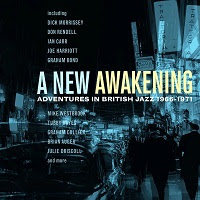
VA • A New Awakening; Adventures in British Jazz 1966-1971


Review by Matt Collar
The 2025 anthology New Awakening: Adventures in British Jazz 1966-1971 spotlights a vibrant and transformative era for jazz in Britain. Whether it was a passion for New Orleans trad jazz in the 1940s or a mod take on blues, rock, and Motown soul in the '60s, Britain has a long history of adopting American musical traditions and making them their own. The same creative and cultural process happened to post-bop and avant-garde jazz beginning in the late '60s. Fueled by the already potent influence of artists like John Coltrane, Miles Davis, and Ornette Coleman, British jazz musicians began pushing the boundaries of their own playing. Throw into the mix the cultural melting pot of cities like London, where immigrants from Africa, India, and the Caribbean commingled their own musical traditions right alongside the burgeoning psychedelic and progressive rock movements, and British jazz musicians were poised for a creative explosion. New Awakening illuminates this heady period, digging into the forward-minded work of artists like trumpeter Ian Carr, bassist Graham Collier, and saxophonist Dick Morrissey, the latter of whose minor blues "Storm Warning" opens the box set, smartly setting up the collection's tone of dark-sunglasses-in-the-nightclub hipness. Like that track, these are often rhythmically kinetic, harmonically sophisticated recordings that straddle the line between hard-swinging acoustic jazz and sonically textured electric fusion. It's a vibe that grows even more avant-garde as the collection moves forward, revealing the sprawling big-band orchestrations of John Dankworth's "Return from the Ashes," the blown-out Hammond organ reverie of the Graham Bond Organization's "Wade in the Water," and the spacey free-jamming of Nucleus' "Elastic Rock." They delve further into this genre-crossing style towards the latter half of the set, showcasing progressive tracks like Brian Auger's electric fusion take on Herbie Hancock's "Maiden Voyage" and Julie Driscoll's acid-rock hippie-freak anthem "A New Awakening" (from which the box set borrows its title). As if to underline the connection between the experimental jazz and progressive rock in Britain at the time, they even include Cream bassist Jack Bruce's wholly improvised free-bop number "Over the Cliff," from his sole 1970 instrumental album, Things We Like. 
https://www.allmusic.com/album/new-awakening-adventures-in-british-jazz-1966-1971-mw0004434048

///////


Reseña de Matt Collar
La antología de 2025 New Awakening: Adventures in British Jazz 1966-1971 destaca una época vibrante y transformadora para el jazz en Gran Bretaña. Ya fuera por la pasión por el jazz tradicional de Nueva Orleans en la década de 1940 o por la versión mod del blues, el rock y el soul de Motown en los años 60, Gran Bretaña tiene una larga historia de adopción de las tradiciones musicales estadounidenses y de hacerlas propias. El mismo proceso creativo y cultural se produjo con el post-bop y el jazz de vanguardia a partir de finales de los años 60. Impulsados por la ya potente influencia de artistas como John Coltrane, Miles Davis y Ornette Coleman, los músicos de jazz británicos comenzaron a ampliar los límites de su propia forma de tocar. Si a esto le añadimos el crisol cultural de ciudades como Londres, donde inmigrantes de África, India y el Caribe mezclaron sus propias tradiciones musicales con los florecientes movimientos psicodélicos y de rock progresivo, los músicos de jazz británicos estaban listos para una explosión creativa. New Awakening ilumina este apasionante periodo, profundizando en el trabajo vanguardista de artistas como el trompetista Ian Carr, el bajista Graham Collier y el saxofonista Dick Morrissey, cuyo blues menor «Storm Warning» abre el álbum recopilatorio, estableciendo inteligentemente el tono de la colección: la elegancia de las gafas de sol oscuras en un club nocturno. Al igual que ese tema, se trata a menudo de grabaciones rítmicamente cinéticas y armónicamente sofisticadas que se sitúan en la frontera entre el jazz acústico de swing duro y la fusión eléctrica con texturas sonoras. Es una vibración que se vuelve aún más vanguardista a medida que avanza la colección, revelando las extensas orquestaciones de big band de «Return from the Ashes» de John Dankworth, el ensueño del órgano Hammond de «Wade in the Water» de Graham Bond Organization y la improvisación espacial de «Elastic Rock» de Nucleus. Profundizan aún más en este estilo que traspasa los géneros hacia la segunda mitad del álbum, con temas progresivos como la versión de fusión eléctrica de Brian Auger de «Maiden Voyage» de Herbie Hancock y el himno hippie-freak de acid rock de Julie Driscoll «A New Awakening» (del que el álbum recopila toma su título). Como para subrayar la conexión entre el jazz experimental y el rock progresivo en la Gran Bretaña de la época, incluso incluyen el tema free-bop totalmente improvisado «Over the Cliff», del bajista de Cream Jack Bruce, extraído de su único álbum instrumental de 1970, Things We Like. 
https://www.allmusic.com/album/new-awakening-adventures-in-british-jazz-1966-1971-mw0004434048


Friday, April 11, 2025

Johnny Dankworth • Journey Into Jazz


John Phillip William Dankworth, (20 de septiembre de 1927 – 6 de febrero de 2010), conocido en sus inicios musicales como Johnny Dankworth, fue un compositor de jazz, saxofonista y clarinetista inglés. Info completa ...

///////

Sir John Phillip William Dankworth, CBE (20 September 1927 – 6 February 2010), known in his early career as Johnny Dankworth, was an English jazz composer, saxophonist and clarinetist. He was the husband of jazz singer Dame Cleo Laine, who survives him; they married in 1958. More info ...


Wednesday, August 7, 2024

Joe Harriott & Co Feat. John Dankworth & Tubby Hayes • Helter Skelter


Biography
Joe Harriott's music goes virtually unheard today, yet the alto saxophonist exerted a powerful influence on early free jazz in England. The Jamaican-born and raised Harriott played with his countrymen, trumpeter Dizzy Reece and tenor saxophonist Wilton "Bogey" Gaynair, before emigrating to England in 1951. In London, Harriott worked freelance and in the band of trumpeter Pete Pitterson. In 1954, he landed an important gig with drummer Tony Kinsey; the next year he played in saxophonist Ronnie Scott's big band. His first album as a leader was 1959's Southern Horizon. Originally a bop-oriented player, Harriott gradually grew away from the conventions of that style. During a 1960 hospital stay, Harriott envisaged a new method of improvisation that, to an extent, paralleled the innovations of Ornette Coleman. Harriott was initially branded a mere imitator of Coleman, but close listening to both men reveals distinct differences in their respective styles. Harriott manifested a more explicit philosophical connection with bebop, for one thing, and his music was more concerned with ensemble interaction than was Coleman's early work. The 1960 album Free Form, which included trumpeter Shake Keane, pianist Pat Smythe, bassist Coleridge Goode, and drummer Phil Seaman, illustrated Harriott's new techniques. Beginning in 1965, he began fusing jazz with various types of world folk musics. He collaborated with Indian musician John Mayer on a record -- 1967's Indo-Jazz Suite -- that utilized modal and free jazz procedures. The album's traditional jazz quintet instrumentation was augmented by a violin, sitar, tambura, and tabla. Harriott's recorded output was scarce and virtually none of it remains in print.
https://www.allmusic.com/artist/joe-harriott-mn0000136875/biography

///////

Biografía
La música de Joe Harriott es prácticamente inaudita hoy en día, pero el saxofonista alto ejerció una poderosa influencia en el free jazz temprano en Inglaterra. Harriott, nacido y criado en Jamaica, tocó con sus compatriotas, el trompetista Dizzy Reece y el saxofonista tenor Wilton "Bogey" Gaynair, antes de emigrar a Inglaterra en 1951. En Londres, Harriott trabajó por cuenta propia y en la banda del trompetista Pete Pitterson. En 1954, consiguió un importante concierto con el baterista Tony Kinsey; al año siguiente tocó en la gran banda del saxofonista Ronnie Scott. Su primer álbum como líder fue Southern Horizon de 1959. Originalmente orientado al bop, Harriott se alejó gradualmente de las convenciones de ese estilo. Durante una estancia en el hospital en 1960, Harriott concibió un nuevo método de improvisación que, hasta cierto punto, era paralelo a las innovaciones de Ornette Coleman. En un principio, Harriott fue tildado de mero imitador de Coleman, pero al escuchar atentamente a ambos hombres se observan claras diferencias en sus respectivos estilos. Harriott manifestó una conexión filosófica más explícita con el bebop, por un lado, y su música se preocupaba más por la interacción con el conjunto que por la obra temprana de Coleman. El álbum Free Form de 1960, que incluía al trompetista Shake Keane, al pianista Pat Smythe, al bajista Coleridge Goode y al batería Phil Seaman, ilustraba las nuevas técnicas de Harriott. A partir de 1965, comenzó a fusionar el jazz con varios tipos de música folclórica mundial. Colaboró con el músico indio John Mayer en un disco, el Indo-Jazz Suite de 1967, que utilizaba procedimientos de jazz modal y libre. La instrumentación tradicional del quinteto de jazz del álbum fue aumentada con un violín, un sitar, una tambura y una tabla. La producción grabada de Harriott fue escasa y prácticamente nada de ella permanece en la imprenta.
https://www.allmusic.com/artist/joe-harriott-mn0000136875/biography


Tuesday, May 14, 2024

Johnny Dankworth • Five Steps To Dankworth


John Phillip William Dankworth, (20 de septiembre de 1927 – 6 de febrero de 2010), conocido en sus inicios musicales como Johnny Dankworth, fue un compositor de jazz, saxofonista y clarinetista inglés. Info completa ...

///////

Sir John Phillip William Dankworth, CBE (20 September 1927 – 6 February 2010), known in his early career as Johnny Dankworth, was an English jazz composer, saxophonist and clarinetist. He was the husband of jazz singer Dame Cleo Laine, who survives him; they married in 1958. More info ...


Monday, January 22, 2024

Johnny Dankworth • London To Newport


John Phillip William Dankworth, (20 de septiembre de 1927 – 6 de febrero de 2010), conocido en sus inicios musicales como Johnny Dankworth, fue un compositor de jazz, saxofonista y clarinetista inglés.
Sir John Phillip William Dankworth, CBE (20 September 1927 – 6 February 2010), known in his early career as Johnny Dankworth, was an English jazz composer, saxophonist and clarinetist. He was the husband of jazz singer Dame Cleo Laine, who survives him; they married in 1958.