egroj world: Ralph Towner
Showing posts with label Ralph Towner. Show all posts

Friday, August 22, 2025

John Abercrombie & Ralph Towner • Sargasso Sea


Review by Michael G. Nastos
John Abercrombie and Ralph Towner have forever been tied to the ECM roster as leaders and individualists, and initially it was hard to imagine their styles being compatible. As an amplified electric guitarist, Abercrombie's steely, sometime unearthly sound was an uneven puzzle piece alongside the graphic, stoic, classically oriented style of Towner. Yet on Sargasso Sea, there are several instances where they merge together as one, feeling their way through pure improvisations, angular and colorful motifs, or thematic nuances and a certain strata of consciousness that makes a world of common sense. There are selections where they both play acoustic guitars, but it is mostly Abercrombie's hopped up sound through an amp over Towner's bold and beautiful unplugged instrument, tossing in a piano overdubbed on two tracks. Where selections such as "Fable" are folksy and far from overwrought, "Avenue" lopes gracefully and the exceptional "Parasol" is semi-lyrical. Abercrombie's guitar stands in stark contrast on the near macabre title track, and more so during "Elbow Room" with heavier moans, cries, vibrato, echoplex slide incursions, and Towner as an afterthought. The best track "Staircase," with twin acoustic guitars, sports tricky intricate lines and changes only virtuosi can achieve. In laid-back surrender for "Romantic Descension," and in passive voicings on "Over & Gone," Towner need not strain to make his brilliant voice heard clearly. An uneven recording for many listeners and critics, Sargasso Sea deserves a second chance, not as an absolutely flawed, imperfect, or unbalanced effort. Like a tale of two cities, it stands as a unique project, perhaps deserving a more refined approach. Though there was a follow-up album released, a third-time's-the-charm contemporary revisit from these masterful guitar geniuses would be welcome. 
https://www.allmusic.com/album/sargasso-sea-mw0000198776


Delightful introduction to the guitar duo of Abercrombie and Towner, whose strikingly different styles prove remarkably compatible. Towner: “With Abercrombie I can play as much as when playing solo and still get to ply my skills as accompanist.”
https://ecmrecords.com/product/sargasso-sea-john-abercrombie-ralph-towner/

///////


Reseña de Michael G. Nastos
John Abercrombie y Ralph Towner siempre han estado vinculados a la lista de ECM como líderes e individualistas, e inicialmente era difícil imaginar que sus estilos fueran compatibles. Como guitarrista eléctrico amplificado, el sonido acerado y en algún momento sobrenatural de Abercrombie era una pieza desigual del rompecabezas junto con el estilo gráfico, estoico y de orientación clásica de Towner. Sin embargo, en el mar de los Sargazos, hay varios casos en los que se fusionan como uno solo, abriéndose camino a través de puras improvisaciones, motivos angulosos y coloridos, o matices temáticos y ciertos estratos de conciencia que crean un mundo de sentido común. Hay selecciones en las que ambos tocan guitarras acústicas, pero en su mayoría es el sonido mejorado de Abercrombie a través de un amplificador sobre el audaz y hermoso instrumento desenchufado de Towner, lanzando un piano sobregrabado en dos pistas. Donde selecciones como "Fábula" son folclóricas y están lejos de ser exageradas, "Avenue" lopes con gracia y la excepcional "Parasol" es semi-lírica. La guitarra de Abercrombie contrasta marcadamente en la pista principal casi macabra, y más aún durante "Elbow Room" con gemidos, gritos, vibrato, incursiones en toboganes echoplex y Towner como idea de último momento. La mejor pista "Staircase", con guitarras acústicas gemelas, líneas intrincadas y complicadas y cambios que solo los virtuosos pueden lograr. En una rendición relajada para "Romantic Descension", y en voces pasivas en "Over & Gone", Towner no necesita esforzarse para que su brillante voz se escuche con claridad. Una grabación desigual para muchos oyentes y críticos, Sargasso Sea merece una segunda oportunidad, no como un esfuerzo absolutamente defectuoso, imperfecto o desequilibrado. Como una historia de dos ciudades, se erige como un proyecto único, quizás mereciendo un enfoque más refinado. Aunque se lanzó un álbum de seguimiento, sería bienvenida una tercera revisión contemporánea del encanto de estos magistrales genios de la guitarra. 
https://www.allmusic.com/album/sargasso-sea-mw0000198776


Deliciosa introducción al dúo de guitarras de Abercrombie y Towner, cuyos estilos sorprendentemente diferentes resultan notablemente compatibles. Towner: "Con Abercrombie puedo tocar tanto como cuando toco solo y aún así desarrollar mis habilidades como acompañante.”
https://ecmrecords.com/product/sargasso-sea-john-abercrombie-ralph-towner/


www.ecmrecords.com/john-abercrombie ...
www.ralphtowner.com ...


Thursday, March 13, 2025

Oregon • Roots in the Sky


oregonband.com ...

Friday, February 7, 2025

Oregon • Northwest Passage


Review
by Scott Yanow
Oregon's first recording in a while features the three surviving original members (Ralph Towner on guitar and keyboards, bassist Glen Moore, and Paul McCandless, who switches between soprano, English horn, sopranino, oboe and bass clarinet) with either Arto Tuncboyaciyan or Mark Walker on percussion. They perform 14 originals that usually avoid blue notes, making the music sound very folk-oriented. There is plenty of variety in the atmospheres, and the consistently intriguing music should appeal to many listeners, including those who are into mood music, world music or folk songs in addition to jazz.
https://www.allmusic.com/album/northwest-passage-mw0000030246

///////


Reseña
por Scott Yanow
La primera grabación de Oregon en un tiempo presenta a los tres miembros originales supervivientes (Ralph Towner a la guitarra y los teclados, el bajista Glen Moore y Paul McCandless, que alterna entre soprano, corno inglés, sopranino, oboe y clarinete bajo) con Arto Tuncboyaciyan o Mark Walker a la percusión. Interpretan 14 originales que suelen evitar las notas azules, haciendo que la música suene muy orientada al folk. Las atmósferas son muy variadas, y la música, siempre intrigante, debería atraer a muchos oyentes, incluidos los aficionados a la música ambiental, la música del mundo o las canciones populares, además del jazz.
https://www.allmusic.com/album/northwest-passage-mw0000030246


oregonband.com ...


Saturday, February 1, 2025

Oregon • Troika


For over three decades OREGON has inspired audiences in renowned concert halls including Carnegie Hall, Lincoln Center, Berlin Philharmonic Hall, and Vienna’s Mozartsaal; at international jazz clubs and major festivals such as Montreux, Pori, Berlin, Montreal, and Newport Jazz; and on tours throughout the U.S., Canada, Mexico, South America, Eastern and Western Europe, India, Pakistan, Nepal, Sri Lanka, Bangladesh, Algeria, and Australia.

OREGON began in 1960 at the University of Oregon with undergraduate students Ralph Towner and Glen Moore who formed a musical friendship on bass and piano inspired by Bill Evans and Scott LaFaro and later by Brazilian music. Moore earned a degree in history and literature and Towner completed his in composition, taking up guitar in the process. In the mid 60’s, they both traveled to Europe. Towner studied classical guitar in Vienna with Karl Scheit; Moore studied classical bass in Copenhagen and sat in with such greats as Ben Webster and Dexter Gordon. By 1969, both were living in New York City, playing with a community of young musicians who formed the great fusion bands of the ‘70’s including Weather Report and the Mahavishnu Orchestra.

Performing with folksinger Tim Hardin at the ‘69 Woodstock Festival, Towner and Moore encountered two members of the Paul Winter Consort who introduced them to the music of that group. In the studio with Hardin, Ralph and Glen connected with sitar and tabla player Collin Walcott. He was a graduate of Indiana University under George Gaber, studied ethnomusicology at UCLA and served as road manager for Ravi Shankar and Alla Rakha. On a break at that session, Ralph and Collin played their first guitar/sitar duet in the hallways of Columbia Studios.

By 1970 Ralph, Glen, and Collin had joined the Paul Winter Consort for a 50-concert U.S. tour where they quickly formed an alliance with its oboist, Paul McCandless, who had studied at the Manhattan School of Music under Toscanini’s first oboe player, Robert Bloom. During that initial tour, Ralph began composing a new repertoire of original material including “Icarus”, which has since become a standard. The early development of OREGON took root in motel rooms and college dormitories where, in private jam sessions, Towner, Walcott,Moore and McCandless began investigating new musical possibilities after getting a taste of collective improvisation on tour with the Consort. Winter’s group introduced them to the idea of performing concerts with uncommon combinations of instruments in an eclectic variety of musical styles. Incorporating these elements, OREGON emerged with a unique synthesis of European classical instrumentation, American jazz harmony, and ethnic influences from around the globe. The notion of recording their own music first arose at a party, where Towner and Walcott were entertaining friends in their guitar/sitar configuration. The group was offered the use of an 8-track studio in the Hollywood Hills, known as “The Farm.” A short-lived independent label in Los Angeles subsidized six weeks of taping and mixing. The company did not succeed in selling the results to a major label and the tape went into storage for ten years before its Vanguard release on disc called—Our First Record.

In 1971 the band made its debut in New York City, calling themselves Thyme—Music of Another Present Era, a phrase designed to answer the question. “ What kind of music do you play?” McCandless later proposed the name “OREGON” alluding to Ralph and Glen’s nostalgic reminiscences of their home state. The next year, Vanguard signed OREGON, recording a new set of original compositions which became the band’s debut LP, Music of Another Present Era. In that same period, they made Trios and Solos for ECM, a new label in Europe. The Vanguard album introduced them to their American audience and through their association with ECM, they developed their European following with tours beginning in 1974 where they received critical acclaim and growing recognition in the international community.

Six years and nine albums later, OREGON moved to Elektra/Asylum Records. Its first release on that label, Out of the Woods, reached a decidedly wider audience and was included in the 101 Best Jazz Albums list by Len Lyons. As the years spanned and the group’s versatility grew, bass clarinet, soprano and sopranino saxes, ethnic flutes, flugelhorn, French horn, clarinet, dulcimer, electric bass, violin, viola, and a myriad of percussion instruments all found their way into OREGON’s instrumentation which already included Towner’s nylon and 12 string guitars and piano, McCandless’ oboe and English horn, Moore’s 1715 Klotz bass and Walcott’s sitar and tablas.

At the end of OREGON’s contract with Elektra, and with the birth of Collin Walcott’s daughter in 1980, the band members took a year long sabbatical during which they pursued their individual solo careers. When they reassembled, OREGON’s unique fusion gained an electric dimension through Towner’s addition of keyboard synthesizers. The group recorded two more albums for ECM with the original personnel.

They had reached a peak of popularity when in November 1984, Walcott died in an auto accident in the former East Germany, leaving the ECM album Crossing as his final document. This left OREGON with the seemingly impossible task of filling an enormous vacuum. They reunited for the first time in May 1985 at a memorial concert for Walcott in New York where the dazzling Indian percussionist Trilok Gurtu joined them to pay tribute. Trilok, who studied tablas and jazz drumming, accepted an invitation to work with OREGON in 1986 which included a State Department tour of the Indian subcontinent. Over a five-year period, he played on three albums with the band: Ecotopia on ECM, 45th Parallel on Epic, and Always, Never, and Forever, the band’s first recording on Intuition. After the departure of Gurtu, the three original members continued their creative development as a trio making two CDs—Troika and Beyond Words.

For the 1996 Intuition recording “Northwest Passage”, the group incorporated two masterful percussionists, former Chicagoan Mark Walker and Arto Tuncboyician of Armenia. Walker, who also performs and records with Cuban expatriate Paquito D’Rivera, has become the new fourth member of OREGON and together with Towner, Moore, and McCandless traveled to Moscow in June 1999 to record the double CD for Intuition entitled “Oregon In Moscow.” This project is the band’s debut recording of their orchestral repertoire. Developing since the Winter Consort days, this prodigious body of work had been performed with the St. Paul, Philadelphia, Indianapolis, Stavanger, Freiburg, and Stuttgart Orchestras, but never documented. Oregon In Moscow, produced by Steve Rodby of the Pat Metheny Group fame, features the band members as composers, orchestrators, and soloists in collaboration with the Moscow Tchaikovsky Symphony Orchestra. In 2001 this album garnered four Grammy nominations. OREGON’s most recent production, a live CD recorded during a spirited week at Yoshi’s, San Francisco Bay Area’s premier jazz club, was released in 2002. Not since 1980 has the group’s electrifying and poignant performances been captured on tape.
https://musicians.allaboutjazz.com/oregon


///////

Durante más de tres décadas, OREGON ha inspirado al público en salas de conciertos de renombre, como el Carnegie Hall, el Lincoln Center, la Filarmónica de Berlín y la Mozartsaal de Viena; en clubes internacionales de jazz y en los principales festivales, como los de Montreux, Pori, Berlín, Montreal y Newport Jazz; y en giras por los Estados Unidos, el Canadá, México, América del Sur, Europa oriental y occidental, la India, el Pakistán, Nepal, Sri Lanka, Bangladesh, Argelia y Australia.

OREGON comenzó en 1960 en la Universidad de Oregón con los estudiantes universitarios Ralph Towner y Glen Moore que formaron una amistad musical en el bajo y el piano inspirada por Bill Evans y Scott LaFaro y más tarde por la música brasileña. Moore obtuvo un título en historia y literatura y Towner completó el suyo en composición, tomando la guitarra en el proceso. A mediados de los 60, ambos viajaron a Europa. Towner estudió guitarra clásica en Viena con Karl Scheit; Moore estudió bajo clásico en Copenhague y se sentó con grandes como Ben Webster y Dexter Gordon. En 1969, ambos vivían en la ciudad de Nueva York, tocando con una comunidad de jóvenes músicos que formaron las grandes bandas de fusión de los años 70, incluyendo Weather Report y la Mahavishnu Orchestra.

Actuando con el cantante Tim Hardin en el Festival de Woodstock del 69, Towner y Moore conocieron a dos miembros del Paul Winter Consort que les introdujeron en la música de ese grupo. En el estudio con Hardin, Ralph y Glen se conectaron con el sitar y el tablista Collin Walcott. Se graduó en la Universidad de Indiana bajo la dirección de George Gaber, estudió etnomusicología en la UCLA y sirvió como road manager para Ravi Shankar y Alla Rakha. En un descanso de esa sesión, Ralph y Collin tocaron su primer dúo de guitarra/sitar en los pasillos de los estudios Columbia.

En 1970 Ralph, Glen y Collin se unieron al Paul Winter Consort para una gira de 50 conciertos en EE.UU. donde rápidamente formaron una alianza con su oboísta, Paul McCandless, que había estudiado en la Escuela de Música de Manhattan con el primer oboísta de Toscanini, Robert Bloom. Durante esa gira inicial, Ralph comenzó a componer un nuevo repertorio de material original que incluía "Icarus", que desde entonces se ha convertido en un estándar. El desarrollo temprano de OREGON se arraigó en las habitaciones de moteles y dormitorios universitarios donde, en jam sessions privadas, Towner, Walcott, Moore y McCandless comenzaron a investigar nuevas posibilidades musicales después de probar la improvisación colectiva en la gira con el Consort. El grupo de Winter les introdujo en la idea de realizar conciertos con combinaciones poco comunes de instrumentos en una variedad ecléctica de estilos musicales. Incorporando estos elementos, OREGON surgió con una síntesis única de la instrumentación clásica europea, la armonía del jazz americano y las influencias étnicas de todo el mundo. La idea de grabar su propia música surgió por primera vez en una fiesta, en la que Towner y Walcott estaban entreteniendo a sus amigos en su configuración de guitarra/sitar. Al grupo se le ofreció el uso de un estudio de 8 pistas en las colinas de Hollywood, conocido como "La Granja". Un sello independiente de corta duración en Los Ángeles subvencionó seis semanas de grabación y mezcla. La compañía no logró vender los resultados a un sello importante y la cinta se guardó durante diez años antes de su lanzamiento de Vanguard en el disco llamado "Our First Record".

En 1971 la banda debutó en la ciudad de Nueva York, llamándose a sí mismos Thyme-Music of Another Present Era, una frase diseñada para responder a la pregunta. "¿Qué tipo de música tocas?" McCandless propuso más tarde el nombre "OREGON" en alusión a las nostálgicas reminiscencias de Ralph y Glen en su estado natal. Al año siguiente, Vanguard firmó OREGON, grabando un nuevo conjunto de composiciones originales que se convirtió en el LP de debut de la banda, Music of Another Present Era. En ese mismo período, hicieron Tríos y Solos para ECM, un nuevo sello en Europa. El álbum Vanguard los presentó a su público americano y a través de su asociación con ECM, desarrollaron sus seguidores europeos con giras que comenzaron en 1974, donde recibieron la aclamación de la crítica y un creciente reconocimiento en la comunidad internacional.

Seis años y nueve álbumes más tarde, OREGON se trasladó a Elektra/Asylum Records. Su primer lanzamiento en ese sello, Out of the Woods, llegó a un público decididamente más amplio y fue incluido en la lista de los 101 mejores álbumes de jazz de Len Lyons. Con el paso de los años y la versatilidad del grupo creció, clarinete bajo, saxos soprano y sopranino, flautas étnicas, fliscorno, trompa, clarinete, dulcimer, bajo eléctrico, violín, viola, y una miríada de instrumentos de percusión se abrieron camino en la instrumentación de OREGON que ya incluía el nylon de Towner y las 12 guitarras de cuerda y el piano, el oboe y el corno inglés de McCandless, el bajo Klotz de 1715 de Moore y el sitar y las tablas de Walcott.

Al final del contrato de OREGON con Elektra, y con el nacimiento de la hija de Collin Walcott en 1980, los miembros de la banda se tomaron un año sabático durante el cual siguieron sus carreras individuales en solitario. Cuando volvieron a unirse, la fusión única de OREGON ganó una dimensión eléctrica con la adición de Towner de sintetizadores de teclado. El grupo grabó dos álbumes más para ECM con el personal original.

Habían alcanzado un pico de popularidad cuando en noviembre de 1984, Walcott murió en un accidente de coche en la antigua Alemania del Este, dejando el álbum de ECM Crossing como su documento final. Esto dejó a OREGON con la aparentemente imposible tarea de llenar un enorme vacío. Se reunieron por primera vez en mayo de 1985 en un concierto conmemorativo de Walcott en Nueva York donde el deslumbrante percusionista indio Trilok Gurtu se les unió para rendirles homenaje. Trilok, que estudió tablas y batería de jazz, aceptó una invitación para trabajar con OREGON en 1986 que incluía una gira del Departamento de Estado por el subcontinente indio. Durante un período de cinco años, tocó en tres álbumes con la banda: Ecotopia en ECM, 45th Parallel en Epic, y Always, Never, and Forever, la primera grabación de la banda en Intuition. Tras la salida de Gurtu, los tres miembros originales continuaron su desarrollo creativo como trío haciendo dos CD-Troika y Beyond Words.

Para la grabación de Intuition de 1996 "Northwest Passage", el grupo incorporó a dos magistrales percusionistas, el ex chicagüense Mark Walker y Arto Tuncboyician de Armenia. Walker, que también actúa y graba con el expatriado cubano Paquito D'Rivera, se ha convertido en el nuevo cuarto miembro de OREGON y junto con Towner, Moore y McCandless viajó a Moscú en junio de 1999 para grabar el doble CD de Intuición titulado "Oregón en Moscú". Este proyecto es el debut de la banda en la grabación de su repertorio orquestal. Desarrollado desde los días de Winter Consort, este prodigioso cuerpo de trabajo había sido interpretado con las orquestas de St. Paul, Filadelfia, Indianápolis, Stavanger, Friburgo y Stuttgart, pero nunca fue documentado. Oregon In Moscow, producida por Steve Rodby del Grupo Pat Metheny, presenta a los miembros de la banda como compositores, orquestadores y solistas en colaboración con la Orquesta Sinfónica Tchaikovsky de Moscú. En 2001 este álbum obtuvo cuatro nominaciones al Grammy. La producción más reciente de OREGON, un CD en vivo grabado durante una animada semana en Yoshi's, el principal club de jazz del área de la bahía de San Francisco, fue lanzado en 2002. Desde 1980 no se han grabado las electrificantes y conmovedoras actuaciones del grupo.
https://musicians.allaboutjazz.com/oregon


oregonband.com ...


Tuesday, December 24, 2024

Oregon • Violin


Review
by Ron Wynn
Fine late '70s material from the acoustic band Oregon. Despite the title, it's not violin-dominated material, but their standard blend of Asian, European, African, and American elements and influences.
https://www.allmusic.com/album/violin-mw0000222938

///////


Reseña
por Ron Wynn
Buen material de finales de los 70 de la banda acústica Oregon. A pesar del título, no se trata de un material dominado por el violín, sino de su habitual mezcla de elementos e influencias asiáticas, europeas, africanas y americanas.
https://www.allmusic.com/album/violin-mw0000222938


oregonband.com ...


Friday, September 13, 2024

Oregon • In Stride


oregonband.com ...


Wednesday, August 14, 2024

VA • '70S Jazz Fusion


Pat Metheny, Frank Zappa, McCoy Tyner, Ralph Towner, Stevie Wonder, Return To Forever, Chet Baker, Noel Pointer, Larry Coryell, Steely Dan, Chick Corea, Julian Priester ...


Friday, June 21, 2024

Oregon • Distant Hills


For over three decades OREGON has inspired audiences in renowned concert halls including Carnegie Hall, Lincoln Center, Berlin Philharmonic Hall, and Vienna’s Mozartsaal; at international jazz clubs and major festivals such as Montreux, Pori, Berlin, Montreal, and Newport Jazz; and on tours throughout the U.S., Canada, Mexico, South America, Eastern and Western Europe, India, Pakistan, Nepal, Sri Lanka, Bangladesh, Algeria, and Australia.

OREGON began in 1960 at the University of Oregon with undergraduate students Ralph Towner and Glen Moore who formed a musical friendship on bass and piano inspired by Bill Evans and Scott LaFaro and later by Brazilian music. Moore earned a degree in history and literature and Towner completed his in composition, taking up guitar in the process. In the mid 60’s, they both traveled to Europe. Towner studied classical guitar in Vienna with Karl Scheit; Moore studied classical bass in Copenhagen and sat in with such greats as Ben Webster and Dexter Gordon. By 1969, both were living in New York City, playing with a community of young musicians who formed the great fusion bands of the ‘70’s including Weather Report and the Mahavishnu Orchestra.

Performing with folksinger Tim Hardin at the ‘69 Woodstock Festival, Towner and Moore encountered two members of the Paul Winter Consort who introduced them to the music of that group. In the studio with Hardin, Ralph and Glen connected with sitar and tabla player Collin Walcott. He was a graduate of Indiana University under George Gaber, studied ethnomusicology at UCLA and served as road manager for Ravi Shankar and Alla Rakha. On a break at that session, Ralph and Collin played their first guitar/sitar duet in the hallways of Columbia Studios.

By 1970 Ralph, Glen, and Collin had joined the Paul Winter Consort for a 50-concert U.S. tour where they quickly formed an alliance with its oboist, Paul McCandless, who had studied at the Manhattan School of Music under Toscanini’s first oboe player, Robert Bloom. During that initial tour, Ralph began composing a new repertoire of original material including “Icarus”, which has since become a standard. The early development of OREGON took root in motel rooms and college dormitories where, in private jam sessions, Towner, Walcott,Moore and McCandless began investigating new musical possibilities after getting a taste of collective improvisation on tour with the Consort. Winter’s group introduced them to the idea of performing concerts with uncommon combinations of instruments in an eclectic variety of musical styles. Incorporating these elements, OREGON emerged with a unique synthesis of European classical instrumentation, American jazz harmony, and ethnic influences from around the globe. The notion of recording their own music first arose at a party, where Towner and Walcott were entertaining friends in their guitar/sitar configuration. The group was offered the use of an 8-track studio in the Hollywood Hills, known as “The Farm.” A short-lived independent label in Los Angeles subsidized six weeks of taping and mixing. The company did not succeed in selling the results to a major label and the tape went into storage for ten years before its Vanguard release on disc called—Our First Record.

In 1971 the band made its debut in New York City, calling themselves Thyme—Music of Another Present Era, a phrase designed to answer the question. “ What kind of music do you play?” McCandless later proposed the name “OREGON” alluding to Ralph and Glen’s nostalgic reminiscences of their home state. The next year, Vanguard signed OREGON, recording a new set of original compositions which became the band’s debut LP, Music of Another Present Era. In that same period, they made Trios and Solos for ECM, a new label in Europe. The Vanguard album introduced them to their American audience and through their association with ECM, they developed their European following with tours beginning in 1974 where they received critical acclaim and growing recognition in the international community.

Six years and nine albums later, OREGON moved to Elektra/Asylum Records. Its first release on that label, Out of the Woods, reached a decidedly wider audience and was included in the 101 Best Jazz Albums list by Len Lyons. As the years spanned and the group’s versatility grew, bass clarinet, soprano and sopranino saxes, ethnic flutes, flugelhorn, French horn, clarinet, dulcimer, electric bass, violin, viola, and a myriad of percussion instruments all found their way into OREGON’s instrumentation which already included Towner’s nylon and 12 string guitars and piano, McCandless’ oboe and English horn, Moore’s 1715 Klotz bass and Walcott’s sitar and tablas.

At the end of OREGON’s contract with Elektra, and with the birth of Collin Walcott’s daughter in 1980, the band members took a year long sabbatical during which they pursued their individual solo careers. When they reassembled, OREGON’s unique fusion gained an electric dimension through Towner’s addition of keyboard synthesizers. The group recorded two more albums for ECM with the original personnel.

They had reached a peak of popularity when in November 1984, Walcott died in an auto accident in the former East Germany, leaving the ECM album Crossing as his final document. This left OREGON with the seemingly impossible task of filling an enormous vacuum. They reunited for the first time in May 1985 at a memorial concert for Walcott in New York where the dazzling Indian percussionist Trilok Gurtu joined them to pay tribute. Trilok, who studied tablas and jazz drumming, accepted an invitation to work with OREGON in 1986 which included a State Department tour of the Indian subcontinent. Over a five-year period, he played on three albums with the band: Ecotopia on ECM, 45th Parallel on Epic, and Always, Never, and Forever, the band’s first recording on Intuition. After the departure of Gurtu, the three original members continued their creative development as a trio making two CDs—Troika and Beyond Words.

For the 1996 Intuition recording “Northwest Passage”, the group incorporated two masterful percussionists, former Chicagoan Mark Walker and Arto Tuncboyician of Armenia. Walker, who also performs and records with Cuban expatriate Paquito D’Rivera, has become the new fourth member of OREGON and together with Towner, Moore, and McCandless traveled to Moscow in June 1999 to record the double CD for Intuition entitled “Oregon In Moscow.” This project is the band’s debut recording of their orchestral repertoire. Developing since the Winter Consort days, this prodigious body of work had been performed with the St. Paul, Philadelphia, Indianapolis, Stavanger, Freiburg, and Stuttgart Orchestras, but never documented. Oregon In Moscow, produced by Steve Rodby of the Pat Metheny Group fame, features the band members as composers, orchestrators, and soloists in collaboration with the Moscow Tchaikovsky Symphony Orchestra. In 2001 this album garnered four Grammy nominations. OREGON’s most recent production, a live CD recorded during a spirited week at Yoshi’s, San Francisco Bay Area’s premier jazz club, was released in 2002. Not since 1980 has the group’s electrifying and poignant performances been captured on tape.
https://musicians.allaboutjazz.com/oregon

///////

Durante más de tres décadas, OREGON ha inspirado al público en salas de conciertos de renombre, como el Carnegie Hall, el Lincoln Center, la Filarmónica de Berlín y la Mozartsaal de Viena; en clubes internacionales de jazz y en los principales festivales, como los de Montreux, Pori, Berlín, Montreal y Newport Jazz; y en giras por los Estados Unidos, el Canadá, México, América del Sur, Europa oriental y occidental, la India, el Pakistán, Nepal, Sri Lanka, Bangladesh, Argelia y Australia.

OREGON comenzó en 1960 en la Universidad de Oregón con los estudiantes universitarios Ralph Towner y Glen Moore que formaron una amistad musical en el bajo y el piano inspirada por Bill Evans y Scott LaFaro y más tarde por la música brasileña. Moore obtuvo un título en historia y literatura y Towner completó el suyo en composición, tomando la guitarra en el proceso. A mediados de los 60, ambos viajaron a Europa. Towner estudió guitarra clásica en Viena con Karl Scheit; Moore estudió bajo clásico en Copenhague y se sentó con grandes como Ben Webster y Dexter Gordon. En 1969, ambos vivían en la ciudad de Nueva York, tocando con una comunidad de jóvenes músicos que formaron las grandes bandas de fusión de los años 70, incluyendo Weather Report y la Mahavishnu Orchestra.

Actuando con el cantante Tim Hardin en el Festival de Woodstock del 69, Towner y Moore conocieron a dos miembros del Paul Winter Consort que les introdujeron en la música de ese grupo. En el estudio con Hardin, Ralph y Glen se conectaron con el sitar y el tablista Collin Walcott. Se graduó en la Universidad de Indiana bajo la dirección de George Gaber, estudió etnomusicología en la UCLA y sirvió como road manager para Ravi Shankar y Alla Rakha. En un descanso de esa sesión, Ralph y Collin tocaron su primer dúo de guitarra/sitar en los pasillos de los estudios Columbia.

En 1970 Ralph, Glen y Collin se unieron al Paul Winter Consort para una gira de 50 conciertos en EE.UU. donde rápidamente formaron una alianza con su oboísta, Paul McCandless, que había estudiado en la Escuela de Música de Manhattan con el primer oboísta de Toscanini, Robert Bloom. Durante esa gira inicial, Ralph comenzó a componer un nuevo repertorio de material original que incluía "Icarus", que desde entonces se ha convertido en un estándar. El desarrollo temprano de OREGON se arraigó en las habitaciones de moteles y dormitorios universitarios donde, en jam sessions privadas, Towner, Walcott, Moore y McCandless comenzaron a investigar nuevas posibilidades musicales después de probar la improvisación colectiva en la gira con el Consort. El grupo de Winter les introdujo en la idea de realizar conciertos con combinaciones poco comunes de instrumentos en una variedad ecléctica de estilos musicales. Incorporando estos elementos, OREGON surgió con una síntesis única de la instrumentación clásica europea, la armonía del jazz americano y las influencias étnicas de todo el mundo. La idea de grabar su propia música surgió por primera vez en una fiesta, en la que Towner y Walcott estaban entreteniendo a sus amigos en su configuración de guitarra/sitar. Al grupo se le ofreció el uso de un estudio de 8 pistas en las colinas de Hollywood, conocido como "La Granja". Un sello independiente de corta duración en Los Ángeles subvencionó seis semanas de grabación y mezcla. La compañía no logró vender los resultados a un sello importante y la cinta se guardó durante diez años antes de su lanzamiento de Vanguard en el disco llamado "Our First Record".

En 1971 la banda debutó en la ciudad de Nueva York, llamándose a sí mismos Thyme-Music of Another Present Era, una frase diseñada para responder a la pregunta. "¿Qué tipo de música tocas?" McCandless propuso más tarde el nombre "OREGON" en alusión a las nostálgicas reminiscencias de Ralph y Glen en su estado natal. Al año siguiente, Vanguard firmó OREGON, grabando un nuevo conjunto de composiciones originales que se convirtió en el LP de debut de la banda, Music of Another Present Era. En ese mismo período, hicieron Tríos y Solos para ECM, un nuevo sello en Europa. El álbum Vanguard los presentó a su público americano y a través de su asociación con ECM, desarrollaron sus seguidores europeos con giras que comenzaron en 1974, donde recibieron la aclamación de la crítica y un creciente reconocimiento en la comunidad internacional.

Seis años y nueve álbumes más tarde, OREGON se trasladó a Elektra/Asylum Records. Su primer lanzamiento en ese sello, Out of the Woods, llegó a un público decididamente más amplio y fue incluido en la lista de los 101 mejores álbumes de jazz de Len Lyons. Con el paso de los años y la versatilidad del grupo creció, clarinete bajo, saxos soprano y sopranino, flautas étnicas, fliscorno, trompa, clarinete, dulcimer, bajo eléctrico, violín, viola, y una miríada de instrumentos de percusión se abrieron camino en la instrumentación de OREGON que ya incluía el nylon de Towner y las 12 guitarras de cuerda y el piano, el oboe y el corno inglés de McCandless, el bajo Klotz de 1715 de Moore y el sitar y las tablas de Walcott.

Al final del contrato de OREGON con Elektra, y con el nacimiento de la hija de Collin Walcott en 1980, los miembros de la banda se tomaron un año sabático durante el cual siguieron sus carreras individuales en solitario. Cuando volvieron a unirse, la fusión única de OREGON ganó una dimensión eléctrica con la adición de Towner de sintetizadores de teclado. El grupo grabó dos álbumes más para ECM con el personal original.

Habían alcanzado un pico de popularidad cuando en noviembre de 1984, Walcott murió en un accidente de coche en la antigua Alemania del Este, dejando el álbum de ECM Crossing como su documento final. Esto dejó a OREGON con la aparentemente imposible tarea de llenar un enorme vacío. Se reunieron por primera vez en mayo de 1985 en un concierto conmemorativo de Walcott en Nueva York donde el deslumbrante percusionista indio Trilok Gurtu se les unió para rendirles homenaje. Trilok, que estudió tablas y batería de jazz, aceptó una invitación para trabajar con OREGON en 1986 que incluía una gira del Departamento de Estado por el subcontinente indio. Durante un período de cinco años, tocó en tres álbumes con la banda: Ecotopia en ECM, 45th Parallel en Epic, y Always, Never, and Forever, la primera grabación de la banda en Intuition. Tras la salida de Gurtu, los tres miembros originales continuaron su desarrollo creativo como trío haciendo dos CD-Troika y Beyond Words.

Para la grabación de Intuition de 1996 "Northwest Passage", el grupo incorporó a dos magistrales percusionistas, el ex chicagüense Mark Walker y Arto Tuncboyician de Armenia. Walker, que también actúa y graba con el expatriado cubano Paquito D'Rivera, se ha convertido en el nuevo cuarto miembro de OREGON y junto con Towner, Moore y McCandless viajó a Moscú en junio de 1999 para grabar el doble CD de Intuición titulado "Oregón en Moscú". Este proyecto es el debut de la banda en la grabación de su repertorio orquestal. Desarrollado desde los días de Winter Consort, este prodigioso cuerpo de trabajo había sido interpretado con las orquestas de St. Paul, Filadelfia, Indianápolis, Stavanger, Friburgo y Stuttgart, pero nunca fue documentado. Oregon In Moscow, producida por Steve Rodby del Grupo Pat Metheny, presenta a los miembros de la banda como compositores, orquestadores y solistas en colaboración con la Orquesta Sinfónica Tchaikovsky de Moscú. En 2001 este álbum obtuvo cuatro nominaciones al Grammy. La producción más reciente de OREGON, un CD en vivo grabado durante una animada semana en Yoshi's, el principal club de jazz del área de la bahía de San Francisco, fue lanzado en 2002. Desde 1980 no se han grabado las electrificantes y conmovedoras actuaciones del grupo.
https://musicians.allaboutjazz.com/oregon


oregonband.com ...


Pat Metheny & The Heath Brothers • Move to the Groove


Review by Scott Yanow
Guitarist Pat Metheny and the Heath Brothers playing together? At first glance it might seem a bit illogical, but Metheny has always been a flexible player, able to play a variety of different styles. At a concert in France on January 28, 1983, he sat in with tenor saxophonist Jimmy Heath, bassist Percy Heath, and drummer Albert "Tootie" Heath on a few basic (and often blues-oriented) originals ("Sassy Samba," "Arthurdoe," and the blues "Moove to the Groove"), plus "All the Things You Are." Metheny, doubling on guitar synthesizer (which dominates "Sassy Samba"), sounds quite happy performing with the swinging Heaths and the combination works quite well. In addition, Metheny has an unaccompanied and mostly melodic "Guitar Improvisation." This CD concludes with two selections from a completely unrelated concert from Seattle in 1988. Trombonist Julian Priester is prominent in a group also including altoist Denny Goodhew, guitarist Robben Ford, Ralph Towner (normally a guitarist) on synthesizer, bassist Charlie Haden, drummer Jerry Granelli, and an unidentified wordless vocalist on one number. The music is atmospheric and the unusual group somehow blends together, particularly on the blues "I Could See Forever." Worth searching for.
https://www.allmusic.com/album/move-to-the-groove-mw0000586695

///////

Reseña de Scott Yanow
¿El guitarrista Pat Metheny y los hermanos Heath tocando juntos? A primera vista puede parecer un poco ilógico, pero Metheny siempre ha sido un intérprete flexible, capaz de tocar una gran variedad de estilos diferentes. En un concierto en Francia el 28 de enero de 1983, se sentó con el saxofonista tenor Jimmy Heath, el bajista Percy Heath y el batería Albert "Tootie" Heath en unos cuantos originales básicos (y a menudo orientados al blues) ("Sassy Samba", "Arthurdoe" y el blues "Moove to the Groove"), además de "All the Things You Are". Metheny, doblando en sintetizador de guitarra (que domina "Sassy Samba"), suena bastante feliz actuando con los oscilantes Heaths y la combinación funciona bastante bien. Además, Metheny tiene una "Guitar Improvisation" sin acompañamiento y mayormente melódica. Este CD concluye con dos selecciones de un concierto de Seattle de 1988 que no tiene nada que ver. El trombonista Julian Priester destaca en un grupo que también incluye al contralto Denny Goodhew, al guitarrista Robben Ford, a Ralph Towner (normalmente guitarrista) en el sintetizador, al bajista Charlie Haden, al batería Jerry Granelli y a un vocalista sin palabras no identificado en un número. La música es atmosférica y el inusual grupo de alguna manera se mezcla, particularmente en el blues "I Could See Forever". Merece la pena buscarlo.
https://www.allmusic.com/album/move-to-the-groove-mw0000586695


www.patmetheny.com ...


Wednesday, June 5, 2024

Oregon • The finnish concert


For over three decades OREGON has inspired audiences in renowned concert halls including Carnegie Hall, Lincoln Center, Berlin Philharmonic Hall, and Vienna’s Mozartsaal; at international jazz clubs and major festivals such as Montreux, Pori, Berlin, Montreal, and Newport Jazz; and on tours throughout the U.S., Canada, Mexico, South America, Eastern and Western Europe, India, Pakistan, Nepal, Sri Lanka, Bangladesh, Algeria, and Australia.

OREGON began in 1960 at the University of Oregon with undergraduate students Ralph Towner and Glen Moore who formed a musical friendship on bass and piano inspired by Bill Evans and Scott LaFaro and later by Brazilian music. Moore earned a degree in history and literature and Towner completed his in composition, taking up guitar in the process. In the mid 60’s, they both traveled to Europe. Towner studied classical guitar in Vienna with Karl Scheit; Moore studied classical bass in Copenhagen and sat in with such greats as Ben Webster and Dexter Gordon. By 1969, both were living in New York City, playing with a community of young musicians who formed the great fusion bands of the ‘70’s including Weather Report and the Mahavishnu Orchestra.

Performing with folksinger Tim Hardin at the ‘69 Woodstock Festival, Towner and Moore encountered two members of the Paul Winter Consort who introduced them to the music of that group. In the studio with Hardin, Ralph and Glen connected with sitar and tabla player Collin Walcott. He was a graduate of Indiana University under George Gaber, studied ethnomusicology at UCLA and served as road manager for Ravi Shankar and Alla Rakha. On a break at that session, Ralph and Collin played their first guitar/sitar duet in the hallways of Columbia Studios.

By 1970 Ralph, Glen, and Collin had joined the Paul Winter Consort for a 50-concert U.S. tour where they quickly formed an alliance with its oboist, Paul McCandless, who had studied at the Manhattan School of Music under Toscanini’s first oboe player, Robert Bloom. During that initial tour, Ralph began composing a new repertoire of original material including “Icarus”, which has since become a standard. The early development of OREGON took root in motel rooms and college dormitories where, in private jam sessions, Towner, Walcott,Moore and McCandless began investigating new musical possibilities after getting a taste of collective improvisation on tour with the Consort. Winter’s group introduced them to the idea of performing concerts with uncommon combinations of instruments in an eclectic variety of musical styles. Incorporating these elements, OREGON emerged with a unique synthesis of European classical instrumentation, American jazz harmony, and ethnic influences from around the globe. The notion of recording their own music first arose at a party, where Towner and Walcott were entertaining friends in their guitar/sitar configuration. The group was offered the use of an 8-track studio in the Hollywood Hills, known as “The Farm.” A short-lived independent label in Los Angeles subsidized six weeks of taping and mixing. The company did not succeed in selling the results to a major label and the tape went into storage for ten years before its Vanguard release on disc called—Our First Record.

In 1971 the band made its debut in New York City, calling themselves Thyme—Music of Another Present Era, a phrase designed to answer the question. “ What kind of music do you play?” McCandless later proposed the name “OREGON” alluding to Ralph and Glen’s nostalgic reminiscences of their home state. The next year, Vanguard signed OREGON, recording a new set of original compositions which became the band’s debut LP, Music of Another Present Era. In that same period, they made Trios and Solos for ECM, a new label in Europe. The Vanguard album introduced them to their American audience and through their association with ECM, they developed their European following with tours beginning in 1974 where they received critical acclaim and growing recognition in the international community.

Six years and nine albums later, OREGON moved to Elektra/Asylum Records. Its first release on that label, Out of the Woods, reached a decidedly wider audience and was included in the 101 Best Jazz Albums list by Len Lyons. As the years spanned and the group’s versatility grew, bass clarinet, soprano and sopranino saxes, ethnic flutes, flugelhorn, French horn, clarinet, dulcimer, electric bass, violin, viola, and a myriad of percussion instruments all found their way into OREGON’s instrumentation which already included Towner’s nylon and 12 string guitars and piano, McCandless’ oboe and English horn, Moore’s 1715 Klotz bass and Walcott’s sitar and tablas.

At the end of OREGON’s contract with Elektra, and with the birth of Collin Walcott’s daughter in 1980, the band members took a year long sabbatical during which they pursued their individual solo careers. When they reassembled, OREGON’s unique fusion gained an electric dimension through Towner’s addition of keyboard synthesizers. The group recorded two more albums for ECM with the original personnel.

They had reached a peak of popularity when in November 1984, Walcott died in an auto accident in the former East Germany, leaving the ECM album Crossing as his final document. This left OREGON with the seemingly impossible task of filling an enormous vacuum. They reunited for the first time in May 1985 at a memorial concert for Walcott in New York where the dazzling Indian percussionist Trilok Gurtu joined them to pay tribute. Trilok, who studied tablas and jazz drumming, accepted an invitation to work with OREGON in 1986 which included a State Department tour of the Indian subcontinent. Over a five-year period, he played on three albums with the band: Ecotopia on ECM, 45th Parallel on Epic, and Always, Never, and Forever, the band’s first recording on Intuition. After the departure of Gurtu, the three original members continued their creative development as a trio making two CDs—Troika and Beyond Words.

For the 1996 Intuition recording “Northwest Passage”, the group incorporated two masterful percussionists, former Chicagoan Mark Walker and Arto Tuncboyician of Armenia. Walker, who also performs and records with Cuban expatriate Paquito D’Rivera, has become the new fourth member of OREGON and together with Towner, Moore, and McCandless traveled to Moscow in June 1999 to record the double CD for Intuition entitled “Oregon In Moscow.” This project is the band’s debut recording of their orchestral repertoire. Developing since the Winter Consort days, this prodigious body of work had been performed with the St. Paul, Philadelphia, Indianapolis, Stavanger, Freiburg, and Stuttgart Orchestras, but never documented. Oregon In Moscow, produced by Steve Rodby of the Pat Metheny Group fame, features the band members as composers, orchestrators, and soloists in collaboration with the Moscow Tchaikovsky Symphony Orchestra. In 2001 this album garnered four Grammy nominations. OREGON’s most recent production, a live CD recorded during a spirited week at Yoshi’s, San Francisco Bay Area’s premier jazz club, was released in 2002. Not since 1980 has the group’s electrifying and poignant performances been captured on tape.
https://musicians.allaboutjazz.com/oregon

///////

Durante más de tres décadas, OREGON ha inspirado al público en salas de conciertos de renombre, como el Carnegie Hall, el Lincoln Center, la Filarmónica de Berlín y la Mozartsaal de Viena; en clubes internacionales de jazz y en los principales festivales, como los de Montreux, Pori, Berlín, Montreal y Newport Jazz; y en giras por los Estados Unidos, el Canadá, México, América del Sur, Europa oriental y occidental, la India, el Pakistán, Nepal, Sri Lanka, Bangladesh, Argelia y Australia.

OREGON comenzó en 1960 en la Universidad de Oregón con los estudiantes universitarios Ralph Towner y Glen Moore que formaron una amistad musical en el bajo y el piano inspirada por Bill Evans y Scott LaFaro y más tarde por la música brasileña. Moore obtuvo un título en historia y literatura y Towner completó el suyo en composición, tomando la guitarra en el proceso. A mediados de los 60, ambos viajaron a Europa. Towner estudió guitarra clásica en Viena con Karl Scheit; Moore estudió bajo clásico en Copenhague y se sentó con grandes como Ben Webster y Dexter Gordon. En 1969, ambos vivían en la ciudad de Nueva York, tocando con una comunidad de jóvenes músicos que formaron las grandes bandas de fusión de los años 70, incluyendo Weather Report y la Mahavishnu Orchestra.

Actuando con el cantante Tim Hardin en el Festival de Woodstock del 69, Towner y Moore conocieron a dos miembros del Paul Winter Consort que les introdujeron en la música de ese grupo. En el estudio con Hardin, Ralph y Glen se conectaron con el sitar y el tablista Collin Walcott. Se graduó en la Universidad de Indiana bajo la dirección de George Gaber, estudió etnomusicología en la UCLA y sirvió como road manager para Ravi Shankar y Alla Rakha. En un descanso de esa sesión, Ralph y Collin tocaron su primer dúo de guitarra/sitar en los pasillos de los estudios Columbia.

En 1970 Ralph, Glen y Collin se unieron al Paul Winter Consort para una gira de 50 conciertos en EE.UU. donde rápidamente formaron una alianza con su oboísta, Paul McCandless, que había estudiado en la Escuela de Música de Manhattan con el primer oboísta de Toscanini, Robert Bloom. Durante esa gira inicial, Ralph comenzó a componer un nuevo repertorio de material original que incluía "Icarus", que desde entonces se ha convertido en un estándar. El desarrollo temprano de OREGON se arraigó en las habitaciones de moteles y dormitorios universitarios donde, en jam sessions privadas, Towner, Walcott, Moore y McCandless comenzaron a investigar nuevas posibilidades musicales después de probar la improvisación colectiva en la gira con el Consort. El grupo de Winter les introdujo en la idea de realizar conciertos con combinaciones poco comunes de instrumentos en una variedad ecléctica de estilos musicales. Incorporando estos elementos, OREGON surgió con una síntesis única de la instrumentación clásica europea, la armonía del jazz americano y las influencias étnicas de todo el mundo. La idea de grabar su propia música surgió por primera vez en una fiesta, en la que Towner y Walcott estaban entreteniendo a sus amigos en su configuración de guitarra/sitar. Al grupo se le ofreció el uso de un estudio de 8 pistas en las colinas de Hollywood, conocido como "La Granja". Un sello independiente de corta duración en Los Ángeles subvencionó seis semanas de grabación y mezcla. La compañía no logró vender los resultados a un sello importante y la cinta se guardó durante diez años antes de su lanzamiento de Vanguard en el disco llamado "Our First Record".

En 1971 la banda debutó en la ciudad de Nueva York, llamándose a sí mismos Thyme-Music of Another Present Era, una frase diseñada para responder a la pregunta. "¿Qué tipo de música tocas?" McCandless propuso más tarde el nombre "OREGON" en alusión a las nostálgicas reminiscencias de Ralph y Glen en su estado natal. Al año siguiente, Vanguard firmó OREGON, grabando un nuevo conjunto de composiciones originales que se convirtió en el LP de debut de la banda, Music of Another Present Era. En ese mismo período, hicieron Tríos y Solos para ECM, un nuevo sello en Europa. El álbum Vanguard los presentó a su público americano y a través de su asociación con ECM, desarrollaron sus seguidores europeos con giras que comenzaron en 1974, donde recibieron la aclamación de la crítica y un creciente reconocimiento en la comunidad internacional.

Seis años y nueve álbumes más tarde, OREGON se trasladó a Elektra/Asylum Records. Su primer lanzamiento en ese sello, Out of the Woods, llegó a un público decididamente más amplio y fue incluido en la lista de los 101 mejores álbumes de jazz de Len Lyons. Con el paso de los años y la versatilidad del grupo creció, clarinete bajo, saxos soprano y sopranino, flautas étnicas, fliscorno, trompa, clarinete, dulcimer, bajo eléctrico, violín, viola, y una miríada de instrumentos de percusión se abrieron camino en la instrumentación de OREGON que ya incluía el nylon de Towner y las 12 guitarras de cuerda y el piano, el oboe y el corno inglés de McCandless, el bajo Klotz de 1715 de Moore y el sitar y las tablas de Walcott.

Al final del contrato de OREGON con Elektra, y con el nacimiento de la hija de Collin Walcott en 1980, los miembros de la banda se tomaron un año sabático durante el cual siguieron sus carreras individuales en solitario. Cuando volvieron a unirse, la fusión única de OREGON ganó una dimensión eléctrica con la adición de Towner de sintetizadores de teclado. El grupo grabó dos álbumes más para ECM con el personal original.

Habían alcanzado un pico de popularidad cuando en noviembre de 1984, Walcott murió en un accidente de coche en la antigua Alemania del Este, dejando el álbum de ECM Crossing como su documento final. Esto dejó a OREGON con la aparentemente imposible tarea de llenar un enorme vacío. Se reunieron por primera vez en mayo de 1985 en un concierto conmemorativo de Walcott en Nueva York donde el deslumbrante percusionista indio Trilok Gurtu se les unió para rendirles homenaje. Trilok, que estudió tablas y batería de jazz, aceptó una invitación para trabajar con OREGON en 1986 que incluía una gira del Departamento de Estado por el subcontinente indio. Durante un período de cinco años, tocó en tres álbumes con la banda: Ecotopia en ECM, 45th Parallel en Epic, y Always, Never, and Forever, la primera grabación de la banda en Intuition. Tras la salida de Gurtu, los tres miembros originales continuaron su desarrollo creativo como trío haciendo dos CD-Troika y Beyond Words.

Para la grabación de Intuition de 1996 "Northwest Passage", el grupo incorporó a dos magistrales percusionistas, el ex chicagüense Mark Walker y Arto Tuncboyician de Armenia. Walker, que también actúa y graba con el expatriado cubano Paquito D'Rivera, se ha convertido en el nuevo cuarto miembro de OREGON y junto con Towner, Moore y McCandless viajó a Moscú en junio de 1999 para grabar el doble CD de Intuición titulado "Oregón en Moscú". Este proyecto es el debut de la banda en la grabación de su repertorio orquestal. Desarrollado desde los días de Winter Consort, este prodigioso cuerpo de trabajo había sido interpretado con las orquestas de St. Paul, Filadelfia, Indianápolis, Stavanger, Friburgo y Stuttgart, pero nunca fue documentado. Oregon In Moscow, producida por Steve Rodby del Grupo Pat Metheny, presenta a los miembros de la banda como compositores, orquestadores y solistas en colaboración con la Orquesta Sinfónica Tchaikovsky de Moscú. En 2001 este álbum obtuvo cuatro nominaciones al Grammy. La producción más reciente de OREGON, un CD en vivo grabado durante una animada semana en Yoshi's, el principal club de jazz del área de la bahía de San Francisco, fue lanzado en 2002. Desde 1980 no se han grabado las electrificantes y conmovedoras actuaciones del grupo.
https://musicians.allaboutjazz.com/oregon


oregonband.com ...


Monday, March 11, 2024

Egberto Gismonti with Jan Garbarek • Sol Do Meio Dia


Review
by Stephen Cook
After his 1976 debut on ECM, the stunning Danca Das Cabecas with percussionist Naná Vasconcelos, Gismonti returned the following year with this impressive combo outing. Actually, the album consists of a mix of solo pieces and cuts with various partners, in both duo and trio formats. He penned all the material and shines throughout. The guest do the same, with special mention going to guitarist Ralph Towner, percussionist Colin Walcott, tenor saxophonist Jan Garbarek, and Vasconcelos. Highly recommended.
D:\JORGE\Varios\Varios\Música\Egberto Gismonti with Jan Garbarek • Sol Do Meio Dia

///////


Revisión
por Stephen Cook
Después de su debut en 1976 en ECM, el impresionante Danca Das Cabecas con la percusionista Naná Vasconcelos, Gismonti volvió al año siguiente con este impresionante combo. En realidad, el álbum consiste en una mezcla de piezas en solitario y cortes con varios compañeros, tanto en formato de dúo como de trío. Él es el autor de todo el material y brilla en todo momento. Los invitados hacen lo mismo, con mención especial para el guitarrista Ralph Towner, el percusionista Colin Walcott, el saxofonista tenor Jan Garbarek y Vasconcelos. Muy recomendable.
D:\NJORGE\NVarios\NMúsica\NEgberto Gismonti con Jan Garbarek - Sol Do Meio Dia


Monday, February 26, 2024

Ralph Towner-Paolo Fresu • Chiaroscuro


Review
by Jeff Tamarkin
Chiaroscuro at once has the feeling of inevitability and a sense of randomness about it, as if it were meant to happen, yet it's such a long shot that it ever did. Towner, the guitarist of the jazz/world/new age outfit Oregon, is an American who celebrated his 70th birthday in the year of this album's release, 2010 -- it's his 22nd for ECM. Fresu is an Italian trumpeter, not quite 50, whose only previous ECM connection (among some 300 albums he's appeared on in all) came in 2007 when he worked with pianist/composer Carla Bley on her release The Lost Chords Find Paolo Fresu. Towner and Fresu actually met some 15 years earlier, but didn't commit to recording together until now. Good thing they did, because they've made an exhilarating, affecting recording rich with great sensitivity and vibrant colors. Towner's spare, translucent acoustic 12-string and baritone guitar, and Fresu's bold, meaty trumpet and flügelhorn complement each other exceptionally well, their tight-knit interactivity and radiant melodicism reminiscent of collaborations of much longer duration. Laid bare in typically flawless ECM fidelity, their urbane compositions (most by Towner alone, the last two with Fresu) and perceptive improvisations are more like quiet conversations than contests. Each musician allows the other ample space to investigate and develop in solo format, but although their histories and perspectives are so unlike, when they meet up, they're always speaking the same language. Towner prefers a lighter touch than Fresu, but there is courageousness and respect in both of their statements. On "Wistful Thinking," the opening track (which appeared on an earlier Towner solo album), Towner's first notes feel as if they might just float away. Fresu's lines, though hardly brash and never aggressive, provide an anchor as the number builds. "The Sacred Place" is offered twice in balanced but dissimilar arrangements, while "Zephyr" is a more fully realized, more focused take on the song than the Oregon rendition that appeared on 1987's Ecotopia. "Blue in Green," the only non-original composition, can't be considered a cover of the Miles Davis/Bill Evans Kind of Blue track so much as a thorough reimagining of it -- Fresu doesn't mimic Davis; instead he suggests how the song might have developed independently of Davis had it originated someplace else. Chiaroscuro, naturally, boasts virtuosic musicianship, but it's never about that; it's about two artists coming together by chance and allowing their mutual respect to show them the way to something great.
https://www.allmusic.com/album/chiaroscuro-mw0001937310

///////


Reseña
por Jeff Tamarkin
Chiaroscuro tiene a la vez la sensación de inevitabilidad y de aleatoriedad, como si estuviera destinado a suceder, aunque es muy improbable que lo haga. Towner, el guitarrista del grupo de jazz/world/new age Oregon, es un estadounidense que celebró su 70º cumpleaños en el año en que se publicó este álbum, 2010, que es el 22º para ECM. Fresu es un trompetista italiano que no llega a los 50 años y cuya única conexión anterior con ECM (entre los 300 álbumes en los que ha aparecido) se produjo en 2007, cuando colaboró con la pianista y compositora Carla Bley en su disco The Lost Chords Find Paolo Fresu. Towner y Fresu se conocieron unos 15 años antes, pero no se comprometieron a grabar juntos hasta ahora. Menos mal que lo hicieron, porque han hecho una grabación estimulante y conmovedora, rica en gran sensibilidad y colores vibrantes. La sobria y translúcida guitarra acústica de 12 cuerdas y barítono de Towner, y la atrevida y carnosa trompeta y flügelhorn de Fresu se complementan excepcionalmente bien, su estrecha interactividad y radiante melodicismo recuerdan a colaboraciones de mucha mayor duración. Con la fidelidad típica de ECM, sus composiciones urbanas (la mayoría de Towner en solitario, las dos últimas con Fresu) y sus perspicaces improvisaciones son más bien conversaciones tranquilas que concursos. Cada músico deja al otro un amplio espacio para investigar y desarrollarse en formato solista, pero a pesar de que sus historias y perspectivas son tan diferentes, cuando se reúnen, siempre están hablando el mismo idioma. Towner prefiere un toque más ligero que Fresu, pero hay valentía y respeto en las declaraciones de ambos. En "Wistful Thinking", la canción que abre el disco (que apareció en un álbum anterior de Towner en solitario), las primeras notas de Towner parecen flotar. Los versos de Fresu, aunque no son descarados y nunca agresivos, proporcionan un ancla a medida que el número crece. "The Sacred Place" se ofrece dos veces con arreglos equilibrados pero diferentes, mientras que "Zephyr" es una versión más completa y centrada de la canción que la versión de Oregón que apareció en Ecotopia de 1987. "Blue in Green", la única composición no original, no puede considerarse una versión del tema Kind of Blue de Miles Davis/Bill Evans, sino más bien una reimaginación completa del mismo: Fresu no imita a Davis, sino que sugiere cómo podría haberse desarrollado la canción independientemente de Davis si se hubiera originado en otro lugar. Chiaroscuro, naturalmente, hace gala de una música virtuosa, pero nunca se trata de eso; se trata de dos artistas que se unen por casualidad y permiten que su respeto mutuo les muestre el camino hacia algo grande.
https://www.allmusic.com/album/chiaroscuro-mw0001937310


Saturday, January 27, 2024

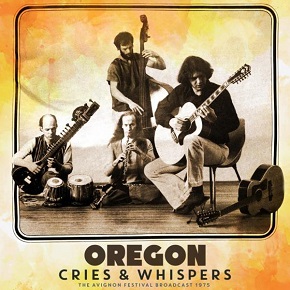
Oregon • Cries And Whispers Live 1975


For over three decades OREGON has inspired audiences in renowned concert halls including Carnegie Hall, Lincoln Center, Berlin Philharmonic Hall, and Vienna’s Mozartsaal; at international jazz clubs and major festivals such as Montreux, Pori, Berlin, Montreal, and Newport Jazz; and on tours throughout the U.S., Canada, Mexico, South America, Eastern and Western Europe, India, Pakistan, Nepal, Sri Lanka, Bangladesh, Algeria, and Australia.

OREGON began in 1960 at the University of Oregon with undergraduate students Ralph Towner and Glen Moore who formed a musical friendship on bass and piano inspired by Bill Evans and Scott LaFaro and later by Brazilian music. Moore earned a degree in history and literature and Towner completed his in composition, taking up guitar in the process. In the mid 60’s, they both traveled to Europe. Towner studied classical guitar in Vienna with Karl Scheit; Moore studied classical bass in Copenhagen and sat in with such greats as Ben Webster and Dexter Gordon. By 1969, both were living in New York City, playing with a community of young musicians who formed the great fusion bands of the ‘70’s including Weather Report and the Mahavishnu Orchestra.

Performing with folksinger Tim Hardin at the ‘69 Woodstock Festival, Towner and Moore encountered two members of the Paul Winter Consort who introduced them to the music of that group. In the studio with Hardin, Ralph and Glen connected with sitar and tabla player Collin Walcott. He was a graduate of Indiana University under George Gaber, studied ethnomusicology at UCLA and served as road manager for Ravi Shankar and Alla Rakha. On a break at that session, Ralph and Collin played their first guitar/sitar duet in the hallways of Columbia Studios.

By 1970 Ralph, Glen, and Collin had joined the Paul Winter Consort for a 50-concert U.S. tour where they quickly formed an alliance with its oboist, Paul McCandless, who had studied at the Manhattan School of Music under Toscanini’s first oboe player, Robert Bloom. During that initial tour, Ralph began composing a new repertoire of original material including “Icarus”, which has since become a standard. The early development of OREGON took root in motel rooms and college dormitories where, in private jam sessions, Towner, Walcott,Moore and McCandless began investigating new musical possibilities after getting a taste of collective improvisation on tour with the Consort. Winter’s group introduced them to the idea of performing concerts with uncommon combinations of instruments in an eclectic variety of musical styles. Incorporating these elements, OREGON emerged with a unique synthesis of European classical instrumentation, American jazz harmony, and ethnic influences from around the globe. The notion of recording their own music first arose at a party, where Towner and Walcott were entertaining friends in their guitar/sitar configuration. The group was offered the use of an 8-track studio in the Hollywood Hills, known as “The Farm.” A short-lived independent label in Los Angeles subsidized six weeks of taping and mixing. The company did not succeed in selling the results to a major label and the tape went into storage for ten years before its Vanguard release on disc called—Our First Record.

In 1971 the band made its debut in New York City, calling themselves Thyme—Music of Another Present Era, a phrase designed to answer the question. “ What kind of music do you play?” McCandless later proposed the name “OREGON” alluding to Ralph and Glen’s nostalgic reminiscences of their home state. The next year, Vanguard signed OREGON, recording a new set of original compositions which became the band’s debut LP, Music of Another Present Era. In that same period, they made Trios and Solos for ECM, a new label in Europe. The Vanguard album introduced them to their American audience and through their association with ECM, they developed their European following with tours beginning in 1974 where they received critical acclaim and growing recognition in the international community.

Six years and nine albums later, OREGON moved to Elektra/Asylum Records. Its first release on that label, Out of the Woods, reached a decidedly wider audience and was included in the 101 Best Jazz Albums list by Len Lyons. As the years spanned and the group’s versatility grew, bass clarinet, soprano and sopranino saxes, ethnic flutes, flugelhorn, French horn, clarinet, dulcimer, electric bass, violin, viola, and a myriad of percussion instruments all found their way into OREGON’s instrumentation which already included Towner’s nylon and 12 string guitars and piano, McCandless’ oboe and English horn, Moore’s 1715 Klotz bass and Walcott’s sitar and tablas.

At the end of OREGON’s contract with Elektra, and with the birth of Collin Walcott’s daughter in 1980, the band members took a year long sabbatical during which they pursued their individual solo careers. When they reassembled, OREGON’s unique fusion gained an electric dimension through Towner’s addition of keyboard synthesizers. The group recorded two more albums for ECM with the original personnel.

They had reached a peak of popularity when in November 1984, Walcott died in an auto accident in the former East Germany, leaving the ECM album Crossing as his final document. This left OREGON with the seemingly impossible task of filling an enormous vacuum. They reunited for the first time in May 1985 at a memorial concert for Walcott in New York where the dazzling Indian percussionist Trilok Gurtu joined them to pay tribute. Trilok, who studied tablas and jazz drumming, accepted an invitation to work with OREGON in 1986 which included a State Department tour of the Indian subcontinent. Over a five-year period, he played on three albums with the band: Ecotopia on ECM, 45th Parallel on Epic, and Always, Never, and Forever, the band’s first recording on Intuition. After the departure of Gurtu, the three original members continued their creative development as a trio making two CDs—Troika and Beyond Words.

For the 1996 Intuition recording “Northwest Passage”, the group incorporated two masterful percussionists, former Chicagoan Mark Walker and Arto Tuncboyician of Armenia. Walker, who also performs and records with Cuban expatriate Paquito D’Rivera, has become the new fourth member of OREGON and together with Towner, Moore, and McCandless traveled to Moscow in June 1999 to record the double CD for Intuition entitled “Oregon In Moscow.” This project is the band’s debut recording of their orchestral repertoire. Developing since the Winter Consort days, this prodigious body of work had been performed with the St. Paul, Philadelphia, Indianapolis, Stavanger, Freiburg, and Stuttgart Orchestras, but never documented. Oregon In Moscow, produced by Steve Rodby of the Pat Metheny Group fame, features the band members as composers, orchestrators, and soloists in collaboration with the Moscow Tchaikovsky Symphony Orchestra. In 2001 this album garnered four Grammy nominations. OREGON’s most recent production, a live CD recorded during a spirited week at Yoshi’s, San Francisco Bay Area’s premier jazz club, was released in 2002. Not since 1980 has the group’s electrifying and poignant performances been captured on tape.
https://musicians.allaboutjazz.com/oregon


///////

Durante más de tres décadas, OREGON ha inspirado al público en salas de conciertos de renombre, como el Carnegie Hall, el Lincoln Center, la Filarmónica de Berlín y la Mozartsaal de Viena; en clubes internacionales de jazz y en los principales festivales, como los de Montreux, Pori, Berlín, Montreal y Newport Jazz; y en giras por los Estados Unidos, el Canadá, México, América del Sur, Europa oriental y occidental, la India, el Pakistán, Nepal, Sri Lanka, Bangladesh, Argelia y Australia.

OREGON comenzó en 1960 en la Universidad de Oregón con los estudiantes universitarios Ralph Towner y Glen Moore que formaron una amistad musical en el bajo y el piano inspirada por Bill Evans y Scott LaFaro y más tarde por la música brasileña. Moore obtuvo un título en historia y literatura y Towner completó el suyo en composición, tomando la guitarra en el proceso. A mediados de los 60, ambos viajaron a Europa. Towner estudió guitarra clásica en Viena con Karl Scheit; Moore estudió bajo clásico en Copenhague y se sentó con grandes como Ben Webster y Dexter Gordon. En 1969, ambos vivían en la ciudad de Nueva York, tocando con una comunidad de jóvenes músicos que formaron las grandes bandas de fusión de los años 70, incluyendo Weather Report y la Mahavishnu Orchestra.

Actuando con el cantante Tim Hardin en el Festival de Woodstock del 69, Towner y Moore conocieron a dos miembros del Paul Winter Consort que les introdujeron en la música de ese grupo. En el estudio con Hardin, Ralph y Glen se conectaron con el sitar y el tablista Collin Walcott. Se graduó en la Universidad de Indiana bajo la dirección de George Gaber, estudió etnomusicología en la UCLA y sirvió como road manager para Ravi Shankar y Alla Rakha. En un descanso de esa sesión, Ralph y Collin tocaron su primer dúo de guitarra/sitar en los pasillos de los estudios Columbia.

En 1970 Ralph, Glen y Collin se unieron al Paul Winter Consort para una gira de 50 conciertos en EE.UU. donde rápidamente formaron una alianza con su oboísta, Paul McCandless, que había estudiado en la Escuela de Música de Manhattan con el primer oboísta de Toscanini, Robert Bloom. Durante esa gira inicial, Ralph comenzó a componer un nuevo repertorio de material original que incluía "Icarus", que desde entonces se ha convertido en un estándar. El desarrollo temprano de OREGON se arraigó en las habitaciones de moteles y dormitorios universitarios donde, en jam sessions privadas, Towner, Walcott, Moore y McCandless comenzaron a investigar nuevas posibilidades musicales después de probar la improvisación colectiva en la gira con el Consort. El grupo de Winter les introdujo en la idea de realizar conciertos con combinaciones poco comunes de instrumentos en una variedad ecléctica de estilos musicales. Incorporando estos elementos, OREGON surgió con una síntesis única de la instrumentación clásica europea, la armonía del jazz americano y las influencias étnicas de todo el mundo. La idea de grabar su propia música surgió por primera vez en una fiesta, en la que Towner y Walcott estaban entreteniendo a sus amigos en su configuración de guitarra/sitar. Al grupo se le ofreció el uso de un estudio de 8 pistas en las colinas de Hollywood, conocido como "La Granja". Un sello independiente de corta duración en Los Ángeles subvencionó seis semanas de grabación y mezcla. La compañía no logró vender los resultados a un sello importante y la cinta se guardó durante diez años antes de su lanzamiento de Vanguard en el disco llamado "Our First Record".

En 1971 la banda debutó en la ciudad de Nueva York, llamándose a sí mismos Thyme-Music of Another Present Era, una frase diseñada para responder a la pregunta. "¿Qué tipo de música tocas?" McCandless propuso más tarde el nombre "OREGON" en alusión a las nostálgicas reminiscencias de Ralph y Glen en su estado natal. Al año siguiente, Vanguard firmó OREGON, grabando un nuevo conjunto de composiciones originales que se convirtió en el LP de debut de la banda, Music of Another Present Era. En ese mismo período, hicieron Tríos y Solos para ECM, un nuevo sello en Europa. El álbum Vanguard los presentó a su público americano y a través de su asociación con ECM, desarrollaron sus seguidores europeos con giras que comenzaron en 1974, donde recibieron la aclamación de la crítica y un creciente reconocimiento en la comunidad internacional.

Seis años y nueve álbumes más tarde, OREGON se trasladó a Elektra/Asylum Records. Su primer lanzamiento en ese sello, Out of the Woods, llegó a un público decididamente más amplio y fue incluido en la lista de los 101 mejores álbumes de jazz de Len Lyons. Con el paso de los años y la versatilidad del grupo creció, clarinete bajo, saxos soprano y sopranino, flautas étnicas, fliscorno, trompa, clarinete, dulcimer, bajo eléctrico, violín, viola, y una miríada de instrumentos de percusión se abrieron camino en la instrumentación de OREGON que ya incluía el nylon de Towner y las 12 guitarras de cuerda y el piano, el oboe y el corno inglés de McCandless, el bajo Klotz de 1715 de Moore y el sitar y las tablas de Walcott.

Al final del contrato de OREGON con Elektra, y con el nacimiento de la hija de Collin Walcott en 1980, los miembros de la banda se tomaron un año sabático durante el cual siguieron sus carreras individuales en solitario. Cuando volvieron a unirse, la fusión única de OREGON ganó una dimensión eléctrica con la adición de Towner de sintetizadores de teclado. El grupo grabó dos álbumes más para ECM con el personal original.

Habían alcanzado un pico de popularidad cuando en noviembre de 1984, Walcott murió en un accidente de coche en la antigua Alemania del Este, dejando el álbum de ECM Crossing como su documento final. Esto dejó a OREGON con la aparentemente imposible tarea de llenar un enorme vacío. Se reunieron por primera vez en mayo de 1985 en un concierto conmemorativo de Walcott en Nueva York donde el deslumbrante percusionista indio Trilok Gurtu se les unió para rendirles homenaje. Trilok, que estudió tablas y batería de jazz, aceptó una invitación para trabajar con OREGON en 1986 que incluía una gira del Departamento de Estado por el subcontinente indio. Durante un período de cinco años, tocó en tres álbumes con la banda: Ecotopia en ECM, 45th Parallel en Epic, y Always, Never, and Forever, la primera grabación de la banda en Intuition. Tras la salida de Gurtu, los tres miembros originales continuaron su desarrollo creativo como trío haciendo dos CD-Troika y Beyond Words.

Para la grabación de Intuition de 1996 "Northwest Passage", el grupo incorporó a dos magistrales percusionistas, el ex chicagüense Mark Walker y Arto Tuncboyician de Armenia. Walker, que también actúa y graba con el expatriado cubano Paquito D'Rivera, se ha convertido en el nuevo cuarto miembro de OREGON y junto con Towner, Moore y McCandless viajó a Moscú en junio de 1999 para grabar el doble CD de Intuición titulado "Oregón en Moscú". Este proyecto es el debut de la banda en la grabación de su repertorio orquestal. Desarrollado desde los días de Winter Consort, este prodigioso cuerpo de trabajo había sido interpretado con las orquestas de St. Paul, Filadelfia, Indianápolis, Stavanger, Friburgo y Stuttgart, pero nunca fue documentado. Oregon In Moscow, producida por Steve Rodby del Grupo Pat Metheny, presenta a los miembros de la banda como compositores, orquestadores y solistas en colaboración con la Orquesta Sinfónica Tchaikovsky de Moscú. En 2001 este álbum obtuvo cuatro nominaciones al Grammy. La producción más reciente de OREGON, un CD en vivo grabado durante una animada semana en Yoshi's, el principal club de jazz del área de la bahía de San Francisco, fue lanzado en 2002. Desde 1980 no se han grabado las electrificantes y conmovedoras actuaciones del grupo.
https://musicians.allaboutjazz.com/oregon
 
 
oregonband.com ...