Showing posts with label Bennie Green. Show all posts

Sunday, May 3, 2026

The George Benson Quartet Feat. Lonnie Smith • The George Benson Cookbook


Review by Richard S. Ginell
The second of Benson's John Hammond-produced albums is far and away the superior of the pair, mixing down-to-basics, straight-ahead jazz with soul-drenched grooving. Suddenly Benson's backup group - same as that of Uptown, with Benny Green added on trombone now and then - has found its bearings and apropos to the title, they can cook, even sizzle. The effect upon Benson's own playing is striking; with something to react against, his sheer ability to swing advances into the realm of awesome. The rapid-fire work on "The Cooker" and "Ready And Able" will make you gasp. Only one vocal here, an exuberant "All Of Me." [In mid-2001 Columbia/Legacy reissued this 1966 classic, along with It's Uptown, recorded only several months earlier. Four bonus tracks include a (previously unreleased) doo wop vocal rendition of Little Willie John's "Let Them Talk" and two Benson originals that are pure rock-n-roll: "The Man from Toledo" and "Goodnight." Two of the bonus cuts are preceded by control-booth comments from the session's legendary producer, John Hammond.]
https://www.allmusic.com/album/the-george-benson-cookbook-mw0000690995

///////


Reseña de Richard S. Ginell
El segundo de los álbumes producidos por Benson John Hammond es, con mucho, el mejor de los dos, mezclando lo básico, el jazz directo con el grooving lleno de alma. De repente, el grupo de respaldo de Benson, igual que el de Uptown, con Benny Green añadido al trombón de vez en cuando, ha encontrado su rumbo y, a propósito del título, pueden cocinar, incluso chisporrotear. El efecto en el juego de Benson es sorprendente; con algo contra lo que reaccionar, su gran habilidad para el swing avanza hacia el reino de lo impresionante. El trabajo de fuego rápido en "The Cooker" y "Ready And Able" te hará suspirar. Sólo hay una voz aquí, un exuberante "All Of Me". A mediados de 2001 Columbia/Legacy reeditó este clásico de 1966, junto con "It's Uptown", grabado sólo unos meses antes. Cuatro temas extra incluyen una (previamente inédita) interpretación vocal doo wop de "Let Them Talk" de Little Willie John y dos originales de Benson que son puro rock-n-roll: "The Man from Toledo" y "Goodnight". Dos de los cortes extras van precedidos de comentarios en la cabina de control del legendario productor de la sesión, John Hammond].
https://www.allmusic.com/album/the-george-benson-cookbook-mw0000690995


Colaborador / Contribuitor:  Michel


Tuesday, April 21, 2026

Bennie Green • Blows His Horn


Biography by Ron Wynn
A capable bebop soloist despite his style having firm swing-era roots, Bennie Green was a major trombonist and bandleader in the 1940s, '50s, and '60s. His sound and tone were large and round, and his approach was heavily influenced by traditionalists like Trummy Young. Green's solos were enjoyable and always well-executed, but he was never as ambitious in his playing as latter-day trombonists like J.J. Johnson or Curtis Fuller.

Green had a musical background: one of his brothers played tenor sax with Roy Eldridge's band. He studied at the famous Du Sable High School in Chicago under Capt. Walt Dyett, then began playing professionally with local groups. Budd Johnson recommended Green to Earl Hines in the early '40s, and he worked with Hines until 1948 (except for two-year stint in the Army). Green played with Gene Ammons for a short time, then with Charlie Ventura in the late '40s and early '50s. He toured with Hines again from 1951 until 1953.

Green led his own combo in the '50s and '60s, often playing with either Charlie Rouse or Jimmy Forrest. He also worked with Sonny Clark, Paul Chambers, Sarah Vaughan, Ike Quebec, Booker Ervin, and Elvin Jones. Green performed and recorded with Duke Ellington in 1968, playing on his second sacred concert. He settled in Las Vegas in the late '60s, working in hotel bands. Green was also featured on recordings made at the Newport in New York festival in the early '70s. He recorded as a leader for Jubilee, Prestige, Blue Note, Enrica, Time, and Vee Jay.
https://www.allmusic.com/artist/bennie-green-mn0000160618/biography

///////


Biografía de Ron Wynn
Bennie Green, un solista de bebop capaz a pesar de que su estilo tiene firmes raíces de la era del swing, fue un importante trombonista y director de banda en las décadas de 1940, 1950 y 1960. Su sonido y su tono eran amplios y redondos, y su enfoque estaba muy influenciado por tradicionalistas como Trummy Young. Los solos de Green eran agradables y siempre estaban bien ejecutados, pero nunca fue tan ambicioso en su forma de tocar como los trombonistas de hoy en día, como J.J. Johnson o Curtis Fuller.

Green tenía antecedentes musicales: uno de sus hermanos tocaba el saxo tenor en la banda de Roy Eldridge. Estudió en la famosa Du Sable High School de Chicago con el capitán Walt Dyett, y luego empezó a tocar profesionalmente con grupos locales. Budd Johnson recomendó a Green a Earl Hines a principios de los años 40, y trabajó con Hines hasta 1948 (a excepción de un periodo de dos años en el ejército). Green tocó con Gene Ammons durante un corto periodo de tiempo, y luego con Charlie Ventura a finales de los años 40 y principios de los 50. Volvió a salir de gira con Hines desde 1951 hasta 1953.

Green dirigió su propio combo en los años 50 y 60, a menudo tocando con Charlie Rouse o Jimmy Forrest. También trabajó con Sonny Clark, Paul Chambers, Sarah Vaughan, Ike Quebec, Booker Ervin y Elvin Jones. Green actuó y grabó con Duke Ellington en 1968, tocando en su segundo concierto sagrado. Se instaló en Las Vegas a finales de los años 60, trabajando en las bandas de los hoteles. Green también apareció en grabaciones realizadas en el festival de Newport, en Nueva York, a principios de los años 70. Grabó como líder para Jubilee, Prestige, Blue Note, Enrica, Time y Vee Jay.
https://www.allmusic.com/artist/bennie-green-mn0000160618/biography
 

Tuesday, April 14, 2026

Bennie Green • Back On The Scene


Review by Stephen Thomas Erlewine
It's evident from the opening pair of Latin-flavored performances that Back on the Scene is one of Bennie Green's most diverse efforts. Green's warm, supple tone and fondness for swinging, bop-influenced mainstream jazz and jump blues hasn't disappeared; he's just found new facets in his style. The infectious Latin rhythms on Cole Porter's "I Love You" and "Melba's Mood" are welcome, as is "You're Mine You," which showcases Green's sensitive ballad style. Reviving the standard "Just Friends" emphasizes the trombonist's ties to big band and bop, particularly through tenor saxophonist Charlie Rouse's strong solos. The jumping "Bennie Plays the Blues" and "Green Street" are also terrific, finding Green, Rouse and pianist Joe Knight trading full-bodied solos. Even with this vast array of styles, Back on the Scene retains all the good-natured spirit and humor of his earlier Prestige albums.
https://www.allmusic.com/album/back-on-the-scene-mw0000471885

///////


Reseña de Stephen Thomas Erlewine
Es evidente por el par inicial de actuaciones con sabor latino que Back on the Scene es uno de los esfuerzos más diversos de Bennie Green. El tono cálido y flexible de Green y su afición por el jazz mainstream y el jump blues con influencias del swing y el bop no han desaparecido; acaba de encontrar nuevas facetas en su estilo. Los contagiosos ritmos latinos de "I Love You" y "Melba's Mood" de Cole Porter son bienvenidos, al igual que "You're Mine You", que muestra el sensible estilo de balada de Green. Revivir el estándar "Just Friends" enfatiza los lazos del trombonista con la big band y el bop, particularmente a través de los fuertes solos del saxofonista tenor Charlie Rouse. Los saltadores "Bennie Plays the Blues" y "Green Street" también son fabulosos, encontrando a Green, Rouse y al pianista Joe Knight intercambiando solos con mucho cuerpo. Incluso con esta amplia gama de estilos, Back on the Scene conserva todo el espíritu afable y el humor de sus álbumes anteriores de Prestige.
https://www.allmusic.com/album/back-on-the-scene-mw0000471885


Friday, April 10, 2026

Bennie Green • Soul Stirrin'


In the 1950s, Blue Note was a reliable bastion of hard bop. Art Blakey and the Jazz Messengers set the tone, and dozens of artists—some famous, some not—followed. But Blue Note also had small oases of not-bop, often by artists you've never heard of.
Bennie Green is one of those guys, and if you haven't heard him, you should. Specifically, you should hear Soul Stirrin'.
This is a bluesy, almost pre-bop record. Green plays trombone, but not in a J.J. Johnson bebop style. Much of Soul Stirrin' generally, and Green's playing in particular, have a swing feel. And much of it is just plain old, straight up blues.
It is an absolute pleasure.
Soul Stirrin' starts with the title song, a slow blues grind. This is soul before it became funky. Green plays fat, emotional blues notes. Pianist Sonny Clark, a Blue Note regular, adds a solo that comes straight from a smoky midnight jazz bar. Saxmen Gene Ammons and Billy Root add their flavors.
Five more songs follow, each different from the last. "We Wanna Cook" strikes a bebop tone—the only song on the album that does—with Ammons (or is it Root?) playing hard and fast in a way that reminds me of Paul Gonsalves' long, legendary solo with Duke Ellington at Newport just two years earlier—funky and almost rocking.
"That's All" is a sweet, beautiful ballad. Green is wonderful—soft and gentle and dreamy. "Lullabye of the Doomed" is, as the title implies, a mournful dirge. Green's trombone weeps, and the saxophones are full of swirling smoke. It reminds me of Miles Davis on "My Funny Valentine," or Ellington's "Mood Indigo." The closer, "Black Pearl," is a happy, lively tune that allows each soloist to shine.
The only downer, and it's a small one, is "B.G. Mambo." The theme is sort of cheesy, though it does give way to seven minutes of very pleasant solos, before returning to the goofy theme.
All in all, Soul Stirrin' is an unexpected pleasure from a jazz man who is largely forgotten. Now that I've discovered Bennie Green, I want to hear more.
Rating: 5 stars (out of 5)
By Marc Davis
August 26, 2015
https://www.allaboutjazz.com/bennie-green-soul-stirrin-1958-bennie-green-by-marc-davis


Review
by Stephen Thomas Erlewine
Soul Stirrin' is an invigorating, exciting date from trombonist Bennie Green, showcasing his wide range of skills. His tone is alternately boisterous and reflective -- the juxtaposition of the wildly swinging "We Wanna Cook" (complete with shouted vocals) and the gentle "That's All" is startling, demonstrating that Green can vary his robust sound according to the occasion. Green's fluid trombone is at the center stage throughout most of Soul Stirrin', but he also steps aside to shine some light on his extraordinary support group -- saxophonists Gene Ammons and Billy Root, pianist Sonny Clark, bassist Ike Isaacs and drummer Elvin Jones. Each musician plays with soul and passion, both on the laidback blues and mambos and the rollicking swing numbers. It's a thoroughly enjoyable record and one that is a good introduction to Green's wonderful, friendly style.
https://www.allmusic.com/album/soul-stirrin-mw0000595873

///////


En la década de 1950, Blue Note era un bastión fiable del hard bop. Art Blakey y los Jazz Messengers marcaron la pauta, y docenas de artistas -algunos famosos, otros no- les siguieron. Pero Blue Note también tenía pequeños oasis de no-bop, a menudo por artistas de los que nunca has oído hablar.
Bennie Green es uno de ellos, y si no lo ha escuchado, debería hacerlo. En concreto, deberías escuchar Soul Stirrin'.
Es un disco de blues, casi pre-bop. Green toca el trombón, pero no al estilo bebop de J.J. Johnson. Gran parte de Soul Stirrin' en general, y la forma de tocar de Green en particular, tienen un aire swing. Y gran parte es blues puro y duro.
Es un placer absoluto.
Soul Stirrin' comienza con la canción que da título al disco, un blues lento. Esto es soul antes de que se convirtiera en funky. Green toca notas de blues gordas y emotivas. El pianista Sonny Clark, un habitual de Blue Note, añade un solo que viene directamente de un humeante bar de jazz de medianoche. Los saxofonistas Gene Ammons y Billy Root añaden su toque.
Siguen cinco canciones más, cada una diferente de la anterior. "We Wanna Cook" alcanza un tono bebop -la única canción del álbum que lo hace- con Ammons (¿o es Root?) tocando duro y rápido de una forma que me recuerda al largo y legendario solo de Paul Gonsalves con Duke Ellington en Newport sólo dos años antes -funky y casi rockero.
"That's All" es una balada dulce y hermosa. Green está maravilloso, suave, apacible y soñador. "Lullabye of the Doomed" es, como su título indica, una triste canción fúnebre. El trombón de Green llora, y los saxofones están llenos de humo arremolinado. Me recuerda a Miles Davis en "My Funny Valentine", o a "Mood Indigo" de Ellington. El cierre, "Black Pearl", es una melodía alegre y animada que permite brillar a cada solista.
El único bajón, y es pequeño, es "B.G. Mambo". El tema es algo cursi, aunque da paso a siete minutos de solos muy agradables, antes de volver al tema bobalicón.
En definitiva, Soul Stirrin' es un placer inesperado de un jazzista en gran parte olvidado. Ahora que he descubierto a Bennie Green, quiero escuchar más.
Puntuación: 5 estrellas (de 5)
Por Marc Davis
26 de agosto de 2015
https://www.allaboutjazz.com/bennie-green-soul-stirrin-1958-bennie-green-by-marc-davis


Reseña
por Stephen Thomas Erlewine
Soul Stirrin' es una fecha vigorizante y emocionante del trombonista Bennie Green, mostrando su amplia gama de habilidades. Su tono es alternativamente bullicioso y reflexivo -- la yuxtaposición de la salvajemente oscilante "We Wanna Cook" (completa con voces gritadas) y la suave "That's All" es sorprendente, demostrando que Green puede variar su robusto sonido según la ocasión. El fluido trombón de Green ocupa el centro del escenario en la mayor parte de Soul Stirrin', pero también se hace a un lado para iluminar a su extraordinario grupo de apoyo: los saxofonistas Gene Ammons y Billy Root, el pianista Sonny Clark, el bajista Ike Isaacs y el batería Elvin Jones. Cada músico toca con alma y pasión, tanto en los relajados blues y mambos como en los alegres números de swing. Es un disco muy disfrutable y una buena introducción al maravilloso y agradable estilo de Green.
https://www.allmusic.com/album/soul-stirrin-mw0000595873


Thursday, October 30, 2025

John Graas • Jazz Studio 1-2 Complete Sessions


Biography
by Scott Yanow
Along with Julius Watkins, John Graas was one of the first jazz French horn soloists. After playing some classical music, in 1942 he became a member of the Claude Thornhill Orchestra. A period in the Army (1942-1945) and stints with the Cleveland Orchestra and Tex Beneke's big band preceded Graas' first high-profile gig, playing with Stan Kenton's Innovations Orchestra (1950-1951). After leaving Kenton, he settled in Los Angeles and worked as a studio musician in addition to being used on West Coast jazz dates by Shorty Rogers and others. Graas, an excellent composer who sought to combine together jazz and classical music (predating the third stream movement), recorded fairly regularly as a leader during 1953-1958, sessions that (with the exception of one V.S.O.P. release) have not been reissued. He died of a heart attack at the age of 45.
https://www.allmusic.com/artist/john-graas-mn0000219637/biography

///////


Biografía
por Scott Yanow
Junto con Julius Watkins, John Graas fue uno de los primeros solistas de trompa de jazz. Tras tocar algo de música clásica, en 1942 pasó a formar parte de la Orquesta de Claude Thornhill. Tras un periodo en el ejército (1942-1945) y una serie de colaboraciones con la Orquesta de Cleveland y la big band de Tex Beneke, Graas tuvo su primera actuación destacada en la Innovations Orchestra de Stan Kenton (1950-1951). Tras dejar a Kenton, se instaló en Los Ángeles y trabajó como músico de estudio, además de ser utilizado en fechas de jazz de la Costa Oeste por Shorty Rogers y otros. Graas, un excelente compositor que buscaba combinar el jazz y la música clásica (antes del movimiento de la tercera corriente), grabó con bastante regularidad como líder durante 1953-1958, sesiones que (con la excepción de un lanzamiento de V.S.O.P.) no han sido reeditadas. Murió de un ataque al corazón a la edad de 45 años.
https://www.allmusic.com/artist/john-graas-mn0000219637/biography


Tuesday, September 17, 2024

Howard McGhee • Dusty Blue


Review
by Ken Dryden
The 1950s had largely been a waste for Howard McGhee, as drug addiction had taken its toll on his playing. But he is in good form for this 1961 studio session for Bethlehem, leading a septet with baritone saxophonist Pepper Adams, trombonist Bennie Green, and tenor saxophonist Roland Alexander, with a top-notch rhythm section of Tommy Flanagan, Ron Carter, and Walter Bolden an added bonus. His delicious muted horn is the centerpiece of the lightly swinging take of "The Sound of Music" and strolling rendition of the normally bittersweet "Cottage for Sale," while he's on open horn for a snappy take of Cole Porter's "I Concentrate on You." McGhee's explosive side comes out in bop favorites like "Groovin' High," yet he is just as powerful playing long notes in the lush ballad "With Malice Toward None." McGhee's originals are all enjoyable, though none caught on with other jazz musicians.
https://www.allmusic.com/album/dusty-blue-mw0000242421

///////


Reseña:
por Ken Dryden
La década de 1950 había sido en gran medida un desperdicio para Howard McGhee, ya que la adicción a las drogas había hecho mella en su forma de tocar. Pero está en buena forma en esta sesión de estudio de 1961 para Bethlehem, liderando un septeto con el saxofonista barítono Pepper Adams, el trombonista Bennie Green y el saxofonista tenor Roland Alexander, con una sección rítmica de primera categoría formada por Tommy Flanagan, Ron Carter y Walter Bolden, un extra. Su deliciosa trompa silenciada es la pieza central de la versión ligeramente oscilante de "The Sound of Music" y de la interpretación de la normalmente agridulce "Cottage for Sale", mientras que está en la trompa abierta para una ágil versión de "I Concentrate on You" de Cole Porter. El lado explosivo de McGhee sale a relucir en los favoritos del bop como "Groovin' High", aunque es igual de poderoso tocando notas largas en la exuberante balada "With Malice Toward None". Los originales de McGhee son todos agradables, aunque ninguno de ellos ha sido aceptado por otros músicos de jazz.
https://www.allmusic.com/album/dusty-blue-mw0000242421


Tuesday, August 6, 2024

Bennie Green • Bennie Green


Biography by Ron Wynn
A capable bebop soloist despite his style having firm swing-era roots, Bennie Green was a major trombonist and bandleader in the 1940s, '50s, and '60s. His sound and tone were large and round, and his approach was heavily influenced by traditionalists like Trummy Young. Green's solos were enjoyable and always well-executed, but he was never as ambitious in his playing as latter-day trombonists like J.J. Johnson or Curtis Fuller.

Green had a musical background: one of his brothers played tenor sax with Roy Eldridge's band. He studied at the famous Du Sable High School in Chicago under Capt. Walt Dyett, then began playing professionally with local groups. Budd Johnson recommended Green to Earl Hines in the early '40s, and he worked with Hines until 1948 (except for two-year stint in the Army). Green played with Gene Ammons for a short time, then with Charlie Ventura in the late '40s and early '50s. He toured with Hines again from 1951 until 1953.

Green led his own combo in the '50s and '60s, often playing with either Charlie Rouse or Jimmy Forrest. He also worked with Sonny Clark, Paul Chambers, Sarah Vaughan, Ike Quebec, Booker Ervin, and Elvin Jones. Green performed and recorded with Duke Ellington in 1968, playing on his second sacred concert. He settled in Las Vegas in the late '60s, working in hotel bands. Green was also featured on recordings made at the Newport in New York festival in the early '70s. He recorded as a leader for Jubilee, Prestige, Blue Note, Enrica, Time, and Vee Jay.
https://www.allmusic.com/artist/bennie-green-mn0000160618/biography

///////


Biografía de Ron Wynn
Bennie Green, un solista de bebop capaz a pesar de que su estilo tiene firmes raíces de la era del swing, fue un importante trombonista y director de banda en las décadas de 1940, 1950 y 1960. Su sonido y su tono eran amplios y redondos, y su enfoque estaba muy influenciado por tradicionalistas como Trummy Young. Los solos de Green eran agradables y siempre estaban bien ejecutados, pero nunca fue tan ambicioso en su forma de tocar como los trombonistas de hoy en día, como J.J. Johnson o Curtis Fuller.

Green tenía antecedentes musicales: uno de sus hermanos tocaba el saxo tenor en la banda de Roy Eldridge. Estudió en la famosa Du Sable High School de Chicago con el capitán Walt Dyett, y luego empezó a tocar profesionalmente con grupos locales. Budd Johnson recomendó a Green a Earl Hines a principios de los años 40, y trabajó con Hines hasta 1948 (a excepción de un periodo de dos años en el ejército). Green tocó con Gene Ammons durante un corto periodo de tiempo, y luego con Charlie Ventura a finales de los años 40 y principios de los 50. Volvió a salir de gira con Hines desde 1951 hasta 1953.

Green dirigió su propio combo en los años 50 y 60, a menudo tocando con Charlie Rouse o Jimmy Forrest. También trabajó con Sonny Clark, Paul Chambers, Sarah Vaughan, Ike Quebec, Booker Ervin y Elvin Jones. Green actuó y grabó con Duke Ellington en 1968, tocando en su segundo concierto sagrado. Se instaló en Las Vegas a finales de los años 60, trabajando en las bandas de los hoteles. Green también apareció en grabaciones realizadas en el festival de Newport, en Nueva York, a principios de los años 70. Grabó como líder para Jubilee, Prestige, Blue Note, Enrica, Time y Vee Jay.
https://www.allmusic.com/artist/bennie-green-mn0000160618/biography
 

Friday, May 17, 2024

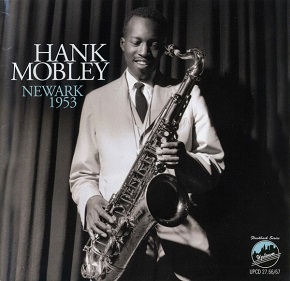
Hank Mobley • Newark 1953


Biography by Steve Huey
One of the Blue Note label's definitive hard bop artists, tenor saxophonist Hank Mobley remains somewhat underappreciated for his straightforward, swinging style. Any characterization of Mobley invariably begins with critic Leonard Feather's assertion that he was the "middleweight champion of the tenor saxophone," meaning that his tone wasn't as aggressive and thick as John Coltrane or Sonny Rollins, but neither was it as soft and cool as Stan Getz or Lester Young. Instead, Mobley's in-between, "round" (as he described it) sound was controlled and even, given over to subtlety rather than intense displays of emotion. Even if he lacked the galvanizing, mercurial qualities of the era's great tenor innovators, Mobley remained consistently solid throughout most of his recording career. His solo lines were full of intricate rhythmic patterns that were delivered with spot-on precision, and he was no slouch harmonically either. As a charter member of Horace Silver's Jazz Messengers, Mobley helped inaugurate the hard bop movement: jazz that balanced sophistication and soulfulness, complexity and earthy swing, and whose loose structure allowed for extended improvisations. As a solo artist, he began recording for Blue Note in the latter half of the '50s, and hit his peak in the first half of the '60s with hard bop cornerstones like Soul Station, No Room for Squares, and A Caddy for Daddy.

Henry "Hank" Mobley was born on July 7, 1930, in Eastman, GA, and grew up mostly in Elizabeth, NJ. Several family members played piano and/or church organ, and Mobley himself learned piano as a child. He switched to the saxophone at age 16, initially modeling his style on players like Lester Young, Charlie Parker, Dexter Gordon, Don Byas, and Sonny Stitt. He soon started playing professionally in the area, and built enough of a reputation that trumpeter Clifford Brown recommended him for a job without having heard him play. That job was with Paul Gayten's Newark-based R&B band, which he joined in 1949, doubling as a composer. He departed in 1951 and joined the house band at a Newark nightclub, where he played with pianist Walter Davis, Jr. and backed some of the era's top jazz stars. That led to a job with Max Roach, who hired both Mobley and Davis after performing with them; they all recorded together in early 1953, at one of the earliest sessions to feature Roach as a leader. Meanwhile, Mobley continued to gig around his home area, playing with the likes of Milt Jackson, Tadd Dameron, and J.J. Johnson, among others; he also served two weeks in Duke Ellington's orchestra in 1953.

Mobley spent much of 1954 performing and recording with Dizzy Gillespie. He left in September to join pianist Horace Silver's group, which evolved into a quintet co-led by Art Blakey and dubbed the Jazz Messengers. Their groundbreaking first album for Blue Note, 1955's Horace Silver and the Jazz Messengers, was a landmark in the genesis of hard bop, with its sophisticated solos and bright, almost funky rhythms. Mobley led his first session for Blue Note, The Hank Mobley Quartet, in 1955, and recorded for Savoy and Prestige during 1956. In the middle of that year, the original lineup of the Jazz Messengers split, with Blakey keeping the name and Silver forming a new group. Mobley stayed with Silver until 1957, by which time he had begun to record prolifically as a leader for Blue Note, completing eight albums' worth of material over the next 16 months. Some of his best work, such as Hank Mobley and His All Stars and The Hank Mobley Quintet, was cut with a selection of old Messengers mates. Not all of his sessions were released at the time, but some began to appear as import reissues in the '80s. Often composing his own material, Mobley was beginning to truly hit his stride with 1958's Peckin' Time, when a worsening drug problem resulted in an arrest that took him off the scene for a year.

Upon returning to music in 1959, Mobley oriented himself by rejoining Art Blakey in the Jazz Messengers for a short period. His comeback session as a leader was 1960's classic Soul Station, near-universally acknowledged as his greatest recorded moment. Mobley cut two more high-quality hard bop albums, Roll Call and Workout, over 1960-1961, as well as some other sessions that went unreleased at the time. In 1961, Mobley caught what looked to be a major break when he was hired to replace John Coltrane in Miles Davis' quintet. Unfortunately, the association was a stormy one; Mobley came under heavy criticism from the bandleader, and wound up leaving in 1962. He returned to solo recording with 1963's No Room for Squares, often tabbed as one of his best efforts, before drug and legal problems again put him out of commission during 1964. Energized and focused upon his return, Mobley recorded extensively during 1965, showcasing a slightly harder-edged tone and an acumen for tricky, modal-flavored originals that challenged his sidemen. At the same time, Dippin' found a funkier soul-jazz sound starting to creep into his work, an approach that reached its apex on the infectious A Caddy for Daddy later that year.

Mobley recorded steadily for Blue Note through the '60s, offering slight variations on his approach, and continued to appear as a sideman on a generous number of the label's other releases (especially frequent collaborator Lee Morgan). 1966's A Slice of the Top found Mobley fronting a slightly larger band arranged by Duke Pearson, though it went unissued until 1979. After cutting the straightforward Third Season in 1967, Mobley embarked on a brief tour of Europe, where he performed with Slide Hampton. He returned to the U.S. to record the straight-ahead Far Away Lands and Hi Voltage that year, and tried his hand at commercially oriented jazz-funk on 1968's Reach Out. Afterward, he took Hampton's advice and returned to Europe, where he would remain for the next two years. 1969's The Flip was recorded in Paris, and Mobley returned to the States to lead his final session for Blue Note, Thinking of Home, in 1970 (it wasn't released until ten years later). He subsequently co-led a group with pianist Cedar Walton, which recorded the excellent Breakthrough in 1972.

Sadly, that would prove to be Mobley's last major effort. Health problems forced him to retire in 1975, when he settled in Philadelphia. He was barely able to even play his horn for fear of rupturing a lung; by the dawn of the '80s, he was essentially an invalid. In 1986, he mustered up the energy to work on a limited basis with Duke Jordan; however, he died of pneumonia not long after, on May 30, 1986. During Mobley's heyday, most critics tended to compare him unfavorably to Sonny Rollins, or dismiss him for not being the innovator that Coltrane was. However, in the years that followed Mobley's death, Blue Note hard bop enjoyed a positive reappraisal; with it came a new appreciation for Mobley's highly developed talents as a composer and soloist, instead of a focus on his shortcomings.
https://www.allmusic.com/artist/hank-mobley-mn0000951384#biography

///////

Biografía de Steve Huey
Uno de los artistas definitivos del hard bop del sello Blue Note, el saxofonista tenor Hank Mobley sigue siendo algo subestimado por su estilo directo y oscilante. Cualquier caracterización de Mobley invariablemente comienza con la afirmación del crítico Leonard Feather de que él era el "campeón de peso mediano del saxofón tenor", lo que significa que su tono no era tan agresivo y grueso como John Coltrane o Sonny Rollins, pero tampoco era tan suave y fresco como Stan Getz o Lester Young. En cambio, el sonido intermedio, "redondo" (como él lo describió) de Mobley estaba controlado e incluso, entregado a la sutileza en lugar de a intensas demostraciones de emoción. Incluso si carecía de las cualidades galvanizadoras y mercuriales de los grandes innovadores tenores de la época, Mobley se mantuvo consistentemente sólido durante la mayor parte de su carrera discográfica. Sus líneas solistas estaban llenas de intrincados patrones rítmicos que se entregaban con precisión precisa, y tampoco se quedaba atrás armónicamente. Como miembro fundador de Jazz Messengers de Horace Silver, Mobley ayudó a inaugurar el movimiento hard bop: jazz que equilibraba la sofisticación y el sentimiento, la complejidad y el swing terrenal, y cuya estructura suelta permitía improvisaciones extendidas. Como solista, comenzó a grabar para Blue Note en la segunda mitad de los años 50, y alcanzó su punto máximo en la primera mitad de los 60 con piedras angulares del hard bop como Soul Station, No Room for Squares y A Caddy for Daddy.

Henry" Hank " Mobley nació el 7 de julio de 1930 en Eastman, Georgia, y creció principalmente en Elizabeth, Nueva Jersey. Varios miembros de la familia tocaban el piano y / o el órgano de la iglesia, y el propio Mobley aprendió piano cuando era niño. Cambió al saxofón a los 16 años, inicialmente modelando su estilo en músicos como Lester Young, Charlie Parker, Dexter Gordon, Don Byas y Sonny Stitt. Pronto comenzó a tocar profesionalmente en el área y se ganó la reputación suficiente como para que el trompetista Clifford Brown lo recomendara para un trabajo sin haberlo escuchado tocar. Ese trabajo fue con la banda de R&B con sede en Newark de Paul Gayten, a la que se unió en 1949, doblando como compositor. Partió en 1951 y se unió a la banda de la casa en un club nocturno de Newark, donde tocó con el pianista Walter Davis, Jr.y respaldó a algunas de las principales estrellas del jazz de la época. Eso llevó a un trabajo con Max Roach, quien contrató a Mobley y Davis después de actuar con ellos; todos grabaron juntos a principios de 1953, en una de las primeras sesiones en las que Roach actuó como líder. Mientras tanto, Mobley continuó actuando en su área local, tocando con artistas como Milt Jackson, Tadd Dameron y J. J. Johnson, entre otros; también sirvió dos semanas en la orquesta de Duke Ellington en 1953.

Mobley pasó gran parte de 1954 actuando y grabando con Dizzy Gillespie. Se fue en septiembre para unirse al grupo del pianista Horace Silver, que se convirtió en un quinteto codirigido por Art Blakey y apodado the Jazz Messengers. Su innovador primer álbum para Blue Note, Horace Silver and the Jazz Messengers de 1955, fue un hito en la génesis del hard bop, con sus sofisticados solos y ritmos brillantes, casi funky. Mobley dirigió su primera sesión para Blue Note, el Cuarteto Hank Mobley, en 1955, y grabó para Savoy y Prestige durante 1956. A mediados de ese año, la formación original de los Jazz Messengers se separó, Blakey mantuvo el nombre y Silver formó un nuevo grupo. Mobley permaneció con Silver hasta 1957, momento en el que había comenzado a grabar prolíficamente como líder de Blue Note, completando ocho álbumes de material en los siguientes 16 meses. Algunos de sus mejores trabajos, como Hank Mobley and His All Stars y The Hank Mobley Quintet, fueron cortados con una selección de viejos compañeros de Messengers. No todas sus sesiones fueron lanzadas en ese momento, pero algunas comenzaron a aparecer como reediciones de importación en los años 80. A menudo componiendo su propio material, Mobley comenzaba a dar un verdadero salto con Peckin' Time de 1958, cuando un empeoramiento de los problemas con las drogas provocó un arresto que lo sacó de escena durante un año.

Al regresar a la música en 1959, Mobley se orientó al reunirse con Art Blakey en los Jazz Messengers por un corto período. Su sesión de regreso como líder fue el clásico Soul Station de 1960, reconocido casi universalmente como su mejor momento grabado. Mobley grabó dos álbumes más de hard bop de alta calidad, Roll Call y Workout, durante 1960-1961, así como algunas otras sesiones que quedaron inéditas en ese momento. En 1961, Mobley se dio cuenta de lo que parecía ser una gran oportunidad cuando fue contratado para reemplazar a John Coltrane en el quinteto de Miles Davis. Desafortunadamente, la asociación fue tormentosa; Mobley fue objeto de fuertes críticas por parte del líder de la banda, y terminó abandonando en 1962. Regresó a la grabación en solitario con No Room for Squares de 1963, a menudo catalogado como uno de sus mejores esfuerzos, antes de que las drogas y los problemas legales lo pusieran nuevamente fuera de servicio durante 1964. Energizado y concentrado en su regreso, Mobley grabó extensamente durante 1965, mostrando un tono un poco más duro y una perspicacia para originales complicados y con sabor a modal que desafiaban a sus acompañantes. Al mismo tiempo, Dippin ' encontró un sonido soul-jazz más funky que comenzó a infiltrarse en su trabajo, un enfoque que alcanzó su punto máximo en el infeccioso A Caddy for Daddy más tarde ese año.

Mobley grabó constantemente para Blue Note durante los años 60, ofreciendo ligeras variaciones en su enfoque, y continuó apareciendo como acompañante en un generoso número de otros lanzamientos del sello (especialmente su colaborador frecuente Lee Morgan). A Slice of the Top de 1966 encontró a Mobley al frente de una banda un poco más grande organizada por Duke Pearson, aunque no se publicó hasta 1979. Después de cortar la sencilla Tercera Temporada en 1967, Mobley se embarcó en una breve gira por Europa, donde actuó con Slide Hampton. Regresó a los EE. UU. grabó los sencillos Far Away Lands y Hi Voltage ese año, y probó suerte con el jazz-funk orientado comercialmente en Reach Out de 1968. Posteriormente, siguió el consejo de Hampton y regresó a Europa, donde permanecería durante los dos años siguientes. The Flip de 1969 se grabó en París, y Mobley regresó a los Estados Unidos para dirigir su última sesión de Blue Note, Thinking of Home, en 1970 (no se lanzó hasta diez años después). Posteriormente codirigió un grupo con el pianista Cedar Walton, que grabó the excellent Breakthrough en 1972.

Lamentablemente, ese resultaría ser el último gran esfuerzo de Mobley. Los problemas de salud lo obligaron a retirarse en 1975, cuando se instaló en Filadelfia. Apenas podía tocar la bocina por temor a romperse un pulmón; a principios de los 80, era esencialmente un inválido. En 1986, reunió la energía para trabajar de forma limitada con Duke Jordan; sin embargo, murió de neumonía poco después, el 30 de mayo de 1986. Durante el apogeo de Mobley, la mayoría de los críticos tendían a compararlo desfavorablemente con Sonny Rollins, o descartarlo por no ser el innovador que era Coltrane. Sin embargo, en los años que siguieron a la muerte de Mobley, Blue Note hard bop disfrutó de una reevaluación positiva; con ella vino una nueva apreciación de los talentos altamente desarrollados de Mobley como compositor y solista, en lugar de centrarse en sus defectos.
https://www.allmusic.com/artist/hank-mobley-mn0000951384#biography


Wednesday, April 17, 2024

VA • High Fidelity Jazzː Deep Soul Jazz


Grant Green, Bennie Green, Horace Silver, Hank Mobley, Blue Mitchell, Lou Donaldson, Jimmy Smith, Stanley Turrentine, Freddie Hubbard, Lee Morgan, Wayne Shorter, Dr. Lonnie Smith …


Thursday, March 28, 2024

Bennie Green • The Swingin'est


Biography by Ron Wynn
A capable bebop soloist despite his style having firm swing-era roots, Bennie Green was a major trombonist and bandleader in the 1940s, '50s, and '60s. His sound and tone were large and round, and his approach was heavily influenced by traditionalists like Trummy Young. Green's solos were enjoyable and always well-executed, but he was never as ambitious in his playing as latter-day trombonists like J.J. Johnson or Curtis Fuller.

Green had a musical background: one of his brothers played tenor sax with Roy Eldridge's band. He studied at the famous Du Sable High School in Chicago under Capt. Walt Dyett, then began playing professionally with local groups. Budd Johnson recommended Green to Earl Hines in the early '40s, and he worked with Hines until 1948 (except for two-year stint in the Army). Green played with Gene Ammons for a short time, then with Charlie Ventura in the late '40s and early '50s. He toured with Hines again from 1951 until 1953.

Green led his own combo in the '50s and '60s, often playing with either Charlie Rouse or Jimmy Forrest. He also worked with Sonny Clark, Paul Chambers, Sarah Vaughan, Ike Quebec, Booker Ervin, and Elvin Jones. Green performed and recorded with Duke Ellington in 1968, playing on his second sacred concert. He settled in Las Vegas in the late '60s, working in hotel bands. Green was also featured on recordings made at the Newport in New York festival in the early '70s. He recorded as a leader for Jubilee, Prestige, Blue Note, Enrica, Time, and Vee Jay.
https://www.allmusic.com/artist/bennie-green-mn0000160618/biography

///////


Biografía de Ron Wynn
Bennie Green, un solista de bebop capaz a pesar de que su estilo tiene firmes raíces de la era del swing, fue un importante trombonista y director de banda en las décadas de 1940, 1950 y 1960. Su sonido y su tono eran amplios y redondos, y su enfoque estaba muy influenciado por tradicionalistas como Trummy Young. Los solos de Green eran agradables y siempre estaban bien ejecutados, pero nunca fue tan ambicioso en su forma de tocar como los trombonistas de hoy en día, como J.J. Johnson o Curtis Fuller.

Green tenía antecedentes musicales: uno de sus hermanos tocaba el saxo tenor en la banda de Roy Eldridge. Estudió en la famosa Du Sable High School de Chicago con el capitán Walt Dyett, y luego empezó a tocar profesionalmente con grupos locales. Budd Johnson recomendó a Green a Earl Hines a principios de los años 40, y trabajó con Hines hasta 1948 (a excepción de un periodo de dos años en el ejército). Green tocó con Gene Ammons durante un corto periodo de tiempo, y luego con Charlie Ventura a finales de los años 40 y principios de los 50. Volvió a salir de gira con Hines desde 1951 hasta 1953.

Green dirigió su propio combo en los años 50 y 60, a menudo tocando con Charlie Rouse o Jimmy Forrest. También trabajó con Sonny Clark, Paul Chambers, Sarah Vaughan, Ike Quebec, Booker Ervin y Elvin Jones. Green actuó y grabó con Duke Ellington en 1968, tocando en su segundo concierto sagrado. Se instaló en Las Vegas a finales de los años 60, trabajando en las bandas de los hoteles. Green también apareció en grabaciones realizadas en el festival de Newport, en Nueva York, a principios de los años 70. Grabó como líder para Jubilee, Prestige, Blue Note, Enrica, Time y Vee Jay.
https://www.allmusic.com/artist/bennie-green-mn0000160618/biography


Friday, March 22, 2024

Sonny Stitt & Bennie Green • My Main Man


Thursday, March 21, 2024

Bennie Green • Hornful Of Soul


Biography by Ron Wynn
A capable bebop soloist despite his style having firm swing-era roots, Bennie Green was a major trombonist and bandleader in the 1940s, '50s, and '60s. His sound and tone were large and round, and his approach was heavily influenced by traditionalists like Trummy Young. Green's solos were enjoyable and always well-executed, but he was never as ambitious in his playing as latter-day trombonists like J.J. Johnson or Curtis Fuller.

Green had a musical background: one of his brothers played tenor sax with Roy Eldridge's band. He studied at the famous Du Sable High School in Chicago under Capt. Walt Dyett, then began playing professionally with local groups. Budd Johnson recommended Green to Earl Hines in the early '40s, and he worked with Hines until 1948 (except for two-year stint in the Army). Green played with Gene Ammons for a short time, then with Charlie Ventura in the late '40s and early '50s. He toured with Hines again from 1951 until 1953.

Green led his own combo in the '50s and '60s, often playing with either Charlie Rouse or Jimmy Forrest. He also worked with Sonny Clark, Paul Chambers, Sarah Vaughan, Ike Quebec, Booker Ervin, and Elvin Jones. Green performed and recorded with Duke Ellington in 1968, playing on his second sacred concert. He settled in Las Vegas in the late '60s, working in hotel bands. Green was also featured on recordings made at the Newport in New York festival in the early '70s. He recorded as a leader for Jubilee, Prestige, Blue Note, Enrica, Time, and Vee Jay.
https://www.allmusic.com/artist/bennie-green-mn0000160618/biography

///////


Biografía de Ron Wynn
Bennie Green, un solista de bebop capaz a pesar de que su estilo tiene firmes raíces de la era del swing, fue un importante trombonista y director de banda en las décadas de 1940, 1950 y 1960. Su sonido y su tono eran amplios y redondos, y su enfoque estaba muy influenciado por tradicionalistas como Trummy Young. Los solos de Green eran agradables y siempre estaban bien ejecutados, pero nunca fue tan ambicioso en su forma de tocar como los trombonistas de hoy en día, como J.J. Johnson o Curtis Fuller.

Green tenía antecedentes musicales: uno de sus hermanos tocaba el saxo tenor en la banda de Roy Eldridge. Estudió en la famosa Du Sable High School de Chicago con el capitán Walt Dyett, y luego empezó a tocar profesionalmente con grupos locales. Budd Johnson recomendó a Green a Earl Hines a principios de los años 40, y trabajó con Hines hasta 1948 (a excepción de un periodo de dos años en el ejército). Green tocó con Gene Ammons durante un corto periodo de tiempo, y luego con Charlie Ventura a finales de los años 40 y principios de los 50. Volvió a salir de gira con Hines desde 1951 hasta 1953.

Green dirigió su propio combo en los años 50 y 60, a menudo tocando con Charlie Rouse o Jimmy Forrest. También trabajó con Sonny Clark, Paul Chambers, Sarah Vaughan, Ike Quebec, Booker Ervin y Elvin Jones. Green actuó y grabó con Duke Ellington en 1968, tocando en su segundo concierto sagrado. Se instaló en Las Vegas a finales de los años 60, trabajando en las bandas de los hoteles. Green también apareció en grabaciones realizadas en el festival de Newport, en Nueva York, a principios de los años 70. Grabó como líder para Jubilee, Prestige, Blue Note, Enrica, Time y Vee Jay.
https://www.allmusic.com/artist/bennie-green-mn0000160618/biography 


Saturday, February 24, 2024

Kai Winding-J.J. Johnson-Bennie Green • Kai And Jay, Bennie Green With Strings


Review by Scott Yanow
Two unrelated session are combined on this CD reissue of an LP. Trombonist Bennie Green is heard on four ballads from 1952 while backed by a rhythm section and six strings. However, the more significant selections are eight songs that for the first time matched together trombonists J.J. Johnson and Kai Winding in a quintet. The Johnson and Winding group would be quite popular during the next two years and, listening to the colorful and melodic versions of such tunes as "How Long Has This Been Going On," "Dinner for One," and "We'll Be Together Again," it is easy to see why.
https://www.allmusic.com/album/kai-and-jay-bennie-green-with-strings-mw0000654635

///////


Reseña de Scott Yanow
Dos sesiones no relacionadas se combinan en esta reedición en CD de un LP. El trombonista Bennie Green se escucha en cuatro baladas de 1952 mientras está respaldado por una sección rítmica y seis cuerdas. Sin embargo, las selecciones más significativas son ocho canciones que por primera vez emparejaron a los trombonistas J. J. Johnson y Kai Winding en un quinteto. El grupo Johnson y Winding sería bastante popular durante los próximos dos años y, escuchando las versiones coloridas y melódicas de canciones como "How Long Has This Been Going On"," Dinner for One " y "We'll Be Together Again", es fácil ver por qué.
https://www.allmusic.com/album/kai-and-jay-bennie-green-with-strings-mw0000654635


Jo Jones Sextet • Jo Jones Sextet


Jo Jones shifted the timekeeping role of the drums from the bass drum to the hi-hat cymbal, greatly influencing all swing and bop drummers. Buddy Rich and Louie Bellson were just two who learned from his light but forceful playing, as Jones swung the Count Basie Orchestra with just the right accents and sounds. After growing up in Alabama, Jones worked as a drummer and tap-dancer with carnival shows. He joined Walter Page's Blue Devils in Oklahoma City in the late '20s. After a period with Lloyd Hunter's band in Nebraska, Jones moved to Kansas City in 1933, joining Count Basie's band the following year. He went with Basie to New York in 1936 and with Count, Freddie Green and Walter Page he formed one of the great rhythm sections. Jones was with the Basie band (other than 1944-46 when he was in the military) until 1948 and in later years he participated in many reunions with Basie alumni. He was on some Jazz at the Philharmonic tours and recorded in the 1950s with Illinois Jacquet, Billie Holiday, Teddy Wilson, Lester Young, Art Tatum and Duke Ellington among others; Jones appeared at the 1957 Newport Jazz Festival with both Basie and the Coleman Hawkins-Roy Eldridge Sextet. Jo Jones led sessions for Vanguard (1955 and 1959) and Everest (1959-60), a date for Jazz Odyssey on which he reminisced and played drum solos (1970) and mid-'70s sessions for Pablo and Denon. In later years he was known as "Papa" Jo Jones and thought of as a wise if brutally frank elder statesman - Scott Yanow -All MUsic Guide

///////


Jo Jones desplazó la función cronométrica de la batería del bombo al platillo hi-hat, influyendo enormemente en todos los bateristas de swing y bop. Buddy Rich y Louie Bellson fueron sólo dos de los que aprendieron de su forma de tocar, ligera pero contundente, mientras Jones hacía vibrar a la orquesta de Count Basie con los acentos y sonidos justos. Tras crecer en Alabama, Jones trabajó como batería y bailarín de claqué en espectáculos de carnaval. Se unió a los Blue Devils de Walter Page en Oklahoma City a finales de los años veinte. Tras un periodo con la banda de Lloyd Hunter en Nebraska, Jones se trasladó a Kansas City en 1933, uniéndose a la banda de Count Basie al año siguiente. Se fue con Basie a Nueva York en 1936 y con Count, Freddie Green y Walter Page formó una de las grandes secciones rítmicas. Jones estuvo con la banda de Basie (aparte de 1944-46, cuando estuvo en el ejército) hasta 1948 y en años posteriores participó en muchas reuniones con antiguos alumnos de Basie. Participó en algunas giras de Jazz at the Philharmonic y grabó en la década de 1950 con Illinois Jacquet, Billie Holiday, Teddy Wilson, Lester Young, Art Tatum y Duke Ellington, entre otros; Jones apareció en el Festival de Jazz de Newport de 1957 tanto con Basie como con el sexteto Coleman Hawkins-Roy Eldridge. Jo Jones dirigió sesiones para Vanguard (1955 y 1959) y Everest (1959-60), una cita para Jazz Odyssey en la que recordó y tocó solos de batería (1970) y sesiones de mediados de los 70 para Pablo y Denon. En sus últimos años se le conocía como "Papa" Jo Jones y se le consideraba un sabio aunque brutalmente franco anciano - Scott Yanow -All MUsic Guide


Friday, February 23, 2024

Ike Quebec • Easy Living


Artist Biography
 “This incontestably superior musician has been almost totally ignored in the chronicling of the musical form to which he has contributed so much. Quebec was a tenor man of the Hawkins school with a big tone and firm, vigorous style. I hope this new perspective of the contribution Ike Quebec has made to jazz will help to bring a little lightness to his soul and much more recognition to his name.” Leonard Feather
An accomplished dancer and pianist, he switched to tenor sax as his primary instrument in his early 20s, and quickly earned a reputation as a promising player. His recording career started in 1940, with the Barons of Rhythm. He recorded or performed with Frankie Newton, Hot Lips Page, Roy Eldridge, Trummy Young, Ella Fitzgerald, Benny Carter and Coleman Hawkins. Between 1944 and 1951, he worked with Cab Calloway. He recorded for Blue Note records in this era, and also served as a talent scout for the label (helping pianists Thelonious Monk and Bud Powell come to wider attention) and, due to his exceptional sight reading skills, was an uncredited impromptu arranger for many Blue Note sessions.
Quebec recorded only sporadically during the 1950s, though he still performed regularly. He kept abreast on new developments in jazz, and his later playing incorporated elements of hard bop and soul jazz.
In 1959 he began what amounted to a comeback with a series of albums on the Blue Note label. Blue Note executive Alfred Lion was always fond of Quebec's music, but was unsure how audiences would respond to the saxophonist after a decade of low visibility. In the mid-to-late 1950s, Blue Note issued a series of Quebec singles for the juke box market; audiences responded well, and this was recently reissued as “The Complete Blue Note 45 Sessions.” As strange as it sounds, these cuts are all excellent, as Quebec rose to the occasion and delivered the goods.

///////

Biografía del artista
 "Este músico indiscutiblemente superior ha sido casi totalmente ignorado en la crónica de la forma musical a la que tanto ha contribuido. Quebec era un tenor de la escuela Hawkins con un gran tono y un estilo firme y vigoroso. Espero que esta nueva perspectiva de la contribución que Ike Quebec ha hecho al jazz ayude a traer un poco de ligereza a su alma y mucho más reconocimiento a su nombre". Leonard Feather
Un bailarín y pianista consumado, cambió al saxo tenor como su instrumento principal a principios de sus 20 años, y rápidamente se ganó una reputación como un intérprete prometedor. Su carrera discográfica comenzó en 1940, con los Barones del Ritmo. Grabó o tocó con Frankie Newton, Hot Lips Page, Roy Eldridge, Trummy Young, Ella Fitzgerald, Benny Carter y Coleman Hawkins. Entre 1944 y 1951, trabajó con Cab Calloway. Grabó para Blue Note Records en esta época, y también sirvió como buscador de talentos para la disquera (ayudando a los pianistas Thelonious Monk y Bud Powell a llamar la atención) y, debido a sus excepcionales habilidades de lectura a la vista, fue un arreglador improvisado no acreditado para muchas de las sesiones de Blue Note.
Quebec grabó sólo esporádicamente durante la década de 1950, aunque todavía tocaba regularmente. Se mantuvo al tanto de los nuevos desarrollos en el jazz, y su posterior interpretación incorporó elementos de hard bop y soul jazz.
En 1959 comenzó lo que supuso un regreso con una serie de álbumes en el sello Blue Note. El ejecutivo de Blue Note Alfred Lion siempre fue aficionado a la música de Quebec, pero no estaba seguro de cómo respondería el público al saxofonista después de una década de baja visibilidad. A mediados y finales de los años 50, Blue Note publicó una serie de sencillos quebequenses para el mercado de las cajas de juke box; el público respondió bien, y esto fue recientemente reeditado como "The Complete Blue Note 45 Sessions". Por extraño que parezca, todos estos cortes son excelentes, ya que Quebec estuvo a la altura de las circunstancias y entregó la mercancía.


Wednesday, February 21, 2024

Bennie Green • Back On The Scene


Review by Stephen Thomas Erlewine
It's evident from the opening pair of Latin-flavored performances that Back on the Scene is one of Bennie Green's most diverse efforts. Green's warm, supple tone and fondness for swinging, bop-influenced mainstream jazz and jump blues hasn't disappeared; he's just found new facets in his style. The infectious Latin rhythms on Cole Porter's "I Love You" and "Melba's Mood" are welcome, as is "You're Mine You," which showcases Green's sensitive ballad style. Reviving the standard "Just Friends" emphasizes the trombonist's ties to big band and bop, particularly through tenor saxophonist Charlie Rouse's strong solos. The jumping "Bennie Plays the Blues" and "Green Street" are also terrific, finding Green, Rouse and pianist Joe Knight trading full-bodied solos. Even with this vast array of styles, Back on the Scene retains all the good-natured spirit and humor of his earlier Prestige albums.
https://www.allmusic.com/album/back-on-the-scene-mw0000471885

///////


Reseña de Stephen Thomas Erlewine
Es evidente por el par inicial de actuaciones con sabor latino que Back on the Scene es uno de los esfuerzos más diversos de Bennie Green. El tono cálido y flexible de Green y su afición por el jazz mainstream y el jump blues con influencias del swing y el bop no han desaparecido; acaba de encontrar nuevas facetas en su estilo. Los contagiosos ritmos latinos de "I Love You" y "Melba's Mood" de Cole Porter son bienvenidos, al igual que "You're Mine You", que muestra el sensible estilo de balada de Green. Revivir el estándar "Just Friends" enfatiza los lazos del trombonista con la big band y el bop, particularmente a través de los fuertes solos del saxofonista tenor Charlie Rouse. Los saltadores "Bennie Plays the Blues" y "Green Street" también son fabulosos, encontrando a Green, Rouse y al pianista Joe Knight intercambiando solos con mucho cuerpo. Incluso con esta amplia gama de estilos, Back on the Scene conserva todo el espíritu afable y el humor de sus álbumes anteriores de Prestige.
https://www.allmusic.com/album/back-on-the-scene-mw0000471885


Saturday, February 10, 2024

Bennie Green • The 45 Session


Review
by Stephen Thomas Erlewine  
Trombonist Bennie Green cut four sessions for Blue Note Records, three of which were released as full-length LPs. At the remaining session, the group cut a series of eight songs that were intended for release as singles -- as reissue producer Michael Cuscuna points out, several songs fade out at the end on the master tapes, cutting off solos just as they're beginning to take off. The Japanese issue The 45 Session collects all nine masters, including one alternate take of Babs Gonzales' vocal tribute to Bennie, "Encore." Considering the strength of Green's combo -- it boasted pianist Sonny Clark, bassist Paul Chambers, tenor saxophonist Eddy Williams, and drummer Jerry Segal -- it's a bit frustrating to hear the songs in truncated form, but since that's the only way they exist, fans should cherish what we do have. And this is music to cherish. Green's Blue Note recordings are consistently fun, and this is no exception. Each song swings with energy, offering each instrumentalist a chance to shine -- the piano-handclap breakdown on "Minor Revelation" is as infectious as the blowing "It's Groovy" or the swinging interpretation of "Why Do I Love You." This is cheery, bluesy, good-natured music, and even if Gonzales' hipster salute to Green has dated a bit, the rest of the music is as appealing today as when it was recorded.
https://www.allmusic.com/album/the-45-session-mw0000960169

///////


Reseña
por Stephen Thomas Erlewine  
El trombonista Bennie Green grabó cuatro sesiones para Blue Note Records, tres de las cuales se publicaron como LPs completos. En la sesión restante, el grupo grabó una serie de ocho canciones que estaban destinadas a ser publicadas como singles - como señala el productor de la reedición, Michael Cuscuna, varias canciones se desvanecen al final en las cintas maestras, cortando los solos justo cuando empiezan a despegar. La edición japonesa The 45 Session recoge los nueve masters, incluyendo una toma alternativa del homenaje vocal de Babs Gonzales a Bennie, "Encore". Teniendo en cuenta la fuerza del combo de Green -que contaba con el pianista Sonny Clark, el bajista Paul Chambers, el saxofonista tenor Eddy Williams y el baterista Jerry Segal- es un poco frustrante escuchar las canciones en forma truncada, pero ya que esa es la única forma en que existen, los fans deben apreciar lo que tenemos. Y esto es música para apreciar. Las grabaciones de Green en Blue Note son siempre divertidas, y ésta no es una excepción. Cada canción se balancea con energía, ofreciendo a cada instrumentista la oportunidad de brillar - el desglose de palmas de piano en "Minor Revelation" es tan contagioso como el soplido de "It's Groovy" o la interpretación de swing de "Why Do I Love You". Se trata de música alegre, bluesera y de buen humor, y aunque el saludo hipster de Gonzales a Green ha quedado un poco anticuado, el resto de la música es tan atractiva hoy como cuando se grabó.
https://www.allmusic.com/album/the-45-session-mw0000960169


Saturday, January 27, 2024

Wardell Gray • Light Gray


Biography by Scott Yanow
Wardell Gray was one of the top tenors to emerge during the bop era (along with Dexter Gordon and Teddy Edwards). His Lester Young-influenced tone made his playing attractive to swing musicians as well as younger modernists. He grew up in Detroit, playing in local bands as a teenager. Gray was with Earl Hines during 1943-1945, recording with him (1945). That same year, he moved to Los Angeles and he became a major part of the Central Avenue scene, having nightly tenor battles with Dexter Gordon; their recording of "The Chase" was popular. Gray recorded with Charlie Parker in 1947 and yet his style appealed to Benny Goodman, with whom he played the following year. Among his own sessions, his solos on "Twisted" (1949) and "Farmer's Market" (1952) were turned into memorable vocalese by Annie Ross a few years later. Back in New York, Gray played and recorded with Tadd Dameron and the Count Basie septet and big band (1950-1951); "Little Pony," his showcase with the Basie orchestra, is a classic. Gray was featured on some Norman Granz jam sessions ("Apple Jam" has a particularly heated solo) and recorded with Louie Bellson (1952-1953). Ironically, Wardell Gray, who in the late '40s was an inspiration to some younger musicians due to his opposition to drug use, himself became involved in drugs and died mysteriously in Las Vegas on May 25, 1955, when he was just 34.
https://www.allmusic.com/artist/wardell-gray-mn0000235881#biography

///////

Biografía de Scott Yanow
Wardell Gray fue uno de los mejores tenores que surgieron durante la era del bop (junto con Dexter Gordon y Teddy Edwards). Su tono, influenciado por Lester Young, hizo que su forma de tocar resultara atractiva tanto para los músicos de swing como para los jóvenes modernistas. Creció en Detroit y tocó en bandas locales durante su adolescencia. Gray estuvo con Earl Hines durante 1943-1945, grabando con él (1945). Ese mismo año se trasladó a Los Ángeles y se convirtió en una parte importante de la escena de Central Avenue, manteniendo batallas nocturnas de tenor con Dexter Gordon; su grabación de "The Chase" fue muy popular. Gray grabó con Charlie Parker en 1947 y, sin embargo, su estilo atrajo a Benny Goodman, con quien tocó al año siguiente. Entre sus propias sesiones, sus solos en "Twisted" (1949) y "Farmer's Market" (1952) fueron convertidos en vocales memorables por Annie Ross unos años más tarde. De vuelta a Nueva York, Gray tocó y grabó con Tadd Dameron y el septeto y la big band de Count Basie (1950-1951); "Little Pony", su presentación con la orquesta de Basie, es un clásico. Gray participó en algunas jam sessions de Norman Granz ("Apple Jam" tiene un solo especialmente acalorado) y grabó con Louie Bellson (1952-1953). Irónicamente, Wardell Gray, que a finales de los años 40 sirvió de inspiración a algunos músicos más jóvenes por su oposición al consumo de drogas, se metió él mismo en las drogas y murió misteriosamente en Las Vegas el 25 de mayo de 1955, cuando sólo tenía 34 años.
https://www.allmusic.com/artist/wardell-gray-mn0000235881#biography