Showing posts with label avant garde. Show all posts

Tuesday, May 12, 2026

Portico Quartet • Untitled (Aitaoa #2)


Biography by Michael G. Nastos
Since 2005, the Portico Quartet has created a singular, cinematic sound that melds jazz, electronica, ambient music, and minimalism. At the lead edge of South London's nu-jazz movement, theiur debut album 2007's Knee Deep in the North Sea was shortlisted for a Mercury Prize. Subsequent outings included albums for Peter Gabriel's Real World Records. They temporarily slimmed to an issued they the album Living Fields on Ninja Tune. Subsequently returning to their quartet lineup, they released 2017's Art in the Age of Automation for Matthew Halsall's Gondwana label.

Formed in 2005, the band was initially inspired to play via founding member Duncan Bellamy's purchase of an exotic yet contemporary instrument, the Hang, at a music festival. The Hang, invented in 2000 in Switzerland, is a metallic lap drum with clamped shells, the melodious sound of which resembles both a steel drum and Balinese metallaphone. Where the quartet's influences clearly reference modern jazz and African music, the trance-like sonics of the Hang draw closer comparisons to minimalists Philip Glass and Steve Reich, or gamelan music. A weekly session at the South Bank and residency at the Brixton Ritzy earned them a cult following. It also inspired London's premier jazz club, the Vortex, to start a record label to release their music.

Championed by archivist and historian/mixer Gilles Peterson, the Portico Quartet's debut release, Knee Deep in the North Sea, was acclaimed as jazz, folk, and world music Album of the Year for 2007 by Time Out magazine, and was a Mercury Music Prize honoree for 2008. With Jack Wylie on soprano saxophone, Milo Fitzpatrick on acoustic bass, and Nick Mulvey and Duncan Bellamy playing the Hang and percussion instruments, the group's modern contemporary sound was favorably compared to the diverse, ethnic-flavored work of Ben Allison, E.S.T., and the Cinematic Orchestra.

Following their signing to Peter Gabriel's Real World Records, the Portico Quartet released its sophomore effort. Isla appeared in 2009 and was recorded at Abbey Road Studios. In 2011 Mulvey left the band to pursue a solo career -- to be replaced by Keir Vine -- and his departure signaled a musical shift for the group. Their self-titled third record favored electronic sounds over the predominantly acoustic style of their previous efforts. The band experienced its largest transformation to date in 2014 as Vine departed, and the slimmed-down trio signed to the Ninja Tune label. They re-christened themselves Portico and pursued experimental pop in lieu of the jazz influence of their earlier records. However, for their 2017 record Art in the Age of Automation, they reverted to their original label and moniker, and were reunited with Vine. The foilowing year, they issued the companion outing Untitled (AITAOA #2), recorded during the Art In the Age Of Automation sessions. For 2019's Memory Streams--also on Gondwana-- Portico Quartet mined their catalogue to re-combine older sounds and musics with new ones including elements of prog-rock and abstract electronic soundscapes.
https://www.allmusic.com/artist/portico-quartet-mn0001012019/biography

///////////


Biografía de Michael G. Nastos
Desde 2005, Portico Quartet ha creado un sonido singular y cinematográfico que fusiona el jazz, la electrónica, la música ambiental y el minimalismo. A la cabeza del movimiento nu-jazz del sur de Londres, su álbum de debut de 2007, Knee Deep in the North Sea, fue preseleccionado para el Mercury Prize. Sus siguientes trabajos incluyen álbumes para el sello Real World Records de Peter Gabriel. Se redujeron temporalmente a una emisión del álbum Living Fields en Ninja Tune. Posteriormente, volvieron a su formación de cuarteto y publicaron en 2017 Art in the Age of Automation para el sello Gondwana de Matthew Halsall.

Formada en 2005, la banda se inspiró inicialmente en la compra por parte de su miembro fundador, Duncan Bellamy, de un instrumento exótico pero contemporáneo, el Hang, en un festival de música. El Hang, inventado en el año 2000 en Suiza, es un tambor metálico con cascos de pinza, cuyo melodioso sonido se asemeja tanto a un tambor de acero como a un metaláfono balinés. Mientras que las influencias del cuarteto hacen referencia claramente al jazz moderno y a la música africana, el sonido de trance del Hang hace que se le compare más con los minimalistas Philip Glass y Steve Reich, o con la música gamelán. Una sesión semanal en el South Bank y una residencia en el Brixton Ritzy les valieron un seguimiento de culto. También inspiró al principal club de jazz de Londres, el Vortex, a crear un sello discográfico para publicar su música.

Defendido por el archivero e historiador/mezclador Gilles Peterson, el primer disco del Portico Quartet, Knee Deep in the North Sea, fue aclamado como Álbum del Año de jazz, folk y músicas del mundo en 2007 por la revista Time Out, y fue galardonado con el Mercury Music Prize en 2008. Con Jack Wylie al saxofón soprano, Milo Fitzpatrick al bajo acústico y Nick Mulvey y Duncan Bellamy tocando los instrumentos de Hang y percusión, el sonido moderno y contemporáneo del grupo fue comparado favorablemente con el trabajo diverso y de sabor étnico de Ben Allison, E.S.T. y la Cinematic Orchestra.

Tras su fichaje por el sello Real World Records de Peter Gabriel, Portico Quartet lanzó su segundo trabajo. Isla apareció en 2009 y fue grabado en los estudios Abbey Road. En 2011 Mulvey dejó la banda para seguir una carrera en solitario -para ser sustituido por Keir Vine- y su salida supuso un cambio musical para el grupo. Su tercer disco autotitulado favoreció los sonidos electrónicos sobre el estilo predominantemente acústico de sus esfuerzos anteriores. La banda experimentó su mayor transformación hasta la fecha en 2014, cuando Vine se marchó y el trío, más delgado, firmó con el sello Ninja Tune. Se rebautizaron con el nombre de Portico y buscaron el pop experimental en lugar de la influencia del jazz de sus discos anteriores. Sin embargo, para su disco de 2017 Art in the Age of Automation, volvieron a su sello y nombre originales, y se reunieron con Vine. El año siguiente, publicaron el disco complementario Untitled (AITAOA #2), grabado durante las sesiones de Art In the Age Of Automation. Para Memory Streams de 2019 -también en Gondwana- Portico Quartet extrajo su catálogo para volver a combinar sonidos y músicas antiguas con otras nuevas, incluyendo elementos de prog-rock y paisajes sonoros electrónicos abstractos.
https://www.allmusic.com/artist/portico-quartet-mn0001012019/biography


porticoquartet.com ...


Monday, May 11, 2026

Archie Shepp Quartet • True Blue


Review
by Thom Jurek
This 1998 studio recording by tenor sax legend Archie Shepp is a study in blues and ballads as the title might suggest, but it also marks the return of Shepp as a true bandleader. With pianist John Hicks, drummer Billy Drummond, and bassist George Mraz, Shepp sounds more inspired here than he has in literally decades. There is no crutch-like reliance on hard bop and blues stylings, nor is there any over-the-shoulder tosses at being the king of the avant-garde. Instead Shepp focuses on what he does best: being a fine stylist and one of the great blues phraseologists in the business. Opening with Coltrane's "Lonnie's Lament," Shepp goes one better than just saluting his old boss -- he reharmonizes the tune and slows it down, making it a true elegy. On Cole Porter's tunes, Shepp looks to the deep lyricism in Hicks' playing to bring out his best ballad style. The two of them interact so warmly and intimately here, it could have easily been a duet. On Jimmy van Heusen's "But Beautiful," it's Hicks who leads off the tune, but it's Shepp who gives it its body and soul. Beginning to play the melody from deep in the lower register, Shepp traces the harmony out to the edges and coaxes Hicks to follow him; he simultaneously scales back just enough to open him up to fill that space with wonderful flowering chords against his warmer-than-July tone. Shepp offers one original to the mix, "A Little Surprise for the Lady," which is refreshing among all these covers for its shimmering, funky groove and slithering solo; he offers a stunning rendition of "Blue Train" and ends the program with another of the Coltrane book standards, Billy Eckstine's "I Want to Talk About You." But instead of going for Coltrane's leaping and loping harmony in the bridge, Shepp creates a new one based on the bassline instead of the lyric phrase, which adds a certain depth and dimension not heard before, no matter how many times this tune has been interpreted. The only weak spot on the whole date comes from Mraz. His lack of wood in his tone makes all of his fluidity for naught because, as with most of the sessions he plays on, he becomes too limpid to hear. But it's a small complaint for a gorgeous session.
https://www.allmusic.com/album/true-blue-mw0000544622

///////


Revisión
por Thom Jurek
Esta grabación de estudio de 1998 de la leyenda del saxo tenor Archie Shepp es un estudio de blues y baladas como el título podría sugerir, pero también marca el regreso de Shepp como un verdadero líder de banda. Con el pianista John Hicks, el baterista Billy Drummond y el bajista George Mraz, Shepp suena más inspirado aquí de lo que lo ha hecho literalmente en décadas. No hay una dependencia como una muleta en los estilos hard bop y blues, ni hay lanzamientos por encima del hombro para ser el rey de la vanguardia. En cambio, Shepp se centra en lo que mejor sabe hacer: ser un buen estilista y uno de los grandes fraseólogos del blues en el negocio. Abriendo con "Lonnie's Lament" de Coltrane, Shepp va mejor que saludar a su antiguo jefe: rearmoniza la melodía y la ralentiza, convirtiéndola en una verdadera elegía. En las canciones de Cole Porter, Shepp busca el profundo lirismo en la interpretación de Hicks para sacar a relucir su mejor estilo de balada. Los dos interactúan tan cálida e íntimamente aquí, que fácilmente podría haber sido un dúo. En "But Beautiful" de Jimmy van Heusen, es Hicks quien dirige la melodía, pero es Shepp quien le da cuerpo y alma. Comenzando a tocar la melodía desde lo profundo del registro inferior, Shepp traza la armonía hasta los bordes y convence a Hicks para que lo siga; simultáneamente, escala hacia atrás lo suficiente como para abrirlo y llenar ese espacio con maravillosos acordes florales contra su tono más cálido que el de julio. Shepp ofrece una original para la mezcla ," A Little Surprise for the Lady", que es refrescante entre todas estas versiones por su ritmo brillante y funky y su solo deslizante; ofrece una impresionante interpretación de "Blue Train" y termina el programa con otro de los libros estándar de Coltrane, "I Want to Talk About You" de Billy Eckstine."Pero en lugar de optar por la armonía de saltos y saltos de Coltrane en el puente, Shepp crea una nueva basada en la línea de bajo en lugar de la frase lírica, lo que agrega una cierta profundidad y dimensión que no se había escuchado antes, sin importar cuántas veces se haya interpretado esta melodía. El único punto débil de toda la fecha proviene de Mraz. Su falta de madera en su tono hace que toda su fluidez sea en vano porque, como en la mayoría de las sesiones en las que toca, se vuelve demasiado límpido para escuchar. Pero es una pequeña queja para una sesión magnífica.
https://www.allmusic.com/album/true-blue-mw0000544622


Monday, May 4, 2026

Bryan Ferry • Avonmore


Review by Stephen Thomas Erlewine
On the album art of Avonmore, the record he released when he was a year shy of 70, Bryan Ferry showcases himself as a dashing young man -- a portrait of an artist not as a glam trailblazer or distinguished elder statesman, but rather caught in an indeterminate time between the gorgeous heartbreak of Roxy Music's Avalon and the meticulous solo work that came immediately in its wake. This is Ferry's prime, a moment when his legacy was intact but yet to be preserved in amber. Avonmore consciously evokes this distinct period, sometimes sighing into the exquisite ennui of Avalon but usually favoring the fine tailoring of Boys & Girls, a record where every sequenced rhythm, keyboard, and guitar line blended into an alluring urbane pulse. Ferry isn't so much racing to revive a younger edition of himself as much as laying claim to this particular strand of sophisticated pop, one that happens to feel a shade richer now when it's delivered by an artist whose world-weariness has settled into his marrow but is yet to sadden him. This much is apparent on Avonmore's closing covers, an oddly appropriate pairing of Stephen Sondheim's "Send in the Clowns" and Robert Palmer's "Johnny & Mary" that are both given gently meditative electronic makeovers, but much of the record explores the other end of the Ferry spectrum, where he's making music to dance away the heartache. He's no longer on the floor himself, preferring to watch with a bit of a bemusement, but this reserved romanticism suits him perfectly, particularly because Ferry and his co-producer Rhett Davies -- a steady collaborator since 1999's standards record As Time Goes By -- place an emphasis on mood but not at the expense of the songs. Naturally, what is first alluring about Avonmore is its feel -- it's meant to be seductive -- but the songs are what makes this record something more than a fling.
https://www.allmusic.com/album/avonmore-mw0002757654

///////

Reseña de Stephen Thomas Erlewine
En la carátula del álbum de Avonmore, el disco que lanzó cuando le faltaba un año para cumplir 70 años, Bryan Ferry se muestra como un joven apuesto - un retrato de un artista no como un pionero del glamour o un distinguido estadista mayor, sino más bien atrapado en un tiempo indeterminado entre el hermoso desengaño de Avalon de Roxy Music y el meticuloso trabajo en solitario que vino inmediatamente después. Este es el momento cumbre de Ferry, un momento en el que su legado estaba intacto pero aún no se ha conservado en el ámbar. Avonmore evoca conscientemente este período, a veces suspirando por el exquisito enojo de Avalon, pero generalmente favoreciendo la fina confección de Boys & Girls, un disco donde cada ritmo secuenciado, teclado y línea de guitarra se mezclan en un atractivo pulso urbano. Ferry no está corriendo tanto para revivir una edición más joven de sí mismo como para reclamar esta particular línea de pop sofisticado, que resulta ser más rico ahora cuando lo hace un artista cuyo cansancio del mundo se ha asentado en su médula pero que aún no lo entristece. Esto es evidente en las últimas portadas de Avonmore, una extraña pareja de "Send in the Clowns" de Stephen Sondheim y "Johnny & Mary" de Robert Palmer, que son maquilladas electrónicamente con suavidad, pero gran parte del disco explora el otro extremo del espectro de Ferry, donde está haciendo música para bailar y aliviar el dolor. Ya no está en el suelo, prefiriendo mirar con un poco de desconcierto, pero este romanticismo reservado le sienta perfectamente, sobre todo porque Ferry y su coproductor Rhett Davies -- un colaborador constante desde el disco estándar de 1999 "As Time Goes By" -- ponen énfasis en el estado de ánimo pero no a expensas de las canciones. Naturalmente, lo primero que atrae de Avonmore es su sentimiento, que está pensado para ser seductor, pero las canciones son lo que hace que este disco sea algo más que una aventura.
https://www.allmusic.com/album/avonmore-mw0002757654
 

Friday, January 30, 2026

Oregon • Cries And Whispers Live 1975


For over three decades OREGON has inspired audiences in renowned concert halls including Carnegie Hall, Lincoln Center, Berlin Philharmonic Hall, and Vienna’s Mozartsaal; at international jazz clubs and major festivals such as Montreux, Pori, Berlin, Montreal, and Newport Jazz; and on tours throughout the U.S., Canada, Mexico, South America, Eastern and Western Europe, India, Pakistan, Nepal, Sri Lanka, Bangladesh, Algeria, and Australia.

OREGON began in 1960 at the University of Oregon with undergraduate students Ralph Towner and Glen Moore who formed a musical friendship on bass and piano inspired by Bill Evans and Scott LaFaro and later by Brazilian music. Moore earned a degree in history and literature and Towner completed his in composition, taking up guitar in the process. In the mid 60’s, they both traveled to Europe. Towner studied classical guitar in Vienna with Karl Scheit; Moore studied classical bass in Copenhagen and sat in with such greats as Ben Webster and Dexter Gordon. By 1969, both were living in New York City, playing with a community of young musicians who formed the great fusion bands of the ‘70’s including Weather Report and the Mahavishnu Orchestra.

Performing with folksinger Tim Hardin at the ‘69 Woodstock Festival, Towner and Moore encountered two members of the Paul Winter Consort who introduced them to the music of that group. In the studio with Hardin, Ralph and Glen connected with sitar and tabla player Collin Walcott. He was a graduate of Indiana University under George Gaber, studied ethnomusicology at UCLA and served as road manager for Ravi Shankar and Alla Rakha. On a break at that session, Ralph and Collin played their first guitar/sitar duet in the hallways of Columbia Studios.

By 1970 Ralph, Glen, and Collin had joined the Paul Winter Consort for a 50-concert U.S. tour where they quickly formed an alliance with its oboist, Paul McCandless, who had studied at the Manhattan School of Music under Toscanini’s first oboe player, Robert Bloom. During that initial tour, Ralph began composing a new repertoire of original material including “Icarus”, which has since become a standard. The early development of OREGON took root in motel rooms and college dormitories where, in private jam sessions, Towner, Walcott,Moore and McCandless began investigating new musical possibilities after getting a taste of collective improvisation on tour with the Consort. Winter’s group introduced them to the idea of performing concerts with uncommon combinations of instruments in an eclectic variety of musical styles. Incorporating these elements, OREGON emerged with a unique synthesis of European classical instrumentation, American jazz harmony, and ethnic influences from around the globe. The notion of recording their own music first arose at a party, where Towner and Walcott were entertaining friends in their guitar/sitar configuration. The group was offered the use of an 8-track studio in the Hollywood Hills, known as “The Farm.” A short-lived independent label in Los Angeles subsidized six weeks of taping and mixing. The company did not succeed in selling the results to a major label and the tape went into storage for ten years before its Vanguard release on disc called—Our First Record.

In 1971 the band made its debut in New York City, calling themselves Thyme—Music of Another Present Era, a phrase designed to answer the question. “ What kind of music do you play?” McCandless later proposed the name “OREGON” alluding to Ralph and Glen’s nostalgic reminiscences of their home state. The next year, Vanguard signed OREGON, recording a new set of original compositions which became the band’s debut LP, Music of Another Present Era. In that same period, they made Trios and Solos for ECM, a new label in Europe. The Vanguard album introduced them to their American audience and through their association with ECM, they developed their European following with tours beginning in 1974 where they received critical acclaim and growing recognition in the international community.

Six years and nine albums later, OREGON moved to Elektra/Asylum Records. Its first release on that label, Out of the Woods, reached a decidedly wider audience and was included in the 101 Best Jazz Albums list by Len Lyons. As the years spanned and the group’s versatility grew, bass clarinet, soprano and sopranino saxes, ethnic flutes, flugelhorn, French horn, clarinet, dulcimer, electric bass, violin, viola, and a myriad of percussion instruments all found their way into OREGON’s instrumentation which already included Towner’s nylon and 12 string guitars and piano, McCandless’ oboe and English horn, Moore’s 1715 Klotz bass and Walcott’s sitar and tablas.

At the end of OREGON’s contract with Elektra, and with the birth of Collin Walcott’s daughter in 1980, the band members took a year long sabbatical during which they pursued their individual solo careers. When they reassembled, OREGON’s unique fusion gained an electric dimension through Towner’s addition of keyboard synthesizers. The group recorded two more albums for ECM with the original personnel.

They had reached a peak of popularity when in November 1984, Walcott died in an auto accident in the former East Germany, leaving the ECM album Crossing as his final document. This left OREGON with the seemingly impossible task of filling an enormous vacuum. They reunited for the first time in May 1985 at a memorial concert for Walcott in New York where the dazzling Indian percussionist Trilok Gurtu joined them to pay tribute. Trilok, who studied tablas and jazz drumming, accepted an invitation to work with OREGON in 1986 which included a State Department tour of the Indian subcontinent. Over a five-year period, he played on three albums with the band: Ecotopia on ECM, 45th Parallel on Epic, and Always, Never, and Forever, the band’s first recording on Intuition. After the departure of Gurtu, the three original members continued their creative development as a trio making two CDs—Troika and Beyond Words.

For the 1996 Intuition recording “Northwest Passage”, the group incorporated two masterful percussionists, former Chicagoan Mark Walker and Arto Tuncboyician of Armenia. Walker, who also performs and records with Cuban expatriate Paquito D’Rivera, has become the new fourth member of OREGON and together with Towner, Moore, and McCandless traveled to Moscow in June 1999 to record the double CD for Intuition entitled “Oregon In Moscow.” This project is the band’s debut recording of their orchestral repertoire. Developing since the Winter Consort days, this prodigious body of work had been performed with the St. Paul, Philadelphia, Indianapolis, Stavanger, Freiburg, and Stuttgart Orchestras, but never documented. Oregon In Moscow, produced by Steve Rodby of the Pat Metheny Group fame, features the band members as composers, orchestrators, and soloists in collaboration with the Moscow Tchaikovsky Symphony Orchestra. In 2001 this album garnered four Grammy nominations. OREGON’s most recent production, a live CD recorded during a spirited week at Yoshi’s, San Francisco Bay Area’s premier jazz club, was released in 2002. Not since 1980 has the group’s electrifying and poignant performances been captured on tape.
https://musicians.allaboutjazz.com/oregon


///////

Durante más de tres décadas, OREGON ha inspirado al público en salas de conciertos de renombre, como el Carnegie Hall, el Lincoln Center, la Filarmónica de Berlín y la Mozartsaal de Viena; en clubes internacionales de jazz y en los principales festivales, como los de Montreux, Pori, Berlín, Montreal y Newport Jazz; y en giras por los Estados Unidos, el Canadá, México, América del Sur, Europa oriental y occidental, la India, el Pakistán, Nepal, Sri Lanka, Bangladesh, Argelia y Australia.

OREGON comenzó en 1960 en la Universidad de Oregón con los estudiantes universitarios Ralph Towner y Glen Moore que formaron una amistad musical en el bajo y el piano inspirada por Bill Evans y Scott LaFaro y más tarde por la música brasileña. Moore obtuvo un título en historia y literatura y Towner completó el suyo en composición, tomando la guitarra en el proceso. A mediados de los 60, ambos viajaron a Europa. Towner estudió guitarra clásica en Viena con Karl Scheit; Moore estudió bajo clásico en Copenhague y se sentó con grandes como Ben Webster y Dexter Gordon. En 1969, ambos vivían en la ciudad de Nueva York, tocando con una comunidad de jóvenes músicos que formaron las grandes bandas de fusión de los años 70, incluyendo Weather Report y la Mahavishnu Orchestra.

Actuando con el cantante Tim Hardin en el Festival de Woodstock del 69, Towner y Moore conocieron a dos miembros del Paul Winter Consort que les introdujeron en la música de ese grupo. En el estudio con Hardin, Ralph y Glen se conectaron con el sitar y el tablista Collin Walcott. Se graduó en la Universidad de Indiana bajo la dirección de George Gaber, estudió etnomusicología en la UCLA y sirvió como road manager para Ravi Shankar y Alla Rakha. En un descanso de esa sesión, Ralph y Collin tocaron su primer dúo de guitarra/sitar en los pasillos de los estudios Columbia.

En 1970 Ralph, Glen y Collin se unieron al Paul Winter Consort para una gira de 50 conciertos en EE.UU. donde rápidamente formaron una alianza con su oboísta, Paul McCandless, que había estudiado en la Escuela de Música de Manhattan con el primer oboísta de Toscanini, Robert Bloom. Durante esa gira inicial, Ralph comenzó a componer un nuevo repertorio de material original que incluía "Icarus", que desde entonces se ha convertido en un estándar. El desarrollo temprano de OREGON se arraigó en las habitaciones de moteles y dormitorios universitarios donde, en jam sessions privadas, Towner, Walcott, Moore y McCandless comenzaron a investigar nuevas posibilidades musicales después de probar la improvisación colectiva en la gira con el Consort. El grupo de Winter les introdujo en la idea de realizar conciertos con combinaciones poco comunes de instrumentos en una variedad ecléctica de estilos musicales. Incorporando estos elementos, OREGON surgió con una síntesis única de la instrumentación clásica europea, la armonía del jazz americano y las influencias étnicas de todo el mundo. La idea de grabar su propia música surgió por primera vez en una fiesta, en la que Towner y Walcott estaban entreteniendo a sus amigos en su configuración de guitarra/sitar. Al grupo se le ofreció el uso de un estudio de 8 pistas en las colinas de Hollywood, conocido como "La Granja". Un sello independiente de corta duración en Los Ángeles subvencionó seis semanas de grabación y mezcla. La compañía no logró vender los resultados a un sello importante y la cinta se guardó durante diez años antes de su lanzamiento de Vanguard en el disco llamado "Our First Record".

En 1971 la banda debutó en la ciudad de Nueva York, llamándose a sí mismos Thyme-Music of Another Present Era, una frase diseñada para responder a la pregunta. "¿Qué tipo de música tocas?" McCandless propuso más tarde el nombre "OREGON" en alusión a las nostálgicas reminiscencias de Ralph y Glen en su estado natal. Al año siguiente, Vanguard firmó OREGON, grabando un nuevo conjunto de composiciones originales que se convirtió en el LP de debut de la banda, Music of Another Present Era. En ese mismo período, hicieron Tríos y Solos para ECM, un nuevo sello en Europa. El álbum Vanguard los presentó a su público americano y a través de su asociación con ECM, desarrollaron sus seguidores europeos con giras que comenzaron en 1974, donde recibieron la aclamación de la crítica y un creciente reconocimiento en la comunidad internacional.

Seis años y nueve álbumes más tarde, OREGON se trasladó a Elektra/Asylum Records. Su primer lanzamiento en ese sello, Out of the Woods, llegó a un público decididamente más amplio y fue incluido en la lista de los 101 mejores álbumes de jazz de Len Lyons. Con el paso de los años y la versatilidad del grupo creció, clarinete bajo, saxos soprano y sopranino, flautas étnicas, fliscorno, trompa, clarinete, dulcimer, bajo eléctrico, violín, viola, y una miríada de instrumentos de percusión se abrieron camino en la instrumentación de OREGON que ya incluía el nylon de Towner y las 12 guitarras de cuerda y el piano, el oboe y el corno inglés de McCandless, el bajo Klotz de 1715 de Moore y el sitar y las tablas de Walcott.

Al final del contrato de OREGON con Elektra, y con el nacimiento de la hija de Collin Walcott en 1980, los miembros de la banda se tomaron un año sabático durante el cual siguieron sus carreras individuales en solitario. Cuando volvieron a unirse, la fusión única de OREGON ganó una dimensión eléctrica con la adición de Towner de sintetizadores de teclado. El grupo grabó dos álbumes más para ECM con el personal original.

Habían alcanzado un pico de popularidad cuando en noviembre de 1984, Walcott murió en un accidente de coche en la antigua Alemania del Este, dejando el álbum de ECM Crossing como su documento final. Esto dejó a OREGON con la aparentemente imposible tarea de llenar un enorme vacío. Se reunieron por primera vez en mayo de 1985 en un concierto conmemorativo de Walcott en Nueva York donde el deslumbrante percusionista indio Trilok Gurtu se les unió para rendirles homenaje. Trilok, que estudió tablas y batería de jazz, aceptó una invitación para trabajar con OREGON en 1986 que incluía una gira del Departamento de Estado por el subcontinente indio. Durante un período de cinco años, tocó en tres álbumes con la banda: Ecotopia en ECM, 45th Parallel en Epic, y Always, Never, and Forever, la primera grabación de la banda en Intuition. Tras la salida de Gurtu, los tres miembros originales continuaron su desarrollo creativo como trío haciendo dos CD-Troika y Beyond Words.

Para la grabación de Intuition de 1996 "Northwest Passage", el grupo incorporó a dos magistrales percusionistas, el ex chicagüense Mark Walker y Arto Tuncboyician de Armenia. Walker, que también actúa y graba con el expatriado cubano Paquito D'Rivera, se ha convertido en el nuevo cuarto miembro de OREGON y junto con Towner, Moore y McCandless viajó a Moscú en junio de 1999 para grabar el doble CD de Intuición titulado "Oregón en Moscú". Este proyecto es el debut de la banda en la grabación de su repertorio orquestal. Desarrollado desde los días de Winter Consort, este prodigioso cuerpo de trabajo había sido interpretado con las orquestas de St. Paul, Filadelfia, Indianápolis, Stavanger, Friburgo y Stuttgart, pero nunca fue documentado. Oregon In Moscow, producida por Steve Rodby del Grupo Pat Metheny, presenta a los miembros de la banda como compositores, orquestadores y solistas en colaboración con la Orquesta Sinfónica Tchaikovsky de Moscú. En 2001 este álbum obtuvo cuatro nominaciones al Grammy. La producción más reciente de OREGON, un CD en vivo grabado durante una animada semana en Yoshi's, el principal club de jazz del área de la bahía de San Francisco, fue lanzado en 2002. Desde 1980 no se han grabado las electrificantes y conmovedoras actuaciones del grupo.
https://musicians.allaboutjazz.com/oregon
 
 
oregonband.com ...


Friday, June 6, 2025

Avant-Garde Jazz Musicians: Performing "Out There"


Focuses on performers whose own styles, by definition, transcend traditional boundaries of jazz and most Western forms of music. The performers discussed include John Coltrane, Ornette Coleman, Cecil Taylor, Daniel Carter, Billy Bang, and Jemeel Moondoc.


amazon.com ...


Friday, April 11, 2025

Manu Katché • Manu Katché [completar]


 Drummer Manu Katche blossomed as a contemporary jazz drummer and band leader, emerging in the mid-2000s after having played with his share of popular musicians. Born in Saint Maur Des Fossés, France on October 27, 1958, he studied classical piano at age seven in Paris, and at age 15 enrolled at the Conservatorie Nationale de Paris. He then became a session and concert drummer with a wide range of groups, but in the mid-'80s, Katche's stock rose considerably, thanks to his involvement with the touring and recording projects of Peter Gabriel and Sting. A French debut CD It's About Time was followed by a string of engagements as a backup musician. The impressive roster of artists he has played with include Joni Mitchell, Gloria Estefan, Johnny Hallyday, Michael McDonald, Simple Minds, Afro Celt Sound System, Jeff Beck, Al DiMeola, Tears for Fears, Dire Straits, Jan Garbarek, Loreena McKennitt, Youssou N'Dour, Robbie Robertson, Joe Satriani, Tori Amos, Richard Wright, Julia Fordham, the Bee Gees, Joan Armatrading, Tracy Chapman, Bob James and Hilary James, Gipsy Kings, Anna Marie Jopek, Black Eyed Peas, Kyle Eastwood, and David Lanz. After issuing a demo for the Zildjian cymbal company in 1999, he joined the ECM stable of artists., releasing his breakout recording Neighbourhood, with help from labelmates Jan Garbarek, Tomasz Stanko, and Stanko bandmembers Marcin Wasilewski and Slawomir Kurkiewicz. Katche's ECM follow-up Playground came out in 2007 with assistance from saxophonist Trygve Seim and trumpeter Mathias Eick. Katche has also worked with popular Croatian singer Gibonni on his albums Mirakul (2001) and Unca Fibre (2006). From 2003 to 2007, Katche, producer Dove Attia, composer André Manoukian, and singer Marianne James comprised the judges panel for Nouvelle Star, the French Television version of American Idol. He has performed on film soundtracks Quand Les Etoiles, Le Demenagement, Mookies, Zone Franche, The Professional and For the Love of the Game. Since January 2008, he hosts the monthly program One Shot Not.

Wednesday, April 2, 2025

Source: Music of the Avant-garde, 1966–1973


Tuesday, March 25, 2025

Stafford James • Jazz a Confronto


Biography by Ron Wynn
A gifted and versatile bassist, Stafford James has played bebop, hard bop, free, and R&B material since emerging in the late '60s working with Monty Alexander, Albert Ayler, and Sun Ra. He's equally capable on acoustic or electric, and has backed both jazz and R&B singers. James studied at the Chicago Conservatory and Mannes College in the late '60s and early '70s. Following his stints with Alexander, Ayler, and Ra, he played with Melba Moore, Roy Ayers, Garry Bartz, Rashied Ali, Betty Carter, Art Blakey, Al Haig, Barry Harris, Andrew Hill, Andrew Cyrille, and Chico Hamiliton at various points during the early and mid-'70s. James appeared with Bartz at the Montreux Jazz Festival. He worked with Dexter Gordon and Woody Shaw in the late '70s as well as John Scofield. James reunited with Shaw in the early '80s, then played with Philly Joe Jones and Dameronia, Slide Hampton, Cecil Payne, and Jimmy Heath. He also recorded as a leader from the mid-'70s through the '80s, heading quartets, quintets, a trio, and a string and percussion ensemble. James has recorded for Horo (Italy) and Red, a subsidiary of Black Saint/Soul Note, and he can be heard on reissues by Ayler, Shaw, and others.
https://www.allmusic.com/artist/stafford-james-mn0000179018#biography

///////


Biografía de Ron Wynn
Stafford James es un bajista talentoso y versátil que ha tocado música bebop, hard bop, free y R&B desde que apareció a finales de los 60 trabajando con Monty Alexander, Albert Ayler y Sun Ra. Es igualmente capaz de tocar en acústico o en eléctrico, y ha respaldado a cantantes de jazz y R&B. James estudió en el Conservatorio de Chicago y en el Mannes College a finales de los sesenta y principios de los setenta. Tras su paso por Alexander, Ayler y Ra, tocó con Melba Moore, Roy Ayers, Garry Bartz, Rashied Ali, Betty Carter, Art Blakey, Al Haig, Barry Harris, Andrew Hill, Andrew Cyrille y Chico Hamiliton en diversos momentos de principios y mediados de los 70. James actuó con Bartz en el Festival de Jazz de Montreux. Trabajó con Dexter Gordon y Woody Shaw a finales de los 70, así como con John Scofield. James se reunió con Shaw a principios de los 80, y después tocó con Philly Joe Jones y Dameronia, Slide Hampton, Cecil Payne y Jimmy Heath. También grabó como líder desde mediados de los 70 hasta los 80, al frente de cuartetos, quintetos, un trío y un conjunto de cuerda y percusión. James ha grabado para Horo (Italia) y Red, filial de Black Saint/Soul Note, y se le puede escuchar en reediciones de Ayler, Shaw y otros.
https://www.allmusic.com/artist/stafford-james-mn0000179018#biography


Sunday, February 23, 2025

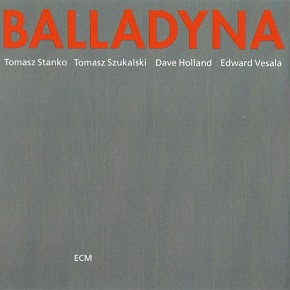
Tomasz Stanko • Balladyna


Biography
Tomasz Stanko was 20 and a graduate of the Cracow Music Academy when he formed his first band, the Jazz Darings, with pianist Adam Makowicz in 1962. Inspired by early Ornette Coleman and the innovations of Coltrane, Miles Davis and George Russell, the group is often cited by music historians as the first European group to play free jazz, but for the trumpeter its importance was eclipsed by the invitation to join Krzystof Komeda's quintet the following year. Stanko has acknowledged that much of his subsequent musical direction and his own compositional style was influenced by Komeda. The lyricism, the feeling of playing only the essential, the approach to structure, to asymmetry, many harmonic details. Stanko toured for five years with Komeda, appeared on 11 albums with him, and also made contributions to all of the films scores that Komeda realized in Poland.

In 1970, Stanko joined Alex Schlippenbachi's Globe Unity Orchestra, which brought him into contact with all the key figures of the European jazz avant-garde, and also formed a quintet, with violinist Zbiegniew Seifert. The following year he collaborated with Krysztof Penderecki and Don Cherry. His most important work of the 1970s, however, may have been with Finnish drummer Edward Vesala. Their series of quartet albums, of which Balladyna was the first, set some new directions with explorations of the free ballad, graced by soulful, grainy trumpet, and Stanko also made important contributions to Vesalai's Together album, a massed gathering of Nordic/Baltic improvisers.

During the 1980s Stanko explored many approaches to improvisation. He travelled with Vesala to India and recorded trumpet solos in the Taj Mahal; again with Vesala, he hooked up with Chico Freeman and Howard Johnson in New York. He worked extensively with Cecil Taylor in large ensemble contexts, and led a number of groups of his own, such as COCX, which deployed post-Bitches Brew rock-rhythms, and Freelectronic, an ahead-of-its-time exploration of electro-acoustic options. Bluish, a trio recording with Arild Andersen and Jon Christensen preceded a return to ECM.

Since resuming his association with ECM with Matka Joanna in 1994 (his first album as a leader for the label in 20 years), Stanko has reached a new audience with his work. Two recordings with his international quartet with Bobo Stenson, Anders Jormin, and Tony Oxley, were followed by a highly successful tribute to film music composer and mentor Krzysztof Komeda in 1997. Stanko's Litania project became a popular fixture on the international festival circuit. In 1998, producer Manfred Eicher assembled a trans-idiomatic band around the trumpeter for From The Green Hill, a recording which pooled the talents of Dino Saluzzi, John Surman, Michelle Makarski, Anders Jormin and Jon Christensen. The Green Hill album won the coveted German Critics Prize (Deutscher Schallplattenpreis) as Album of the Year in 2000.

All of the above had been, as it were, events on the main stage. Concurrently, however, Stanko maintained a Polish quartet, which now became a priority for him. Pianist Marcin Wasilewski, bassist Slawomir Kurkiewicz and drummer Michal Miskiewicz were already working together as a (very) young trio when Stanko first heard them at the beginning of the 1990s, and in 1994 they began to work together, initially on theatre music, some of which was recorded for the Polish Govi label. They quickly developed into his band of choice for all Polish engagements, working with him on theatre and film music initially. Pianist, bassist and drummer have also built up a reputation as a unit in their own right, working under the name Simple Acoustic Trio. Soul of Things is the quartet's first record release.

Soul of Things is essential Stanko, the trumpeter playing with that dark, intense tone that is so immediately identifiable. The programme on this occasion is a balladesque suite, brimming over with Slavic lyricism, and simply titled Soul of Things, Variation 1-13. The music makes allusion, in passing, to themes Stanko has contributed to Polish film, and other pieces of his, including the classic Maldoror's War Song are also quoted, but as Stanko says, tongue only partly in cheek, "I've been playing the same song my whole life." Titles, in other words, are after the fact; what matters is the emotional depth, and this has been a constant through the different phases and forms that Stanko's music has taken over the years.

There is a "timeless" feel to Soul of Things that relates to Stanko's roots as a player; this forward-looking trumpet player is also looking back here. His all-inclusive music on this occasion seems to connect with early influences. While sounding unmistakably like himself he also triggers memories of his first heroes.

In the years since Stanko’s much-loved Soul of Things, both the trumpeter and his young band had continued to make their mark. Many miles of touring, on both sides of the Atlantic, had honed their already exceptional group understanding. Suspended Night builds upon the conceptual framework established by its predecessor" the bulk of the album is devoted to a series of Suspended Night - but the improvisational quotient is expanded, as all participants take more solo space, and more chances.

Stanko's music has changed dramatically in the last decade. He has managed to make his music more accessible without removing the grit and verve that has always been his trademark. And so it is with this his latest disc for ECM and the second with his regular working Polish band of Marcin Wasilewski, piano, Slawomir Kurkiewicz, bass and Michal Miskiewicz, drums. It's a strong group characterized by Wasilewski's ringing impressionistic style influenced by Bill Evans and even more than on Soul of Things, the group's last outing together, Kurkiewicz's carefully executed bass figure make his presence felt and anchor the strong melodies that Stanko provides. As before he does not give the tunes names and this is appropriate as the album has a consistency and unity that makes the individual songs feel part of a greater whole. Stanko may have mellowed but this album is a beauty.

Concurrently with Suspended Night, ECM issued an anthology of Stanko tracks as Volume XVII of its Rarum/Selected Recordings series, which provides a useful overview of the pre-Soul of Things years. In his liner note to the Rarum recording, Stanko talks of the unified nature of his compositions, from the beginning until now, and their range of expression: “From chaos to order, from fury to lyricism.” Lyricism has the upper hand in the pieces played by the Suspended Night ensemble, but the musicians understand the importance of creative tension, and Stanko’s darting phrasing always takes unexpected turns.

In 2004, the Stanko Quartet again spent most of the year on the road. Following a British tour in February, the group had a series of concerts in Germany, Austria and Switzerland in March and April. In May they toured Spain. In June they returned to the States (Stanko’s first-ever US tour in 2002 met with extremely positive reactions and sold-out shows). Italian concerts and festival appearances were scheduled for the summer, and in October/November the Quartet toured their Polish homeland.

In 2004 Stanko was honored by President of Poland with an Order of Polonia Restituta, ranked second amongst Polish civilian decorations. In the autumn 2004 Stanko appeared as a curator of two international jazz festivals in Poland: Signed by Stankoî in Warsaw and The Jazz Autumn in Bielsko Biala. Both festivals were enormously successful and entusiastically received by the audiences and trade media.

Spring 2005 brought the Tomasz Stanko Quartet to USA and Canada for its third North American tour. It started with four night at NYC's legendary Birdland and continued through 12 major cities on both coasts and most prestigious venues such as Washington DC's Blues Alley, Chicago's Hothouse, Seattle's Triple Door, LA's Jazz Bakery, and Oakland's Yoshi's. All those houses were sold out, many of them had presented Stanko before and invited him to come and play again.
https://www.allaboutjazz.com/musicians/tomasz-stanko/

///////


Biografía
Tomasz Stanko tenía 20 años y se había licenciado en la Academia de Música de Cracovia cuando formó su primer grupo, los Jazz Darings, con el pianista Adam Makowicz en 1962. Inspirado por los primeros Ornette Coleman y las innovaciones de Coltrane, Miles Davis y George Russell, el grupo es citado a menudo por los historiadores de la música como el primer grupo europeo que tocó free jazz, pero para el trompetista su importancia quedó eclipsada por la invitación a unirse al quinteto de Krzystof Komeda al año siguiente. Stanko ha reconocido que gran parte de su posterior dirección musical y su propio estilo compositivo se vieron influidos por Komeda. El lirismo, la sensación de tocar sólo lo esencial, el enfoque de la estructura, de la asimetría, muchos detalles armónicos. Stanko estuvo de gira durante cinco años con Komeda, apareció en 11 álbumes con él y también hizo contribuciones a todas las partituras de películas que Komeda realizó en Polonia.

En 1970, Stanko se incorporó a la Globe Unity Orchestra de Alex Schlippenbachi, que le puso en contacto con todas las figuras clave de la vanguardia europea del jazz, y también formó un quinteto, con el violinista Zbiegniew Seifert. Al año siguiente colaboró con Krysztof Penderecki y Don Cherry. Sin embargo, su trabajo más importante de la década de 1970 puede que haya sido con el batería finlandés Edward Vesala. Su serie de álbumes para cuarteto, el primero de los cuales fue Balladyna, marcó nuevos rumbos con sus exploraciones de la balada libre, adornadas por una trompeta conmovedora y granulada, y Stanko también realizó importantes contribuciones al álbum Together de Vesalai, una reunión multitudinaria de improvisadores nórdicos/bálticos.

Durante la década de 1980, Stanko exploró numerosos enfoques de la improvisación. Viajó con Vesala a la India y grabó solos de trompeta en el Taj Mahal; de nuevo con Vesala, se relacionó con Chico Freeman y Howard Johnson en Nueva York. Trabajó extensamente con Cecil Taylor en grandes conjuntos, y dirigió varios grupos propios, como COCX, que desplegaba ritmos de rock post-Bitches Brew, y Freelectronic, una exploración adelantada a su tiempo de las opciones electroacústicas. Bluish, una grabación en trío con Arild Andersen y Jon Christensen, precedió a su regreso a ECM.

Desde que reanudó su asociación con ECM con Matka Joanna en 1994 (su primer álbum como líder para el sello en 20 años), Stanko ha llegado a un nuevo público con su trabajo. Dos grabaciones con su cuarteto internacional con Bobo Stenson, Anders Jormin y Tony Oxley, fueron seguidas por un homenaje de gran éxito al compositor de música de cine y mentor Krzysztof Komeda en 1997. El proyecto Litania de Stanko se hizo muy popular en el circuito internacional de festivales. En 1998, el productor Manfred Eicher reunió una banda transidiomática en torno al trompetista para From The Green Hill, una grabación que reunía los talentos de Dino Saluzzi, John Surman, Michelle Makarski, Anders Jormin y Jon Christensen. El álbum From The Green Hill ganó el codiciado Premio de la Crítica Alemana (Deutscher Schallplattenpreis) como Álbum del Año en 2000.

Todo lo anterior habían sido, por así decirlo, acontecimientos en el escenario principal. Al mismo tiempo, sin embargo, Stanko mantenía un cuarteto polaco, que ahora se convirtió en una prioridad para él. El pianista Marcin Wasilewski, el bajista Slawomir Kurkiewicz y el batería Michal Miskiewicz ya trabajaban juntos como trío (muy) joven cuando Stanko los escuchó por primera vez a principios de los 90, y en 1994 empezaron a trabajar juntos, al principio en música teatral, parte de la cual se grabó para el sello polaco Govi. Rápidamente se convirtieron en su banda de elección para todos los compromisos polacos, trabajando con él inicialmente en música de teatro y cine. El pianista, el bajista y el batería también se han labrado una reputación como grupo por derecho propio, trabajando bajo el nombre de Simple Acoustic Trio. Soul of Things es el primer disco del cuarteto.

Soul of Things es esencial Stanko, el trompetista toca con ese tono oscuro e intenso que es tan inmediatamente identificable. El programa en esta ocasión es una suite baladística, rebosante de lirismo eslavo, y titulada simplemente Soul of Things, Variation 1-13. La música hace alusión, de pasada, a la vida y la muerte. La música hace alusión, de pasada, a temas con los que Stanko ha contribuido al cine polaco, y también se citan otras piezas suyas, entre ellas el clásico Maldoror's War Song, pero como dice Stanko, con la lengua sólo parcialmente en la mejilla: "Llevo toda la vida tocando la misma canción". Los títulos, en otras palabras, son posteriores al hecho; lo que importa es la profundidad emocional, y ésta ha sido una constante a través de las diferentes fases y formas que ha adoptado la música de Stanko a lo largo de los años.

Soul of Things tiene un aire "atemporal" que se relaciona con las raíces de Stanko como intérprete; este trompetista con visión de futuro también mira hacia atrás. Su música integral en esta ocasión parece conectar con las primeras influencias. Aunque suena inconfundiblemente a sí mismo, también despierta recuerdos de sus primeros héroes.

En los años transcurridos desde el muy querido Soul of Things de Stanko, tanto el trompetista como su joven banda habían seguido dejando huella. Muchos kilómetros de gira, a ambos lados del Atlántico, habían perfeccionado su ya excepcional entendimiento de grupo. Suspended Night se basa en el marco conceptual establecido por su predecesor -la mayor parte del álbum está dedicada a una serie de Suspended Night-, pero el cociente de improvisación se amplía, ya que todos los participantes se toman más espacio en solitario y se arriesgan más.

La música de Stanko ha cambiado radicalmente en la última década. Ha conseguido hacer su música más accesible sin eliminar la garra y el brío que siempre le han caracterizado. Y así es con este su último disco para ECM y el segundo con su banda polaca habitual de Marcin Wasilewski, piano, Slawomir Kurkiewicz, bajo y Michal Miskiewicz, batería. Es un grupo fuerte caracterizado por el estilo impresionista de Wasilewski, influenciado por Bill Evans, e incluso más que en Soul of Things, el último trabajo del grupo juntos, la figura cuidadosamente ejecutada del bajo de Kurkiewicz hace sentir su presencia y ancla las fuertes melodías que Stanko proporciona. Como antes, no da nombres a las melodías, lo cual es apropiado, ya que el álbum tiene una coherencia y una unidad que hace que las canciones individuales parezcan parte de un todo mayor. Puede que Stanko se haya suavizado, pero este álbum es una belleza.

Al mismo tiempo que Suspended Night, ECM publicó una antología de temas de Stanko como volumen XVII de su serie Rarum/Selected Recordings, que ofrece una útil visión general de los años anteriores a Soul of Things. En su nota de presentación de la grabación de Rarum, Stanko habla de la naturaleza unificada de sus composiciones, desde el principio hasta ahora, y de su gama de expresión: "Del caos al orden, de la furia al lirismo". El lirismo tiene la sartén por el mango en las piezas interpretadas por el conjunto Suspended Night, pero los músicos comprenden la importancia de la tensión creativa, y el ágil fraseo de Stanko siempre da giros inesperados.

En 2004, el Cuarteto Stanko volvió a pasar la mayor parte del año de gira. Tras una gira británica en febrero, el grupo ofreció una serie de conciertos en Alemania, Austria y Suiza en marzo y abril. En mayo realizaron una gira por España. En junio volvieron a Estados Unidos (la primera gira de Stanko por este país, en 2002, tuvo reacciones muy positivas y agotó todas las entradas). En verano se programaron conciertos y festivales en Italia, y en octubre y noviembre el cuarteto realizó una gira por su Polonia natal.

En 2004, el Presidente de Polonia condecoró a Stanko con la Orden de Polonia Restituta, la segunda condecoración civil polaca. En otoño de 2004, Stanko actuó como comisario de dos festivales internacionales de jazz en Polonia: Signed by Stankoî en Varsovia y The Jazz Autumn en Bielsko Biala. Ambos festivales tuvieron un enorme éxito y fueron recibidos con entusiasmo por el público y los medios especializados.

La primavera de 2005 llevó al Cuarteto Tomasz Stanko a Estados Unidos y Canadá para su tercera gira norteamericana. Comenzó con cuatro noches en el legendario Birdland de Nueva York y continuó por 12 grandes ciudades de ambas costas y los locales más prestigiosos, como el Blues Alley de Washington DC, el Hothouse de Chicago, el Triple Door de Seattle, el Jazz Bakery de Los Ángeles y el Yoshi's de Oakland. En todos ellos se agotaron las entradas, muchos de los cuales ya habían presentado a Stanko con anterioridad y le habían invitado a volver a tocar.
https://www.allaboutjazz.com/musicians/tomasz-stanko/

www.tomaszstanko.com ...


Saturday, February 22, 2025

Tomasz Stanko • Leosia


Biography
Tomasz Stanko was 20 and a graduate of the Cracow Music Academy when he formed his first band, the Jazz Darings, with pianist Adam Makowicz in 1962. Inspired by early Ornette Coleman and the innovations of Coltrane, Miles Davis and George Russell, the group is often cited by music historians as the first European group to play free jazz, but for the trumpeter its importance was eclipsed by the invitation to join Krzystof Komeda's quintet the following year. Stanko has acknowledged that much of his subsequent musical direction and his own compositional style was influenced by Komeda. The lyricism, the feeling of playing only the essential, the approach to structure, to asymmetry, many harmonic details. Stanko toured for five years with Komeda, appeared on 11 albums with him, and also made contributions to all of the films scores that Komeda realized in Poland.

In 1970, Stanko joined Alex Schlippenbachi's Globe Unity Orchestra, which brought him into contact with all the key figures of the European jazz avant-garde, and also formed a quintet, with violinist Zbiegniew Seifert. The following year he collaborated with Krysztof Penderecki and Don Cherry. His most important work of the 1970s, however, may have been with Finnish drummer Edward Vesala. Their series of quartet albums, of which Balladyna was the first, set some new directions with explorations of the free ballad, graced by soulful, grainy trumpet, and Stanko also made important contributions to Vesalai's Together album, a massed gathering of Nordic/Baltic improvisers.

During the 1980s Stanko explored many approaches to improvisation. He travelled with Vesala to India and recorded trumpet solos in the Taj Mahal; again with Vesala, he hooked up with Chico Freeman and Howard Johnson in New York. He worked extensively with Cecil Taylor in large ensemble contexts, and led a number of groups of his own, such as COCX, which deployed post-Bitches Brew rock-rhythms, and Freelectronic, an ahead-of-its-time exploration of electro-acoustic options. Bluish, a trio recording with Arild Andersen and Jon Christensen preceded a return to ECM.

Since resuming his association with ECM with Matka Joanna in 1994 (his first album as a leader for the label in 20 years), Stanko has reached a new audience with his work. Two recordings with his international quartet with Bobo Stenson, Anders Jormin, and Tony Oxley, were followed by a highly successful tribute to film music composer and mentor Krzysztof Komeda in 1997. Stanko's Litania project became a popular fixture on the international festival circuit. In 1998, producer Manfred Eicher assembled a trans-idiomatic band around the trumpeter for From The Green Hill, a recording which pooled the talents of Dino Saluzzi, John Surman, Michelle Makarski, Anders Jormin and Jon Christensen. The Green Hill album won the coveted German Critics Prize (Deutscher Schallplattenpreis) as Album of the Year in 2000.

All of the above had been, as it were, events on the main stage. Concurrently, however, Stanko maintained a Polish quartet, which now became a priority for him. Pianist Marcin Wasilewski, bassist Slawomir Kurkiewicz and drummer Michal Miskiewicz were already working together as a (very) young trio when Stanko first heard them at the beginning of the 1990s, and in 1994 they began to work together, initially on theatre music, some of which was recorded for the Polish Govi label. They quickly developed into his band of choice for all Polish engagements, working with him on theatre and film music initially. Pianist, bassist and drummer have also built up a reputation as a unit in their own right, working under the name Simple Acoustic Trio. Soul of Things is the quartet's first record release.

Soul of Things is essential Stanko, the trumpeter playing with that dark, intense tone that is so immediately identifiable. The programme on this occasion is a balladesque suite, brimming over with Slavic lyricism, and simply titled Soul of Things, Variation 1-13. The music makes allusion, in passing, to themes Stanko has contributed to Polish film, and other pieces of his, including the classic Maldoror's War Song are also quoted, but as Stanko says, tongue only partly in cheek, "I've been playing the same song my whole life." Titles, in other words, are after the fact; what matters is the emotional depth, and this has been a constant through the different phases and forms that Stanko's music has taken over the years.

There is a "timeless" feel to Soul of Things that relates to Stanko's roots as a player; this forward-looking trumpet player is also looking back here. His all-inclusive music on this occasion seems to connect with early influences. While sounding unmistakably like himself he also triggers memories of his first heroes.

In the years since Stanko’s much-loved Soul of Things, both the trumpeter and his young band had continued to make their mark. Many miles of touring, on both sides of the Atlantic, had honed their already exceptional group understanding. Suspended Night builds upon the conceptual framework established by its predecessor" the bulk of the album is devoted to a series of Suspended Night - but the improvisational quotient is expanded, as all participants take more solo space, and more chances.

Stanko's music has changed dramatically in the last decade. He has managed to make his music more accessible without removing the grit and verve that has always been his trademark. And so it is with this his latest disc for ECM and the second with his regular working Polish band of Marcin Wasilewski, piano, Slawomir Kurkiewicz, bass and Michal Miskiewicz, drums. It's a strong group characterized by Wasilewski's ringing impressionistic style influenced by Bill Evans and even more than on Soul of Things, the group's last outing together, Kurkiewicz's carefully executed bass figure make his presence felt and anchor the strong melodies that Stanko provides. As before he does not give the tunes names and this is appropriate as the album has a consistency and unity that makes the individual songs feel part of a greater whole. Stanko may have mellowed but this album is a beauty.

Concurrently with Suspended Night, ECM issued an anthology of Stanko tracks as Volume XVII of its Rarum/Selected Recordings series, which provides a useful overview of the pre-Soul of Things years. In his liner note to the Rarum recording, Stanko talks of the unified nature of his compositions, from the beginning until now, and their range of expression: “From chaos to order, from fury to lyricism.” Lyricism has the upper hand in the pieces played by the Suspended Night ensemble, but the musicians understand the importance of creative tension, and Stanko’s darting phrasing always takes unexpected turns.

In 2004, the Stanko Quartet again spent most of the year on the road. Following a British tour in February, the group had a series of concerts in Germany, Austria and Switzerland in March and April. In May they toured Spain. In June they returned to the States (Stanko’s first-ever US tour in 2002 met with extremely positive reactions and sold-out shows). Italian concerts and festival appearances were scheduled for the summer, and in October/November the Quartet toured their Polish homeland.

In 2004 Stanko was honored by President of Poland with an Order of Polonia Restituta, ranked second amongst Polish civilian decorations. In the autumn 2004 Stanko appeared as a curator of two international jazz festivals in Poland: Signed by Stankoî in Warsaw and The Jazz Autumn in Bielsko Biala. Both festivals were enormously successful and entusiastically received by the audiences and trade media.

Spring 2005 brought the Tomasz Stanko Quartet to USA and Canada for its third North American tour. It started with four night at NYC's legendary Birdland and continued through 12 major cities on both coasts and most prestigious venues such as Washington DC's Blues Alley, Chicago's Hothouse, Seattle's Triple Door, LA's Jazz Bakery, and Oakland's Yoshi's. All those houses were sold out, many of them had presented Stanko before and invited him to come and play again.
https://www.allaboutjazz.com/musicians/tomasz-stanko/

///////


Biografía
Tomasz Stanko tenía 20 años y se había licenciado en la Academia de Música de Cracovia cuando formó su primer grupo, los Jazz Darings, con el pianista Adam Makowicz en 1962. Inspirado por los primeros Ornette Coleman y las innovaciones de Coltrane, Miles Davis y George Russell, el grupo es citado a menudo por los historiadores de la música como el primer grupo europeo que tocó free jazz, pero para el trompetista su importancia quedó eclipsada por la invitación a unirse al quinteto de Krzystof Komeda al año siguiente. Stanko ha reconocido que gran parte de su posterior dirección musical y su propio estilo compositivo se vieron influidos por Komeda. El lirismo, la sensación de tocar sólo lo esencial, el enfoque de la estructura, de la asimetría, muchos detalles armónicos. Stanko estuvo de gira durante cinco años con Komeda, apareció en 11 álbumes con él y también hizo contribuciones a todas las partituras de películas que Komeda realizó en Polonia.

En 1970, Stanko se incorporó a la Globe Unity Orchestra de Alex Schlippenbachi, que le puso en contacto con todas las figuras clave de la vanguardia europea del jazz, y también formó un quinteto, con el violinista Zbiegniew Seifert. Al año siguiente colaboró con Krysztof Penderecki y Don Cherry. Sin embargo, su trabajo más importante de la década de 1970 puede que haya sido con el batería finlandés Edward Vesala. Su serie de álbumes para cuarteto, el primero de los cuales fue Balladyna, marcó nuevos rumbos con sus exploraciones de la balada libre, adornadas por una trompeta conmovedora y granulada, y Stanko también realizó importantes contribuciones al álbum Together de Vesalai, una reunión multitudinaria de improvisadores nórdicos/bálticos.

Durante la década de 1980, Stanko exploró numerosos enfoques de la improvisación. Viajó con Vesala a la India y grabó solos de trompeta en el Taj Mahal; de nuevo con Vesala, se relacionó con Chico Freeman y Howard Johnson en Nueva York. Trabajó extensamente con Cecil Taylor en grandes conjuntos, y dirigió varios grupos propios, como COCX, que desplegaba ritmos de rock post-Bitches Brew, y Freelectronic, una exploración adelantada a su tiempo de las opciones electroacústicas. Bluish, una grabación en trío con Arild Andersen y Jon Christensen, precedió a su regreso a ECM.

Desde que reanudó su asociación con ECM con Matka Joanna en 1994 (su primer álbum como líder para el sello en 20 años), Stanko ha llegado a un nuevo público con su trabajo. Dos grabaciones con su cuarteto internacional con Bobo Stenson, Anders Jormin y Tony Oxley, fueron seguidas por un homenaje de gran éxito al compositor de música de cine y mentor Krzysztof Komeda en 1997. El proyecto Litania de Stanko se hizo muy popular en el circuito internacional de festivales. En 1998, el productor Manfred Eicher reunió una banda transidiomática en torno al trompetista para From The Green Hill, una grabación que reunía los talentos de Dino Saluzzi, John Surman, Michelle Makarski, Anders Jormin y Jon Christensen. El álbum From The Green Hill ganó el codiciado Premio de la Crítica Alemana (Deutscher Schallplattenpreis) como Álbum del Año en 2000.

Todo lo anterior habían sido, por así decirlo, acontecimientos en el escenario principal. Al mismo tiempo, sin embargo, Stanko mantenía un cuarteto polaco, que ahora se convirtió en una prioridad para él. El pianista Marcin Wasilewski, el bajista Slawomir Kurkiewicz y el batería Michal Miskiewicz ya trabajaban juntos como trío (muy) joven cuando Stanko los escuchó por primera vez a principios de los 90, y en 1994 empezaron a trabajar juntos, al principio en música teatral, parte de la cual se grabó para el sello polaco Govi. Rápidamente se convirtieron en su banda de elección para todos los compromisos polacos, trabajando con él inicialmente en música de teatro y cine. El pianista, el bajista y el batería también se han labrado una reputación como grupo por derecho propio, trabajando bajo el nombre de Simple Acoustic Trio. Soul of Things es el primer disco del cuarteto.

Soul of Things es esencial Stanko, el trompetista toca con ese tono oscuro e intenso que es tan inmediatamente identificable. El programa en esta ocasión es una suite baladística, rebosante de lirismo eslavo, y titulada simplemente Soul of Things, Variation 1-13. La música hace alusión, de pasada, a la vida y la muerte. La música hace alusión, de pasada, a temas con los que Stanko ha contribuido al cine polaco, y también se citan otras piezas suyas, entre ellas el clásico Maldoror's War Song, pero como dice Stanko, con la lengua sólo parcialmente en la mejilla: "Llevo toda la vida tocando la misma canción". Los títulos, en otras palabras, son posteriores al hecho; lo que importa es la profundidad emocional, y ésta ha sido una constante a través de las diferentes fases y formas que ha adoptado la música de Stanko a lo largo de los años.

Soul of Things tiene un aire "atemporal" que se relaciona con las raíces de Stanko como intérprete; este trompetista con visión de futuro también mira hacia atrás. Su música integral en esta ocasión parece conectar con las primeras influencias. Aunque suena inconfundiblemente a sí mismo, también despierta recuerdos de sus primeros héroes.

En los años transcurridos desde el muy querido Soul of Things de Stanko, tanto el trompetista como su joven banda habían seguido dejando huella. Muchos kilómetros de gira, a ambos lados del Atlántico, habían perfeccionado su ya excepcional entendimiento de grupo. Suspended Night se basa en el marco conceptual establecido por su predecesor -la mayor parte del álbum está dedicada a una serie de Suspended Night-, pero el cociente de improvisación se amplía, ya que todos los participantes se toman más espacio en solitario y se arriesgan más.

La música de Stanko ha cambiado radicalmente en la última década. Ha conseguido hacer su música más accesible sin eliminar la garra y el brío que siempre le han caracterizado. Y así es con este su último disco para ECM y el segundo con su banda polaca habitual de Marcin Wasilewski, piano, Slawomir Kurkiewicz, bajo y Michal Miskiewicz, batería. Es un grupo fuerte caracterizado por el estilo impresionista de Wasilewski, influenciado por Bill Evans, e incluso más que en Soul of Things, el último trabajo del grupo juntos, la figura cuidadosamente ejecutada del bajo de Kurkiewicz hace sentir su presencia y ancla las fuertes melodías que Stanko proporciona. Como antes, no da nombres a las melodías, lo cual es apropiado, ya que el álbum tiene una coherencia y una unidad que hace que las canciones individuales parezcan parte de un todo mayor. Puede que Stanko se haya suavizado, pero este álbum es una belleza.

Al mismo tiempo que Suspended Night, ECM publicó una antología de temas de Stanko como volumen XVII de su serie Rarum/Selected Recordings, que ofrece una útil visión general de los años anteriores a Soul of Things. En su nota de presentación de la grabación de Rarum, Stanko habla de la naturaleza unificada de sus composiciones, desde el principio hasta ahora, y de su gama de expresión: "Del caos al orden, de la furia al lirismo". El lirismo tiene la sartén por el mango en las piezas interpretadas por el conjunto Suspended Night, pero los músicos comprenden la importancia de la tensión creativa, y el ágil fraseo de Stanko siempre da giros inesperados.

En 2004, el Cuarteto Stanko volvió a pasar la mayor parte del año de gira. Tras una gira británica en febrero, el grupo ofreció una serie de conciertos en Alemania, Austria y Suiza en marzo y abril. En mayo realizaron una gira por España. En junio volvieron a Estados Unidos (la primera gira de Stanko por este país, en 2002, tuvo reacciones muy positivas y agotó todas las entradas). En verano se programaron conciertos y festivales en Italia, y en octubre y noviembre el cuarteto realizó una gira por su Polonia natal.

En 2004, el Presidente de Polonia condecoró a Stanko con la Orden de Polonia Restituta, la segunda condecoración civil polaca. En otoño de 2004, Stanko actuó como comisario de dos festivales internacionales de jazz en Polonia: Signed by Stankoî en Varsovia y The Jazz Autumn en Bielsko Biala. Ambos festivales tuvieron un enorme éxito y fueron recibidos con entusiasmo por el público y los medios especializados.

La primavera de 2005 llevó al Cuarteto Tomasz Stanko a Estados Unidos y Canadá para su tercera gira norteamericana. Comenzó con cuatro noches en el legendario Birdland de Nueva York y continuó por 12 grandes ciudades de ambas costas y los locales más prestigiosos, como el Blues Alley de Washington DC, el Hothouse de Chicago, el Triple Door de Seattle, el Jazz Bakery de Los Ángeles y el Yoshi's de Oakland. En todos ellos se agotaron las entradas, muchos de los cuales ya habían presentado a Stanko con anterioridad y le habían invitado a volver a tocar.
https://www.allaboutjazz.com/musicians/tomasz-stanko/

www.tomaszstanko.com ...


Thursday, February 20, 2025

Tomasz Stanko New York Quartet • Wislawa


Since returning to the ECM fold in 1994 to record Matka Joanna (1995), Tomasz Stańko has virtually rebooted a career that demonstrated significant promise back in the 1970s, when he released Balladyna (1976) for the label, and worked with others including Finnish drummer Edward Vesala and American bassist Gary Peacock. The Polish trumpeter was far from dormant in the period between 1981 and 1994, releasing a slew of recordings in Poland, but none—with the exception Bluish (Power Bros, 1992) and Bosonossa (Gowi, 1993)—came close to his work for the German label. That those last two recordings were made with stalwart ECM artists—Bluish, with bassist Arild Andersen and drummer Jon Christensen, and Bosonossa with the same group that would go on to record both Matka Joanna and Leosia (ECM, 1997) (pianist Bobo Stenson, bassist Anders Jormin and drummer Tony Oxley)—may well have something to do with rekindling ECM head Manfred Eicher's interest in Stańko.

Whatever the reason, the trumpeter's career has been refreshed and renewed over the past two decades, even as he's fronted a variety of projects ranging from his tribute to fellow Pole, pianist/composer Krzysztof Komeda (1997's Litania) to grooming a young Polish trio that, beginning with 2000's darkly melancholic Soul of Things, would ultimately continue as a standalone entity on ECM (Marcin Wasilewski Trio, last heard on 2011's Faithful), even as the trumpeter formed a new group for Dark Eyes (2010), which brought together a stunning Danish/Finnish collaboration whose 2009 performance at Norway's Molde Jazz Festival was but a warm-up for the quintet's incendiary closing show at the TD Ottawa International Jazz Festival a year later.

Now splitting his time between New York City and Warsaw, Stańko may well have put together the best group of his career with his New York Quartet and its debut recording, Wislawa. Over the past decade, bassist Thomas Morgan and drummer Gerald Cleaver have shaped growing presences on the label, Morgan for his collaborations with guitarist John Abercrombie and pianist Masabumi Kikuchi, and Cleaver for his work with reed multi-instrumentalist Roscoe Mitchell, and bassist Miroslav Vitous and Michael Formanek.

Pianist David Virelles is the wildcard here, just as he is on saxophonist Chris Potter's outstanding leader debut for the label, The Sirens (2013). With Continuum (Pi, 2012), the Cuban expat was already breaking free of the shackles that confined his early work with Canadians including bassist Roberto Occhipinti and saxophonist/flautist Jane Bunnett. Not that he's deserted his Latin/Afro-Cuban roots, which Virelles combines with classical studies and a penchant for more idiosyncratic jazz pianists like Andrew Hill and Thelonious Monk, but with The Sirens and, quite possibly even more so here on Wislawa, Virelles is now able to more freely explore all points in this unique constellation and, despite still being on the shy side of thirty, has quickly proven himself worthy of mention in the same breath as Jason Moran, Craig Taborn and Brad Mehldau, three other American-based pianists who've caught Eicher's ear in a big way in recent times.

What makes Wislawa stand out amongst Stańko's consistently impressive ECM discography is that the trumpeter seems to have found a group that, from the get-go, is capable of the broader purview his recordings have always shown, but each in more specific, individualistic ways. Here, Stańko's quartet is capable of moving from effortless demonstrations of purer freedom ("Faces"), fiery swing ("Asssassins") and indigo balladry ("Metafizyka") to rubato tone poems ("Song for H"), episodic raptures ("Tutaj—Here") and pensive melancholy ("A Shaggy Vandal"). Two versions of the title track move from unfettered elegance ("Wislawa") to incendiary displays of power that are virtuosic without ever resorting to self-congratulatory pyrotechnics ("Wislawa, var."). The rewards of this quartet are plenty good enough without relying on the kind of back-patting gymnastics that all-too-often unnecessarily define whether or not a group is succeeding.

Instead, while every member of this group clearly shines individually and collectively—has there been a more imaginative bass/drums pairing, in recent years, than Morgan/Cleaver, who effortlessly groove when necessary, but with ears ever-open to respond to or push against what their partners are up to?—and there are impressive solos aplenty, it's always in service of Stańko's insidiously recognizable writing. Stańko's tone, with its characteristic grit, speaks of a lifetime of experiences good and bad; and his ability to levy visceral moments almost instantly contrasting with passages of revealing vulnerability remain unparalleled to this day.

Every one of Stańko's groups since Matka Joanna has been exceptional—each with its own definitive strengths—but none has afforded the trumpeter the breadth of freedom heard over the course of Wislawa's two discs, twelve songs and one hundred minutes. Stańko's quartet with Wasilewski slowly grew into freer playing over the course of seven years but never lost its innate lyricism; despite the occasional moment of departure, his Dark Eyes quintet was very much about time; and his Leosia quartet, even with players as capable of motivic melody as Stenson and Jormin, couldn't help but interpret those qualities in the context of Oxley's more liberated approach to time.

With Wislawa, Stańko has it all, with a group whose possibilities already seem limitless. With an unmistakable allegiance to the tradition, even as it twists, turns and occasionally collapses its supporting structures and introduces incidental contextual ideas from beyond, Stańko's New York Quartet feels like the group he's been searching for all along.
By John Kelman
March 18, 2013
https://www.allaboutjazz.com/wislawa-by-john-kelman

///////


Desde que regresó al redil de ECM en 1994 para grabar Matka Joanna (1995), Tomasz Stańko prácticamente ha reiniciado una carrera que demostró ser significativamente prometedora en la década de 1970, cuando lanzó Balladyna (1976) para el sello y trabajó con otros, incluido el baterista finlandés. Edward Vesala y el bajista estadounidense Gary Peacock. El trompetista polaco estuvo lejos de estar inactivo en el período entre 1981 y 1994, lanzando una gran cantidad de grabaciones en Polonia, pero ninguna, con la excepción de Bluish (Power Bros, 1992) y Bosonossa (Gowi, 1993), estuvo cerca de su trabajo para la etiqueta alemana. Que esas dos últimas grabaciones se hicieron con artistas incondicionales de ECM: Blueish, con el bajista Arild Andersen y el baterista Jon Christensen, y Bosonossa con el mismo grupo que grabaría tanto a Matka Joanna como a Leosia (ECM, 1997) (pianista Bobo Stenson, el bajista Anders Jormin y el baterista Tony Oxley), bien puede tener algo que ver con el reavivar el interés del jefe de ECM, Manfred Eicher, en Stańko.

Cualquiera que sea la razón, la carrera del trompetista se ha refrescado y renovado en las últimas dos décadas, incluso cuando ha liderado una variedad de proyectos que van desde su tributo a su compatriota polaco, el pianista y compositor Krzysztof Komeda (Litania de 1997) hasta preparar un joven trío polaco que , comenzando con Soul of Things, oscuramente melancólica de 2000, finalmente continuaría como una entidad independiente en ECM (Marcin Wasilewski Trio, escuchado por última vez en Faithful de 2011), incluso cuando el trompetista formó un nuevo grupo para Dark Eyes (2010), que reunió a un impresionante colaboración danesa/finlandesa cuya actuación en 2009 en el Molde Jazz Festival de Noruega no fue más que un precalentamiento para el incendiario espectáculo de clausura del quinteto en el TD Ottawa International Jazz Festival un año después.

Ahora que divide su tiempo entre la ciudad de Nueva York y Varsovia, Stańko bien puede haber formado el mejor grupo de su carrera con su Cuarteto de Nueva York y su grabación debut, Wislawa. Durante la última década, el bajista Thomas Morgan y el baterista Gerald Cleaver han dado forma a una presencia creciente en el sello, Morgan por sus colaboraciones con el guitarrista John Abercrombie y el pianista Masabumi Kikuchi, y Cleaver por su trabajo con el multiinstrumentista de caña Roscoe Mitchell y el bajista Miroslav Vitous. y Michael Formanek.

El pianista David Virelles es el comodín aquí, tal como lo es en el destacado debut como líder del saxofonista Chris Potter para el sello, The Sirens (2013). Con Continuum (Pi, 2012), el expatriado cubano ya se estaba liberando de los grilletes que limitaban sus primeros trabajos con canadienses, incluido el bajista Roberto Occhipinti y la saxofonista y flautista Jane Bunnett. No es que haya abandonado sus raíces latinas/afrocubanas, que Virelles combina con estudios clásicos y una inclinación por pianistas de jazz más idiosincrásicos como Andrew Hill y Thelonious Monk, pero con The Sirens y, posiblemente aún más aquí en Wislawa, Virelles es Ahora es capaz de explorar más libremente todos los puntos de esta constelación única y, a pesar de que todavía tiene treinta y tantos años, ha demostrado rápidamente que es digno de mención al igual que Jason Moran, Craig Taborn y Brad Mehldau, otros tres estadounidenses con sede en Estados Unidos. pianistas que han llamado mucho la atención de Eicher en los últimos tiempos.

Lo que hace que Wislawa se destaque entre la discografía ECM consistentemente impresionante de Stańko es que el trompetista parece haber encontrado un grupo que, desde el principio, es capaz del alcance más amplio que siempre han mostrado sus grabaciones, pero cada uno de manera más específica e individualista. Aquí, el cuarteto de Stańko es capaz de pasar de demostraciones sin esfuerzo de una libertad más pura ("Faces"), swing feroz ("Asssassins") y baladas índigo ("Metafizyka") a poemas en tono rubato ("Song for H"), éxtasis episódicos ( "Tutaj—Here") y melancolía pensativa ("A Shaggy Vandal"). Dos versiones de la canción principal pasan de la elegancia sin restricciones ("Wislawa") a demostraciones incendiarias de poder que son virtuosas sin recurrir nunca a la pirotecnia de autocomplacencia ("Wislawa, var."). Las recompensas de este cuarteto son lo suficientemente buenas sin depender del tipo de gimnasia de palmaditas en la espalda que con demasiada frecuencia definen innecesariamente si un grupo está teniendo éxito o no.

En cambio, aunque cada miembro de este grupo claramente brilla individual y colectivamente, ¿ha habido una pareja de bajo/batería más imaginativa, en los últimos años, que Morgan/Cleaver, que bailan sin esfuerzo cuando es necesario, pero con los oídos siempre abiertos para responder o escuchar? empujar contra lo que sus socios están haciendo?—y hay impresionantes solos en abundancia, siempre al servicio de la escritura insidiosamente reconocible de Stańko. El tono de Stańko, con su característica determinación, habla de una vida de experiencias buenas y malas; y su capacidad para generar momentos viscerales que contrastan casi instantáneamente con pasajes de vulnerabilidad reveladora siguen siendo incomparables hasta el día de hoy.

Cada uno de los grupos de Stańko desde Matka Joanna ha sido excepcional, cada uno con sus propias fortalezas definitivas, pero ninguno le ha brindado al trompetista la amplitud de libertad que se escucha en el transcurso de los dos discos, las doce canciones y los cien minutos de Wislawa. El cuarteto de Stańko con Wasilewski se convirtió lentamente en una interpretación más libre en el transcurso de siete años, pero nunca perdió su lirismo innato; a pesar del momento ocasional de partida, su quinteto Dark Eyes ya era hora; y su cuarteto Leosia, incluso con músicos tan capaces de melodías con motivos como Stenson y Jormin, no pudieron evitar interpretar esas cualidades en el contexto del enfoque más liberado del tiempo de Oxley.

Con Wislawa, Stańko lo tiene todo, con un grupo cuyas posibilidades ya parecen ilimitadas. Con una lealtad inconfundible a la tradición, incluso cuando tuerce, gira y ocasionalmente colapsa sus estructuras de soporte e introduce ideas contextuales incidentales del más allá, Stańko's New York Quartet se siente como el grupo que ha estado buscando todo el tiempo.
por John Kelman
18 de marzo de 2013
https://www.allaboutjazz.com/wislawa-by-john-kelman

www.tomaszstanko.com ...