egroj world: Louis Bellson
Showing posts with label Louis Bellson. Show all posts

Friday, May 30, 2025

Jazz At The Philharmonic • Norman Granz' Jazz At The Philharmonic Vol.17


Oscar Peterson is present throughout these recordings, which begin with an improvisation, followed by a drum solo by Louis Bellson, then Oscar Peterson's Trio, joined first by De Franco and Buddy Rich to form a quintet and finally by Lionel Hampton to form a sextet.

///////


Oscar Peterson está presente a lo largo de estas grabaciones, que comienzan con una improvisación, seguida de un solo de batería de Louis Bellson, luego el Trío de Oscar Peterson, al que se unen primero De Franco y Buddy Rich para formar un quinteto y, finalmente, Lionel Hampton para formar un sexteto.


Friday, February 7, 2025

Roy Eldridge • Decidedly


Review
by Ronnie D. Lankford, Jr.  
If a listener picks up a 50-minute jazz album that only contains four songs, he or she will rest assured that the musicians really get a chance to stretch things out. In the case of Decidedly, featuring tested players like trumpeter Roy Eldridge, guitarist Joe Pass, tenor Johnny Griffin, and pianist Ray Bryant, this is a good thing. Recorded live in 1975 in Antibes, France, before an appreciative audience, the material is being issued for the first time in 2002. The group kicks off with an Eldridge original, "Bee's Bloos," and settles into a relaxed groove for the rest of the show. A 16-minute take of "Lover Man (Oh, Where Can You Be?)" follows, with lengthy, soulful solos handed in by everyone. Bassist Niels-Henning Orsted Pedersen and drummer Louis Bellson offer tasteful underpinning along with a little muscle on "Undecided." The disc closes out with an appearance by Milt Jackson on piano for Thelonious Monk's "Hackensack." It will perhaps seem odd that this swinging set, performed in France while the fusion movement was sweeping the states, will probably have a more receptive audience today than it would have had over 25 years ago. But history, and good taste, are never predictable. Decidedly is a lovely live disc, and will be appreciated by fans of any of the participants.


Biography
by Scott Yanow
One of the most exciting trumpeters to emerge during the swing era, Roy Eldridge's combative approach, chance-taking style and strong musicianship were an inspiration (and an influence) to the next musical generation, most notably Dizzy Gillespie. Although he sometimes pushed himself farther than he could go, Eldridge never played a dull solo.

Roy Eldridge started out playing trumpet and drums in carnival and circus bands. With the Nighthawk Syncopators he received a bit of attention by playing a note-for-note re-creation of Coleman Hawkins' tenor solo on "The Stampede." Inspired by the dynamic playing of Jabbo Smith (Eldridge would not discover Louis Armstrong for a few years), Eldridge played with some territory bands including Zack Whyte and Speed Webb and in New York (where he arrive in 1931) he worked with Elmer Snowden (who nicknamed him "Little Jazz"), McKinney's Cotton Pickers, and most importantly Teddy Hill (1935). Eldridge's recorded solos with Hill, backing Billie Holiday and with Fletcher Henderson (including his 1936 hit "Christopher Columbus") gained a great deal of attention. In 1937 he appeared with his octet (which included brother Joe on alto) at the Three Deuces Club in Chicago and recorded some outstanding selections as a leader including "Heckler's Hop" and "Wabash Stomp." By 1939 Eldridge had a larger group playing at the Arcadia Ballroom in New York. With the decline of Bunny Berigan and the increasing predictability of Louis Armstrong, Eldridge was arguably the top trumpeter in jazz during this era.

During 1941-1942 Eldridge sparked Gene Krupa's Orchestra, recording classic versions of "Rockin' Chair" and "After You've Gone" and interacting with Anita O'Day on "Let Me Off Uptown." The difficulties of traveling with a White band during a racist period hurt him, as did some of the incidents that occurred during his stay with Artie Shaw (1944-1945) but the music during both stints was quite memorable. Eldridge can be seen in several "soundies" (short promotional film devoted to single songs) of this era by the Krupa band, often in association with O'Day, including "Let Me Off Uptown" and "Thanks for the Boogie Ride." He is also very prominent in the band's appearance in Howard Hawks' Ball of Fire, in an extended performance of "Drum Boogie" mimed by Barbara Stanwyck, taking a long trumpet solo -- the clip was filmed soon after Eldridge joined the band in late April of 1941, and "Drum Boogie" was a song that Eldridge co-wrote with Krupa.

Eldridge had a short-lived big band of his own, toured with Jazz at the Philharmonic, and then had a bit of an identity crisis when he realized that his playing was not as modern as the beboppers. A successful stay in France during 1950-1951 restored his confidence when he realized that being original was more important than being up-to-date. Eldridge recorded steadily for Norman Granz in the '50s, was one of the stars of JATP (where he battled Charlie Shavers and Dizzy Gillespie), and by 1956, was often teamed with Coleman Hawkins in a quintet; their 1957 appearance at Newport was quite memorable. The '60s were tougher as recording opportunities and work became rarer. Eldridge had brief and unhappy stints with Count Basie's Orchestra and Ella Fitzgerald (feeling unnecessary in both contexts) but was leading his own group by the end of the decade. He spent much of the '70s playing regularly at Ryan's and recording for Pablo and, although his range had shrunk a bit, Eldridge's competitive spirit was still very much intact. Only a serious stroke in 1980 was able to halt his horn. Roy Eldridge recorded throughout his career for virtually every label.
https://www.allmusic.com/artist/roy-eldridge-mn0000346637/biography

///////


Reseña
por Ronnie D. Lankford, Jr.  
Si un oyente elige un álbum de jazz de 50 minutos que sólo contiene cuatro canciones, tendrá la seguridad de que los músicos realmente tienen la oportunidad de estirar las cosas. En el caso de Decidedly, en el que participan músicos tan experimentados como el trompetista Roy Eldridge, el guitarrista Joe Pass, el tenor Johnny Griffin y el pianista Ray Bryant, esto es algo positivo. Grabado en directo en 1975 en Antibes (Francia) ante un público entregado, el material se publica por primera vez en 2002. El grupo comienza con un tema original de Eldridge, "Bee's Bloos", y se instala en un ritmo relajado durante el resto del concierto. Le sigue una versión de 16 minutos de "Lover Man (Oh, Where Can You Be?)", con largos y conmovedores solos a cargo de todos. El bajista Niels-Henning Orsted Pedersen y el batería Louis Bellson ofrecen un buen apoyo junto con un poco de músculo en "Undecided". El disco se cierra con una aparición de Milt Jackson al piano para "Hackensack" de Thelonious Monk. Quizás resulte extraño que este conjunto de swing, interpretado en Francia mientras el movimiento de fusión arrasaba en los Estados Unidos, tenga probablemente un público más receptivo hoy que hace más de 25 años. Pero la historia, y el buen gusto, nunca son predecibles. Decididamente es un precioso disco en directo, y será apreciado por los fans de cualquiera de los participantes.


Biografía
por Scott Yanow
Roy Eldridge, uno de los trompetistas más excitantes que surgieron en la era del swing, su enfoque combativo, su estilo arriesgado y su sólida musicalidad fueron una inspiración (y una influencia) para la siguiente generación musical, sobre todo para Dizzy Gillespie. Aunque a veces se esforzaba más de la cuenta, Eldridge nunca tocaba un solo aburrido.

Roy Eldridge empezó tocando la trompeta y la batería en bandas de carnaval y circo. Con los Nighthawk Syncopators llamó un poco la atención al tocar una recreación nota por nota del solo de tenor de Coleman Hawkins en "The Stampede". Inspirado por la dinámica forma de tocar de Jabbo Smith (Eldridge no descubriría a Louis Armstrong hasta pasados unos años), Eldridge tocó con algunas bandas territoriales como Zack Whyte y Speed Webb y en Nueva York (donde llegó en 1931) trabajó con Elmer Snowden (que le apodó "Little Jazz"), McKinney's Cotton Pickers y, sobre todo, con Teddy Hill (1935). Los solos grabados de Eldridge con Hill, acompañando a Billie Holiday y con Fletcher Henderson (incluyendo su éxito de 1936 "Christopher Columbus") ganaron mucha atención. En 1937 apareció con su octeto (que incluía a su hermano Joe como contralto) en el Three Deuces Club de Chicago y grabó algunas selecciones destacadas como líder, incluyendo "Heckler's Hop" y "Wabash Stomp". En 1939 Eldridge tenía un grupo más grande que tocaba en el Arcadia Ballroom de Nueva York. Con el declive de Bunny Berigan y la creciente previsibilidad de Louis Armstrong, Eldridge era posiblemente el mejor trompetista de jazz durante esta época.

Durante 1941-1942 Eldridge fue el chispazo de la Orquesta de Gene Krupa, grabando versiones clásicas de "Rockin' Chair" y "After You've Gone" e interactuando con Anita O'Day en "Let Me Off Uptown". Las dificultades de viajar con una banda de blancos durante una época racista le perjudicaron, al igual que algunos de los incidentes ocurridos durante su estancia con Artie Shaw (1944-1945), pero la música durante ambas etapas fue bastante memorable. Se puede ver a Eldridge en varios "soundies" (cortos promocionales dedicados a canciones sueltas) de esta época de la banda de Krupa, a menudo en asociación con O'Day, incluyendo "Let Me Off Uptown" y "Thanks for the Boogie Ride". También es muy prominente en la aparición de la banda en Ball of Fire de Howard Hawks, en una actuación extendida de "Drum Boogie" imitada por Barbara Stanwyck, tomando un largo solo de trompeta -- el clip fue filmado poco después de que Eldridge se uniera a la banda a finales de abril de 1941, y "Drum Boogie" era una canción que Eldridge co-escribió con Krupa.

Eldridge tuvo su propia big band de corta duración, salió de gira con Jazz at the Philharmonic y luego tuvo una pequeña crisis de identidad cuando se dio cuenta de que su forma de tocar no era tan moderna como la de los beboppers. Una exitosa estancia en Francia durante 1950-1951 le devolvió la confianza al darse cuenta de que ser original era más importante que estar a la última. Eldridge grabó con regularidad para Norman Granz en los años 50, fue una de las estrellas de JATP (donde se enfrentó a Charlie Shavers y Dizzy Gillespie) y, en 1956, a menudo formaba equipo con Coleman Hawkins en un quinteto; su aparición en Newport en 1957 fue bastante memorable. Los años 60 fueron más duros, ya que las oportunidades de grabación y el trabajo eran cada vez más escasos. Eldridge tuvo breves e infelices temporadas con la orquesta de Count Basie y Ella Fitzgerald (sintiéndose innecesario en ambos contextos), pero a finales de la década ya dirigía su propio grupo. Pasó gran parte de los años 70 tocando regularmente en Ryan's y grabando para Pablo y, aunque su rango se había reducido un poco, el espíritu competitivo de Eldridge seguía intacto. Sólo un grave derrame cerebral en 1980 pudo detener su trompa. Roy Eldridge grabó a lo largo de su carrera para prácticamente todos los sellos.
https://www.allmusic.com/artist/roy-eldridge-mn0000346637/biography


Tuesday, January 28, 2025

Louis Bellson • The Louie Bellson Quintet


One of the world’s greatest drummers, Louie Bellson has been an exciting crowd pleaser for over 60 years. A well-respected educator and one of the nicest people in the music business, the still-active Louie Bellson is a class act.

Born Luigi Paolino Balassoni, Bellson won a nationwide Gene Krupa drum contest in 1940 and was heard by Tommy Dorsey, who was quite impressed. The drummer started at the top in 1941, playing with Benny Goodman; after serving in the military, he worked with the big bands of Goodman, Tommy Dorsey, and Harry James. His trademark was using two bass drums in his set. From the start, Bellson was able to construct fascinating solos that could hold one’s interest for as long as 15 minutes, yet he also enjoyed playing quietly with combos.

Performing regularly with Duke Ellington during 1951-1953 made Bellson world-famous and he also gained good reviews for his writing, which included “Skin Deep” and “The Hawk Talks.” After marrying Pearl Bailey, he left Ellington to work as his wife’s musical director but he also performed in many different settings, including with Jazz At The Philharmonic, Art Tatum, Oscar Peterson, the Dorsey Brothers Orchestra, Count Basie, and special projects with Ellington. In addition Bellson led his own big band and small groups, recording regularly as a leader.

Since the 1960s, Bellson has been involved in educational work, teaching young musicians his dynamic drumming technique. In the 1970s and 1980s, he could frequently be found on recordings from impresario Norman Granz's Pablo label, as well as the Concord label. He has published many of his scores, including his jazz ballet The Marriage Vows. For more than thirty years he has led big bands internationally, and continued to tour, often with a quintet.

Bellson has performed on more than 200 albums with such greats as Duke Ellington, Count Basie, Benny Goodman, Tommy Dorsey, Harry James, Woody Herman, Sarah Vaughan, Ella Fitzgerald, Oscar Peterson, Dizzy Gillespie, Louie Armstrong, Lionel Hampton, James Brown, Sammy Davis Jr., Tony Bennett, Mel Torme, Joe Williams, Wayne Newton and Bellson's late wife Pearl Bailey.

Composer and author, he has written more than 1,000 compositions and more than a dozen books on drums and percussion. He received the prestigious American Jazz Masters Award from the National Endowment for the Arts in 1994. Also, he is a six-time Grammy nominee.

In 1998, Louie Bellson was hailed (along with Roy Haynes, Elvin Jones and Max Roach) as one of four "Living Legends of Music" when he received the American Drummers Achievement Award from the Zildjian Company.

Bellson holds four honorary doctorates, the latest from DePaul University in 2001. In 2003, a historical land-marker was dedicated at his July 6, 1924 birth house in Rock Falls, Illinois, thus inaugurating their annual 4-day celebration in his honor.

The 2006 CD release of "The Sacred Music of Louie Bellson and the Jazz Ballet" amply showcased his mastery and breadth as both composer and performer. This "magnum opus" is well attested to by the highest accolades of colleagues Tony Bennett, Della Reese, Dave Brubeck, Lalo Schifrin, and others

In March 2007, Bellson and 35 other jazz greats received the Living Jazz Legends Award from the Kennedy Center for the Performing Arts in Washington, DC.

Jazz drumming legend Louie Bellson passed on Feb.14, 2009.
https://www.allaboutjazz.com/musicians/louie-bellson/

///////


Louie Bellson, uno de los mejores bateristas del mundo, ha complacido al público durante más de 60 años. Louie Bellson, un educador muy respetado y una de las personas más agradables en el negocio de la música, aún activo, es un acto de clase.

Nacido como Luigi Paolino Balassoni, Bellson ganó un concurso nacional de batería Gene Krupa en 1940 y fue escuchado por Tommy Dorsey, quien quedó bastante impresionado. El baterista comenzó en la cima en 1941, tocando con Benny Goodman; después de servir en el ejército, trabajó con las grandes bandas de Goodman, Tommy Dorsey y Harry James. Su marca registrada fue usar dos bombos en su set. Desde el principio, Bellson pudo construir solos fascinantes que podían mantener el interés de uno durante hasta 15 minutos, pero también disfrutaba tocar en silencio con combos.

Actuar regularmente con Duke Ellington durante 1951-1953 hizo a Bellson mundialmente famoso y también obtuvo buenas críticas por sus escritos, que incluyeron "Skin Deep" y "The Hawk Talks."Después de casarse con Pearl Bailey, dejó Ellington para trabajar como director musical de su esposa, pero también actuó en muchos entornos diferentes, incluso con Jazz En la Filarmónica, Art Tatum, Oscar Peterson, la Orquesta de los Hermanos Dorsey, Count Basie y proyectos especiales con Ellington. Además Bellson lideró su propia big band y pequeños grupos, grabando regularmente como líder.

Desde la década de 1960, Bellson ha estado involucrado en el trabajo educativo, enseñando a jóvenes músicos su técnica dinámica de batería. En las décadas de 1970 y 1980, se lo podía encontrar con frecuencia en grabaciones del sello Pablo del empresario Norman Granz, así como en el sello Concord. Ha publicado muchas de sus partituras, incluido su ballet de jazz The Marriage Vows. Durante más de treinta años ha liderado grandes bandas a nivel internacional y ha continuado de gira, a menudo con un quinteto.

Bellson ha actuado en más de 200 álbumes con grandes como Duke Ellington, Count Basie, Benny Goodman, Tommy Dorsey, Harry James, Woody Herman, Sarah Vaughan, Ella Fitzgerald, Oscar Peterson, Dizzy Gillespie, Louie Armstrong, Lionel Hampton, James Brown, Sammy Davis Jr., Tony Bennett, Mel Torme, Joe Williams, Wayne Newton y la difunta esposa de Bellson, Pearl Bailey.

Compositor y autor, ha escrito más de 1.000 composiciones y más de una docena de libros sobre batería y percusión. Recibió el prestigioso premio American Jazz Masters de la Fundación Nacional de las Artes en 1994. Además, ha sido nominado seis veces al Grammy.

En 1998, Louie Bellson fue aclamado (junto con Roy Haynes, Elvin Jones y Max Roach) como una de las cuatro "Leyendas vivas de la música" cuando recibió el premio American Drummers Achievement Award de Zildjian Company.

Bellson tiene cuatro doctorados honorarios, el último de la Universidad DePaul en 2001. En 2003, se dedicó un hito histórico en su casa natal del 6 de julio de 1924 en Rock Falls, Illinois, inaugurando así su celebración anual de 4 días en su honor.

El lanzamiento en CD de 2006 de "The Sacred Music of Louie Bellson and the Jazz Ballet" mostró ampliamente su maestría y amplitud como compositor e intérprete. Esta "obra maestra" está bien atestiguada por los más altos elogios de sus colegas Tony Bennett, Della Reese, Dave Brubeck, Lalo Schifrin y otros

En marzo de 2007, Bellson y otros 35 grandes del jazz recibieron el premio Living Jazz Legends Award del Kennedy Center for the Performing Arts en Washington, DC.

La leyenda de la batería de jazz Louie Bellson falleció en febrero.14, 2009.
https://www.allaboutjazz.com/musicians/louie-bellson/


Monday, September 30, 2024

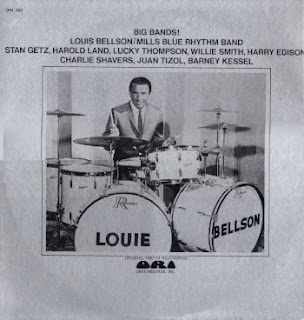
Louis Bellson-Mills Blue Rhythm Band • Big Bands!


One of the world’s greatest drummers, Louie Bellson has been an exciting crowd pleaser for over 60 years. A well-respected educator and one of the nicest people in the music business, the still-active Louie Bellson is a class act.

Born Luigi Paolino Balassoni, Bellson won a nationwide Gene Krupa drum contest in 1940 and was heard by Tommy Dorsey, who was quite impressed. The drummer started at the top in 1941, playing with Benny Goodman; after serving in the military, he worked with the big bands of Goodman, Tommy Dorsey, and Harry James. His trademark was using two bass drums in his set. From the start, Bellson was able to construct fascinating solos that could hold one’s interest for as long as 15 minutes, yet he also enjoyed playing quietly with combos.

Performing regularly with Duke Ellington during 1951-1953 made Bellson world-famous and he also gained good reviews for his writing, which included “Skin Deep” and “The Hawk Talks.” After marrying Pearl Bailey, he left Ellington to work as his wife’s musical director but he also performed in many different settings, including with Jazz At The Philharmonic, Art Tatum, Oscar Peterson, the Dorsey Brothers Orchestra, Count Basie, and special projects with Ellington. In addition Bellson led his own big band and small groups, recording regularly as a leader.

Since the 1960s, Bellson has been involved in educational work, teaching young musicians his dynamic drumming technique. In the 1970s and 1980s, he could frequently be found on recordings from impresario Norman Granz's Pablo label, as well as the Concord label. He has published many of his scores, including his jazz ballet The Marriage Vows. For more than thirty years he has led big bands internationally, and continued to tour, often with a quintet.

Bellson has performed on more than 200 albums with such greats as Duke Ellington, Count Basie, Benny Goodman, Tommy Dorsey, Harry James, Woody Herman, Sarah Vaughan, Ella Fitzgerald, Oscar Peterson, Dizzy Gillespie, Louie Armstrong, Lionel Hampton, James Brown, Sammy Davis Jr., Tony Bennett, Mel Torme, Joe Williams, Wayne Newton and Bellson's late wife Pearl Bailey.

Composer and author, he has written more than 1,000 compositions and more than a dozen books on drums and percussion. He received the prestigious American Jazz Masters Award from the National Endowment for the Arts in 1994. Also, he is a six-time Grammy nominee.

In 1998, Louie Bellson was hailed (along with Roy Haynes, Elvin Jones and Max Roach) as one of four "Living Legends of Music" when he received the American Drummers Achievement Award from the Zildjian Company.

Bellson holds four honorary doctorates, the latest from DePaul University in 2001. In 2003, a historical land-marker was dedicated at his July 6, 1924 birth house in Rock Falls, Illinois, thus inaugurating their annual 4-day celebration in his honor.

The 2006 CD release of "The Sacred Music of Louie Bellson and the Jazz Ballet" amply showcased his mastery and breadth as both composer and performer. This "magnum opus" is well attested to by the highest accolades of colleagues Tony Bennett, Della Reese, Dave Brubeck, Lalo Schifrin, and others

In March 2007, Bellson and 35 other jazz greats received the Living Jazz Legends Award from the Kennedy Center for the Performing Arts in Washington, DC.

Jazz drumming legend Louie Bellson passed on Feb.14, 2009.
https://www.allaboutjazz.com/musicians/louie-bellson/


///////


Louie Bellson, uno de los mejores bateristas del mundo, ha complacido al público durante más de 60 años. Louie Bellson, un educador muy respetado y una de las personas más agradables en el negocio de la música, aún activo, es un acto de clase.

Nacido como Luigi Paolino Balassoni, Bellson ganó un concurso nacional de batería Gene Krupa en 1940 y fue escuchado por Tommy Dorsey, quien quedó bastante impresionado. El baterista comenzó en la cima en 1941, tocando con Benny Goodman; después de servir en el ejército, trabajó con las grandes bandas de Goodman, Tommy Dorsey y Harry James. Su marca registrada fue usar dos bombos en su set. Desde el principio, Bellson pudo construir solos fascinantes que podían mantener el interés de uno durante hasta 15 minutos, pero también disfrutaba tocar en silencio con combos.

Actuar regularmente con Duke Ellington durante 1951-1953 hizo a Bellson mundialmente famoso y también obtuvo buenas críticas por sus escritos, que incluyeron "Skin Deep" y "The Hawk Talks."Después de casarse con Pearl Bailey, dejó Ellington para trabajar como director musical de su esposa, pero también actuó en muchos entornos diferentes, incluso con Jazz En la Filarmónica, Art Tatum, Oscar Peterson, la Orquesta de los Hermanos Dorsey, Count Basie y proyectos especiales con Ellington. Además Bellson lideró su propia big band y pequeños grupos, grabando regularmente como líder.

Desde la década de 1960, Bellson ha estado involucrado en el trabajo educativo, enseñando a jóvenes músicos su técnica dinámica de batería. En las décadas de 1970 y 1980, se lo podía encontrar con frecuencia en grabaciones del sello Pablo del empresario Norman Granz, así como en el sello Concord. Ha publicado muchas de sus partituras, incluido su ballet de jazz The Marriage Vows. Durante más de treinta años ha liderado grandes bandas a nivel internacional y ha continuado de gira, a menudo con un quinteto.

Bellson ha actuado en más de 200 álbumes con grandes como Duke Ellington, Count Basie, Benny Goodman, Tommy Dorsey, Harry James, Woody Herman, Sarah Vaughan, Ella Fitzgerald, Oscar Peterson, Dizzy Gillespie, Louie Armstrong, Lionel Hampton, James Brown, Sammy Davis Jr., Tony Bennett, Mel Torme, Joe Williams, Wayne Newton y la difunta esposa de Bellson, Pearl Bailey.

Compositor y autor, ha escrito más de 1.000 composiciones y más de una docena de libros sobre batería y percusión. Recibió el prestigioso premio American Jazz Masters de la Fundación Nacional de las Artes en 1994. Además, ha sido nominado seis veces al Grammy.

En 1998, Louie Bellson fue aclamado (junto con Roy Haynes, Elvin Jones y Max Roach) como una de las cuatro "Leyendas vivas de la música" cuando recibió el premio American Drummers Achievement Award de Zildjian Company.

Bellson tiene cuatro doctorados honorarios, el último de la Universidad DePaul en 2001. En 2003, se dedicó un hito histórico en su casa natal del 6 de julio de 1924 en Rock Falls, Illinois, inaugurando así su celebración anual de 4 días en su honor.

El lanzamiento en CD de 2006 de "The Sacred Music of Louie Bellson and the Jazz Ballet" mostró ampliamente su maestría y amplitud como compositor e intérprete. Esta "obra maestra" está bien atestiguada por los más altos elogios de sus colegas Tony Bennett, Della Reese, Dave Brubeck, Lalo Schifrin y otros

En marzo de 2007, Bellson y otros 35 grandes del jazz recibieron el premio Living Jazz Legends Award del Kennedy Center for the Performing Arts en Washington, DC.

La leyenda de la batería de jazz Louie Bellson falleció en febrero.14, 2009.
https://www.allaboutjazz.com/musicians/louie-bellson/


Tuesday, September 10, 2024

Count Basie, Joe Turner • The Bosses


Review by Scott Yanow
Count Basie and an all-star band (including trumpeter Harry Edison, trombonist J.J. Johnson and the tenors of Eddie Davis and Zoot Sims) back up veteran Kansas City blues singer Big Joe Turner on one of his better later albums. The many fine solos inspire Turner, who is in top form on such tunes as "Night Time Is the Right Time," "Wee Baby Blues" and "Roll 'Em Pete." https://www.allmusic.com/album/the-bosses-mw0000674645

///////

Crítica de Scott Yanow
Count Basie y una banda de estrellas (incluyendo el trompetista Harry Edison, el trombonista J.J. Johnson y los tenores de Eddie Davis y Zoot Sims) respaldan al veterano cantante de blues de Kansas City Big Joe Turner en uno de sus mejores últimos álbumes. Los numerosos y excelentes solos inspiran a Turner, que está en plena forma en temas como «Night Time Is the Right Time», «Wee Baby Blues» y «Roll 'Em Pete». https://www.allmusic.com/album/the-bosses-mw0000674645


Wednesday, August 14, 2024

Count Basie & Zoot Sims • Basie & Zoot


Review by Scott Yanow
This is a classic encounter in the Original Jazz Classics series. Pianist Count Basie (in his best-small group outing of the 1970s) and tenor saxophonist Zoot Sims were mutually inspired by each other's presence and, with the tasteful assistance of bassist John Heard and drummer Louie Bellson, they can be heard playing at the peak of their creative powers. Every listener interested in swinging jazz should pick up this disc, if only to hear these hard-charging versions of "I Never Knew," "It's Only a Paper Moon," and "Honeysuckle Rose." A gem, and essential music.

///////

Traducción Automática:
Revisión por Scott Yanow
Este es un encuentro clásico en la serie Original Jazz Classics. El pianista Count Basie (en su presentación en el grupo más pequeño de la década de 1970) y el saxofonista Zoot Sims se inspiraron mutuamente en la presencia del otro y, con la asistencia de buen gusto del bajista John Heard y la baterista Louie Bellson, se les puede escuchar tocando en la cima de sus poderes creativos. Todo oyente interesado en el swinging jazz debe recoger este disco, aunque solo sea para escuchar estas versiones difíciles de "I Never Knew", "It's Only a Paper Moon" y "Honeysuckle Rose". Una joya, y música esencial.


Monday, August 12, 2024

Louis Bellson • The Amazing Artistry Of Louis Bellson


One of the world’s greatest drummers, Louie Bellson has been an exciting crowd pleaser for over 60 years. A well-respected educator and one of the nicest people in the music business, the still-active Louie Bellson is a class act.

Born Luigi Paolino Balassoni, Bellson won a nationwide Gene Krupa drum contest in 1940 and was heard by Tommy Dorsey, who was quite impressed. The drummer started at the top in 1941, playing with Benny Goodman; after serving in the military, he worked with the big bands of Goodman, Tommy Dorsey, and Harry James. His trademark was using two bass drums in his set. From the start, Bellson was able to construct fascinating solos that could hold one’s interest for as long as 15 minutes, yet he also enjoyed playing quietly with combos.

Performing regularly with Duke Ellington during 1951-1953 made Bellson world-famous and he also gained good reviews for his writing, which included “Skin Deep” and “The Hawk Talks.” After marrying Pearl Bailey, he left Ellington to work as his wife’s musical director but he also performed in many different settings, including with Jazz At The Philharmonic, Art Tatum, Oscar Peterson, the Dorsey Brothers Orchestra, Count Basie, and special projects with Ellington. In addition Bellson led his own big band and small groups, recording regularly as a leader.

Since the 1960s, Bellson has been involved in educational work, teaching young musicians his dynamic drumming technique. In the 1970s and 1980s, he could frequently be found on recordings from impresario Norman Granz's Pablo label, as well as the Concord label. He has published many of his scores, including his jazz ballet The Marriage Vows. For more than thirty years he has led big bands internationally, and continued to tour, often with a quintet.

Bellson has performed on more than 200 albums with such greats as Duke Ellington, Count Basie, Benny Goodman, Tommy Dorsey, Harry James, Woody Herman, Sarah Vaughan, Ella Fitzgerald, Oscar Peterson, Dizzy Gillespie, Louie Armstrong, Lionel Hampton, James Brown, Sammy Davis Jr., Tony Bennett, Mel Torme, Joe Williams, Wayne Newton and Bellson's late wife Pearl Bailey.

Composer and author, he has written more than 1,000 compositions and more than a dozen books on drums and percussion. He received the prestigious American Jazz Masters Award from the National Endowment for the Arts in 1994. Also, he is a six-time Grammy nominee.

In 1998, Louie Bellson was hailed (along with Roy Haynes, Elvin Jones and Max Roach) as one of four "Living Legends of Music" when he received the American Drummers Achievement Award from the Zildjian Company.

Bellson holds four honorary doctorates, the latest from DePaul University in 2001. In 2003, a historical land-marker was dedicated at his July 6, 1924 birth house in Rock Falls, Illinois, thus inaugurating their annual 4-day celebration in his honor.

The 2006 CD release of "The Sacred Music of Louie Bellson and the Jazz Ballet" amply showcased his mastery and breadth as both composer and performer. This "magnum opus" is well attested to by the highest accolades of colleagues Tony Bennett, Della Reese, Dave Brubeck, Lalo Schifrin, and others

In March 2007, Bellson and 35 other jazz greats received the Living Jazz Legends Award from the Kennedy Center for the Performing Arts in Washington, DC.

Jazz drumming legend Louie Bellson passed on Feb.14, 2009.
https://www.allaboutjazz.com/musicians/louie-bellson/


///////


Louie Bellson, uno de los mejores bateristas del mundo, ha complacido al público durante más de 60 años. Louie Bellson, un educador muy respetado y una de las personas más agradables en el negocio de la música, aún activo, es un acto de clase.

Nacido como Luigi Paolino Balassoni, Bellson ganó un concurso nacional de batería Gene Krupa en 1940 y fue escuchado por Tommy Dorsey, quien quedó bastante impresionado. El baterista comenzó en la cima en 1941, tocando con Benny Goodman; después de servir en el ejército, trabajó con las grandes bandas de Goodman, Tommy Dorsey y Harry James. Su marca registrada fue usar dos bombos en su set. Desde el principio, Bellson pudo construir solos fascinantes que podían mantener el interés de uno durante hasta 15 minutos, pero también disfrutaba tocar en silencio con combos.

Actuar regularmente con Duke Ellington durante 1951-1953 hizo a Bellson mundialmente famoso y también obtuvo buenas críticas por sus escritos, que incluyeron "Skin Deep" y "The Hawk Talks."Después de casarse con Pearl Bailey, dejó Ellington para trabajar como director musical de su esposa, pero también actuó en muchos entornos diferentes, incluso con Jazz En la Filarmónica, Art Tatum, Oscar Peterson, la Orquesta de los Hermanos Dorsey, Count Basie y proyectos especiales con Ellington. Además Bellson lideró su propia big band y pequeños grupos, grabando regularmente como líder.

Desde la década de 1960, Bellson ha estado involucrado en el trabajo educativo, enseñando a jóvenes músicos su técnica dinámica de batería. En las décadas de 1970 y 1980, se lo podía encontrar con frecuencia en grabaciones del sello Pablo del empresario Norman Granz, así como en el sello Concord. Ha publicado muchas de sus partituras, incluido su ballet de jazz The Marriage Vows. Durante más de treinta años ha liderado grandes bandas a nivel internacional y ha continuado de gira, a menudo con un quinteto.

Bellson ha actuado en más de 200 álbumes con grandes como Duke Ellington, Count Basie, Benny Goodman, Tommy Dorsey, Harry James, Woody Herman, Sarah Vaughan, Ella Fitzgerald, Oscar Peterson, Dizzy Gillespie, Louie Armstrong, Lionel Hampton, James Brown, Sammy Davis Jr., Tony Bennett, Mel Torme, Joe Williams, Wayne Newton y la difunta esposa de Bellson, Pearl Bailey.

Compositor y autor, ha escrito más de 1.000 composiciones y más de una docena de libros sobre batería y percusión. Recibió el prestigioso premio American Jazz Masters de la Fundación Nacional de las Artes en 1994. Además, ha sido nominado seis veces al Grammy.

En 1998, Louie Bellson fue aclamado (junto con Roy Haynes, Elvin Jones y Max Roach) como una de las cuatro "Leyendas vivas de la música" cuando recibió el premio American Drummers Achievement Award de Zildjian Company.

Bellson tiene cuatro doctorados honorarios, el último de la Universidad DePaul en 2001. En 2003, se dedicó un hito histórico en su casa natal del 6 de julio de 1924 en Rock Falls, Illinois, inaugurando así su celebración anual de 4 días en su honor.

El lanzamiento en CD de 2006 de "The Sacred Music of Louie Bellson and the Jazz Ballet" mostró ampliamente su maestría y amplitud como compositor e intérprete. Esta "obra maestra" está bien atestiguada por los más altos elogios de sus colegas Tony Bennett, Della Reese, Dave Brubeck, Lalo Schifrin y otros

En marzo de 2007, Bellson y otros 35 grandes del jazz recibieron el premio Living Jazz Legends Award del Kennedy Center for the Performing Arts en Washington, DC.

La leyenda de la batería de jazz Louie Bellson falleció en febrero.14, 2009.
https://www.allaboutjazz.com/musicians/louie-bellson/


Thursday, August 8, 2024

Duke Ellington • My People [The Complete Show]


Duke Ellington’s ‘My People’ opened in Chicago August 16, 1963. Duke Ellington did everything. He wrote the music, the words, directed it and did the orchestrations. There were not enough money involved to hire Duke Ellington’s orchestra. Instead they hired a 16 piece orchestra with Jimmy Jones as the pianist. A recording of the show was made on August 20, 21 and 28 supervised by Billy Strayhorn and Duke Ellington. The CD contains for the fi rst time the complete show. Duke Ellington in ’My People’ chose the strategy to emphasize the positive achievements of black people to America life, rather than protest against injustice. It had only one minute of social protest written into its script. ‘My People’ is not political. It has social signifi cance, but the accent will be on entertainment.
https://storyvillerecords.com/product/my-people/

///////


My People' de Duke Ellington se estrenó en Chicago el 16 de agosto de 1963. Duke Ellington lo hizo todo. Escribió la música, la letra, la dirigió e hizo las orquestaciones. No había suficiente dinero para contratar a la orquesta de Duke Ellington. En su lugar, contrataron una orquesta de 16 músicos con Jimmy Jones como pianista. Los días 20, 21 y 28 de agosto se realizó una grabación del espectáculo supervisada por Billy Strayhorn y Duke Ellington. El CD contiene por primera vez el espectáculo completo. Duke Ellington en "My People" eligió la estrategia de destacar los logros positivos de los negros en la vida de Estados Unidos, en lugar de protestar contra la injusticia. Sólo tenía un minuto de protesta social escrito en su guión. My People" no es política. Tiene un significado social, pero el acento se pone en el entretenimiento.
https://storyvillerecords.com/product/my-people/


storyvillerecords.com ...


Friday, March 29, 2024

Stan Getz, Gerry Mulligan, Oscar Peterson... • Jazz Giants ‘58


Producer Norman Granz (1918-2001) had an uncanny ability to create really amazing jazz albums by experimenting with the combinative chemistry of musical minds, temperaments, and personalities. While not every Granz session resulted in recordings of equal depth or profundity, the number of artistically rewarding, genre-defining albums that came together under his supervision is almost difficult for the human mind to fully comprehend. One fine example is Jazz Giants '58, a Verve album recorded inside the rented Capitol studios in Hollywood, CA on August 1, 1957 and released almost exactly one year later. The 2008 Japanese CD reissue faithfully reproduces the original cover art and makes this outstanding music available in immaculately remastered sound. Although it has since come to be identified mainly with Stan Getz, Jazz Giants '58 feels a lot like a Gerry Mulligan session, with Harry "Sweets" Edison perfectly complementing the other two horns. To support and illuminate the trumpet, tenor, and baritone saxes, Granz used his preferred rhythm trio -- Oscar Peterson, Herb Ellis, and Ray Brown -- and added master percussionist Louie Bellson, fully primed after working for his wife Pearl Bailey, his hero Duke Ellington, and with Granz's internationally famous Jazz at the Philharmonic project. This was the blossoming of the great era of long-playing records, and the participants clearly relished the opportunity to stretch out and jam together in a relaxed, intimate studio environment. "Chocolate Sundae," a ten-minute collectively improvised blues of incredible warmth and irresistible texture, is followed by seven- and eight-minute sets of creative variations on a couple of tunes that were in the air during the '50s. The nearly 12-minute manifestation of the patented Norman Granz "Ballad Medley" is especially powerful by virtue of starting out with Billy Strayhorn's "Lush Life." An extended romp through the changes of Dizzy Gillespie's "Woody N You" (a tribute to the progressive sensibilities of bandleader Woody Herman penned during the 1940s) adds pure undiluted pleasure to an album that already sounds and feels like some of the best music ever recorded by any of the participants under any circumstances.
https://www.allmusic.com/album/jazz-giants-58-mw0000495109 
 
//////////
 
El productor Norman Granz (1918-2001) tenía una asombrosa habilidad para crear álbumes de jazz realmente asombrosos al experimentar con la química combinativa de mentes, temperamentos y personalidades musicales. Si bien no todas las sesiones de Granz resultaron en grabaciones de la misma profundidad o profundidad, la cantidad de álbumes artísticamente gratificantes que definen el género que se juntaron bajo su supervisión es casi difícil de comprender por completo para la mente humana. Un buen ejemplo es Jazz Giants '58, un álbum de Verve grabado dentro de los estudios alquilados de Capitol en Hollywood, CA el 1 de agosto de 1957 y lanzado casi exactamente un año después. La reedición del CD japonés de 2008 reproduce fielmente la carátula original y hace que esta excelente música esté disponible en un sonido impecablemente remasterizado. Aunque desde entonces se ha identificado principalmente con Stan Getz, Jazz Giants '58 se parece mucho a una sesión de Gerry Mulligan, con Harry "Sweets" Edison complementando perfectamente los otros dos cuernos. Para apoyar e iluminar los saxos de trompeta, tenor y barítono, Granz usó su trío de ritmo preferido, Oscar Peterson, Herb Ellis y Ray Brown, y agregó al maestro percusionista Louie Bellson, completamente preparado después de trabajar para su esposa Pearl Bailey, su el héroe Duke Ellington, y con el proyecto internacional Jazz at the Philharmonic de Granz. Este fue el florecimiento de la gran era de los discos de larga duración, y los participantes claramente disfrutaron la oportunidad de estirarse y tocar juntos en un ambiente de estudio relajado e íntimo. "Chocolate Sundae", un blues improvisado colectivamente de diez minutos de increíble calidez y textura irresistible, es seguido por series de siete y ocho minutos de variaciones creativas en un par de melodías que estaban en el aire durante los años 50. La manifestación de casi 12 minutos del patentado "Ballad Medley" de Norman Granz es especialmente poderosa en virtud de comenzar con "Lush Life" de Billy Strayhorn. Un repaso extenso a través de los cambios de "Woody N You" de Dizzy Gillespie (un tributo a la sensibilidad progresiva del líder de la banda Woody Herman escrito durante la década de 1940) agrega puro placer puro a un álbum que ya suena y se siente como parte de la mejor música jamás grabada. por cualquiera de los participantes bajo ninguna circunstancia.
https://www.allmusic.com/album/jazz-giants-58-mw0000495109


Wednesday, March 20, 2024

Louis Bellson & Gene Krupa • The Mighty Two


The Mighty Two is an album by American drummers Louis Bellson and Gene Krupa recorded in 1963 and released on the Roulette label. The album was conceived as a drum instruction disc demonstrating rudimental drum techniques with Bellson and Krupa fronting an eight piece band along with two solo performances by the two co-leaders.