Showing posts with label steel guitar. Show all posts

Monday, April 6, 2026

The Modern Sounds • Stomp Stomp


Tuesday, November 11, 2025

Joel Paterson • Down At The Depot


Chicago-based roots guitarist/vocalist Joel Paterson plays jazz, blues, country, and swing music with his own group as well as such other Chi-town artists as the Four Charms, Nick Willet, and the Barclay 3. He released his debut acoustic country blues album, Down at the Depot, on Ventrella Records in 2002.

///////


El guitarrista/vocalista de raíces de Chicago Joel Paterson toca jazz, blues, country y swing con su propio grupo, así como con otros artistas de Chi-town como los Four Charms, Nick Willet y los Barclay 3. Lanzó su primer álbum de country blues acústico, Down at the Depot, en Ventrella Records en 2002. 


Monday, September 8, 2025

Joel Paterson • Steel Is Real


Chicago-based roots guitarist/vocalist Joel Paterson plays jazz, blues, country, and swing music with his own group as well as such other Chi-town artists as the Four Charms, Nick Willet, and the Barclay 3. He released his debut acoustic country blues album, Down at the Depot, on Ventrella Records in 2002.

///////


El guitarrista/vocalista de raíces de Chicago Joel Paterson toca jazz, blues, country y swing con su propio grupo, así como con otros artistas de Chi-town como los Four Charms, Nick Willet y los Barclay 3. Lanzó su primer álbum de country blues acústico, Down at the Depot, en Ventrella Records en 2002. 


Thursday, July 31, 2025

Buddie Emmons • Steel Guitar Jazz


Biography by Sandra Brennan
Buddy Emmons earned a place among Nashville's elite as one of the finest steel guitar players in the business. Born in Mishawaka, Indiana, he first fell in love with the instrument at age 11 when he received a six-string lap steel guitar as a gift. As a teen, he enrolled at the Hawaiian Conservatory of Music in South Bend, Indiana, and began playing professionally in Calumet City and Chicago at age 16. In 1956, Emmons went to Detroit to fill in for Walter Haynes during a performance with Little Jimmy Dickens; soon afterward he was invited to join Dickens' Country Boys. He appeared with them a few times on The Grand Ole Opry and recorded with them on a few singles, including "Buddy's Boogie" (1957). He also recorded a pair of solo singles for Columbia, "Cold Rolled Steel" (1956) and "Silver Bells" (1957).

In the late '50s, Emmons began playing occasionally with Ernest Tubb's band on Midnight Jamboree. In 1963, he began a five-year stint with Ray Price & the Cherokee Cowboys, and in 1965 teamed up with fellow steel player Shot Jackson to record the LP The Steel Guitar & Dobro Sounds. This led the two to create the Sho-Bud Company, which sold an innovative steel guitar that used push-rod pedals. In 1969, Emmons joined Roger Miller's Los Angeles-based band as a bass player. When not touring with Miller, he did session work for a variety of artists. He quit Miller's band in 1973 and signed a solo contract, releasing several albums in the late '70s.

After 1978, Emmons began playing for a number of small labels, where he and Ray Pennington occasionally collaborated with some of Nashville's finest sidemen as the Swing Shift Band. In 1993, Emmons began touring with the Everly Brothers. He continued to play in recording sessions throughout the '90s and into the new millennium, but was forced to stop playing around 2001 due to a repetitive motion injury. Emmons fully recovered but decided not to return to regular session work, preferring to record only with selected artists and to perform intermittently. He died in Hermitage, Tennessee, outside Nashville, in July 2015 at the age of 78.
https://www.allmusic.com/artist/buddy-emmons-mn0000536035/biography

///////

Biografía de Sandra Brennan
Buddy Emmons se ha ganado un lugar entre la élite de Nashville como uno de los mejores guitarristas de acero del sector. Nacido en Mishawaka, Indiana, se enamoró por primera vez del instrumento a los 11 años, cuando le regalaron una guitarra lap steel de seis cuerdas. De adolescente, se matriculó en el Conservatorio de Música de Hawai en South Bend, Indiana, y a los 16 años empezó a tocar profesionalmente en Calumet City y Chicago. En 1956, Emmons fue a Detroit para sustituir a Walter Haynes durante una actuación con Little Jimmy Dickens; poco después fue invitado a unirse a los Country Boys de Dickens. Apareció con ellos algunas veces en The Grand Ole Opry y grabó con ellos algunos singles, incluyendo "Buddy's Boogie" (1957). También grabó un par de singles en solitario para Columbia, "Cold Rolled Steel" (1956) y "Silver Bells" (1957).

A finales de los 50, Emmons comenzó a tocar ocasionalmente con la banda de Ernest Tubb en Midnight Jamboree. En 1963, comenzó una temporada de cinco años con Ray Price & the Cherokee Cowboys, y en 1965 se asoció con su colega Shot Jackson para grabar el LP The Steel Guitar & Dobro Sounds. Esto llevó a los dos a crear la empresa Sho-Bud, que vendía una innovadora guitarra de acero que utilizaba pedales de varilla. En 1969, Emmons se unió a la banda de Roger Miller en Los Ángeles como bajista. Cuando no estaba de gira con Miller, hacía trabajos de sesión para diversos artistas. Dejó la banda de Miller en 1973 y firmó un contrato en solitario, publicando varios álbumes a finales de los años 70.

Después de 1978, Emmons comenzó a tocar para una serie de pequeños sellos, donde él y Ray Pennington colaboraron ocasionalmente con algunos de los mejores músicos de Nashville como la Swing Shift Band. En 1993, Emmons empezó a hacer giras con los Everly Brothers. Siguió tocando en sesiones de grabación a lo largo de los años 90 y en el nuevo milenio, pero se vio obligado a dejar de tocar alrededor de 2001 debido a una lesión por movimientos repetitivos. Emmons se recuperó por completo, pero decidió no volver a trabajar regularmente en sesiones, prefiriendo grabar sólo con artistas seleccionados y actuar de forma intermitente. Murió en Hermitage (Tennessee), a las afueras de Nashville, en julio de 2015 a la edad de 78 años.
https://www.allmusic.com/artist/buddy-emmons-mn0000536035/biography


Thursday, May 29, 2025

Herb Remington • Steel Guitar Holiday


Biography
by Eugene Chadbourne
Not to sound like a product placement, but this is a case where having an identical name for a product and an artist makes sense. Remington stainless steel razors and Herb Remington and his flawless pedal steel artistry are a combination that deserves to be housed in the same building. If so, the shed out back would be stockpiled with Remington pedal steel guitars which are engineered, designed, and manufactured by Herb Remington, of course. The steel, as in steel guitar, first came into Remington's life while he was in high school. It wasn't his first instrument. He had been playing piano since the age of five, and those who feel mastery of the keyboard would not expand the abilities of a pedal steel player should provide some other explanation of why no one has ever sounded like this man on that instrument.

Following the second World War, he went to California and wound up in the Bob Wills' Band, which to a pedal steel player is the same as arriving at St. Peter's gate. Ironically, his trip West had been to audition not for Bob Wills, but for Luke Wills, his brother. The better-known bandleading brother snatching him away is one of the few examples of sibling rivalry involving pedal steel players in music history. Thus Remington became one of the fabulously swinging and inventive players associated with Western swing, assuring him a place of reverence similar to that granted to the greatest baseball teams. As long as these pickers can still get on-stage, they will never go out of style. Merle Haggard provided employment from the '70s onward with Wills tributes, and two decades later Remington was gathering up the usual suspects for gigs and recording as the Playboys II. Another Western swing project is the River Road Boys, with whom Remington has recorded regularly since 1972. These are all fairly large bands, requiring a musician to be a team player. Remington has always been something of a leader as well. He was cutting his own instrumental singles for Decca early on, and wrote great material for the Wills' band, including the tune "Remington Ride," which has become a standard for steel players.

His involvement with country & western music also includes something of an invisible legacy, as he was one of a large group of musicians who, in different combinations, made up the house band for the Starday label. Scholars of vintage country music will argue into eternity about who actually played steel on the George Jones sides for this label, but sometimes it is Remington. When it is someone else, it might have been because Remington had gone aloha. He is also an accomplished Hawaiian steel player and works regularly in this genre, guaranteeing him weeks at a time of sunny working vacations touring the Hawaiian islands. He lives in Houston, TX, where he manufactures his instruments and teaches. One wouldn't have to travel all the way there to study his techniques: he has issued several volumes of pedal steel instruction on video. His innovations in instrument design include the invention of an adjustable truss rod.
https://www.allmusic.com/artist/herb-remington-mn0000677606

///////


Biografía
por Eugene Chadbourne
No es que suene a emplazamiento de producto, pero éste es un caso en el que tener un nombre idéntico para un producto y un artista tiene sentido. Las maquinillas de afeitar de acero inoxidable Remington y Herb Remington y su impecable arte con los pedales de acero son una combinación que merece ser alojada en el mismo edificio. De ser así, el cobertizo de atrás estaría repleto de guitarras de pedal Remington, diseñadas y fabricadas por Herb Remington, por supuesto. La guitarra de acero llegó a la vida de Remington cuando estaba en el instituto. No fue su primer instrumento. Llevaba tocando el piano desde los cinco años, y los que piensan que el dominio del teclado no ampliaría las capacidades de un intérprete de pedal steel deberían dar alguna otra explicación de por qué nadie ha sonado nunca como este hombre con ese instrumento.

Tras la Segunda Guerra Mundial, se fue a California y acabó en la Bob Wills' Band, lo que para un intérprete de pedal steel equivale a llegar a la puerta de San Pedro. Irónicamente, su viaje al Oeste no había sido para hacer una audición para Bob Wills, sino para Luke Wills, su hermano. El arrebato del hermano líder de la banda, más conocido, es uno de los pocos ejemplos de rivalidad entre hermanos en torno a los pedal steel en la historia de la música. Así, Remington se convirtió en uno de los músicos más fabulosos e inventivos del swing occidental, lo que le aseguró un lugar de reverencia similar al que se concede a los mejores equipos de béisbol. Mientras estos músicos puedan seguir subiendo al escenario, nunca pasarán de moda. Merle Haggard proporcionó empleo a partir de los años 70 con homenajes a Wills, y dos décadas más tarde Remington reunía a los sospechosos habituales para actuaciones y grabaciones como los Playboys II. Otro proyecto de swing occidental son los River Road Boys, con los que Remington ha grabado regularmente desde 1972. Todas estas bandas son bastante grandes y requieren que el músico trabaje en equipo. Remington también ha sido siempre un líder. Desde muy pronto grabó sus propios singles instrumentales para Decca y escribió gran material para la banda de Wills, incluido el tema "Remington Ride", que se ha convertido en un estándar para los músicos de steel.

Su relación con la música country & western también incluye una especie de legado invisible, ya que formó parte de un gran grupo de músicos que, en diferentes combinaciones, constituyeron la banda de la casa para el sello Starday. Los estudiosos de la música country de época discutirán hasta la eternidad sobre quién tocó realmente la steel en las caras de George Jones para este sello, pero a veces es Remington. Cuando es otra persona, puede deberse a que Remington se había ido aloha. También es un consumado intérprete de steel hawaiano y trabaja regularmente en este género, lo que le garantiza semanas enteras de soleadas vacaciones de trabajo recorriendo las islas hawaianas. Vive en Houston, TX, donde fabrica sus instrumentos y da clases. No hace falta viajar hasta allí para estudiar sus técnicas: ha publicado varios volúmenes de instrucción de pedal steel en vídeo. Sus innovaciones en el diseño de instrumentos incluyen la invención de una varilla de braguero ajustable.
https://www.allmusic.com/artist/herb-remington-mn0000677606


Friday, March 21, 2025

Santo & Johnny • Encore


https://en.wikipedia.org/wiki/Santo_%26_Johnny


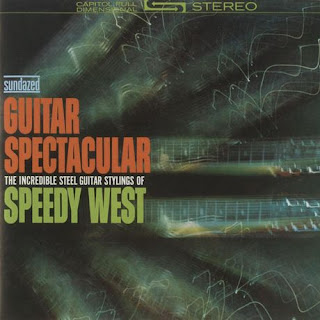
Speedy West • Guitar Spectacular


Born Wesley W. West January 25, 1924 in Springfield MO, to parents, Finley G. and Sue Arthur West. Finley was a linotype operator at a gospel publishing company, and in his spare time, played guitar and sang gospel songs.

At age 9, Wesley became interested in music because of his friends and neighbors, the Cline's boys, three brothers. One played steel guitar, another banjo and the other played guitar. The boys' parents suggested to Wesley's father, that he should buy him an inexpensive $12 Hawaiian guitar. Wesley spent all the time he could learning to play the instrument with the help of the Cline's as well as his father.

Wesley's interest in music continued to grow and he yearned for a more expensive instrument, namely, a National steel-bodied resonator model costing $125, which the West family could not afford. In order to give Welsey what he so desperately wanted, his father sold his own guitar in order to buy the National. In the 9th grade he won a prize in a school amateur contest.

By the late 1930's Wesley spent countless hours practicing and listening to steel players like Leon McAuliffe. He also admired the talents of Brother Oswald Kirby, Little Roy Wiggins, Billy Robinson, Jerry Byrd, and several other Opry stars.

In 1941, at age 17, Wesley married his first wife, Opal Mae. They lived in St. Louis for a year, where Wesley worked at a factory that made machine gun bullets on behalf of the war effort. He played music as much as possible with a friend, Cleat Jones.

Approximately 1942, Wesley and Opal moved to Strafford, MO, near Springfield, where they lived on a 200-acre farm owned by Wesley's father. Farming was vital to the war effort. One of their main crops was tomatoes. He also milked up to 33 cows daily.

After the war ended, Wesley continued to farm but found more time to play music and develop his skills.

In 1946, a Grand Ole Opry tent show came to Springfield starring Eddy Arnold and Minnie Pearl. Inspired by watching and listening to Arnold's steel guitar player, Little Roy Wiggins, Wesley began to think about pursuing a musical career.

Wesley began to play the steel locally on jam sessions that were broadcast over KWTO radio in Springfield, and played with friends and other local musicians at every opportunity that came along. A major turning point occurred when a sailor, who was passing through town, told Wesley about the wonderful musical opportunities available in Southern California. He told him he could make as much as $25 a night, which sounded like a gold mine just waiting for him.

Wesley was playing at a jam session sponsored by KWTO at an event called a pie social. Slim Wilson, a local country music personality, introduced Wesley to the audience as "Speedy West", a name which he would later adopt.

Partly because of the influence of Little Roy Wiggins' style of playing, Wesley bought a huge, hand-carved, 7-string doubleneck steel from an individual, which he paid off in installments.

On June 13, 1946, with only $150 in his pocket, Speedy and his wife and their 2-1/2 year old son, Donnie, packed all they could into a 1936 Lincoln Zephyr and headed for Southern California. Following several breakdowns, they arrived in Los Angeles 3 days later.

During the first few months after arriving in Los angeles, Speedy worked during the day at a dry cleaners. After working all day he played steel guitar at night, starting out with a group called the Missouri Wranglers, all part-time musicians, who played the VFW Hall in Southgate.

Speedy found a new steel guitar idol - Joaquin Murphy, who played with the Spade Cooley band. Speedy soon adopted another idol by the name of Noel Boggs, who played in Hank Penny's band, as well as the Bob Wills and Cooley bands.

Speedy admired Joaquin so much that he attempted to copy his style and then realized that it would be more beneficial to him to develop his own style rather than copy Joaquin's.

Speedy worked as much as he could at night and on weekends, playing at local bars, such as, Murphy's and the nearby Fargo Club and the four Aces.

In 1947, Tex Williams auditioned Speedy to replace Joaquin Murphey, who had left the band. Although Speedy didn't get the job, he fondly remembered how Tex encouraged him to sit in with the band, and to keep pursuing his ambition. In fact, sometime later, Tex offered him a job, which he did not accept because of other commitments.

In 1947, Speedy bought an amp created by Leo Fender, who owned a radio shop in Fullerton, CA. In addition to amplifiers, Leo also designed and built steel guitars. This amp was called Fender's Professional Model, which had an all-wood body and handle with chrome trim on the front grille.

Now equipped with a new amp, Speedy felt the necessity of having a more up-to-date steel to replace the homemade electric steel he brought from Missouri. Paul Bigsby from Downey, CA, a pattern maker, built Speedy a pedal steel. Bigsby had also built a 3-neck non-pedal steel for Joaquin Murphey. Speedy asked for a 3-neck steel with four foot pedals, and Bigsby went to work building it.

Speedy took delivery of his Bigsby pedal steel on February 8, 1948. The four pedals were side by side, a design that would later influence all pedal guitars. He developed his own tuning technique.

In 1948, Speedy was working at Murphy's Club, locted in the skidrow area of Los angeles, when he first met Jimmy Bryant. Jimmy was working down the street from Murphy's, at the Fargo Club. One night Jimmy came to see Speedy play and said to him: "I really like your playing -- why don't you come down to the Fargo Club and dig me". Speedy was so impressed by Bryant's talent that he said, "he couldn't believe what he was hearing". That was the beginning of their long professional and personal relationship.

In the spring of 1948, Spade Cooley, who had a 23-piece western swing band that included a full horn section, hired Speedy. At the time, Cooley also hosted the Hoffman Hayride TV variety show, broadcst by KTLA on Saturday nights, in addition to playing various dance jobs. Speedy's job with Cooley lasted only 5 months. Cooley's erratic behavior caused him to repeatedly fire and then attempt to rehire several band members, only Speedy chose not to accept an offer of being rehired after he fell victim to one of his tirades.

After Cooley, Speedy played at the Riverside Rancho in the Shambrock Cowboys band. It was about this time that friends familiar with the talents of Speedy, introduced him to Cliffie Stone, assistant A&R man for Capitol Records.

Speedy's first recording session was with Eddie Kirk who sang "Candy Kisses".

Beginning in early 1949, Speedy worked full time doing recording sessions. One of the first lessons he learned was to play "commercial", and produce the sound expected by the producer. Speedy learned very quickly that he would not be able to develop his potential for session work if he continued to focus on his own style and try to dazzle everyone with his own talent.

Speedy joined the Hank Penny western swing band in early 1949, where he was allowed to be more creative in his playing.

Late 1949, Speedy left Penny when he was hired by Cliffie Stone for his daily radio program, Dinner Bell Round-Up, as well as Cliffie's Saturday night dances at El Monte Legion Stadium. Like Penny, Cliffie Stone allowed and encouraged Speedy, as well as other band members, to be creative and expand their talents as much as possible. Many performers launched their careers with the help of Cliffie Stone's Hometown Jamboree, such as, Tennessee Ernie Ford, Merle Travis, Eddie Kirk, and many others.

In December 1949, Cliffie Stone took his show to TV. The shows were broadcast over KLAC-TV from 7-8 PM on Saturdays, live from El Monte, and were known as the Hometown Jamboree. After the TV broadcast, the band played for an hour of dancing before they took to the air again for a second Hometown Jamboree over KXLA radio.

While at Hometown Jamboree, Speedy received a lot of encouragement from Merle Travis, who was also a member of Hometown. Merle suggested that in order to promote his name recognition more, Speedy should have Bigsby make him a nameplate for the front of his pedal steel. Bigsby crafted a Birdseye maple panel that snapped onto the front legs with Speedy's name on the front. Merle Travis also took many opportunities to promote Speedy when he would be on tour in various parts of the country.

Leo Fender also contributed a lot toward Speedy's success, as well as many other musicians. Leo not only provided the musical equipment, but also would make himself available on location at some of the dances and shows, with the tools and equipment necessary to service the musicians' instruments.

In 1950, Speedy's steel guitar career and reputation were given a major boost following a recording session with Tennessee Ernie Ford and Kay Starr. The songs recorded were "I'll Never Be Free" and "Ain't Nobody's Business But My Own", and both reached the top hits on country charts as well as the pop field. Ernie and Kay had offers to appear around the country, including the Grand Ole Opry in 1950. Speedy and his Bigsby were also along.

Because of his style of playing on "I'll Never Be Free", Speedy landed an instrumentalist contract with Capitol. He did his first session in January 1951, with Bryant accompanying him. This was the beginning of the West/Bryant recordings that resulted in making their style very well known and recognizable, not only on the west coast, but internationally as well. Copies of their records have become valuable collectors' items today.

Speedy and Bryant's outstanding work on Tennessee Ernie's hit records led to increasing session work for them beyond Capitol, the daily Dinner Bell Roundup radio show over KXLA, and the Hometown Jamboree. Much of the session work was with Capitol artists and Hometown performers, such as, Gene O'Quinn, Merrill Moore, Cliffie Stone, Molly Bee and Bucky Tibbs. Some other artists they recorded with were: Sheb Wooley, Johnny Horton, Wade Ray, Johnny Bond, Roy Rogers and Dale Evans, Doye O'Dell, Gene Autry, Sons of the Pioneers, and many others. Speedy also credits both Lee Gillette and Ken Nelson, A&R men with Capitol, for encouraging their innovative and creative style of playing.

Between 1950 and 1955, Speedy (with and without Bryant) played on over 6,000 recordings with a total of 177 different artists. Some of those artists include Frankie Laine, Jo Stafford, and Paul Weston's Orchestra, Billy May's Orchestra, Betty Hutton, Helen O'Connell, Doris Day, Johnnie Ray, Ella Mae Morse, Spike Jones, Jean Shepard, Bing Crosby, Frank Sinatra and many others. Mitch Miller, A&R man for Columbia Records, was so impressed by Speedy's playing on Frankie Laine's 1951 recording of "Hey Good Lookin" that he paid him double on that session as well as future sessions.

In the mid-1950's Speedy helped Bobby Bare get started in show business. He first met him following Bobby's trip to L.A. via hitchhiking and riding rail cars. Bobby presented himself as a songwriter when he came to KXLA radio station. He asked Speedy to listen to some songs he had written. They both went to Studio B at the station where Bobby sang several songs. Speedy told him he should record them himself. Bobby stayed with Speedy for several weeks during which time they went to Bakersfield to record some demo dubs. Speedy started promoting them to various record companies. As a result Ken Nelson at Capitol Records signed him up as an artist. Bobby then recorded four songs with Speedy's band on Capitol.

Also in the early 1950's, Speedy appeared in three Western movies, while still working the daily Hometown show at KXLA, plus the Saturday night show and dance.. During this time, he continued to work on recording sessions. He also landed a guest spot on Red Foley's ABC-TV show, "Ozark Jubilee", from Springfield MO, in addition to a TV show hosted by bandleader Bob Crosby. He enjoyed another guest spot on Lawrence Welk's very popular ABC-TV show, plus Dinah Shore's NBC Chevrolet Show.

Speedy and Jimmy Bryant's final recording session for Capitol, as a team, occurred October 9, 1956, however, Speedy's contract with Capitol was renewed and he continued to record, as a single, until 1962.

With the onset of rock and roll, the music scene involving Capitol and Hometown Jamboree began to decline. In addition, Cliffie Stone was occupied full-time managing Tennessee Ernie, whose career was exploding with the release of Merle Travis's Sixteen Tons plus beginning his prime time TV show on NBC.

Speedy changed equipment in 1957 to a Fender 1000 pedal steel. He sold his Bigsby, which he later regretted because of its historical value.

The Hometown Jamboree was cancelled in 1959 after which Speedy and other Hometown musicians started working the Las Vegas/Reno/Lake Tahoe club circuit. Their group was Billy and the Kids, featuring Billy Strange, Merrill Moore, the Black Sisters and Speedy.

In the spring of 1960, Speedy was asked to report to a small studio in L.A. where an unknown singer from Washington and her husband were to arrive to record. The singer turned out to be Loretta Lynn and husband, Mooney. Impressed with her voice, Speedy suggested that they release the musicians in the studio and hire some capable studio pickers and rent a better studio. He rounded up some of the Hometown people he had recorded with for years, such as Roy Lanham, Harold Hensley, Roy Harte and Billy Liebert. Speedy also suggested that Loretta overdub harmonies on her original song, Honky Tonk Girl, an idea that he borrowed from Patti Page.

The opportunities no longer available for country musicians in the L.A. area, Speedy made arrangements to go to work for Fender Musical Instruments as manager of their warehouse in Tulsa, OK. He moved to Tulsa in September, 1960.

After moving to Tulsa, Speedy continued to play steel guitar, although not full time because of his employment with Fender. He had his own band for several years and played at various locations in the Tulsa area for dances, special events, etc. He had many opportunities to travel around the United States and abroad, performing on behalf of Fender as well as appearing at several universities.

In 1963, the LeGarde Twins invited Speedy to Australia. While in that country for 44 days, he performed on the Twins' country TV shows, as well as appearances at various events, TV and radio stations.

In 1967, Speedy traveled to Japan to represent Fender at the International Trade Fair. While in that country, he also performed for various other events.
http://www.rockabillyhall.com/SpeedyWest1.html

///////////

Nació como Wesley W. West el 25 de enero de 1924 en Springfield MO, de padres, Finley G. y Sue Arthur West. Finley era un operador de linotipia en una empresa de publicación de gospel, y en su tiempo libre, tocaba la guitarra y cantaba canciones de gospel.

A los 9 años, Wesley se interesó por la música gracias a sus amigos y vecinos, los Cline's boys, tres hermanos. Uno tocaba la guitarra de acero, otro el banjo y el otro la guitarra. Los padres de los chicos sugirieron al padre de Wesley que le comprara una guitarra hawaiana barata de 12 dólares. Wesley pasó todo el tiempo que pudo aprendiendo a tocar el instrumento con la ayuda de los Cline y de su padre.

El interés de Wesley por la música seguía creciendo y anhelaba un instrumento más caro, concretamente un modelo de resonador National con cuerpo de acero que costaba 125 dólares, algo que la familia West no podía permitirse. Para poder darle a Welsey lo que tanto deseaba, su padre vendió su propia guitarra para poder comprar la National. En el noveno grado ganó un premio en un concurso escolar de aficionados.

A finales de la década de 1930, Wesley pasó innumerables horas practicando y escuchando a guitarristas como Leon McAuliffe. También admiraba el talento de Brother Oswald Kirby, Little Roy Wiggins, Billy Robinson, Jerry Byrd y otras estrellas del Opry.

En 1941, a los 17 años, Wesley se casó con su primera esposa, Opal Mae. Vivieron en San Luis durante un año, donde Wesley trabajó en una fábrica que fabricaba balas para ametralladoras en nombre del esfuerzo bélico. Tocaba música todo lo que podía con un amigo, Cleat Jones.

Aproximadamente en 1942, Wesley y Opal se trasladaron a Strafford, MO, cerca de Springfield, donde vivieron en una granja de 200 acres propiedad del padre de Wesley. La agricultura era vital para el esfuerzo de guerra. Uno de sus principales cultivos eran los tomates. También ordeñaba hasta 33 vacas diariamente.

Cuando terminó la guerra, Wesley siguió trabajando en la granja, pero encontró más tiempo para tocar música y desarrollar sus habilidades.

En 1946, un espectáculo en la carpa del Grand Ole Opry llegó a Springfield protagonizado por Eddy Arnold y Minnie Pearl. Inspirado por ver y escuchar al guitarrista de acero de Arnold, Little Roy Wiggins, Wesley comenzó a pensar en seguir una carrera musical.

Wesley empezó a tocar la steel localmente en sesiones de improvisación que se emitían por la radio KWTO de Springfield, y tocaba con amigos y otros músicos locales en cada oportunidad que se presentaba. Un punto de inflexión importante se produjo cuando un marinero, que estaba de paso por la ciudad, le habló a Wesley de las maravillosas oportunidades musicales disponibles en el sur de California. Le dijo que podía ganar hasta 25 dólares por noche, lo que sonaba como una mina de oro esperando por él.

Wesley estaba tocando en una jam session patrocinada por la KWTO en un evento llamado pie social. Slim Wilson, una personalidad local de la música country, presentó a Wesley al público como "Speedy West", nombre que adoptaría más tarde.

En parte por la influencia del estilo de tocar de Little Roy Wiggins, Wesley compró a un particular una enorme steel de 7 cuerdas tallada a mano, que pagó a plazos.

El 13 de junio de 1946, con sólo 150 dólares en el bolsillo, Speedy, su mujer y su hijo de dos años y medio, Donnie, metieron todo lo que pudieron en un Lincoln Zephyr de 1936 y se dirigieron al sur de California. Tras varias averías, llegaron a Los Ángeles 3 días después.

Durante los primeros meses después de llegar a Los Ángeles, Speedy trabajó durante el día en una tintorería. Después de trabajar todo el día tocaba la steel guitar por la noche, empezando con un grupo llamado Missouri Wranglers, todos músicos a tiempo parcial, que tocaban en el VFW Hall de Southgate.

Speedy encontró un nuevo ídolo de la steel guitar: Joaquin Murphy, que tocaba con la banda de Spade Cooley. Speedy pronto adoptó otro ídolo llamado Noel Boggs, que tocaba en la banda de Hank Penny, así como en las bandas de Bob Wills y Cooley.

Speedy admiraba tanto a Joaquín que intentó copiar su estilo y luego se dio cuenta de que sería más beneficioso para él desarrollar su propio estilo en lugar de copiar el de Joaquín.

Speedy trabajaba todo lo que podía por la noche y los fines de semana, tocando en bares locales, como, Murphy's y el cercano Fargo Club y los cuatro Ases.

En 1947, Tex Williams hizo una audición a Speedy para sustituir a Joaquin Murphey, que había dejado la banda. Aunque Speedy no consiguió el trabajo, recordaba con cariño cómo Tex le animaba a formar parte de la banda y a seguir persiguiendo su ambición. De hecho, tiempo después, Tex le ofreció un trabajo, que no aceptó por otros compromisos.

En 1947, Speedy compró un amplificador creado por Leo Fender, que tenía una tienda de radio en Fullerton, California. Además de amplificadores, Leo también diseñaba y construía guitarras de acero. Este amplificador se llamaba Fender's Professional Model, que tenía un cuerpo y un mango totalmente de madera con adornos cromados en la rejilla frontal.

Ahora equipado con un nuevo amplificador, Speedy sintió la necesidad de tener un steel más actualizado para sustituir el steel eléctrico casero que trajo de Missouri. Paul Bigsby, de Downey, California, un fabricante de patrones, construyó a Speedy un steel de pedal. Bigsby también había construido un steel de 3 cuellos sin pedal para Joaquin Murphey. Speedy pidió una steel de 3 cuellos con cuatro pedales, y Bigsby se puso a trabajar en su construcción.

Speedy recibió su pedal steel Bigsby el 8 de febrero de 1948. Los cuatro pedales estaban uno al lado del otro, un diseño que más tarde influiría en todas las guitarras de pedal. Desarrolló su propia técnica de afinación.

En 1948, Speedy estaba trabajando en el Murphy's Club, ubicado en la zona de skidrow de Los Ángeles, cuando conoció a Jimmy Bryant. Jimmy trabajaba al final de la calle de Murphy's, en el Fargo Club. Una noche Jimmy vino a ver tocar a Speedy y le dijo: "Me gusta mucho como tocas... por que no vienes al Fargo Club y me cava". Speedy estaba tan impresionado por el talento de Bryant que dijo que "no podía creer lo que estaba escuchando". Ese fue el comienzo de su larga relación profesional y personal.

En la primavera de 1948, Spade Cooley, que tenía una banda de swing del oeste de 23 piezas que incluía una sección de vientos completa, contrató a Speedy. Por aquel entonces, Cooley también presentaba el programa de variedades de televisión Hoffman Hayride, emitido por la KTLA los sábados por la noche, además de realizar varios trabajos de baile. El trabajo de Speedy con Cooley duró sólo 5 meses. El comportamiento errático de Cooley hizo que despidiera repetidamente y luego intentara recontratar a varios miembros de la banda, sólo que Speedy decidió no aceptar una oferta de ser recontratado después de ser víctima de una de sus diatribas.

Después de Cooley, Speedy tocó en el Riverside Rancho en la banda Shambrock Cowboys. Fue por esta época que amigos familiarizados con el talento de Speedy, le presentaron a Cliffie Stone, asistente de A&R de Capitol Records.

La primera sesión de grabación de Speedy fue con Eddie Kirk que cantó "Candy Kisses".

A partir de principios de 1949, Speedy trabajó a tiempo completo haciendo sesiones de grabación. Una de las primeras lecciones que aprendió fue la de ser "comercial", y producir el sonido esperado por el productor. Speedy aprendió muy rápidamente que no podría desarrollar su potencial para el trabajo de sesión si seguía centrándose en su propio estilo y tratando de deslumbrar a todos con su propio talento.

Speedy se unió a la banda de western swing de Hank Penny a principios de 1949, donde se le permitió ser más creativo en su forma de tocar.

A finales de 1949, Speedy dejó a Penny cuando fue contratado por Cliffie Stone para su programa de radio diario, Dinner Bell Round-Up, así como para los bailes de los sábados por la noche de Cliffie en el Estadio de la Legión de El Monte. Al igual que Penny, Cliffie Stone permitió y alentó a Speedy, así como a otros miembros de la banda, a ser creativos y a expandir sus talentos tanto como fuera posible. Muchos artistas lanzaron sus carreras con la ayuda de Cliffie Stone's Hometown Jamboree, como, Tennessee Ernie Ford, Merle Travis, Eddie Kirk, y muchos otros.

En diciembre de 1949, Cliffie Stone llevó su programa a la televisión. Los espectáculos se emitían por KLAC-TV de 7 a 8 de la tarde los sábados, en directo desde El Monte, y se conocían como Hometown Jamboree. Después de la emisión por televisión, la banda tocaba durante una hora de baile antes de volver a salir al aire para un segundo Hometown Jamboree por la radio KXLA.

Durante el Hometown Jamboree, Speedy recibió muchos ánimos de Merle Travis, que también era miembro de Hometown. Merle sugirió que para promover el reconocimiento de su nombre, Speedy debería hacer que Bigsby le hiciera una placa para el frente de su pedal steel. Bigsby fabricó un panel de arce de ojo de pájaro que se ajustaba a las patas delanteras con el nombre de Speedy en la parte delantera. Merle Travis también aprovechó muchas oportunidades para promocionar a Speedy cuando estaba de gira por varias partes del país.

Leo Fender también contribuyó mucho al éxito de Speedy, al igual que muchos otros músicos. Leo no sólo proporcionaba el equipo musical, sino que también se ponía a disposición en algunos de los bailes y espectáculos, con las herramientas y el equipo necesario para dar servicio a los instrumentos de los músicos.

En 1950, la carrera y la reputación de Speedy como guitarrista de acero recibieron un gran impulso tras una sesión de grabación con Tennessee Ernie Ford y Kay Starr. Las canciones grabadas fueron "I'll Never Be Free" y "Ain't Nobody's Business But My Own", y ambas alcanzaron los principales éxitos en las listas de éxitos del country, así como en el campo del pop. Ernie y Kay tuvieron ofertas para aparecer por todo el país, incluyendo el Grand Ole Opry en 1950. Speedy y su Bigsby también les acompañaron.

Debido a su estilo de tocar en "I'll Never Be Free", Speedy consiguió un contrato de instrumentista con Capitol. Hizo su primera sesión en enero de 1951, con Bryant acompañándole. Este fue el comienzo de las grabaciones de West/Bryant que hicieron que su estilo fuera muy conocido y reconocible, no sólo en la costa oeste, sino también a nivel internacional. Las copias de sus discos se han convertido en valiosas piezas de coleccionista.

El excelente trabajo de Speedy y Bryant en los discos de éxito de Tennessee Ernie les llevó a aumentar el trabajo de sesión más allá de Capitol, el programa de radio diario Dinner Bell Roundup en KXLA, y el Hometown Jamboree. Gran parte del trabajo de sesión fue con artistas de Capitol y artistas de Hometown, como, Gene O'Quinn, Merrill Moore, Cliffie Stone, Molly Bee y Bucky Tibbs. Algunos otros artistas con los que grabaron fueron: Sheb Wooley, Johnny Horton, Wade Ray, Johnny Bond, Roy Rogers y Dale Evans, Doye O'Dell, Gene Autry, Sons of the Pioneers, y muchos otros. Speedy también da crédito a Lee Gillette y Ken Nelson, hombres de A&R con Capitol, por fomentar su estilo innovador y creativo de tocar.

Entre 1950 y 1955, Speedy (con y sin Bryant) tocó en más de 6.000 grabaciones con un total de 177 artistas diferentes. Algunos de esos artistas son Frankie Laine, Jo Stafford y la Orquesta de Paul Weston, la Orquesta de Billy May, Betty Hutton, Helen O'Connell, Doris Day, Johnnie Ray, Ella Mae Morse, Spike Jones, Jean Shepard, Bing Crosby, Frank Sinatra y muchos otros. Mitch Miller, el hombre de A&R de Columbia Records, quedó tan impresionado por la forma de tocar de Speedy en la grabación de Frankie Laine de 1951 de "Hey Good Lookin" que le pagó el doble en esa sesión así como en futuras sesiones.

A mediados de los años 50, Speedy ayudó a Bobby Bare a iniciarse en el mundo del espectáculo. Le conoció tras el viaje de Bobby a Los Ángeles haciendo autostop y viajando en vagones de tren. Bobby se presentó como compositor cuando llegó a la emisora de radio KXLA. Le pidió a Speedy que escuchara algunas canciones que había escrito. Ambos fueron al estudio B de la emisora donde Bobby cantó varias canciones. Speedy le dijo que debería grabarlas él mismo. Bobby se quedó con Speedy durante varias semanas durante las cuales fueron a Bakersfield a grabar algunas maquetas. Speedy empezó a promocionarlas a varias compañías discográficas. Como resultado Ken Nelson de Capitol Records le contrató como artista. Bobby entonces grabó cuatro canciones con la banda de Speedy en Capitol.

También a principios de los años 50, Speedy apareció en tres películas del Oeste, mientras seguía trabajando en el programa diario Hometown en la KXLA, además del programa de los sábados por la noche y el baile. Durante este tiempo, siguió trabajando en sesiones de grabación. También consiguió un puesto de invitado en el programa de ABC-TV de Red Foley, "Ozark Jubilee", de Springfield MO, además de un programa de televisión presentado por el director de orquesta Bob Crosby. Disfrutó de otro puesto de invitado en el muy popular programa de ABC-TV de Lawrence Welk, además del Chevrolet Show de la NBC de Dinah Shore.

La última sesión de grabación de Speedy y Jimmy Bryant para Capitol, como equipo, ocurrió el 9 de octubre de 1956, sin embargo, el contrato de Speedy con Capitol fue renovado y continuó grabando, como solista, hasta 1962.

Con la aparición del rock and roll, la escena musical en la que participaban Capitol y Hometown Jamboree comenzó a declinar. Además, Cliffie Stone estaba ocupado a tiempo completo dirigiendo a Tennessee Ernie, cuya carrera estaba explotando con el lanzamiento de Sixteen Tons de Merle Travis, además de comenzar su programa de televisión en horario de máxima audiencia en la NBC.

Speedy cambió su equipo en 1957 por un pedal steel Fender 1000. Vendió su Bigsby, de lo que se arrepintió más tarde por su valor histórico.

El Hometown Jamboree fue cancelado en 1959, después de lo cual Speedy y otros músicos de Hometown comenzaron a trabajar en el circuito de clubes de Las Vegas/Reno/Lake Tahoe. Su grupo era Billy and the Kids, con Billy Strange, Merrill Moore, las Black Sisters y Speedy.

En la primavera de 1960, le pidieron a Speedy que se presentara en un pequeño estudio de Los Ángeles donde una cantante desconocida de Washington y su marido iban a llegar para grabar. La cantante resultó ser Loretta Lynn y su marido, Mooney. Impresionado por su voz, Speedy sugirió que dejaran a los músicos del estudio y contrataran a algunos músicos capaces y alquilaran un estudio mejor. Reunió a algunos de los miembros de Hometown con los que había grabado durante años, como Roy Lanham, Harold Hensley, Roy Harte y Billy Liebert. Speedy también sugirió que Loretta grabara armonías en su canción original, Honky Tonk Girl, una idea que tomó prestada de Patti Page.

Las oportunidades ya no estaban disponibles para los músicos country en el área de Los Ángeles, Speedy hizo arreglos para ir a trabajar para Fender Musical Instruments como gerente de su almacén en Tulsa, OK. Se trasladó a Tulsa en septiembre de 1960.

Después de mudarse a Tulsa, Speedy siguió tocando la guitarra de acero, aunque no a tiempo completo debido a su empleo con Fender. Tuvo su propia banda durante varios años y tocó en varios lugares del área de Tulsa para bailes, eventos especiales, etc. Tuvo muchas oportunidades de viajar por los Estados Unidos y el extranjero, actuando en nombre de Fender, así como apareciendo en varias universidades.

En 1963, los gemelos LeGarde invitaron a Speedy a Australia. Durante su estancia en ese país, que duró 44 días, actuó en los programas de televisión country de los Twins, así como en apariciones en varios eventos y emisoras de radio y televisión.

En 1967, Speedy viajó a Japón para representar a Fender en la Feria Internacional. Durante su estancia en ese país, también actuó en otros eventos.
http://www.rockabillyhall.com/SpeedyWest1.html


Tuesday, February 4, 2025

VA • True Bluegrass Instrumentals


From its earliest days there has always been a premium placed on instrumental prowess in Bluegrass music, and to hear one amazing tune after another is truly invigorating and inspiring. That is the nature of this superb compilation that highlights some of the finest performances from Rebel Records’ long history. With stunning examples that feature lead guitar, banjo, mandolin and/or fiddle, there’s more than enough variety here to warrant many repeated plays. The 20 tunes include gems by Tony Rice, Seldom Scene, Ralph Stanley, Kenny Baker, J.D. Crowe, Jimmy Arnold, Norman Blake, Whitley & Skaggs, Don Reno and Josh Graves among others. Besides the obvious gems like Black Jack, Orange Blossom Special, Billy In The Low Ground (Tony Rice) and Bill Emerson’s Home Sweet Home, there are some “sleepers” like Cody Kilby’s St. Anne’s Reel, Richard Greene’s Little Rabbit and a lovely two guitar treatment of Old Spinning Wheel by Charlie Waller & Randall Hylton.
https://rebelrecords.com/albums/compilations/rebel-8003/

///////


Desde sus inicios, la música Bluegrass siempre ha concedido una gran importancia a la destreza instrumental, y escuchar una melodía asombrosa tras otra es realmente estimulante e inspirador. Esa es la naturaleza de esta magnífica compilación que destaca algunas de las mejores interpretaciones de la larga historia de Rebel Records. Con ejemplos asombrosos que incluyen guitarra solista, banjo, mandolina y/o violín, hay aquí variedad más que suficiente para justificar muchas reproducciones repetidas. Los 20 temas incluyen joyas de Tony Rice, Seldom Scene, Ralph Stanley, Kenny Baker, J.D. Crowe, Jimmy Arnold, Norman Blake, Whitley & Skaggs, Don Reno y Josh Graves entre otros. Además de las joyas obvias como Black Jack, Orange Blossom Special, Billy In The Low Ground (Tony Rice) y Home Sweet Home de Bill Emerson, hay algunos "sleepers" como St. Anne's Reel de Cody Kilby, Little Rabbit de Richard Greene y un precioso tratamiento a dos guitarras de Old Spinning Wheel de Charlie Waller & Randall Hylton.
https://rebelrecords.com/albums/compilations/rebel-8003/


Friday, January 31, 2025

Mike Neer • Steelonious


Critics said this about Steelonious: "Not merely one of the best instrumental CDs of the year, Steelonious is one of the year’s best CDs, period." Dan Forte, Vintage Guitar magazine

"This album is so good that each time I tried to isolate the best songs to write about, I came to the conclusion that such singling out tracks was impossible. There are 12 Monk songs on this album and every one of them is better than the last." Marc Myers, Jazzwax

"Seemingly out of nowhere, Mike Neer appears, playing Monk like some radioactive Herbert Von Karajan addressing his cosmic Beethoven." C. Michael Bailey, All About Jazz

"Neer has impressive technique, improvises on a high level, and definitely knows this material quite well. Steelonious is easily recommended." Scott Yanow, L.A. Jazz Scene

Featuring the awesome talent of NYC area musicians Matt King, Diego Voglino, Andrew Hall and Tom Beckham, all recorded live in the studio with high fidelity crispness and warmth. Mike Neer's arrangements and production bring something new to the table while paying homage to the giants of Jazz and steel guitar past. Engineered and mixed by Paul Wickliffe.

///////


Los críticos han dicho lo siguiente sobre Steelonious: "No es simplemente uno de los mejores CDs instrumentales del año, Steelonious es uno de los mejores CDs del año, punto". Dan Forte, revista Vintage Guitar

"Este álbum es tan bueno que cada vez que intentaba aislar las mejores canciones para escribir sobre ellas, llegaba a la conclusión de que tal selección de temas era imposible. Hay 12 canciones de Monk en este álbum y cada una de ellas es mejor que la anterior." Marc Myers, Jazzwax

"Aparentemente de la nada, aparece Mike Neer, interpretando a Monk como un Herbert Von Karajan radiactivo dirigiendo su Beethoven cósmico". C. Michael Bailey, All About Jazz

"Neer tiene una técnica impresionante, improvisa a un alto nivel, y definitivamente conoce este material bastante bien. Steelonious es fácilmente recomendable". Scott Yanow, L.A. Jazz Scene

Con el impresionante talento de los músicos de la zona de NYC Matt King, Diego Voglino, Andrew Hall y Tom Beckham, todo grabado en directo en el estudio con alta fidelidad nitidez y calidez. Los arreglos y la producción de Mike Neer aportan algo nuevo al tiempo que rinden homenaje a los gigantes del Jazz y de la steel guitar del pasado. Diseñado y mezclado por Paul Wickliffe.


www.steelonious.com ...


Wednesday, December 25, 2024

Joel Paterson • Hi-Fi Christmas Guitar


Chicago-based roots guitarist/vocalist Joel Paterson plays jazz, blues, country, and swing music with his own group as well as such other Chi-town artists as the Four Charms, Nick Willet, and the Barclay 3. He released his debut acoustic country blues album, Down at the Depot, on Ventrella Records in 2002.

///////


El guitarrista/vocalista de raíces de Chicago Joel Paterson toca jazz, blues, country y swing con su propio grupo, así como con otros artistas de Chi-town como los Four Charms, Nick Willet y los Barclay 3. Lanzó su primer álbum de country blues acústico, Down at the Depot, en Ventrella Records en 2002. 


https://www.joelpaterson.com/
https://www.joelpaterson.com/hifi-christmas-guitar


Saturday, August 17, 2024

Jeremy Wakefield • Steel Guitar Caviar!


"Jeremy Wakefield is more like Speedy West fused with Jerry Byrd. And a little bit of Noel Boggs.” Those are the words used by Wayne Hancock to describe Jeremy Wakefield’s playing, and he isn’t far from the truth. Throw in a big dash of Joaquin Murphey and Jeremy’s own unique sensibilities and you’ve got one of the world’s best non-pedal steel guitarists.
http://www.mikeneer.com/lapsteelin/2011/09/16/conversation-with-jeremy-wakefield-part-1/

Wakefield’s musical contributions to the SpongeBob television show have earned him a reputation for upholding an older analog “vintage” sound, thus it is especially intriguing to learn that some of Wakefield’s earliest album credits would include digital keyboard sequencing for The Style Council, of all people, on 1985’s “The Boy Who Cried Wolf” EP. Wakefield would continue to work with The Style Council over the next 20 years or so.
https://www.discogs.com/artist/397073-Jeremy-Wakefield

///////


"Jeremy Wakefield es más como Speedy West fusionado con Jerry Byrd. Y un poco de Noel Boggs". Esas son las palabras utilizadas por Wayne Hancock para describir la forma de tocar de Jeremy Wakefield, y no está lejos de la verdad. Añade una gran pizca de Joaquin Murphey y la sensibilidad propia de Jeremy y tendrás a uno de los mejores guitarristas de acero sin pedal del mundo.
http://www.mikeneer.com/lapsteelin/2011/09/16/conversation-with-jeremy-wakefield-part-1/

Las contribuciones musicales de Wakefield a la serie de televisión Bob Esponja le han valido la reputación de mantener un sonido analógico "vintage", por lo que resulta especialmente intrigante saber que algunos de los primeros créditos de Wakefield en un álbum incluirían la secuenciación de teclados digitales para The Style Council, entre otros, en el EP "The Boy Who Cried Wolf" de 1985. Wakefield seguiría trabajando con The Style Council durante los siguientes 20 años aproximadamente.
https://www.discogs.com/artist/397073-Jeremy-Wakefield


Thursday, July 25, 2024

Jimmy Bryant • Country Cabin Jazz


Review:
Along with his frequent partner, pedal steel guitarist Speedy West, Jimmy Bryant was one the most in-demand session players in country music. Recording mostly behind Capitol's considerable lineup of artists during the '50s and '60s, Bryant augmented his frequent work for the likes of Tennessee Ernie Ford, Kay Starr, and Buck Owens with a fair share of solo dates, often featuring West. This classic Capitol release from 1960 finds the two jazz-influenced players wending stealthily through 12 incredible instrumentals, most of which were penned by Bryant. Bryant and West turn in a bevy of complex, yet swinging solos over a mix of blues ("Whistle Stop"), country ballads ("Deep Water"), polkas ("Hometown Polka"), and bebop-country swingers ("Stratosphere Boogie"). Along with several exciting exchanges between Bryant and West, the whole band turns in a fine round of call and response solos on "Jammin' With Jimmy"; figuring prominently in the mix are guitarist Billie Strange, pianist Billy Liebert, bassist Cliffie Stone, and an unlisted violinist. While many of these tracks can be found on Razor & Tie's two fine Bryant and West collections, Country Cabin Jazz still qualifies as a very good first-disc choice for newcomers.
by Stephen Cook
https://www.allmusic.com/album/country-cabin-jazz-mw0000265923

///////

Reseña:
Junto con su frecuente compañero, el guitarrista de pedal de acero Speedy West, Jimmy Bryant era uno de los músicos de sesión más solicitados en la música country. Grabando principalmente detrás de la considerable alineación de artistas del Capitolio durante los años 50 y 60, Bryant aumentó su frecuente trabajo para artistas como Tennessee Ernie Ford, Kay Starr, y Buck Owens con una buena cantidad de citas en solitario, a menudo con West. Este clásico del Capitolio de 1960 encuentra a los dos músicos influenciados por el jazz pasando a hurtadillas por 12 increíbles instrumentos, la mayoría de los cuales fueron escritos por Bryant. Bryant y West se convierten en un grupo de solos complejos, pero con swing, en una mezcla de blues ("Whistle Stop"), baladas country ("Deep Water"), polcas ("Hometown Polka") y bebop-country swingers ("Stratosphere Boogie"). Junto con varios intercambios emocionantes entre Bryant y West, toda la banda hace una buena ronda de solos de llamada y respuesta en "Jammin' With Jimmy"; en la mezcla figuran de manera prominente el guitarrista Billie Strange, el pianista Billy Liebert, el bajista Cliffie Stone y un violinista que no figura en la lista. Aunque muchos de estos temas se pueden encontrar en las dos excelentes colecciones de Bryant y West de Razor & Tie, el Country Cabin Jazz sigue siendo una muy buena opción de primer disco para los recién llegados.
por Stephen Cook
https://www.allmusic.com/album/country-cabin-jazz-mw0000265923


Jonathan Doyle & Joel Paterson • Another Someday Blues


Tuesday, May 7, 2024

The Bonebrake Syncopators • Play Coleman [EP]


The Bonebrake Syncopators Play Coleman. Featuring D.J. Bonebrake (X, Michael Penn, Victoria Williams, Syd Straw) on vibraphone, T.K. Smith (Big Sandy and the Fly Rite Trio) on electric guitar, Jeremy Wakefield (Asleep at the Wheel) on steel guitar, Wally Hersom (Big Sandy and the Fly Rite Trio) on upright bass and Dave Sutckey (Lucky Stars) on drums and vocals, the Bonebrake Syncopators give four classic Cy Coleman standards an eclectic & danceable sound that combines traditional jazz, be-bop, and Western swing. 
http://notablemusic.net/news/2012/the-bonebrake-syncopators-swing-a-little-coleman
 
/////////
 
Los Bonebrake Syncopators tocan a Coleman. Con D.J. Bonebrake (X, Michael Penn, Victoria Williams, Syd Straw) al vibráfono, T.K. Smith (Big Sandy and the Fly Rite Trio) a la guitarra eléctrica, Jeremy Wakefield (Asleep at the Wheel) a la steel guitar, Wally Hersom (Big Sandy and the Fly Rite Trio) al bajo vertical y Dave Sutckey (Lucky Stars) a la batería y la voz, los Bonebrake Syncopators dan a cuatro estándares clásicos de Cy Coleman un sonido ecléctico y bailable que combina el jazz tradicional, el be-bop y el swing occidental. 
http://notablemusic.net/news/2012/the-bonebrake-syncopators-swing-a-little-coleman


Friday, April 12, 2024

The Bonebrake Syncopators • That Da Da Strain


The Bonebrake Syncopators are a musical quintet that takes a unique approach to playing jazz from the early eras, including tunes such as 'Honeysuckle Rose', 'Three Little Words', and 'Sweet Georgia Brown'. Personnel include D.J. Bonebrake (X, Michael Penn, Victoria Williams, Syd Straw, etc.) on vibraphone; T.K. Smith (Big Sandy and the Fly Rite Trio, Smith's Ranch Boys) on electric guitar; Jeremy Wakefield (Asleep at the Wheel, Lucky Stars, Biller and Wakefield, Dave Stuckey and his Rhythm Gang) on steel guitar; Wally Hersom (Big Sandy and the Fly Rite Trio, Lucky Stars) on upright bass; and Dave Stuckey (Lucky Stars, the Dave and Deke Combo, Dave Stuckey and the Rhythm Gang) on drum kit. Both Jeremy and Dave make occasional vocal contributions to the set, enhancing a predominantly instrumental performance. The Bonebrake Syncopators create an eclectic sound that combines traditional jazz, be-bop, and western swing. Not too loud but definitely lively, the music is warm, sophisticated, and danceable.
https://www.djbonebrakemusic.com/syncopatorsbio.html

///////

Los Bonebrake Syncopators son un quinteto musical que tiene un enfoque único de la interpretación del jazz de las primeras épocas, incluyendo temas como 'Honeysuckle Rose', 'Three Little Words' y 'Sweet Georgia Brown'. El personal incluye a D.J. Bonebrake (X, Michael Penn, Victoria Williams, Syd Straw, etc.) en el vibráfono; T.K. Smith (Big Sandy and the Fly Rite Trio, Smith's Ranch Boys) en guitarra eléctrica; Jeremy Wakefield (Asleep at the Wheel, Lucky Stars, Biller and Wakefield, Dave Stuckey and his Rhythm Gang) en guitarra de acero; Wally Hersom (Big Sandy and the Fly Rite Trio, Lucky Stars) en el bajo vertical; y Dave Stuckey (Lucky Stars, the Dave and Deke Combo, Dave Stuckey and the Rhythm Gang) en la batería. Tanto Jeremy como Dave hacen contribuciones vocales ocasionales al conjunto, realzando una actuación predominantemente instrumental. Los Bonebrake Syncopators crean un sonido ecléctico que combina el jazz tradicional, el be-bop y el swing occidental. No muy alto pero definitivamente animado, la música es cálida, sofisticada y bailable.
https://www.djbonebrakemusic.com/syncopatorsbio.html


Saturday, March 9, 2024

Joel Paterson • Handful of Strings


"I always wanted to make a multi-tracked, Les Paul style recording. I finally finished the darn thing, so here it is, "Handful of Strings" for all you guitar geeks around the world. This album is dedicated to all my guitar heroes, including Les Paul, Buddy Merrill, Jorgen Ingmann, Charlie Christian, Chet Atkins, Merle Travis, Jimmy Bryant, Jimmy Day, Jerry Byrd, Freddie King, Albert Collins, and too many more to mention here. Thanks for checking it out, hope you all enjoy it!" (~~Joel Paterson)

There once was a time when the “multiple guitar” style of recording flourished, pioneered by Les Paul and carried on by such luminaries as Buddy Merrill and Jorgen Ingmann. With the invention of multi-track recording, the adventuresome guitarist could create lush, swirling guitar orchestras, all overdubbed through a labor-intensive studio process.Somewhere along the way, the multiple guitar recording went out of vogue. Joel Paterson seeks to change all that with this phenomenal release, reviving the lost art of multiple guitar recording with “Handful of Strings,” the best album of its kind since Buddy Merrill left the Lawrence Welk Show.
Paterson is a monster player from Chicago who seems to soak up all the great American music styles like a sponge, and you’ll hear them all here, from jazz to blues to country and rock—and even funk.“Handful of Strings” is essential listening for any guitar geek and a must for anybody who digs guitars and guitar music. All hail Joel Paterson, Chicago’s guitar geek extraordinaire! (~~Deke Dickerson from Original Liner Notes)

///////

"Siempre quise hacer una grabación multipista al estilo de Les Paul. Finalmente terminé la maldita cosa, así que aquí está, "Handful of Strings" para todos los guitarristas geeks de todo el mundo. Este álbum está dedicado a todos mis héroes de la guitarra, incluyendo Les Paul, Buddy Merrill, Jorgen Ingmann, Charlie Christian, Chet Atkins, Merle Travis, Jimmy Bryant, Jimmy Day, Jerry Byrd, Freddie King, Albert Collins, y muchos más para mencionar aquí. Gracias por comprobarlo, espero que todos lo disfruten!" (~~Joel Paterson)


Hubo un tiempo en que el estilo de grabación de "guitarra múltiple" floreció, iniciado por Les Paul y llevado a cabo por luminarias como Buddy Merrill y Jorgen Ingmann. Con la invención de la grabación multipista, el aventurero guitarrista pudo crear exuberantes orquestas de guitarra, todas sobredobladas a través de un proceso de estudio intensivo en mano de obra. Joel Paterson busca cambiar todo eso con este fenomenal lanzamiento, reviviendo el arte perdido de la grabación de múltiples guitarras con "Handful of Strings", el mejor álbum de su tipo desde que Buddy Merrill dejó el Lawrence Welk Show.

Paterson es un músico monstruoso de Chicago que parece absorber todos los grandes estilos de la música americana como una esponja, y los oirás todos aquí, desde el jazz hasta el blues, pasando por el country y el rock, e incluso el funk, "Handful of Strings" es esencial para cualquier geek de la guitarra y una necesidad para cualquier persona que le guste la guitarra y la música de guitarra. Todos aclaman a Joel Paterson, el extraordinario guitarrista de Chicago! (~~Deke Dickerson de Original Liner Notes)


Friday, February 23, 2024

Joel Paterson • Go Lightnin'


Chicago-based roots guitarist/vocalist Joel Paterson plays jazz, blues, country, and swing music with his own group as well as such other Chi-town artists as the Four Charms, Nick Willet, and the Barclay 3. He released his debut acoustic country blues album, Down at the Depot, on Ventrella Records in 2002.

///////


El guitarrista/vocalista de raíces de Chicago Joel Paterson toca jazz, blues, country y swing con su propio grupo, así como con otros artistas de Chi-town como los Four Charms, Nick Willet y los Barclay 3. Lanzó su primer álbum de country blues acústico, Down at the Depot, en Ventrella Records en 2002.