Biography
by Matt Collar
A
highly regarded jazz pianist and composer, Steve Kuhn is known for his
sophisticated ear for harmony and lyrical, motivic approach to
improvisation. Emerging from the Boston jazz scene of the late '50s,
Kuhn gained early exposure playing with legends like Kenny Dorham, John
Coltrane, and Art Farmer. He came to wider prominence in 1966 with his
albums Three Waves, with bassist Steve Swallow and drummer Pete La Roca,
and The October Suite, with vibraphonist Gary McFarland. Those
recordings led to a series of highly regarded albums for ECM including
1974's Trance, with Swallow and drummer Jack DeJohnette. An adaptive,
forward-thinking performer, Kuhn's subsequent albums like 1987's Life's
Magic, 1995's Remembering Tomorrow, and 2012's Wisteria have found him
moving across various genres, from swinging acoustic post-bop to
classical-influenced chamber jazz and the avant-garde.
Born in
Brooklyn, New York in 1938 to Hungarian immigrant parents, Kuhn first
became interested in music at a young age while listening to his
father's jazz record collection on 78s. Starting piano lessons at age
five, he quickly displayed his gift for perfect pitch. After moving to
Boston with his family, Kuhn began taking lessons with the legendary
Boston-area pedagogue Margaret Chaloff, whom he credits with engendering
his strong classical piano technique. Also during this time, he
befriended Chaloff's son, saxophonist Serge Chaloff, who encouraged his
interest in jazz.
By his teens, Kuhn had developed into an adept
jazz pianist, influenced by the recordings of jazz luminaries like Duke
Ellington, Bud Powell, Fats Waller, and Art Tatum. He formed his own
trio with drummer Arnold Wise and bassist Chuck Israels and began
playing local clubs. Even while attending Harvard, Kuhn held down a
six-nights-a-week gig in Harvard Square and gained valuable experience
working with the myriad jazz stars who came through the city, including
Chet Baker, Coleman Hawkins, and Vic Dickenson, among others. After
graduating Harvard, Kuhn continued his studies at the Lenox School of
Music, where he rubbed shoulders with fellow students Ornette Coleman
and Don Cherry and studied under esteemed jazz scholars like Gunther
Schuller and George Russell. It was also while at Lenox that he met
trumpeter Kenny Dorham, who hired the pianist for a year-long tour.
Parting
ways with Dorham in 1960, Kuhn next joined legendary saxophonist John
Coltrane's quartet for a stint at New York's Jazz Gallery. While brief
(Kuhn was replaced by McCoy Tyner after eight weeks), the experience
inspired Kuhn and would inform much of his later work. Also during the
'60s, Kuhn began appearing on recording dates with artists like Stan
Getz, Oliver Nelson, and Art Farmer; he also spent a year touring with
Farmer and future collaborators bassist Steve Swallow and drummer Pete
La Roca.
As a leader, Kuhn debuted alongside pianist Toshiko
Akiyoshi on 1963's The Country and Western Sound of Jazz Pianos. He then
followed up with 1966's Three Waves, featuring Swallow and La Roca.
Also in 1966, he paired with fellow Lenox student Gary McFarland for the
landmark chamber jazz album The October Suite.
In the late '60s,
Kuhn relocated to Stockholm, Sweden, where he lived and performed until
1971. Ironically, it wasn't until returning to the States that Kuhn
signed with Manfred Eicher's then-fledgling European jazz label ECM.
Notably, Kuhn's work on The October Suite had been one of Eicher's early
inspirations in founding the label. With ECM, Kuhn released several
probing and atmospheric albums including Ecstasy (1974), Trance (1974),
Motility (1977), Non-Fiction (1978), Playground, featuring vocalist
Sheila Jordan (1979), and Last Year's Waltz (1981).
In the '80s,
Kuhn continued to refine his sound, often playing in a trio with bassist
Ron Carter and drummer Al Foster. Many of his albums from this period,
including 1984's Mostly Ballads, 1987's Life's Magic, and 1988's Porgy,
showcase a mix of well-curated standards along with his inventive
original compositions. It was a template that Kuhn would stick with
throughout the next decade as he found himself working in various trio
settings with artists like David Finck, George Mraz, Buster Williams,
Billy Drummond, Lewis Nash, Bill Stewart, Kenny Washington, and others.
While
the trio remained Kuhn's preferred format, his 1995 album Seasons of
Romance found him working in an all-star quintet with tenor saxophonist
Bob Mintzer and trumpeter Tom Harrell. Even more expansive was his 2004
return to ECM, Promises Kept, which found him backed by a small string
orchestra. Kuhn also retained his exploratory edge, returning to his
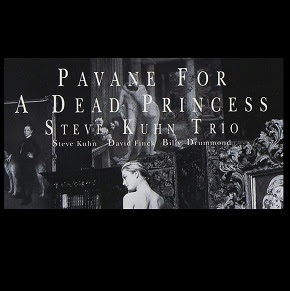
love of classical composers like Debussy and Ravel on 2006's Pavane for a
Dead Princess. Jazz reworkings of classical compositions were featured
on his 2008 trio album, Baubles, Bangles and Beads.
In 2009, Kuhn
revisited his time as a member of John Coltrane's quartet with Mostly
Coltrane, featuring saxophonist Joe Lovano, on ECM. Also for ECM, Kuhn
paired in a trio with bassist Swallow and drummer Joey Baron for 2012's
Wisteria. His trio with Swallow and Baron was also the focus of 2016's
At This Time... and 2018's To and from the Heart.
https://www.allmusic.com/artist/steve-kuhn-mn0000036645/biography
///////
Biografía
por Matt Collar
Reputado
pianista y compositor de jazz, Steve Kuhn es conocido por su
sofisticado oído para la armonía y su enfoque lírico y motivador de la
improvisación. Surgido de la escena jazzística de Boston a finales de
los años 50, Kuhn empezó a tocar con leyendas como Kenny Dorham, John
Coltrane y Art Farmer. Saltó a la fama en 1966 con sus álbumes Three
Waves, con el bajista Steve Swallow y el batería Pete La Roca, y The
October Suite, con el vibrafonista Gary McFarland. Esas grabaciones
dieron lugar a una serie de álbumes de gran prestigio para ECM, incluido
Trance, de 1974, con Swallow y el batería Jack DeJohnette. Kuhn, un
intérprete adaptable y con visión de futuro, ha publicado álbumes
posteriores como Life's Magic, de 1987, Remembering Tomorrow, de 1995, y
Wisteria, de 2012, en los que se ha movido por diversos géneros, desde
el swing post-bop acústico hasta el jazz de cámara de influencia clásica
y la vanguardia.
Nacido en Brooklyn, Nueva York, en 1938, de
padres inmigrantes húngaros, Kuhn empezó a interesarse por la música a
una edad temprana, mientras escuchaba la colección de discos de jazz de
78 de su padre. Empezó a tomar clases de piano a los cinco años, y
pronto demostró su don para la afinación perfecta. Tras mudarse a Boston
con su familia, Kuhn empezó a tomar clases con la legendaria pedagoga
Margaret Chaloff, a quien atribuye la creación de su sólida técnica de
piano clásico. También en esa época, se hizo amigo del hijo de Chaloff,
el saxofonista Serge Chaloff, que fomentó su interés por el jazz.
En
su adolescencia, Kuhn se había convertido en un experto pianista de
jazz, influido por las grabaciones de luminarias del jazz como Duke
Ellington, Bud Powell, Fats Waller y Art Tatum. Formó su propio trío con
el batería Arnold Wise y el bajista Chuck Israels y empezó a tocar en
clubes locales. Incluso mientras estudiaba en Harvard, Kuhn actuaba seis
noches a la semana en Harvard Square y adquirió una valiosa experiencia
trabajando con las innumerables estrellas del jazz que pasaban por la
ciudad, como Chet Baker, Coleman Hawkins y Vic Dickenson, entre otros.
Tras graduarse en Harvard, Kuhn prosiguió sus estudios en la Lenox
School of Music, donde se codeó con sus compañeros Ornette Coleman y Don
Cherry y estudió con reputados estudiosos del jazz como Gunther
Schuller y George Russell. También fue en Lenox donde conoció al
trompetista Kenny Dorham, que contrató al pianista para una gira de un
año.
Tras separarse de Dorham en 1960, Kuhn se unió al cuarteto
del legendario saxofonista John Coltrane para una temporada en la Jazz
Gallery de Nueva York. Aunque breve (Kuhn fue sustituido por McCoy Tyner
al cabo de ocho semanas), la experiencia inspiró a Kuhn y marcaría gran
parte de su obra posterior. También durante los años 60, Kuhn empezó a
aparecer en fechas de grabación con artistas como Stan Getz, Oliver
Nelson y Art Farmer; también pasó un año de gira con Farmer y sus
futuros colaboradores, el bajista Steve Swallow y el batería Pete La
Roca.
Como líder, Kuhn debutó junto al pianista Toshiko Akiyoshi
en The Country and Western Sound of Jazz Pianos, de 1963. Siguió con
Three Waves, de 1966, con Swallow y La Roca. También en 1966, formó
pareja con otro estudiante de Lenox, Gary McFarland, en el álbum de jazz
de cámara The October Suite, que marcó un hito.
A finales de los
60, Kuhn se trasladó a Estocolmo (Suecia), donde vivió y actuó hasta
1971. Irónicamente, no fue hasta su regreso a Estados Unidos cuando Kuhn
firmó con ECM, el entonces incipiente sello europeo de jazz de Manfred
Eicher. El trabajo de Kuhn en The October Suite había sido una de las
primeras inspiraciones de Eicher para fundar el sello. Con ECM, Kuhn
publicó varios álbumes profundos y atmosféricos, como Ecstasy (1974),
Trance (1974), Motility (1977), Non-Fiction (1978), Playground, con la
vocalista Sheila Jordan (1979), y Last Year's Waltz (1981).
En
los años 80, Kuhn siguió perfeccionando su sonido, tocando a menudo en
trío con el bajista Ron Carter y el batería Al Foster. Muchos de sus
álbumes de esta época, como Mostly Ballads (1984), Life's Magic (1987) y
Porgy (1988), muestran una mezcla de estándares bien seleccionados
junto con sus inventivas composiciones originales. Fue una plantilla que
Kuhn mantendría a lo largo de la década siguiente, cuando se encontró
trabajando en varios tríos con artistas como David Finck, George Mraz,
Buster Williams, Billy Drummond, Lewis Nash, Bill Stewart, Kenny
Washington y otros.
Aunque el trío siguió siendo el formato
preferido de Kuhn, en su álbum de 1995 Seasons of Romance trabajó en un
quinteto de estrellas con el saxofonista tenor Bob Mintzer y el
trompetista Tom Harrell. Aún más expansivo fue su regreso a ECM en 2004,
Promises Kept, en el que contó con el respaldo de una pequeña orquesta
de cuerda. Kuhn también conservó su lado explorador, volviendo a su amor
por compositores clásicos como Debussy y Ravel en Pavane for a Dead
Princess, de 2006. En su álbum para trío de 2008, Baubles, Bangles and
Beads, Kuhn incluyó versiones jazzísticas de composiciones clásicas.
En
2009, Kuhn retomó su etapa como miembro del cuarteto de John Coltrane
con Mostly Coltrane, con el saxofonista Joe Lovano, en ECM. También para
ECM, Kuhn formó pareja en un trío con el bajista Swallow y el batería
Joey Baron para Wisteria, de 2012. Su trío con Swallow y Baron también
fue el centro de At This Time..., de 2016, y To and from the Heart, de
2018.
https://www.allmusic.com/artist/steve-kuhn-mn0000036645/biography
ecmrecords.com/steve-kuhn ...