Showing posts with label hardbop. Show all posts

Monday, August 4, 2025

Barbara Dennerlein • Love Letters


Review by Steve Leggett:
Much has been made of the fact that German Hammond B-3 player Barbara Dennerlein doesn't sound very much like Jimmy Smith, and indeed, she doesn't, which is truly an achievement, since Smith pretty much wrote the book on how to play the B-3 in a jazz setting. With her innovative use of foot pedals and the MIDI synthesizer, Dennerlein actually has moved the B-3 legacy forward into the next generation, and Love Letters, originally released on her own independent Bebab label, is ample evidence of how striking and intriguing she can make the Hammond sound. Working as part of a duo with drummer Daniel Messina, Dennerlein runs the gamut here from playfully funky on the lead track "Funkish" to downright loopy on the experimental epic "Frogs in Space." She also shows on "Jimmy's Walk" that she certainly can sound like Smith if she chooses to, and the track serves as sort of homage to the father of modern B-3 soul-jazz. Also worth noting is the delightful and full-sounding "A Summer Day," which shows the range of Dennerlein's compositional skills. Messina's drumming is tight throughout, and the pair work together so well that one quickly forgets that there aren't more musicians on these tracks, thanks in no small part to Dennerlein's bass pedal work, which is phenomenal.
https://www.allmusic.com/album/love-letters-mw0000699818

///////

Reseña de Steve Leggett:
Se ha hablado mucho del hecho de que la intérprete alemana de Hammond B-3 Barbara Dennerlein no suena muy parecida a Jimmy Smith, y de hecho, no lo hace, lo cual es un verdadero logro, ya que Smith prácticamente escribió el libro sobre cómo tocar la B-3 en un entorno de jazz. Con su innovador uso de los pedales y el sintetizador MIDI, Dennerlein ha hecho avanzar el legado de la B-3 hacia la siguiente generación, y Love Letters, publicado originalmente en su propio sello independiente Bebab, es una amplia prueba de lo sorprendente e intrigante que puede hacer sonar el Hammond. Trabajando como parte de un dúo con el baterista Daniel Messina, Dennerlein recorre aquí toda la gama, desde el funky juguetón en el tema principal "Funkish" hasta el loopy más absoluto en la épica experimental "Frogs in Space". También demuestra en "Jimmy's Walk" que puede sonar como Smith si lo desea, y el tema sirve como una especie de homenaje al padre del soul-jazz moderno en B-3. También merece la pena destacar la deliciosa y completa "A Summer Day", que muestra el alcance de las habilidades compositivas de Dennerlein. La batería de Messina es muy precisa, y la pareja trabaja tan bien juntos que uno se olvida rápidamente de que no hay más músicos en estos temas, gracias en gran parte al trabajo de Dennerlein con el pedal del bajo, que es fenomenal.
https://www.allmusic.com/album/love-letters-mw0000699818


Tuesday, May 13, 2025

Gabor Szabo • Blowin' Some Old Smoke


Hungarian born jazz guitarist Gabor Szabo arrived in America in the late 1950s, having fled the anti-communist uprising in his homeland. By the early 1960s, he had begun to establish himself as one of jazz's rising stars, joining drummer Chico Hamilton's group in 1960. He left Hamilton in 1965 and briefly played in a group co-led with tenor saxophonist Charles Lloyd before going out on his own as a solo artist. Between 1965 and 1977, he recorded a string of solo albums for the Impulse, Blue Thumb, Skye, CTI and Mercury labels. Faces, recorded for Mercury in 1977, is very much a jazz-fusion album. Produced by trombonist and ex-Crusader Wayne Henderson, the rhythm section was drawn from the soul-jazz-funk band Pleasure with whom Henderson was working at the Fantasy label. The music is built on irresistible, earthy funk grooves that allow Szabo plenty of space to spin long, elegant guitar lines and meticulously constructed solos, both of which were his trademarks. Largely overlooked on its original release, Faces is now revealed as a minor classic within the jazz-fusion genre.
 
///////
 
El guitarrista de jazz de origen húngaro Gabor Szabo llegó a Estados Unidos a finales de la década de 1950, tras huir del levantamiento anticomunista en su país. A principios de la década de 1960, empezó a establecerse como una de las estrellas emergentes del jazz, uniéndose al grupo del baterista Chico Hamilton en 1960. Dejó a Hamilton en 1965 y tocó brevemente en un grupo codirigido con el saxofonista tenor Charles Lloyd antes de salir por su cuenta como artista en solitario. Entre 1965 y 1977, grabó una serie de álbumes en solitario para los sellos Impulse, Blue Thumb, Skye, CTI y Mercury. Faces, grabado para Mercury en 1977, es un álbum de jazz-fusión. Producido por el trombonista y ex-Crusader Wayne Henderson, la sección rítmica procede del grupo de soul-jazz-funk Pleasure, con el que Henderson trabajaba en el sello Fantasy. La música se basa en irresistibles ritmos funk terrenales que permiten a Szabo disponer de mucho espacio para crear largas y elegantes líneas de guitarra y solos meticulosamente construidos, que eran su marca de fábrica. Faces, en gran medida ignorado en su lanzamiento original, se revela ahora como un clásico menor dentro del género del jazz-fusión.


Sunday, March 30, 2025

Michel Bénébig • Nouméa to New York


Michel Bénébig was born 27th June 1964 in Nouméa, New Calédonia, a small Island of the Western Southern Pacific.
Michel discovered the Hammond organ through hours of listening to his parent’s old vinyl recordings.
At 7 years of age, Michel was surprised and excited by seeing Rhoda Scott on the télévision.
At 11 years old, he played bass guitar, accordion, electronic organ ( Farfisa organ ) and the synthesizer in various orchestras and bands all over New Calédonia.
Michel joined the Territorial School of Music of Nouméa, and followed traditional courses of piano.
In 1990, Michel headed to Besançon, France, to complete a 2-years degree at the local Academy of Music. It was here that an enthusiastic friend first introduced Michel to the real thing ; the Hammond organ, an L-100 model.
Michel knew there and then that Hammond was the instrument for him !.
Upon returning to New Calédonia, Michel ordered a Hammond XB5 model, just to get started.
Michel became a music teacher at the Territoriale School of Music, the same school he attended as a student, at the same time launching an intensive study of Hammond organists such as ; Jimmy Smith, Jack Mc Duff, Jimmy Mc Griff, Shirley Scott, Rhoda Scott, Wild Bill Davis, Richard “ Groove “ Holmes, Joey Defrancesco, Doctor Lonnie Smith, Charles Earland, and so many others… you get the picture.
In February of 1995, fate took a lucky turn, Michel came in contact with “ Keyboard Exchange International “, an American company located in Florida that is dedicated to the restoration and exportation of vintage Hammond Organs.
Michel spent a month here carrying out a specialised technical training course with Gary Eddinger ( a highly regarded Hammond specialist ).
Michel also began recording an instructional vidéo with another organist named Eddy Crocetti from Fort Lauderdale, Florida. This vidéo was sold with organs in order to give young and budding organist a kick start into the world of Hammond… a fairly daunting instrument, as i’m sure you’d know, if you don’t know what you’re doing.
Whilst on the trip to Atlanta in Georgia, Michel had the extreme pleasure of meeting the great Jimmy Mc Griff. Michel was helping Joe Vaughn, the owner of the B3 being used for Jimmy Mc Griff’s tour in the small town of Rome.
When Jimmy himself asked Michel to play… the whole time Michel was playing a tune from Jimmy Smith, Jimmy Mc Griff remained next to him, tapping along, providing strong encouragement and praising Michel’s footwork ; “ Not bad for the 2 years old Hammond player !!..”.
Another pleasurable moment was the meeting with the Master : Jimmy Smith, in Oakland, California at “ Yoshis “ famous Jazz-Club , in 1996 with Pete Fallico.
The makings of wonderful memories are also meeting organists; Larry Goldings, Duck Jethro, Ronnie Foster, Rhoda Scott , Tony Monaco, Col Nolan, etc…
Michel was elected the Organist of the Month of May 2006 by the “ International Archives for the Jazz Organ “ in Germany.
Michel is an incredible Hammond player, his fancy footwork always amuzes the audiences, Michel’s smooth style is something you’ll just love..
If you’ve never heard of Michel Bénébig, then maybe it’s time to check out Hammond organists on a global scale.
Michel is the finest B3 player to hail from New Calédonia ...
 
///////
 
Michel Bénébig nació el 27 de junio de 1964 en Numea, Nueva Caledonia, una pequeña isla del Pacífico Sur Occidental.
Michel descubrió el órgano Hammond a través de horas de escuchar las viejas grabaciones de vinilo de sus padres.
A los 7 años de edad, Michel se sorprendió y emocionó al ver a Rhoda Scott en la televisión.
A los 11 años, tocó el bajo, el acordeón, el órgano electrónico (órgano Farfisa) y el sintetizador en varias orquestas y bandas de Nueva Caledonia.
Michel entró en la Escuela Territorial de Música de Nouméa, y siguió los cursos tradicionales de piano.
En 1990, Michel se dirigió a Besançon, Francia, para completar una licenciatura de 2 años en la Academia de Música local. Fue aquí donde un amigo entusiasta introdujo por primera vez a Michel en la realidad; el órgano Hammond, un modelo L-100.
Michel supo en ese momento que Hammond era el instrumento para él.
Al volver a Nueva Caledonia, Michel encargó un modelo Hammond XB5, para empezar.
Michel se convirtió en profesor de música en la Escuela Territorial de Música, la misma escuela a la que asistió como estudiante, al mismo tiempo que inició un estudio intensivo de los organistas Hammond como; Jimmy Smith, Jack Mc Duff, Jimmy Mc Griff, Shirley Scott, Rhoda Scott, Wild Bill Davis, Richard " Groove " Holmes, Joey Defrancesco, Doctor Lonnie Smith, Charles Earland, y tantos otros... ya te haces una idea.
En febrero de 1995, el destino dio un giro afortunado, Michel entró en contacto con " Keyboard Exchange International ", una empresa americana ubicada en Florida que se dedica a la restauración y exportación de órganos antiguos de Hammond.
Michel pasó un mes aquí realizando un curso de formación técnica especializada con Gary Eddinger ( un especialista de Hammond muy reconocido ).
Michel también comenzó a grabar un video instructivo con otro organista llamado Eddy Crocetti de Fort Lauderdale, Florida. Este video fue vendido con órganos para dar a los jóvenes organistas en ciernes un empujón en el mundo de Hammond... un instrumento bastante desalentador, como estoy seguro que sabrás, si no sabes lo que estás haciendo.
Durante el viaje a Atlanta en Georgia, Michel tuvo el gran placer de conocer al gran Jimmy Mc Griff. Michel estaba ayudando a Joe Vaughn, el dueño del B3 que se usaba para la gira de Jimmy Mc Griff en la pequeña ciudad de Roma.
Cuando el mismo Jimmy le pidió a Michel que tocara... todo el tiempo que Michel estaba tocando una melodía de Jimmy Smith, Jimmy Mc Griff permaneció a su lado, dando un fuerte estímulo y alabando el juego de piernas de Michel; "No está mal para el jugador de 2 años de Hammond!!...".
Otro momento agradable fue el encuentro con el Maestro : Jimmy Smith, en Oakland, California en el famoso Jazz-Club " Yoshis ", en 1996 con Pete Fallico.
También se encuentran organistas de los que se tienen recuerdos maravillosos: Larry Goldings, Duck Jethro, Ronnie Foster, Rhoda Scott, Tony Monaco, Col Nolan, etc...
Michel fue elegido Organista del Mes de Mayo de 2006 por los "Archivos Internacionales para el Órgano de Jazz" de Alemania.
Michel es un increíble intérprete de Hammond, su elegante juego de piernas siempre divierte al público, el estilo suave de Michel es algo que te encantará...
Si nunca has oído hablar de Michel Bénébig, entonces tal vez es hora de ver a los organistas de Hammond a escala mundial.
Michel es el mejor intérprete de B3 que ha venido de Nueva Caledonia ...


Thursday, October 3, 2024

Gabor Szabo • The Szabo Equation


 Biography:
An innovative musician who combined the folk music of his native Hungary with his passion for jazz, Gabor Szabo began his study of the guitar at the age of 14. Following a single free lesson that came as a gift with his first instrument, he then began to teach himself to play by emulating the American jazz performers he heard on the radio. Some work with various bands in the Budapest area gradually developed, but in 1956 Szabo was forced to take refuge in Austria by the Communist takeover of Hungary.

Eventually settling in California, Szabo struggled to establish himself as a musician; for a time he worked as a janitor and used his earnings to attend the Berklee School of Music in Boston between 1958 and 1960. Reaching the end of his money, Szabo returned to California and again sought to break into the music field, working in property management to support his family. In 1961, the long-sought opportunity arrived in the form of an invitation to join The Chico Hamilton Quintet. After a somewhat tenuous beginning (Szabo was actually fired by Hamilton and then re-hired later in the year), the guitarist quickly began to establish himself with jazz audiences through his strikingly unique approach to his instrument. It was during this period that Szabo first performed with Lena Horne - an association that would later evolve into a collaborative record and an appearance on Horne's television special in 1970.

By 1965 Szabo had moved on from Hamilton's group, working for a time with The Gary McFarland Quintet and in a quartet fronted by his Hamilton bandmate Charles Lloyd before initiating his solo career in 1966 with the release of “Spellbinder.” A track from this album, “Gypsy Queen,” would later be adapted into the successful single “Black Magic Woman” by the band Santana. In ’66 he also recorded “Jazz Raga,” where he experiments with the sitar, doing some interesting covers. This was an early world fusion excursion.The following year, he formed his own quintet, with whom he recorded a series of albums for the Skye label during the remainder of the decade.

. Concurrent with the growing popularity of rock, Szabo began to integrate the use of feedback into his playing, as well as intergrating aspects of Indian music. Following the dissolution of his quintet, Szabo assembled a sextet; the new band concentrated on a more commercially-accesible style of music and began an active West Coast performing schedule. Numerous collaborative projects also materialized throughout the 1970s - including “High Contrast,” a critically-acclaimed album with Bobby Womack. Another recording “Mizrab,” (1972) revealed the success of his jazz, pop, Gypsy, Indian and Asian fusions.

Towards the end of the 70s, Szabo had begun to travel back to his homeland, instigating a renewed interest in his Hungarian heritage. Upon his return to the United States, Szabo sought to merge elements of both his acoustic and electric styles with a return to his musical roots. This awareness led to his eventual recording of Franz Liszt's “Hungarian Rhapsody,” on the record “Macho,” in 1975. His other sessions for the ‘70’s were “Nightflight,” (1976) “Faces,” (1977) “Belsta River,” (1978)

The guitarist's final recording, “Femme Fatale,” done in collaboration with Chick Corea followed in 1979. A brief resurgence of musical activity was managed at the start of the 80s, but in 1981 Szabo returned again to Hungary. The following year he died of liver and kidney failure in a Budapest hospital.

Guitarist Jimmy Stewart, who befriended and accompanied Gabor on many occasions, discusses the basis of the “Gabor Szabo Sound.”

Gabor Szabo's sound was extremely unusual. That, coupled with his Hungarian field, made him one of the premier guitarists during the mid 60s and early 70s. Part of that sound came from his hands. The other part of the sound came from the type of instruments that he used. One of his favorite instruments was the Martin D-45. Another guitar Gabor liked to play was a Martin D-285. Gabor Szabo used a pickup made by DeArmond, placing it in the center of the round hole and adjusting it so he could have an excellent balance between the bass strings and the treble strings. So the round pickup in the center of the round hole on the Martin D-45 was the real basic sound for Gabor Szabo.
Source: James Nadal
https://musicians.allaboutjazz.com/gaborszabo

 ///////

Biografía:
Un músico innovador que combinó la música folclórica de su Hungría natal con su pasión por el jazz, Gabor Szabo comenzó a estudiar la guitarra a los 14 años. Tras una única lección gratuita que le regalaron con su primer instrumento, empezó a aprender a tocar emulando a los intérpretes de jazz americanos que escuchaba en la radio. Poco a poco se fue desarrollando el trabajo con varias bandas de la zona de Budapest, pero en 1956 Szabo se vio obligado a refugiarse en Austria por la toma de Hungría por parte de los comunistas.

Finalmente, al establecerse en California, Szabo luchó por establecerse como músico; durante un tiempo trabajó como conserje y utilizó sus ganancias para asistir a la Berklee School of Music de Boston entre 1958 y 1960. Al llegar al final de su dinero, Szabo regresó a California y volvió a intentar introducirse en el campo de la música, trabajando en la administración de propiedades para mantener a su familia. En 1961, la oportunidad tan buscada llegó en forma de una invitación para unirse al Chico Hamilton Quintet. Después de un comienzo algo tenue (Szabo fue despedido por Hamilton y luego recontratado más tarde ese mismo año), el guitarrista comenzó rápidamente a establecerse con el público del jazz a través de su sorprendente enfoque único de su instrumento. Fue durante este período que Szabo actuó por primera vez con Lena Horne - una asociación que más tarde se convertiría en un disco de colaboración y una aparición en el especial de televisión de Horne en 1970.

En 1965 Szabo se había alejado del grupo de Hamilton, trabajando durante un tiempo con The Gary McFarland Quintet y en un cuarteto liderado por su compañero de banda de Hamilton Charles Lloyd antes de iniciar su carrera en solitario en 1966 con el lanzamiento de "Spellbinder". Un tema de este álbum, "Gypsy Queen", sería más tarde adaptado al exitoso sencillo "Black Magic Woman" de la banda Santana. En el 66 también grabó "Jazz Raga", donde experimenta con el sitar, haciendo algunas interesantes versiones. Al año siguiente formó su propio quinteto, con el que grabó una serie de álbumes para el sello Skye durante el resto de la década.

. Paralelamente a la creciente popularidad del rock, Szabo comenzó a integrar el uso de la retroalimentación en su forma de tocar, así como a integrar aspectos de la música india. Tras la disolución de su quinteto, Szabo reunió un sexteto; la nueva banda se concentró en un estilo de música más comercialmente accesible y comenzó un activo programa de actuaciones en la costa oeste. También se materializaron numerosos proyectos de colaboración a lo largo de la década de 1970, entre ellos "High Contrast", un álbum aclamado por la crítica junto con Bobby Womack. Otra grabación "Mizrab" (1972) reveló el éxito de sus fusiones de jazz, pop, gitano, indio y asiático.

Hacia finales de los 70, Szabo había empezado a viajar de vuelta a su tierra natal, instigando un renovado interés por su herencia húngara. A su regreso a los Estados Unidos, Szabo buscó fusionar elementos de sus estilos acústico y eléctrico con un retorno a sus raíces musicales. Esta conciencia le llevó a grabar la "Rapsodia húngara" de Franz Liszt, en el disco "Macho", en 1975. Sus otras sesiones de los años 70 fueron "Nightflight" (1976) "Faces" (1977) "Belsta River" (1978)

La última grabación del guitarrista, "Femme Fatale", hecha en colaboración con Chick Corea, fue seguida en 1979. Un breve resurgimiento de la actividad musical se logró a principios de los 80, pero en 1981 Szabo volvió de nuevo a Hungría. Al año siguiente murió de una insuficiencia hepática y renal en un hospital de Budapest.

El guitarrista Jimmy Stewart, que se hizo amigo de Gabor y lo acompañó en muchas ocasiones, habla de las bases del "Gabor Szabo Sound".

El sonido de Gabor Szabo era extremadamente inusual. Eso, unido a su campo húngaro, le convirtió en uno de los principales guitarristas a mediados de los 60 y principios de los 70. Parte de ese sonido provenía de sus manos. La otra parte del sonido provenía del tipo de instrumentos que usaba. Uno de sus instrumentos favoritos era el Martin D-45. Otra guitarra que a Gabor le gustaba tocar era una Martin D-285. Gabor Szabo usaba una pastilla hecha por DeArmond, colocándola en el centro del agujero redondo y ajustándola para poder tener un excelente equilibrio entre las cuerdas bajas y las agudas. Así que la pastilla redonda en el centro del agujero redondo del Martin D-45 era el verdadero sonido básico para Gabor Szabo.
Fuente: James Nadal
https://musicians.allaboutjazz.com/gaborszabo


Friday, September 20, 2024

Johnny Lytle • Good Vibes


Good Vibes is an album by American jazz vibraphonist Johnny Lytle which was recorded in 1981 for the Muse label.


Gabor Szabo • Small World


Artist Biography
An innovative musician who combined the folk music of his native Hungary with his passion for jazz, Gabor Szabo began his study of the guitar at the age of 14. Following a single free lesson that came as a gift with his first instrument, he then began to teach himself to play by emulating the American jazz performers he heard on the radio. Some work with various bands in the Budapest area gradually developed, but in 1956 Szabo was forced to take refuge in Austria by the Communist takeover of Hungary.
Eventually settling in California, Szabo struggled to establish himself as a musician; for a time he worked as a janitor and used his earnings to attend the Berklee School of Music in Boston between 1958 and 1960. Reaching the end of his money, Szabo returned to California and again sought to break into the music field, working in property management to support his family. In 1961, the long-sought opportunity arrived in the form of an invitation to join The Chico Hamilton Quintet. After a somewhat tenuous beginning (Szabo was actually fired by Hamilton and then re-hired later in the year), the guitarist quickly began to establish himself with jazz audiences through his strikingly unique approach to his instrument. It was during this period that Szabo first performed with Lena Horne - an association that would later evolve into a collaborative record and an appearance on Horne's television special in 1970.
By 1965 Szabo had moved on from Hamilton's group, working for a time with The Gary McFarland Quintet and in a quartet fronted by his Hamilton bandmate Charles Lloyd before initiating his solo career in 1966 with the release of “Spellbinder.” A track from this album, “Gypsy Queen,” would later be adapted into the successful single “Black Magic Woman” by the band Santana. In ’66 he also recorded “Jazz Raga,” where he experiments with the sitar, doing some interesting covers. This was an early world fusion excursion.The following year, he formed his own quintet, with whom he recorded a series of albums for the Skye label during the remainder of the decade.
Concurrent with the growing popularity of rock, Szabo began to integrate the use of feedback into his playing, as well as intergrating aspects of Indian music. Following the dissolution of his quintet, Szabo assembled a sextet; the new band concentrated on a more commercially-accesible style of music and began an active West Coast performing schedule. Numerous collaborative projects also materialized throughout the 1970s - including “High Contrast,” a critically-acclaimed album with Bobby Womack. Another recording “Mizrab,” (1972) revealed the success of his jazz, pop, Gypsy, Indian and Asian fusions.
Towards the end of the 70s, Szabo had begun to travel back to his homeland, instigating a renewed interest in his Hungarian heritage. Upon his return to the United States, Szabo sought to merge elements of both his acoustic and electric styles with a return to his musical roots. This awareness led to his eventual recording of Franz Liszt's “Hungarian Rhapsody,” on the record “Macho,” in 1975. His other sessions for the ‘70’s were “Nightflight,” (1976) “Faces,” (1977) “Belsta River,” (1978)
The guitarist's final recording, “Femme Fatale,” done in collaboration with Chick Corea followed in 1979. A brief resurgence of musical activity was managed at the start of the 80s, but in 1981 Szabo returned again to Hungary. The following year he died of liver and kidney failure in a Budapest hospital.
Guitarist Jimmy Stewart, who befriended and accompanied Gabor on many occasions, discusses the basis of the “Gabor Szabo Sound.”
Gabor Szabo's sound was extremely unusual. That, coupled with his Hungarian field, made him one of the premier guitarists during the mid 60s and early 70s. Part of that sound came from his hands. The other part of the sound came from the type of instruments that he used. One of his favorite instruments was the Martin D-45. Another guitar Gabor liked to play was a Martin D-285. Gabor Szabo used a pickup made by DeArmond, placing it in the center of the round hole and adjusting it so he could have an excellent balance between the bass strings and the treble strings. So the round pickup in the center of the round hole on the Martin D-45 was the real basic sound for Gabor Szabo.
Source: James Nadal
https://musicians.allaboutjazz.com/gaborszabo

///////

Biografía del artista
Un músico innovador que combinó la música folclórica de su Hungría natal con su pasión por el jazz, Gabor Szabo comenzó sus estudios de guitarra a la edad de 14 años. Después de una única lección gratuita que le fue regalada con su primer instrumento, comenzó a aprender a tocar emulando a los intérpretes de jazz estadounidenses que escuchaba en la radio. Algunos trabajos con varias bandas en la zona de Budapest se desarrollaron gradualmente, pero en 1956 Szabo se vio obligado a refugiarse en Austria por la toma de poder comunista de Hungría.
Eventualmente se estableció en California, Szabo luchó por establecerse como músico; durante un tiempo trabajó como conserje y utilizó sus ganancias para asistir a la Escuela de Música de Berklee en Boston entre 1958 y 1960. Al llegar al final de su dinero, Szabo regresó a California y de nuevo trató de entrar en el campo de la música, trabajando en la administración de propiedades para mantener a su familia. En 1961, la tan buscada oportunidad llegó en forma de invitación para unirse al Quinteto Chico Hamilton. Después de un comienzo un tanto tenue (Szabo fue despedido por Hamilton y luego contratado de nuevo más tarde en el año), el guitarrista rápidamente comenzó a establecerse entre el público de jazz a través de su enfoque sorprendentemente único de su instrumento. Fue durante este período que Szabo actuó por primera vez con Lena Horne - una asociación que más tarde se convertiría en un disco colaborativo y una aparición en el especial de televisión de Horne en 1970.
En 1965 Szabo había dejado el grupo de Hamilton, trabajando durante un tiempo con The Gary McFarland Quintet y en un cuarteto liderado por su compañero de banda de Hamilton Charles Lloyd antes de iniciar su carrera en solitario en 1966 con el lanzamiento de "Spellbinder". Un tema de este álbum, "Gypsy Queen", se adaptaría más tarde al exitoso sencillo "Black Magic Woman" de la banda Santana. En el'66 también grabó "Jazz Raga", donde experimenta con el sitar, haciendo algunas versiones interesantes. Al año siguiente formó su propio quinteto, con el que grabó una serie de discos para el sello Skye durante el resto de la década.
Paralelamente a la creciente popularidad del rock, Szabo comenzó a integrar el uso de la retroalimentación en su interpretación, así como a integrar aspectos de la música india. Después de la disolución de su quinteto, Szabo montó un sexteto; la nueva banda se concentró en un estilo de música más accesible comercialmente y comenzó un programa activo de presentaciones en la Costa Oeste. Numerosos proyectos de colaboración también se materializaron a lo largo de la década de 1970 - incluyendo "High Contrast", un álbum aclamado por la crítica con Bobby Womack. Otra grabación "Mizrab" (1972) reveló el éxito de sus fusiones de jazz, pop, gitano, indio y asiático.
A finales de los años 70, Szabo había comenzado a viajar de vuelta a su tierra natal, lo que despertó un renovado interés por su herencia húngara. A su regreso a los Estados Unidos, Szabo trató de fusionar elementos de sus estilos acústico y eléctrico con un retorno a sus raíces musicales. Esta conciencia le llevó a grabar la "Rapsodia húngara" de Franz Liszt, en el disco "Macho", en 1975. Sus otras sesiones para los años 70 fueron "Vuelo nocturno" (1976), "Caras" (1977), "Río Belsta" (1978).
La última grabación del guitarrista, "Femme Fatale", realizada en colaboración con Chick Corea, fue seguida en 1979. A principios de los años 80 se logró un breve resurgimiento de la actividad musical, pero en 1981 Szabo regresó de nuevo a Hungría. Al año siguiente murió de insuficiencia hepática y renal en un hospital de Budapest.
El guitarrista Jimmy Stewart, que se hizo amigo y acompañó a Gabor en muchas ocasiones, habla de las bases del "Gabor Szabo Sound".
El sonido de Gabor Szabo era extremadamente inusual. Eso, junto con su campo húngaro, lo convirtió en uno de los principales guitarristas a mediados de los años 60 y principios de los 70. Parte de ese sonido vino de sus manos. La otra parte del sonido provenía del tipo de instrumentos que utilizaba. Uno de sus instrumentos favoritos era el Martin D-45. Otra guitarra que le gustaba tocar a Gabor era una Martin D-285. Gabor Szabo utilizó una pastilla hecha por DeArmond, colocándola en el centro del agujero redondo y ajustándola para que pudiera tener un excelente equilibrio entre las cuerdas de graves y las cuerdas de agudos. Así que la pastilla redonda en el centro del agujero redondo en el Martin D-45 era el sonido básico real para Gabor Szabo.
Fuente: James Nadal
https://musicians.allaboutjazz.com/gaborszabo
 

Tuesday, August 20, 2024

Johnny Lytle • The Soulful Rebel


Friday, July 26, 2024

Johnny Lytle • Got That Feeling


Review by Alex Henderson
Those who read jazz publications in the 1960s encountered many scathing attacks on soul-jazz and organ combos. Many critics disliked the idea of jazz regaining its commercial appeal (something it had during the swing era) and being groove minded, which is ironic because those same journalists were equally critical of the abstract, uncommercial experimentation that was coming from jazz's avant-garde. People who played soul-jazz didn't necessarily dislike free jazz -- some loved it, some hated it -- but they were realistic enough to understand that the genre needed to have some accessible releases if it was going to sell. And even though vibist Johnny Lytle and his soul-jazz colleagues didn't outsell the Beatles or Marvin Gaye, they fought a valiant battle to keep jazz's audience from continuing to shrink. Produced by Orrin Keepnews in 1963, Got That Feeling! is exactly what it set out to be -- groove-oriented and infectious, but swinging, improvisatory, and imaginative. The material on this LP isn't difficult to absorb; accessibility was Lytle's goal, and he accomplishes that goal on original tunes as well as lyrical versions of Ernesto Lecuona's "The Breeze and I" and the Gershwin standards "Our Love Is Here to Stay" and "It Ain't Necessarily So." Also memorable is Lytle's performance of "Pow-Wow," a Nat Adderley/Joe Zawinul gem with a strong Native American influence. The vibist's accompaniment on this CD consists of organist Milt Harris, bassist Steve Cooper, and drummer Petty Linnant -- a solid team that helps Lytle make Got That Feeling! the creative success that it is.
https://www.allmusic.com/album/got-that-feeling%21-mw0000902519

///////

Reseña de Alex Henderson
Los que leían publicaciones de jazz en los años 60 se encontraron con muchos ataques mordaz a los combos de soul-jazz y órgano. A muchos críticos les disgustaba la idea de que el jazz recuperara su atractivo comercial (algo que tenía durante la era del swing) y que tuviera una mentalidad groove, lo que resulta irónico porque esos mismos periodistas eran igualmente críticos de la experimentación abstracta y no comercial que provenía de la vanguardia del jazz. La gente que tocaba soul-jazz no necesariamente le disgustaba el free jazz - a algunos les encantaba, otros lo odiaban - pero eran lo suficientemente realistas para entender que el género necesitaba tener algunos lanzamientos accesibles si iba a venderse. Y aunque el vibrafonista Johnny Lytle y sus colegas del soul-jazz no vendieron más que los Beatles o Marvin Gaye, libraron una valiente batalla para evitar que el público del jazz siguiera disminuyendo. Producido por Orrin Keepnews en 1963, Got That Feeling! es exactamente lo que se propuso: orientado al groove e infeccioso, pero con swing, improvisación e imaginación. El material de este LP no es difícil de absorber; la accesibilidad era el objetivo de Lytle, y lo logra en las melodías originales así como en las versiones líricas de "La brisa y yo" de Ernesto Lecuona y los estándares de Gershwin "Nuestro amor está aquí para quedarse" y "No es necesario". También es memorable la interpretación de Lytle de "Pow-Wow", una gema de Nat Adderley/Joe Zawinul con una fuerte influencia nativa americana. El acompañamiento del vibrafonista en este CD consiste en el organista Milt Harris, el bajista Steve Cooper, y el baterista Petty Linnant - un sólido equipo que ayuda a Lytle a hacer de Got That Feeling! el éxito creativo que es.
https://www.allmusic.com/album/got-that-feeling%21-mw0000902519


Sunday, May 26, 2024

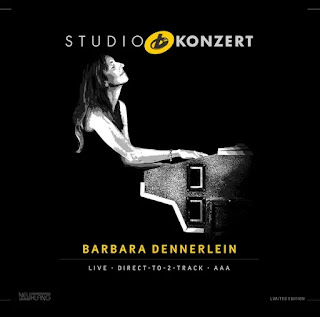
Barbara Dennerlein • Studio Konzert for Headphones


Born in Munich, Germany, in 1964, Barbara Dennerlein fell in love with the Hammond organ sound at an early age. She was eleven when the first home organ was given to her for Christmas. After only one and a half years of lessons she decided to continue autodidactic, relying upon her highly visible talent. She began to develop her own inimitable style and finally her jazz enthusiastic parents decided to buy an original Hammond B3.

Barbara became acquainted with the history of the instrument and went on her own journey of discovery in the world of music. In addition to studying the classical repertoire of standards, she also began to compose her own numbers very early on. Following first performances as a thirteen-year-old, she began to play in clubs at the age of fifteen. In the early eighties she was already fêted as the “organ tornado from Munich”.

After her first TV appearances in 1982 Barbara began to record for LP's and included own compositions right from the beginning. Her third LP “Bebab” (a compound of 'bebop' and 'Barbara') was released by her likewise named own record label which she established at age 20. Having received the German jazz critics award for it, her popularity increased tremendously in Europe and finally grew into a world wide reputation. “Harper's Bazaar” wondered: “How did this Fräulein get so funky?“ and the Los Angeles Times headlined with: ”German Organist Pumps You Out”.

Since MIDI technology came up Barbara adds synthesizers and samplers to her sound. She replaced the rather weak Hammond pedal sound by an original double bass sample that allows her to play an accentuated bass line with one foot, chords with the left hand and melody with the right.

Being a band leader from the very beginning, and often the youngest among elder, Barbara is a perfectionist, though anything but a soulless technician. She attaches the greatest importance to musical integration in the collective. Her live bands play superbly well together. Her CD productions for e.g. “ENJA” or “Verve” feature hand- picked line-ups of prominent musicians versed in different styles, such as Ray Anderson, Antonio Hart, Mitch Watkins, Randy Brecker, Jeff “Tain” Watts, David Murray, Howard Johnson, Frank Lacy, David Sanchez, Roy Hargrove, Bob Berg and Dennis Chambers.

From time to time, Barbara allows herself sufficient time to give musical expression to her innermost thoughts and aspirations and to capture these on strikingly original and very personal solo CD's. ”Solo” (1993) and “In a Silent Mood” (2004) provide a revealing insight into her musical personality, as she energetically celebrates the free flow of musical ideas which mirror her remarkable career as a brilliant exponent of the organ.

Besides her “Bebab Band” and solo work, Barbara Dennerlein has also collaborated with big bands like Peter Herbolzheimer's Rythm combination & brass and with the unforgettable pianist Friedrich Gulda, who used his full musical genius to create a symbiosis of classical music and jazz beyond all limitations of style or genre.

Barbara Dennerlein takes the same approach to music in her work as she says: “To me, jazz is a synonym for freedom. Freedom from prejudice and discrimination, freedom from constraints and convention. This is my own definition of jazz that I want to convey to the listener. Whether young or old, traditionalist or modernist, jazz fan or non-jazz fan.“

Thus, she continuously explores new terrain. Her first invitation to play a church organ concert in 1994 stimulated an intensive period of activity with the “queen of instruments”, the church organ. Thanks to her complete mastery of the pedals, Barbara managed to fully exploit the immense musical potential, sometimes with works that she composed especially for the pipe organ, and make the somewhat sluggish instrument swing. In many concerts since then the audience has been carried off to new worlds of sound, a mixture of jazz in the widest sense and classical elements. In 2002 Barbara recorded for the first time exclusively on the pipe organ (”Spiritual Movement No.1”).

In 2003 Barbara started a true outstanding project in regard of a jazz trio and a philharmonic orchestra playing together. She derived the project from the fact that she, to put it into her own words, ”has approached the cosmos of classical music by playing on the church organ”. Barbara Dennerlein performed her complex compositions on the church organ but she aimed to realize them by a much bigger musical body, which ensures the full richness of colours and dynamics. To let a symphonic orchestra swing is even more difficult than to achieve this on the pipe organ. A real task for Barbara, who likes to bear challenges.

Barbara Dennerlein's compositional work varies from traditional blues schemes, romantic, melancholic ballads to tempo driven compositions with elements of swing, bebop, funk and Latin rhythms. The fast rhythms require artistic pedal foot work in many of her own compositions. Dennerlein often uses changing bars, as well as unconventional harmonic changes to confer narrative and figurative expression to her compositions.
https://musicians.allaboutjazz.com/barbaradennerlein

////////


Nacida en Múnich, Alemania, en 1964, Barbara Dennerlein se enamoró del sonido del órgano Hammond a una edad temprana. Tenía once años cuando le regalaron el primer órgano casero por Navidad. Tras sólo un año y medio de clases, decidió continuar con su autodidactismo, confiando en su visible talento. Comenzó a desarrollar su propio e inimitable estilo y finalmente sus padres, entusiastas del jazz, decidieron comprar un Hammond B3 original.

Barbara se familiarizó con la historia del instrumento y emprendió su propio viaje de descubrimiento en el mundo de la música. Además de estudiar el repertorio clásico de estándares, también empezó a componer sus propios números muy pronto. Tras sus primeras actuaciones a los trece años, empezó a tocar en clubes a los quince. A principios de los años ochenta ya se la conocía como el "tornado del órgano de Múnich".

Tras sus primeras apariciones en televisión, en 1982, Barbara comenzó a grabar en LPs e incluyó composiciones propias desde el principio. Su tercer LP "Bebab" (un compuesto de 'bebop' y 'Barbara') fue publicado por su propio sello discográfico, también llamado así, que creó a los 20 años. Tras recibir el premio de la crítica de jazz alemana por él, su popularidad aumentó enormemente en Europa y, finalmente, alcanzó una reputación mundial. "Harper's Bazaar" se preguntaba: "¿Cómo ha llegado esta Fräulein a ser tan funky?" y Los Angeles Times tituló con: "La organista alemana te hace vibrar".

Desde que apareció la tecnología MIDI, Barbara añade sintetizadores y samplers a su sonido. Sustituyó el sonido más bien débil del pedal Hammond por una muestra original de contrabajo que le permite tocar una línea de bajo acentuada con un pie, acordes con la mano izquierda y melodía con la derecha.

Líder de la banda desde el principio, y a menudo la más joven entre los mayores, Barbara es una perfeccionista, aunque cualquier cosa menos un técnico sin alma. Concede la máxima importancia a la integración musical en el colectivo. Sus bandas en directo tocan magníficamente bien juntas. Sus producciones de CD para, por ejemplo, "ENJA" o "Verve" cuentan con formaciones escogidas a mano de destacados músicos versados en diferentes estilos, como Ray Anderson, Antonio Hart, Mitch Watkins, Randy Brecker, Jeff "Tain" Watts, David Murray, Howard Johnson, Frank Lacy, David Sánchez, Roy Hargrove, Bob Berg y Dennis Chambers.

De vez en cuando, Barbara se permite el tiempo suficiente para dar expresión musical a sus pensamientos y aspiraciones más íntimos y plasmarlos en CDs en solitario sorprendentemente originales y muy personales. "Solo" (1993) y "In a Silent Mood" (2004) ofrecen una visión reveladora de su personalidad musical, ya que celebra con energía el libre flujo de ideas musicales que reflejan su notable carrera como brillante exponente del órgano.

Además de su "Bebab Band" y de su trabajo en solitario, Barbara Dennerlein ha colaborado con grandes bandas como la Rythm combination & brass de Peter Herbolzheimer y con el inolvidable pianista Friedrich Gulda, que utilizó todo su genio musical para crear una simbiosis de música clásica y jazz más allá de toda limitación de estilo o género.

Barbara Dennerlein adopta el mismo enfoque de la música en su trabajo, como dice: "Para mí, el jazz es sinónimo de libertad. Libertad de prejuicios y discriminación, libertad de limitaciones y convenciones. Esta es mi propia definición del jazz que quiero transmitir al oyente. Ya sea joven o mayor, tradicionalista o modernista, aficionado al jazz o no aficionado".

Así, explora continuamente nuevos terrenos. Su primera invitación para tocar un concierto de órgano de iglesia en 1994 estimuló un intenso periodo de actividad con la "reina de los instrumentos", el órgano de iglesia. Gracias a su completo dominio de los pedales, Barbara consiguió explotar al máximo el inmenso potencial musical, a veces con obras que compuso especialmente para el órgano de tubos, y hacer oscilar este instrumento un tanto perezoso. En muchos conciertos desde entonces, el público se ha visto transportado a nuevos mundos sonoros, una mezcla de jazz en el sentido más amplio y elementos clásicos. En 2002 Barbara grabó por primera vez exclusivamente con el órgano de tubos ("Spiritual Movement No.1").

En 2003, Barbara inició un proyecto verdaderamente excepcional en lo que respecta a un trío de jazz y una orquesta filarmónica que tocan juntos. El proyecto surgió del hecho de que ella, para decirlo con sus propias palabras, "se ha acercado al cosmos de la música clásica tocando en el órgano de la iglesia". Barbara Dennerlein interpretaba sus complejas composiciones en el órgano de la iglesia, pero pretendía realizarlas con un cuerpo musical mucho más grande, que garantizara toda la riqueza de colores y dinámicas. Dejar que una orquesta sinfónica se balancee es aún más difícil que conseguirlo en el órgano de tubos. Una verdadera tarea para Barbara, a quien le gustan los retos.

El trabajo compositivo de Barbara Dennerlein varía desde los esquemas tradicionales del blues, las baladas románticas y melancólicas hasta las composiciones impulsadas por el tempo con elementos de swing, bebop, funk y ritmos latinos. Los ritmos rápidos exigen un trabajo artístico con el pedal en muchas de sus composiciones. Dennerlein utiliza a menudo compases cambiantes, así como cambios armónicos no convencionales para conferir expresión narrativa y figurativa a sus composiciones.
https://musicians.allaboutjazz.com/barbaradennerlein


www.barbaradennerlein.com ...


Tuesday, May 14, 2024

Barbara Dennerlein • Barbara Dennerlein Plays Classics


Thursday, May 2, 2024

Johnny Lytle • Done It Again


Influenced by Milt Jackson, Cal Tjader and Lionel Hampton, who hailed him as one of the greatest vibes players on the scene today, Johnny Lyttle (born October 13, 1932) was noted for his brilliant technique and a personal sound ideal for the kind of grooving organ combo he led on Blue Vibes and Happy Ground, his debut albums from the 60s included here.
He was good enough to record with the best Louis Armstrong, Hampton, Wynton Kelly, even Miles Davis but, despite a prolific recording career, never achieved iconic status as a jazzman. That was probably more due to his desire for control over his music, which made him refuse to sign up for any major label, than to any lack of talent on his part. After these early recordings gave notice of his talent as a vibes player, chart success soon followed for Lyttle with albums like A Groove, The Loop and Moonchild, which increasingly featured his own compositions.
Whether swinging at uptempo or delivering a soulful ballad, all his work has the irresistible, soul-stirring warmth of a player admiringly nicknamed Fast Hands by his peers.

///////

Influenciado por Milt Jackson, Cal Tjader y Lionel Hampton, que lo aclamaron como uno de los más grandes intérpretes de las vibraciones en la escena actual, Johnny Lyttle (nacido el 13 de octubre de 1932) se destacó por su brillante técnica y un sonido personal ideal para el tipo de combinación de órganos que lideró en Blue Vibes y Happy Ground, sus álbumes de debut de los años 60 incluidos aquí.
Fue lo suficientemente bueno como para grabar con los mejores Louis Armstrong, Hampton, Wynton Kelly, incluso Miles Davis pero, a pesar de una prolífica carrera discográfica, nunca alcanzó el estatus de icono como jazzista. Eso se debió probablemente más a su deseo de control sobre su música, que le hizo negarse a firmar con cualquier sello importante, que a la falta de talento por su parte. Después de que estas primeras grabaciones dieran cuenta de su talento como intérprete de vibráfono, el éxito en las listas de éxitos pronto siguió para Lyttle con álbumes como A Groove, The Loop y Moonchild, que presentaban cada vez más sus propias composiciones.
Ya sea balanceándose en el uptempo o entregando una balada conmovedora, todo su trabajo tiene la irresistible y conmovedora calidez de un jugador apodado admirablemente "Fast Hands" por sus compañeros.

Friday, March 22, 2024

Johnny Lytle • Happy Ground


Review by Craig Lytle
The spirited vibes player unarguably demonstrates his versatility on an instrument that few have been able to master. The gritty side of Johnny Lytle is manifested on the title track, "Happy Ground," a bluesy jump that swings with a classic big-band jazz sound and arrangement and reminiscent of the jam sessions of yesteryear. Lytle settles down on "A Child Is Born," a smoothly blended arrangement in which one solo complements the next. "Little Sunflower" has a serious Latin rhythm with the palpitative feel of Sam Figueroa's congas. Lytle has no problem finding his groove. As peppy as "Love for Sale" may be, it has its calming moments without sacrificing the tempo. All selections offer excellent solo exhibitions by all the musicians.

///////

Reseña de Craig Lytle
El animoso intérprete de las vibraciones demuestra indiscutiblemente su versatilidad en un instrumento que pocos han sido capaces de dominar. El lado arenoso de Johnny Lytle se manifiesta en el tema del título, "Happy Ground", un salto de blues que se balancea con un sonido y un arreglo de jazz clásico de big-band y que recuerda a las jam sessions de antaño. Lytle se sienta en "A Child Is Born", un arreglo suavemente mezclado en el que un solo complementa al siguiente. "Little Sunflower" tiene un serio ritmo latino con la palpitante sensación de las congas de Sam Figueroa. Lytle no tiene problemas para encontrar su ritmo. Por muy animado que sea "Love for Sale", tiene sus momentos de calma sin sacrificar el tempo. Todas las selecciones ofrecen excelentes exposiciones individuales de todos los músicos.


Thursday, March 14, 2024

Johnny Lytle • Fast Hands


Review by Craig Lytle
It can be expected, in most cases, that Johnny Lytle will have a diverse selection of tunes for the listener. Lytle kicks this set off with "Sister Silver," a song written by the late vibist in honor of one of the lady elders from his hometown. With a piano-paced chorus introduction spiced up with a few saxophone riffs, Lytle patiently plays a single verse before giving way to the chorus introduction encore. As he returns to the verse, his oscillating mallets stroke the keys of the vibraphone with precision, concocting a swinging jazz melody which climaxes with a roaring saxophone solo by Houston Person. "Tomorrow" has a progressive jazzy rhythm arrangement contrasted by Lytle's pop delivery. And with a melody and rhythm that is indicative of its title, "Brightness" just bounces along with its effervescent spirit. Lytle tones it down on the midtempo vintage jazz composition, "Being Green," his vibes prudently shadowed every step of the way by the electric piano of Mickey Tucker; as Lytle poignantly expresses each lyric, Tucker hurls a stimulating exclamation. This number reaches its apex as Lytle and Tucker face off in an exchange of notes. Taken from his 1966 critically acclaimed album release The Loop, Lytle does another take on his former smash hit of the same year, "The Man," retaining the same groovin' rhythm but utilizing more notes from his sidemen. On the Duke Ellington standard "Blues to Be There," Lytle and Tucker humbly stroll through the intro, enabling Person to make a grand entrance by inflicting a bluesy saxophone on the first verse. Lytle counters with a melodious, titillating locution. This southern-seasoned blues number settles with Lytle, Tucker,and Person musing through the vamp. This is an enjoyable album.
https://www.allmusic.com/album/fast-hands-mw0000875208

///////


Reseña de Craig Lytle
Se puede esperar, en la mayoría de los casos, que Johnny Lytle tenga una selección diversa de melodías para el oyente. Lytle inicia este set con "Sister Silver", una canción escrita por el difunto vibist en honor a una de las ancianas de su ciudad natal. Con una introducción de coro a ritmo de piano aderezada con algunos riffs de saxofón, Lytle toca pacientemente un solo verso antes de dar paso al bis de introducción del coro. Cuando regresa al verso, sus mazos oscilantes tocan las teclas del vibráfono con precisión, inventando una melodía de jazz oscilante que culmina con un solo de saxofón rugiente de Houston Person. "Tomorrow" tiene un arreglo rítmico jazzístico progresivo en contraste con la entrega pop de Lytle. Y con una melodía y un ritmo indicativos de su título, "Brightness" simplemente rebota junto con su espíritu efervescente. Lytle lo atenúa en la composición de jazz vintage de medio tiempo, "Being Green", sus vibraciones prudentemente ensombrecidas a cada paso del camino por el piano eléctrico de Mickey Tucker; mientras Lytle expresa conmovedoramente cada letra, Tucker lanza una exclamación estimulante. Este número alcanza su punto máximo cuando Lytle y Tucker se enfrentan en un intercambio de notas. Tomado de su álbum aclamado por la crítica de 1966, The Loop, Lytle hace otra versión de su antiguo gran éxito del mismo año, "The Man", conservando el mismo ritmo de groovin' pero utilizando más notas de sus acompañantes. En el estándar de Duke Ellington "Blues to Be There", Lytle y Tucker pasean humildemente por la introducción, lo que permite a Person hacer una gran entrada al infligir un saxofón blues en el primer verso. Lytle contrarresta con una locución melodiosa y excitante. Este número de blues sazonado con el sur se asienta con Lytle, Tucker y Person reflexionando sobre el vampiro. Este es un álbum agradable.
https://www.allmusic.com/album/fast-hands-mw0000875208


Friday, March 8, 2024

Johnny Lytle • Close Enough For Jazz


Influenced by Milt Jackson, Cal Tjader and Lionel Hampton, who hailed him as one of the greatest vibes players on the scene today, Johnny Lyttle (born October 13, 1932) was noted for his brilliant technique and a personal sound ideal for the kind of grooving organ combo he led on Blue Vibes and Happy Ground, his debut albums from the 60s included here.
He was good enough to record with the best Louis Armstrong, Hampton, Wynton Kelly, even Miles Davis but, despite a prolific recording career, never achieved iconic status as a jazzman. That was probably more due to his desire for control over his music, which made him refuse to sign up for any major label, than to any lack of talent on his part. After these early recordings gave notice of his talent as a vibes player, chart success soon followed for Lyttle with albums like A Groove, The Loop and Moonchild, which increasingly featured his own compositions.
Whether swinging at uptempo or delivering a soulful ballad, all his work has the irresistible, soul-stirring warmth of a player admiringly nicknamed Fast Hands by his peers.

///////

Influenciado por Milt Jackson, Cal Tjader y Lionel Hampton, que lo aclamaron como uno de los más grandes intérpretes de las vibraciones en la escena actual, Johnny Lyttle (nacido el 13 de octubre de 1932) se destacó por su brillante técnica y un sonido personal ideal para el tipo de combinación de órganos que lideró en Blue Vibes y Happy Ground, sus álbumes de debut de los años 60 incluidos aquí.
Fue lo suficientemente bueno como para grabar con los mejores Louis Armstrong, Hampton, Wynton Kelly, incluso Miles Davis pero, a pesar de una prolífica carrera discográfica, nunca alcanzó el estatus de icono como jazzista. Eso se debió probablemente más a su deseo de control sobre su música, que le hizo negarse a firmar con cualquier sello importante, que a la falta de talento por su parte. Después de que estas primeras grabaciones dieran cuenta de su talento como intérprete de vibráfono, el éxito en las listas de éxitos pronto siguió para Lyttle con álbumes como A Groove, The Loop y Moonchild, que presentaban cada vez más sus propias composiciones.
Ya sea balanceándose en el uptempo o entregando una balada conmovedora, todo su trabajo tiene la irresistible y conmovedora calidez de un jugador apodado admirablemente "Fast Hands" por sus compañeros.