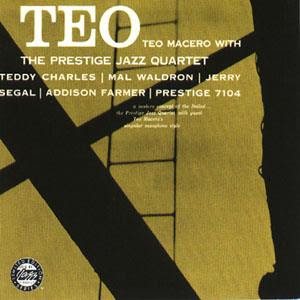
Teo Macero is an amazing man of music; he has worked intimately with some of the greatest figures in the history of jazz as, Duke Ellington, Miles Davis, Dave Brubeck, and Thelonius Monk, in the creation of some of their most enduring works. Attilio Joseph Macero was born and raised in Glens Falls, New York. After serving in the United States Navy, he moved to New York City in 1948 to attend the Juilliard School of Music. He studied composition, and graduated from Juilliard in 1953 with Bachelor's and Master's degrees. In 1953, Macero co-founded Charles Mingus' Jazz Composers Workshop, and became a major contributor to the New York City avant garde jazz scene.He performed live, and recorded several albums with Mingus and the other Workshop members over the next three years, including “Jazzical Moods” (1954) and “Jazz Composers Workshop” ( 1955).During this time frame, in 1954 Macero also recorded “Explorations.” While he had contributed compositions to other albums, this was the first full album of his own compositions, and Macero's first album as a leader. He joined Columbia in 1957 in the capacity of producer, and produced hundreds of records while at the label. Macero worked with dozens of artists at Columbia including Mingus, Duke Ellington, Ella Fitzgerald, Thelonious Monk, Johnny Mathis, Count Basie, Dave Brubeck, Tony Bennett, Charlie Byrd, and Stan Getz. He was also responsible for signing Mingus, Monk, and Byrd to Columbia. Macero produced the seminal Dave Brubeck Quartet album “Time Out,” and Thelonious Monk's first Columbia recording, “Monk's Dream,” as well as “Underground.” He also produced Mingus' first Columbia album, “Mingus Ah Um.” While Macero produced many artists' albums, he had an especially long and prolific relationship with Miles Davis. He produced most of Davis' Columbia catalog, including the classics “Kind of Blue,” “Sketches of Spain,” and “Someday My Prince Will Come.” Davis' later forays into electric fusion, such as “In a Silent Way,” “Bitches Brew,” and “A Tribute to Jack Johnson,” were highlighted by Macero's innovative mixing and editing techniques. In 1975, Macero left Columbia and formed his own production company. However, he continued to work with Davis until 1983, and still continues to produce records for Columbia. As a top flight composer in his own right, Macero has also composed for, conducted, and performed with Leonard Bernstein and the New York Philharmonic, the London Philharmonic Orchestra, the Salt Lake Symphony, the Kansas City Symphony, and The Juilliard School.
He has also been commissioned by, and composed ballets for the Joffrey Ballet Company, the Anna Sokolow Ballet Company, the London Ballet Company, the Juilliard Ballet Company, and the American Ballet Theatre. Since his tenure at Columbia, Macero has continued as a player and producer on other projects as well, working with Tony Bennett, Dave Brubeck, Herbie Hancock, Michel LeGrand, and Wallace Roney. In the 1970s and 1980s, Macero released a handful of his own albums, including “Time Plus Seven,” “Impressions of Charles Mingus,” and “Acoustical Suspension,” before founding his own label, Teorecords, in 1999. He has since released over a dozen albums of original compositions, and continues to work on new music. Macero continues to produce reissues of Miles Davis and other artists for various record companies. However, Macero is outspoken in his opposition to the practice of adding back alternate takes that didn't appear on the original albums, or otherwise altering the original music, as it corrupts the intentions of the musician and producer at the time the recording was made. "They put all the mistakes back in," says Macero. "Don't destroy the original record." A film documentary about Macero's life and work is currently being produced by Olana DiGirolamo, daughter of Macero's friend and collaborator, Orlando DiGirolamo. Macero has received over 20 Recording Industry Association of America (RIAA) Gold, Platinum, and Multi-platinum certifications for his production contributions.
https://www.allaboutjazz.com/musicians/teo-macero/
///////
Teo Macero es un hombre increíble en el mundo de la música; ha trabajado estrechamente con algunas de las figuras más importantes de la historia del jazz, como Duke Ellington, Miles Davis, Dave Brubeck y Thelonius Monk, en la creación de algunas de sus obras más perdurables. Attilio Joseph Macero nació y se crió en Glens Falls, Nueva York. Después de servir en la Marina de los Estados Unidos, se mudó a la ciudad de Nueva York en 1948 para asistir a la Juilliard School of Music. Estudió composición y se graduó de Juilliard en 1953 con una licenciatura y una maestría. En 1953, Macero cofundó el Jazz Composers Workshop de Charles Mingus y se convirtió en uno de los principales contribuyentes a la escena del jazz de vanguardia de la ciudad de Nueva York. Actuó en directo y grabó varios álbumes con Mingus y otros miembros del taller durante los tres años siguientes, entre ellos Jazzical Moods (1954) y Jazz Composers Workshop (1955). Durante este periodo, en 1954, Macero también grabó Explorations. Aunque había contribuido con composiciones a otros álbumes, este fue el primer álbum completo con composiciones propias y el primer álbum de Macero como líder. Se unió a Columbia en 1957 como productor y produjo cientos de discos mientras estuvo en el sello. Macero trabajó con docenas de artistas en Columbia, entre ellos Mingus, Duke Ellington, Ella Fitzgerald, Thelonious Monk, Johnny Mathis, Count Basie, Dave Brubeck, Tony Bennett, Charlie Byrd y Stan Getz. También fue responsable de fichar a Mingus, Monk y Byrd para Columbia. Macero produjo el influyente álbum del Dave Brubeck Quartet «Time Out» y la primera grabación de Thelonious Monk para Columbia, «Monk's Dream», así como «Underground». También produjo el primer álbum de Mingus para Columbia, «Mingus Ah Um». Aunque Macero produjo álbumes de muchos artistas, mantuvo una relación especialmente larga y prolífica con Miles Davis. Produjo la mayor parte del catálogo de Davis en Columbia, incluidos los clásicos «Kind of Blue», «Sketches of Spain» y «Someday My Prince Will Come». Las incursiones posteriores de Davis en la fusión eléctrica, como «In a Silent Way», «Bitches Brew» y «A Tribute to Jack Johnson», destacaron por las innovadoras técnicas de mezcla y edición de Macero. En 1975, Macero dejó Columbia y formó su propia productora. Sin embargo, siguió trabajando con Davis hasta 1983 y aún sigue produciendo discos para Columbia. Como compositor de primer nivel por derecho propio, Macero también ha compuesto, dirigido y actuado con Leonard Bernstein y la Filarmónica de Nueva York, la Orquesta Filarmónica de Londres, la Sinfónica de Salt Lake, la Sinfónica de Kansas City y la Juilliard School.
También ha recibido encargos y compuesto ballets para la Joffrey Ballet Company, la Anna Sokolow Ballet Company, la London Ballet Company, la Juilliard Ballet Company y el American Ballet Theatre. Desde su etapa en Columbia, Macero ha seguido trabajando como intérprete y productor en otros proyectos, colaborando con Tony Bennett, Dave Brubeck, Herbie Hancock, Michel LeGrand y Wallace Roney. En las décadas de 1970 y 1980, Macero publicó varios álbumes propios, entre ellos «Time Plus Seven», «Impressions of Charles Mingus» y «Acoustical Suspension», antes de fundar su propio sello discográfico, Teorecords, en 1999. Desde entonces, ha publicado más de una docena de álbumes con composiciones originales y sigue trabajando en nueva música. Macero sigue produciendo reediciones de Miles Davis y otros artistas para diversas discográficas. Sin embargo, Macero se opone abiertamente a la práctica de añadir tomas alternativas que no aparecían en los álbumes originales o de alterar de cualquier otra forma la música original, ya que corrompe las intenciones del músico y del productor en el momento en que se realizó la grabación. «Vuelven a incluir todos los errores», afirma Macero. «No destruyan el disco original». Olana DiGirolamo, hija del amigo y colaborador de Macero, Orlando DiGirolamo, está produciendo actualmente un documental sobre la vida y obra de Macero. Macero ha recibido más de 20 certificaciones de oro, platino y multiplatino de la Asociación de la Industria Discográfica de Estados Unidos (RIAA) por sus contribuciones a la producción.
https://www.allaboutjazz.com/musicians/teo-macero/