Showing posts with label Clifford Jordan. Show all posts

Saturday, May 16, 2026

Clifford Jordan • Bearcat


Review by Scott Yanow
This CD is a straight reissue of the original Jazzland LP. Tenor saxophonist Clifford Jordan, who is joined by pianist Cedar Walton, bassist Teddy Smith and drummer J.C. Moses, is heard in his early prime and displays an original tone while playing in the hard bop style. He stretches out on five of his swinging and fairly advanced originals, "How Deep Is the Ocean," and Tom McIntosh's "Malice Towards None." It would be 1973 before Jordan had another opportunity to be showcased in a quartet format, making this formerly rare set one of his best all-around recordings.
https://www.allmusic.com/album/bearcat-mw0000312071

/////////


Reseña de Scott Yanow
Este CD es una reedición directa del LP original de Jazzland. El saxofonista tenor Clifford Jordan, al que acompañan el pianista Cedar Walton, el bajista Teddy Smith y el baterista J.C. Moses, se escucha en su primera época y muestra un tono original mientras toca en el estilo hard bop. Se extiende en cinco de sus originales con swing y bastante avanzados, "How Deep Is the Ocean" y "Malice Towards None" de Tom McIntosh. Pasaría el año 1973 antes de que Jordan tuviera otra oportunidad de mostrarse en formato de cuarteto, lo que hace que este conjunto, antes raro, sea una de sus mejores grabaciones en general.
https://www.allmusic.com/album/bearcat-mw0000312071


Friday, May 8, 2026

Horace Silver • Further Explorations


Review
by Scott Yanow
For a brief time, tenor saxophonist Clifford Jordan and trumpeter Art Farmer were the frontline of the Horace Silver Quintet. This 1997 CD reissue finds the group (which also includes bassist Teddy Kotick and drummer Louis Hayes) performing five of Silver's lesser-known originals and the standard "Ill Wind." The lyrical Farmer and the up-and-coming Jordan have plenty of fine solos, as does the influential Silver, whose funky, witty style stood apart from the prevailing Bud Powell influence of the era. Although none of the newer songs caught on as standards, this set (which has plenty of mood and groove variation) holds together very well and still sounds fresh 40 years later.
https://www.allmusic.com/album/further-explorations-by-the-horace-silver-quintet-mw0000594446

///////


Reseña
por Scott Yanow
Durante un breve periodo de tiempo, el saxofonista tenor Clifford Jordan y el trompetista Art Farmer estuvieron al frente del Horace Silver Quintet. Esta reedición en CD de 1997 encuentra al grupo (que también incluye al bajista Teddy Kotick y al batería Louis Hayes) interpretando cinco de los originales menos conocidos de Silver y el estándar "Ill Wind". El lírico Farmer y el prometedor Jordan tienen un montón de buenos solos, al igual que el influyente Silver, cuyo estilo funky e ingenioso se desmarcaba de la influencia predominante de Bud Powell de la época. Aunque ninguna de las nuevas canciones se convirtió en estándar, este conjunto (que tiene muchas variaciones de humor y ritmo) se mantiene muy bien y sigue sonando fresco 40 años después.
https://www.allmusic.com/album/further-explorations-by-the-horace-silver-quintet-mw0000594446


Monday, April 27, 2026

Clifford Jordan • Glass Bead Games


Review by Ken Dryden
Clifford Jordan's two volumes of sessions under the title Glass Bead Games have long been heralded as some of the most important work of his career. These once rare recordings, previously issued as individual albums and as a two-LP set by Strata East, feature the late tenor saxophonist leading two separate quartets. The first, with pianist Stanley Cowell, bassist Bill Lee and drummer Billy Higgins, consists of seven powerful originals by the band. The portraits include Jordan's well-named "Powerful Paul Robeson" and Cowell's driving post-bop tribute "Cal Massey." But it is Lee's moving "John Coltrane" which opens with a solo chorus by its composer and includes a vocal chant by Jordan, Higgins and Lee, that leaves the most lasting impression, with influences from throughout several of Coltrane's landmark recordings made during the '60s. Lee's "Biskit," which follows his piece "Eddie Harris," sounds as if Harris himself could have written it. The second quartet has Cedar Walton taking over on piano and Sam Jones on bass. This session is not quite as adventurous but is every bit as enjoyable, with stimulating compositions by Walton, Cowell, Higgins and Jones. Jordan devours his drummer's "Alias Buster Henry" whole with his far-reaching solo. Jones' blues "One for Amos" was the only established piece recorded for the album, having received wide exposure during the previous decade; this updated arrangement ranks among its finest interpretations. Long out of print and fetching high prices at auctions, this Harvest Song reissue, which combines all issued tracks on one disc, returns a legendary release to print at a much more affordable price. Highly recommended!
https://www.allmusic.com/album/glass-bead-games-mw0001160179

///////


Reseña de Ken Dryden
Los dos volúmenes de sesiones de Clifford Jordan bajo el título Glass Bead Games han sido anunciados durante mucho tiempo como algunos de los trabajos más importantes de su carrera. Estas grabaciones, una vez raras, publicadas anteriormente como álbumes individuales y como un conjunto de dos LP por Strata East, presentan al saxofonista tenor tardío liderando dos cuartetos separados. El primero, con el pianista Stanley Cowell, el bajista Bill Lee y el baterista Billy Higgins, consta de siete poderosos originales de la banda. Los retratos incluyen al bien llamado "Poderoso Paul Robeson" de Jordan y el tributo post-bop de Cowell "Cal Massey."Pero es la conmovedora" John Coltrane " de Lee, que comienza con un coro solista de su compositor e incluye un canto vocal de Jordan, Higgins y Lee, lo que deja la impresión más duradera, con influencias de varias de las grabaciones históricas de Coltrane realizadas durante los años 60. "Biskit" de Lee, que sigue a su pieza "Eddie Harris", suena como si el propio Harris pudiera haberlo escrito. El segundo cuarteto cuenta con Cedar Walton al piano y Sam Jones al bajo. Esta sesión no es tan aventurera, pero es igual de agradable, con composiciones estimulantes de Walton, Cowell, Higgins y Jones. Jordan devora el" Alias Buster Henry " de su baterista con su solo de gran alcance. El blues de Jones "One for Amos" fue la única pieza establecida grabada para el álbum, habiendo recibido una amplia exposición durante la década anterior; este arreglo actualizado se encuentra entre sus mejores interpretaciones. Agotada durante mucho tiempo y con altos precios en las subastas, esta reedición de Harvest Song, que combina todas las pistas emitidas en un solo disco, devuelve un lanzamiento legendario para imprimir a un precio mucho más asequible. Muy recomendable!
https://www.allmusic.com/album/glass-bead-games-mw0001160179


Wednesday, April 22, 2026

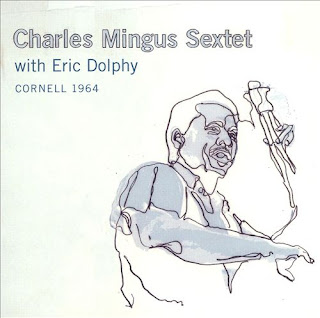
Charles Mingus Sextet With Eric Dolphy • Cornell 1964


Review
by Thom Jurek 
In 2005, Blue Note raised the eyebrows (and expectations) of the jazz world by issuing the previously unreleased Thelonious Monk/John Coltrane Carnegie Hall concert from November of 1957 that literally replaces the few other recordings of the group both sonically and musically. In 2007, courtesy of Charles Mingus' widow Sue, with the help of Michael Cuscuna and Blue Note, gives us another heretofore unknown bit of jazz history with the Charles Mingus Sextet with Eric Dolphy's Cornell University Concert from March 18, 1964. The reason this gig is significant is because apparently, not only didn't anybody know it was recorded, according to Gary Giddins, who wrote the (typically) excellent liners here, no one but the people who put on the show and the students who attended even knew it had taken place! The other reason for its historic importance is that it took place 17 days before the famed Town Hall concert and predated other European shows by the band by at least a month. This is significant because trumpeter Johnny Coles took ill shortly after, and Dolphy passed away a few months later. Until now, the Town Hall gig was the standard for this band, but it is safe to say with this current revelation that it will be replaced in the annals of the canon. This band -- Mingus, Dolphy, Coles, Jaki Byard, Dannie Richmond, and Clifford Jordan -- played perhaps definitive renditions of some Mingus tunes worked out previously at the Five Spot where he assembled the group, and were presumed to have first been performed, and recorded, at Town Hall. Much of the material was also performed on the European tour that followed and climaxed with an appearance at the Monterey Jazz Festival.

These two discs contain a number of debuts and some absolutely startling solos beginning with Byard's solo set opener "ATFW You," which is four-and-a-half minutes of genius and jazz history. Mingus' solos with skeletal Byard backing on "Sophisticated Lady" for another few minutes before the band takes off in earnest with a raucous yet amazingly playful half-hour version of "Fables of Faubus," that dazzles, to say the least, in large part because of the utterly inspired bass playing by the bandleader, and the embedded quotes from corny American folk songs to popular tunes to Chopin. Another debut here is the sextet version of Billy Strayhorn's "Take the 'A' Train," which Mingus had only recorded before with a big band. The differences, as one can imagine, are striking, particularly in Jordan's solo. The introduction of "Meditations" on the second disc of this set is simply shattering. Over half-an-hour in length, it offers once more the genius in Byard's playing and underscores Richmond as far more than a rhythmnatist, and Coles as a soloist who could hang with anybody. Of particular note is the interplay between Jordan and Dolphy's bass clarinet: the tune once more embodies the best of Mingus' thought and inspiration as it takes solid note of the lineage of the music and extends it into the future.

"So Long Eric" also appears here, since at the time of this recording, he was leaving the band, and this piece was a thanks for his contribution to Mingus' music and not the elegy it has been consistently thought of (Giddins points this out). Another welcome surprise here is the sextet performing a six-minute rendition of "When Irish Eyes Are Smiling" (St. Patrick's Day was the day before), kicked off by a jaunty, swinging intro by Byard and Mingus. As the melody becomes pronounced the horns all kick in in unison, and Coles takes a wonderful solo, swinging hard and lyrical with wonderful counterpoint by Mingus and timely fills and comping by Byard, as a jazz version of a reel played by Dolphy on clarinet can be heard in the background. The final surprise is the only known recording of Mingus playing Fats Waller's "Jitterbug Waltz," with killer duo played between Dolphy on flute and Byard. Throughout, Mingus' bass urges them on, digging deep into the groove of the tune, and the dialogue between Mingus and Richmond is nearly telepathic. Despite all of these debuts, there is another very profound reason that this recording is so utterly special, which Giddins reveals near the beginning of his liner notes. There is a kind of exuberance and joy on this set that offers another side of the mercurial and stormy bandleader. Seldom has he sounded so at ease and relaxed as he does here. The confidence in the ensemble is complete, and he feels no need to push but only to encourage and tale delight in the proceedings. This short-lived group proves, as evidenced here, that they were a magical unit that may not have been around as long as Miles Davis' second quintet, or John Coltrane's quartet, but as under-celebrated as its various musicians were -- Coles, Richmond, and especially Byard -- the band itself was as innovative and creative even in the brevity of its existence. This double-disc is every bit as important as the Monk-Coltrane disc, and sounds very fine for a tape that has been sitting in a closet for over 40 years: it truly needs to be heard to even be believed, let alone convinced.
https://www.allmusic.com/album/cornell-1964-mw0000480163

///////


Reseña
por Thom Jurek
En 2005, Blue Note levantó las cejas (y las expectativas) del mundo del jazz al publicar el concierto inédito de Thelonious Monk/John Coltrane en el Carnegie Hall de noviembre de 1957, que literalmente sustituye a las pocas grabaciones del grupo tanto sonora como musicalmente. En 2007, por cortesía de la viuda de Charles Mingus, Sue, con la ayuda de Michael Cuscuna y Blue Note, nos ofrece otro trozo de historia del jazz hasta ahora desconocido con el concierto del Sexteto de Charles Mingus con Eric Dolphy en la Universidad de Cornell del 18 de marzo de 1964. La razón por la que este concierto es significativo es porque, aparentemente, no sólo nadie sabía que se había grabado, sino que, según Gary Giddins, que escribió los (típicos) excelentes forros aquí, ¡nadie más que la gente que organizó el espectáculo y los estudiantes que asistieron sabían que había tenido lugar! La otra razón de su importancia histórica es que tuvo lugar 17 días antes del famoso concierto del Town Hall y fue anterior a otros espectáculos europeos de la banda durante al menos un mes. Esto es significativo porque el trompetista Johnny Coles enfermó poco después y Dolphy falleció unos meses más tarde. Hasta ahora, el concierto del Town Hall era el estándar de esta banda, pero es seguro decir con esta revelación actual que será reemplazado en los anales del canon. Esta banda -Mingus, Dolphy, Coles, Jaki Byard, Dannie Richmond y Clifford Jordan- tocó versiones quizá definitivas de algunos temas de Mingus elaborados previamente en el Five Spot, donde reunió al grupo, y que se presume que fueron interpretados y grabados por primera vez en el Town Hall. Gran parte del material también se interpretó en la gira europea que siguió y que culminó con una aparición en el Festival de Jazz de Monterey.

Estos dos discos contienen una serie de debuts y algunos solos absolutamente sorprendentes, comenzando con el primer solo de Byard, "ATFW You", que son cuatro minutos y medio de genialidad e historia del jazz. Los solos de Mingus con el esquelético apoyo de Byard en "Sophisticated Lady" duran unos minutos más antes de que la banda se lance en serio con una estridente pero increíblemente juguetona versión de media hora de "Fables of Faubus", que deslumbra, por no decir otra cosa, en gran parte por el inspiradísimo toque de bajo del líder de la banda, y las citas incrustadas de cursis canciones folclóricas americanas, melodías populares y Chopin. Otro debut aquí es la versión para sexteto de "Take the 'A' Train" de Billy Strayhorn, que Mingus sólo había grabado antes con una big band. Las diferencias, como se puede imaginar, son notables, sobre todo en el solo de Jordan. La introducción de "Meditations" en el segundo disco de este conjunto es simplemente estremecedora. Con más de media hora de duración, ofrece una vez más la genialidad de Byard y subraya que Richmond es mucho más que un rítmico, y que Coles es un solista que puede estar a la altura de cualquiera. Cabe destacar la interacción entre Jordan y el clarinete bajo de Dolphy: la melodía encarna una vez más lo mejor del pensamiento y la inspiración de Mingus, ya que toma buena nota del linaje de la música y lo extiende hacia el futuro.

"So Long Eric" también aparece aquí, ya que en el momento de esta grabación, él estaba dejando la banda, y esta pieza era un agradecimiento por su contribución a la música de Mingus y no la elegía que se ha pensado sistemáticamente (Giddins señala esto). Otra grata sorpresa es que el sexteto interpreta una versión de seis minutos de "When Irish Eyes Are Smiling" (el Día de San Patricio fue el día anterior), iniciada por una introducción alegre y oscilante de Byard y Mingus. A medida que la melodía se va pronunciando, las trompas entran al unísono, y Coles hace un maravilloso solo, con un swing fuerte y lírico, con el maravilloso contrapunto de Mingus y los oportunos rellenos y composiciones de Byard, mientras se oye de fondo una versión jazzística de un rollo tocado por Dolphy al clarinete. La sorpresa final es la única grabación conocida de Mingus tocando el "Jitterbug Waltz" de Fats Waller, con un dúo asesino entre Dolphy a la flauta y Byard. En todo momento, el bajo de Mingus les impulsa, profundizando en el ritmo de la melodía, y el diálogo entre Mingus y Richmond es casi telepático. A pesar de todos estos debuts, hay otra razón muy profunda por la que esta grabación es tan especial, que Giddins revela al principio de sus notas. Hay una especie de exuberancia y alegría en este conjunto que ofrece otra cara del mercurial y tormentoso director de orquesta. Pocas veces ha sonado tan a gusto y relajado como aquí. La confianza en el conjunto es total, y no siente la necesidad de presionar, sino sólo de animar y deleitarse con las actuaciones. Este grupo de corta vida demuestra, como se evidencia aquí, que era una unidad mágica que puede no haber estado tanto tiempo como el segundo quinteto de Miles Davis, o el cuarteto de John Coltrane, pero por muy poco celebrados que fueran sus diversos músicos - Coles, Richmond, y especialmente Byard - la banda en sí era tan innovadora y creativa incluso en la brevedad de su existencia. Este doble disco es tan importante como el de Monk-Coltrane, y suena muy bien para una cinta que ha estado guardada en un armario durante más de 40 años: realmente hay que escucharlo para creerlo, por no decir convencerlo.
https://www.allmusic.com/album/cornell-1964-mw0000480163


Friday, March 27, 2026

Art Farmer Quintet • You Make Me Smile


Review from AllMusic (by Scott Yanow):
Among the most consistent of jazzmen, flugelhornist Art Farmer sounds in fine form on this quintet outing with tenor-saxophonist Clifford Jordan, pianist Fred Hersch, bassist Rufus Reid and drummer Akira Tana. The material, other than the standards "Nostalgia" and "Have You Met Miss Jones?", is more obscure than usual, with an adaptation of a Scriabin classical prelude and numbers by Rufus Reid, Farmer ("Flashback") and Benny Carter ("Souvenir"). Creative bop-based music with Farmer's usual subtlety clearly in evidence.
https://www.allmusic.com/album/you-make-me-smile-mw0000191813

///////


Resena de AllMusic (por Scott Yanow):
Uno de los musicos mas consistentes del jazz, el flugelhornista Art Farmer suena en plena forma en esta salida quintetistica junto al saxofonista tenor Clifford Jordan, el pianista Fred Hersch, el bajista Rufus Reid y el baterista Akira Tana. El repertorio, salvo los standards "Nostalgia" y "Have You Met Miss Jones?", es mas oscuro de lo habitual, con una adaptacion de un preludio clasico de Scriabin y temas de Rufus Reid, Farmer ("Flashback") y Benny Carter ("Souvenir"). Musica creativa de base bop con la sutileza habitual de Farmer claramente en evidencia.
https://www.allmusic.com/album/you-make-me-smile-mw0000191813


Thursday, March 26, 2026

Joe Zawinul • Money In The Pocket


Review from All About Jazz (by Chris May):
Recorded in late 1965, while keyboard player Joe Zawinul was still a member of saxophonist Cannonball Adderley's band, Money In The Pocket is a remarkable album -- remarkable in that it gives absolutely no hint of the shape shifts that would transform Zawinul's work a few years later. The first of three albums he recorded for Atlantic, it's a conventional mix of mid-1960s hard bop and soul jazz. "Money In The Pocket" itself, one of three Zawinul originals, made with tenor saxophonist Clifford Jordan and trumpeter Blue Mitchell, is classic Blue Note hard bop in everything but record label. Four other tracks recorded with a three-horn frontline -- tenor saxophonist Joe Henderson, baritone saxophonist Pepper Adams and Mitchell, with bassist Sam Jones and drummer Louis Hayes from the Adderley band -- take in bop and soul jazz. Jones' "Some More Of Dat" is a dead ringer for contemporaneous Adderley or pianist Horace Silver. All these tracks are good, but even by the standards of the time they are pretty ordinary. Zawinul's modal-flavored "Riverbed," though hardly radical, is the disc's most singular composition. There are, however, two ballad readings of note: "My One And Only Love" performed solo by Zawinul, and "Sharon's Waltz" with Jones and Hayes -- lyrical and just the right side of rococo, Zawinul's solos are delightful. Reissued as part of Warner Jazz's Atlantic Masters series, it isn't to be confused with the Adderley band's album of the same title.
https://www.allaboutjazz.com/money-in-the-pocket-joe-zawinul-review-by-chris-may

///////


Resena de All About Jazz (por Chris May):
Grabado a fines de 1965, mientras el pianista Joe Zawinul era todavia miembro del grupo del saxofonista Cannonball Adderley, Money In The Pocket es un album notable -- notable porque no da absolutamente ninguna pista de las transformaciones que cambiarian el trabajo de Zawinul pocos anos despues. El primero de tres albums que grabo para Atlantic, es una mezcla convencional de hard bop y soul jazz de mediados de los sesenta. El propio "Money In The Pocket", uno de los tres originales de Zawinul, realizado con el saxofonista tenor Clifford Jordan y el trompetista Blue Mitchell, es hard bop clasico al estilo Blue Note en todo menos en el sello discografico. Cuatro tracks mas grabados con una primera linea de tres cuernos -- el saxofonista tenor Joe Henderson, el saxofonista baritono Pepper Adams y Mitchell, con el bajista Sam Jones y el baterista Louis Hayes de la banda de Adderley -- transitan por el bop y el soul jazz. "Some More Of Dat" de Jones es casi indistinguible del Adderley o el pianista Horace Silver contemporaneos. Todos estos temas son buenos, aunque incluso para los estandares de la epoca resultan bastante ordinarios. El "Riverbed" de Zawinul, con sabor modal aunque no especialmente radical, es la composicion mas singular del disco. Sin embargo, hay dos lecturas de baladas notables: "My One And Only Love" interpretada en solitario por Zawinul, y "Sharon's Waltz" con Jones y Hayes -- liricas y justas en su preciosismo, las improvisaciones de Zawinul son deliciosas. Reeditado como parte de la serie Atlantic Masters de Warner Jazz, no debe confundirse con el album homonimo de la banda de Adderley.
https://www.allaboutjazz.com/money-in-the-pocket-joe-zawinul-review-by-chris-may


Saturday, June 7, 2025

Clifford Jordan & John Gilmore • Blowing In From Chicago


Review
by Scott Yanow
Clifford Jordan's first date as a leader actually found him sharing a heated jam session with fellow tenor John Gilmore. Backed by pianist Horace Silver, bassist Curly Russell, and drummer Art Blakey, the two saxophonists square off mostly on obscurities (other than Gigi Gryce's "Blue Lights" and "Billie's Bounce"). This was one of Gilmore's few sessions outside of Sun Ra's orbit and, if anything, he slightly overshadows the cooler-toned Jordan. Recommended.

///////


Reseña
por Scott Yanow
La primera cita de Clifford Jordan como líder le encontró compartiendo una acalorada jam session con su compañero tenor John Gilmore. Respaldado por el pianista Horace Silver, el bajista Curly Russell y el baterista Art Blakey, los dos saxofonistas se enfrentaron en su mayor parte con obscuridades (aparte de "Blue Lights" y "Billie's Bounce" de Gigi Gryce). Esta fue una de las pocas sesiones de Gilmore fuera de la órbita de Sun Ra y, en todo caso, eclipsa ligeramente a Jordan, de tono más frío. Recomendado.


Wednesday, February 19, 2025

Clifford Jordan • Drink Plenty Water


After 49 years on the shelf, Drink Plenty Water, a long lost jazz recording from the late tenor sax master Clifford Jordan has been issued. Originally recorded for the Strata-East label in 1974, it is the only release in the Chicago native’s catalog that is primarily a vocal recording, with inventive arrangements courtesy of bassist Bill Lee. Joining Jordan on tenor are Dick Griffin on trombone, Bill Hardman on trumpet, Charlie Rouse on bass clarinet, Strata East co-founder Stanley Cowell on piano, Billy Higgins on drums, Bernard Fennell on cello, and Lee and Sam Jones on bass.

Jordan’s widow, Sandra, brought Drink Plenty Water to the light of day, spearheading a two-year-long, pandem- ic-delayed effort to get these four-decades-old recordings mastered and prepared for this January 2023 release.

Jordan’s daughter, Donna Jordan Harris – all of 16 years of age at the time – sings lead vocals on several tracks, backed by remaining members of the ensemble. The vocal arrangements bring an unexpected new take to the compositions “Witch Doctor’s Chant (Ee-Bah-Lickey-Doo)” and “I’ve Got a Feeling for You” that first appeared on Clifford Jordan’s 1968 album Soul Fountain.

Jordan recorded Drink Plenty Water’s opening track, “The Highest Mountain,” more than any of his other com- positions during his recording career, which spanned from 1957 until his passing in 1993. And the song has lived on with recordings by T.S. Monk, Hugh Lawson, John Marshall and others. The vocal arrangement for “The Highest Mountain” on Drink Plenty Water makes it the most unique treatment of one of his finest compositions.

Additional tracks include “My Papa’s Coming Home,” a rhythm changes vamp with what trombonist Griffin describes as a “stunning” solo from the leader, and “Drink Plenty Water and Walk Slow,” a short track featuring Fennell and Jordan under a spoken word story from actor David Smyrl. Other highlights of the 35-minute-long recording are the two tracks titled “Talking Blues” – the first a spoken-word story from Smyrl about a hustler living the fast life, and the second an instrumental version with great interplay between Jordan, Hardman, Fen- nell and Griffin.

“Besides being one of the greatest saxophonists in our Artform, my friend and colleague Clifford Jordan was also, aside from Stanley Cowell, just about the single other most important artist-owned recording contributor to ‘Strata-East’ at the dawn of the label's inception,” writes veteran trumpeter and Strata-East co-founder Charles Tolliver in Drink Plenty Water’s CD booklet. “Although this recording did not make it to the catalogue during this period, kudos to Sandy Jordan for finally unearthing this gem from the archives so it can now be issued."
https://www.gratefulweb.com/articles/drink-plenty-water-long-lost-1974-clifford-jordan-vocal-jazz-album-released

///////

Después de 49 años en la estantería, se ha publicado Drink Plenty Water, una grabación de jazz perdida hace mucho tiempo del difunto maestro del saxo tenor Clifford Jordan. Grabada originalmente para el sello Strata-East en 1974, es la única grabación del catálogo del oriundo de Chicago que es principalmente una grabación vocal, con arreglos inventivos cortesía del bajista Bill Lee. Junto a Jordan en el tenor están Dick Griffin en el trombón, Bill Hardman en la trompeta, Charlie Rouse en el clarinete bajo, el cofundador de Strata East Stanley Cowell en el piano, Billy Higgins en la batería, Bernard Fennell en el violonchelo, y Lee y Sam Jones en el contrabajo.

La viuda de Jordan, Sandra, sacó a la luz Drink Plenty Water, encabezando un esfuerzo de dos años y un retraso pandémico para masterizar y preparar estas grabaciones de cuatro décadas de antigüedad para su publicación en enero de 2023.

La hija de Jordan, Donna Jordan Harris, que en aquel momento tenía 16 años, es la voz principal en varios temas, respaldada por los demás miembros del grupo. Los arreglos vocales aportan una nueva e inesperada perspectiva a las composiciones "Witch Doctor's Chant (Ee-Bah-Lickey-Doo)" y "I've Got a Feeling for You", que aparecieron por primera vez en el álbum de Clifford Jordan de 1968 Soul Fountain.

Jordan grabó la primera canción de Drink Plenty Water, "The Highest Mountain", más que ninguna otra durante su carrera discográfica, que se extendió desde 1957 hasta su fallecimiento en 1993. Y la canción ha perdurado en grabaciones de T.S. Monk, Hugh Lawson, John Marshall y otros. El arreglo vocal de "The Highest Mountain" en Drink Plenty Water lo convierte en el tratamiento más singular de una de sus mejores composiciones.

Otros temas incluyen "My Papa's Coming Home", un vampiro de cambios de ritmo con lo que el trombonista Griffin describe como un solo "impresionante" del líder, y "Drink Plenty Water and Walk Slow", un tema corto con Fennell y Jordan bajo una historia hablada del actor David Smyrl. Otros momentos estelares de la grabación de 35 minutos son los dos temas titulados "Talking Blues", el primero una historia hablada de Smyrl sobre un buscavidas que vive la vida rápida, y el segundo una versión instrumental con una gran interacción entre Jordan, Hardman, Fenell y Griffin.

"Además de ser uno de los mejores saxofonistas de nuestra forma de arte, mi amigo y colega Clifford Jordan fue también, aparte de Stanley Cowell, el otro artista más importante que contribuyó a la grabación de 'Strata-East' en los albores de la creación del sello", escribe el veterano trompetista y cofundador de Strata-East Charles Tolliver en el libreto del CD de Drink Plenty Water. "Aunque esta grabación no se incluyó en el catálogo durante este período, felicito a Sandy Jordan por haber desenterrado finalmente esta joya de los archivos para que ahora pueda publicarse".
https://www.gratefulweb.com/articles/drink-plenty-water-long-lost-1974-clifford-jordan-vocal-jazz-album-released


Sunday, February 16, 2025

Clifford Jordan • Down Through The Years


Review
by Ken Dryden  
This 1991 big-band performance at Condon's in New York City also represents the final recording as a leader by Clifford Jordan, who died in 1993. In addition to Jordan's powerful and soulful tenor sax, trumpeters Dizzy Reece and Don Sickler, alto saxophonist Jerome Richardson, and pianist Ronnie Mathews are among the all-stars present on the date. The set is dominated by Jordan's originals, including his driving chart "Highest Mountain," the loping "Down Through the Years" (with a brilliant arrangement by Sickler that features himself and baritone saxophonist Charles Davis to good effect), and the very tense "Third Avenue," arranged by Reece, who also solos after the leader. The playful, upbeat arrangement of Duke Ellington's "Don't Get Around Much Anymore" is credited to the band as a whole, playing off the soloists against the brass and reed sections. Although liner note writer Stanley Crouch hints that additional music from this live date was recorded, sadly, none of it has been released as of yet.
https://www.allmusic.com/album/down-through-the-years-live-at-condons-new-york-mw0000080161

///////


Revisión
por Ken Dryden  
Esta actuación de big band de 1991 en Condon's en la ciudad de Nueva York también representa la grabación final como líder de Clifford Jordan, quien murió en 1993. Además del poderoso y conmovedor saxo tenor de Jordan, los trompetistas Dizzy Reece y Don Sickler, el saxofonista alto Jerome Richardson y el pianista Ronnie Mathews se encuentran entre las estrellas presentes en la fecha. El conjunto está dominado por los originales de Jordan, incluida su tabla de conducción "Highest Mountain", el loping " Down Through the Years "(con un brillante arreglo de Sickler que presenta a sí mismo y al saxofonista barítono Charles Davis con buenos resultados), y la muy tensa "Third Avenue", arreglada por Reece, quien también hace solos después del líder. El arreglo alegre y alegre de "Don't Get Around Much Anymore" de Duke Ellington se atribuye a la banda en su conjunto, interpretando a los solistas contra las secciones de metales y lengüetas. Aunque el escritor de notas Stanley Crouch insinúa que se grabó música adicional de esta fecha en vivo, lamentablemente, ninguna de ellas ha sido lanzada hasta el momento.
https://www.allmusic.com/album/down-through-the-years-live-at-condons-new-york-mw0000080161


Thursday, January 30, 2025

Cedar Walton • The Electric Boogaloo Song


Lee Morgan • Here's Lee Morgan


Review
by Scott Yanow
This CD reissue has its original six songs expanded to 11 with the inclusion of five alternate takes. The music is good solid hard bop that finds Lee Morgan (already a veteran at age 21) coming out of the Clifford Brown tradition to display his own rapidly developing style. Matched with Clifford Jordan on tenor, pianist Wynton Kelly, bassist Paul Chambers and drummer Art Blakey, Morgan's album could pass for a Jazz Messengers set.
https://www.allmusic.com/album/heres-lee-morgan-mw0000188579

///////


Reseña
por Scott Yanow
Esta reedición en CD tiene sus seis canciones originales ampliadas a 11 con la inclusión de cinco tomas alternativas. La música es buen hard bop sólido que encuentra a Lee Morgan (ya un veterano a los 21 años) saliendo de la tradición de Clifford Brown para mostrar su propio estilo en rápido desarrollo. Acompañado por Clifford Jordan al tenor, el pianista Wynton Kelly, el bajista Paul Chambers y el batería Art Blakey, el álbum de Morgan podría pasar por un conjunto de Jazz Messengers.
https://www.allmusic.com/album/heres-lee-morgan-mw0000188579


freshsoundrecords.com/here-s-lee-morgan-2-cd ...


Tuesday, November 5, 2024

Eric Dolphy • Music Matador


Review
by Steve Leggett
In the spring of 1963, in the last full year of his life, Eric Dolphy recorded nine tracks in New York with producer Alan Douglas. Working with an ensemble that was mixed and matched in different configurations and included Prince Lasha on flute, Clifford Jordan on soprano sax, Woody Shaw on trumpet, Huey Simmons on alto sax, Bobby Hutcherson on vibraphone (there was no pianist at the sessions), bassists Richard Davis and Eddie Kahn, and drummers J.C. Moses and Charles Moffett, Dolphy tracked material that clearly anticipated his landmark Out to Lunch album that appeared in 1964 while still providing a bridge to the more traditionally accessible work that preceded it. Dolphy delivered some of the best and most striking work of his career, whether offering full-band treatments of originals like "Iron Man" and "Burning Spear"; giving a loose and lilting calypso feel to "Music Matador"; turning Fats Waller's "Jitterbug Waltz" upside down and sideways; or playing wonderful lines on flute, bass clarinet, and alto saxophone. The sessions were split up and originally issued as a pair of LPs, Conversations and Iron Man, and have been reissued in different configurations and under different titles many times since. The complete sessions are available on CD as the double-disc Dolphy Sound from Jazz World, and that's ultimately the way to go, although this set holds up quite well as a sequence. The bottom line is that no Dolphy fan should be without the material recorded at these 1963 New York sessions. The music is brilliant no matter whether it's presented in part or in whole, but once you hear it, you'll want it all.
https://www.allmusic.com/album/music-matador-jazz-hour-mw0000046837

///////

Reseña
por Steve Leggett

En la primavera de 1963, en el último año completo de su vida, Eric Dolphy grabó nueve temas en Nueva York con el productor Alan Douglas. Trabajando con un conjunto que se mezclaba y combinaba en diferentes configuraciones e incluía a Prince Lasha en la flauta, Clifford Jordan en el saxo soprano, Woody Shaw en la trompeta, Huey Simmons en el saxo alto, Bobby Hutcherson en el vibráfono (no había pianista en las sesiones), los bajistas Richard Davis y Eddie Kahn, y los bateristas J. C. Moses y Charles Moffett, Dolphy grabó un material que anticipaba claramente su histórico álbum Out to Lunch, aparecido en 1964, y que al mismo tiempo constituía un puente hacia el trabajo más tradicionalmente accesible que lo precedió. Dolphy realizó algunos de los mejores y más sorprendentes trabajos de su carrera, ya sea ofreciendo tratamientos de banda completa de originales como "Iron Man" y "Burning Spear"; dando un aire de calipso suelto y cadencioso a "Music Matador"; dando la vuelta al "Jitterbug Waltz" de Fats Waller; o tocando maravillosas líneas en flauta, clarinete bajo y saxofón alto. Las sesiones se dividieron y se publicaron originalmente como un par de LPs, Conversations y Iron Man, y desde entonces se han reeditado en diferentes configuraciones y bajo diferentes títulos. Las sesiones completas están disponibles en CD en el doble disco Dolphy Sound de Jazz World, y en última instancia es el camino a seguir, aunque este conjunto se mantiene bastante bien como una secuencia. La conclusión es que ningún fan de Dolphy debería prescindir del material grabado en estas sesiones de 1963 en Nueva York. La música es brillante independientemente de si se presenta en parte o en su totalidad, pero una vez que la escuches, la querrás toda.

https://www.allmusic.com/album/music-matador-jazz-hour-mw0000046837

Wednesday, September 25, 2024

Lee Morgan-Clifford Jordan • Live In Baltimore 1968


Review by Ken Dryden
Lee Morgan and Clifford Jordan worked together on several studio dates under the trumpeter's leadership, but this 1968 live date, organized and recorded by the Left Bank Jazz Society in Baltimore, was evidently their final documented recording together. As on most recordings made by this group of dedicated jazz fans, the microphones focus on the soloists, while the out-of-tune piano is distorted and somewhat relegated to the background. On the plus side, both Morgan and Jordan seem very energized by the setting and solo at length without showing signs of overplaying, especially in the exciting opener, "Straight, No Chaser." The rhythm section is a good one, with pianist John Hicks, bassist Reggie Workman, and drummer Ed Blackwell. It's easy for hard bop fans to overlook the slight audio shortcomings, so this Fresh Sound CD is warmly recommended.
https://www.allmusic.com/album/live-in-baltimore-1968-mw0001330542

///////


Reseña de Ken Dryden
Lee Morgan y Clifford Jordan trabajaron juntos en varias fechas de estudio bajo la dirección del trompetista, pero esta fecha en directo de 1968, organizada y grabada por la Left Bank Jazz Society de Baltimore, fue evidentemente su última grabación documentada juntos. Como en la mayoría de las grabaciones realizadas por este grupo de entregados aficionados al jazz, los micrófonos se centran en los solistas, mientras que el piano desafinado aparece distorsionado y algo relegado a un segundo plano. En el lado positivo, tanto Morgan como Jordan parecen muy energizados por el entorno y hacen largos solos sin mostrar signos de sobreactuación, especialmente en el excitante comienzo, «Straight, No Chaser». La sección rítmica es buena, con el pianista John Hicks, el bajista Reggie Workman y el batería Ed Blackwell. Es fácil para los aficionados al hard bop pasar por alto las ligeras deficiencias de audio, por lo que este CD de Fresh Sound se recomienda encarecidamente.
https://www.allmusic.com/album/live-in-baltimore-1968-mw0001330542


Friday, August 30, 2024

Sonny Red • Breezing ⁄ A Story Tale ⁄ The Mode ⁄ Images


Inspired by Charlie Parker and then Jackie McLean, the widely experienced, Detroit-born altoist Sonny Red, nee Sylvester Kyner (1932-1980) was an archetypal Motor City bopper, who, like many of his confreres there, also absorbed the blues-drenched lines of pianist Bud Powell. Forthright, direct, unpretentious, a skilled soloist with a strong feeling for the blues, he played and recorded with some of the finest jazzmen around.

The presence here of such luminous talents as, most notably, pianist Barry Harris, along with fellow pianist Tommy Flanagan, trumpeter Blue Mitchell, saxophonists Clifford Jordan and Yusef Lateef, and guitarist Grant Green left no doubt about his stature among them.

Despite this and the fact that he also worked with such marquee names as Art Blakey, Kenny Dorham, Donald Byrd, Curtis Fuller and Paul Quinichette, he never quite made the breakthrough his skills suggested he would and his recordings have been difficult to find.

This collection of quartet, quintet and sextet settings brings together four albums he made for the Jazzland label during one of the most productive spells of his career and shows why he was held in such esteem by his contemporaries.
https://www.freshsoundrecords.com/sonny-red-albums/5679-quartet-quintet-sextet-4-lps-on-2-cds.html

///////


Inspirado por Charlie Parker y luego por Jackie McLean, el experimentado altoista de Detroit Sonny Red, nee Sylvester Kyner (1932-1980) fue un arquetípico bopper de Motor City, quien, como muchos de sus colegas de allí, también absorbió las líneas azules del pianista Bud Powell. Directo, sin pretensiones, un solista hábil con un fuerte sentimiento por el blues, tocó y grabó con algunos de los mejores jazzistas de la zona.

La presencia aquí de talentos tan luminosos como el pianista Barry Harris, junto con su colega Tommy Flanagan, el trompetista Blue Mitchell, los saxofonistas Clifford Jordan y Yusef Lateef, y el guitarrista Grant Green no dejaba duda sobre su estatura entre ellos.

A pesar de esto y del hecho de que también trabajó con nombres de la talla de Art Blakey, Kenny Dorham, Donald Byrd, Curtis Fuller y Paul Quinichette, nunca logró el avance que sus habilidades sugerían que lograría y sus grabaciones han sido difíciles de encontrar.

Esta colección de cuartetos, quintetos y sextetos reúne cuatro álbumes que hizo para el sello Jazzland durante una de las etapas más productivas de su carrera y demuestra por qué fue tan estimado por sus contemporáneos.
https://www.freshsoundrecords.com/sonny-red-albums/5679-quartet-quintet-sextet-4-lps-on-2-cds.html


Fresh Sound Records ...


Thursday, August 15, 2024

John Jenkins ⁄ Clifford Jordan ⁄ Bobby Timmons • Jenkins, Jordan & Timmons


Review by Scott Yanow
Four of the five selections on this CD reissue (which also includes "Tenderly") are obscure jazz originals by altoist John Jenkins, tenor saxophonist Clifford Jordan, or trombonist Julian Priester. Inspired by both Charlie Parker and Jackie McLean, Jenkins teams up with Jordan, pianist Bobby Timmons, bassist Wilbur Ware, and drummer Dannie Richmond for some bop-oriented improvising. Strange that this would be one of only two sets led by Jenkins. Although the Blue Note CD, recorded just 16 days later, gets the edge, this is an excellent effort too.

///////

Reseña de Scott Yanow
Cuatro de las cinco selecciones en esta reedición del CD (que también incluye "Tenderly") son oscuros originales de jazz del contralto John Jenkins, el saxofonista tenor Clifford Jordan, o el trombonista Julian Priester. Inspirado por Charlie Parker y Jackie McLean, Jenkins se une a Jordan, al pianista Bobby Timmons, al bajista Wilbur Ware y al baterista Dannie Richmond para realizar improvisaciones orientadas al bop. Es extraño que este sea uno de los dos únicos sets liderados por Jenkins. Aunque el CD Blue Note, grabado tan sólo 16 días después, se lleva la palma, también es un esfuerzo excelente.


Sunday, June 23, 2024

Eric Dolphy • Iron Man


Review by Steve Huey
The companion piece to Conversations (recorded at the same mid-1963 sessions with producer Alan Douglas), Iron Man is every bit as essential and strikes a more consistent ambience than its widely varied twin. It also more clearly anticipates the detailed, abstract sound paintings of Dolphy's masterwork Out to Lunch, in large part because this time around the program is weighted toward Dolphy originals. "Iron Man," "Burning Spear," and the shorter "Mandrake" all have pretty outside themes, full of Dolphy's trademark wide interval leaps and playful sense of dissonance. Yet there's enough structure and swing to make their roots in hard bop perfectly clear, and once the front-line horns blast out the themes, the ensemble shifts into a more cerebral, exploratory mode. In the absence of a piano, Bobby Hutcherson's vibes are a crucial anchor, outlining dissonant harmonies that hang in the air almost spectrally behind the rest of the group. Most of the same musicians from Conversations appear here, including trumpeter Woody Shaw, flutist Prince Lasha, altoist Sonny Simmons, and soprano sax player Clifford Jordan. And once again, Dolphy duets with bassist Richard Davis, twice this time -- on bass clarinet for Ellington's "Come Sunday" and on flute for Jaki Byard's "Ode to C.P." Both are lovely, meditative pieces filled with conversational exchanges between the two players, illustrating what similar wavelengths they were on. Between Conversations and Iron Man, split up the way they are, one has to give a slight edge to the latter for its more cohesive presentation, yet these are classic sessions in any form and constitute some of the most brilliant work of the early-'60s avant-garde.
https://www.allmusic.com/album/iron-man-mw0000651215

///////

Reseña de Steve Huey
Compañera de Conversations (grabada en las mismas sesiones de mediados de 1963 con el productor Alan Douglas), Iron Man es tan esencial y consigue un ambiente más consistente que su gemela, de gran variedad. También anticipa más claramente las pinturas sonoras detalladas y abstractas de la obra maestra de Dolphy Out to Lunch, en gran parte porque esta vez el programa se inclina hacia originales de Dolphy. "Iron Man", "Burning Spear" y la más corta "Mandrake" tienen temas bastante externos, llenos de los característicos saltos de intervalos amplios y el sentido lúdico de la disonancia de Dolphy. Sin embargo, hay suficiente estructura y swing para dejar perfectamente claras sus raíces en el hard bop, y una vez que las trompas de primera línea hacen sonar los temas, el conjunto pasa a un modo más cerebral y exploratorio. En ausencia de un piano, los vibráfonos de Bobby Hutcherson son un ancla crucial, esbozando armonías disonantes que cuelgan en el aire casi espectralmente detrás del resto del grupo. La mayoría de los mismos músicos de Conversations aparecen aquí, incluido el trompetista Woody Shaw, el flautista Prince Lasha, el contralto Sonny Simmons y el saxo soprano Clifford Jordan. Y una vez más, Dolphy hace dúo con el bajista Richard Davis, dos veces esta vez: en el clarinete bajo para "Come Sunday" de Ellington y en la flauta para "Ode to C.P." de Jaki Byard. Ambas son piezas encantadoras y meditativas llenas de intercambios conversacionales entre los dos intérpretes, que ilustran en qué longitudes de onda tan similares se encontraban. Entre Conversations y Iron Man, divididas como están, hay que dar una ligera ventaja a la segunda por su presentación más cohesiva, aunque se trata de sesiones clásicas en cualquiera de sus formas y constituyen algunos de los trabajos más brillantes de la vanguardia de principios de los 60.
https://www.allmusic.com/album/iron-man-mw0000651215