Friday, October 31, 2025
Sunday, September 21, 2025
Thursday, July 10, 2025
Wednesday, June 25, 2025
Lionel Hampton & Axel Zwingenberger • The Boogie Woogie
Monday, February 10, 2025
Arnett Cobb • Blow Arnett, Blow
Review
by Scott Yanow
Arnett Cobb's debut for Prestige and his first recording as a leader in three years (due to a serious car accident in 1956) is an explosive affair. Cobb is matched up with fellow tough tenor Eddie "Lockjaw" Davis, and there are plenty of sparks set off by their encounter. With organist Wild Bill Davis, bassist George Duvivier, and drummer Arthur Edgehill keeping the proceedings heated, Cobb and Davis tangle on a variety of basic material, alternating uptempo romps such as "Go Power" and "Go Red Go" with slightly more sober pieces highlighted by "When I Grow Too Old to Dream." This is a great matchup (reissued on CD through the OJC imprint) that lives up to its potential.
https://www.allmusic.com/album/blow-arnett-blow-mw0000110414
///////
Reseña
por Scott Yanow
El debut de Arnett Cobb para Prestige y su primera grabación como líder en tres años (debido a un grave accidente de coche en 1956) es un asunto explosivo. Cobb forma pareja con el tenor Eddie "Lockjaw" Davis, y su encuentro hace saltar chispas. Con el organista Wild Bill Davis, el bajista George Duvivier y el batería Arthur Edgehill manteniendo el ritmo, Cobb y Davis se enzarzan en una variedad de material básico, alternando rompepistas uptempo como "Go Power" y "Go Red Go" con piezas ligeramente más sobrias destacadas por "When I Grow Too Old to Dream". Se trata de una gran combinación (reeditada en CD a través del sello OJC) que está a la altura de su potencial.
https://www.allmusic.com/album/blow-arnett-blow-mw0000110414
Saturday, February 8, 2025
Arnett Cobb • Arnett Blows For 1300
One
of the classic Texas Tenors, there was always excitement elicited by
Cobb’s uninhibited, blasting style which earned him the label “Wild Man
of the Tenor Sax.”
Arnette Cleophus Cobbs, was born on August 10,
1918, in Houston, Texas. He was taught piano by his grandmother and
went on to study violin before taking up tenor saxophone in the Wheatley
High School band. When he was fifteen he joined Louisiana band leader
Frank Davis’s band and performed in the Houston area and throughout
Louisiana during the summer. He worked with trumpeter Chester Boone for
two years and left to become a founding member of the Milton Larkin
Orchestra in 1936.
Cobb worked with Larkin for six years and,
with members Eddie Vinson, Cedric Haywood, Wild Bill Davis, Illinois
Jacquet, and others, made the band one of the most successful
territorial bands from Texas. The band became a regular at venues
including the Apollo Theatre in Harlem and boxer Joe Louis's Rhumboogie
Club in Chicago.
Originator of the “open prairie” tone and
“southern preacher” style, Cobb continually turned down offers from many
national bands including Jimmy Lunceford, Count Basie, and Lionel
Hampton. However, with his mother’s approval, and Gladys Hampton’s offer
to Elizabeth (Cobb’s wife), in 1942 Arnett took the lead saxophone
chair in Hampton’s band, replacing Illinois Jacquet, who had gotten the
position as Arnett’s substitute (from an original 1941 offer to Cobb).
Jacquet had held his position with Hampton on the condition that he
switch from alto to tenor and “play like Cobb.” With Cobb as the
featured soloist, Hampton re- recorded his theme song, “Flying Home [No.
2]. He was a major asset to the Hampton band for five years as co-
writer, writer, reed-section arranger, lead saxophone, featured soloist,
and talent scout. Gladys Hampton and Elizabeth Cobb helped manage the
band, and Cobb’s mother did the tailoring.
Cobb left Hampton in
1947, formed his own combo, and was immediately signed by Ben Bartz of
Universal Attractions for management and booking. Under Ben’s direction,
Cobb toured extensively through 1949, while recording such hits as
“Dutch Kitchen Bounce” ( Princeton University’s theme song), “Big Red's
Groove,” “Go Red Go,” and “Big League Blues” for the Apollo label. He
had begun some of his most influential years in American music history
with his showmanship (bar walking and circular breathing techniques) and
style (predecessor of Texas “swing” blues).
Between 1950 and
1956, Cobb produced a string of hits including “Jumpin’ the Blues,” “Lil
Sonny,” “The Shy One,” and “Smooth Sailing” (Ella Fitzgerald’s
signature scat) on the Columbia label; “Night,” “Light Like That” and
“Flying Home Mambo” on the Atlantic label; and other popular tunes for
these and other labels. His combos and support became a career-building
platform for Red Garland (playing with Miles Davis), George Rhodes
(Sammy Davis Jr.’s music director), George Duvivier (bassist), Dinah
Washington, comedian Redd Foxx, Jackie Wilson, Arthur Prysock, and many
others. Arnett scouted James Brown, positioned him as his opening act,
and took him to New York to sign with agent Ben Bartz at Universal.
In
1956 a car accident interrupted his national prominence. Against
doctors’ advice, a year later he was back performing and touring coast
to coast, although from this time on he could not walk without crutches.
Cobb was living in New Jersey at the time, but the long, cold, damp,
northeastern winter made working too strenuous, so in 1959 he moved back
to Houston permanently. He managed the Club Ebony, organized regional
orchestras for touring acts (Sammy Davis, Sarah Vaughn, Ella Fitzgerald,
Ray Charles and others), and devoted a lot of time to nurturing young
talent. Major recording R&B, soul, and jazz artists of the day
called on him constantly for arrangements, band personnel, and gigs.
Cobb
restricted his touring to Texas from 1959 to 1973, but proceeded with a
recording schedule that had continued from 1957 for the Prestige label.
He recorded extensively with VeeJay, Prestige, Muse, Black and Blue,
BeeHive, Progressive, Soul Note, MCA, and the Fantasy labels between
1957 and 1988. Cobb began an international touring schedule in 1973 with
his daughter as his personal manager. He toured consistently, in the
U.S., Europe, and Japan, with the Lionel Hampton All-stars, as a member
of the renowned Texas Tenors, as a featured soloist, and, from 1985 to
1989, with his own ensemble, Texas Jazz and Blues featuring Jewel Brown.
Cobb
was a prolific showman, writer, stylist, arranger, and tenor saxophone
technician. His saxophone technique and music style directly influenced
Illinois Jacquet, Gene Ammons, Johnny Griffin, Red Prysock, Houston
Person, Sonny Stitt, Stanley Turrentine, King Curtis, Eddie “Lockjaw”
Davis, Rahsaan Roland Kirk, and a generation of musicians in jazz,
swing, R&B, soul, and funk music.
Cobb received a Grammy
nomination in 1979 for best jazz instrumental performance “Live at
Sandy’s,” (Muse). He shared a Grammy with B. B. King in 1984 for best
traditional blues performance “Blues n’ Jazz,” MCA. In 1986 he founded
the Jazz Heritage Society of Texas, which established the Texas Jazz
Archives at the Houston Public Library.
Arnett Cobb died in Houston on March 24, 1989.
Source: James Nadal
https://www.allaboutjazz.com/musicians/arnett-cobb
///////
Uno
de los tenores clásicos de Texas, siempre hubo emoción provocada por el
estilo desinhibido y explosivo de Cobb, que le valió la etiqueta de
"hombre salvaje del saxo tenor".
Arnette Cleophus Cobbs, nació el
10 de agosto de 1918 en Houston, Texas. Su abuela le enseñó a tocar el
piano y pasó a estudiar violín antes de dedicarse al saxo tenor en la
banda del instituto Wheatley. A los quince años se unió a la banda del
líder de la banda de Luisiana, Frank Davis, y actuó en el área de
Houston y en toda Luisiana durante el verano. Trabajó con el trompetista
Chester Boone durante dos años y lo dejó para convertirse en miembro
fundador de la Orquesta de Milton Larkin en 1936.
Cobb trabajó
con Larkin durante seis años y, con los miembros Eddie Vinson, Cedric
Haywood, Wild Bill Davis, Illinois Jacquet y otros, convirtió la banda
en una de las más exitosas de Texas. La banda se convirtió en un
habitual de locales como el Apollo Theatre de Harlem y el Rhumboogie
Club del boxeador Joe Louis en Chicago.
Originador del tono de
"pradera abierta" y del estilo de "predicador sureño", Cobb rechazó
continuamente ofertas de muchas bandas nacionales, como Jimmy Lunceford,
Count Basie y Lionel Hampton. Sin embargo, con la aprobación de su
madre, y la oferta de Gladys Hampton a Elizabeth (esposa de Cobb), en
1942 Arnett ocupó la silla de saxofón principal en la banda de Hampton,
sustituyendo a Illinois Jacquet, que había conseguido el puesto como
sustituto de Arnett (de una oferta original de 1941 a Cobb). Jacquet
había mantenido su puesto con Hampton con la condición de que cambiara
de alto a tenor y "tocara como Cobb". Con Cobb como solista principal,
Hampton volvió a grabar su tema "Flying Home [nº 2]". Durante cinco años
fue un activo importante para la banda de Hampton como coautor,
escritor, arreglista de la sección de cañas, saxofón principal, solista
destacado y buscador de talentos. Gladys Hampton y Elizabeth Cobb
ayudaron a gestionar la banda, y la madre de Cobb se encargó de la
confección.
Cobb dejó a Hampton en 1947, formó su propio grupo y
fue contratado inmediatamente por Ben Bartz, de Universal Attractions,
para la gestión y contratación. Bajo la dirección de Ben, Cobb realizó
numerosas giras hasta 1949, a la vez que grababa éxitos como "Dutch
Kitchen Bounce" (el tema de la Universidad de Princeton), "Big Red's
Groove", "Go Red Go" y "Big League Blues" para el sello Apollo. Sus años
más influyentes en la historia de la música estadounidense fueron los
de su espectáculo (técnicas de marcha en barra y respiración circular) y
su estilo (predecesor del blues "swing" de Texas).
Entre 1950 y
1956, Cobb produjo una serie de éxitos como "Jumpin' the Blues", "Lil
Sonny", "The Shy One" y "Smooth Sailing" (el scat característico de Ella
Fitzgerald) para el sello Columbia; "Night", "Light Like That" y
"Flying Home Mambo" para el sello Atlantic; y otros temas populares para
estos y otros sellos. Sus combos y su apoyo se convirtieron en una
plataforma de construcción de carreras para Red Garland (que tocaba con
Miles Davis), George Rhodes (director musical de Sammy Davis Jr.),
George Duvivier (bajista), Dinah Washington, el cómico Redd Foxx, Jackie
Wilson, Arthur Prysock y muchos otros. Arnett localizó a James Brown,
lo situó como telonero y lo llevó a Nueva York para que firmara con el
agente Ben Bartz de Universal.
En 1956, un accidente de coche
interrumpió su protagonismo nacional. En contra de la opinión de los
médicos, un año después volvió a actuar y a hacer giras de costa a
costa, aunque a partir de ese momento no podía caminar sin muletas. Cobb
vivía entonces en Nueva Jersey, pero el largo, frío y húmedo invierno
del noreste hacía que trabajar fuera demasiado agotador, así que en 1959
se trasladó de nuevo a Houston de forma permanente. Dirigió el Club
Ebony, organizó orquestas regionales para las giras (Sammy Davis, Sarah
Vaughn, Ella Fitzgerald, Ray Charles y otros) y dedicó mucho tiempo a
cultivar jóvenes talentos. Los principales artistas de R&B, soul y
jazz de la época le pedían constantemente arreglos, personal de banda y
actuaciones.
Cobb limitó sus giras a Texas de 1959 a 1973, pero
continuó con un programa de grabación que había continuado desde 1957
para el sello Prestige. Entre 1957 y 1988, grabó extensamente con los
sellos VeeJay, Prestige, Muse, Black and Blue, BeeHive, Progressive,
Soul Note, MCA y Fantasy. Cobb comenzó un programa de giras
internacionales en 1973 con su hija como representante personal. Realizó
constantes giras por Estados Unidos, Europa y Japón con los Lionel
Hampton All-stars, como miembro de los famosos Texas Tenors, como
solista y, de 1985 a 1989, con su propio conjunto, Texas Jazz and Blues,
con Jewel Brown.
Cobb fue un prolífico showman, escritor,
estilista, arreglista y técnico del saxofón tenor. Su técnica de saxofón
y su estilo musical influyeron directamente en Illinois Jacquet, Gene
Ammons, Johnny Griffin, Red Prysock, Houston Person, Sonny Stitt,
Stanley Turrentine, King Curtis, Eddie "Lockjaw" Davis, Rahsaan Roland
Kirk y una generación de músicos de jazz, swing, R&B, soul y funk.
Cobb
recibió una nominación al Grammy en 1979 por la mejor interpretación
instrumental de jazz "Live at Sandy's", (Muse). Compartió un Grammy con
B. B. King en 1984 por la mejor interpretación de blues tradicional
"Blues n' Jazz", MCA. En 1986 fundó la Jazz Heritage Society of Texas,
que estableció los Archivos de Jazz de Texas en la Biblioteca Pública de
Houston.
Arnett Cobb murió en Houston el 24 de marzo de 1989.
Fuente: James Nadal
https://www.allaboutjazz.com/musicians/arnett-cobb
Wednesday, November 27, 2024
Arnett Cobb • The Wild Man From Texas
One
of the classic Texas Tenors, there was always excitement elicited by
Cobb’s uninhibited, blasting style which earned him the label “Wild Man
of the Tenor Sax.”
Arnette Cleophus Cobbs, was born on August 10,
1918, in Houston, Texas. He was taught piano by his grandmother and
went on to study violin before taking up tenor saxophone in the Wheatley
High School band. When he was fifteen he joined Louisiana band leader
Frank Davis’s band and performed in the Houston area and throughout
Louisiana during the summer. He worked with trumpeter Chester Boone for
two years and left to become a founding member of the Milton Larkin
Orchestra in 1936.
Cobb worked with Larkin for six years and,
with members Eddie Vinson, Cedric Haywood, Wild Bill Davis, Illinois
Jacquet, and others, made the band one of the most successful
territorial bands from Texas. The band became a regular at venues
including the Apollo Theatre in Harlem and boxer Joe Louis's Rhumboogie
Club in Chicago.
Originator of the “open prairie” tone and
“southern preacher” style, Cobb continually turned down offers from many
national bands including Jimmy Lunceford, Count Basie, and Lionel
Hampton. However, with his mother’s approval, and Gladys Hampton’s offer
to Elizabeth (Cobb’s wife), in 1942 Arnett took the lead saxophone
chair in Hampton’s band, replacing Illinois Jacquet, who had gotten the
position as Arnett’s substitute (from an original 1941 offer to Cobb).
Jacquet had held his position with Hampton on the condition that he
switch from alto to tenor and “play like Cobb.” With Cobb as the
featured soloist, Hampton re- recorded his theme song, “Flying Home [No.
2]. He was a major asset to the Hampton band for five years as co-
writer, writer, reed-section arranger, lead saxophone, featured soloist,
and talent scout. Gladys Hampton and Elizabeth Cobb helped manage the
band, and Cobb’s mother did the tailoring.
Cobb left Hampton in
1947, formed his own combo, and was immediately signed by Ben Bartz of
Universal Attractions for management and booking. Under Ben’s direction,
Cobb toured extensively through 1949, while recording such hits as
“Dutch Kitchen Bounce” ( Princeton University’s theme song), “Big Red's
Groove,” “Go Red Go,” and “Big League Blues” for the Apollo label. He
had begun some of his most influential years in American music history
with his showmanship (bar walking and circular breathing techniques) and
style (predecessor of Texas “swing” blues).
Between 1950 and
1956, Cobb produced a string of hits including “Jumpin’ the Blues,” “Lil
Sonny,” “The Shy One,” and “Smooth Sailing” (Ella Fitzgerald’s
signature scat) on the Columbia label; “Night,” “Light Like That” and
“Flying Home Mambo” on the Atlantic label; and other popular tunes for
these and other labels. His combos and support became a career-building
platform for Red Garland (playing with Miles Davis), George Rhodes
(Sammy Davis Jr.’s music director), George Duvivier (bassist), Dinah
Washington, comedian Redd Foxx, Jackie Wilson, Arthur Prysock, and many
others. Arnett scouted James Brown, positioned him as his opening act,
and took him to New York to sign with agent Ben Bartz at Universal.
In
1956 a car accident interrupted his national prominence. Against
doctors’ advice, a year later he was back performing and touring coast
to coast, although from this time on he could not walk without crutches.
Cobb was living in New Jersey at the time, but the long, cold, damp,
northeastern winter made working too strenuous, so in 1959 he moved back
to Houston permanently. He managed the Club Ebony, organized regional
orchestras for touring acts (Sammy Davis, Sarah Vaughn, Ella Fitzgerald,
Ray Charles and others), and devoted a lot of time to nurturing young
talent. Major recording R&B, soul, and jazz artists of the day
called on him constantly for arrangements, band personnel, and gigs.
Cobb
restricted his touring to Texas from 1959 to 1973, but proceeded with a
recording schedule that had continued from 1957 for the Prestige label.
He recorded extensively with VeeJay, Prestige, Muse, Black and Blue,
BeeHive, Progressive, Soul Note, MCA, and the Fantasy labels between
1957 and 1988. Cobb began an international touring schedule in 1973 with
his daughter as his personal manager. He toured consistently, in the
U.S., Europe, and Japan, with the Lionel Hampton All-stars, as a member
of the renowned Texas Tenors, as a featured soloist, and, from 1985 to
1989, with his own ensemble, Texas Jazz and Blues featuring Jewel Brown.
Cobb
was a prolific showman, writer, stylist, arranger, and tenor saxophone
technician. His saxophone technique and music style directly influenced
Illinois Jacquet, Gene Ammons, Johnny Griffin, Red Prysock, Houston
Person, Sonny Stitt, Stanley Turrentine, King Curtis, Eddie “Lockjaw”
Davis, Rahsaan Roland Kirk, and a generation of musicians in jazz,
swing, R&B, soul, and funk music.
Cobb received a Grammy
nomination in 1979 for best jazz instrumental performance “Live at
Sandy’s,” (Muse). He shared a Grammy with B. B. King in 1984 for best
traditional blues performance “Blues n’ Jazz,” MCA. In 1986 he founded
the Jazz Heritage Society of Texas, which established the Texas Jazz
Archives at the Houston Public Library.
Arnett Cobb died in Houston on March 24, 1989.
Source: James Nadal
https://www.allaboutjazz.com/musicians/arnett-cobb
///////
Arnette Cleophus Cobbs, nació el 10 de agosto de 1918 en Houston, Texas. Su abuela le enseñó a tocar el piano y pasó a estudiar violín antes de dedicarse al saxo tenor en la banda del instituto Wheatley. A los quince años se unió a la banda del líder de la banda de Luisiana, Frank Davis, y actuó en el área de Houston y en toda Luisiana durante el verano. Trabajó con el trompetista Chester Boone durante dos años y lo dejó para convertirse en miembro fundador de la Orquesta de Milton Larkin en 1936.
Cobb trabajó con Larkin durante seis años y, con los miembros Eddie Vinson, Cedric Haywood, Wild Bill Davis, Illinois Jacquet y otros, convirtió la banda en una de las más exitosas de Texas. La banda se convirtió en un habitual de locales como el Apollo Theatre de Harlem y el Rhumboogie Club del boxeador Joe Louis en Chicago.
Originador del tono de "pradera abierta" y del estilo de "predicador sureño", Cobb rechazó continuamente ofertas de muchas bandas nacionales, como Jimmy Lunceford, Count Basie y Lionel Hampton. Sin embargo, con la aprobación de su madre, y la oferta de Gladys Hampton a Elizabeth (esposa de Cobb), en 1942 Arnett ocupó la silla de saxofón principal en la banda de Hampton, sustituyendo a Illinois Jacquet, que había conseguido el puesto como sustituto de Arnett (de una oferta original de 1941 a Cobb). Jacquet había mantenido su puesto con Hampton con la condición de que cambiara de alto a tenor y "tocara como Cobb". Con Cobb como solista principal, Hampton volvió a grabar su tema "Flying Home [nº 2]". Durante cinco años fue un activo importante para la banda de Hampton como coautor, escritor, arreglista de la sección de cañas, saxofón principal, solista destacado y buscador de talentos. Gladys Hampton y Elizabeth Cobb ayudaron a gestionar la banda, y la madre de Cobb se encargó de la confección.
Cobb dejó a Hampton en 1947, formó su propio grupo y fue contratado inmediatamente por Ben Bartz, de Universal Attractions, para la gestión y contratación. Bajo la dirección de Ben, Cobb realizó numerosas giras hasta 1949, a la vez que grababa éxitos como "Dutch Kitchen Bounce" (el tema de la Universidad de Princeton), "Big Red's Groove", "Go Red Go" y "Big League Blues" para el sello Apollo. Sus años más influyentes en la historia de la música estadounidense fueron los de su espectáculo (técnicas de marcha en barra y respiración circular) y su estilo (predecesor del blues "swing" de Texas).
Entre 1950 y 1956, Cobb produjo una serie de éxitos como "Jumpin' the Blues", "Lil Sonny", "The Shy One" y "Smooth Sailing" (el scat característico de Ella Fitzgerald) para el sello Columbia; "Night", "Light Like That" y "Flying Home Mambo" para el sello Atlantic; y otros temas populares para estos y otros sellos. Sus combos y su apoyo se convirtieron en una plataforma de construcción de carreras para Red Garland (que tocaba con Miles Davis), George Rhodes (director musical de Sammy Davis Jr.), George Duvivier (bajista), Dinah Washington, el cómico Redd Foxx, Jackie Wilson, Arthur Prysock y muchos otros. Arnett localizó a James Brown, lo situó como telonero y lo llevó a Nueva York para que firmara con el agente Ben Bartz de Universal.
En 1956, un accidente de coche interrumpió su protagonismo nacional. En contra de la opinión de los médicos, un año después volvió a actuar y a hacer giras de costa a costa, aunque a partir de ese momento no podía caminar sin muletas. Cobb vivía entonces en Nueva Jersey, pero el largo, frío y húmedo invierno del noreste hacía que trabajar fuera demasiado agotador, así que en 1959 se trasladó de nuevo a Houston de forma permanente. Dirigió el Club Ebony, organizó orquestas regionales para las giras (Sammy Davis, Sarah Vaughn, Ella Fitzgerald, Ray Charles y otros) y dedicó mucho tiempo a cultivar jóvenes talentos. Los principales artistas de R&B, soul y jazz de la época le pedían constantemente arreglos, personal de banda y actuaciones.
Cobb limitó sus giras a Texas de 1959 a 1973, pero continuó con un programa de grabación que había continuado desde 1957 para el sello Prestige. Entre 1957 y 1988, grabó extensamente con los sellos VeeJay, Prestige, Muse, Black and Blue, BeeHive, Progressive, Soul Note, MCA y Fantasy. Cobb comenzó un programa de giras internacionales en 1973 con su hija como representante personal. Realizó constantes giras por Estados Unidos, Europa y Japón con los Lionel Hampton All-stars, como miembro de los famosos Texas Tenors, como solista y, de 1985 a 1989, con su propio conjunto, Texas Jazz and Blues, con Jewel Brown.
Cobb fue un prolífico showman, escritor, estilista, arreglista y técnico del saxofón tenor. Su técnica de saxofón y su estilo musical influyeron directamente en Illinois Jacquet, Gene Ammons, Johnny Griffin, Red Prysock, Houston Person, Sonny Stitt, Stanley Turrentine, King Curtis, Eddie "Lockjaw" Davis, Rahsaan Roland Kirk y una generación de músicos de jazz, swing, R&B, soul y funk.
Cobb recibió una nominación al Grammy en 1979 por la mejor interpretación instrumental de jazz "Live at Sandy's", (Muse). Compartió un Grammy con B. B. King en 1984 por la mejor interpretación de blues tradicional "Blues n' Jazz", MCA. En 1986 fundó la Jazz Heritage Society of Texas, que estableció los Archivos de Jazz de Texas en la Biblioteca Pública de Houston.
Arnett Cobb murió en Houston el 24 de marzo de 1989.
Fuente: James Nadal
https://www.allaboutjazz.com/musicians/arnett-cobb
Tuesday, July 30, 2024
Arnett Cobb-Dizzy Gillespie-Jewel Brown • Showtime.txt
Review by Scott Yanow
Tenor saxophonist Arnett Cobb's next-to-last recording was cut at a concert in Houston that was held to celebrate his 69th birthday. Cobb is in typically fine form. He plays three numbers with a rhythm section comprised of four local players; best is "Just a Closer Walk with Thee" although the lack of any romps is disappointing. His friend trumpeter Dizzy Gillespie helps out on two songs, an okay version of "Night in Tunisia" (Dizzy was past his prime) and "Sweet Mama" which contains some of Gillespie's humorous vocalizing. Jewel Brown, best-known for singing with Louis Armstrong in the 1960s, made her first public appearance in 17 years for this date, resulting in two so-so numbers. Closing the album is veteran pianist Sammy Price jamming a blues in a trio. This CD is a mixed bag, not essential but generally quite interesting.
https://www.allmusic.com/album/showtime-mw0000197698
///////
Reseña de Scott Yanow
La penúltima grabación del saxofonista tenor Arnett Cobb se realizó en un concierto en Houston para celebrar su 69 cumpleaños. Cobb está en su forma típica. Toca tres números con una sección rítmica compuesta por cuatro músicos locales; el mejor es «Just a Closer Walk with Thee», aunque la falta de romanzas es decepcionante. Su amigo el trompetista Dizzy Gillespie colabora en dos canciones, una versión aceptable de «Night in Tunisia» (Dizzy ya había pasado su mejor momento) y «Sweet Mama» que contiene algunas de las vocalizaciones humorísticas de Gillespie. Jewel Brown, más conocida por haber cantado con Louis Armstrong en los años 60, hizo su primera aparición pública en 17 años para esta fecha, lo que resultó en dos números mediocres. El veterano pianista Sammy Price cierra el álbum con un blues en trío. Este CD es un conjunto heterogéneo, no esencial pero, en general, bastante interesante.
https://www.allmusic.com/album/showtime-mw0000197698
Saturday, July 27, 2024
Arnett Cobb • Funky Butt
Review by Scott Yanow
Arnett Cobb, a tenor from the 1940s who (like Illinois Jacquet) fused together some of the most exciting aspects of swing and early R&B, is in typically exuberant form on this quartet set with pianist Derek Smith, bassist Ray Drummond and drummer Ronnie Bedford. Cobb is warm on the ballads but the stomps (particularly "Jumpin' at the Woodside" and "I Got Rhythm") are what make this record most memorable.
https://www.allmusic.com/album/funky-butt-mw0000869424
///////
Reseña de Scott Yanow
Arnett Cobb, un tenor de los años 40 que (como Illinois Jacquet) fusionó algunos de los aspectos más excitantes del swing y del primer R&B, está en su típica forma exuberante en este cuarteto con el pianista Derek Smith, el bajista Ray Drummond y el batería Ronnie Bedford. Cobb se muestra cálido en las baladas, pero son los stomps (especialmente «Jumpin' at the Woodside» y «I Got Rhythm») los que hacen que este disco sea más memorable.
https://www.allmusic.com/album/funky-butt-mw0000869424
Tuesday, May 14, 2024
Arnett Cobb • Again With Milt Buckner
One
of the classic Texas Tenors, there was always excitement elicited by
Cobb’s uninhibited, blasting style which earned him the label “Wild Man
of the Tenor Sax.”
Arnette Cleophus Cobbs, was born on August 10,
1918, in Houston, Texas. He was taught piano by his grandmother and
went on to study violin before taking up tenor saxophone in the Wheatley
High School band. When he was fifteen he joined Louisiana band leader
Frank Davis’s band and performed in the Houston area and throughout
Louisiana during the summer. He worked with trumpeter Chester Boone for
two years and left to become a founding member of the Milton Larkin
Orchestra in 1936.
Cobb worked with Larkin for six years and,
with members Eddie Vinson, Cedric Haywood, Wild Bill Davis, Illinois
Jacquet, and others, made the band one of the most successful
territorial bands from Texas. The band became a regular at venues
including the Apollo Theatre in Harlem and boxer Joe Louis's Rhumboogie
Club in Chicago.
Originator of the “open prairie” tone and
“southern preacher” style, Cobb continually turned down offers from many
national bands including Jimmy Lunceford, Count Basie, and Lionel
Hampton. However, with his mother’s approval, and Gladys Hampton’s offer
to Elizabeth (Cobb’s wife), in 1942 Arnett took the lead saxophone
chair in Hampton’s band, replacing Illinois Jacquet, who had gotten the
position as Arnett’s substitute (from an original 1941 offer to Cobb).
Jacquet had held his position with Hampton on the condition that he
switch from alto to tenor and “play like Cobb.” With Cobb as the
featured soloist, Hampton re- recorded his theme song, “Flying Home [No.
2]. He was a major asset to the Hampton band for five years as co-
writer, writer, reed-section arranger, lead saxophone, featured soloist,
and talent scout. Gladys Hampton and Elizabeth Cobb helped manage the
band, and Cobb’s mother did the tailoring.
Cobb left Hampton in
1947, formed his own combo, and was immediately signed by Ben Bartz of
Universal Attractions for management and booking. Under Ben’s direction,
Cobb toured extensively through 1949, while recording such hits as
“Dutch Kitchen Bounce” ( Princeton University’s theme song), “Big Red's
Groove,” “Go Red Go,” and “Big League Blues” for the Apollo label. He
had begun some of his most influential years in American music history
with his showmanship (bar walking and circular breathing techniques) and
style (predecessor of Texas “swing” blues).
Between 1950 and
1956, Cobb produced a string of hits including “Jumpin’ the Blues,” “Lil
Sonny,” “The Shy One,” and “Smooth Sailing” (Ella Fitzgerald’s
signature scat) on the Columbia label; “Night,” “Light Like That” and
“Flying Home Mambo” on the Atlantic label; and other popular tunes for
these and other labels. His combos and support became a career-building
platform for Red Garland (playing with Miles Davis), George Rhodes
(Sammy Davis Jr.’s music director), George Duvivier (bassist), Dinah
Washington, comedian Redd Foxx, Jackie Wilson, Arthur Prysock, and many
others. Arnett scouted James Brown, positioned him as his opening act,
and took him to New York to sign with agent Ben Bartz at Universal.
In
1956 a car accident interrupted his national prominence. Against
doctors’ advice, a year later he was back performing and touring coast
to coast, although from this time on he could not walk without crutches.
Cobb was living in New Jersey at the time, but the long, cold, damp,
northeastern winter made working too strenuous, so in 1959 he moved back
to Houston permanently. He managed the Club Ebony, organized regional
orchestras for touring acts (Sammy Davis, Sarah Vaughn, Ella Fitzgerald,
Ray Charles and others), and devoted a lot of time to nurturing young
talent. Major recording R&B, soul, and jazz artists of the day
called on him constantly for arrangements, band personnel, and gigs.
Cobb
restricted his touring to Texas from 1959 to 1973, but proceeded with a
recording schedule that had continued from 1957 for the Prestige label.
He recorded extensively with VeeJay, Prestige, Muse, Black and Blue,
BeeHive, Progressive, Soul Note, MCA, and the Fantasy labels between
1957 and 1988. Cobb began an international touring schedule in 1973 with
his daughter as his personal manager. He toured consistently, in the
U.S., Europe, and Japan, with the Lionel Hampton All-stars, as a member
of the renowned Texas Tenors, as a featured soloist, and, from 1985 to
1989, with his own ensemble, Texas Jazz and Blues featuring Jewel Brown.
Cobb
was a prolific showman, writer, stylist, arranger, and tenor saxophone
technician. His saxophone technique and music style directly influenced
Illinois Jacquet, Gene Ammons, Johnny Griffin, Red Prysock, Houston
Person, Sonny Stitt, Stanley Turrentine, King Curtis, Eddie “Lockjaw”
Davis, Rahsaan Roland Kirk, and a generation of musicians in jazz,
swing, R&B, soul, and funk music.
Cobb received a Grammy
nomination in 1979 for best jazz instrumental performance “Live at
Sandy’s,” (Muse). He shared a Grammy with B. B. King in 1984 for best
traditional blues performance “Blues n’ Jazz,” MCA. In 1986 he founded
the Jazz Heritage Society of Texas, which established the Texas Jazz
Archives at the Houston Public Library.
Arnett Cobb died in Houston on March 24, 1989.
Source: James Nadal
https://www.allaboutjazz.com/musicians/arnett-cobb
///////
Arnette Cleophus Cobbs, nació el 10 de agosto de 1918 en Houston, Texas. Su abuela le enseñó a tocar el piano y pasó a estudiar violín antes de dedicarse al saxo tenor en la banda del instituto Wheatley. A los quince años se unió a la banda del líder de la banda de Luisiana, Frank Davis, y actuó en el área de Houston y en toda Luisiana durante el verano. Trabajó con el trompetista Chester Boone durante dos años y lo dejó para convertirse en miembro fundador de la Orquesta de Milton Larkin en 1936.
Cobb trabajó con Larkin durante seis años y, con los miembros Eddie Vinson, Cedric Haywood, Wild Bill Davis, Illinois Jacquet y otros, convirtió la banda en una de las más exitosas de Texas. La banda se convirtió en un habitual de locales como el Apollo Theatre de Harlem y el Rhumboogie Club del boxeador Joe Louis en Chicago.
Originador del tono de "pradera abierta" y del estilo de "predicador sureño", Cobb rechazó continuamente ofertas de muchas bandas nacionales, como Jimmy Lunceford, Count Basie y Lionel Hampton. Sin embargo, con la aprobación de su madre, y la oferta de Gladys Hampton a Elizabeth (esposa de Cobb), en 1942 Arnett ocupó la silla de saxofón principal en la banda de Hampton, sustituyendo a Illinois Jacquet, que había conseguido el puesto como sustituto de Arnett (de una oferta original de 1941 a Cobb). Jacquet había mantenido su puesto con Hampton con la condición de que cambiara de alto a tenor y "tocara como Cobb". Con Cobb como solista principal, Hampton volvió a grabar su tema "Flying Home [nº 2]". Durante cinco años fue un activo importante para la banda de Hampton como coautor, escritor, arreglista de la sección de cañas, saxofón principal, solista destacado y buscador de talentos. Gladys Hampton y Elizabeth Cobb ayudaron a gestionar la banda, y la madre de Cobb se encargó de la confección.
Cobb dejó a Hampton en 1947, formó su propio grupo y fue contratado inmediatamente por Ben Bartz, de Universal Attractions, para la gestión y contratación. Bajo la dirección de Ben, Cobb realizó numerosas giras hasta 1949, a la vez que grababa éxitos como "Dutch Kitchen Bounce" (el tema de la Universidad de Princeton), "Big Red's Groove", "Go Red Go" y "Big League Blues" para el sello Apollo. Sus años más influyentes en la historia de la música estadounidense fueron los de su espectáculo (técnicas de marcha en barra y respiración circular) y su estilo (predecesor del blues "swing" de Texas).
Entre 1950 y 1956, Cobb produjo una serie de éxitos como "Jumpin' the Blues", "Lil Sonny", "The Shy One" y "Smooth Sailing" (el scat característico de Ella Fitzgerald) para el sello Columbia; "Night", "Light Like That" y "Flying Home Mambo" para el sello Atlantic; y otros temas populares para estos y otros sellos. Sus combos y su apoyo se convirtieron en una plataforma de construcción de carreras para Red Garland (que tocaba con Miles Davis), George Rhodes (director musical de Sammy Davis Jr.), George Duvivier (bajista), Dinah Washington, el cómico Redd Foxx, Jackie Wilson, Arthur Prysock y muchos otros. Arnett localizó a James Brown, lo situó como telonero y lo llevó a Nueva York para que firmara con el agente Ben Bartz de Universal.
En 1956, un accidente de coche interrumpió su protagonismo nacional. En contra de la opinión de los médicos, un año después volvió a actuar y a hacer giras de costa a costa, aunque a partir de ese momento no podía caminar sin muletas. Cobb vivía entonces en Nueva Jersey, pero el largo, frío y húmedo invierno del noreste hacía que trabajar fuera demasiado agotador, así que en 1959 se trasladó de nuevo a Houston de forma permanente. Dirigió el Club Ebony, organizó orquestas regionales para las giras (Sammy Davis, Sarah Vaughn, Ella Fitzgerald, Ray Charles y otros) y dedicó mucho tiempo a cultivar jóvenes talentos. Los principales artistas de R&B, soul y jazz de la época le pedían constantemente arreglos, personal de banda y actuaciones.
Cobb limitó sus giras a Texas de 1959 a 1973, pero continuó con un programa de grabación que había continuado desde 1957 para el sello Prestige. Entre 1957 y 1988, grabó extensamente con los sellos VeeJay, Prestige, Muse, Black and Blue, BeeHive, Progressive, Soul Note, MCA y Fantasy. Cobb comenzó un programa de giras internacionales en 1973 con su hija como representante personal. Realizó constantes giras por Estados Unidos, Europa y Japón con los Lionel Hampton All-stars, como miembro de los famosos Texas Tenors, como solista y, de 1985 a 1989, con su propio conjunto, Texas Jazz and Blues, con Jewel Brown.
Cobb fue un prolífico showman, escritor, estilista, arreglista y técnico del saxofón tenor. Su técnica de saxofón y su estilo musical influyeron directamente en Illinois Jacquet, Gene Ammons, Johnny Griffin, Red Prysock, Houston Person, Sonny Stitt, Stanley Turrentine, King Curtis, Eddie "Lockjaw" Davis, Rahsaan Roland Kirk y una generación de músicos de jazz, swing, R&B, soul y funk.
Cobb recibió una nominación al Grammy en 1979 por la mejor interpretación instrumental de jazz "Live at Sandy's", (Muse). Compartió un Grammy con B. B. King en 1984 por la mejor interpretación de blues tradicional "Blues n' Jazz", MCA. En 1986 fundó la Jazz Heritage Society of Texas, que estableció los Archivos de Jazz de Texas en la Biblioteca Pública de Houston.
Arnett Cobb murió en Houston el 24 de marzo de 1989.
Fuente: James Nadal
https://www.allaboutjazz.com/musicians/arnett-cobb
Sunday, April 28, 2024
Arnett Cobb With The Red Garland Trio • Blue And Sentimental
Review by Scott Yanow
This CD reissue combines together tenor saxophonist Arnett Cobb's two LPs, Sizzlin' and Ballads by Cobb. The former session has a good mixture of stomps and ballads with highlights including "Black Velvet," "Georgia on My Mind," and "The Way You Look Tonight." The latter date (originally cut for the Moodsville label) is all slow ballads and, despite the warmth in Cobb's tone, a certain sameness pervades the performances. Pianist Red Garland and drummer J.C. Heard are on both sessions with either George Tucker or George Duvivier on bass. Good music but not quite essential.
https://www.allmusic.com/album/blue-and-sentimental-mw0000096767
///////
Reseña de Scott Yanow
Esta reedición en CD combina los dos LPs del saxofonista tenor Arnett Cobb, Sizzlin' y Ballads by Cobb. La primera sesión tiene una buena mezcla de stomps y baladas con temas destacados como «Black Velvet», «Georgia on My Mind» y «The Way You Look Tonight». La segunda sesión (grabada originalmente para el sello Moodsville) es todo baladas lentas y, a pesar de la calidez en el tono de Cobb, una cierta uniformidad impregna las interpretaciones. El pianista Red Garland y el batería J.C. Heard participan en ambas sesiones con George Tucker o George Duvivier al bajo. Buena música, pero no del todo esencial.
https://www.allmusic.com/album/blue-and-sentimental-mw0000096767
Friday, April 19, 2024
Al Casey • Jumpin’ With Al-The Definitive Black & Blue Sessions
Más conocido como el guitarrista de Fats Waller en los años 30, Al Casey ha tocado durante muchas décadas desde entonces. En este CD reeditado, Casey tuvo su primera oportunidad de liderar su propia fecha de grabación en 13 años. Siete actuaciones (incluyendo un número inédito y dos nuevas tomas alternas) hacen coincidir a Casey en un cuarteto con el pianista Jay McShann, el bajista Roland Lobligeois y el baterista Paul Gunther; "Rosetta" y dos versiones de "I'm Beginning to See the Light" son las más memorables. Los otros tres números (que incluyen "Just You, Just Me" y "I Wish I Knew") tienen a Casey, al saxofonista tenor Arnett Cobb, al pianista Milt Buckner, a Lobligeois y al baterista Michael Silva unidos por el claqué de Jimmy Slide. En general, este conjunto salta mucho y es un buen ejemplo de swing en pequeños grupos al estilo de los años 40 que mira hacia el R&B de los primeros tiempos. ~ Scott Yanow, All Music Guide ~
Friday, April 12, 2024
Arnett Cobb • Sizzlin'
Arnett Cobb's definitely sizzlin on this classic album for Prestige – a stripped-down quartet setting that features his bold tenor sax right up front in the mix, cutting deeply on a half dozen well-recorded tracks! The sound here is simple, soulful, and completely effective – very much in the mode of labelmate Gene Ammons, but perhaps a bit earthier overall – not R&B honking, but almost on the verge at times. Backing is by Red Garland on piano, George Tucker on bass, and JC Moses on drums – and titles include "Sizzlin", "The Way You Look Tonight", "Black Velvet", and "Blue Sermon".
1996-2024, Dusty Groove, Inc.
https://www.dustygroove.com/item/12770/Arnett-Cobb:Sizzlin
///////
Arnett Cobb está definitivamente chisporroteando en este álbum clásico para Prestige - un cuarteto despojado que cuenta con su audaz saxo tenor justo al frente en la mezcla, ¡cortando profundamente en una media docena de pistas bien grabadas! El sonido aquí es simple, conmovedor y completamente efectivo, muy al estilo de su compañero de sello Gene Ammons, pero quizás un poco más terrenal en general, no R&B, pero casi al borde a veces. Red Garland al piano, George Tucker al bajo y JC Moses a la batería le acompañan en títulos como "Sizzlin", "The Way You Look Tonight", "Black Velvet" y "Blue Sermon".
1996-2024, Dusty Groove, Inc.
https://www.dustygroove.com/item/12770/Arnett-Cobb:Sizzlin
Thursday, April 4, 2024
Arnett Cobb • Movin' Right Along
Review by Ronnie D. Lankford, Jr.
From the opening notes of "Nitty Gritty," Movin' Right Along is a warm, stimulating set. Recorded in two days in February 1960, the album finds Arnett Cobb and a few friends playing an energetic, straight-ahead set. The only oddity is the presence of Buck Clarke's congas, which manage to add an extra layer of rhythm, even though there isn't a Latin tune in sight. There's a good mix between ballads like "(I Don't Stand) A Ghost of a Chance (With You)" and up-tempo pieces like "Exactly Like You." Cobb's expressive playing stands out most clearly on slower pieces like "Softly, As in a Morning Sunrise," allowing plenty of room for him to breathe life into each note. The odd piece out is "Fast Ride," the lone tune to include pianist Tommy Flanagan and conga player Danny Barrajanos. This upbeat piece leans toward hard bop and, as Joe Goldberg points out in the liner notes, recalls "Lester Leaps In." Today, many would call Movin' Right Along "mainstream jazz," though the term doesn't quite do justice to Cobb's soulful tenor work. For those who remember Cobb's work from the 1940s through the 1980s, the value of this reissue will be obvious. For everyone else, Movin' Right Along will serve as a fine introduction.
https://www.allmusic.com/album/movin-right-along-mw0000219405
///////
Reseña de Ronnie D. Lankford, Jr.
Desde las primeras notas de "Nitty Gritty", Movin' Right Along es un conjunto cálido y estimulante. Grabado en dos días en febrero de 1960, el álbum presenta a Arnett Cobb y algunos amigos tocando un conjunto enérgico y directo. La única rareza es la presencia de las congas de Buck Clarke, que consiguen añadir una capa extra de ritmo, aunque no haya ni una melodía latina a la vista. Hay una buena mezcla entre baladas como "(I Don't Stand) A Ghost of a Chance (With You)" y piezas movidas como "Exactly Like You". La expresividad de Cobb destaca sobre todo en piezas más lentas como "Softly, As in a Morning Sunrise", en la que deja mucho espacio para insuflar vida a cada nota. La pieza rara es "Fast Ride", el único tema que incluye al pianista Tommy Flanagan y al conguero Danny Barrajanos. Esta alegre pieza se inclina hacia el hard bop y, como señala Joe Goldberg en las notas, recuerda a "Lester Leaps In". Hoy en día, muchos llamarían a Movin' Right Along "jazz mainstream", aunque el término no hace justicia al conmovedor trabajo de tenor de Cobb. Para los que recuerdan el trabajo de Cobb desde la década de 1940 hasta la de 1980, el valor de esta reedición será obvio. Para todos los demás, Movin' Right Along será una buena introducción.
https://www.allmusic.com/album/movin-right-along-mw0000219405
Monday, April 1, 2024
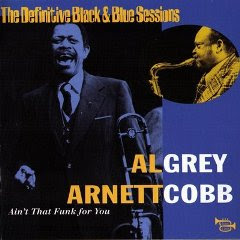
Al Grey & Arnett Cobb • Ain’t That Funk For You
Al Grey
Al Grey's trademark phrases and often humorous use of the plunger mute long made him quite distinctive. After getting out of the service, he was with the orchestras of Benny Carter (1945-1946), Jimmie Lunceford (1946-1947), Lucky Millinder, and Lionel Hampton (off and on during 1948-1953). Grey was a well-featured soloist with the classic Dizzy Gillespie globetrotting orchestra during 1956-1957 (taking an exciting solo at the 1957 Newport Jazz Festival on a blazing version of "Cool Breeze"). He was with Count Basie's orchestra on three separate occasions (1957-1961, 1964-1966, and 1971-1977), led a band with Billy Mitchell in the early '60s, and had a group with Jimmy Forrest after leaving Basie in 1977. In later years, Grey performed and recorded often with Clark Terry, made a CD with the Statesmen of Jazz, and for a time led a quintet that featured his son Mike Grey on second trombone. Al Grey recorded as a leader for Argo (1959-1964), Tangerine, Black & Blue, Stash, Chiaroscuro, and Capri, and co-led an excellent Pablo date in 1983 with J.J. Johnson. He died of complications from diabetes on March 24, 2000.
https://www.allmusic.com/artist/al-grey-mn0000931891#biography
Arnett Cobb
One of the classic Texas Tenors, there was always excitement elicited by Cobb’s uninhibited, blasting style which earned him the label “Wild Man of the Tenor Sax.”
Arnette Cleophus Cobbs, was born on August 10, 1918, in Houston, Texas. He was taught piano by his grandmother and went on to study violin before taking up tenor saxophone in the Wheatley High School band. When he was fifteen he joined Louisiana band leader Frank Davis’s band and performed in the Houston area and throughout Louisiana during the summer. He worked with trumpeter Chester Boone for two years and left to become a founding member of the Milton Larkin Orchestra in 1936.
Cobb worked with Larkin for six years and, with members Eddie Vinson, Cedric Haywood, Wild Bill Davis, Illinois Jacquet, and others, made the band one of the most successful territorial bands from Texas. The band became a regular at venues including the Apollo Theatre in Harlem and boxer Joe Louis's Rhumboogie Club in Chicago.
Originator of the “open prairie” tone and “southern preacher” style, Cobb continually turned down offers from many national bands including Jimmy Lunceford, Count Basie, and Lionel Hampton. However, with his mother’s approval, and Gladys Hampton’s offer to Elizabeth (Cobb’s wife), in 1942 Arnett took the lead saxophone chair in Hampton’s band, replacing Illinois Jacquet, who had gotten the position as Arnett’s substitute (from an original 1941 offer to Cobb). Jacquet had held his position with Hampton on the condition that he switch from alto to tenor and “play like Cobb.” With Cobb as the featured soloist, Hampton re- recorded his theme song, “Flying Home [No. 2]. He was a major asset to the Hampton band for five years as co- writer, writer, reed-section arranger, lead saxophone, featured soloist, and talent scout. Gladys Hampton and Elizabeth Cobb helped manage the band, and Cobb’s mother did the tailoring.
Cobb left Hampton in 1947, formed his own combo, and was immediately signed by Ben Bartz of Universal Attractions for management and booking. Under Ben’s direction, Cobb toured extensively through 1949, while recording such hits as “Dutch Kitchen Bounce” ( Princeton University’s theme song), “Big Red's Groove,” “Go Red Go,” and “Big League Blues” for the Apollo label. He had begun some of his most influential years in American music history with his showmanship (bar walking and circular breathing techniques) and style (predecessor of Texas “swing” blues).
Between 1950 and 1956, Cobb produced a string of hits including “Jumpin’ the Blues,” “Lil Sonny,” “The Shy One,” and “Smooth Sailing” (Ella Fitzgerald’s signature scat) on the Columbia label; “Night,” “Light Like That” and “Flying Home Mambo” on the Atlantic label; and other popular tunes for these and other labels. His combos and support became a career-building platform for Red Garland (playing with Miles Davis), George Rhodes (Sammy Davis Jr.’s music director), George Duvivier (bassist), Dinah Washington, comedian Redd Foxx, Jackie Wilson, Arthur Prysock, and many others. Arnett scouted James Brown, positioned him as his opening act, and took him to New York to sign with agent Ben Bartz at Universal.
In 1956 a car accident interrupted his national prominence. Against doctors’ advice, a year later he was back performing and touring coast to coast, although from this time on he could not walk without crutches. Cobb was living in New Jersey at the time, but the long, cold, damp, northeastern winter made working too strenuous, so in 1959 he moved back to Houston permanently. He managed the Club Ebony, organized regional orchestras for touring acts (Sammy Davis, Sarah Vaughn, Ella Fitzgerald, Ray Charles and others), and devoted a lot of time to nurturing young talent. Major recording R&B, soul, and jazz artists of the day called on him constantly for arrangements, band personnel, and gigs.
Cobb restricted his touring to Texas from 1959 to 1973, but proceeded with a recording schedule that had continued from 1957 for the Prestige label. He recorded extensively with VeeJay, Prestige, Muse, Black and Blue, BeeHive, Progressive, Soul Note, MCA, and the Fantasy labels between 1957 and 1988. Cobb began an international touring schedule in 1973 with his daughter as his personal manager. He toured consistently, in the U.S., Europe, and Japan, with the Lionel Hampton All-stars, as a member of the renowned Texas Tenors, as a featured soloist, and, from 1985 to 1989, with his own ensemble, Texas Jazz and Blues featuring Jewel Brown.
Cobb was a prolific showman, writer, stylist, arranger, and tenor saxophone technician. His saxophone technique and music style directly influenced Illinois Jacquet, Gene Ammons, Johnny Griffin, Red Prysock, Houston Person, Sonny Stitt, Stanley Turrentine, King Curtis, Eddie “Lockjaw” Davis, Rahsaan Roland Kirk, and a generation of musicians in jazz, swing, R&B, soul, and funk music.
Cobb received a Grammy nomination in 1979 for best jazz instrumental performance “Live at Sandy’s,” (Muse). He shared a Grammy with B. B. King in 1984 for best traditional blues performance “Blues n’ Jazz,” MCA. In 1986 he founded the Jazz Heritage Society of Texas, which established the Texas Jazz Archives at the Houston Public Library.
Arnett Cobb died in Houston on March 24, 1989.
Source: James Nadal
https://www.allaboutjazz.com/musicians/arnett-cobb
///////
Al Grey
Las frases características de Al Grey y el uso, a menudo humorístico, de la sordina de émbolo le hicieron inconfundible durante mucho tiempo. Tras dejar el ejército, trabajó con las orquestas de Benny Carter (1945-1946), Jimmie Lunceford (1946-1947), Lucky Millinder y Lionel Hampton (de forma intermitente entre 1948 y 1953). Grey fue un destacado solista de la clásica orquesta trotamundos de Dizzy Gillespie durante 1956-1957 (con un emocionante solo en el Festival de Jazz de Newport de 1957 en una ardiente versión de "Cool Breeze"). Estuvo con la orquesta de Count Basie en tres ocasiones distintas (1957-1961, 1964-1966 y 1971-1977), dirigió una banda con Billy Mitchell a principios de los 60 y tuvo un grupo con Jimmy Forrest tras dejar Basie en 1977. En años posteriores, Grey actuó y grabó a menudo con Clark Terry, grabó un CD con los Statesmen of Jazz y durante un tiempo dirigió un quinteto en el que figuraba su hijo Mike Grey como segundo trombón. Al Grey grabó como líder para Argo (1959-1964), Tangerine, Black & Blue, Stash, Chiaroscuro y Capri, y codirigió una excelente fecha de Pablo en 1983 con J.J. Johnson. Murió de complicaciones derivadas de la diabetes el 24 de marzo de 2000.
https://www.allmusic.com/artist/al-grey-mn0000931891#biography
Arnett Cobb
Uno de los tenores clásicos de Texas, siempre hubo emoción provocada por el estilo desinhibido y explosivo de Cobb, que le valió la etiqueta de "hombre salvaje del saxo tenor".
Arnette Cleophus Cobbs, nació el 10 de agosto de 1918 en Houston, Texas. Su abuela le enseñó a tocar el piano y pasó a estudiar violín antes de dedicarse al saxo tenor en la banda del instituto Wheatley. A los quince años se unió a la banda del líder de la banda de Luisiana, Frank Davis, y actuó en el área de Houston y en toda Luisiana durante el verano. Trabajó con el trompetista Chester Boone durante dos años y lo dejó para convertirse en miembro fundador de la Orquesta de Milton Larkin en 1936.
Cobb trabajó con Larkin durante seis años y, con los miembros Eddie Vinson, Cedric Haywood, Wild Bill Davis, Illinois Jacquet y otros, convirtió la banda en una de las más exitosas de Texas. La banda se convirtió en un habitual de locales como el Apollo Theatre de Harlem y el Rhumboogie Club del boxeador Joe Louis en Chicago.
Originador del tono de "pradera abierta" y del estilo de "predicador sureño", Cobb rechazó continuamente ofertas de muchas bandas nacionales, como Jimmy Lunceford, Count Basie y Lionel Hampton. Sin embargo, con la aprobación de su madre, y la oferta de Gladys Hampton a Elizabeth (esposa de Cobb), en 1942 Arnett ocupó la silla de saxofón principal en la banda de Hampton, sustituyendo a Illinois Jacquet, que había conseguido el puesto como sustituto de Arnett (de una oferta original de 1941 a Cobb). Jacquet había mantenido su puesto con Hampton con la condición de que cambiara de alto a tenor y "tocara como Cobb". Con Cobb como solista principal, Hampton volvió a grabar su tema "Flying Home [nº 2]". Durante cinco años fue un activo importante para la banda de Hampton como coautor, escritor, arreglista de la sección de cañas, saxofón principal, solista destacado y buscador de talentos. Gladys Hampton y Elizabeth Cobb ayudaron a gestionar la banda, y la madre de Cobb se encargó de la confección.
Cobb dejó a Hampton en 1947, formó su propio grupo y fue contratado inmediatamente por Ben Bartz, de Universal Attractions, para la gestión y contratación. Bajo la dirección de Ben, Cobb realizó numerosas giras hasta 1949, a la vez que grababa éxitos como "Dutch Kitchen Bounce" (el tema de la Universidad de Princeton), "Big Red's Groove", "Go Red Go" y "Big League Blues" para el sello Apollo. Sus años más influyentes en la historia de la música estadounidense fueron los de su espectáculo (técnicas de marcha en barra y respiración circular) y su estilo (predecesor del blues "swing" de Texas).
Entre 1950 y 1956, Cobb produjo una serie de éxitos como "Jumpin' the Blues", "Lil Sonny", "The Shy One" y "Smooth Sailing" (el scat característico de Ella Fitzgerald) para el sello Columbia; "Night", "Light Like That" y "Flying Home Mambo" para el sello Atlantic; y otros temas populares para estos y otros sellos. Sus combos y su apoyo se convirtieron en una plataforma de construcción de carreras para Red Garland (que tocaba con Miles Davis), George Rhodes (director musical de Sammy Davis Jr.), George Duvivier (bajista), Dinah Washington, el cómico Redd Foxx, Jackie Wilson, Arthur Prysock y muchos otros. Arnett localizó a James Brown, lo situó como telonero y lo llevó a Nueva York para que firmara con el agente Ben Bartz de Universal.
En 1956, un accidente de coche interrumpió su protagonismo nacional. En contra de la opinión de los médicos, un año después volvió a actuar y a hacer giras de costa a costa, aunque a partir de ese momento no podía caminar sin muletas. Cobb vivía entonces en Nueva Jersey, pero el largo, frío y húmedo invierno del noreste hacía que trabajar fuera demasiado agotador, así que en 1959 se trasladó de nuevo a Houston de forma permanente. Dirigió el Club Ebony, organizó orquestas regionales para las giras (Sammy Davis, Sarah Vaughn, Ella Fitzgerald, Ray Charles y otros) y dedicó mucho tiempo a cultivar jóvenes talentos. Los principales artistas de R&B, soul y jazz de la época le pedían constantemente arreglos, personal de banda y actuaciones.
Cobb limitó sus giras a Texas de 1959 a 1973, pero continuó con un programa de grabación que había continuado desde 1957 para el sello Prestige. Entre 1957 y 1988, grabó extensamente con los sellos VeeJay, Prestige, Muse, Black and Blue, BeeHive, Progressive, Soul Note, MCA y Fantasy. Cobb comenzó un programa de giras internacionales en 1973 con su hija como representante personal. Realizó constantes giras por Estados Unidos, Europa y Japón con los Lionel Hampton All-stars, como miembro de los famosos Texas Tenors, como solista y, de 1985 a 1989, con su propio conjunto, Texas Jazz and Blues, con Jewel Brown.
Cobb fue un prolífico showman, escritor, estilista, arreglista y técnico del saxofón tenor. Su técnica de saxofón y su estilo musical influyeron directamente en Illinois Jacquet, Gene Ammons, Johnny Griffin, Red Prysock, Houston Person, Sonny Stitt, Stanley Turrentine, King Curtis, Eddie "Lockjaw" Davis, Rahsaan Roland Kirk y una generación de músicos de jazz, swing, R&B, soul y funk.
Cobb recibió una nominación al Grammy en 1979 por la mejor interpretación instrumental de jazz "Live at Sandy's", (Muse). Compartió un Grammy con B. B. King en 1984 por la mejor interpretación de blues tradicional "Blues n' Jazz", MCA. En 1986 fundó la Jazz Heritage Society of Texas, que estableció los Archivos de Jazz de Texas en la Biblioteca Pública de Houston.
Arnett Cobb murió en Houston el 24 de marzo de 1989.
Fuente: James Nadal
https://www.allaboutjazz.com/musicians/arnett-cobb
Saturday, March 30, 2024
Arnett Cobb & Guy Lafitte • Tenor Abrupt
Review by Al Campbell
As part of The Definitive Black & Blue Sessions series, tenor saxophonist Arnett Cobb is spotlighted on ten digitally remastered tracks, recorded live in France on March 16 and 29, 1980. Cobb recorded several records for Black & Blue, but this straight-ahead live session is special. Paired up with tenor associate Guy Lafitte, Roland Hanna on piano, Jimmy Woode on bass, and Eddie Locke on drums, Cobb is still in excellent form even though this was recorded late in his career. Among the previously unreleased tracks are "Oue Reste-T-Il de Nos Amours," "Make Someone Happy," "The Nearness of You," and "Blues in Deauville."
https://www.allmusic.com/album/the-definitive-black-blue-sessions-tenor-abrupt-mw0000032296
///////
Reseña de Al Campbell
Como parte de la serie The Definitive Black & Blue Sessions, el saxofonista tenor Arnett Cobb es el centro de atención en diez temas remasterizados digitalmente, grabados en directo en Francia los días 16 y 29 de marzo de 1980. Cobb grabó varios discos para Black & Blue, pero esta sesión en directo es especial. Acompañado por el tenor Guy Lafitte, Roland Hanna al piano, Jimmy Woode al bajo y Eddie Locke a la batería, Cobb sigue en excelente forma a pesar de que se grabó en una etapa tardía de su carrera. Entre los temas inéditos se encuentran "Oue Reste-T-Il de Nos Amours", "Make Someone Happy", "The Nearness of You" y "Blues in Deauville".
https://www.allmusic.com/album/the-definitive-black-blue-sessions-tenor-abrupt-mw0000032296
Wednesday, March 27, 2024
Arnett Cobb • Smooth Sailing
Review by Scott Yanow
This CD reissue brings back a typically swinging date by tenor saxophonist Arnett Cobb. The colorful trombonist Buster Cooper (who was not featured in enough small group sessions through the years) seems to inspire Cobb; the rhythm section (organist Austin Mitchell, bassist George Duvivier and drummer Osie Johnson) proves a strong asset for this music. Four standards (three from the swing era plus Cobb's "Smooth Sailing") alternate with a blues and a couple of up-tempo riff numbers. Arnett Cobb's solos are typically emotional and generally exciting during the fine set.
https://www.allmusic.com/album/smooth-sailing-mw0000263462
///////
Reseña de Scott Yanow
Esta reedición en CD recupera una fecha típicamente swing del saxofonista tenor Arnett Cobb. El colorido trombonista Buster Cooper (que no apareció en suficientes sesiones de grupos pequeños a lo largo de los años) parece inspirar a Cobb; la sección rítmica (el organista Austin Mitchell, el bajista George Duvivier y el batería Osie Johnson) demuestra ser un fuerte activo para esta música. Cuatro estándares (tres de la era del swing más "Smooth Sailing" de Cobb) se alternan con un blues y un par de números con riffs de ritmo acelerado. Los solos de Arnett Cobb son típicamente emotivos y, en general, emocionantes durante el buen conjunto.
https://www.allmusic.com/album/smooth-sailing-mw0000263462
Monday, March 18, 2024
Arnett Cobb • Party Time
Review by Scott Yanow
Tenor saxophonist Arnett Cobb, who was inactive between 1957 and 1958 due to a serious auto accident, recorded three strong albums for Prestige during the first half of 1959. This CD reissue is the only one of the trio that features Cobb as the only horn and backed by a pianist (Ray Bryant) instead of an organ player. With bassist Wendell Marshall, drummer Art Taylor and Ray Barretto on conga completing the group, most of the focus is on Cobb's tough yet flexible tenor. Such songs as "When My Dreamboat Comes Home," "Blues in the Closet" and a remake of "Flying Home" make this the definitive Arnett Cobb album from the era. Highly recommended.
https://www.allmusic.com/album/party-time-mw0000177104
///////
Reseña de Scott Yanow
El saxofonista tenor Arnett Cobb, que estuvo inactivo entre 1957 y 1958 debido a un grave accidente automovilístico, grabó tres sólidos álbumes para Prestige durante la primera mitad de 1959. Esta reedición en CD es la única del trío que cuenta con Cobb como único trompa y respaldado por un pianista (Ray Bryant) en lugar de un organista. Con el bajista Wendell Marshall, el batería Art Taylor y Ray Barretto a la conga completando el grupo, la mayor parte de la atención se centra en el tenor duro pero flexible de Cobb. Canciones como "When My Dreamboat Comes Home", "Blues in the Closet" y una nueva versión de "Flying Home" hacen de éste el álbum definitivo de Arnett Cobb de la época. Muy recomendable.
https://www.allmusic.com/album/party-time-mw0000177104