Showing posts with label Punk. Show all posts

Thursday, January 8, 2026

We Are The Clash


"The Clash's final chapter, after guitarist Mick Jones' 1983 departure, has largely been forgotten--until this book, in which authors Mark Andersen and Ralph Heibutzki argue that the punk pioneers were still creating vital music to the very end."
--Rolling Stone, an RS Picks / New Books

A BookRiot Loved pick for July!

"In We Are The Clash, Mark Andersen and Ralph Heibutzki...are more interested in Strummer's strain to re-harness the power of punk to ignite opposition in the cynical Thatcher-Reagan era."
--The Current's Rock and Roll Book Club (Minnesota Public Radio)

"The Clash may have not been the best example of integrity in the music world with their careerist opportunism but their message of hope and possibility, cribbed from Reggae and Soul music, is all too important."
--Maximum Rocknroll

"When you think of The Clash, what comes to mind? Their early days in the London punk scene, perhaps, or the triumphant release of London Calling. We Are The Clash focuses on a very different moment in the band's history: the point at which the group splintered in the early 1980s, and its members grappled with an onset of reactionary governments around the world."
--Vol. 1 Brooklyn, included in the July 2018 Book Preview

"One of the most rewarding music books you'll come across this year...By focusing as much on the politics that motivated the Clash, We Are the Clash becomes a vital political history as much as an account of an underdocumented portion of a band's career. Great music books catalyze critical reconsiderations; We Are the Clash does one better, inviting readers to consider what matters to them: the creative commodities that artists produce? Or the ideals, however complexly and clumsily human they may be, that often compel artists to create in the first place."
--Johns Hopkins Magazine

"A gripping tale of the band's struggle to reinvent itself as George Orwell's 1984 loomed. This bold campaign crashed headlong into a wall of internal contraditions and rising right-wing power."
--Brooklyn Digest (blog)

"Given the number of books out there about The Clash, this is, as I stated, the only one to take a genuine, unbiased and in-depth appraisal of this era of the band. Given the quality of the writing, this could also be the most essential book about the band."
--Scanner Zine

The Clash was a paradox of revolutionary conviction, musical ambition, and commercial drive. We Are The Clash is a gripping tale of the band's struggle to reinvent itself as George Orwell's 1984 loomed. This bold campaign crashed headlong into a wall of internal contradictions, and rising right-wing power.

While the world teetered on the edge of the nuclear abyss, British miners waged a life-or-death strike, and tens of thousands died from US guns in Central America, Clash cofounders Joe Strummer, Paul Simonon, and Bernard Rhodes waged a desperate last stand after ejecting guitarist Mick Jones and drummer Topper Headon. The band shattered just as its controversial final album, Cut the Crap, was emerging.

Andersen and Heibutzki weave together extensive archival research and in-depth original interviews with virtually all of the key players involved to tell a moving story of idealism undone by human frailty amid a climatic turning point for our world.

https://www.amazon.com/-/es/Mark-Andersen/dp/1617752932


Saturday, December 13, 2025

Mute Records: Artists, Business, History


Mute Records is one of the most influential, commercially successful, and long-lasting of the British independent record labels formed in the wake of the late-1970’s punk explosion. Yet, in comparison with contemporaries such as Rough Trade or Stiff, its legacy remains under-explored. This edited collection addresses Mute’s wide-ranging impact. Drawing from disciplines such as popular music studies, musicology, and fan studies, it takes a distinctive, artist-led approach, outlining the history of the label by focusing each chapter on one of its acts. The book covers key moments in the company's evolution, from the first releases by The Normal and Fad Gadget to recent work by Arca and Dirty Electronics. It shines new light on the most successful Mute artists, including Depeche Mode, Nick Cave, Erasure, Moby, and Goldfrapp, while also exploring the label's avant-garde innovators, such as Throbbing Gristle, Mark Stewart, Labaich, Ut, and Swans. Mute Records examines the business and aesthetics of independence through the lens of the label's artists. 
 

Friday, July 25, 2025

Why the Ramones Matter


Saturday, July 5, 2025

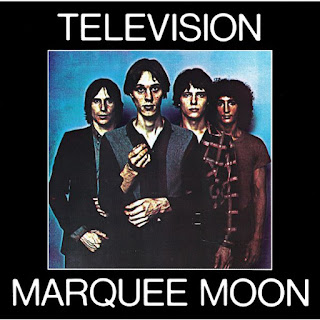
Television • Marquee Moon


Biography by Stephen Thomas Erlewine
Television were one of the most creative bands to emerge from New York's punk scene of the mid-'70s, creating an influential new guitar vocabulary. While guitarists Tom Verlaine and Richard Lloyd liked to jam, they didn't follow the accepted rock structures for improvisation -- they removed the blues while retaining the raw energy of garage rock, adding complex, lyrical solo lines that recalled both jazz and rock. With its angular rhythms and fluid leads, Television's music always went in unconventional directions, laying the groundwork for many of the guitar-based post-punk pop groups of the late '70s and '80s.

In the early '70s, Television began as the Neon Boys, a group featuring guitarist/vocalist Tom Verlaine, drummer Billy Ficca, and bassist Richard Hell. At the end of 1973, the group reunited under the name Television, adding rhythm guitarist Richard Lloyd. The following year, the band made its live debut at New York's Townhouse theater and began to build up an underground following. Soon, their fan base was large enough that Verlaine was able to persuade CBGB's to begin featuring live bands on a regular basis; the club would become an important venue for punk and new wave bands. That year, Verlaine played guitar on Patti Smith's first single, "Hey Joe"/"Piss Factory," as well as wrote a book of poetry with the singer.

Television recorded a demo tape for Island Records with Brian Eno in 1975, yet the label decided not to sign the band. Hell left the band after the recording of the demo tape, forming the Heartbreakers with former New York Dolls guitarist Johnny Thunders; the following year, he began a solo career supported by the Voidoids, releasing a debut album, Blank Generation, in 1977. Hell was replaced by ex-Blondie bassist Fred Smith and Television recorded "Little Johnny Jewel," releasing it on their own Ork record label. "Little Johnny Jewel" became an underground hit, attracting the attention of major record labels. In 1976, the band released a British EP on Stiff Records, which expanded their reputation. They signed with Elektra Records and began recording their debut album.

Marquee Moon, the group's first album, was released in early 1977 to great critical acclaim, yet it failed to attract a wide audience in America; in the U.K., it reached number 28 on the charts, launching the Top 40 single "Prove It." Television supported Blondie on the group's 1977 tour, but the shows didn't increase the group's following significantly.

Television released their second album, Adventure, in the spring of 1978. While its American sales were better than those of Marquee Moon, the record didn't make the charts; in Britain, it became a Top Ten hit. Months later, the group suddenly broke up, largely due to tensions between the two guitarists. Smith rejoined Blondie, while Verlaine and Lloyd both pursued solo careers; Lloyd also played on John Doe's first solo album, as well as joined Matthew Sweet's supporting band with the 1991 album Girlfriend.

Nearly 14 years after their breakup, Television re-formed in late 1991, recording a new album for Capitol Records. The reunited band began its comeback with a performance at England's Glastonbury summer festival in 1992, releasing Television a couple months later. The album received good reviews, as did the tour that followed, yet the reunion was short-lived -- the group disbanded again in early 1993. In 2001, Television again reunited for a handful of shows in the U.K. as well as an appearance at the Noise Pop Festival in Chicago, and they continued to perform occasionally when the spirit moved them. In 2007, Richard Lloyd announced he was leaving Television under amicable circumstances; guitarist Jimmy Rip, who had played on Verlaine's solo albums and had sat in for Lloyd when illness prevented him from playing a concert with the group, became his permanent replacement for their occasional live appearances. Tom Verlaine died in New York City on January 28, 2023 after a brief illness. He was 73 years of age. 
https://www.allmusic.com/artist/television-mn0000019701#biography

///////


Biografía por Stephen Thomas Erlewine
Television fue una de las bandas más creativas que surgieron de la escena punk neoyorquina de mediados de los años 70, creando un nuevo y influyente vocabulario guitarrístico. Aunque a los guitarristas Tom Verlaine y Richard Lloyd les gustaba improvisar, no seguían las estructuras rockeras aceptadas para la improvisación: eliminaron el blues pero conservaron la energía cruda del garage rock, añadiendo complejas líneas solistas líricas que recordaban tanto al jazz como al rock. Con sus ritmos angulares y sus fluidas melodías, la música de Television siempre siguió caminos poco convencionales, sentando las bases para muchos de los grupos pop post-punk basados en la guitarra de finales de los 70 y los 80.

A principios de los 70, Television comenzó como Neon Boys, un grupo formado por el guitarrista y vocalista Tom Verlaine, el baterista Billy Ficca y el bajista Richard Hell. A finales de 1973, el grupo se reunió bajo el nombre de Television, añadiendo al guitarrista rítmico Richard Lloyd. Al año siguiente, la banda debutó en directo en el teatro Townhouse de Nueva York y comenzó a ganarse un público underground. Pronto, su base de fans era lo suficientemente grande como para que Verlaine pudiera convencer al CBGB's de que empezara a presentar bandas en directo de forma regular; el club se convertiría en un importante local para bandas punk y new wave. Ese año, Verlaine tocó la guitarra en el primer sencillo de Patti Smith, «Hey Joe»/«Piss Factory», y escribió un libro de poesía con la cantante.

Television grabó una maqueta para Island Records con Brian Eno en 1975, pero el sello decidió no fichar a la banda. Hell abandonó la banda tras la grabación de la maqueta y formó los Heartbreakers con el exguitarrista de los New York Dolls Johnny Thunders; al año siguiente, comenzó su carrera en solitario con el apoyo de los Voidoids y lanzó su álbum debut, Blank Generation, en 1977. Hell fue sustituido por el exbajista de Blondie Fred Smith y Television grabó «Little Johnny Jewel», que publicó en su propio sello discográfico, Ork. «Little Johnny Jewel» se convirtió en un éxito underground, atrayendo la atención de las principales discográficas. En 1976, la banda publicó un EP británico en Stiff Records, lo que amplió su reputación. Firmaron con Elektra Records y comenzaron a grabar su álbum debut.

Marquee Moon, el primer álbum del grupo, se publicó a principios de 1977 con gran éxito de crítica, pero no consiguió atraer a un público amplio en Estados Unidos; en el Reino Unido, alcanzó el número 28 en las listas y lanzó el sencillo «Prove It», que entró en el Top 40. Television acompañó a Blondie en la gira de 1977 del grupo, pero los conciertos no aumentaron significativamente el número de seguidores del grupo.

Television lanzó su segundo álbum, Adventure, en la primavera de 1978. Aunque sus ventas en Estados Unidos fueron mejores que las de Marquee Moon, el disco no entró en las listas; en Gran Bretaña, se convirtió en un éxito Top Ten. Meses más tarde, el grupo se separó repentinamente, en gran parte debido a las tensiones entre los dos guitarristas. Smith se reincorporó a Blondie, mientras que Verlaine y Lloyd siguieron carreras en solitario; Lloyd también tocó en el primer álbum en solitario de John Doe y se unió a la banda de Matthew Sweet con el álbum Girlfriend de 1991.

Casi 14 años después de su separación, Television se reformó a finales de 1991 y grabó un nuevo álbum para Capitol Records. La banda reunida comenzó su regreso con una actuación en el festival de verano de Glastonbury, en Inglaterra, en 1992, y lanzó Television un par de meses después. El álbum recibió buenas críticas, al igual que la gira que le siguió, pero la reunión duró poco: el grupo se disolvió de nuevo a principios de 1993. En 2001, Television se reunió de nuevo para dar unos cuantos conciertos en el Reino Unido, así como para actuar en el Noise Pop Festival de Chicago, y continuó actuando ocasionalmente cuando les apetecía. En 2007, Richard Lloyd anunció que abandonaba Television en términos amistosos; el guitarrista Jimmy Rip, que había tocado en los álbumes en solitario de Verlaine y había sustituido a Lloyd cuando una enfermedad le impidió tocar en un concierto con el grupo, se convirtió en su sustituto permanente para sus ocasionales apariciones en directo. Tom Verlaine falleció en Nueva York el 28 de enero de 2023 tras una breve enfermedad. Tenía 73 años.
https://www.allmusic.com/artist/television-mn0000019701#biography


Friday, July 4, 2025

Punk Avenue: Inside the New York City Underground, 1972-1982


Punk Avenue: The New York City Underground 1972-1982 is an intimate look at author Paris-born Phil Marcade’s first ten years in the United States where drifted from Boston to the West Coast and back, before winding up in New York City and becoming immersed in the early punk rock scene. From backrooms of Max’s and CBGB’s to the Tropicana Hotel in Los Angeles and back, Punk Avenue is a tour de force of stories from someone at the heart of the era. With brilliant, often hilarious prose, Marcade relays first-hand tales about spending a Provincetown summer with photographer Nan Goldin and actor-writer Cookie Mueller, having the Ramones play their very first gig at his party, working with Blondie’s Debbie Harry on French lyrics for her songs, enjoying Thanksgiving with Johnny Thunders’ mother, and starting the beloved NYC punk-blues band The Senders. Along the way, he smokes a joint with Bob Marley, falls down a mountain, gets attacked by Nancy Spungen’s junkie cat, become a junkie himself, adopts a dog who eats his pot, opens for The Clash at Bond’s Casino, opens a store named Rebop on Seventh Avenue, throws up in some girl’s mouth, talks about vacuum cleaners with Sid Vicious, lives thru the Blackout of 1977, gets glue in his eye, gets mugged at knife point, plays drums with Johnny Thunders’ band Gang War, sets some guy’s attache-case on fire, listens to pre-famous Madonna singing in the rehearsal studio next to his, gets mugged at gun point, O.D.s on heroin, gets saved by a gentle giant named Bill, lives at night… Never sleeps…  A very funny book.


Monday, June 2, 2025

Detroit Rock City: The Uncensored History of Rock 'n' Roll in America's Loudest City


Detroit Rock City is an oral history of Detroit and its music told by the people who were on the stage, in the clubs, the practice rooms, studios, and in the audience, blasting the music out and soaking it up, in every scene from 1967 to today.

From fabled axe men like Ted Nugent, Dick Wagner, and James Williamson jump to Jack White, to pop flashes Suzi Quatro and Andrew W.K., to proto punkers Brother Wayne Kramer and Iggy Pop, Detroit slices the rest of the land with way more than its share of the Rock Pie.

Detroit Rock City is the story that has never before been sprung, a frenzied and schooled account of both past and present, calling in the halcyon days of the Grande Ballroom and the Eastown Theater, where national acts who came thru were made to stand and deliver in the face of the always hard hitting local support acts. It moves on to the Michigan Palace, Bookies Club 870, City Club, Gold Dollar, and Magic Stick – all magical venues in America’s top rock city.

Detroit Rock City brings these worlds to life all from the guys and dolls who picked up a Strat and jammed it into our collective craniums. From those behind the scenes cats who promoted, cajoled, lost their shirts, and popped the platters to the punters who drove from everywhere, this is the book that gives life to Detroit’s legend of loud.


  Steve Miller (Author)


Thursday, May 29, 2025

England's Dreaming: The Sex Pistols and Punk Rock


Tuesday, May 6, 2025

De cara, Debbie Harry - Español


En estas páginas, Harry revela de manera íntima, espontánea e irreverente el antes, el durante y el después de su paso por Blondie, haciendo hincapié en la escena punk y new wave en Nueva York, su proceso creativo, su experiencia con las drogas, historias íntimas y sus colaboraciones con otros artistas, y relata sin censura los retos de ser una mujer en una industria dominada por hombres y su eventual éxito.


Friday, March 28, 2025

Burning Britain: The History of UK Punk 1980–1984


As the Seventies drew to a close and the media declared punk dead and buried, a whole new breed of band was emerging from the gutter. Harder and faster than their ’76–’77 predecessors, not to mention more aggressive and political, the likes of Discharge, the Exploited, and G.B.H. were to prove not only more relevant but arguably just as influential.

Several years in the making and featuring hundreds of new interviews and photographs, Burning Britain is the true story of the UK punk scene from 1980 to 1984 told for the first time by the bands and record labels that created it. Covering the country region by region, author Ian Glasper profiles legendary bands like Vice Squad, Angelic Upstarts, Blitz, Anti-Nowhere League, Cockney Rejects, and the UK Subs as well as the more obscure groups like Xtract, The Skroteez, and Soldier Dolls.

The grim reality of being a teenage punk rocker in Thatcher’s Britain resulted in some of the most primal and potent music ever committed to plastic. Burning Britain is the definitive overview of that previously overlooked era.


Friday, December 20, 2024

Por Favor Mátame La Historia Oral Del Punk


 En su día el movimiento musical más denostado de la historia, hoy un grito universal para jóvenes y rebeldes, el punk posee una energía que permanece indisoluble. Un clásico contemporáneo que ha inspirado muchos otros libros, 'Por favor, mátame' es la historia oral definitiva del más nihilista de todos los movimientos pop. Iggy Pop, Richard Hell, Dee Dee y Joey Ramone, Malcolm McLaren, Jim Carroll y montones de famosas e infames figuras del punk prestan su voz a este decisivo relato de aquella escandalosa y explosiva época. Desde sus albores, en los años de reinado de Andy Warhol en Nueva York, hasta sus últimos jadeos como rock corporativo de los ochenta, el fenómeno conocido como punk es analizado y celebrado por la gente que lo vivió. En esta edición del 20º aniversario, 'Por favor, mátame' incluye nuevas entrevistas, más fotos y un nuevo epílogo firmado por sus autores.


Gillian Mccain (Author), Legs Mcneil (Author) 


Saturday, December 7, 2024

Never Enough The Story of the Cure


The Cure emerged in the post-punk 70s and defied all expectations to launch a marathon career marked by hit records and a string of sell-out arena shows. Never Enough traces The Cure's roots in middle-class Crawley, Sussex, and tracks their gradual rise, revealing how their first major album Pornography, almost ended the band well before their multi-platinum career began. Also documents Robert Smith's escape into the Siouxie & The Banshees camp during the 80s, and his experimentation with every drug. His reluctance to return to The Cure would eventually lead to them becoming superstars all across the globe. Never Enough is the first major, definitive biography of these post-punk survivors. In 2004, after numerous personnel changes, the band delivered their Greastest Hits album.


  Jeff Apter (Author)