Sunday, September 14, 2025
Monday, August 25, 2025
Charles Mingus • Reincarnations
Further rare material from the Charles Mingus sessions for the Candid label in 1960 – work that initially gave the world his two famous albums for the company, both of which were easily some of the most revolutionary work he recorded up to that point in his career! The spirit of the tracks here is very similar – Mingus set free from the more confined modes of Columbia Records, and serving up long tracks that are filled with searing solos from a top-shelf array of young modernists – players who include Eric Dolphy on alto and flute, Jimmy Knepper on trombone, Ted Curson and Lonnie Hillyer on trumpets, Booker Ervin on tenor, and Tommy Flanagan on piano – sounding a lot more dynamic here than on his own recordings. The material here was all unissued at the time – and titles include "Melody From The Drums", "Vassarlean", "Body & Soul (take 2)", "Wrap Your Troubles In Dreams (take 4)", and "Reincarnation Of A Lovebird (first version – take 4)
https://www.dustygroove.com/item/193811/Charles-Mingus:Reincarnations
///////
Más material inédito de las sesiones de Charles Mingus para el sello Candid en 1960, un trabajo que inicialmente dio al mundo sus dos famosos álbumes para la compañía, ¡ambos fácilmente algunos de los trabajos más revolucionarios que había grabado hasta ese momento en su carrera! El espíritu de las pistas aquí es muy similar: Mingus se liberó de los modos más limitados de Columbia Records y nos ofrece largas pistas llenas de solos abrasadores de una selección de jóvenes modernistas de primer nivel, entre los que se encuentran Eric Dolphy al saxo alto y la flauta, Jimmy Knepper al trombón, Ted Curson y Lonnie Hillyer a la trompeta, Booker Ervin al saxo tenor y Tommy Flanagan al piano, que suenan mucho más dinámicos aquí que en sus propias grabaciones. El material aquí incluido no se había publicado en ese momento, y los títulos incluyen «Melody From The Drums», «Vassarlean», «Body & Soul (take 2)», «Wrap Your Troubles In Dreams (take 4)» y «Reincarnation Of A Lovebird (primera versión – take 4)».
https://www.dustygroove.com/item/193811/Charles-Mingus:Reincarnations
Friday, May 30, 2025
Jazz At The Philharmonic • Norman Granz' Jazz At The Philharmonic Vol.17
Oscar Peterson is present throughout these recordings, which begin with an improvisation, followed by a drum solo by Louis Bellson, then Oscar Peterson's Trio, joined first by De Franco and Buddy Rich to form a quintet and finally by Lionel Hampton to form a sextet.
///////
Oscar Peterson está presente a lo largo de estas grabaciones, que comienzan con una improvisación, seguida de un solo de batería de Louis Bellson, luego el Trío de Oscar Peterson, al que se unen primero De Franco y Buddy Rich para formar un quinteto y, finalmente, Lionel Hampton para formar un sexteto.
Sunday, February 16, 2025
Friday, February 7, 2025
Roy Eldridge • Decidedly
Review
by Ronnie D. Lankford, Jr.
If a listener picks up a 50-minute jazz album that only contains four songs, he or she will rest assured that the musicians really get a chance to stretch things out. In the case of Decidedly, featuring tested players like trumpeter Roy Eldridge, guitarist Joe Pass, tenor Johnny Griffin, and pianist Ray Bryant, this is a good thing. Recorded live in 1975 in Antibes, France, before an appreciative audience, the material is being issued for the first time in 2002. The group kicks off with an Eldridge original, "Bee's Bloos," and settles into a relaxed groove for the rest of the show. A 16-minute take of "Lover Man (Oh, Where Can You Be?)" follows, with lengthy, soulful solos handed in by everyone. Bassist Niels-Henning Orsted Pedersen and drummer Louis Bellson offer tasteful underpinning along with a little muscle on "Undecided." The disc closes out with an appearance by Milt Jackson on piano for Thelonious Monk's "Hackensack." It will perhaps seem odd that this swinging set, performed in France while the fusion movement was sweeping the states, will probably have a more receptive audience today than it would have had over 25 years ago. But history, and good taste, are never predictable. Decidedly is a lovely live disc, and will be appreciated by fans of any of the participants.
Biography
by Scott Yanow
One of the most exciting trumpeters to emerge during the swing era, Roy Eldridge's combative approach, chance-taking style and strong musicianship were an inspiration (and an influence) to the next musical generation, most notably Dizzy Gillespie. Although he sometimes pushed himself farther than he could go, Eldridge never played a dull solo.
Roy Eldridge started out playing trumpet and drums in carnival and circus bands. With the Nighthawk Syncopators he received a bit of attention by playing a note-for-note re-creation of Coleman Hawkins' tenor solo on "The Stampede." Inspired by the dynamic playing of Jabbo Smith (Eldridge would not discover Louis Armstrong for a few years), Eldridge played with some territory bands including Zack Whyte and Speed Webb and in New York (where he arrive in 1931) he worked with Elmer Snowden (who nicknamed him "Little Jazz"), McKinney's Cotton Pickers, and most importantly Teddy Hill (1935). Eldridge's recorded solos with Hill, backing Billie Holiday and with Fletcher Henderson (including his 1936 hit "Christopher Columbus") gained a great deal of attention. In 1937 he appeared with his octet (which included brother Joe on alto) at the Three Deuces Club in Chicago and recorded some outstanding selections as a leader including "Heckler's Hop" and "Wabash Stomp." By 1939 Eldridge had a larger group playing at the Arcadia Ballroom in New York. With the decline of Bunny Berigan and the increasing predictability of Louis Armstrong, Eldridge was arguably the top trumpeter in jazz during this era.
During 1941-1942 Eldridge sparked Gene Krupa's Orchestra, recording classic versions of "Rockin' Chair" and "After You've Gone" and interacting with Anita O'Day on "Let Me Off Uptown." The difficulties of traveling with a White band during a racist period hurt him, as did some of the incidents that occurred during his stay with Artie Shaw (1944-1945) but the music during both stints was quite memorable. Eldridge can be seen in several "soundies" (short promotional film devoted to single songs) of this era by the Krupa band, often in association with O'Day, including "Let Me Off Uptown" and "Thanks for the Boogie Ride." He is also very prominent in the band's appearance in Howard Hawks' Ball of Fire, in an extended performance of "Drum Boogie" mimed by Barbara Stanwyck, taking a long trumpet solo -- the clip was filmed soon after Eldridge joined the band in late April of 1941, and "Drum Boogie" was a song that Eldridge co-wrote with Krupa.
Eldridge had a short-lived big band of his own, toured with Jazz at the Philharmonic, and then had a bit of an identity crisis when he realized that his playing was not as modern as the beboppers. A successful stay in France during 1950-1951 restored his confidence when he realized that being original was more important than being up-to-date. Eldridge recorded steadily for Norman Granz in the '50s, was one of the stars of JATP (where he battled Charlie Shavers and Dizzy Gillespie), and by 1956, was often teamed with Coleman Hawkins in a quintet; their 1957 appearance at Newport was quite memorable. The '60s were tougher as recording opportunities and work became rarer. Eldridge had brief and unhappy stints with Count Basie's Orchestra and Ella Fitzgerald (feeling unnecessary in both contexts) but was leading his own group by the end of the decade. He spent much of the '70s playing regularly at Ryan's and recording for Pablo and, although his range had shrunk a bit, Eldridge's competitive spirit was still very much intact. Only a serious stroke in 1980 was able to halt his horn. Roy Eldridge recorded throughout his career for virtually every label.
https://www.allmusic.com/artist/roy-eldridge-mn0000346637/biography
///////
Reseña
por Ronnie D. Lankford, Jr.
Si un oyente elige un álbum de jazz de 50 minutos que sólo contiene cuatro canciones, tendrá la seguridad de que los músicos realmente tienen la oportunidad de estirar las cosas. En el caso de Decidedly, en el que participan músicos tan experimentados como el trompetista Roy Eldridge, el guitarrista Joe Pass, el tenor Johnny Griffin y el pianista Ray Bryant, esto es algo positivo. Grabado en directo en 1975 en Antibes (Francia) ante un público entregado, el material se publica por primera vez en 2002. El grupo comienza con un tema original de Eldridge, "Bee's Bloos", y se instala en un ritmo relajado durante el resto del concierto. Le sigue una versión de 16 minutos de "Lover Man (Oh, Where Can You Be?)", con largos y conmovedores solos a cargo de todos. El bajista Niels-Henning Orsted Pedersen y el batería Louis Bellson ofrecen un buen apoyo junto con un poco de músculo en "Undecided". El disco se cierra con una aparición de Milt Jackson al piano para "Hackensack" de Thelonious Monk. Quizás resulte extraño que este conjunto de swing, interpretado en Francia mientras el movimiento de fusión arrasaba en los Estados Unidos, tenga probablemente un público más receptivo hoy que hace más de 25 años. Pero la historia, y el buen gusto, nunca son predecibles. Decididamente es un precioso disco en directo, y será apreciado por los fans de cualquiera de los participantes.
Biografía
por Scott Yanow
Roy Eldridge, uno de los trompetistas más excitantes que surgieron en la era del swing, su enfoque combativo, su estilo arriesgado y su sólida musicalidad fueron una inspiración (y una influencia) para la siguiente generación musical, sobre todo para Dizzy Gillespie. Aunque a veces se esforzaba más de la cuenta, Eldridge nunca tocaba un solo aburrido.
Roy Eldridge empezó tocando la trompeta y la batería en bandas de carnaval y circo. Con los Nighthawk Syncopators llamó un poco la atención al tocar una recreación nota por nota del solo de tenor de Coleman Hawkins en "The Stampede". Inspirado por la dinámica forma de tocar de Jabbo Smith (Eldridge no descubriría a Louis Armstrong hasta pasados unos años), Eldridge tocó con algunas bandas territoriales como Zack Whyte y Speed Webb y en Nueva York (donde llegó en 1931) trabajó con Elmer Snowden (que le apodó "Little Jazz"), McKinney's Cotton Pickers y, sobre todo, con Teddy Hill (1935). Los solos grabados de Eldridge con Hill, acompañando a Billie Holiday y con Fletcher Henderson (incluyendo su éxito de 1936 "Christopher Columbus") ganaron mucha atención. En 1937 apareció con su octeto (que incluía a su hermano Joe como contralto) en el Three Deuces Club de Chicago y grabó algunas selecciones destacadas como líder, incluyendo "Heckler's Hop" y "Wabash Stomp". En 1939 Eldridge tenía un grupo más grande que tocaba en el Arcadia Ballroom de Nueva York. Con el declive de Bunny Berigan y la creciente previsibilidad de Louis Armstrong, Eldridge era posiblemente el mejor trompetista de jazz durante esta época.
Durante 1941-1942 Eldridge fue el chispazo de la Orquesta de Gene Krupa, grabando versiones clásicas de "Rockin' Chair" y "After You've Gone" e interactuando con Anita O'Day en "Let Me Off Uptown". Las dificultades de viajar con una banda de blancos durante una época racista le perjudicaron, al igual que algunos de los incidentes ocurridos durante su estancia con Artie Shaw (1944-1945), pero la música durante ambas etapas fue bastante memorable. Se puede ver a Eldridge en varios "soundies" (cortos promocionales dedicados a canciones sueltas) de esta época de la banda de Krupa, a menudo en asociación con O'Day, incluyendo "Let Me Off Uptown" y "Thanks for the Boogie Ride". También es muy prominente en la aparición de la banda en Ball of Fire de Howard Hawks, en una actuación extendida de "Drum Boogie" imitada por Barbara Stanwyck, tomando un largo solo de trompeta -- el clip fue filmado poco después de que Eldridge se uniera a la banda a finales de abril de 1941, y "Drum Boogie" era una canción que Eldridge co-escribió con Krupa.
Eldridge tuvo su propia big band de corta duración, salió de gira con Jazz at the Philharmonic y luego tuvo una pequeña crisis de identidad cuando se dio cuenta de que su forma de tocar no era tan moderna como la de los beboppers. Una exitosa estancia en Francia durante 1950-1951 le devolvió la confianza al darse cuenta de que ser original era más importante que estar a la última. Eldridge grabó con regularidad para Norman Granz en los años 50, fue una de las estrellas de JATP (donde se enfrentó a Charlie Shavers y Dizzy Gillespie) y, en 1956, a menudo formaba equipo con Coleman Hawkins en un quinteto; su aparición en Newport en 1957 fue bastante memorable. Los años 60 fueron más duros, ya que las oportunidades de grabación y el trabajo eran cada vez más escasos. Eldridge tuvo breves e infelices temporadas con la orquesta de Count Basie y Ella Fitzgerald (sintiéndose innecesario en ambos contextos), pero a finales de la década ya dirigía su propio grupo. Pasó gran parte de los años 70 tocando regularmente en Ryan's y grabando para Pablo y, aunque su rango se había reducido un poco, el espíritu competitivo de Eldridge seguía intacto. Sólo un grave derrame cerebral en 1980 pudo detener su trompa. Roy Eldridge grabó a lo largo de su carrera para prácticamente todos los sellos.
https://www.allmusic.com/artist/roy-eldridge-mn0000346637/biography
Thursday, January 30, 2025
Wednesday, January 22, 2025
Monday, October 7, 2024
Monday, September 30, 2024
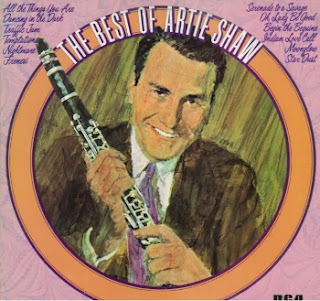
Artie Shaw • The Best Of
Artie Shaw, a brilliant jazz clarinetist, was one of the most enigmatic, daring and adventurous bandleaders of the swing-era. An intellectual, he hated public life and the music industry. Over the course of his short career he formed ten orchestras and disbanding most of them after only a few months. At the peak of his career in the years just before World War II, Shaw was matched by few other musicians in popularity and technical skill.
Born Arthur Arshawsky in New York City and raised in Connecticut, Shaw took up the saxophone at an early age and began playing professionally when he was only 14. He left home at 15 for a job in Kentucky. The position never materialized and he was forced to play with traveling orchestras in order to get home. At age 16 he switched to the clarinet and went to Cleveland, where he spent three years playing in local groups, including that of Austin Wylie.
In 1929 Shaw joined Irving Aaronson's Commanders. While traveling the country with the band he discovered the works of contemporary avant-garde classical composers whose influence would later surface in his own music. When the Commanders arrived for a gig in New York, Shaw decided to remain. There he freelanced with many of the top artists of the day, including Vincent Lopez, Red Nichols, and Teddy Wilson. He also briefly spent time with Fred Rich's orchestra and toured with Roger Wolfe Kahn.
In 1934 Shaw became disillusioned with the music industry and quit for the first of what would be many times. He bought a farm in Pennsylvania and tried his hand at being a writer. He soon returned to New York and took up studio work again. He was one of the most successful studio musicians in the city when in 1935 he was asked to lead a small group during intermissions at a swing concert held by the Imperial Theater. He put together an unusual outfit consisting of a string quartet, a rhythm section minus piano, and his clarinet.
Shaw's unique combination was wildly received by the audience. He was offered financial backing to form his own orchestra, and in 1936 he debut his first dance band, which featured a Dixieland approach and a string quartet. The new group made some impressive recordings but couldn't compete with the brassier swing orchestras of the day, so Shaw disbanded it the following year and formed a more conventional big band.
His new outfit was a huge success, featuring such musicians as Georgie Auld, Buddy Rich, Tony Pastor, and Jerry Gray. Vocalists included Billie Holiday, Kitty Kallen, Peg LaCentra, and Helen Forrest. Shaw could scarcely have known that within a short time he would make a hit record of a song called “Begin the Beguine.” The breakthrough hit record catapulted him into the ranks of top band leaders and he was immediately dubbed the new "King of Swing." Shaw's recording of the song continues to sell and has become one of the best-selling records in history.
In September of 1938 Shaw collapsed on stage due to exhaustion. He was also absent from the band in the summer of 1939 due to illness. Upon his return to good health he announced he was quitting the business again but was talked out of it by Gray and Pastor. He didn't stay long however. He left in November and moved to Mexico.
Shaw returned to the U.S. two months later and formed a 32-piece studio orchestra which recorded several songs, including his famous version of ''Frenesi.'' Later in the year, he formed a new band of his own that included the now famous Gramercy Five, with which he recorded several more smash hits, among them his by now classic version of “Star Dust,” plus a number of other fine recordings such as “Moonglow,” “Dancing in the Dark,” “Concerto for Clarinet,” and many others. Ray Conniff arranged for the new group and Anita Boyer sang. Shaw again grew restless and disbanded his new outfit in early 1941. He formed another group in the fall of that year. Vocalists included Bonnie Lake, Paula Kelly and Fredda Gibson (later to become Georgia Gibbs). He also disbanded this group soon after starting it, in January of 1942.
In April Shaw joined the Navy. After going through boot camp and serving two months on a minesweeper he was put in charge of a service band. He shaped up the group and took it on a tour of Pacific combat zones, often playing in dangerous and primitive conditions. The strain of such an endeavor soon got to him, however, and he was medically discharged in November 1943.
By fall of 1944 Shaw's health had recovered and he formed a new civilian band, which included Conniff, Barney Kessel, Roy Eldridge, and Dodo Marmarosa. Imogene Lynn provided vocals. By 1947 he had quit that group and taken up the study of classical clarinet, for which he performed and recorded an album. In 1949 Shaw formed a bop orchestra. He again quit the music industry in 1951 and retired to a farm, where he wrote his autobiography.
In 1954 he returned briefly to music with a new Gramercy Five, but by the end of the year Artie Shaw had packed up his clarinet for the last time. He spent the rest of his life doing various concerns: writing and working briefly as a film distributor and a gun expert. He moved to Spain in 1955, to Connecticut in 1960, and to Southern California in 1973. In the 1980s he formed a new orchestra for special performances, though he did not play in it himself. The 1985 film documentary “Time Is All You've Got” traced his career in some detail. Shaw suffered from ill health the last few years of his life. He passed away on December 30, 2004.
Source: James Nadal
https://www.allaboutjazz.com/musicians/artie-shaw/
///////
Artie Shaw, un brillante clarinetista de jazz, fue uno de los directores de orquesta más enigmáticos, atrevidos y aventureros de la era del swing. Intelectual, odiaba la vida pública y la industria de la música. A lo largo de su corta carrera formó diez orquestas y disolvió la mayoría de ellas después de solo unos meses. En la cima de su carrera en los años previos a la Segunda Guerra Mundial, Shaw fue igualado por pocos otros músicos en popularidad y habilidad técnica.
Nacido Arthur Arshawsky en la ciudad de Nueva York y criado en Connecticut, Shaw tomó el saxofón a una edad temprana y comenzó a tocar profesionalmente cuando tenía solo 14 años. Se fue de casa a los 15 años por un trabajo en Kentucky. El puesto nunca se materializó y se vio obligado a tocar con orquestas itinerantes para poder llegar a casa. A los 16 años cambió al clarinete y se fue a Cleveland, donde pasó tres años tocando en grupos locales, incluido el de Austin Wylie.
En 1929, Shaw se unió a los Comandantes de Irving Aaronson. Mientras viajaba por el país con la banda, descubrió las obras de compositores clásicos contemporáneos de vanguardia cuya influencia surgiría más tarde en su propia música. Cuando los Comandantes llegaron para un concierto en Nueva York, Shaw decidió quedarse. Allí trabajó independientemente con muchos de los mejores artistas del momento, incluidos Vincent Lopez, Red Nichols y Teddy Wilson. También pasó un tiempo breve con la orquesta de Fred Rich y realizó una gira con Roger Wolfe Kahn.
En 1934, Shaw se desilusionó con la industria de la música y renunció por primera de lo que serían muchas veces. Compró una granja en Pensilvania y probó suerte como escritor. Pronto regresó a Nueva York y volvió a trabajar en el estudio. Era uno de los músicos de estudio más exitosos de la ciudad cuando en 1935 se le pidió que dirigiera un pequeño grupo durante los intermedios de un concierto de swing celebrado en el Teatro Imperial. Armó un atuendo inusual que consistía en un cuarteto de cuerdas, una sección rítmica sin piano y su clarinete.
La combinación única de Shaw fue recibida salvajemente por la audiencia. Se le ofreció respaldo financiero para formar su propia orquesta, y en 1936 debutó con su primera banda de baile, que presentaba un enfoque de Dixieland y un cuarteto de cuerdas. El nuevo grupo hizo algunas grabaciones impresionantes, pero no pudo competir con las orquestas brassier swing de la época, por lo que Shaw lo disolvió al año siguiente y formó una big band más convencional.
Su nuevo atuendo fue un gran éxito, con músicos como Georgie Auld, Buddy Rich, Tony Pastor y Jerry Gray. Las vocalistas incluyeron a Billie Holiday, Kitty Kallen, Peg LaCentra y Helen Forrest. Shaw apenas podía haber sabido que en poco tiempo haría un exitoso disco de una canción llamada "Begin the Beguine."El gran éxito discográfico lo catapultó a las filas de los principales líderes de la banda e inmediatamente fue apodado el nuevo "Rey del Swing"."La grabación de la canción de Shaw continúa vendiéndose y se ha convertido en uno de los discos más vendidos de la historia.
En septiembre de 1938 Shaw colapsó en el escenario debido al agotamiento. También estuvo ausente de la banda en el verano de 1939 debido a una enfermedad. A su regreso con buena salud, anunció que dejaría el negocio nuevamente, pero Gray y Pastor lo convencieron de que no lo hiciera. Sin embargo, no se quedó mucho tiempo. Se fue en noviembre y se mudó a México.
Shaw regresó a los Estados Unidos dos meses después y formó una orquesta de estudio de 32 integrantes que grabó varias canciones,incluida su famosa versión de " Frenesi. Más tarde ese año, formó una nueva banda propia que incluía a los ahora famosos Gramercy Five, con la que grabó varios éxitos más, entre ellos su versión ya clásica de "Star Dust", además de una serie de otras excelentes grabaciones como "Moonglow", "Dancing in the Dark", "Concerto for Clarinet" y muchos otros . Ray Conniff arregló para el nuevo grupo y Anita Boyer cantó. Shaw volvió a inquietarse y disolvió su nuevo atuendo a principios de 1941. Formó otro grupo en el otoño de ese año. Las vocalistas incluyeron a Bonnie Lake, Paula Kelly y Fredda Gibson (que más tarde se convertiría en Georgia Gibbs). También disolvió este grupo poco después de iniciarlo, en enero de 1942.
En abril, Shaw se unió a la Marina. Después de pasar por el campo de entrenamiento y servir dos meses en un buscaminas, fue puesto a cargo de una banda de servicio. Formó el grupo y lo llevó a una gira por las zonas de combate del Pacífico, a menudo tocando en condiciones peligrosas y primitivas. Sin embargo, la tensión de tal esfuerzo pronto le afectó y fue dado de alta médicamente en noviembre de 1943.
Para el otoño de 1944, la salud de Shaw se había recuperado y formó una nueva banda civil, que incluía a Conniff, Barney Kessel, Roy Eldridge y Dodo Marmarosa. Imogene Lynn proporcionó la voz. Para 1947 había abandonado ese grupo y se dedicó al estudio del clarinete clásico, para el que actuó y grabó un álbum. En 1949 Shaw formó una orquesta bop. Volvió a dejar la industria de la música en 1951 y se retiró a una granja, donde escribió su autobiografía.
En 1954 regresó brevemente a la música con un nuevo Gramercy Five, pero a finales de año Artie Shaw había empacado su clarinete por última vez. Pasó el resto de su vida haciendo varias preocupaciones: escribiendo y trabajando brevemente como distribuidor de películas y experto en armas. Se mudó a España en 1955, a Connecticut en 1960 y al sur de California en 1973. En la década de 1980 formó una nueva orquesta para actuaciones especiales, aunque él mismo no tocó en ella. El documental de 1985 "Time Is All You've Got" trazó su carrera con cierto detalle. Shaw sufrió problemas de salud los últimos años de su vida. Falleció el 30 de diciembre de 2004.
Fuente: James Nadal
https://www.allaboutjazz.com/musicians/artie-shaw/
Thursday, August 22, 2024
Sunday, August 4, 2024
Roy Eldridge • The Nifty Cat
Review
by Scott Yanow
One of only two Eldridge-led studio sessions from the 1961-1974 period, this CD reissue of a set originally recorded for Master Jazz matches the great swing trumpeter with Budd Johnson (who doubles on tenor and soprano), trombonist Benny Morton, pianist Nat Pierce, bassist Tommy Bryant, and drummer Oliver Jackson. All six of the jump tunes are by Eldridge with "5400 North" and "Ball of Fire" being the best-known. For this album, the veteran trumpeter had a very rare opportunity to call his own shots on a recording date, and the generally inspired playing makes this CD a fine example of small-group swing from the early '70s.
https://www.allmusic.com/album/nifty-cat-mw0000188075
///////
Revisión
por Scott Yanow
Una de las dos únicas sesiones de estudio dirigidas por Eldridge del período 1961-1974, esta reedición en CD de un conjunto originalmente grabado para Master Jazz reúne al gran trompetista de swing con Budd Johnson (que dobla en tenor y soprano), el trombonista Benny Morton, el pianista Nat Pierce, el bajista Tommy Bryant y el baterista Oliver Jackson. Los seis temas de los saltos son de Eldridge, siendo "5400 North" y "Ball of Fire" los más conocidos. Para este álbum, el veterano trompetista tuvo la rara oportunidad de tomar sus propias decisiones en una fecha de grabación, y la interpretación, generalmente inspirada, hace de este CD un buen ejemplo de swing en grupo pequeño de principios de los 70.
https://www.allmusic.com/album/nifty-cat-mw0000188075
Thursday, August 1, 2024
Friday, June 28, 2024
Tommy Flanagan • Live At The Jazz Festival In Latin America
Tommy Flanagan was born in Detroit, Michigan on March 16,1930. As a teenager he established a reputation as a sensative and stimulating accompanist. This led to recordings and live appearances with J.J Johnson, Miles Davis, Sonny Rollins (Saxophone Colossus), and Coleman Hawkins. For a long time Flanagan's skill in backing soloists invloved total immersion in servicing singers, notably Tony Bennett and Ella Fitzgerald. From the mid 1970's however, life as an independent trio leader and soloist has produced many fine albums, in which Flanagan's surprisingly delecate touch combines with rhythmic resilience to create a uniquely refined approach to bebop piano.
Ed. note.
///////
Tommy Flanagan nació en Detroit, Michigan, el 16 de marzo de 1930. En su adolescencia se ganó una reputación como acompañante sensible y estimulante. Esto le llevó a realizar grabaciones y apariciones en directo con J.J Johnson, Miles Davis, Sonny Rollins (Saxophone Colossus) y Coleman Hawkins. Durante mucho tiempo, la habilidad de Flanagan para acompañar a los solistas supuso una inmersión total en el servicio de los cantantes, especialmente Tony Bennett y Ella Fitzgerald. Sin embargo, desde mediados de los años 70, la vida como líder de un trío independiente y solista ha producido muchos álbumes excelentes, en los que el toque sorprendentemente delicado de Flanagan se combina con la resistencia rítmica para crear un enfoque singularmente refinado del piano bebop.
Nota de la edición.
Saturday, June 22, 2024
Roy Eldridge & Coleman Hawkins • Just You Just Me
Review by Scott Yanow
In the late '50s trumpeter Roy Eldridge and tenor-saxophonist Coleman Hawkins teamed up on a fairly regular basis. Since they always brought out the best in each other (their solos could be quite competitive and fiery), all of their joint recordings are recommended. Two LPs from their gig at Washington D.C.'s Bayou Club in 1959 were previously released on the Honeysuckle Rose label. Five of those selections plus four previously unissued cuts are included on this Stash CD. Most of the tunes are medium-tempo jams such as "Just You, Just Me," "Rifftide," and "How High the Moon," but there is also an excellent ballad medley. Backed by a local rhythm section, Eldridge and Hawk are both in superior form, making this a highly recommended disc even for those listeners who already have the earlier LPs.
https://www.allmusic.com/album/just-you-just-me-live-in-1959-mw0000313431
///////
Reseña de Scott Yanow
A finales de los años 50, el trompetista Roy Eldridge y el saxofonista tenor Coleman Hawkins formaron equipo con bastante regularidad. Como siempre sacaban lo mejor el uno del otro (sus solos podían ser bastante competitivos y fogosos), todas sus grabaciones conjuntas son recomendables. Dos LPs de su concierto en el Bayou Club de Washington D.C. en 1959 se publicaron anteriormente en el sello Honeysuckle Rose. En este CD de Stash se incluyen cinco de esas selecciones más cuatro cortes inéditos. La mayoría de los temas son jams de tempo medio, como "Just You, Just Me", "Rifftide" y "How High the Moon", pero también hay un excelente popurrí de baladas. Respaldados por una sección rítmica local, Eldridge y Hawk están en plena forma, lo que hace de éste un disco muy recomendable incluso para aquellos oyentes que ya posean los LP anteriores.
https://www.allmusic.com/album/just-you-just-me-live-in-1959-mw0000313431
Friday, May 10, 2024
Jo Jones • The Main Man
65 at the time and still in fine form, drummer Jo Jones had a rare opportunity to lead his own album for Pablo in 1976; the music has since been reissued on an OJC CD - Jones jams through four swing standards and a couple of basic originals with an all-star group including both Harry "Sweets" Edison and Roy Eldridge on trumpets, trombonist Vic Dickenson, tenor saxophonist Eddie "Lockjaw" Davis, pianist Tommy Flanagan, rhythm guitarist Freddie Green and bassist Sam Jones - The music is very much in the Count Basie groove, with purposeful and concise solos, along with some good spots for the leader.
///////
A sus 65 años y todavía en plena forma, el batería Jo Jones tuvo la rara oportunidad de dirigir su propio álbum para Pablo en 1976; la música se ha reeditado desde entonces en un CD de OJC. Jones toca cuatro estándares de swing y un par de originales básicos con un grupo de estrellas que incluye a Harry "Sweets" Edison y Roy Eldridge a las trompetas, el trombonista Vic Dickenson, el saxofonista tenor Eddie "Lockjaw" Davis, el pianista Tommy Flanagan, el guitarrista rítmico Freddie Green y el bajista Sam Jones. La música está muy en la onda de Count Basie, con solos decididos y concisos, junto con algunos buenos momentos para el líder.
Tuesday, April 9, 2024
VA • Bebop
Friday, January 5, 2024
Coleman Hawkins • Bean Stalkin'
Review
by Scott Yanow
In contrast to Hawkins's sometimes sleepy studio albums from this era, his live performances were generally quite exciting. This set features the great tenor at two European concerts in 1960, performing three fairly heated numbers with a four-piece rhythm section, matching wits with trumpeter Roy Eldridge on "Crazy Rhythm" and leading two all-star jams with Eldridge, fellow tenor Don Byas and altoist Benny Carter. Some of the music is quite fiery, making this a recommended disc.
https://www.allmusic.com/album/bean-stalkin-mw0000202874
///////
Reseña
por Scott Yanow
En contraste con los álbumes de estudio a veces somnolientos de Hawkins de esta época, sus presentaciones en vivo fueron generalmente bastante emocionantes. Este set presenta al gran tenor en dos conciertos europeos en 1960, interpretando tres números bastante acalorados con una sección rítmica de cuatro piezas, combinando ingenio con el trompetista Roy Eldridge en "Crazy Rhythm" y liderando dos improvisaciones de estrellas con Eldridge, su compañero tenor Don Byas y el altoista Benny Carter. Parte de la música es bastante ardiente, lo que hace de este un disco recomendado.
https://www.allmusic.com/album/bean-stalkin-mw0000202874