Biography
by Bill Dahl
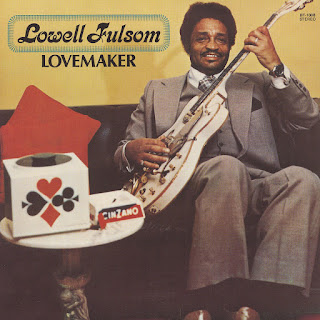
Lowell Fulson recorded every shade of blues imaginable. Polished urban blues, rustic two-guitar duets with his younger brother Martin, funk-tinged grooves that pierced the mid-'60s charts, even an unwise cover of the Beatles' "Why Don't We Do It in the Road!" Clearly, the veteran guitarist, who was active for more than half-a-century, wasn't afraid to experiment. Perhaps that's why his last couple of discs for Rounder were so vital and satisfying -- and why he remained an innovator for so long.
Exposed to the Western swing of Bob Wills, as well as indigenous blues while growing up in Oklahoma, Fulson joined up with singer Texas Alexander for a few months in 1940, touring the Lone Star state with the veteran bluesman. Fulson was drafted in 1943. The Navy let him go in 1945; after a few months back in Oklahoma, he was off to Oakland, CA, where he made his first 78s for fledgling producer Bob Geddins. Soon enough, Fulson was fronting his own band and cutting a stack of platters for Big Town, Gilt Edge, Trilon, and Down Town (where he hit big in 1948 with "Three O'Clock Blues," later covered by B.B. King).
Swing Time records prexy Jack Lauderdale snapped up Fulson in 1948, and the hits really began to flow: the immortal "Every Day I Have the Blues" (an adaptation of Memphis Slim's "Nobody Loves Me"), "Blue Shadows," the two-sided holiday perennial "Lonesome Christmas," and a groovy midtempo instrumental "Low Society Blues" that really hammers home how tremendously important pianist Lloyd Glenn and alto saxist Earl Brown were to Fulson's maturing sound (all charted in 1950!).
Fulson toured extensively from then on, his band stocked for a time with dazzling pianist Ray Charles (who later covered Lowell's "Sinner's Prayer" for Atlantic) and saxist Stanley Turrentine. After a one-off session in New Orleans in 1953 for Aladdin, Fulson inked a longterm pact with Chess in 1954. His first single for the firm was the classic "Reconsider Baby," cut in Dallas under Stan Lewis' supervision with a sax section that included David "Fathead" Newman on tenor and Leroy Cooper on baritone.
The relentless midtempo blues proved a massive hit and perennial cover item -- even Elvis Presley cut it in 1960, right after he got out of the Army. But apart from "Loving You," the guitarist's subsequent Checker output failed to find widespread favor with the public. Baffling, since Fulson's crisp, concise guitar work and sturdy vocals were as effective as ever. Most of his Checker sessions were held in Chicago and L.A. (the latter his home from the turn of the '50s).
Fulson stayed with Checker into 1962, but a change of labels worked wonders when he jumped over to Los Angeles-based Kent Records. 1965's driving "Black Nights" became his first smash in a decade, and "Tramp," a loping funk-injected workout co-written by Fulson and Jimmy McCracklin, did even better, restoring the guitarist to R&B stardom, gaining plenty of pop spins, and inspiring a playful Stax cover by Otis Redding and Carla Thomas only a few months later that outsold Fulson's original.
A couple of lesser follow-up hits for Kent ensued before the guitarist was reunited with Stan Lewis at Jewel Records. That's where he took a crack at that Beatles number, though most of his outings for the firm were considerably closer to the blues bone. Fulson was never been absent for long on disc; 1992's Hold On and its 1995 follow-up. Them Update Blues, both for Ron Levy's Bullseye Blues logo, were among his later efforts, both quite solid. Fulson continued to perform until 1997, when health problems forced the career bluesman into a reluctant retirement. His health continued to deteriorate and on March 6, 1999 -- just a few weeks shy of his 78th birthday -- Lowell Fulson passed away.
Few bluesmen managed to remain contemporary the way Lowell Fulson did for more than five decades. And fewer still will make such a massive contribution to the idiom.
https://www.allmusic.com/artist/lowell-fulson-mn0000301955/biography
///////
Biografía
por Bill Dahl
Lowell Fulson grabó todos los matices de blues imaginables. Pulidos blues urbanos, rústicos dúos a dos guitarras con su hermano menor Martin, grooves con tintes funk que perforaron las listas de éxitos de mediados de los 60, incluso una desacertada versión de "Why Don't We Do It in the Road" de los Beatles. Está claro que el veterano guitarrista, que estuvo en activo durante más de medio siglo, no tenía miedo de experimentar. Quizá por eso sus dos últimos discos para Rounder fueron tan vitales y satisfactorios, y por eso siguió siendo un innovador durante tanto tiempo.
Expuesto al swing occidental de Bob Wills, así como al blues autóctono mientras crecía en Oklahoma, Fulson se unió al cantante Texas Alexander durante unos meses en 1940, haciendo una gira por el estado de la Estrella Solitaria con el veterano bluesman. Fulson fue reclutado en 1943. La Armada le dejó marchar en 1945; tras unos meses de regreso a Oklahoma, se fue a Oakland, California, donde grabó sus primeros 78 para el productor novel Bob Geddins. Muy pronto, Fulson se puso al frente de su propia banda y grabó un montón de discos para Big Town, Gilt Edge, Trilon y Down Town (donde tuvo un gran éxito en 1948 con "Three O'Clock Blues", que más tarde versionó B.B. King).
El representante de Swing Time Records, Jack Lauderdale, contrató a Fulson en 1948, y los éxitos empezaron a llegar: el inmortal "Every Day I Have the Blues" (una adaptación de "Nobody Loves Me" de Memphis Slim), "Blue Shadows", la perenne canción navideña de dos caras "Lonesome Christmas", y un instrumental a medio tiempo "Low Society Blues" que realmente pone de manifiesto la tremenda importancia del pianista Lloyd Glenn y el saxofonista alto Earl Brown en el sonido maduro de Fulson (¡todas ellas registradas en 1950! ).
A partir de entonces, Fulson realizó numerosas giras, en las que su banda contó durante un tiempo con el deslumbrante pianista Ray Charles (que más tarde versionó "Sinner's Prayer" de Lowell para Atlantic) y el saxofonista Stanley Turrentine. Tras una única sesión en Nueva Orleans en 1953 para Aladdin, Fulson firmó un pacto a largo plazo con Chess en 1954. Su primer sencillo para la empresa fue el clásico "Reconsider Baby", grabado en Dallas bajo la supervisión de Stan Lewis con una sección de saxos que incluía a David "Fathead" Newman en el tenor y a Leroy Cooper en el barítono.
El implacable blues a medio tiempo resultó ser un éxito masivo y un tema de portada perenne - incluso Elvis Presley lo cortó en 1960, justo después de salir del ejército. Pero aparte de "Loving You", la producción posterior del guitarrista de Checker no consiguió el favor del público. Esto es sorprendente, ya que el trabajo de Fulson con la guitarra y la voz eran tan eficaces como siempre. La mayor parte de sus sesiones con Checker se llevaron a cabo en Chicago y en Los Ángeles (esta última fue su casa desde finales de los años 50).
Fulson permaneció en Checker hasta 1962, pero un cambio de discográfica hizo maravillas cuando se pasó a Kent Records, con sede en Los Ángeles. En 1965, "Black Nights" se convirtió en su primer éxito en una década, y "Tramp", una canción con un toque de diversión coescrita por Fulson y Jimmy McCracklin, tuvo un éxito aún mayor, devolviendo al guitarrista al estrellato del R&B, ganando muchas visitas del público, e inspirando una divertida versión de la Stax por Otis Redding y Carla Thomas sólo unos meses después, que superó en ventas a la original de Fulson.
Un par de éxitos menores siguieron a Kent antes de que el guitarrista se reuniera con Stan Lewis en Jewel Records. Allí fue donde se atrevió con ese número de los Beatles, aunque la mayoría de sus trabajos para la compañía eran mucho más cercanos al blues. Fulson nunca estuvo ausente por mucho tiempo en el disco; Hold On de 1992 y su continuación de 1995. Them Update Blues, ambos para el logo Bullseye Blues de Ron Levy, fueron algunos de sus últimos esfuerzos, ambos bastante sólidos. Fulson siguió actuando hasta 1997, cuando los problemas de salud obligaron al bluesman de carrera a retirarse a regañadientes. Su salud continuó deteriorándose y el 6 de marzo de 1999, a pocas semanas de cumplir 78 años, Lowell Fulson falleció.
Pocos bluesman lograron mantenerse contemporáneos como Lowell Fulson lo hizo durante más de cinco décadas. Y aún son menos los que harán una contribución tan masiva al idioma.
https://www.allmusic.com/artist/lowell-fulson-mn0000301955/biography