Showing posts with label Billy Strayhorn. Show all posts

Saturday, May 2, 2026

Duke Ellington • Anatomy of a Murder


Review from JAZZIZ Magazine (by Larry Nai):
The Ellington orchestra sounded exquisite in the early summer sessions that produced this soundtrack. With a burnished sonic brilliance reminiscent of the glorious 1940 Blanton/Webster edition of the band, and soloists like Johnny Hodges and Paul Gonsalves, Ellington's tightly woven soundtrack took on a life independent of its original context. In doing so, it became one of Duke's most satisfying albums.
https://www.amazon.com/Anatomy-Murder-Soundtrack-Motion-Picture/dp/B00000IMYH

///////


Reseña de JAZZIZ Magazine (por Larry Nai):
La orquesta de Ellington sonó exquisita en las sesiones de principios de verano que produjeron esta banda sonora. Con un brillo sónico bruñido que recuerda a la gloriosa edición Blanton/Webster de 1940 de la banda, y solistas como Johnny Hodges y Paul Gonsalves, la banda sonora tejida apretadamente por Ellington cobró vida independiente de su contexto original. Al hacerlo, se convirtió en uno de los álbumes más satisfactorios de Duke.
https://www.amazon.com/Anatomy-Murder-Soundtrack-Motion-Picture/dp/B00000IMYH


Friday, April 11, 2025

Billy Strayhorn & Johnny Hodges • Stanley Dance Session


Some rare non-Ellington material from Billy Strayhorn and Johnny Hodges -- both sessions recorded as part of a series done by producer Stanley Dance at the end of the 50s! The feel here is a almost a bit more open and less restrained than the usual Ellington groove -- with some standout longer tracks, plus a number of more familiar numbers crafted in that rich Strayhorn love of colors and tones -- all topped with beautiful solo work by Johnny Hodges.
 
///////
 
Some rare non-Ellington material from Billy Strayhorn and Johnny Hodges -- both sessions recorded as part of a series done by producer Stanley Dance at the end of the 50s! The feel here is a almost a bit more open and less restrained than the usual Ellington groove -- with some standout longer tracks, plus a number of more familiar numbers crafted in that rich Strayhorn love of colors and tones -- all topped with beautiful solo work by Johnny Hodges.


Saturday, January 18, 2025

Duke Ellington and His Orchestra • The Treasury Shows - Vols. 1-4


The Duke Ellington Treasury Shows series are the collection of live shows. The shows were aired as a way to promote the treasury bonds, which the american government sold in order to raise money for the war effort in the last part of WW2.  

The series consists of double cds with very thorough liner notes and will upon its completion consist of 25 volumes.

The radioshows are filled with guest stars, Duke advertising in various ways for the war bonds and hot renditions of both well known and lesser known compositions played by the band at an artistic peak.
 
///////
 
La serie Duke Ellington Treasury Shows es una colección de espectáculos en directo. Los programas se emitieron para promocionar los bonos del Tesoro, que el gobierno estadounidense vendió para recaudar fondos para la guerra en la última parte de la Segunda Guerra Mundial.  

La serie consta de dos CDs con notas muy completas y, una vez terminada, constará de 25 volúmenes.

Los programas de radio están llenos de estrellas invitadas, Duke haciendo publicidad de diversas formas para los bonos de guerra e interpretaciones de composiciones conocidas y menos conocidas tocadas por la banda en su mejor momento artístico.


Duke Ellington and His Orchestra • The Treasury Shows - Vols. 5-8

Duke Ellington • The Treasury Shows Vols. 09-12


Duke Ellington • The Treasury Shows Vols. 13-16


Duke Ellington • The Treasury Shows Vols. 17-20


Duke Ellington • The Treasury Shows Vols. 21-25


Friday, August 9, 2024

Billy Strayhorn • Piano Passion


Review from All About Jazz:
"During their nearly three decades of working together, Billy Strayhorn and Duke Ellington created a legacy of music for the ages. This set offers a rare opportunity to hear Strayhorn the composer playing many of his own songs, as well as some he wrote with Ellington and others. Their partnership began in 1939 and ended only with the death of "Swee' Pea," as Strayhorn came to be fondly called by Ellington, at a mere 52 from cancer in 1967.

The first ten cuts in this collection, recorded in Paris during two midnight sessions in 1961, were originally released on an LP rather inexplicably called The Peaceful Side of Billy Strayhorn. To that set another eleven sides have been added here. Recorded at various dates in New York from 1946 and 1950, both Ellington and Strayhorn play the piano.

The 1961 sides are marked by simplicity and a vibrant emotional connection. Strayhorn's playing is not showy. It's an honest performance in which each note of his "Passion Flower or his and Ellington's "Strange Feeling are invested with soul. On three numbers, the Paris Blue Notes lend a dash of vocalese. If on "Lush Life their "aaaaaahs verge on the kitschy, on "Day Dream they deepen the reverie. "Lush Life also remains notable as a highly personal and courageous reference to gay life by Strayhorn.
The mood shifts dramatically with the first of the Strayhorn and Ellington duets, "Cottontail, a hop-hopping race across the keyboards to the accompaniment of Wendell Marshall's bass. The high spirits of their exchanges on "C-Jam Blues are complemented by the tenderness of their playing on "Flamingo, the set's only cover. Filled with brilliant, playful, intimate and thoughtful touches, this private party of giants is one we're fortunate indeed to be able to share."  

///////


Reseña de All About Jazz:
"Durante sus casi tres décadas de trabajo conjunto, Billy Strayhorn y Duke Ellington crearon un legado de música para las edades. Este set ofrece una rara oportunidad de escuchar a Strayhorn el compositor tocando muchas de sus propias canciones, así como algunas que escribió con Ellington y otros. Su colaboración comenzó en 1939 y sólo terminó con la muerte de "Swee' Pea", como Strayhorn llegó a ser llamado cariñosamente por Ellington, a los 52 años a causa de un cáncer en 1967.

Los diez primeros cortes de esta colección, grabados en París durante dos sesiones de medianoche en 1961, se publicaron originalmente en un LP inexplicablemente llamado The Peaceful Side of Billy Strayhorn. A ese conjunto se han añadido aquí otras once caras. Grabadas en varias fechas en Nueva York entre 1946 y 1950, tanto Ellington como Strayhorn tocan el piano.

Las caras de 1961 están marcadas por la sencillez y una vibrante conexión emocional. La interpretación de Strayhorn no es vistosa. Es una interpretación honesta en la que cada nota de su "Passion Flower" o de su "Strange Feeling" y la de Ellington están revestidas de alma. En tres números, los Blue Notes de París aportan una pizca de voz. Si en "Lush Life" sus "aaaaaahs" rozan la cursilería, en "Day Dream" profundizan el ensueño. "Lush Life" también sigue siendo notable como una referencia muy personal y valiente a la vida gay de Strayhorn.
El estado de ánimo cambia radicalmente con el primero de los dúos de Strayhorn y Ellington, "Cottontail", una carrera de saltos a través de los teclados con el acompañamiento del bajo de Wendell Marshall. El buen humor de sus intercambios en "C-Jam Blues" se complementa con la ternura de su interpretación en "Flamingo", la única versión del disco. Lleno de toques brillantes, juguetones, íntimos y reflexivos, esta fiesta privada de gigantes es una de las que tenemos la suerte de poder compartir".  


Thursday, August 8, 2024

Duke Ellington • My People [The Complete Show]


Duke Ellington’s ‘My People’ opened in Chicago August 16, 1963. Duke Ellington did everything. He wrote the music, the words, directed it and did the orchestrations. There were not enough money involved to hire Duke Ellington’s orchestra. Instead they hired a 16 piece orchestra with Jimmy Jones as the pianist. A recording of the show was made on August 20, 21 and 28 supervised by Billy Strayhorn and Duke Ellington. The CD contains for the fi rst time the complete show. Duke Ellington in ’My People’ chose the strategy to emphasize the positive achievements of black people to America life, rather than protest against injustice. It had only one minute of social protest written into its script. ‘My People’ is not political. It has social signifi cance, but the accent will be on entertainment.
https://storyvillerecords.com/product/my-people/

///////


My People' de Duke Ellington se estrenó en Chicago el 16 de agosto de 1963. Duke Ellington lo hizo todo. Escribió la música, la letra, la dirigió e hizo las orquestaciones. No había suficiente dinero para contratar a la orquesta de Duke Ellington. En su lugar, contrataron una orquesta de 16 músicos con Jimmy Jones como pianista. Los días 20, 21 y 28 de agosto se realizó una grabación del espectáculo supervisada por Billy Strayhorn y Duke Ellington. El CD contiene por primera vez el espectáculo completo. Duke Ellington en "My People" eligió la estrategia de destacar los logros positivos de los negros en la vida de Estados Unidos, en lugar de protestar contra la injusticia. Sólo tenía un minuto de protesta social escrito en su guión. My People" no es política. Tiene un significado social, pero el acento se pone en el entretenimiento.
https://storyvillerecords.com/product/my-people/


storyvillerecords.com ...


Friday, May 31, 2024

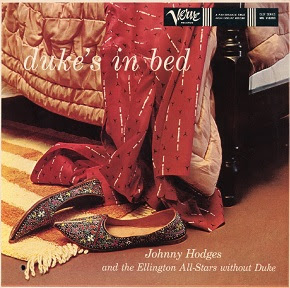
Johnny Hodges • Dukes in Bed


"Never the world's most highly animated showman or greatest stage personality, but a tone so beautiful it sometimes brought tears to the eyes, this was Johnny Hodges. Because of this great loss, our band will never sound the same. Johnny Hodges sometimes sounded beautiful, sometimes romantic, and sometimes people spoke of his tone as being sensuous. With the exception of a year or so, almost his entire career was with us. So far as our wonderful listening audience was concerned, there was a great feeling of expectancy when they looked up and saw Johnny Hodges sitting in the middle of the saxophone section, in the front row. I am glad and thankful that I had the privilege of presenting Johnny Hodges for forty years, night after night. I imagine I have been much envied, but thanks to God....” Duke Ellington eulogy.

John Cornelius Hodges was born on the 25th July 1906 in Cambridge, Mass. He started his musical career playing drums and piano before taking up the saxophone at the age of 14, beginning on the soprano and later the alto. Originally self-taught he was given lessons by Sydney Bechet, whom he got to know through his sister. He followed Bechet into Willie 'The Lion' Smith's quartet at the Rhythm Club (around 1924), then played in the house band with Bechet's Club ‘Basha’ in Harlem. He continued to live in Boston and traveled to New York at weekends playing with such musicians as Bobby Sawyer (1925), Lloyd Scott (1926), then from late 1926 with the great Chick Webb at The Paddock Club and The Savoy Ballroom, etc. followed by a short stint with Luckey Roberts.

In May 1928 Johnny joined Duke Ellington's orchestra and he remained a mainstay of the group for the next 40 years. From his first recording in 1928 he revealed his authority and technical mastery of the saxophone, playing with a broad, sweeping tone and producing impressive, cascading runs. In the opinion of many people, he soon became Duke's most valuable soloist. He made hundreds of recordings with Duke and from 1937 led his own small studio group drawn from the orchestra which made many successful series of recordings for Victor and other labels. Titles included “Jeep's Blues,” “Hodge Podge,” “The Jeep is Jumpin” all of which were co-written with Duke. Also in this period of great creativity he played in many other small groups with musicians such as Lionel Hampton, Teddy Wilson, etc., producing classics of the period.

Johnny was one of the many stars of the Ellington band of the 40s producing solos of immense authority on songs such as “Things Ain't What They Used To Be,” “Don't Get Around Much Any More,” “Passion Flower,” etc. From the 40s he concentrated on the alto leaving the soprano alone completely and in this period he regularly won the popularity polls run by magazines such as Downbeat, Metronome, and Esquire.

In March 1951 Johnny left Duke to form his own small group taking with him Lawrence Brown and Sonny Greer and in their first recording session they produced a hit record of “Castle Rock.” Johnny disbanded the group in the spring of 1955 and after a brief spell of TV work on the Ted Steele Show, rejoined Duke in August of that year where, apart from a few brief periods, he remained for the rest of his life. In the spring of 1958 he worked with Billy Strayhorn and in 1961 went to Europe with some of the other band members in a group called The Ellington Giants.

He continued to record prolifically with musicians such as Wild Bill Davis, Earl Hines, and even one session with Lawrence Welk. Duke and Billy Strayhorn continued to write compositions and arrangements featuring Johnny's unique sound and talents leaving a wonderful legacy of recorded music for the enjoyment of successive generations of enthusiasts. He won the admiration of many saxophonists such as Ben Webster and even John Coltrane who played in one of the small groups in 1953-4 said that Johnny was always one of his favorite players.

In his later years Johnny used fewer and fewer notes, remaining close to the melody in ballads and improvising simple but telling riffs on the faster numbers, many of which were based on the blues . The power of his playing came from his sound and his soul, generating immense swing and building the dramatic tension from chorus to chorus. His last attempt at recording was the monumental “New Orleans Suite,” but he would not live to see the final product.

Johnny Hodges died of a heart attack in New York City on the 11th May 1970.
Source: James Nadal
https://www.allaboutjazz.com/musicians/johnny-hodges/

///////

"Nunca fue el showman más animado del mundo o la personalidad teatral más grande, pero un tono tan hermoso que a veces hacía llorar a los ojos, este era Johnny Hodges. Debido a esta gran pérdida, nuestra banda nunca sonará igual. Johnny Hodges a veces sonaba hermoso, a veces romántico y, a veces, la gente hablaba de su tono como sensual. Con la excepción de un año más o menos, casi toda su carrera estuvo con nosotros. En lo que respecta a nuestra maravillosa audiencia oyente, hubo una gran sensación de expectativa cuando levantaron la vista y vieron a Johnny Hodges sentado en el medio de la sección de saxofones, en la primera fila. Estoy contento y agradecido de haber tenido el privilegio de presentar a Johnny Hodges durante cuarenta años, noche tras noche. Me imagino que me han envidiado mucho, pero gracias a Dios...."Elogio de Duke Ellington.

John Cornelius Hodges nació el 25 de julio de 1906 en Cambridge, Massachusetts. Comenzó su carrera musical tocando la batería y el piano antes de comenzar a tocar el saxofón a los 14 años, comenzando con la soprano y luego con el alto. Originalmente autodidacta, Sydney Bechet le dio lecciones, a quien conoció a través de su hermana. Siguió a Bechet al cuarteto de Willie' The Lion ' Smith en el Rhythm Club (alrededor de 1924), luego tocó en la banda de la casa con el Club 'Basha' de Bechet en Harlem. Continuó viviendo en Boston y viajaba a Nueva York los fines de semana tocando con músicos como Bobby Sawyer (1925), Lloyd Scott (1926), luego desde finales de 1926 con el gran Chick Webb en el Paddock Club y el Savoy Ballroom, etc. seguido de una breve temporada con Luckey Roberts.

En mayo de 1928, Johnny se unió a la orquesta de Duke Ellington y siguió siendo un pilar del grupo durante los siguientes 40 años. Desde su primera grabación en 1928 reveló su autoridad y dominio técnico del saxofón, tocando con un tono amplio y amplio y produciendo carreras impresionantes en cascada. En opinión de mucha gente, pronto se convirtió en el solista más valioso de Duke. Hizo cientos de grabaciones con Duke y, a partir de 1937, dirigió su propio pequeño grupo de estudio extraído de la orquesta, que realizó muchas series exitosas de grabaciones para Victor y otros sellos. Los títulos incluyeron "Jeep's Blues", "Hodge Podge"," The Jeep is Jumpin", todos los cuales fueron coescritos con Duke. También en este período de gran creatividad tocó en muchos otros pequeños grupos con músicos como Lionel Hampton, Teddy Wilson, etc., produciendo clásicos de la época.

Johnny fue una de las muchas estrellas de la Ellington Band de los años 40 produciendo solos de inmensa autoridad en canciones como "Things Ain't What They Used To Be"," Don't Get Around Much Anymore"," Passion Flower", etc. A partir de los años 40 se concentró en el alto dejando completamente sola a la soprano y en este período ganó regularmente las encuestas de popularidad que manejan revistas como Downbeat, Metronome y Esquire.

En marzo de 1951 Johnny dejó Duke para formar su propio pequeño grupo llevándose consigo a Lawrence Brown y Sonny Greer y en su primera sesión de grabación produjeron un exitoso disco de " Castle Rock. Johnny disolvió el grupo en la primavera de 1955 y después de un breve período de trabajo televisivo en The Ted Steele Show, se reincorporó a Duke en agosto de ese año, donde, aparte de unos breves períodos, permaneció por el resto de su vida. En la primavera de 1958 trabajó con Billy Strayhorn y en 1961 se fue a Europa con algunos de los otros miembros de la banda en un grupo llamado Ellington Giants.

Continuó grabando prolíficamente con músicos como Wild Bill Davis, Earl Hines e incluso una sesión con Lawrence Welk. Duke y Billy Strayhorn continuaron escribiendo composiciones y arreglos con el sonido y los talentos únicos de Johnny, dejando un maravilloso legado de música grabada para el disfrute de sucesivas generaciones de entusiastas. Se ganó la admiración de muchos saxofonistas como Ben Webster e incluso John Coltrane, quien tocó en uno de los grupos pequeños en 1953-4, dijo que Johnny siempre fue uno de sus músicos favoritos.

En sus últimos años, Johnny usó cada vez menos notas, permaneciendo cerca de la melodía en las baladas e improvisando riffs simples pero contundentes en los números más rápidos, muchos de los cuales se basaban en el blues . El poder de su interpretación provino de su sonido y su alma, generando un swing inmenso y construyendo la tensión dramática de coro en coro. Su último intento de grabación fue la monumental "Suite de Nueva Orleans", pero no viviría para ver el producto final.

Johnny Hodges murió de un ataque al corazón en la ciudad de Nueva York el 11 de mayo de 1970.
Fuente: James Nadal
https://www.allaboutjazz.com/musicians/johnny-hodges/


Sunday, April 28, 2024

Duke Ellington • Live At The Blue Note


Este álbum recoge la actuación completa registrada de la orquesta de Duke Ellington durante sus tres pases en el Blue Note, el 9 de agosto de 1959. Una de las sorpresas de aquel extraordinario concierto, fue la presencia del compositor Billy Strayhorn (alma máter de Ellington) sentado en el piano junto al Duke e interpretando algunos de los temas del álbum, entre ellas, la celebérrima "Take the 'A' Train"). Muchos de los temas interpretados aquella noche en el legendario club neoyorquino, corresponden a la banda sonora de la película "Anatomía de un asesinato".

Aquella noche la orquesta de Duke Ellington estuvo compuesta por: Johnny Hodges, Russell Procope, Hamilton Jimmy, Paul Gonsalves , Harry Carney (cañas), Terry Clark, Baker Shorty, Cook, Willie Anderson Cat, Ray Nance (trompeta), Quentin Jackson, Woodman Britt, John Sanders (trombón), Billy Strayhorn (piano); Pate Johnny, Woode Jimmy (bajo ); Sam Woodyard, Jimmy Johnson (batería). Personal: Duke Ellington (piano); Carney Harry, Jimmy Hamilton, Johnny Hodges, Paul Gonsalves, Russell Procope (cañas); Terry Clark, Ray Nance, Baker Shorty, Willie Cook, Cat Anderson (trompeta), Quentin Jackson, John Sanders, Britt Woodman (trombón), Billy Strayhorn (piano), Jimmy Johnson, Jr., Sam Woodyard (batería).
http://apoloybaco.com/jazz/index.php?option=com_content&view=article&id=3681:duke-ellington-live-at-the-blue-note&catid=7&Itemid=299

///////

Review
This two-CD set gives one a good example of how Duke Ellington's Orchestra sounded in 1959. Greatly expanded from the original single LP, the release essentially brings back a full night by the Ellington band, three nearly complete sets. The music ranges from old favorites to some newer material and highlights include Billy Strayhorn sitting in on his "Take the 'A' Train," several selections from the recent Anatomy of a Murder soundtrack, versions of "Drawing Room Blues" and "Tonk" that have both Ellington and Strayhorn on piano, an 11-minute rendition of "Mood Indigo" and quite a few features for altoist Johnny Hodges.
by Scott Yanow


Tuesday, April 9, 2024

VA • The Wax Label Sessions


Review
The short-lived label Wax was active during 1947. It was run by bassist Al Hall and usually featured pianist Jimmy Jones. Most of its sessions (all but five numbers by Jones) are reissued on this definitive CD. There are eight piano solos or trio numbers showcasing Jimmy Jones, four by the Al Hall Quintet (with trumpeter Dick Vance in top form along with tenor saxophonist Ben Webster), and various selections with solos by trumpeter Bill Coleman, altoist Otto Hardwick, trombonist Lawrence Brown, altoist Johnny Hodges, and baritonist Harry Carney. The music overall is small-group swing without any real hint of bebop. The performances were formerly quite rare and they have dated well. Since there are not that many selections around from this era featuring Coleman, Hardwick, and Vance, this is a particularly valuable historical release.
by Scott Yanow
https://www.allmusic.com/album/wax-label-sessions-mw0000228540

///////

Revisar
La etiqueta de corta duración Wax estuvo activa durante 1947. Lo dirigía el bajista Al Hall y solía contar con el pianista Jimmy Jones. La mayoría de sus sesiones (todas menos cinco números de Jones) se reeditan en este CD definitivo. Hay ocho solos de piano o números de trío en los que se muestra a Jimmy Jones, cuatro del Al Hall Quintet (con el trompetista Dick Vance en plena forma junto con el saxofonista tenor Ben Webster), y varias selecciones con solos del trompetista Bill Coleman, el altoista Otto Hardwick, el trombonista Lawrence Brown, el altoista Johnny Hodges y el barítono Harry Carney. La música en general es un pequeño grupo de swing sin ningún indicio real de bebop. Las actuaciones eran antes bastante raras y han salido bien. Como no hay muchas selecciones de esta época con Coleman, Hardwick y Vance, este es un lanzamiento histórico particularmente valioso.
por Scott Yanow
https://www.allmusic.com/album/wax-label-sessions-mw0000228540


Friday, April 5, 2024

Duke Ellington • Duke Ellington's Jazz Violin Session


Review by Thom Jurek
This small group session was recorded in 1963 for Atlantic, and originally issued in 1976, two years after Duke Ellington's death. It showcases a small group that features string players in the front line. Ray Nance, the Duke's own violinist, is here as is the legendary Stephane Grappelli and violist Svend Asmussen. The rest of the players include tenor man Paul Gonsalves, drummer Sam Woodyard, bassist Ernie Shepard, alto saxist Russell Procope, and trombonist Buster Cooper. Ellington plays piano no all but two tunes where Billy Strayhorn replaced him. The program is a collection of Ellington and Strayhorn standards from "Blues in C" and "Take the 'A' Train," to "Don't Get Around Much Anymore," "Cotton Tail," and the wonderful "Limbo Jazz." The soloist and group interplay are gentle, swinging, and utterly and completely graceful and elegant. There is a lighthearted tenderness in this set that borders on sentimentality without ever going there. And the feeling is loose, relaxed, and full of warmth throughout.

///////

Reseña de Thom Jurek
Esta sesión de grupo pequeño fue grabada en 1963 para Atlantic, y originalmente publicada en 1976, dos años después de la muerte de Duke Ellington. Muestra un pequeño grupo que presenta a los jugadores de cuerda en la primera línea. Ray Nance, el violinista del propio Duque, está aquí al igual que el legendario Stéphane Grappelli y el violista Svend Asmussen. El resto de los músicos incluyen al tenor Paul Gonsalves, el baterista Sam Woodyard, el bajista Ernie Shepard, el saxofonista alto Russell Procope, y el trombonista Buster Cooper. Ellington toca el piano no todos, pero dos temas donde Billy Strayhorn lo reemplazó. El programa es una colección de estándares de Ellington y Strayhorn desde "Blues en Do" y "Take the 'A' Train", hasta "Don't Get Around Much Anymore", "Cotton Tail" y el maravilloso "Limbo Jazz". La interacción entre el solista y el grupo es suave, oscilante, y completamente elegante y elegante. Hay una ternura desenfadada en este conjunto que roza el sentimentalismo sin llegar nunca a eso. Y la sensación es suelta, relajada y llena de calidez en todo momento.


Thursday, March 28, 2024

Johnny Hodges • Johnny Hodges And All The Duke's Man


"Never the world's most highly animated showman or greatest stage personality, but a tone so beautiful it sometimes brought tears to the eyes, this was Johnny Hodges. Because of this great loss, our band will never sound the same. Johnny Hodges sometimes sounded beautiful, sometimes romantic, and sometimes people spoke of his tone as being sensuous. With the exception of a year or so, almost his entire career was with us. So far as our wonderful listening audience was concerned, there was a great feeling of expectancy when they looked up and saw Johnny Hodges sitting in the middle of the saxophone section, in the front row. I am glad and thankful that I had the privilege of presenting Johnny Hodges for forty years, night after night. I imagine I have been much envied, but thanks to God....” Duke Ellington eulogy.

John Cornelius Hodges was born on the 25th July 1906 in Cambridge, Mass. He started his musical career playing drums and piano before taking up the saxophone at the age of 14, beginning on the soprano and later the alto. Originally self-taught he was given lessons by Sydney Bechet, whom he got to know through his sister. He followed Bechet into Willie 'The Lion' Smith's quartet at the Rhythm Club (around 1924), then played in the house band with Bechet's Club ‘Basha’ in Harlem. He continued to live in Boston and traveled to New York at weekends playing with such musicians as Bobby Sawyer (1925), Lloyd Scott (1926), then from late 1926 with the great Chick Webb at The Paddock Club and The Savoy Ballroom, etc. followed by a short stint with Luckey Roberts.

In May 1928 Johnny joined Duke Ellington's orchestra and he remained a mainstay of the group for the next 40 years. From his first recording in 1928 he revealed his authority and technical mastery of the saxophone, playing with a broad, sweeping tone and producing impressive, cascading runs. In the opinion of many people, he soon became Duke's most valuable soloist. He made hundreds of recordings with Duke and from 1937 led his own small studio group drawn from the orchestra which made many successful series of recordings for Victor and other labels. Titles included “Jeep's Blues,” “Hodge Podge,” “The Jeep is Jumpin” all of which were co-written with Duke. Also in this period of great creativity he played in many other small groups with musicians such as Lionel Hampton, Teddy Wilson, etc., producing classics of the period.

Johnny was one of the many stars of the Ellington band of the 40s producing solos of immense authority on songs such as “Things Ain't What They Used To Be,” “Don't Get Around Much Any More,” “Passion Flower,” etc. From the 40s he concentrated on the alto leaving the soprano alone completely and in this period he regularly won the popularity polls run by magazines such as Downbeat, Metronome, and Esquire.

In March 1951 Johnny left Duke to form his own small group taking with him Lawrence Brown and Sonny Greer and in their first recording session they produced a hit record of “Castle Rock.” Johnny disbanded the group in the spring of 1955 and after a brief spell of TV work on the Ted Steele Show, rejoined Duke in August of that year where, apart from a few brief periods, he remained for the rest of his life. In the spring of 1958 he worked with Billy Strayhorn and in 1961 went to Europe with some of the other band members in a group called The Ellington Giants.

He continued to record prolifically with musicians such as Wild Bill Davis, Earl Hines, and even one session with Lawrence Welk. Duke and Billy Strayhorn continued to write compositions and arrangements featuring Johnny's unique sound and talents leaving a wonderful legacy of recorded music for the enjoyment of successive generations of enthusiasts. He won the admiration of many saxophonists such as Ben Webster and even John Coltrane who played in one of the small groups in 1953-4 said that Johnny was always one of his favorite players.

In his later years Johnny used fewer and fewer notes, remaining close to the melody in ballads and improvising simple but telling riffs on the faster numbers, many of which were based on the blues . The power of his playing came from his sound and his soul, generating immense swing and building the dramatic tension from chorus to chorus. His last attempt at recording was the monumental “New Orleans Suite,” but he would not live to see the final product.

Johnny Hodges died of a heart attack in New York City on the 11th May 1970.
Source: James Nadal
https://www.allaboutjazz.com/musicians/johnny-hodges/

///////

"Nunca fue el showman más animado del mundo o la personalidad teatral más grande, pero un tono tan hermoso que a veces hacía llorar a los ojos, este era Johnny Hodges. Debido a esta gran pérdida, nuestra banda nunca sonará igual. Johnny Hodges a veces sonaba hermoso, a veces romántico y, a veces, la gente hablaba de su tono como sensual. Con la excepción de un año más o menos, casi toda su carrera estuvo con nosotros. En lo que respecta a nuestra maravillosa audiencia oyente, hubo una gran sensación de expectativa cuando levantaron la vista y vieron a Johnny Hodges sentado en el medio de la sección de saxofones, en la primera fila. Estoy contento y agradecido de haber tenido el privilegio de presentar a Johnny Hodges durante cuarenta años, noche tras noche. Me imagino que me han envidiado mucho, pero gracias a Dios...."Elogio de Duke Ellington.

John Cornelius Hodges nació el 25 de julio de 1906 en Cambridge, Massachusetts. Comenzó su carrera musical tocando la batería y el piano antes de comenzar a tocar el saxofón a los 14 años, comenzando con la soprano y luego con el alto. Originalmente autodidacta, Sydney Bechet le dio lecciones, a quien conoció a través de su hermana. Siguió a Bechet al cuarteto de Willie' The Lion ' Smith en el Rhythm Club (alrededor de 1924), luego tocó en la banda de la casa con el Club 'Basha' de Bechet en Harlem. Continuó viviendo en Boston y viajaba a Nueva York los fines de semana tocando con músicos como Bobby Sawyer (1925), Lloyd Scott (1926), luego desde finales de 1926 con el gran Chick Webb en el Paddock Club y el Savoy Ballroom, etc. seguido de una breve temporada con Luckey Roberts.

En mayo de 1928, Johnny se unió a la orquesta de Duke Ellington y siguió siendo un pilar del grupo durante los siguientes 40 años. Desde su primera grabación en 1928 reveló su autoridad y dominio técnico del saxofón, tocando con un tono amplio y amplio y produciendo carreras impresionantes en cascada. En opinión de mucha gente, pronto se convirtió en el solista más valioso de Duke. Hizo cientos de grabaciones con Duke y, a partir de 1937, dirigió su propio pequeño grupo de estudio extraído de la orquesta, que realizó muchas series exitosas de grabaciones para Victor y otros sellos. Los títulos incluyeron "Jeep's Blues", "Hodge Podge"," The Jeep is Jumpin", todos los cuales fueron coescritos con Duke. También en este período de gran creatividad tocó en muchos otros pequeños grupos con músicos como Lionel Hampton, Teddy Wilson, etc., produciendo clásicos de la época.

Johnny fue una de las muchas estrellas de la Ellington Band de los años 40 produciendo solos de inmensa autoridad en canciones como "Things Ain't What They Used To Be"," Don't Get Around Much Anymore"," Passion Flower", etc. A partir de los años 40 se concentró en el alto dejando completamente sola a la soprano y en este período ganó regularmente las encuestas de popularidad que manejan revistas como Downbeat, Metronome y Esquire.

En marzo de 1951 Johnny dejó Duke para formar su propio pequeño grupo llevándose consigo a Lawrence Brown y Sonny Greer y en su primera sesión de grabación produjeron un exitoso disco de " Castle Rock. Johnny disolvió el grupo en la primavera de 1955 y después de un breve período de trabajo televisivo en The Ted Steele Show, se reincorporó a Duke en agosto de ese año, donde, aparte de unos breves períodos, permaneció por el resto de su vida. En la primavera de 1958 trabajó con Billy Strayhorn y en 1961 se fue a Europa con algunos de los otros miembros de la banda en un grupo llamado Ellington Giants.

Continuó grabando prolíficamente con músicos como Wild Bill Davis, Earl Hines e incluso una sesión con Lawrence Welk. Duke y Billy Strayhorn continuaron escribiendo composiciones y arreglos con el sonido y los talentos únicos de Johnny, dejando un maravilloso legado de música grabada para el disfrute de sucesivas generaciones de entusiastas. Se ganó la admiración de muchos saxofonistas como Ben Webster e incluso John Coltrane, quien tocó en uno de los grupos pequeños en 1953-4, dijo que Johnny siempre fue uno de sus músicos favoritos.

En sus últimos años, Johnny usó cada vez menos notas, permaneciendo cerca de la melodía en las baladas e improvisando riffs simples pero contundentes en los números más rápidos, muchos de los cuales se basaban en el blues . El poder de su interpretación provino de su sonido y su alma, generando un swing inmenso y construyendo la tensión dramática de coro en coro. Su último intento de grabación fue la monumental "Suite de Nueva Orleans", pero no viviría para ver el producto final.

Johnny Hodges murió de un ataque al corazón en la ciudad de Nueva York el 11 de mayo de 1970.
Fuente: James Nadal
https://www.allaboutjazz.com/musicians/johnny-hodges/