Showing posts with label Electric Blues. Show all posts

Thursday, May 21, 2026

Mike Bloomfield • Living In The Fast Lane


Review by Jo-Ann Greene  
An artist's final album always sits heavily on the shelf, and even more so when that life has been cut abruptly short, becoming an unintended epitaph to what was a still flourishing career. Thus, Living in the Fast Lane has a weighty burden to bear, one that Michael Bloomfield never meant it to shoulder, yet the set does so with remarkable ease. There's a definite joie de vivre found within, partly, one presumes, a reflection of the happiness of reuniting with myriad former cohorts, among them Mark Naftalin and Bob Jones, who both played on Bloomfield's debut solo album back in 1969, and ex-Electric Flag Roger Troy. A gospel choir and an entire band provide backing vocals and a horn section, which hints at the many styles showcased within. The set kicks off with "Maudie," a classic R&B number that brilliantly highlights Naftalin's piano skills, Bloomfield's own keyboard talent, and even more spectacularly his emotive, fluid guitar style, as his leads wind round vocalist Frank Biner, almost engaging him in conversation. On the indeed ragtime-flavored "Watkin's Rag" Bloomfield plays everything flawlessly, of course, even as he attempts to outdo himself in places. That's an instrumental, while on "Big C Blues" he also picks up the mike, defiantly determined to have a good time, as his piano and slide guitar vie for attention. Bloomfield sings out his own frustration at himself on the autobiographical "Used to It," a funk-drenched self-pummeling. "Roots" is equally funky, but in a slicker Temptations style that stresses the importance of knowing where you come from. Bloomfield certainly does and is keen to highlight all the styles that so influenced him within this set. With gospel-flecked blues, country-speckled blues, lavish soul, jazzy ragtime, R&B, and on "Andy's Bad" even a touch of hip-hop, Bloomfield and company showcase blues of many shades, progenitors, and descendents. The musicianship is sensational, the vocalists superb, and Bloomfield is on fire, yet there's no struggle and strain to succeed, just a sublime atmosphere. Fans will insist he made much better sets, and they'd be right, but regardless, this album remains a magnificent achievement, one that's lost none of its power over the years.
https://www.allmusic.com/album/living-in-the-fast-lane-mw0000102794

///////

Revisado por Jo-Ann Greene  
El último álbum de un artista siempre se encuentra en el estante, y más aún cuando esa vida se ha acortado abruptamente, convirtiéndose en un epitafio involuntario de lo que era una carrera aún floreciente. Por lo tanto, vivir en el Carril Rápido tiene una carga pesada que soportar, una que Michael Bloomfield nunca quiso que asumiera, sin embargo, el conjunto lo hace con notable facilidad. Hay una alegría de vivir definida que se encuentra dentro, en parte, uno presume, un reflejo de la felicidad de reunirse con innumerables ex cohortes, entre ellos Mark Naftalin y Bob Jones, quienes tocaron en el álbum debut en solitario de Bloomfield en 1969, y el ex-Electric Flag Roger Troy. Un coro de gospel y una banda completa proporcionan coros y una sección de vientos, que insinúa los muchos estilos que se muestran en su interior. El set comienza con "Maudie", un número clásico de R & B que destaca brillantemente las habilidades de Naftalin para el piano, el talento para el teclado de Bloomfield y, aún más espectacularmente, su estilo de guitarra emotivo y fluido, mientras sus líderes rodean al vocalista Frank Biner, casi involucrándolo en una conversación. En el "Watkin's Rag" con sabor a ragtime, Bloomfield toca todo a la perfección, por supuesto, incluso cuando intenta superarse a sí mismo en algunos lugares. Ese es un instrumental, mientras que en "Big C Blues" también toma el micrófono, desafiante y decidido a pasar un buen rato, mientras su piano y su guitarra deslizante compiten por la atención. Bloomfield canta su propia frustración consigo mismo en la autobiográfica "Used to It", una autolesión empapada de funk. "Roots" es igualmente funky, pero en un estilo más pulido de Temptations que enfatiza la importancia de saber de dónde vienes. Bloomfield ciertamente lo hace y está dispuesto a resaltar todos los estilos que lo influenciaron tanto dentro de este conjunto. Con blues salpicado de gospel, blues salpicado de country, soul lujoso, ragtime jazzístico, R&B y en "Andy's Bad" incluso un toque de hip-hop, Bloomfield and company muestra blues de muchos tonos, progenitores y descendientes. La musicalidad es sensacional, los vocalistas soberbios y Bloomfield está en llamas, pero no hay lucha ni esfuerzo para triunfar, solo una atmósfera sublime. Los fans insistirán en que hizo sets mucho mejores, y tendrían razón, pero a pesar de todo, este álbum sigue siendo un logro magnífico, uno que no ha perdido nada de su poder a lo largo de los años.
https://www.allmusic.com/album/living-in-the-fast-lane-mw0000102794


www.michaelbloomfield.com ...


Wednesday, May 20, 2026

Christone "Kingfish" Ingram • Kingfish


Review
by Thom Jurek  
At the ripe old age of 20, Clarksdale, Mississippi guitar slinger Christone "Kingfish" Ingram has been anointed "the next explosion of the blues," by no less than Buddy Guy. The proclamation is accurate. Ingram is young, but he's spent most of life pursuing the blues across the Delta and Chicago traditions, with nods at '70s hard rock and soul along the way. First exposed to blues via gospel in church, Ingram has been playing guitar since he was ten; he first stepped on a stage to play at the age of 11, at Clarksdale's famous Ground Zero Club, as part of Mississippi blues icon Bill "Howl-N-Madd" Perry's band -- Perry is Ingram's mentor. Before he was 18, Ingram had already toured the U.S. and six other countries, performed at the White House, and made appearances in the Marvel series Nick Cage. His musical influences range from Robert Johnson -- who supposedly made his deal with the devil not far from Ingram's home at the intersection of Highways 61 and 49 -- to Muddy Waters, Guy, and even Prince (he offers a hell of a cover of "Purple Rain" live). Kingfish was recorded in Nashville for Alligator Records and produced by Grammy-winning songwriter, bluesman, country singer, and drummer Tom Hambridge, who co-wrote most of these 12 songs with the guitarist.

Opener "Outside of This Town," reveals the influence of ZZ Top's Billy Gibbons with its meaty, angular fills and pulled strings. It's followed by the slow-burning ballad "Fresh Out," on which Ingram trades solos with his hero Guy. Ingram can deliver an acoustic ballad like a master, too: check "Been Here Before" and "Hard Times" with Keb Mo' on acoustic resonator guitar (he appears throughout the record) offering balance, nuance, and restless country-soul. The slow burn of "Love Ain't My Favorite Word" calls forth the influence of Guy's '80s period with its biting, sharp notes and unexpected fills between sung lines and aggressive solo flourishes during turnarounds. "Before I'm Old" shines a light on Guitar Slim before the scorching lead break. "Listen" is a country-blues with a gorgeous vocal from Ingram. "Trouble," on the other hand, is drenched in the New Orleans R&B lineage à la Professor Longhair, and dragged into the present via an intense, rolling melodicism in Ingram's singing and soloing. The funky shuffle and snare breaks in "Believe These Blues" add a hefty yet slow-burning menace to the otherwise nocturnal shuffle. "Hard Times" with Keb Mo' is a slow-burn acoustic shuffle steeped in the Delta mud, while closer "That's Fine by Me" is a sweet, sultry, and soulful nocturnal blues with edgy fills reminiscent of early B.B. King, yet firmly grounded in this historical moment. The bottom line is that Ingram arrives fully formed as an already authoritative presence on Kingfish, all revved up and ready to. This is as promising as a debut album gets.
https://www.allmusic.com/album/kingfish-mw0003263048

///////


Reseña
por Thom Jurek  
A la edad de 20 años, el guitarrista de Clarksdale, Mississippi, Christone "Kingfish" Ingram, ha sido proclamado "la próxima explosión del blues", nada menos que por Buddy Guy. La proclamación es acertada. Ingram es joven, pero ha pasado la mayor parte de su vida persiguiendo el blues a través de las tradiciones del Delta y de Chicago, con guiños al hard rock y al soul de los años 70. Ingram, que conoció el blues a través del góspel en la iglesia, lleva tocando la guitarra desde los diez años; subió por primera vez a un escenario para tocar a los 11 años, en el famoso Ground Zero Club de Clarksdale, como parte de la banda del icono del blues de Mississippi Bill "Howl-N-Madd" Perry, que es el mentor de Ingram. Antes de cumplir los 18 años, Ingram ya había realizado una gira por Estados Unidos y otros seis países, había actuado en la Casa Blanca y había hecho apariciones en la serie de Marvel Nick Cage. Sus influencias musicales van desde Robert Johnson -que supuestamente hizo su pacto con el diablo no muy lejos de la casa de Ingram, en la intersección de las carreteras 61 y 49- hasta Muddy Waters, Guy e incluso Prince (ofrece una versión infernal de "Purple Rain" en directo). Kingfish se grabó en Nashville para Alligator Records y fue producido por el compositor, bluesman, cantante de country y batería Tom Hambridge, ganador de un Grammy, que coescribió la mayoría de estas 12 canciones con el guitarrista.

La primera canción, "Outside of This Town", revela la influencia de Billy Gibbons, de ZZ Top, con sus carnosos y angulosos rellenos y sus cuerdas tensadas. Le sigue la balada lenta "Fresh Out", en la que Ingram intercambia solos con su héroe Guy. Ingram también puede interpretar una balada acústica como un maestro: comprueba "Been Here Before" y "Hard Times" con Keb Mo' en la guitarra acústica de resonancia (aparece en todo el disco) ofreciendo equilibrio, matices y un country-soul inquieto. La lenta combustión de "Love Ain't My Favorite Word" evoca la influencia del periodo de los 80 de Guy con sus notas mordaces y afiladas y sus inesperados rellenos entre los tercios y los agresivos solos durante los giros. "Before I'm Old" ilumina a Guitar Slim antes de la abrasadora rotura de plomo. "Listen" es un country-blues con una magnífica voz de Ingram. "Trouble", por otro lado, está empapado en el linaje de R&B de Nueva Orleans à la Professor Longhair, y arrastrado al presente a través de un melodicismo intenso y rodante en el canto y los solos de Ingram. El funky shuffle y las pausas de la caja en "Believe These Blues" añaden una fuerte pero lenta amenaza al shuffle nocturno. "Hard Times", con Keb Mo', es un shuffle acústico a fuego lento impregnado del barro del Delta, mientras que el final, "That's Fine by Me", es un blues nocturno dulce, sensual y conmovedor, con unos rellenos afilados que recuerdan a los primeros tiempos de B.B. King, pero firmemente arraigados en este momento histórico. La conclusión es que Ingram llega completamente formado como una presencia ya autorizada en Kingfish, todo revolucionado y listo. Esto es lo más prometedor que puede tener un álbum de debut.
https://www.allmusic.com/album/kingfish-mw0003263048


www.christonekingfishingram.com ...


Saturday, May 16, 2026

Jan Akkerman • From The Basement


For over fifty years, Jan Akkerman (b. 1946) has been one of Holland’s most respected guitarists. In addition to his leading role in the globally acclaimed bands like The Hunters, Brainbox, Focus and collaborated with many local and international artists, in his solo projects, Akkerman has combined rock, jazz, blues, classical music and dance in his own distinctive style.

Throughout his respected career, Akkerman has appeared on worldwide stages. Besides several gigs at the Montreux Jazz Festival, the North Sea Jazz Festival, he has played on countless tours around theatres and various stages, also performing far beyond Europe in countries/comtinents like Japan, Russia, Syria, North & South America and Australia.

Since early 2012, Jan has revived his old Brainbox times with the start of My Brainbox, featuring ex-Vandenberg singer Bert Heerink. This project was in celebration of Akkerman's 50 years of activity on worldwide stages.

Jan also continues to design his own guitars. In 2013, he drew out the new J.A. Personal II for the Dutch company, Brandin Guitars.

In 2005, Akkerman received the prestigious Golden Harp Award for his complete oeuvre and, again, garnered recognition and support for his distinctive role in guitar music by many people.

At the end of 2012, Akkerman was knighted in the Order of Oranje Nassau, in recognition of his influential contribution to Dutch music.

Since 1968, Akkerman has released many solo records, on which he has let his creativity run free. Fifty years later, the Red Bullet record company has compiled his work into the 26CD box set, The Complete Jan Akkerman, featuring all of his solo albums, his most important live records, his work with Johnny and his Cellar Rockers, The Hunters, Brainbox and Focus, as well as a selection of previously unreleased recordings.


Even now, in 2018, Akkerman is still considered the most influential guitar player ever to come out of the Netherlands. For generations, he has impressed and inspired a large numbers of guitarists with his timing, harmonics, virtuosity and ability to perform with a wide range of musicians from various musical backgrounds.

He has always taken chances and forged his own path, as is evident across his twenty-plus albums and countless concerts. Being fresh, energetic and unpredictable, Akkerman continues to perform at the highest level, sharing his passion for the guitar with current band members Coen Molenaar (keyboards), David de Marez Oyens (bass guitar), Marijn van den Berg (drums) and, last, but not least - in fact foremost - with his worldwide audience.

What will be his next challenge?

Source: Wouter Bessels (music journalist/author )
https://musicians.allaboutjazz.com/janakkerman

///////


Durante más de cincuenta años, Jan Akkerman (nacido en 1946) ha sido uno de los guitarristas más respetados de Holanda.Además de su papel de líder en las bandas mundialmente aclamadas como The Hunters, Brainbox, Focus y de colaborar con muchos artistas locales e internacionales, en sus proyectos en solitario, Akkerman ha combinado el rock, el jazz, el blues, la música clásica y la danza en su propio estilo distintivo.

A lo largo de su respetada carrera, Akkerman ha aparecido en los escenarios de todo el mundo.Además de varios conciertos en el Festival de Jazz de Montreux, el Festival de Jazz del Mar del Norte, ha realizado innumerables giras por teatros y diversos escenarios, y también ha actuado mucho más allá de Europa, en países y continentes como Japón, Rusia, Siria, América del Norte y del Sur y Australia.

Desde principios de 2012, Jan ha revivido sus viejos tiempos de Brainbox con el comienzo de My Brainbox, con la participación del ex cantante de Vandenberg Bert Heerink.Este proyecto fue en celebración de los 50 años de actividad de Akkerman en los escenarios mundiales.

Jan también continúa diseñando sus propias guitarras.En 2013, dibujó el nuevo J.A.Personal II para la compañía holandesa Brandin Guitars.

En 2005, Akkerman recibió el prestigioso Premio Arpa de Oro por su obra completa y, una vez más, obtuvo el reconocimiento y el apoyo de mucha gente por su papel distintivo en la música de guitarra.

A finales de 2012, Akkerman fue nombrado caballero de la Orden de Oranje Nassau, en reconocimiento a su influyente contribución a la música holandesa.

Desde 1968, Akkerman ha publicado muchos discos en solitario, en los que ha dejado correr libremente su creatividad.Cincuenta años más tarde, la compañía discográfica Red Bullet ha recopilado su trabajo en la caja de 26 CD, The Complete Jan Akkerman, que contiene todos sus álbumes en solitario, sus discos en vivo más importantes, su trabajo con Johnny y sus Cellar Rockers, The Hunters, Brainbox y Focus, así como una selección de grabaciones inéditas.


Incluso ahora, en 2018, Akkerman sigue siendo considerado el guitarrista más influyente que haya salido de los Países Bajos.Durante generaciones, ha impresionado e inspirado a un gran número de guitarristas con su timing, sus armónicos, su virtuosismo y su capacidad para tocar con una amplia gama de músicos de diversos orígenes musicales.

Siempre se ha arriesgado y ha forjado su propio camino, como es evidente en sus más de veinte álbumes e innumerables conciertos.Fresco, enérgico e impredecible, Akkerman sigue actuando al más alto nivel, compartiendo su pasión por la guitarra con los actuales miembros de la banda Coen Molenaar (teclados), David de Marez Oyens (bajo), Marijn van den Berg (batería) y, por último, pero no por ello menos importante, con su público en todo el mundo.

¿Cuál será su próximo reto?

Fuente: Wouter Bessels (periodista musical/autor)
https://musicians.allaboutjazz.com/janakkerman
Primis Player Placeholder


Friday, May 15, 2026

Muddy Waters • Paris 1972


Review by Cub Koda  
This concert in Paris (part of Norman Granz's latter-day Jazz at the Philharmonic master holdings) emanates from a better-than-decent-quality board tape complete with maddening fader moves keying up the wrong instrument in spots --most notably two choruses of Waters' rhythm guitar unintentionally drowning out everyone, plodding along while Louis Meyers solos on "Blow Wind Blow" -- and missing the first part of several guitar solos and intros by Muddy. But even with every song in the same maddening key of G natural, this 1972 concert nonetheless catches Muddy in good '70s form, presiding over the proceedings in typical dignified bearing. With an all-star lineup of Pinetop Perkins on piano, Mojo Buford on harmonica and Calvin Jones on bass and Willie Smith on drums (along with the aforementioned Myers substituting for Sammy Lawhorn on guitar), the music presented here is rock-solid, even if the key never varies.

Things catch fire early on, with the band laying back when Muddy does (a fairly desultory reading of "Hoochie Coochie Man" that never really gets going) and getting hotter when he gets the itch, as he does on "County Jail," "Honey Bee," and "Lovin' Man," all boasting stinging slide solos. An interesting bonus are full-band treatments of "Rollin' and Tumblin'" and Robert Johnson's "Walking Blues." There's nothing on here that's going to make you trade in your copy of Muddy Waters at Newport, but as a document of latter-day Waters (especially in light of all the samey, uninspired live discs from this period that have come out), this is some pretty great stuff.
https://www.allmusic.com/album/paris-1972-mw0000027751

///////

Reseña de Cub Koda  
Este concierto en París (parte de Latter-day Jazz at the Philharmonic master holdings de Norman Granz) emana de una cinta de tablero de calidad superior a la decente, completa con enloquecedores movimientos de fader que encierran el instrumento equivocado en algunos puntos, especialmente dos coros de la guitarra rítmica de Waters que ahogan involuntariamente a todos, avanzando lentamente mientras Louis Meyers hace solos en" Blow Wind Blow", y se pierde la primera parte de varios solos de guitarra e intros de Muddy. Pero incluso con cada canción en la misma tonalidad enloquecedora de Sol natural, este concierto de 1972, sin embargo, atrapa a Muddy en buena forma de los años 70, presidiendo los procedimientos con el típico porte digno. Con una alineación estelar de Pinetop Perkins en el piano, Mojo Buford en la armónica y Calvin Jones en el bajo y Willie Smith en la batería (junto con los Myers antes mencionados que sustituyen a Sammy Lawhorn en la guitarra), la música presentada aquí es sólida como una roca, incluso si la clave nunca varía.

Las cosas se incendian desde el principio, con la banda recostada cuando Muddy lo hace (una lectura bastante desoladora de "Hoochie Coochie Man" que realmente nunca se pone en marcha) y se pone más caliente cuando le pica, como lo hace en "County Jail", "Honey Bee "y" Lovin 'Man", todos con solos de diapositivas punzantes. Una ventaja interesante son los tratamientos de banda completa de "Rollin' and Tumblin '" y "Walking Blues" de Robert Johnson."No hay nada aquí que te haga cambiar tu copia de Muddy Waters en Newport, pero como un documento de Waters de los últimos días (especialmente a la luz de todos los discos en vivo sin inspiración de este período que han salido), esto es algo bastante bueno.
https://www.allmusic.com/album/paris-1972-mw0000027751

  
muddywatersfoundation.com ... 


Thursday, May 14, 2026

John Lee Hooker • Travelin


Biography
Born near Clarksdale, Mississippi to a sharecropping family, John Lee Hooker's earliest musical influence came from his stepfather, Will Moore. By the early 1940's Hooker had moved north to Detroit by way of Memphis and Cincinnati. Hooker found work as a janitor in the auto factories, and at night, like many other transplants from the rural Delta, he entertained friends and neighbors by playing at “house parties”. He was “discovered” by record storeowner Elmer Barbee who took him to Bernard Besman, who was a producer, record distributor and owner of Sensation Records, Besman leased some of his early Hooker recordings to Modern Records. Among Hooker's first recordings in 1948, “Boogie Chillen” became a number one jukebox hit for Modern and his first million seller. This was soon followed by an even bigger hit with “I'm In The Mood” and other classic recordings including “Crawling Kingsnake” and “Hobo Blues.” Another surge in his career took place with the release of more than 100 songs on Vee Jay Records during the 1950's and 1960's.

When the young bohemian audiences of the 1960's “discovered” Hooker along with other blues originators, he and various he and others made a brief return to folk blues. Young British artist such as the Animals, John Mayall, and the Yardbirds introduced Hooker's sound to the new and eager audiences whose admiration and influence helped build Hooker to superstar status in the mid - 60's England. By 1970 he had moved to California and worked on several projects with rock musicians, notably Van Morrison and Canned Heat. Canned Heat modeled their sound after Hooker's boggie and collaborated with him on several albums and tours.

During the late 1970's and much of the 1980's, Hooker toured the U.S. and Europe steadily but grew disenchanted with recording, through his appearance in the Blues Brothers movie resulted in a heightened profile. Then, in 1989, The Healer was released to critical acclaim and sales in excess of a million copies. Today the “The King Of The Boggie” is enjoying the most successful period of his extensive career. In the past ten years Hooker's influence has contributed to a booming interest in the blues and, notably, its acceptance by the music industry as a commercially viable entity.

Hooker's career has been a series a highlights and special events since the release of The Healer. In addition to recording his on albums Mr. Lucky, Boom Boom, Chill Out, and Don't Look Back for Pointblank / Virgin, he contributed to recordings by B.B. King, Branford Marsalis, Van Morrison, and Big Head Todd and the Monsters and portrayed the title role in Pete Townshend's 1989 epic, The Iron Man.

His influence on younger generations has been documented on television with features on Showtime and a special edition of the BBC's 'Late Show' as well as appearances on “The Tonight Show” and “Late Night With David Letterman” among many others. John Lee was invited to perform The Rolling Stones and guest Eric Clapton for their national television broadcast during The Stones' 1989 Steel Wheels tour. In 1990, many musical greats paid tribute to John Lee Hooker with a performance at Madison Square Garden. Joining him on some or all of these special occasions were artists such as Bonnie Raitt, Ry Cooder, Joe Cocker, Huey Newton, Carlos Santana, Robert Clay, Mick Fleetwood, Al Cooper, Johnny Winter, John Hammond, and the late Albert Collins and Willie Dixon.

Hooker's 1991 induction into the Rock n' Roll Hall Of Fame was fitting for the man who has influenced countless fans and musicians who have in turn influenced many more. Honors continued, with inductions into Los Angeles' Rock Walk, The Bammies Walk Of Fame in San Francisco, and, in 1997, a star in the Hollywood Walk Of Fame.

John Lee's style was always unique, even among other performers of the real deep blues, few of whom remain with us today. At the age of 80, John Lee Hooker received his third and fourth Grammy Awards, for Best Traditional Blues Recording “Don't Look Back” and for Best Pop Collaboration for the song “Don't Look Back” which Hooker recorded with his long time friend Van Morrison. This friendship and others are celebrated on Hooker's Pointblank / Virgin album, “The Best Of Friends.” The album also celebrated a return, exactly 50 years later, to Hooker's first hit, Boogie Chillen and served as a perfect bookend for Hooker's fifty years in the business.

The Boogie Man passed on June 21, 2001.
https://musicians.allaboutjazz.com/johnleehooker

///////

Biografía
Nacido cerca de Clarksdale, Mississippi, en el seno de una familia de aparceros, la primera influencia musical de John Lee Hooker vino de su padrastro, Will Moore. A principios de los años 40, Hooker se había trasladado al norte, a Detroit, pasando por Memphis y Cincinnati. Hooker encontró trabajo como conserje en las fábricas de automóviles, y por la noche, como muchos otros transplantes del Delta rural, entretenía a amigos y vecinos tocando en "fiestas en casa". Fue "descubierto" por el dueño de la tienda de discos Elmer Barbee, quien lo llevó a Bernard Besman, quien era productor, distribuidor de discos y dueño de Sensation Records, Besman alquiló algunas de sus primeras grabaciones de Hooker a Modern Records. Entre las primeras grabaciones de Hooker en 1948, "Boogie Chillen" se convirtió en el éxito número uno de la rocola de Modern y en su primer millón de ventas. A esto le siguió un éxito aún mayor con "I'm In The Mood" y otras grabaciones clásicas como "Crawling Kingsnake" y "Hobo Blues". Otra oleada en su carrera tuvo lugar con el lanzamiento de más de 100 canciones en Vee Jay Records durante los años 50 y 60.

Cuando el joven público bohemio de los 60 "descubrió" a Hooker junto con otros creadores de blues, él y varios otros hicieron un breve retorno al blues folk. Jóvenes artistas británicos como los Animals, John Mayall y los Yardbirds introdujeron el sonido de Hooker a las nuevas y ansiosas audiencias cuya admiración e influencia ayudaron a llevar a Hooker al estatus de superestrella a mediados de los 60 en Inglaterra. Para 1970 se había mudado a California y trabajó en varios proyectos con músicos de rock, especialmente Van Morrison y Canned Heat. Canned Heat modeló su sonido a partir del boggie de Hooker y colaboró con él en varios álbumes y giras.

A finales de los 70 y gran parte de los 80, Hooker realizó giras por los Estados Unidos y Europa de forma constante, pero se desilusionó con la grabación, ya que su aparición en la película de los Blues Brothers le dio un gran protagonismo. Luego, en 1989, The Healer se estrenó con gran éxito de crítica y ventas superiores al millón de copias. Hoy en día el "Rey del Boggie" está disfrutando del período más exitoso de su extensa carrera. En los últimos diez años, la influencia de Hooker ha contribuido a un creciente interés por el blues y, en particular, a su aceptación por la industria musical como una entidad comercialmente viable.

La carrera de Hooker ha sido una serie de acontecimientos destacados y especiales desde el lanzamiento de The Healer. Además de grabar sus álbumes Mr. Lucky, Boom Boom, Chill Out, y Don't Look Back for Pointblank / Virgin, contribuyó a las grabaciones de B.B. King, Branford Marsalis, Van Morrison, y Big Head Todd and the Monsters y representó el papel principal en la epopeya de 1989 de Pete Townshend, The Iron Man.

Su influencia en las generaciones más jóvenes ha sido documentada en la televisión con reportajes en Showtime y una edición especial del "Late Show" de la BBC, así como apariciones en "The Tonight Show" y "Late Night With David Letterman" entre muchos otros. John Lee fue invitado a interpretar a los Rolling Stones e invitado a Eric Clapton para su emisión en la televisión nacional durante la gira de los Steel Wheels de los Stones en 1989. En 1990, muchos grandes de la música rindieron homenaje a John Lee Hooker con una actuación en el Madison Square Garden. Junto a él en algunas o todas estas ocasiones especiales se encontraban artistas como Bonnie Raitt, Ry Cooder, Joe Cocker, Huey Newton, Carlos Santana, Robert Clay, Mick Fleetwood, Al Cooper, Johnny Winter, John Hammond, y los ya fallecidos Albert Collins y Willie Dixon.

La entrada de Hooker en el Salón de la Fama del Rock n' Roll en 1991 fue adecuada para el hombre que ha influido en innumerables fans y músicos que a su vez han influido en muchos más. Los honores continuaron, con las inducciones en el Rock Walk de Los Ángeles, el Walk Of Fame de los Bammies en San Francisco y, en 1997, una estrella en el Walk Of Fame de Hollywood.

El estilo de John Lee siempre fue único, incluso entre otros intérpretes del verdadero blues profundo, pocos de los cuales permanecen con nosotros hoy en día. A la edad de 80 años, John Lee Hooker recibió su tercer y cuarto premio Grammy, por la mejor grabación de blues tradicional "Don't Look Back" y por la mejor colaboración pop por la canción "Don't Look Back" que Hooker grabó con su viejo amigo Van Morrison. Esta amistad y otras se celebran en el álbum Pointblank / Virgin de Hooker, "The Best Of Friends". El álbum también celebraba el regreso, exactamente 50 años después, del primer éxito de Hooker, Boogie Chillen, y sirvió como un perfecto reposalibros para los 50 años de Hooker en el negocio.

The Boogie Man falleció el 21 de junio de 2001.
https://musicians.allaboutjazz.com/johnleehooker
 

Wednesday, May 6, 2026

Junior Wells • Hoodoo Man Blues


Junior Wells (December 9, 1934 – January 15, 1998) was a blues vocalist and harmonica player and recording artist based in Chicago, who was also famous for playing with Muddy Waters, Buddy Guy, Bonnie Raitt, The Rolling Stones and Van Morrison.

///////

Junior Wells (9 de diciembre de 1934 - 15 de enero de 1998) fue un vocalista de blues e intérprete de armónica y artista de grabación con base en Chicago, que también fue famoso por tocar con Muddy Waters, Buddy Guy, Bonnie Raitt, The Rolling Stones y Van Morrison.


Sunday, May 3, 2026

Creedence Clearwater Revival • The Concert


Review
by Stephen Thomas Erlewine  
Originally released in 1980 as The Royal Albert Hall Concert but quickly retitled when the label discovered the show it captures was recorded in California at the Oakland Coliseum on January 31, 1970, The Concert is as simple as its name.
The album simply captures Creedence Clearwater Revival at the height of their powers, when they were the most popular American rock & roll band. They released three albums in 1969, all of which went into the Top 10. They had three number two singles that year ("Proud Mary," "Bad Moon Rising," "Green River") and one number three single ("Down on the Corner"). They were simply a phenomenon and this record shows why. It's not as good as a compilation of hit singles; CCR were the rare excellent live band whose studio recordings were as ferocious as their stage work, and those were better detailed, too.
Still, it's a pretty terrific little record, since the band is in fine form, tearing through the hits and such album favorites as "Tombstone Shadow," "Don't Look Now," "Born on the Bayou," "The Midnight Special," and "Keep on Chooglin'." Only hardcore fans really need to pick up this record and they might not even spin it all that often. But when they do, they'll wind up satisfied.
https://www.allmusic.com/album/the-concert-mw0000189642

///////


Reseña
por Stephen Thomas Erlewine  
Publicado originalmente en 1980 como The Royal Albert Hall Concert, pero rápidamente retitulado cuando la discográfica descubrió que el espectáculo que recoge había sido grabado en California, en el Oakland Coliseum, el 31 de enero de 1970, The Concert es tan sencillo como su nombre.
El álbum recoge simplemente a Creedence Clearwater Revival en la cima de su poderío, cuando eran la banda de rock & roll más popular de Estados Unidos. En 1969 publicaron tres álbumes, todos ellos entre los 10 primeros. Ese año consiguieron tres números dos ("Proud Mary", "Bad Moon Rising", "Green River") y un número tres ("Down on the Corner"). Eran sencillamente un fenómeno y este disco demuestra por qué. No es tan bueno como una recopilación de singles de éxito; CCR era la rara banda excelente en directo cuyas grabaciones de estudio eran tan feroces como su trabajo sobre el escenario, y éstas también estaban mejor detalladas.
Aún así, es un disco bastante bueno, ya que la banda está en plena forma, desgranando los éxitos y las canciones favoritas del álbum como "Tombstone Shadow", "Don't Look Now", "Born on the Bayou", "The Midnight Special" y "Keep on Chooglin'". Sólo los fans más acérrimos tienen que hacerse con este disco, y puede que ni siquiera lo toquen a menudo. Pero cuando lo hagan, acabarán satisfechos.
https://www.allmusic.com/album/the-concert-mw0000189642


Wednesday, April 29, 2026

Junior Wells • It´s my life baby


Review by Richie Unterberger
Although It's My Life, Baby! was decent mid-'60s electric Chicago blues, coming so soon after Junior Wells' 1965 classic Hoodoo Man Blues -- one of the greatest blues LPs ever -- it was something of a disappointment. Wells' chief right-hand man for Hoodoo Man Blues, guitarist Buddy Guy, was still on board for these recordings, but the band arrangements weren't quite as tight. More crucially, the material wasn't as good or innovative, giving far more weight to slow blues with standard progressions, and relatively little attention to the funk-soul-Latin influences that had supplied several of Hoodoo Man Blues' finest moments. Finally, the decision to mix studio recordings with live tracks (recorded at Pepper's Lounge in Chicago) could be questioned, as it lent the record an inconsistency, particularly as different bands were used live and in the studio. Taken on its own terms, however, it's certainly respectable, at times revving up the energy for an infectious bounce. "Country Girl," for instance, stands in peppy contrast to the relatively sleepy slow tunes; "Shake It Baby" revives some of the soul feeling of the Hoodoo Man Blues sessions; and "(I Got A) Stomach Ache" is funky in a silly but fun way.

///////

Reseña por Richie Unterberger
Aunque es mi vida, bebé! era un blues eléctrico de Chicago de mediados de los sesenta, muy poco después del clásico Hoodoo Man Blues de Junior Wells de 1965, uno de los mejores discos de blues de la historia, fue una decepción. El jefe de la mano derecha de Wells para Hoodoo Man Blues, el guitarrista Buddy Guy, todavía estaba a bordo para estas grabaciones, pero los arreglos de la banda no eran tan ajustados. Más importante aún, el material no fue tan bueno o innovador, y le dio mucho más peso a los blues lentos con progresiones estándar, y relativamente poca atención a las influencias del funk-soul-latín que habían provocado varios de los mejores momentos de Hoodoo Man Blues. Finalmente, la decisión de mezclar grabaciones de estudio con pistas en vivo (grabadas en Pepper's Lounge en Chicago) podría ser cuestionada, ya que le dio al disco una inconsistencia, particularmente porque diferentes bandas se usaron en vivo y en el estudio. Sin embargo, asumido en sus propios términos, es ciertamente respetable, a veces acelerando la energía para un rebote infeccioso. "Country Girl", por ejemplo, contrasta con las melodías lentas relativamente somnolientas; "Shake It Baby" revive parte del sentimiento del alma de las sesiones de Hoodoo Man Blues; y "(Tengo A) Dolor de estómago" es funky de una manera tonta pero divertida.


Monday, April 13, 2026

J.B. Lenoir • Alabama Blues


Nunca regresaré a Alabama, ese no es lugar para mí,
Sabes, ellos asesinaron a mi hermana y a mi hermano
Y allá el mundo entero permitió a esa gente salir impune
 J.B Lenoir, “Alabama Blues”

En las décadas de 1950 y de 1960 se desarrolló en Estados Unidos el Movimiento de los Derechos Civiles que reivindicaba, entre otras cosas, el fin de la segregación racial contra los africano-americanos y el fin de leyes racistas que en la práctica impedían que la mayoría de los africano-americanos que vivían en estados sureños pudieran ejercer derechos fundamentales como el del voto y llevar una vida digna. Si hubo un bluesman que puso voz y música a estas reivindicaciones ese fue J.B. Lenoir.
J.B. Lenoir no es que fuera un desconocido por los aficionados al blues, pero no fue hasta la emisión en 2003 del documental de Wim Wenders “Soul of a Man, incluido en la serie de Martin Scorsese “The Blues”, que su nombre tuvo el reconocimiento que se merecía. Un hecho para constatar lo injustamente infravalorado que ha estado Lenoir es que no fue incluido en el Blues Hall of Fame hasta 2011, mientras que otros nombres con bastante menos talento lo fueron mucho antes. Puede que no haya un porqué para este olvido, o puede ser que las críticas contra el sistema de muchas de las canciones de Lenoir tuvieran algo que ver con ello, pero, hoy en día, y en parte gracias al mencionado documental, Lenoir tiene el reconocimiento que no pudo disfrutar en vida.
J.B. Lenoir nació el 5 de marzo de 1929 en Monticello, Mississippi. Las iniciales de su nombre no significan nada en particular, simplemente fue bautizado así. Su padre le introdujo en el blues cuando todavía era un niño. Así su primera influencia musical fue Blind Lemon Jefferson. Más adelante descubriría a Lightnin’ Hopkins y a Arthur Crudup, quienes tuvieron una gran influencia en su música. En la década de 1940 se mudó a Nueva Orleans donde tocó junto a Sonny Boy Williamson II y Elmore James. A finales de la década se fue a Chicago. Algunas peculiaridades de Lenoir, como llevar en sus conciertos una llamativa chaqueta con estampado de piel de zebra, la cual combinaba con una pajarita del mismo estampado, tocar acompañado por un saxo en vez de la habitual armónica, o una voz aguda, que en algunos momentos sembraba la duda sobre el género de quien cantaba, ayudaron, junto a su incuestionable calidad, a que se hiciera un nombre en la emergente escena blues de la ciudad del viento.
En 1951 grabó sus primeras canciones y ya desde sus inicios mostró sus inquietudes sociales. Títulos como “Korea Blues” dan fe de ello. Durante la década de 1950, grabaría temas para los sellos J.O.B, Chess, Checker y Parrot. En 1954 fue forzado por Parrot, su sello en ese momento, a regrabar su canción "Eisenhower Blues" y cambiar el título por uno menos comprometido como “Tax Paying Blues”. En esos años algunas de sus canciones disfrutaron de cierto éxito. Entre ellas, destaca "Mamma Talk to Your Daughter", que alcanzó el puesto 11 en las listas Billboard de rhythm & blues.
En la década de 1960, Lenoir, para poder subsistir, combinaba la música con otros trabajos menos gratificantes. En 1965 giraría junto a otras figuras del blues por Europa en el American Folk Blues Festival y ese mismo año y el siguiente grabaría dos elepés acústicos llamados “Alabama Blues” y “Down in Mississippi” para la discográfica L&R – el sello Evidence sacaría ambos álbumes juntos en 1995 bajo el título de “Vietnam Blues” –. Estos discos, grabados bajo la supervisión de Willie Dixon, nos muestran lo mejor de Lenoir. Para estas grabaciones Lenoir tuvo libertad absoluta para grabar lo que quisiera. Así, a una más que interesante relectura de canciones suyas más antiguas añadió mucho material nuevo donde sobresalen unas letras profundas llenas de críticas contra un sistema y una sociedad en la que todavía pervivían muchos prejuicios racistas. Respecto a la música, Lenoir, con la única ayuda en algunas canciones del baterista Fred Below y del propio Willie Dixon haciendo algunos coros, había consolidado un estilo propio y original con aires africanos al que llamó African Hunch. Estos dos álbumes incuestionables aúnan sabiamente canciones profundas, tristes y reivindicativas con boogies alegres y bailables.
Desgraciadamente, cuando se hallaba en su mejor momento creativo, un infarto relacionado con unas heridas derivadas de un accidente de tráfico que había tenido tres semanas antes se llevó a Lenoir de este mundo a la pronta edad de 38 años. Pero su talento musical y su sensibilidad para escribir unas letras que en pocas palabras reflejaran la lucha y el sufrimiento de una raza oprimida permanecerán para siempre como fieles retratos musicales de un tiempo y un lugar, como un pedazo de historia del siglo XX.

///////

Automatic translation:
I will never go back to Alabama, that's no place for me,
You know, they murdered my sister and my brother
And there the whole world allowed those people to go unpunished
 J.B Lenoir, "Alabama Blues"

In the 1950s and 1960s, the Civil Rights Movement developed in the United States, which claimed, among other things, the end of racial segregation against African-Americans and the end of racist laws that in practice prevented the Most African-Americans living in southern states could exercise fundamental rights such as voting and leading a dignified life. If there was a bluesman who put voice and music to these claims that was J.B. Lenoir
J.B. Lenoir is not a stranger to blues fans, but it was not until the 2003 broadcast of Wim Wenders' documentary "Soul of a Man, included in the Martin Scorsese series" The Blues ", that his name was recognized what he deserved. A fact to confirm how unfairly undervalued Lenoir has been is that he was not included in the Blues Hall of Fame until 2011, while other names with much less talent were much earlier. There may not be a reason for this oblivion, or it may be that criticism against the system of many of Lenoir's songs had something to do with it, but, nowadays, and partly thanks to the aforementioned documentary, Lenoir has the recognition that he could not enjoy in life.
J.B. Lenoir was born on March 5, 1929 in Monticello, Mississippi. The initials of his name do not mean anything in particular, he was simply baptized that way. His father introduced him to the blues when he was still a child. Thus his first musical influence was Blind Lemon Jefferson. Later I would discover Lightnin 'Hopkins and Arthur Crudup, who had a great influence on his music. In the 1940s he moved to New Orleans where he played alongside Sonny Boy Williamson II and Elmore James. At the end of the decade he went to Chicago. Some peculiarities of Lenoir, such as wearing in his concerts a striking zebra-print jacket, which he combined with a bow tie of the same pattern, played accompanied by a saxophone instead of the usual harmonica, or a high-pitched voice, which in some moments sowed doubt about the genre of the singer, helped, along with its unquestionable quality, to make a name in the emerging blues scene of the city of the wind.
In 1951 he recorded his first songs and already from his beginnings he showed his social restlessness. Titles like "Korea Blues" attest to that. During the 1950s, he would record songs for the J.O.B, Chess, Checker and Parrot labels. In 1954 he was forced by Parrot, his label at that time, to re-record his song "Eisenhower Blues" and change the title to one less committed as "Tax Paying Blues". In those years some of his songs enjoyed some success. Among them, highlights "Mamma Talk to Your Daughter", which reached the 11th place in the Billboard charts of rhythm & blues.
In the decade of 1960, Lenoir, to be able to subsist, combined the music with other less rewarding works. In 1965 he would tour with other blues figures in Europe in the American Folk Blues Festival and that same year and the following year he would record two acoustic LPs called "Alabama Blues" and "Down in Mississippi" for the label L & R - the Evidence label would release both albums together in 1995 under the title of "Vietnam Blues" -. These records, recorded under the supervision of Willie Dixon, show us the best of Lenoir. For these recordings Lenoir had absolute freedom to record what he wanted. Thus, to a more than interesting rereading of his older songs he added a lot of new material where some deep lyrics stand out, full of criticism against a system and a society in which many racist prejudices still persisted. Regarding the music, Lenoir, with the only help in some songs of the drummer Fred Below and of Willie Dixon himself doing some choirs, had consolidated an own and original style with African airs which he called African Hunch. These two unquestionable albums wisely combine deep, sad and vindictive songs with cheerful and danceable boogies.
Unfortunately, when he was at his best creative moment, a heart attack related to injuries from a car accident that he had had three weeks earlier took Lenoir from this world at the early age of 38 years. But his musical talent and his sensitivity to write lyrics that in a few words will reflect the struggle and suffering of an oppressed race will remain forever as faithful musical portraits of a time and place, like a piece of twentieth century history.


Sunday, April 5, 2026

B.B. King • Blues On The Bayou


www.bbking.com ...


Saturday, March 21, 2026

Byther Smith • Chicago Blues Legend


Biography by Bill Dahl
Strictly judging from the lyrical sentiment of his recordings, it might be wise not to make Chicago guitarist Byther Smith angry. Smitty's uncompromising songs are filled with threats of violence and ominous menace (the way blues used to be before the age of political correctness), sometimes to the point where his words don't even rhyme. They don't have to, either -- you're transfixed by the sheer intensity of his music. Smitty came to Chicago during the mid-'50s after spending time toiling on an Arizona cattle ranch. He picked up guitar tips from J.B. Lenoir (his first cousin), Robert Jr. Lockwood, and Hubert Sumlin, then began playing in the clubs during the early '60s. Theresa's Lounge was his main haunt for five years as he backed Junior Wells; he also played with the likes of Big Mama Thornton, George "Harmonica" Smith, and Otis Rush.

A couple of acclaimed singles for C.J. (the two-part "Give Me My White Robe") and BeBe ("Money Tree"/"So Unhappy") spread his name among aficionados, as did a 1983 album for Grits, Tell Me How You Like It. The rest of the country then began to appreciate Smitty, thanks to a pair of extremely solid albums on Bullseye Blues: 1991's Housefire (first out on Grits back in 1985) and I'm a Mad Man two years later. With two sets on Delmark and a stepped-up touring itinerary, Smitty really hit his stride. He continued with strong performances and recordings during the new millennium, issuing two albums on Black & Tan, 2001’s Smitty’s Blues and 2004’s Throw Away the Book; returning to Delmark for 2008’s Blues on the Moon: Live at the Natural Rhythm Social Club; and issuing Got No Place to Go on Fedora, also in 2008.
https://www.allmusic.com/artist/byther-smith-mn0000939457/biography

///////


Biografía de Bill Dahl
A juzgar por el sentimiento lírico de sus grabaciones, sería prudente no enfadar al guitarrista de Chicago Byther Smith. Las canciones intransigentes de Smitty están llenas de amenazas de violencia y amenazas ominosas (como el blues antes de la era de la corrección política), a veces hasta el punto de que sus palabras ni siquiera riman. Tampoco tienen que hacerlo... te quedas paralizado por la pura intensidad de su música. Smitty llegó a Chicago a mediados de los 50 después de pasar un tiempo trabajando en un rancho de ganado en Arizona. Tomó consejos de guitarra de J.B. Lenoir (su primo hermano), Robert Jr. Lockwood y Hubert Sumlin, y luego comenzó a tocar en los clubes a principios de los 60. El Theresa's Lounge fue su principal guarida durante cinco años, ya que apoyó a Junior Wells; también tocó con gente como Big Mama Thornton, George "Harmonica" Smith y Otis Rush.

Un par de aclamados singles para C.J. (el de dos partes "Give Me My White Robe") y BeBe ("Money Tree"/"So Unhappy") difundieron su nombre entre los aficionados, al igual que un álbum de 1983 para Grits, Tell Me How You Like It. El resto del país comenzó a apreciar a Smitty, gracias a un par de álbumes extremadamente sólidos en Bullseye Blues: 1991's Housefire (primero en Grits en 1985) y I'm a Mad Man dos años después. Con dos sets en Delmark y un itinerario de giras intensificado, Smitty realmente dio su paso. Continuó con buenas actuaciones y grabaciones durante el nuevo milenio, publicando dos álbumes en Black & Tan, Smitty's Blues en 2001 y Throw Away the Book en 2004; volviendo a Delmark para Blues on the Moon en 2008: Live at the Natural Rhythm Social Club; y la emisión de Got No Place to Go en Fedora, también en 2008.
https://www.allmusic.com/artist/byther-smith-mn0000939457/biography


www.bythersmithweb.com ...


Wednesday, March 18, 2026

Magic Sam • Black Magic


Review by Eugene Chadbourne
This album's color cover photo is an action shot, showing Magic Sam in the process of choking and bending his strings, a good hike up the fretboard. It isn't clear exactly what he is playing from the picture, although that certainly didn't stop dozens of pimply hippie guitar players from trying to figure it out. In the meantime, the record goes on and the first soloist out of the gate is Eddie Shaw, playing tenor sax. He is blowing over the top of an R&B riff that, although not out of the syntax of Chicago blues, would also have been quite fitting on a Wilson Pickett record. It is unfortunate that Magic Sam's recording career came to such an abrupt end, as he was one of the best artists working in the musical area between the urban blues tradition and newly developing soul music forms. This fusion was on the minds of many blues artists during the late '60s, and not just because it was aesthetically conceivable. It was also a matter of commerce, as audiences -- particularly black audiences -- didn't want to hear any blues that sounded too much like something their parents might have listened to.

The harmonica player Junior Wells was another one who decided to get a bit of James Brown into his act, not always with great results. What listeners have here, on the other hand, is frankly delicious, the results of the surplus of talent Magic Sam possessed, a triple threat as a guitarist, singer, and songwriter. Yet with all this talent, the label should also get some credit. This period of the Delmark discography set a high standard for blues recordings, the sound quality and tight interplay among the musicians every bit the equal of the classic jazz recordings on labels such as Blue Note and Prestige. There is nothing fancy about the production, and no gimmicks. It is just a great band, allowed to play the music exactly the way it wanted to. The musicians have obviously worked together a great deal and either had these arrangements down cold from live gigs or had plenty of time to get things tight. This doesn't mean that the music doesn't breathe, as there are plenty of little touches such as drum fills and turnarounds that show the presence of musicians thinking on their feet.

The passage of time also increases the musical value of this music, as the eventual popularity of commercial projects such as the Blues Brothers only served to dilute the power of urban blues. Labels big and small have forsaken this type of honest and straightforward production, preferring to try concocting a higher level of funkiness through extravagent over-production, boring superstar guest appearances, and insipid studio practices such as prerecorded rhythm tracks and dipstick guitar solos punched in a note at the time. Forget all this jive and check out a track such as "You Belong to Me," where the guitarist cuts loose with a restrained solo that sometimes dances ahead of the beat like a country fiddler while the band pumps away on a superb riff. The players here, including the fine guitarist Mighty Joe Young, pianist Lafayette Leake, and a muscular rhythm section, are the best of the best. No information is provided on the songwriting, so the assumption is that these tunes are all originals by Magic Sam. None are too obviously adopted from standards, but the opening "I Just Want a Little Bit" was much copied by other blues artists. "I Have the Same Old Blues" has a medium, loping blues tempo that swings so perfectly it should be used as an instruction course for lame blues bar bands.
https://www.allmusic.com/album/black-magic-mw0000269758

///////

Reseña de Eugene Chadbourne
La foto de la portada a color de este álbum es una foto de acción, que muestra a Magic Sam en el proceso de asfixiarse y doblar sus cuerdas, una buena subida por el diapasón. En la foto no está claro qué es lo que está tocando, aunque eso no impidió que docenas de guitarristas hippie con granos trataran de averiguarlo. Mientras tanto, el disco continúa y el primer solista en salir es Eddie Shaw, tocando el saxo tenor. Está tocando un riff de R&B que, aunque no está fuera de la sintaxis del Chicago blues, también encajaría en un disco de Wilson Pickett. Es desafortunado que la carrera discográfica de Magic Sam llegara a un final tan abrupto, ya que era uno de los mejores artistas que trabajaba en el área musical entre la tradición del blues urbano y las nuevas formas de música soul. Esta fusión estaba en la mente de muchos artistas de blues a finales de los 60, y no sólo porque fuera estéticamente concebible. También era una cuestión de comercio, ya que las audiencias - particularmente las audiencias negras - no querían escuchar ningún blues que sonara demasiado como algo que sus padres podrían haber escuchado.

El armonicista Junior Wells fue otro que decidió meter un poco de James Brown en su acto, no siempre con grandes resultados. Lo que los oyentes tienen aquí, por otro lado, es francamente delicioso, los resultados del excedente de talento que poseía Magic Sam, una triple amenaza como guitarrista, cantante y compositor. Sin embargo, con todo este talento, la discográfica también debería recibir algo de crédito. Este período de la discografía de Delmark estableció un alto estándar para las grabaciones de blues, la calidad de sonido y la estrecha interacción entre los músicos es igual a la de las grabaciones clásicas de jazz en sellos como Blue Note y Prestige. No hay nada elegante en la producción, y no hay trucos. Es sólo una gran banda, a la que se le permite tocar la música exactamente de la manera que quiere. Los músicos han trabajado mucho juntos y han hecho los arreglos en frío en los conciertos o han tenido mucho tiempo para hacer las cosas bien. Esto no significa que la música no respire, ya que hay un montón de pequeños toques como rellenos de tambor y giros que muestran la presencia de músicos pensando en sus pies.

El paso del tiempo también aumenta el valor musical de esta música, ya que la eventual popularidad de proyectos comerciales como los Blues Brothers sólo sirvió para diluir el poder del blues urbano. Los sellos discográficos grandes y pequeños han abandonado este tipo de producción honesta y directa, prefiriendo tratar de inventar un nivel más alto de funkiness a través de una extravagante sobreproducción, aburridas apariciones de superestrellas invitadas, y prácticas de estudio insípidas como pistas rítmicas pregrabadas y solos de guitarra con varilla perforada en una nota en ese momento. Olvídate de todo esto y echa un vistazo a un tema como "You Belong to Me", en el que el guitarrista se suelta con un solo contenido que a veces baila por delante del ritmo como un violinista de country mientras la banda toca un magnífico riff. Los músicos de aquí, incluyendo al fino guitarrista Mighty Joe Young, el pianista Lafayette Leake, y una sección de ritmo muscular, son lo mejor de lo mejor. No se proporciona información sobre la composición de las canciones, así que se supone que todas son originales de Magic Sam. Ninguno se adopta de forma demasiado obvia de los estándares, pero la apertura "I Just Want a Little Bit" fue muy copiada por otros artistas de blues. "I Have the Same Old Blues" tiene un tempo de blues medio, loping que se mueve tan perfectamente que debería ser usado como un curso de instrucción para bandas de bar de blues lame.
https://www.allmusic.com/album/black-magic-mw0000269758


Saturday, March 14, 2026

John Lee Hooker • Alone Live at Hunter College 1976


Biography
Born near Clarksdale, Mississippi to a sharecropping family, John Lee Hooker's earliest musical influence came from his stepfather, Will Moore. By the early 1940's Hooker had moved north to Detroit by way of Memphis and Cincinnati. Hooker found work as a janitor in the auto factories, and at night, like many other transplants from the rural Delta, he entertained friends and neighbors by playing at “house parties”. He was “discovered” by record storeowner Elmer Barbee who took him to Bernard Besman, who was a producer, record distributor and owner of Sensation Records, Besman leased some of his early Hooker recordings to Modern Records. Among Hooker's first recordings in 1948, “Boogie Chillen” became a number one jukebox hit for Modern and his first million seller. This was soon followed by an even bigger hit with “I'm In The Mood” and other classic recordings including “Crawling Kingsnake” and “Hobo Blues.” Another surge in his career took place with the release of more than 100 songs on Vee Jay Records during the 1950's and 1960's.

When the young bohemian audiences of the 1960's “discovered” Hooker along with other blues originators, he and various he and others made a brief return to folk blues. Young British artist such as the Animals, John Mayall, and the Yardbirds introduced Hooker's sound to the new and eager audiences whose admiration and influence helped build Hooker to superstar status in the mid - 60's England. By 1970 he had moved to California and worked on several projects with rock musicians, notably Van Morrison and Canned Heat. Canned Heat modeled their sound after Hooker's boggie and collaborated with him on several albums and tours.

During the late 1970's and much of the 1980's, Hooker toured the U.S. and Europe steadily but grew disenchanted with recording, through his appearance in the Blues Brothers movie resulted in a heightened profile. Then, in 1989, The Healer was released to critical acclaim and sales in excess of a million copies. Today the “The King Of The Boggie” is enjoying the most successful period of his extensive career. In the past ten years Hooker's influence has contributed to a booming interest in the blues and, notably, its acceptance by the music industry as a commercially viable entity.

Hooker's career has been a series a highlights and special events since the release of The Healer. In addition to recording his on albums Mr. Lucky, Boom Boom, Chill Out, and Don't Look Back for Pointblank / Virgin, he contributed to recordings by B.B. King, Branford Marsalis, Van Morrison, and Big Head Todd and the Monsters and portrayed the title role in Pete Townshend's 1989 epic, The Iron Man.

His influence on younger generations has been documented on television with features on Showtime and a special edition of the BBC's 'Late Show' as well as appearances on “The Tonight Show” and “Late Night With David Letterman” among many others. John Lee was invited to perform The Rolling Stones and guest Eric Clapton for their national television broadcast during The Stones' 1989 Steel Wheels tour. In 1990, many musical greats paid tribute to John Lee Hooker with a performance at Madison Square Garden. Joining him on some or all of these special occasions were artists such as Bonnie Raitt, Ry Cooder, Joe Cocker, Huey Newton, Carlos Santana, Robert Clay, Mick Fleetwood, Al Cooper, Johnny Winter, John Hammond, and the late Albert Collins and Willie Dixon.

Hooker's 1991 induction into the Rock n' Roll Hall Of Fame was fitting for the man who has influenced countless fans and musicians who have in turn influenced many more. Honors continued, with inductions into Los Angeles' Rock Walk, The Bammies Walk Of Fame in San Francisco, and, in 1997, a star in the Hollywood Walk Of Fame.

John Lee's style was always unique, even among other performers of the real deep blues, few of whom remain with us today. At the age of 80, John Lee Hooker received his third and fourth Grammy Awards, for Best Traditional Blues Recording “Don't Look Back” and for Best Pop Collaboration for the song “Don't Look Back” which Hooker recorded with his long time friend Van Morrison. This friendship and others are celebrated on Hooker's Pointblank / Virgin album, “The Best Of Friends.” The album also celebrated a return, exactly 50 years later, to Hooker's first hit, Boogie Chillen and served as a perfect bookend for Hooker's fifty years in the business.

The Boogie Man passed on June 21, 2001.
https://musicians.allaboutjazz.com/johnleehooker

///////

Biografía
Nacido cerca de Clarksdale, Mississippi, en el seno de una familia de aparceros, la primera influencia musical de John Lee Hooker vino de su padrastro, Will Moore. A principios de los años 40, Hooker se había trasladado al norte, a Detroit, pasando por Memphis y Cincinnati. Hooker encontró trabajo como conserje en las fábricas de automóviles, y por la noche, como muchos otros transplantes del Delta rural, entretenía a amigos y vecinos tocando en "fiestas en casa". Fue "descubierto" por el dueño de la tienda de discos Elmer Barbee, quien lo llevó a Bernard Besman, quien era productor, distribuidor de discos y dueño de Sensation Records, Besman alquiló algunas de sus primeras grabaciones de Hooker a Modern Records. Entre las primeras grabaciones de Hooker en 1948, "Boogie Chillen" se convirtió en el éxito número uno de la rocola de Modern y en su primer millón de ventas. A esto le siguió un éxito aún mayor con "I'm In The Mood" y otras grabaciones clásicas como "Crawling Kingsnake" y "Hobo Blues". Otra oleada en su carrera tuvo lugar con el lanzamiento de más de 100 canciones en Vee Jay Records durante los años 50 y 60.

Cuando el joven público bohemio de los 60 "descubrió" a Hooker junto con otros creadores de blues, él y varios otros hicieron un breve retorno al blues folk. Jóvenes artistas británicos como los Animals, John Mayall y los Yardbirds introdujeron el sonido de Hooker a las nuevas y ansiosas audiencias cuya admiración e influencia ayudaron a llevar a Hooker al estatus de superestrella a mediados de los 60 en Inglaterra. Para 1970 se había mudado a California y trabajó en varios proyectos con músicos de rock, especialmente Van Morrison y Canned Heat. Canned Heat modeló su sonido a partir del boggie de Hooker y colaboró con él en varios álbumes y giras.

A finales de los 70 y gran parte de los 80, Hooker realizó giras por los Estados Unidos y Europa de forma constante, pero se desilusionó con la grabación, ya que su aparición en la película de los Blues Brothers le dio un gran protagonismo. Luego, en 1989, The Healer se estrenó con gran éxito de crítica y ventas superiores al millón de copias. Hoy en día el "Rey del Boggie" está disfrutando del período más exitoso de su extensa carrera. En los últimos diez años, la influencia de Hooker ha contribuido a un creciente interés por el blues y, en particular, a su aceptación por la industria musical como una entidad comercialmente viable.

La carrera de Hooker ha sido una serie de acontecimientos destacados y especiales desde el lanzamiento de The Healer. Además de grabar sus álbumes Mr. Lucky, Boom Boom, Chill Out, y Don't Look Back for Pointblank / Virgin, contribuyó a las grabaciones de B.B. King, Branford Marsalis, Van Morrison, y Big Head Todd and the Monsters y representó el papel principal en la epopeya de 1989 de Pete Townshend, The Iron Man.

Su influencia en las generaciones más jóvenes ha sido documentada en la televisión con reportajes en Showtime y una edición especial del "Late Show" de la BBC, así como apariciones en "The Tonight Show" y "Late Night With David Letterman" entre muchos otros. John Lee fue invitado a interpretar a los Rolling Stones e invitado a Eric Clapton para su emisión en la televisión nacional durante la gira de los Steel Wheels de los Stones en 1989. En 1990, muchos grandes de la música rindieron homenaje a John Lee Hooker con una actuación en el Madison Square Garden. Junto a él en algunas o todas estas ocasiones especiales se encontraban artistas como Bonnie Raitt, Ry Cooder, Joe Cocker, Huey Newton, Carlos Santana, Robert Clay, Mick Fleetwood, Al Cooper, Johnny Winter, John Hammond, y los ya fallecidos Albert Collins y Willie Dixon.

La entrada de Hooker en el Salón de la Fama del Rock n' Roll en 1991 fue adecuada para el hombre que ha influido en innumerables fans y músicos que a su vez han influido en muchos más. Los honores continuaron, con las inducciones en el Rock Walk de Los Ángeles, el Walk Of Fame de los Bammies en San Francisco y, en 1997, una estrella en el Walk Of Fame de Hollywood.

El estilo de John Lee siempre fue único, incluso entre otros intérpretes del verdadero blues profundo, pocos de los cuales permanecen con nosotros hoy en día. A la edad de 80 años, John Lee Hooker recibió su tercer y cuarto premio Grammy, por la mejor grabación de blues tradicional "Don't Look Back" y por la mejor colaboración pop por la canción "Don't Look Back" que Hooker grabó con su viejo amigo Van Morrison. Esta amistad y otras se celebran en el álbum Pointblank / Virgin de Hooker, "The Best Of Friends". El álbum también celebraba el regreso, exactamente 50 años después, del primer éxito de Hooker, Boogie Chillen, y sirvió como un perfecto reposalibros para los 50 años de Hooker en el negocio.

The Boogie Man falleció el 21 de junio de 2001.
https://musicians.allaboutjazz.com/johnleehooker


Tuesday, March 10, 2026

Homesick James • Blues On The South Side


Review by Bill Dahl
Blues on the South Side is probably the best album slide guitarist Homesick James ever laid down (originally for Prestige in 1964). The stylistic similarities to his cousin, the great Elmore James, are obvious, but Homesick deviates repeatedly from the form. Tough as nails with a bottleneck, he goes for the jugular on "Goin' Down Swingin'," "Johnny Mae," and "Gotta Move," supported by pianist Lafayette Leake, guitarist Eddie Taylor, and drummer Clifton James.
https://www.allmusic.com/album/blues-on-the-south-side-mw0000690464

///////

Reseña de Bill Dahl
Blues on the South Side es probablemente el mejor álbum que el guitarrista Homesick James haya grabado (originalmente para Prestige en 1964). Las similitudes estilísticas con su primo, el gran Elmore James, son obvias, pero Homesick se desvía repetidamente de la forma. Duro como un clavo con un cuello de botella, va a la yugular en "Goin' Down Swingin'", "Johnny Mae" y "Gotta Move", apoyado por el pianista Lafayette Leake, el guitarrista Eddie Taylor y el baterista Clifton James.
https://www.allmusic.com/album/blues-on-the-south-side-mw0000690464


Friday, February 20, 2026

Kid Ramos • Greasy Kid Stuff


Review by Hal Horowitz
For his fourth solo release, and third on the Evidence label, the Fabulous Thunderbirds' guitarist, Kid Ramos, once again calls in some high-profile blues friends for assistance. Instead of last album's guitarists and jump blues horns, this time Ramos sticks with harpists/vocalists to provide the momentum on a set of relatively stripped-down, greasy blues. He's also the only guitarist on the sessions, which makes this a spotlight for his picking as well as his bandleading abilities. Harmonica aces Rick Estrin (Little Charlie & the Nightcats), Paul de Lay, Lynwood Slim, Johnny Dyer, James Harman (who only plays on one of his three tracks and sings on the others), and Charlie Musselwhite, along with Rod Piazza, all contribute. The leadoff title cut, an instrumental that sounds like it was left over from his last horn-infused West Coast album, is the one exception. The sessions were cut in two days, which gives them a raw, not quite primal edge that adds to the gritty nature of the recording. Although the original intent was to perform exclusively covers, nearly all the harp-playing guests brought in their own original material. Just a handful of interpretations remain: Willie Dixon's "I Don't Care Who Knows"; an obscure Lightnin' Slim track, "Mean Ol' Lonesome Train"; an old uncredited Excello side, "Rich Man's Woman"; and Bobby Blue Bland's "Hold Me Tenderly." It sure sounds like this was one big part, as each guest plays with a relaxed gusto, whipping off harp lines with nonchalant intensity. Ramos' tough yet flexible guitar fills the holes and takes the lead just often enough so the listener knows whose album it is. Otherwise he's content to leave the majority of the spotlight to his high-profile guests, who turn in sterling performances. While few of their original tunes sound drastically different from standard blues fare, the ensemble playing and electrified atmosphere adds a palpable excitement to the tracks. The various vocals also infuse a diverse feel to the album, with Ramos' guitar and presence being the thread that holds it together. The closing "Harmonica Hangover" features Estrin and Musselwhite on what seems to be an improvised duet, with both harp men discussing the proceedings and other guests, as well as trading licks on an appropriately upbeat shuffle. It's a fitting finale to an album that works because of the loosely structured environment that Ramos provides, meshed with the remarkable talents of his talented contributors.

///////

Reseña de Hal Horowitz
Para su cuarto lanzamiento en solitario, y tercero en el sello Evidence, el guitarrista de los Fabulosos Thunderbirds, Kid Ramos, una vez más llama a algunos amigos del blues de alto perfil para que le ayuden. En lugar de los guitarristas del último álbum y saltar los cuernos del blues, esta vez Ramos se une a los arpistas/vocalistas para dar el impulso a un conjunto de blues relativamente despojado y grasiento. También es el único guitarrista en las sesiones, lo que hace que esto sea un foco de atención para su selección, así como sus habilidades como líder de la banda. Los ases de la armónica Rick Estrin (Little Charlie & the Nightcats), Paul de Lay, Lynwood Slim, Johnny Dyer, James Harman (que sólo toca en uno de sus tres temas y canta en los demás), y Charlie Musselwhite, junto con Rod Piazza, todos contribuyen. El corte del título de Leadoff, un instrumental que suena como si hubiera sobrado de su último álbum de la costa oeste con trompetas, es la única excepción. Las sesiones se cortaron en dos días, lo que les da una ventaja cruda, no del todo primitiva, que se suma a la naturaleza arenosa de la grabación. Aunque la intención original era tocar exclusivamente covers, casi todos los invitados que tocaban el arpa trajeron su propio material original. Sólo quedan un puñado de interpretaciones: "No me importa quién lo sepa" de Willie Dixon; una oscura pista Lightnin' Slim, "Mean Ol' Lonesome Train"; un viejo lado no acreditado de Excello, "Rich Man's Woman"; y "Hold Me Tenderly" de Bobby Blue Bland. Suena como si fuera una gran parte, ya que cada invitado juega con un gusto relajado, azotando las líneas del arpa con una intensidad despreocupada. La guitarra dura pero flexible de Ramos llena los huecos y toma la delantera con la suficiente frecuencia para que el oyente sepa de quién es el álbum. De lo contrario, se contenta con dejar la mayoría de los focos a sus invitados de alto perfil, que hacen excelentes actuaciones. Mientras que pocos de sus temas originales suenan drásticamente diferentes de la tarifa estándar de blues, el conjunto que toca y la atmósfera electrizante añade una emoción palpable a los temas. Las diferentes voces también infunden un sentimiento diverso al álbum, siendo la guitarra y la presencia de Ramos el hilo conductor que lo mantiene unido. En el cierre "Harmonica Hangover", Estrin y Musselwhite forman lo que parece ser un dúo improvisado, con ambos arpistas discutiendo los procedimientos y otros invitados, así como intercambiando lengüetas en una mezcla apropiadamente alegre. Es un final apropiado para un álbum que funciona gracias al ambiente poco estructurado que proporciona Ramos, mezclado con el notable talento de sus talentosos colaboradores. 


Thursday, February 12, 2026

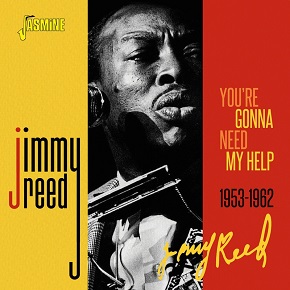
Jimmy Reed • You're Gonna Need My Help 1953-1962


Biography by Cub Koda
There's simply no sound in the blues as easily digestible, accessible, instantly recognizable, and as easy to play and sing as the music of Jimmy Reed. His best-known songs -- "Baby, What You Want Me to Do," "Bright Lights, Big City," "Honest I Do," "You Don't Have to Go," "Going to New York," "Ain't That Lovin' You Baby," and "Big Boss Man" -- have become such an integral part of the standard blues repertoire, it's almost as if they have existed forever. Because his style was simple and easily imitated, his songs were accessible to just about everyone from high-school garage bands having a go at it, to Elvis Presley, Charlie Rich, Lou Rawls, Hank Williams, Jr., and the Rolling Stones, making him, in the long run, perhaps the most influential bluesman of all. His bottom-string boogie rhythm guitar patterns (all furnished by boyhood friend and longtime musical partner Eddie Taylor), simple two-string turnarounds, country-ish harmonica solos (all played in a neck-rack attachment hung around his neck), and mush-mouthed vocals were probably the first exposure most white folks had to the blues. And his music -- lazy, loping, and insistent, constantly built on the same sturdy frame -- was a formula that proved to be enormously successful and influential, both with middle-aged blacks and young white audiences for a good dozen years. Jimmy Reed records hit the R&B charts with amazing frequency and crossed over onto the pop charts on many occasions, a rare feat for an unreconstructed bluesman. This is all the more amazing simply because Reed's music was nothing special on the surface; he possessed absolutely no technical expertise on either of his chosen instruments and his vocals certainly lacked the fierce declamatory intensity of a Howlin' Wolf or a Muddy Waters. But it was exactly that lack of in-your-face musical confrontation that made Jimmy Reed a welcome addition to everybody's record collection back in the '50s and '60s. And for those aspiring musicians who wanted to give the blues a try, either vocally or instrumentally (no matter what skin color you were born with), perhaps Billy Vera said it best in his liner notes to a Reed greatest-hits anthology: "Yes, anybody with a range of more than six notes could sing Jimmy's tunes and play them the first day Mom and Dad brought home that first guitar from Sears & Roebuck. I guess Jimmy could be termed the '50s punk bluesman."

Reed was born on September 6, 1925, on a plantation in or around the small burg of Dunleith, MS. He stayed around the area until he was 15, learning the basic rudiments of harmonica and guitar from his buddy Eddie Taylor, who was then making a name for himself as a semi-pro musician, working country suppers and juke joints. Reed moved up to Chicago in 1943, but was quickly drafted into the Navy where he served for two years. After a quick trip back to Mississippi and marriage to his beloved wife Mary (known to blues fans as "Mama Reed"), he relocated to Gary, Indiana, and found work at an Armour Foods meat packing plant while simultaneously breaking into the burgeoning blues scene around Gary and neighboring Chicago. The early '50s found him working as a sideman with John Brim's Gary Kings (that's Reed blowing harp on Brim's classic "Tough Times" and its instrumental flipside, "Gary Stomp") and playing on the street for tips with Willie Joe Duncan, a shadowy figure who played an amplified, homemade one-string instrument called a Unitar. After failing an audition with Chess Records (his later chart success would be a constant thorn in the side of the firm), Brim's drummer at the time -- improbably enough, future blues guitar legend Albert King -- brought him over to the newly formed Vee-Jay Records, where his first recordings were made. It was during this time that he was reunited and started playing again with Eddie Taylor, a musical partnership that would last off and on until Reed's death. Success was slow in coming, but when his third single, "You Don't Have to Go" backed with "Boogie in the Dark," made the number five slot on Billboard's R&B charts, the hits pretty much kept on coming for the next decade.

But if selling more records than Muddy Waters, Howlin' Wolf, Elmore James, or Little Walter brought the rewards of fame to his doorstep, no one was more ill-equipped to handle them than Jimmy Reed. With signing his name for fans being the total sum of his literacy, combined with a back-breaking road schedule once he became a name attraction and his self-description as a "liquor glutter," Reed started to fall apart like a cheap suit almost immediately. His devious schemes to tend to his alcoholism -- and the just plain aberrant behavior that came as a result of it -- quickly made him the laughingstock of his show-business contemporaries. Those who shared the bill with him in top-of-the-line R&B venues like the Apollo Theater -- where the story of him urinating on a star performer's dress in the wings has been repeated verbatim by more than one old-timer -- still shake their heads and wonder how Reed could actually stand up straight and perform, much less hold the audience in the palm of his hand. Other stories of Reed being "arrested" and thrown into a Chicago drunk tank the night before a recording session also reverberate throughout the blues community to this day. Little wonder then that when he was stricken with epilepsy in 1957, it went undiagnosed for an extended period of time, simply because he had experienced so many attacks of delirium tremens, better known as the "DTs." Eddie Taylor would relate how he sat directly in front of Reed in the studio, instructing him while the tune was being recorded exactly when to start to start singing, when to blow his harp, and when to do the turnarounds on his guitar. Jimmy Reed also appears, by all accounts, to have been unable to remember the lyrics to new songs -- even ones he had composed himself -- and Mama Reed would sit on a piano bench and whisper them into his ear, literally one line at a time. Blues fans who doubt this can clearly hear the proof on several of Jimmy's biggest hits, most notably "Big Boss Man" and "Bright Lights, Big City," where she steps into the fore and starts singing along with him in order to keep him on the beat.

But seemingly none of this mattered. While revisionist blues historians like to make a big deal about either the lack of variety of his work or how later recordings turned him into a mere parody of himself, the public just couldn't get enough of it. Jimmy Reed placed 11 songs on the Billboard Hot 100 pop charts and a total of 14 on the R&B charts, a figure that even a much more sophisticated artist like B.B. King couldn't top. To paraphrase the old saying, nobody liked Jimmy Reed but the people.

Reed's slow descent into the ravages of alcoholism and epilepsy roughly paralleled the decline of Vee-Jay Records, which went out of business at approximately the same time that his final 45 was released, "Don't Think I'm Through." His manager, Al Smith, quickly arranged a contract with the newly formed ABC-Bluesway label and a handful of albums were released into the '70s, all of them lacking the old charm, sounding as if they were cut on a musical assembly line. Jimmy did one last album, a horrible attempt to update his sound with funk beats and wah-wah pedals, before becoming a virtual recluse in his final years. He finally received proper medical attention for his epilepsy and quit drinking, but it was too late and he died trying to make a comeback on the blues festival circuit on August 29, 1976.

All of this is sad beyond belief, simply because there's so much joy in Jimmy Reed's music. And it's that joy that becomes self-evident every time you give one of his classic sides a spin. Although his bare-bones style influenced everyone from British Invasion combos to the entire school of Louisiana swamp blues artists (Slim Harpo and Jimmy Anderson in particular), the simple indisputable fact remains that -- like so many of the other originators in the genre -- there was only one Jimmy Reed.
https://www.allmusic.com/artist/jimmy-reed-mn0000076881/biography

//////////


Biografía de Cub Koda
Simplemente no hay un sonido en el blues tan fácilmente digerible, accesible, reconocible al instante y tan fácil de tocar y cantar como la música de Jimmy Reed. Sus canciones más conocidas - "Baby, What You Want Me to Do", "Bright Lights, Big City", "Honest I Do", "You Don't Have to Go", "Going to New York", "Ain't That Lovin' You Baby" y "Big Boss Man"- se han convertido en una parte tan integral del repertorio de blues estándar, que es casi como si hubieran existido siempre. Como su estilo era sencillo y fácil de imitar, sus canciones eran accesibles para casi todo el mundo, desde las bandas de garaje de los institutos hasta Elvis Presley, Charlie Rich, Lou Rawls, Hank Williams Jr. y los Rolling Stones, lo que le convierte, a la larga, en el bluesman más influyente de todos. Sus patrones de guitarra rítmica de boogie de cuerda inferior (todos ellos proporcionados por su amigo de la infancia y compañero musical de toda la vida, Eddie Taylor), sus sencillos giros de dos cuerdas, sus solos de armónica de estilo country (todos ellos tocados en un accesorio colgado en el cuello) y sus voces de boca de lobo fueron probablemente el primer contacto que la mayoría de la gente blanca tuvo con el blues. Y su música -perezosa, cadenciosa e insistente, constantemente construida sobre la misma estructura robusta- fue una fórmula que demostró ser enormemente exitosa e influyente, tanto con los negros de mediana edad como con el público blanco joven durante una buena docena de años. Los discos de Jimmy Reed llegaron a las listas de R&B con una frecuencia asombrosa y pasaron a las listas de pop en muchas ocasiones, una hazaña poco común para un bluesman no reconstruido. Esto es aún más sorprendente simplemente porque la música de Reed no era nada especial en la superficie; no poseía absolutamente ninguna pericia técnica en ninguno de sus instrumentos elegidos y su voz carecía ciertamente de la feroz intensidad declamatoria de un Howlin' Wolf o un Muddy Waters. Pero fue precisamente esa falta de confrontación musical lo que hizo que Jimmy Reed fuera una adición bienvenida a la colección de discos de todo el mundo en los años 50 y 60. Y para aquellos aspirantes a músicos que querían probar el blues, ya sea vocal o instrumentalmente (sin importar el color de la piel con el que se haya nacido), quizás Billy Vera lo dijo mejor en sus notas a una antología de grandes éxitos de Reed: "Sí, cualquiera con un rango de más de seis notas podía cantar las melodías de Jimmy y tocarlas el primer día que mamá y papá llevaron a casa esa primera guitarra de Sears & Roebuck. Supongo que Jimmy podría ser calificado como el bluesman punk de los 50".

Reed nació el 6 de septiembre de 1925 en una plantación en el pequeño pueblo de Dunleith, MS, o en sus alrededores. Permaneció en la zona hasta los 15 años, aprendiendo los rudimentos básicos de la armónica y la guitarra de su amigo Eddie Taylor, que entonces se estaba haciendo un nombre como músico semiprofesional, trabajando en cenas campestres y locales de música. Reed se trasladó a Chicago en 1943, pero rápidamente fue reclutado por la Marina, donde sirvió durante dos años. Después de un rápido viaje de vuelta a Mississippi y de casarse con su amada esposa Mary (conocida por los aficionados al blues como "Mama Reed"), se trasladó a Gary, Indiana, y encontró trabajo en una planta de envasado de carne de Armour Foods, al tiempo que se introducía en la floreciente escena del blues en los alrededores de Gary y la vecina Chicago. A principios de los años 50, trabajó como músico secundario con los Gary Kings de John Brim (Reed toca el arpa en el clásico de Brim "Tough Times" y en su reverso instrumental, "Gary Stomp") y tocaba en la calle a cambio de propinas con Willie Joe Duncan, una figura sombría que tocaba un instrumento amplificado y casero de una sola cuerda llamado Unitar. Tras fracasar en una audición con Chess Records (su posterior éxito en las listas de éxitos sería una espina constante en el costado de la empresa), el batería de Brim en ese momento -increíblemente, la futura leyenda de la guitarra de blues Albert King- lo llevó a la recién creada Vee-Jay Records, donde se realizaron sus primeras grabaciones. Fue durante esta época cuando se reunió y empezó a tocar de nuevo con Eddie Taylor, una asociación musical que duraría de forma intermitente hasta la muerte de Reed. El éxito tardó en llegar, pero cuando su tercer sencillo, "You Don't Have to Go", acompañado de "Boogie in the Dark", alcanzó el número cinco en las listas de R&B de Billboard, los éxitos siguieron llegando durante la siguiente década.

Pero si vender más discos que Muddy Waters, Howlin' Wolf, Elmore James o Little Walter le trajo las recompensas de la fama a su puerta, nadie estaba más mal preparado para manejarlas que Jimmy Reed. Con la firma de su nombre para los fans siendo la suma total de su alfabetización, combinada con un calendario de giras agotador una vez que se convirtió en una atracción de nombre y su autodescripción como un "glotón de licores", Reed comenzó a desmoronarse como un traje barato casi inmediatamente. Sus tortuosos planes para tratar su alcoholismo -y el comportamiento simplemente aberrante que se derivaba de ello- le convirtieron rápidamente en el hazmerreír de sus contemporáneos del mundo del espectáculo. Aquellos que compartieron cartel con él en los mejores locales de R&B, como el Teatro Apollo -donde más de un veterano ha repetido textualmente la historia de que orinó en el vestido de una artista estrella en los bastidores- todavía sacuden la cabeza y se preguntan cómo podía Reed mantenerse erguido y actuar, y mucho menos tener al público en la palma de su mano. Otras historias de que Reed fue "arrestado" y arrojado a una celda para borrachos de Chicago la noche anterior a una sesión de grabación también resuenan en la comunidad del blues hasta el día de hoy. No es de extrañar, pues, que cuando se vio afectado por la epilepsia en 1957, ésta permaneciera sin diagnosticar durante un largo período de tiempo, simplemente porque había experimentado muchos ataques de delirium tremens, más conocidos como "DT". Eddie Taylor relataría cómo se sentaba directamente frente a Reed en el estudio, instruyéndole mientras se grababa la melodía exactamente cuándo empezar a cantar, cuándo soplar su armónica y cuándo hacer los giros en su guitarra. También parece que Jimmy Reed era incapaz de recordar las letras de las canciones nuevas -incluso las que él mismo había compuesto- y Mama Reed se sentaba en un banco del piano y se las susurraba al oído, literalmente una línea cada vez. Los aficionados al blues que duden de esto pueden escuchar claramente la prueba en varios de los mayores éxitos de Jimmy, sobre todo en "Big Boss Man" y "Bright Lights, Big City", donde ella pasa a primer plano y se pone a cantar con él para mantenerlo en el ritmo.

Pero aparentemente nada de esto importaba. Aunque a los historiadores revisionistas del blues les gusta dar importancia a la falta de variedad de su obra o a cómo las grabaciones posteriores lo convirtieron en una mera parodia de sí mismo, el público simplemente no se cansaba de él. Jimmy Reed colocó 11 canciones en las listas de pop del Billboard Hot 100 y un total de 14 en las listas de R&B, una cifra que ni siquiera un artista mucho más sofisticado como B.B. King pudo superar. Parafraseando el viejo dicho, a nadie le gustaba Jimmy Reed sino a la gente.

El lento descenso de Reed hacia los estragos del alcoholismo y la epilepsia fue más o menos paralelo al declive de Vee-Jay Records, que quebró aproximadamente al mismo tiempo que se publicó su último 45, "Don't Think I'm Through". Su mánager, Al Smith, consiguió rápidamente un contrato con el recién creado sello ABC-Bluesway y se publicaron un puñado de álbumes en los años 70, todos ellos carentes del antiguo encanto, sonando como si hubieran sido cortados en una cadena de montaje musical. Jimmy hizo un último álbum, un horrible intento de actualizar su sonido con ritmos funk y pedales wah-wah, antes de convertirse en un virtual recluso en sus últimos años. Por fin recibió la atención médica adecuada para su epilepsia y dejó de beber, pero ya era demasiado tarde y murió intentando reaparecer en el circuito de festivales de blues el 29 de agosto de 1976.

Todo esto es muy triste, simplemente porque hay mucha alegría en la música de Jimmy Reed. Y es esa alegría la que se hace evidente cada vez que se le da una vuelta a uno de sus lados clásicos. Aunque su estilo básico influyó en todos, desde los combos de la Invasión Británica hasta toda la escuela de artistas de blues del pantano de Luisiana (Slim Harpo y Jimmy Anderson en particular), el simple hecho indiscutible es que -como muchos de los otros creadores del género- sólo hubo un Jimmy Reed.
https://www.allmusic.com/artist/jimmy-reed-mn0000076881/biography