Showing posts with label Joe Lovano. Show all posts

Sunday, May 17, 2026

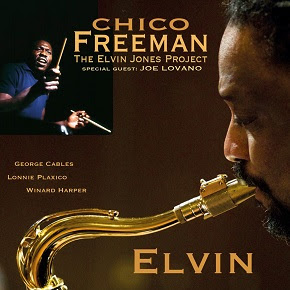
Chico Freeman • Elvin


Biography by Thom Jurek
Chico Freeman is a composer, bandleader, educator, and multi-reedist from Chicago. The scion of the late saxophonist Von Freeman, he has issued dozens of recordings as a leader, and played on hundreds more. While a member of Elvin Jones' group, he issued his debut album, Morning Prayer, for Japan's WhyNot label, and then signed to India Navigation for 1977's Chico, the first of a handful of now-classic albums for the label. Freeman's tenor tone is gritty and exuberant, yet intimate and resonant, capable of anguished cries and tender affirmations inside a moment. His music has been informed by the Chicago blues he played in clubs as a teen, bop and hard bop played by his dad, and bandleaders he served -- including Charles Mingus and Dizzy Gillespie -- John Coltrane's modal inventions, and the AACM's free excursions. Further, he learned about the interplay of Afro-Latin rhythms from Latin bandleaders he worked for including Tito Puente, Eddie Palmieri, Ray Barretto, Chucho Valdes, and Celia Cruz, to name scant few. Freeman's seminal Tradition in Transition was issued in 1982, after he played a major role in the famed Central Park Young Lions concert and film. He later played R&B with Michael Jackson and Earth, Wind & Fire, among others, and founded the Leaders, a jazz group of top-flight jazz composers and soloists. In 1990, he co-founded Roots with Nathan Davis, Sam Rivers, and Blythe, and played with smooth jazz, world fusion collective Brainstorm. In 1996, he issued the influential The Emissary, a post-bop world jazz outing. Freeman released a series of acclaimed albums during the 21st century including 2002's Out of Many Comes the One, 2012's Elvin, and 2015's Spoken Into Existence.

Freeman was born Earl Lavon Freeman, Jr., and nicknamed "Chico" by his dad. He started playing piano at age five, and began playing trumpet at ten, inspired by seeing his father sit in with the Miles Davis Quintet in Chicago. Though he was exposed to jazz early on, many of Freeman's early professional gigs were in Chicago clubs as a teen with blues artists including Memphis Slim and Lucky Carmichael. He switched to tenor sax while at Northwestern University, where he studied math, advanced composition, and theory. While studying for his master's in composition and theory at Governor State University with Muhal Richard Abrams, Freeman taught at the Association for the Advancement of Creative Musicians' (AACM) music school. He also played and studied with Fred Anderson, Adegoke Steve Colson, and his uncle, jazz-funk guitarist George Freeman. As a graduate student, he was the principal soloist in the university's big band and toured Brazil with them during the '70s. He won awards at the Notre Dame Jazz Festival in 1973.

After completing his master's, Freeman moved to New York, where he found work with Elvin Jones, Sun Ra, Sam Rivers, Jack DeJohnette, and Don Pullen. He began leading his own bands during the mid- to late '70s. Freeman released his debut, Morning Prayer, for Japan's WhyNot in 1976, and a year later signed a multi-album, non-exclusive deal with the independent India Navigation. Chico appeared in 1977 with a band that included pianist Abrams, drummer Steve McCall, and bassist Cecil McBee. Freeman also recorded for Les Koenig's Contemporary label during the period, issuing Beyond the Rain in 1978. This early period was prolific. Between 1977 and 1982, the two labels issued half a dozen albums of remarkable and lasting consistency and innovation: India Navigation released Kings of Mali, Spirit Sensitive, and The Outside Within, while Contemporary put forth Peaceful Heart, Gentle Spirit, and Destiny's Dance. Freeman also managed to issue his Black Saint leader debut, No Time Left, and Freeman & Freeman with his dad.

The year 1982 proved seminal in the saxophonist's career. He was part of the then-controversial Columbia album Fathers & Sons; he and Von were showcased on one side while Ellis and Wynton Marsalis led the other. Freeman played a major role in the filming of the Young Lions event that year in Central Park, showcasing the talents of rising jazz stars that included Bobby McFerrin, Marsalis, Paquito D'Rivera, Kevin Eubanks, and Anthony Davis at the dawn of the "new traditionalists" era. Freeman, always influenced by jazz history, reflected it and his new discoveries on the acclaimed Tradition in Transition for Elektra Musician and The Search, his final outing for India Navigation.

Freeman's relationship with Elektra continued on Tangents, featuring McFerrin, in 1984. When superstar bands were being organized by promoters in Europe, Freeman founded the Leaders, an all-star sextet of internationally recognized bandleaders. The original lineup included Cecil McBee, Kirk Lightsey, Lester Bowie, Arthur Blythe, and Famoudou Don Moye; they set the standard for eclectic and innovative music from a band comprised entirely of composers. The group issued Mudfoot for Blackhawk in 1986, the same year Freeman released The Pied Piper for the label, a quartet outing with former boss Jones, McBee, and pianist Kenny Kirkland. He followed a year later with Tales of Ellington, cut in several sessions with a variety of top-shelf musicians including Jones, McBee, Herbie Lewis, Larry Willis, Cables, and John Purcell. In 1988, the Leaders issued Out Here Like This... on Black Saint, and followed with Unforseen Blessings a year later, while Freeman cut Lord Riff and Me for WhyNot; the latter remained unreleased until 2010.

In 1989, Freeman entered a new phase in his career. He released You'll Know When You Get There with Von on Black Saint, and formed the electric band Brainstorm consisting of himself, vocalist/keyboardist Delmar Brown, percussionist Norman Hedman, drummer Archie Walker, and bassist Chris Walker. He produced their debut album, The Mystical Dreamer, recorded in Paris for In+Out. It drew positive reviews in Europe for its mix of Afro-Latin rhythms and harmonies, funk and hip-hop energy, post-bop tradition, and technological polish. American critics simply didn't get it. Undaunted, Brainstorm released the live Sweet Explosion in 1990, with a new rhythm section including drummer Tommy Campbell and bassist Alex Blake. That same year, Freeman contributed to Kip Hanrahan's Tenderness as part of an astonishing lineup. 1991 saw Freeman play sideman to British pop singer Mari Wilson on The Rhythm Romance, and vibraphonist Jay Hoggard on Days Like These. He also co-led and produced Luminous with Blythe.

In 1992, Freeman formed another leader-based collective called Roots with Blythe, Sam Rivers, Nathan Davis, Pullen, Santi Debriano, and Campbell. Their debut album was entitled Roots Salutes the Saxophone in honor of the 100th anniversary of Adolphe Sax's reed instrument. He also released Up and Down, for Black Saint, a trio offering with bassist Tiziana Ghiglioni and pianist Mal Waldron. Brazilian jazz percussion hero and former Weather Report drummer Dom Um Romão recruited Freeman for the album Saudades on Water Lily Acoustics. Freeman led a pair of outings the following year -- Groovin' Late with Kenny Barron, Freddie Waits, and Debriano, and the third Brainstorm outing, Threshold -- followed by Roots' second album, Stablemates, with drummer Idris Muhammad in the lineup.

The Leaders resumed recording in 1994 with Slipping and Sliding for Italy's Soundhill Records and continued to tour the globe. The Chico Freeman Quintet with Arthur Blythe released a pair of critically lauded albums over the next two years: The Unspoken Word for Ronnie Scott's Jazz House label and Focus for Contemporary, while Roots released Saying Something on In+Out. Freeman issued The Emissary in 1996, an electro-acoustic outing that crossed post-bop, African, and Latin sounds. European critics flipped for its seamless meld of sounds and rhythms. For the remainder of the decade, Freeman worked as a sideman in the studio and on-stage. He played on dates by Carmen Lundy and Blythe, in Sam Rivers' Rivbea All-Star Orchestra, with DeJohnette on Festival, and released Von Freeman's 75th Birthday Celebration: Live at The Blue Note, featuring his father as guest soloist.

From the beginning of the new century, Freeman was a resident of the European Union, though he visited the States often to tour. His first date as a leader in the 21st was Oh, By the Way by Chico Freeman y Guataca, a Latin jazz ensemble he assembled with old friend Hilton Ruiz on piano. In 2003, Freeman returned the favor; he played on the pianist's acclaimed Enchantment, while the other tenor player on the session was Joe Henderson. A new incarnation of the Leaders released the widely acclaimed Spirits Alike for Double Moon Records in 2006. It featured trumpeter Eddie Henderson replacing the deceased Bowie, drummer Billy Hart, alto saxophonist Bobby Watson, and pianist Fred Harris; only McBee and Freeman remained from the original lineup. That year also saw the release of Out of Many Comes the One, with the saxophonist leading a post-bop-cum-world-jazz quintet that featured Russian pianist Misha Tsiganov.

Freeman spent the next several years wandering Europe and teaching. In 2010, Candid finally released Lord Riff and Me after 21 years in the vault. Originally recorded for WhyNot in 1989, it included Von and Chico on the front line with Hart, McBee, and Cables. Its issue was celebrated throughout the world's jazz community. That same year, David Murray & Chico Freeman with Ozay appeared from ITM. The Turkish vocalist was backed by the two saxophonists, drummer Pheeroan Ak Laff, Lightsey and D.D. Jackson on piano, Calvin Jones on bass, and Billy Bang on violin. In 2012, Elvin: The Elvin Jones Project appeared, upon which Freeman was joined by an A-list American rhythm section of Cables on piano, bassist Lonnie Plaxico, and Winard Harper on drums, with tenorist Joe Lovano guesting on two tracks.

In 2015, the saxophonist worked with the Austrian Jive Music label to release the widely acclaimed Spoken Into Existence, by the Chico Freeman 4-Tet. Produced by the saxophonist, the lineup included bassist Heiri Känzig, with whom Freeman formed a creative partnership; a few months later, the pair issued The Arrival, a duo offering on Switzerland's Intakt Records. Freeman and his uncle George Freeman collaborated on the acclaimed All in the Family for the Chicago-based Southport Records label with Hamid Drake, bassist Harrison Bankhead, and guitarist Mike Allemana.

In early 2016, Chico Freeman guested on Greek fusion guitarist Lefteris Christofis' ManTis as part of an international quartet. That same year, Dawid Kostka Quartet & Chico Freeman, Live at Aquanet Jazz Festival, Poznań was released on Poland's Era Jazzu label. In 2018, Freeman played in the large studio band that Kip Hanrahan assembled for the American Clave release Crescent Moon Waning.

In March 2020, Freeman caught the last flight out of Moscow before the borders closed due to COVID-19; however, he had no way of traveling to the U.S. Locked down in Europe and self-quarantined, he watched the pandemic's effects unfold across the globe. Desiring to contribute in some way, he reached out to his online musical family to do something to help heal and inspire. Freeman chose the Bill Withers' song "You Just Can't Smile It Away." He enlisted Texas gospel singer Yatron in Texas, keyboardist Jeremy Mage in Switzerland, and synthesist Jan Pulsford in London. After cutting the track, Merlyn Bruce mixed it at London's Mothership Studios for release by Efficacy Recordings. The label and Freeman designated all proceeds from the track be donated to the charity Chicago HOPES for Kids.
https://www.allmusic.com/artist/chico-freeman-mn0000110829#biography

///////

Biografía de Thom Jurek
Chico Freeman es compositor, director de orquesta, educador y reedista múltiple de Chicago. Descendiente del difunto saxofonista Von Freeman, ha publicado docenas de grabaciones como líder y ha tocado en cientos más. Mientras era miembro del grupo de Elvin Jones, lanzó su álbum debut, Morning Prayer, para el sello WhyNot de Japón, y luego firmó con India Navigation para Chico de 1977, el primero de un puñado de álbumes ahora clásicos para el sello. El tono tenor de Freeman es arenoso y exuberante, pero íntimo y resonante, capaz de gritos angustiados y tiernas afirmaciones en un momento. Su música ha sido informada por el blues de Chicago que tocó en clubes cuando era adolescente, el bop y el hard bop tocados por su padre y los directores de orquesta a los que sirvió, incluidos Charles Mingus y Dizzy Gillespie, los inventos modales de John Coltrane y las excursiones gratuitas de la AACM. Además, aprendió sobre la interacción de los ritmos afrolatinos de directores de orquesta latinos para los que trabajó, incluidos Tito Puente, Eddie Palmieri, Ray Barretto, Chucho Valdés y Celia Cruz, por nombrar algunos. La tradición seminal de Freeman en Transición se publicó en 1982, después de que desempeñara un papel importante en el famoso concierto y película de Central Park Young Lions. Más tarde tocó R & B con Michael Jackson y Earth, Wind & Fire, entre otros, y fundó the Leaders, un grupo de jazz de compositores y solistas de jazz de primer nivel. En 1990, cofundó Roots con Nathan Davis, Sam Rivers y Blythe, y tocó con smooth jazz, el colectivo mundial de fusión Brainstorm. En 1996, publicó el influyente The Emissary, una salida de jazz mundial posterior al bop. Freeman lanzó una serie de álbumes aclamados durante el siglo XXI, incluidos Out of Many Comes the One de 2002, Elvin de 2012 y Spoken Into Existence de 2015.

Freeman nació Earl Lavon Freeman, Jr., y su padre lo apodó "Chico". Comenzó a tocar el piano a los cinco años y comenzó a tocar la trompeta a los diez, inspirado por ver a su padre sentarse con el Quinteto Miles Davis en Chicago. Aunque estuvo expuesto al jazz desde el principio, muchos de los primeros conciertos profesionales de Freeman fueron en clubes de Chicago cuando era adolescente con artistas de blues como Memphis Slim y Lucky Carmichael. Cambió al saxo tenor mientras estaba en la Universidad Northwestern, donde estudió matemáticas, composición avanzada y teoría. Mientras estudiaba su maestría en composición y teoría en la Universidad Governor State con Muhal Richard Abrams, Freeman enseñó en la escuela de música de la Asociación para el Avance de los Músicos Creativos (AACM). También tocó y estudió con Fred Anderson, Adegoke Steve Colson y su tío, el guitarrista de jazz-funk George Freeman. Como estudiante de posgrado, fue el solista principal de la big band de la universidad y realizó una gira por Brasil con ellos durante los años 70. Ganó premios en el Festival de Jazz de Notre Dame en 1973.

Después de completar su maestría, Freeman se mudó a Nueva York, donde encontró trabajo con Elvin Jones, Sun Ra, Sam Rivers, Jack DeJohnette y Don Pullen. Comenzó a liderar sus propias bandas a mediados y finales de los 70. Freeman lanzó su debut, Morning Prayer, para Whynot de Japón en 1976, y un año después firmó un contrato de varios álbumes y no exclusivo con la independiente India Navigation. Chico apareció en 1977 con una banda que incluía al pianista Abrams, el baterista Steve McCall y el bajista Cecil McBee. Freeman también grabó para el sello contemporáneo de Les Koenig durante ese período, publicando Beyond the Rain en 1978. Este primer período fue prolífico. Entre 1977 y 1982, los dos sellos publicaron media docena de álbumes de notable y duradera consistencia e innovación: India Navigation lanzó Kings of Mali, Spirit Sensitive y The Outside Within, mientras que Contemporary lanzó Peaceful Heart, Gentle Spirit y Destiny's Dance. Freeman también logró emitir su debut como líder de Black Saint, No Time Left, y Freeman & Freeman con su papá.

El año 1982 resultó fundamental en la carrera del saxofonista. Formó parte del entonces controvertido álbum de Columbia Fathers & Sons; él y Von se exhibieron en un lado, mientras que Ellis y Wynton Marsalis dirigieron el otro. Freeman jugó un papel importante en la filmación del evento Young Lions ese año en Central Park, mostrando el talento de estrellas emergentes del jazz que incluían a Bobby McFerrin, Marsalis, Paquito D'Rivera, Kevin Eubanks y Anthony Davis en los albores de la era de los "nuevos tradicionalistas". Freeman, siempre influenciado por la historia del jazz, lo reflejó y sus nuevos descubrimientos en la aclamada Tradición en Transición para Elektra Musician y The Search, su última salida para Navegar por la India.

La relación de Freeman con Elektra continuó en Tangents, con McFerrin, en 1984. Cuando las bandas superestrellas estaban siendo organizadas por promotores en Europa, Freeman fundó the Leaders, un sexteto de estrellas de líderes de bandas reconocidos internacionalmente. La formación original incluía a Cecil McBee, Kirk Lightsey, Lester Bowie, Arthur Blythe y Famoudou Don Moye; establecieron el estándar para la música ecléctica e innovadora de una banda compuesta íntegramente por compositores. El grupo emitió Mudfoot para Blackhawk en 1986, el mismo año en que Freeman lanzó The Pied Piper para el sello, una salida de cuarteto con el exjefe Jones, McBee y el pianista Kenny Kirkland. Siguió un año después con Tales of Ellington, grabado en varias sesiones con una variedad de músicos de primer nivel, incluidos Jones, McBee, Herbie Lewis, Larry Willis, Cables y John Purcell. En 1988, los Líderes emitieron Aquí Así... en Black Saint, y siguió con Unforseen Blessings un año después, mientras que Freeman grabó Lord Riff and Me para WhyNot; este último permaneció inédito hasta 2010.

En 1989, Freeman entró en una nueva fase de su carrera. Lanzó You'll Know When You Get There con Von en Black Saint, y formó la banda eléctrica Brainstorm compuesta por él mismo, el vocalista/tecladista Delmar Brown, el percusionista Norman Hedman, el baterista Archie Walker y el bajista Chris Walker. Produjo su álbum debut, The Mystical Dreamer, grabado en París para In + Out. Obtuvo críticas positivas en Europa por su mezcla de ritmos y armonías afrolatinas, energía funk y hip-hop, tradición post-bop y pulido tecnológico. Los críticos estadounidenses simplemente no lo entendieron. Sin desanimarse, Brainstorm lanzó el Sweet Explosion en vivo en 1990, con una nueva sección rítmica que incluía al baterista Tommy Campbell y al bajista Alex Blake. Ese mismo año, Freeman contribuyó a la ternura de Kip Hanrahan como parte de una alineación asombrosa. En 1991, Freeman interpretó al acompañante de la cantante pop británica Mari Wilson en The Rhythm Romance, y al vibrafonista Jay Hoggard en Days Like These. También codirigió y produjo Luminous con Blythe.

En 1992, Freeman formó otro colectivo basado en líderes llamado Roots con Blythe, Sam Rivers, Nathan Davis, Pullen, Santi Debriano y Campbell. Su álbum debut se tituló Roots Salutes the Saxophone en honor al centenario del instrumento de lengüeta de Adolphe Sax. También lanzó Up and Down, para Black Saint, una oferta de trío con la bajista Tiziana Ghiglioni y el pianista Mal Waldron. El héroe brasileño de percusión de jazz y ex baterista de Weather Report, Dom Um Romão, reclutó a Freeman para el álbum Saudades en Water Lily Acoustics. Freeman dirigió un par de salidas al año siguiente: Groovin ' Late con Kenny Barron, Freddie Waits y Debriano , y la tercera salida de Lluvia de ideas, Threshold, seguida del segundo álbum de Roots, Stablemates, con el baterista Idris Muhammad en la alineación.

The Leaders reanudaron la grabación en 1994 con Slipping and Sliding para Soundhill Records de Italia y continuaron recorriendo el mundo. El Quinteto Chico Freeman con Arthur Blythe lanzó un par de álbumes aclamados por la crítica durante los siguientes dos años: The Unspoken Word para el sello Jazz House de Ronnie Scott y Focus for Contemporary, mientras que Roots lanzó Saying Something en In + Out. Freeman lanzó The Emissary en 1996, una salida electroacústica que cruzó sonidos post-bop, africanos y latinos. Los críticos europeos voltearon por su perfecta fusión de sonidos y ritmos. Durante el resto de la década, Freeman trabajó como acompañante en el estudio y en el escenario. Tocó en fechas de Carmen Lundy y Blythe, en la Rivbea All-Star Orchestra de Sam Rivers, con DeJohnette en el Festival, y lanzó Von Freeman's 75th Birthday Celebration: Live at The Blue Note, con su padre como solista invitado.

Desde principios del nuevo siglo, Freeman era residente de la Unión Europea, aunque visitaba los Estados a menudo para hacer giras. Su primera cita como líder en el 21 fue Oh, By the Way de Chico Freeman y Guataca, un conjunto de jazz latino que armó con su viejo amigo Hilton Ruiz al piano. En 2003, Freeman le devolvió el favor; tocó en el aclamado Enchantment del pianista, mientras que el otro tenor en la sesión fue Joe Henderson. Una nueva encarnación de The Leaders lanzó los aclamados Spirits por igual para Double Moon Records en 2006. Contó con el trompetista Eddie Henderson reemplazando al difunto Bowie, el baterista Billy Hart, el saxofonista alto Bobby Watson y el pianista Fred Harris; solo McBee y Freeman permanecieron de la formación original. Ese año también vio el lanzamiento de Out of Many Comes the One, con el saxofonista liderando un quinteto de jazz post-bop-cum-world que contó con la pianista rusa Misha Tsiganov.

Freeman pasó los siguientes años vagando por Europa y enseñando. En 2010, Candid finalmente lanzó Lord Riff and Me después de 21 años en The vault. Grabado originalmente para WhyNot en 1989, incluía a Von y Chico en primera línea con Hart, McBee y Cables. Su edición fue celebrada en toda la comunidad jazzística del mundo. Ese mismo año, David Murray y Chico Freeman con Ozay aparecieron en ITM. El vocalista turco fue respaldado por los dos saxofonistas, el baterista Pheeroan Ak Laff, Lightsey y D. D. Jackson al piano, Calvin Jones al bajo y Billy Bang al violín. En 2012, apareció Elvin: The Elvin Jones Project, al que se unió Freeman con una sección rítmica estadounidense de primera categoría de Cables al piano, el bajista Lonnie Plaxico y Winard Harper a la batería, con el tenor Joe Lovano como invitado en dos pistas.

En 2015, el saxofonista trabajó con el sello austriaco Jive Music para lanzar el aclamado Spoken Into Existence, de Chico Freeman 4-Tet. Producida por el saxofonista, la formación incluía al bajista Heiri Känzig, con quien Freeman formó una asociación creativa; unos meses más tarde, la pareja lanzó The Arrival, una oferta de dúo en Intakt Records de Suiza. Freeman y su tío George Freeman colaboraron en el aclamado All in the Family para el sello Southport Records, con sede en Chicago, con Hamid Drake, el bajista Harrison Bankhead y el guitarrista Mike Allemana.

A principios de 2016, Chico Freeman invitó al guitarrista de fusión griego Lefteris Christofis a ManTis como parte de un cuarteto internacional. Ese mismo año, Dawid Kostka Quartet & Chico Freeman, Live at Aquanet Jazz Festival, Poznań fue lanzado en el sello polaco Era Jazzu. En 2018, Freeman tocó en la gran banda de estudio que Kip Hanrahan reunió para el lanzamiento estadounidense de Clave Crescent Moon Waning.

En marzo de 2020, Freeman tomó el último vuelo fuera de Moscú antes de que se cerraran las fronteras debido al COVID-19; sin embargo, no tenía forma de viajar a EE.UU. Encerrado en Europa y en cuarentena automática, observó cómo se desarrollaban los efectos de la pandemia en todo el mundo. Deseando contribuir de alguna manera, se acercó a su familia musical en línea para hacer algo que lo ayudara a sanar e inspirar. Freeman eligió la canción de Bill Withers " You Just Can't Smile It Away."Reclutó al cantante de gospel de Texas Yatron en Texas, al tecladista Jeremy Mage en Suiza y al sintetizador Jan Pulsford en Londres. Después de cortar la pista, Merlyn Bruce la mezcló en los estudios Mothership de Londres para su lanzamiento por Efficacy Recordings. El sello y Freeman designaron que todas las ganancias de la pista fueran donadas a la organización benéfica Chicago HOPES for Kids.
https://www.allmusic.com/artist/chico-freeman-mn0000110829#biography


chicofreeman.com ...


Tuesday, March 31, 2026

Chico Freeman • Elvinː Tribute to Elvin Jones


Description from JazzTimes review:
Saxophonist Chico Freeman pays tribute to the legendary drummer Elvin Jones with a spirited collection that honors Jones's powerful polyrhythmic style and collaborative spirit. Freeman assembled The Elvin Jones Project specifically for this recording, bringing together an ensemble of accomplished musicians who had all worked with or been inspired by Jones. The album features both Jones originals and compositions written in his honor, capturing the explosive energy and deep swing that made Jones one of jazz's most influential drummers.

///////


Descripción de la reseña de JazzTimes:
El saxofonista Chico Freeman rinde homenaje al legendario baterista Elvin Jones con una colección enérgica que honra el poderoso estilo polirrítmico y el espíritu colaborativo de Jones. Freeman reunió The Elvin Jones Project específicamente para esta grabación, reuniendo un ensamble de músicos consumados que habían trabajado con Jones o habían sido inspirados por él. El álbum presenta tanto originales de Jones como composiciones escritas en su honor, capturando la energía explosiva y el swing profundo que hicieron de Jones uno de los bateristas más influyentes del jazz.


Tuesday, March 24, 2026

Joe Lovano • Folk Art


Biography:
Grammy-winning saxophonist, composer and producer Joe Lovano is fearless in finding new modes of artistic expression. With a Grammy Win for his 52nd Street Themes and 14 other nominations, he has won Down Beat Magazine’s Critics and Readers Polls countless times as Tenor Saxophonist, Musician of the Year, Jazz Album of the Year and Triple Crowns from Downbeat. He has also gotten numerous awards from Jazz Times and the Jazz Journalists Association for Tenor Saxophone, Album of the Year and Musician of the Year.

Born in Cleveland, Ohio on December 29, 1952 he attended the famed Berklee College of Music in Boston where years later he was awarded an Honorary Doctorate. Since 2001 he has held the Gary Burton Chair in Jazz Performance and is a founding faculty member since 2009 of the Global Jazz Institute at Berklee directed by Danilo Perez. He is a guest lecturer at New York University’s Jazz Program, Juilliard and Manhattan School of Music as well as Clinician at Universities around the globe.

He has toured with jazz greats such as Woody Herman Thundering Herd, Dr. Lonnie Smith, Jack McDuff, Mel Lewis Jazz Orchestra, Paul Motian Trio, Charlie Haden Liberation Music Orchestra, Carla Bley Band, Elvin Jones Jazz Machine, Saxophone Summit and has created a body of work for his own large ensembles including strings, woodwinds, voice as well as his Horn-rich Nonet and more recently his UsFive group with double drummers which has been gathering kudos world-wide!

Since 1991 Lovano has been recording as a leader for Blue Note Records. “Joe Lovano Quartet: Classic! Live at Newport” featuring Hank Jones was recorded in 2005 and released in 2016 marking his 25th recording for the label.

Joe has also performed and recorded with a long list of jazz greats including Woody Herman, Mel Lewis, Bob Brookmeyer, Paul Motian, Bill Frisell, Tony Bennett, Abbey Lincoln, Charlie Haden, John Scofield, Gunther Schuller, Elvin Jones, McCoy Tyner, Ed Blackwell, Herbie Hancock, Dave Holland, Hank Jones, Dave Liebman, Michael Brecker, Dave Douglas, Judi Silvano, Ravi Coltrane, Chucho Valdez, Ornette Coleman and many others.

In addition, composer Mark Anthony Turnage wrote a Concerto for Saxophone and Chamber Orchestra for Joe called “A Man Descending” which has been performed globally and Maestro Michael Abene orchestrated an album of all-Lovano originals called “Symphonica” for the WDR Symphonic Orchestra and Big Band, which was released on Blue Note and received a Grammy nomination.

Joe Lovano continues to explore new horizons within the world of music as a soloist, band leader and composer.
https://www.allaboutjazz.com/musicians/joe-lovano

///////

Biografía:
El saxofonista, compositor y productor Joe Lovano, ganador de un Grammy, no tiene miedo a la hora de encontrar nuevos modos de expresión artística. Ganador de un Grammy por sus 52nd Street Themes y otras 14 nominaciones, ha ganado innumerables veces las encuestas de críticos y lectores de la revista Down Beat como saxofonista tenor, músico del año, álbum de jazz del año y triple corona de Downbeat. También ha obtenido numerosos premios del Jazz Times y de la Jazz Journalists Association como Saxofón Tenor, Álbum del Año y Músico del Año.

Nacido en Cleveland, Ohio, el 29 de diciembre de 1952, estudió en el famoso Berklee College of Music de Boston, donde años más tarde se le concedió el Doctorado Honoris Causa. Desde 2001 ocupa la cátedra Gary Burton de Interpretación de Jazz y es miembro fundador desde 2009 del Global Jazz Institute de Berklee dirigido por Danilo Pérez. Es profesor invitado en el Programa de Jazz de la Universidad de Nueva York, en Juilliard y en la Manhattan School of Music, así como clínico en universidades de todo el mundo.

Ha realizado giras con grandes del jazz como Woody Herman Thundering Herd, Dr. Lonnie Smith, Jack McDuff, Mel Lewis Jazz Orchestra, Paul Motian Trio, Charlie Haden Liberation Music Orchestra, Carla Bley Band, Elvin Jones Jazz Machine, Saxophone Summit y ha creado un corpus de obras para sus propios grandes conjuntos, que incluyen cuerdas, maderas y voz, así como su Horn-rich Nonet y, más recientemente, su grupo UsFive con doble batería, que ha cosechado elogios en todo el mundo.

Desde 1991, Lovano graba como líder para Blue Note Records. "Joe Lovano Quartet: ¡Classic! Live at Newport" con Hank Jones fue grabado en 2005 y lanzado en 2016 marcando su 25ª grabación para el sello.

Joe también ha tocado y grabado con una larga lista de grandes del jazz como Woody Herman, Mel Lewis, Bob Brookmeyer, Paul Motian, Bill Frisell, Tony Bennett, Abbey Lincoln, Charlie Haden, John Scofield, Gunther Schuller, Elvin Jones, McCoy Tyner, Ed Blackwell, Herbie Hancock, Dave Holland, Hank Jones, Dave Liebman, Michael Brecker, Dave Douglas, Judi Silvano, Ravi Coltrane, Chucho Valdez, Ornette Coleman y muchos otros.

Además, el compositor Mark Anthony Turnage escribió para Joe un concierto para saxofón y orquesta de cámara titulado "A Man Descending", que se ha interpretado en todo el mundo, y el maestro Michael Abene orquestó un álbum de originales de Lovano titulado "Symphonica" para la WDR Symphonic Orchestra and Big Band, que se publicó en Blue Note y recibió una nominación a los Grammy.

Joe Lovano sigue explorando nuevos horizontes en el mundo de la música como solista, líder de banda y compositor.
https://www.allaboutjazz.com/musicians/joe-lovano


www.joelovano.com ...


Thursday, May 15, 2025

Paul Motian • One Time Out


Este album del batería Paul Motian, está concebido en un formato inusual en el. Utiliza la guitarra electrica del magnifico, Bill Frisel y el poderoso saxo tenor de Joe Lovano para construir un discurso y una musica intensa. Un disco muy intesante de un musico que avanza en este disco por los caminos mas aventurados del jazz.
https://apoloybaco.com/jazz/paul-motian-one-time-out/

///////


Review by Scott Yanow
The key to this unusual trio is not the muscular tenor of Joe Lovano or the propulsive timekeeping of the drummer/leader but the remarkable guitarist Bill Frisell. Able to somehow produce sounds from this guitar that could be mistaken for a keyboard or a steel guitar, in styles ranging from heavy metal and avant-garde jazz to country music, Frisell is the reason that the trio can sound like a full band despite not having a keyboardist or a bassist. The music, which includes seven Motian originals along with "Monk's Mood" and "If You Could See Me Now," features both intense three-way free improvisations and introspective spacey ballads. Few of the tunes themselves will stick in one's mind (although "Morpion" could be an imaginary meeting betwee 1966 John Coltrane and Jimi Hendrix) but it is the basic sound of the unique group that makes the CD of great interest.
https://www.allmusic.com/album/one-time-out-mw0000316600


paulmotian.com ...


Friday, May 9, 2025

Joe Lovano • Homage


Review by Matt Collar
Tenor saxophonist Joe Lovano and Polish pianist Marcin Wasilewski reunite for their second collaboration, 2025's harmonically unfettered, free-leaning Homage. The album, which follows their 2022 duet Arctic Riff, builds nicely upon their intuitive sense of group interplay, moving between deftly composed works and wholly improvised ones. Joining them once again is Wasilewski's trio featuring bassist Sławomir Kurkiewicz and drummer Michał Miśkiewicz. This is the same group that earned acclaim for their work with the late trumpeter Tomasz Stanko and who bring an equally empathetic approach to playing with Lovano. Cuts like the opening "Love in the Garden" and "Golden Horn" have a tender, sun-dappled quality that conjures a striking blend of John Coltrane and Duke Ellington's later career small group work. Equally evocative is "This Side - Catville" which evokes the swinging, off-kilter free bop of the Ornette Coleman quartet. Yet more esoteric are Lovano's two solo performances: the moody saxophone piece "Giving Thanks" and his textured percussion work on "Projection." While those solo tracks certainly pull the listener deeper into Lovano's dreamy, stream-of-consciousness lyricism, the album is most compelling when the players combine their voices. This is underscored on the title track, a free improvisation that finds Lovano spiraling melodic ideas off Wasilewski as the trio responds in kind. With Homage, Lovano and Wasilewski remain adventurous, kindred spirits.
https://www.allmusic.com/album/homage-mw0004486168

///////


Crítica de Matt Collar
El saxofonista tenor Joe Lovano y el pianista polaco Marcin Wasilewski se reúnen para su segunda colaboración, Homage, de 2025. El álbum, que sigue a su dúo de 2022 Arctic Riff, se basa en su intuitivo sentido de la interacción de grupo, moviéndose entre obras hábilmente compuestas y otras totalmente improvisadas. A ellos se une de nuevo el trío de Wasilewski, con el bajista Sławomir Kurkiewicz y el batería Michał Miśkiewicz. Se trata del mismo grupo que fue aclamado por su trabajo con el fallecido trompetista Tomasz Stanko y que aporta un enfoque igual de empático al tocar con Lovano. Cortes como el inicial «Love in the Garden» y «Golden Horn» tienen una cualidad tierna y bañada por el sol que evoca una sorprendente mezcla de John Coltrane y el trabajo en pequeño grupo de Duke Ellington en los últimos años de su carrera. Igualmente evocador es «This Side - Catville», que evoca el swing y el free bop del cuarteto de Ornette Coleman. Aún más esotéricas son las dos interpretaciones en solitario de Lovano: la taciturna pieza de saxofón «Giving Thanks» y su texturizado trabajo de percusión en «Projection». Si bien es cierto que estos solos sumergen al oyente en el lirismo ensoñador e inconsciente de Lovano, el álbum resulta más convincente cuando los músicos combinan sus voces. Esto queda patente en la canción que da título al disco, una improvisación libre en la que Lovano lanza ideas melódicas en espiral a Wasilewski mientras el trío responde de la misma manera. Con Homage, Lovano y Wasilewski siguen siendo espíritus aventureros y afines.
https://www.allmusic.com/album/homage-mw0004486168


Saturday, April 19, 2025

Lonnie Smith • Afrodesia

The Afrodesia album has been reissued a number of times since 1975, with different tracks and different names for the same songs, etc. It's quite a mess. This reissue is from 1996 and should be seen as a compilation album, as there are tracks from not only the original Afro-Desia album, but also from the Funk Reaction album.

///////

The Afrodesia album has been reissued a number of times since 1975, with different tracks and different names for the same songs, etc. It's quite a mess. This reissue is from 1996 and should be seen as a compilation album, as there are tracks from not only the original Afro-Desia album, but also from the Funk Reaction album.

www.drlonniesmith.com ...


Sunday, February 16, 2025

Dave Liebman-Joe Lovano • Compassion, The Music of John Coltrane


In 2007 BBC Radio commissioned saxophonist Dave Liebman to record an all-Coltrane program to mark the 40th anniversary of legendary saxophonist/composer John Coltrane's passing. Asked to bring in Saxophone Summit—the band Liebman co-led with fellow saxophonists Joe Lovano and Ravi Coltrane—Liebman managed to assemble regular members Lovano, pianist Phil Markowitz, and drummer Billy Hart, along with bassist Ron McClure as a substitute for the unavailable Cecil McBee. Ten years later, the session is being released to commemorate the 50th anniversary of Coltrane's passing on July 17, 1967.

Billy Hart says that "we're all just unbelievable Coltrane fans." If the playing alone wasn't enough to show that, there's also the evidence of Liebman's album Homage To John Coltrane (Owl Records), going back to 1987. This set opens with "Locomotion," a distinctive take on the blues from Blue Train (Blue Note, 1958). The tune contains the germs of many later Coltrane works, and makes a great launching point, the classic two tenor lineup dueling with each other and egging each other on. A ballad medley showcases the two horns individually—Lovano on tenor for "Central Park West" from Coltrane's Sound (Atlantic, 1964; but recorded in 1960); Liebman on soprano for "Dear Lord" from Transition (Impulse!, 1970, but recorded in 1965). This spiritual ballad has long had a special place for Liebman, and is the only composition repeated from his early tribute album.

"Olé" from Olé Coltrane (Atlantic, 1961) represents Coltrane's long term interest in world music, which later came out in tunes like "India" and "Brazilia." After an introduction featuring wood flute and flute, the Spanish-tinged melody is introduced by tenor and soprano saxophones. "Reverend King" from Cosmic Music (Impulse!, 1968, but recorded in 1966) features Liebman on flute, accompanied by Lovano's alto clarinet: a lovely combination unique to this track. "Equinox" (also from Coltrane's Sound) is another blues, returning to the tenor/soprano combination. The album closes with "Compassion" from Meditations (Impulse!, 1966), dipping into Trane's late period. It gives Hart a solo showcase before launching into the free group improvisation with little steady pulse or set harmonic progressions that typifies late Coltrane. The band is so comfortable with this approach that they play it much like the earlier material: a bit more outside, but there is no sharp dividing line.

John Coltrane's career was so compressed that the compositions here—recorded between 1958 and 1966—represent six distinct stylistic phases. The more-or-less chronological presentation demonstrates how far he progressed in such a brief period, as well as how he maintained his own voice all the way. Coltrane's music needs no defense, but these players make an excellent case for it all the same.
By Mark Sullivan
August 3, 2017
https://www.allaboutjazz.com/compassion-the-music-of-john-coltrane-dave-liebman-resonance-records-review-by-mark-sullivan

///////


En 2007, BBC Radio encargó al saxofonista Dave Liebman que grabara un programa exclusivamente de Coltrane para conmemorar el 40.º aniversario del fallecimiento del legendario saxofonista y compositor John Coltrane. Cuando se le pidió que trajera a Saxophone Summit, la banda que Liebman codirigió con sus compañeros saxofonistas Joe Lovano y Ravi Coltrane, Liebman logró reunir a los miembros regulares Lovano, el pianista Phil Markowitz y el baterista Billy Hart, junto con el bajista Ron McClure como sustituto del no disponible. Cecil McBee. Diez años después, la sesión se publica para conmemorar el 50 aniversario del fallecimiento de Coltrane el 17 de julio de 1967.

Billy Hart dice que "todos somos fanáticos increíbles de Coltrane". Si tocar solo no fue suficiente para demostrar eso, también está la evidencia del álbum Homage To John Coltrane (Owl Records) de Liebman, que se remonta a 1987. Este set comienza con "Locomotion", una versión distintiva del blues de Blue Train. (Nota azul, 1958). La melodía contiene los gérmenes de muchas obras posteriores de Coltrane, y es un excelente punto de partida, la formación clásica de dos tenores que se baten en duelo y se incitan mutuamente. Un popurrí de baladas muestra los dos cuernos individualmente: Lovano en el tenor de "Central Park West" de Coltrane's Sound (Atlantic, 1964; pero grabado en 1960); Liebman en soprano para "Dear Lord" de Transition (Impulse!, 1970, pero grabado en 1965). Esta balada espiritual ha tenido durante mucho tiempo un lugar especial para Liebman y es la única composición repetida de su primer álbum tributo.

"Olé" de Olé Coltrane (Atlantic, 1961) representa el interés a largo plazo de Coltrane en la música mundial, que más tarde salió en melodías como "India" y "Brazilia". Después de una introducción con flauta y flauta de madera, la melodía con tintes españoles es introducida por saxofones tenor y soprano. "Reverend King" de Cosmic Music (¡Impulse!, 1968, pero grabado en 1966) presenta a Liebman en flauta, acompañado por el clarinete alto de Lovano: una hermosa combinación única en esta pista. "Equinox" (también de Coltrane's Sound) es otro blues que vuelve a la combinación tenor/soprano. El álbum se cierra con "Compassion" de Meditations (Impulse!, 1966), sumergiéndose en el período tardío de Trane. Le da a Hart una exhibición en solitario antes de lanzarse a la improvisación grupal libre con poco pulso constante o progresiones armónicas establecidas que tipifican a Coltrane tardío. La banda se siente tan cómoda con este enfoque que lo tocan de manera muy similar al material anterior: un poco más afuera, pero no hay una línea divisoria clara.

La carrera de John Coltrane estuvo tan comprimida que las composiciones aquí, grabadas entre 1958 y 1966, representan seis fases estilísticas distintas. La presentación más o menos cronológica demuestra cuánto progresó en un período tan breve, así como también cómo mantuvo su propia voz en todo momento. La música de Coltrane no necesita defensa, pero estos músicos son un excelente argumento a favor de todos modos.
Por Mark Sullivan
3 de agosto de 2017
https://www.allaboutjazz.com/compassion-the-music-of-john-coltrane-dave-liebman-resonance-records-review-by-mark-sullivan


Thursday, February 6, 2025

Joe Lovano Quartets • Live At The Village Vanguard


Biography:
Grammy-winning saxophonist, composer and producer Joe Lovano is fearless in finding new modes of artistic expression. With a Grammy Win for his 52nd Street Themes and 14 other nominations, he has won Down Beat Magazine’s Critics and Readers Polls countless times as Tenor Saxophonist, Musician of the Year, Jazz Album of the Year and Triple Crowns from Downbeat. He has also gotten numerous awards from Jazz Times and the Jazz Journalists Association for Tenor Saxophone, Album of the Year and Musician of the Year.

Born in Cleveland, Ohio on December 29, 1952 he attended the famed Berklee College of Music in Boston where years later he was awarded an Honorary Doctorate. Since 2001 he has held the Gary Burton Chair in Jazz Performance and is a founding faculty member since 2009 of the Global Jazz Institute at Berklee directed by Danilo Perez. He is a guest lecturer at New York University’s Jazz Program, Juilliard and Manhattan School of Music as well as Clinician at Universities around the globe.

He has toured with jazz greats such as Woody Herman Thundering Herd, Dr. Lonnie Smith, Jack McDuff, Mel Lewis Jazz Orchestra, Paul Motian Trio, Charlie Haden Liberation Music Orchestra, Carla Bley Band, Elvin Jones Jazz Machine, Saxophone Summit and has created a body of work for his own large ensembles including strings, woodwinds, voice as well as his Horn-rich Nonet and more recently his UsFive group with double drummers which has been gathering kudos world-wide!

Since 1991 Lovano has been recording as a leader for Blue Note Records. “Joe Lovano Quartet: Classic! Live at Newport” featuring Hank Jones was recorded in 2005 and released in 2016 marking his 25th recording for the label.

Joe has also performed and recorded with a long list of jazz greats including Woody Herman, Mel Lewis, Bob Brookmeyer, Paul Motian, Bill Frisell, Tony Bennett, Abbey Lincoln, Charlie Haden, John Scofield, Gunther Schuller, Elvin Jones, McCoy Tyner, Ed Blackwell, Herbie Hancock, Dave Holland, Hank Jones, Dave Liebman, Michael Brecker, Dave Douglas, Judi Silvano, Ravi Coltrane, Chucho Valdez, Ornette Coleman and many others.

In addition, composer Mark Anthony Turnage wrote a Concerto for Saxophone and Chamber Orchestra for Joe called “A Man Descending” which has been performed globally and Maestro Michael Abene orchestrated an album of all-Lovano originals called “Symphonica” for the WDR Symphonic Orchestra and Big Band, which was released on Blue Note and received a Grammy nomination.

Joe Lovano continues to explore new horizons within the world of music as a soloist, band leader and composer.
https://www.allaboutjazz.com/musicians/joe-lovano

///////

Biografía:
El saxofonista, compositor y productor Joe Lovano, ganador de un Grammy, no tiene miedo a la hora de encontrar nuevos modos de expresión artística. Ganador de un Grammy por sus 52nd Street Themes y otras 14 nominaciones, ha ganado innumerables veces las encuestas de críticos y lectores de la revista Down Beat como saxofonista tenor, músico del año, álbum de jazz del año y triple corona de Downbeat. También ha obtenido numerosos premios del Jazz Times y de la Jazz Journalists Association como Saxofón Tenor, Álbum del Año y Músico del Año.

Nacido en Cleveland, Ohio, el 29 de diciembre de 1952, estudió en el famoso Berklee College of Music de Boston, donde años más tarde se le concedió el Doctorado Honoris Causa. Desde 2001 ocupa la cátedra Gary Burton de Interpretación de Jazz y es miembro fundador desde 2009 del Global Jazz Institute de Berklee dirigido por Danilo Pérez. Es profesor invitado en el Programa de Jazz de la Universidad de Nueva York, en Juilliard y en la Manhattan School of Music, así como clínico en universidades de todo el mundo.

Ha realizado giras con grandes del jazz como Woody Herman Thundering Herd, Dr. Lonnie Smith, Jack McDuff, Mel Lewis Jazz Orchestra, Paul Motian Trio, Charlie Haden Liberation Music Orchestra, Carla Bley Band, Elvin Jones Jazz Machine, Saxophone Summit y ha creado un corpus de obras para sus propios grandes conjuntos, que incluyen cuerdas, maderas y voz, así como su Horn-rich Nonet y, más recientemente, su grupo UsFive con doble batería, que ha cosechado elogios en todo el mundo.

Desde 1991, Lovano graba como líder para Blue Note Records. "Joe Lovano Quartet: ¡Classic! Live at Newport" con Hank Jones fue grabado en 2005 y lanzado en 2016 marcando su 25ª grabación para el sello.

Joe también ha tocado y grabado con una larga lista de grandes del jazz como Woody Herman, Mel Lewis, Bob Brookmeyer, Paul Motian, Bill Frisell, Tony Bennett, Abbey Lincoln, Charlie Haden, John Scofield, Gunther Schuller, Elvin Jones, McCoy Tyner, Ed Blackwell, Herbie Hancock, Dave Holland, Hank Jones, Dave Liebman, Michael Brecker, Dave Douglas, Judi Silvano, Ravi Coltrane, Chucho Valdez, Ornette Coleman y muchos otros.

Además, el compositor Mark Anthony Turnage escribió para Joe un concierto para saxofón y orquesta de cámara titulado "A Man Descending", que se ha interpretado en todo el mundo, y el maestro Michael Abene orquestó un álbum de originales de Lovano titulado "Symphonica" para la WDR Symphonic Orchestra and Big Band, que se publicó en Blue Note y recibió una nominación a los Grammy.

Joe Lovano sigue explorando nuevos horizontes en el mundo de la música como solista, líder de banda y compositor.
https://www.allaboutjazz.com/musicians/joe-lovano

Thursday, January 30, 2025

Dave Liebman-Joe Lovano • Compassion [The Music Of John Coltrane]


In 2007 BBC Radio commissioned saxophonist Dave Liebman to record an all-Coltrane program to mark the 40th anniversary of legendary saxophonist/composer John Coltrane's passing. Asked to bring in Saxophone Summit—the band Liebman co-led with fellow saxophonists Joe Lovano and Ravi Coltrane—Liebman managed to assemble regular members Lovano, pianist Phil Markowitz, and drummer Billy Hart, along with bassist Ron McClure as a substitute for the unavailable Cecil McBee. Ten years later, the session is being released to commemorate the 50th anniversary of Coltrane's passing on July 17, 1967.

Billy Hart says that "we're all just unbelievable Coltrane fans." If the playing alone wasn't enough to show that, there's also the evidence of Liebman's album Homage To John Coltrane (Owl Records), going back to 1987. This set opens with "Locomotion," a distinctive take on the blues from Blue Train (Blue Note, 1958). The tune contains the germs of many later Coltrane works, and makes a great launching point, the classic two tenor lineup dueling with each other and egging each other on. A ballad medley showcases the two horns individually—Lovano on tenor for "Central Park West" from Coltrane's Sound (Atlantic, 1964; but recorded in 1960); Liebman on soprano for "Dear Lord" from Transition (Impulse!, 1970, but recorded in 1965). This spiritual ballad has long had a special place for Liebman, and is the only composition repeated from his early tribute album.

"Olé" from Olé Coltrane (Atlantic, 1961) represents Coltrane's long term interest in world music, which later came out in tunes like "India" and "Brazilia." After an introduction featuring wood flute and flute, the Spanish-tinged melody is introduced by tenor and soprano saxophones. "Reverend King" from Cosmic Music (Impulse!, 1968, but recorded in 1966) features Liebman on flute, accompanied by Lovano's alto clarinet: a lovely combination unique to this track. "Equinox" (also from Coltrane's Sound) is another blues, returning to the tenor/soprano combination. The album closes with "Compassion" from Meditations (Impulse!, 1966), dipping into Trane's late period. It gives Hart a solo showcase before launching into the free group improvisation with little steady pulse or set harmonic progressions that typifies late Coltrane. The band is so comfortable with this approach that they play it much like the earlier material: a bit more outside, but there is no sharp dividing line.

John Coltrane's career was so compressed that the compositions here—recorded between 1958 and 1966—represent six distinct stylistic phases. The more-or-less chronological presentation demonstrates how far he progressed in such a brief period, as well as how he maintained his own voice all the way. Coltrane's music needs no defense, but these players make an excellent case for it all the same.
By Mark Sullivan
August 3, 2017
https://www.allaboutjazz.com/compassion-the-music-of-john-coltrane-dave-liebman-resonance-records-review-by-mark-sullivan

///////


En 2007, BBC Radio encargó al saxofonista Dave Liebman que grabara un programa de Coltrane para conmemorar el 40 aniversario del fallecimiento del legendario saxofonista y compositor John Coltrane. Cuando se le pidió que trajera Saxophone Summit, la banda que Liebman codirigió con sus compañeros saxofonistas Joe Lovano y Ravi Coltrane, Liebman logró reunir a los miembros habituales Lovano, el pianista Phil Markowitz y el baterista Billy Hart, junto con el bajista Ron McClure como sustituto del no disponible Cecil McBee. Diez años después, la sesión se publica para conmemorar el 50 aniversario del fallecimiento de Coltrane el 17 de julio de 1967.

Billy Hart dice que " todos somos fanáticos increíbles de Coltrane."Si tocar solo no fue suficiente para mostrar eso, también está la evidencia del álbum Homage De Liebman A John Coltrane (Owl Records), que se remonta a 1987. Este set comienza con "Locomotion", una versión distintiva del blues de Blue Train (Blue Note, 1958). La melodía contiene los gérmenes de muchas obras posteriores de Coltrane, y es un gran punto de partida, la clásica formación de dos tenores se batiendo en duelo y animándose mutuamente. Un popurrí de baladas muestra los dos cuernos individualmente: Lovano como tenor de "Central Park West" de Coltrane's Sound (Atlantic, 1964; pero grabado en 1960); Liebman como soprano de" Dear Lord " de Transition (Impulse!, 1970, pero grabado en 1965). Esta balada espiritual ha tenido durante mucho tiempo un lugar especial para Liebman, y es la única composición repetida de su primer álbum tributo.

"Olé" de Olé Coltrane (Atlantic, 1961) representa el interés a largo plazo de Coltrane por la música mundial, que luego salió en melodías como "India" y "Brazilia."Después de una introducción con flauta de madera y flauta, la melodía con tintes españoles es introducida por saxofones tenor y soprano. "Reverendo King" de Cosmic Music (Impulse!, 1968, pero grabado en 1966) presenta a Liebman en la flauta, acompañado por el clarinete alto de Lovano: una combinación encantadora única en esta pista. "Equinox" (también del sonido de Coltrane) es otro blues, volviendo a la combinación tenor / soprano. El álbum cierra con "Compassion" de Meditations (Impulse !, 1966), sumergiéndose en el último período de Trane. Le da a Hart un escaparate en solitario antes de lanzarse a la improvisación grupal libre con poco pulso constante o progresiones armónicas establecidas que tipifica a Coltrane tardío. La banda se siente tan cómoda con este enfoque que lo tocan como el material anterior: un poco más afuera, pero no hay una línea divisoria definida.

La carrera de John Coltrane estuvo tan comprimida que las composiciones aquí, grabadas entre 1958 y 1966, representan seis fases estilísticas distintas. La presentación más o menos cronológica demuestra cuánto progresó en un período tan breve, así como cómo mantuvo su propia voz durante todo el camino. La música de Coltrane no necesita defensa, pero estos músicos son un excelente argumento para ello de todos modos.
Por Mark Sullivan
3 de agosto de 2017
https://www.allaboutjazz.com/compassion-the-music-of-john-coltrane-dave-liebman-resonance-records-review-by-mark-sullivan


Tuesday, December 24, 2024

Flip Phillips • Swing Is The Thing


Biography by Scott Yanow
Flip Phillips, who angered some critics early on because he gained riotous applause for his exciting solos during Jazz at the Philharmonic concerts, for over 50 years was an excellent tenor saxophonist equally gifted on stomps, ballads, and standards. He played clarinet regularly in a Brooklyn restaurant during 1934-1939, was in Frankie Newton's group (1940-1941), and spent time in the bands of Benny Goodman, Wingy Manone, and Red Norvo. However, it was in 1944 that he had his breakthrough. As a well-featured soloist with Woody Herman's Herd (1944-1946), Phillips became a big star. His warm tenor was most influenced by Ben Webster but sounded distinctive even at that early stage. He toured regularly with Jazz at the Philharmonic during 1946-1957, scoring a bit of a sensation with his honking solo on "Perdido" and holding his own with heavy competition (including Charlie Parker and Lester Young). He occasionally co-led a group with Bill Harris, and that band was the nucleus of the ensemble that Benny Goodman used in 1959. Phillips then retired to Florida for 15 years, playing on just an occasional basis, taking up the bass clarinet as a double and making only a sporadic record date. But by 1975 he was back in music full-time, making quite a few records and playing at festivals and jazz parties. Even as he passed his 80th birthday, Flip Phillips had lost none of the enthusiasm or ability that he had a half-century earlier.
https://www.allmusic.com/artist/flip-phillips-mn0000800026/biography

///////


Biografía de Scott Yanow
Flip Phillips, que enfureció a algunos críticos en sus inicios porque se ganaba los aplausos de los espectadores por sus emocionantes solos durante los conciertos de Jazz at the Philharmonic, fue durante más de 50 años un excelente saxofonista tenor igualmente dotado para los stomps, las baladas y los estándares. Tocó el clarinete con regularidad en un restaurante de Brooklyn durante 1934-1939, estuvo en el grupo de Frankie Newton (1940-1941) y pasó por las bandas de Benny Goodman, Wingy Manone y Red Norvo. Sin embargo, fue en 1944 cuando tuvo su gran éxito. Como solista destacado en el grupo de Woody Herman (1944-1946), Phillips se convirtió en una gran estrella. Su cálido tenor estaba más influenciado por Ben Webster, pero sonaba de forma distintiva incluso en esa etapa temprana. Realizó giras regulares con Jazz at the Philharmonic durante 1946-1957, causando un poco de sensación con su solo de bocina en "Perdido" y aguantando la fuerte competencia (incluyendo a Charlie Parker y Lester Young). Ocasionalmente codirigió un grupo con Bill Harris, y esa banda fue el núcleo del conjunto que utilizó Benny Goodman en 1959. A continuación, Phillips se retiró a Florida durante 15 años, tocando sólo de forma ocasional, retomando el clarinete bajo como doble y haciendo sólo una cita discográfica esporádica. Pero en 1975 volvió a dedicarse a la música a tiempo completo, grabando bastantes discos y tocando en festivales y fiestas de jazz. Incluso al pasar su 80º cumpleaños, Flip Phillips no había perdido nada del entusiasmo o la habilidad que tenía medio siglo antes.
https://www.allmusic.com/artist/flip-phillips-mn0000800026/biography


Tuesday, December 3, 2024

Dr. Lonnie Smith • Evolution


On Evolution, Dr. Lonnie Smith returns to the Blue Note Records label with a unique project that enhances his legacy as one of the premier masters of modern music. With three new Smith originals (“For Heaven’s Sake”, “African Suite” and “Talk About This”) and exciting new arrangements of tunes such as Monk’s “Straight No Chaser”, “Play It Back” and “Afrodesia,” The Good Doctor and his cast offer plenty of surprises and invention along with a serious groove.
https://www.drlonniesmith.com/evolution

///////


En Evolution, el Dr. Lonnie Smith regresa al sello Blue Note Records con un proyecto único que realza su legado como uno de los principales maestros de la música moderna. Con tres nuevos temas originales de Smith («For Heaven's Sake», «African Suite» y «Talk About This») y nuevos y emocionantes arreglos de temas como «Straight No Chaser», «Play It Back» y «Afrodesia» de Monk, The Good Doctor y su elenco ofrecen un montón de sorpresas e invención junto con un groove serio.
https://www.drlonniesmith.com/evolution

www.drlonniesmith.com ...


Wednesday, October 2, 2024

John Patitucci Trio • Remembrance


Review by Phil Freeman
Bassist John Patitucci's tenure with the Concord label has found him working in a variety of contexts, from Latin jazz to string quartets with saxophones, but this, his sixth album for the label and his first release as a leader since 2006's Grammy-nominated Line by Line, is possibly his most stripped-down release to date: a straight trio session with saxophonist Joe Lovano and drummer Brian Blade. Blade has been working with Patitucci for several albums now, but Lovano is a relative newcomer to the bassist's discography, having only previously appeared on a few tracks from 2001's Communion. This disc, like others in his catalog, finds Patitucci alternating between acoustic and electric bass, and while both approaches are equally worthwhile (the guy's a serious talent), the switching back and forth between funk and swing makes for a slightly disjointed listen. A better idea might have been to divide everything up, putting "Monk/Trane," "Sonny Side," "Scenes from an Opera," "Blues for Freddie," "Safari," "Joe Hen," and "Play Ball" up front and leaving "Messiaen's Gumbo," "Meditations," "Mali," and the short but beautiful title track as a four-song coda. But in any case, there are no bad tracks here -- Lovano's soloing is as deft and muscular as always, and Blade's drumming is powerful without sacrificing subtlety -- so a little style-hopping can be forgiven.
https://www.allmusic.com/album/remembrance-mw0000816508

///////


Reseña de Phil Freeman
El bajista John Patitucci ha trabajado con el sello Concord en una gran variedad de contextos, desde jazz latino hasta cuartetos de cuerda con saxofones, pero éste, su sexto álbum para el sello y su primer disco como líder desde Line by Line, nominado al Grammy en 2006, es posiblemente su disco más sencillo hasta la fecha: una sesión de trío con el saxofonista Joe Lovano y el batería Brian Blade. Blade lleva varios discos trabajando con Patitucci, pero Lovano es relativamente nuevo en la discografía del bajista, ya que sólo ha aparecido en algunos temas de Communion, de 2001. En este disco, como en otros de su catálogo, Patitucci alterna entre el bajo acústico y el eléctrico, y aunque ambos enfoques son igualmente valiosos (el tipo tiene un gran talento), el ir y venir entre el funk y el swing hace que la escucha sea un poco inconexa. Una mejor idea podría haber sido dividirlo todo, poniendo "Monk/Trane", "Sonny Side", "Scenes from an Opera", "Blues for Freddie", "Safari", "Joe Hen" y "Play Ball" al principio y dejando "Messiaen's Gumbo", "Meditations", "Mali" y la corta pero hermosa canción del título como coda de cuatro canciones. Pero en cualquier caso, no hay temas malos aquí -los solos de Lovano son tan hábiles y musculosos como siempre, y la batería de Blade es poderosa sin sacrificar la sutileza-, así que se puede perdonar un pequeño salto de estilo.
https://www.allmusic.com/album/remembrance-mw0000816508


www.johnpatitucci.com ...
www.johnpatitucci.com/remembrance ...


Joe Lovano • Our Daily Bread


The third album from Joe Lovano’s Trio Tapestry finds the group continuing to extend its spacious and lyrical approach, with deep listening and intense focus. “Our Daily Bread is fueled by the rhythm spirit of expression that projects the mysterious world of music that lies ahead,” says master saxophonist Lovano in his liner note and these elegantly fluid pieces and free-floating ballads indeed feel like songs of the soul. “The intensity comes not from ferocity but from depth of feeling,” wrote the BBC Music Magazine of the group’s debut. “ Lovano’s themes and harmonies provide rich potential which the trio realises beautifully, exploring texture and mood as fruitfully as it develops melody and harmony.” Marilyn Crispell is the optimal pianist for this music, orchestrating it as it unfolds with a sensibility attuned to both contemporary chamber music and post-Coltrane improvising. Drummer Carmen Castaldi, a Lovano associate since teenage years, embellishes the music with his own poetic touch on cymbals and, like Joe himself, draws blossoming resonances from gongs. Midway through the programme, Lovano delivers the bluesy “One for Charlie” as a solo tenor tribute to Charlie Haden, investing every note with meaning, as the tune’s dedicatee once did.
 
Our Daily Bread was recorded at Lugano’s Auditorio Stelio Molo in May 2022 and produced by Manfred Eicher.
https://ecmrecords.com/product/our-daily-bread-joe-lovano-marilyn-crispell-carmen-castaldi-trio-tapestry/

///////


El tercer álbum del Joe Lovano's Trio Tapestry encuentra al grupo continuando su enfoque espacioso y lírico, con una escucha profunda y un enfoque intenso. "Our Daily Bread está alimentado por el espíritu rítmico de la expresión que proyecta el misterioso mundo de la música que nos espera", dice el maestro saxofonista Lovano en su nota de presentación, y estas piezas elegantemente fluidas y baladas de libre flotación se sienten realmente como canciones del alma. "La intensidad no procede de la ferocidad, sino de la profundidad de los sentimientos", escribió la BBC Music Magazine sobre el debut del grupo. "Los temas y las armonías de Lovano ofrecen un rico potencial que el trío aprovecha maravillosamente, explorando la textura y el estado de ánimo tan fructíferamente como desarrolla la melodía y la armonía". Marilyn Crispell es la pianista óptima para esta música, orquestándola a medida que se desarrolla con una sensibilidad en sintonía tanto con la música de cámara contemporánea como con la improvisación post-Coltrane. El batería Carmen Castaldi, colaborador de Lovano desde la adolescencia, embellece la música con su propio toque poético en los platillos y, como el propio Joe, extrae resonancias florecientes de los gongs. A mitad del programa, Lovano interpreta el blues "One for Charlie" como un solo de tenor en homenaje a Charlie Haden, dotando a cada nota de significado, como hizo en su día el dedicatario de la melodía.
 
Our Daily Bread fue grabado en el Auditorio Stelio Molo de Lugano en mayo de 2022 y producido por Manfred Eicher.
https://ecmrecords.com/product/our-daily-bread-joe-lovano-marilyn-crispell-carmen-castaldi-trio-tapestry/


joelovano.com ...


Friday, September 27, 2024

Flip Phillips & Woody Herman • Together Flip & Woody


Review by Scott Yanow
Over 30 years after The First Herd broke up, Flip Phillips had a reunion with Woody Herman for this LP. The emphasis is on ballads and Phillips plays beautifully throughout, but this set lacks variety (only "There Is No Greater Love" is taken at a medium pace). Still, within its limitations and with the orchestra itself mostly playing a supporting role, Phillips and Herman (the latter particularly on alto) blend very well together on this pretty music.
https://www.allmusic.com/album/woody-herman-and-flip-phillips-mw0000904038

///////


Reseña de Scott Yanow
Más de 30 años después de que The First Herd se separara, Flip Phillips se reunió con Woody Herman para este LP. El énfasis está en las baladas y Phillips toca de maravilla en todo momento, pero a este set le falta variedad (sólo «There Is No Greater Love» está tomada a un ritmo medio). Sin embargo, dentro de sus limitaciones y con la orquesta desempeñando sobre todo un papel secundario, Phillips y Herman (este último sobre todo en la contralto) se compenetran muy bien en esta bonita música.
https://www.allmusic.com/album/woody-herman-and-flip-phillips-mw0000904038