Showing posts with label Sam Yahel. Show all posts

Saturday, May 16, 2026

Sam Yahel • Hometown


Biography
One of the more distinctive voices among a new breed of Hammond B-3 organ players on the jazz scene, Sam Yahel has earned the top spot in Down Beat's annual International Critics Poll as a Talent Deserving Of Recognition for the past four consecutive years.

Since moving to New York in 1990, Yahel has worked with a string of notable jazz artists including tenor saxophonists Joshua Redman and Eric Alexander, former James Brown sideman and alto sax great Maceo Parker, guitarists Peter Bernstein and Bill Frisell, trumpeters Ryan Kisor and Jim Rotondi, vocalists HYPERLINK Norah Jones (on her Grammy-winning Come Away With Me), Lizz Wright, and Madeleine Peyroux.

But it has been as a solo artist in his own right that Yahel has made his most personal statements as both composer and player.

On Truth and Beauty, his fourth outing as a leader, Yahel joins with longtime colleagues Joshua Redman and drummer Brian Blade in rekindling the potent chemistry they generated as Yaya3, a collective group that was an outgrowth of a residency they had at Small's nightclub in New York. "I'm proud of that record. I like Yaya3 (which was released by Warner Bros. in 2003). But at the same time I was always thinking about doing something purely of my own."

And while Yahel had previously released three recordings as a leader -- 1998's Searchin', 1999's Trio and 2000's In The Blink of an Eye -- his current outing is his strongest to date. "This record is not so much about the straight-ahead swinging undercurrent of the rhythm section," says Sam. "These days I feel like jazz has absorbed more world music influences. I hear Brazilian, African and Cuban music elements starting to seep into the mainstream jazz scene and I find myself drawing from those influences more. And for me, the organ is the perfect instrument to implement that kind of thing because you can really get rhythmic and percussive on it, you can evoke images and sounds just as easily as swinging. And although I'm a big fan of straight ahead swinging music and I still play it with pleasure, I think that this record is more of a foray into the other side."

With Truth and Beauty, Yahel once again stakes out his own territory on the Hammond B-3 organ while taking another important stride as a bandleader and composer.
https://www.allaboutjazz.com/musicians/sam-yahel

///////

Biografía
Sam Yahel, una de las voces más distintivas de la nueva generación de organistas Hammond B-3 de la escena del jazz, ha obtenido el primer puesto en la encuesta anual de la crítica internacional de Down Beat como Talento merecedor de reconocimiento durante los últimos cuatro años consecutivos.

Desde que se trasladó a Nueva York en 1990, Yahel ha trabajado con una serie de notables artistas de jazz, entre ellos los saxofonistas tenores Joshua Redman y Eric Alexander, el antiguo acompañante de James Brown y gran saxo alto Maceo Parker, los guitarristas Peter Bernstein y Bill Frisell, los trompetistas Ryan Kisor y Jim Rotondi, las vocalistas HYPERLINK Norah Jones (en su ganadora del Grammy Come Away With Me), Lizz Wright y Madeleine Peyroux.

Pero ha sido en solitario donde Yahel ha hecho sus declaraciones más personales como compositor e intérprete.

En Truth and Beauty, su cuarto trabajo como líder, Yahel se une a sus colegas de toda la vida Joshua Redman y el batería Brian Blade para reavivar la potente química que generaron como Yaya3, un grupo colectivo que surgió de una residencia que tuvieron en el club nocturno Small's de Nueva York. "Estoy orgulloso de ese disco. Me gusta Yaya3 (que publicó Warner Bros. en 2003). Pero al mismo tiempo siempre pensaba en hacer algo puramente mío".

Y aunque Yahel ya había publicado tres discos como líder: Searchin' (1998), Trio (1999) e In The Blink of an Eye (2000), el actual es el más potente hasta la fecha. "Este disco no tiene tanto que ver con el swing directo de la sección rítmica", dice Sam. "Hoy en día creo que el jazz ha absorbido más influencias de las músicas del mundo. Oigo que elementos de la música brasileña, africana y cubana empiezan a filtrarse en la escena del jazz convencional y me encuentro a mí mismo inspirándome más en esas influencias. Y para mí, el órgano es el instrumento perfecto para poner en práctica ese tipo de cosas, porque con él se puede ser realmente rítmico y percusivo, se pueden evocar imágenes y sonidos con la misma facilidad que con el swing. Y aunque soy un gran admirador de la música swing directa y sigo tocándola con placer, creo que este disco es más bien una incursión en el otro lado".

Con Truth and Beauty, Yahel vuelve a marcar su propio territorio con el órgano Hammond B-3 al tiempo que da otro paso importante como director de orquesta y compositor.
https://www.allaboutjazz.com/musicians/sam-yahel

www.samyahel.com ...


Saturday, May 2, 2026

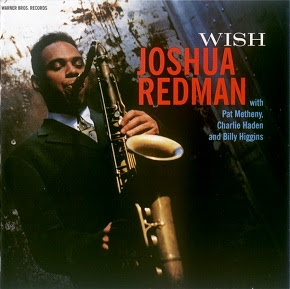
Joshua Redman • Wish


Joshua Redman is one of the most acclaimed and charismatic jazz artists to have emerged in the decade of the 1990s. Born in Berkeley, California, he is the son of legendary saxophonist Dewey Redman and dancer Renee Shedroff. He was exposed at an early age to a variety of musics (jazz, classical, rock, soul, Indian, Indonesian, Middle-Eastern, African) and instruments (recorder, piano, guitar, gatham, gamelan), and began playing clarinet at age nine before switching to what became his primary instrument, the tenor saxophone, one year later. The early influences of John Coltrane, Ornette Coleman, Cannonball Adderley and his father, Dewey Redman, as well as The Beatles, Aretha Franklin, the Temptations, Earth, Wind and Fire, Prince, The Police and Led Zeppelin drew Joshua more deeply into music. But although Joshua loved playing the saxophone and was a dedicated member of the award-winning Berkeley High School Jazz Ensemble and Combo from 1983-86, academics were always his first priority, and he never seriously considered becoming a professional musician.

In 1991 Redman graduated from Harvard College summa cum laude, Phi Beta Kappa with a B.A. in Social Studies. He had already been accepted by Yale Law School, but deferred entrance for what he believed was only going to be one year. Some of his friends (former students at the Berklee College of Music whom Joshua had met while in Boston) had recently relocated to Brooklyn, and they were looking for another housemate to help with the rent. Redman accepted their invitation to move in, and almost immediately he found himself immersed in the New York jazz scene. He began jamming and gigging regularly with some of the leading jazz musicians of his generation: Peter Bernstein, Larry Goldings, Kevin Hays, Roy Hargrove, Geoff Keezer, Leon Parker, Jorge Rossy and Mark Turner (to name just a few). In November of that year, five months after moving to New York, Redman was named the winner of the prestigious Thelonious Monk International Saxophone Competition. This was only one of the more visible highlights from a year that saw Redman beginning to tour and record with jazz masters such as his father, Jack DeJohnette, Charlie Haden, Elvin Jones, Joe Lovano, Pat Metheny, Paul Motian, and Clark Terry. For Joshua, this was a period of tremendous growth, invaluable experience and endless inspiration.

Now fully committed to a life in music, Redman was quickly signed by Warner Bros. Records and issued his first, self-titled album in the spring of 1993, which subsequently earned Redman his first Grammy nomination. That fall saw the release of Wish, where Joshua was joined by the all-star cast of Pat Metheny, Charlie Haden and Billy Higgins. He toured extensively with Metheny throughout the latter half of that year. His next recording, MoodSwing, was released in 1994, and it introduced his first permanent band, which included three other young musicians who have gone on to become some of the most important and influential artists in modern jazz: pianist Brad Mehldau, bassist Christian McBride and drummer Brian Blade. A later edition of this ensemble included guitarist Peter Bernstein, pianist Peter Martin, bassist Chris Thomas and Blade. Over a series of celebrated recordings including Spirit of the Moment/Live at the Village Vanguard, Freedom in the Groove and Timeless Tales (for Changing Times), Redman established himself as one of the music’s most consistent and successful bandleaders, and added soprano and alto saxophones to his instrumental arsenal. Joshua’s second acclaimed quartet, featuring pianist Aaron Goldberg, bassist Reuben Rogers and drummer Gregory Hutchinson, was formed in 1998 and made its recorded debut on the 2000 album Beyond. The dynamic interplay and uncommon rapport of this group inspired Redman to write and record his first long-form composition, Passage of Time, which was released in 2001.

A year later, Redman began to channel his jazz sensibilities through new instrumentation and formed The Elastic Band, a flexible, electrified, groove-based trio built on an ongoing collaboration with keyboardist Sam Yahel and drummer Brian Blade. The band debuted on the 2002 releases yaya3 and Elastic. Drummer Jeff Ballard began to play regularly with the Elastic Band later that year, and he (along with Blade and Yahel) played a central role in their next recording, the Grammy-nominated Momentum, which was released in 2005 to inaugurate Redman’s affiliation with Nonesuch Records, and featured a diverse and exciting lineup of special guests.

In 2000, Redman was named Artistic Director for the Spring Season of the non-profit jazz-presenting organization SFJAZZ. Redman and SFJAZZ Executive Director Randall Kline had an idea that The New York Times called a “eureka moment”; the creation of the SFJAZZ Collective, an ensemble distinguished both by the creativity of its members and a unique primary emphasis on composition. Inaugurated in 2004, the eight-piece band consists of a multi-generational cast of accomplished musicians. The Collective’s repertoire features both commissioned works and new arrangements of the work of great modern jazz composers. In March 2007, Redman announced that he was taking a hiatus from both the SFJAZZ Artistic Directorship and the SFJAZZ Collective in order to focus on new projects.

The following month, Nonesuch released Redman’s first ever piano-less trio record, Back East, featuring Joshua alongside three stellar bass and drum rhythm sections (Larry Grenadier & Ali Jackson, Christian McBride & Brian Blade, Reuben Rogers & Eric Harland) and three very special guest saxophonists (Chris Cheek, Joe Lovano and Dewey Redman). On Compass, released in January 2009 (Nonesuch), Joshua continues to explore the expansive trio format, and with a group of collaborators as intrepid as he is – bassists Larry Grenadier and Rueben Rogers, and drummers Brian Blade and Gregory Hutchinson – Redman literally and figuratively stretches the shape of the trio approach; on the most audacious of these tunes, he performs with the entire lineup in a double-trio setting.

Starting in late 2009, Joshua will be performing with a new collaborative band called James Farm featuring pianist Aaron Parks, bassist Matt Penman, and drummer Eric Harland. The band infuses traditional acoustic jazz quartet instrumentation with a progressive attitude and modern sound, creating music that is rhythmically and technically complex and at the same time harmonically rich, melodically satisfying, and emotionally compelling.

In addition to his own projects, Redman has recorded and performed with musicians such as Brian Blade, Ray Brown, Dave Brubeck, Chick Corea, The Dave Matthews Band, Jack DeJohnette, Bill Frisell, Aaron Goldberg, Larry Goldings, Charlie Haden, Herbie Hancock, Roy Hargrove, Roy Haynes, Billie Higgins, Milt Jackson, Elvin Jones, Quincy Jones, Big Daddy Kane, Geoff Keezer, B.B. King, The Lincoln Center Jazz Orchestra, DJ Logic, Joe Lovano, Yo Yo Ma, Branford Marsalis, Christian McBride, John Medeski, Brad Mehldau, Pat Metheny, Marcus Miller, Paul Motian, MeShell Ndegeocello, Leon Parker, Nicholas Payton, John Psathas, Simon Rattle, Dewey Redman, Dianne Reeves, Melvin Rhyne, The Rolling Stones, The Roots, Kurt Rosenwinkel, John Scofield, Soulive, String Cheese Incident, Clark Terry, Toots Thielemans, The Trondheim Jazz Orchestra, Mark Turner, McCoy Tyner, Umphrey’s McGee, US3, Bugge Wesseltoft, Cedar Walton, Stevie Wonder and Sam Yahel. Joshua Redman has been nominated for 2 Grammys and has garnered top honors in critics and readers polls of DownBeat, Jazz Times, The Village Voice and Rolling Stone. He wrote and performed the music for Louis Malle’s final film Vanya on 42nd Street, and is both seen and heard in the Robert Altman film Kansas City.
https://www.allaboutjazz.com/musicians/joshua-redman/

///////

Joshua Redman es uno de los artistas de jazz más aclamados y carismáticos que surgieron en la década de 1990. Nacido en Berkeley, California, es hijo del legendario saxofonista Dewey Redman y de la bailarina Renee Shedroff. Estuvo expuesto a una edad temprana a una variedad de músicas (jazz, clásica, rock, soul, India, Indonesia, Oriente Medio, Africana) e instrumentos (flauta dulce, piano, guitarra, gatham, gamelan), y comenzó a tocar el clarinete a los nueve años antes de cambiar a lo que se convirtió en su instrumento principal, el saxofón tenor, un año después. Las primeras influencias de John Coltrane, Ornette Coleman, Cannonball Adderley y su padre, Dewey Redman, así como de los Beatles, Aretha Franklin, the Temptations, Earth, Wind and Fire, Prince, The Police y Led Zeppelin atrajeron a Joshua más profundamente a la música. Pero aunque a Joshua le encantaba tocar el saxofón y fue un miembro dedicado del galardonado Conjunto y Combo de Jazz de Berkeley High School de 1983 a 1986, lo académico siempre fue su primera prioridad, y nunca consideró seriamente convertirse en músico profesional.

En 1991, Redman se graduó de Harvard College summa cum laude, Phi Beta Kappa con una licenciatura en Estudios Sociales. Ya había sido aceptado por la Facultad de Derecho de Yale, pero postergó la entrada por lo que creía que solo iba a ser un año. Algunos de sus amigos (exalumnos del Berklee College of Music a quienes Joshua había conocido mientras estaba en Boston) se habían mudado recientemente a Brooklyn y estaban buscando otro compañero de casa que los ayudara con el alquiler. Redman aceptó su invitación para mudarse y casi de inmediato se encontró inmerso en la escena del jazz de Nueva York. Comenzó a tocar y tocar regularmente con algunos de los principales músicos de jazz de su generación: Peter Bernstein, Larry Goldings, Kevin Hays, Roy Hargrove, Geoff Keezer, Leon Parker, Jorge Rossy y Mark Turner (por nombrar solo algunos). En noviembre de ese año, cinco meses después de mudarse a Nueva York, Redman fue nombrado ganador del prestigioso Concurso Internacional de Saxofón Thelonious Monk. Este fue solo uno de los aspectos más destacados de un año en el que Redman comenzó a hacer giras y grabar con maestros del jazz como su padre, Jack DeJohnette, Charlie Haden, Elvin Jones, Joe Lovano, Pat Metheny, Paul Motian y Clark Terry. Para Joshua, este fue un período de tremendo crecimiento, experiencia invaluable e inspiración infinita.

Ahora totalmente comprometido con una vida en la música, Redman firmó rápidamente con Warner Bros.Records y lanzó su primer álbum homónimo en la primavera de 1993, que posteriormente le valió a Redman su primera nominación al Grammy. Ese otoño vio el lanzamiento de Wish, donde Joshua se unió al elenco estelar de Pat Metheny, Charlie Haden y Billy Higgins. Realizó numerosas giras con Metheny durante la segunda mitad de ese año. Su siguiente grabación, MoodSwing, fue lanzada en 1994, y presentó su primera banda permanente, que incluía a otros tres jóvenes músicos que se han convertido en algunos de los artistas más importantes e influyentes del jazz moderno: el pianista Brad Mehldau, el bajista Christian McBride y el baterista Brian Blade. Una edición posterior de este conjunto incluyó al guitarrista Peter Bernstein, el pianista Peter Martin, el bajista Chris Thomas y Blade. A lo largo de una serie de grabaciones célebres que incluyeron Spirit of the Moment/Live at the Village Vanguard, Freedom in the Groove y Timeless Tales (for Changing Times), Redman se estableció como uno de los líderes de banda más consistentes y exitosos de la música, y agregó saxofones soprano y alto a su arsenal instrumental. El segundo cuarteto aclamado de Joshua, con el pianista Aaron Goldberg, el bajista Reuben Rogers y el baterista Gregory Hutchinson, se formó en 1998 e hizo su debut grabado en el álbum Beyond de 2000. La interacción dinámica y la relación poco común de este grupo inspiraron a Redman a escribir y grabar su primera composición de formato largo, Passage of Time, que se lanzó en 2001.

Un año después, Redman comenzó a canalizar su sensibilidad jazzística a través de una nueva instrumentación y formó Elastic Band, un trío flexible, electrificado y basado en el groove construido en una colaboración continua con el tecladista Sam Yahel y el baterista Brian Blade. La banda debutó en los lanzamientos de 2002 yaya3 y Elastic. El baterista Jeff Ballard comenzó a tocar regularmente con Elastic Band más tarde ese año, y él (junto con Blade y Yahel) desempeñó un papel central en su próxima grabación, Momentum, nominada al Grammy, que se lanzó en 2005 para inaugurar la afiliación de Redman con Nonesuch Records, y contó con una alineación diversa y emocionante de invitados especiales.

En 2000, Redman fue nombrado Director Artístico de la Temporada de Primavera de la organización sin fines de lucro SFJAZZ, que presenta jazz. Redman y el director ejecutivo de SFJAZZ, Randall Kline, tuvieron una idea que The New York Times llamó un "momento eureka" ; la creación del Colectivo SFJAZZ, un conjunto que se distingue tanto por la creatividad de sus miembros como por un énfasis primario único en la composición. Inaugurada en 2004, la banda de ocho integrantes consta de un elenco multigeneracional de músicos consumados. El repertorio del Colectivo presenta tanto obras encargadas como nuevos arreglos de la obra de grandes compositores de jazz moderno. En marzo de 2007, Redman anunció que se tomaría un descanso tanto de la Dirección Artística de SFJAZZ como del Colectivo SFJAZZ para concentrarse en nuevos proyectos.

Al mes siguiente, Nonesuch lanzó el primer disco de trío sin piano de Redman, Back East, con Joshua junto a tres secciones estelares de bajo y batería (Larry Grenadier y Ali Jackson, Christian McBride y Brian Blade, Reuben Rogers y Eric Harland) y tres saxofonistas invitados muy especiales (Chris Cheek, Joe Lovano y Dewey Redman). En Compass, lanzado en enero de 2009 (Nonesuch), Joshua continúa explorando el formato de trío expansivo, y con un grupo de colaboradores tan intrépidos como él: los bajistas Larry Grenadier y Rueben Rogers, y los bateristas Brian Blade y Gregory Hutchinson, Redman extiende literal y figurativamente la forma del enfoque de trío; en la más audaz de estas melodías, se presenta con toda la formación en un ambiente de doble trío.

A partir de finales de 2009, Joshua se presentará con una nueva banda colaborativa llamada James Farm con el pianista Aaron Parks, el bajista Matt Penman y el baterista Eric Harland. La banda infunde la instrumentación tradicional de cuarteto de jazz acústico con una actitud progresiva y un sonido moderno, creando música rítmica y técnicamente compleja y al mismo tiempo armónicamente rica, melódicamente satisfactoria y emocionalmente convincente.

Además de sus propios proyectos, Redman ha grabado y actuado con músicos como Brian Blade, Ray Brown, Dave Brubeck, Chick Corea, Dave Matthews Band, Jack DeJohnette, Bill Frisell, Aaron Goldberg, Larry Goldings, Charlie Haden, Herbie Hancock, Roy Hargrove, Roy Haynes, Billie Higgins, Milt Jackson, Elvin Jones, Quincy Jones, Big Daddy Kane, Geoff Keezer, BB. King, La Orquesta de Jazz del Lincoln Center, DJ Logic, Joe Lovano, Yo Yo Ma, Branford Marsalis, Christian McBride, John Medeski, Brad Mehldau, Pat Metheny, Marcus Miller, Paul Motian, MeShell Ndegeocello, Leon Parker, Nicholas Payton, John Psathas, Simon Rattle, Dewey Redman, Dianne Reeves, Melvin Rhyne, Los Rolling Stones, The Roots, Kurt Rosenwinkel, John Scofield, Soulive, String Cheese Incident, Clark Terry, Toots Thielemans, la Orquesta de Jazz de Trondheim, Mark Turner, McCoy Tyner, McGee de Umphrey, US3, Bugge Wesseltoft, Cedar Walton, Stevie Wonder y Sam Yahel. Joshua Redman ha sido nominado a 2 Grammys y ha obtenido los máximos honores en las encuestas de críticos y lectores de DownBeat, Jazz Times, Village Voice y Rolling Stone. Escribió e interpretó la música de la última película de Louis Malle, Vania on 42nd Street, y se ve y se escucha en la película de Robert Altman Kansas City.
https://www.allaboutjazz.com/musicians/joshua-redman/
 

www.joshuaredman.com ...


Wednesday, April 2, 2025

Wycliffe Gordon Quintet • Dig This!


Review by David Dupont  
Trombonist Wycliffe Gordon was the most adventurous musician to spin off from Wynton Marsalis' orbit. Since his tenure with Marsalis, Gordon collaborated with everyone from revivalists in the Sidney Bechet Project to progressive composer Ted Nash and Randy Sandke's Inside Outside project, which brings together practitioners from the musical extremes. He's been more restricted in his own solo dates but has shown he's willing to reach beyond the confines of traditional hard bop. Dig This!! finds him employing the fashionable textures provided by the Hammond organ. True to form though, Gordon refuses to get locked into the funk clichés of the organ combo sound. Rather with its wide-open swing feel Dig This!! comes off more as a contemporary version of swing trombonist Vic Dickenson's 1952 quartet dates with Bill Doggett. Certainly "Limehouse Blues" fits the mold, albeit updated. And Gordon's unaccompanied playing on "Blues Etude #2" and elsewhere shows him a fitting successor to Dickenson's rubbery expressionism. Gordon has surrounded himself with a fine band. Organist Sam Yahel and guitarist Peter Bernstein each reveal a debt to their swing precursors while saxophonist Seamus Blake plays in a hard-driving contemporary manner. All of them swing, and regardless the context Gordon puts himself in, that's a constant.
https://www.allmusic.com/album/dig-this%21%21-mw0000562836


Biography by Rose of Sharon Witmer
Trombone player Wycliffe Gordon is best known for his work with the Lincoln Center Jazz Orchestra, under the direction of jazz maestro, Wynton Marsalis. The versatile trombonist can scat, multi-note, slide, and plunge, just like he stepped out of the 1930s. Gordon has played with many jazz luminaries, including Dizzy Gillespie, Joe Henderson, Branford Marsalis,Lionel Hampton, Tommy Flanagan, and Shirley Horn. His musical colleagues call him "Pine Cone," since he grew up in the piney woods of Georgia.

It must have been this Ellington era quality that caught the ears of jazz educator Wynton Marsalis, who heard Gordon play while the trumpeter was giving a workshop at Gordon's alma mater, Florida A&M University. Their fortuitous meeting resulted in Gordon joining the Wynton Marsalis Septet, as well as the Lincoln Center Jazz Orchestra, in 1989. As a member of the illustrious band, Gordon contributed as both musician and composer. Gordon, who like Charles Mingus says he hears music in his head all the time, has managed to write some of it down, and then hear it performed all over the world by the Lincoln Center Jazz Orchestra. Whether they know it or not, National Public Radio fans are familiar with the musician's work: In 1993, Gordon composed the NPR theme song.

Gordon, an admirer of Louis Armstrong, J.J. Johnson, and Jack Teagarden, prefers the melodic approach to playing and composition. The listener can hear that on any of his outstanding recordings. His first outing was with fellow trombonist Ron Westray on their 1996 release, Bone Structure. More good things came with Slidin' Home, recorded in 1999. Joined by Victor Goines, Eric Reed, Rodney Whitaker, Herlin Riley, Milt Grayson, Joe Temperley, and Randy Sandke, Gordon really struts his stuff on this one, showing a wide range of influences from big band to gospel.

The Search, recorded in 2000, ranges as far and wide as the title suggests, and includes Gordon holding forth on the didgeridoo. Gordon, whose father was the pianist at the church the trumpeter grew up in, devotes himself to his gospel roots on The Gospel Truth, (2000). What You Dealin' With, (2001), continues in a jazz vein with original compositions and jazz standards. Gordon's 2002 release We may be his best yet, as the trombonist collaborates with pianist Eric Reed on jazz and gospel tunes.

Besides performing and educating at his own music school in his hometown of Augusta, GA, Gordon has another important project: writing the score for the Oscar Micheaux 1925 silent film, Body and Soul. Paul Robeson starred in the movie about race, religion, and small town life in the South. Gordon drew upon his own Southern upbringing to produce music from the church, the bars, and the home, to be performed by the Lincoln Center Jazz Orchestra. Gordon has begun to evidence an interest in vocalizing, something which he says he plans to do increasingly. The results are sure to be top drawer, as the exuberant Wycliffe Gordon throws himself into things, body and soul.
https://www.allmusic.com/artist/wycliffe-gordon-mn0000960062/biography

///////


Reseña de David Dupont  
El trombonista Wycliffe Gordon fue el músico más aventurero que salió de la órbita de Wynton Marsalis. Desde su estancia en Marsalis, Gordon colaboró con todo el mundo, desde los reanimadores del Proyecto Sidney Bechet hasta el compositor progresivo Ted Nash y el proyecto Inside Outside de Randy Sandke, que reúne a profesionales de los extremos musicales. Ha estado más restringido en sus propias citas como solista pero ha demostrado que está dispuesto a ir más allá de los confines del hard bop tradicional. Dig This!! lo encuentra empleando las texturas de moda proporcionadas por el órgano Hammond. Sin embargo, fiel a la forma, Gordon se niega a encerrarse en los clichés funk del sonido del órgano combo. Más bien, con su amplio sentido del swing, Dig This!! se presenta más bien como una versión contemporánea del cuarteto del trombón de swing de 1952 del trombonista Vic Dickenson, que data de Bill Doggett. Ciertamente "Limehouse Blues" encaja en el molde, aunque actualizado. Y el hecho de que Gordon toque sin acompañamiento en "Blues Etude #2" y en otros lugares le muestra un sucesor adecuado para el expresionismo gomoso de Dickenson. Gordon se ha rodeado de una buena banda. El organista Sam Yahel y el guitarrista Peter Bernstein revelan una deuda con sus precursores del swing, mientras que el saxofonista Seamus Blake toca de una manera contemporánea muy dura. Todos ellos hacen swing, y sin importar el contexto en el que Gordon se ponga, es una constante.
https://www.allmusic.com/album/dig-this%21%21-mw0000562836


Biografía de Rose de Sharon Witmer
El trombonista Wycliffe Gordon es más conocido por su trabajo con la Orquesta de Jazz del Lincoln Center, bajo la dirección del maestro de jazz, Wynton Marsalis. El versátil trombonista puede hacer scat, multi-notas, deslizarse y zambullirse, tal como lo hizo en los años 30. Gordon ha tocado con muchas luminarias del jazz, como Dizzy Gillespie, Joe Henderson, Branford Marsalis, Lionel Hampton, Tommy Flanagan y Shirley Horn. Sus colegas musicales lo llaman "Pine Cone", ya que creció en los bosques de pinos de Georgia.

Debe haber sido esta cualidad de la época de Ellington la que llamó la atención del educador de jazz Wynton Marsalis, que escuchó a Gordon tocar mientras el trompetista impartía un taller en el alma mater de Gordon, en la Universidad A&M de Florida. Su encuentro fortuito dio lugar a que Gordon se uniera al Septeto Wynton Marsalis, así como a la Orquesta de Jazz del Lincoln Center, en 1989. Como miembro de la ilustre banda, Gordon contribuyó como músico y compositor. Gordon, que al igual que Charles Mingus dice que escucha música en su cabeza todo el tiempo, ha logrado escribir algo de ella, y luego escucharla interpretada en todo el mundo por la Orquesta de Jazz del Lincoln Center. Lo sepan o no, los fanáticos de la Radio Pública Nacional están familiarizados con el trabajo del músico: En 1993, Gordon compuso el tema de la NPR.

Gordon, un admirador de Louis Armstrong, J.J. Johnson y Jack Teagarden, prefiere el enfoque melódico a la interpretación y la composición. El oyente puede escuchar eso en cualquiera de sus grabaciones destacadas. Su primera salida fue con su colega trombonista Ron Westray en su lanzamiento de 1996, Bone Structure. Más cosas buenas vinieron con Slidin' Home, grabado en 1999. Junto a Victor Goines, Eric Reed, Rodney Whitaker, Herlin Riley, Milt Grayson, Joe Temperley, y Randy Sandke, Gordon realmente se pavonea en esta, mostrando un amplio rango de influencias desde la big band hasta el gospel.

La Búsqueda, grabada en el año 2000, se extiende tan lejos como el título sugiere, e incluye a Gordon sosteniendo el didgeridoo. Gordon, cuyo padre era el pianista de la iglesia en la que creció el trompetista, se dedica a sus raíces evangélicas en The Gospel Truth, (2000). What You Dealin' With, (2001), continúa en una línea de jazz con composiciones originales y estándares de jazz. El lanzamiento de Gordon en 2002, We may be his best yet, ya que el trombonista colabora con el pianista Eric Reed en temas de jazz y gospel.

Además de actuar y educar en su propia escuela de música en su ciudad natal de Augusta, GA, Gordon tiene otro proyecto importante: escribir la partitura para la película muda de 1925 de Oscar Micheaux, Body and Soul. Paul Robeson protagonizó la película sobre la raza, la religión y la vida en un pequeño pueblo del sur. Gordon se basó en su propia educación sureña para producir música de la iglesia, los bares y el hogar, para ser interpretada por la Orquesta de Jazz del Lincoln Center. Gordon ha comenzado a evidenciar un interés en la vocalización, algo que dice que planea hacer cada vez más. Los resultados serán sin duda de primer orden, ya que el exuberante Wycliffe Gordon se lanza a las cosas, en cuerpo y alma.
https://www.allmusic.com/artist/wycliffe-gordon-mn0000960062/biography


https://wycliffegordon.com/


Friday, March 28, 2025

Sam Yahel • Trio


Review by Michael G. Nastos
At age 27, Yahel is clearly one of the most promising new organists on the New York City & international scene. As a possible walker in Larry Young's shoes, he displays a definite orchestral concept. Sounds seethe and swell, expanding beyond the envelope; he's got that telltale, after-midnight-blue depth of expressionism. Wild drummer Brian Blade and witty guitarist Peter Bernstein give much more than a mere modicum of fuel for Yahel's imagination -- they kick him into fourth and fifth gear during these eight tracks, three written by the organist himself. Two standards appear here. The first, "Never Will I Marry," has Yahel leading the melody while Blade fires up the cauldron with embellished rhythms that run outside of the straight beat, and Bernstein's guitar chords lead to tasty, bluesy solo lines. The second, "A Nightingale Sang in Berkeley Square," finds Yahel introducing by himself on this emotion-drenched ballad, charcoal tracing from similar regret-filled themes as "I Remember Clifford" and "Polka Dots & Moonbeams." Slight grease from Bernstein's lead guitar girds Ray Brown's bluesy, soulful sweet classic "Gravy Waltz." The Bernstein-penned "Blues for Bulgaria" has an easy, steady groove with Yahel's organ setting up the guitar's melody and Blade's drums swirling around -- this one has potential at becoming a sprightly standard. Yahel's three compositions include the waltz "The Gambit" marked with varying key changes and Bernstein nicely linking the styles of Wes Montgomery and Grant Green. "Short Returns" is a cool swinger with guitar-organ unison melody -- one of rare quantity on the CD. "And Then Some" is a very fragmented, 7/4 funk groove, -- quite contemporary and virile; it's as compelling as any cut on the disc. Though this is an entry point, it's an intriguing one for Yahel, a thinking man's organist. This album is easily recommended.

///////

Reseña de Michael G. Nastos
A los 27 años, Yahel es claramente uno de los nuevos organistas más prometedores de la ciudad de Nueva York y de la escena internacional. Como posible caminante en los zapatos de Larry Young, muestra un concepto orquestal definido. Los sonidos se expanden más allá de la envoltura; tiene esa reveladora profundidad de expresionismo azul de medianoche. El batería Brian Blade y el ingenioso guitarrista Peter Bernstein dan mucho más que una pizca de combustible a la imaginación de Yahel: le dan una patada en la cuarta y quinta marcha durante estos ocho temas, tres de ellos escritos por el propio organista. Aquí aparecen dos estándares. El primero, "Never Will I Marry", tiene a Yahel liderando la melodía mientras Blade enciende el caldero con ritmos embellecidos que se salen del ritmo recto, y los acordes de guitarra de Bernstein conducen a sabrosas líneas solistas de blues. El segundo, "Un ruiseñor cantado en Berkeley Square", encuentra a Yahel introduciendo por sí mismo en esta balada llena de emoción, trazos de carbón de temas similares llenos de arrepentimiento como "Recuerdo a Clifford" y "Lunares y Rayos de Luna". Un poco de grasa de las guitarras de Bernstein y el blues de Ray Brown, el dulce y conmovedor clásico "Gravy Waltz". El "Blues para Bulgaria" de Bernstein tiene un ritmo fácil y constante, con el órgano de Yahel estableciendo la melodía de la guitarra y los tambores de Blade girando alrededor - este tiene el potencial de convertirse en un estándar ágil. Las tres composiciones de Yahel incluyen el vals "The Gambit" marcado con cambios de tonalidad variables y Bernstein uniendo bien los estilos de Wes Montgomery y Grant Green. "Short Returns" es un swing cool con melodía de guitarra-órgano al unísono, una de las pocas que hay en el CD. "And Then Some" es un muy fragmentado, 7/4 funk groove, -- bastante contemporáneo y viril; es tan convincente como cualquier corte del disco. Aunque este es un punto de entrada, es intrigante para Yahel, el organista de un hombre pensante. Este disco es fácilmente recomendable.

www.samyahel.com ...


Tuesday, February 18, 2025

Sam Yahel • In The Blink Of An Eye


Review
by Michael G. Nastos  
For his third CD, organist Yahel brings back guitarist Peter Bernstein, drummer Brian Blade (see Trio on Criss Cross) and percussionist Kahlil Kwame Bell, who plays percussion on two tracks. There's much more going on under the surface than initially meets the ear, and that's the beauty of Yahel's concept. He's stealth and lurking in underground caves, searching for light and finding mine shafts of pure gold, with the always capable and melodic Bernstein a veritable beacon of energy and soul. Yahel wrote two of these eight selections. The title track is based on a Chopin etude, a darker waltz that quickens in the middle, and there's also "So Long," with Bell starting off on a tango rhythm and going to sultry samba a la Ivan Lins' "The Island." Yahel selects such oft-neglected standards as the changed-up swinger "I Believe In You" and the much more familiar "Spring Is Here," with Blade's jungle toms and Yahel's swelling organ informing Bernstein's patient guitar on this classic balladic melody. "Like Someone in Love" sports a swirling, circular motion before going into the melody in 5/4 time, with 5/8 inserts. The astute listener will clearly hear how clever this is. More modern standards are the Freddie Hubbard evergreen "Little Sunflower," a very laid-back, tight bossa with Bell's prismatic colorations freshening this steamy take, while McCoy Tyner's "Inception" is light, bright and quick, with Bernstein's kinetic line, Yahel's expansive chords, and both on fire for their solos. Bernstein contributed his spontaneous piece "Just a Thought," a midtempo swinger replete with traces of "We'll Be Together Again." If there is a latter-day organist upholding the spirit of Larry Young in terms of stretching the groove as well as orchestral and harmonic possibilities, it's Yahel. He's only scratching the surface as a composer, but as a performer he's right there. Recommended.
https://www.allmusic.com/album/in-the-blink-of-an-eye-mw0000256534


Biography
One of the more distinctive voices among a new breed of Hammond B-3 organ players on the jazz scene, Sam Yahel has earned the top spot in Down Beat's annual International Critics Poll as a Talent Deserving Of Recognition for the past four consecutive years.

Since moving to New York in 1990, Yahel has worked with a string of notable jazz artists including tenor saxophonists Joshua Redman and Eric Alexander, former James Brown sideman and alto sax great Maceo Parker, guitarists Peter Bernstein and Bill Frisell, trumpeters Ryan Kisor and Jim Rotondi, vocalists HYPERLINK Norah Jones (on her Grammy-winning Come Away With Me), Lizz Wright, and Madeleine Peyroux.

But it has been as a solo artist in his own right that Yahel has made his most personal statements as both composer and player.

On Truth and Beauty, his fourth outing as a leader, Yahel joins with longtime colleagues Joshua Redman and drummer Brian Blade in rekindling the potent chemistry they generated as Yaya3, a collective group that was an outgrowth of a residency they had at Small's nightclub in New York. "I'm proud of that record. I like Yaya3 (which was released by Warner Bros. in 2003). But at the same time I was always thinking about doing something purely of my own."

And while Yahel had previously released three recordings as a leader -- 1998's Searchin', 1999's Trio and 2000's In The Blink of an Eye -- his current outing is his strongest to date. "This record is not so much about the straight-ahead swinging undercurrent of the rhythm section," says Sam. "These days I feel like jazz has absorbed more world music influences. I hear Brazilian, African and Cuban music elements starting to seep into the mainstream jazz scene and I find myself drawing from those influences more. And for me, the organ is the perfect instrument to implement that kind of thing because you can really get rhythmic and percussive on it, you can evoke images and sounds just as easily as swinging. And although I'm a big fan of straight ahead swinging music and I still play it with pleasure, I think that this record is more of a foray into the other side."

With Truth and Beauty, Yahel once again stakes out his own territory on the Hammond B-3 organ while taking another important stride as a bandleader and composer.
https://www.allaboutjazz.com/musicians/sam-yahel

///////


Reseña
por Michael G. Nastos  
Para su tercer CD, el organista Yahel vuelve a contar con el guitarrista Peter Bernstein, el batería Brian Blade (véase Trio on Criss Cross) y el percusionista Kahlil Kwame Bell, que toca la percusión en dos temas. Bajo la superficie hay mucho más de lo que parece a primera vista, y ahí radica la belleza del concepto de Yahel. Es sigiloso y acecha en cuevas subterráneas, buscando la luz y encontrando pozos mineros de oro puro, con el siempre capaz y melódico Bernstein como auténtico faro de energía y alma. Yahel escribió dos de estas ocho selecciones. El tema que da título al disco se basa en un estudio de Chopin, un vals más oscuro que se acelera en la parte central, y también está "So Long", con Bell empezando a ritmo de tango y pasando a una sensual samba a lo "The Island" de Ivan Lins. Yahel selecciona estándares tan a menudo olvidados como el swinger cambiado "I Believe In You" y el mucho más familiar "Spring Is Here", con los toms selváticos de Blade y el órgano hinchado de Yahel informando a la paciente guitarra de Bernstein en esta clásica melodía de balada. Like Someone in Love" presenta un movimiento circular y arremolinado antes de entrar en la melodía en compás de 5/4, con inserciones de 5/8. El oyente perspicaz se dará cuenta claramente de que "Like Someone in Love" es una melodía de 5/8. El oyente astuto oirá claramente lo inteligente que es esto. Estándares más modernos son "Little Sunflower" de Freddie Hubbard, una bossa muy relajada y ajustada, con las coloraciones prismáticas de Bell refrescando esta vaporosa toma, mientras que "Inception" de McCoy Tyner es ligera, brillante y rápida, con la línea cinética de Bernstein, los acordes expansivos de Yahel, y ambos encendidos en sus solos. Bernstein contribuyó con su espontánea pieza "Just a Thought", un swinger a medio tempo repleto de trazos de "We'll Be Together Again". Si hay un organista actual que mantiene el espíritu de Larry Young en lo que se refiere a ampliar el ritmo y las posibilidades orquestales y armónicas, ése es Yahel. Como compositor sólo está arañando la superficie, pero como intérprete está ahí. Recomendado.
https://www.allmusic.com/album/in-the-blink-of-an-eye-mw0000256534


Biografía
Sam Yahel, una de las voces más distintivas de la nueva generación de organistas Hammond B-3 de la escena del jazz, ha obtenido el primer puesto en la encuesta anual de la crítica internacional de Down Beat como Talento merecedor de reconocimiento durante los últimos cuatro años consecutivos.

Desde que se trasladó a Nueva York en 1990, Yahel ha trabajado con una serie de notables artistas de jazz, entre ellos los saxofonistas tenores Joshua Redman y Eric Alexander, el antiguo acompañante de James Brown y gran saxo alto Maceo Parker, los guitarristas Peter Bernstein y Bill Frisell, los trompetistas Ryan Kisor y Jim Rotondi, las vocalistas HYPERLINK Norah Jones (en su ganadora del Grammy Come Away With Me), Lizz Wright y Madeleine Peyroux.

Pero ha sido en solitario donde Yahel ha hecho sus declaraciones más personales como compositor e intérprete.

En Truth and Beauty, su cuarto trabajo como líder, Yahel se une a sus colegas de toda la vida Joshua Redman y el batería Brian Blade para reavivar la potente química que generaron como Yaya3, un grupo colectivo que surgió de una residencia que tuvieron en el club nocturno Small's de Nueva York. "Estoy orgulloso de ese disco. Me gusta Yaya3 (que publicó Warner Bros. en 2003). Pero al mismo tiempo siempre pensaba en hacer algo puramente mío".

Y aunque Yahel ya había publicado tres discos como líder: Searchin' (1998), Trio (1999) e In The Blink of an Eye (2000), el actual es el más potente hasta la fecha. "Este disco no tiene tanto que ver con el swing directo de la sección rítmica", dice Sam. "Hoy en día creo que el jazz ha absorbido más influencias de las músicas del mundo. Oigo que elementos de la música brasileña, africana y cubana empiezan a filtrarse en la escena del jazz convencional y me encuentro a mí mismo inspirándome más en esas influencias. Y para mí, el órgano es el instrumento perfecto para poner en práctica ese tipo de cosas, porque con él se puede ser realmente rítmico y percusivo, se pueden evocar imágenes y sonidos con la misma facilidad que con el swing. Y aunque soy un gran admirador de la música swing directa y sigo tocándola con placer, creo que este disco es más bien una incursión en el otro lado".

Con Truth and Beauty, Yahel vuelve a marcar su propio territorio con el órgano Hammond B-3 al tiempo que da otro paso importante como director de orquesta y compositor.
https://www.allaboutjazz.com/musicians/sam-yahel

www.samyahel.com ...


Wednesday, February 5, 2025

Sam Yahel Trio • Truth And Beauty


Truth And Beauty, Sam Yahel's fourth offering as a leader, finds the organist joined by Joshua Redman and Brian Blade, two of his closest collaborators. The trio is incredibly tight, which comes as no surprise given their time spent playing together in the Yaya3 collective. Redman plays superbly throughout; in Rollins-esque fashion, he builds several of his solos from a melodic fragments, developing it into a complete statement. Yahel conjures inventive sonorities and textures from his B-3. Blade, whether through his cymbal work, hand drumming on "Bend The Leaves" or various kicks and fills, gives the group energy and intensity.

Yahel's six compositions offer much more than basic statements that give way to blowing. He writes memorable melodies, and the tight arrangements are given as much emphasis as the solos. He also includes on the album, to great effect, "Check Up: by Ornette Colman and a solo B-3 treatment of "A Paz" by Gilberto Gil and Joao Donato. Paul Simon's "Night Game" is the closet thing this album has to a weak spot. The tune is pretty, but its sentimental mood doesn't fit into the disc's aesthetic.
https://originarts.com/reviews/review.php?ReviewID=548


Biography
One of the more distinctive voices among a new breed of Hammond B-3 organ players on the jazz scene, Sam Yahel has earned the top spot in Down Beat's annual International Critics Poll as a Talent Deserving Of Recognition for the past four consecutive years.

Since moving to New York in 1990, Yahel has worked with a string of notable jazz artists including tenor saxophonists Joshua Redman and Eric Alexander, former James Brown sideman and alto sax great Maceo Parker, guitarists Peter Bernstein and Bill Frisell, trumpeters Ryan Kisor and Jim Rotondi, vocalists HYPERLINK Norah Jones (on her Grammy-winning Come Away With Me), Lizz Wright, and Madeleine Peyroux.

But it has been as a solo artist in his own right that Yahel has made his most personal statements as both composer and player.

On Truth and Beauty, his fourth outing as a leader, Yahel joins with longtime colleagues Joshua Redman and drummer Brian Blade in rekindling the potent chemistry they generated as Yaya3, a collective group that was an outgrowth of a residency they had at Small's nightclub in New York. "I'm proud of that record. I like Yaya3 (which was released by Warner Bros. in 2003). But at the same time I was always thinking about doing something purely of my own."

And while Yahel had previously released three recordings as a leader -- 1998's Searchin', 1999's Trio and 2000's In The Blink of an Eye -- his current outing is his strongest to date. "This record is not so much about the straight-ahead swinging undercurrent of the rhythm section," says Sam. "These days I feel like jazz has absorbed more world music influences. I hear Brazilian, African and Cuban music elements starting to seep into the mainstream jazz scene and I find myself drawing from those influences more. And for me, the organ is the perfect instrument to implement that kind of thing because you can really get rhythmic and percussive on it, you can evoke images and sounds just as easily as swinging. And although I'm a big fan of straight ahead swinging music and I still play it with pleasure, I think that this record is more of a foray into the other side."

With Truth and Beauty, Yahel once again stakes out his own territory on the Hammond B-3 organ while taking another important stride as a bandleader and composer.
https://www.allaboutjazz.com/musicians/sam-yahel

///////


Truth And Beauty, el cuarto trabajo de Sam Yahel como líder, reúne al organista con Joshua Redman y Brian Blade, dos de sus colaboradores más cercanos. El trío está increíblemente compenetrado, lo que no es de extrañar dado el tiempo que pasaron tocando juntos en el colectivo Yaya3. Redman toca de forma soberbia en todo momento; a la manera de Rollins, construye varios de sus solos a partir de fragmentos melódicos, convirtiéndolos en una declaración completa. Yahel conjura inventivas sonoridades y texturas con su B-3. Blade, ya sea a través de su trabajo con los platillos, la batería de mano en "Bend The Leaves" o varios golpes y rellenos, aporta al grupo energía e intensidad.

Las seis composiciones de Yahel ofrecen mucho más que declaraciones básicas que dan paso al soplido. Escribe melodías memorables, y los ajustados arreglos reciben tanta importancia como los solos. También incluye en el álbum, con gran efecto, "Check Up" de Ornette Colman y un solo de B-3 de "A Paz" de Gilberto Gil y Joao Donato. Night Game" de Paul Simon es lo más cercano que tiene este álbum a un punto débil. La melodía es bonita, pero su tono sentimental no encaja en la estética del disco.
https://originarts.com/reviews/review.php?ReviewID=548


Biografía
Sam Yahel, una de las voces más distintivas de la nueva generación de organistas Hammond B-3 de la escena del jazz, ha obtenido el primer puesto en la encuesta anual de la crítica internacional de Down Beat como Talento merecedor de reconocimiento durante los últimos cuatro años consecutivos.

Desde que se trasladó a Nueva York en 1990, Yahel ha trabajado con una serie de notables artistas de jazz, entre ellos los saxofonistas tenores Joshua Redman y Eric Alexander, el antiguo acompañante de James Brown y gran saxo alto Maceo Parker, los guitarristas Peter Bernstein y Bill Frisell, los trompetistas Ryan Kisor y Jim Rotondi, las vocalistas HYPERLINK Norah Jones (en su ganadora del Grammy Come Away With Me), Lizz Wright y Madeleine Peyroux.

Pero ha sido en solitario donde Yahel ha hecho sus declaraciones más personales como compositor e intérprete.

En Truth and Beauty, su cuarto trabajo como líder, Yahel se une a sus colegas de toda la vida Joshua Redman y el batería Brian Blade para reavivar la potente química que generaron como Yaya3, un grupo colectivo que surgió de una residencia que tuvieron en el club nocturno Small's de Nueva York. "Estoy orgulloso de ese disco. Me gusta Yaya3 (que publicó Warner Bros. en 2003). Pero al mismo tiempo siempre pensaba en hacer algo puramente mío".

Y aunque Yahel ya había publicado tres discos como líder: Searchin' (1998), Trio (1999) e In The Blink of an Eye (2000), el actual es el más potente hasta la fecha. "Este disco no tiene tanto que ver con el swing directo de la sección rítmica", dice Sam. "Hoy en día creo que el jazz ha absorbido más influencias de las músicas del mundo. Oigo que elementos de la música brasileña, africana y cubana empiezan a filtrarse en la escena del jazz convencional y me encuentro a mí mismo inspirándome más en esas influencias. Y para mí, el órgano es el instrumento perfecto para poner en práctica ese tipo de cosas, porque con él se puede ser realmente rítmico y percusivo, se pueden evocar imágenes y sonidos con la misma facilidad que con el swing. Y aunque soy un gran admirador de la música swing directa y sigo tocándola con placer, creo que este disco es más bien una incursión en el otro lado".

Con Truth and Beauty, Yahel vuelve a marcar su propio territorio con el órgano Hammond B-3 al tiempo que da otro paso importante como director de orquesta y compositor.
https://www.allaboutjazz.com/musicians/sam-yahel

www.samyahel.com ...


Friday, January 31, 2025

Sam Yahel • From Sun to Sun


Review by Alex Henderson
Throughout much of his career, Sam Yahel was described as "organist Sam Yahel." But when his 2009 recording, Hometown, became commercially available, one started hearing him described as "organist/pianist Sam Yahel." On Hometown, Yahel played the acoustic piano exclusively -- which came as a surprise to listeners who knew him for his organ-oriented albums. And if anyone thinks that Hometown was just an anomaly for Yahel, From Sun to Sun proves otherwise; this is another piano-oriented effort from him. Yahel, however, doesn't play the piano exclusively on this 2010 recording; From Sun to Sun, unlike Hometown, also includes a little organ playing (the pensive "Blink and Move On" finds him on both organ and piano). But the acoustic piano is the main focus of From Sun to Sun, and the same musicians who accompanied Yahel on Hometown (bassist Matt Penman and drummer Jochen Rueckert) also accompany him on this 68-minute CD. From Sun to Sun is, for the most part, of album of piano trio performances; Yahel usually expresses his pianistic thoughts with original compositions, although there are some Tin Pan Alley standards as well (including Cole Porter's "So in Love," Donald Kahn's "A Beautiful Friendship," and Vernon Duke's "Taking a Chance on Love"). Hometown, for the most part, favored post-bop intellect, although the disc occasionally hinted at the funky soul-jazz pianism of Gene Harris. On From Sun to Sun, however, Yahel sticks to post-bop complexity -- which is probably just as well because he is obviously enjoying himself on this disc. From Sun to Sun is another enjoyable reminder of the fact that Yahel is not only a talented organist -- he is also a talented acoustic pianist.

///////


Reseña de Alex Henderson
Durante gran parte de su carrera, Sam Yahel fue descrito como "organista Sam Yahel". Pero cuando su grabación de 2009, Hometown, empezó a comercializarse, se empezó a oír describirle como "organista/pianista Sam Yahel". En Hometown, Yahel tocaba exclusivamente el piano acústico, lo que sorprendió a los oyentes que le conocían por sus álbumes orientados al órgano. Y si alguien piensa que Hometown fue sólo una anomalía para Yahel, From Sun to Sun demuestra lo contrario; éste es otro trabajo suyo orientado al piano. Yahel, sin embargo, no toca el piano exclusivamente en esta grabación de 2010; From Sun to Sun, a diferencia de Hometown, también incluye un poco de órgano (en la pensativa "Blink and Move On" toca tanto el órgano como el piano). Pero el piano acústico es el foco principal de From Sun to Sun, y los mismos músicos que acompañaron a Yahel en Hometown (el bajista Matt Penman y el batería Jochen Rueckert) también le acompañan en este CD de 68 minutos. From Sun to Sun es, en su mayor parte, un álbum de interpretaciones en trío de piano; Yahel suele expresar sus pensamientos pianísticos con composiciones originales, aunque también hay algunos estándares de Tin Pan Alley (como "So in Love", de Cole Porter, "A Beautiful Friendship", de Donald Kahn, y "Taking a Chance on Love", de Vernon Duke). Hometown, en su mayor parte, favorecía el intelecto post-bop, aunque el disco insinuaba ocasionalmente el pianismo funky soul-jazz de Gene Harris. En From Sun to Sun, sin embargo, Yahel se ciñe a la complejidad post-bop, lo que probablemente sea mejor así porque es evidente que se divierte en este disco. From Sun to Sun es otro agradable recordatorio del hecho de que Yahel no es sólo un talentoso organista, también es un talentoso pianista acústico.


www.samyahel.com ...


Wednesday, January 29, 2025

Ryan Kisor • Battle Cry


One of the youngest of the so-called Young Lions, Ryan Kisor first gained attention when he won the Thelonious Monk Institute of Jazz's first trumpet competition in 1990 at age 17. He had earlier studied trumpet with his father, played with a local band when he was ten, and started studying classical music two years later. Kisor discovered jazz at 14 and developed quickly, playing both jazz and classical music locally. In the summer of 1988, he was inspired at a jazz camp by Clark Terry. After winning the Monk contest, he was signed by Columbia, coming out with a couple of interesting if slightly premature CDs as a leader. Since that time, Ryan Kisor (whose originality has developed gradually) has freelanced around New York, most notably with the Mingus Big Band and the Lincoln Center Jazz Orchestra.
https://www.allmusic.com/artist/ryan-kisor-mn0000829387/biography

///////

Ryan Kisor, uno de los más jóvenes de los llamados Young Lions, llamó la atención por primera vez cuando ganó el primer concurso de trompeta del Thelonious Monk Institute of Jazz en 1990, a los 17 años. Antes había estudiado trompeta con su padre, tocado con una banda local a los diez años y empezado a estudiar música clásica dos años más tarde. Kisor descubrió el jazz a los 14 años y se desarrolló rápidamente, tocando tanto jazz como música clásica a nivel local. En el verano de 1988, Clark Terry le inspiró en un campamento de jazz. Tras ganar el concurso Monk, fue fichado por Columbia, con la que sacó un par de interesantes aunque algo prematuros CD como líder. Desde entonces, Ryan Kisor (cuya originalidad se ha ido desarrollando poco a poco) ha trabajado como freelance por Nueva York, sobre todo con la Mingus Big Band y la Lincoln Center Jazz Orchestra.
https://www.allmusic.com/artist/ryan-kisor-mn0000829387/biography


ryan-kisor ...


Friday, July 26, 2024

Onder Focan • Beneath The Stars


Önder Focan (Born 1955,8,24). Is a Turkish musician, songwriter, composer and mechanical engineer. He has 13 albums. He played at Jazz Festivals around the world.

Focan started playing mandolin at the age of eight. At the age of 15 he switched to the guitar and has concentrated on jazz since 1975. The self-taught artist has released 13 albums under his own name since 1994.  After attending seminars at the International Association of Jazz Educators, he led courses for jazz ensembles at the Istanbul Academy from 1996. Then he taught at the Müjdat Gezen Cultural Center and at the Yıldız Teknik Üniversitesi.
Music career

In 1997 he performed with Jan Ackermann, Wolfgang Muthspiel, Terje Rypdal, Noël Akchoté, Harald Haerter and other guitarists at the MIDEM Guitar Night in Istanbul. In 1998 he was the first Turkish musician to record an album for Blue Note Records, Beneath the Stars with Bill Stewart and the organist Sam Yahel . In 2001 he was in the recording studio with David Friesen to record the album Reminescence . In 2003 he recorded the album Spontaneous International Friends for Konnex Records with Ernst Bier and Stefan Weeke . Drummer Bier had already accompanied a Turkey tour with the Önder Focan Quartet in 1997. He also appeared with Ron McClure, Aaron Scott, Al Foster, Brian Lynch, Ted Curson and Anne Czichowsky . Focan has given concerts at festivals in North America, Europe, West Africa, Brazil and the Middle East.

With his wife Zuhal Focan, he founded the Nardis Jazz Club in Istanbul's Beyoğlu district in 2002. In addition to Turkish musicians, numerous international jazz stars such as Benny Golson, Dianne Reeves, Al Foster, Dee Dee Bridgewater, Roy Haynes and Ron Carter have performed there. The name "Nardis" refers to a composition by Miles Davis. The concept of the club is open to all varieties of jazz. The musician's wife, Zuhal Focan, is also editor-in-chief of the glossy magazine Jazz, which is published quarterly in Turkish and English.
https://en.wikipedia.org/wiki/%C3%96nder_Focan

///////

Önder Focan (Nacido en 1955,8,24). Es un músico, compositor e ingeniero mecánico turco. Tiene 13 álbumes. Ha tocado en festivales de jazz de todo el mundo.

Focan empezó a tocar la mandolina a los ocho años. A la edad de 15 años cambió a la guitarra y se concentró en el jazz desde 1975. El artista autodidacta ha publicado 13 álbumes bajo su propio nombre desde 1994.  Después de asistir a seminarios en la Asociación Internacional de Educadores de Jazz, dirigió cursos para grupos de jazz en la Academia de Estambul a partir de 1996. Luego enseñó en el Centro Cultural Müjdat Gezen y en Yıldız Teknik Üniversitesi.
Carrera musical

En 1997 actuó con Jan Ackermann, Wolfgang Muthspiel, Terje Rypdal, Noël Akchoté, Harald Haerter y otros guitarristas en la Noche de la Guitarra del MIDEM en Estambul. En 1998 fue el primer músico turco en grabar un álbum para Blue Note Records, Beneath the Stars con Bill Stewart y el organista Sam Yahel . En 2001 estuvo en el estudio de grabación con David Friesen para grabar el álbum Reminescence . En 2003 grabó el álbum Spontaneous International Friends para Konnex Records con Ernst Bier y Stefan Weeke . El baterista Bier ya había acompañado una gira por Turquía con el Önder Focan Quartet en 1997. También apareció con Ron McClure, Aaron Scott, Al Foster, Brian Lynch, Ted Curson y Anne Czichowsky . Focan ha dado conciertos en festivales de América del Norte, Europa, África Occidental, Brasil y Oriente Medio.

Con su esposa Zuhal Focan, fundó el Nardis Jazz Club en el distrito Beyoğlu de Estambul en 2002. Además de los músicos turcos, numerosas estrellas internacionales de jazz como Benny Golson, Dianne Reeves, Al Foster, Dee Dee Bridgewater, Roy Haynes y Ron Carter han actuado allí. El nombre "Nardis" se refiere a una composición de Miles Davis. El concepto del club está abierto a todas las variedades de jazz. La esposa del músico, Zuhal Focan, es también editora jefe de la revista Jazz, que se publica trimestralmente en turco e inglés.
https://en.wikipedia.org/wiki/%C3%96nder_Focan

Thursday, July 11, 2024

Joshua Redman • Elastic


Joshua Redman is one of the most acclaimed and charismatic jazz artists to have emerged in the decade of the 1990s. Born in Berkeley, California, he is the son of legendary saxophonist Dewey Redman and dancer Renee Shedroff. He was exposed at an early age to a variety of musics (jazz, classical, rock, soul, Indian, Indonesian, Middle-Eastern, African) and instruments (recorder, piano, guitar, gatham, gamelan), and began playing clarinet at age nine before switching to what became his primary instrument, the tenor saxophone, one year later. The early influences of John Coltrane, Ornette Coleman, Cannonball Adderley and his father, Dewey Redman, as well as The Beatles, Aretha Franklin, the Temptations, Earth, Wind and Fire, Prince, The Police and Led Zeppelin drew Joshua more deeply into music. But although Joshua loved playing the saxophone and was a dedicated member of the award-winning Berkeley High School Jazz Ensemble and Combo from 1983-86, academics were always his first priority, and he never seriously considered becoming a professional musician.

In 1991 Redman graduated from Harvard College summa cum laude, Phi Beta Kappa with a B.A. in Social Studies. He had already been accepted by Yale Law School, but deferred entrance for what he believed was only going to be one year. Some of his friends (former students at the Berklee College of Music whom Joshua had met while in Boston) had recently relocated to Brooklyn, and they were looking for another housemate to help with the rent. Redman accepted their invitation to move in, and almost immediately he found himself immersed in the New York jazz scene. He began jamming and gigging regularly with some of the leading jazz musicians of his generation: Peter Bernstein, Larry Goldings, Kevin Hays, Roy Hargrove, Geoff Keezer, Leon Parker, Jorge Rossy and Mark Turner (to name just a few). In November of that year, five months after moving to New York, Redman was named the winner of the prestigious Thelonious Monk International Saxophone Competition. This was only one of the more visible highlights from a year that saw Redman beginning to tour and record with jazz masters such as his father, Jack DeJohnette, Charlie Haden, Elvin Jones, Joe Lovano, Pat Metheny, Paul Motian, and Clark Terry. For Joshua, this was a period of tremendous growth, invaluable experience and endless inspiration.

Now fully committed to a life in music, Redman was quickly signed by Warner Bros. Records and issued his first, self-titled album in the spring of 1993, which subsequently earned Redman his first Grammy nomination. That fall saw the release of Wish, where Joshua was joined by the all-star cast of Pat Metheny, Charlie Haden and Billy Higgins. He toured extensively with Metheny throughout the latter half of that year. His next recording, MoodSwing, was released in 1994, and it introduced his first permanent band, which included three other young musicians who have gone on to become some of the most important and influential artists in modern jazz: pianist Brad Mehldau, bassist Christian McBride and drummer Brian Blade. A later edition of this ensemble included guitarist Peter Bernstein, pianist Peter Martin, bassist Chris Thomas and Blade. Over a series of celebrated recordings including Spirit of the Moment/Live at the Village Vanguard, Freedom in the Groove and Timeless Tales (for Changing Times), Redman established himself as one of the music’s most consistent and successful bandleaders, and added soprano and alto saxophones to his instrumental arsenal. Joshua’s second acclaimed quartet, featuring pianist Aaron Goldberg, bassist Reuben Rogers and drummer Gregory Hutchinson, was formed in 1998 and made its recorded debut on the 2000 album Beyond. The dynamic interplay and uncommon rapport of this group inspired Redman to write and record his first long-form composition, Passage of Time, which was released in 2001.

A year later, Redman began to channel his jazz sensibilities through new instrumentation and formed The Elastic Band, a flexible, electrified, groove-based trio built on an ongoing collaboration with keyboardist Sam Yahel and drummer Brian Blade. The band debuted on the 2002 releases yaya3 and Elastic. Drummer Jeff Ballard began to play regularly with the Elastic Band later that year, and he (along with Blade and Yahel) played a central role in their next recording, the Grammy-nominated Momentum, which was released in 2005 to inaugurate Redman’s affiliation with Nonesuch Records, and featured a diverse and exciting lineup of special guests.

In 2000, Redman was named Artistic Director for the Spring Season of the non-profit jazz-presenting organization SFJAZZ. Redman and SFJAZZ Executive Director Randall Kline had an idea that The New York Times called a “eureka moment”; the creation of the SFJAZZ Collective, an ensemble distinguished both by the creativity of its members and a unique primary emphasis on composition. Inaugurated in 2004, the eight-piece band consists of a multi-generational cast of accomplished musicians. The Collective’s repertoire features both commissioned works and new arrangements of the work of great modern jazz composers. In March 2007, Redman announced that he was taking a hiatus from both the SFJAZZ Artistic Directorship and the SFJAZZ Collective in order to focus on new projects.

The following month, Nonesuch released Redman’s first ever piano-less trio record, Back East, featuring Joshua alongside three stellar bass and drum rhythm sections (Larry Grenadier & Ali Jackson, Christian McBride & Brian Blade, Reuben Rogers & Eric Harland) and three very special guest saxophonists (Chris Cheek, Joe Lovano and Dewey Redman). On Compass, released in January 2009 (Nonesuch), Joshua continues to explore the expansive trio format, and with a group of collaborators as intrepid as he is – bassists Larry Grenadier and Rueben Rogers, and drummers Brian Blade and Gregory Hutchinson – Redman literally and figuratively stretches the shape of the trio approach; on the most audacious of these tunes, he performs with the entire lineup in a double-trio setting.

Starting in late 2009, Joshua will be performing with a new collaborative band called James Farm featuring pianist Aaron Parks, bassist Matt Penman, and drummer Eric Harland. The band infuses traditional acoustic jazz quartet instrumentation with a progressive attitude and modern sound, creating music that is rhythmically and technically complex and at the same time harmonically rich, melodically satisfying, and emotionally compelling.

In addition to his own projects, Redman has recorded and performed with musicians such as Brian Blade, Ray Brown, Dave Brubeck, Chick Corea, The Dave Matthews Band, Jack DeJohnette, Bill Frisell, Aaron Goldberg, Larry Goldings, Charlie Haden, Herbie Hancock, Roy Hargrove, Roy Haynes, Billie Higgins, Milt Jackson, Elvin Jones, Quincy Jones, Big Daddy Kane, Geoff Keezer, B.B. King, The Lincoln Center Jazz Orchestra, DJ Logic, Joe Lovano, Yo Yo Ma, Branford Marsalis, Christian McBride, John Medeski, Brad Mehldau, Pat Metheny, Marcus Miller, Paul Motian, MeShell Ndegeocello, Leon Parker, Nicholas Payton, John Psathas, Simon Rattle, Dewey Redman, Dianne Reeves, Melvin Rhyne, The Rolling Stones, The Roots, Kurt Rosenwinkel, John Scofield, Soulive, String Cheese Incident, Clark Terry, Toots Thielemans, The Trondheim Jazz Orchestra, Mark Turner, McCoy Tyner, Umphrey’s McGee, US3, Bugge Wesseltoft, Cedar Walton, Stevie Wonder and Sam Yahel. Joshua Redman has been nominated for 2 Grammys and has garnered top honors in critics and readers polls of DownBeat, Jazz Times, The Village Voice and Rolling Stone. He wrote and performed the music for Louis Malle’s final film Vanya on 42nd Street, and is both seen and heard in the Robert Altman film Kansas City.
https://www.allaboutjazz.com/musicians/joshua-redman/

///////

Joshua Redman es uno de los artistas de jazz más aclamados y carismáticos que surgieron en la década de 1990. Nacido en Berkeley, California, es hijo del legendario saxofonista Dewey Redman y de la bailarina Renee Shedroff. Estuvo expuesto a una edad temprana a una variedad de músicas (jazz, clásica, rock, soul, India, Indonesia, Oriente Medio, Africana) e instrumentos (flauta dulce, piano, guitarra, gatham, gamelan), y comenzó a tocar el clarinete a los nueve años antes de cambiar a lo que se convirtió en su instrumento principal, el saxofón tenor, un año después. Las primeras influencias de John Coltrane, Ornette Coleman, Cannonball Adderley y su padre, Dewey Redman, así como de los Beatles, Aretha Franklin, the Temptations, Earth, Wind and Fire, Prince, The Police y Led Zeppelin atrajeron a Joshua más profundamente a la música. Pero aunque a Joshua le encantaba tocar el saxofón y fue un miembro dedicado del galardonado Conjunto y Combo de Jazz de Berkeley High School de 1983 a 1986, lo académico siempre fue su primera prioridad, y nunca consideró seriamente convertirse en músico profesional.

En 1991, Redman se graduó de Harvard College summa cum laude, Phi Beta Kappa con una licenciatura en Estudios Sociales. Ya había sido aceptado por la Facultad de Derecho de Yale, pero postergó la entrada por lo que creía que solo iba a ser un año. Algunos de sus amigos (exalumnos del Berklee College of Music a quienes Joshua había conocido mientras estaba en Boston) se habían mudado recientemente a Brooklyn y estaban buscando otro compañero de casa que los ayudara con el alquiler. Redman aceptó su invitación para mudarse y casi de inmediato se encontró inmerso en la escena del jazz de Nueva York. Comenzó a tocar y tocar regularmente con algunos de los principales músicos de jazz de su generación: Peter Bernstein, Larry Goldings, Kevin Hays, Roy Hargrove, Geoff Keezer, Leon Parker, Jorge Rossy y Mark Turner (por nombrar solo algunos). En noviembre de ese año, cinco meses después de mudarse a Nueva York, Redman fue nombrado ganador del prestigioso Concurso Internacional de Saxofón Thelonious Monk. Este fue solo uno de los aspectos más destacados de un año en el que Redman comenzó a hacer giras y grabar con maestros del jazz como su padre, Jack DeJohnette, Charlie Haden, Elvin Jones, Joe Lovano, Pat Metheny, Paul Motian y Clark Terry. Para Joshua, este fue un período de tremendo crecimiento, experiencia invaluable e inspiración infinita.

Ahora totalmente comprometido con una vida en la música, Redman firmó rápidamente con Warner Bros.Records y lanzó su primer álbum homónimo en la primavera de 1993, que posteriormente le valió a Redman su primera nominación al Grammy. Ese otoño vio el lanzamiento de Wish, donde Joshua se unió al elenco estelar de Pat Metheny, Charlie Haden y Billy Higgins. Realizó numerosas giras con Metheny durante la segunda mitad de ese año. Su siguiente grabación, MoodSwing, fue lanzada en 1994, y presentó su primera banda permanente, que incluía a otros tres jóvenes músicos que se han convertido en algunos de los artistas más importantes e influyentes del jazz moderno: el pianista Brad Mehldau, el bajista Christian McBride y el baterista Brian Blade. Una edición posterior de este conjunto incluyó al guitarrista Peter Bernstein, el pianista Peter Martin, el bajista Chris Thomas y Blade. A lo largo de una serie de grabaciones célebres que incluyeron Spirit of the Moment/Live at the Village Vanguard, Freedom in the Groove y Timeless Tales (for Changing Times), Redman se estableció como uno de los líderes de banda más consistentes y exitosos de la música, y agregó saxofones soprano y alto a su arsenal instrumental. El segundo cuarteto aclamado de Joshua, con el pianista Aaron Goldberg, el bajista Reuben Rogers y el baterista Gregory Hutchinson, se formó en 1998 e hizo su debut grabado en el álbum Beyond de 2000. La interacción dinámica y la relación poco común de este grupo inspiraron a Redman a escribir y grabar su primera composición de formato largo, Passage of Time, que se lanzó en 2001.

Un año después, Redman comenzó a canalizar su sensibilidad jazzística a través de una nueva instrumentación y formó Elastic Band, un trío flexible, electrificado y basado en el groove construido en una colaboración continua con el tecladista Sam Yahel y el baterista Brian Blade. La banda debutó en los lanzamientos de 2002 yaya3 y Elastic. El baterista Jeff Ballard comenzó a tocar regularmente con Elastic Band más tarde ese año, y él (junto con Blade y Yahel) desempeñó un papel central en su próxima grabación, Momentum, nominada al Grammy, que se lanzó en 2005 para inaugurar la afiliación de Redman con Nonesuch Records, y contó con una alineación diversa y emocionante de invitados especiales.

En 2000, Redman fue nombrado Director Artístico de la Temporada de Primavera de la organización sin fines de lucro SFJAZZ, que presenta jazz. Redman y el director ejecutivo de SFJAZZ, Randall Kline, tuvieron una idea que The New York Times llamó un "momento eureka" ; la creación del Colectivo SFJAZZ, un conjunto que se distingue tanto por la creatividad de sus miembros como por un énfasis primario único en la composición. Inaugurada en 2004, la banda de ocho integrantes consta de un elenco multigeneracional de músicos consumados. El repertorio del Colectivo presenta tanto obras encargadas como nuevos arreglos de la obra de grandes compositores de jazz moderno. En marzo de 2007, Redman anunció que se tomaría un descanso tanto de la Dirección Artística de SFJAZZ como del Colectivo SFJAZZ para concentrarse en nuevos proyectos.

Al mes siguiente, Nonesuch lanzó el primer disco de trío sin piano de Redman, Back East, con Joshua junto a tres secciones estelares de bajo y batería (Larry Grenadier y Ali Jackson, Christian McBride y Brian Blade, Reuben Rogers y Eric Harland) y tres saxofonistas invitados muy especiales (Chris Cheek, Joe Lovano y Dewey Redman). En Compass, lanzado en enero de 2009 (Nonesuch), Joshua continúa explorando el formato de trío expansivo, y con un grupo de colaboradores tan intrépidos como él: los bajistas Larry Grenadier y Rueben Rogers, y los bateristas Brian Blade y Gregory Hutchinson, Redman extiende literal y figurativamente la forma del enfoque de trío; en la más audaz de estas melodías, se presenta con toda la formación en un ambiente de doble trío.

A partir de finales de 2009, Joshua se presentará con una nueva banda colaborativa llamada James Farm con el pianista Aaron Parks, el bajista Matt Penman y el baterista Eric Harland. La banda infunde la instrumentación tradicional de cuarteto de jazz acústico con una actitud progresiva y un sonido moderno, creando música rítmica y técnicamente compleja y al mismo tiempo armónicamente rica, melódicamente satisfactoria y emocionalmente convincente.

Además de sus propios proyectos, Redman ha grabado y actuado con músicos como Brian Blade, Ray Brown, Dave Brubeck, Chick Corea, Dave Matthews Band, Jack DeJohnette, Bill Frisell, Aaron Goldberg, Larry Goldings, Charlie Haden, Herbie Hancock, Roy Hargrove, Roy Haynes, Billie Higgins, Milt Jackson, Elvin Jones, Quincy Jones, Big Daddy Kane, Geoff Keezer, BB. King, La Orquesta de Jazz del Lincoln Center, DJ Logic, Joe Lovano, Yo Yo Ma, Branford Marsalis, Christian McBride, John Medeski, Brad Mehldau, Pat Metheny, Marcus Miller, Paul Motian, MeShell Ndegeocello, Leon Parker, Nicholas Payton, John Psathas, Simon Rattle, Dewey Redman, Dianne Reeves, Melvin Rhyne, Los Rolling Stones, The Roots, Kurt Rosenwinkel, John Scofield, Soulive, String Cheese Incident, Clark Terry, Toots Thielemans, la Orquesta de Jazz de Trondheim, Mark Turner, McCoy Tyner, McGee de Umphrey, US3, Bugge Wesseltoft, Cedar Walton, Stevie Wonder y Sam Yahel. Joshua Redman ha sido nominado a 2 Grammys y ha obtenido los máximos honores en las encuestas de críticos y lectores de DownBeat, Jazz Times, Village Voice y Rolling Stone. Escribió e interpretó la música de la última película de Louis Malle, Vania on 42nd Street, y se ve y se escucha en la película de Robert Altman Kansas City.
https://www.allaboutjazz.com/musicians/joshua-redman/


www.joshuaredman.com ...


Thursday, May 9, 2024

Eirik Svela • Bits & Pieces


Received wisdom has it that Nordic jazz is essentially cool, reflecting the climate, and atmospheric, reflecting the fjords and the landscape. Eirik Berg Svela's music is certainly cool, although it takes its cue from a coast thousands of miles from Norway. Indeed, in the promo for another, home-based quartet, Svela admits to having an unhealthy obsession with New York guitarists. The international quartet he fronts here confirms his commitment to the American jazz tradition. Louisiana-born Hammond organist Sam Yahel, English saxophonist Dave Edge and Norwegian drummer Tore Thorvaldsen Sandbakken all have their own voices and approaches but their playing and support allow Svela to emphasise his love for - and to add to - the music that came out of the great Blue Note and Prestige recordings of the 1960s. Very often on these sessions, the tunes called out were standards that all the musicians would know. This was of necessity because records were made at such regular intervals and with such short available studio time that the leaders didn't always have new original material to play. Of the nine tracks here, one, I'll Be Seeing You, is a standard and another, New Arm Rash, is a contrafact, a new melody written over an existing chord sequence, in this case that of There Will Never Be Another You. The other seven tracks are Svela originals and it often seems to this listener that the guitarist has, whether by collision or decision, created what might turn out to be new standards. He has a terrific ear for melody and he has developed the knack of creating chord changes and arrangements that his fellow musicians clearly love extemporising over. The stepping stone-like bridge that follows Shame (On) Us's twisting and turning initial statement and End of Days' rising progression are just two examples.


Eirik Svela:
Eirik Berg Svela is a Norwegian guitarist and composer currently based in Oslo. After finishing his degree at Leeds College of Music he worked in the U.K. for several years as a freelance musician and since moving back to Norway in 2014 he has been establishing himself as an important new voice of a new generation of jazz musicians in Oslo. In 2018 he completed his master ́s degree at the Norwegian Academy of Music.
As an improviser and composer Eirik is attracted to pretty melodies and complicated chord changes. His band Eirik Svela Group has been playing extensively in Norway, and in November 2018 he will be touring in the U.K. with a special rendition of this band with some of the greatest young musicians in the U.K. today.
Eirik also plays in the group MonicaZ Vals, a group dedicated to the music of the Swedish jazz singer Monica Zetterlund. This band features amongst others the hammond B3 player Palle Wagnberg, one of Scandinavias most renowned organ players.
In addition to his regular bands Eirik has worked with many great musicians including Majken Christiansen, Atle Nymo, Hermund Nygård and Daniel Franck.
https://www.eiriksvela.com/

///////


La sabiduría recibida dice que el jazz nórdico es esencialmente fresco, reflejando el clima, y atmosférico, reflejando los fiordos y el paisaje. La música de Eirik Berg Svela es ciertamente fresca, aunque toma su ejemplo de una costa a miles de millas de Noruega. De hecho, en la promoción de otro cuarteto casero, Svela admite tener una obsesión enfermiza con los guitarristas de Nueva York. El cuarteto internacional que dirige aquí confirma su compromiso con la tradición del jazz americano. El organista de Hammond nacido en Luisiana, Sam Yahel, el saxofonista inglés Dave Edge y el baterista noruego Tore Thorvaldsen Sandbakken tienen sus propias voces y enfoques, pero su forma de tocar y su apoyo permiten a Svela enfatizar su amor por - y añadir a - la música que salió de las grandes grabaciones de Blue Note y Prestige de los años 60. Muy a menudo en estas sesiones, las melodías que se escuchaban eran estándares que todos los músicos conocían. Esto era necesario porque las grabaciones se hacían a intervalos tan regulares y con tan poco tiempo de estudio disponible que los líderes no siempre tenían nuevo material original para tocar. De los nueve temas aquí, uno, I'll Be Seeing You, es un estándar y otro, New Arm Rash, es un contrafacto, una nueva melodía escrita sobre una secuencia de acordes existente, en este caso la de There Will Never Be Another You. Las otras siete pistas son originales de Svela y a menudo le parece a este oyente que el guitarrista ha creado, ya sea por colisión o por decisión, lo que podría resultar en nuevos estándares. Tiene un gran oído para la melodía y ha desarrollado el don de crear cambios de acordes y arreglos que a sus compañeros les encanta improvisar. El puente de piedra que sigue a la declaración inicial de Shame (On) Us y la progresión ascendente de End of Days son sólo dos ejemplos.


Eirik Svela:
Eirik Berg Svela es un guitarrista y compositor noruego que actualmente reside en Oslo. Después de terminar su licenciatura en el Leeds College of Music, trabajó en el Reino Unido durante varios años como músico independiente y desde que regresó a Noruega en 2014 se ha establecido como una nueva e importante voz de una nueva generación de músicos de jazz en Oslo. En 2018 completó su maestría ́s en la Academia de Música de Noruega.
Como improvisador y compositor, a Eirik le atraen las melodías bonitas y los cambios de acordes complicados. Su banda Eirik Svela Group ha estado tocando extensamente en Noruega, y en noviembre de 2018 estará de gira por el Reino Unido con una interpretación especial de esta banda con algunos de los mejores músicos jóvenes del Reino Unido en la actualidad.
Eirik también toca en el grupo MonicaZ Vals, un grupo dedicado a la música de la cantante de jazz sueca Monica Zetterlund. Esta banda cuenta, entre otros, con el hammond B3 Palle Wagnberg, uno de los organistas más famosos de Escandinavia.
Además de sus bandas habituales, Eirik ha trabajado con muchos grandes músicos como Majken Christiansen, Atle Nymo, Hermund Nygård y Daniel Franck.
https://www.eiriksvela.com/


www.eiriksvela.com ...