egroj world: Lucky Peterson
Showing posts with label Lucky Peterson. Show all posts

Tuesday, February 11, 2025

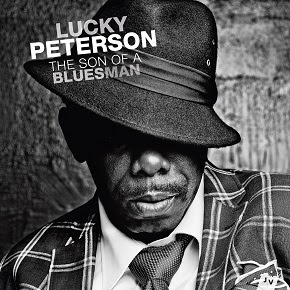
Lucky Peterson • The Son Of A Bluesman


Review
by Steve Leggett  
Lucky Peterson's father was blues guitarist and singer James Peterson, a well-known regional musician who also owned the Governor's Inn, a premier blues nightclub in Buffalo, New York, which means Peterson grew up around his father's friends, who just happened to be touring and recording musicians like Jimmy Reed, Muddy Waters, and Bill Doggett, and he learned from all of them. He became fascinated with the Hammond B-3 organ as a young child, and by the time he was five, he'd proved to be a prodigy on it. Mentored by another of his father's friends, the great songwriter, bassist, arranger, and producer Willie Dixon, Peterson was still only five when he scored an R&B hit with the Dixon-produced "1-2-3-4," the novelty of it all landing him appearances on The Tonight Show, The Ed Sullivan Show, and others, and his debut album appeared in 1969. But Peterson had an exploratory nature, and while he could have had quite a career as a keyboard player, he picked up the guitar at the age of eight, and by the time he was a teen, he had developed an emotionally searing guitar style. He could have relaunched his career then, but instead he attended the Buffalo Academy of Performing Arts, and went out on the road as part of the touring bands of Etta James and Otis Rush, spent three years as Little Milton's keyboardist, another three years in Bobby "Blue" Bland's band, and backed jazz stars like Hank Crawford and Abbey Lincoln. He learned blues, jazz, soul, R&B, funk, and gospel, and by the time he made his re-debut as a bandleader with the Bob Greenlee-produced Lucky Strikes! in 1989, Peterson was a triple-threat multi-instrumentalist who managed to fuse R&B, jazz, gospel, funk, and rock with the blues. All of this leads up to this very personal and semi-autobiographical set, and his 18th album as a bandleader. The Son of a Bluesman, aside from being another fine set of Peterson's joyous fusion blues, is also the first of his albums that he has produced himself, and it has a warm, career-summing kind of feel to it. The title track, "The Son of a Bluesman," and the two different versions of the gospel-themed "I'm Still Here," give this album a personal and retrospective feel, as does the striking, and even silly "Joy," a straight-up family home recording featuring a rap interlude. But perhaps the best and most poignant track on an album full of standouts is the lovely instrumental "Nana Jarnell," dedicated to both Peterson's mother and his wife's mother, musician, singer, and songwriter Tamara Stovall-Peterson. Peterson's guitar lead on the track is a marvel of crying, elegantly balanced phrasing, almost horn-like or vocal-like, and it speaks and sings like the marvel it is. This is perhaps Peterson's most well-rounded and personal album yet, and it coheres in a wonderful arc, capturing the blues as an ever-flowing, joyous, and ultimately uplifting thing.
https://www.allmusic.com/album/the-son-of-a-bluesman-mw0002674115

///////


Reseña
por Steve Leggett  
El padre de Lucky Peterson era el guitarrista y cantante de blues James Peterson, un conocido músico regional que también era propietario del Governor's Inn, un importante club nocturno de blues de Buffalo, Nueva York, lo que significa que Peterson creció rodeado de los amigos de su padre, que casualmente eran músicos de gira y de grabación como Jimmy Reed, Muddy Waters y Bill Doggett, y aprendió de todos ellos. De pequeño le fascinó el órgano Hammond B-3 y a los cinco años ya era un prodigio con él. Bajo la tutela de otro amigo de su padre, el gran compositor, bajista, arreglista y productor Willie Dixon, Peterson sólo tenía cinco años cuando consiguió un éxito de R&B con "1-2-3-4", producida por Dixon. La novedad le valió apariciones en The Tonight Show, The Ed Sullivan Show y otros programas, y su álbum de debut apareció en 1969. Pero Peterson tenía una naturaleza exploradora y, aunque podría haber hecho carrera como teclista, cogió la guitarra a los ocho años y, cuando era adolescente, ya había desarrollado un estilo de guitarra emocionalmente abrasador. Podría haber relanzado su carrera en ese momento, pero en lugar de eso asistió a la Buffalo Academy of Performing Arts, y salió de gira como parte de las bandas de Etta James y Otis Rush, pasó tres años como teclista de Little Milton, otros tres en la banda de Bobby "Blue" Bland, y acompañó a estrellas del jazz como Hank Crawford y Abbey Lincoln. Aprendió blues, jazz, soul, R&B, funk y gospel, y cuando volvió a debutar como director de orquesta con el álbum Lucky Strikes!, producido por Bob Greenlee en 1989, Peterson era un multiinstrumentista triple que conseguía fusionar R&B, jazz, gospel, funk y rock con el blues. Todo ello desemboca en este disco muy personal y semiautobiográfico, su decimoctavo álbum como director de orquesta. The Son of a Bluesman, además de ser otro buen conjunto de alegres blues de fusión de Peterson, es también el primero de sus álbumes que ha producido él mismo, y tiene una cálida sensación de resumen de carrera. El tema que da título al disco, "The Son of a Bluesman", y las dos versiones diferentes de "I'm Still Here", de tema gospel, dan a este álbum un aire personal y retrospectivo, al igual que la llamativa e incluso tonta "Joy", una grabación casera y familiar con un interludio de rap. Pero quizá el mejor y más conmovedor tema de un álbum repleto de sobresalientes sea el encantador instrumental "Nana Jarnell", dedicado tanto a la madre de Peterson como a la de su esposa, la música, cantante y compositora Tamara Stovall-Peterson. La guitarra solista de Peterson es una maravilla del llanto, un fraseo elegantemente equilibrado, casi como una trompeta o una voz, y habla y canta como la maravilla que es. Este es quizás el álbum más completo y personal de Peterson hasta la fecha, y se articula en un arco maravilloso, capturando el blues como algo siempre fluido, alegre y, en última instancia, edificante.
https://www.allmusic.com/album/the-son-of-a-bluesman-mw0002674115


www.alligator.com/Lucky-Peterson ...


Sunday, January 26, 2025

Lucky Peterson • Double Dealin'


Review by Paula Edelstein
As one of the most versatile players in blues, Lucky Peterson ranks among the best of the best. His first release for the Blue Thumb label, Double Dealin' showcases the artist on 12 great songs soaked in the sentiments and emotions that characterize the blues style. Peterson plays the lead guitar, the Hammond B3, and sings his gut-wrenching blue notes with a great band that includes Johnny Lee Schell on rhythm guitar, Jon Cleary on keyboards, Reggie McBride on bass guitar, Tony Braunagel on drums and Tamara Peterson on background vocals. The Texacali Horns back the personnel with exceptional clarity using a serious combination of brass techniques. Peterson's use of an emotionally direct style is also rapidly establishing him as a great storyteller. "When My Blood Runs Cold," "4 Little Boys," and "Remember the Day" are among the themes he deals with from an original perspective and are among the standouts of the hard blues intonations. This CD is reflective of the successful urban blues techniques used on his previous efforts in that it specifically captures the essence of both the "chitlin circuit" and the electric blues associated with the Chicago style without compromising the traditional aspects of the blues form. A welcome addition to any blues collection.
https://www.allmusic.com/album/double-dealin-mw0000001082

///////


Reseña de Paula Edelstein
Como uno de los músicos más versátiles del blues, Lucky Peterson se encuentra entre los mejores de los mejores. Su primer lanzamiento para el sello Blue Thumb, Double Dealin', muestra al artista en 12 grandes canciones empapadas de los sentimientos y emociones que caracterizan el estilo blues. Peterson toca la guitarra principal, la Hammond B3, y canta sus desgarradoras notas azules con una gran banda que incluye a Johnny Lee Schell a la guitarra rítmica, Jon Cleary a los teclados, Reggie McBride al bajo, Tony Braunagel a la batería y Tamara Peterson a los coros. Los cuernos Texacali respaldan al personal con una claridad excepcional utilizando una combinación seria de técnicas de latón. El uso de Peterson de un estilo emocionalmente directo también lo está estableciendo rápidamente como un gran narrador. "When My Blood Runs Cold", "4 Little Boys" y "Remember the Day" se encuentran entre los temas que trata desde una perspectiva original y se encuentran entre los más destacados de las entonaciones de blues duro. Este CD refleja las exitosas técnicas de blues urbano utilizadas en sus esfuerzos anteriores, ya que captura específicamente la esencia tanto del "circuito chitlin" como del blues eléctrico asociado con el estilo de Chicago sin comprometer los aspectos tradicionales de la forma del blues. Una adición bienvenida a cualquier colección de blues.
https://www.allmusic.com/album/double-dealin-mw0000001082


www.alligator.com/Lucky-Peterson ...

Saturday, August 31, 2024

Rufus Thomas • That Woman Is Poison!


Review
by Ron Wynn
A masterful comeback album from a blues and soul veteran who was assumed to be ready for the retirement home. Rufus Thomas went back to the comic blues that had been his forte in the 1950s, and the edge in his voice and defiance in his tone proclaimed that he wasn't finished yet. After years of taking heat from purists for not issuing enough "real" blues albums, Alligator didn't get nearly enough credit for being the only label to give Rufus Thomas a fair shot in the 1980s.
https://www.allmusic.com/album/that-woman-is-poison%21-mw0000653012


Biography
by Richie Unterberger
Few of rock & roll's founding figures are as likable as Rufus Thomas. From the 1940s onward, he has personified Memphis music; his small but witty cameo role in Jim Jarmusch's Mystery Train, a film which satirizes and enshrines the city's role in popular culture, was entirely appropriate. As a recording artist, he wasn't a major innovator, but he could always be depended upon for some good, silly, and/or outrageous fun with his soul dance tunes. He was one of the few rock or soul stars to reach his commercial and artistic peak in middle age, and was a crucial mentor to many important Memphis blues, rock, and soul musicians.

Thomas was already a professional entertainer in the mid-'30s, when he was a comedian with the Rabbit Foot Minstrels. He recorded music as early as 1941, but really made his mark on the Memphis music scene as a deejay on WDIA, one of the few Black-owned stations of the era. He also ran talent shows on Memphis' famous Beale Street that helped showcase the emerging skills of such influential figures as B.B. King, Bobby Bland, Junior Parker, Ike Turner, and Roscoe Gordon.

Thomas had his first success as a recording artist in 1953 with "Bear Cat," a funny answer record to Big Mama Thornton's "Hound Dog." It made number three on the R&B charts, giving Sun Records its first national hit, though some of the sweetness went out of the triumph after Sun owner Sam Phillips lost a lawsuit for plagiarizing the original Jerry Leiber/Mike Stoller tune. Thomas, strangely, would make only one other record for Sun, and recorded only sporadically throughout the rest of the 1950s.

Thomas and his daughter Carla would become the first stars for the Stax label, for whom they recorded a duet in 1959, "'Cause I Love You" (when the company was still known as Satellite). In the '60s, Carla would become one of Stax's biggest stars. On his own, Rufus wasn't as successful as his daughter, but issued a steady stream of decent dance/novelty singles.

These were not deep or emotional statements, or meant to be. Vaguely prefiguring elements of funk, the accent was on the stripped-down groove and Rufus' good-time vocals, which didn't take himself or anything seriously. The biggest by far was "Walking the Dog," which made the Top Ten in 1963, and was covered by the Rolling Stones on their first album.

Thomas hit his commercial peak in the early '70s, when "Do the Funky Chicken," "(Do The) Push and Pull," and "The Breakdown" all made the R&B Top Five. As the song titles themselves make clear, funk was now driving his sound rather than blues or soul. Thomas drew upon his vaudeville background to put them over on-stage with fancy footwork that displayed remarkable agility for a man well into his 50s. The collapse of the Stax label in the mid-'70s meant the end of his career, basically, as it did for many other artists with the company. In 2001, Rufus Thomas was inducted into the Blues Hall of Fame. Later that year, on December 15, he died at St. Francis hospital in Memphis, Tennessee.
https://www.allmusic.com/artist/rufus-thomas-mn0000303050/biography

///////


Reseña
por Ron Wynn
Un álbum de regreso magistral de un veterano del blues y el soul que se suponía listo para el hogar de retiro. Rufus Thomas volvió al blues cómico que había sido su fuerte en los años 50, y el filo de su voz y el desafío de su tono proclamaron que aún no había terminado. Después de años de recibir las críticas de los puristas por no publicar suficientes álbumes de blues "de verdad", Alligator no recibió suficiente crédito por ser el único sello que dio a Rufus Thomas una oportunidad justa en la década de 1980.
https://www.allmusic.com/album/that-woman-is-poison%21-mw0000653012


Biografía
por Richie Unterberger
Pocas figuras fundadoras del rock & roll son tan simpáticas como Rufus Thomas. Desde la década de 1940, ha personificado la música de Memphis; su pequeño pero ingenioso cameo en Mystery Train de Jim Jarmusch, una película que satiriza y consagra el papel de la ciudad en la cultura popular, fue totalmente apropiado. Como artista discográfico, no era un gran innovador, pero siempre se podía contar con él para que se divirtiera con sus melodías de baile soul. Fue una de las pocas estrellas del rock o del soul que alcanzó su cima comercial y artística en la madurez, y fue un mentor crucial para muchos importantes músicos de blues, rock y soul de Memphis.

Thomas ya era un artista profesional a mediados de los años 30, cuando actuaba como cómico con los Rabbit Foot Minstrels. Ya grabó música en 1941, pero se hizo un hueco en la escena musical de Memphis como pinchadiscos en WDIA, una de las pocas emisoras de propiedad negra de la época. También dirigió programas de talentos en la famosa Beale Street de Memphis que ayudaron a mostrar las habilidades emergentes de figuras tan influyentes como B.B. King, Bobby Bland, Junior Parker, Ike Turner y Roscoe Gordon.

Thomas tuvo su primer éxito como artista discográfico en 1953 con "Bear Cat", un divertido disco de respuesta a "Hound Dog" de Big Mama Thornton. Alcanzó el número tres en las listas de R&B, dando a Sun Records su primer éxito nacional, aunque parte de la dulzura desapareció del triunfo después de que el propietario de Sun, Sam Phillips, perdiera un juicio por plagio de la melodía original de Jerry Leiber/Mike Stoller. Thomas, extrañamente, sólo grabaría otro disco para Sun, y sólo grabó esporádicamente durante el resto de la década de 1950.

Thomas y su hija Carla se convertirían en las primeras estrellas del sello Stax, para el que grabaron un dúo en 1959, "'Cause I Love You" (cuando la compañía aún se conocía como Satellite). En los años 60, Carla se convertiría en una de las mayores estrellas de Stax. Por su cuenta, Rufus no tuvo tanto éxito como su hija, pero emitió un flujo constante de decentes singles de baile/novela.

No eran declaraciones profundas o emocionales, ni pretendían serlo. Prefigurando vagamente elementos del funk, el acento se ponía en el groove despojado y en la voz de Rufus, que no se tomaba a sí mismo ni a nada en serio. La más importante, con diferencia, fue "Walking the Dog", que llegó al Top Ten en 1963 y fue versionada por los Rolling Stones en su primer álbum.

Thomas alcanzó su máximo nivel comercial a principios de los 70, cuando "Do the Funky Chicken", "(Do The) Push and Pull" y "The Breakdown" llegaron al Top 5 de R&B. Como los propios títulos de las canciones dejan claro, el funk era ahora el motor de su sonido, más que el blues o el soul. Thomas recurrió a su experiencia en el vodevil para ponerlas en escena con un elegante juego de pies que mostraba una notable agilidad para un hombre de más de 50 años. El colapso de la discográfica Stax a mediados de los años 70 significó el fin de su carrera, básicamente, como lo fue para muchos otros artistas de la compañía. En 2001, Rufus Thomas fue incluido en el Salón de la Fama del Blues. Ese mismo año, el 15 de diciembre, murió en el hospital St. Francis de Memphis (Tennessee).
https://www.allmusic.com/artist/rufus-thomas-mn0000303050/biography


Sunday, August 18, 2024

Lucky Peterson • Ridin'


As a child prodigy, keyboardist and organist Lucky Peterson's exploits were legendary. The stories grew even more widespread as he became a teen and stints with Little Milton and Bobby "Blue" Bland only added to his fame. But Peterson's records have not always justified or reaffirmed his reputation. That is not the case with the cuts on this 1984 set, recently reissued by Evidence. The spiraling solos, excellent bridges, turnbacks, pedal maneuvers, and soulful accompaniment are executed with a relaxed edge and confident precision. If you have wondered whether Lucky Peterson deserves the hype and major label bonanza, these songs are the real deal. ~ Ron Wynn

///////

De niño prodigio, las hazañas del tecladista y organista Lucky Peterson eran legendarias. Las historias se difundieron aún más a medida que se convirtió en un adolescente y su paso por Little Milton y Bobby "Blue" Bland no hizo más que aumentar su fama. Pero los registros de Peterson no siempre han justificado o reafirmado su reputación. Ese no es el caso con los recortes en este set de 1984, recientemente reeditado por Evidence. Los solos en espiral, excelentes puentes, giros, maniobras de pedaleo y un acompañamiento conmovedor se ejecutan con un borde relajado y una precisión segura. Si usted se ha preguntado si Lucky Peterson merece el bombo y la gran bonanza de la discográfica, estas canciones son el verdadero negocio. ~ Ron Wynn  
 

www.alligator.com/Lucky-Peterson ...


Saturday, March 16, 2024

Lucky Peterson • Organ Soul Sessions


A frequent performer in France since the early 90's, Lucky Peterson is back with a triple album event: Organ Soul Sessions.

For his return to the front of the scene Lucky has chosen a mostly soul repertoire. "I just love Donny Hathaway for instance, and Stevie Wonder, for the joy they share". Lucky the organist takes up 60's and 70's classics like I Heard It Through The Grapevine and I Can't Stand The Rain, and revives the sounds of Jack McDuff, Lonnie Smith, and Jimmy Smith. He also revisits Thelonius Monk's Hammond B3 Misterioso, and adds a thoughtful version of Amy Winehouse's Rehab.

///////

Frecuente en Francia desde principios de los 90, Lucky Peterson vuelve con un evento de triple álbum: Organ Soul Sessions.

Para su regreso al frente de la escena, Lucky ha elegido un repertorio principalmente de soul. "Me encanta Donny Hathaway por ejemplo, y Stevie Wonder, por la alegría que comparten". Lucky el organista retoma clásicos de los 60 y 70 como I Heard It Through The Grapevine y I Can't Stand The Rain, y revive los sonidos de Jack McDuff, Lonnie Smith y Jimmy Smith. También revisa Hammond B3 Misterioso de Thelonius Monk, y añade una reflexiva versión de Amy Winehouse's Rehab. 


www.alligator.com/Lucky-Peterson ...