Showing posts with label Ray Nance. Show all posts

Saturday, May 2, 2026

Duke Ellington • Anatomy of a Murder


Review from JAZZIZ Magazine (by Larry Nai):
The Ellington orchestra sounded exquisite in the early summer sessions that produced this soundtrack. With a burnished sonic brilliance reminiscent of the glorious 1940 Blanton/Webster edition of the band, and soloists like Johnny Hodges and Paul Gonsalves, Ellington's tightly woven soundtrack took on a life independent of its original context. In doing so, it became one of Duke's most satisfying albums.
https://www.amazon.com/Anatomy-Murder-Soundtrack-Motion-Picture/dp/B00000IMYH

///////


Reseña de JAZZIZ Magazine (por Larry Nai):
La orquesta de Ellington sonó exquisita en las sesiones de principios de verano que produjeron esta banda sonora. Con un brillo sónico bruñido que recuerda a la gloriosa edición Blanton/Webster de 1940 de la banda, y solistas como Johnny Hodges y Paul Gonsalves, la banda sonora tejida apretadamente por Ellington cobró vida independiente de su contexto original. Al hacerlo, se convirtió en uno de los álbumes más satisfactorios de Duke.
https://www.amazon.com/Anatomy-Murder-Soundtrack-Motion-Picture/dp/B00000IMYH


Thursday, March 20, 2025

Jaki Byard • Solo-Strings


Few jazz pianists could honestly claim to be more eclectic than the late Jaki Byard. Depending on the mood he was in, the Bostonian could acknowledge anyone from Dave Brubeck to James P. Johnson to Cecil Taylor. Byard wasn't afraid to take chances, and his open-mindedness served him well. The pianist's eclectic nature is impossible to miss on Solo/Strings, which is the 2000 reissue of his Prestige dates Jaki Byard with Strings (1968) and Solo Piano (1969) on a single 78-minute CD (minus, unfortunately, "Hello, Young Lovers" from Solo Piano). While Solo Piano is exactly that -- an album of unaccompanied solo piano -- Jaki Byard With Strings is somewhat misleading. That title implies that Byard is accompanied by a large string orchestra, but in fact, he leads a sextet that includes four string instruments (George Benson's guitar, Ray Nance's violin, Ron Carter's cello, and Richard Davis' bass) along with Byard's piano and Alan Dawson's drums. Byard is unpredictable in both settings, although Solo Piano is even more of a rollercoaster ride. Unaccompanied, Byard shows his appreciation of different eras of jazz piano and has fun with everything from stride and boogie woogie to modal post-bop, free jazz, and the avant-garde. "The Hollis Stomp" manages to combine stride piano à la James P. Johnson or Fats Waller with elements of Cecil Taylor, while "New Orleans Stomp" is a playful blues that offers an unlikely combination of Taylor, McCoy Tyner, and Professor Longhair. "Spanish Tinge #2," meanwhile, isn't as Jelly Roll Morton-influenced as its title implies (Morton described the Latin influences in his music as "the Spanish tinge"). Rather, the tune brings to mind Miles Davis' work with Gil Evans on the innovative Sketches of Spain. Full of surprises, this superb CD is recommended to anyone who appreciates a wide variety of jazz.

///////

Pocos pianistas de jazz podrían decir honestamente que son más eclécticos que el difunto Jaki Byard. Dependiendo de su estado de ánimo, el bostoniano podía reconocer a cualquiera, desde Dave Brubeck hasta James P. Johnson y Cecil Taylor. Byard no tenía miedo de arriesgarse, y su apertura mental le sirvió de mucho. El carácter ecléctico del pianista es imperdible en Solo/Strings, que es la reedición en 2000 de sus citas de Prestige Jaki Byard con Strings (1968) y Solo Piano (1969) en un solo CD de 78 minutos (menos, desafortunadamente, "Hello, Young Lovers" de Solo Piano). Mientras que Solo Piano es exactamente eso -- un álbum de piano solo no acompañado -- Jaki Byard With Strings es algo engañoso. Ese título implica que Byard está acompañado por una gran orquesta de cuerdas, pero de hecho, dirige un sexteto que incluye cuatro instrumentos de cuerda (la guitarra de George Benson, el violín de Ray Nance, el violín de Ron Carter y el bajo de Richard Davis) junto con el piano de Byard y la batería de Alan Dawson. Byard es impredecible en ambos escenarios, aunque Solo Piano es más bien una montaña rusa. Sin compañía, Byard muestra su aprecio por las diferentes épocas del piano de jazz y se divierte con todo, desde el stride y el boogie woogie hasta el post-bop modal, el free jazz y las vanguardias. "The Hollis Stomp" logra combinar el piano de pasos a la James P. Johnson o Fats Waller con elementos de Cecil Taylor, mientras que "New Orleans Stomp" es un blues juguetón que ofrece una combinación improbable de Taylor, McCoy Tyner y el Profesor Pelo Largo. "Spanish Tinge #2," mientras tanto, no es tan influenciado por Jelly Roll Morton como lo implica su título (Morton describió las influencias latinas en su música como "el teñido español"). Más bien, la melodía recuerda el trabajo de Miles Davis con Gil Evans en los innovadores Sketches of Spain. Lleno de sorpresas, este magnífico CD es recomendable para cualquiera que aprecie una amplia variedad de jazz.


Saturday, February 8, 2025

Cat Anderson & His Orchestra • Cat's in the Alley


William Alonzo “Cat” Anderson (1916–1981) was a musician in the Ellington tradition - He was first trumpet man with Duke for more than twenty years, being best known for his amazingly consistent high-note work - On 'Cat on a Hot Tin Horn,' his first LP as a leader, Cat’s upper-register is handsomely displayed, along with some brash, bluesy trumpet work and a glimpse of his lyrical qualities - Also on display are his talents as a composer and arranger, along with the redoutable Ernie Wilkins, of a big band, which featured a dazzling all-star group of jazzmen - But as vigorous and technically dazzling as Anderson’s excursions into the upper register were, they too often overshadowed the fact that he was a trumpet player with a rich and varied palette of expression at his command -

For the second LP included in this CD set, entitled 'Ellingtonia,' Cat assembled some of the finest Ellington musicians - The tunes chosen were in the soft swing vein and done essentially as a tribute to Duke Ellington.

///////


William Alonzo "Cat" Anderson (1916-1981) fue un músico de la tradición de Ellington - Fue el primer trompetista de Duke durante más de veinte años, siendo más conocido por su increíblemente consistente trabajo en los agudos - En "Cat on a Hot Tin Horn", su primer LP como líder, el registro superior de Cat se muestra de forma magnífica, junto con un trabajo de trompeta descarado y bluesy y un atisbo de sus cualidades líricas - También se muestra su talento como compositor y arreglista, junto con el redoutable Ernie Wilkins, de una big band, que contaba con un deslumbrante grupo de jazzistas - Pero por muy vigorosas y técnicamente deslumbrantes que fueran las incursiones de Anderson en el registro superior, con demasiada frecuencia eclipsaban el hecho de que era un trompetista con una rica y variada paleta de expresión a sus órdenes -

Para el segundo LP incluido en este CD, titulado "Ellingtonia", Cat reunió a algunos de los mejores músicos de Ellington - Las melodías elegidas estaban en la onda del swing suave y se hicieron esencialmente como homenaje a Duke Ellington.


Thursday, February 6, 2025

Paul Gonsalves • Ellingtonia Moods And Blues


Review
by Cub Koda  
Paul Gonsalves was considered some kind of new genius of the tenor saxophone after he blew an astounding 27 choruses with Duke Ellington's Orchestra on the Duke's "Diminuendo and Crescendo in Blue" at the 1956 Newport Jazz Festival. As part of RCA's reissue series to celebrate Ellington's 100th birthday, Ellingtonia Moods & Blues brings back a 1960 date featuring Gonsalves and other Ellington soloists. Although nominally credited to Gonsalves, this, in fact, is a co-chaired date with Johnny Hodges. Hodges shares the composing, arranging and -- as always -- swinging soloing. Add the fine trumpet work of Ray Nance and the swinging trombone work of Booty Wood -- both contributing just the right blend to offset the two saxophonists -- and this makes for one potent date. The rhythm section is solid and supportive, with great playing from Jimmy Jones on piano, Al Hall on bass, and Oliver Jackson on drums. Gonsalves plays his usual breathy tenor, full of warmth and depth, caressing his notes in much the same time-honored manner as Hodges, making their solos on the Duke's "Daydream" a study in both similarities and contrasts. The set also features three seldom-heard Gonsalves tunes ("Chocataw" and "The Line-Up") and a Hodges tune ("D.A. Blues"), along with songs that Hodges co-wrote for the Ellington band, like "I'm Beginning to See the Light." This is jazz from the days when albums were recorded in one day, and that was a good thing.
https://www.allmusic.com/album/ellingtonia-moods-blues-mw0000248164

///////


Reseña
por Cub Koda  
Paul Gonsalves fue considerado una especie de nuevo genio del saxo tenor después de que soplara la asombrosa cifra de 27 coros con la Orquesta de Duke Ellington en el "Diminuendo and Crescendo in Blue" del Duque en el Festival de Jazz de Newport de 1956. Como parte de la serie de reediciones de RCA para celebrar el centenario de Ellington, Ellingtonia Moods & Blues recupera una cita de 1960 en la que aparecen Gonsalves y otros solistas de Ellington. Aunque nominalmente está acreditada a Gonsalves, se trata, de hecho, de una fecha coproducida con Johnny Hodges. Hodges comparte la composición, los arreglos y, como siempre, los solos. Añádase el buen trabajo de trompeta de Ray Nance y el swing del trombón de Booty Wood -ambos contribuyen con la mezcla justa para compensar a los dos saxofonistas- y esto hace que sea una fecha potente. La sección rítmica es sólida y de apoyo, con una gran interpretación de Jimmy Jones al piano, Al Hall al bajo y Oliver Jackson a la batería. Gonsalves toca su tenor habitual, lleno de calidez y profundidad, acariciando sus notas de la misma manera que Hodges, haciendo de sus solos en "Daydream" de Duke un estudio de similitudes y contrastes. El disco también incluye tres temas de Gonsalves poco escuchados ("Chocataw" y "The Line-Up") y un tema de Hodges ("D.A. Blues"), junto con canciones que Hodges co-escribió para la banda de Ellington, como "I'm Beginning to See the Light". Esto es jazz de los días en que los álbumes se grababan en un día, y eso era algo bueno.
https://www.allmusic.com/album/ellingtonia-moods-blues-mw0000248164


Saturday, January 18, 2025

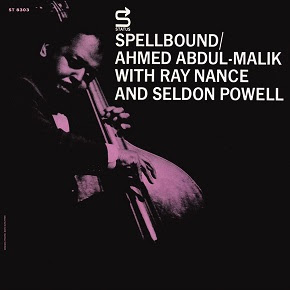
Ahmed Abdul-Malik • Spellbound


Review
by Thom Jurek
Spellbound, recorded in 1964, is double bassist and oud player Ahmed Abdul-Malik's final date as a leader, though given its contents, it shouldn't have been. Abdul-Malik, an American born musician of Sudanese descent, helped to bring the sounds of the Middle East to jazz in the '50s, incorporating oud and a different set of scales in his own recordings. His sidemen for this date are ubiquitous Duke Ellington Orchestra cornetist Ray Nance, who also plays violin here, drummer Walter Perkins, saxophonist/flutist Seldon Powell, the little known pianist Paul Neves, and oud player -- on two tracks -- Sudanese musician Hamza Aldeen (not to be confused with the Egyptian composer, oud and tar player Hamza el Din). The program on this date is unusual: three of the five tunes here come from movie soundtracks. The opening title track is from the Alfred Hitchcock film of the same name and features a fine, gently swinging solo from Neves, and some excellent frontline and violin from Nance. "Never on Sunday," from the Greek film of the same name, is a showcase for Aldeen, who twins his lines with Nance's plucked violin, anchored by Abdul-Malik and Perkins. Powell's flute moves off into a solo before the piano and oud restate the theme followed by a saxophone, piano, and second flute break. It's breezy, easy, and it swings. The interplay between Nance's cornet break and Powell's tenor solo registers its emotion as Neves fills the melody with wonderful, spacious, right-hand arpeggios. Abdul-Malik's bass opens "Song of Delilah" from the film Samson & Delilah. He's followed in a complex melodic statement by flute, a gypsy jazz solo by Nance on violin, and finally, a gorgeous oud break based on a single chord -- with deep, responsorial bass from Abdul-Malik -- that eventually moves the tune into a grooving flute break. Closer "Cinema Blues" isn't from a film. Instead, it's a straight-ahead hard bop blues, with some fine muted cornet work, killer comps from Neves, and a fluid, mid-register solo by Powell, with a driving rhythm section. Spellbound isn't as groundbreaking as some of Abdul-Malik's earlier work, but it doesn't need to be: by this point, he had successfully melded jazz with Middle Eastern sounds into a seamless -- if somewhat exotically textural -- whole. The band fires on all cylinders under his inspired direction, making this a fitting sendoff to him as a bandleader. Musically, he saved one of his best for last.
https://www.allmusic.com/album/spellbound-mw0001881386

///////


Reseña
por Thom Jurek
Spellbound, grabado en 1964, es la última cita del contrabajista y oudista Ahmed Abdul-Malik como líder, aunque dado su contenido, no debería haberlo sido. Abdul-Malik, músico nacido en Estados Unidos de ascendencia sudanesa, ayudó a introducir los sonidos de Oriente Medio en el jazz de los años 50, incorporando el oud y un conjunto diferente de escalas en sus propias grabaciones. Sus acompañantes en este disco son el cornetista de la Duke Ellington Orchestra Ray Nance, que también toca el violín, el batería Walter Perkins, el saxofonista y flautista Seldon Powell, el poco conocido pianista Paul Neves y el laudista, en dos temas, el sudanés Hamza Aldeen (no confundir con el compositor, laudista y tarista egipcio Hamza el Din). El programa de esta fecha es inusual: tres de los cinco temas proceden de bandas sonoras de películas. El tema que da título al disco pertenece a la película de Alfred Hitchcock del mismo nombre y cuenta con un buen solo de Neves, con un suave balanceo, y una excelente primera línea y violín de Nance. "Never on Sunday", de la película griega del mismo nombre, es un escaparate para Aldeen, que hermana sus líneas con el violín punteado de Nance, anclado por Abdul-Malik y Perkins. La flauta de Powell hace un solo antes de que el piano y el oud retomen el tema, seguido de una pausa de saxofón, piano y otra flauta. Es ligero, fácil y se balancea. La interacción entre la pausa de la corneta de Nance y el solo de tenor de Powell registra su emoción mientras Neves llena la melodía con maravillosos y espaciosos arpegios de la mano derecha. El bajo de Abdul-Malik abre "Song of Delilah" de la película Samson & Delilah. Le sigue una compleja declaración melódica de la flauta, un solo de jazz gitano de Nance al violín y, por último, una preciosa ruptura del oud basada en un solo acorde -con un bajo profundo y responsorial de Abdul-Malik- que finalmente lleva la melodía a una ruptura de flauta groove. La más cercana "Cinema Blues" no es de una película. En su lugar, es un blues hard bop directo, con un buen trabajo de corneta silenciada, excelentes composiciones de Neves, y un fluido solo de medio registro de Powell, con una sección rítmica de conducción. Spellbound no es tan rompedor como algunos de los primeros trabajos de Abdul-Malik, pero no tiene por qué serlo: a estas alturas, ya había conseguido fusionar el jazz con los sonidos de Oriente Medio en un todo sin fisuras, aunque con texturas un tanto exóticas. La banda funciona a pleno rendimiento bajo su inspirada dirección, lo que hace de este disco una adecuada despedida como director de orquesta. Musicalmente, se guardó lo mejor para el final.
https://www.allmusic.com/album/spellbound-mw0001881386


Duke Ellington and His Orchestra • The Treasury Shows - Vols. 1-4


The Duke Ellington Treasury Shows series are the collection of live shows. The shows were aired as a way to promote the treasury bonds, which the american government sold in order to raise money for the war effort in the last part of WW2.  

The series consists of double cds with very thorough liner notes and will upon its completion consist of 25 volumes.

The radioshows are filled with guest stars, Duke advertising in various ways for the war bonds and hot renditions of both well known and lesser known compositions played by the band at an artistic peak.
 
///////
 
La serie Duke Ellington Treasury Shows es una colección de espectáculos en directo. Los programas se emitieron para promocionar los bonos del Tesoro, que el gobierno estadounidense vendió para recaudar fondos para la guerra en la última parte de la Segunda Guerra Mundial.  

La serie consta de dos CDs con notas muy completas y, una vez terminada, constará de 25 volúmenes.

Los programas de radio están llenos de estrellas invitadas, Duke haciendo publicidad de diversas formas para los bonos de guerra e interpretaciones de composiciones conocidas y menos conocidas tocadas por la banda en su mejor momento artístico.


Duke Ellington and His Orchestra • The Treasury Shows - Vols. 5-8

Duke Ellington • The Treasury Shows Vols. 09-12


Duke Ellington • The Treasury Shows Vols. 13-16


Duke Ellington • The Treasury Shows Vols. 17-20


Duke Ellington • The Treasury Shows Vols. 21-25


Tuesday, December 24, 2024

Johnny Hodges • The Smooth One


Review
by Scott Yanow
This attractive double LP from 1979 includes two complete sessions by altoist Johnny Hodges that were previously unissued at the time. Most unusual is that Hodges contributed 15 of the 19 compositions; the others are "My Melancholy Baby," "Lotus Blossom," and two by clarinetist Jimmy Hamilton. Despite the unfamiliar material, the music is very much in the Duke Ellington style, with an emphasis on blues, ballads, and riff tunes. In addition to Hodges, the other main soloists are trumpeter Harold "Shorty" Baker, tenor saxophonist Ben Webster (on the first date), and trumpeter/violinist Ray Nance (on the second).
https://www.allmusic.com/album/a-smooth-one-mw0000874567

///////


Reseña
por Scott Yanow
Este atractivo doble LP de 1979 incluye dos sesiones completas del contralto Johnny Hodges que no habían sido editadas en su momento. Lo más inusual es que Hodges contribuyó con 15 de las 19 composiciones; las otras son "My Melancholy Baby", "Lotus Blossom" y dos del clarinetista Jimmy Hamilton. A pesar del material poco familiar, la música está muy en el estilo de Duke Ellington, con énfasis en blues, baladas y melodías con riffs. Además de Hodges, los otros solistas principales son el trompetista Harold "Shorty" Baker, el saxofonista tenor Ben Webster (en la primera fecha) y el trompetista/violinista Ray Nance (en la segunda).
https://www.allmusic.com/album/a-smooth-one-mw0000874567


Tuesday, November 5, 2024

Stuff Smith • The Complete Verve Stuff Smith Sessions Vol.1


It is a shame that Stuff Smith did not live to see the revival of interest in swing violin due to his premature death in 1967, almost three decades prior to the passing of fellow violinist Stephane Grappelli. Almost all of Smith's recordings languished out of print until a two-CD set finally appeared on Verve, soon followed by this more complete four-CD Mosaic collection of Smith's recordings for the label, which adds three completely unissued sessions and five additional previously unreleased tracks.
The first two studio dates were scheduled for release but never put out by Verve, yet the music is simply astonishing. Smith is in top form throughout all ten sessions. The supporting cast is tremendous: pianists include Jimmy Jones, Carl Perkins, Oscar Peterson, Wynton Kelly, Shirley Horn (who was overlooked and credit was originally given to John Eaton, who likely appears on two tracks), and Paul Smith. Bassists include Red Callendar, Curtis Counce, Ray Brown, Red Mitchell, and Milt Hinton; other important musicians are Dizzy Gillespie, Barney Kessel, Alvin Stoller, J. C. Heard, Kenny Burrell, and fellow violinist Ray Nance. Smith plays quite a few enjoyable originals (including his blazing "Hillcrest," the very catchy "Calypso," and the exotic "Desert Sands"), but he also covers an extensive collection of Gershwin songs and other standards from some of the best composers of the Great American Songbook, and classic songs from the playbooks of Duke Ellington and Fletcher Henderson. While some tracks are clearly stronger performances than others, there is not one song that won't be devoured eagerly by fans of Smith's swinging jazz violin.

///////

Es una lástima que Stuff Smith no viviera para ver el resurgimiento del interés por el violín swing debido a su muerte prematura en 1967, casi tres décadas antes del fallecimiento de su compañero violinista Stéphane Grappelli. Casi todas las grabaciones de Smith languidecieron fuera de circulación hasta que finalmente apareció un conjunto de dos CD en Verve, seguido pronto por esta colección más completa de mosaicos de cuatro CD de las grabaciones de Smith para el sello, que añade tres sesiones completamente inéditas y cinco temas adicionales no publicados anteriormente.
Las dos primeras fechas de estudio estaban programadas para su lanzamiento pero nunca fueron editadas por Verve, sin embargo la música es simplemente asombrosa. Smith está en plena forma durante las diez sesiones. El reparto de apoyo es tremendo: los pianistas incluyen a Jimmy Jones, Carl Perkins, Oscar Peterson, Wynton Kelly, Shirley Horn (que fue pasada por alto y se le dio crédito originalmente a John Eaton, que probablemente aparece en dos pistas), y Paul Smith. Entre los bajistas se encuentran Red Callendar, Curtis Counce, Ray Brown, Red Mitchell y Milt Hinton; otros músicos importantes son Dizzy Gillespie, Barney Kessel, Alvin Stoller, J. C. Heard, Kenny Burrell y el violinista Ray Nance. Smith toca bastantes originales agradables (incluyendo su ardiente "Hillcrest", el muy pegajoso "Calypso" y el exótico "Desert Sands"), pero también cubre una extensa colección de canciones de Gershwin y otros estándares de algunos de los mejores compositores del Great American Songbook, y canciones clásicas de los libros de canciones de Duke Ellington y Fletcher Henderson. Aunque algunas canciones son claramente más fuertes que otras, no hay una sola canción que no sea devorada con entusiasmo por los fans del violín de jazz de Smith.


Stuff Smith • The Complete Verve Stuff Smith Sessions Vol.2


Stuff Smith • The Complete Verve Stuff Smith Sessions Vol.3


Stuff Smith • The Complete Verve Stuff Smith Sessions Vol.4


Thursday, August 8, 2024

Duke Ellington • My People [The Complete Show]


Duke Ellington’s ‘My People’ opened in Chicago August 16, 1963. Duke Ellington did everything. He wrote the music, the words, directed it and did the orchestrations. There were not enough money involved to hire Duke Ellington’s orchestra. Instead they hired a 16 piece orchestra with Jimmy Jones as the pianist. A recording of the show was made on August 20, 21 and 28 supervised by Billy Strayhorn and Duke Ellington. The CD contains for the fi rst time the complete show. Duke Ellington in ’My People’ chose the strategy to emphasize the positive achievements of black people to America life, rather than protest against injustice. It had only one minute of social protest written into its script. ‘My People’ is not political. It has social signifi cance, but the accent will be on entertainment.
https://storyvillerecords.com/product/my-people/

///////


My People' de Duke Ellington se estrenó en Chicago el 16 de agosto de 1963. Duke Ellington lo hizo todo. Escribió la música, la letra, la dirigió e hizo las orquestaciones. No había suficiente dinero para contratar a la orquesta de Duke Ellington. En su lugar, contrataron una orquesta de 16 músicos con Jimmy Jones como pianista. Los días 20, 21 y 28 de agosto se realizó una grabación del espectáculo supervisada por Billy Strayhorn y Duke Ellington. El CD contiene por primera vez el espectáculo completo. Duke Ellington en "My People" eligió la estrategia de destacar los logros positivos de los negros en la vida de Estados Unidos, en lugar de protestar contra la injusticia. Sólo tenía un minuto de protesta social escrito en su guión. My People" no es política. Tiene un significado social, pero el acento se pone en el entretenimiento.
https://storyvillerecords.com/product/my-people/


storyvillerecords.com ...