Showing posts with label Dave Holland. Show all posts

Sunday, March 29, 2026

Dave Holland Quintet • Prime Directive


Review from AllMusic (by Brian Bartolini) - 4.5 Stars:
Tremendous taste prevents Holland from making unsatisfying music. He is a great leader in the truest senses of the word - he gives his team space, trusts their abilities and judgment, yet all the while remains firmly in command and infuses the results with his own style and personality. Prime Directive is a wonderful jazz album. These 77 minutes and nine tracks do not cheat or disappoint. Prime Directive is recommended; a great leader is, indeed, hard to find.
https://www.allmusic.com/album/prime-directive-mw0000604627

///////


Reseña de AllMusic (por Brian Bartolini) - 4.5 Estrellas:
El tremendo gusto evita que Holland haga música insatisfactoria. Es un gran líder en los sentidos más verdaderos de la palabra - le da espacio a su equipo, confía en sus habilidades y juicio, mientras permanece firmemente al mando e infunde los resultados con su propio estilo y personalidad. Prime Directive es un maravilloso álbum de jazz. Estos 77 minutos y nueve pistas no engañan ni decepcionan. Prime Directive es recomendado; un gran líder es, de hecho, difícil de encontrar.
https://www.allmusic.com/album/prime-directive-mw0000604627


Wednesday, February 11, 2026

Joe Henderson • So Near, So Far [Musings for Miles]


Biography by Scott Yanow
Joe Henderson is proof that jazz can sell without watering down the music; it just takes creative marketing. Although his sound and style were virtually unchanged from the mid-'60s, Joe Henderson's signing with Verve in 1992 was treated as a major news event by the label (even though he had already recorded many memorable sessions for other companies). His Verve recordings had easy-to-market themes (tributes to Billy Strayhorn, Miles Davis, and Antonio Carlos Jobim) and, as a result, he became a national celebrity and a constant poll winner while still sounding the same as when he was in obscurity in the 1970s.

The general feeling is that it couldn't have happened to a more deserving jazz musician. After studying at Kentucky State College and Wayne State University, Joe Henderson played locally in Detroit before spending time in the military (1960-1962). He played briefly with Jack McDuff and then gained recognition for his work with Kenny Dorham (1962-1963), a veteran bop trumpeter who championed him and helped Henderson get signed to Blue Note. Henderson appeared on many Blue Note sessions both as a leader and as a sideman, spent 1964-1966 with Horace Silver's Quintet, and during 1969-1970 was in Herbie Hancock's band. From the start, he had a very distinctive sound and style which, although influenced a bit by both Sonny Rollins and John Coltrane, also contained a lot of brand new phrases and ideas. Henderson had long been able to improvise in both inside and outside settings, from hard bop to freeform. In the 1970s, he recorded frequently for Milestone and lived in San Francisco, but was somewhat taken for granted. The second half of the 1980s found him continuing his freelancing and teaching while recording for Blue Note, but it was when he hooked up with Verve that he suddenly became famous. Virtually all of his recordings are currently in print on CD, including a massive collection of his neglected (but generally rewarding) Milestone dates. On June 30, 2001, Joe Henderson passed away due to heart failure after a long battle with emphysema.
https://www.allmusic.com/artist/joe-henderson-mn0000139804/biography

///////


Reseña de Scott Yanow
Este álbum (que ha sido incluido en la caja completa de ocho CDs de Joe Henderson, Milestone Years) tiene bastantes momentos clásicos. En ese momento, el saxofonista tenor Henderson era miembro del Sexteto de Herbie Hancock, por lo que Hancock estuvo encantado de actuar como músico secundario, doblando al piano y al piano eléctrico, con el grupo de estrellas, que también incluye al trompetista Mike Lawrence, al bajista Ron Carter y al baterista Jack DeJohnette. Los aspectos más destacados son muchos e incluyen la versión original de "Black Narcissus", "Isotope", una interpretación lírica de "Lazy Afternoon" y la forma libre "Foresight and Afterthought".
https://www.allmusic.com/album/power-to-the-people-mw0000004668


Biografía de Scott Yanow
Joe Henderson es la prueba de que el jazz puede venderse sin diluir la música; sólo hace falta un marketing creativo. Aunque su sonido y su estilo no han cambiado prácticamente desde mediados de los años 60, el fichaje de Joe Henderson por Verve en 1992 fue tratado como un gran acontecimiento por la discográfica (a pesar de que ya había grabado muchas sesiones memorables para otras compañías). Sus grabaciones para Verve tenían temas fáciles de comercializar (homenajes a Billy Strayhorn, Miles Davis y Antonio Carlos Jobim) y, como resultado, se convirtió en una celebridad nacional y en un constante ganador de encuestas mientras seguía sonando igual que cuando estaba en la oscuridad en los años 70.

El sentimiento general es que no podría haberle ocurrido a un músico de jazz más meritorio. Tras estudiar en el Kentucky State College y en la Wayne State University, Joe Henderson tocó a nivel local en Detroit antes de pasar por el ejército (1960-1962). Tocó brevemente con Jack McDuff y luego ganó reconocimiento por su trabajo con Kenny Dorham (1962-1963), un veterano trompetista de bop que lo defendió y ayudó a Henderson a firmar con Blue Note. Henderson apareció en muchas sesiones de Blue Note como líder y como acompañante, pasó de 1964 a 1966 con el Quinteto de Horace Silver, y durante 1969-1970 estuvo en la banda de Herbie Hancock. Desde el principio, tenía un sonido y un estilo muy característicos que, aunque estaban un poco influenciados por Sonny Rollins y John Coltrane, también contenían muchas frases e ideas nuevas. Henderson llevaba mucho tiempo siendo capaz de improvisar tanto en ambientes interiores como exteriores, desde el hard bop hasta el freeform. En la década de 1970, grabó con frecuencia para Milestone y vivió en San Francisco, pero se le daba por descontado. En la segunda mitad de los años 80 continuó trabajando como freelance y dando clases mientras grababa para Blue Note, pero fue cuando se unió a Verve cuando se hizo famoso de repente. En la actualidad, casi todas sus grabaciones se encuentran en CD, incluida una enorme colección de sus olvidadas (pero generalmente gratificantes) fechas de Milestone. El 30 de junio de 2001, Joe Henderson falleció debido a un fallo cardíaco tras una larga batalla contra el enfisema.
https://www.allmusic.com/artist/joe-henderson-mn0000139804/biography


Thursday, October 9, 2025

Hank Jones-Dave Holland-Billy Higgins • The Oracle


Review by Scott Yanow
One could excuse Hank Jones if, at the time of The Oracle, the 70-year-old pianist chose to stick to revivalist bop, but the biggest surprise of this very democratic date is how modern he plays. Jones is Monkish on "Blues for CM" and often sounds more like a contemporary of McCoy Tyner than of Bud Powell, whom Hank was actually born six years before. Bassist Dave Holland has nearly as much solo space as Jones (along with contributing three compositions), and drummer Billy Higgins gets more space than usual. If there is any fault to this otherwise flawless CD (which also has some underplayed standards such as "Beautiful Love" and "Yesterdays"), it is that there are no individual features. But the interplay between the three musicians is quite impressive. 
https://www.allmusic.com/album/the-oracle-mw0000267788

///////


Reseña de Scott Yanow
Se podría perdonar a Hank Jones si, en la época de The Oracle, el pianista de 70 años hubiera optado por ceñirse al bop revivalista, pero la mayor sorpresa de esta fecha tan democrática es lo moderno que suena. Jones se muestra monkiano en «Blues for CM» y, a menudo, suena más como un contemporáneo de McCoy Tyner que de Bud Powell, quien en realidad nació seis años antes que Hank. El bajista Dave Holland tiene casi tanto espacio para solos como Jones (además de contribuir con tres composiciones), y el baterista Billy Higgins tiene más espacio del habitual. Si hay algún defecto en este CD, por lo demás impecable (que también incluye algunos estándares poco interpretados, como «Beautiful Love» y «Yesterdays»), es que no hay características individuales. Pero la interacción entre los tres músicos es bastante impresionante. 
https://www.allmusic.com/album/the-oracle-mw0000267788


daveholland.com ...

Tuesday, June 3, 2025

VA • A New Awakening; Adventures in British Jazz 1966-1971


Review by Matt Collar
The 2025 anthology New Awakening: Adventures in British Jazz 1966-1971 spotlights a vibrant and transformative era for jazz in Britain. Whether it was a passion for New Orleans trad jazz in the 1940s or a mod take on blues, rock, and Motown soul in the '60s, Britain has a long history of adopting American musical traditions and making them their own. The same creative and cultural process happened to post-bop and avant-garde jazz beginning in the late '60s. Fueled by the already potent influence of artists like John Coltrane, Miles Davis, and Ornette Coleman, British jazz musicians began pushing the boundaries of their own playing. Throw into the mix the cultural melting pot of cities like London, where immigrants from Africa, India, and the Caribbean commingled their own musical traditions right alongside the burgeoning psychedelic and progressive rock movements, and British jazz musicians were poised for a creative explosion. New Awakening illuminates this heady period, digging into the forward-minded work of artists like trumpeter Ian Carr, bassist Graham Collier, and saxophonist Dick Morrissey, the latter of whose minor blues "Storm Warning" opens the box set, smartly setting up the collection's tone of dark-sunglasses-in-the-nightclub hipness. Like that track, these are often rhythmically kinetic, harmonically sophisticated recordings that straddle the line between hard-swinging acoustic jazz and sonically textured electric fusion. It's a vibe that grows even more avant-garde as the collection moves forward, revealing the sprawling big-band orchestrations of John Dankworth's "Return from the Ashes," the blown-out Hammond organ reverie of the Graham Bond Organization's "Wade in the Water," and the spacey free-jamming of Nucleus' "Elastic Rock." They delve further into this genre-crossing style towards the latter half of the set, showcasing progressive tracks like Brian Auger's electric fusion take on Herbie Hancock's "Maiden Voyage" and Julie Driscoll's acid-rock hippie-freak anthem "A New Awakening" (from which the box set borrows its title). As if to underline the connection between the experimental jazz and progressive rock in Britain at the time, they even include Cream bassist Jack Bruce's wholly improvised free-bop number "Over the Cliff," from his sole 1970 instrumental album, Things We Like. 
https://www.allmusic.com/album/new-awakening-adventures-in-british-jazz-1966-1971-mw0004434048

///////


Reseña de Matt Collar
La antología de 2025 New Awakening: Adventures in British Jazz 1966-1971 destaca una época vibrante y transformadora para el jazz en Gran Bretaña. Ya fuera por la pasión por el jazz tradicional de Nueva Orleans en la década de 1940 o por la versión mod del blues, el rock y el soul de Motown en los años 60, Gran Bretaña tiene una larga historia de adopción de las tradiciones musicales estadounidenses y de hacerlas propias. El mismo proceso creativo y cultural se produjo con el post-bop y el jazz de vanguardia a partir de finales de los años 60. Impulsados por la ya potente influencia de artistas como John Coltrane, Miles Davis y Ornette Coleman, los músicos de jazz británicos comenzaron a ampliar los límites de su propia forma de tocar. Si a esto le añadimos el crisol cultural de ciudades como Londres, donde inmigrantes de África, India y el Caribe mezclaron sus propias tradiciones musicales con los florecientes movimientos psicodélicos y de rock progresivo, los músicos de jazz británicos estaban listos para una explosión creativa. New Awakening ilumina este apasionante periodo, profundizando en el trabajo vanguardista de artistas como el trompetista Ian Carr, el bajista Graham Collier y el saxofonista Dick Morrissey, cuyo blues menor «Storm Warning» abre el álbum recopilatorio, estableciendo inteligentemente el tono de la colección: la elegancia de las gafas de sol oscuras en un club nocturno. Al igual que ese tema, se trata a menudo de grabaciones rítmicamente cinéticas y armónicamente sofisticadas que se sitúan en la frontera entre el jazz acústico de swing duro y la fusión eléctrica con texturas sonoras. Es una vibración que se vuelve aún más vanguardista a medida que avanza la colección, revelando las extensas orquestaciones de big band de «Return from the Ashes» de John Dankworth, el ensueño del órgano Hammond de «Wade in the Water» de Graham Bond Organization y la improvisación espacial de «Elastic Rock» de Nucleus. Profundizan aún más en este estilo que traspasa los géneros hacia la segunda mitad del álbum, con temas progresivos como la versión de fusión eléctrica de Brian Auger de «Maiden Voyage» de Herbie Hancock y el himno hippie-freak de acid rock de Julie Driscoll «A New Awakening» (del que el álbum recopila toma su título). Como para subrayar la conexión entre el jazz experimental y el rock progresivo en la Gran Bretaña de la época, incluso incluyen el tema free-bop totalmente improvisado «Over the Cliff», del bajista de Cream Jack Bruce, extraído de su único álbum instrumental de 1970, Things We Like. 
https://www.allmusic.com/album/new-awakening-adventures-in-british-jazz-1966-1971-mw0004434048


Monday, February 10, 2025

Chris Potter • Unspoken


Review
by Leo Stanley
Working with drummer Jack DeJohnette, bassist Dave Holland, and guitarist John Scofield, saxophonist Chris Potter recorded his most adventurous record to date with Unspoken. Although his powerhouse rhythm section sometimes overwhelms him, Potter flexes more creative muscle throughout Unspoken, resulting in an engaging, frequently provocative listen.
https://www.allmusic.com/album/unspoken-mw0000595450

////////


Reseña
por Leo Stanley
Trabajando con el baterista Jack DeJohnette, el bajista Dave Holland y el guitarrista John Scofield, el saxofonista Chris Potter grabó su disco más aventurero hasta la fecha con Unspoken. Aunque su poderosa sección rítmica a veces le abruma, Potter despliega más músculo creativo a lo largo de Unspoken, lo que resulta en una escucha atractiva y a menudo provocativa.
https://www.allmusic.com/album/unspoken-mw0000595450


www.chrispottermusic.com ...


Sunday, January 26, 2025

Sam Rivers • Paragon


Joey Calderazzo • To Know One


Biography
Everybody knows Joey Calderazzo, the phenomenal band pianist. From the time of his emergence with Michael Brecker in 1986 through his recent work in the Branford Marsalis Quartet, and on five previous albums under his own name, Calderazzo has proved to be among the most intense and engaged of contemporary soloists and accompanists. His energy, technique and rapid fire imagination have marked him as one of the most exciting jazz pianists to emerge in the past two decades. Calderazzo has documented this commanding mastery of group interplay on five previous albums that found him matching ideas and passions with such imposing artists as Brecker, Marsalis, Jerry Bergonzi, Jack DeJohnette, Dave Holland, John Patitucci and Jeff “Tain” Watts.

After nearly two decades in the spotlight, Calderazzo has become a more complete and nuanced player, one equally capable of touching souls with taste and sensitivity. The complete range of Calderazzo’s skills, however, has never been more evident than on Haiku, his debut disc on Marsalis Music.

What Calderazzo can imagine is more solo playing in his future. While continuing to display his interactive skills in the collective cauldron of Marsalis’ quartet, he is simultaneously finding new levels of feeling, and new directions, in the unaccompanied format. “I learned more from this album than from any album I ever did,” the pianist emphasizes. “Playing solo just feels right. To do more of that, then get back together with Branford and Mike will just be the best.” Now Joey Calderazzo’s fans can learn more about his expanding talents on Haiku.
https://www.allaboutjazz.com/musicians/joey-calderazzo/

///////

Biografía
Todo el mundo conoce a Joey Calderazzo, el fenomenal pianista de banda. Desde su aparición con Michael Brecker en 1986 hasta su reciente trabajo en el Branford Marsalis Quartet, y en cinco álbumes anteriores bajo su propio nombre, Calderazzo ha demostrado estar entre los solistas y acompañantes contemporáneos más intensos y comprometidos. Su energía, técnica e imaginación han hecho de él uno de los pianistas de jazz más apasionantes de las dos últimas décadas. Calderazzo ha documentado este dominio dominante de la interacción de grupo en cinco álbumes anteriores en los que ha hecho coincidir ideas y pasiones con artistas tan imponentes como Brecker, Marsalis, Jerry Bergonzi, Jack DeJohnette, Dave Holland, John Patitucci y Jeff "Tain" Watts.

Tras casi dos décadas en el candelero, Calderazzo se ha convertido en un intérprete más completo y lleno de matices, igualmente capaz de tocar las almas con gusto y sensibilidad. La gama completa de las habilidades de Calderazzo, sin embargo, nunca ha sido más evidente que en Haiku, su disco de debut en Marsalis Music.

Lo que Calderazzo puede imaginar es más actuaciones en solitario en su futuro. Mientras continúa mostrando sus habilidades interactivas en el caldero colectivo del cuarteto de Marsalis, está encontrando simultáneamente nuevos niveles de sentimiento, y nuevas direcciones, en el formato sin acompañamiento. "He aprendido más de este álbum que de cualquier otro que haya hecho", subraya el pianista. "Tocar solo me hace sentir bien. Hacer más de eso, y luego volver a juntarme con Branford y Mike será simplemente lo mejor". Ahora los fans de Joey Calderazzo pueden saber más sobre su talento en expansión en Haiku.
https://www.allaboutjazz.com/musicians/joey-calderazzo/

 
www.joeycalderazzo.com  


Monday, December 2, 2024

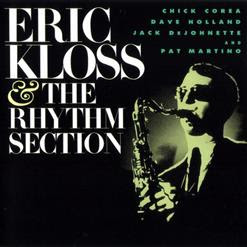
Eric Kloss • Eric Kloss & The Rhythm Section


Eric Kloss is a world renowned alto and tenor saxophonist, a multi-instrumentalist, recording artist, composer, clinician, educator, and television personality. Blind from birth music became his vision. A true child prodigy he performed with his mentor Sonny Stitt at age 12. Backed by jazz guitarist Pat Martino, his recording career began at age 16 with the release of “Introducing Eric Kloss”. Blending hard bob, be-bop, pop, rock, funk, free jazz, classical and world music, he went on to release 22 critically acclaimed recordings on the Prestige and Muse labels. A who’s who of jazz masters appeared as sidemen on his albums including Gerald Veasley, Barry Miles, Don Patterson, Jaki Byard, Gil Goldstein, Richard Davis, Alan Dawson, Cedar Walton, Jimmy Owens, Kenny Barron, Booker Ervin, Leroy Vinnegar, Billy Higgins, Kenny Barron, Bob Cranshaw, and Alan Dawson. His most acclaimed album, Eric Kloss and the Rhythm Section, features the Miles Davis rhythm section of Corea, DeJohnette, and Dave Holland. Kloss toured the USA and Europe for 25 years wowing audiences with his technical brilliance and wild improvisations. Eric was a frequent guest on the PBS TV show Mr. Roger’s Neighborhood, second only to pianist Johnny Costa for most appearances by any musician. In 1989 he became a spokesman for Yahoo Music promoting and performing with the sax-like MX-11 wind synthesizer. In the 1990s he began teaching at Duquesne University and went on to become head of the jazz department at Carnegie Mellon University. As an educator and clinician he mentored a new generation of jazz performers and instructors. The Fantasy Jazz label has reissued several of his recordings: First Class, About Time, the 2 CD box set Eric Kloss & the Rhythm Section/Love and All That Jazz, and the 2 CD box set Sky Shadows/In the Land of the Giants. Eric withdrew from teaching and performing in 2001 when he became seriously ill. He continues to write and plans to perform and record if his health improves. The unreleased work Cosmic Adventures demonstrates his musical mastery.
https://www.allaboutjazz.com/musicians/eric-kloss/

///////


Eric Kloss es un saxofonista alto y tenor de fama mundial, multiinstrumentista, artista de grabación, compositor, clínico, educador y personalidad televisiva. Ciego de nacimiento, la música se convirtió en su visión. Verdadero niño prodigio, a los 12 años ya tocaba con su mentor Sonny Stitt. Apoyado por el guitarrista de jazz Pat Martino, su carrera discográfica comenzó a los 16 años con el lanzamiento de «Introducing Eric Kloss». Mezclando hard bob, be-bop, pop, rock, funk, free jazz, música clásica y músicas del mundo, llegó a publicar 22 grabaciones aclamadas por la crítica en los sellos Prestige y Muse. En sus álbumes participó un elenco de maestros del jazz como Gerald Veasley, Barry Miles, Don Patterson, Jaki Byard, Gil Goldstein, Richard Davis, Alan Dawson, Cedar Walton, Jimmy Owens, Kenny Barron, Booker Ervin, Leroy Vinnegar, Billy Higgins, Kenny Barron, Bob Cranshaw y Alan Dawson. Su álbum más aclamado, Eric Kloss and the Rhythm Section, cuenta con la sección rítmica de Miles Davis formada por Corea, DeJohnette y Dave Holland. Kloss estuvo de gira por EE.UU. y Europa durante 25 años asombrando al público con su brillantez técnica y sus salvajes improvisaciones. Eric era un invitado habitual en el programa de televisión de PBS Mr. Roger's Neighborhood, sólo superado por el pianista Johnny Costa como músico con más apariciones. En 1989 se convirtió en portavoz de Yahoo Music para promocionar y tocar con el sintetizador de viento MX-11, similar a un saxofón. En la década de 1990 comenzó a impartir clases en la Universidad de Duquesne y llegó a dirigir el departamento de jazz de la Universidad Carnegie Mellon. Como educador y profesor, fue mentor de una nueva generación de intérpretes e instructores de jazz. El sello Fantasy Jazz ha reeditado varias de sus grabaciones: First Class, About Time, la caja de 2 CD Eric Kloss & the Rhythm Section/Love and All That Jazz, y la caja de 2 CD Sky Shadows/In the Land of the Giants. Eric se retiró de la enseñanza y la actuación en 2001, cuando enfermó gravemente. Sigue escribiendo y planea actuar y grabar si su salud mejora. El trabajo inédito Cosmic Adventures demuestra su maestría musical.
https://www.allaboutjazz.com/musicians/eric-kloss/


Saturday, November 2, 2024

Joe Farrell Quartet • Joe Farrell Quartet


Review
by Scott Yanow
Joe Farrell, known in the '60s as a solid hard bop tenor saxophonist, branched out in the '70s. On this near-classic album, Farrell switches between tenor, soprano, flute, and even oboe while being joined by a rather notable backup crew: keyboardist Chick Corea, guitarist John McLaughlin, bassist Dave Holland, and drummer Jack DeJohnette. In addition to a famous version of McLaughlin's "Follow Your Heart," the material includes originals by Farrell and Corea, and the leader makes a strong impression on each of his horns.
https://www.allmusic.com/album/joe-farrell-quartet-mw0000187989

///////


Reseña
por Scott Yanow
Joe Farrell, conocido en los 60 como un sólido saxofonista tenor de hard bop, se diversificó en los 70. En este álbum casi clásico, Farrell cambia entre tenor, soprano, flauta e incluso oboe mientras se le une un equipo de apoyo bastante notable: el teclista Chick Corea, el guitarrista John McLaughlin, el bajista Dave Holland y el baterista Jack DeJohnette. Además de una famosa versión de "Follow Your Heart" de McLaughlin, el material incluye originales de Farrell y Corea, y el líder se luce con cada una de sus trompas.
https://www.allmusic.com/album/joe-farrell-quartet-mw0000187989


Thursday, September 26, 2024

Geri Allen-Dave Holland-Jack DeJohnette • The Life Of A Song


Considering this disc's title, it might seem an irony that the improvising displays a good deal more dazzling life than most of the compositions. But with the personnel on this session, that isn't much of a disadvantage - and the improvising is so good that the songs are required to act as little more than triggers to the spontaneous playing. It's a timely reminder of the gifts of Geri Allen, the Michigan-born jazz pianist, who is also touring the UK for six gigs from next Tuesday, in the quite different setting of Scottish drummer Tom Bancroft's Orchestro Interrupto big band. Allen is a woman with a glowing reputation for many achievements, not least being the first keyboardist in 35 years to be hired by Ornette Coleman - a measure of her open approach and ability to float free of harmony's more inflexible principles. For this session, she has reassembled the trio she formed to back the vocals of the late Betty Carter in 1993, with Dave Holland on bass and Jack DeJohnette on drums - about as good as the contemporary jazz piano trio business gets.

The music consists of eight Allen originals, plus Billy Strayhorn's Lush Life, Bud Powell's Dance of the Infidels and Mal Waldron's Soul Eyes - the last including brass and reeds, with Allen's early teacher, Marcus Belgrave, on flugelhorn. The power of the group is apparent from the opening bars. Allen's opening LWB House - the Remix (it's a reference to the ever-changing chemistry of her family) starts as a mid-tempo ostinato and develops with dissonant harmonies, mimicking the string sound of the African kora. The pianist's eventful solos, Holland's forward-leaning basslines and DeJohnette's imperious drumming are into their strides at once, with the latter contrastingly reserved, gentle and cymbal-preoccupied on the following Mounts and Mountains, with its shifting four-note patterns over a bass pedal-tone.

Allen plays a lovely version of Lush Life in low, dark chords developing into pealing sounds (Bill Evans phrases occasionally flitting in) over an ebbing and flowing pulse, and her Herbie Hancock associations are exuberantly celebrated in the rolling gospel feel of Celebration Song and the impulsive momentum of Dance of the Infidels. All the playing is terrific, and Allen herself often breathtaking The originals may grow on you, but it doesn't matter if they don't.
https://www.theguardian.com/music/2004/oct/01/jazz.shopping

///////


Considerando el título de este disco, podría parecer una ironía que la improvisación muestre una vida mucho más deslumbrante que la mayoría de las composiciones. Pero con el personal de esta sesión, eso no es una gran desventaja , y la improvisación es tan buena que se requiere que las canciones actúen como poco más que desencadenantes de la interpretación espontánea. Es un recordatorio oportuno de los dones de Geri Allen,la pianista de jazz nacida en Michigan, que también está de gira por el Reino Unido durante seis conciertos a partir del próximo martes, en el escenario bastante diferente de la big band Orchestro Interrupto del baterista escocés Tom Bancroft. Allen es una mujer con una brillante reputación por muchos logros, entre ellos ser la primera tecladista en 35 años contratada por Ornette Coleman, una medida de su enfoque abierto y su capacidad para flotar libre de los principios más inflexibles de harmony. Para esta sesión, ha vuelto a montar el trío que formó para respaldar la voz de la fallecida Betty Carter en 1993, con Dave Holland al bajo y Jack DeJohnette a la batería, casi tan bueno como lo es el negocio del trío de piano de jazz contemporáneo.

La música consta de ocho originales de Allen, más Lush Life de Billy Strayhorn, Dance of the Infidels de Bud Powell y Soul Eyes de Mal Waldron, el último de los cuales incluye metales y cañas , con el primer maestro de Allen, Marcus Belgrave, al fliscorno. El poder del grupo es evidente en los primeros compases. El remix de LWB House de apertura de Allen (es una referencia a la química siempre cambiante de su familia) comienza como un ostinato de medio tiempo y se desarrolla con armonías disonantes, imitando el sonido de cuerda de la kora africana. Los agitados solos del pianista, las líneas de bajo inclinadas hacia adelante de Holland y la imperiosa batería de DeJohnette avanzan a la vez, con este último contrastantemente reservado, gentil y preocupado por los platillos en los siguientes Montes y Montañas, con sus patrones cambiantes de cuatro notas sobre un tono de pedal de bajo.

Allen interpreta una versión encantadora de Lush Life en acordes bajos y oscuros que se convierten en sonidos de repique (frases de Bill Evans ocasionalmente revoloteando) sobre un pulso que fluye y mengua, y sus asociaciones con Herbie Hancock se celebran exuberantemente en la sensación gospel de la canción de Celebración y el impulso impulsivo de Dance of the Infidels. Toda la interpretación es excelente, y la propia Allen a menudo deja boquiabiertos a los originales, pero no importa si no lo hacen.
https://www.theguardian.com/music/2004/oct/01/jazz.shopping


geriallen.com ...
daveholland.com/geri-allen-the-life-of-a-song ...
www.jackdejohnette.com ...


Friday, June 21, 2024

Eric Kloss • Consciousness!


An excellent album from Eric Kloss – maybe one of his last good ones, too! The record has him playing with a hip group of young players – basically the Miles Davis rhythm section (Chick Corea, Dave Holland, and Jack DeJohnette) plus guitarist Pat Martino, who was really stretching out at this time. The resultant electric grooves are way different than Kloss' earlier work, yet still much tighter and more soulful than his later stuff – with some slight bits of funk and soul jazz to keep things real. All tracks are fairly long, and the record features versions of "Sunshine Superman" and "Songs To Aging Children" – plus the tunes "Consciousness" and "Outward Wisdom".  
Dusty Groove
https://www.dustygroove.com/item/34077/Eric-Kloss:Consciousness?kwfilter=Eric+Kloss&incl_oos=1&incl_cs=1&sort_order=artist

///////


Un excelente álbum de Eric Kloss, quizá uno de sus últimos discos buenos. En el disco toca con un grupo de jóvenes músicos de moda, básicamente la sección rítmica de Miles Davis (Chick Corea, Dave Holland y Jack DeJohnette), además del guitarrista Pat Martino, que se estaba prodigando mucho en aquella época. Los ritmos eléctricos resultantes son muy diferentes a los de los primeros trabajos de Kloss, aunque mucho más ajustados y conmovedores que los de sus últimos trabajos, con ligeros toques de funk y soul jazz para mantener la realidad. Todos los temas son bastante largos, y el disco incluye versiones de "Sunshine Superman" y "Songs To Aging Children", además de las melodías "Consciousness" y "Outward Wisdom".  
Dusty Groove
https://www.dustygroove.com/item/34077/Eric-Kloss:Consciousness?kwfilter=Eric+Kloss&incl_oos=1&incl_cs=1&sort_order=artista


Friday, April 19, 2024

Mark Whitfield • 7th Ave - Stroll


Biography by Matt Collar
An adept guitarist, Mark Whitfield is a highly regarded performer with a sound that touches upon both straight-ahead jazz and soulful R&B. Born in 1966 in Lindenhurst, New York, Whitfield started out on bass and switched to guitar around age 15. Influenced early on by the warm, soulful style of George Benson, he eventually won a scholarship to Berklee College of Music in Boston. After graduating in 1987, he moved to New York, where Benson himself connected the guitarist to organist Jack McDuff, an association that helped launch his career. Since then, he has performed with a bevy of luminaries including Dizzy Gillespie, Quincy Jones, Art Blakey, Ray Charles, Herbie Hancock, Carmen McRae, Jimmy Smith, Clark Terry, Shirley Horn, Wynton Marsalis, Stanley Turrentine, and more. Whitfield made his solo debut with The Marksman on Warner Bros. in 1990.

More albums followed, including 1991's Patrice and 1993's Mark Whitfield. He then moved to Verve for a series of well-received efforts, including 1994's True Blue and 1997's Forever Love. He rounded out his Verve deal with 1999's Take the Ride. A 2000 collaboration for the Jazz Channel with Joel Kipnis (aka JK) showcased the guitarist's more R&B-influenced sound. Also in 2000, he delivered the live album Raw, featuring his quartet with pianist Robert Glasper, bassist Brandon Owens, and drummer Donald Edwards. He returned in 2005 with the stylistically expansive Mark Whitfield Featuring Panther. In 2009 he paid homage to longtime inspiration Stevie Wonder on Songs of Wonder, and then earned a Grammy Award nomination for his work on Kenny Garrett's 2013 effort, Pushing the World Away. In 2017 Whitfield released Grace, which showcased his family band with sons drummer Mark Whitfield, Jr. and pianist Davis Whitfield.
https://www.allmusic.com/artist/mark-whitfield-mn0000846488#biography

///////

Biografía de Matt Collar
Un guitarrista experto, Mark Whitfield es un intérprete de gran prestigio con un sonido que toca tanto el jazz directo como el soul R & B. Nacido en 1966 en Lindenhurst, Nueva York, Whitfield comenzó en el bajo y cambió a la guitarra alrededor de los 15 años. Influenciado desde el principio por el estilo cálido y conmovedor de George Benson, eventualmente ganó una beca para el Berklee College of Music en Boston. Después de graduarse en 1987, se mudó a Nueva York, donde el propio Benson conectó al guitarrista con el organista Jack McDuff, una asociación que ayudó a lanzar su carrera. Desde entonces, ha actuado con un grupo de luminarias que incluyen a Dizzy Gillespie, Quincy Jones, Art Blakey, Ray Charles, Herbie Hancock, Carmen McRae, Jimmy Smith, Clark Terry, Shirley Horn, Wynton Marsalis, Stanley Turrentine y más. Whitfield hizo su debut en solitario con The Marksman en Warner Bros. en 1990.

Siguieron más álbumes, incluidos Patrice de 1991 y Mark Whitfield de 1993. Luego se mudó a Verve para una serie de esfuerzos bien recibidos, incluidos True Blue de 1994 y Forever Love de 1997. Completó su contrato de Brío con Take the Ride de 1999. Una colaboración en 2000 para Jazz Channel con Joel Kipnis (alias JK) mostró el sonido más influenciado por el R&B del guitarrista. También en 2000, lanzó el álbum en vivo Raw, con su cuarteto con el pianista Robert Glasper, el bajista Brandon Owens y el baterista Donald Edwards. Regresó en el 2005 con el estilísticamente expansivo Mark Whitfield con Panther. En 2009 rindió homenaje a la inspiración de toda la vida Stevie Wonder en Songs of Wonder, y luego obtuvo una nominación al Premio Grammy por su trabajo en el esfuerzo de Kenny Garrett en 2013, Pushing the World Away. En 2017, Whitfield lanzó Grace, que mostraba al baterista de su banda familiar con hijos Mark Whitfield, Jr.y al pianista Davis Whitfield.
https://www.allmusic.com/artist/mark-whitfield-mn0000846488#biography


www.markwhitfield.com ...


Thursday, February 8, 2024

Chick Corea, Gary Burton, Dave Holland, Pat Metheny, Roy Haynes • Like Minds


 Review by Scott Yanow
Talk about all-star groups -- this quintet date matches together vibraphonist Gary Burton with pianist Chick Corea, guitarist Pat Metheny, bassist Dave Holland, and drummer Roy Haynes. Burton and Corea have recorded frequently through the years, while Metheny gained some early fame working with Burton; Holland was with Corea in Miles Davis' late-'60s group, and Haynes was formerly with both Burton and Corea. However, not all of these musicians had played together before -- Corea had never worked with Metheny previously, nor Burton with Holland. No matter, the masterful players fit together quite well. The vibraphonist is the lead voice in the ensembles, where Metheny at times sounds close to Jim Hall and seems a bit restrained, but everyone gets a chance to contribute to the success of the CD. Metheny contributed five songs (including "Question and Answer" and "Elucidation," which deserves to be a standard), while Burton brought in two; Corea's three contributions include his classic "Windows." The lone standard is George Gershwin's "Soon." The music is modern straight-ahead jazz; the solos are concise and the rhythm section is quite tight. In fact, this sounds like a regularly working band. Highly recommended.
https://www.allmusic.com/album/release/like-minds-mr0000872965

///////////

 Reseña de Scott Yanow
Hablando de grupos de estrellas, esta cita del quinteto reúne al vibrafonista Gary Burton con el pianista Chick Corea, el guitarrista Pat Metheny, el bajista Dave Holland y el baterista Roy Haynes. Burton y Corea han grabado con frecuencia a lo largo de los años, mientras que Metheny adquirió cierta fama temprana trabajando con Burton; Holland estuvo con Corea en el grupo de Miles Davis de finales de los 60, y Haynes estuvo anteriormente con Burton y Corea. Sin embargo, no todos estos músicos habían tocado juntos antes: Corea nunca había trabajado con Metheny, ni Burton con Holland. No importa, los magistrales músicos encajan bastante bien. El vibrafonista es la voz principal en los conjuntos, donde Metheny a veces suena cerca de Jim Hall y parece un poco contenido, pero todos tienen la oportunidad de contribuir al éxito del CD. Metheny contribuye con cinco canciones (incluyendo "Question and Answer" y "Elucidation", que merece ser un estándar), mientras que Burton aporta dos; las tres contribuciones de Corea incluyen su clásico "Windows". El único estándar es "Soon" de George Gershwin. La música es un jazz moderno y directo; los solos son concisos y la sección rítmica está bastante ajustada. De hecho, esto suena como una banda que trabaja regularmente. Muy recomendable.
https://www.allmusic.com/album/release/like-minds-mr0000872965


chickcorea.com ...
gary-burton ...
daveholland.com ...
patmetheny.com ...
roy-haynes ...