Showing posts with label George Tucker. Show all posts

Saturday, December 27, 2025

Horace Parlan • On The Spur Of The Moment


Review by Stephen Thomas Erlewine
Again working with his longtime rhythm section of George Tucker (bass) and Al Harewood (drums), Horace Parlan manages to On the Spur of the Moment make distinctive by emphasizing the rhythmic side of his hard bop. Tenor saxophonist Stanley Turrentine and trumpeter Tommy Turrentine help give the quintet a bluesy edge, which the band exploits to an appealing effect throughout these six, mostly original, compositions. There are a few ballads, and even when things are at their hottest, Parlan's understated playing is a cue for the group to keep it tasteful, but that relaxed atmosphere is part of the reason why On the Spur of the Moment is another winning effort from the underrated pianist. 
https://www.allmusic.com/album/on-the-spur-of-the-moment-mw0000033102

///////

Reseña de Stephen Thomas Erlewine
De nuevo trabajando con su sección rítmica habitual, formada por George Tucker (bajo) y Al Harewood (batería), Horace Parlan consigue que On the Spur of the Moment sea un álbum distintivo al enfatizar el lado rítmico de su hard bop. El saxofonista tenor Stanley Turrentine y el trompetista Tommy Turrentine ayudan a dar al quinteto un toque blues, que la banda aprovecha para crear un efecto atractivo a lo largo de estas seis composiciones, en su mayoría originales. Hay algunas baladas, e incluso cuando las cosas se ponen más intensas, la interpretación discreta de Parlan es una señal para que el grupo mantenga el buen gusto, pero esa atmósfera relajada es parte de la razón por la que On the Spur of the Moment es otro éxito del pianista infravalorado. 
https://www.allmusic.com/album/on-the-spur-of-the-moment-mw0000033102


Wednesday, July 2, 2025

Pony Poindexter • Plays The Big Ones


An excellent album from the great Pony Poindexter – one of his few dates as a leader, and a real lost killer from early 60s Prestige! Pony's working here on alto and soprano sax – the latter of which sounds especially nice – all sharp-edged and angular, and cast out over some very groovy rhythms from Gildo Mahones on piano, George Tucker on bass, and Jimmie Smith on drums! The "Big Ones" in the title are some of the grooviest pop tunes of the 60s – like "Fly Me To The Moon", "Midnight In Moscow", "Moon River", and "Twistin USA" – and they're given a jaunty soul-jazz approach by Pony, who plays some of the best soprano and alto sax he's ever recorded!  
1996-2025, Dusty Groove, Inc.
https://www.dustygroove.com/item/78841/Pony-Poindexter:Pony-Poindexter-Plays-The-Big-Ones

///////


Un excelente álbum del gran Pony Poindexter, una de sus pocas grabaciones como líder y una auténtica joya perdida de Prestige de principios de los 60. Pony toca aquí el saxo alto y el soprano, este último con un sonido especialmente agradable, afilado y angular, sobre unos ritmos muy groovy de Gildo Mahones al piano, George Tucker al bajo y Jimmie Smith a la batería. Las «grandes» del título son algunas de las melodías pop más groovy de los años 60, como «Fly Me To The Moon», «Midnight In Moscow», «Moon River» y «Twistin USA», a las que Pony les da un alegre toque de soul-jazz, tocando algunos de los mejores saxos soprano y alto que ha grabado jamás.  
1996-2025, Dusty Groove, Inc.
https://www.dustygroove.com/item/78841/Pony-Poindexter:Pony-Poindexter-Plays-The-Big-Ones


Saturday, June 7, 2025

Horace Parlan • Speakin' My Piece


Review by Stephen Thomas Erlewine
Horace Parlan had a gift for relaxed, swinging hard bop which placed his piano in a central, yet unassuming role. Speakin' My Piece is one of the first albums to find Parlan getting all the ingredients right, from his own subtle playing to soliciting fine contributions of his backing band. Stanley Turrentine, in fact, turns out to be an excellent complement to Parlan, playing in a similarly tasteful style. Five of the six numbers are band originals, and each number is quite similar -- bluesy, gently swinging hard bop. No one pushes too hard on Speakin' My Piece, preferring to create an intimate atmosphere with milder numbers and performances. Such an approach gives each muscian -- Parlan, Turrentine, bassist George Tucker, drummer Al Harewood -- a chance to shine with lyrical, melodic solos and/or sympathetic support, resulting in a charmingly low-key session.
https://www.allmusic.com/album/speakin-my-piece-mw00005368899

///////


Reseña de Stephen Thomas Erlewine
Horace Parlan tenía un don para el bop duro y relajado que colocaba su piano en un papel central, pero modesto. Speakin ' My Piece es uno de los primeros álbumes en encontrar a Parlan obteniendo todos los ingredientes correctos, desde su propia interpretación sutil hasta la solicitud de excelentes contribuciones de su banda de acompañamiento. Stanley Turrentine, de hecho, resulta ser un excelente complemento para Parlan, jugando en un estilo de buen gusto similar. Cinco de los seis números son originales de la banda , y cada número es bastante similar: blues, balanceándose suavemente. Nadie presiona demasiado para hablar Mi Pieza, prefiriendo crear una atmósfera íntima con números y actuaciones más suaves. Tal enfoque le da a cada músico-Parlan, Turrentine, el bajista George Tucker , el baterista Al Harewood-la oportunidad de brillar con solos líricos, melódicos y/o apoyo comprensivo, lo que resulta en una sesión encantadoramente discreta.
https://www.allmusic.com/album/speakin-my-piece-mw0000536889


Wednesday, April 2, 2025

Shirley Scott • Like Cozy


Review by Thom Jurek:
The groove of the recordings heard on Like Cozy is what we've come to expect from Ms. Scott, late-night smooth groove that was heavy on ballads, medium bounce standards, and melodic interplay between leader and sidemen -- a trademark specialty of the label. Scott's piano playing is elegant and reminiscent of both Errol Garner's and Billy Taylor's. She has Garner's ornate sense of style, and Taylor's medium touch and sparse phrasing. A listen to the ballads and bounces here offers Scott's dimensions and inventions as a pianist. The rest of the disc, where Scott resumes her organist's duties, is a pretty and restrained affair, with just enough funk to keep the listener in the groove -- and it's all groove: smooth, slow, and slippery. Tracks such as "'Deed I Do" holds the blues firmly in its grasp as Scott extrapolates on the changes with a subtle but defined harmonic invention. There are no stunners here, but there weren't meant to be. These records were designed for the late-night-after-the-club feel, and they work that way. Like Ben Webster's Ballads or With Strings, these recordings are soundtracks for midnight rendezvous or early in the morning trysts with a loved one. [A Fantasy "two-fer" reissue added another LP from 1960, The Shirley Scott Trio, issued as Moodsville 5. It too features the talents of bassist George Duvivier and drummer Arthur Edgehill, plus two cuts with Scott playing piano.]
 
///////
 
Reseña de Thom Jurek:
El ritmo de las grabaciones que se escuchan en Like Cozy es lo que hemos llegado a esperar de la Sra. Scott, un ritmo suave nocturno con mucho peso de las baladas, los estándares de rebote medio y la interacción melódica entre el líder y los acompañantes, una especialidad de la marca. La forma de tocar el piano de Scott es elegante y recuerda tanto a la de Errol Garner como a la de Billy Taylor. Tiene el sentido ornamentado del estilo de Garner, y el toque medio y el fraseo escaso de Taylor. Una escucha de las baladas y rebotes aquí ofrece las dimensiones e invenciones de Scott como pianista. El resto del disco, en el que Scott retoma sus funciones de organista, es un asunto bonito y comedido, con el funk justo para mantener al oyente en la onda - y es todo onda: suave, lento y resbaladizo. Temas como "'Deed I Do" mantiene el blues firmemente agarrado mientras Scott extrapola los cambios con una sutil pero definida invención armónica. No hay nada sorprendente aquí, pero no se pretendía que lo hubiera. Estos discos fueron diseñados para la sensación de la noche después del club, y funcionan de esa manera. Al igual que las baladas de Ben Webster o With Strings, estas grabaciones son bandas sonoras para las citas de medianoche o para los encuentros con la persona amada a primera hora de la mañana. Una reedición de Fantasy "two-fer" añadió otro LP de 1960, The Shirley Scott Trio, publicado como Moodsville 5. También cuenta con el talento del bajista George Duvivier y el baterista Arthur Edgehill, además de dos cortes con Scott tocando el piano].


Horace Parlan • Up & Down


Review
by Stephen Thomas Erlewine
By adding guitarist Grant Green and tenor saxophonist Booker Ervin to his standard rhythm section of bassist George Tucker and drummer Al Harewood, pianist Horace Parlan opens up his sound and brings it closer to soul-jazz on Up and Down. Green's clean, graceful style meshes well with Parlan's relaxed technique, while Ervin's robust tone and virile attack provides a good contrast to the laid-back groove the rhythm section lays down. Stylistically, the music is balanced between hard bop and soul-jazz, which are tied together by the bluesy tint in the three soloists' playing. All of the six original compositions give the band room to stretch out and to not only show off their chops, but move the music somewhat away from generic conventions and find new territory. In other words, it finds Parlan at a peak, and in many ways, coming into his own as a pianist and a leader.
https://www.allmusic.com/album/up-down-mw0000556382

///////


Reseña
por Stephen Thomas Erlewine
Al añadir al guitarrista Grant Green y al saxofonista tenor Booker Ervin a su sección rítmica habitual formada por el bajista George Tucker y el batería Al Harewood, el pianista Horace Parlan abre su sonido y lo acerca al soul-jazz en Up and Down. El estilo limpio y elegante de Green encaja bien con la técnica relajada de Parlan, mientras que el tono robusto y el ataque viril de Ervin ofrecen un buen contraste con el ritmo relajado de la sección rítmica. Estilísticamente, la música está equilibrada entre el hard bop y el soul-jazz, unidos por el tinte bluesy de los tres solistas. Las seis composiciones originales dan a la banda espacio para estirarse y no sólo para mostrar sus habilidades, sino también para alejar un poco la música de las convenciones genéricas y encontrar nuevos territorios. En otras palabras, Parlan se encuentra en un momento álgido y, en muchos sentidos, en su mejor momento como pianista y líder.
https://www.allmusic.com/album/up-down-mw0000556382


Sunday, March 23, 2025

Jaki Byard • On The Spot!


This album mostly features pianist Jaki Byard (who plays alto on "A-Toodle-oo, Toodle-oo") with a quartet comprised of trumpeter Jimmy Owens, bassist Paul Chambers and drummer Billy Higgins in 1967. With a repertoire stretching from "I Fall In Love Too Easily" and the boppish "Second Balcony Jump" to "GEB Piano Roll" and even "Alexander's Ragtime Band," the music serves as a perfect outlet for Jaki Byard's eclectic talents; a highlight is the Byard-Chambers duet "P.C. Blues." The recording is rounded off by a leftover track ("Spanish Tinge") from a 1965 live session featuring Byard, bassist George Tucker and drummer Alan Dawson.

///////


Este álbum incluye principalmente al pianista Jaki Byard (que toca alto en "A-Toodle-oo, Toodle-oo") con un cuarteto compuesto por el trompetista Jimmy Owens, el bajista Paul Chambers y el baterista Billy Higgins en 1967. Con un repertorio que se extiende desde "I Se enamora demasiado fácilmente "y el boppish" Second Balcony Jump "a" GEB Piano Roll "e incluso a" Alexander Ragtime Band ", la música sirve como una salida perfecta para los talentos eclécticos de Jaki Byard; Un destaque es el dúo de Byard-Chambers "P.C. Blues". La grabación se completa con una pista sobrante ("Spanish Tinge") de una sesión en vivo de 1965 con Byard, el bajista George Tucker y el baterista Alan Dawson.


Discogs ...   https://www.discogs.com/Jaki-Byard-On-The-Spot/release/4507839


Thursday, February 13, 2025

Stanley Turrentine • Comin' Your Way


Review
by Ron Wynn
With Tommy Turrentine (tp), Horace Parlan (p) George Tucker (b), and Al Harewood (d). Recorded at Englewood Cliffs, NJ. Small group. 1988 reissue of a sumptuous '60s soul-jazz date. Horace Parlan at his bluesy best.
https://www.allmusic.com/album/comin-your-way-mw0000194288

///////


Reseña
por Ron Wynn
Con Tommy Turrentine (tp), Horace Parlan (p) George Tucker (b), y Al Harewood (d). Grabado en Englewood Cliffs, NJ. Grupo reducido. Reedición de 1988 de una suntuosa cita de soul-jazz de los 60. Horace Parlan en su mejor momento de blues.
https://www.allmusic.com/album/comin-your-way-mw0000194288


Friday, January 31, 2025

Jaki Byard ft. Joe Farrell • The Last From Lennie's


Review
by Ronnie D. Lankford, Jr.  
There's a good and bad side of releasing old material that's been buried in a record label's vault or someone's attic. If the material's solid, say a live date from an artist's prime, then it's a Godsend. If the material is weak, or repeats earlier releases in a weaker form, it does a disservice to the artist. Luckily for fans of pianist Jaki Byard, the quartet recordings on Last From Lennie's are bursting with creative energy. Taped on April 14, 1965, Byard is joined by saxophonist Joe Farrell, bassist George Tucker, and drummer Alan Dawson for an adventurous live set. With a couple exceptions -- "After You've Gone/Strolling Along," and the obscure "King David" -- everything here clocks in at over nine minutes, leaving plenty of space for the band to explore the far edges of each piece. There are eight- and nine-minute versions of "Dolphy," a kinetic, off-kilter ode that recalls, though never imitates, Charles Mingus, with whom both Byard and Dolphy had played. Farrell's solo work takes some uncharted turns here, with the rest of the band pushing him on as Byard shouts out directions. Finally, one wouldn't want to miss the nine-minute medley of "Tea for Two," "Lover," "Strolling Along," "Cherokee," and "Shiny Stockings," all played at a marvelously mad pace. The interplay between all partners also brings forth great things from Tucker and Dawson, topping off an intense, fiery set. Like all good vault releases, Last From Lennie's reminds listeners of just how good Byard and his bandmates were.
https://www.allmusic.com/album/the-last-from-lennies-mw0000321793

///////


Revista
por Ronnie D. Lankford, Jr.  
Publicar material antiguo que ha estado enterrado en la cámara acorazada de un sello discográfico o en el desván de alguien tiene su lado bueno y su lado malo. Si el material es sólido, por ejemplo una fecha en directo del mejor momento de un artista, es una bendición. Si el material es débil, o repite lanzamientos anteriores en una forma más débil, hace un flaco favor al artista. Por suerte para los fans del pianista Jaki Byard, las grabaciones del cuarteto en Last From Lennie's rebosan energía creativa. Grabado el 14 de abril de 1965, Byard está acompañado por el saxofonista Joe Farrell, el bajista George Tucker y el batería Alan Dawson en un set en directo lleno de aventuras. Con un par de excepciones - "After You've Gone/Strolling Along" y la oscura "King David"-, todas las piezas duran más de nueve minutos, lo que deja mucho espacio para que la banda explore los límites de cada pieza. Hay versiones de ocho y nueve minutos de "Dolphy", una oda cinética y fuera de ritmo que recuerda, aunque nunca imita, a Charles Mingus, con quien tanto Byard como Dolphy habían tocado. El trabajo en solitario de Farrell toma aquí algunos giros desconocidos, con el resto de la banda empujándole mientras Byard grita indicaciones. Por último, uno no querría perderse el popurrí de nueve minutos de "Tea for Two", "Lover", "Strolling Along", "Cherokee" y "Shiny Stockings", todas tocadas a un ritmo maravillosamente loco. La interacción entre todos los miembros del grupo también aporta grandes cosas de Tucker y Dawson, coronando un conjunto intenso y ardiente. Como todos los buenos lanzamientos de bóveda, Last From Lennie's recuerda a los oyentes lo buenos que eran Byard y sus compañeros de banda.
https://www.allmusic.com/album/the-last-from-lennies-mw0000321793


Monday, January 27, 2025

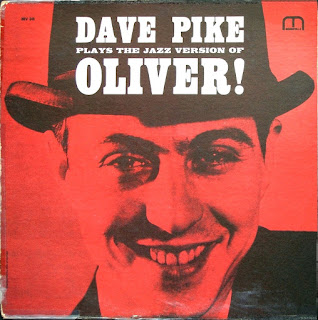
Dave Pike • Plays The Jazz Version Of Oliver!


Dave Pike Plays the Jazz Version of Oliver! is an album by American jazz vibraphonist Dave Pike performing compositions by Lionel Bart from the musical Oliver! which was recorded in 1962 for the Moodsville label.


Dave Pike was born in Detroit, MI in 1938, he started off as a drummer and later learned marimba and vibraphone. Pike's family moved to Los Angeles in 1954, he played backing for artists such as Dexter Gordon, Harold Land, Carl Perkins, Paul Bley and Curtis Counce. Pike played often around California and then moved to New York in 1960 to tap into a busier Jazz scene.

Pike found greater success on the East Coast, probably occurring through joining the popular Herbie Mann's group with whom he appears on several early recordings. Pike became heavily influenced by the Latin Jazz scene and in 1964, he recorded the album “Manhattan Latin” released on Decca.

1965 saw Pike session along side Herbie Hancock (of Blue Note fame), Billy Butler (of Prestige roster) and others culminating in a commercial but relatively unsuccessful (sales wise) album on Atlantic, “Jazz for the Jet Set”. Pike featured on marimba and Hancock on Hammond. A stylish Pan-Am stewardess wearing a space helmet featured on The album cover which was designed by Italian, Emilio Pucci. It was this album that Pike experimented more with soul, taking inspiration from Atlantic records who he was signed to at the time and who were synonymous with the experimental soul genre of 60's America.

Later in 1966 Pike recorded “The Doors of Perception” (taken from Aldous Huxley's 1954 book of the same name), with Lee Konitz on saxophone though it was only released by Atlantic subsidiary label “Vortex” in 1970.

Pike left New York for Germany possibly because of Atlantic shelving “The Doors of Perception” and the attraction of European open mindedness to the experimental music Pike was flirting with at that time. In 1968, Pike joined German Jazz label MPS and recruited Oscar Peterson, Jean-Luc Ponty and a guitarist named Volker Kriegel who played Indian ragas. Around this time Pike usually played vibes, Kriegel guitar, sitar and electric bass, J.A. Rettenbacher on bass, cello and electric bass, and Peter Baumeister on drums. This collective became known as The Dave Pike Set.

In 1968 “Got The Feelin” was recorded in Holland, a funky selection of tracks inspired by popular artists such as James Brown and Sam & Dave, the album was released the next year and then reissued on limited edition cd & vinyl by Wagram 1998.

The next Dave Pike album was “Noisy Silence - Gentle Noise”, released in 1969, as with many recording artists during the late 60's, The Dave Pike Set didn't escape the psychedelic influence of that era and as a result the band covered Frank Zappa's 'Mother People' and the Psychedelic Jazz sound of 'Mathar' was carefully crafted. The Dave Pike Set continued to record and entertain an avid European audience but their efforts went largely unnoticed in Pike's homeland of America. Pike showed his versatile nature again as a musician when, in 1972, he formed the “New” Dave Pike Set and recorded “Salomao” in Brazil. Pike later returned to the states during the mid 1970's and recorded several other albums of meagre success.

The interest in Jazz-Funk during the 80's (partly due to the sampling efforts of U.
S. Hip Hop artists) led many djs and record collectors to delve deeper into the 60's and 70's music scene, the kudos associated with owning a rare record or groove by artists such as Pike created a new generation of vinyl hunters and Djs alike. Famous Acid Jazz DJ 'Gilles Peterson' later secured the release of 'Mathar' on Talkin Loud's “Tales From The Black Forrest” in 1994 and a rare version by Paul Weller was also released (later to be reissued on 12” vinyl), Weller's version was named 'Indian Vibes' which is what most people will incorrectly know Mathar as. A rare 12” white label boot leg of Mathar (on both sides) was also released around this time simply marked “Ind-A1” (a heavier bassline compared to the 69 album version), many other Dave Pike tracks have since been recorded or have featured on Acid Jazz compilations.

During the mid 1990's “Mathar” became popular in funk and hip hop clubs around the world, one such club was “Brothers and Sisters” which took place underneath the old ATV studios in Birmingham, England. People would search out the venue purely on the word that a bizarre record called Indian Vibes could be heard and danced to, such was the pull of the record the venue would pack out with Mathar being the highlight of the evening. Its hard to explain the effect Mathar has on a dance floor when the bass and percussion kicks in, especially over a loud sound system, renowned House Djs have also recognised the effect of Mathar and the track is occasionally squeezed into funky house sets.

Despite such underground success “Noisy Silence - Gentle Noise” remained relatively difficult to find on vinyl and hence not easily available to the masses, even the Talkin Jazz release can still be difficult to find. Mathar now occasionally makes its way onto T.V. and Radio.

Possibly because of the dusting off of Mathar in the early 90's, Dave Pike later released “Bop Head” in 1998 and then several other albums, including “Peligroso” in 2000, on the Ubiquity record label based in San Fransisco, Pike still plays percussion and now resides in Los Angeles, U.S.A.
https://musicians.allaboutjazz.com/davepike

///////


Dave Pike Plays the Jazz Version of Oliver! es un álbum del vibrafonista de jazz americano Dave Pike que interpreta composiciones de Lionel Bart del musical Oliver! que fue grabado en 1962 para el sello Moodsville.


Dave Pike nació en Detroit, MI en 1938, comenzó como baterista y luego aprendió marimba y vibráfono. La familia de Pike se mudó a Los Ángeles en 1954, tocó como telonero para artistas como Dexter Gordon, Harold Land, Carl Perkins, Paul Bley y Curtis Counce. Pike tocó a menudo en California y luego se mudó a Nueva York en 1960 para aprovechar la escena de jazz más activa.

Pike encontró mayor éxito en la Costa Este, probablemente al unirse al popular grupo de Herbie Mann con el que aparece en varias grabaciones tempranas. Pike se vio fuertemente influenciado por la escena del Jazz Latino y en 1964, grabó el álbum "Manhattan Latin" publicado en Decca.

1965 vio la sesión de Pike junto a Herbie Hancock (de la fama de Blue Note), Billy Butler (de la lista Prestige) y otros culminando en un álbum comercial pero relativamente infructuoso (en cuanto a las ventas) en Atlantic, "Jazz for the Jet Set". Pike apareció en la marimba y Hancock en Hammond. Una elegante azafata de Pan-Am con un casco espacial apareció en la portada del álbum que fue diseñado por el italiano Emilio Pucci. Fue este álbum el que Pike experimentó más con el soul, inspirándose en Atlantic Records, con los que firmó en su momento y que eran sinónimos del género de soul experimental de la América de los 60.

Más tarde, en 1966, Pike grabó "The Doors of Perception" (tomado del libro homónimo de Aldous Huxley de 1954), con Lee Konitz al saxo, aunque sólo fue lanzado por el sello subsidiario de Atlantic "Vortex" en 1970.

Pike dejó Nueva York por Alemania posiblemente debido a la estantería atlántica "The Doors of Perception" y a la atracción de la apertura mental europea por la música experimental con la que Pike coqueteaba en ese momento. En 1968, Pike se unió al sello alemán de Jazz MPS y reclutó a Oscar Peterson, Jean-Luc Ponty y a un guitarrista llamado Volker Kriegel que tocaba ragas indias. Por esta época Pike solía tocar vibráfono, guitarra Kriegel, sitar y bajo eléctrico, J.A. Rettenbacher en el bajo, cello y bajo eléctrico, y Peter Baumeister en la batería. Este colectivo se conoció como The Dave Pike Set.

En 1968 se grabó en Holanda "Got The Feelin", una selección funky de temas inspirados en artistas populares como James Brown y Sam & Dave, el álbum fue lanzado al año siguiente y luego reeditado en cd & vinilo de edición limitada por Wagram 1998.

El siguiente álbum de Dave Pike fue "Noisy Silence - Gentle Noise", lanzado en 1969, como muchos artistas de grabación a finales de los 60, The Dave Pike Set no escapó a la influencia psicodélica de esa época y como resultado la banda cubrió "Mother People" de Frank Zappa y el sonido de Jazz psicodélico de "Mathar" fue cuidadosamente elaborado. El Dave Pike Set continuó grabando y entreteniendo a una ávida audiencia europea pero sus esfuerzos pasaron en gran parte desapercibidos en la patria de Pike, América. Pike mostró su naturaleza versátil de nuevo como músico cuando, en 1972, formó el "Nuevo" Dave Pike Set y grabó "Salomao" en Brasil. Pike regresó más tarde a los Estados Unidos a mediados de los 70 y grabó varios otros álbumes de escaso éxito.

El interés por el Jazz-Funk durante los años 80 (en parte debido a los esfuerzos de muestreo de U.
S. Hip Hop) llevó a muchos djs y coleccionistas de discos a profundizar en la escena musical de los 60 y 70, los elogios asociados con la posesión de un disco raro o el groove de artistas como Pike crearon una nueva generación de cazadores de vinilos y Djs por igual. El famoso DJ de Acid Jazz 'Gilles Peterson' consiguió más tarde el lanzamiento de 'Mathar' en "Tales From The Black Forrest" de Talkin Loud en 1994 y también se publicó una versión rara de Paul Weller (que más tarde se reeditaría en vinilo de 12"), la versión de Weller se denominó 'Indian Vibes' que es como la mayoría de la gente conocerá incorrectamente a Mathar. Una rara pata de bota de 12" de Mathar (en ambos lados) también fue lanzada alrededor de esta época simplemente marcada como "Ind-A1" (una línea de bajo más pesada comparada con la versión del álbum 69), muchos otros temas de Dave Pike han sido grabados desde entonces o han aparecido en compilaciones de Acid Jazz.

A mediados de los 90 "Mathar" se hizo popular en los clubes de funk y hip hop de todo el mundo, uno de esos clubes fue "Brothers and Sisters" que tuvo lugar bajo los antiguos estudios ATV en Birmingham, Inglaterra. La gente buscaba el lugar sólo por la palabra que un disco extraño llamado Indian Vibes se podía escuchar y bailar, tal era el atractivo del disco que el lugar llenaba, siendo Mathar el punto culminante de la noche. Es difícil de explicar el efecto que Mathar tiene en una pista de baile cuando el bajo y la percusión se activan, especialmente con un sistema de sonido fuerte, los renombrados DJs de House también han reconocido el efecto de Mathar y la pista es ocasionalmente exprimida en sets de funky house.

A pesar del éxito underground "Silencio ruidoso - Ruido suave" sigue siendo relativamente difícil de encontrar en vinilo y por lo tanto no está fácilmente disponible para las masas, incluso el lanzamiento de Talkin Jazz puede ser difícil de encontrar. Mathar ahora ocasionalmente se abre camino en la televisión y la radio.

Posiblemente debido al desempolvamiento de Mathar a principios de los 90, Dave Pike lanzó más tarde "Bop Head" en 1998 y luego varios otros álbumes, incluyendo "Peligroso" en 2000, en el sello discográfico Ubiquity con sede en San Francisco, Pike sigue tocando la percusión y ahora reside en Los Ángeles, EE.UU.
https://musicians.allaboutjazz.com/davepike


Wednesday, December 18, 2024

Jaki Byard • Live!


Review
by Scott Yanow
Except for a ballad medley, this CD reissues all of the music from two earlier LPs featuring pianist Jaki Byard, Joe Farrell (who plays tenor, soprano, flute, and even some drums), bassist George Tucker, and drummer Alan Dawson (doubling on vibes). The set, recorded live at Lennie's-on-the-Turnpike in Massachusetts, is a superior outing for all of the players. Farrell shows just how strong a player he was while Byard's versatility (and full knowledge of all jazz piano styles) keeps the proceedings continually unpredictable. Recommended.
https://www.allmusic.com/album/live%21-mw0000092178

///////

Reseña
por Scott Yanow
Excepto un popurrí de baladas, este CD reedita toda la música de dos LPs anteriores con el pianista Jaki Byard, Joe Farrell (que toca el tenor, soprano, flauta, e incluso algo de batería), el bajista George Tucker, y el batería Alan Dawson (doblando en vibráfono). El conjunto, grabado en directo en Lennie's-on-the-Turnpike en Massachusetts, es una salida superior para todos los músicos. Farrell demuestra lo fuerte que era como pianista, mientras que la versatilidad de Byard (y su pleno conocimiento de todos los estilos de piano de jazz) hace que las actuaciones sean continuamente impredecibles. Recomendado.
https://www.allmusic.com/album/live%21-mw0000092178


Thursday, September 12, 2024

Shirley Scott • Satin Doll


This 1963 release, which was recorded two years earlier, was one of two Duke Ellington tributes that organist Shirley Scott (1934-2002) recorded for the Prestige label. It was Scott's second album of Duke Ellington compositions after Scottie Plays the Duke (1959). The bare bones session had Scott backed by just bass (George Tucker) and drums (Mack Simpkins) and the music is a little more sedate than what you'll find on most of the organist's LPs. The Satin Doll album has not been released on CD. ~ Guitars and All That Jazz

With George Tucker on bass and Jack Simplkins on drums. A bit more prim, though Scott still burns. ~ by Ron Wynn, AMG.

The Merger of Scott and Ellington is a delight in harmonic contrasts. Miss Scott retains her warm, blues-rooted feeling which gently mingles with the lyric quality of these great Ellington standards, and she is both individual and sophisticated in her interpretations.

Shirley’s ability to attack lyrical tunes without forfeiting her verve, fire or personal feelings of lament, herald her arrival as a major figure in the world of modern jazz. ~ Excerpts from Liner Notes by Les Davis (July 1963).

This LP is another beautiful tribute by Shirley Scott to the great Duke Ellington. For this album Scott remains within a tight trio grouping. George Tucker’s bass lines, backed up by Mack Simpkins’ deft drumming, beautifully accentuate Shirley’s organ romps. In Essence it is another brilliant soul jazz excursion from the 'Queen of the Organ'.


Shirley Scott began playing piano and trumpet in her native Philadelphia. By the mid 1950s, she was playing piano in the city's thriving club scene - often with the very young John Coltrane. A club owner needed her to fill in on organ one night and the young Shirley took to it immediately, crafting a swinging, signature sound unlike anyone else almost from the get go.

On a swing through town, Basie tenor man Eddie “Lockjaw” Davis (1922-86) heard Scott and asked her to join his band. They recorded prolifically together - as co-leaders - and released a hugely popular series of “Cookbook” records for Prestige during the late 1950s.

Shirley launched her solo career in 1958, recording 23 albums for Prestige (1958-64), 10 for Impulse (1963-68), three for Atlantic (1968-70), three for Cadet (1971-73), one in 1974 for Strata East, two for Muse (1989-91) and three for Candid (1991-92).

She was married to the late, great tenor sax player Stanley Turrentine (1961-71) and the two made some of their finest music - together - for the Blue Note, Prestige, Impulse and Atlantic labels.

Her playing consistently possessed one of the most graceful and lyrical touches applied to the bulky B-3. But it was her deeply-felt understanding of the blues and gospel that made her playing most remarkable.

Shirley Scott resided in Philadelphia up until her death in early 2002. She occasionally performed locally (on piano, mostly) and was musical director of Bill Cosby's short-lived 1992 show You Bet Your Life

She successfully won a multi-million dollar lawsuit against a diet-drug company in 2000 and had not performed in public for about five years before her untimely death in early 2002.
https://musicians.allaboutjazz.com/shirleyscott

///////

Este lanzamiento de 1963, que se grabó dos años antes, fue uno de los dos tributos de Duke Ellington que la organista Shirley Scott (1934-2002) grabó para el sello Prestige. Fue el segundo álbum de Scott de Duke Ellington después de Scottie Plays the Duke (1959). La sesión bare bones tuvo a Scott respaldado sólo por el bajo (George Tucker) y la batería (Mack Simpkins) y la música es un poco más sedada que la que se puede encontrar en la mayoría de los LPs del organista. El álbum Satin Doll no ha sido editado en CD. ~ Guitarras y todo ese jazz

Con George Tucker al bajo y Jack Simplkins a la batería. Un poco más primitivo, aunque Scott todavía arde. ~ por Ron Wynn, AMG.

La fusión de Scott y Ellington es una delicia en los contrastes armónicos. La Srta. Scott conserva su sentimiento cálido y arraigado en el blues, que se mezcla suavemente con la calidad lírica de estos grandes estándares de Ellington, y es a la vez individual y sofisticada en sus interpretaciones.

La capacidad de Shirley de atacar las melodías líricas sin perder su brío, su fuego o sus sentimientos personales de lamento, anuncian su llegada como una figura importante en el mundo del jazz moderno. ~ Extractos de Liner Notes de Les Davis (julio de 1963).

Este LP es otro hermoso tributo de Shirley Scott al gran Duque Ellington. Para este álbum Scott se mantiene dentro de un trío muy unido. Las líneas de bajo de George Tucker, respaldadas por la hábil batería de Mack Simpkins, acentúan maravillosamente los rompecabezas de órgano de Shirley. En Esencia es otra brillante excursión de soul jazz de la'Reina del Órgano'.


Shirley Scott comenzó a tocar el piano y la trompeta en su Filadelfia natal. A mediados de la década de 1950, ya tocaba el piano en los prósperos clubes de la ciudad, a menudo con el joven John Coltrane. Una noche, el dueño de un club necesitó que ella reemplazara el órgano y la joven Shirley se puso manos a la obra de inmediato, creando un sonido de swinging y firma como ningún otro, casi desde el primer momento.

En un swing a través de la ciudad, el tenor Eddie "Lockjaw" Davis (1922-86) escuchó a Scott y le pidió que se uniera a su banda. Grabaron juntos, como co-líderes, y publicaron una serie muy popular de discos "Cookbook" para Prestige a finales de la década de 1950.

Shirley inició su carrera en solitario en 1958, grabando 23 álbumes para Prestige (1958-64), 10 para Impulse (1963-68), tres para Atlantic (1968-70), tres para Cadet (1971-73), uno en 1974 para Strata East, dos para Muse (1989-91) y tres para Candid (1991-92).

Se casó con el fallecido y gran saxofonista Stanley Turrentine (1961-71) y los dos hicieron algunas de sus mejores músicas -juntos- para los sellos Blue Note, Prestige, Impulse y Atlantic.

Su forma de tocar poseía uno de los toques más elegantes y líricos aplicados al voluminoso B-3. Pero fue su profunda comprensión del blues y del gospel lo que la hizo tocar de manera más notable.

Shirley Scott residió en Filadelfia hasta su muerte a principios de 2002. Ocasionalmente actuó localmente (sobre todo al piano) y fue directora musical del corto show de Bill Cosby en 1992 You Bet Your Life.

Ella ganó con éxito una demanda multimillonaria contra una compañía de medicamentos dietéticos en el año 2000 y no había actuado en público durante unos cinco años antes de su prematura muerte a principios de 2002.
https://musicians.allaboutjazz.com/shirleyscott


Thursday, September 5, 2024

Jimmy Witherspoon • Baby, Baby, Baby


Review by Scott Yanow
Veteran singer Jimmy Witherspoon is in good voice on this CD reissue, performing a dozen two- to four-minute songs that include such blues standards as Duke Ellington's "Rocks in My Bed," "Bad Bad Whiskey," "One Scotch, One Bourbon, One Beer" and "It's a Lonesome Old World." He is joined by a quintet featuring altoist Leo Wright and guitarist Kenny Burrell on the first eight numbers and a background septet (with trumpeter Bobby Bryant and Arthur Wright on harmonica) for the remainder of the set. The music is enjoyable if not classic, and should please Witherspoon's many fans.
https://www.allmusic.com/album/baby-baby-baby-mw0000308852


Artist Biography
One of the great post-war blues shouters, Jimmy Witherspoon, or 'Spoon, as he's known throughout the jazz and blues world, straddled the line between blues and jazz, becoming an integral participant in the history of both of these classic genres of American music.

Born August 8, 1923, in Gurdon, Arkansas, the young James Witherspoon sang in church choirs much like his railroad worker father. Confidence came early as he won first prize in a singing competition at the age of five. While in his teens, Witherspoon decided to try his luck pursuing a singing career and ran away to Los Angeles. It was there that he decided to become a blues singer after seeing a performance by Big Joe Turner.

Bouncing around from job to job and not having much success as a singer, Witherspoon joined the merchant marines in 1941. Moving to San Francisco in 1944, Witherspoon would sing on weekends at a club called The Waterfront in nearby Vallejo, California. Witherspoon got his big break when he was heard by bandleader Jay McShann, with whom he spent close to four years. Witherspoon eventually did go his own way with, leaving McShann's band to record as a soloist for the Supreme label. In 1949, after a few recordings that went nowhere, 'Spoon recorded a version of “Ain't Nobody's Business,” which would become his signature song and featured McShann and others from the old band, went to number one on the R&B charts and stayed on the charts for 34 months, longer than any previous R&B tune. Witherspoon's next release, “In the Evening When the Sun Goes Down,” reached the number five spot, following this, 'Spoon released a number of albums on a variety of labels including Modern, Federal, and the legendary Chess label.

Virtually ignored by jazz and rock audiences and with financial hardships stalling large, swinging blues bands like McShann's, the rest of the 1950s found Witherspoon playing the chitlin circuit, a network of small black-owned clubs that played to mostly black audiences. For a while he played bass and sang at a club in Newport, Kentucky in a small band that also featured famed blues pianist Charles Brown. In 1959, however, 'Spoon was invited to appear at the Monterey Jazz Festival with an all-star group that included tenor saxophonist Ben Webster, trumpeter Roy Eldridge, alto saxophonist Coleman Hawkins, clarinetist Woody Herman, trombonist Urbie Green, and pianist Earl “Fatha” Hines. The electrifying performance, recorded and released as “Jimmy Witherspoon at Monterey,” propelled Witherspoon into the limelight as one of the leading singers of blues-laced jazz and put his career back on track. 'Spoon landed a recording contract with Atlantic, began to sing for larger crowds, and was featured in Jon Hendricks's historic program, “Evolution of the Blues,” at the 1960 Monterey Jazz Festival. These live recordings are available as “The Spoon Concerts.”

Like most jazz and blues performers, Witherspoon was especially successful in Europe and toured and recorded there many times since the early 1960s. Although he continued to record and tour, success on the record charts proved elusive for Witherspoon. In the 1970s, while hosting a late night radio blues program in Los Angeles, Witherspoon had his first chart success since 1960 with the song, “Love is a Five Letter Word” on Capitol Records. He continued, however, to record and perform for enthusiastic, albeit smaller, audiences.

In the late 1970s, Witherspoon was diagnosed with throat cancer and faced the possibility of never being able to sing again. For a while he couldn't even swallow. A throat operation and radiation treatment in England kept Witherspoon out of recording studios and clubs for a few years and took its toll on the veteran singer's dynamic style. After getting his singing back to where it was, Witherspoon noticed he could now reach a lower vocal register that before his operation was unattainable. Witherspoon forged ahead and went on to cut a remarkable 1986 album “Midnight Lady Called The Blues”, written and produced by Dr. John and Doc Pomus.

The1990s found Witherspoon at his most active, including touring with singer Van Morrison, in support of Morrison's “A Night in San Francisco,” album, on which Witherspoon appeared, as well as his own headlining gigs to promote reissues of earlier Witherspoon albums and recent releases. One such album, a live album with guitarist Robben Ford, entitled “Live at the Mint,” was the most welcome. A return to his roots but with a more upbeat feel, courtesy of Ford and his band, Witherspoon shouts through lively renditions of songs, some of which he'd been singing for more than 40 years. “`Spoon's swinging Jazz sensibilities are front and center on songs like Basie's `Goin' to Chicago” and his signature tune, `Ain't Nobody's Business,'” wrote DownBeat reviewer Michael Point, “but he's lost none of his ability to drop down into a convincing blues mood, as amply demonstrated by his powerful renditions of `Goin' Down Slow' and an assortment of Big Bill Broonzy classics.”

Live at the Mint went on to be nominated for a Grammy Award for Best Traditional Blues recording only to lose out to harmonica player Junior Wells. Still, the warm reception to the album and Grammy nomination did much to introduce- -or reintroduce-- Witherspoon to a group of fans.

. He re-teamed with guitarist Robben Ford for “Live At The Notodden Blues Festival”, and cut a 1992 album “The Blues, The Whole Blues and Nothin' But The Blues” for Indigo Records. Spoon's last recording “Spoon's Blues” for Stony Plain Records featured Duke Robillard and his band with special guest Long John Baldry.

Jimmy Witherspoon passed away in September of 1997 at the age of 74 an acknowledged giant in the fields of Rhythm & Blues and Jazz and a true American original. For more than a half century Jimmy Witherspoon graced the stages and recording studios of the country and showed the world that he was indeed a talent for the ages.
Source: James Nadal
https://musicians.allaboutjazz.com/jimmywitherspoon

///////

Reseña de Scott Yanow
El veterano cantante Jimmy Witherspoon tiene una buena voz en esta reedición de CD, interpretando una docena de canciones de dos a cuatro minutos que incluyen estándares de blues como "Rocks in My Bed" de Duke Ellington, "Bad Bad Whiskey", "One Scotch, One Bourbon, One Beer" y "It's a Lonesome Old World". A él se le une un quinteto con el contralto Leo Wright y el guitarrista Kenny Burrell en los primeros ocho números y un septeto de fondo (con el trompetista Bobby Bryant y Arthur Wright en armónica) para el resto del set. La música es agradable si no clásica, y debería complacer a los muchos fans de Witherspoon.
https://www.allmusic.com/album/baby-baby-baby-mw0000308852


Biografía del artista
Uno de los grandes gritones del blues de la posguerra, Jimmy Witherspoon, o'Spoon, como se le conoce en todo el mundo del jazz y el blues, se situó a caballo entre el blues y el jazz, convirtiéndose en un participante integral en la historia de estos dos géneros clásicos de la música estadounidense.

Nacido el 8 de agosto de 1923 en Gurdon, Arkansas, el joven James Witherspoon cantaba en los coros de la iglesia de manera muy parecida a su padre, un trabajador ferroviario. La confianza llegó pronto, ya que ganó el primer premio en un concurso de canto a la edad de cinco años. Durante su adolescencia, Witherspoon decidió probar suerte en su carrera de cantante y huyó a Los Ángeles. Fue allí donde decidió convertirse en cantante de blues después de ver una actuación de Big Joe Turner.

Saltando de un trabajo a otro y no teniendo mucho éxito como cantante, Witherspoon se unió a la marina mercante en 1941. Al mudarse a San Francisco en 1944, Witherspoon cantaba los fines de semana en un club llamado The Waterfront en el cercano Vallejo, California. Witherspoon tuvo su gran oportunidad cuando fue escuchado por el líder de la banda Jay McShann, con quien pasó cerca de cuatro años. Witherspoon finalmente siguió su propio camino, dejando que la banda de McShann grabara como solista para el sello Supreme. En 1949, después de unas cuantas grabaciones que no llegaron a ninguna parte, 'Spoon grabó una versión de "Ain't Nobody's Business", que se convertiría en su canción de autor e incluía a McShann y a otros de la vieja banda, llegó al número uno de las listas de éxitos de R&B y permaneció en las listas de éxitos durante 34 meses, más tiempo que cualquier canción de R&B anterior. El siguiente lanzamiento de Witherspoon, "In the Evening When the Sun Goes Down", alcanzó el quinto puesto, tras lo cual, `Spoon lanzó varios álbumes en una variedad de sellos, entre ellos Modern, Federal y el legendario sello Chess.

Virtualmente ignorados por las audiencias de jazz y rock y con dificultades financieras que paralizaban a las grandes bandas de blues como McShann's, el resto de la década de 1950 encontraron a Witherspoon tocando en el circuito de chitlin, una red de pequeños clubes de propiedad de negros que tocaban para audiencias mayoritariamente negras. Durante un tiempo tocó el bajo y cantó en un club de Newport, Kentucky, en una pequeña banda que también contaba con el famoso pianista de blues Charles Brown. En 1959, sin embargo, `Spoon fue invitado a aparecer en el Festival de Jazz de Monterey con un grupo de estrellas que incluía al saxofonista tenor Ben Webster, al trompetista Roy Eldridge, al saxofonista alto Coleman Hawkins, al clarinetista Woody Herman, al trombonista Urbie Green y al pianista Earl "Fatha" Hines. La electrizante actuación, grabada y editada como "Jimmy Witherspoon at Monterey", impulsó a Witherspoon a convertirse en uno de los principales cantantes de blues de jazz y a volver a encarrilar su carrera. Spoon consiguió un contrato discográfico con Atlantic, comenzó a cantar para grandes multitudes y fue presentado en el programa histórico de Jon Hendricks, "Evolution of the Blues", en el Festival de Jazz de Monterey de 1960. Estas grabaciones en vivo están disponibles como "The Spoon Concerts".

Como la mayoría de los intérpretes de jazz y blues, Witherspoon tuvo un éxito especial en Europa y realizó giras y grabaciones allí muchas veces desde principios de la década de 1960. Aunque continuó grabando y haciendo giras, el éxito en las listas de éxitos le resultó difícil a Witherspoon. En la década de 1970, mientras era anfitrión de un programa de radio blues nocturno en Los Ángeles, Witherspoon tuvo su primer éxito en las listas de éxitos desde 1960 con la canción, "Love is a Five Letter Word" (El amor es una palabra de cinco letras) en Capitol Records. Sin embargo, continuó grabando y actuando para un público entusiasta, aunque más pequeño.

A finales de la década de 1970, a Witherspoon le diagnosticaron cáncer de garganta y se enfrentó a la posibilidad de no poder volver a cantar nunca más. Por un tiempo ni siquiera pudo tragar. Una operación de garganta y un tratamiento de radiación en Inglaterra mantuvieron a Witherspoon fuera de los estudios de grabación y clubes durante unos años y le hicieron mella en el estilo dinámico de la veterana cantante. Después de devolverle el canto a donde estaba, Witherspoon se dio cuenta de que ahora podía alcanzar un registro vocal más bajo que antes de su operación era inalcanzable. Witherspoon siguió adelante y grabó un notable álbum de 1986 "Midnight Lady Called The Blues", escrito y producido por Dr. John y Doc Pomus.

La década de los 90 encontró a Witherspoon en su momento más activo, incluyendo giras con el cantante Van Morrison, en apoyo al álbum "A Night in San Francisco" de Morrison, en el que apareció Witherspoon, así como sus propios conciertos de cabeza para promover reediciones de álbumes anteriores de Witherspoon y lanzamientos recientes. Uno de ellos, un álbum en vivo con el guitarrista Robben Ford, titulado "Live at the Mint", fue el más bienvenido. Un regreso a sus raíces pero con un aire más alegre, cortesía de Ford y su banda, Witherspoon grita a través de animadas interpretaciones de canciones, algunas de las cuales ha estado cantando durante más de 40 años. "La sensibilidad swing de `Spoon por el jazz está al frente y en el centro de canciones como `Goin' Goin' to Chicago" de Basie y su canción'Ain's Nobody's Business'", escribió el crítico de DownBeat Michael Point, "pero no ha perdido nada de su habilidad para caer en un estado de ánimo blues convincente, como lo demuestran sus poderosas interpretaciones de `Goin' Down Slow' y un surtido de clásicos de Big Bill Broonzy".

Live at the Mint fue nominado para un premio Grammy por la mejor grabación de Blues Tradicional, sólo para perder contra el jugador de armónica Junior Wells. Aún así, la cálida recepción del álbum y la nominación a los Grammy hicieron mucho para presentar -o reintroducir- a Witherspoon a un grupo de fans.

. Volvió a trabajar con el guitarrista Robben Ford para "Live At The Notodden Blues Festival", y grabó un álbum en 1992 "The Blues, The Whole Blues and Nothin' But The Blues" para Indigo Records. La última grabación de Spoon "Spoon's Blues" para Stony Plain Records incluyó a Duke Robillard y su banda con el invitado especial Long John Baldry.

Jimmy Witherspoon falleció en septiembre de 1997 a la edad de 74 años, un reconocido gigante en los campos del Rhythm & Blues y el Jazz y un verdadero original americano. Durante más de medio siglo, Jimmy Witherspoon adornó los escenarios y los estudios de grabación del país y mostró al mundo que era un talento para todas las edades.
Fuente: James Nadal
https://musicians.allaboutjazz.com/jimmywitherspoon
 

Friday, August 30, 2024

Sonny Red • Breezing ⁄ A Story Tale ⁄ The Mode ⁄ Images


Inspired by Charlie Parker and then Jackie McLean, the widely experienced, Detroit-born altoist Sonny Red, nee Sylvester Kyner (1932-1980) was an archetypal Motor City bopper, who, like many of his confreres there, also absorbed the blues-drenched lines of pianist Bud Powell. Forthright, direct, unpretentious, a skilled soloist with a strong feeling for the blues, he played and recorded with some of the finest jazzmen around.

The presence here of such luminous talents as, most notably, pianist Barry Harris, along with fellow pianist Tommy Flanagan, trumpeter Blue Mitchell, saxophonists Clifford Jordan and Yusef Lateef, and guitarist Grant Green left no doubt about his stature among them.

Despite this and the fact that he also worked with such marquee names as Art Blakey, Kenny Dorham, Donald Byrd, Curtis Fuller and Paul Quinichette, he never quite made the breakthrough his skills suggested he would and his recordings have been difficult to find.

This collection of quartet, quintet and sextet settings brings together four albums he made for the Jazzland label during one of the most productive spells of his career and shows why he was held in such esteem by his contemporaries.
https://www.freshsoundrecords.com/sonny-red-albums/5679-quartet-quintet-sextet-4-lps-on-2-cds.html

///////


Inspirado por Charlie Parker y luego por Jackie McLean, el experimentado altoista de Detroit Sonny Red, nee Sylvester Kyner (1932-1980) fue un arquetípico bopper de Motor City, quien, como muchos de sus colegas de allí, también absorbió las líneas azules del pianista Bud Powell. Directo, sin pretensiones, un solista hábil con un fuerte sentimiento por el blues, tocó y grabó con algunos de los mejores jazzistas de la zona.

La presencia aquí de talentos tan luminosos como el pianista Barry Harris, junto con su colega Tommy Flanagan, el trompetista Blue Mitchell, los saxofonistas Clifford Jordan y Yusef Lateef, y el guitarrista Grant Green no dejaba duda sobre su estatura entre ellos.

A pesar de esto y del hecho de que también trabajó con nombres de la talla de Art Blakey, Kenny Dorham, Donald Byrd, Curtis Fuller y Paul Quinichette, nunca logró el avance que sus habilidades sugerían que lograría y sus grabaciones han sido difíciles de encontrar.

Esta colección de cuartetos, quintetos y sextetos reúne cuatro álbumes que hizo para el sello Jazzland durante una de las etapas más productivas de su carrera y demuestra por qué fue tan estimado por sus contemporáneos.
https://www.freshsoundrecords.com/sonny-red-albums/5679-quartet-quintet-sextet-4-lps-on-2-cds.html


Fresh Sound Records ...