Showing posts with label free jazz. Show all posts

Friday, May 15, 2026

Oregon • Winter Light


La historia comienza allá lejos en 1962, cuando el sexteto del saxofonista Paul Winter partía desde Washigton D.C. hacia veintitrés países de Latinoamérica, Argentina incluída, en una gira de seis meses de duración auspiciada por el Departamento de Estado. A su regreso, Winter, impresionado especialmente por la música de Brasil, decidió apartarse de la corriente más convencional del jazz para formar un nuevo grupo, el Consort, con el que comenzaría a explorar nuevas formas musicales, abriéndose a distintas influencias.
Entre 1970 y 1971 graba su álbum Road. Para ese entonces, el Consort estaba formado por Winter (saxo), David Darling (cello), Ralph Towner (guitarras clásica y de doce cuerdas), Paul McCandless (oboe y corno inglés), Collin Walcott (diversos instrumentos de percusión) y Glen Moore (bajo). En 1972 (con el bajista Herb Bushler reemplazando a Moore) graban otro disco fundamental: Icarus, producido por George Martin, el de los Beatles, quien en su autobiografía afirma que éste es su mejor álbum como productor.
Ese mismo año, Towner, McCandless, Moore y Walcott entran al estudio para grabar el que será el primer álbum oficial de Oregon: Music of Another Present Era, para el sello Vanguard. Bastante después, en 1980, y con Oregon grabando para Elektra, Vanguard editó bajo el nombre de Our First Record un conjunto de tomas que habían sido originalmente descartadas.

La novedad de Oregon no sólo se debía a la variedad de influencias que nutrían su música (Towner, McCandless y Moore tenían experiencia en el jazz y la música de cámara). Tanto como esto, la riqueza musical del grupo residía en la condición de multiinstrumentistas de todos sus integrantes. McCandless brillaba por igual en el oboe, el corno inglés, el clarinete bajo y posteriormente el saxo soprano y diversas flautas de bambú. Ralph Towner, el principal compositor del grupo, se destacaba con las guitarras clásica y de doce cuerdas y con el piano, pero también tocaba la trompeta y el corno francés, y el bajista Glen Moore también tocaba piano, flauta y violín. Pero la nota de color la ponía Collin Walcott, un etnomusicólogo encargado de los instrumentos de percusión y de los instrumentos hindúes como el sitar y las tablas, los que había estudiado con Ravi Shankar y Alla Rakha respectivamente. En los '70s, Oregon grabó varios álbumes excelentes en cuarteto (Distant Hills, Winter Light, In Concert), en los que desarrollaba un estilo generado en base a una matriz tomada del jazz, con temas y solos sobre los acordes, pero con criterios de orquestación claramente derivados de la música de cámara. Walcott, con su arsenal de instrumentos no convencionales, imbuía a Oregon de un sonido inconfundible.
Texto extractado de http://www.guillermobazzola.com.ar/nota_oregon.htm

Este podría decirse en un disco representativo del sonido de esta banda, aunque todos tienen sus matices particulares. Es un CD para quienes quieren conocer a la banda como para aquellos que ya conocen Oregon.

///////

Review by Ron Wynn
If there was a "second best" recording from Oregon in their early years, this would be it. The concept of "Winter Light" certainly reflects the visage of the Pacific Northwest in the fourth season, yet it is a music, and time of year, filled with hope for the future while pondering a somewhat bleak present. Winter can be pleasant, bearable and filled with its own snowy delights. The first three pieces on their own are worth the price of this entire project, and are definitive works from the quartet. "Tide Pool" while accented with bizarre twists, is anchored by Walcott's energetic tabla and Towner's pure bred energy on acoustic guitar. Of course Jim Pepper's "Witchi-Tai-To" is classic, made moreso by the group's personal collective serenity and peace injected into the flavor of the composition. "Ghost Beads" is really the one for Towner and oboist Paul McCandless to dig in and fully express their vitruosity. These are three great examples of early world music. While the rest of the recording is not as provocative, it is still well played and conceived. "Winter Light" is heartily recommended as your follow-up Oregon purchase after "Music Of Another Present Era," with "Distant Hills" a close third.

- Ralph Towner / guitar, percussion, piano, flugelhorn
- Collin Walcott / clarinet, percussion, conga, sitar, tabla, photographer
- Glen Moore / bass, flute, piano, violin, bass guitar
- Paul McCandless / English horn, oboe


Tuesday, May 12, 2026

Yellowjackets • A Rise In The Road


With the departure of bassist Jimmy Haslip in 2012, pianist Russell Ferrante is the sole original member, more than three decades after the band's debut recording Yellowjackets (Warner Bros, 1981) set the ball rolling. That said, saxophonist Bob Mintzer has been onboard 22 years and drummer Will Kennedy 14. Not for nothing does the twenty second studio recording sound every bit a Yellowjackets offering—and a fine one at that. New bassist Felix Pastorius has been touring with the band for over a year and in quiet fashion makes the bass chair his own.

Melodically seductive throughout, there's less bite than on Lifecycle (Heads Up, 2008), which featured guitarist Mike Stern and fewer really memorable tunes compared to the exquisite Timeline (Mack Avenue Records, 2011). Nevertheless, A Rise in the Road is a worthy addition to the band's discography. As ever, Ferrante and Mintzer share writing duties and the trademark Yellowjackets sound remains firmly intact; straight-ahead grooves and flowing bop lines co-exist with sprightly jazz-funk, R&B, and the light, orchestral grace that Ferrante has honed on synthesizer since the outstanding Greenhouse (GRP, 1991).

The up-tempo "When the Lady Dances" starts with a jaunty piano intro before Ferrante and Mintzer fuse on boppish unison lines. Mintzer's unmistakable tenor bounces with R&B swagger over Pastorius' walking bass. Ferrante's singing right-hand response sounds equally celebratory. Ferrante and Mintzer are closely bound once again on the mellifluous "Civil War," with Ferrante on keyboards and Kennedy and Pastorius keeping it simple and in the pocket. Conventional in form these tunes may be, but they're also melodically, harmonically and rhythmically engaging. And as always, the Yellowjackets sound like no-one but themselves.

The funky piano ostinato on "Can't We Elope" tips a wink to pianist Herbie Hancock's "Cantaloupe Island"; guest trumpeter Ambrose Akinmusire broadens the sonic palette in harmony with Mintzer before they alternate lively solos. Akinmusire and Mintzer are again protagonists on "An Informed Decision" but just when they seem set to really rip in an extended back and forth the song teasingly fades. Frustratingly, this is also the case on the boppish charger "An Amber Shade of Blue," though Akinmusire gets to exercise his considerable chops before the producer's accursed fade dial turns. It leaves you wanting more, which is what the band's memorable live shows are for.

The balladic "Longing" has an alluring cinematic grandeur, with Pastorius and Mintzer weaving a quiet spell over Ferrante's ethereal tinkling while Kennedy subtly stirs the pot. Pastorious displays heartfelt lyricism on another Ferrante ballad, ("You'll Know) When It's Time," while "Thank You" and "Madrugada" are elegant slices of Yellowjackets tune 'n' groove. The tropical air of "I Knew His Father" pays joyous tribute to Pastorius father, bassist Jaco Pastorius whose Word of Mouth big band featured Mintzer in the early 1980s.

The road has been a long one for the Yellowjackets and rarely has it been straight—half a dozen members have come and gone and as many record companies. Yet through it all the music has never stood still. On this showing, there are clearly plenty more laps of the planet left in the tank.
By IAN PATTERSON
October 2, 2013
https://www.allaboutjazz.com/a-rise-in-the-road-yellowjackets-mack-avenue-records-review-by-ian-patterson.php

///////


Con la salida del bajista Jimmy Haslip en 2012, el pianista Russell Ferrante es el único miembro original, más de tres décadas después de que la grabación de debut de la banda, Yellowjackets (Warner Bros, 1981), diera el pistoletazo de salida. Eso sí, el saxofonista Bob Mintzer lleva 22 años a bordo y el batería Will Kennedy 14. No en vano, la vigésima segunda grabación de estudio suena como una oferta de Yellowjackets, y una muy buena. El nuevo bajista Felix Pastorius ha estado de gira con la banda durante más de un año y, de forma discreta, hace suya la silla del bajo.

Melódicamente seductor en todo momento, hay menos mordiente que en Lifecycle (Heads Up, 2008), que contó con el guitarrista Mike Stern y menos melodías realmente memorables en comparación con el exquisito Timeline (Mack Avenue Records, 2011). No obstante, A Rise in the Road es una digna adición a la discografía de la banda. Como siempre, Ferrante y Mintzer comparten las tareas de composición y el sonido característico de Yellowjackets se mantiene firmemente intacto; los grooves directos y las líneas de bop fluidas coexisten con el jazz-funk ágil, el R&B y la gracia ligera y orquestal que Ferrante ha perfeccionado en el sintetizador desde el excelente Greenhouse (GRP, 1991).

El tema "When the Lady Dances" comienza con una alegre introducción de piano antes de que Ferrante y Mintzer se fundan en líneas al unísono. El inconfundible tenor de Mintzer rebota con la fanfarronería del R&B sobre el bajo andante de Pastorius. La respuesta de la mano derecha de Ferrante suena igualmente festiva. Ferrante y Mintzer están estrechamente unidos una vez más en la meliflua "Civil War", con Ferrante en los teclados y Kennedy y Pastorius manteniéndose sencillos y en el bolsillo. Puede que estos temas sean convencionales en su forma, pero también son melódicos, armónicos y rítmicos. Y como siempre, los Yellowjackets no suenan a nadie más que a ellos mismos.

El ostinato de piano funky de "Can't We Elope" hace un guiño a "Cantaloupe Island" del pianista Herbie Hancock; el trompetista invitado Ambrose Akinmusire amplía la paleta sonora en armonía con Mintzer antes de que alternen animados solos. Akinmusire y Mintzer vuelven a ser protagonistas en "An Informed Decision", pero justo cuando parece que van a desgarrarse en un extenso ida y vuelta, la canción se desvanece. Frustrantemente, este es también el caso de la cargada canción "An Amber Shade of Blue", aunque Akinmusire consigue ejercitar sus considerables habilidades antes de que el maldito dial de desvanecimiento del productor gire. Te deja con ganas de más, que es para lo que sirven los memorables directos de la banda.

La balada "Longing" tiene una seductora grandeza cinematográfica, con Pastorius y Mintzer tejiendo un silencioso hechizo sobre el etéreo tintineo de Ferrante mientras Kennedy remueve sutilmente la olla. Pastorious hace gala de un sincero lirismo en otra balada de Ferrante, ("You'll Know) When It's Time", mientras que "Thank You" y "Madrugada" son elegantes trozos de melodía y ritmo de los Yellowjackets. El aire tropical de "I Knew His Father" rinde un alegre homenaje al padre de Pastorius, el bajista Jaco Pastorius, en cuya big band Word of Mouth participó Mintzer a principios de los 80.

El camino ha sido largo para los Yellowjackets y rara vez ha sido recto: media docena de miembros han ido y venido y otras tantas compañías discográficas. Sin embargo, la música nunca se ha detenido. En esta muestra, está claro que quedan muchas más vueltas al planeta en el tanque.
Por IAN PATTERSON
2 de octubre de 2013
https://www.allaboutjazz.com/a-rise-in-the-road-yellowjackets-mack-avenue-records-review-by-ian-patterson.php


www.yellowjackets.com ...


Monday, May 11, 2026

Archie Shepp Quartet • True Blue


Review
by Thom Jurek
This 1998 studio recording by tenor sax legend Archie Shepp is a study in blues and ballads as the title might suggest, but it also marks the return of Shepp as a true bandleader. With pianist John Hicks, drummer Billy Drummond, and bassist George Mraz, Shepp sounds more inspired here than he has in literally decades. There is no crutch-like reliance on hard bop and blues stylings, nor is there any over-the-shoulder tosses at being the king of the avant-garde. Instead Shepp focuses on what he does best: being a fine stylist and one of the great blues phraseologists in the business. Opening with Coltrane's "Lonnie's Lament," Shepp goes one better than just saluting his old boss -- he reharmonizes the tune and slows it down, making it a true elegy. On Cole Porter's tunes, Shepp looks to the deep lyricism in Hicks' playing to bring out his best ballad style. The two of them interact so warmly and intimately here, it could have easily been a duet. On Jimmy van Heusen's "But Beautiful," it's Hicks who leads off the tune, but it's Shepp who gives it its body and soul. Beginning to play the melody from deep in the lower register, Shepp traces the harmony out to the edges and coaxes Hicks to follow him; he simultaneously scales back just enough to open him up to fill that space with wonderful flowering chords against his warmer-than-July tone. Shepp offers one original to the mix, "A Little Surprise for the Lady," which is refreshing among all these covers for its shimmering, funky groove and slithering solo; he offers a stunning rendition of "Blue Train" and ends the program with another of the Coltrane book standards, Billy Eckstine's "I Want to Talk About You." But instead of going for Coltrane's leaping and loping harmony in the bridge, Shepp creates a new one based on the bassline instead of the lyric phrase, which adds a certain depth and dimension not heard before, no matter how many times this tune has been interpreted. The only weak spot on the whole date comes from Mraz. His lack of wood in his tone makes all of his fluidity for naught because, as with most of the sessions he plays on, he becomes too limpid to hear. But it's a small complaint for a gorgeous session.
https://www.allmusic.com/album/true-blue-mw0000544622

///////


Revisión
por Thom Jurek
Esta grabación de estudio de 1998 de la leyenda del saxo tenor Archie Shepp es un estudio de blues y baladas como el título podría sugerir, pero también marca el regreso de Shepp como un verdadero líder de banda. Con el pianista John Hicks, el baterista Billy Drummond y el bajista George Mraz, Shepp suena más inspirado aquí de lo que lo ha hecho literalmente en décadas. No hay una dependencia como una muleta en los estilos hard bop y blues, ni hay lanzamientos por encima del hombro para ser el rey de la vanguardia. En cambio, Shepp se centra en lo que mejor sabe hacer: ser un buen estilista y uno de los grandes fraseólogos del blues en el negocio. Abriendo con "Lonnie's Lament" de Coltrane, Shepp va mejor que saludar a su antiguo jefe: rearmoniza la melodía y la ralentiza, convirtiéndola en una verdadera elegía. En las canciones de Cole Porter, Shepp busca el profundo lirismo en la interpretación de Hicks para sacar a relucir su mejor estilo de balada. Los dos interactúan tan cálida e íntimamente aquí, que fácilmente podría haber sido un dúo. En "But Beautiful" de Jimmy van Heusen, es Hicks quien dirige la melodía, pero es Shepp quien le da cuerpo y alma. Comenzando a tocar la melodía desde lo profundo del registro inferior, Shepp traza la armonía hasta los bordes y convence a Hicks para que lo siga; simultáneamente, escala hacia atrás lo suficiente como para abrirlo y llenar ese espacio con maravillosos acordes florales contra su tono más cálido que el de julio. Shepp ofrece una original para la mezcla ," A Little Surprise for the Lady", que es refrescante entre todas estas versiones por su ritmo brillante y funky y su solo deslizante; ofrece una impresionante interpretación de "Blue Train" y termina el programa con otro de los libros estándar de Coltrane, "I Want to Talk About You" de Billy Eckstine."Pero en lugar de optar por la armonía de saltos y saltos de Coltrane en el puente, Shepp crea una nueva basada en la línea de bajo en lugar de la frase lírica, lo que agrega una cierta profundidad y dimensión que no se había escuchado antes, sin importar cuántas veces se haya interpretado esta melodía. El único punto débil de toda la fecha proviene de Mraz. Su falta de madera en su tono hace que toda su fluidez sea en vano porque, como en la mayoría de las sesiones en las que toca, se vuelve demasiado límpido para escuchar. Pero es una pequeña queja para una sesión magnífica.
https://www.allmusic.com/album/true-blue-mw0000544622


Friday, May 8, 2026

Don Cherry • Complete Communion


Review
by Steve Huey  
Not counting a couple of sessions he co-led with John Coltrane and Albert Ayler, Complete Communion was the first album Don Cherry recorded as a leader following his departure from the Ornette Coleman Quartet. It was also one of the earliest showcases for the Argentinian tenor saxophonist Gato Barbieri, who Cherry discovered during a stay in Rome. While the music on Complete Communion was still indebted to Coleman's concepts, Cherry injected enough of his own personality to begin differentiating himself as a leader. He arranged the original LP as two continuous side-long suites, each of which incorporated four different compositions and was recorded in a single take. In practice, this meant that several melodic themes popped up over the course of each side; all the musicians free-associated off of each theme, engaging in intense, abstract dialogues before moving on to the next. As the album's title suggests, every member of the group not only solos, but shares the total space selflessly. Bassist Henry Grimes and drummer Ed Blackwell both play extremely active roles, especially Grimes, who solos powerfully and sometimes carries the main riffs. Often the music sounds more like a conversation, as opposed to a solo with support, because the musicians make such intelligent use of space and dynamics, and wind up with a great deal of crackling, volatile interplay as a result. The leader remains recognizably himself, and his burnished tone is a nice contrast with Barbieri's fiery approach; for his part, Barbieri's playing has a lot of speechlike inflections, and he spends a lot of time in the upper register of his horn, which makes him sound quite similar to Ornette at times. As a whole, the project comes off remarkably well, establishing Cherry as an avant-garde force to be reckoned with in his own right.
https://www.allmusic.com/album/complete-communion-mw0000051472

///////


Reseña
por Steve Huey  
Sin contar un par de sesiones que codirigió con John Coltrane y Albert Ayler, Complete Communion fue el primer álbum que Don Cherry grabó como líder tras su salida del Ornette Coleman Quartet. También fue uno de los primeros escaparates para el saxofonista tenor argentino Gato Barbieri, a quien Cherry descubrió durante una estancia en Roma. Aunque la música de Complete Communion seguía siendo deudora de los conceptos de Coleman, Cherry inyectó lo suficiente de su propia personalidad para empezar a diferenciarse como líder. Organizó el LP original como dos suites laterales continuas, cada una de las cuales incorporaba cuatro composiciones diferentes y se grababa en una sola toma. En la práctica, esto significaba que aparecían varios temas melódicos a lo largo de cada cara; todos los músicos se asociaban libremente a partir de cada tema, entablando diálogos intensos y abstractos antes de pasar al siguiente. Como sugiere el título del álbum, cada miembro del grupo no sólo hace solos, sino que comparte el espacio total desinteresadamente. El bajista Henry Grimes y el batería Ed Blackwell desempeñan papeles extremadamente activos, especialmente Grimes, que hace solos potentes y a veces lleva los riffs principales. A menudo, la música suena más como una conversación que como un solo con apoyo, porque los músicos hacen un uso muy inteligente del espacio y la dinámica y, como resultado, acaban con una gran cantidad de crepitantes y volátiles interacciones. El líder sigue siendo reconocible, y su tono bruñido contrasta con la fogosidad de Barbieri; por su parte, la interpretación de Barbieri tiene muchas inflexiones discursivas, y pasa mucho tiempo en el registro superior de su trompa, lo que le hace sonar bastante parecido a Ornette en algunos momentos. En conjunto, el proyecto resulta notablemente bien, estableciendo a Cherry como una fuerza vanguardista a tener en cuenta por derecho propio.
https://www.allmusic.com/album/complete-communion-mw0000051472


John Coltrane • Live At The Village Vanguard Again!


Review by Thom Jurek  
Live at the Village Vanguard Again! is one of the more hotly contested albums in John Coltrane's catalog. Released less than a year before his death, the original recording showcased his new quintet with Alice Coltrane, piano; Pharoah Sanders, tenor saxophone; Jimmy Garrison, bass; and Rashied Ali, drums. Additional percussion on the date was provided by Emanuel Rahim. The three selections here are what survive from a much longer tape. Coltrane's signature ballad "Naima" opens the album and goes on for over 15 minutes. One of the most iconic tunes in his repertoire, the treatment it is given here is radical. While the melody is referenced in the beginning, Coltrane moves it aside fairly quickly to concentrate on improvisation. His tenor solo (heard in the left channel) begins in earnest a minute-and-a-half in. He gradually deconstructs the various phrases in the lyric to blow passionately through them. By the time Sanders begins his (overly long) tenor solo (right channel), the abstraction becomes total. His intensity and ferocity are simply more than the ballad calls for. Even when Coltrane returns to solo again, and gradually winds it down, he has to begin at that hot peak. "Naima" is a different tune when all is said and done. "My Favorite Things" is in two parts. The first six minutes belong to a gorgeous, imaginative solo by Garrison. The tune's familiar theme is not stated by Coltrane until after the mode is introduced; then bits and pieces of the melody are brought in until they become -- however briefly -- the whole head line. It disappears quickly -- even though referenced occasionally throughout Coltrane's solos. His soprano solos are intense but utterly beautiful. His playing is pure passion and creative imagination, ever aware of the shimmering block chords played by Alice. Ali skitters propulsively around them, driving insistently until he's allowed to let loose when Sanders and his tenor begin their violent wail that simply disregards the entire tune save for one quote near the end to bring Coltrane back in. Sanders screams through his horn throughout his solo, and when Coltrane rejoins him, it's to meet him and try to rein him in; it leaves the listener exhausted after its 25-minute run. Live at the Village Vanguard Again! is certainly not for Coltrane newcomers, and may indeed only hold value for his most ardent followers despite its many qualities.
https://www.allmusic.com/album/live-at-the-village-vanguard-again%21-mw0000652602

///////


Reseña de Thom Jurek  
¡Live At The Village Vanguard Again! es uno de los álbumes más disputados del catálogo de John Coltrane. Lanzado menos de un año antes de su muerte, la grabación original mostraba su nuevo quinteto con Alice Coltrane, piano; Pharoah Sanders, saxofón tenor; Jimmy Garrison, bajo; y Rashied Ali, batería. La percusión adicional en la fecha fue proporcionada por Emanuel Rahim. Las tres selecciones aquí son lo que sobrevive de una cinta mucho más larga. La balada característica de Coltrane, "Naima", abre el álbum y dura más de 15 minutos. Una de las canciones más icónicas de su repertorio, el tratamiento que se le da aquí es radical. Mientras que la melodía está referenciada al principio, Coltrane la hace a un lado con bastante rapidez para concentrarse en la improvisación. Su solo de tenor (escuchado en el canal izquierdo) comienza en serio un minuto y medio. Deconstruye gradualmente las diversas frases de la letra para soplar apasionadamente a través de ellas. Para cuando Sanders comienza su (demasiado largo) solo de tenor (canal derecho), la abstracción se vuelve total. Su intensidad y ferocidad son simplemente más de lo que la balada requiere. Incluso cuando Coltrane vuelve a solo de nuevo, y gradualmente lo baja, tiene que comenzar en ese pico caliente. "Naima" es una melodía diferente cuando todo está dicho y hecho. "Mis cosas favoritas" se divide en dos partes. Los primeros seis minutos pertenecen a un solo magnífico e imaginativo de Garrison. Coltrane no establece el tema familiar de la melodía hasta después de que se introduce el modo; luego, se introducen fragmentos de la melodía hasta que se convierten, aunque sea brevemente , en toda la línea principal. Desaparece rápidamente even a pesar de que se hace referencia de vez en cuando a lo largo de los solos de Coltrane. Sus solos de soprano son intensos pero absolutamente hermosos. Su forma de tocar es pura pasión e imaginación creativa, siempre consciente de los brillantes acordes de bloque que toca Alice. Ali patina propulsivamente a su alrededor, conduciendo insistentemente hasta que se le permite soltarse cuando Sanders y su tenor comienzan su violento lamento que simplemente ignora toda la melodía, excepto por una cita cerca del final para traer de vuelta a Coltrane. Sanders grita a través de su bocina a lo largo de su solo, y cuando Coltrane se reúne con él, es para encontrarse con él y tratar de controlarlo; deja al oyente exhausto después de su carrera de 25 minutos. ¡Live At The Village Vanguard Again! ciertamente no es para los recién llegados a Coltrane, y de hecho solo puede ser valioso para sus seguidores más ardientes a pesar de sus muchas cualidades.
https://www.allmusic.com/album/live-at-the-village-vanguard-again%21-mw0000652602


www.johncoltrane.com ...


Saturday, May 2, 2026

Don Cherry • Inside-Outside


Biography by Chris Kelsey
Imagination and a passion for exploration made Don Cherry one of the most influential jazz musicians of the late 20th century. A founding member of Ornette Coleman's groundbreaking quartet of the late '50s, Cherry continued to expand his musical vocabulary until his death in 1995. In addition to performing and recording with his own bands, Cherry worked with such top-ranked jazz musicians as Steve Lacy, Sonny Rollins, Archie Shepp, Albert Ayler, John Coltrane, and Gato Barbieri. Cherry's most prolific period came in the late '70s and early '80s when he joined Nana Vasconcelos and Collin Walcott in the worldbeat group Codona, and with former bandmates Charlie Haden and Ed Blackwell, and saxophonist Dewey Redman in the Coleman-inspired group Old and New Dreams. Cherry later worked with Vasconcelos and saxophonist Carlos Ward in the short-lived group Nu.

Born in Oklahoma City in 1936, he first attained prominence with Coleman, with whom he began playing around 1957. At that time Cherry's instrument of choice was a pocket trumpet (or cornet) -- a miniature version of the full-sized model. The smaller instrument -- in Cherry's hands, at least -- got a smaller, slightly more nasal sound than is typical of the larger horn. Though he would play a regular cornet off and on throughout his career, Cherry remained most closely identified with the pocket instrument. Cherry stayed with Coleman through the early '60s, playing on the first seven (and most influential) of the saxophonist's albums. In 1960, he recorded The Avant-Garde with John Coltrane. After leaving Coleman's band, Cherry played with Steve Lacy, Sonny Rollins, Archie Shepp, and Albert Ayler. In 1963-1964, Cherry co-led the New York Contemporary Five with Shepp and John Tchicai. With Gato Barbieri, Cherry led a band in Europe from 1964-1966, recording two of his most highly regarded albums, Complete Communion and Symphony for Improvisers.

Cherry began the '70s by teaching at Dartmouth College in 1970, and recorded with the Jazz Composer's Orchestra in 1973. He lived in Sweden for four years, and used the country as a base for his travels around Europe and the Middle East. Cherry became increasingly interested in other, mostly non-Western styles of music. In the late '70s and early '80s, he performed and recorded with Codona, a cooperative group with percussionist Nana Vasconcelos and multi-instrumentalist Collin Walcott. Codona's sound was a pastiche of African, Asian, and other indigenous musics.

Concurrently, Cherry joined with ex-Coleman associates Charlie Haden, Ed Blackwell, and Dewey Redman to form Old and New Dreams, a band dedicated to playing the compositions of their former employer. After the dissolution of Codona, Cherry formed Nu with Vasconcelos and saxophonist Carlos Ward. In 1988, he made Art Deco, a more traditional album of acoustic jazz, with Haden, Billy Higgins, and saxophonist James Clay.

Until his death in 1995, Cherry continued to combine disparate musical genres; his interest in world music never abated. Cherry learned to play and compose for wood flutes, tambura, gamelan, and various other non-Western instruments. Elements of these musics inevitably found their way into his later compositions and performances, as on 1990's Multi Kulti, a characteristic celebration of musical diversity. As a live performer, Cherry was notoriously uneven. It was not unheard of for him to arrive very late for gigs, and his technique -- never great to begin with -- showed on occasion a considerable, perhaps inexcusable, decline. In his last years, especially, Cherry seemed less self-possessed as a musician. Yet his musical legacy is one of such influence that his personal failings fade in relative significance.
https://www.allmusic.com/artist/don-cherry-mn0000796166/biography

//////////


Biografía por Chris Kelsey
La imaginación y la pasión por la exploración hicieron de Don Cherry uno de los músicos de jazz más influyentes de finales del siglo XX. Miembro fundador del innovador cuarteto de Ornette Coleman de finales de los 50, Cherry siguió ampliando su vocabulario musical hasta su muerte en 1995. Además de actuar y grabar con sus propias bandas, Cherry trabajó con músicos de jazz de primera fila como Steve Lacy, Sonny Rollins, Archie Shepp, Albert Ayler, John Coltrane y Gato Barbieri. El periodo más prolífico de Cherry llegó a finales de los 70 y principios de los 80, cuando se unió a Nana Vasconcelos y Collin Walcott en el grupo de worldbeat Codona, y con sus antiguos compañeros de banda Charlie Haden y Ed Blackwell, y el saxofonista Dewey Redman en el grupo Old and New Dreams, inspirado en Coleman. Más tarde, Cherry trabajó con Vasconcelos y el saxofonista Carlos Ward en el efímero grupo Nu.

Nacido en la ciudad de Oklahoma en 1936, alcanzó la fama por primera vez con Coleman, con quien empezó a tocar hacia 1957. En aquella época, el instrumento elegido por Cherry era una trompeta de bolsillo (o corneta), una versión en miniatura del modelo de tamaño normal. El instrumento más pequeño -en las manos de Cherry, al menos- tenía un sonido más pequeño y ligeramente más nasal que el típico de la trompeta más grande. Aunque a lo largo de su carrera tocó de vez en cuando una corneta normal, Cherry se identificó más con el instrumento de bolsillo. Cherry permaneció con Coleman hasta principios de los años 60, tocando en los siete primeros (y más influyentes) álbumes del saxofonista. En 1960, grabó The Avant-Garde con John Coltrane. Tras dejar la banda de Coleman, Cherry tocó con Steve Lacy, Sonny Rollins, Archie Shepp y Albert Ayler. En 1963-1964, Cherry codirigió el New York Contemporary Five con Shepp y John Tchicai. Con Gato Barbieri, Cherry dirigió una banda en Europa entre 1964 y 1966, grabando dos de sus álbumes más apreciados, Complete Communion y Symphony for Improvisers.

Cherry comenzó los años 70 dando clases en el Dartmouth College en 1970, y grabó con la Jazz Composer's Orchestra en 1973. Vivió en Suecia durante cuatro años, y utilizó el país como base para sus viajes por Europa y Oriente Medio. Cherry se interesó cada vez más por otros estilos musicales, sobre todo no occidentales. A finales de los 70 y principios de los 80, actuó y grabó con Codona, un grupo cooperativo con la percusionista Nana Vasconcelos y el multiinstrumentista Collin Walcott. El sonido de Codona era un pastiche de músicas africanas, asiáticas y otras autóctonas.

Al mismo tiempo, Cherry se unió a sus ex socios de Codona Charlie Haden, Ed Blackwell y Dewey Redman para formar Old and New Dreams, una banda dedicada a tocar las composiciones de su antiguo empleador. Tras la disolución de Codona, Cherry formó Nu con Vasconcelos y el saxofonista Carlos Ward. En 1988, hizo Art Deco, un álbum más tradicional de jazz acústico, con Haden, Billy Higgins y el saxofonista James Clay.

Hasta su muerte en 1995, Cherry siguió combinando géneros musicales dispares; su interés por la música del mundo nunca disminuyó. Cherry aprendió a tocar y componer para flautas de madera, tambura, gamelán y otros instrumentos no occidentales. Elementos de estas músicas se introdujeron inevitablemente en sus composiciones y actuaciones posteriores, como en Multi Kulti, de 1990, una celebración característica de la diversidad musical. Como intérprete en directo, Cherry era notoriamente irregular. No era raro que llegara muy tarde a los conciertos, y su técnica, que nunca fue excelente, mostraba en ocasiones un declive considerable, quizá inexcusable. En sus últimos años, especialmente, Cherry parecía menos dueño de sí mismo como músico. Sin embargo, su legado musical es tan influyente que sus defectos personales pierden importancia relativa.
https://www.allmusic.com/artist/don-cherry-mn0000796166/biography


Ken McIntyre • Year Of The Iron Sheep


Description from Billboard review:
McIntyre's work on alto and flute is exciting and lyrical, and worth hearing as a new direction in scored jazz. The album was named after McIntyre's birth year in the Tibetan calendar and produced by Alan Douglas as part of his United Artists Jazz Series. Recorded intermittently between June and September 1962, the album represents a great yet forgotten post-bop gem featuring three different personnel line-ups across various studio sessions.
https://en.wikipedia.org/wiki/Year_of_the_Iron_Sheep

///////


Descripción de la reseña de Billboard:
El trabajo de McIntyre en saxo alto y flauta es emocionante y lírico, y vale la pena escucharlo como una nueva dirección en el jazz orquestado. El álbum fue nombrado según el año de nacimiento de McIntyre en el calendario tibetano y producido por Alan Douglas como parte de su United Artists Jazz Series. Grabado intermitentemente entre junio y septiembre de 1962, el álbum representa una gran joya post-bop olvidada que presenta tres formaciones diferentes de personal a lo largo de varias sesiones de estudio.
https://en.wikipedia.org/wiki/Year_of_the_Iron_Sheep


Monday, February 23, 2026

Melvin Jackson • Funky Skull


Review by Thom Jurek
Bassist Melvin Jackson has exactly one album in his catalog as a leader (he spent most of his time playing with Eddie Harris). But man, that's all he needed. Pumping his upright through a Maestro G-2 filter box, a Boomerang, an Echoplex, and an Am peg amp, he made that thing sound like something from outer space while keeping it firmly in the groove of the corner bar on Front Street. Gimmicky? That's what they once said about Roland Kirk playing multiple horns at once, too. As for the naysayers who think of this as a novelty, consider the heavies in his band: Roscoe Mitchell, Leo Smith, Lester Bowie, Phil Upchurch, Pete Cosey, Morris Jennings, Jodie Christian, Billy Hart, Byron Bowie, Steve Galloway, and a whole lot of others. All of these cats were heavyweights in their own right. What does Funky Skull sound like? Psychedelic, funky soul-jazz and a whole lot more. Jackson bowed his bass a well as plucked it depending on what the tune needed. Produced in Chicago by Robin McBride and originally released on the Limelight label, it marked an era of exploration and Jackson was on the ground floor of the space station. There was only one requirement: the groove had to be in the pocket and the beat had to be on the one. There are nine tunes here; Jackson wrote or co-wrote four, including the two-part title cut. He took pages from both Harris' serious soul-jazz book and James Brown's funky one. There are vocals on these tracks, but they amount to little more than accents on the repetitive rhythmic lines being laid down. It's all backbone-slipping, hard, electric jazz funk from the pre-fusion era. "Funky Skull, Pts 1 & 2" and Eddie Harris' "Cold Duck Time, Pts. 1 & 2" were actually spun on jukeboxes throughout the Midwest and in New York in beer gardens, at lunch counters, in bowling alleys, etc. In other words, these jams got heard and grooved to by ordinary folks, not just jazz heads. The nickels got pumped for a reason. Some cuts here, such as "Dance of the Dervish," have pretty sophisticated arrangements and fell more firmly in the jazz camp, but were outside it, too -- especially the Echoplexed bass solo. Elsewhere, "Everybody Loves My Baby," which is a workout for hand percussion, hi hat, and bowed electronically affected bass, was out there on the launching pad in terms of classification. It gets brought back in from the cold by Jackson's "Say What," with the horns playing as a section with striated harmony and a subtle B-3 played by some uncredited genius who kept the funk lines clipped and tight; it was Jackson's cue for wrapping himself all over the groove while never leaving the pocket entirely. The bleating saxophone solo tells you that something else is being aspired to and delivered: it pushes the melody line way out the window, but the rhythm section never loses it for a second. "Funky Doo," written by Jackson and producer Robin McBride, rocks it up while being a dance tune for a sweaty after-hours party. The set ends with "Silver Cycles," written by Jackson and Harris. Clocking in at over nine minutes, it begins with a small piano vamp and Jackson playing glissando bowed bass before flutes, a trap kit, and other horns wind their way in. Jackson's bass gets double-tracked, finding the expansive groove being laid down and extrapolated into harmonic wonderland. Textures by the horn section, and the lower edges of the bass and piano registers are expounded upon, with the horn playing in high, tinny fashion, creating a huge space in the middle for anything to happen. But it stays on the subtle side with all sorts of interaction going on between the instruments crisscrossing channels and parts before fading into the night. Funky Skull is a one of a kind listening experience. It's fun, wildly inventive, freewheeling and complex all at the same time. This is one of those records that one has to hear to believe, and once heard, has to have as a permanent part in your collection.
https://www.allmusic.com/album/funky-skull-mw0000576299

///////

Reseña de Thom Jurek
El bajista Melvin Jackson tiene exactamente un álbum en su catálogo como líder (pasó la mayor parte de su tiempo tocando con Eddie Harris). Pero tío, eso es todo lo que necesitaba. Bombeando su vertical a través de una caja de filtros Maestro G-2, un Boomerang, un Echoplex, y un amplificador Am peg, hizo que esa cosa sonara como algo del espacio exterior mientras lo mantenía firmemente en la ranura del bar de la esquina en Front Street. ¿Gimmicky? Eso es lo que dijeron una vez sobre Roland Kirk tocando múltiples trompetas a la vez, también. En cuanto a los detractores que piensan que esto es una novedad, consideren a los pesados de su banda: Roscoe Mitchell, Leo Smith, Lester Bowie, Phil Upchurch, Pete Cosey, Morris Jennings, Jodie Christian, Billy Hart, Byron Bowie, Steve Galloway, y muchos otros. Todos estos gatos eran pesos pesados por derecho propio. ¿Cómo suena Funky Skull? Psicodélico, funky soul-jazz y mucho más. Jackson inclinaba su bajo y lo tocaba dependiendo de lo que la melodía necesitaba. Producida en Chicago por Robin McBride y editada originalmente por el sello Limelight, marcó una era de exploración y Jackson estaba en la planta baja de la estación espacial. Sólo había un requisito: el surco tenía que estar en el bolsillo y el ritmo tenía que estar en el uno. Hay nueve melodías aquí; Jackson escribió o co-escribió cuatro, incluyendo el corte del título en dos partes. Tomó páginas del libro de soul-jazz de Harris y del funky de James Brown. Hay voces en estos temas, pero son poco más que acentos en las líneas rítmicas repetitivas que se establecen. Es todo un funk de jazz duro y eléctrico de la época anterior a la fusión. "Funky Skull, Pts 1 & 2" y "Cold Duck Time, Pts." de Eddie Harris. 1 & 2" de Eddie Harris fueron grabadas en rocolas en todo el Medio Oeste y en Nueva York en cervecerías, en los mostradores de almuerzo, en los bolos, etc. En otras palabras, estas canciones fueron escuchadas y tocadas por la gente común, no sólo por los fanáticos del jazz. Las monedas de cinco centavos se inflaron por una razón. Algunos cortes aquí, como "Dance of the Dervish", tienen arreglos bastante sofisticados y cayeron más firmemente en el campo del jazz, pero también estuvieron fuera de él - especialmente el solo de bajo de Echoplexed. En otro lugar, "Everybody Loves My Baby", que es un ejercicio de percusión de mano, hi hat, y el bajo afectado electrónicamente, estaba ahí en la plataforma de lanzamiento en términos de clasificación. Se recupera del frío gracias a "Say What" de Jackson, con las trompetas tocando como una sección con armonía estriada y un sutil B-3 interpretado por algún genio sin acreditar que mantuvo las líneas de funk cortadas y ajustadas; fue la señal de Jackson para envolverse por todo el surco sin salir nunca del bolsillo por completo. El solo de saxofón balante te dice que se está aspirando a algo más y que se está entregando: empuja la línea de la melodía muy lejos de la ventana, pero la sección rítmica nunca la pierde ni un segundo. "Funky Doo", escrita por Jackson y el productor Robin McBride, la sacude mientras es una melodía de baile para una sudorosa fiesta después de hora. El set termina con "Silver Cycles", escrita por Jackson y Harris. Con más de nueve minutos de duración, comienza con un pequeño piano vampiro y Jackson tocando el bajo con glissando antes de que las flautas, un kit de trampa y otros cuernos se abran camino. El bajo de Jackson se duplica, encontrando el ritmo expansivo que se establece y se extrapola al país de las maravillas armónico. Se exponen las texturas de la sección de trompas y los bordes inferiores de los registros de bajo y piano, con la trompa tocando en alto, creando un gran espacio en el medio para que pase algo. Pero se mantiene en el lado sutil con todo tipo de interacción entre los instrumentos que cruzan canales y partes antes de desvanecerse en la noche. Funky Skull es una experiencia auditiva única. Es divertida, salvajemente inventiva, libre y compleja, todo al mismo tiempo. Este es uno de esos discos que uno tiene que escuchar para creer, y una vez escuchado, tiene que tener como una parte permanente en su colección.
https://www.allmusic.com/album/funky-skull-mw0000576299


Monday, February 9, 2026

Andrew Hill • Compulsion


Review
by Stephen Thomas Erlewine  
Compulsion continues Andrew Hill's progression, finding the pianist writing more complex compositions and delving even further into the avant-garde. Working with a large, percussion-heavy band featuring Freddie Hubbard (trumpet, flugelhorn), John Gilmore (tenor saxophone, bass clarinet), Cecil McBee (bass), Joe Chambers (drums), Renaud Simmons (conga), Nadi Qamar (percussion), and, for one track, Richard Davis (bass), Hill has created one of his most challenging dates. The extra percussion is largely used for texture, as is the dueling bass on "Premonition," and that's one of the reasons why the record is so interesting -- it's a provocative, occasionally unsettling set of shifting tonal colors. Hill's compositions often seem more like sketches and blueprints than full-fledged songs. This, of course, is not a bad thing, since this approach allows the musicians room to improvise and discover evocative new sounds. Overall, Compulsion doesn't hold together as well as Black Fire or Point of Departure, but the session has enough fiery, challenging highlights to make it necessary for Hill fans.
https://www.discogs.com/release/1726590-Andrew-Hill-Compulsion

///////


Reseña
por Stephen Thomas Erlewine  
Compulsion continúa la progresión de Andrew Hill, encontrando al pianista escribiendo composiciones más complejas y ahondando aún más en la vanguardia. Trabajando con una gran banda, cargada de percusión, con Freddie Hubbard (trompeta, fliscorno), John Gilmore (saxo tenor, clarinete bajo), Cecil McBee (bajo), Joe Chambers (batería), Renaud Simmons (conga), Nadi Qamar (percusión), y, para una pista, Richard Davis (bajo), Hill ha creado una de sus citas más desafiantes. La percusión adicional se utiliza en gran medida para la textura, como el duelo de bajos en "Premonition", y esa es una de las razones por las que el disco es tan interesante: es un conjunto provocativo, a veces inquietante, de colores tonales cambiantes. Las composiciones de Hill a menudo parecen más esbozos y planos que canciones propiamente dichas. Esto, por supuesto, no es malo, ya que este enfoque permite a los músicos improvisar y descubrir nuevos sonidos evocadores. En general, Compulsion no se sostiene tan bien como Black Fire o Point of Departure, pero la sesión tiene suficientes momentos ardientes y desafiantes como para hacerla necesaria para los fans de Hill.
https://www.discogs.com/release/1726590-Andrew-Hill-Compulsion


Friday, January 30, 2026

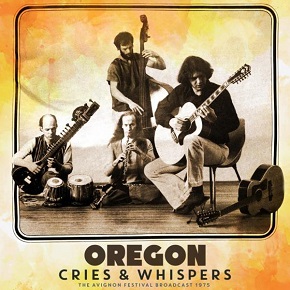
Oregon • Cries And Whispers Live 1975


For over three decades OREGON has inspired audiences in renowned concert halls including Carnegie Hall, Lincoln Center, Berlin Philharmonic Hall, and Vienna’s Mozartsaal; at international jazz clubs and major festivals such as Montreux, Pori, Berlin, Montreal, and Newport Jazz; and on tours throughout the U.S., Canada, Mexico, South America, Eastern and Western Europe, India, Pakistan, Nepal, Sri Lanka, Bangladesh, Algeria, and Australia.

OREGON began in 1960 at the University of Oregon with undergraduate students Ralph Towner and Glen Moore who formed a musical friendship on bass and piano inspired by Bill Evans and Scott LaFaro and later by Brazilian music. Moore earned a degree in history and literature and Towner completed his in composition, taking up guitar in the process. In the mid 60’s, they both traveled to Europe. Towner studied classical guitar in Vienna with Karl Scheit; Moore studied classical bass in Copenhagen and sat in with such greats as Ben Webster and Dexter Gordon. By 1969, both were living in New York City, playing with a community of young musicians who formed the great fusion bands of the ‘70’s including Weather Report and the Mahavishnu Orchestra.

Performing with folksinger Tim Hardin at the ‘69 Woodstock Festival, Towner and Moore encountered two members of the Paul Winter Consort who introduced them to the music of that group. In the studio with Hardin, Ralph and Glen connected with sitar and tabla player Collin Walcott. He was a graduate of Indiana University under George Gaber, studied ethnomusicology at UCLA and served as road manager for Ravi Shankar and Alla Rakha. On a break at that session, Ralph and Collin played their first guitar/sitar duet in the hallways of Columbia Studios.

By 1970 Ralph, Glen, and Collin had joined the Paul Winter Consort for a 50-concert U.S. tour where they quickly formed an alliance with its oboist, Paul McCandless, who had studied at the Manhattan School of Music under Toscanini’s first oboe player, Robert Bloom. During that initial tour, Ralph began composing a new repertoire of original material including “Icarus”, which has since become a standard. The early development of OREGON took root in motel rooms and college dormitories where, in private jam sessions, Towner, Walcott,Moore and McCandless began investigating new musical possibilities after getting a taste of collective improvisation on tour with the Consort. Winter’s group introduced them to the idea of performing concerts with uncommon combinations of instruments in an eclectic variety of musical styles. Incorporating these elements, OREGON emerged with a unique synthesis of European classical instrumentation, American jazz harmony, and ethnic influences from around the globe. The notion of recording their own music first arose at a party, where Towner and Walcott were entertaining friends in their guitar/sitar configuration. The group was offered the use of an 8-track studio in the Hollywood Hills, known as “The Farm.” A short-lived independent label in Los Angeles subsidized six weeks of taping and mixing. The company did not succeed in selling the results to a major label and the tape went into storage for ten years before its Vanguard release on disc called—Our First Record.

In 1971 the band made its debut in New York City, calling themselves Thyme—Music of Another Present Era, a phrase designed to answer the question. “ What kind of music do you play?” McCandless later proposed the name “OREGON” alluding to Ralph and Glen’s nostalgic reminiscences of their home state. The next year, Vanguard signed OREGON, recording a new set of original compositions which became the band’s debut LP, Music of Another Present Era. In that same period, they made Trios and Solos for ECM, a new label in Europe. The Vanguard album introduced them to their American audience and through their association with ECM, they developed their European following with tours beginning in 1974 where they received critical acclaim and growing recognition in the international community.

Six years and nine albums later, OREGON moved to Elektra/Asylum Records. Its first release on that label, Out of the Woods, reached a decidedly wider audience and was included in the 101 Best Jazz Albums list by Len Lyons. As the years spanned and the group’s versatility grew, bass clarinet, soprano and sopranino saxes, ethnic flutes, flugelhorn, French horn, clarinet, dulcimer, electric bass, violin, viola, and a myriad of percussion instruments all found their way into OREGON’s instrumentation which already included Towner’s nylon and 12 string guitars and piano, McCandless’ oboe and English horn, Moore’s 1715 Klotz bass and Walcott’s sitar and tablas.

At the end of OREGON’s contract with Elektra, and with the birth of Collin Walcott’s daughter in 1980, the band members took a year long sabbatical during which they pursued their individual solo careers. When they reassembled, OREGON’s unique fusion gained an electric dimension through Towner’s addition of keyboard synthesizers. The group recorded two more albums for ECM with the original personnel.

They had reached a peak of popularity when in November 1984, Walcott died in an auto accident in the former East Germany, leaving the ECM album Crossing as his final document. This left OREGON with the seemingly impossible task of filling an enormous vacuum. They reunited for the first time in May 1985 at a memorial concert for Walcott in New York where the dazzling Indian percussionist Trilok Gurtu joined them to pay tribute. Trilok, who studied tablas and jazz drumming, accepted an invitation to work with OREGON in 1986 which included a State Department tour of the Indian subcontinent. Over a five-year period, he played on three albums with the band: Ecotopia on ECM, 45th Parallel on Epic, and Always, Never, and Forever, the band’s first recording on Intuition. After the departure of Gurtu, the three original members continued their creative development as a trio making two CDs—Troika and Beyond Words.

For the 1996 Intuition recording “Northwest Passage”, the group incorporated two masterful percussionists, former Chicagoan Mark Walker and Arto Tuncboyician of Armenia. Walker, who also performs and records with Cuban expatriate Paquito D’Rivera, has become the new fourth member of OREGON and together with Towner, Moore, and McCandless traveled to Moscow in June 1999 to record the double CD for Intuition entitled “Oregon In Moscow.” This project is the band’s debut recording of their orchestral repertoire. Developing since the Winter Consort days, this prodigious body of work had been performed with the St. Paul, Philadelphia, Indianapolis, Stavanger, Freiburg, and Stuttgart Orchestras, but never documented. Oregon In Moscow, produced by Steve Rodby of the Pat Metheny Group fame, features the band members as composers, orchestrators, and soloists in collaboration with the Moscow Tchaikovsky Symphony Orchestra. In 2001 this album garnered four Grammy nominations. OREGON’s most recent production, a live CD recorded during a spirited week at Yoshi’s, San Francisco Bay Area’s premier jazz club, was released in 2002. Not since 1980 has the group’s electrifying and poignant performances been captured on tape.
https://musicians.allaboutjazz.com/oregon


///////

Durante más de tres décadas, OREGON ha inspirado al público en salas de conciertos de renombre, como el Carnegie Hall, el Lincoln Center, la Filarmónica de Berlín y la Mozartsaal de Viena; en clubes internacionales de jazz y en los principales festivales, como los de Montreux, Pori, Berlín, Montreal y Newport Jazz; y en giras por los Estados Unidos, el Canadá, México, América del Sur, Europa oriental y occidental, la India, el Pakistán, Nepal, Sri Lanka, Bangladesh, Argelia y Australia.

OREGON comenzó en 1960 en la Universidad de Oregón con los estudiantes universitarios Ralph Towner y Glen Moore que formaron una amistad musical en el bajo y el piano inspirada por Bill Evans y Scott LaFaro y más tarde por la música brasileña. Moore obtuvo un título en historia y literatura y Towner completó el suyo en composición, tomando la guitarra en el proceso. A mediados de los 60, ambos viajaron a Europa. Towner estudió guitarra clásica en Viena con Karl Scheit; Moore estudió bajo clásico en Copenhague y se sentó con grandes como Ben Webster y Dexter Gordon. En 1969, ambos vivían en la ciudad de Nueva York, tocando con una comunidad de jóvenes músicos que formaron las grandes bandas de fusión de los años 70, incluyendo Weather Report y la Mahavishnu Orchestra.

Actuando con el cantante Tim Hardin en el Festival de Woodstock del 69, Towner y Moore conocieron a dos miembros del Paul Winter Consort que les introdujeron en la música de ese grupo. En el estudio con Hardin, Ralph y Glen se conectaron con el sitar y el tablista Collin Walcott. Se graduó en la Universidad de Indiana bajo la dirección de George Gaber, estudió etnomusicología en la UCLA y sirvió como road manager para Ravi Shankar y Alla Rakha. En un descanso de esa sesión, Ralph y Collin tocaron su primer dúo de guitarra/sitar en los pasillos de los estudios Columbia.

En 1970 Ralph, Glen y Collin se unieron al Paul Winter Consort para una gira de 50 conciertos en EE.UU. donde rápidamente formaron una alianza con su oboísta, Paul McCandless, que había estudiado en la Escuela de Música de Manhattan con el primer oboísta de Toscanini, Robert Bloom. Durante esa gira inicial, Ralph comenzó a componer un nuevo repertorio de material original que incluía "Icarus", que desde entonces se ha convertido en un estándar. El desarrollo temprano de OREGON se arraigó en las habitaciones de moteles y dormitorios universitarios donde, en jam sessions privadas, Towner, Walcott, Moore y McCandless comenzaron a investigar nuevas posibilidades musicales después de probar la improvisación colectiva en la gira con el Consort. El grupo de Winter les introdujo en la idea de realizar conciertos con combinaciones poco comunes de instrumentos en una variedad ecléctica de estilos musicales. Incorporando estos elementos, OREGON surgió con una síntesis única de la instrumentación clásica europea, la armonía del jazz americano y las influencias étnicas de todo el mundo. La idea de grabar su propia música surgió por primera vez en una fiesta, en la que Towner y Walcott estaban entreteniendo a sus amigos en su configuración de guitarra/sitar. Al grupo se le ofreció el uso de un estudio de 8 pistas en las colinas de Hollywood, conocido como "La Granja". Un sello independiente de corta duración en Los Ángeles subvencionó seis semanas de grabación y mezcla. La compañía no logró vender los resultados a un sello importante y la cinta se guardó durante diez años antes de su lanzamiento de Vanguard en el disco llamado "Our First Record".

En 1971 la banda debutó en la ciudad de Nueva York, llamándose a sí mismos Thyme-Music of Another Present Era, una frase diseñada para responder a la pregunta. "¿Qué tipo de música tocas?" McCandless propuso más tarde el nombre "OREGON" en alusión a las nostálgicas reminiscencias de Ralph y Glen en su estado natal. Al año siguiente, Vanguard firmó OREGON, grabando un nuevo conjunto de composiciones originales que se convirtió en el LP de debut de la banda, Music of Another Present Era. En ese mismo período, hicieron Tríos y Solos para ECM, un nuevo sello en Europa. El álbum Vanguard los presentó a su público americano y a través de su asociación con ECM, desarrollaron sus seguidores europeos con giras que comenzaron en 1974, donde recibieron la aclamación de la crítica y un creciente reconocimiento en la comunidad internacional.

Seis años y nueve álbumes más tarde, OREGON se trasladó a Elektra/Asylum Records. Su primer lanzamiento en ese sello, Out of the Woods, llegó a un público decididamente más amplio y fue incluido en la lista de los 101 mejores álbumes de jazz de Len Lyons. Con el paso de los años y la versatilidad del grupo creció, clarinete bajo, saxos soprano y sopranino, flautas étnicas, fliscorno, trompa, clarinete, dulcimer, bajo eléctrico, violín, viola, y una miríada de instrumentos de percusión se abrieron camino en la instrumentación de OREGON que ya incluía el nylon de Towner y las 12 guitarras de cuerda y el piano, el oboe y el corno inglés de McCandless, el bajo Klotz de 1715 de Moore y el sitar y las tablas de Walcott.

Al final del contrato de OREGON con Elektra, y con el nacimiento de la hija de Collin Walcott en 1980, los miembros de la banda se tomaron un año sabático durante el cual siguieron sus carreras individuales en solitario. Cuando volvieron a unirse, la fusión única de OREGON ganó una dimensión eléctrica con la adición de Towner de sintetizadores de teclado. El grupo grabó dos álbumes más para ECM con el personal original.

Habían alcanzado un pico de popularidad cuando en noviembre de 1984, Walcott murió en un accidente de coche en la antigua Alemania del Este, dejando el álbum de ECM Crossing como su documento final. Esto dejó a OREGON con la aparentemente imposible tarea de llenar un enorme vacío. Se reunieron por primera vez en mayo de 1985 en un concierto conmemorativo de Walcott en Nueva York donde el deslumbrante percusionista indio Trilok Gurtu se les unió para rendirles homenaje. Trilok, que estudió tablas y batería de jazz, aceptó una invitación para trabajar con OREGON en 1986 que incluía una gira del Departamento de Estado por el subcontinente indio. Durante un período de cinco años, tocó en tres álbumes con la banda: Ecotopia en ECM, 45th Parallel en Epic, y Always, Never, and Forever, la primera grabación de la banda en Intuition. Tras la salida de Gurtu, los tres miembros originales continuaron su desarrollo creativo como trío haciendo dos CD-Troika y Beyond Words.

Para la grabación de Intuition de 1996 "Northwest Passage", el grupo incorporó a dos magistrales percusionistas, el ex chicagüense Mark Walker y Arto Tuncboyician de Armenia. Walker, que también actúa y graba con el expatriado cubano Paquito D'Rivera, se ha convertido en el nuevo cuarto miembro de OREGON y junto con Towner, Moore y McCandless viajó a Moscú en junio de 1999 para grabar el doble CD de Intuición titulado "Oregón en Moscú". Este proyecto es el debut de la banda en la grabación de su repertorio orquestal. Desarrollado desde los días de Winter Consort, este prodigioso cuerpo de trabajo había sido interpretado con las orquestas de St. Paul, Filadelfia, Indianápolis, Stavanger, Friburgo y Stuttgart, pero nunca fue documentado. Oregon In Moscow, producida por Steve Rodby del Grupo Pat Metheny, presenta a los miembros de la banda como compositores, orquestadores y solistas en colaboración con la Orquesta Sinfónica Tchaikovsky de Moscú. En 2001 este álbum obtuvo cuatro nominaciones al Grammy. La producción más reciente de OREGON, un CD en vivo grabado durante una animada semana en Yoshi's, el principal club de jazz del área de la bahía de San Francisco, fue lanzado en 2002. Desde 1980 no se han grabado las electrificantes y conmovedoras actuaciones del grupo.
https://musicians.allaboutjazz.com/oregon
 
 
oregonband.com ...


Thursday, December 25, 2025

As Serious As Your Life: Black Music and the Free Jazz Revolution, 1957–1977


In this classic account of the new black music of the 1960s and 70s, celebrated photographer and jazz historian Val Wilmer tells the story of how a generation of revolutionary musicians established black music as the true vanguard of American culture. Placing the achievements of African-American artists such as Albert Ayler, Ornette Coleman, John Coltrane and Sun Ra in their broader political and social context, Wilmer evokes an era of extraordinary innovation and experimentation that continues to inspire musicians today. As vital now as when it was first published in 1977, As Serious As Your Life is the essential story of one of the most dynamic musical movements of the twentieth century.


Val Wilmer (Autor) 


Monday, November 10, 2025

David Liebman • Colors


Sure enough, the title of this record betrays the artist's vision, expressed through tunes inspired by the hues of the rainbow. But Colors is not Liebman Lite, make no mistake. These dozen solo tenor tracks are as serious as they come. But where other adventurous players use the solo setting as an opportunity to get furious and wild, David Liebman mostly respects his limits and pursues timbre and motion instead.

That said, it's important to be aware that control is often a synonym for restraint, witnessed here through a relatively precise approach to the instrument. When Liebman lays out a theme, he fleshes it out beyond skin and bone, adding muscle and heft where necessary, as on the overblown cries of "Black 1." His chops have never been in doubt, but what's most remarkable here is how he exploits every part of his horn. The aptly titled "White 1" gradually climbs out of soft breathing noises and light finger punctuation into stark, barely-voiced cries, only to retreat and ascend the gradual slope once again.

At quiet times like this you can fully appreciate the rich acoustics of the Banff Center, where the disc was recorded in the summer of 1998. The abundant bouncing reverations may put some listeners off, and fairly so, because they superimpose a layer of sound beyond what Liebman pulls out of his horn. But if you look at the big picture, it's apparent that he is fully aware of his acoustic environment, exploiting it as he rounds out phrases and pauses between notes.

As for the colors on the disc, the most memorable include the appropriately soulful strains of "Blue 1," with a touch of vibrato, a thick tone, and faint echoes of Ben Webster. "Red 2" has a decidedly swinging edge, pushing a relatively clean theme through successive rounds of embellishment and change, fluttering and trilling along. "Black 2" takes off where "Black 1" left off, starkly anguished and sharply blown. Its shrill, honking closure leads off abruptly into a second white field comprised of bare minimum blowing and popping sounds. It's somewhat ironic that Liebman never really hits full overdrive until the very end, a heated ball of energy called "Yellow 2." His pulses here again emphasize the hall's acoustics.

Liebman considers this record a companion to his soprano solo disc The Tree (Soul Note, 1990), and those in the know may find some interesting parallels. But Colors is by all means a stand-alone work, some of the most inventive and involving music Dave Liebman has ever recorded.
https://www.allaboutjazz.com/colors-hat-hut-records-review-by-aaj-staff
By AAJ Staff
November 25, 2003 
https://www.allaboutjazz.com/colors-hat-hut-records-review-by-aaj-staff

///////

Efectivamente, el título de este disco revela la visión del artista, expresada a través de melodías inspiradas en los colores del arcoíris. Pero que no quepa duda: Colors no es un Liebman light. Estas doce pistas para saxo tenor solista son de una seriedad absoluta. Sin embargo, mientras que otros intérpretes audaces aprovechan el solo para dar rienda suelta a su ímpetu y desenfreno, David Liebman respeta sus límites y se centra en el timbre y el movimiento.

Dicho esto, es importante tener en cuenta que el control suele ser sinónimo de moderación, como se observa aquí en su enfoque relativamente preciso del instrumento. Cuando Liebman desarrolla un tema, lo hace crecer más allá de lo superficial, añadiendo fuerza y ​​contundencia donde es necesario, como en los intensos gritos de "Black 1". Su virtuosismo nunca ha estado en duda, pero lo más destacable aquí es cómo explota cada matiz de su saxo. El acertadamente titulado "White 1" asciende gradualmente desde suaves respiraciones y ligeros toques de dedos hasta gritos desgarradores, apenas audibles, para luego retroceder y volver a ascender por la pendiente suave.

En momentos de calma como este, se puede apreciar plenamente la rica acústica del Banff Center, donde se grabó el disco en el verano de 1998. Las abundantes reverberaciones pueden resultar molestas para algunos oyentes, y con razón, ya que superponen una capa de sonido más allá de lo que Liebman extrae de su saxofón. Pero si se observa el panorama general, resulta evidente que es plenamente consciente de su entorno acústico, aprovechándolo al máximo para completar frases y crear pausas entre notas.

En cuanto a los matices del disco, destacan los acordes conmovedores de "Blue 1", con un toque de vibrato, un tono denso y sutiles ecos de Ben Webster. "Red 2" tiene un ritmo decididamente rítmico, llevando un tema relativamente limpio a través de sucesivas rondas de ornamentación y cambios, revoloteando y trinando. "Black 2" retoma donde "Black 1" lo dejó, con una angustia cruda y un sonido agudo e intenso. Su cierre estridente y resonante da paso abruptamente a un segundo campo sonoro compuesto por sonidos mínimos de soplidos y chasquidos. Resulta un tanto irónico que Liebman no alcance su máximo potencial hasta el final, una explosión de energía llamada "Yellow 2". Sus pulsaciones aquí vuelven a enfatizar la acústica de la sala.

Liebman considera este disco un complemento de su disco solista de soprano The Tree (Soul Note, 1990), y quienes conozcan su obra podrán encontrar algunos paralelismos interesantes. Pero Colors es, sin duda, una obra independiente, una de las piezas musicales más ingeniosas y envolventes que Dave Liebman ha grabado jamás. https://www.allaboutjazz.com/colors-hat-hut-records-review-by-aaj-staff
By AAJ Staff
November 25, 2003 
https://www.allaboutjazz.com/colors-hat-hut-records-review-by-aaj-staff


Friday, August 1, 2025

Roscoe Mitchell-Anthony Braxton • Duets with Anthony Braxton


This December 1977 recording features two of the most prominent AACM musicians, Roscoe Mitchell and Anthony Braxton. Mitchell's composition 'run the gamut, beginning with the darkly gorgeous opener that features Braxton's contrabass clarinet nestling evocatively beneath the composer's earthy flute, Mitchell's other pieces investigate the sparer, more abstract realm, as the duo's wide variety of reeds populate the sonic environment with scattered moans, squeaks and pops. Overall, this is a fine meeting between two of the most forward-looking thinkers and players in the music.
https://www.jazzmessengers.com/en/74482/roscoe-mitchell/duets-with-anthony-braxton

///////


Esta grabación de diciembre de 1977 presenta a dos de los músicos más destacados de la AACM, Roscoe Mitchell y Anthony Braxton. Las composiciones de Mitchell abarcan toda la gama, comenzando por la oscura y preciosa primera pieza, en la que el clarinete contrabajo de Braxton se acurruca evocadoramente bajo la terrosa flauta del compositor. Las demás piezas de Mitchell investigan el ámbito más parco y abstracto, mientras la amplia variedad de lengüetas del dúo puebla el entorno sonoro con gemidos, chirridos y estallidos dispersos. En conjunto, se trata de un excelente encuentro entre dos de los pensadores e intérpretes más vanguardistas de la música.
https://www.jazzmessengers.com/en/74482/roscoe-mitchell/duets-with-anthony-braxton


Thursday, July 31, 2025

Flow, Gesture, and Spaces in Free Jazz: Towards a Theory of Collaboration


Free jazz, as performed by such artists as John Coltrone and Archie Shepp, is a creative, collaborative art form. This book examines free jazz and develops geometric theories of gestures and distributed identities, also known as swarm intelligence.


Monday, June 30, 2025

Free Jazz: A Research and Information Guide


Sunday, June 29, 2025

Archie Shepp • Archie Shepp & Philly Joe Jones


Review by Scott Yanow
This intriguing LP does not live up to its potential. Three generations of jazzmen were involved in this 1969 project, with veteran drummer Philly Joe Jones and the great avant-garde tenor Archie Shepp meeting up with two of the top "new jazz" players (altoist Anthony Braxton and violinist Leroy Jenkins). Unfortunately, both of the sidelong pieces have recitations, the performances are overly long, and there is quite a bit of rambling. This is a lesser effort that has been long out-of-print. 
https://www.allmusic.com/album/archie-shepp-philly-joe-jones-mw0000919801

///////


Reseña de Scott Yanow
Este intrigante LP no está a la altura de su potencial. Tres generaciones de músicos de jazz participaron en este proyecto de 1969, en el que el veterano baterista Philly Joe Jones y el gran tenor vanguardista Archie Shepp se reunieron con dos de los mejores intérpretes del «nuevo jazz» (el saxofonista alto Anthony Braxton y el violinista Leroy Jenkins). Desgraciadamente, las dos piezas laterales incluyen recitaciones, las interpretaciones son excesivamente largas y hay bastante divagación. Se trata de un trabajo menor que lleva mucho tiempo descatalogado. 
https://www.allmusic.com/album/archie-shepp-philly-joe-jones-mw0000919801


Thursday, June 26, 2025

Max Roach-Abdullah Ibrahim • Streams of Consciousness


Review by Ken Dryden
Abdullah Ibrahim and Max Roach entered the studio in 1977 with no preplanning of any kind, producing a powerful session of duo improvisation in Streams of Consciousness. Their long opener, the title track, is never dull, even at 21 minutes. Roach provides unaccompanied segues as Ibrahim repeatedly ducks out and returns powerful themes one after another (each one complemented beautifully by the drummer). They touch on African chants, gospel-like themes, and a bit of avant-garde. "Acclamation" has the feeling of being composed, building to a feverish pitch before ending quietly with Roach's unaccompanied cymbals. Roach is initially at the forefront of "Consanguinity," with Ibrahim inserting brief, choppy chords, though the pianist takes on a much greater role as it progresses, finishing with a wave of tremolo chords. Sadly, they have yet to record together in the decades following this remarkable recording. 
https://www.allmusic.com/album/streams-of-consciousness-mw0000032771

///////


Reseña de Ken Dryden
Abdullah Ibrahim y Max Roach entraron en el estudio en 1977 sin ningún tipo de planificación previa, produciendo una poderosa sesión de improvisación a dúo en Streams of Consciousness. Su larga apertura, la canción que da título al disco, nunca resulta aburrida, ni siquiera con sus 21 minutos. Roach proporciona segmentos sin acompañamiento mientras Ibrahim se escabulle repetidamente y devuelve potentes temas uno tras otro (cada uno complementado maravillosamente por el batería). Tocan cantos africanos, temas evangélicos y un poco de vanguardia. «Acclamation» da la sensación de estar compuesta, alcanzando un tono febril antes de terminar tranquilamente con los platillos sin acompañamiento de Roach. Roach está inicialmente al frente de «Consanguinity», con Ibrahim insertando breves acordes entrecortados, aunque el pianista adquiere un papel mucho mayor a medida que avanza, terminando con una oleada de acordes trémolo. Lamentablemente, aún no han vuelto a grabar juntos en las décadas posteriores a esta notable grabación. 
https://www.allmusic.com/album/streams-of-consciousness-mw0000032771


abdullahibrahim.co.za ...