Showing posts with label Buddy Tate. Show all posts

Friday, May 15, 2026

Eddie ''Lockjaw Davis'' - Buddy Tate - Coleman Hawkins - Arnett Cobb • Very Saxy


Review by Scott Yanow
Tenor saxophonist Eddie "Lockjaw" Davis and his quartet (which includes organist Shirley Scott, bassist George Duvivier and drummer Arthur Edgehill) welcome three immortal tenors (Coleman Hawkins, Arnett Cobb and Buddy Tate) to what became a historic and hard-swinging jam session. On three blues, an original based on the chord changes of "Sweet Georgia Brown" and "Lester Leaps In," the four tenors battle it out and the results are quite exciting. The spirited music on this memorable LP will hopefully be reissued on CD eventually, for the performances live up to their great potential.
https://www.allmusic.com/album/release/very-saxy-mr0003688263

///////


Reseña de Scott Yanow
El saxofonista tenor Eddie "Lockjaw" Davis y su cuarteto (que incluye a la organista Shirley Scott, el bajista George Duvivier y el baterista Arthur Edgehill) dan la bienvenida a tres tenores inmortales (Coleman Hawkins, Arnett Cobb y Buddy Tate) en lo que se convirtió en una jam session histórica y llena de fuerza. En tres blues, uno original basado en los cambios de acordes de "Sweet Georgia Brown" y "Lester Leaps In", los cuatro tenores se enfrentan y los resultados son bastante emocionantes. Es de esperar que la animada música de este memorable LP se reedite en CD, ya que las interpretaciones están a la altura de su gran potencial.
https://www.allmusic.com/album/release/very-saxy-mr0003688263


Vic Dickenson • Ding Dong


Review by Scott Yanow
This 1999 CD reissue brings back an earlier LP (simply titled Vic Dickenson Quintet), adding three previously unheard alternate takes to the original eight-song program. A sideman during most of his career, the great trombonist Dickenson had several opportunities to record as a leader during 1974-76. Dickenson, tenor-saxophonist Buddy Tate (who plays baritone on "Penthouse Serenade"), pianist Red Richards, bassist George Duvivier and drummer Oliver Jackson perform seven standards (which include such offbeat choices as "Isle of Golden Dreams," "Black Bottom" and "Five O'Clock Whistle") plus Vic's "Ding Dong." Dickenson's sly wit is very much in evidence on this strong set, the trombone/tenor blend is quite appealing and the date is easily recommended to small group swing collectors.
https://www.allmusic.com/album/ding-dong-mw0000033777

///////


Reseña de Scott Yanow
Esta reedición en CD de 1999 recupera un LP anterior (titulado simplemente Vic Dickenson Quintet), añadiendo tres tomas alternativas inéditas al programa original de ocho canciones. Acompañante durante la mayor parte de su carrera, el gran trombonista Dickenson tuvo varias oportunidades de grabar como líder durante 1974-76. Dickenson, el tenor-saxofonista Buddy Tate (que toca el barítono en "Penthouse Serenade"), el pianista Red Richards, el bajista George Duvivier y el baterista Oliver Jackson interpretan siete estándares (que incluyen opciones tan poco convencionales como "Isle of Golden Dreams", "Black Bottom" y "Five O'Clock Whistle") más "Ding Dong" de Vic. El ingenio astuto de Dickenson está muy presente en este sólido conjunto, la mezcla de trombón y tenor es bastante atractiva y la fecha es fácilmente recomendable para los coleccionistas de swing de grupos pequeños.
https://www.allmusic.com/album/ding-dong-mw0000033777


Monday, August 4, 2025

Claude Hopkins • Swing Time!


Review by Scott Yanow
Claude Hopkins is best-known for being a powerful stride pianist who led a big band in the 1930s; he is also known for his solo records of 1969-72. Barely on records at all from 1941-59, Hopkins cut three albums for Swingville from 1960-63; the second and third are reissued in full on this 1999 CD. The most surprising aspect to these combo dates is that Hopkins hardly strides at all and comes across as a Teddy Wilson-inspired swing pianist. Much of the time he is in the background, with the success of the sessions really due to the fine playing of the horns. Trombonist Vic Dickenson and tenor saxophonist Budd Johnson play at the high level one would expect on the Swing Time set, with the main revelation being the obscure trumpeter Bobby Johnson, a veteran of Erskine Hawkins' Orchestra, who holds his own with the stars. Hopkins' "Crying My Heart Out for You" from this date is well worth reviving again. The music from the other Swingville album, Let's Jam, gives tenor saxophonist Buddy Tate an opportunity to play his underrated clarinet on "Late Evening" and has several opportunities for the largely forgotten swing trumpeter Joe Thomas to show how lyrical a soloist he was. This CD is recommended even if Hopkins' role is much more minor than expected. 
https://www.allmusic.com/album/swing-time-mw0000666904

///////


Reseña de Scott Yanow
Claude Hopkins es conocido principalmente por ser un poderoso pianista de stride que lideró una big band en la década de 1930; también es famoso por sus discos en solitario de 1969-72. Apenas grabó entre 1941 y 1959, pero entre 1960 y 1963 Hopkins grabó tres álbumes para Swingville; el segundo y el tercero se reeditan íntegramente en este CD de 1999. Lo más sorprendente de estas grabaciones en combo es que Hopkins apenas toca el stride y se presenta como un pianista de swing inspirado en Teddy Wilson. La mayor parte del tiempo permanece en segundo plano, y el éxito de las sesiones se debe realmente a la excelente interpretación de los instrumentos de viento. El trombonista Vic Dickenson y el saxofonista tenor Budd Johnson tocan al alto nivel que cabría esperar en el conjunto Swing Time, siendo la principal revelación el desconocido trompetista Bobby Johnson, un veterano de la Orquesta de Erskine Hawkins, que está a la altura de las estrellas. Vale la pena recuperar «Crying My Heart Out for You» de Hopkins, de esta fecha. La música del otro álbum de Swingville, Let's Jam, da al saxofonista tenor Buddy Tate la oportunidad de tocar su clarinete, infravalorado, en «Late Evening», y ofrece varias oportunidades al trompetista de swing Joe Thomas, en gran parte olvidado, para demostrar lo lírico que era como solista. Este CD es recomendable, aunque el papel de Hopkins sea mucho más secundario de lo esperado. 
https://www.allmusic.com/album/swing-time-mw0000666904


Wednesday, April 9, 2025

Frank Culley & Buddy Tate • Rock'n Roll Instrumentals For Dancing The Lindy Hop


Frank Windsol Culley (August 17, 1917 – April 15, 1991), sometimes credited as Frank "Floorshow" Culley, was an American R&B saxophonist and bandleader who recorded successfully from the 1940s and was the first leader of the Atlantic Records house band.

He was born in Petsworth, Gloucester County, Virginia (though some sources give Salisbury, Maryland),[2] and grew up in Norfolk. He learned to play the tenor saxophone, and began playing in local bands before turning professional as a member of Johnson's Happy Pals in Richmond. In the mid-1940s he formed his own band, and began recording accompaniments for artists including Wynonie Harris, on several small labels, before joining Atlantic Records as their house band leader in 1948. His band backed many of Atlantic's most successful R&B artists of the period, with the recordings often featuring Culley's pianist, Harry Van Walls. He also recorded under his own name, having a #11 R&B hit in 1949 with his version of the instrumental "Cole Slaw", originally written (as "Sorghum Switch") by Jesse Stone and also recorded by Louis Jordan. The follow-up, "Floorshow", gave Culley the nickname with which he was credited thereafter. At the end of 1949, another Culley recording, "After Hour Session", reached #10 on the Billboard R&B chart.

Culley left the Atlantic label in 1951. He later recorded, with little commercial success, for other labels including Coral, RCA Victor, Chess, and - with singer Jimmy Rushing - for Parrot. In 1955 he recorded several tracks on one of the first rock and roll LPs, Rock'n'Roll Instrumentals for Dancing the Lindy Hop, released on the Baton label, with the other tracks performed by the Buddy Tate Orchestra. The following year, Culley featured in one of the first rock and roll stage shows in New York City, hosted by Hal Jackson and which also featured The Cadillacs and Screamin' Jay Hawkins.

After continuing to perform in clubs, he retired from the music business in 1975, and moved to Newark, New Jersey, where he died in 1991.
https://en.wikipedia.org/wiki/Frank_Culley


Tate was born in Sherman, Texas, and began performing on alto saxophone. As a teenager in 1925, he played with his brother and their band called McCloud's Night Owls."

Tate quickly switched to tenor saxophone making a name for himself in bands such as the one led by Andy Kirk. He joined Count Basie in 1939 and stayed with him until 1948. He had been selected by Basie after the sudden death of Herschel Evans, which Tate stated he had predicted in a dream.

After his period with Basie ended, he worked with several other bands before he found success on his own, starting in 1953 in Harlem. His group worked at the "Celebrity Club" from 1953 to 1974. In the late 1970s, he co-led a band with Paul Quinichette and worked with Benny Goodman.

In 1980, he was seriously injured by scalding water in a hotel shower, which kept him inactive for four months.[3] He later suffered from a serious illness. The 1990s saw him slow down, but he remained active playing with Lionel Hampton among others.

In 1992, Tate took part in the documentary, Texas Tenor: The Illinois Jacquet Story. In 1996, he recorded with woodwind artist James Carter on the younger man's second release for Atlantic Records, Conversin' with the Elders, along with trumpeters Harry "Sweets" Edison and Lester Bowie, and saxophonists Hamiet Bluiett and Larry Smith.

Tate lived in New York until 2001 when he moved to Arizona to be cared for by his daughter. He died in Chandler, Arizona, at the age of 87.
https://en.wikipedia.org/wiki/Buddy_Tate

///////

Frank Windsol Culley (17 de agosto de 1917 - 15 de abril de 1991), a veces acreditado como Frank "Floorshow" Culley, fue un saxofonista y director de orquesta estadounidense de R&B que grabó con éxito desde la década de 1940 y fue el primer líder de la banda House de Atlantic Records.

Nació en Petsworth, condado de Gloucester, Virginia (aunque algunas fuentes dan Salisbury, Maryland),[2] y creció en Norfolk. Aprendió a tocar el saxofón tenor, y comenzó a tocar en bandas locales antes de convertirse en un profesional como miembro de Johnson's Happy Pals en Richmond. A mediados de la década de 1940 formó su propia banda y comenzó a grabar acompañamientos para artistas como Wynonie Harris, en varios sellos pequeños, antes de unirse a Atlantic Records como líder de su banda en 1948. Su banda apoyó a muchos de los artistas de R&B más exitosos de la época, con grabaciones que a menudo incluían al pianista de Culley, Harry Van Walls. También grabó bajo su propio nombre, teniendo un éxito #11 R&B en 1949 con su versión del instrumental "Cole Slaw", originalmente escrito (como "Sorghum Switch") por Jesse Stone y también grabado por Louis Jordan.  La continuación, "Floorshow", le dio a Culley el apodo con el que fue acreditado posteriormente. A finales de 1949, otra grabación de Culley, "After Hour Session", alcanzó el número 10 en la lista de Billboard R&B.

Culley dejó la marca Atlantic en 1951. Más tarde grabó, con poco éxito comercial, para otros sellos como Coral, RCA Victor, Chess, y -con el cantante Jimmy Rushing- para Parrot. En 1955 grabó varios temas en uno de los primeros LPs de rock and roll, Rock'n'Roll Instrumentals for Dancing the Lindy Hop, publicado en el sello Baton, con otros temas interpretados por la Buddy Tate Orchestra. Al año siguiente, Culley participó en uno de los primeros espectáculos de rock and roll en la ciudad de Nueva York, con Hal Jackson como anfitrión y en el que también se presentaron The Cadillacs y Screamin' Jay Hawkins.

Después de continuar actuando en clubes, se retiró del negocio de la música en 1975, y se mudó a Newark, Nueva Jersey, donde murió en 1991.
https://en.wikipedia.org/wiki/Frank_Culley


Tate nació en Sherman, Texas, y comenzó a tocar en saxofón alto. Cuando era adolescente en 1925, tocó con su hermano y su banda llamada McCloud's Night Owls".

Tate rápidamente se cambió al saxo tenor y se hizo un nombre en bandas como la dirigida por Andy Kirk. Se unió a Count Basie en 1939 y permaneció con él hasta 1948. Había sido seleccionado por Basie después de la repentina muerte de Herschel Evans, que Tate declaró que había predicho en un sueño.

Después de que su período con Basie terminó, trabajó con varias otras bandas antes de que encontrara el éxito por su cuenta, comenzando en 1953 en Harlem. Su grupo trabajó en el "Celebrity Club" de 1953 a 1974. A finales de la década de 1970, dirigió una banda con Paul Quinichette y trabajó con Benny Goodman.

En 1980, fue gravemente herido por el agua hirviendo en una ducha de un hotel, que lo mantuvo inactivo durante cuatro meses[3] y luego sufrió una grave enfermedad. La década de 1990 lo vio desacelerarse, pero se mantuvo activo jugando con Lionel Hampton, entre otros.

En 1992, Tate participó en el documental Texas Tenor: La historia de Illinois Jacquet. En 1996, grabó con el artista de viento de madera James Carter en el segundo lanzamiento del joven para Atlantic Records, Conversin' with the Elders, junto con los trompetistas Harry "Sweets" Edison y Lester Bowie, y los saxofonistas Hamiet Bluiett y Larry Smith.

Tate vivió en Nueva York hasta 2001, cuando se mudó a Arizona para ser atendido por su hija. Murió en Chandler, Arizona, a la edad de 87 años.
https://en.wikipedia.org/wiki/Buddy_Tate


Saturday, March 22, 2025

Buddy Tate • Tate A Tete


Review by Scott Yanow
Tenor-saxophonist Buddy Tate meets up with pianist Tete Montoliu on this enjoyable blowing date. Other than "Buddy's Blues" (which has a Tate vocal), all of the songs are swing standards with "In A Mellow Tone" clocking in at 17 1/2 minutes. Violinist Finn Ziegler makes worthwhile guest appearances on two of the five selections and the group is completed by bassist Bo Stief and drummer Svend Erik Norregard. Easily recommended for swing fans, this album finds Buddy Tate still very much in prime form.
https://www.allmusic.com/album/tate-a-tete-at-la-fontaine-copenhagen-mw0000668822


Biography
For more than seven decades, Texas-bred George “Buddy” Tate graced the American jazz scene with his hard-blowing tenor saxophone style. A resilient tone with high register inflections in the so-called “Texas tenor” sound distinguished Tate among his swing era colleagues. He was a member of the Count Basie Orchestra during the late 1930s and 1940s and later became a bandleader in his own right

By most accounts, Tate was born George Holmes Tate on February 22, 1913, in Sherman, Texas. He began performing in 1925 while still in his teens when his brother handed him an instrument and asked him to play tenor saxophone with the family quartet called McCloud's Night Owls. Tate and the Night Owls learned to play largely by listening to recordings by Louis Armstrong and mimicking the sound. The band toured professionally for the next four years, after which Tate continued to play the horn, performing with a series of territory bands and with circus bands until the early 1930s when he toured the south-western United States with Nathan Towles' band. During those early years, Tate spent time with Terrence Holder's band from 1930-33 and toured with Andy Kirk's Clouds of Joy in 1934-35.

In 1934 Tate filled in briefly with Count Basie's Orchestra as a replacement for Lester Young. Young eventually returned to the band, and Tate joined up with Towles for another four years beginning in 1935. Tate worked with Towles until 1939 when Herschel Evans, who was Basie's tenor saxophone player, died. Basie then brought Tate back into the orchestra as a permanent fixture for nearly a decade. Perhaps nowhere was the contention for attention between saxophone players of that era more pronounced than among Basie's sidemen. Among the notables were Illinois Jacquet also one of the so-called Texas tenors, Lucky Thompson, and Young, all of whom along with Tate transformed moments of the orchestra's performances into full-scale dueling sets between horns. Tate was heard on many recordings by the Basie orchestra during that era, including selected recordings where Tate performed on alto saxophone as well as tenor. He emerged from Basie's band as a seasoned professional. After Tate parted ways with Basie in 1949, Tate appeared with Hot Lips Page, Lucky Millinder, and Jimmy Rushing until 1952. He then assembled his own house band at Harlem's Celebrity Club in 1953, marking the start of a gig that lasted for 21 years, until the early 1970s.

Tate's European tours brought him largely to France where, in 1967 and 1968, he performed as bandleader in a trio comprised of Milt Buckner on organ and Wallace Bishop on drums. Tate and Buckner recorded a series of tenor saxophone and organ duets in 1967 on the Black and Blue label, including “Buddy Tate with Milt Buckner,” which is revered among Tate's best works. He made two earlier European tours as a sideman for Buck Clayton, in 1959 and 1961 respectively. In 1967 Tate also appeared with John Hammond in a concert program called Spirituals to Swing and toured with the Saints and Sinners. Tate spent time in the 1970s as a sideman in the Benny Goodman Orchestra.

Tate's 1973 release, “Buddy Tate and His Buddies”, featured his former Basie cohort, Jacquet, pianist Mary Lou Williams, and trumpeter Roy Eldridge. Also numbered among the buddies were guitarist Stan Jordan, drummer Gus Johnson, and Milt Hinton on bass. The album, one of Tate's more popular recordings, was re-issued in 1994.

In the 1980s, Tate toured extensively with Jacquet's group called the Texas Tenors. The Tenors followed a festival circuit that took the players to the Newport Jazz Festival in 1980 and to the festival in Cork in 1983 and again in 1985. His festival tours with Jacquet in the 1980s included annual visits to the Grande Parade du Jazz in Nice, France. Additionally, Tate's North American agenda included both live and taped performances with Jay McShann and Jim Galloway in Canada.

In 1978 Tate taped a collection of recordings for Muse Records under the bill of Buddy Tate & the Muse All Stars.” Those albums included “Live at Sandy's,” “Hard Blowin',” and “Muse All Stars.” In 1991 Tate joined fellow tenor saxophone player James Moody and a collection of others among his peers on the live recording, “Lionel Hampton and the Golden Men of Jazz.” The 1996 album “Conversin' with the Elders,” by saxophonist James Carter marked what would become Tate's final appearance on record.

He remained active and performed with Lionel Hampton and the Statesmen of Jazz in the late 1990s until a bout with cancer left him incapacitated. In January of 2001 Tate moved to Phoenix, Arizona, to live near his daughter. He died in Arizona soon afterward, in a nursing home in Chandler on February 10, 2001.
Source: James Nadal
https://musicians.allaboutjazz.com/buddytate

///////


Reseña de Scott Yanow
El saxofonista tenor Buddy Tate se reúne con el pianista Tete Montoliu en esta agradable cita para soplar. Aparte de "Buddy's Blues" (que tiene una voz de Tate), todas las canciones son estándares de swing con "In A Mellow Tone" llegando a los 17 minutos y medio. El violinista Finn Ziegler hace valiosas apariciones como invitado en dos de las cinco selecciones y el grupo se completa con el bajista Bo Stief y el baterista Svend Erik Norregard. Fácilmente recomendado para los fans del swing, este álbum encuentra a Buddy Tate todavía en plena forma.
https://www.allmusic.com/album/tate-a-tete-at-la-fontaine-copenhagen-mw0000668822


Biografía
Durante más de siete décadas, George "Buddy" Tate, criado en Texas, engalanó la escena del jazz americano con su estilo de saxofón tenor de gran impacto. Un tono resistente con inflexiones de alto registro en el llamado sonido "tenor de Texas" distinguió a Tate entre sus colegas de la era del swing. Fue miembro de la Orquesta Count Basie a finales de los años 30 y 40, y más tarde se convirtió en un director de banda por derecho propio

Según la mayoría de los relatos, Tate nació como George Holmes Tate el 22 de febrero de 1913, en Sherman, Texas. Empezó a actuar en 1925 cuando todavía era un adolescente y su hermano le dio un instrumento y le pidió que tocara el saxo tenor con el cuarteto familiar llamado McCloud's Night Owls. Tate y los Night Owls aprendieron a tocar en gran parte escuchando grabaciones de Louis Armstrong e imitando el sonido. La banda realizó una gira profesional durante los cuatro años siguientes, después de la cual Tate siguió tocando la trompa, actuando con una serie de bandas de territorio y con bandas de circo hasta principios del decenio de 1930, cuando realizó una gira por el suroeste de los Estados Unidos con la banda de Nathan Towles. Durante esos primeros años, Tate pasó tiempo con la banda de Terrence Holder de 1930 a 1933 y realizó una gira con Clouds of Joy de Andy Kirk en 1934-35.

En 1934, Tate estuvo brevemente en la orquesta de Count Basie como sustituto de Lester Young. Young volvió a la banda y Tate se unió a Towles durante otros cuatro años a partir de 1935. Tate trabajó con Towles hasta 1939, cuando murió Herschel Evans, que era el saxofonista tenor de Basie. Basie entonces trajo a Tate de vuelta a la orquesta como un elemento permanente durante casi una década. Tal vez en ningún lugar fue más pronunciada la lucha por la atención entre los saxofonistas de esa época que entre los compañeros de Basie. Entre los notables estaban Illinois Jacquet, también uno de los llamados tenores de Texas, Lucky Thompson y Young, que junto con Tate transformaron momentos de las actuaciones de la orquesta en duelos a gran escala entre trompetas. Tate se escuchó en muchas grabaciones de la orquesta Basie durante esa época, incluyendo grabaciones seleccionadas donde Tate actuó tanto en saxo alto como en tenor. Salió de la banda de Basie como un profesional experimentado. Después de que Tate se separara de Basie en 1949, Tate apareció con Hot Lips Page, Lucky Millinder, y Jimmy Rushing hasta 1952. Luego montó su propia banda en el Harlem's Celebrity Club en 1953, marcando el comienzo de un concierto que duró 21 años, hasta principios de los 70.

Las giras europeas de Tate lo llevaron en gran parte a Francia, donde, en 1967 y 1968, actuó como líder de la banda en un trío compuesto por Milt Buckner en el órgano y Wallace Bishop en la batería. Tate y Buckner grabaron una serie de dúos de saxofón tenor y órgano en 1967 con el sello Black and Blue, entre ellos "Buddy Tate con Milt Buckner", que es venerado entre las mejores obras de Tate. Realizó dos giras europeas anteriores como ayudante de Buck Clayton, en 1959 y 1961 respectivamente. En 1967 Tate también apareció con John Hammond en un programa de concierto llamado Spirituals to Swing y realizó una gira con los Saints and Sinners. Tate pasó un tiempo en los años 70 como sideman en la Orquesta Benny Goodman.

El lanzamiento de Tate en 1973, "Buddy Tate and His Buddies", presentó a su antiguo compañero de Basie, Jacquet, la pianista Mary Lou Williams y el trompetista Roy Eldridge. Entre los amigos también se encontraban el guitarrista Stan Jordan, el baterista Gus Johnson y Milt Hinton en el bajo. El álbum, una de las grabaciones más populares de Tate, fue reeditado en 1994.

En la década de 1980, Tate realizó una extensa gira con el grupo de Jacquet llamado los Tenores de Texas. Los Tenores siguieron un circuito de festivales que llevó a los músicos al Festival de Jazz de Newport en 1980 y al festival de Cork en 1983 y de nuevo en 1985. Sus giras de festivales con Jacquet en la década de 1980 incluyeron visitas anuales al Grande Parade du Jazz en Niza, Francia. Además, la agenda norteamericana de Tate incluía actuaciones en vivo y grabadas con Jay McShann y Jim Galloway en Canadá.

En 1978 Tate grabó una colección de grabaciones para Muse Records bajo el proyecto de Buddy Tate & the Muse All Stars". Esos álbumes incluían "Live at Sandy's", "Hard Blowin'" y "Muse All Stars". En 1991 Tate se unió a su compañero saxofonista tenor James Moody y a una colección de otros entre sus compañeros en la grabación en vivo, "Lionel Hampton and the Golden Men of Jazz". El álbum de 1996 "Conversin' with the Elders", del saxofonista James Carter marcó lo que sería la última aparición de Tate en el disco.

Permaneció activo y actuó con Lionel Hampton y los Hombres de Estado del Jazz a finales de los años 90 hasta que un ataque de cáncer lo dejó incapacitado. En enero de 2001 Tate se mudó a Phoenix, Arizona, para vivir cerca de su hija. Poco después murió en Arizona, en un asilo de ancianos en Chandler el 10 de febrero de 2001.
Fuente: James Nadal
https://musicians.allaboutjazz.com/buddytate


www.storyvillerecords.com


Tuesday, February 11, 2025

Earl Hines-Jonah Jones-Buddy Tate-Cozy Cole • Back On The Street


Review
by Scott Yanow
By the time trumpeter Jonah Jones teamed up with pianist Earl Hines and tenor-saxophonist Buddy Tate for this straightforward sextet date, Jones had been a star with his quartet for 15 years. On what would be one of Jones's last recording sessions from his prime, this Chiaroscuro reissue CD has a bit of slickness associated with the trumpeter's more commercial dates but also some very good jazz playing. Three previously unrelesed numbers have been added to the original seven-song program and the music falls between Dixieland and swing with an emphasis on familiar standards. A fine effort.
https://www.allmusic.com/album/back-on-the-street-mw0000074124

///////


Reseña
por Scott Yanow
Cuando el trompetista Jonah Jones se juntó con el pianista Earl Hines y el tenor-saxofonista Buddy Tate para esta sencilla cita de sexteto, Jones llevaba 15 años siendo una estrella con su cuarteto. En lo que sería una de las últimas sesiones de grabación de Jones en su mejor momento, esta reedición en CD de Chiaroscuro tiene un poco de brillo asociado con las fechas más comerciales del trompetista, pero también algunas muy buenas interpretaciones de jazz. Se han añadido tres temas inéditos al programa original de siete canciones y la música se sitúa entre el Dixieland y el swing, con un énfasis en los estándares conocidos. Un buen trabajo.
https://www.allmusic.com/album/back-on-the-street-mw0000074124


Thursday, February 6, 2025

Jimmy Rushing • Rushing Lullabies


Review by Scott Yanow
Jimmy Rushing recorded several albums for Columbia during 1959-60; although in his mid-50s, he was still in peak form. This CD reissue (which has a previously unissued "The Road of Love") finds Rushing joined by both pianist Ray Bryant and organist Sir Charles Thompson, Buddy Tate on tenor, guitarist Skeeter Best, bassist Gene Ramey and drummer Jo Jones. The combination works quite well, and Rushing, in addition to a few blues, puts his own stamp on such numbers as "'Deed I Do," "Pink Champagne," "I Cried For You" and even "Good Rockin' Tonight." Bryant and Tate in particular have strong solos (both are excellent on "I Can't Believe That You're In Love With Me"), and with Rushing in such good shape, this is an easily enjoyable mainstream swing session.
https://www.allmusic.com/album/rushing-lullabies-mw0000891482

///////


Reseña de Scott Yanow
Jimmy Rushing grabó varios álbumes para Columbia durante 1959-60; aunque rondaba los 50 años, seguía en plena forma. En esta reedición en CD (que incluye un tema inédito, «The Road of Love»), Rushing está acompañado por el pianista Ray Bryant y el organista Sir Charles Thompson, Buddy Tate al tenor, el guitarrista Skeeter Best, el bajista Gene Ramey y el batería Jo Jones. La combinación funciona bastante bien, y Rushing, además de algunos blues, pone su propio sello en números como «“Deed I Do», «Pink Champagne», «I Cried For You» e incluso «Good Rockin” Tonight». Bryant y Tate en particular tienen fuertes solos (ambos son excelentes en «I Can't Believe That You're In Love With Me»), y con Rushing en tan buena forma, esta es una sesión de swing mainstream fácilmente disfrutable.
https://www.allmusic.com/album/rushing-lullabies-mw0000891482


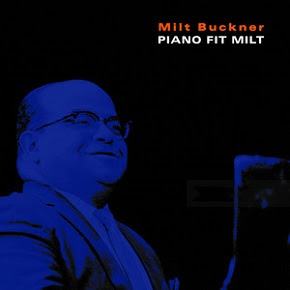
Milt Buckner • Piano Fit Milt


Milton Brent Buckner was born in St. Louis on July 19, 1915. His little brother Ted, who should not be confused with their distant relative, Texas born trumpeter Teddy Buckner, was destined to become a saxophonist with the Jimmie Lunceford Orchestra (where he actually recorded with Teddy in 1939) and an R&B and Motown sessionman. Milt's parents, who encouraged him to learn to play piano, both died when he was nine years old. The two orphans were sent to Detroit where they were adopted by members of the Earl Walton Orchestra; Milt studied piano from age ten to thirteen with his uncle John Tobias (Walton's trombonist), and began writing arrangements for the band at the age of fifteen. While studying at the Detroit Institute of Arts he performed with Mose Burke & the Dixie Whangdoodles and the Harlem Aristocrats. After drummer and bandleader Don Cox hired him in 1932, Buckner began to develop a uniquely percussive technique employing parallel tonal patterns, later referred to as "block chords," a style now associated with Oscar Peterson and George Shearing. During the '30s Buckner also worked in groups led by Jimmy Raschelle, Lanky Bowman, and Howard Bunts. His first big break came in 1941 when he became Lionel Hampton's staff arranger and assistant director. His predilection for rocking rhythms and boogie-woogie fit nicely with Hamp's approach to entertainment. Buckner worked with Hampton during the years 1941-1948 and 1950-1952.
Buckner's earliest recordings survive as a set of piano solos etched into Presto transcription acetates cut on the last day of August 1941. His next appearance in a studio was as a member of a small group led by Lionel Hampton backing young Dinah Washington on her recording debut in December 1943; these feisty, blues based performances were made available to the public on Harry Lim's Keynote label. In 1945 Buckner made records with saxophonist Herbie Fields, Ellington crooner Herb Jeffries and R&B shouter Wynonie Harris, including Harris' smash hit, a cover of Lionel Hampton and Curley Hamner's highly successful "Hey! Ba-Ba-Re-Bop." In 1946 he made the first of a series of recordings with a group variously billed as the Beale Street Boys, the Beale Street Gang, and the Hot Shots. Over the next three years Buckner led a series of dates for the Savoy label. In 1949 he made records with a big band for MGM, sat in on an Eddie Condon Floorshow with drummer Buddy Rich and tap-dancer Baby Laurence on NBC TV, and conducted Teddy Stewart's Orchestra behind Dinah Washington on a date for Mercury records.
In 1950 Buckner recorded with the Three Flames for MGM, with singer Florence Wright for National, with Wynonie Harris for Vogue records, with Rufus Thomas ("Mr. Swing") for the Bullet label in Memphis, and with vocalist Mabel Scott and saxophonists Eddie "Cleanhead" Vinson, Buddy Tate and Wild Bill Moore for King. It was during the Moore session that Buckner first switched from piano to organ. He trundled it out again in Houston TX during the spring of 1952 while backing vocalist Sonny Parker with Gladys Hampton's Blue Boys for Peacock records. Milt recorded for the Scooter, Regent and Brunswick labels, and jammed with saxophonist Charlie Parker in 1953 at the bandbox in New York City. He sat piano for the Imperials (with Willie Dixon playing bass) on a Great Lakes session that took place in Detroit during the spring of 1954. Buckner also visited Philadelphia over the summer to record a few tunes with guitarist Big Ham Williams and drummer Sam Woodyard which were issued on 20th Century records, a subsidiary of the Gotham label.
Milt Buckner was a Capitol recording artist from April 1955 through July 1957, sharing the studio with saxophonists Earle Warren and Sam Taylor, guitarists Everett Barksdale and Skeeter Best, bassist Milt Hinton and drummers Osie Johnson and Shadow Wilson. He taped his first Argo LP in New York in December 1959 with guitarist Kenny Burrell and bassist Joe Benjamin. More Argo sessions came together in Chicago in 1960 and 1961, and he had dealings with the Bethlehem label in Cincinnati in 1962 and 1963. In March 1966 a performance with saxophonist Illinois Jacquet was taped live at Lennie's on the turnpike in West Peabody, MA and subsequently released on the Cadet label.
Like many U.S. jazz musicians who struggled at home and did better abroad, Milt Buckner clearly preferred the cultural and vocational climate in Europe. Over the 11 years that remained in his life, he only returned to North America for brief concert and club bookings — five times to the U.S. and twice to Canada. Beginning in 1966 with his first Parisian session in the company of Illinois Jacquet and trumpeter Roy Eldridge, Buckner's discography indicates a more stable working environment involving skilled musicians and appreciative audiences. Milt Buckner's final decade of professional activity is mostly measured in recordings issued on the Black & Blue label, with the exception of a few Prestige, Jazz Odyssey and Riff releases.
Buckner made music in Paris, Villingen, Boulogne, Cologne, Antwerpen, Lausanne, Biarritz, Barcelona, Toulouse, London, Herouville, Valauris, Besancon, Geneva, Salon, Yverdon, Nice, Scheveningen and Leiden. His session mates included multi-instrumentalist Clarence "Gatemouth" Brown, trumpeters Buck Clayton, Joe Newman, Johnny Letman and Bill Coleman; trombonist Gene "Mighty Flea" Connors; saxophonists Ben Webster, Candy Johnson, Eddie Chamblee, Hal Singer, Lucky Thompson, Big Nick Nicholas, Marcel Zanini, Guy Lafitte, Arnett Cobb, Buddy Tate, Eddie "Lockjaw" Davis and Illinois Jacquet; pianists André Persiany, Jean-Paul Amouroux and Jay McShann; guitarist Al Casey; bassists Milt Hinton, Major Holley and Roland Lobligeois as well as vocalists Jodie Drake, Little Mary Anglade and Big Joe Turner. Buckner's last studio session took place in Paris on July 4, 1977. Three weeks later, on Wednesday July 27, he collapsed and died after setting up his Hammond organ in preparation for a performance with Illinois Jacquet at the Jazz Showcase in Chicago.
 
///////
 
Milton Brent Buckner nació en St. Louis el 19 de julio de 1915. Su hermano pequeño Ted, que no debe confundirse con su pariente lejano, el trompetista Teddy Buckner, nacido en Texas, estaba destinado a ser saxofonista de la Orquesta Jimmie Lunceford (donde en realidad grabó con Teddy en 1939) y un sesionista de R&B y Motown. Los padres de Milt, que lo animaron a aprender a tocar el piano, murieron cuando tenía nueve años. Los dos huérfanos fueron enviados a Detroit donde fueron adoptados por miembros de la Earl Walton Orchestra; Milt estudió piano desde los diez a los trece años con su tío John Tobias (el trombonista de Walton), y comenzó a escribir arreglos para la banda a la edad de quince años. Mientras estudiaba en el Instituto de Artes de Detroit actuó con Mose Burke & the Dixie Whangdoodles y los Harlem Aristocrats. Después de que el baterista y director de la banda Don Cox lo contrató en 1932, Buckner comenzó a desarrollar una técnica de percusión única que empleaba patrones tonales paralelos, más tarde conocidos como "acordes de bloque", un estilo que ahora se asocia con Oscar Peterson y George Shearing. Durante los años 30, Buckner también trabajó en grupos dirigidos por Jimmy Raschelle, Lanky Bowman y Howard Bunts. Su primera gran oportunidad llegó en 1941 cuando se convirtió en el arreglador y asistente de dirección de Lionel Hampton. Su predilección por los ritmos de rock y el boogie-woogie encajaba bien con el enfoque de Hamp en el entretenimiento. Buckner trabajó con Hampton durante los años 1941-1948 y 1950-1952.
Las primeras grabaciones de Buckner sobreviven como un conjunto de solos de piano grabados en acetatos de transcripción Presto cortados el último día de agosto de 1941. Su siguiente aparición en un estudio fue como miembro de un pequeño grupo liderado por Lionel Hampton que apoyaba a la joven Dinah Washington en su debut discográfico en diciembre de 1943; estas actuaciones de lucha, basadas en el blues, se pusieron a disposición del público en el sello Keynote de Harry Lim. En 1945 Buckner grabó con el saxofonista Herbie Fields, el cantante de Ellington Herb Jeffries y el gritador de R&B Wynonie Harris, incluyendo el gran éxito de Harris, una portada de Lionel Hampton y el muy exitoso "Hey! Ba-Ba-Re-Bop" de Curley Hamner. En 1946 hizo la primera de una serie de grabaciones con un grupo llamado Beale Street Boys, Beale Street Gang y Hot Shots. Durante los siguientes tres años Buckner lideró una serie de fechas para el sello Savoy. En 1949 grabó con una gran banda para MGM, participó en un espectáculo de Eddie Condon Floorshow con el baterista Buddy Rich y el bailarín de claqué Baby Laurence en la NBC TV, y dirigió la Orquesta de Teddy Stewart detrás de Dinah Washington en una cita para Mercury records.
En 1950 Buckner grabó con los Three Flames para MGM, con la cantante Florence Wright para National, con Wynonie Harris para Vogue records, con Rufus Thomas ("Mr. Swing") para el sello Bullet en Memphis, y con la vocalista Mabel Scott y los saxofonistas Eddie "Cleanhead" Vinson, Buddy Tate y Wild Bill Moore para King. Fue durante la sesión de Moore que Buckner cambió por primera vez del piano al órgano. Lo hizo de nuevo en Houston TX durante la primavera de 1952 mientras apoyaba al vocalista Sonny Parker con los discos Blue Boys de Gladys Hampton para Peacock. Milt grabó para los sellos Scooter, Regent y Brunswick, y tocó con el saxofonista Charlie Parker en 1953 en el bandbox de Nueva York. Se sentó al piano para los Imperiales (con Willie Dixon tocando el bajo) en una sesión de los Grandes Lagos que tuvo lugar en Detroit durante la primavera de 1954. Buckner también visitó Filadelfia durante el verano para grabar algunos temas con el guitarrista Big Ham Williams y el baterista Sam Woodyard que fueron publicados en 20th Century records, una subsidiaria del sello Gotham.
Milt Buckner fue un artista de grabación del Capitolio desde abril de 1955 hasta julio de 1957, compartiendo el estudio con los saxofonistas Earle Warren y Sam Taylor, los guitarristas Everett Barksdale y Skeeter Best, el bajista Milt Hinton y los bateristas Osie Johnson y Shadow Wilson. Grabó su primer LP de Argo en Nueva York en diciembre de 1959 con el guitarrista Kenny Burrell y el bajista Joe Benjamin. Más sesiones de Argo se reunieron en Chicago en 1960 y 1961, y tuvo tratos con el sello Bethlehem en Cincinnati en 1962 y 1963. En marzo de 1966 se grabó en directo una actuación con el saxofonista Illinois Jacquet en Lennie's en la autopista de West Peabody, MA, y posteriormente se publicó en el sello Cadet.
Al igual que muchos músicos de jazz de los Estados Unidos que lucharon en su país y se desempeñaron mejor en el extranjero, Milt Buckner claramente prefirió el clima cultural y vocacional de Europa. Durante los 11 años que le quedaban de vida, sólo regresó a América del Norte para hacer breves reservas de conciertos y clubes: cinco veces a los Estados Unidos y dos al Canadá. A partir de 1966, con su primera sesión parisina en compañía de Illinois Jacquet y el trompetista Roy Eldridge, la discografía de Buckner indica un entorno de trabajo más estable en el que participan músicos capacitados y un público agradecido. La última década de actividad profesional de Milt Buckner se mide sobre todo por las grabaciones publicadas en el sello Black & Blue, con la excepción de algunos lanzamientos de Prestige, Jazz Odyssey y Riff.
Buckner hizo música en París, Villingen, Boulogne, Colonia, Amberes, Lausana, Biarritz, Barcelona, Toulouse, Londres, Herouville, Valauris, Besancon, Ginebra, Salón, Yverdon, Niza, Scheveningen y Leiden. Entre sus compañeros de sesión se encontraban el multiinstrumentista Clarence "Gatemouth" Brown, los trompetistas Buck Clayton, Joe Newman, Johnny Letman y Bill Coleman; el trombonista Gene "Mighty Flea" Connors; los saxofonistas Ben Webster, Candy Johnson, Eddie Chamblee, Hal Singer, Lucky Thompson, Big Nick Nicholas, Marcel Zanini, Guy Lafitte, Arnett Cobb, Buddy Tate, Eddie "Lockjaw" Davis y Illinois Jacquet; los pianistas André Persiany, Jean-Paul Amouroux y Jay McShann; el guitarrista Al Casey; los bajistas Milt Hinton, Major Holley y Roland Lobligeois, así como los vocalistas Jodie Drake, Little Mary Anglade y Big Joe Turner. La última sesión de estudio de Buckner tuvo lugar en París el 4 de julio de 1977. Tres semanas después, el miércoles 27 de julio, se desplomó y murió después de montar su órgano Hammond en preparación para una actuación con Illinois Jacquet en el Jazz Showcase de Chicago.


Thursday, January 30, 2025

Buddy Tate-Claude Hopkins • Buddy & Claude


Review
by Alex Henderson
Buddy and Claude combines two 1960 sessions on a single 74-minute CD. The first is Yes Indeed!, a Claude Hopkins date that features Buddy Tate prominently and also employs trumpeter Emmett Berry, bassist Wendell Marshall, and drummer Osie Johnson. The other is Tate's Tate-A-Tate, which doesn't employ pianist Hopkins at all, but boasts Clark Terry on trumpet and flügelhorn, Tommy Flanagan on piano, Larry Gales on bass, and Art Taylor on drums. When these swing-to-bop sessions were recorded, Tate was in his late 40s, and his breathy tenor playing continued to reflect his years in the Count Basie Orchestra. Indeed, Basie's influence is prominent on both sessions, and it comes through whether Tate is swinging passionately on Duke Ellington's "It Don't Mean a Thing" and Billy Strayhorn's "Take the A Train," blowing the blues on "Empty Bed Blues," or favoring smoky, sentimental ballad playing on "What Is This Thing Called Love," "All Too Soon," and "Willow Weep for Me." It's interesting to note that Hopkins and Flanagan interact with Tate equally well -- even though they were two very different pianists. Hopkins started out as a stride pianist, whereas Flanagan (who was 27 years younger) became well known in the 1950s and was primarily a hard bopper. Both pianists enjoy a strong rapport with Tate, and both of them do their part to make Buddy and Claude the rewarding reissue that it is.
https://www.allmusic.com/album/buddy-and-claude-mw0000050358

///////


Reseña
por Alex Henderson
Buddy and Claude combina dos sesiones de 1960 en un único CD de 74 minutos. La primera es Yes Indeed!, una fecha de Claude Hopkins en la que Buddy Tate ocupa un lugar destacado y en la que también trabajan el trompetista Emmett Berry, el bajista Wendell Marshall y el batería Osie Johnson. El otro es Tate-A-Tate de Tate, que no emplea al pianista Hopkins en absoluto, pero cuenta con Clark Terry a la trompeta y flügelhorn, Tommy Flanagan al piano, Larry Gales al bajo y Art Taylor a la batería. Cuando se grabaron estas sesiones de swing-to-bop, Tate rondaba los 40 años, y su soplo de tenor seguía reflejando sus años en la orquesta de Count Basie. De hecho, la influencia de Basie es prominente en ambas sesiones, y se percibe tanto si Tate está tocando apasionadamente "It Don't Mean a Thing" de Duke Ellington y "Take the A Train" de Billy Strayhorn, soplando blues en "Empty Bed Blues", o favoreciendo una balada humeante y sentimental en "What Is This Thing Called Love", "All Too Soon" y "Willow Weep for Me". Es interesante observar que Hopkins y Flanagan interactúan con Tate igual de bien, a pesar de que eran dos pianistas muy diferentes. Hopkins empezó como pianista de stride, mientras que Flanagan (27 años más joven) se dio a conocer en los años 50 y era principalmente un pianista de hard bopper. Ambos pianistas disfrutan de una gran compenetración con Tate, y ambos ponen de su parte para hacer de Buddy and Claude la gratificante reedición que es.
https://www.allmusic.com/album/buddy-and-claude-mw0000050358


Sunday, January 26, 2025

Milt Buckner • Them Their Eyes


Milton Brent Buckner was born in St. Louis on July 19, 1915. His little brother Ted, who should not be confused with their distant relative, Texas born trumpeter Teddy Buckner, was destined to become a saxophonist with the Jimmie Lunceford Orchestra (where he actually recorded with Teddy in 1939) and an R&B and Motown sessionman. Milt's parents, who encouraged him to learn to play piano, both died when he was nine years old. The two orphans were sent to Detroit where they were adopted by members of the Earl Walton Orchestra; Milt studied piano from age ten to thirteen with his uncle John Tobias (Walton's trombonist), and began writing arrangements for the band at the age of fifteen. While studying at the Detroit Institute of Arts he performed with Mose Burke & the Dixie Whangdoodles and the Harlem Aristocrats. After drummer and bandleader Don Cox hired him in 1932, Buckner began to develop a uniquely percussive technique employing parallel tonal patterns, later referred to as "block chords," a style now associated with Oscar Peterson and George Shearing. During the '30s Buckner also worked in groups led by Jimmy Raschelle, Lanky Bowman, and Howard Bunts. His first big break came in 1941 when he became Lionel Hampton's staff arranger and assistant director. His predilection for rocking rhythms and boogie-woogie fit nicely with Hamp's approach to entertainment. Buckner worked with Hampton during the years 1941-1948 and 1950-1952.
Buckner's earliest recordings survive as a set of piano solos etched into Presto transcription acetates cut on the last day of August 1941. His next appearance in a studio was as a member of a small group led by Lionel Hampton backing young Dinah Washington on her recording debut in December 1943; these feisty, blues based performances were made available to the public on Harry Lim's Keynote label. In 1945 Buckner made records with saxophonist Herbie Fields, Ellington crooner Herb Jeffries and R&B shouter Wynonie Harris, including Harris' smash hit, a cover of Lionel Hampton and Curley Hamner's highly successful "Hey! Ba-Ba-Re-Bop." In 1946 he made the first of a series of recordings with a group variously billed as the Beale Street Boys, the Beale Street Gang, and the Hot Shots. Over the next three years Buckner led a series of dates for the Savoy label. In 1949 he made records with a big band for MGM, sat in on an Eddie Condon Floorshow with drummer Buddy Rich and tap-dancer Baby Laurence on NBC TV, and conducted Teddy Stewart's Orchestra behind Dinah Washington on a date for Mercury records.
In 1950 Buckner recorded with the Three Flames for MGM, with singer Florence Wright for National, with Wynonie Harris for Vogue records, with Rufus Thomas ("Mr. Swing") for the Bullet label in Memphis, and with vocalist Mabel Scott and saxophonists Eddie "Cleanhead" Vinson, Buddy Tate and Wild Bill Moore for King. It was during the Moore session that Buckner first switched from piano to organ. He trundled it out again in Houston TX during the spring of 1952 while backing vocalist Sonny Parker with Gladys Hampton's Blue Boys for Peacock records. Milt recorded for the Scooter, Regent and Brunswick labels, and jammed with saxophonist Charlie Parker in 1953 at the bandbox in New York City. He sat piano for the Imperials (with Willie Dixon playing bass) on a Great Lakes session that took place in Detroit during the spring of 1954. Buckner also visited Philadelphia over the summer to record a few tunes with guitarist Big Ham Williams and drummer Sam Woodyard which were issued on 20th Century records, a subsidiary of the Gotham label.
Milt Buckner was a Capitol recording artist from April 1955 through July 1957, sharing the studio with saxophonists Earle Warren and Sam Taylor, guitarists Everett Barksdale and Skeeter Best, bassist Milt Hinton and drummers Osie Johnson and Shadow Wilson. He taped his first Argo LP in New York in December 1959 with guitarist Kenny Burrell and bassist Joe Benjamin. More Argo sessions came together in Chicago in 1960 and 1961, and he had dealings with the Bethlehem label in Cincinnati in 1962 and 1963. In March 1966 a performance with saxophonist Illinois Jacquet was taped live at Lennie's on the turnpike in West Peabody, MA and subsequently released on the Cadet label.
Like many U.S. jazz musicians who struggled at home and did better abroad, Milt Buckner clearly preferred the cultural and vocational climate in Europe. Over the 11 years that remained in his life, he only returned to North America for brief concert and club bookings — five times to the U.S. and twice to Canada. Beginning in 1966 with his first Parisian session in the company of Illinois Jacquet and trumpeter Roy Eldridge, Buckner's discography indicates a more stable working environment involving skilled musicians and appreciative audiences. Milt Buckner's final decade of professional activity is mostly measured in recordings issued on the Black & Blue label, with the exception of a few Prestige, Jazz Odyssey and Riff releases.
Buckner made music in Paris, Villingen, Boulogne, Cologne, Antwerpen, Lausanne, Biarritz, Barcelona, Toulouse, London, Herouville, Valauris, Besancon, Geneva, Salon, Yverdon, Nice, Scheveningen and Leiden. His session mates included multi-instrumentalist Clarence "Gatemouth" Brown, trumpeters Buck Clayton, Joe Newman, Johnny Letman and Bill Coleman; trombonist Gene "Mighty Flea" Connors; saxophonists Ben Webster, Candy Johnson, Eddie Chamblee, Hal Singer, Lucky Thompson, Big Nick Nicholas, Marcel Zanini, Guy Lafitte, Arnett Cobb, Buddy Tate, Eddie "Lockjaw" Davis and Illinois Jacquet; pianists André Persiany, Jean-Paul Amouroux and Jay McShann; guitarist Al Casey; bassists Milt Hinton, Major Holley and Roland Lobligeois as well as vocalists Jodie Drake, Little Mary Anglade and Big Joe Turner. Buckner's last studio session took place in Paris on July 4, 1977. Three weeks later, on Wednesday July 27, he collapsed and died after setting up his Hammond organ in preparation for a performance with Illinois Jacquet at the Jazz Showcase in Chicago.
 
///////
 
Milton Brent Buckner nació en St. Louis el 19 de julio de 1915. Su hermano pequeño Ted, que no debe confundirse con su pariente lejano, el trompetista Teddy Buckner, nacido en Texas, estaba destinado a ser saxofonista de la Orquesta Jimmie Lunceford (donde en realidad grabó con Teddy en 1939) y un sesionista de R&B y Motown. Los padres de Milt, que lo animaron a aprender a tocar el piano, murieron cuando tenía nueve años. Los dos huérfanos fueron enviados a Detroit donde fueron adoptados por miembros de la Earl Walton Orchestra; Milt estudió piano desde los diez a los trece años con su tío John Tobias (el trombonista de Walton), y comenzó a escribir arreglos para la banda a la edad de quince años. Mientras estudiaba en el Instituto de Artes de Detroit actuó con Mose Burke & the Dixie Whangdoodles y los Harlem Aristocrats. Después de que el baterista y director de la banda Don Cox lo contrató en 1932, Buckner comenzó a desarrollar una técnica de percusión única que empleaba patrones tonales paralelos, más tarde conocidos como "acordes de bloque", un estilo que ahora se asocia con Oscar Peterson y George Shearing. Durante los años 30, Buckner también trabajó en grupos dirigidos por Jimmy Raschelle, Lanky Bowman y Howard Bunts. Su primera gran oportunidad llegó en 1941 cuando se convirtió en el arreglador y asistente de dirección de Lionel Hampton. Su predilección por los ritmos de rock y el boogie-woogie encajaba bien con el enfoque de Hamp en el entretenimiento. Buckner trabajó con Hampton durante los años 1941-1948 y 1950-1952.
Las primeras grabaciones de Buckner sobreviven como un conjunto de solos de piano grabados en acetatos de transcripción Presto cortados el último día de agosto de 1941. Su siguiente aparición en un estudio fue como miembro de un pequeño grupo liderado por Lionel Hampton que apoyaba a la joven Dinah Washington en su debut discográfico en diciembre de 1943; estas actuaciones de lucha, basadas en el blues, se pusieron a disposición del público en el sello Keynote de Harry Lim. En 1945 Buckner grabó con el saxofonista Herbie Fields, el cantante de Ellington Herb Jeffries y el gritador de R&B Wynonie Harris, incluyendo el gran éxito de Harris, una portada de Lionel Hampton y el muy exitoso "Hey! Ba-Ba-Re-Bop" de Curley Hamner. En 1946 hizo la primera de una serie de grabaciones con un grupo llamado Beale Street Boys, Beale Street Gang y Hot Shots. Durante los siguientes tres años Buckner lideró una serie de fechas para el sello Savoy. En 1949 grabó con una gran banda para MGM, participó en un espectáculo de Eddie Condon Floorshow con el baterista Buddy Rich y el bailarín de claqué Baby Laurence en la NBC TV, y dirigió la Orquesta de Teddy Stewart detrás de Dinah Washington en una cita para Mercury records.
En 1950 Buckner grabó con los Three Flames para MGM, con la cantante Florence Wright para National, con Wynonie Harris para Vogue records, con Rufus Thomas ("Mr. Swing") para el sello Bullet en Memphis, y con la vocalista Mabel Scott y los saxofonistas Eddie "Cleanhead" Vinson, Buddy Tate y Wild Bill Moore para King. Fue durante la sesión de Moore que Buckner cambió por primera vez del piano al órgano. Lo hizo de nuevo en Houston TX durante la primavera de 1952 mientras apoyaba al vocalista Sonny Parker con los discos Blue Boys de Gladys Hampton para Peacock. Milt grabó para los sellos Scooter, Regent y Brunswick, y tocó con el saxofonista Charlie Parker en 1953 en el bandbox de Nueva York. Se sentó al piano para los Imperiales (con Willie Dixon tocando el bajo) en una sesión de los Grandes Lagos que tuvo lugar en Detroit durante la primavera de 1954. Buckner también visitó Filadelfia durante el verano para grabar algunos temas con el guitarrista Big Ham Williams y el baterista Sam Woodyard que fueron publicados en 20th Century records, una subsidiaria del sello Gotham.
Milt Buckner fue un artista de grabación del Capitolio desde abril de 1955 hasta julio de 1957, compartiendo el estudio con los saxofonistas Earle Warren y Sam Taylor, los guitarristas Everett Barksdale y Skeeter Best, el bajista Milt Hinton y los bateristas Osie Johnson y Shadow Wilson. Grabó su primer LP de Argo en Nueva York en diciembre de 1959 con el guitarrista Kenny Burrell y el bajista Joe Benjamin. Más sesiones de Argo se reunieron en Chicago en 1960 y 1961, y tuvo tratos con el sello Bethlehem en Cincinnati en 1962 y 1963. En marzo de 1966 se grabó en directo una actuación con el saxofonista Illinois Jacquet en Lennie's en la autopista de West Peabody, MA, y posteriormente se publicó en el sello Cadet.
Al igual que muchos músicos de jazz de los Estados Unidos que lucharon en su país y se desempeñaron mejor en el extranjero, Milt Buckner claramente prefirió el clima cultural y vocacional de Europa. Durante los 11 años que le quedaban de vida, sólo regresó a América del Norte para hacer breves reservas de conciertos y clubes: cinco veces a los Estados Unidos y dos al Canadá. A partir de 1966, con su primera sesión parisina en compañía de Illinois Jacquet y el trompetista Roy Eldridge, la discografía de Buckner indica un entorno de trabajo más estable en el que participan músicos capacitados y un público agradecido. La última década de actividad profesional de Milt Buckner se mide sobre todo por las grabaciones publicadas en el sello Black & Blue, con la excepción de algunos lanzamientos de Prestige, Jazz Odyssey y Riff.
Buckner hizo música en París, Villingen, Boulogne, Colonia, Amberes, Lausana, Biarritz, Barcelona, Toulouse, Londres, Herouville, Valauris, Besancon, Ginebra, Salón, Yverdon, Niza, Scheveningen y Leiden. Entre sus compañeros de sesión se encontraban el multiinstrumentista Clarence "Gatemouth" Brown, los trompetistas Buck Clayton, Joe Newman, Johnny Letman y Bill Coleman; el trombonista Gene "Mighty Flea" Connors; los saxofonistas Ben Webster, Candy Johnson, Eddie Chamblee, Hal Singer, Lucky Thompson, Big Nick Nicholas, Marcel Zanini, Guy Lafitte, Arnett Cobb, Buddy Tate, Eddie "Lockjaw" Davis y Illinois Jacquet; los pianistas André Persiany, Jean-Paul Amouroux y Jay McShann; el guitarrista Al Casey; los bajistas Milt Hinton, Major Holley y Roland Lobligeois, así como los vocalistas Jodie Drake, Little Mary Anglade y Big Joe Turner. La última sesión de estudio de Buckner tuvo lugar en París el 4 de julio de 1977. Tres semanas después, el miércoles 27 de julio, se desplomó y murió después de montar su órgano Hammond en preparación para una actuación con Illinois Jacquet en el Jazz Showcase de Chicago.
 

Friday, November 1, 2024

Jay McShann • The Last Of The Blue Devils


Biography by Scott Yanow
The great veteran pianist Jay McShann (also known as Hootie) enjoyed a long career and it is unfair to primarily think of him as merely the leader of an orchestra that featured a young Charlie Parker. He was mostly self-taught as a pianist, worked with Don Byas as early as 1931 and played throughout the Midwest before settling in Kansas City in 1936. McShann formed his own sextet the following year and by 1939 had his own big band. In 1940 at a radio station in Wichita, KS, McShann and an octet out of his orchestra recorded eight songs that were not released commercially until the 1970s; those rank among the earliest of all Charlie Parker records (he is brilliant on "Honeysuckle Rose" and "Lady Be Good") and also feature the strong rhythm section team McShann had with bassist Gene Ramey and drummer Gus Johnson. The full orchestra recorded for Decca on two occasions during 1941-1942 but they were typecast as a blues band and did not get to record many of their more challenging charts (although very rare broadcasts have since surfaced and been released on CD by Vintage Jazz Classics). In addition to Bird (who had a few short solos), the main stars were trumpeter Bernard Anderson, the rhythm section, and singer Walter Brown. McShann and his band arrived in New York in February 1942 and made a strong impression, but World War II made it difficult for any new orchestras to catch on. There was a final session in December 1943 without Parker, but McShann was soon drafted and the band broke up. After being discharged later in 1944, McShann briefly re-formed his group but soon moved to Los Angeles, where he led combos for the next few years; his main attraction was the young singer Jimmy Witherspoon.

McShann was in obscurity for the next two decades, making few records and mostly playing in Kansas City. In 1969 he was rediscovered and McShann (who had first sung on records in 1966) was soon a popular pianist/vocalist. Sometimes featuring violinist Claude Williams, he toured constantly, recorded frequently, and appeared at many jazz festivals, being active into the mid-'90s. Jay McShann, who recorded through the years for Onyx (the 1940 radio transcriptions), Decca, Capitol, Aladdin, Mercury, Black Lion, EmArcy, Vee Jay, Black & Blue, Master Jazz, Sackville, Sonet, Storyville, Atlantic, Swingtime, and Music Masters among others, was a vital pianist and an effective blues vocalist who keept a classic style alive. A live album, Hootie Blues, recorded in 2001 in Toronto and released in 2006 by Stony Plain, showed that McShann could still bring it at the age of 85. He died at the age of 90 on December 7, 2006.
https://www.allmusic.com/artist/jay-mcshann-mn0000225389/biography

///////

Biografía de Scott Yanow
El gran pianista veterano Jay McShann (también conocido como Hootie) disfrutó de una larga carrera y es injusto pensar en él principalmente como un simple líder de una orquesta en la que figuraba un joven Charlie Parker. Fue en su mayoría autodidacta como pianista, trabajó con Don Byas ya en 1931 y tocó en todo el Medio Oeste antes de establecerse en Kansas City en 1936. McShann formó su propio sexteto al año siguiente y en 1939 tenía su propia big band. En 1940, en una estación de radio de Wichita, KS, McShann y un octeto de su orquesta grabaron ocho canciones que no se publicaron comercialmente hasta la década de 1970; éstas se encuentran entre los primeros discos de Charlie Parker (es brillante en "Honeysuckle Rose" y "Lady Be Good") y también cuentan con el fuerte equipo de la sección rítmica que McShann tenía con el bajista Gene Ramey y el baterista Gus Johnson. La orquesta completa grabó para Decca en dos ocasiones durante 1941-1942, pero fueron encasillados como una banda de blues y no llegaron a grabar muchas de sus listas de éxitos más desafiantes (aunque desde entonces han surgido emisiones muy raras y han sido editadas en CD por Vintage Jazz Classics). Además de Bird (que tuvo algunos solos cortos), las principales estrellas fueron el trompetista Bernard Anderson, la sección rítmica, y el cantante Walter Brown. McShann y su banda llegaron a Nueva York en febrero de 1942 y causaron una gran impresión, pero la Segunda Guerra Mundial hizo difícil que las nuevas orquestas se pusieran de moda. Hubo una sesión final en diciembre de 1943 sin Parker, pero McShann pronto fue reclutado y la banda se separó. Después de ser dado de baja a finales de 1944, McShann volvió a formar brevemente su grupo, pero pronto se trasladó a Los Ángeles, donde dirigió los combos durante los siguientes años; su principal atracción era el joven cantante Jimmy Witherspoon.

McShann estuvo en la oscuridad durante las dos décadas siguientes, haciendo pocos discos y tocando principalmente en Kansas City. En 1969 fue redescubierto y McShann (que había cantado por primera vez en discos en 1966) pronto fue un pianista/vocalista popular. A veces con el violinista Claude Williams, hacía giras constantemente, grababa con frecuencia y se presentaba en muchos festivales de jazz, estando activo hasta mediados de los 90. Jay McShann, que grabó a lo largo de los años para Onyx (las transcripciones de radio de 1940), Decca, Capitol, Aladino, Mercury, Black Lion, EmArcy, Vee Jay, Black & Blue, Master Jazz, Sackville, Sonet, Storyville, Atlantic, Swingtime y Music Masters entre otros, fue un pianista vital y un eficaz vocalista de blues que mantiene vivo un estilo clásico. Un álbum en vivo, Hootie Blues, grabado en 2001 en Toronto y publicado en 2006 por Stony Plain, demostró que McShann todavía podía llevarlo a la edad de 85 años. Murió a la edad de 90 años el 7 de diciembre de 2006.
https://www.allmusic.com/artist/jay-mcshann-mn0000225389/biography


Thursday, October 3, 2024

Buddy Tate • The Texas Twister


Review
by Scott Yanow
The music on this New World release (originally put out by Master Jazz) is very much in the vein of Count Basie. Buddy Tate (playing tenor and clarinet in addition to taking a few of Jimmy Rushing-style vocals) is joined by fellow tenor Paul Quinichette (making one of his few recordings of the 1970's), pianist Cliff Smalls (an underrated swing player), bassist Major Holley and drummer Jackie Williams. Other than the opening original "The Texas Twister" and Tate's ballad feature on "Talk Of The Town," all of the music is from the Basie book including "Chicago," "Boogie Woogie" and "Topsy." All of the musicians (most of whom were not making too many recordings in the mid-1970's) sound somewhat inspired and are in fine form.
https://www.allmusic.com/album/the-texas-twister-mw0000192563

///////


Revisión
por Scott Yanow
La música en este lanzamiento de New World (originalmente publicado por Master Jazz) está muy en la vena de Count Basie. Buddy Tate (tocando el tenor y el clarinete además de tomar algunas voces al estilo de Jimmy Rushing) está acompañado por su compañero tenor Paul Quinichette (haciendo una de sus pocas grabaciones de los años 70), el pianista Cliff Smalls (un infravalorado jugador de swing), el bajista Major Holley y el baterista Jackie Williams. Aparte del original de apertura "The Texas Twister" y la balada de Tate en "Talk Of The Town", toda la música es del libro de Basie, incluyendo "Chicago", "Boogie Woogie" y "Topsy". Todos los músicos (la mayoría de los cuales no estaban haciendo demasiadas grabaciones a mediados de los años 70) suenan algo inspirados y están en buena forma.
https://www.allmusic.com/album/the-texas-twister-mw0000192563


Monday, September 30, 2024

Buddy Tate & White Label • Tate's Delight


If you don’t know what a “Texas Tenor” is, then this album is your introductory lesson - Essentially, it’s a tenor sax player who has a big, breathy and growling sound, swinging with a swagger - Every big band in the 30s and 40s had one, like Illinois Jacquet or Eddie “Lockjaw” Davis, and many of them switched over to playing R&B when the big band era started dying out.

One of the first, and best, was Buddy Tate, who started out with Count Basie’s orchestra back in the early days of The Swing Era, and never waned in his style - This album from a 1982 gig in Denmark finds him in vintage form, backed by locals Poul Valde Pederson, Jens Sondergaard for a couple tunes and always with the rhythm tem of Ole Matthiesson, Niles Praestholm and Ove Res.
https://www.jazzmessengers.com/en/94866/buddy-tate/tate-s-delight-w-white-label

///////


Si no sabes lo que es un "Texas Tenor", este álbum es tu lección introductoria - Básicamente, se trata de un saxo tenor con un gran sonido, jadeante y gruñón, que se balancea con arrogancia - Todas las grandes bandas de los años 30 y 40 tenían uno, como Illinois Jacquet o Eddie "Lockjaw" Davis, y muchos de ellos pasaron a tocar R&B cuando la era de las grandes bandas empezó a extinguirse.

Uno de los primeros y mejores fue Buddy Tate, que empezó con la orquesta de Count Basie en los primeros días de la Era del Swing, y nunca decayó en su estilo - En este álbum de un concierto en Dinamarca en 1982 se le ve en plena forma, respaldado por los locales Poul Valde Pederson y Jens Sondergaard en un par de temas, y siempre con el grupo rítmico de Ole Matthiesson, Niles Praestholm y Ove Res.
https://www.jazzmessengers.com/en/94866/buddy-tate/tate-s-delight-w-white-label

storyvillerecords.com ...


Wednesday, September 11, 2024

Jimmy Rushing • I Want A Little Girl


Artist Biography by Richard S. Ginell
He was known as "Mister Five-By-Five" -- an affectionate reference to his height and girth -- a blues shouter who defined and then transcended the form. The owner of a booming voice that radiated sheer joy in whatever material he sang, Jimmy Rushing could swing with anyone and dominate even the loudest of big bands. Rushing achieved his greatest fame in front of the Count Basie band from 1935 to 1950, yet unlike many band singers closely associated with one organization, he was able to carry on afterwards with a series of solo recordings that further enhanced his reputation as a first-class jazz singer.

Raised in a musical family, learning violin, piano and music theory in his youth, Rushing began performing in nightspots after a move to California in the mid-'20s. He joined Walter Page's Blue Devils in 1927, then toured with Bennie Moten from 1929 until the leader's death in 1935, going over to Basie when the latter picked up the pieces of the Moten band. The unquenchably swinging Basie rhythm section was a perfect match for Rushing, making their earliest showing together on a 1936 recording of "Boogie Woogie" that stamped not only Rushing's presence onto the national scene but also that of Lester Young. Rushing's recordings with Basie are scattered liberally throughout several reissues on Decca, Columbia and RCA. While with Basie, he also appeared in several film shorts and features.

After the Basie ensemble broke up in 1950, a victim of hard times for big bands, Rushing briefly retired, then formed his own septet. He started a series of solo albums for Vanguard in the mid-'50s, then turned in several distinguished recordings for Columbia in league with such luminaries as Dave Brubeck, Coleman Hawkins and Benny Goodman, the latter of whom he appeared with at the Brussels World's Fair in 1958 as immortalized in "Brussels Blues." He also recorded with Basie alumni such as Buck Clayton and Jo Jones, as well as with the Duke Ellington band on Jazz Party. He appeared on TV in The Sound of Jazz in 1957, was featured in Jon Hendricks' The Evolution of the Blues, and also had a singing and acting role in the 1969 film The Learning Tree.
https://www.allmusic.com/artist/jimmy-rushing-mn0000089675/biography

///////

Biografía del artista por Richard S. Ginell
Se le conocía como "Mister Five-By-Five" - una referencia afectuosa a su altura y circunferencia - un gritador de blues que definía y luego trascendía la forma. Dueño de una voz en auge que irradiaba pura alegría en cualquier material que cantaba, Jimmy Rushing podía columpiarse con cualquiera y dominar incluso a la más ruidosa de las grandes bandas. Rushing alcanzó su mayor fama frente a la banda de Count Basie de 1935 a 1950, pero a diferencia de muchos cantantes de bandas estrechamente asociados con una organización, pudo continuar después con una serie de grabaciones en solitario que mejoraron aún más su reputación como cantante de jazz de primera clase.

Criado en una familia musical, aprendiendo violín, piano y teoría musical en su juventud, Rushing comenzó a tocar en lugares nocturnos después de mudarse a California a mediados de los años 20. Se unió a los Blue Devils de Walter Page en 1927, luego hizo una gira con Bennie Moten desde 1929 hasta la muerte del líder en 1935, pasando por Basie cuando este último recogió las piezas de la banda de Moten. La insaciable sección rítmica de los Basie encajaba a la perfección con la de Rushing, haciendo su primera presentación juntos en una grabación de "Boogie Woogie" de 1936 que marcó no sólo la presencia de Rushing en la escena nacional, sino también la de Lester Young. Las grabaciones de Rushing con Basie están dispersas por varias reediciones en Decca, Columbia y RCA. Mientras estuvo con Basie, también apareció en varios cortometrajes y largometrajes.

Después de que el conjunto Basie se disolviera en 1950, víctima de tiempos difíciles para las grandes bandas, Rushing se retiró brevemente, y luego formó su propio septeto. Comenzó una serie de álbumes en solitario para Vanguard a mediados de los años 50, y luego entregó varias grabaciones distinguidas para Columbia en liga con luminarias como Dave Brubeck, Coleman Hawkins y Benny Goodman, este último con el que apareció en la Feria Mundial de Bruselas en 1958 como inmortalizado en "Brussels Blues". También grabó con ex alumnos de Basie como Buck Clayton y Jo Jones, así como con la banda Duke Ellington en Jazz Party. Apareció en televisión en The Sound of Jazz en 1957, fue presentado en The Evolution of the Blues de Jon Hendricks, y también tuvo un papel cantando y actuando en la película de 1969 The Learning Tree.
https://www.allmusic.com/artist/jimmy-rushing-mn0000089675/biography


Thursday, September 5, 2024

Claude Hopkins With Buddy Tate & Joe Thomas ‎• Let's Jam


Artist Biography by Scott Yanow
A talented stride pianist, Claude Hopkins never became as famous as he deserved. He was a bandleader early on, and toured Europe in the mid-'20s as the musical director for Josephine Baker. Hopkins returned to the U.S. in 1926, led his own groups, and in 1930 took over Charlie Skeete's band. Between 1932-1935, he recorded steadily with his big band (all of the music has been reissued on three Classics CDs), which featured Jimmy Mundy arrangements and such fine soloists as trumpeter/vocalist Ovie Alston, trombonist Fernando Arbello, a young Edmond Hall on clarinet, and baritone and tenorman Bobby Sands, along with the popular high-note vocals of Orlando Roberson. The orchestra's recordings are a bit erratic, with more than their share of mistakes from the ensembles and a difficulty in integrating Hopkins' powerhouse piano with the full group, but they are generally quite enjoyable.

Mundy's eccentric "Mush Mouth" is a classic, and Hopkins introduced his best-known original, "I Would Do Anything for You." Although they played regularly at Roseland (1931-1935) and the Cotton Club (1935-1936), and there were further sessions in 1937 and 1940, the Claude Hopkins big band never really caught on and ended up breaking up at the height of the swing era. Hopkins did lead a later, unrecorded big band (1944-1947), but mostly worked with small groups for the remainder of his career. He played with Red Allen's group during the second half of the 1950s, led his own band during 1960-1966, and in 1968 was in the Jazz Giants with Wild Bill Davison. Claude Hopkins led an obscure record for 20th Century Fox (1958) and three Swingville albums (1960-1963), but his best later work were solo stride dates for Chiaroscuro and Sackville (both in 1972), and a trio session for Black & Blue in 1974; it is surprising that his piano skills were not more extensively documented.
https://www.allmusic.com/artist/claude-hopkins-mn0000138839/biography


  Claude Hopkins - pianist, bandleader, (1903 - 1984)
Often overlooked by historians, Claude Hopkins was a major contributor to the development of early jazz and swing music. He was an incredibly gentle yet powerful stride pianist who could perform both ballads and hot numbers with equal virtuosity. Hopkins also wrote and arranged many compositions of his own and in collaboration with other artists like J.C. Johnson and Bud Freeman.

Hopkins grew up in the Washington, D.C., area and learned to play piano at age seven. He studied music and medicine at Howard University, where he graduated with a bachelor's degree, and later attended the Washington Conservatory. He worked with several bands while in college and formed his own group in 1924 for an engagement in Atlantic City, after which he spent a brief period with Wilbur Sweatman before forming another group of his own.

In September of 1925 Hopkins traveled to Europe, where he became Josephine Baker's musical director, touring Europe with her revue. He then led his own band in Italy and Spain in 1926 before returning to the states in the spring of that year. He worked with several groups of his own until taking over Charlie Skeete's orchestra in 1930. Hopkins band was a regular performer at the Savoy Ballroom in 1930, the Roseland Ballroom from 1931 to 1935, and the Cotton Club in 1935 and 1936.

Hopkins recorded often during the early and mid-1930s but was silent from 1937 to late 1939, when he led the band on extensive tours. He entered the studio again in early 1940 for the AMMOR label. Vocalists for the band were Orlando Roberson, who was known for hitting the high notes, and trumpeter Ovie Alston. Standout musicians included clarinetist Ed Hall, trumpeter Jabbo Smith, saxophonist Bobby Sands, trombonists Vic Dickenson and Fernando Arbello. In the late 1930s Hopkins occasionally fronted the band, allowing other pianists to take his instrument.
https://musicians.allaboutjazz.com/claudehopkins

///////

Biografía del artista por Scott Yanow
Pianista de talento, Claude Hopkins nunca llegó a ser tan famoso como se merecía. Fue director de orquesta desde muy temprano y realizó una gira por Europa a mediados de los años 20 como director musical de Josephine Baker. Hopkins regresó a los Estados Unidos en 1926, dirigió sus propios grupos y en 1930 se hizo cargo de la banda de Charlie Skeete. Entre 1932-1935, grabó constantemente con su big band (toda la música ha sido reeditada en tres discos compactos clásicos), que incluía arreglos de Jimmy Mundy y solistas tan finos como el trompetista/vocalista Ovie Alston, el trombonista Fernando Arbello, un joven Edmond Hall en clarinete, y el barítono y teniente Bobby Sands, junto con la popular voz de Orlando Roberson. Las grabaciones de la orquesta son un poco erráticas, con más que su parte de errores de los conjuntos y una dificultad para integrar el piano de Hopkins con el grupo completo, pero generalmente son bastante agradables.

La excéntrica "Mush Mouth" de Mundy es un clásico, y Hopkins presentó su más conocido original, "I Would Do Anything for You". Aunque tocaban regularmente en Roseland (1931-1935) y en el Cotton Club (1935-1936), y hubo más sesiones en 1937 y 1940, la big band de Claude Hopkins nunca se dio cuenta y terminó rompiéndose en el apogeo de la era del swing. Hopkins dirigió una big band tardía y no registrada (1944-1947), pero trabajó principalmente con grupos pequeños durante el resto de su carrera. Tocó con el grupo de Red Allen durante la segunda mitad de los años 50, dirigió su propia banda durante 1960-1966, y en 1968 estuvo en los Jazz Giants con Wild Bill Davison. Claude Hopkins dirigió un oscuro disco para 20th Century Fox (1958) y tres discos de Swingville (1960-1963), pero sus mejores trabajos posteriores fueron fechas de zancadas en solitario para Chiaroscuro y Sackville (ambos en 1972), y una sesión de trío para Black & Blue en 1974; es sorprendente que sus habilidades como pianista no estuvieran más ampliamente documentadas.
https://www.allmusic.com/artist/claude-hopkins-mn0000138839/biography


  Claude Hopkins - pianista, director de orquesta, (1903 - 1984)
A menudo pasado por alto por los historiadores, Claude Hopkins fue un gran contribuyente al desarrollo del jazz antiguo y del swing. Era un pianista increíblemente gentil pero poderoso que podía interpretar tanto baladas como números calientes con igual virtuosismo. Hopkins también escribió y arregló muchas composiciones propias y en colaboración con otros artistas como J.C. Johnson y Bud Freeman.

Hopkins creció en el área de Washington, D.C. y aprendió a tocar el piano a los siete años. Estudió música y medicina en la Universidad de Howard, donde se graduó con una licenciatura, y más tarde asistió al Conservatorio de Washington. Trabajó con varias bandas mientras estaba en la universidad y formó su propio grupo en 1924 para un compromiso en Atlantic City, después de lo cual pasó un breve período con Wilbur Sweatman antes de formar otro grupo propio.

En septiembre de 1925 Hopkins viajó a Europa, donde se convirtió en el director musical de Josephine Baker, recorriendo Europa con su revista. Luego dirigió su propia banda en Italia y España en 1926 antes de regresar a los Estados Unidos en la primavera de ese año. Trabajó con varios grupos propios hasta que se hizo cargo de la orquesta de Charlie Skeete en 1930. La banda de Hopkins actuó regularmente en el Savoy Ballroom en 1930, en el Roseland Ballroom de 1931 a 1935 y en el Cotton Club en 1935 y 1936.

Hopkins grabó a menudo a principios y mediados de la década de 1930, pero permaneció en silencio desde 1937 hasta finales de 1939, cuando dirigió la banda en extensas giras. Entró de nuevo en el estudio a principios de 1940 para el sello AMMOR. Los vocalistas de la banda eran Orlando Roberson, conocido por sus notas altas, y el trompetista Ovie Alston. Entre los músicos destacados se encontraban el clarinetista Ed Hall, el trompetista Jabbo Smith, el saxofonista Bobby Sands, los trombonistas Vic Dickenson y Fernando Arbello. A finales de la década de 1930, Hopkins encabezaba ocasionalmente la banda, permitiendo que otros pianistas tomaran su instrumento.
https://musicians.allaboutjazz.com/claudehopkins