Showing posts with label Larry Young. Show all posts

Friday, February 20, 2026

The Tony Williams Lifetime • Ego


Review
by Stewart Mason  
Easily the weirdest record the Tony Williams Lifetime ever released, 1971's Ego is an experimental blend of post-hard bop jazz and the spacier end of psychedelic rock. Larry Young's wafting organ parts and Ted Dunbar's rockist guitar (as opposed to the more traditional jazz bent of the guy he replaced, John McLaughin) combine to make parts of the album sound like Atom Heart Mother-era Pink Floyd, particularly on "There Comes a Time" and "Lonesome Wells (Gwendy Trio)." Unfortunately, both of those tracks are bogged down by Williams' own earnest and not terribly inspired verses. The best tracks are those that dispense with the lyrical claptrap -- the liner notes are also a terribly dated hoot -- and get down to the creation of some roiling atmospheres and powerful group improvisation. In that regard, things really pick up at the end, with the ghostly "Mom and Dad" and the cacophonous closer "Urchins of Shermese," on which Williams splits the narcoleptic mood of the introduction with some of his most fractured and arrhythmic fills ever, while simultaneously maintaining a groove that's typically snaky and propulsive. Drum geeks will particularly adore the two brief solo pieces, "Clap City" and "Some Hip Drum Shit," which are both technically impressive and short enough not to get dull. Solid jazz-rock, from the days before fusion got painfully dull.
https://www.allmusic.com/album/ego-mw0000048154

///////


Revisión
por Stewart Mason  
Fácilmente el disco más extraño que Tony Williams Lifetime haya lanzado, Ego de 1971 es una mezcla experimental de jazz bop post-duro y el extremo más espacial del rock psicodélico. Las partes de órgano flotantes de Larry Young y la guitarra rockera de Ted Dunbar (a diferencia de la inclinación jazzística más tradicional del tipo al que reemplazó, John McLaughin) se combinan para hacer que partes del álbum suenen como Pink Floyd de la era Atom Heart Mother, particularmente en "There Comes a Time" y " Lonesome Wells (Gwendy Trio)."Desafortunadamente, ambas pistas están empantanadas por los versos serios y no terriblemente inspirados de Williams. Las mejores pistas son aquellas que prescinden de la trampa lírica (las notas del trazador de líneas también son un grito terriblemente anticuado ) y se reducen a la creación de algunas atmósferas turbulentas y una poderosa improvisación grupal. En ese sentido, las cosas realmente mejoran al final, con el fantasmal "Mamá y papá" y el cacofónico cierre "Erizos de Shermese", en el que Williams divide el estado de ánimo narcoléptico de la introducción con algunos de sus rellenos más fracturados y arrítmicos de la historia, al tiempo que mantiene un ritmo que es típicamente serpenteante y propulsivo. Los geeks de la batería adorarán especialmente las dos breves piezas en solitario, "Clap City" y "Some Hip Drum Shit", que son técnicamente impresionantes y lo suficientemente cortas como para no aburrirse. Sólido jazz-rock, de los días previos a que la fusión se volviera dolorosamente aburrida.
https://www.allmusic.com/album/ego-mw0000048154


Saturday, January 31, 2026

Elvin Jones • Revival-Live at Pookie's Pub


Blue Note Records has released Revival: Live at Pookie’s Pub, a thrilling previously unissued live recording of Elvin Jones’ quartet that captures the legendary drummer’s emergence as a bandleader at a little-known club in New York City where he had a weekly residency after leaving John Coltrane’s band in 1966. Featuring Joe Farrell on tenor saxophone, Billy Greene on piano, and Wilbur Little on bass, Revival was recorded between July 28-30, 1967, just two weeks after Coltrane died on July 17. The album finds the band stretching out on expansive versions of standards and bandmember originals.

Revival: Live at Pookie’s Pub is available in deluxe 180g 3-LP and 2-CD sets which include an extensive booklet with stunning photos by Francis Wolff, Ozier Muhammad, Christian Rose, and others; essays by GRAMMY-winning author and co-producer Ashley Kahn, co-producer Zev Feldman, executive producer Don Was, and the original recording engineer Bob Falesch; interviews and statements by drummers Alvin Queen and Michael Shrieve, pianist Richie Beirach, and Elvin Jones band alumni Pat LaBarbera, Gene Perla, and Dave Liebman.
https://www-bluenote-com.translate.goog/elvin-jones-revival-live-at-pookies-pub/?_x_tr_sl=en&_x_tr_tl=es&_x_tr_hl=es&_x_tr_pto=tc

///////


Blue Note Records ha lanzado Revival: Live at Pookie's Pub , una emocionante grabación en vivo inédita del cuarteto de Elvin Jones que captura el surgimiento del legendario baterista como líder de banda en un club poco conocido en la ciudad de Nueva York, donde tuvo una residencia semanal después de dejar la banda de John Coltrane en 1966. Con Joe Farrell en saxofón tenor, Billy Greene en piano y Wilbur Little en bajo,  Revival  se grabó entre el 28 y el 30 de julio de 1967, solo dos semanas después de que Coltrane muriera el 17 de julio. El álbum encuentra a la banda extendiéndose en versiones expansivas de estándares y originales de los miembros de la banda.

Revival: Live at Pookie's Pub está disponible en lujosos sets de 3 LP y 2 CD de 180 g que incluyen un extenso folleto con impresionantes fotografías de Francis Wolff, Ozier Muhammad, Christian Rose y otros; ensayos del autor y coproductor ganador del GRAMMY Ashley Kahn, el coproductor Zev Feldman, el productor ejecutivo Don Was y el ingeniero de grabación original Bob Falesch; entrevistas y declaraciones de los bateristas Alvin Queen y Michael Shrieve, el pianista Richie Beirach y los ex alumnos de la banda Elvin Jones Pat LaBarbera, Gene Perla y Dave Liebman.
https://www-bluenote-com.translate.goog/elvin-jones-revival-live-at-pookies-pub/?_x_tr_sl=en&_x_tr_tl=es&_x_tr_hl=es&_x_tr_pto=tc


www.bluenote.com ...


Thursday, October 16, 2025

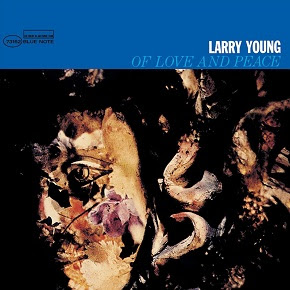
Larry Young • Of Love And Peace


Review
by Scott Yanow
By 1966, Larry Young was playing music that fell between advanced hard bop/soul-jazz and the avant-garde. For this stimulating Blue Note date, the organist meets up with trumpeter Eddie Gale (who was playing with Cecil Taylor during this era), altoist/flutist James Spaulding, and three obscure but fine sidemen: tenor saxophonist Herbert Morgan and both Wilson Moorman III and Jerry Thomas on drums. Two of the selections ("Of Love and Peace" and "Falaq") are essentially free improvisations that have a momentum and purpose of their own, moving forward coherently. In addition, Young and his group perform adventurous versions of "Pavanne" and "Seven Steps to Heaven." Very stimulating and intriguing music, this was one of Larry Young's best recordings.
https://www.allmusic.com/album/of-love-and-peace-mw0000643626


 Biography:
 Larry Young, also known as Khalid Yasin, offered as radical an approach to organ in the '60s as Jimmy Smith had posed in the '50s. His free, swirling chords, surging lines, and rock-influenced improvisations were an alternative to the groove-centered, blues and soul jazz sound that had become the organ's dominant direction. He brought John Coltrane's late-'60s approach to the organ, generating waves of sound and greatly influencing any session he participated in during the '60s and '70s.
Born in Newark, New Jersey in 1940, Young studied piano rather than organ, though he later began playing organ in R&B bands in the '50s. He recorded in 1960 with Jimmy Forrest, and then did his first session for Blue Note as a leader. He played with and recorded with Grant Green in a hard bop vein in the mid-'60s, though he was beginning his experiments at that point. Young worked with Joe Henderson, Lee Morgan, Donald Byrd, and Tommy Turrentine and toured Europe in 1964. When Young went to Blue Note later that year, he was well on his way to becoming a major innovator. Coltrane's post-bop influence asserted itself more and more in Young's playing and composing, and his work grew much more cerebral and exploratory. His 1965 album Into Somethin' alerted everyone that he was heading a different way, and Unity, recorded the same year, remains his best-known album. He played with Coltrane, recorded with Woody Shaw and Elvin Jones, then joined Miles Davis' band in 1969. Young worked with John McLaughlin in 1970 and was in Tony Williams' Lifetime with McLaughlin and Jack Bruce among others in the early '70s. He only made a couple of other records, for Perception and Arista, both of them uneven but with some intriguing moments. (Neither label had the vaguest idea what Young was trying to do, nor how they could sell it.) Sadly, he died in 1978 at 38. He'd only made a handful of recordings, and his labels never knew what to make of his music. Mosaic issued a superb boxed set of Young's Blue Note recordings, The Complete Blue Note Recordings of Larry Young. A very early session, Testifying, on New Jazz, was reissued by Fantasy in a limited edition in 1992. Blue Note has also released an anthology package, The Art of Larry Young, available as well.

///////


Reseña
por Scott Yanow
En 1966, Larry Young tocaba una música que se situaba entre el hard bop/soul-jazz avanzado y la vanguardia. Para esta estimulante cita con Blue Note, el organista se reúne con el trompetista Eddie Gale (que tocaba con Cecil Taylor durante esta época), el contralto/flautista James Spaulding, y tres secundarios oscuros pero excelentes: el saxofonista tenor Herbert Morgan y Wilson Moorman III y Jerry Thomas a la batería. Dos de las selecciones ("Of Love and Peace" y "Falaq") son esencialmente improvisaciones libres que tienen un impulso y un propósito propios, avanzando coherentemente. Además, Young y su grupo interpretan versiones aventureras de "Pavanne" y "Seven Steps to Heaven". Música muy estimulante e intrigante, ésta es una de las mejores grabaciones de Larry Young.
https://www.allmusic.com/album/of-love-and-peace-mw0000643626


Biografía:
Larry Young, también conocido como Khalid Yasin, ofreció un enfoque tan radical del órgano en los años 60 como Jimmy Smith había posado en los 50. Sus acordes libres y arremolinados, sus líneas de surgimiento y sus improvisaciones influenciadas por el rock eran una alternativa al sonido centrado en el groove, el blues y el soul jazz que se había convertido en la dirección dominante del órgano. Trajo el enfoque de John Coltrane de finales de los 60 al órgano, generando ondas de sonido e influenciando enormemente cualquier sesión en la que participó durante los 60 y 70.
Nacido en Newark, Nueva Jersey en 1940, Young estudió piano en lugar de órgano, aunque más tarde comenzó a tocar el órgano en bandas de R&B en los años 50. Grabó en 1960 con Jimmy Forrest, y luego hizo su primera sesión para Blue Note como líder. A mediados de los 60 tocó y grabó con Grant Green en una vena de hard bop, aunque en ese momento comenzaba sus experimentos. Young trabajó con Joe Henderson, Lee Morgan, Donald Byrd y Tommy Turrentine y realizó una gira por Europa en 1964. Cuando Young fue a Blue Note más tarde ese año, estaba bien encaminado para convertirse en un gran innovador. La influencia post-bop de Coltrane se impuso cada vez más en la forma de tocar y componer de Young, y su obra se volvió mucho más cerebral y exploratoria. Su álbum Into Somethin' de 1965 alertó a todo el mundo de que iba por un camino diferente, y Unity, grabado ese mismo año, sigue siendo su álbum más conocido. Tocó con Coltrane, grabó con Woody Shaw y Elvin Jones, y luego se unió a la banda de Miles Davis en 1969. Young trabajó con John McLaughlin en 1970 y estuvo en el Lifetime de Tony Williams con McLaughlin y Jack Bruce entre otros a principios de los 70. Sólo hizo un par de discos más, para Perception y Arista, ambos desiguales pero con algunos momentos intrigantes. (Ninguno de los dos sellos tenía la más vaga idea de lo que Young estaba tratando de hacer, ni de cómo podían venderlo). Lamentablemente, murió en 1978 a los 38 años. Sólo había hecho un puñado de grabaciones, y sus sellos nunca supieron qué hacer con su música. Mosaic publicó un magnífico conjunto de grabaciones de Young's Blue Note, The Complete Blue Note Recordings of Larry Young. Una sesión muy temprana, Testificando, sobre el Nuevo Jazz, fue reeditada por Fantasy en una edición limitada en 1992. Blue Note también ha publicado un paquete de antología, The Art of Larry Young, disponible también.


Thursday, July 3, 2025

Grant Green • I Want To Hold Your Hand


Review by Steve Huey
The third of three sessions Grant Green co-led with modal organist Larry Young and Coltrane drummer Elvin Jones, I Want to Hold Your Hand continues in the soft, easy style of its predecessor, Street of Dreams. This time, however -- as one might guess from the title and cover photo -- the flavor is less reflective and more romantic and outwardly engaging. Part of the reason is tenor saxophonist Hank Mobley, who takes Bobby Hutcherson's place accompanying the core trio. His breathy, sensuous warmth keeps the album simmering at a low boil, and some of the repertoire helps as well, mixing romantic ballad standards (often associated with vocalists) and gently undulating bossa novas. The title track -- yes, the Beatles tune -- is one of the latter, cleverly adapted and arranged into perfectly viable jazz that suits Green's elegant touch with pop standards; the other bossa nova, Jobim's "Corcovado," is given a wonderfully caressing treatment. Even with all the straightforward pop overtones of much of the material, the quartet's playing is still very subtly advanced, both in its rhythmic interaction and the soloists' harmonic choices. Whether augmented by an extra voice or sticking to the basic trio format, the Green/Young/Jones team produced some of the most sophisticated organ/guitar combo music ever waxed, and I Want to Hold Your Hand is the loveliest of the bunch.

///////

Reseña de Steve Huey
La tercera de las tres sesiones de Grant Green, co-liderada por el organista Larry Young y el baterista de Coltrane Elvin Jones, I Want to Hold Your Hand continúa en el estilo suave y fácil de su predecesor, Street of Dreams. Esta vez, sin embargo, como se puede adivinar por el título y la foto de la portada, el sabor es menos reflexivo y más romántico y atractivo desde el punto de vista externo. Parte de la razón es el saxofonista tenor Hank Mobley, que ocupa el lugar de Bobby Hutcherson acompañando al trío principal. Su calidez sensual y respiratoria mantiene el álbum a fuego lento, y parte del repertorio también ayuda, mezclando estándares románticos de baladas (a menudo asociados con vocalistas) y bossa novas suavemente ondulantes. El tema que da título a la canción -sí, la melodía de los Beatles- es uno de estos últimos, hábilmente adaptado y arreglado en un jazz perfectamente viable que se adapta al toque elegante de Green con los estándares del pop; al otro bossa nova, "Corcovado" de Jobim, se le da un tratamiento maravillosamente acariciante. A pesar de todos los claros matices pop de gran parte del material, la interpretación del cuarteto sigue siendo muy sutilmente avanzada, tanto en su interacción rítmica como en las opciones armónicas de los solistas. Ya sea con una voz extra o con el formato de trío básico, el equipo de Green/Young/Jones produjo algunos de los más sofisticados combo de órgano/guitarra jamás encerados, y I Want to Hold Your Hand es el más encantador del grupo.


Friday, April 11, 2025

Larry Young • Groove Street


Larry Young's third and final Prestige recording concludes his early period; he would next record as a leader two and a half years later on Blue Note, by which time his style would be much more original. For his 1962 outing, Young is joined by the obscure tenor Bill Leslie, guitarist Thornel Schwartz and drummer Jimmie Smith for some original blues and two standards ("I Found a New Baby" and "Sweet Lorraine"). Nothing all that substantial occurs, but fans of Jimmy Smith will enjoy the similar style that Larry Young had at the time.

///////

La tercera y última grabación de Prestige de Larry Young concluye su período inicial; A continuación, grabaría como líder dos años y medio después en Blue Note, momento en el que su estilo sería mucho más original. Para su presentación en 1962, Young se une al tenor oscuro Bill Leslie, al guitarrista Thornel Schwartz y al baterista Jimmie Smith para algunos blues originales y dos estándares ("I Found a New Baby" y "Sweet Lorraine"). Nada tan sustancial ocurre, pero los fanáticos de Jimmy Smith disfrutarán del estilo similar que Larry Young tenía en ese momento.


Monday, March 24, 2025

Larry Young • Heaven On Earth


Heaven On Earth is actually Young's last official release for Blue Note at the time, and it's a return to more straight-ahead, nicely soulful jazz organ playing after his freer set from the year before. Despite that fact, though, the set's got its darker moments, especially since Byard Lancaster's on alto and Herbert Morgan (who we only know from the Young Blue Note sessions) is on tenor, with George Benson on guitar and Edward Gladden on the kit. Nice modal organ tracks, with a good groove, and excellent solos -- a nice cap to the 60s era for Larry Young! Young's wife sings on a version of "My Funny Valentine", and other tracks include "The Infant", "Call Me", "The Cradle", and "The Hereafter".


Biography:
 Larry Young, also known as Khalid Yasin, offered as radical an approach to organ in the '60s as Jimmy Smith had posed in the '50s. His free, swirling chords, surging lines, and rock-influenced improvisations were an alternative to the groove-centered, blues and soul jazz sound that had become the organ's dominant direction. He brought John Coltrane's late-'60s approach to the organ, generating waves of sound and greatly influencing any session he participated in during the '60s and '70s.

Born in Newark, New Jersey in 1940, Young studied piano rather than organ, though he later began playing organ in R&B bands in the '50s. He recorded in 1960 with Jimmy Forrest, and then did his first session for Blue Note as a leader. He played with and recorded with Grant Green in a hard bop vein in the mid-'60s, though he was beginning his experiments at that point. Young worked with Joe Henderson, Lee Morgan, Donald Byrd, and Tommy Turrentine and toured Europe in 1964. When Young went to Blue Note later that year, he was well on his way to becoming a major innovator. Coltrane's post-bop influence asserted itself more and more in Young's playing and composing, and his work grew much more cerebral and exploratory. His 1965 album Into Somethin' alerted everyone that he was heading a different way, and Unity, recorded the same year, remains his best-known album. He played with Coltrane, recorded with Woody Shaw and Elvin Jones, then joined Miles Davis' band in 1969. Young worked with John McLaughlin in 1970 and was in Tony Williams' Lifetime with McLaughlin and Jack Bruce among others in the early '70s. He only made a couple of other records, for Perception and Arista, both of them uneven but with some intriguing moments. (Neither label had the vaguest idea what Young was trying to do, nor how they could sell it.) Sadly, he died in 1978 at 38. He'd only made a handful of recordings, and his labels never knew what to make of his music. Mosaic issued a superb boxed set of Young's Blue Note recordings, The Complete Blue Note Recordings of Larry Young. A very early session, Testifying, on New Jazz, was reissued by Fantasy in a limited edition in 1992. Blue Note has also released an anthology package, The Art of Larry Young, available as well.

///////

Heaven On Earth es en realidad el último lanzamiento oficial de Young para Blue Note en ese momento, y es un regreso a un órgano de jazz más recto y lleno de sentimiento, después de su set más libre del año anterior. A pesar de ello, el set tiene sus momentos más oscuros, especialmente desde que Byard Lancaster está en alto y Herbert Morgan (a quien sólo conocemos por las sesiones de Young Blue Note) está en tenor, con George Benson en la guitarra y Edward Gladden en el kit. Bonitas pistas de órgano modales, con un buen groove, y excelentes solos -- ¡un buen tope para la era de los 60 para Larry Young! La esposa de Young canta en una versión de "My Funny Valentine", y otros temas incluyen "The Infant", "Call Me", "The Cradle", y "The Hereafter".


Biografía:
 Larry Young, también conocido como Khalid Yasin, ofreció un enfoque tan radical del órgano en los años 60 como Jimmy Smith había posado en los 50. Sus acordes libres y arremolinados, sus líneas de surgimiento y sus improvisaciones influenciadas por el rock eran una alternativa al sonido centrado en el groove, el blues y el soul jazz que se había convertido en la dirección dominante del órgano. Trajo el enfoque de John Coltrane de finales de los 60 al órgano, generando ondas de sonido e influenciando enormemente cualquier sesión en la que participó durante los 60 y 70.

Nacido en Newark, Nueva Jersey en 1940, Young estudió piano en lugar de órgano, aunque más tarde comenzó a tocar el órgano en bandas de R&B en los años 50. Grabó en 1960 con Jimmy Forrest, y luego hizo su primera sesión para Blue Note como líder. A mediados de los 60 tocó y grabó con Grant Green en una vena de hard bop, aunque en ese momento comenzaba sus experimentos. Young trabajó con Joe Henderson, Lee Morgan, Donald Byrd y Tommy Turrentine y realizó una gira por Europa en 1964. Cuando Young fue a Blue Note más tarde ese año, estaba bien encaminado para convertirse en un gran innovador. La influencia post-bop de Coltrane se impuso cada vez más en la forma de tocar y componer de Young, y su obra se volvió mucho más cerebral y exploratoria. Su álbum Into Somethin' de 1965 alertó a todo el mundo de que iba por un camino diferente, y Unity, grabado ese mismo año, sigue siendo su álbum más conocido. Tocó con Coltrane, grabó con Woody Shaw y Elvin Jones, y luego se unió a la banda de Miles Davis en 1969. Young trabajó con John McLaughlin en 1970 y estuvo en el Lifetime de Tony Williams con McLaughlin y Jack Bruce entre otros a principios de los 70. Sólo hizo un par de discos más, para Perception y Arista, ambos desiguales pero con algunos momentos intrigantes. (Ninguno de los dos sellos tenía la más vaga idea de lo que Young estaba tratando de hacer, ni de cómo podían venderlo). Lamentablemente, murió en 1978 a los 38 años. Sólo había hecho un puñado de grabaciones, y sus sellos nunca supieron qué hacer con su música. Mosaic publicó un magnífico conjunto de grabaciones de Young's Blue Note, The Complete Blue Note Recordings of Larry Young. Una sesión muy temprana, Testificando, sobre el Nuevo Jazz, fue reeditada por Fantasy en una edición limitada en 1992. Blue Note también ha publicado un paquete de antología, The Art of Larry Young, disponible también.


Friday, March 14, 2025

VA • Night Sounds - The Genesis Of Soul-Jazz Organ Combos [1956-1962]


Editorial Reviews
The most detailed CD exploration yet into the early 1960s rise of Jazz organists featuring the greatest exponents of the genre: Jimmy Smith, Jimmy McGriff, Brother Jack McDuff, Booker T and many others. Includes the defining hits like "Walk On The Wild Side", "I Got A Woman" and of course "Green Onion". One of the greatest things about this most popular sub-genre of jazz is how fresh most of the records still sound over fifty years after they were recorded. Many of these songs were covered by British bands during the blues boom and the genre was an important element in the emerging Mod movement.

///////

Reseñas editoriales
La exploración más detallada de CD hasta ahora en el auge a principios de los años 60 de los organistas de Jazz con los más grandes exponentes del género: Jimmy Smith, Jimmy McGriff, el hermano Jack McDuff, Booker T y muchos otros. Incluye los éxitos definitorios como "Walk On The Wild Side", "I Got A Woman" y, por supuesto, "Green Onion". Una de las mejores cosas de este subgénero más popular del jazz es la frescura con la que la mayoría de los discos todavía suenan más de cincuenta años después de haber sido grabados. Muchas de estas canciones fueron interpretadas por bandas británicas durante el boom del blues y el género fue un elemento importante en el emergente movimiento Mod.


Jimmy Smith, Bill Doggett, Hank Marr, Larry Young, Brother Jack McDuff, Richard ''Groove'' Holmes, Shirley Scott,  Lou Donaldson, Baby Face Willette, Booker T. & The MG's ...


Thursday, February 27, 2025

Larry Young • Some Thorny Blues


Biography:
 Larry Young, also known as Khalid Yasin, offered as radical an approach to organ in the '60s as Jimmy Smith had posed in the '50s. His free, swirling chords, surging lines, and rock-influenced improvisations were an alternative to the groove-centered, blues and soul jazz sound that had become the organ's dominant direction. He brought John Coltrane's late-'60s approach to the organ, generating waves of sound and greatly influencing any session he participated in during the '60s and '70s.
Born in Newark, New Jersey in 1940, Young studied piano rather than organ, though he later began playing organ in R&B bands in the '50s. He recorded in 1960 with Jimmy Forrest, and then did his first session for Blue Note as a leader. He played with and recorded with Grant Green in a hard bop vein in the mid-'60s, though he was beginning his experiments at that point. Young worked with Joe Henderson, Lee Morgan, Donald Byrd, and Tommy Turrentine and toured Europe in 1964. When Young went to Blue Note later that year, he was well on his way to becoming a major innovator. Coltrane's post-bop influence asserted itself more and more in Young's playing and composing, and his work grew much more cerebral and exploratory. His 1965 album Into Somethin' alerted everyone that he was heading a different way, and Unity, recorded the same year, remains his best-known album. He played with Coltrane, recorded with Woody Shaw and Elvin Jones, then joined Miles Davis' band in 1969. Young worked with John McLaughlin in 1970 and was in Tony Williams' Lifetime with McLaughlin and Jack Bruce among others in the early '70s. He only made a couple of other records, for Perception and Arista, both of them uneven but with some intriguing moments. (Neither label had the vaguest idea what Young was trying to do, nor how they could sell it.) Sadly, he died in 1978 at 38. He'd only made a handful of recordings, and his labels never knew what to make of his music. Mosaic issued a superb boxed set of Young's Blue Note recordings, The Complete Blue Note Recordings of Larry Young. A very early session, Testifying, on New Jazz, was reissued by Fantasy in a limited edition in 1992. Blue Note has also released an anthology package, The Art of Larry Young, available as well.

///////

Biografía:
 Larry Young, también conocido como Khalid Yasin, ofreció un enfoque tan radical del órgano en los años 60 como Jimmy Smith había posado en los 50. Sus acordes libres y arremolinados, sus líneas de surgimiento y sus improvisaciones influenciadas por el rock eran una alternativa al sonido centrado en el groove, el blues y el soul jazz que se había convertido en la dirección dominante del órgano. Trajo el enfoque de John Coltrane de finales de los 60 al órgano, generando ondas de sonido e influenciando enormemente cualquier sesión en la que participó durante los 60 y 70.
Nacido en Newark, Nueva Jersey en 1940, Young estudió piano en lugar de órgano, aunque más tarde comenzó a tocar el órgano en bandas de R&B en los años 50. Grabó en 1960 con Jimmy Forrest, y luego hizo su primera sesión para Blue Note como líder. A mediados de los 60 tocó y grabó con Grant Green en una vena de hard bop, aunque en ese momento comenzaba sus experimentos. Young trabajó con Joe Henderson, Lee Morgan, Donald Byrd y Tommy Turrentine y realizó una gira por Europa en 1964. Cuando Young fue a Blue Note más tarde ese año, estaba bien encaminado para convertirse en un gran innovador. La influencia post-bop de Coltrane se impuso cada vez más en la forma de tocar y componer de Young, y su obra se volvió mucho más cerebral y exploratoria. Su álbum Into Somethin' de 1965 alertó a todo el mundo de que iba por un camino diferente, y Unity, grabado ese mismo año, sigue siendo su álbum más conocido. Tocó con Coltrane, grabó con Woody Shaw y Elvin Jones, y luego se unió a la banda de Miles Davis en 1969. Young trabajó con John McLaughlin en 1970 y estuvo en el Lifetime de Tony Williams con McLaughlin y Jack Bruce entre otros a principios de los 70. Sólo hizo un par de discos más, para Perception y Arista, ambos desiguales pero con algunos momentos intrigantes. (Ninguno de los dos sellos tenía la más vaga idea de lo que Young estaba tratando de hacer, ni de cómo podían venderlo). Lamentablemente, murió en 1978 a los 38 años. Sólo había hecho un puñado de grabaciones, y sus sellos nunca supieron qué hacer con su música. Mosaic publicó un magnífico conjunto de grabaciones de Young's Blue Note, The Complete Blue Note Recordings of Larry Young. Una sesión muy temprana, Testificando, sobre el Nuevo Jazz, fue reeditada por Fantasy en una edición limitada en 1992. Blue Note también ha publicado un paquete de antología, The Art of Larry Young, disponible también.


Saturday, February 22, 2025

Woody Shaw • Dark Journey


Review
by Scott Yanow  
Woody Shaw was one of the greatest jazz trumpeters of all time and all of his music deserves to be reissued and studied. This two-CD set is merely a sampling of his works, and despite some excellent liner notes from Michael Cuscuna, the programming is a bit odd. The second disc has the earliest recordings including two items ("Nutville" and "The Moontrane") that were leased and originally part of sessions led by pianist Horace Silver and organist Larry Young. In addition, there are four selections from the 1965 recording Cassandranite (which, like the rest of the material, was originally issued by Muse) and two numbers from 1974. The first disc has "Jitterbug Waltz" from the 1977 recording The Iron Men, and draws its six other selections (dating from 1983-87) from the Setting Standards, Imagination and Solid albums. The music is quite rewarding and the sidemen include Anthony Braxton on clarinet (for "Jitterbug Waltz"); pianists Cedar Walton, Kenny Barron and Herbie Hancock; trombonist Steve Turre; altoist Kenny Garrett; and tenor saxophonist Joe Henderson, among many others. But true Woody Shaw fans will prefer to get the original sessions in full, and fortunately 32 Jazz has also been gradually reissuing all of their Shaw Muse albums.
https://www.allmusic.com/album/dark-journey-mw0000232458

///////


Reseña
por Scott Yanow  
Woody Shaw fue uno de los mejores trompetistas de jazz de todos los tiempos y toda su música merece ser reeditada y estudiada. Este conjunto de dos CD es simplemente una muestra de sus obras, y a pesar de algunas excelentes notas de Michael Cuscuna, la programación es un poco extraña. El segundo disco contiene las primeras grabaciones, incluidos dos temas ("Nutville" y "The Moontrane") que fueron alquilados y que originalmente formaban parte de sesiones dirigidas por el pianista Horace Silver y el organista Larry Young. Además, hay cuatro selecciones de la grabación de 1965 Cassandranite (que, como el resto del material, fue publicado originalmente por Muse) y dos números de 1974. El primer disco contiene "Jitterbug Waltz" de la grabación de 1977 The Iron Men, y extrae sus otras seis selecciones (que datan de 1983-87) de los álbumes Setting Standards, Imagination y Solid. La música es muy gratificante y entre los acompañantes figuran Anthony Braxton al clarinete (para "Jitterbug Waltz"); los pianistas Cedar Walton, Kenny Barron y Herbie Hancock; el trombonista Steve Turre; el contralto Kenny Garrett; y el saxofonista tenor Joe Henderson, entre muchos otros. Pero los verdaderos fans de Woody Shaw preferirán conseguir las sesiones originales al completo y, afortunadamente, 32 Jazz también ha ido reeditando poco a poco todos sus discos Shaw Muse.
https://www.allmusic.com/album/dark-journey-mw0000232458


woodyshaw.com ...

Saturday, February 15, 2025

Woody Shaw • Cassandranite


Review
by Scott Yanow
Originally titled In The Beginning, the music on this set was not released for the first time until 1983 (titled In The Beginning) and has since been reissued under the Cassandranite title on CD. Trumpeter Woody Shaw's debut as a leader (cut five years before his second session) has its strong moments. Shaw was not yet as distinctive as he would become, but on the set of group originals (best known is Joe Henderson's "Tetragon"), Shaw keeps up with his illustrious sidemen which include tenorman Henderson, either Larry Young or Herbie Hancock on piano (this was one of organist Young's very few sessions on that instrument), either Ron Carter or Paul Chambers on bass and drummer Joe Chambers. Excellent advanced hard bop music and particularly interesting from a historical standpoint.
https://www.allmusic.com/album/cassandranite-mw0000206523

///////


Reseña
por Scott Yanow
Originalmente titulado In The Beginning, la música de este conjunto no se publicó por primera vez hasta 1983 (bajo el título In The Beginning) y desde entonces se ha reeditado en CD bajo el título Cassandranite. El debut del trompetista Woody Shaw como líder (grabado cinco años antes de su segunda sesión) tiene sus momentos fuertes. Shaw todavía no era tan distintivo como llegaría a ser, pero en el conjunto de originales del grupo (el más conocido es "Tetragon" de Joe Henderson), Shaw se mantiene a la altura de sus ilustres acompañantes que incluyen al tenor Henderson, Larry Young o Herbie Hancock al piano (esta fue una de las pocas sesiones del organista Young con ese instrumento), Ron Carter o Paul Chambers al bajo y el batería Joe Chambers. Excelente música hard bop avanzada y particularmente interesante desde un punto de vista histórico.
https://www.allmusic.com/album/cassandranite-mw0000206523


woodyshaw.com ...

Sunday, February 2, 2025

Tony Williams Lifetime • Emergency


Review
by Leo Stanley
Tony Williams' Emergency was one of the first and most influential albums in late-'60s fusion, a double-LP set that shattered the boundaries between jazz and rock. Working with guitarist John McLaughlin and organist Larry Young, Williams pushed into new territory, creating dense, adventurous, unpredictable soundscapes. With Emergency, Tony Williams helped create the foundation of the style and sound of fusion. It's a seminal release.
https://www.allmusic.com/album/emergency%21-mw0000473149

///////

Reseña
por Leo Stanley
Emergency de Tony Williams fue uno de los primeros y más influyentes álbumes de fusión de finales de los 60, un doble LP que rompió las fronteras entre el jazz y el rock. Trabajando con el guitarrista John McLaughlin y el organista Larry Young, Williams se adentró en nuevos territorios, creando paisajes sonoros densos, aventureros e impredecibles. Con Emergency, Tony Williams ayudó a crear los cimientos del estilo y el sonido de la fusión. Es un lanzamiento seminal.
https://www.allmusic.com/album/emergency%21-mw0000473149


Sunday, January 19, 2025

Larry Young • Larry Young In Parisː The ORTF Recordings


From the National Audiovisual Institute (INA) in France, which houses the Office of Radio and Television (ORTF) archives, comes IN PARIS: THE ORTF RECORDINGS, featuring never-before-released live & studio material from 1964-1965 by the iconic jazz organist LARRY YOUNG.

This project came about in 2012 when producer Zev Feldman traveled to France to investigate what was in the ORTF archives and discovered several recordings of the great Larry Young that had been sitting in their vault for nearly 50 years, since the mid '60's. IN PARIS tells the story, through words and music, of Larry Young as an American jazz artist living in Paris. Featured artists include Woody Shaw on trumpet, Nathan Davis on saxophone, Billy Brooks on drums & numerous French artists such as pianist Jack Dieval, saxophonist Jean-Claude Fohrenback and drummer Franco Manzecchi.

First release of all previously unreleased Larry Young recordings in nearly 40 years and endorsed by the estate of Larry Young.
Extensive liner notes with essays and interviews by John McLaughlin, Dr. Lonnie Smith, John Medeski, Bill Laswell, Nathan Davis, Andre Francis, producer Zev Feldman, Larry Young III & Woody Shaw III.
Includes rare and previously unreleasedphotos from Francis Wolff, Jean-Pierre Leloir & INA archives.
Tracks include an over 20 min version of 'Zoltan,' 'Beyond All Limits' from the classic UNITY album, as well as other mid '60 songs including 'Talkin About J.C.' and 'Luny Tune.'  

///////


Del Instituto Nacional del Audiovisual (INA) de Francia, que alberga los archivos de la Oficina de Radio y Televisión (ORTF), llega IN PARIS: THE ORTF RECORDINGS, con material inédito en directo y en estudio de 1964-1965 del emblemático organista de jazz LARRY YOUNG.

Este proyecto surgió en 2012 cuando el productor Zev Feldman viajó a Francia para investigar qué había en los archivos de la ORTF y descubrió varias grabaciones del gran Larry Young que llevaban casi 50 años en su cámara acorazada, desde mediados de los 60. IN PARIS cuenta la historia, a través de las palabras y la música, de Larry Young como artista de jazz estadounidense residente en París. Entre los artistas figuran Woody Shaw a la trompeta, Nathan Davis al saxofón, Billy Brooks a la batería y numerosos artistas franceses como el pianista Jack Dieval, el saxofonista Jean-Claude Fohrenback y el batería Franco Manzecchi.

Primera edición de todas las grabaciones inéditas de Larry Young en casi 40 años y avalada por la herencia de Larry Young.
Extensas notas con ensayos y entrevistas de John McLaughlin, Dr. Lonnie Smith, John Medeski, Bill Laswell, Nathan Davis, Andre Francis, el productor Zev Feldman, Larry Young III y Woody Shaw III.
Incluye fotos raras e inéditas de los archivos de Francis Wolff, Jean-Pierre Leloir y el INA.
Los temas incluyen una versión de más de 20 minutos de «Zoltan», «Beyond All Limits» del clásico álbum UNITY, así como otras canciones de mediados de los 60, como «Talkin About J.C.» y «Luny Tune».  


resonancerecords.org ...


Tuesday, December 17, 2024

Woody Shaw • In The Beginning


Review
by Ron Wynn
Some interesting, uneven, but worthwhile '65 material from trumpeter Woody Shaw. He was still fresh on the jazz scene and had only recently recovered from the death of mentor Eric Dolphy. Shaw teamed with tenor saxophonist Joe Henderson, pianist Herbie Hancock, and bassists Ron Carter or Paul Chambers on these cuts. His potential certainly emerges, as does the fact he was a tentative, unsure soloist at this juncture.
https://www.allmusic.com/album/in-the-beginning-mw0000897192

///////


Reseña
por Ron Wynn
Un material interesante, desigual, pero que vale la pena del trompetista Woody Shaw en el '65. Todavía estaba fresco en la escena del jazz y se había recuperado recientemente de la muerte de su mentor Eric Dolphy. Shaw formó equipo con el saxofonista tenor Joe Henderson, el pianista Herbie Hancock y los bajistas Ron Carter o Paul Chambers en estos cortes. Sin duda, su potencial sale a relucir, al igual que el hecho de que era un solista vacilante e inseguro en esta coyuntura.
https://www.allmusic.com/album/in-the-beginning-mw0000897192


woodyshaw.com ...

Thursday, September 12, 2024

VA • Kickin' The 3 The Best Of Organ Trio Jazz


The 13 performances on this 1997 CD sampler features a variety of the top jazz organists of the previous 40 years on selections (all easily available elsewhere) leased from Telarc, Fantasy, Sony, Polygram, Blue Note and Minor Music. However, although the music is reasonably enjoyable, the poor documentation (no personnel listing or dates) is inexcusable. If one wonders who a particular guitar or saxophone soloist might be, they can keep on wondering or do their own research. Obviously, this release is primarily for the casual listener who simply desires some grooving background music. Heard from are Jimmy McGriff (teaming up with altoist Hank Crawford), Charles Earland, Joey DeFrancesco, Jimmy Smith, Lonnie Smith, Larry Goldings, Richard "Groove" Holmes (his hit version of "Misty"), Johnny "Hammond" Smith, Brother Jack McDuff, Medeski, Martin & Wood, Larry Young, Don Patterson and Will Bouleware. ~Review by Scott Yanow

///////

Las 13 actuaciones de este CD de 1997 presentan una variedad de los mejores organistas de jazz de los últimos 40 años en selecciones (todas fácilmente disponibles en otros lugares) arrendadas a Telarc, Fantasy, Sony, Polygram, Blue Note y Minor Music. Sin embargo, aunque la música es razonablemente agradable, la escasa documentación (sin lista de personal ni fechas) es inexcusable. Si uno se pregunta quién puede ser un solista de guitarra o saxofón en particular, puede seguir preguntándose o hacer su propia investigación. Obviamente, este lanzamiento es principalmente para el oyente ocasional que simplemente desea algo de música de fondo. Se ha escuchado a Jimmy McGriff (en equipo con el altoista Hank Crawford), Charles Earland, Joey DeFrancesco, Jimmy Smith, Lonnie Smith, Larry Goldings, Richard "Groove" Holmes (su versión de éxito de "Misty"), Johnny "Hammond" Smith, Brother Jack McDuff, Medeski, Martin & Wood, Larry Young, Don Patterson y Will Bouleware. ~Revisión por Scott Yanow