Showing posts with label Harold Vick. Show all posts

Sunday, May 17, 2026

Harold Vick • Straight Up


Review by Jason Ankeny
The superb Straight Up captures Harold Vick's shift away from the lithe tenor/organ sessions of his previous work toward the bold soul-jazz of his finest recordings. Supported by an unusual but effective lineup featuring guitarist Everett Barksdale, vibist Warren Chiasson, bassist Walter Booker, and drummer Hugh Walker, Vick alternates between tenor, soprano, and flute, greatly expanding the parameters of his sound while maintaining the simplicity that is his hallmark. Above all, he remains a remarkably expressive player, communicating more in one or two notes than most reedists say over the span of an entire song.
https://www.allmusic.com/album/straight-up-mw0000669985

///////


Reseña de Jason Ankeny
El magnífico Straight Up captura el cambio de Harold Vick de las ágiles sesiones de tenor / órgano de su trabajo anterior hacia el atrevido soul-jazz de sus mejores grabaciones. Apoyado por una formación inusual pero efectiva con el guitarrista Everett Barksdale, el vibista Warren Chiasson, el bajista Walter Booker y el baterista Hugh Walker, Vick alterna entre tenor, soprano y flauta, ampliando enormemente los parámetros de su sonido y manteniendo la simplicidad que es su sello distintivo. Por encima de todo, sigue siendo un intérprete notablemente expresivo, que se comunica más en una o dos notas de lo que la mayoría de los reedistas dicen en el lapso de una canción completa.
https://www.allmusic.com/album/straight-up-mw0000669985


Saturday, April 11, 2026

Shirley Scott • One For Me


The late shirley scott was one of the great soul-jazz organists, and as near as i can tell, the only woman among the bunch. She recorded her own stack of albums for blue note, impulse!, cadet and other labels, and mostly didn't get quite the recognition all the other organ burners did in that classic period before the electric piano and synthesizers took over the work of keyboard funk in jazz. She was married to the great stanley turrentine, and i have to say that some of the equally under recognized harold vick's work here sounds a bit turrentine-ish--but better! Anyway, this is her contribution to the always-amazing strata-east label.


Tuesday, February 17, 2026

Bernard Purdie • Soul Is... Pretty Purdie


Artist Biography by Ron Wynn
Soul Is...Pretty Purdie
An all-time great soul, R&B, funk, and pop drummer, Bernard Purdie's impeccable time and mastery of backbeats and grooves are celebrated. He moved to New York from Maryland in 1960, and recorded with James Brown, King Curtis, and many others. He was CTI's house drummer in the late '60s and early '70s, and worked with Grover Washington, Jr. and George Benson among several others. Purdie toured with Curtis and Aretha Franklin in 1970, and was Franklin's music director until 1975. During his studio days in the early '70s, Purdie recorded with Louis Armstrong and Gato Barbieri along with numerous rock, pop, and soul sessions. He recorded with Dizzy Gillespie in 1980 at the Montreux Jazz Festival and toured with him in 1983. Purdie recorded with Hank Crawford during the early '80s, and has continued working steadily into the '90s. He generated a firestorm of reaction in 1993 when he charged it was his uncredited drumming rather than Ringo Starr's on some Beatles tracks. Purdie claimed proof was forthcoming, but none was presented. He made a rare date as a leader for Flying Dutchman in 1972, Pretty Purdie, that has long since disappeared. But Purdie can be heard on countless discs by Brown, Franklin, Curtis, Gillespie, and Crawford among many others.
https://www.allmusic.com/artist/bernard-pretty-purdie-mn0000047401/biography

///////

Artist Biography by Ron Wynn
Soul Is...Pretty Purdie
An all-time great soul, R&B, funk, and pop drummer, Bernard Purdie's impeccable time and mastery of backbeats and grooves are celebrated. He moved to New York from Maryland in 1960, and recorded with James Brown, King Curtis, and many others. He was CTI's house drummer in the late '60s and early '70s, and worked with Grover Washington, Jr. and George Benson among several others. Purdie toured with Curtis and Aretha Franklin in 1970, and was Franklin's music director until 1975. During his studio days in the early '70s, Purdie recorded with Louis Armstrong and Gato Barbieri along with numerous rock, pop, and soul sessions. He recorded with Dizzy Gillespie in 1980 at the Montreux Jazz Festival and toured with him in 1983. Purdie recorded with Hank Crawford during the early '80s, and has continued working steadily into the '90s. He generated a firestorm of reaction in 1993 when he charged it was his uncredited drumming rather than Ringo Starr's on some Beatles tracks. Purdie claimed proof was forthcoming, but none was presented. He made a rare date as a leader for Flying Dutchman in 1972, Pretty Purdie, that has long since disappeared. But Purdie can be heard on countless discs by Brown, Franklin, Curtis, Gillespie, and Crawford among many others.
https://www.allmusic.com/artist/bernard-pretty-purdie-mn0000047401/biography


Saturday, August 2, 2025

Walter Bishop Jr. • Coral Keys


The keys are coral, and the sound is sublime – one of the greatest albums ever from pianist Walter Bishop Jr, and proof that he can really stretch out, given the right setting!

The piano here is all acoustic, but there's an almost-electric vibe to the date – long, open tracks that sway and swell with some great spiritual energy – made even more wonderful by work from reedman Harold Vick, who plays tenor, flute, and soprano sax on the record – and makes it one of his best recordings ever!

The reedwork alone is worth the price of admission – but the rhythms are also great too – a mix of soulful, modal, and some slight funky bits – handled by Reggie Johnson on bass, and either Idris Muhammad or Alan Benger on drums - Woody Shaw plays trumpet on some cuts, too.
https://www.jazzmessengers.com/it/92581/walter-bishop-jr/coral-keys

///////


Las teclas son de coral y el sonido es sublime: uno de los mejores álbumes del pianista Walter Bishop Jr - y la prueba de que realmente puede dar lo mejor de sí mismo cuando se le brinda el entorno adecuado.

El piano aquí es totalmente acústico, pero hay un ambiente casi eléctrico en la grabación: temas largos y abiertos que se balancean y crecen con una gran energía espiritual, que se vuelve aún más maravillosa gracias al trabajo del saxofonista Harold Vick, que toca el saxo tenor, la flauta y el saxo soprano en el disco, ¡y lo convierte en una de sus mejores grabaciones!

Solo por el trabajo de los instrumentos de viento ya vale la pena comprarlo, pero los ritmos también son geniales, una mezcla de soul, modal y algunos toques funky, a cargo de Reggie Johnson al bajo e Idris Muhammad o Alan Benger a la batería - Woody Shaw también toca la trompeta en algunos temas.
https://www.jazzmessengers.com/it/92581/walter-bishop-jr/coral-keys


Saturday, April 19, 2025

John Patton • Along Came John


Review:
by Stephen Thomas Erlewine
By the time John Patton recorded Along Came John, his debut as a leader, he had already become a familiar name around the Blue Note studios. He, guitarist Grant Green, and drummer Ben Dixon had become the label's regular soul-jazz rhythm section, playing on sessions by Lou Donaldson, Don Wilkerson, and Harold Vick, among others. They had developed an intuitive, empathetic interplay that elevated many of their sessions to near-greatness, at least in the realm of soul-jazz. That's one of the reasons why Along Came John is so successful -- the three know each other so well that their grooves are totally natural, which makes them quite appealing. These original compositions may not all be memorable, but the band's interaction, improvisation, and solos are. Tenor saxophonists Fred Jackson and Harold Vick provide good support, as well, but the show belongs to Patton, Green, and Dixon, who once again prove they are one of the finest soul-jazz combos of their era.

///////

Reseña:
por Stephen Thomas Erlewine
Por el equipo John Patton grabado Canto John, su debut en la líder, he he hecho ya un familiar name alrededor de los Blue Note studios. , Que se estrenará en el mes de mayo de este año, en la que participará en el Festival Internacional de Cine de Cannes. Han sido desarrollados un intuitivo, empathetic interplay que elevó muchos de sus sesiones a cerca de la grandeza, al menos en el reino del soul-jazz. Que es una de las razones por las que el Came Juan es tan exitoso - los tres saben cada uno de ellos tan bien que sus grooves son totalmente naturales, que las marcas ellos quita la aparición. Estos originales composiciones no pueden ser memorables, pero la banda de interacción, improvisación, y los suelos. , Que se ha convertido en una de las mejores películas de la saga de la saga Crepúsculo.


Tuesday, April 8, 2025

Jack Mc Duff featuring Kenny Burrell • Crash!


Review by Scott Yanow
Organist Jack McDuff has long had a powerful style and the two former LPs that are combined on this single CD offer some strong examples of his accessible playing. In both cases McDuff is joined by guitarist Kenny Burrell (in fact one of the two sets was originally under Burrell's name), drummer Joe Dukes and occasionally Ray Barretto on congas. In addition Harold Vick is on tenor for most selections and Eric Dixon guests on tenor and flute during three songs. Highlights include a driving "How High the Moon," "Love Walked In" and a pair of original blues: "Smut" and "Our Miss Brooks." McDuff and Burrell work together quite well. This 76-minute CD is easily recommended to fans of the jazz organ.
 
///////
 
Reseña de Scott Yanow
El organista Jack McDuff ha tenido durante mucho tiempo un estilo poderoso y los dos antiguos LPs que se combinan en este único CD ofrecen algunos fuertes ejemplos de su accesible forma de tocar. En ambos casos McDuff está acompañado por el guitarrista Kenny Burrell (de hecho uno de los dos sets estaba originalmente bajo el nombre de Burrell), el baterista Joe Dukes y ocasionalmente Ray Barretto en las congas. Además, Harold Vick está en el tenor para la mayoría de las selecciones y Eric Dixon está invitado en el tenor y la flauta durante tres canciones. Lo más destacado es "How High the Moon", "Love Walked In" y un par de blues originales: "Smut" y "Our Miss Brooks". McDuff y Burrell trabajan muy bien juntos. Este CD de 76 minutos es fácilmente recomendable para los aficionados al órgano de jazz.


Saturday, February 15, 2025

Woody Shaw • Cassandranite


Review
by Scott Yanow
Originally titled In The Beginning, the music on this set was not released for the first time until 1983 (titled In The Beginning) and has since been reissued under the Cassandranite title on CD. Trumpeter Woody Shaw's debut as a leader (cut five years before his second session) has its strong moments. Shaw was not yet as distinctive as he would become, but on the set of group originals (best known is Joe Henderson's "Tetragon"), Shaw keeps up with his illustrious sidemen which include tenorman Henderson, either Larry Young or Herbie Hancock on piano (this was one of organist Young's very few sessions on that instrument), either Ron Carter or Paul Chambers on bass and drummer Joe Chambers. Excellent advanced hard bop music and particularly interesting from a historical standpoint.
https://www.allmusic.com/album/cassandranite-mw0000206523

///////


Reseña
por Scott Yanow
Originalmente titulado In The Beginning, la música de este conjunto no se publicó por primera vez hasta 1983 (bajo el título In The Beginning) y desde entonces se ha reeditado en CD bajo el título Cassandranite. El debut del trompetista Woody Shaw como líder (grabado cinco años antes de su segunda sesión) tiene sus momentos fuertes. Shaw todavía no era tan distintivo como llegaría a ser, pero en el conjunto de originales del grupo (el más conocido es "Tetragon" de Joe Henderson), Shaw se mantiene a la altura de sus ilustres acompañantes que incluyen al tenor Henderson, Larry Young o Herbie Hancock al piano (esta fue una de las pocas sesiones del organista Young con ese instrumento), Ron Carter o Paul Chambers al bajo y el batería Joe Chambers. Excelente música hard bop avanzada y particularmente interesante desde un punto de vista histórico.
https://www.allmusic.com/album/cassandranite-mw0000206523


woodyshaw.com ...

Saturday, January 25, 2025

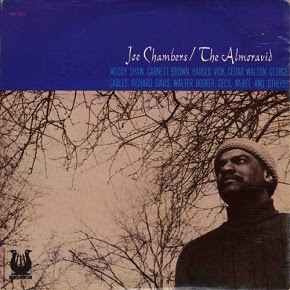
Joe Chambers • The Almoravid


Terrific session just released in 1974 on influential independent Muse. A modal masterpiece verging on spiritual jazz with a series of excellent players: from Richard Davis and Cecil McBee on bass to Ray Mantilla on congas and percussion, through Harold Vick distinctive flute and tenor sax. The major voice on this record belongs to the traps of Joe Chambers. The enormous potency combined with complete authority and tonal clarity that Chambers brings to the drums has made him one of the more distinctive percussive voices in jazz.
https://www.hhv.de/shop/en/item/joe-chambers-the-almoravid-932526


Biography
by Thom Jurek
A celebrated jazz drummer, Joe Chambers is also a composer and commanding multi-instrumentalist who plays vibraphone, marimba, and piano. Chambers was a Blue Note house drummer during the 1960s, playing on dozens of the decade's most progressive albums, including Bobby Hutcherson's first ten albums. Further, most of the records he played on included his tunes. He joined Max Roach's M'Boom and Charles Mingus in the early seventies. Chambers' acclaimed leader debut, The Almoravid, appeared in 1974. In 1978, he released Double Exposure in duo with organist Larry Young. He released the quintet outing Phantom of the City in 1992. Chambers made his Blue Note debut with 1998's Mirrors before moving over to Savant and releasing 2002's progressive jazz-funk outing Urban Grooves, The Outlaw in 2006, and 2012's Joe Chambers Moving Pictures Orchestra. He returned to Blue Note in 2021, leading a trio on Samba de Maracatu and leading a sextet on 2023's Dance Kobina.

Chambers was born in Stoneacre, Virginia but raised primarily in Chester, Pennsylvania. His earliest musical aspirations focused heavily on composing, even while learning to play drums. After high school, he studied composition at the Philadelphia Conservatory and American University in Washington, D.C. His earliest professional gigs were with R&B artist Bobby Lewis when he was 18. While in D.C., he started playing with the JFK Quintet, which also featured saxophonist Andrew White and bassist Walter Booker. There, he caught the attention of trumpeter Freddie Hubbard, who urged him to move to New York City.

Breaking Point!Chambers relocated in 1963 and earned work with Hugh Masekela, Eric Dolphy, Jimmy Giuffre, and Andrew Hill. In 1964, Hubbard hired him for Breaking Point, which was where Bobby Hutcherson and Wayne Shorter heard him. Chambers' kit technique showcased a light touch and driving approach that underscored excellent timekeeping and a superb command of dynamics. Unlike other drummers in the Blue Note stable, he wasn't flashy, but was an eager and generous collaborator. Chambers played on 1965's Dialogue, Hutcherson's leader debut, and contributed two compositions including the title track. That same year, he also appeared on Archie Shepp's legendary Fire Music for Impulse! The drummer worked with both men throughout the decade. Chambers composed the entire second side of Hutcherson's 1966 outing Contours and also played on now-classic albums including Joe Henderson's Mode for Joe and Wayne Shorter's All-Seeing Eye and Adam's Apple.

Between 1967 and 1969, Chambers played on seminal Blue Note outings that included Hutcherson's Happenings, Oblique, Medina, and Total Eclipse, Andrew Hill's Compulsion, Sam Rivers' Contours, McCoy Tyner's Tender Moments, and Donald Byrd's Fancy Free. He also played on Chick Corea's leader debut, Tones for Joan's Bones, for Vortex/Atlantic, several titles by Shepp, and took part in the rehearsal and recording sessions for Miles Davis' In a Silent Way. Interestingly, Chambers was offered his own leader date for the label but was so enthusiastic about the collaborative work he was doing that he turned it down.

In 1970, he played on Now, his final studio outing with Hutcherson, though they continued touring together for another year. He joined Max Roach's touring and recording percussion workshop ensemble M'Boom as an original member. Chambers also played on Weather Report bassist Miroslav Vitous' solo outing Infinite Search. The following year, he worked with WR keyboardist Joe Zawinul on his self-titled Columbia debut and returned to Vitous' group for Mountain in the Clouds. In fact, Chambers played with a great many of jazz's most prominent elder statesmen in the early 1970s, including Sonny Rollins and Charles Mingus.

In 1973, Chambers signed to Muse and issued his leader debut, The Almoravid, the following year. He penned four of the set's six tracks and hired an assortment of sidemen playing acoustic and electric instruments, including bassists Cecil McBee and Richard Davis, trumpeter Woody Shaw, conguero Ray Mantilla, and pianist Cedar Walton. The Almoravid won respectable reviews (and has since become a jazz classic) and allowed Chambers to tour outside the country with his own groups. He brought Mantilla back for 1976's octet outing New World. That same year, he worked with Zawinul again on Concerto Retitled. In 1978, he cut the historic duo offering Double Exposure with organist Larry Young. The end the decade saw Chambers quite busy working with M'Boom, Shepp, Mantilla, Lee Konitz, and others. In 1979, he released Chamber Music for the Japanese Baystate label. With pianist Tommy Flanagan and bassist Reggie Workman, Chambers formed the touring and recording group Super Jazz Trio and issued three albums for Baystate between 1978 and 1980. In 1979, he released his bracing solo piano debut, Punjab, for Denon Records.

In 1981, Chambers released the gorgeous New York Concerto, assisted by bassist Eddie Gomez, Mantilla, saxophonist Sonny Fortune, pianist Kenny Barron, and guitarist Yoshiaki Masuo. In February 1982, Chet Baker, Chambers, Buster Williams, and David Friedman recorded Peace, the trumpeter's last truly great outing. Over the next several years, Chambers recorded and toured with Steve Grossman, played in Ray Mantilla's Space Station for Hands of Fire, M'Boom on Collage, and with the Super Jazz Trio. In 1986, he played on Bill Lee's score for his son Spike Lee's debut feature film, She's Gotta Have It. Further, he joined David Murray's trio for The Hill.

Chambers began a lengthy career as an educator in 1990. First, he taught at the New School of Jazz and Contemporary Music in New York City. In 1992, he appeared on Roach's To the Max!, which showcased new tunes from M'Boom, his orchestra, and smaller ensembles. As an instructor as well as an artist, Chambers sought out new settings to experiment in. He played with flutist Jeremy Steig on Jigsaw, with saxophonist Rickey Woodard on The Tokyo Express, and with the Jazz Tribe, a collective composed of saxophonists Grossman and Bobby Watson, bassist Charles Fambrough, Mantilla, pianist Walter Bishop Jr., and trumpeter Jack Walrath. They released a lone, self-titled album for Italy's Red Records. Chambers returned to Blue Note to appear on Bob Belden's Puccini's Turandot, playing drums, vibes, marimba, and chimes. The other drummers in the large all-star ensemble included Paul Motian and Tony Williams. That same year, Chambers' drums were sampled on rapper Nas' global breakout hit "N.Y. State of Mind."

In 1995, Chambers issued Isla Verde for Japan's Paddle Wheel label, leading a trio with bassist Gomez and pianist Ronnie Matthews. In 1998, Chambers released Mirrors, his Blue Note leader debut, more than 30 years after the label's initial offer. Produced by Brian Bacchus, the set featured seven original compositions and two covers played by a quintet that included trumpeter Eddie Henderson, saxophonist Vincent Herring, bassist Ira Coleman, and pianist Mulgrew Miller. Mirrors made the jazz charts.

The 21st century began with Chambers moving to teach at the University of North Carolina, Wilmington. He continued to play and record. In 2002, he issued Urban Grooves for New York's tiny indie 441 Records. The set offered a funky, Afro-Latin futurist approach to jazz standards, played by a quintet that included saxophonist Gary Bartz, bassist Rufus Reid, drummer/percussionist Bobby Sanabria, and pianist/keyboardist Eric Reed.

In 2006, Chambers worked with Belden again on Three Days of Rain, a varied outing that featured tenorist Joe Lovano, guitarist Ronnie Jordan, and pianists Jason Moran and Marc Copland. Later that year, Chambers released Outlaw, his debut for Savant. The set was comprised of three original compositions, standards, and tunes by Duke Ellington, Kenny Dorham, Horace Silver, and Stanley Cowell. In addition to Chambers arranging an impeccably articulated session and playing no less than six instruments, the album was notable for hosting the second recorded appearance by saxophonist, composer, and future bandleader Logan Richardson. Also in 2008, Chambers was selected as the first Thomas S. Kenan Distinguished Professor of Jazz at University of North Carolina.

In 2010, Chambers paid tribute to Silver with the nine-track Horace to Max for Savant. He led a quintet executing a program of the pianist's compositions that featured bassist Dwayne Burno, saxophonist Eric Alexander, pianist Xavier Davis (Helen Sung guested on one track), and drummer/percussionist Steve Berrios. The set charted, and Chambers took his band on a tour of jazz festivals across the United States, Europe, and Japan. Two years later, he retired from teaching and released Joe Chambers Moving Pictures Orchestra. The set featured Chambers arranging for, playing in, and conducting a 17-piece big band performing an original, long-form, four-movement composition commissioned by Jazz at Lincoln Center; it was recorded live at Dizzy's Club Coca-Cola. In 2016, he returned to a more conventional setting on Landscapes, leading a trio with bassist Ira Coleman and pianist Rick Germanson.

Chambers returned to Blue Note to lead 2021's Samba de Maracatu. He played vibes, marimba, drums, and many Brazilian percussion instruments while leading a trio that included bassist Steve Haines and pianist/synthesist Brad Merritt. The nine-track set included original compositions, standards, and pieces by Shorter, Hutcherson, and Silver. It also included "New York State of Mind Rain," which joined Chambers and Larry Young's 1978 tune "Mind Rain" to Nas' "N.Y. State of Mind" that had famously sampled it. The rap on it was performed by MC Parrain. February 2023 saw the release of Dance Kobina for Blue Note. Recorded in New York and Montreal, its title track was composed by pianist and co-producer Andrés Vial. Chambers and also enlisted bassist Coleman, Congolese percussionist Elli Miller Maboungou, alto saxophonist Caoilainn Power, and vibraphonist Michael Davidson for the date.
https://www.allmusic.com/artist/joe-chambers-mn0000122897/biography

///////


Magnífica sesión recién editada en 1974 en el influyente sello independiente Muse. Una obra maestra modal que roza el jazz espiritual con una serie de excelentes intérpretes: desde Richard Davis y Cecil McBee al bajo hasta Ray Mantilla a las congas y la percusión, pasando por la distintiva flauta y el saxo tenor de Harold Vick. La voz principal de este disco pertenece a las trampas de Joe Chambers. La enorme potencia combinada con la completa autoridad y claridad tonal que Chambers aporta a la batería le ha convertido en una de las voces percusivas más distintivas del jazz.
https://www.hhv.de/shop/en/item/joe-chambers-the-almoravid-932526


Biografía
por Thom Jurek
Joe Chambers, célebre baterista de jazz, es también compositor y un imponente multiinstrumentista que toca el vibráfono, la marimba y el piano. Chambers fue batería de la casa Blue Note durante los años 60, tocando en docenas de los discos más progresivos de la década, incluidos los diez primeros álbumes de Bobby Hutcherson. Además, la mayoría de los discos en los que tocó incluían melodías suyas. Se unió a M'Boom de Max Roach y a Charles Mingus a principios de los setenta. El aclamado debut como líder de Chambers, The Almoravid, apareció en 1974. En 1978, publicó Double Exposure a dúo con el organista Larry Young. En 1992 publicó el quinteto Phantom of the City. Chambers debutó en Blue Note con Mirrors en 1998 antes de pasar a Savant y publicar Urban Grooves en 2002, The Outlaw en 2006 y Joe Chambers Moving Pictures Orchestra en 2012. Volvió a Blue Note en 2021, liderando un trío en Samba de Maracatu y un sexteto en Dance Kobina de 2023.

Chambers nació en Stoneacre, Virginia, pero se crió principalmente en Chester, Pensilvania. Sus primeras aspiraciones musicales se centraron en la composición, incluso mientras aprendía a tocar la batería. Después del instituto, estudió composición en el Conservatorio de Filadelfia y en la American University de Washington D.C. Sus primeras actuaciones profesionales fueron con el artista de R&B Bobby Lewis, cuando tenía 18 años. Durante su estancia en Washington D.C., empezó a tocar con el JFK Quintet, en el que también participaban el saxofonista Andrew White y el bajista Walter Booker. Allí llamó la atención del trompetista Freddie Hubbard, que le instó a trasladarse a Nueva York.

Breaking Point¡ Chambers se trasladó en 1963 y consiguió trabajar con Hugh Masekela, Eric Dolphy, Jimmy Giuffre y Andrew Hill. En 1964, Hubbard le contrató para Breaking Point, donde le escucharon Bobby Hutcherson y Wayne Shorter. La técnica del kit de Chambers mostraba un toque ligero y un enfoque de conducción que subrayaba una excelente sincronización y un magnífico dominio de la dinámica. A diferencia de otros bateristas de Blue Note, no era llamativo, sino un colaborador entusiasta y generoso. Chambers tocó en 1965 en Dialogue, el debut como líder de Hutcherson, y contribuyó con dos composiciones, incluida la canción que da título al disco. ¡Ese mismo año, también apareció en el legendario Fire Music de Archie Shepp para Impulse! El batería trabajó con ambos durante toda la década. Chambers compuso toda la segunda cara de Contours, el álbum de Hutcherson de 1966, y también tocó en discos clásicos como Mode for Joe, de Joe Henderson, y All-Seeing Eye y Adam's Apple, de Wayne Shorter.

Entre 1967 y 1969, Chambers tocó en álbumes seminales de Blue Note como Happenings, Oblique, Medina y Total Eclipse de Hutcherson, Compulsion de Andrew Hill, Contours de Sam Rivers, Tender Moments de McCoy Tyner y Fancy Free de Donald Byrd. También tocó en el debut como líder de Chick Corea, Tones for Joan's Bones, para Vortex/Atlantic, varios títulos de Shepp, y participó en las sesiones de ensayo y grabación de In a Silent Way, de Miles Davis. Curiosamente, a Chambers se le ofreció su propia fecha de líder para el sello, pero estaba tan entusiasmado con el trabajo de colaboración que estaba haciendo que lo rechazó.

En 1970, tocó en Now, su última grabación de estudio con Hutcherson, aunque siguieron de gira juntos un año más. Se unió como miembro original al conjunto de talleres de percusión M'Boom, de Max Roach, para giras y grabaciones. Chambers también tocó en el disco en solitario Infinite Search, del bajista de Weather Report Miroslav Vitous. Al año siguiente, trabajó con el teclista de WR Joe Zawinul en su debut homónimo en Columbia y volvió al grupo de Vitous para Mountain in the Clouds. De hecho, Chambers tocó con muchos de los músicos más destacados del jazz a principios de los 70, como Sonny Rollins y Charles Mingus.

En 1973, Chambers fichó por Muse y publicó su debut como líder, The Almoravid, al año siguiente. Escribió cuatro de los seis temas del álbum y contrató a una serie de músicos que tocaban instrumentos acústicos y eléctricos, como los bajistas Cecil McBee y Richard Davis, el trompetista Woody Shaw, el conguero Ray Mantilla y el pianista Cedar Walton. The Almoravid obtuvo críticas respetables (y desde entonces se ha convertido en un clásico del jazz) y permitió a Chambers realizar giras fuera del país con sus propios grupos. Recuperó a Mantilla para el octeto New World de 1976. Ese mismo año, volvió a trabajar con Zawinul en Concerto Retitled. En 1978, grabó el histórico dúo Double Exposure con el organista Larry Young. A finales de la década, Chambers estuvo muy ocupado trabajando con M'Boom, Shepp, Mantilla, Lee Konitz y otros. En 1979, publicó Chamber Music para el sello japonés Baystate. Con el pianista Tommy Flanagan y el bajista Reggie Workman, Chambers formó el grupo de gira y grabación Super Jazz Trio y publicó tres álbumes para Baystate entre 1978 y 1980. En 1979, publicó su debut como pianista solista, Punjab, para Denon Records.

En 1981, Chambers publicó el magnífico New York Concerto, con la colaboración del bajista Eddie Gómez, Mantilla, el saxofonista Sonny Fortune, el pianista Kenny Barron y el guitarrista Yoshiaki Masuo. En febrero de 1982, Chet Baker, Chambers, Buster Williams y David Friedman grabaron Peace, el último gran disco del trompetista. En los años siguientes, Chambers grabó e hizo giras con Steve Grossman, tocó en la Space Station de Ray Mantilla para Hands of Fire, M'Boom en Collage y con el Super Jazz Trio. En 1986, tocó en la partitura de Bill Lee para el primer largometraje de su hijo Spike Lee, She's Gotta Have It. Además, se unió al trío de David Murray para The Hill.

Chambers comenzó una larga carrera como educador en 1990. Primero enseñó en la New School of Jazz and Contemporary Music de Nueva York. En 1992, apareció en el programa To the Max! de Roach, que presentaba nuevos temas de M'Boom, su orquesta y conjuntos más pequeños. Como instructor y como artista, Chambers buscó nuevos escenarios en los que experimentar. Tocó con el flautista Jeremy Steig en Jigsaw, con el saxofonista Rickey Woodard en The Tokyo Express y con Jazz Tribe, un colectivo compuesto por los saxofonistas Grossman y Bobby Watson, el bajista Charles Fambrough, Mantilla, el pianista Walter Bishop Jr. y el trompetista Jack Walrath. Publicaron un único álbum autotitulado para la italiana Red Records. Chambers volvió a Blue Note para aparecer en la obra de Bob Belden Turandot de Puccini, tocando la batería, el vibráfono, la marimba y las campanillas. Los otros bateristas del gran conjunto de estrellas incluían a Paul Motian y Tony Williams. Ese mismo año, la batería de Chambers fue sampleada en el éxito mundial del rapero Nas "N.Y. State of Mind".

En 1995, Chambers publicó Isla Verde para el sello japonés Paddle Wheel, al frente de un trío con el bajista Gómez y el pianista Ronnie Matthews. En 1998, Chambers publicó Mirrors, su debut como líder de Blue Note, más de 30 años después de la oferta inicial del sello. Producido por Brian Bacchus, el disco incluía siete composiciones originales y dos versiones interpretadas por un quinteto formado por el trompetista Eddie Henderson, el saxofonista Vincent Herring, el bajista Ira Coleman y el pianista Mulgrew Miller. Mirrors llegó a las listas de éxitos de jazz.

El siglo XXI comenzó con el traslado de Chambers a la Universidad de Carolina del Norte, en Wilmington. Continuó tocando y grabando. En 2002, publicó Urban Grooves para el pequeño sello indie neoyorquino 441 Records. El quinteto, formado por el saxofonista Gary Bartz, el bajista Rufus Reid, el baterista y percusionista Bobby Sanabria y el pianista y teclista Eric Reed, interpretaba los estándares de jazz desde una perspectiva futurista, afrolatina y funky.

En 2006, Chambers volvió a trabajar con Belden en Three Days of Rain, un variado trabajo en el que participaron el tenorista Joe Lovano, el guitarrista Ronnie Jordan y los pianistas Jason Moran y Marc Copland. Ese mismo año, Chambers publicó Outlaw, su debut para Savant. El álbum incluía tres composiciones originales, standards y temas de Duke Ellington, Kenny Dorham, Horace Silver y Stanley Cowell. Además de que Chambers arregló una sesión impecablemente articulada y tocó nada menos que seis instrumentos, el álbum destacó por albergar la segunda aparición grabada del saxofonista, compositor y futuro director de orquesta Logan Richardson. También en 2008, Chambers fue elegido primer Profesor Distinguido de Jazz Thomas S. Kenan de la Universidad de Carolina del Norte.

En 2010, Chambers rindió homenaje a Silver con el disco de nueve temas Horace to Max para Savant. Dirigió un quinteto que ejecutó un programa de composiciones del pianista en el que participaron el bajista Dwayne Burno, el saxofonista Eric Alexander, el pianista Xavier Davis (Helen Sung participó como invitada en un tema) y el baterista y percusionista Steve Berrios. Chambers llevó a su banda de gira por festivales de jazz de Estados Unidos, Europa y Japón. Dos años más tarde, se retiró de la enseñanza y publicó Joe Chambers Moving Pictures Orchestra. En él, Chambers arreglaba, tocaba y dirigía una big band de 17 músicos que interpretaba una composición original de larga duración y cuatro movimientos encargada por el Jazz at Lincoln Center; se grabó en directo en el Dizzy's Club Coca-Cola. En 2016, volvió a un entorno más convencional en Landscapes, liderando un trío con el bajista Ira Coleman y el pianista Rick Germanson.

Chambers regresó a Blue Note para dirigir en 2021 Samba de Maracatu. Tocó el vibráfono, la marimba, la batería y muchos instrumentos de percusión brasileños al frente de un trío que incluía al bajista Steve Haines y al pianista/sintetista Brad Merritt. El disco, de nueve pistas, incluía composiciones originales, estándares y piezas de Shorter, Hutcherson y Silver. También incluía "New York State of Mind Rain", que unía el tema de 1978 de Chambers y Larry Young "Mind Rain" a "N.Y. State of Mind" de Nas, que lo había sampleado famosamente. El rap fue interpretado por MC Parrain. En febrero de 2023 se publicó Dance Kobina para Blue Note. Grabado en Nueva York y Montreal, su tema principal fue compuesto por el pianista y coproductor Andrés Vial. Chambers también contó con el bajista Coleman, la percusionista congoleña Elli Miller Maboungou, el saxofonista alto Caoilainn Power y el vibrafonista Michael Davidson.
https://www.allmusic.com/artist/joe-chambers-mn0000122897/biography


Tuesday, December 3, 2024

Harold Vick • The Caribbean Suite


Biography by Chris Kelsey
One of jazz's great unsung saxophonists, Harold Vick can be placed in a category with the likes of Booker Ervin, David "Fathead" Newman, Wilton Felder, and James Clay -- hard-toned, aggressive, funky tenorists who placed an emphasis on the blues even as they embodied state-of-the-art bop-derived modernism. Although he led relatively few recording dates, Vick was held in high regard by other leaders, especially such '60s-era soul-jazz organists as Brother Jack McDuff, Jimmy McGriff, Shirley Scott, and Big John Patton. Vick also performed and recorded with many noted R&B and jazz vocalists, including Ray Charles, Aretha Franklin, Ashford & Simpson, Angela Bofill, Abbey Lincoln, and Lena Horne.

Vick was born in the same small North Carolina town -- Rocky Mount -- as pianist Thelonious Monk (his elder by 20 years). Vick started playing music at the age of 13 when his uncle Prince Robinson (a highly regarded tenor saxophonist who played with Louis Armstrong, Duke Ellington, McKinney's Cotton Pickers, and others during the '20s and '30s) gave him a clarinet. At 16 Vick took up the tenor and soon after began playing in R&B bands. In the '50s Vick moved to Washington, D.C., and studied psychology at Howard University. He continued to play, mostly with R&B bands.

His work with such organists as McDuff and McGriff began attracting attention. By the mid-'60s, Vick was leading his own groups, featuring such players as trumpeter Blue Mitchell and guitarist Grant Green. In 1963, he recorded his first album as a leader, Steppin' Out!, for the Blue Note label. Between 1966 and 1974 he led dates for the RCA, Muse, and Strata East labels. In 1972 he recorded with Jack DeJohnette's band Compost, one of the drummer's first efforts at leading a band.

By the mid-'70s Vick had essentially stopped recording as a leader. His career as a sideman flourished, however. He continued working with organists Scott and McGriff, singers Franklin and Charles, Dizzy Gillepie's big band, and with R&B acts both in the studio and on the road. Shortly before his death in 1987, Vick recorded a pair of Billie Holiday tributes with singer Abbey Lincoln for the enja label. In 1998 Sonny Rollins paid tribute to Vick by composing and recording a tune titled "Did You See Harold Vick?"
https://www.allmusic.com/artist/harold-vick-mn0000952516#biography

///////


Biografía de Chris Kelsey
Harold Vick, uno de los grandes saxofonistas desconocidos del jazz, puede situarse en la misma categoría que Booker Ervin, David "Fathead" Newman, Wilton Felder y James Clay: tenoristas de tono duro, agresivo y funky que hacían hincapié en el blues a la vez que encarnaban el modernismo derivado del bop de vanguardia. Aunque dirigió relativamente pocas grabaciones, Vick era muy apreciado por otros líderes, especialmente por organistas de soul-jazz de los años 60 como Brother Jack McDuff, Jimmy McGriff, Shirley Scott y Big John Patton. Vick también actuó y grabó con muchos vocalistas de jazz y R&B, como Ray Charles, Aretha Franklin, Ashford & Simpson, Angela Bofill, Abbey Lincoln y Lena Horne.

Vick nació en la misma pequeña ciudad de Carolina del Norte (Rocky Mount) que el pianista Thelonious Monk (20 años mayor que él). Vick empezó a tocar música a los 13 años, cuando su tío Prince Robinson (un saxofonista tenor de gran prestigio que tocó con Louis Armstrong, Duke Ellington, McKinney's Cotton Pickers y otros durante los años 20 y 30) le regaló un clarinete. A los 16 años Vick cogió el tenor y poco después empezó a tocar en bandas de R&B. En los años 50, Vick se trasladó a Washington D.C. y estudió psicología en la Universidad Howard. Siguió tocando, sobre todo con bandas de R&B.


Su trabajo con organistas como McDuff y McGriff empezó a llamar la atención. A mediados de los 60, Vick dirigía sus propios grupos, en los que participaban músicos como el trompetista Blue Mitchell y el guitarrista Grant Green. En 1963, grabó su primer álbum como líder, Steppin' Out!, para el sello Blue Note. Entre 1966 y 1974 lideró fechas para los sellos RCA, Muse y Strata East. En 1972 grabó con el grupo Compost de Jack DeJohnette, uno de los primeros intentos del batería por liderar una banda.

A mediados de los 70, Vick dejó de grabar como líder. Sin embargo, su carrera como músico de acompañamiento floreció. Siguió trabajando con los organistas Scott y McGriff, los cantantes Franklin y Charles, la big band de Dizzy Gillepie y con grupos de R&B tanto en el estudio como en la carretera. Poco antes de su muerte en 1987, Vick grabó un par de homenajes a Billie Holiday con la cantante Abbey Lincoln para el sello enja. En 1998 Sonny Rollins rindió homenaje a Vick componiendo y grabando un tema titulado "Did You See Harold Vick?".
https://www.allmusic.com/artist/harold-vick-mn0000952516#biography


Thursday, October 3, 2024

Grant Green • Blue Breakbeats


In the '70s, guitarist Grant Green turned to an R&B and funk style in order to keep up with the times and invite as wide an audience as possible. At the time, critics cried foul at what they called "selling out" and disavowed Green from their critical radar. Fast forwarding to the '90s, this period of Green's career became in great demand as the "acid jazz" craze came into vogue. BLUE BREAKBEATS collects some of Green's more revered works from this period. These are the tracks that DJs constantly sample and loop to form new electronically manipulated works.

To be sure, the grooves here are gritty and the melodies, what little there are, are simple and brash, but the determined mood and downright funkiness is nothing to sneeze at. Cuts like James Brown's "Ain't It Funky Now" and the immensely popular "Sookie Sookie" are staples in any self-respecting DJ's arsenal. The driving beats of Ben Dixon's "Cantaloupe Woman" and the stunning "The Final Comedown" offer plenty of fertile sampling opportunities as well. Overall, though, this is a celebration of Green's late-period talent that didn't get its just desserts in his time.

Personnel: Grant Green (guitar); Harold Vick (soprano saxophone); Claude Bartee (tenor saxophone); Blue Mitchell, Marvin Stamm, Irv Markowitz (trumpet); Phil Bodner (woodwinds); Billy Wooten, Willie Bivens (vibraphone); Emmanuel Riggins, Clarence Palmer (electric piano); Earl Neal Creque, Ronnie Foster (organ); Richard Tee (keyboards); Cornell Dupree (guitar); Jimmy Lewis, Chuck Rainey, Gordon Edwards (electric bass); Idris Muhammad, Grady Tate (drums); Richard Landrum (bongos); Candido Camero, Ray Armando, Joseph Armstrong (congas); Ralph McDonald (percussion).

Producers: Francis Wolff, George Butler.

Engineers include: Rudy Van Gelder, Don Hahn.

Recorded at the Van Gelder Studio, Englewood Cliffs, New Jersey between January 30, 1970 and May 21, 1971; A&R Recording Studios, New York, New York on December 13, 1971; live at the Cliche Lounge, Newark, New Jersey on August 15, 1970. Includes liner notes by DJ Smash.

Recording information: A&R Studios, New York, NY (01/30/1970-12/13/1971); Cliche Lounge, Newark, NJ (01/30/1970-12/13/1971); Van Gelder Studios, Englewood Cliffs, NJ (01/30/1970-12/13/1971).


Monday, September 9, 2024

Larry Willis • Inner Crisis


Review by Thom Jurek
Inner Crisis by Larry Willis is one of the very finest examples of electric jazz-funk from the mid-'70s. With sidemen who included guitarist Roland Prince, drummer Al Foster, tenor saxophonist Harold Vick, and trombonist Dave Bargeron, as well as bassists Eddie Gomez (acoustic) and Roderick Gaskin (electric), Willis assembled a session that was long on composition and tight on the big groove. Willis' long front lines accentuated deep soul and blues' cadences that were hallmarks of music that walked the line between tough lean groove and the pulsating rhythm of disco without losing its jazz roots to sterile fusion tropes, thanks in large part to his willingness as a pianist to play as part of an ensemble rather than as a soloist. Tracks such as "153rd Street Theme," with its loping saxophone lines juxtaposed against deep groove basslines, offer a deeper perspective on the funk; the shimmering modal intensity of the title cut nods to the expansiveness of Miles Davis' "In a Silent Way,"and the blissed-out soul of "Journey's End," accentuates the wide-open engagement with lyricism that was frequently left out of the electric jazz equation during the period. Along with the other tracks here, they offer a moving, wonderfully conceived and articulated aspect of the music that has been sadly overlooked by all but the most devoted fans of the genre.
https://www.allmusic.com/album/inner-crisis-mw0000361184


Biography by Ron Wynn
Once identified with on-the-edge free music, keyboardist Larry Willis had a profitable flirtation with fusion in the '70s, then moved to hard bop in the '80s and '90s. Willis' playing has been frenetic, ambitious, and interesting, but during his jazz-rock and fusion days it was funky but greatly restrained and simplistic. A devotee of Herbie Hancock, Willis has found a good balance, with expertly constructed modal solos and also lyrical, relaxed statements. Willis graduated from the Manhattan School of Music in the early '60s, then played with Jackie McLean and Hugh Masekela. He recorded with Lee Morgan and McLean in the mid-'60s, and worked with Kai Winding and Stan Getz, as well as recording with Robin Kenyatta in 1969. Willis turned to synthesizer and electric piano in the '70s, doing sessions with Cannonball Adderley, Earl May, Joe Henderson, Richard "Groove" Holmes, and Masekela again. He joined Blood, Sweat & Tears in 1972, recorded with Alphonse Mouzon in both 1972 and 1973, and did dates as a leader and freelance session musician. Willis also recorded with Ryo Kawasaki and Sonny Fortune in the late '70s, and with David "Fathead" Newman and Carla Bley in the '80s. Willis toured and recorded with Nat Adderley in the '80s and joined Woody Shaw's quintet in 1986. He's done sessions as a leader for Groove Merchant, Steeplechase, Audioquest, Brunswick, and Mapleshade, among others, including Blue Fable and Offering on Highnote in 2007 and 2008, respectively.
https://www.allmusic.com/artist/larry-willis-mn0000114935/biography

///////


Reseña de Thom Jurek
Inner Crisis de Larry Willis es uno de los mejores ejemplos de jazz-funk eléctrico de mediados de los 70. Con los acompañantes que incluían al guitarrista Roland Prince, el baterista Al Foster, el saxofonista tenor Harold Vick y el trombonista Dave Bargeron, así como los bajistas Eddie Gómez (acústico) y Roderick Gaskin (eléctrico), Willis montó una sesión que era larga en la composición y apretada en el gran groove. Las largas líneas frontales de Willis acentuaban las cadencias profundas del soul y el blues, que eran el sello de una música que caminaba por la línea entre el groove duro y magro y el ritmo palpitante de la música disco sin perder sus raíces jazzísticas en tropos de fusión estériles, gracias en gran parte a su voluntad como pianista de tocar como parte de un conjunto en lugar de como solista. Temas como "153rd Street Theme", con sus líneas de saxofón yuxtapuestas a las líneas de bajo del deep groove, ofrecen una perspectiva más profunda del funk; la brillante intensidad modal del corte que da título al disco hace referencia a la expansión de "In a Silent Way" de Miles Davis, y el soul exaltado de "Journey's End" acentúa el compromiso abierto con el lirismo que a menudo se dejaba de lado en la ecuación del jazz eléctrico durante ese periodo. Junto con los demás temas aquí, ofrecen un aspecto conmovedor, maravillosamente concebido y articulado de la música que ha sido tristemente pasado por alto por todos, excepto por los más devotos fans del género.
https://www.allmusic.com/album/inner-crisis-mw0000361184


Biografía de Ron Wynn
Identificado en su día con la música libre de vanguardia, el teclista Larry Willis tuvo un provechoso coqueteo con la fusión en los años 70, y luego se pasó al hard bop en los 80 y 90. La forma de tocar de Willis ha sido frenética, ambiciosa e interesante, pero durante sus días de jazz-rock y fusión era funky pero muy contenida y simplista. Devoto de Herbie Hancock, Willis ha encontrado un buen equilibrio, con solos modales construidos por expertos y también declaraciones líricas y relajadas. Willis se graduó en la Manhattan School of Music a principios de los 60, y luego tocó con Jackie McLean y Hugh Masekela. Grabó con Lee Morgan y McLean a mediados de los 60, y trabajó con Kai Winding y Stan Getz, además de grabar con Robin Kenyatta en 1969. Willis se pasó al sintetizador y al piano eléctrico en los años 70 y realizó sesiones con Cannonball Adderley, Earl May, Joe Henderson, Richard "Groove" Holmes y Masekela de nuevo. Se unió a Blood, Sweat & Tears en 1972, grabó con Alphonse Mouzon tanto en 1972 como en 1973, e hizo fechas como líder y músico de sesión independiente. Willis también grabó con Ryo Kawasaki y Sonny Fortune a finales de los 70, y con David "Fathead" Newman y Carla Bley en los 80. Willis estuvo de gira y grabó con Nat Adderley en los 80 y se unió al quinteto de Woody Shaw en 1986. Ha realizado sesiones como líder para Groove Merchant, Steeplechase, Audioquest, Brunswick y Mapleshade, entre otros, incluyendo Blue Fable y Offering en Highnote en 2007 y 2008, respectivamente.
https://www.allmusic.com/artist/larry-willis-mn0000114935/biography


Thursday, July 11, 2024

Harold Vick • Commitment


Biography by Chris Kelsey
One of jazz's great unsung saxophonists, Harold Vick can be placed in a category with the likes of Booker Ervin, David "Fathead" Newman, Wilton Felder, and James Clay -- hard-toned, aggressive, funky tenorists who placed an emphasis on the blues even as they embodied state-of-the-art bop-derived modernism. Although he led relatively few recording dates, Vick was held in high regard by other leaders, especially such '60s-era soul-jazz organists as Brother Jack McDuff, Jimmy McGriff, Shirley Scott, and Big John Patton. Vick also performed and recorded with many noted R&B and jazz vocalists, including Ray Charles, Aretha Franklin, Ashford & Simpson, Angela Bofill, Abbey Lincoln, and Lena Horne.

Vick was born in the same small North Carolina town -- Rocky Mount -- as pianist Thelonious Monk (his elder by 20 years). Vick started playing music at the age of 13 when his uncle Prince Robinson (a highly regarded tenor saxophonist who played with Louis Armstrong, Duke Ellington, McKinney's Cotton Pickers, and others during the '20s and '30s) gave him a clarinet. At 16 Vick took up the tenor and soon after began playing in R&B bands. In the '50s Vick moved to Washington, D.C., and studied psychology at Howard University. He continued to play, mostly with R&B bands.

His work with such organists as McDuff and McGriff began attracting attention. By the mid-'60s, Vick was leading his own groups, featuring such players as trumpeter Blue Mitchell and guitarist Grant Green. In 1963, he recorded his first album as a leader, Steppin' Out!, for the Blue Note label. Between 1966 and 1974 he led dates for the RCA, Muse, and Strata East labels. In 1972 he recorded with Jack DeJohnette's band Compost, one of the drummer's first efforts at leading a band.

By the mid-'70s Vick had essentially stopped recording as a leader. His career as a sideman flourished, however. He continued working with organists Scott and McGriff, singers Franklin and Charles, Dizzy Gillepie's big band, and with R&B acts both in the studio and on the road. Shortly before his death in 1987, Vick recorded a pair of Billie Holiday tributes with singer Abbey Lincoln for the enja label. In 1998 Sonny Rollins paid tribute to Vick by composing and recording a tune titled "Did You See Harold Vick?"
https://www.allmusic.com/artist/harold-vick-mn0000952516#biography

///////


Biografía de Chris Kelsey
Harold Vick, uno de los grandes saxofonistas desconocidos del jazz, puede situarse en la misma categoría que Booker Ervin, David "Fathead" Newman, Wilton Felder y James Clay: tenoristas de tono duro, agresivo y funky que hacían hincapié en el blues a la vez que encarnaban el modernismo derivado del bop de vanguardia. Aunque dirigió relativamente pocas grabaciones, Vick era muy apreciado por otros líderes, especialmente por organistas de soul-jazz de los años 60 como Brother Jack McDuff, Jimmy McGriff, Shirley Scott y Big John Patton. Vick también actuó y grabó con muchos vocalistas de jazz y R&B, como Ray Charles, Aretha Franklin, Ashford & Simpson, Angela Bofill, Abbey Lincoln y Lena Horne.

Vick nació en la misma pequeña ciudad de Carolina del Norte (Rocky Mount) que el pianista Thelonious Monk (20 años mayor que él). Vick empezó a tocar música a los 13 años, cuando su tío Prince Robinson (un saxofonista tenor de gran prestigio que tocó con Louis Armstrong, Duke Ellington, McKinney's Cotton Pickers y otros durante los años 20 y 30) le regaló un clarinete. A los 16 años Vick cogió el tenor y poco después empezó a tocar en bandas de R&B. En los años 50, Vick se trasladó a Washington D.C. y estudió psicología en la Universidad Howard. Siguió tocando, sobre todo con bandas de R&B.


Su trabajo con organistas como McDuff y McGriff empezó a llamar la atención. A mediados de los 60, Vick dirigía sus propios grupos, en los que participaban músicos como el trompetista Blue Mitchell y el guitarrista Grant Green. En 1963, grabó su primer álbum como líder, Steppin' Out!, para el sello Blue Note. Entre 1966 y 1974 lideró fechas para los sellos RCA, Muse y Strata East. En 1972 grabó con el grupo Compost de Jack DeJohnette, uno de los primeros intentos del batería por liderar una banda.

A mediados de los 70, Vick dejó de grabar como líder. Sin embargo, su carrera como músico de acompañamiento floreció. Siguió trabajando con los organistas Scott y McGriff, los cantantes Franklin y Charles, la big band de Dizzy Gillepie y con grupos de R&B tanto en el estudio como en la carretera. Poco antes de su muerte en 1987, Vick grabó un par de homenajes a Billie Holiday con la cantante Abbey Lincoln para el sello enja. En 1998 Sonny Rollins rindió homenaje a Vick componiendo y grabando un tema titulado "Did You See Harold Vick?".
https://www.allmusic.com/artist/harold-vick-mn0000952516#biography


Saturday, May 11, 2024

Harold Vick • Steppin' Out!


Review by Scott Yanow
This soul-jazz outing by tenor saxophonist Harold Vick (his recording debut as a leader) casts him in a role that was often occupied by Stanley Turrentine. Vick, with a quintet that also includes trumpeter Blue Mitchell, guitarist Grant Green, organist John Patton, and drummer Ben Dixon, performs four blues, a slightly trickier original (five of the six songs are his), plus the ballad "Laura" on this CD reissue. There are no real surprises, but no disappointments either on what would be Harold Vick's only chance to lead a Blue Note date. At 27, he was already a fine player.
https://www.allmusic.com/album/steppin-out%21-mw0001986414

///////


Reseña de Scott Yanow
Esta salida soul-jazz del saxofonista tenor Harold Vick (su debut discográfico como líder) le sitúa en un papel que a menudo ocupó Stanley Turrentine. Vick, con un quinteto que también incluye al trompetista Blue Mitchell, al guitarrista Grant Green, al organista John Patton y al batería Ben Dixon, interpreta cuatro blues, un original un poco más complicado (cinco de las seis canciones son suyas), más la balada "Laura" en esta reedición en CD. No hay verdaderas sorpresas, pero tampoco decepciones en la que sería la única oportunidad de Harold Vick de encabezar una fecha de Blue Note. A los 27 años, ya era un excelente intérprete.
https://www.allmusic.com/album/steppin-out%21-mw0001986414


Thursday, May 2, 2024

Brother Jack McDuff • Live!


Disco en vivo con mucha energía y feeling.

Eugene McDuffy, más conocido como "Brother" Jack McDuff, fue uno de los principales exponentes del soul-jazz de finales de 1950.

a Impuesto por Jimmy Smith, el órgano Hammond B-3, acompañado por guitarra eléctrica, batería y ocasionalmente saxo tenor, se convirtió en el corazón del estilo de soul-jazz y, ya entrada la década de 1960, también fue de uso generalizado en el jazz convencional y en la música pop, siendo McDuff fue uno de los artistas más exitosos en su "aplicación".


En 1963, con dos presentaciones en vivo obtuvo el definitivo reconocimiento como maestro del estilo.
Uno de los conciertos ocurrió en el Front Room de Newark en Junio de 1963, y el otro cuatro meses después en el Jazz Workshop de San Francisco. Ambos tuvieron su disco propio para el sello Prestige y, en 1994, ambos fueron reunidos en forma de disco compacto.
Allí estuvo acompañado por una formación que él le llamaba "The Heatin’ System" y que era considerada como la de mayor renombre del género del momento: Red Holloway y Harold Vick en saxo tenor y flauta, Joe Dukes a la batería y un joven George Benson en guitarra, antes de convertirse en la estrella de la fórmula "soul-pop" en la década de 1970.

///////

"Brother" Jack McDuff (September 17, 1926 – January 23, 2001) was an American jazz organist and organ trio bandleader who was most prominent during the hard bop and soul jazz era of the 1960s, often performing with an organ trio. He is also credited with giving guitarist George Benson his first break.

Born Eugene McDuffy in Champaign, Illinois, McDuff began playing bass, appearing in Joe Farrell's group. Encouraged by Willis Jackson in whose band he also played bass in the late 1950s, McDuff moved to the organ and began to attract the attention of Prestige Records while still with Jackson's group. McDuff soon became a bandleader, leading groups featuring a young George Benson, Red Holloway on saxophone and Joe Dukes on drums.

McDuff recorded many classic albums on Prestige including his debut solo Brother Jack in 1960, The Honeydripper (1961), with tenor saxophonist Jimmy Forrest and guitarist Grant Green, Brother Jack Meets The Boss (1962), featuring Gene Ammons, and Screamin’ (1962).

After his tenure at Prestige, McDuff joined the Atlantic label[1] for a brief period and then in the 1970s recorded for Blue Note. To Seek a New Home (1970) was recorded in England with a line-up featuring blues shouter Jimmy Witherspoon and some of Britain's top jazz musicians of the day, including Terry Smith on guitar and Dick Morrissey on tenor sax.

The decreasing interest in jazz and blues during the late 1970s and 1980s meant that many jazz musicians went through a lean time and it wasn't until the late 1980s, with The Re-Entry, recorded for the Muse label in 1988, that McDuff once again began a successful period of recordings, initially for Muse, then on the Concord Jazz label from 1991. George Benson appeared on his mentor’s 1992 Colour Me Blue album.

Despite health problems, McDuff continued working and recording throughout the 1980s and 1990s, and toured Japan with Atsuko Hashimoto in 2000. "Captain" Jack McDuff, as he later became known, died of heart failure at the age of 74 in Minneapolis, Minnesota.


Wednesday, January 24, 2024

Jack McDuff • Soul Circle


 Artist Biography by Ron Wynn
A marvelous bandleader and organist as well as capable arranger, "Brother" Jack McDuff has one of the funkiest, most soulful styles of all time on the Hammond B-3. His rock-solid basslines and blues-drenched solos are balanced by clever, almost pianistic melodies and interesting progressions and phrases. McDuff began as a bassist playing with Denny Zeitlin and Joe Farrell. He studied privately in Cincinnati and worked with Johnny Griffin in Chicago. He taught himself organ and piano in the mid-'50s, and began gaining attention working with Willis Jackson in the late '50s and early '60s, cutting high caliber soul-jazz dates for Prestige. McDuff made his recording debut as a leader for Prestige in 1960, playing in a studio pickup band with Jimmy Forrest. They made a pair of outstanding albums: Tough Duff and The Honeydripper. McDuff organized his own band the next year, featuring Harold Vick and drummer Joe Dukes. Things took off when McDuff hired a young guitarist named George Benson. They were among the most popular combos of the mid-'60s and made several excellent albums. McDuff's later groups at Atlantic and Cadet didn't equal the level of the Benson band, while later dates for Verve and Cadet were uneven, though generally good. McDuff experimented with electronic keyboards and fusion during the '70s, then in the '80s got back in the groove with the Muse session Cap'n Jack. While his health fluctuated throughout the '90s, McDuff released several discs on the Concord Jazz label before succumbing to heart failure on January 23, 2001, at the age of 74.

///////

Biografía del artista por Ron Wynn
El "Hermano" Jack McDuff es un maravilloso líder de orquesta y organista, además de un hábil arreglista, y tiene uno de los estilos más divertidos y conmovedores de todos los tiempos en el Hammond B-3. Sus líneas de bajo sólidas como la roca y sus solos llenos de blues están equilibrados por melodías inteligentes, casi pianísticas e interesantes progresiones y frases. McDuff comenzó como un bajista tocando con Denny Zeitlin y Joe Farrell. Estudió en privado en Cincinnati y trabajó con Johnny Griffin en Chicago. Se enseñó a sí mismo órgano y piano a mediados de los años 50, y comenzó a llamar la atención trabajando con Willis Jackson a finales de los 50 y principios de los 60, cortando fechas de soul-jazz de alto calibre para Prestige. McDuff hizo su debut en la grabación como líder de Prestige en 1960, tocando en una banda de estudio con Jimmy Forrest. Hicieron un par de álbumes sobresalientes: Tough Duff y The Honeydripper. McDuff organizó su propia banda el próximo año, con Harold Vick y el baterista Joe Dukes. Las cosas se dispararon cuando McDuff contrató a un joven guitarrista llamado George Benson. Estaban entre los combos más populares de mediados de los años 60 e hicieron varios álbumes excelentes. Los grupos posteriores de McDuff en Atlantic y Cadet no igualaron el nivel de la banda de Benson, mientras que las fechas posteriores de Verve y Cadet fueron desiguales, aunque en general fueron buenas. McDuff experimentó con los teclados electrónicos y la fusión durante los años 70, luego, en los 80, volvió al ritmo de la sesión de Muse Cap'n Jack. Si bien su salud fluctuó a lo largo de los años 90, McDuff lanzó varios discos en la etiqueta Concord Jazz antes de sucumbir a una insuficiencia cardíaca el 23 de enero de 2001, a la edad de 74 años.


Tuesday, January 2, 2024

Bu Pleasant • Ms. Bu


Esta dama al parecer con solamente este disco solista, y que ha acompañado importantes músicos, constituye un misterio, una escueta bio en inglés la revela con una vida algo tormentosa, que ha tocado piano en un principio para decantarse por el órgano posteriormente.
Fuente en inglés: http://www.lib.utexas.edu/taro/utcah/01275/cah-01275.html
Fuente con traducción automática al español: http://translate.google.com.ar/translate?hl=es-419&sl=en&tl=es&u=http%3A%2F%2Fwww.lib.utexas.edu%2Ftaro%2Futcah%2F01275%2Fcah-01275.html
En lo personal me parece un disco maravilloso, con un toque distintivo del órgano.


This lady apparently only this solo album, and has accompanied leading musicians, is a mystery, a brief bio in English reveals a somewhat troubled life, who has played piano at first to opt for the body later.
English Source: http://www.lib.utexas.edu/taro/utcah/01275/cah-01275.htm
Personally I find it a wonderful album with a distinctive touch of the organ.