egroj world: Art Farmer
Showing posts with label Art Farmer. Show all posts

Wednesday, November 5, 2025

Sonny Clark • Dial S For Sonny


Original copies of Blue Note 1570—Dial "S" For Sonny—are among the rarer Blue Note records, often changing hands for thousands of dollars for even a mediocre copy. That's an awful lot of scratch for a fifty-six year old piece of pressed vinyl and a cardboard sleeve. Fortunately, there are better ways to hear pianist Sonny Clark's debut recording for the fabled label. The Music Matters series of two-disk, 45 rpm vinyl records is winding down after close to one hundred titles, and Dial "S" For Sonny made it in under the wire.

Clark's all too brief career was cut short when he died in 1963 at the age of 32, but he left a very well regarded, if relatively brief, collection of recordings. Growing up in Pittsburgh and then initially playing professionally on the west coast before returning to New York, he was essentially a blues player, but with a keenly developed sense of structural complexity in both his compositions and improvisations.

He plays with insistent swing and drive, even as he sticks to mostly mid tempos. On "Love Walked In" the horns sit out, and only drummer Louis Hayes and bassist Wilbur Ware accompany him. He opens the song with a tenderly romantic intro, but then delves into a solid well-constructed solo. He never gets too far off the tune, but fills it with his own harmonic textures and figures.

Clark's piano playing is excellent throughout, but most of the record is a septet with some of the most legendary musicians of the era (and in the case of Louis Hayes, even today). On the ballad "It Could Happen To You" Art Farmer blows a warm, bronzed trumpet, full of volume and weight, before clearing off for Clark's appropriately spare improvisation. Then Hank Mobley takes over with a soft-toned statement that fully captures the mood of the song. Finally, Curtis Fuller joins in with a short closing statement that makes a real case for the trombone's ability to convey subtlety and emotion in a ballad.

The Music Matters 45s are all about getting the best possible analog sound from the original master tapes, and Dial "S" lives up to the series standards. As a monaural recording it doesn't suffer from the sometimes controversial hard left-right panning of the stereo Blue Notes. The sound is rich, full and detailed, with a wide image. The record is a prime example of 'big mono' that marks the best mono recordings of the era. The pressing quality and printing of the gatefold cover is first-rate, befitting the premium price of the package.

Dial "S" For Sonny is one of those great old recordings that's worth seeking out to hear some young hard boppers playing their best. The musicians are brilliant, the music is solid, and—in the case of this Music Maters pressing—the reissue is first class all the way. 
https://www.allaboutjazz.com/dial-s-for-sonny-sonny-clark-blue-note-records-review-by-greg-simmons

///////


Las copias originales de Blue Note 1570—Dial "S" For Sonny— se encuentran entre los discos más raros de Blue Note, y a menudo se venden por miles de dólares incluso en copias mediocres. Es una suma exorbitante para un disco de vinilo prensado de cincuenta y seis años con funda de cartón. Afortunadamente, existen mejores maneras de escuchar la grabación debut del pianista Sonny Clark para el legendario sello. La serie Music Matters de discos dobles de vinilo a 45 rpm está llegando a su fin tras casi cien títulos, y Dial "S" For Sonny se incluyó justo a tiempo.

La brevísima carrera de Clark se vio truncada por su muerte en 1963 a la edad de 32 años, pero dejó una colección de grabaciones muy apreciada, aunque relativamente breve. Criado en Pittsburgh y tras tocar profesionalmente en la costa oeste antes de regresar a Nueva York, fue esencialmente un músico de blues, pero con un agudo sentido de la complejidad estructural tanto en sus composiciones como en sus improvisaciones.

Toca con un swing y una energía arrolladores, aunque se ciñe principalmente a tempos medios. En "Love Walked In", los vientos no participan, y solo lo acompañan el baterista Louis Hayes y el bajista Wilbur Ware. Abre la canción con una introducción tierna y romántica, para luego sumergirse en un solo sólido y bien estructurado. Nunca se desvía demasiado de la melodía, sino que la enriquece con sus propias texturas y figuras armónicas.

La interpretación de Clark al piano es excelente de principio a fin, pero la mayor parte del disco es un septeto con algunos de los músicos más legendarios de la época (y, en el caso de Louis Hayes, incluso de la actualidad). En la balada "It Could Happen To You", Art Farmer toca una trompeta cálida y bronceada, llena de volumen y profundidad, antes de ceder el protagonismo a la improvisación sobria y apropiada de Clark. Luego, Hank Mobley toma el relevo con una interpretación de tono suave que captura a la perfección la esencia de la canción. Finalmente, Curtis Fuller interviene con una breve declaración final que demuestra la capacidad del trombón para transmitir sutileza y emoción en una balada.

Los sencillos de 45 rpm de Music Matters se caracterizan por obtener el mejor sonido analógico posible de las cintas maestras originales, y Dial "S" cumple con los estándares de la serie. Al ser una grabación monoaural, no sufre la a veces controvertida panoramización izquierda-derecha extrema de los discos estéreo de Blue Note. El sonido es rico, pleno y detallado, con una amplia imagen sonora. El disco es un ejemplo perfecto del "gran mono" que define las mejores grabaciones mono de la época. La calidad de prensado y la impresión de la portada desplegable son de primera categoría, acordes con el precio elevado del paquete.

Dial "S" For Sonny es una de esas grandes grabaciones antiguas que vale la pena buscar para escuchar a jóvenes músicos de hard bop en su mejor momento. Los músicos son brillantes, la música es sólida y, en el caso de esta edición de Music Matters, la reedición es de primera clase en todos los sentidos. https://www.allaboutjazz.com/dial-s-for-sonny-sonny-clark-blue-note-records-review-by-greg-simmons


Thursday, August 7, 2025

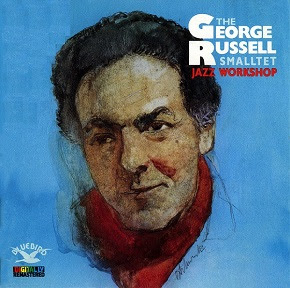
George Russell • The Complete Bluebird Recordings


Biography
by Richard S. Ginell
While George Russell was very active as a free-thinking composer, arranger, and bandleader, his biggest effect upon jazz was in the quieter role of theorist. His great contribution, apparently the first by a jazz musician to general music theory, was a book with the intimidating title The Lydian Chromatic Concept of Tonal Organization, where he concocted a concept of playing jazz based on scales rather than chord changes. Published in 1953, Russell's theories directly paved the way for the modal revolutions of Miles Davis and John Coltrane -- and Russell even took credit for the theory behind Michael Jackson's huge hit "Wanna Be Startin' Somethin'," which uses the Lydian scale (no, he didn't ask for royalties). Russell's stylistic reach in his own compositions eventually became omnivorous, embracing bop, gospel, blues, rock, funk, contemporary classical elements, electronic music, and African rhythms in his ambitious extended works -- most apparent in his large-scale 1983 suite for an enlarged big band, The African Game. Like his colleague Gil Evans, Russell never stopped growing, but his work is not nearly as well-known as that of Evans, being more difficult to grasp and, in any case, not as well documented by U.S. record labels.

Russell's first instrument was the drums, which he played in the Boy Scout Drum and Bugle Corps and at local clubs when he was in high school. At 19, he was hospitalized with tuberculosis, but he used the enforced inactivity to learn the craft of arranging from a fellow patient. Once back on his feet, he played with Benny Carter, but after being replaced on drums by Max Roach, Russell began to zero in on composing and arranging. He moved to New York to join the crowd of young firebrands who gathered in Gil Evans' "salon," and he was actually invited to play drums in Charlie Parker's band. But once again, he fell ill, finding himself in a Bronx hospital for 16 months (1945-1946), where he began to formulate the ideas for the Lydian Concept. Upon his recovery, Russell leaped into the embryonic fusion of bebop and Afro-Cuban rhythms by writing "Cubana Be" and "Cubana Bop," which the Dizzy Gillespie big band recorded in 1947. He contributed arrangements to Claude Thornhill and Artie Shaw in the late '40s and wrote the first (and not the last) speculative scenario of a meeting between Charlie Parker and Igor Stravinsky, "A Bird in Igor's Yard," recorded by Buddy De Franco.

While working on his Lydian theories, Russell dropped out of active music-making for a while, working at a sales counter in Macy's when his book was published. But when he resumed composing in 1956, he had established himself as an influential force in jazz. Russell's connection with Gunther Schuller resulted in the commission of "All About Rosie" for the 1957 Brandeis University jazz festival, and he also taught at the Lenox School of Jazz that Schuller co-founded. He formed a rehearsal sextet in the mid-'50s that became known as the George Russell Smalltet, with Art Farmer, Bill Evans, Hal McKusick, Barry Galbraith, and various drummers and bassists. Their 1956 recording Jazz Workshop (RCA Victor) became a landmark of its time, and Russell continued to record intriguing LPs for Decca in the late '50s and Riverside in the early '60s. Another key album from this period, Ezz-Thetics, featured two important progressive players, Eric Dolphy and Don Ellis.

Finding the American jazz scene too confining for his music, Russell left for Europe in 1963, living in Sweden for five years. From his new base, he toured Scandinavia with a new sextet of European players and received numerous commissions -- including a ballet based on Othello, a mass, and the orchestral suite Electronic Sonata for Souls Loved by Nature: 1980. Upon his return to the U.S. in 1969, he joined the faculty of the New England Conservatory of Music, where Schuller had started a jazz department, and this gave him a secure base from which to tour occasionally with his own groups. Russell stopped composing from 1972 to 1978 in order to finish a second volume on the Lydian Chromatic Concept. He led a 19-piece big band at the Village Vanguard for six weeks in 1978, played the Newport Jazz Festival when it was based in New York City, and made tours of Italy, the U.S. West Coast, and England in the '80s.

Russell's most imposing latter-day commissions included "An American Trilogy" and the monumental three-hour work "Time Line" for symphony orchestra, jazz ensembles, rock groups, choir, and dancers. In addition to The African Game and So What on Blue Note, Russell made recordings for Soul Note in the '70s and '80s and Label Bleu in the '90s, while continuing to teach at the New England Conservatory and leading his Living Time Orchestra big band into the 21st century. In 2005 George Russell & the Living Time Orchestra's The 80th Birthday Concert, released on the Concept label, celebrated the legendary octogenarian's contributions to the art of jazz with performances of some of his most groundbreaking extended compositions and arrangements. George Russell died in Boston on July 27, 2009 of complications from Alzheimer's disease; he was 86 years old.
https://www.allmusic.com/artist/george-russell-mn0000646353/biography

///////

Biografía
por Richard S. Ginell
Aunque George Russell fue un compositor, arreglista y director de orquesta muy activo y librepensador, su mayor influencia en el jazz se produjo en su papel más discreto de teórico. Su gran contribución, al parecer la primera de un músico de jazz a la teoría musical general, fue un libro de título intimidatorio, The Lydian Chromatic Concept of Tonal Organization (El concepto cromático lidio de la organización tonal), en el que ideó un concepto de tocar jazz basado en escalas y no en cambios de acordes. Publicadas en 1953, las teorías de Russell allanaron directamente el camino a las revoluciones modales de Miles Davis y John Coltrane, e incluso se atribuyó el mérito de la teoría del gran éxito de Michael Jackson "Wanna Be Startin' Somethin'", que utiliza la escala lidia (no, no pidió derechos de autor). Con el tiempo, el alcance estilístico de las composiciones de Russell se hizo omnívoro, abarcando el bop, el gospel, el blues, el rock, el funk, elementos clásicos contemporáneos, la música electrónica y los ritmos africanos en sus ambiciosas obras ampliadas, más evidentes en su suite a gran escala de 1983 para big band ampliada, The African Game. Al igual que su colega Gil Evans, Russell nunca dejó de crecer, pero su obra no es tan conocida como la de Evans, por ser más difícil de comprender y, en cualquier caso, no estar tan bien documentada por los sellos discográficos estadounidenses.

El primer instrumento de Russell fue la batería, que tocaba en el Boy Scout Drum and Bugle Corps y en clubes locales cuando estaba en el instituto. A los 19 años fue hospitalizado por tuberculosis, pero aprovechó la inactividad forzosa para aprender el oficio de arreglista de un compañero. Una vez recuperado, tocó con Benny Carter, pero tras ser sustituido en la batería por Max Roach, Russell empezó a centrarse en la composición y los arreglos. Se trasladó a Nueva York para unirse a la multitud de jóvenes fogosos que se reunían en el "salón" de Gil Evans, y de hecho fue invitado a tocar la batería en la banda de Charlie Parker. Pero, una vez más, cayó enfermo y estuvo ingresado en un hospital del Bronx durante 16 meses (1945-1946), donde empezó a formular las ideas del Lydian Concept. Tras su recuperación, Russell se lanzó a la embrionaria fusión del bebop y los ritmos afrocubanos escribiendo "Cubana Be" y "Cubana Bop", que la big band de Dizzy Gillespie grabó en 1947. Contribuyó con arreglos a Claude Thornhill y Artie Shaw a finales de los años 40 y escribió el primer (y no el último) escenario especulativo de un encuentro entre Charlie Parker e Igor Stravinsky, "A Bird in Igor's Yard", grabado por Buddy De Franco.

Mientras trabajaba en sus teorías lidias, Russell abandonó la música activa durante un tiempo, trabajando en un mostrador de ventas en Macy's cuando se publicó su libro. Pero cuando volvió a componer en 1956, se había establecido como una fuerza influyente en el jazz. La conexión de Russell con Gunther Schuller se tradujo en el encargo de "All About Rosie" para el festival de jazz de la Universidad Brandeis de 1957, y también dio clases en la Lenox School of Jazz que cofundó Schuller. A mediados de los 50 formó un sexteto de ensayo que se conoció como George Russell Smalltet, con Art Farmer, Bill Evans, Hal McKusick, Barry Galbraith y varios bateristas y bajistas. Su grabación de 1956 Jazz Workshop (RCA Victor) se convirtió en un hito de su época, y Russell continuó grabando interesantes LPs para Decca a finales de los 50 y para Riverside a principios de los 60. Otro álbum clave de este periodo, Ezz-Thetics, incluía a dos importantes músicos progresivos, Eric Dolphy y Don Ellis.

Al considerar que la escena jazzística estadounidense era demasiado restrictiva para su música, Russell se marchó a Europa en 1963 y vivió cinco años en Suecia. Desde allí realizó giras por Escandinavia con un nuevo sexteto de músicos europeos y recibió numerosos encargos, entre ellos un ballet basado en Otelo, una misa y la suite orquestal Sonata electrónica para almas amadas por la naturaleza: 1980. A su regreso a Estados Unidos en 1969, se incorporó al cuerpo docente del Conservatorio de Música de Nueva Inglaterra, donde Schuller había creado un departamento de jazz, lo que le proporcionó una base segura desde la que realizar ocasionalmente giras con sus propios grupos. Russell dejó de componer de 1972 a 1978 para terminar un segundo volumen sobre el concepto cromático lidio. Dirigió una big band de 19 músicos en el Village Vanguard durante seis semanas en 1978, actuó en el Festival de Jazz de Newport cuando éste tenía su sede en Nueva York, y realizó giras por Italia, la costa oeste de Estados Unidos e Inglaterra en los años 80.

Entre los últimos encargos más imponentes de Russell figuran "An American Trilogy" y la monumental obra de tres horas "Time Line" para orquesta sinfónica, conjuntos de jazz, grupos de rock, coro y bailarines. Además de The African Game y So What en Blue Note, Russell grabó para Soul Note en los años 70 y 80 y para Label Bleu en los 90, al tiempo que seguía enseñando en el Conservatorio de Nueva Inglaterra y dirigía su big band Living Time Orchestra en el siglo XXI. En 2005 George Russell & the Living Time Orchestra's The 80th Birthday Concert, publicado por el sello Concept, celebraba las contribuciones del legendario octogenario a la música y a la cultura.


Saturday, May 31, 2025

Horace Silver • The Stylings Of Silver


Review
by Scott Yanow
The 1957 Horace Silver Quintet (featuring trumpeter Art Farmer and tenor saxophonist Hank Mobley) is in top form on this date, particularly on "My One and Only Love" and their famous version of "Home Cookin'." All of Silver's Blue Note quintet recordings are consistently superb and swinging and, although not essential, this is a very enjoyable set.
https://www.allmusic.com/album/the-stylings-of-silver-mw0000223931

///////


Review
by Scott Yanow
The 1957 Horace Silver Quintet (featuring trumpeter Art Farmer and tenor saxophonist Hank Mobley) is in top form on this date, particularly on "My One and Only Love" and their famous version of "Home Cookin'." All of Silver's Blue Note quintet recordings are consistently superb and swinging and, although not essential, this is a very enjoyable set.
https://www.allmusic.com/album/the-stylings-of-silver-mw0000223931


Sunday, May 18, 2025

Hank Mobley • Poppin'


Review by Stephen Thomas Erlewine
Poppin' was one of many sessions tenor saxophonist Hank Mobley recorded in the late '50s and early '60s but remained unreleased until the late '70s and '80s. It's hard to say why this session - which was recorded in 1957 -- sat on the shelves, since it as good as the other records he cut at the time. Leading a sextet featuring trumpeter Art Farmer, baritone saxophonist Pepper Adams, pianist Sonny Clark, bassist Paul Chambers, and drummer Philly Joe Jones, Mobley plays a selection of five originals and contemporary jazz songs with passion and vigor. All of the musicians turn in fine performances (Clark in particular stands out with his lithe solos and tasteful accompaniment), and the result is a winning collection of straight-ahead hard bop that ranks as another solid addition to Mobley's strong catalog.
https://www.allmusic.com/album/poppin-mw0000938036

///////


Reseña de Stephen Thomas Erlewine
Poppin ' fue una de las muchas sesiones que el saxofonista tenor Hank Mobley grabó a finales de los 50 y principios de los 60, pero permaneció inédita hasta finales de los 70 y los 80. Es difícil decir por qué esta sesión, que se grabó en 1957, se quedó en los estantes, ya que es tan buena como los otros discos que grabó en ese momento. Al frente de un sexteto con el trompetista Art Farmer, el saxofonista barítono Pepper Adams, el pianista Sonny Clark, el bajista Paul Chambers y el baterista Philly Joe Jones, Mobley toca una selección de cinco canciones de jazz originales y contemporáneas con pasión y vigor. Todos los músicos ofrecen excelentes interpretaciones (Clark en particular se destaca con sus ágiles solos y su acompañamiento de buen gusto), y el resultado es una colección ganadora de hard bop directo que se ubica como otra adición sólida al sólido catálogo de Mobley.
https://www.allmusic.com/album/poppin-mw0000938036


Monday, March 31, 2025

Art Farmer & Gigi Gryce • When Farmer Met Gryce


Review by Scott Yanow
When Farmer Met Gryce features trumpeter Art Farmer, altoist Gigi Gryce and two rhythm sections with either Horace Silver or Freddie Redd on piano, Percy Heath or Addison Farmer on bass, and Kenny Clarke or Art Taylor on drums. The early hard bop music is highlighted by "Social Call" (one of Gryce's best-known compositions), "Capri," "A Night at Tony's" and "Blue Concept" but all eight numbers will easily be enjoyed by straight-ahead jazz fans.
https://www.allmusic.com/album/when-farmer-met-gryce-mw0000234769

///////


Reseña de Scott Yanow
When Farmer Met Gryce cuenta con el trompetista Art Farmer, la contralto Gigi Gryce y dos secciones rítmicas con Horace Silver o Freddie Redd al piano, Percy Heath o Addison Farmer al bajo, y Kenny Clarke o Art Taylor a la batería. La música hard bop temprana se destaca por «Social Call» (una de las composiciones más conocidas de Gryce), «Capri», «A Night at Tony's» y «Blue Concept», pero los ocho números serán fácilmente disfrutados por los aficionados al jazz directo.
https://www.allmusic.com/album/when-farmer-met-gryce-mw0000234769


Friday, February 14, 2025

Friday, February 7, 2025

Art Farmer & The ORF-Big Band • Talk To Me


George Russell • The Jazz Workshop


Biography
by Richard S. Ginell
While George Russell was very active as a free-thinking composer, arranger, and bandleader, his biggest effect upon jazz was in the quieter role of theorist. His great contribution, apparently the first by a jazz musician to general music theory, was a book with the intimidating title The Lydian Chromatic Concept of Tonal Organization, where he concocted a concept of playing jazz based on scales rather than chord changes. Published in 1953, Russell's theories directly paved the way for the modal revolutions of Miles Davis and John Coltrane -- and Russell even took credit for the theory behind Michael Jackson's huge hit "Wanna Be Startin' Somethin'," which uses the Lydian scale (no, he didn't ask for royalties). Russell's stylistic reach in his own compositions eventually became omnivorous, embracing bop, gospel, blues, rock, funk, contemporary classical elements, electronic music, and African rhythms in his ambitious extended works -- most apparent in his large-scale 1983 suite for an enlarged big band, The African Game. Like his colleague Gil Evans, Russell never stopped growing, but his work is not nearly as well-known as that of Evans, being more difficult to grasp and, in any case, not as well documented by U.S. record labels.

Russell's first instrument was the drums, which he played in the Boy Scout Drum and Bugle Corps and at local clubs when he was in high school. At 19, he was hospitalized with tuberculosis, but he used the enforced inactivity to learn the craft of arranging from a fellow patient. Once back on his feet, he played with Benny Carter, but after being replaced on drums by Max Roach, Russell began to zero in on composing and arranging. He moved to New York to join the crowd of young firebrands who gathered in Gil Evans' "salon," and he was actually invited to play drums in Charlie Parker's band. But once again, he fell ill, finding himself in a Bronx hospital for 16 months (1945-1946), where he began to formulate the ideas for the Lydian Concept. Upon his recovery, Russell leaped into the embryonic fusion of bebop and Afro-Cuban rhythms by writing "Cubana Be" and "Cubana Bop," which the Dizzy Gillespie big band recorded in 1947. He contributed arrangements to Claude Thornhill and Artie Shaw in the late '40s and wrote the first (and not the last) speculative scenario of a meeting between Charlie Parker and Igor Stravinsky, "A Bird in Igor's Yard," recorded by Buddy De Franco.

While working on his Lydian theories, Russell dropped out of active music-making for a while, working at a sales counter in Macy's when his book was published. But when he resumed composing in 1956, he had established himself as an influential force in jazz. Russell's connection with Gunther Schuller resulted in the commission of "All About Rosie" for the 1957 Brandeis University jazz festival, and he also taught at the Lenox School of Jazz that Schuller co-founded. He formed a rehearsal sextet in the mid-'50s that became known as the George Russell Smalltet, with Art Farmer, Bill Evans, Hal McKusick, Barry Galbraith, and various drummers and bassists. Their 1956 recording Jazz Workshop (RCA Victor) became a landmark of its time, and Russell continued to record intriguing LPs for Decca in the late '50s and Riverside in the early '60s. Another key album from this period, Ezz-Thetics, featured two important progressive players, Eric Dolphy and Don Ellis.

Finding the American jazz scene too confining for his music, Russell left for Europe in 1963, living in Sweden for five years. From his new base, he toured Scandinavia with a new sextet of European players and received numerous commissions -- including a ballet based on Othello, a mass, and the orchestral suite Electronic Sonata for Souls Loved by Nature: 1980. Upon his return to the U.S. in 1969, he joined the faculty of the New England Conservatory of Music, where Schuller had started a jazz department, and this gave him a secure base from which to tour occasionally with his own groups. Russell stopped composing from 1972 to 1978 in order to finish a second volume on the Lydian Chromatic Concept. He led a 19-piece big band at the Village Vanguard for six weeks in 1978, played the Newport Jazz Festival when it was based in New York City, and made tours of Italy, the U.S. West Coast, and England in the '80s.

Russell's most imposing latter-day commissions included "An American Trilogy" and the monumental three-hour work "Time Line" for symphony orchestra, jazz ensembles, rock groups, choir, and dancers. In addition to The African Game and So What on Blue Note, Russell made recordings for Soul Note in the '70s and '80s and Label Bleu in the '90s, while continuing to teach at the New England Conservatory and leading his Living Time Orchestra big band into the 21st century. In 2005 George Russell & the Living Time Orchestra's The 80th Birthday Concert, released on the Concept label, celebrated the legendary octogenarian's contributions to the art of jazz with performances of some of his most groundbreaking extended compositions and arrangements. George Russell died in Boston on July 27, 2009 of complications from Alzheimer's disease; he was 86 years old.
https://www.allmusic.com/artist/george-russell-mn0000646353/biography

///////

Biografía
por Richard S. Ginell
Aunque George Russell fue un compositor, arreglista y director de orquesta muy activo y librepensador, su mayor influencia en el jazz se produjo en su papel más discreto de teórico. Su gran contribución, al parecer la primera de un músico de jazz a la teoría musical general, fue un libro de título intimidatorio, The Lydian Chromatic Concept of Tonal Organization (El concepto cromático lidio de la organización tonal), en el que ideó un concepto de tocar jazz basado en escalas y no en cambios de acordes. Publicadas en 1953, las teorías de Russell allanaron directamente el camino a las revoluciones modales de Miles Davis y John Coltrane, e incluso se atribuyó el mérito de la teoría del gran éxito de Michael Jackson "Wanna Be Startin' Somethin'", que utiliza la escala lidia (no, no pidió derechos de autor). Con el tiempo, el alcance estilístico de las composiciones de Russell se hizo omnívoro, abarcando el bop, el gospel, el blues, el rock, el funk, elementos clásicos contemporáneos, la música electrónica y los ritmos africanos en sus ambiciosas obras ampliadas, más evidentes en su suite a gran escala de 1983 para big band ampliada, The African Game. Al igual que su colega Gil Evans, Russell nunca dejó de crecer, pero su obra no es tan conocida como la de Evans, por ser más difícil de comprender y, en cualquier caso, no estar tan bien documentada por los sellos discográficos estadounidenses.

El primer instrumento de Russell fue la batería, que tocaba en el Boy Scout Drum and Bugle Corps y en clubes locales cuando estaba en el instituto. A los 19 años fue hospitalizado por tuberculosis, pero aprovechó la inactividad forzosa para aprender el oficio de arreglista de un compañero. Una vez recuperado, tocó con Benny Carter, pero tras ser sustituido en la batería por Max Roach, Russell empezó a centrarse en la composición y los arreglos. Se trasladó a Nueva York para unirse a la multitud de jóvenes fogosos que se reunían en el "salón" de Gil Evans, y de hecho fue invitado a tocar la batería en la banda de Charlie Parker. Pero, una vez más, cayó enfermo y estuvo ingresado en un hospital del Bronx durante 16 meses (1945-1946), donde empezó a formular las ideas del Lydian Concept. Tras su recuperación, Russell se lanzó a la embrionaria fusión del bebop y los ritmos afrocubanos escribiendo "Cubana Be" y "Cubana Bop", que la big band de Dizzy Gillespie grabó en 1947. Contribuyó con arreglos a Claude Thornhill y Artie Shaw a finales de los años 40 y escribió el primer (y no el último) escenario especulativo de un encuentro entre Charlie Parker e Igor Stravinsky, "A Bird in Igor's Yard", grabado por Buddy De Franco.

Mientras trabajaba en sus teorías lidias, Russell abandonó la música activa durante un tiempo, trabajando en un mostrador de ventas en Macy's cuando se publicó su libro. Pero cuando volvió a componer en 1956, se había establecido como una fuerza influyente en el jazz. La conexión de Russell con Gunther Schuller se tradujo en el encargo de "All About Rosie" para el festival de jazz de la Universidad Brandeis de 1957, y también dio clases en la Lenox School of Jazz que cofundó Schuller. A mediados de los 50 formó un sexteto de ensayo que se conoció como George Russell Smalltet, con Art Farmer, Bill Evans, Hal McKusick, Barry Galbraith y varios bateristas y bajistas. Su grabación de 1956 Jazz Workshop (RCA Victor) se convirtió en un hito de su época, y Russell continuó grabando interesantes LPs para Decca a finales de los 50 y para Riverside a principios de los 60. Otro álbum clave de este periodo, Ezz-Thetics, incluía a dos importantes músicos progresivos, Eric Dolphy y Don Ellis.

Al considerar que la escena jazzística estadounidense era demasiado restrictiva para su música, Russell se marchó a Europa en 1963 y vivió cinco años en Suecia. Desde allí realizó giras por Escandinavia con un nuevo sexteto de músicos europeos y recibió numerosos encargos, entre ellos un ballet basado en Otelo, una misa y la suite orquestal Sonata electrónica para almas amadas por la naturaleza: 1980. A su regreso a Estados Unidos en 1969, se incorporó al cuerpo docente del Conservatorio de Música de Nueva Inglaterra, donde Schuller había creado un departamento de jazz, lo que le proporcionó una base segura desde la que realizar ocasionalmente giras con sus propios grupos. Russell dejó de componer de 1972 a 1978 para terminar un segundo volumen sobre el concepto cromático lidio. Dirigió una big band de 19 músicos en el Village Vanguard durante seis semanas en 1978, actuó en el Festival de Jazz de Newport cuando éste tenía su sede en Nueva York, y realizó giras por Italia, la costa oeste de Estados Unidos e Inglaterra en los años 80.

Entre los últimos encargos más imponentes de Russell figuran "An American Trilogy" y la monumental obra de tres horas "Time Line" para orquesta sinfónica, conjuntos de jazz, grupos de rock, coro y bailarines. Además de The African Game y So What en Blue Note, Russell grabó para Soul Note en los años 70 y 80 y para Label Bleu en los 90, al tiempo que seguía enseñando en el Conservatorio de Nueva Inglaterra y dirigía su big band Living Time Orchestra en el siglo XXI. En 2005 George Russell & the Living Time Orchestra's The 80th Birthday Concert, publicado por el sello Concept, celebraba las contribuciones del legendario octogenario a la música y a la cultura.


Wednesday, January 29, 2025

Wardell Gray & Hampton Hawes • Live at the Haig 1952


"This decently recorded live session features tenor saxophonist Wardell Gray, trumpeter Art Farmer, pianist Hampton Hawes, bassist Joe Mondragon and drummer Shelly Manne stretching out on eight numbers (most of which clock in at 7-10 minutes). The CD reissue adds "Lady Bird" to the original set, which is highlighted by "The Squirrel," "Jackie," "Donna Lee" and "Get Happy." Because of his consistency and truncated life, every Wardell Gray recording is well worth picking up."
Scott Yanow -All Music Guide


"The contributions of Wardell Gray are often overlooked due to his premature death from a drug overdose in 1955, but this promising tenor saxophonist caught the ears of fellow West Coast musicians. This bop-oriented date was recorded in 1952 during a live engagement at the Haig (the famous tiny club where the Gerry Mulligan-Chet Baker Quartet became famous). Gray is joined by trumpeter Art Farmer, pianist Hampton Hawes, bassist Joe Mondragon, and drummer Shelly Manne, making up a powerful quintet. Although the horn soloists aren't always heard as well as the rhythm section, they are clearly inspiring one another. Highlights include a spirited take of "Bernie's Tune," a romp through Charlie Parker's "Donna Lee," and "Jackie," a smoky, brisk blues riff by Hampton Hawes in which Gray sounds a bit like Dexter Gordon, his old bandstand sparring partner. Wardell Gray takes top solo honors, but not by much. The source material, which is quite good for the era, is evidently from a radio broadcast."
Ken Dryden -All Music Guide

///////

"Esta sesión en vivo decentemente grabada presenta al saxofonista tenor Wardell Gray, al trompetista Art Farmer, al pianista Hampton Hawes, al bajista Joe Mondragón y a la baterista Shelly Manne tocando ocho números (la mayoría de los cuales duran entre 7 y 10 minutos). La reedición en CD agrega "Lady Bird" al set original, que se destaca con "The Squirrel", "Jackie", "Donna Lee" y " Get Happy."Debido a su consistencia y vida truncada, vale la pena recoger todas las grabaciones de Wardell Gray."
Scott Yanow-Guía de toda la Música


"Las contribuciones de Wardell Gray a menudo se pasan por alto debido a su muerte prematura por sobredosis de drogas en 1955, pero este prometedor saxofonista tenor llamó la atención de otros músicos de la Costa Oeste. Esta fecha orientada al bop fue grabada en 1952 durante un compromiso en vivo en el Haig (el famoso club diminuto donde se hizo famoso el Cuarteto Gerry Mulligan-Chet Baker). A Gray se le unen el trompetista Art Farmer, el pianista Hampton Hawes, el bajista Joe Mondragón y la baterista Shelly Manne, formando un poderoso quinteto. Aunque los solistas de trompa no siempre se escuchan tan bien como la sección rítmica, claramente se inspiran mutuamente. Los aspectos más destacados incluyen una versión animada de" Bernie's Tune", un jugueteo con" Donna Lee "de Charlie Parker y" Jackie", un riff de blues ahumado y enérgico de Hampton Hawes en el que Gray suena un poco como Dexter Gordon, su antiguo compañero de entrenamiento del quiosco de música.. Wardell Gray se lleva los máximos honores en solitario, pero no por mucho. El material fuente, que es bastante bueno para la época, es evidentemente de una transmisión de radio."
Ken Dryden-Guía de toda la Música


Monday, January 27, 2025

Clifford Brown • The Complete Paris Session


He was the most brilliant trumpet player of his generation, an original and memorable composer, a dynamic stage presence and one of the authentic legends of modern jazz.

Clifford Brown was born October 30, 1930 in Wilmington, Delaware. As a young high school student Brown began playing trumpet and within a very short time was active in college and other youth bands. By his late teens he had attracted the favorable attention of leading jazzmen, including fellow trumpeters Dizzy Gillespie, Miles Davis and Fats Navarro.

At the end of the 40s he was studying music at Maryland University and in 1952, following recovery from a serious road accident, he made his first records with Chris Powell and Tadd Dameron. In the autumn of 1953 he was a member of the big band Lionel Hampton took to Europe. Liberally filled with precocious talent, this band attracted considerable attention during its tour. Contrary to contractual stipulations, many of the young musicians moonlighted on various recordings and Brown in particular was singled out for such sessions. Back in the USA, Brown was fired along with most of the rest of the band when Hampton learned of the records they had made. Brown then joined Art Blakey and in mid- 1954 teamed up with Max Roach to form the Clifford Brown- Max Roach Quintet. The quintet was quickly recognized as one of the outstanding groups in contemporary jazz and Brown as a major trumpeter and composer.

At a time when many modern jazz trumpeters sought technical expertise at the expense of tone, Brown, in common with his friend and paradigm, Navarro, had technique to spare but also developed a rich, full and frequently beautiful tone. At the same time, whether playing at scorching tempos or on languorous ballads, his range was exhaustive. He was enormously and brilliantly inventive but his search for original ideas was never executed at the expense of taste. In all his work, Brown displayed the rare combination of supreme intelligence and great emotional depths. His playing was only one aspect of his talent; he was also a fine composer, creating many works that have become modern jazz standards. Although his career was brief, Brown's influence persisted for a while in the work of Lee Morgan and throughout succeeding decades in that of Freddie Hubbard. Fortunately for jazz fans, Brown's own work persists in the form of his recordings, almost any of which can be safely recommended as outstanding examples of the very best of jazz. Indeed, all of his recordings with Roach are classics.

During his remarkable three year run, Brown made more than a dozen albums among the ones on the EmArcy label are Brown & Roach Inc (1954), Study in Brown (1955), Clifford Brown With Strings(1955), A Study in Brown(1955) Clifford Brown All Stars (1956), Memorial Album (1956), Clifford Brown & Max Roach at Basin St. East (1956), and Pure Genius (1956) these are prime models of the art of jazz trumpet. There are many compilations available, as are box sets as the Complete Blue Note-Pacific Jazz (Mosaic) and the EmArcy 10 disc set Brownie: The Complete Clifford Brown.

Many of his compositions became standards, including the uptempo “Daahoud,” reflective “Joy Spring”, and “Sandu.” His version of “Cherokee” though not his composition, is still considered the definitive one. Benny Golson did a memorable “I Remember Clifford,” a moving tribute to the young trumpeter, and is a perennial jazz favorite.

Clifford Brown had established himself as the most potent trumpeter in jazz to arrive on the scene since Dizzy Gillespie. Equally influenced (and encouraged) by Fats Navarro and Gillespie, Brown possessed both a remarkable technique for high-speed playing, with every note perfectly placed and formed, and also a beautiful lyrical ballad style. He developed an innate sense of solo form, a rich tone, and a virtuoso technique in all trumpet ranges. His style included brilliant high notes, high rhythmic detail, and a generous incorporation of grace notes and varied inflections, all of which he played with rare grace and ease. He was especially noted for the melodic qualities of his improvising, which often flowed in long phrases. His impact and influence on the jazz world is only matched by his artistry on the trumpet.

On June 26th, 1956, while driving between engagements during a nationwide tour, Brown and another quintet member, pianist Richie Powell, were killed in a road accident. Clifford Brown was twenty five years old.
Source: James Nadalhttps://www.allaboutjazz.com/musicians/clifford-brown/

///////


Fue el trompetista más brillante de su generación, un compositor original y memorable, una presencia escénica dinámica y una de las auténticas leyendas del jazz moderno.

Clifford Brown nació el 30 de octubre de 1930 en Wilmington, Delaware. Siendo un joven estudiante de secundaria, Brown empezó a tocar la trompeta y en muy poco tiempo participó activamente en bandas universitarias y otras bandas juveniles. Al final de su adolescencia ya había atraído la atención de los principales músicos de jazz, como los trompetistas Dizzy Gillespie, Miles Davis y Fats Navarro.

A finales de los años 40 estudiaba música en la Universidad de Maryland y en 1952, tras recuperarse de un grave accidente de tráfico, grabó sus primeros discos con Chris Powell y Tadd Dameron. En otoño de 1953 formó parte de la big band que Lionel Hampton llevó a Europa. Llena de talento precoz, esta banda atrajo una considerable atención durante su gira. En contra de las estipulaciones contractuales, muchos de los jóvenes músicos trabajaron como pluriempleados en varias grabaciones y Brown, en particular, fue elegido para esas sesiones. De vuelta a Estados Unidos, Brown fue despedido junto con la mayoría del resto de la banda cuando Hampton se enteró de las grabaciones que habían hecho. Brown se unió entonces a Art Blakey y a mediados de 1954 formó equipo con Max Roach para formar el Clifford Brown- Max Roach Quintet. El quinteto fue rápidamente reconocido como uno de los grupos más destacados del jazz contemporáneo y Brown como un trompetista y compositor importante.

En una época en la que muchos trompetistas de jazz moderno buscaban la pericia técnica a expensas del tono, Brown, al igual que su amigo y paradigma Navarro, tenía técnica de sobra, pero también desarrolló un tono rico, pleno y a menudo hermoso. Al mismo tiempo, tanto si tocaba a tempos abrasadores como en lánguidas baladas, su registro era exhaustivo. Era enorme y brillantemente inventivo, pero su búsqueda de ideas originales nunca se llevó a cabo a expensas del gusto. En toda su obra, Brown mostró la rara combinación de una inteligencia suprema y una gran profundidad emocional. Tocar era sólo una de las facetas de su talento; también era un excelente compositor, creador de muchas obras que se han convertido en estándares del jazz moderno. Aunque su carrera fue breve, la influencia de Brown persistió durante un tiempo en la obra de Lee Morgan y, a lo largo de las décadas siguientes, en la de Freddie Hubbard. Afortunadamente para los aficionados al jazz, la obra de Brown perdura en forma de grabaciones, casi todas las cuales pueden recomendarse como ejemplos sobresalientes de lo mejor del jazz. De hecho, todas sus grabaciones con Roach son clásicos.

Durante su notable carrera de tres años, Brown grabó más de una docena de álbumes, entre los que se encuentran los del sello EmArcy Brown & Roach Inc (1954), Study in Brown (1955), Clifford Brown With Strings (1955), A Study in Brown (1955), Clifford Brown All Stars (1956), Memorial Album (1956), Clifford Brown & Max Roach at Basin St. East (1956) y Pure Genius (1956), que son modelos de primer orden del arte de la trompeta de jazz. Hay muchas recopilaciones disponibles, así como juegos de cajas como el Complete Blue Note-Pacific Jazz (Mosaic) y el EmArcy 10 disc set Brownie: The Complete Clifford Brown.

Muchas de sus composiciones se convirtieron en estándares, como la uptempo «Daahoud», la reflexiva «Joy Spring» y «Sandu». Su versión de «Cherokee», aunque no es una composición suya, sigue considerándose la definitiva. Benny Golson hizo un memorable «I Remember Clifford», un emotivo homenaje al joven trompetista, y es un eterno favorito del jazz.

Clifford Brown se había consolidado como el trompetista más potente del jazz que llegaba a la escena desde Dizzy Gillespie. Influido (y alentado) a partes iguales por Fats Navarro y Gillespie, Brown poseía tanto una técnica notable para tocar a gran velocidad, con cada nota perfectamente colocada y formada, como un hermoso estilo de balada lírica. Desarrolló un sentido innato de la forma solista, un tono rico y una técnica virtuosa en todos los rangos de la trompeta. Su estilo incluía notas altas brillantes, gran detalle rítmico y una generosa incorporación de notas de gracia e inflexiones variadas, todo ello interpretado con una gracia y una facilidad poco comunes. Destacaba especialmente por las cualidades melódicas de su improvisación, que a menudo fluía en largas frases. Su impacto e influencia en el mundo del jazz sólo son comparables a su arte con la trompeta.

El 26 de junio de 1956, mientras conducía entre los compromisos de una gira nacional, Brown y otro miembro del quinteto, el pianista Richie Powell, murieron en un accidente de tráfico. Clifford Brown tenía veinticinco años.
Fuente: James Nadalhttps://www.allaboutjazz.com/musicians/clifford-brown/


cliffordbrown.net ...


Sunday, January 26, 2025

Benny Golson • The New York Recordings


Biography
Multitalented and internationally famous jazz legend, - a composer, arranger, lyricist, producer - and tenor saxophonist of world note, Benny Golson was born in Philadelphia, PA on January 25, 1929.

Raised with an impeccable musical pedigree, Golson has played in the bands of world famous Benny Goodman, Dizzy Gillespie, Lionel Hampton, Earl Bostic and Art Blakey.

Few jazz musicians can claim to be true innovators and even fewer can boast of a performing and recording career that literally redefines the term "jazz". Benny Golson has made major contributions to the world of jazz with such jazz standards as: Killer Joe, I Remember Clifford, Along Came Betty, Stablemates, Whisper Not, Blues March, Five Spot After Dark, Are you Real?

Benny Golson is the only living jazz artist to have written 8 standards for jazz repertoire. These jazz standards have found their way into countless recordings internationally over the years and are still being recorded.

He has recorded over 30 albums for many recording companies in the United States and Europe under his own name and innumerable ones with other major artists. A prodigious writer, Golson has written well over 300 compositions.

For more than 50 years, Golson has enjoyed an illustrious, musical career in which he has not only made scores of recordings but has also composed and arranged music for:

Count Basie, John Coltrane, Miles Davis, Sammy Davis Jr., Mama Cass Elliott, Ella Fitzgerald, Dizzy Gillespie, Benny Goodman, Lionel Hampton, Shirley Horn, David Jones and the Monkees, Quincy Jones, Peggy Lee, Carmen McRae, Anita O'Day, Itzhak Perlman, Oscar Peterson, Lou Rawls, Mickey Rooney, Diana Ross, The Animals (Eric Burden), Mel Torme, George Shearing, Dusty Springfield

His prolific writing includes scores for hit TV series and films:

M*A*S*H, Mannix, Mission Impossible, Mod Squad, Room 222, Run for Your Life, The Partridge Family, The Academy Awards, The Karen Valentine Show, Television specials for ABC, CBS and NBC Television specials for BBC in London and Copenhagen, Denmark Theme for Bill Cosby's last TV show, A french film 'Des Femmes Disparaissent" (Paris)

He has written music for national radio and television spots for some of the major advertising agencies in the country. Some of these commercials were for:

Borateem, Canada Dry, Carnation, Chevrolet, Chrysler, Clorox, Dodge, General Telephone, Gillette, Heinz Foods, Jack in The Box, Liquid Plum'r, MacDonald's, Mattel Toys, Monsanto, Nissan, Ohrbachs, Ore-Ida Frozen Potatoes, Parliament Cigarettes, Pepsi Cola, Texaco

Benny Golson has absolute mastery of the jazz medium. He has not only blazed a trail in the world of jazz but is passionate abuot teaching jazz to young and old alike. He has lectured at the Lincoln Center through a special series by Wynton Marsalis. He has lectured to doctoral candidates at New York University and to the faculty at National University at San Diego.

Honored with doctorates from William Paterson College, Wayne, NJ and Berklee School of Music, Boston, MA, Dr. Golson has also conducted workshops and clinics at at various universities throughout the United States.

Golson's musical odyssey has taken him around the world. In 1987 he was sent by the US State Department on a cultural tour of Southeast Asia, New Zealand, Indonesia, Malaysia, Burma, Singapore. Later, Philip Morris International sent him on an assignment to Bangkok, Thailand to write music for the Bangkok Symphony Orchestra.

A live performer who consistently knocks audiences off their feet, Benny Golson has given hundreds of performances in USA, Europe, South America, Far East and Japan for decades.
https://www.allaboutjazz.com/musicians/benny-golson/

///////

Biografía
Leyenda del jazz multitalentosa y de fama internacional, compositor, arreglista, letrista, productor y saxofonista tenor de renombre mundial, Benny Golson nació en Filadelfia, Pensilvania, el 25 de enero de 1929.

Criado con un pedigrí musical impecable, Golson ha tocado en las bandas del mundialmente famoso Benny Goodman, Dizzy Gillespie, Lionel Hampton, Earl Bostic y Art Blakey.

Pocos músicos de jazz pueden afirmar ser verdaderos innovadores y aún menos pueden presumir de una carrera interpretativa y discográfica que literalmente redefine el término "jazz". Benny Golson ha hecho importantes contribuciones al mundo del jazz con estándares de jazz como: Killer Joe, I Remember Clifford, Along Came Betty, Stablemates, Whisper Not, Blues March, Five Spot After Dark, Are you Real?

Benny Golson es el único artista de jazz vivo que ha escrito 8 estándares para repertorio de jazz. Estos estándares de jazz se han abierto camino en innumerables grabaciones a nivel internacional a lo largo de los años y aún se están grabando.

Ha grabado más de 30 álbumes para muchas compañías discográficas en los Estados Unidos y Europa bajo su propio nombre e innumerables con otros artistas importantes. Un escritor prodigioso, Golson ha escrito más de 300 composiciones.

Durante más de 50 años, Golson ha disfrutado de una ilustre carrera musical en la que no solo ha realizado decenas de grabaciones, sino que también ha compuesto y arreglado música para:

Count Basie, John Coltrane, Miles Davis, Sammy Davis Jr., Mama Cass Elliott, Ella Fitzgerald, Dizzy Gillespie, Benny Goodman, Lionel Hampton, Shirley Horn, David Jones y los Monkees, Quincy Jones, Peggy Lee, Carmen McRae, Anita O'Day, Itzhak Perlman, Oscar Peterson, Lou Rawls, Mickey Rooney, Diana Ross, Los Animales (Eric Burden), Mel Torme, George Shearing, Dusty Springfield

Su prolífica escritura incluye partituras para exitosas series de televisión y películas:

M * A * S*H, Mannix, Misión Imposible, Mod Squad, Room 222, Run for Your Life, The Partridge Family, Los Premios de la Academia, The Karen Valentine Show, Especiales de televisión para ABC, CBS y NBC Especiales de televisión para BBC en Londres y Copenhague, Dinamarca Tema del último programa de televisión de Bill Cosby, Una película francesa 'Des Femmes Disparaissent" (París)

Ha escrito música para anuncios de radio y televisión nacionales para algunas de las principales agencias de publicidad del país. Algunos de estos comerciales fueron para:

Borateem, Canadá Seco, Clavel, Chevrolet, Chrysler, Clorox, Dodge, Teléfono General, Gillette, Heinz Foods, Jack in The Box, Ciruela Líquida, MacDonald's, Juguetes Mattel, Monsanto, Nissan, Ohrbachs, Papas Congeladas Ore-Ida, Cigarrillos Parliament, Pepsi Cola, Texaco

Benny Golson tiene un dominio absoluto del medio jazz. No solo ha abierto un camino en el mundo del jazz, sino que le apasiona enseñar jazz a jóvenes y mayores por igual. Ha dado conferencias en el Lincoln Center a través de una serie especial de Wynton Marsalis. Ha dado conferencias a candidatos a doctorado en la Universidad de Nueva York y en la facultad de la Universidad Nacional de San Diego.

Honrado con doctorados de William Paterson College, Wayne, NJ y Berklee School of Music, Boston, MA, el Dr. Golson también ha realizado talleres y clínicas en varias universidades de los Estados Unidos.

La odisea musical de Golson lo ha llevado por todo el mundo. En 1987 fue enviado por el Departamento de Estado de los Estados Unidos a una gira cultural por el sudeste Asiático, Nueva Zelanda, Indonesia, Malasia, Birmania y Singapur. Más tarde, Philip Morris International lo envió a Bangkok, Tailandia, para escribir música para la Orquesta Sinfónica de Bangkok.

Benny Golson, un intérprete en vivo que constantemente sorprende al público, ha ofrecido cientos de presentaciones en Estados Unidos, Europa, Sudamérica, Lejano Oriente y Japón durante décadas.
https://www.allaboutjazz.com/musicians/benny-golson/


www.bennygolson.com ...


Saturday, December 28, 2024

Hal McKusick • Cross Section-Saxes


Biography
by Scott Yanow
A fine cool-toned altoist and an occasional clarinetist, Hal McKusick worked with the big bands of Les Brown, Woody Herman (1943), Boyd Raeburn (1944-1945), Alvino Rey (1946), Buddy Rich, and Claude Thornhill (1948-1949). In the 1950s, in addition to his work with Terry Gibbs and Elliot Lawrence, he was a busy and versatile studio musician. During 1955-1958, McKusick recorded nine albums of material as a leader for Jubilee, Bethlehem, Victor, Coral, New Jazz, Prestige, and Decca. Those small-group recordings, although basically cool bop, sometimes used very advanced arrangements, including charts by George Handy, Manny Albam, Gil Evans, Al Cohn, Jimmy Giuffre, and particularly George Russell. Hal McKusick died in April 2012 at the age of 87.
https://www.allmusic.com/artist/hal-mckusick-mn0000660389/biography

///////

Biografía
por Scott Yanow
Hal McKusick, un fino contralto de tono frío y clarinetista ocasional, trabajó con las big bands de Les Brown, Woody Herman (1943), Boyd Raeburn (1944-1945), Alvino Rey (1946), Buddy Rich y Claude Thornhill (1948-1949). En la década de 1950, además de trabajar con Terry Gibbs y Elliot Lawrence, fue un músico de estudio muy ocupado y versátil. Entre 1955 y 1958, McKusick grabó nueve álbumes como líder para Jubilee, Bethlehem, Victor, Coral, New Jazz, Prestige y Decca. Esas grabaciones de grupos pequeños, aunque básicamente cool bop, a veces utilizaban arreglos muy avanzados, incluyendo charts de George Handy, Manny Albam, Gil Evans, Al Cohn, Jimmy Giuffre, y particularmente George Russell. Hal McKusick falleció en abril de 2012 a la edad de 87 años.
https://www.allmusic.com/artist/hal-mckusick-mn0000660389/biography


Wednesday, December 18, 2024

Jimmy Cleveland • Cleveland Style


Review
by Scott Yanow
Although trombonist Jimmy Cleveland is the main star of this album, arranger Ernie Wilkins comes in a close second. Wilkins' charts for the septet make inventive use of either Jay McAllister or Don Butterfield on tuba and he also brought in two excellent originals (including one called "Goodbye Ebbets Field"). With trumpeter Art Farmer, tenor saxophonist Benny Golson, pianist Wynton Kelly, bassist Eddie Jones and drummer Charlie Persip also featured with the septet, it is not surprising that the result is high-quality straightahead jazz. Worth searching for.
https://www.allmusic.com/album/cleveland-style-mw0000910790

///////


Reseña
por Scott Yanow
Aunque el trombonista Jimmy Cleveland es la estrella principal de este álbum, el arreglista Ernie Wilkins le sigue de cerca. Los arreglos de Wilkins para el septeto hacen un uso inventivo de Jay McAllister o Don Butterfield en la tuba y también aportó dos excelentes originales (incluyendo uno llamado "Goodbye Ebbets Field"). Con el trompetista Art Farmer, el saxofonista tenor Benny Golson, el pianista Wynton Kelly, el bajista Eddie Jones y el batería Charlie Persip también en el septeto, no es sorprendente que el resultado sea un jazz directo de alta calidad. Merece la pena buscarlo.
https://www.allmusic.com/album/cleveland-style-mw0000910790


Friday, December 13, 2024

Hal Mckusick • Now's The Time


Review
by Scott Yanow  
The decision to include just seven of the twelve numbers from Hal McKusick's Isn't It Romantic recording and eight of the ten from Cross Section: Saxes on this CD reissue is unfortunate, making this a so-called "best-of" set; why not reissue three McKusick dates (including Jazz at the Academy) complete on two CDs so valuable music is not lost? McKusick, a fine cool-toned altoist who sometimes recalls Paul Desmond a bit, also plays some floating atmospheric bass clarinet on these performances. Four of the titles feature a four-sax septet on two arrangements apiece by George Handy and Ernie Wilkins; the latter's interpretation of "Now's the Time" harmonizes Charlie Parker's original recorded solo à la Supersax. Otherwise McKusick is matched with trumpeter Art Farmer in a quintet/sextet with either Eddie Costa or Bill Evans on piano, The arrangements (by Farmer, Al Cohn, Manny Albam, Jimmy Giuffre, or George Russell) are sometimes complex but always lightly swinging, leaving plenty of space for the horns to solo. Recommended to those listeners who do not already have the more complete LPs.
https://www.allmusic.com/album/nows-the-time-mw0000176625


Artist Biography by Scott Yanow
A fine cool-toned altoist and an occasional clarinetist, Hal McKusick worked with the big bands of Les Brown, Woody Herman (1943), Boyd Raeburn (1944-1945), Alvino Rey (1946), Buddy Rich, and Claude Thornhill (1948-1949). In the 1950s, in addition to his work with Terry Gibbs and Elliot Lawrence, he was a busy and versatile studio musician. During 1955-1958, McKusick recorded nine albums of material as a leader for Jubilee, Bethlehem, Victor, Coral, New Jazz, Prestige, and Decca. Those small-group recordings, although basically cool bop, sometimes used very advanced arrangements, including charts by George Handy, Manny Albam, Gil Evans, Al Cohn, Jimmy Giuffre, and particularly George Russell. Hal McKusick died in April 2012 at the age of 87.
https://www.allmusic.com/artist/hal-mckusick-mn0000660389/biography

///////


Reseña
por Scott Yanow  
La decisión de incluir sólo siete de los doce números de la grabación de Hal McKusick Isn't It Romantic y ocho de los diez de Cross Section: Saxes en esta reedición en CD es desafortunada, haciendo de este un supuesto "best-of" set; ¿por qué no reeditar tres fechas de McKusick (incluyendo Jazz at the Academy) completas en dos CDs para que no se pierda música valiosa? McKusick, un fino contralto de tono fresco que a veces recuerda un poco a Paul Desmond, también toca un clarinete bajo atmosférico y flotante en estas actuaciones. Cuatro de los títulos cuentan con un septeto de cuatro saxofonistas en dos arreglos de George Handy y Ernie Wilkins; la interpretación de este último de "Now's the Time" armoniza el solo original grabado de Charlie Parker à la Supersax. Los arreglos (de Farmer, Al Cohn, Manny Albam, Jimmy Giuffre o George Russell) son a veces complejos, pero siempre ligeramente oscilantes, dejando mucho espacio para los solos de vientos. Recomendado a los oyentes que aún no posean los LP más completos.
https://www.allmusic.com/album/nows-the-time-mw0000176625


Biografía del artista por Scott Yanow
Hal McKusick trabajó con las grandes bandas de Les Brown, Woody Herman (1943), Boyd Raeburn (1944-1945), Alvino Rey (1946), Buddy Rich y Claude Thornhill (1948-1949). En la década de 1950, además de su trabajo con Terry Gibbs y Elliot Lawrence, fue un músico de estudio ocupado y versátil. Durante 1955-1958, McKusick grabó nueve álbumes de material como líder para Jubilee, Bethlehem, Victor, Coral, New Jazz, Prestige y Decca. Esas grabaciones en grupos pequeños, aunque básicamente cool bop, a veces usaban arreglos muy avanzados, incluyendo gráficos de George Handy, Manny Albam, Gil Evans, Al Cohn, Jimmy Giuffre, y particularmente George Russell. Hal McKusick murió en abril de 2012 a la edad de 87 años.
https://www.allmusic.com/artist/hal-mckusick-mn0000660389/biography


Tuesday, October 29, 2024

Art Farmer • Art and Perception


Two very special Art Farmer quartet dates from the 1960s with a stellar cast of sidemen. Of the albums here, Art Farmer said, "I wanted to do a very intimate session. I wanted it to sound as if I were just sitting and talking to someone with the horn, talking to just one person. The feeling was to be as if the horn were in the room, right next to the listener." We think Art Famer sounds amazing on these two LPs and you will too.
https://www.jazzmessengers.com/en/89388/art-farmer/artandperception

///////


Dos fechas muy especiales del cuarteto de Art Farmer de los años 60 con un elenco estelar de músicos de acompañamiento. Sobre estos discos, Art Farmer dijo: «Quería hacer una sesión muy íntima. Quería que sonara como si estuviera sentado hablando con alguien con la trompa, hablando con una sola persona. La sensación era como si la trompa estuviera en la habitación, justo al lado del oyente». Creemos que Art Famer suena increíble en estos dos LPs y tú también lo pensarás.
https://www.jazzmessengers.com/en/89388/art-farmer/artandperception