Biografía
Wednesday, May 6, 2026
Gerry Wiggins, Jackie Mills, Harold Land • Wiggin' Out
Biografía
Saturday, February 15, 2025
Makoto Terashita Meets Harold Land • Topology
Reissued by BBE Music for the first time since original release 36 years ago, Topology showcases the extraordinary compositional and playing skill of Makoto Terashita, the young pianist responsible for five of the album’s six tracks, alongside the confident and seasoned tones of Harold Land, respected US veteran sax player and former colleague of some of the leading jazz artists of the 50s, 60s and 70s including Max Roach, Clifford Brown, Gerald Wilson and Bobby Hutcherson.
https://www.jazzmessengers.com/en/82589/makoto-terashita/topology-makoto-terashita-meets-harold-land
///////
Reeditado por BBE Music por primera vez desde su publicación original hace 36 años, Topology muestra la extraordinaria habilidad compositiva e interpretativa de Makoto Terashita, el joven pianista responsable de cinco de los seis temas del álbum, junto a los tonos seguros y experimentados de Harold Land, respetado saxofonista veterano estadounidense y antiguo colega de algunos de los principales artistas de jazz de los años 50, 60 y 70, como Max Roach, Clifford Brown, Gerald Wilson y Bobby Hutcherson.
https://www.jazzmessengers.com/en/82589/makoto-terashita/topology-makoto-terashita-meets-harold-land
Tuesday, February 4, 2025
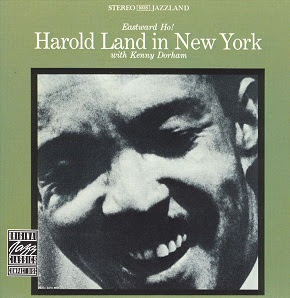
Harold Land • Eastward Ho! Harold Land In New York
Review
by Scott Yanow
Tenor saxophonist Harold Land and trumpeter Kenny Dorham make for a potent front line on this CD reissue, a superior hard bop set. With an obscure and quietly boppish rhythm section (pianist Amos Trice, bassist Clarence Jones, and drummer Joe Peters) giving suitable backup, Land and Dorham stretch out on five selections, most notably Cole Porter's "So in Love," "On a Little Street in Singapore," and Land's "O.K. Blues," which was dedicated to producer Orrin Keepnews. A fine effort that serves as a strong example of Harold Land's early work.
https://www.allmusic.com/album/eastward-ho%21-harold-land-in-new-york-mw0000691038
Biography
by Matt Collar
Texas-born tenor saxophonist
Harold Land was an adept stylist whose sound brought together the big
swinging tone and edgy harmonics of the hard bop era with the warm
lyricism and dusky romance of the West Coast, where he spent much of his
life. A member of the celebrated Clifford Brown and Max Roach Quintet,
Land also enjoyed a vibrant solo career, releasing albums like 1959's
The Fox, 1963's Jazz Impressions of Folk Music, and 1968's The
Peace-Maker, the latter of which introduced his long-running quintet
with vibraphonist Bobby Hutcherson. He also worked with luminaries like
Wes Montgomery, Thelonious Monk, Hampton Hawes, and Red Mitchell, and
was a member of the Gerald Wilson Orchestra. Influenced by John
Coltrane, his playing grew more exploratory throughout the '60s and
'70s, yet he never lost his swinging, melodic style as evidenced by such
late-career albums as 1995's A Lazy Afternoon and 2001's A Promised
Land.
Born in 1928 in Houston, Texas, Land grew up in San Diego,
where he started playing sax at age 16. He made his recorded debut for
Savoy in 1949 leading his All-Stars with Leon Petties, Froebel Brigham,
and others. Following a move to Los Angeles in the mid-'50s, he joined
the Max Roach-Clifford Brown quintet, replacing Teddy Edwards. Land
stayed in the group for over a year, appearing on such classic albums as
1954's Brown and Roach Incorporated and 1955's Study in Brown. He then
left the group to play with Curtis Counce from 1956 to 1958, during
which time he recorded with the bassist for labels like Contemporary and
Dooto. There were also sessions with Herb Geller, Cal Tjader, Victor
Feldman, and others.
As a leader, Land made his debut with 1958's
Harold in the Land of Jazz, playing alongside trumpeter Rolf Ericson,
pianist Carl Perkins, bassist Leroy Vinnegar, and drummer Frank Butler. A
year later, he returned with The Fox, an superb quintet set with
trumpeter Dupree Bolton and pianist Elmo Hope. By the '60s, Land was
dividing his time between leading his own groups, as with bassist Red
Mitchell on 1961's Hear Ye!, and playing with bandleader Gerald Wilson
and his orchestra. In 1963, he showcased his wide-ranging taste
reinterpreting traditional folk songs like "Tom Dooley" and "On Top of
Old Smokey" on Jazz Impressions of Folk Music. There were also dates
with Wes Montgomery and Kenny Dorham for Jazzland, and sessions with
such notable players as Carmell Jones, Bud Shank, Gary Peacock, and
Thelonious Monk, among others.
While Land never went completely
avant-garde, he did expand his approach throughout the '60s, influenced
by the work of John Coltrane and other progressive players. He formed a
lasting quintet with vibraphonist Bobby Hutcherson which they debuted on
1968's The Peace-Maker and continued through the early '70s. Land also
co-led a group with trumpeter Blue Mitchell from 1975 to 1978, recording
albums like 1977's Mapenzi.
Beginning in the early '80s, he and
Hutcherson often appeared as members of the Timeless All Stars, a group
of veteran players connected to the Timeless label, also featuring
pianist Cedar Walton, trombonist Curtis Fuller, bassist Buster Williams,
and drummer Billy Higgins. Though his own recording slowed in the '80s
(he released 1981's Xocia's Dance), Land continued his association with
the Gerald Wilson Orchestra and performed live, often working with his
son pianist Harold Land, Jr. He also moved into education, working as a
professor at the University of California, Los Angeles. He also joined
guitarist Kenny Burrell's UCLA Jazz Studies Program. In 1995, he
released A Lazy Afternoon, a lush orchestral album featuring
arrangements by Ray Ellis. Following a long recording hiatus, Land
returned in March 2001 with Promised Land, a hard-swinging quartet date
featuring pianist Mulgrew Miller, bassist Ray Drummond, and drummer
Billy Higgins. Land died in July 2001 after suffering a stroke at the
age of 72.
https://www.allmusic.com/artist/harold-land-mn0000665944/biography
///////
Reseña
por Scott Yanow
El saxofonista tenor Harold Land y el trompetista Kenny Dorham forman una potente primera línea en esta reedición en CD, un conjunto superior de hard bop. Con una oscura y tranquila sección rítmica (el pianista Amos Trice, el bajista Clarence Jones y el baterista Joe Peters) que ofrece un adecuado apoyo, Land y Dorham se extienden en cinco selecciones, entre las que destacan "So in Love" de Cole Porter, "On a Little Street in Singapore" y "O.K. Blues" de Land, dedicada al productor Orrin Keepnews. Un buen trabajo que sirve como ejemplo de los primeros trabajos de Harold Land.
https://www.allmusic.com/album/eastward-ho%21-harold-land-in-new-york-mw0000691038
Biografía
por Matt Collar
El saxofonista tenor Harold
Land, nacido en Texas, era un experto estilista cuyo sonido aunaba el
gran swing y la agresiva armónica de la era del hard bop con el cálido
lirismo y el oscuro romanticismo de la costa oeste, donde pasó gran
parte de su vida. Miembro de los célebres Clifford Brown y Max Roach
Quintet, Land también disfrutó de una vibrante carrera en solitario,
publicando álbumes como The Fox (1959), Jazz Impressions of Folk Music
(1963) y The Peace-Maker (1968), este último en el que presentó su
quinteto de larga duración con el vibrafonista Bobby Hutcherson. También
trabajó con luminarias como Wes Montgomery, Thelonious Monk, Hampton
Hawes y Red Mitchell, y fue miembro de la Gerald Wilson Orchestra.
Influido por John Coltrane, su forma de tocar se hizo más exploratoria
durante los años 60 y 70, aunque nunca perdió su estilo melódico y
oscilante, como demuestran álbumes de finales de su carrera como A Lazy
Afternoon, de 1995, y A Promised Land, de 2001.
Nacido en 1928 en
Houston (Texas), Land creció en San Diego, donde empezó a tocar el saxo
a los 16 años. Hizo su debut discográfico para Savoy en 1949 al frente
de sus All-Stars con Leon Petties, Froebel Brigham y otros. Tras
trasladarse a Los Ángeles a mediados de los 50, se unió al quinteto Max
Roach-Clifford Brown, sustituyendo a Teddy Edwards. Land permaneció en
el grupo durante más de un año, apareciendo en álbumes clásicos como
Brown and Roach Incorporated, de 1954, y Study in Brown, de 1955.
Después dejó el grupo para tocar con Curtis Counce de 1956 a 1958,
periodo durante el cual grabó con el bajista para sellos como
Contemporary y Dooto. También hubo sesiones con Herb Geller, Cal Tjader,
Victor Feldman y otros.
Como líder, Land debutó con Harold in
the Land of Jazz en 1958, tocando junto al trompetista Rolf Ericson, el
pianista Carl Perkins, el bajista Leroy Vinnegar y el batería Frank
Butler. Un año después, volvió con The Fox, un magnífico quinteto con el
trompetista Dupree Bolton y el pianista Elmo Hope. En los años 60, Land
dividía su tiempo entre dirigir sus propios grupos, como con el bajista
Red Mitchell en Hear Ye! de 1961, y tocar con el director de orquesta
Gerald Wilson y su orquesta. En 1963, mostró su amplio gusto
reinterpretando canciones folk tradicionales como "Tom Dooley" y "On Top
of Old Smokey" en Jazz Impressions of Folk Music. También colaboró con
Wes Montgomery y Kenny Dorham en Jazzland, y en sesiones con músicos tan
notables como Carmell Jones, Bud Shank, Gary Peacock y Thelonious Monk,
entre otros.
Aunque Land nunca se volvió completamente
vanguardista, amplió su enfoque a lo largo de los años 60, influido por
el trabajo de John Coltrane y otros músicos progresivos. Formó un
quinteto duradero con el vibrafonista Bobby Hutcherson, con el que
debutó en The Peace-Maker, de 1968, y que continuó hasta principios de
los setenta. Land también codirigió un grupo con el trompetista Blue
Mitchell de 1975 a 1978, con el que grabó álbumes como Mapenzi, de 1977.
A
principios de los 80, él y Hutcherson aparecieron a menudo como
miembros de Timeless All Stars, un grupo de veteranos vinculados al
sello Timeless, en el que también figuraban el pianista Cedar Walton, el
trombonista Curtis Fuller, el bajista Buster Williams y el batería
Billy Higgins. Aunque su actividad discográfica se ralentizó en los años
80 (en 1981 publicó Xocia's Dance), Land continuó su asociación con la
Gerald Wilson Orchestra y actuó en directo, a menudo trabajando con su
hijo, el pianista Harold Land, Jr. También se dedicó a la educación,
trabajando como profesor en la Universidad de California, Los Ángeles.
También se unió al Programa de Estudios de Jazz de la UCLA del
guitarrista Kenny Burrell. En 1995, publicó A Lazy Afternoon, un
exuberante álbum orquestal con arreglos de Ray Ellis. Tras un largo
paréntesis discográfico, Land regresó en marzo de 2001 con Promised
Land, una dura cita en cuarteto con el pianista Mulgrew Miller, el
bajista Ray Drummond y el batería Billy Higgins. Land falleció en julio
de 2001 tras sufrir un derrame cerebral a la edad de 72 años.
https://www.allmusic.com/artist/harold-land-mn0000665944/biography
Wednesday, January 29, 2025
VA • The Story of Cadet Records
Etta James,Dorothy Ashby,Harold Land,Muddy Waters,Ramsey Lewis,Shades Of Brown,The New Rotary Connection,Terry Callier.
www.vinylmeplease.com/story-of-cadet-records ...
Wednesday, January 22, 2025
Harold Land • Choma (Burn)
Review
by Ron Wynn
Solid early '70s date with tenor saxophonist Harold Land, his then-musical partner Bobby Hutcherson (vibes) and a cast that includes Land's son Harold C.. on keyboards. Land is a bluesy, steady soloist whose rich sound makes a fine contrast to the fluid, energetic solos by Hutcherson.
https://www.allmusic.com/album/choma-burn-mw0000867097
Biography
by Matt Collar
Texas-born tenor saxophonist Harold Land was an adept stylist whose sound brought together the big swinging tone and edgy harmonics of the hard bop era with the warm lyricism and dusky romance of the West Coast, where he spent much of his life. A member of the celebrated Clifford Brown and Max Roach Quintet, Land also enjoyed a vibrant solo career, releasing albums like 1959's The Fox, 1963's Jazz Impressions of Folk Music, and 1968's The Peace-Maker, the latter of which introduced his long-running quintet with vibraphonist Bobby Hutcherson. He also worked with luminaries like Wes Montgomery, Thelonious Monk, Hampton Hawes, and Red Mitchell, and was a member of the Gerald Wilson Orchestra. Influenced by John Coltrane, his playing grew more exploratory throughout the '60s and '70s, yet he never lost his swinging, melodic style as evidenced by such late-career albums as 1995's A Lazy Afternoon and 2001's A Promised Land.
Born in 1928 in Houston, Texas, Land grew up in San Diego, where he started playing sax at age 16. He made his recorded debut for Savoy in 1949 leading his All-Stars with Leon Petties, Froebel Brigham, and others. Following a move to Los Angeles in the mid-'50s, he joined the Max Roach-Clifford Brown quintet, replacing Teddy Edwards. Land stayed in the group for over a year, appearing on such classic albums as 1954's Brown and Roach Incorporated and 1955's Study in Brown. He then left the group to play with Curtis Counce from 1956 to 1958, during which time he recorded with the bassist for labels like Contemporary and Dooto. There were also sessions with Herb Geller, Cal Tjader, Victor Feldman, and others.
As a leader, Land made his debut with 1958's Harold in the Land of Jazz, playing alongside trumpeter Rolf Ericson, pianist Carl Perkins, bassist Leroy Vinnegar, and drummer Frank Butler. A year later, he returned with The Fox, an superb quintet set with trumpeter Dupree Bolton and pianist Elmo Hope. By the '60s, Land was dividing his time between leading his own groups, as with bassist Red Mitchell on 1961's Hear Ye!, and playing with bandleader Gerald Wilson and his orchestra. In 1963, he showcased his wide-ranging taste reinterpreting traditional folk songs like "Tom Dooley" and "On Top of Old Smokey" on Jazz Impressions of Folk Music. There were also dates with Wes Montgomery and Kenny Dorham for Jazzland, and sessions with such notable players as Carmell Jones, Bud Shank, Gary Peacock, and Thelonious Monk, among others.
While Land never went completely avant-garde, he did expand his approach throughout the '60s, influenced by the work of John Coltrane and other progressive players. He formed a lasting quintet with vibraphonist Bobby Hutcherson which they debuted on 1968's The Peace-Maker and continued through the early '70s. Land also co-led a group with trumpeter Blue Mitchell from 1975 to 1978, recording albums like 1977's Mapenzi.
Beginning in the early '80s, he and Hutcherson often appeared as members of the Timeless All Stars, a group of veteran players connected to the Timeless label, also featuring pianist Cedar Walton, trombonist Curtis Fuller, bassist Buster Williams, and drummer Billy Higgins. Though his own recording slowed in the '80s (he released 1981's Xocia's Dance), Land continued his association with the Gerald Wilson Orchestra and performed live, often working with his son pianist Harold Land, Jr. He also moved into education, working as a professor at the University of California, Los Angeles. He also joined guitarist Kenny Burrell's UCLA Jazz Studies Program. In 1995, he released A Lazy Afternoon, a lush orchestral album featuring arrangements by Ray Ellis. Following a long recording hiatus, Land returned in March 2001 with Promised Land, a hard-swinging quartet date featuring pianist Mulgrew Miller, bassist Ray Drummond, and drummer Billy Higgins. Land died in July 2001 after suffering a stroke at the age of 72.
https://www.allmusic.com/artist/harold-land-mn0000665944/biography
///////
Reseña
por Ron Wynn
Sólida cita de principios de los 70 con el saxofonista tenor Harold Land, su entonces compañero Bobby Hutcherson (vibráfono) y un elenco que incluye al hijo de Land, Harold C., a los teclados. Land es un solista bluesero y firme cuyo rico sonido contrasta con los solos fluidos y enérgicos de Hutcherson.
https://www.allmusic.com/album/choma-burn-mw0000867097
Biografía
por Matt Collar
El saxofonista tenor Harold Land, nacido en Texas, era un experto estilista cuyo sonido aunaba el gran swing y la agresiva armónica de la era del hard bop con el cálido lirismo y el oscuro romanticismo de la costa oeste, donde pasó gran parte de su vida. Miembro de los célebres Clifford Brown y Max Roach Quintet, Land también disfrutó de una vibrante carrera en solitario, publicando álbumes como The Fox (1959), Jazz Impressions of Folk Music (1963) y The Peace-Maker (1968), este último en el que presentó su quinteto de larga duración con el vibrafonista Bobby Hutcherson. También trabajó con luminarias como Wes Montgomery, Thelonious Monk, Hampton Hawes y Red Mitchell, y fue miembro de la Gerald Wilson Orchestra. Influido por John Coltrane, su forma de tocar se hizo más exploratoria durante los años 60 y 70, aunque nunca perdió su estilo melódico y oscilante, como demuestran álbumes de finales de su carrera como A Lazy Afternoon, de 1995, y A Promised Land, de 2001.
Nacido en 1928 en Houston (Texas), Land creció en San Diego, donde empezó a tocar el saxo a los 16 años. Hizo su debut discográfico para Savoy en 1949 al frente de sus All-Stars con Leon Petties, Froebel Brigham y otros. Tras trasladarse a Los Ángeles a mediados de los 50, se unió al quinteto Max Roach-Clifford Brown, sustituyendo a Teddy Edwards. Land permaneció en el grupo durante más de un año, apareciendo en álbumes clásicos como Brown and Roach Incorporated, de 1954, y Study in Brown, de 1955. Después dejó el grupo para tocar con Curtis Counce de 1956 a 1958, periodo durante el cual grabó con el bajista para sellos como Contemporary y Dooto. También hubo sesiones con Herb Geller, Cal Tjader, Victor Feldman y otros.
Como líder, Land debutó con Harold in the Land of Jazz en 1958, tocando junto al trompetista Rolf Ericson, el pianista Carl Perkins, el bajista Leroy Vinnegar y el batería Frank Butler. Un año después, volvió con The Fox, un magnífico quinteto con el trompetista Dupree Bolton y el pianista Elmo Hope. En los años 60, Land dividía su tiempo entre dirigir sus propios grupos, como con el bajista Red Mitchell en Hear Ye! de 1961, y tocar con el director de orquesta Gerald Wilson y su orquesta. En 1963, mostró su amplio gusto reinterpretando canciones folk tradicionales como "Tom Dooley" y "On Top of Old Smokey" en Jazz Impressions of Folk Music. También colaboró con Wes Montgomery y Kenny Dorham en Jazzland, y en sesiones con músicos tan notables como Carmell Jones, Bud Shank, Gary Peacock y Thelonious Monk, entre otros.
Aunque Land nunca se volvió completamente vanguardista, amplió su enfoque a lo largo de los años 60, influido por el trabajo de John Coltrane y otros músicos progresivos. Formó un quinteto duradero con el vibrafonista Bobby Hutcherson, con el que debutó en The Peace-Maker, de 1968, y que continuó hasta principios de los setenta. Land también codirigió un grupo con el trompetista Blue Mitchell de 1975 a 1978, con el que grabó álbumes como Mapenzi, de 1977.
A principios de los 80, él y Hutcherson aparecieron a menudo como miembros de Timeless All Stars, un grupo de veteranos vinculados al sello Timeless, en el que también figuraban el pianista Cedar Walton, el trombonista Curtis Fuller, el bajista Buster Williams y el batería Billy Higgins. Aunque su actividad discográfica se ralentizó en los años 80 (en 1981 publicó Xocia's Dance), Land continuó su asociación con la Gerald Wilson Orchestra y actuó en directo, a menudo trabajando con su hijo, el pianista Harold Land, Jr. También se dedicó a la educación, trabajando como profesor en la Universidad de California, Los Ángeles. También se unió al Programa de Estudios de Jazz de la UCLA del guitarrista Kenny Burrell. En 1995, publicó A Lazy Afternoon, un exuberante álbum orquestal con arreglos de Ray Ellis. Tras un largo paréntesis discográfico, Land regresó en marzo de 2001 con Promised Land, una dura cita en cuarteto con el pianista Mulgrew Miller, el bajista Ray Drummond y el batería Billy Higgins. Land falleció en julio de 2001 tras sufrir un derrame cerebral a la edad de 72 años.
https://www.allmusic.com/artist/harold-land-mn0000665944/biography
Monday, December 16, 2024
Tuesday, October 8, 2024
Carmell Jones • The Remarkable Carmell Jones
Review by Scott Yanow
Of the few records that trumpeter Carmell Jones led throughout his career, his first date was by far his best known and was generally his most satisfying. Teamed in Los Angeles with tenor saxophonist Harold Land, pianist Frank Strazzeri, bassist Gary Peacock, and drummer Leon Pettis, Jones is featured on music that is essentially cool-toned hard bop. In addition to a couple of Jones' originals, there is an obscurity by bassist Jimmy Bond and three other tunes, including an 11-minute investigation of Duke Ellington's "I'm Gonna Go Fishing." Jones' Clifford Brown-influenced style blends well with Land, and the music swings throughout in fine fashion. This album was reissued by the British Charly label on their Affinity subsidiary in the mid-'80s.
https://www.allmusic.com/album/the-remarkable-carmell-jones-mw0000914206
Biography by Scott Yanow
An excellent hard bop trumpeter, Carmell Jones would probably have been much better-known today if he had not moved to Europe in the mid-'60s at the height of his career. After military service and two years at the University of Kansas, Carmell Jones led a band in Kansas City (1959). The next year, he moved to Los Angeles where he recorded a couple of albums as a leader for Pacific Jazz and made records with Bud Shank, Harold Land, Curtis Amy, and most significantly Gerald Wilson's Orchestra (1961-1963). Jones toured with Horace Silver for a year (1964-1965), recording the original version of "Song for My Father" with Silver before moving to Berlin. Although quite active in Europe, Carmell Jones was largely forgotten by the time he moved back to Kansas City in 1980; however, a 1982 album for Revelation helped remind a few listeners how good he still was.
https://www.allmusic.com/artist/carmell-jones-mn0001424897/biography
///////
Reseña de Scott Yanow
De los pocos discos que el trompetista Carmell Jones dirigió a lo largo de su carrera, su primera cita fue, con diferencia, la más conocida y, en general, la más satisfactoria. Formando equipo en Los Ángeles con el saxofonista tenor Harold Land, el pianista Frank Strazzeri, el bajista Gary Peacock y el baterista Leon Pettis, Jones aparece en una música que es esencialmente hard bop de tono frío. Además de un par de originales de Jones, hay una oscuridad del bajista Jimmy Bond y otras tres melodías, incluyendo una investigación de 11 minutos de "I'm Gonna Go Fishing" de Duke Ellington. El estilo de Jones, influenciado por Clifford Brown, se combina bien con Land, y la música se balancea a lo largo de todo el disco de forma excelente. Este álbum fue reeditado por el sello británico Charly en su filial Affinity a mediados de los 80.
https://www.allmusic.com/album/the-remarkable-carmell-jones-mw0000914206
Biografía de Scott Yanow
Carmell Jones, un excelente trompetista de hard bop, probablemente habría sido mucho más conocido hoy en día si no se hubiera trasladado a Europa a mediados de los años 60, en el punto álgido de su carrera. Tras el servicio militar y dos años en la Universidad de Kansas, Carmell Jones dirigió una banda en Kansas City (1959). Al año siguiente, se trasladó a Los Ángeles, donde grabó un par de álbumes como líder para Pacific Jazz y grabó discos con Bud Shank, Harold Land, Curtis Amy y, sobre todo, con la Orquesta de Gerald Wilson (1961-1963). Jones estuvo de gira con Horace Silver durante un año (1964-1965), grabando la versión original de "Song for My Father" con Silver antes de trasladarse a Berlín. Aunque estuvo muy activo en Europa, Carmell Jones había caído en el olvido cuando regresó a Kansas City en 1980; sin embargo, un álbum de 1982 para Revelation ayudó a recordar a algunos oyentes lo bueno que todavía era.
https://www.allmusic.com/artist/carmell-jones-mn0001424897/biography
Friday, October 4, 2024
The Harold Land & Blue Mitchell Quintet • Mapenzi
A real lost gem from the mid 70s – and one of the few albums ever recorded by the Harold Land/Blue Mitchell lineup! The group's got a warm fire that follows nicely off of Land's work with Bobby Hutcherson in the early 70s – but which also benefits from Mitchell's strongly flowing trumpet lines in the lead – and in a way, the set's almost got the feel of some of Mitchell's strong mid 60s sessions on Blue Note – soul jazz, but inflected with a lyrical sense of freedoma that really leaps out on the solos. Other members of the group include Reggie Johnson on bass, Kirk Lightsey on piano, and Albert Heath on drums – and titles include "Mapenzi", "Blue Silver", "Everything's Changed" and "Inner Voice".
https://www.dustygroove.com/item/520461/Harold-Land-Blue-Mitchell-Quintet:Mapenzi
Review by Scott Yanow
This Concord release was tenor saxophonist Harold Land's first as a leader in a decade, although he had co-led many sessions in the interim with vibraphonist Bobby Hutcherson. Starting in 1975, Land and trumpeter Blue Mitchell worked regularly in a quintet up until Mitchell's death in 1979, but this album was just about their only joint recording. With keyboardist Kirk Lightsey, bassist Reggie Johnson, and drummer Al "Tootie" Heath offering solid support, the group performs four originals by Land (including the title cut and "Rapture"), two songs by Lightsey, and Mitchell's "Blue Silver." Fusion may have been the dominant force at the time, but despite Lightsey doubling on electric piano, this is an excellent example of 1977 hard bop.
https://www.allmusic.com/album/mapenzi-mw0000317869
///////
Una auténtica joya perdida de mediados de los 70, y uno de los pocos álbumes grabados por la formación Harold Land/Blue Mitchell. El grupo tiene un fuego cálido que sigue muy bien el trabajo de Land con Bobby Hutcherson a principios de los 70 - pero que también se beneficia de las líneas de trompeta de Mitchell que fluyen con fuerza en la delantera - y en cierto modo, el conjunto casi tiene la sensación de algunas de las sesiones fuertes de Mitchell de mediados de los 60 en Blue Note - soul jazz, pero inflexionado con un sentido lírico de freedoma que realmente salta en los solos. Otros miembros del grupo son Reggie Johnson al bajo, Kirk Lightsey al piano y Albert Heath a la batería, y entre los títulos figuran "Mapenzi", "Blue Silver", "Everything's Changed" e "Inner Voice".
https://www.dustygroove.com/item/520461/Harold-Land-Blue-Mitchell-Quintet:Mapenzi
Reseña de Scott Yanow
Este lanzamiento de Concord fue el primero del saxofonista tenor Harold Land como líder en una década, aunque había co-dirigido muchas sesiones en el ínterin con el vibrafonista Bobby Hutcherson. A partir de 1975, Land y el trompetista Blue Mitchell trabajaron regularmente en un quinteto hasta la muerte de Mitchell en 1979, pero este álbum fue prácticamente su única grabación conjunta. Con el teclista Kirk Lightsey, el bajista Reggie Johnson y el batería Al "Tootie" Heath ofreciendo un sólido apoyo, el grupo interpreta cuatro originales de Land (incluyendo el corte que da título al disco y "Rapture"), dos canciones de Lightsey y "Blue Silver" de Mitchell. Puede que la fusión fuera la fuerza dominante en aquella época, pero a pesar de que Lightsey dobla al piano eléctrico, éste es un excelente ejemplo del hard bop de 1977.
https://www.allmusic.com/album/mapenzi-mw0000317869
Thursday, October 3, 2024
Harold Land Sextet • West Coast Blues!
Review
by Scott Yanow
This reissue (which surprisingly has not yet come out in complete fashion on CD) was originally recorded for the Jazzland label. Tenor saxophonist Harold Land leads an all-star sextet that includes guitarist Wes Montgomery, trumpeter Joe Gordon, pianist Barry Harris, bassist Sam Jones and drummer Louis Hayes. Together, they perform three of Land's originals, "Don't Explain," and Charlie Parker's "Klactoveedsedstene," and an early version of Montgomery's "West Coast Blues." The music is as well-played and swinging as one would expect from this superior bop group.
https://www.allmusic.com/album/west-coast-blues%21-mw0000186806
///////
Reseña
por Scott Yanow
Esta reedición (que sorprendentemente aún no ha salido completa en CD) fue grabada originalmente para el sello Jazzland. El saxofonista tenor Harold Land lidera un sexteto de estrellas que incluye al guitarrista Wes Montgomery, al trompetista Joe Gordon, al pianista Barry Harris, al bajista Sam Jones y al baterista Louis Hayes. Juntos, interpretan tres de los originales de Land, "Don't Explain" y "Klactoveedsedstene" de Charlie Parker, y una versión temprana de "West Coast Blues" de Montgomery. La música es tan bien tocada y con tanto swing como se puede esperar de este grupo de bop superior.
https://www.allmusic.com/album/west-coast-blues%21-mw0000186806
Thursday, September 19, 2024
Jon Faddis • Legacy
Born in Oakland, CA, on July 24, 1953, Jon Faddis began playing trumpet at age eight, inspired by an appearance of Louis Armstrong on "The Ed Sullivan Show." Three years later, his trumpet teacher Bill Catalano, an alumnus of the Stan Kenton band, turned the jazz- struck youngster on to Dizzy Gillespie. By his mid-teens, Jon had not only met Dizzy, he'd even sat in with his hero's combo at the famed Jazz Workshop in San Francisco.
Upon graduating high school in 1971, Jon joined Lionel Hampton's band as a featured soloist and moved to New York. That same year, responding to an invitation from Mel Lewis to drop by the Village Vanguard whenever he got to New York, Jon sat in with the Thad Jones/Mel Lewis Big Band on one of their regular Monday night sessions. That sit-in turned into four years of Monday nights playing with the band, as well as a tour of the Soviet Union with the highly acclaimed unit. Jan also toured with Charles Mingus and recorded on the Pablo label with Dizzy and Oscar Peterson.
Other highlights included filling in (at age of 18) for an ailing Roy Eldridge in an all-star concert led by Charles Mingus at New York's Philharmonic Hall; a Carnegie Hall gig with Sarah Vaughan; two years in attendance at the Annual Colorado Jazz Party where he was featured in a historic duet with Eubie Blake; performances with Gil Evans' and Count Basie's big bands; appearances at Radio City Music Hall and festivals here and abroad; and sitting in with Dizzy whenever possible.
In light of these accomplishments — his recognition in the jazz polls, myriad accolades from the critical press, burgeoning numbers of international fans, heady praise from the likes of Diz, Mingus and Mel Lewis, and the pressure of public life — is it any wonder that a (then) 20- year old Jon Faddis opted for the sequestered life of the studio musician? However, those studio years ultimately proved significant in his artistic development. Exposure to a diverse spectrum of music helped shape him into the broad-based interpreter and (creator in) African-American idioms that he is today. Jon's distinctive trumpet voice would be heard on albums by performers as disparate as Duke Ellington, the Rolling Stones, Frank Sinatra, Kool and the Gang, Luther Vandross, Quincy Jones, Billy Joel and Stanley Clarke, to name a few. His horn was heard on the theme of "The Cosby Show," on the soundtrack of Clint Eastwood's films "The Gauntlet" and "Bird," and on many commercials. Jon Faddis had become one of the most in-demand session musicians in New York. A turning point was the invitation from Dizzy to accompany him on a visit to the White House in 1982. The occasion was an "In Performance" ceremony in which Dizzy and several other major American artists showcased young colleagues they believed to be "on the verge of exceptional careers." Jon's participation in the event was apparently enough to convince him he had a lot more to offer than horn section lead on jingles, or the occasional solo (often uncredited) on a lavish studio production of a pop star.
Within a year, he left studio life and was out on the club scene with a working group that included saxophonist Greg Osby and pianist James Williams. In 1987, Jon played the major role in organizing and rehearsing Dizzy's big band, the one that would celebrate the legendary bebopper's 70th birthday on tour here and abroad. Jon was a featured soloist and later assumed the same position as musical director of Dizzy's United Nation Orchestra, another international touring all-star group formed in 1989.
In December 1991 Jon Faddis was appointed musical director of the Carnegie Hall Jazz Band, an 18 piece all-star orchestra which serves as a vehicle for some of the greatest names in Jazz to present concerts that are not part of their regular repertoire. The band made its debut in October, 1992, and released its first album on the Blue Note label in 1995. During the late nineties, Faddis toured with the Jimmy Heath-Slide Hampton-Jon Faddis sextet. He also played an important role in the development of the Trumpet Summit Band, which has featured a who is who of the current trumpet scene, from Clark Terry and Benny Bailey to Roy Hargrove, Terell Stafford and Nicholas Payton.
Faddis has an enduring commitment to the accessible and quality education of young musicians, regularly leading master classes nationally and internationally. In May 2003, Faddis received Manhattan School of Music's first-ever honorary doctorate in Jazz Studies, becoming Dr. Jon Faddis. In 2002, he received the JD Award for excellence in teaching in New York City high schools; among numerous others, he has received the Milt Jackson Award for Excellence and Accessibility in Jazz.
In 1999, Faddis became the first Artist-in-Residence at Purchase College (SUNY) where he continues to serve as Artist-in-Residence and Professor and is, as of 2002, Director of Jazz Performance at the Conservatory of Music. On December 6, 2002, Faddis informally premiered original compositions based on sixty-three works by Romare Bearden at the Neuberger Museum of Art at Purchase College.
Faddis also serves on a number of boards and advisory boards, including The Commission Project, the Jazz Foundation of America, the International Trumpet Guild, the International Association for Jazz Education, and the Louis Armstrong Educational Foundation. Additionally, he is actively involved with Jazz Alliance International (among other things, serving in September of 2002, as Musical Director for a benefit and scholarship program honoring Fats Navarro). In October 2003, Faddis served as music director for the opening celebrations for the Louis Armstrong House & Archives, coordinating over 100 musicians, including over fifteen of the world's best trumpet players, in tribute to Armstrong.
Coming off an extended hiatus from recording, (his last offering being “Remembrances,” in ’98) Jon Faddis released “Teranga,” in 2006 for the Koch label. Taking its name from the Senegalese word for hospitality, the album is an inspired and straightforward post-bop album and features Faddis in top form. The record is reviewed by Marcia Hillman here at ‘all about jazz.’
https://www.allaboutjazz.com/musicians/jon-faddis/
///////
Nacido en Oakland, California, el 24 de julio de 1953, Jon Faddis comenzó a tocar la trompeta a los ocho años, inspirado por una aparición de Louis Armstrong en "The Ed Sullivan Show."Tres años después, su maestro de trompeta Bill Catalano, alumno de la banda Stan Kenton, convirtió al joven aficionado al jazz en Dizzy Gillespie. A mediados de su adolescencia, Jon no solo había conocido a Dizzy, sino que incluso se había sentado con el combo de su héroe en el famoso Taller de Jazz en San Francisco.
Al graduarse de la escuela secundaria en 1971, Jon se unió a la banda de Lionel Hampton como solista destacado y se mudó a Nueva York. Ese mismo año, respondiendo a una invitación de Mel Lewis para pasar por Village Vanguard cada vez que llegaba a Nueva York, Jon se sentó con la Big Band de Thad Jones/Mel Lewis en una de sus sesiones regulares de los lunes por la noche. Esa sentada se convirtió en cuatro años de lunes por la noche tocando con la banda, así como en una gira por la Unión Soviética con la aclamada unit. Jan también estuvo de gira con Charles Mingus y grabó en el sello Pablo con Dizzy y Oscar Peterson.
Otros aspectos destacados incluyeron suplir (a los 18 años) a un Roy Eldridge enfermo en un concierto de estrellas dirigido por Charles Mingus en el Philharmonic Hall de Nueva York; un concierto en el Carnegie Hall con Sarah Vaughan; dos años de asistencia a la Fiesta Anual de Jazz de Colorado, donde apareció en un dúo histórico con Eubie Blake; actuaciones con las big bands de Gil Evans y Count Basie; apariciones en Radio City Music Hall y festivales aquí y en el extranjero; y sentarse con Dizzy siempre que fue posible.
A la luz de estos logros, su reconocimiento en las encuestas de jazz, innumerables elogios de la prensa crítica, un creciente número de fanáticos internacionales, elogios embriagadores de personas como Diz, Mingus y Mel Lewis, y la presión de la vida pública, ¿es de extrañar que un (entonces) Jon Faddis de 20 años optara por la vida secuestrada del músico de estudio? Sin embargo, esos años de estudio finalmente resultaron significativos en su desarrollo artístico. La exposición a un espectro diverso de música lo ayudó a convertirse en el intérprete de base amplia y (creador de) modismos afroamericanos que es hoy. La distintiva voz de trompeta de Jon sería escuchada en álbumes por artistas tan dispares como Duke Ellington, the Rolling Stones, Frank Sinatra, Kool and the Gang, Luther Vandross, Quincy Jones, Billy Joel y Stanley Clarke, por nombrar algunos. Su cuerno se escuchó en el tema de "The Cosby Show", en la banda sonora de las películas de Clint Eastwood "The Gauntlet" y "Bird", y en muchos comerciales. Jon Faddis se había convertido en uno de los músicos de sesión más solicitados de Nueva York. Un punto de inflexión fue la invitación de Dizzy a acompañarlo en una visita a la Casa Blanca en 1982. La ocasión fue una ceremonia de "Actuación" en la que Dizzy y varios otros artistas estadounidenses importantes mostraron a jóvenes colegas que creían que estaban "al borde de carreras excepcionales."La participación de Jon en el evento aparentemente fue suficiente para convencerlo de que tenía mucho más que ofrecer que liderar la sección de vientos en jingles, o el ocasional solo (a menudo sin acreditar) en una lujosa producción de estudio de una estrella del pop.
Al cabo de un año, dejó la vida en el estudio y salió a la escena de los clubes con un grupo de trabajo que incluía al saxofonista Greg Osby y al pianista James Williams. En 1987, Jon desempeñó el papel principal en la organización y ensayo de la big band de Dizzy, la que celebraría el legendario cumpleaños número 70 del bebopper en una gira aquí y en el extranjero. Jon fue solista destacado y luego asumió el mismo puesto como director musical de la Orquesta de las Naciones Unidas de Dizzy, otro grupo de estrellas de gira internacional formado en 1989.
En diciembre de 1991 Jon Faddis fue nombrado director musical de la Carnegie Hall Jazz Band, una orquesta de 18 estrellas que sirve como vehículo para que algunos de los grandes nombres del Jazz presenten conciertos que no forman parte de su repertorio habitual. La banda hizo su debut en octubre de 1992 y lanzó su primer álbum en el sello Blue Note en 1995. A finales de los noventa, Faddis estuvo de gira con el sexteto Hampton-Jon Faddis de Jimmy Heath-Slide. También jugó un papel importante en el desarrollo de Trumpet Summit Band, que ha presentado quién es quién de la escena actual de la trompeta, desde Clark Terry y Benny Bailey hasta Roy Hargrove, Terell Stafford y Nicholas Payton.
Faddis tiene un compromiso duradero con la educación accesible y de calidad de los jóvenes músicos, impartiendo regularmente clases magistrales a nivel nacional e internacional. En mayo de 2003, Faddis recibió el primer doctorado honoris causa en Estudios de Jazz de la Escuela de Música de Manhattan, convirtiéndose en el Dr. Jon Faddis. En 2002, recibió el Premio JD a la excelencia en la enseñanza en las escuelas secundarias de la ciudad de Nueva York; entre muchos otros, ha recibido el Premio Milt Jackson a la Excelencia y Accesibilidad en Jazz.
En 1999, Faddis se convirtió en el primer Artista Residente en Purchase College (SUNY), donde continúa desempeñándose como Artista Residente y Profesor y es, a partir de 2002, Director de Interpretación de Jazz en el Conservatorio de Música. El 6 de diciembre de 2002, Faddis estrenó informalmente composiciones originales basadas en sesenta y tres obras de Romare Bearden en el Museo de Arte Neuberger en Purchase College.
Faddis también forma parte de una serie de juntas y consejos asesores, incluidos Commission Project, Jazz Foundation of America, International Trumpet Guild, International Association for Jazz Education y Louis Armstrong Educational Foundation. Además, participa activamente en Jazz Alliance International (entre otras cosas, sirviendo en septiembre de 2002 como Director Musical de un programa benéfico y de becas en honor a Fats Navarro). En octubre de 2003, Faddis se desempeñó como director musical de las celebraciones de inauguración de Louis Armstrong House & Archives, coordinando a más de 100 músicos, incluidos más de quince de los mejores trompetistas del mundo, en homenaje a Armstrong.
Tras una larga pausa en la grabación (su última oferta fue "Remembrances", en el 98), Jon Faddis lanzó "Teranga", en 2006 para el sello Koch. Tomando su nombre de la palabra senegalesa para hospitalidad, el álbum es un álbum post-bop inspirado y directo y presenta a Faddis en plena forma. El disco es revisado por Marcia Hillman aquí en ' all about jazz.’
https://www.allaboutjazz.com/musicians/jon-faddis/
www.facebook.com ...
Tuesday, August 20, 2024
Bill Evans • Quintessence
Review
by Scott Yanow
Most of pianist Bill Evans' recordings were in a trio format, making this quintet date a nice change of pace. Evans' all-star group consists of tenor saxophonist Harold Land, guitarist Kenny Burrell, bassist Ray Brown, and drummer Philly Joe Jones and the results are quite tasteful and explorative in a subtle way. This version of Thad Jones' "A Child Is Born" is most memorable.
https://www.allmusic.com/album/quintessence-mw0000188121
///////
Reseña
por Scott Yanow
La mayoría de las grabaciones del pianista Bill Evans eran en formato de trío, por lo que esta cita en quinteto es un buen cambio de ritmo. El grupo de estrellas de Evans está formado por el saxofonista tenor Harold Land, el guitarrista Kenny Burrell, el bajista Ray Brown y el baterista Philly Joe Jones, y los resultados son de muy buen gusto y exploran de manera sutil. Esta versión de "A Child Is Born" de Thad Jones es muy memorable.
https://www.allmusic.com/album/quintessence-mw0000188121
Clifford Brown • The Definitive Clifford Brown
He was the most brilliant trumpet player of his generation, an original and memorable composer, a dynamic stage presence and one of the authentic legends of modern jazz.
Clifford Brown was born October 30, 1930 in Wilmington, Delaware. As a young high school student Brown began playing trumpet and within a very short time was active in college and other youth bands. By his late teens he had attracted the favorable attention of leading jazzmen, including fellow trumpeters Dizzy Gillespie, Miles Davis and Fats Navarro.
At the end of the 40s he was studying music at Maryland University and in 1952, following recovery from a serious road accident, he made his first records with Chris Powell and Tadd Dameron. In the autumn of 1953 he was a member of the big band Lionel Hampton took to Europe. Liberally filled with precocious talent, this band attracted considerable attention during its tour. Contrary to contractual stipulations, many of the young musicians moonlighted on various recordings and Brown in particular was singled out for such sessions. Back in the USA, Brown was fired along with most of the rest of the band when Hampton learned of the records they had made. Brown then joined Art Blakey and in mid- 1954 teamed up with Max Roach to form the Clifford Brown- Max Roach Quintet. The quintet was quickly recognized as one of the outstanding groups in contemporary jazz and Brown as a major trumpeter and composer.
At a time when many modern jazz trumpeters sought technical expertise at the expense of tone, Brown, in common with his friend and paradigm, Navarro, had technique to spare but also developed a rich, full and frequently beautiful tone. At the same time, whether playing at scorching tempos or on languorous ballads, his range was exhaustive. He was enormously and brilliantly inventive but his search for original ideas was never executed at the expense of taste. In all his work, Brown displayed the rare combination of supreme intelligence and great emotional depths. His playing was only one aspect of his talent; he was also a fine composer, creating many works that have become modern jazz standards. Although his career was brief, Brown's influence persisted for a while in the work of Lee Morgan and throughout succeeding decades in that of Freddie Hubbard. Fortunately for jazz fans, Brown's own work persists in the form of his recordings, almost any of which can be safely recommended as outstanding examples of the very best of jazz. Indeed, all of his recordings with Roach are classics.
During his remarkable three year run, Brown made more than a dozen albums among the ones on the EmArcy label are Brown & Roach Inc (1954), Study in Brown (1955), Clifford Brown With Strings(1955), A Study in Brown(1955) Clifford Brown All Stars (1956), Memorial Album (1956), Clifford Brown & Max Roach at Basin St. East (1956), and Pure Genius (1956) these are prime models of the art of jazz trumpet. There are many compilations available, as are box sets as the Complete Blue Note-Pacific Jazz (Mosaic) and the EmArcy 10 disc set Brownie: The Complete Clifford Brown.
Many of his compositions became standards, including the uptempo “Daahoud,” reflective “Joy Spring”, and “Sandu.” His version of “Cherokee” though not his composition, is still considered the definitive one. Benny Golson did a memorable “I Remember Clifford,” a moving tribute to the young trumpeter, and is a perennial jazz favorite.
Clifford Brown had established himself as the most potent trumpeter in jazz to arrive on the scene since Dizzy Gillespie. Equally influenced (and encouraged) by Fats Navarro and Gillespie, Brown possessed both a remarkable technique for high-speed playing, with every note perfectly placed and formed, and also a beautiful lyrical ballad style. He developed an innate sense of solo form, a rich tone, and a virtuoso technique in all trumpet ranges. His style included brilliant high notes, high rhythmic detail, and a generous incorporation of grace notes and varied inflections, all of which he played with rare grace and ease. He was especially noted for the melodic qualities of his improvising, which often flowed in long phrases. His impact and influence on the jazz world is only matched by his artistry on the trumpet.
On June 26th, 1956, while driving between engagements during a nationwide tour, Brown and another quintet member, pianist Richie Powell, were killed in a road accident. Clifford Brown was twenty five years old.
Source: James Nadalhttps://www.allaboutjazz.com/musicians/clifford-brown/
///////
Fue el trompetista más brillante de su generación, un compositor original y memorable, una presencia escénica dinámica y una de las auténticas leyendas del jazz moderno.
Clifford Brown nació el 30 de octubre de 1930 en Wilmington, Delaware. Siendo un joven estudiante de secundaria, Brown empezó a tocar la trompeta y en muy poco tiempo participó activamente en bandas universitarias y otras bandas juveniles. Al final de su adolescencia ya había atraído la atención de los principales músicos de jazz, como los trompetistas Dizzy Gillespie, Miles Davis y Fats Navarro.
A finales de los años 40 estudiaba música en la Universidad de Maryland y en 1952, tras recuperarse de un grave accidente de tráfico, grabó sus primeros discos con Chris Powell y Tadd Dameron. En otoño de 1953 formó parte de la big band que Lionel Hampton llevó a Europa. Llena de talento precoz, esta banda atrajo una considerable atención durante su gira. En contra de las estipulaciones contractuales, muchos de los jóvenes músicos trabajaron como pluriempleados en varias grabaciones y Brown, en particular, fue elegido para esas sesiones. De vuelta a Estados Unidos, Brown fue despedido junto con la mayoría del resto de la banda cuando Hampton se enteró de las grabaciones que habían hecho. Brown se unió entonces a Art Blakey y a mediados de 1954 formó equipo con Max Roach para formar el Clifford Brown- Max Roach Quintet. El quinteto fue rápidamente reconocido como uno de los grupos más destacados del jazz contemporáneo y Brown como un trompetista y compositor importante.
En una época en la que muchos trompetistas de jazz moderno buscaban la pericia técnica a expensas del tono, Brown, al igual que su amigo y paradigma Navarro, tenía técnica de sobra, pero también desarrolló un tono rico, pleno y a menudo hermoso. Al mismo tiempo, tanto si tocaba a tempos abrasadores como en lánguidas baladas, su registro era exhaustivo. Era enorme y brillantemente inventivo, pero su búsqueda de ideas originales nunca se llevó a cabo a expensas del gusto. En toda su obra, Brown mostró la rara combinación de una inteligencia suprema y una gran profundidad emocional. Tocar era sólo una de las facetas de su talento; también era un excelente compositor, creador de muchas obras que se han convertido en estándares del jazz moderno. Aunque su carrera fue breve, la influencia de Brown persistió durante un tiempo en la obra de Lee Morgan y, a lo largo de las décadas siguientes, en la de Freddie Hubbard. Afortunadamente para los aficionados al jazz, la obra de Brown perdura en forma de grabaciones, casi todas las cuales pueden recomendarse como ejemplos sobresalientes de lo mejor del jazz. De hecho, todas sus grabaciones con Roach son clásicos.
Durante su notable carrera de tres años, Brown grabó más de una docena de álbumes, entre los que se encuentran los del sello EmArcy Brown & Roach Inc (1954), Study in Brown (1955), Clifford Brown With Strings (1955), A Study in Brown (1955), Clifford Brown All Stars (1956), Memorial Album (1956), Clifford Brown & Max Roach at Basin St. East (1956) y Pure Genius (1956), que son modelos de primer orden del arte de la trompeta de jazz. Hay muchas recopilaciones disponibles, así como juegos de cajas como el Complete Blue Note-Pacific Jazz (Mosaic) y el EmArcy 10 disc set Brownie: The Complete Clifford Brown.
Muchas de sus composiciones se convirtieron en estándares, como la uptempo «Daahoud», la reflexiva «Joy Spring» y «Sandu». Su versión de «Cherokee», aunque no es una composición suya, sigue considerándose la definitiva. Benny Golson hizo un memorable «I Remember Clifford», un emotivo homenaje al joven trompetista, y es un eterno favorito del jazz.
Clifford Brown se había consolidado como el trompetista más potente del jazz que llegaba a la escena desde Dizzy Gillespie. Influido (y alentado) a partes iguales por Fats Navarro y Gillespie, Brown poseía tanto una técnica notable para tocar a gran velocidad, con cada nota perfectamente colocada y formada, como un hermoso estilo de balada lírica. Desarrolló un sentido innato de la forma solista, un tono rico y una técnica virtuosa en todos los rangos de la trompeta. Su estilo incluía notas altas brillantes, gran detalle rítmico y una generosa incorporación de notas de gracia e inflexiones variadas, todo ello interpretado con una gracia y una facilidad poco comunes. Destacaba especialmente por las cualidades melódicas de su improvisación, que a menudo fluía en largas frases. Su impacto e influencia en el mundo del jazz sólo son comparables a su arte con la trompeta.
El 26 de junio de 1956, mientras conducía entre los compromisos de una gira nacional, Brown y otro miembro del quinteto, el pianista Richie Powell, murieron en un accidente de tráfico. Clifford Brown tenía veinticinco años.
Fuente: James Nadalhttps://www.allaboutjazz.com/musicians/clifford-brown/
Friday, August 2, 2024
Harold Land • A New Shade of Blue
Recorded in 1971 in Los Angeles, A New Shade of Blue by Harold Land was produced by Bob Shad. The album is nothing but a Harold Land – Bobby Hutcherson Quintet album in disguise. This quintet recorded a handful of marvelous albums between 1967 and 1971 mainly under the Bobby Hutcherson name on Blue Note but they recorded one album on Chess and two for Mainstream Records. A New Shade of Blue, recorded in Los Angeles where the quintet was based, is one of their best albums and has never been reissued before.
///////
Grabado en 1971 en Los Ángeles, A New Shade of Blue de Harold Land fue producido por Bob Shad. El álbum no es más que un disco de Harold Land - Bobby Hutcherson Quintet disfrazado. Este quinteto grabó un puñado de maravillosos álbumes entre 1967 y 1971, principalmente bajo el nombre de Bobby Hutcherson en Blue Note, pero grabaron un álbum en Chess y dos para Mainstream Records. A New Shade of Blue, grabado en Los Ángeles, donde el quinteto tenía su sede, es uno de sus mejores álbumes y nunca ha sido reeditado.
Friday, July 26, 2024
Elmo Hope • Elmo Hope Trio And Quintet
Review
by Stephen Cook
Of the collections of Elmo Hope's '50s recordings, Trio and Quintet is the one to get. It includes his prime Blue Note sessions and features a stellar cast of hard bop musicians including Art Blakey, Frank Foster, Philly Joe Jones, and Harold Land. The majority of the tunes are Hope originals which, in their angular introspection, bear the influence of both Bud Powell and Thelonious Monk. Things begin with ten mostly hard bop swingers from a trio date in 1953. Prominently featured is Hope's Powell like, single line attack. Solos stay brisk and straightforward on uptempo numbers like "Hot Sauce," but turn a bit mercurial on slower pieces like "Happy Hour." Standout tracks include Hope's "Mo Is On" with its "off to the races" opening statement and "Carvin' the Rock," which falls somewhere between Powell's "Parisian Thoroughfare" and "So Sorry Please." Percy Heath and Philly Joe Jones provide sympathetic support throughout. The Quintet tracks start with an East Coast session featuring Foster and Blakey. The opening number is the convoluted, yet hard swinging original "Crazy"; it causes some problems for trumpeter Freeman Lee, but finds Foster in command with a vigorous solo statement. The remainder of the session impresses with a series of rhythmically rich Hope compositions which, like the majority of Monk's tunes, stay memorable in spite of their complexity. Three more Hope tunes from a West Coast date round out the quintet tracks and close the CD. Land contributes strong tenor work while bassist Leroy Vinnegar and drummer Frank Butler do a fine job keeping things anchored. This Blue Note release is great not only for its cross-section of Hope compositions, but also for the many fertile ideas they've inspired in top-drawer soloists.
https://www.allmusic.com/album/trio-and-quintet-mw0000674818
///////
Reseña
por Stephen Cook
De las colecciones de grabaciones de Elmo Hope de los años 50, Trio and Quintet es la que hay que conseguir. Incluye sus principales sesiones de Blue Note y cuenta con un elenco estelar de músicos de hard bop como Art Blakey, Frank Foster, Philly Joe Jones y Harold Land. La mayoría de los temas son originales de Hope que, en su introspección angular, tienen la influencia de Bud Powell y Thelonious Monk. Las cosas comienzan con diez temas de swing, en su mayoría hard bop, de una fecha del trío en 1953. Destaca el ataque de Hope, similar al de Powell, de una sola línea. Los solos son enérgicos y directos en los números de ritmo alto como "Hot Sauce", pero se vuelven un poco volubles en piezas más lentas como "Happy Hour". Los temas más destacados son "Mo Is On" de Hope, con su frase inicial "off to the races" y "Carvin' the Rock", que se sitúa entre "Parisian Thoroughfare" de Powell y "So Sorry Please". Percy Heath y Philly Joe Jones proporcionan un apoyo simpático en todo momento. Los temas del Quinteto comienzan con una sesión de la Costa Este en la que participan Foster y Blakey. El número que abre la sesión es el enrevesado, aunque con mucho swing, original "Crazy"; causa algunos problemas al trompetista Freeman Lee, pero encuentra a Foster al mando con un vigoroso solo. El resto de la sesión impresiona con una serie de composiciones de Hope rítmicamente ricas que, como la mayoría de los temas de Monk, son memorables a pesar de su complejidad. Tres temas más de Hope de una fecha de la Costa Oeste completan los temas del quinteto y cierran el CD. Land contribuye con un fuerte trabajo de tenor, mientras que el bajista Leroy Vinnegar y el baterista Frank Butler hacen un buen trabajo manteniendo las cosas ancladas. Esta edición de Blue Note es magnífica no sólo por su selección de composiciones de Hope, sino también por las muchas ideas fértiles que han inspirado en solistas de primera fila.
https://www.allmusic.com/album/trio-and-quintet-mw0000674818
Wednesday, July 17, 2024
The Red Mitchell - Harold Land Quintet • Hear Ye!!!! Hear Ye!!!!
Review
by Scott Yanow
In the early '60s, bassist Red Mitchell and tenor saxophonist Harold Land co-led a quintet in Los Angeles. The group did not catch on but they did record one Atlantic set that has been reissued on CD. In addition to the co-leaders, the quintet included trumpeter Carmell Jones, pianist Frank Strazzeri, and drummer Leon Pettis, and, although their original program of six songs was comprised entirely of group originals, the music falls easily into the hard bop area with plenty of fine solos and swinging ensembles. The CD reissue adds two previously unreleased tracks including a lone standard, "I'm Old Fashioned." This is a fine effort from a group that deserved greater recognition at the time.
https://www.allmusic.com/album/hear-ye%21-mw0000929109
///////
Reseña
por Scott Yanow
A principios de los años 60, el bajista Red Mitchell y el saxofonista tenor Harold Land codirigieron un quinteto en Los Ángeles. El grupo no tuvo éxito, pero grabaron un disco en Atlantic que ha sido reeditado en CD. Además de los co-líderes, el quinteto incluía al trompetista Carmell Jones, al pianista Frank Strazzeri y al baterista Leon Pettis, y, aunque su programa original de seis canciones estaba compuesto enteramente por originales del grupo, la música cae fácilmente en el área del hard bop con un montón de buenos solos y conjuntos de swing. La reedición en CD añade dos temas inéditos, incluyendo un único estándar, "I'm Old Fashioned". Se trata de un buen esfuerzo de un grupo que merecía un mayor reconocimiento en su momento.
https://www.allmusic.com/album/hear-ye%21-mw0000929109
Wednesday, July 10, 2024
Harold Land • Harold In The Land Of Jazz
Review
by Scott Yanow
Other than four titles from 1949, this CD reissue has tenor saxophonist Harold Land's first sessions as a leader. Teamed up on the West Coast with trumpeter Rolf Ericson, pianist Carl Perkins, bassist Leroy Vinnegar, and drummer Frank Butler, Land shows that hard bop was very much alive in Los Angeles in the late '50s. His tone is cooler and softer than it would become later on, but it was already pretty distinctive. Land performs three of his swinging originals, the original version of Perkins' "Grooveyard" (which became a minor standard), an obscurity by Elmo Hope, and the standards "Speak Low" and "You Don't Know What Love Is." The reissue also adds "Promised Land" to the original program. Fine straight-ahead music.
https://www.discogs.com/release/1599594-Harold-Land-Harold-In-The-Land-Of-Jazz
Reseña
por Scott Yanow
Aparte de cuatro títulos de 1949, esta reedición en CD contiene las primeras sesiones del saxofonista tenor Harold Land como líder. Formando equipo en la Costa Oeste con el trompetista Rolf Ericson, el pianista Carl Perkins, el bajista Leroy Vinnegar y el baterista Frank Butler, Land demuestra que el hard bop estaba muy vivo en Los Ángeles a finales de los 50. Su tono es más frío y suave de lo que sería más tarde, pero ya era bastante distintivo. Land interpreta tres de sus originales de swing, la versión original de "Grooveyard" de Perkins (que se convirtió en un estándar menor), una oscuridad de Elmo Hope, y los estándares "Speak Low" y "You Don't Know What Love Is". La reedición también añade "Promised Land" al programa original. Buena música directa.
https://www.discogs.com/release/1599594-Harold-Land-Harold-In-The-Land-Of-Jazz
Friday, July 5, 2024
Shorty Rogers • An Invisible Orchard
A fine middle-register trumpeter whose style seemed to practically define "cool jazz," Shorty Rogers was actually more significant for his arranging, both in jazz and in the movie studios. After gaining early experience with Will Bradley and Red Norvo and serving in the military, Rogers rose to fame as a member of Woody Herman's First and Second Herds (1945-1946 and 1947-1949), and somehow he managed to bring some swing to the Stan Kenton Innovations Orchestra (1950-1951), clearly enjoying writing for the stratospheric flights of Maynard Ferguson. After that association ran its course, Rogers settled in Los Angeles where he led his Giants (which ranged from a quintet to a nonet and a big band) on a series of rewarding West Coast jazz-styled recordings and wrote for the studios, helping greatly to bring jazz into the movies; his scores for The Wild One and The Man With the Golden Arm are particularly memorable. After 1962, Rogers stuck almost exclusively to writing for television and films, but in 1982 he began a comeback in jazz. Rogers reorganized and headed the Lighthouse All-Stars and, although his own playing was not quite as strong as previously, he remained a welcome presence both in clubs and recordings.
https://www.allmusic.com/artist/shorty-rogers-mn0000028646/biography
Un fino trompetista de registro medio cuyo estilo parecía definir prácticamente el "cool jazz", Shorty Rogers fue en realidad más significativo para sus arreglos, tanto en el jazz como en los estudios de cine. Después de adquirir una experiencia temprana con Will Bradley y Red Norvo y de servir en el ejército, Rogers saltó a la fama como miembro de la Primera y Segunda Manada de Woody Herman (1945-1946 y 1947-1949), y de alguna manera se las arregló para aportar algo de swing a la Stan Kenton Innovations Orchestra (1950-1951), disfrutando claramente de la escritura para los vuelos estratosféricos de Maynard Ferguson. Después de que esa asociación siguiera su curso, Rogers se estableció en Los Ángeles, donde dirigió a sus Gigantes (que iban desde un quinteto hasta un noneto y una big band) en una serie de gratificantes grabaciones de estilo jazzístico de la costa oeste y escribió para los estudios, ayudando en gran medida a llevar el jazz al cine; sus partituras para The Wild One y The Man With the Golden Arm son particularmente memorables. Después de 1962, Rogers se dedicó casi exclusivamente a escribir para la televisión y el cine, pero en 1982 comenzó un regreso al jazz. Rogers se reorganizó y dirigió el Lighthouse All-Stars y, aunque su forma de tocar no era tan fuerte como antes, siguió siendo una presencia bienvenida tanto en los clubes como en las grabaciones.
https://www.allmusic.com/artist/shorty-rogers-mn0000028646/biography
Wednesday, June 5, 2024
Jon Faddis • Legacy
After too long a period in the studios, talented trumpeter Jon Faddis returned to jazz with this brilliant effort. Best known for his ability to closely emulate his idol, Dizzy Gillespie (far from an easy feat), Faddis pays tribute to Gillespie with "Night in Tunisia" and "Things to Come." However, he also does a close imitation of Roy Eldridge on "Little Jazz," pays homage to Louis Armstrong on "West End Blues," shows sensitivity on Thad Jones' "A Child Is Born," and performs three other numbers. With the assistance of tenor saxophonist Harold Land, pianist Kenny Barron, bassist Ray Brown, and drummer Mel Lewis, Jon Faddis is in superb form throughout this outstanding release, his definitive recording.
Scott Yanow, All Music Guide
https://www.allmusic.com/album/legacy-mw0000187987
///////
Tras un período demasiado largo en los estudios, el talentoso trompetista Jon Faddis regresó al jazz con este brillante esfuerzo. Más conocido por su capacidad para emular de cerca a su ídolo, Dizzy Gillespie (una hazaña nada fácil), Faddis rinde homenaje a Gillespie con «Night in Tunisia» y «Things to Come». Sin embargo, también imita a Roy Eldridge en «Little Jazz», rinde homenaje a Louis Armstrong en «West End Blues», muestra sensibilidad en «A Child Is Born» de Thad Jones e interpreta otros tres números. Con la ayuda del saxofonista tenor Harold Land, el pianista Kenny Barron, el bajista Ray Brown y el batería Mel Lewis, Jon Faddis está en una forma soberbia a lo largo de este excepcional lanzamiento, su grabación definitiva.
Scott Yanow, All Music Guide
https://www.allmusic.com/album/legacy-mw0000187987
www.msmnyc.edu/jon-faddis ...
Monday, June 3, 2024
Freddie Hubbard • Born To Be Blue
Review by Scott Yanow
Trumpeter Freddie Hubbard teams up with veteran tenor-saxophonist Harold Land and Hubbard's regular rhythm section of the period (keyboardist Billy Childs, bassist Larry Klein, drummer Steve Houghton and percussionist Buck Clark) on this fine modern hard bop CD, a straight reissue of the original Pablo LP. Hubbard had hurt his reputation with his very commercial Columbia recordings of the mid-to-late '70s so in 1981 he was doing his best to return to his brand of straightahead jazz. This date is highlighted by "Gibraltar," Clifford Brown's "Joy Spring" and a revisit to Hubbard's "Up Jumped Spring."
https://www.allmusic.com/album/born-to-be-blue-mw0000188314
///////
Reseña de Scott Yanow
El trompetista Freddie Hubbard forma equipo con el veterano tenor-saxofonista Harold Land y la sección rítmica habitual de Hubbard de la época (el teclista Billy Childs, el bajista Larry Klein, el batería Steve Houghton y el percusionista Buck Clark) en este excelente CD de hard bop moderno, una reedición directa del LP original de Pablo. Hubbard había dañado su reputación con sus grabaciones muy comerciales de Columbia de mediados y finales de los 70, así que en 1981 hizo todo lo posible por volver a su estilo de jazz directo. En esta fecha destacan «Gibraltar», «Joy Spring» de Clifford Brown y una revisita a «Up Jumped Spring» de Hubbard.
https://www.allmusic.com/album/born-to-be-blue-mw0000188314
Sunday, June 2, 2024
Barney Kessel & Harold Land • El Tigre
https://www.highresaudio.com/en/album/view/85rko8/barney-kessel-harold-land-el-tigre-remastered