Biography
by Matt Collar
Over
the course of an epic 70-plus-year career, alto saxophonist Lee
Konitz's distinctively clean tone and unpretentious harmonies made him a
massively influential figure in progressive modern jazz. A protege of
pianist Lennie Tristano, Konitz first emerged as a player in the '40s,
building upon his main influences like saxophonists Lester Young and
Charlie Parker while ably avoiding direct comparisons to either. Along
with early work in Stan Kenton's band, he was an original member of
Miles Davis' seminal nonet, helping lay the groundwork for the cool jazz
sound of the '50s. Conversely, his recordings alongside Tristano are
often cited as a precursor to the free jazz movement of the '60s. His
own albums, like 1950's Subconscious-Lee, 1957's Tranquility, and 1967's
The Lee Konitz Duets showcase his intuitive lyricism and artfully
sculptural approach to harmony. Beginning in the '70s, Konitz began a
longtime association with Woodstock, New York's Creative Music Studio,
during which time he recorded many more distinctive albums exploring
both standards and his own unique original material. Konitz was at times
even more appreciated in Europe than in the U.S., living and working
there for substantial periods beginning in the late '60s. Nonetheless,
he was celebrated by his peers on both continents, earning a 1992 Danish
Jazzpar Prize and a 2009 NEA Jazz Masters Fellowship. Active well into
his eighties, he continued to push himself stylistically, exploring
French impressionist music alongside the Axis String Quartet and
collaborating on big-band and chamber group projects with saxophonist
Ohad Talmor. He also led a number of inventive small group dates for
albums like 2011's Live at Birdland with bassist Charlie Haden, pianist
Brad Mehldau, and drummer Paul Motian, 2017's Frescalalto with pianist
Kenny Barron, and 2018's intimate duo album Decade with pianist Dan
Tepfer.
Born in 1927 in Chicago, Leon Konitz grew up the youngest
of three brothers in a Jewish immigrant family with an Austrian father
and Russian mother. His parents ran a dry-cleaning business and
encouraged their children to play music. Inspired by hearing Benny
Goodman on the radio, he asked for a clarinet, which he started playing
around age 11. Influenced by his love of jazz and the swinging dance
bands of the '30s and '40s, he eventually switched first to tenor, then
to alto saxophone as a teenager. He taught himself to improvise and left
high school early to replace Charlie Ventura in Teddy Powell's band. He
also spent time playing with Jerry Wald's group before moving to New
York City.
In 1943, he began studying with pianist Lennie
Tristano. An inventive, theoretically minded player, Tristano introduced
Konitz to his varied musical ideas, including his use of strong,
swinging eighth note and triplet lines, complex notions of
contrapuntalism, and rich harmonic and motivic devices. Under Tristano's
guidance, Konitz greatly expanded his approach to improvisation, ably
balancing the influence of players like Lester Young and Charlie Parker
with Tristano's pedagogic ideas. It was a combination that helped him
avoid becoming a mimic, and one which led to his own highly
individualistic sound and approach to improvisation. He and Tristano
worked as a duo playing local cocktail bars; they also formed a sextet
with the equally forward-leaning tenor player Warne Marsh. Together in
1949, they recorded the tracks "Intuition" and "Digression," which are
often cited as two of the first "free improvisations" ever documented.
It was alongside Tristano and Marsh that Konitz made his debut as leader
on 1950's Subconscious-Lee for the Prestige label, which also featured
pianist Sal Mosca, guitarist Billy Bauer, and bassist Arnold Fishkin.
Around
the same time, Konitz was playing with Claude Thornhill's Orchestra,
where he befriended baritone saxophonist Gerry Mulligan and arranger Gil
Evans. Evans began holding informal jam sessions in his basement
Manhattan apartment which drew the attention of trumpeter Miles Davis,
who was looking for a different musical project after leaving Charlie
Parker's quintet. By 1948, Konitz had joined Davis' Nonet, an innovative
ensemble marked by Mulligan, Evans, and pianist John Lewis'
harmonically sophisticated arrangements. He appeared on Davis' 1951
album Conception, and gained even more recognition after the nonet
sessions were compiled on Davis' landmark 1957 album Birth of the Cool.
By
the early '50s, Konitz had already begun to gain more notice for his
distinctive sound. He toured Scandinavia -- where his laid-back and
probing style found a welcoming audience -- further cementing the
influence of cool jazz on European players. He also joined the Stan
Kenton Orchestra, appearing on a number of the bandleader's albums
during the decade. Konitz followed his debut with a 1953 co-session
alongside Gerry Mulligan for Pacific Jazz. More albums followed,
including 1954's Konitz, 1955's Lee Konitz with Warne Marsh, 1956's
Inside Hi-Fi, and 1958's Very Cool. He also appeared on Tristano's
groundbreaking (and at the time somewhat controversial) 1956 live album
Tristano, in which the pianist utilized innovative piano overdubs. He
also joined the equally progressive baritone saxophonist Jimmy Giuffre
for 1959's Lee Konitz Meets Jimmy Giuffre. Giuffre also supplied
arrangements for Konitz's 1960 brass and rhythm section date You and
Lee, which featured contributions from pianist Bill Evans and guitarist
Jim Hall.
In 1961, Konitz joined John Coltrane drummer Elvin
Jones and bassist Sonny Dallas for Motion on Verve. Although essentially
a standards session, the album found him playing in a loose, ad hoc
style, barely hinting at melodies and often pushing the song form and
harmony in inventive directions that edged toward free jazz. The
following year, he moved to California where he began having difficulty
finding gigs. Rock & Roll had usurped jazz in popular culture and
jazz clubs were beginning to close. At the same time, jazz was evolving,
propelled by the aggressive avant-garde work of players like Coltrane,
Ornette Coleman, Albert Ayler, and others. Nonetheless, Konitz
persisted, returning to New York in 1964 and eventually re-emerging with
an even more broadminded approach to his own recordings. In 1967, he
released Duets on Milestone, a stylistically varied production running
from New Orleans jazz to cool tracks to more avant-garde songs, and
featuring collaborations with Joe Henderson, Jim Hall, Eddie Gomez,
Elvin Jones, Marshall Brown, and others. It was also in the late '60s
that Konitz moved to Germany with his wife. There, he continued to work
regularly, joining fellow saxophonists Pony Poindexter, Phil Woods, and
Leo Wright for the adventurous Alto Summit in 1968. Also that year, he
paired with French pianist Martial Solal for Impressive Rome and joined
Italian trumpeter Enrico Rava for Stereokonitz.
By the early
'70s, Konitz had moved back to Manhattan, where he began playing several
nights a week at clubs like Strykers and Gregory's. He also appeared at
workshops in Woodstock at the Creative Music Studio. His recorded
output flourished as he released a number of albums on smaller labels,
including SteepleChase, Philology, Soul Note, and others. 1973's
Altissimo found him collaborating with saxophonists Gary Bartz, Jackie
McLean, and Charlie Mariano. He also led a quartet for 1975's Satori,
playing with Martial Solal, Jack DeJohnette, and Dave Holland. That same
year, he released the solo saxophone album Lone-Lee. There was a live
album with Chet Baker, a Cole Porter tribute album with Red Mitchell,
and a duet session with Hal Galper. Konitz even reconnected with his
fellow Lennie Tristano alum Warne Marsh for a series of albums on
Storyville and played on highly regarded albums alongside luminaries
like Paul Bley, John Scofield, and Shelly Manne.
The '80s proved a
fruitful period for Konitz, who continued to perform and tour often. In
1981, he appeared at the Woodstock Jazz Festival, held in celebration
of the tenth anniversary of the Creative Music Studio. He continued
playing in Europe, working often with pianist Martial Solal and pianist
Michel Petrucciani. In 1983, he played in an octet with Swedish pianist
Lars Sjösten for Dedicated to Lee, a tribute album to the late
baritonist Lars Gullin. Konitz also built a lasting partnership with
pianist Harold Danko, recording a mix of duo and small group albums,
including 1984's Dovetail, 1986's Ideal Scene, and 1987's The New York
Album. By the end of the decade, Konitz was expanding his approach,
sometimes playing soprano saxophone.
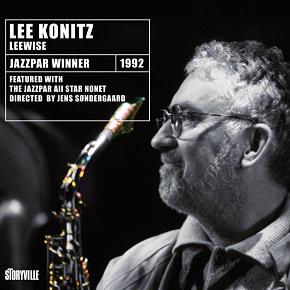
In 1992, in appreciation of
his deep influence on the European jazz scene, Konitz received the
Danish Jazzpar prize. He continued to push himself creatively, working
in a bevy of cross-pollinated settings, from orchestral ensembles to
free improvisations. Still, standards and acoustic modern jazz remained a
focus, as on 1992's Jazz Nocturne with pianist Kenny Barron, bassist
James Genus, and drummer Kenny Washington. 1995's Haiku was an
understated and textural quintet session with drummer Jerry Granelli,
pianist Andreas Schmidt, bass clarinetist Rudi Mahall, and vocalist
Sayumi Yoshida. Konitz appeared on trumpeter Kenny Wheeler's elegiac
1996 ECM album Angel Song with guitarist Bill Frisell and bassist Dave
Holland. A year later, he made his Blue Note debut with Alone Together,
an all-star trio album featuring bassist Charlie Haden and pianist Brad
Mehldau. The trio returned for a second trio outing with 1999's Another
Shade of Blue. Konitz investigated classical music alongside the Axis
String Quartet with 2000's French Impressionist Music from the Turn of
the Twentieth Century. There were also compelling dates with Paul
Motian, Steve Swallow, John Abercrombie, Marc Johnson, and others. The
Mark Masters Ensemble joined him for 2004's One Day with Lee, and in
2007 he recorded Portology with the Ohad Talmor Big Band.
In
2009, Konitz was honored with the NEA Jazz Masters Fellowship, one of
the United States highest jazz awards given in recognition of his long
and influential career. The following year, he released the concert
album Live at the Village Vanguard. In 2011, he released the trio album
Knowinglee, featuring saxophonist Dave Liebman, and pianist Richie
Beirach. He also appeared on the live ECM date Live at Birdland with
pianist Brad Mehldau, bassist Charlie Haden, and drummer Paul Motian.
That same year, he was joined by drummer Joey Baron, guitarist Bill
Frisell, and bassist Gary Peacock for Enfants Terribles: Live at the
Blue Note. Three years later, he joined Dan Tepfer, Michael Janisch, and
Jeff Williams for First Meeting: Live in London, Vol. 1. The quartet
date Frescalalto arrived in 2017 and featured the saxophonist alongside
pianist Kenny Barron, bassist Peter Washington, and drummer Kenny
Washington. In 2019, Konitz rejoined saxophonist/arranger Ohad Talmor
for Old Songs New, a nonet recording focusing on beloved, yet
infrequently recorded standards. Konitz died on April 15, 2020 due to
complications from the COVID-19 virus; he was 92 years
old.https://www.allmusic.com/artist/lee-konitz-mn0000227776/biography
///////
Biografía
por Matt Collar
En
el transcurso de una carrera épica de más de 70 años, el tono
distintivamente limpio y las armonías sin pretensiones del saxofonista
alto Lee Konitz lo convirtieron en una figura enormemente influyente en
el jazz moderno progresivo. Protegido del pianista Lennie Tristano,
Konitz surgió por primera vez como músico en los años 40, basándose en
sus principales influencias, como los saxofonistas Lester Young y
Charlie Parker, mientras evitaba hábilmente las comparaciones directas
con cualquiera de ellos. Junto con su trabajo inicial en la banda de
Stan Kenton, fue un miembro original de la nonet seminal de Miles Davis,
ayudando a sentar las bases para el sonido fresco del jazz de los años
50. Por el contrario, sus grabaciones junto a Tristano a menudo se citan
como precursoras del movimiento de free jazz de los años 60. Sus
propios álbumes, como Subconsciente-Lee de 1950, Tranquility de 1957 y
The Lee Konitz Duets de 1967, muestran su lirismo intuitivo y su enfoque
ingeniosamente escultórico de la armonía. A partir de los años 70,
Konitz comenzó una asociación de larga duración con Woodstock, Creative
Music Studio de Nueva York, tiempo durante el cual grabó muchos más
álbumes distintivos que exploraban tanto los estándares como su propio
material original único. En ocasiones, Konitz fue incluso más apreciado
en Europa que en los EE. UU., viviendo y trabajando allí durante
períodos considerables a partir de finales de los años 60. No obstante,
fue celebrado por sus pares en ambos continentes, ganando un premio
Danish Jazzpar en 1992 y una beca NEA Jazz Masters en 2009. Activo hasta
bien entrada la década de los 80, continuó impulsándose
estilísticamente, explorando la música impresionista francesa junto con
el Axis String Quartet y colaborando en proyectos de big band y grupos
de cámara con el saxofonista Ohad Talmor. También dirigió una serie de
fechas ingeniosas de grupos pequeños para álbumes como Live at Birdland
de 2011 con el bajista Charlie Haden, el pianista Brad Mehldau y el
baterista Paul Motian, Frescalalto de 2017 con el pianista Kenny Barron y
el álbum íntimo de dúo Decade de 2018 con el pianista Dan Tepfer.
Nacido
en 1927 en Chicago, Leon Konitz creció como el menor de tres hermanos
en una familia de inmigrantes judíos de padre austríaco y madre rusa.
Sus padres tenían un negocio de tintorería y alentaron a sus hijos a
tocar música. Inspirado por escuchar a Benny Goodman en la radio, pidió
un clarinete, que comenzó a tocar alrededor de los 11 años. Influenciado
por su amor por el jazz y las bandas de baile swing de los años 30 y
40, eventualmente cambió primero a tenor y luego a al saxofón alto
cuando era adolescente. Aprendió a improvisar por sí mismo y dejó la
escuela secundaria temprano para reemplazar a Charlie Ventura en la
banda de Teddy Powell. También pasó un tiempo tocando con el grupo de
Jerry Wald antes de mudarse a la ciudad de Nueva York.
En 1943,
comenzó a estudiar con el pianista Lennie Tristano. Tristano, un músico
inventivo y de mente teórica, introdujo a Konitz en sus variadas ideas
musicales, incluido su uso de corcheas fuertes y oscilantes y líneas de
tresillos, nociones complejas de contrapuntismo y ricos recursos
armónicos y motívicos. Bajo la dirección de Tristano, Konitz amplió
enormemente su enfoque de la improvisación, equilibrando hábilmente la
influencia de músicos como Lester Young y Charlie Parker con las ideas
pedagógicas de Tristano. Fue una combinación que lo ayudó a evitar
convertirse en un imitador y que lo llevó a su propio sonido altamente
individualista y su enfoque de la improvisación. Él y Tristano
trabajaron como dúo tocando en bares de cócteles locales; también
formaron un sexteto con el tenor igualmente progresista Warne Marsh.
Juntos, en 1949, grabaron las pistas "Intuition" y "Digression", que a
menudo se citan como dos de las primeras "improvisaciones libres" jamás
documentadas. Fue junto a Tristano y Marsh que Konitz hizo su debut como
líder en Subconsciente-Lee de 1950 para el sello Prestige, que también
contó con el pianista Sal Mosca, el guitarrista Billy Bauer y el bajista
Arnold Fishkin.
Casi al mismo tiempo, Konitz tocaba con la
Orquesta de Claude Thornhill, donde se hizo amigo del saxofonista
barítono Gerry Mulligan y del arreglista Gil Evans. Evans comenzó a
realizar sesiones improvisadas informales en su apartamento en el sótano
de Manhattan, lo que llamó la atención del trompetista Miles Davis, que
buscaba un proyecto musical diferente después de dejar el quinteto de
Charlie Parker. En 1948, Konitz se había unido a Nonet de Davis, un
conjunto innovador marcado por los arreglos armónicamente sofisticados
de Mulligan, Evans y el pianista John Lewis. Apareció en el álbum de
Davis de 1951, Conception, y ganó aún más reconocimiento después de que
las sesiones de noneto se compilaran en el histórico álbum de Davis de
1957, Birth of the Cool.
A principios de los años 50, Konitz ya
había comenzado a ganar más atención por su sonido distintivo. Realizó
una gira por Escandinavia, donde su estilo relajado e inquisitivo
encontró una audiencia acogedora, lo que cimentó aún más la influencia
del cool jazz en los músicos europeos. También se unió a la Orquesta de
Stan Kenton, apareciendo en varios álbumes del líder de la banda durante
la década. Konitz siguió su debut con una sesión conjunta de 1953 junto
a Gerry Mulligan para Pacific Jazz. Siguieron más álbumes, incluidos
Konitz de 1954, Lee Konitz de 1955 con Warne Marsh, Inside Hi-Fi de 1956
y Very Cool de 1958. También apareció en el innovador (y en ese momento
algo controvertido) álbum en vivo de Tristano de 1956, en el que el
pianista utilizó innovadoras sobregrabaciones de piano. También se unió
al igualmente progresista saxofonista barítono Jimmy Giuffre para Lee
Konitz Meets Jimmy Giuffre de 1959. Giuffre también proporcionó arreglos
para la sección de ritmos y metales de Konitz de 1960, You and Lee, que
contó con contribuciones del pianista Bill Evans y el guitarrista Jim
Hall.
En 1961, Konitz se unió al baterista de John Coltrane Elvin
Jones y al bajista Sonny Dallas para Motion on Verve. Aunque
esencialmente una sesión de estándares, el álbum lo encontró tocando en
un estilo suelto y ad hoc, apenas insinuando melodías y, a menudo,
empujando la forma y la armonía de la canción en direcciones inventivas
que se acercaban al free jazz. Al año siguiente, se mudó a California,
donde comenzó a tener dificultades para encontrar trabajo. El rock &
roll había usurpado al jazz en la cultura popular y los clubes de jazz
comenzaban a cerrar. Al mismo tiempo, el jazz estaba evolucionando,
impulsado por el agresivo trabajo de vanguardia de músicos como
Coltrane, Ornette Coleman, Albert Ayler y otros. No obstante, Konitz
persistió, regresó a Nueva York en 1964 y finalmente resurgió con un
enfoque aún más amplio de sus propias grabaciones. En 1967, lanzó Duets
on Milestone, una producción estilísticamente variada que va desde el
jazz de Nueva Orleans hasta pistas geniales y canciones más
vanguardistas, y presenta colaboraciones con Joe Henderson, Jim Hall,
Eddie Gomez, Elvin Jones, Marshall Brown y otros. También fue a finales
de los años 60 cuando Konitz se mudó a Alemania con su esposa. Allí,
continuó trabajando regularmente, uniéndose a sus compañeros
saxofonistas Pony Poindexter, Phil Woods y Leo Wright para el aventurero
Alto Summit en 1968. También ese año, formó pareja con el pianista
francés Martial Solal para Impressive Rome y se unió al trompetista
italiano Enrico Rava para Stereokonitz. .
A principios de los
años 70, Konitz se mudó de regreso a Manhattan, donde comenzó a tocar
varias noches a la semana en clubes como Strykers y Gregory's. También
apareció en talleres en Woodstock en Creative Music Studio. Su
producción grabada floreció cuando lanzó una serie de álbumes en sellos
más pequeños, incluidos SteepleChase, Philology, Soul Note y otros.
Altissimo de 1973 lo encontró colaborando con los saxofonistas Gary
Bartz, Jackie McLean y Charlie Mariano. También dirigió un cuarteto para
Satori de 1975, tocando con Martial Solal, Jack DeJohnette y Dave
Holland. Ese mismo año, lanzó el álbum de saxofón solista Lone-Lee. Hubo
un álbum en vivo con Chet Baker, un álbum tributo a Cole Porter con Red
Mitchell y una sesión a dúo con Hal Galper. Konitz incluso se volvió a
conectar con su compañero de Lennie Tristano, Warne Marsh, para una
serie de álbumes en Storyville y tocó en álbumes de gran prestigio junto
a luminarias como Paul Bley, John Scofield y Shelly Manne.
Los
años 80 resultaron ser un período fructífero para Konitz, quien continuó
actuando y haciendo giras con frecuencia. En 1981, apareció en el
Festival de Jazz de Woodstock, que se llevó a cabo para celebrar el
décimo aniversario del Creative Music Studio. Continuó tocando en
Europa, trabajando a menudo con el pianista Martial Solal y el pianista
Michel Petrucciani. En 1983, tocó en un octeto con el pianista sueco
Lars Sjösten en Dedicated to Lee, un álbum tributo al difunto barítono
Lars Gullin. Konitz también construyó una asociación duradera con el
pianista Harold Danko, grabando una mezcla de álbumes de dúo y grupos
pequeños, incluidos Dovetail de 1984, Ideal Scene de 1986 y The New York
Album de 1987. A finales de la década, Konitz estaba ampliando su
enfoque, a veces tocando el saxofón soprano.
En 1992, en
reconocimiento a su profunda influencia en la escena jazzística europea,
Konitz recibió el premio Danish Jazzpar. Continuó impulsándose
creativamente, trabajando en un grupo de escenarios de polinización
cruzada, desde conjuntos orquestales hasta improvisaciones libres. Aún
así, los estándares y el jazz moderno acústico siguieron siendo un foco,
como en Jazz Nocturne de 1992 con el pianista Kenny Barron, el bajista
James Genus y el baterista Kenny Washington. Haiku de 1995 fue una
sesión de quinteto sutil y textural con el baterista Jerry Granelli, el
pianista Andreas Schmidt, el clarinetista bajo Rudi Mahall y la
vocalista Sayumi Yoshida. Konitz apareció en el elegíaco álbum Angel
Song de 1996 del trompetista Kenny Wheeler con el guitarrista Bill
Frisell y el bajista Dave Holland. Un año más tarde, hizo su debut en
Blue Note con Alone Together, un álbum de trío de estrellas con el
bajista Charlie Haden y el pianista Brad Mehldau. El trío regresó para
una segunda salida de trío con Another Shade of Blue de 1999. Konitz
investigó la música clásica junto con el Axis String Quartet con la
música impresionista francesa de principios del siglo XX de 2000.
También hubo fechas interesantes con Paul Motian, Steve Swallow, John
Abercrombie, Marc Johnson y otros. El Mark Masters Ensemble se unió a él
para One Day with Lee de 2004, y en 2007 grabó Portology con Ohad
Talmor Big Band.
En 2009, Konitz fue honrado con la beca NEA Jazz
Masters, uno de los premios de jazz más importantes de los Estados
Unidos otorgados en reconocimiento a su larga e influyente carrera. Al
año siguiente, lanzó el álbum de conciertos Live at the Village
Vanguard. En 2011, lanzó el álbum de trío Knowinglee, con el saxofonista
Dave Liebman y el pianista Richie Beirach. También apareció en la cita
en vivo de ECM Live at Birdland con el pianista Brad Mehldau, el bajista
Charlie Haden y el baterista Paul Motian. Ese mismo año, se le unieron
el baterista Joey Baron, el guitarrista Bill Frisell y el bajista Gary
Peacock para Enfants Terribles: Live at the Blue Note. Tres años más
tarde, se unió a Dan Tepfer, Michael Janisch y Jeff Williams para First
Meeting: Live in London, vol. 1. La fecha del cuarteto Frescalalto llegó
en 2017 y contó con el saxofonista junto al pianista Kenny Barron, el
bajista Peter Washington y el baterista Kenny Washington. En 2019,
Konitz se reunió con el saxofonista y arreglista Ohad Talmor para Old
Songs New, una grabación sin sonido que se enfoca en estándares amados,
pero grabados con poca frecuencia. Konitz murió el 15 de abril de 2020
debido a complicaciones del virus COVID-19; tenía 92 años.
https://www.allmusic.com/artist/lee-konitz-mn0000227776/biography