Showing posts with label Grachan Moncur III. Show all posts

Tuesday, May 13, 2025

Archie Shepp • For Losers


Review by Rob Ferrier
At the time this record was recorded, Shepp was bouncing back and forth between Paris and New York. He also bounced between the Impulse! and BYG labels. He also bounced between styles. For BYG, his music reached to grasp the bare beginnings of black music, back to Africa and the blues. His music for Impulse! tried to embrace the contemporary sounds of R&B, with very mixed results that to this day divide his fans. This record is a transitional one. For the traditionalists, there's his shattering and amusing cover of "I've Got It Bad" performed by the usual suspects one would think to find on an Archie Shepp record, including Cecil Payne and Joe Chambers. For those enraptured by albums like Attica Blues, songs like "Stick 'Em Up" will fascinate, as Shepp's raspy tenor is joined not only by a legion of avant-garde brethren (including names like Beaver Harris and Grachan Moncur), but also by the funky wood of electric bass, guitar, and organ. Some will find those later tracks a bit hard to take. Some will even find themselves snickering. But for anyone wishing to understand the music and career of this brilliant musician, this is an undervalued piece of the puzzle.
https://www.allmusic.com/album/for-losers-mw0000552954

///////


Reseña de Rob Ferrier
Cuando se grabó este disco, Shepp iba y venía entre París y Nueva York. También oscilaba entre los sellos Impulse! y BYG. También oscilaba entre estilos. Para BYG, su música buscaba los orígenes de la música negra, en África y el blues. Su música para Impulse! intentó abrazar los sonidos contemporáneos del R&B, con resultados muy dispares que a día de hoy dividen a sus fans. Este disco es de transición. Para los tradicionalistas, está su estremecedora y divertida versión de «I've Got It Bad» interpretada por los sospechosos habituales que uno pensaría encontrar en un disco de Archie Shepp, incluidos Cecil Payne y Joe Chambers. Para aquellos embelesados por álbumes como Attica Blues, canciones como «Stick 'Em Up» fascinarán, ya que al rasposo tenor de Shepp se une no sólo una legión de hermanos vanguardistas (incluyendo nombres como Beaver Harris y Grachan Moncur), sino también la madera funky del bajo eléctrico, la guitarra y el órgano. A algunos les costará aceptar los últimos temas. Incluso habrá quien se ría a carcajadas. Pero para cualquiera que desee comprender la música y la carrera de este brillante músico, ésta es una pieza infravalorada del rompecabezas.
https://www.allmusic.com/album/for-losers-mw0000552954


www.archieshepp.org ...


Colaborador / Contributor:  Pierre


Saturday, February 15, 2025

Herbie Hancock • My Point Of View


Review
by Stephen Thomas Erlewine  
Takin' Off was an impressive debut effort from Herbie Hancock, and his second record, My Point of View, proved that it was no fluke. Hancock took two risks with the album -- his five original compositions covered more diverse stylistic ground than his debut, and he assembled a large septet for the sessions; the band features such stellar musicians as trumpeter Donald Byrd, tenor saxophonist Hank Mobley, drummer Tony Williams, guitarist Grant Green, bassist Chuck Israels, and trombonist Grachan Moncur III. It's a rare occasion that all seven musicians appear on the same track, which speaks well for the pianist's arranging capabilities. Hancock knows how to get the best out of his songs and musicians, which is one of the reasons why My Point of View is a captivating listen. The other is the sheer musicality of the record. Hard bop remains the foundation for Hancock's music, but he explores its limitations, finding its soulful side (the successful "Watermelon Man" rewrite "Blind Man, Blind Man"), its probing, adventurous leanings (the edgy "King Cobra"), and its ballad side. "The Pleasure Is Mine" is a lovely, simple ballad, while "A Tribute to Someone" takes the form to more challenging territory -- it's lyrical, but it takes chances. The closer "And What if I Don't" finds the band working a relaxed, bluesy groove that gives them opportunities to spin out rich, tasteful solos. It's a little more relaxed than Takin' Off, but in its own way My Point of View is nearly as stunning.
https://www.allmusic.com/album/my-point-of-view-mw0000247492

///////

Reseña
por Stephen Thomas Erlewine  
Takin' Off fue un impresionante debut de Herbie Hancock, y su segundo disco, My Point of View, demostró que no fue casualidad. Hancock asumió dos riesgos con el álbum: sus cinco composiciones originales cubrían un terreno estilístico más diverso que en su debut, y reunió un gran septeto para las sesiones; la banda cuenta con músicos estelares como el trompetista Donald Byrd, el saxofonista tenor Hank Mobley, el batería Tony Williams, el guitarrista Grant Green, el bajista Chuck Israels y el trombonista Grachan Moncur III. Es raro que los siete músicos aparezcan en el mismo tema, lo que habla bien a las claras de la capacidad de arreglo del pianista. Hancock sabe cómo sacar lo mejor de sus canciones y músicos, lo cual es una de las razones por las que My Point of View es una escucha cautivadora. La otra es la pura musicalidad del disco. El hard bop sigue siendo la base de la música de Hancock, pero éste explora sus limitaciones, encontrando su lado más conmovedor (la exitosa reescritura de "Watermelon Man", "Blind Man, Blind Man"), sus inclinaciones indagadoras y aventureras (la atrevida "King Cobra") y su lado de balada. "The Pleasure Is Mine" es una balada encantadora y sencilla, mientras que "A Tribute to Someone" lleva la forma a un territorio más desafiante: es lírica, pero se arriesga. El final, "And What if I Don't", encuentra a la banda trabajando en un ritmo relajado y bluesero que les da la oportunidad de hacer solos ricos y de buen gusto. Es un poco más relajado que Takin' Off, pero a su manera My Point of View es casi igual de asombroso.
https://www.allmusic.com/album/my-point-of-view-mw0000247492


www.herbiehancock.com ...


Tuesday, February 11, 2025

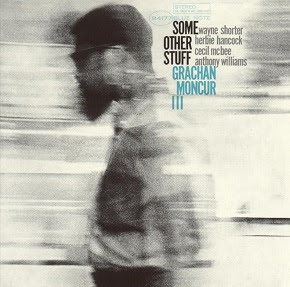
Grachan Moncur III • Some Other Stuff


Review
by Scott Yanow
Grachan Moncur III was one of the top trombonists of the jazz avant-garde in the 1960s although he had only a few chances to lead his own record sessions. This 1964 set (which has been reissued on CD) was one of his finest, a quintet outing with bassist Cecil McBee, two of the members of the Miles Davis Quintet (pianist Herbie Hancock and drummer Tony Williams), and tenor saxophonist Wayne Shorter just a brief time before he joined Miles. The group performs four of Moncur's challenging originals, including "Nomadic" (which is largely a drum solo) and "The Twins," which is built off of one chord. None of the compositions caught on but the strong and very individual improvising of the young musicians is enough of a reason to acquire the advanced music.
https://www.allmusic.com/album/some-other-stuff-mw0000628322


Biography
by Matt Collar
A trailblazing trombonist and composer, Grachan Moncur III was a bold improviser whose searing, harmonically explosive style (rooted in blues and bebop but reaching far beyond those traditions) helped to define the sound of edgy free jazz and post-bop. Moncur rose to prominence in the 1960s with his two landmark Blue Note sessions, 1963's Evolution and 1964's Some Other Stuff. The trombonist had already garnered attention playing on saxophonist Jackie McLean's classic Destination Out! and would go on to record with adventurous avant-garde improvisors like Archie Shepp, Sunny Murray, Beaver Harris, and others. While he only released a handful of his own albums through the '70s and 80s, he remained a vital presence, teaching and working with luminaries like Frank Lowe and Big John Patton. He re-emerged with 2004's Exploration, a collaboration with arranger Mark Masters, featuring stars like Tim Hagans and Billy Harper. His final album, 2007's Inner Cry Blues, also found him just as inspired and boundary-pushing as ever.

Born June 3, 1937 in New York City, Moncur grew up in Newark, New Jersey the son of bassist Grachan Moncur II. The young Moncur initially started out on the cello at age nine before switching to trombone at age 11. As a teenager, he attended the private Laurinburg Institute in North Carolina, where trumpeter Dizzy Gillespie had studied. It was during this period that he started sitting in at local clubs and made lasting connections with players like Art Blakey and Jackie McLean. After high school, he toured with Ray Charles and Sonny Rollins and was a member of Art Farmer and Benny Golson's Jazztet. It was with the Jazztet that he made his recorded debut, appearing on 1962's Another Git Together.

In 1963, he entered the studio with Jackie McLean, appearing on two of the saxophonist's landmark Blue Note sessions, Destination Out! and One Step Beyond, both also featuring vibraphonist Bobby Hutcherson. As a leader, Moncur made his solo debut for Blue Note with 1963's Evolution, itself a landmark of the burgeoning post-bop avant-garde movement. It again found him working with McLean, as well as trumpeter Lee Morgan. He returned the following year with another vibrantly exploratory album, Some Other Stuff, this time featuring Herbie Hancock and Wayne Shorter. These albums captured the sociopolitical Zeitgeist of the era, earning Moncur a spot on poet and activist Amiri Baraka's 1965 concert New Black Music, later released as The New Wave in Jazz and also featuring artists like Albert Ayler, Archie Shepp, and John Coltrane.

Moncur soon joined Shepp's ensemble and recorded on albums by avant-garde artists like Roswell Rudd and Beaver Harris, the latter of whom he joined in the cooperative group 360 Degree Music Experience. He spent extended periods in Paris in the late '60s, where he recorded two albums for the BYG Actuel label, New Africa and Aco dei de Madrugada (One Morning I Waked Up Very Early). In 1974, he was commissioned by the Jazz Composer's Orchestra to write a jazz symphony for full orchestra and soloists that he released that same year as Echoes of Prayer. A sixth album, Shadows, arrived in 1977 (as a Japan-only release) and found Moncur leading a group with Marion Brown, Reggie Workman, Joe Chambers, Dave Burrell, Roland Prince, and Andy Bey.

He remained active into the '80s, playing on Big John Patton's 1983 album Soul Connection, and appeared on Frank Lowe's 1984 album Decision In Paradise with trumpeter Don Cherry, pianist Geri Allen, bassist Charnett Moffett, and drummer Charles Moffett. There were also recordings with vocalist Cassandra Wilson, the Paris Reunion Band, and William Parker. However, increasing health problems and copyright disputes limited his own output, and he concentrated more on teaching.

In 2004, he re-emerged with Exploration on Capri Records, featuring his compositions arranged by Mark Masters for an octet that included Tim Hagans, Billy Harper, Gary Bartz, Andrew Cyrille, and others. Two years later, he delivered Inner Cry Blues, featuring a Bay Area-based group with trumpeter Erik Jekabson, tenor saxophonist Mitch Marcus, bassist Lukas Vesely, and drummer Sameer Gupta. Following a lengthy illness, Moncur died on June 3, 2022 at his home in Newark, New Jersey from cardiac arrest. It was his 85th birthday.
https://www.allmusic.com/artist/grachan-moncur-iii-mn0000803589/biography

///////


Reseña
por Scott Yanow
Grachan Moncur III fue uno de los mejores trombonistas de la vanguardia jazzística de los años sesenta, aunque sólo tuvo unas pocas oportunidades de dirigir sus propias sesiones discográficas. Esta grabación de 1964 (que se ha reeditado en CD) fue una de sus mejores, un quinteto con el bajista Cecil McBee, dos de los miembros del Miles Davis Quintet (el pianista Herbie Hancock y el batería Tony Williams), y el saxofonista tenor Wayne Shorter poco antes de unirse a Miles. El grupo interpreta cuatro de los desafiantes originales de Moncur, entre ellos "Nomadic" (que es en gran parte un solo de batería) y "The Twins", que se construye a partir de un acorde. Ninguna de las composiciones tuvo éxito, pero la fuerte e individual improvisación de los jóvenes músicos es razón suficiente para adquirir la música avanzada.
https://www.allmusic.com/album/some-other-stuff-mw0000628322


Biografía
por Matt Collar
Grachan Moncur III, trombonista y compositor pionero, fue un audaz improvisador cuyo estilo abrasador y armónicamente explosivo (enraizado en el blues y el bebop, pero que iba mucho más allá de esas tradiciones) ayudó a definir el sonido del free jazz y el post-bop. Moncur saltó a la fama en la década de 1960 con sus dos sesiones emblemáticas para Blue Note, Evolution (1963) y Some Other Stuff (1964). El trombonista ya había llamado la atención tocando en el clásico Destination Out! del saxofonista Jackie McLean y grabaría con aventureros improvisadores de vanguardia como Archie Shepp, Sunny Murray, Beaver Harris y otros. Aunque sólo publicó un puñado de sus propios álbumes en los años 70 y 80, siguió siendo una presencia vital, enseñando y trabajando con luminarias como Frank Lowe y Big John Patton. Reapareció con Exploration, de 2004, una colaboración con el arreglista Mark Masters en la que participaron estrellas como Tim Hagans y Billy Harper. Su último álbum, Inner Cry Blues, de 2007, también lo encontró tan inspirado y transgresor como siempre.

Nacido el 3 de junio de 1937 en Nueva York, Moncur creció en Newark, Nueva Jersey, hijo del bajista Grachan Moncur II. El joven Moncur empezó a tocar el violonchelo a los nueve años, antes de pasarse al trombón a los once. De adolescente, asistió al instituto privado Laurinburg de Carolina del Norte, donde había estudiado el trompetista Dizzy Gillespie. Fue durante este periodo cuando empezó a tocar en clubes locales y estableció contactos duraderos con músicos como Art Blakey y Jackie McLean. Después del instituto, hizo giras con Ray Charles y Sonny Rollins y formó parte del Jazztet de Art Farmer y Benny Golson. Fue con el Jazztet con el que hizo su debut discográfico, apareciendo en 1962 en Another Git Together.

En 1963, entró en el estudio con Jackie McLean, apareciendo en dos de las sesiones emblemáticas del saxofonista para Blue Note, Destination Out! y One Step Beyond, ambas también con el vibrafonista Bobby Hutcherson. Como líder, Moncur debutó en solitario para Blue Note con Evolution, de 1963, un hito del floreciente movimiento vanguardista post-bop. Volvió a trabajar con McLean y con el trompetista Lee Morgan. Volvió al año siguiente con otro álbum vibrantemente exploratorio, Some Other Stuff, esta vez con Herbie Hancock y Wayne Shorter. Estos álbumes captaban el Zeitgeist sociopolítico de la época, lo que le valió a Moncur un puesto en el concierto New Black Music de 1965 del poeta y activista Amiri Baraka, publicado posteriormente como The New Wave in Jazz y en el que también participaron artistas como Albert Ayler, Archie Shepp y John Coltrane.

Moncur pronto se unió al conjunto de Shepp y grabó en álbumes de artistas vanguardistas como Roswell Rudd y Beaver Harris, a este último se unió en el grupo cooperativo 360 Degree Music Experience. Pasó largas temporadas en París a finales de los 60, donde grabó dos álbumes para el sello BYG Actuel, New Africa y Aco dei de Madrugada (Una mañana me desperté muy temprano). En 1974, recibió el encargo de la Jazz Composer's Orchestra de escribir una sinfonía de jazz para orquesta completa y solistas que publicó ese mismo año con el título Echoes of Prayer. Un sexto álbum, Shadows, llegó en 1977 (sólo en Japón) y en él Moncur lideraba un grupo con Marion Brown, Reggie Workman, Joe Chambers, Dave Burrell, Roland Prince y Andy Bey.

Permaneció activo hasta los años 80, tocando en el álbum Soul Connection de Big John Patton de 1983, y apareció en el álbum Decision In Paradise de Frank Lowe de 1984 con el trompetista Don Cherry, la pianista Geri Allen, el bajista Charnett Moffett y el batería Charles Moffett. También realizó grabaciones con la vocalista Cassandra Wilson, la Paris Reunion Band y William Parker. Sin embargo, los crecientes problemas de salud y las disputas por los derechos de autor limitaron su propia producción, y se concentró más en la enseñanza.

En 2004, reapareció con Exploration en Capri Records, con composiciones suyas arregladas por Mark Masters para un octeto que incluía a Tim Hagans, Billy Harper, Gary Bartz, Andrew Cyrille y otros. Dos años más tarde, publicó Inner Cry Blues, con un grupo de la Bay Area formado por el trompetista Erik Jekabson, el saxofonista tenor Mitch Marcus, el bajista Lukas Vesely y el batería Sameer Gupta. Tras una larga enfermedad, Moncur falleció el 3 de junio de 2022 en su casa de Newark, Nueva Jersey, de un paro cardíaco. Cumplía 85 años.
https://www.allmusic.com/artist/grachan-moncur-iii-mn0000803589/biography


Tuesday, February 4, 2025

Grachan Moncur III • Evolution


Review
by Steve Huey  
One of the New Thing's extremely few trombonists and a greatly underappreciated composer of tremendous evocative power, Grachan Moncur III got his first major exposure on Jackie McLean's groundbreaking 1963 masterpiece, One Step Beyond. Toward the end of the year, most of the same musicians reconvened for Moncur's debut as a leader, Evolution; McLean, vibist Bobby Hutcherson, and drummer Tony Williams are all back, with Bob Cranshaw on bass and an extra voice in trumpeter Lee Morgan, moonlighting from his usual groovy hard bop style. While Moncur takes a little more solo space here, the main emphasis is on his talent as a composer. The four originals are all extended, multi-sectioned works (the shortest is around eight minutes), all quite ambitious, and all terrifically moody; much of the album sounds sinister and foreboding, and even the brighter material has a twisted, surreal fun-house undercurrent. Part of that is due to the accuracy with which the musicians interpret Moncur's vision. Hutcherson provides his trademark floating chordal accompaniment, which is crucial to the overall texture; what's more, the album features some of McLean's weirdest playing ever, and some of Morgan's most impressively advanced, as he makes the most of a situation he longed to be in more often. Of the pieces, "Monk in Wonderland" is the most memorable; its whimsical, angular theme is offset by Hutcherson's mysterious vibes, which create a trippy effect in keeping with the title. "Air Raid" is alternately ominous and terrifyingly frantic, and the funereal title track keeps time only in the pulse of the horns and the backing, which is based entirely on whole notes. With such an inventive debut, it's a shame Moncur didn't record more as a leader, which makes Evolution an even more important item for fans of Blue Note's avant-garde to track down.
https://www.allmusic.com/album/evolution-mw0000197035

///////


Reseña
por Steve Huey  
Grachan Moncur III, uno de los poquísimos trombonistas de la New Thing y un compositor muy infravalorado con un tremendo poder de evocación, se dio a conocer por primera vez en la innovadora obra maestra de Jackie McLean de 1963, One Step Beyond. Hacia finales de año, la mayoría de los mismos músicos volvieron a reunirse para el debut de Moncur como líder, Evolution; McLean, el vibrista Bobby Hutcherson y el batería Tony Williams están de vuelta, con Bob Cranshaw al bajo y una voz extra en el trompetista Lee Morgan, pluriempleado de su habitual estilo groovy hard bop. Aunque Moncur se toma aquí un poco más de espacio como solista, el énfasis principal recae en su talento como compositor. Los cuatro originales son obras extensas y multi-seccionales (la más corta dura unos ocho minutos), todas bastante ambiciosas, y todas terriblemente malhumoradas; gran parte del álbum suena siniestro y premonitorio, e incluso el material más brillante tiene un trasfondo retorcido y surrealista. En parte se debe a la precisión con la que los músicos interpretan la visión de Moncur. Hutcherson aporta su característico acompañamiento de acordes flotantes, que es crucial para la textura general; es más, el álbum presenta algunas de las interpretaciones más extrañas de McLean, y algunas de las más impresionantemente avanzadas de Morgan, que saca el máximo partido de una situación en la que anhelaba estar más a menudo. De las piezas, "Monk in Wonderland" es la más memorable; su tema caprichoso y anguloso se ve compensado por las misteriosas vibraciones de Hutcherson, que crean un efecto triposo acorde con el título. "Air Raid" es alternativamente ominoso y aterradoramente frenético, y el fúnebre tema que da título al disco mantiene el compás sólo en el pulso de las trompas y el acompañamiento, que se basa enteramente en notas enteras. Con un debut tan inventivo, es una pena que Moncur no grabara más como líder, lo que hace de Evolution un disco aún más importante para los fans de la vanguardia de Blue Note.
https://www.allmusic.com/album/evolution-mw0000197035


Tuesday, January 21, 2025

Archie Shepp • Live at the Donaueschingen Music Festival [1967]


Review
by Scott Yanow
This is an exciting album. The important tenor Archie Shepp and his 1967 group -- with both Roswell Rudd and Grachan Moncur on trombones, bassist Jimmy Garrison, and drummer Beaver Harris -- romp through the continuous 43-and-a-half-minute "One for the Trane" before an enthusiastic audience at a German music festival. Although he improvises very freely and with great intensity, Shepp surprised the crowd by suddenly bursting into a spaced-out version of "The Shadow of Your Smile" near the end of this memorable performance. On the whole, this very spirited set represents avant-garde jazz at its peak and Archie Shepp at his finest.
https://www.allmusic.com/album/life-at-the-donaueschingen-music-festival-mw0000871676

///////


Reseña
por Scott Yanow
Este es un álbum emocionante. El importante tenor Archie Shepp y su grupo de 1967 -- con Roswell Rudd y Grachan Moncur a los trombones, el bajista Jimmy Garrison y el batería Beaver Harris -- retozan a lo largo de los continuos 43 minutos y medio de "One for the Trane" ante un público entusiasta en un festival de música alemán. Aunque improvisa muy libremente y con gran intensidad, Shepp sorprendió al público al estallar de repente en una versión espaciada de "The Shadow of Your Smile" cerca del final de esta memorable actuación. En conjunto, este conjunto tan animado representa el jazz de vanguardia en su apogeo y a Archie Shepp en su mejor momento.
https://www.allmusic.com/album/life-at-the-donaueschingen-music-festival-mw0000871676


Colaborador / Contributor:  Pierre


Tuesday, December 10, 2024

Joe Henderson • Milestone Profile


Review
by Thom Jurek
Tenor giant Joe Henderson worked with Milestone Records for eight years. While he is best remembered for his Blue Note period, Henderson issued some truly great recordings for Milestone. His volume in the label's Milestone Profiles series is one of the best in the bunch. While fans can argue endlessly about what to include or leave off in a best-of series, it's difficult to argue Nick Phillips' choices. Arranged aesthetically -- more like a Henderson mix -- rather than chronologically, the music skips back and forth across his career. There are the tough, bluesy, funky numbers like his "Mamacita" with Grachan Moncur, Louis Hayes, Kenny Barron, and Ron Carter, as well as his stunning "Black Narcissus" with Herbie Hancock, Carter, and Jack DeJohnette. Hancock's electric piano is a deeply atmospheric instrument, full of shimmering light and shadow, as Henderson plays some of the sweetest, most lyrical, and most gentle tenor of his long professional career. His collaboration with Japanese jazz musicians is heard on the burning "Out 'N' In." Another stellar moment in this collection of so many of them is "Black Is the Color (Of My True Love's Mind)," where he takes the John Jacob Niles folk tune and reinvents it harmonically with guitarist George Wadenius, pianist George Cables, (electric piano), bassist Dave Holland, Airto, and DeJohnette playing not only drums but a second electric piano. A tune that walks on the edge of "out," it is nonetheless a melodic dream of improvisation and close listening. His knotty, humorous, and butt funky "Recorda Me," is re-presented here as "No Me Esqueça," with Stanley Clarke, Lenny White and Cables (again on electric piano) with Curtis Fuller and Pete Yellen. Henderson was one of those players who excelled in any setting -- electric, acoustic, bop, out, soul -- he firmly inhabited them all. This set is fine and argumentative proof not only for the saxophonist and bandleader, but also for Joe Henderson the composer.
https://www.allmusic.com/album/milestone-profiles-mw0000766585?1649875690513

///////


Reseña
por Thom Jurek
El gigante del tenor Joe Henderson trabajó con Milestone Records durante ocho años. Aunque es más recordado por su etapa en Blue Note, Henderson realizó algunas grabaciones realmente buenas para Milestone. Su volumen en la serie Milestone Profiles del sello es uno de los mejores del grupo. Aunque los aficionados pueden discutir infinitamente sobre lo que se debe incluir o dejar de lado en una serie de best-of, es difícil discutir las elecciones de Nick Phillips. Ordenada estéticamente -más bien como una mezcla de Henderson- en lugar de cronológicamente, la música salta de un lado a otro de su carrera. Hay números duros, blues y funky como su "Mamacita" con Grachan Moncur, Louis Hayes, Kenny Barron y Ron Carter, así como su impresionante "Black Narcissus" con Herbie Hancock, Carter y Jack DeJohnette. El piano eléctrico de Hancock es un instrumento profundamente atmosférico, lleno de luces y sombras brillantes, mientras Henderson toca algunos de los tenores más dulces, líricos y suaves de su larga carrera profesional. Su colaboración con músicos de jazz japoneses se escucha en la ardiente "Out 'N' In". Otro momento estelar en esta colección de tantos es "Black Is the Color (Of My True Love's Mind)", donde toma la melodía folk de John Jacob Niles y la reinventa armónicamente con el guitarrista George Wadenius, el pianista George Cables, (piano eléctrico), el bajista Dave Holland, Airto, y DeJohnette tocando no sólo la batería sino un segundo piano eléctrico. Una melodía que camina al borde del "out", es sin embargo un sueño melódico de improvisación y escucha cercana. Su nudoso, humorístico y a tope funky "Recorda Me", se vuelve a presentar aquí como "No Me Esqueça", con Stanley Clarke, Lenny White y Cables (de nuevo al piano eléctrico) con Curtis Fuller y Pete Yellen. Henderson era uno de esos músicos que sobresalían en cualquier entorno - eléctrico, acústico, bop, out, soul - los habitaba firmemente todos. Este conjunto es una prueba fina y argumentada no sólo para el saxofonista y director de banda, sino también para Joe Henderson el compositor.
https://www.allmusic.com/album/milestone-profiles-mw0000766585?1649875690513


Tuesday, September 17, 2024

John Patton • Soul Connection


Originally released in 1983, Soul Connection is a rich, funky session where Patton demonstrates his virtuosity alongside guitarist Melvin Sparks and free jazz trombonist and composer, Grachan Moncur III. The title track, written by Serbian trumpeter Duško Goyković, opens the album, anchored by a swinging rhythm, a gorgeous lead melodic line, and Patton’s effortless solo. Sparks shines on “Space Station,” attacking the tune’s main theme with his bright, cool tone and an inventive and dexterous solo that lands midway through the song. Clocking in at over 12 minutes, “The Coaster” is the album’s closer, a piece where the soloists really stretch out and explore.

When Patton takes his final solo of the record, he paces himself, deftly introducing and countering his own melodic ideas as part of a sort of playfully self-contained call and response. As the intensity heats up, Patton makes his Hammond organ scream, reminding listeners that he was a master of one of jazz’s most important instruments.

///////


Publicado originalmente en 1983, Soul Connection es una sesión rica y funky en la que Patton demuestra su virtuosismo junto al guitarrista Melvin Sparks y el trombonista y compositor de free jazz, Grachan Moncur III. El tema que da título al disco, escrito por el trompetista serbio Duško Goyković, abre el álbum, anclado por un ritmo oscilante, una magnífica línea melódica principal y el solo de Patton sin esfuerzo. Sparks brilla en "Space Station", atacando el tema principal de la melodía con su tono brillante y fresco y un solo ingenioso y diestro que aterriza a mitad de la canción. Con más de 12 minutos, "The Coaster" es el cierre del álbum, una pieza en la que los solistas se extienden y exploran.

Cuando Patton hace su último solo del disco, se toma su tiempo, introduciendo y contrarrestando hábilmente sus propias ideas melódicas como parte de una especie de llamada y respuesta juguetona. A medida que la intensidad aumenta, Patton hace gritar su órgano Hammond, recordando a los oyentes que era un maestro de uno de los instrumentos más importantes del jazz.


Tuesday, August 20, 2024

Archie Shepp • The Way Ahead


Review
by Thom Jurek  
The Way Ahead was a turning point for Archie Shepp. For starters, he had looked all over the jazz/improv arena for the proper combination of players -- without a piano. One can speculate that this was because he cut his first teeth with pianist Cecil Taylor, and that could ruin anybody for life. Recorded in 1969, The Way Ahead featured Ron Carter on bass, Grachan Moncur III's trombone, Jimmy Owens' trumpet, and drums by either Beaver Harris or Roy Haynes, with Walter Davis, Jr. on piano. The set is a glorious stretch of the old and new, with deep blues, gospel, and plenty of guttersnipe swing in the mix. From the post-bop blues opener "Damn If I Know (The Stroller)," the set takes its Ellington-Webster cue and goes looking for the other side of Mingus. Shepp's solo is brittle, choppy, honky, and glorious against a set of changes gracefully employed by Moncur and Owens. Harris' stuttering, skittering rhythm may keep it anchored in the blues, but holds the line for anything else to happen. Likewise, the modern edge of things evidenced by Moncur's "Frankenstein" (first recorded with Jackie McLean's group in 1963) turns up the heat a bit more. Shepp's take is wholly different, accenting pedal points and microharmonics in the breaks. On "Sophisticated Lady" and "Fiesta," Haynes fills the drum chair and cuts his manic swinging time through the arrangements, lending them more of an elegant flair than perhaps they deserve here, though they also dig deeper emotionally than one would expect.
https://www.allmusic.com/album/the-way-ahead-mw0000044736

///////


Reseña
por Thom Jurek  
The Way Ahead fue un punto de inflexión para Archie Shepp. Para empezar, había buscado por todo el ámbito del jazz/improvisación la combinación adecuada de músicos... sin un piano. Se puede especular que esto se debió a que hizo sus primeros pinitos con el pianista Cecil Taylor, y eso puede arruinar a cualquiera de por vida. Grabado en 1969, The Way Ahead contó con Ron Carter al bajo, el trombón de Grachan Moncur III, la trompeta de Jimmy Owens y la batería de Beaver Harris o Roy Haynes, con Walter Davis, Jr. al piano. El conjunto es un tramo glorioso de lo viejo y lo nuevo, con blues profundo, gospel y mucho swing de guttersnipe en la mezcla. Desde el blues post-bop que abre "Damn If I Know (The Stroller)", el conjunto toma su referencia de Ellington-Webster y busca el otro lado de Mingus. El solo de Shepp es quebradizo, entrecortado, honky y glorioso contra un conjunto de cambios empleados con gracia por Moncur y Owens. El ritmo tartamudo y patinador de Harris puede mantenerlo anclado en el blues, pero mantiene la línea para que ocurra cualquier otra cosa. Del mismo modo, la modernidad de las cosas evidenciada por "Frankenstein" de Moncur (grabada por primera vez con el grupo de Jackie McLean en 1963) sube un poco más la temperatura. La toma de Shepp es totalmente diferente, acentuando los puntos de pedal y los microarmónicos en las pausas. En "Sophisticated Lady" y "Fiesta", Haynes llena la silla de la batería y corta su maníaco tiempo de swing a través de los arreglos, dándoles un toque más elegante de lo que quizás merecen aquí, aunque también profundizan emocionalmente más de lo que uno esperaría.
https://www.allmusic.com/album/the-way-ahead-mw0000044736


Wednesday, July 31, 2024

Joe Henderson Sextet • The Kicker


Review
by Scott Yanow
Joe Henderson's first recording for Milestone was very much a continuation of the adventurous acoustic music he had recorded previously for Blue Note. For those listeners who do not wish to invest in the tenor saxophonist's "complete" eight-CD Milestone box set, this single-CD is a good place to start in investigating his middle period music. Henderson is featured in a sextet with trumpeter Mike Lawrence, trombonist Grachan Moncur III, pianist Kenny Barron, bassist Ron Carter and drummer Louis Hayes on a well-rounded set highlighted by "Mamacita," "Chelsea Bridge," "If," "Without a Song" and "Nardis."
https://www.allmusic.com/album/the-kicker-mw0000316640

///////


Reseña
por Scott Yanow
La primera grabación de Joe Henderson para Milestone fue en gran medida una continuación de la música acústica aventurera que había grabado anteriormente para Blue Note. Para aquellos oyentes que no deseen invertir en la caja "completa" de ocho CDs de Milestone del saxofonista tenor, este único CD es un buen punto de partida para investigar su música del periodo medio. Henderson aparece en un sexteto con el trompetista Mike Lawrence, el trombonista Grachan Moncur III, el pianista Kenny Barron, el bajista Ron Carter y el baterista Louis Hayes en un conjunto muy completo en el que destacan "Mamacita", "Chelsea Bridge", "If", "Without a Song" y "Nardis".
https://www.allmusic.com/album/the-kicker-mw0000316640


Sunday, May 26, 2024

Jackie McLean • Hipnosis


Biography
John Lenwood (Jackie) McLean was an alto saxophonist, composer, bandleader and educator, born in New York City.

His father, John Sr., who died in 1939, played guitar in Tiny Bradshaw's orchestra. After his father's death, his musical education was continued by his godfather, by his stepfather, who owned a record store, and by several noted teachers. He also received informal tutoring from neighbours Thelonious Monk, Bud Powell, and Charlie Parker. During high school he played in a band with Kenny Drew, Sonny Rollins, and Andy Kirk Jr. (the tenor saxophonist son of Andy Kirk).

He recorded with Miles Davis, on Davis' Dig album, when he was 19 years old. Rollins played on the same album. As a young man McLean also recorded with Gene Ammons, Charles Mingus, andGeorge Wallington, and as a member of Art Blakey's Jazz Messengers (he reportedly joined the Jazz Messengers after being punched by the notoriously violent Mingus and, fearing for his life, stabbing him in self-defence). His early recordings as leader were in the hard bop school. He later became an exponent of modal jazz without abandoning his foundation in hard bop. Throughout his career he was known for his distinctive tone (often described with such adjectives as withering, piercing, or searing), his slightly sharp pitch, and a strong foundation in blues.

McLean was a heroin addict throughout his early career, and the resulting loss of his New York City cabaret licence forced him to undertake a large number of recording dates; consequently, he produced a large body of recorded work in the 1950s and 60s. He was under contract with Blue Note Records from 1959 to 1967, having previously recorded for Prestige. Blue Note offered better pay and more artistic control than other labels, and his work for Blue Note is highly regarded.

In 1962 he recorded Let Freedom Ring for Blue Note. This album was the culmination of attempts he had made over the years to deal with harmonic problems in jazz, especially in soloing on his piece "Quadrangle." (*"Quadrangle" appears on BST 4051, Jackie's Bag, recorded in 1959). Let Freedom Ring began a period in which he performed with avant-garde musicians rather than the veteran hard bop performers he had been playing with. His recordings from 1962 on, in which he adapted the innovations of modal and free jazz to hard bop, made his body of work distinctive.

In 1964, he served six months in prison on drug charges. The period immediately after his release from prison is known as his acid period because the three albums he released during it were much harsher in tone than his previous albums.

In 1967, his recording contract, like those of many other progressive musicians, was terminated by Blue Note's new management. His opportunities to record promised so little pay that he abandoned recording as a way to earn a living, concentrating instead on touring. In 1968, he began teaching at The Hartt School of the University of Hartford. He later set up the university's African American Music Department (now the Jackie McLean Institute of Jazz) and its Jazz Studies degree program.

In 1970, he and his wife, Dollie, founded the Artists' Collective, Inc. of Hartford, an organization dedicated to preserving the art and culture of the African diaspora. It provides educational programs and instruction in dance, theatre, music and visual arts.

He received an American Jazz Masters fellowship from the National Endowment for the Arts in 2001.

His stepson René is a jazz saxophonist and flautist as well as a jazz educator.

After a long illness, McLean died on March 31, 2006, in Hartford, Connecticut.
https://www.allaboutjazz.com/musicians/jackie-mclean/

 ///////

 Biografía
John Lenwood (Jackie) McLean fue un saxofonista alto, compositor, director de orquesta y educador, nacido en la ciudad de Nueva York.

Su padre, John Sr., fallecido en 1939, tocaba la guitarra en la orquesta de Tiny Bradshaw. Tras la muerte de su padre, su educación musical fue continuada por su padrino, por su padrastro, propietario de una tienda de discos, y por varios profesores de renombre. También recibió clases informales de sus vecinos Thelonious Monk, Bud Powell y Charlie Parker. Durante el instituto tocó en una banda con Kenny Drew, Sonny Rollins y Andy Kirk Jr. (el saxofonista tenor hijo de Andy Kirk).

Grabó con Miles Davis, en el álbum Dig de Davis, cuando tenía 19 años. Rollins tocó en el mismo álbum. De joven, McLean también grabó con Gene Ammons, Charles Mingus y George Wallington, y como miembro de los Jazz Messengers de Art Blakey (al parecer, se unió a los Jazz Messengers después de recibir un puñetazo del notoriamente violento Mingus y, temiendo por su vida, apuñalarle en defensa propia). Sus primeras grabaciones como líder pertenecían a la escuela del hard bop. Más tarde se convirtió en un exponente del jazz modal sin abandonar su base en el hard bop. A lo largo de su carrera fue conocido por su tono característico (a menudo descrito con adjetivos como fulminante, penetrante o abrasador), su tono ligeramente agudo y una sólida base de blues.

McLean fue adicto a la heroína al principio de su carrera, y la consiguiente pérdida de su licencia de cabaret en Nueva York le obligó a realizar un gran número de grabaciones; en consecuencia, produjo una gran cantidad de trabajos discográficos en los años cincuenta y sesenta. Entre 1959 y 1967 firmó un contrato con Blue Note Records, tras haber grabado anteriormente para Prestige. Blue Note le ofrecía mejores salarios y más control artístico que otros sellos, y su trabajo para Blue Note goza de gran prestigio.

En 1962 grabó Let Freedom Ring para Blue Note. Este álbum fue la culminación de los intentos que había hecho a lo largo de los años para tratar los problemas armónicos en el jazz, especialmente en el solo de su pieza "Quadrangle". (*"Quadrangle" aparece en BST 4051, Jackie's Bag, grabado en 1959). Let Freedom Ring inició un periodo en el que actuó con músicos de vanguardia en lugar de con los veteranos intérpretes de hard bop con los que había estado tocando. Sus grabaciones a partir de 1962, en las que adaptó las innovaciones del jazz modal y el free jazz al hard bop, dieron un carácter distintivo a su obra.

En 1964 pasó seis meses en la cárcel acusado de tráfico de drogas. El periodo inmediatamente posterior a su salida de la cárcel se conoce como su periodo ácido porque los tres álbumes que publicó durante el mismo tenían un tono mucho más duro que sus álbumes anteriores.

En 1967, su contrato discográfico, como el de muchos otros músicos progresistas, fue rescindido por la nueva dirección de Blue Note. Sus oportunidades de grabar prometían tan poca paga que abandonó la grabación como forma de ganarse la vida, concentrándose en cambio en las giras. En 1968 empezó a dar clases en la Hartt School de la Universidad de Hartford. Más tarde creó el Departamento de Música Afroamericana de la universidad (ahora Instituto de Jazz Jackie McLean) y su programa de estudios de jazz.

En 1970, él y su esposa, Dollie, fundaron el Artists' Collective, Inc. de Hartford, una organización dedicada a preservar el arte y la cultura de la diáspora africana. Ofrece programas educativos e instrucción en danza, teatro, música y artes visuales.

En 2001 recibió una beca American Jazz Masters de la National Endowment for the Arts.

Su hijastro René es saxofonista y flautista de jazz, además de profesor de jazz.

Tras una larga enfermedad, McLean falleció el 31 de marzo de 2006 en Hartford, Connecticut.
https://www.allaboutjazz.com/musicians/jackie-mclean/


Saturday, April 6, 2024

Jackie McLean • One Step Beyond


Review by Thom Jurek
In 1963, alto saxophonist Jackie McLean was well aware of John Coltrane and Ornette Coleman. He assembled a band with vibist Bobby Hutcherson, who had already played with Eric Dolphy, drummer Tony Williams, bassist Eddie Khan, and trombonist/composer Grachan Moncur III. While still adhering to the hard bop principle, One Step Beyond's title is literal. The introduction of space as an element in the twin-horn front line is consistent with what would come later that year on Destination Out! McLean is clearly hearing the Eastern modalism and intervallic invention in Coltrane's sound at this point, but still moves in his own direction, sticking very close to the blues and the hard, even relentless, swing provided by Williams on the kit. The true visionary compositions here are Moncur's "Frankenstein" and "Ghost Town." Their unconventional solo-horn melodic statements are followed by two horn choruses that use Hutcherson's vibes as a contrapuntal element as he spreads his chords so wide that he comes off like a pair of pianos playing complementary harmonic strategies, and it's revolutionary. Add to this Moncur's insistence on soloing inside the changes as McLean moves through the register and becomes increasingly dissonant, and you have a true doppelgänger effect -- but one that swings like mad. One Step Beyond may have been the first volley McLean fired in the direction of the new jazz, and played it safe enough to ride out the hard bop he helped to create, but he cannot be faulted as a bandleader, as this music still sounds fresh, vital, and full of grainy mystery.
https://www.allmusic.com/album/one-step-beyond-mw0000651704

///////


Reseña de Thom Jurek
En 1963, el saxofonista alto Jackie McLean conocía bien a John Coltrane y Ornette Coleman. Reunió una banda con el vibravibrista Bobby Hutcherson, que ya había tocado con Eric Dolphy, el batería Tony Williams, el bajista Eddie Khan y el trombonista y compositor Grachan Moncur III. Sin dejar de adherirse al principio del hard bop, el título de One Step Beyond es literal. ¡La introducción del espacio como elemento en la primera línea de trompas gemelas es coherente con lo que vendría más tarde ese mismo año en Destination Out! McLean escucha claramente el modalismo oriental y la invención interválica en el sonido de Coltrane en este punto, pero sigue moviéndose en su propia dirección, pegándose mucho al blues y al swing duro, incluso implacable, proporcionado por Williams en el kit. Las verdaderas composiciones visionarias aquí son "Frankenstein" y "Ghost Town" de Moncur. Sus poco convencionales declaraciones melódicas de solo de trompa van seguidas de dos coros de trompa que utilizan el vibráfono de Hutcherson como elemento contrapuntístico mientras extiende tanto sus acordes que parece un par de pianos tocando estrategias armónicas complementarias, y es revolucionario. Añádase a esto la insistencia de Moncur en hacer solos dentro de los cambios a medida que McLean se mueve por el registro y se vuelve cada vez más disonante, y se obtiene un verdadero efecto doppelgänger, pero uno que oscila como loco. One Step Beyond puede haber sido la primera andanada de McLean en la dirección del nuevo jazz, y jugó lo suficientemente seguro como para aguantar el hard bop que ayudó a crear, pero no se le puede reprochar nada como director de orquesta, ya que esta música sigue sonando fresca, vital y llena de misterio granulado.
https://www.allmusic.com/album/one-step-beyond-mw0000651704


Sunday, March 24, 2024

Grachan Moncur III • Exploration


Review by Scott Yanow
Trombonist Grachan Moncur III, who was a member of the Jazztet in the early 1960s, gained his greatest fame for his two Blue Note albums (Evolution and Some Other Stuff) which were quite adventurous. He also worked with Archie Shepp, became involved in free jazz and spent much of the 1970s and '80s as a music educator. Dental problems resulted in Moncur only playing once in a great while in the 1990s. He had been in obscurity for quite awhile when he was contacted by arranger Mark Masters for the Exploration project. Fortunately Moncur's playing proved to still be in his prime. Masters wrote sympathetic charts for many of the trombonist's finest pieces, utilizing an all-star nonet that could really dig into the inside/outside music. "Excursion," a very coherent three-minute free improvisation, is a change-of-pace and precedes the closing blues "Sonny's Back," a 1962 piece originally played by the Jazztet. This CD overall is very rewarding, a dream project for those who have long admired the underrated Grachan Moncur. The musicians have their solos, there are both written and improvised ensembles and Moncur plays wonderfully throughout. This set, which sums up Grachan Moncur's career definitively, is a gem.
https://www.allmusic.com/album/exploration-mw0000362379

///////


Reseña de Scott Yanow
El trombonista Grachan Moncur III, que fue miembro del Jazztet a principios de los años 60, adquirió su mayor fama por sus dos álbumes para Blue Note (Evolution y Some Other Stuff), bastante aventureros. También trabajó con Archie Shepp, se involucró en el free jazz y pasó gran parte de los años 70 y 80 como educador musical. Problemas dentales hicieron que Moncur sólo tocara de vez en cuando en la década de 1990. Llevaba bastante tiempo en el olvido cuando el arreglista Mark Masters se puso en contacto con él para el proyecto Exploration. Afortunadamente, Moncur demostró que seguía tocando en su mejor momento. Masters escribió arreglos simpáticos para muchas de las mejores piezas del trombonista, utilizando un noneto de estrellas que realmente podía profundizar en la música interior/exterior. "Excursion", una improvisación libre de tres minutos muy coherente, es un cambio de ritmo y precede al blues de cierre "Sonny's Back", una pieza de 1962 interpretada originalmente por el Jazztet. En conjunto, este CD es muy gratificante, un proyecto de ensueño para los que admiran desde hace tiempo al subestimado Grachan Moncur. Los músicos tienen sus solos, hay conjuntos escritos e improvisados y Moncur toca maravillosamente en todo momento. Este conjunto, que resume definitivamente la carrera de Grachan Moncur, es una joya.
https://www.allmusic.com/album/exploration-mw0000362379


www.bluenote.com/Grachan Moncur-III ...


Thursday, March 14, 2024

Wayne Shorter • The All Seeing Eye


Review
by Scott Yanow
With such titles as "The All Seeing Eye," "Genesis," "Chaos," "Face of the Deep," and "Mephistopheles," it is clear from the start that the music on this LP is not basic bop and blues. Wayne Shorter (who composed four of the five originals) picked an all-star cast (trumpeter Freddie Hubbard, altoist James Spaulding, trombonist Grachan Moncur III, pianist Herbie Hancock, bassist Ron Carter, and drummer Joe Chambers, along with brother Alan Shorter on flügelhorn for the final song) to perform and interpret the dramatic selections, and their brand of controlled freedom has plenty of subtle surprises. This is stimulating music that still sounds fresh.
https://www.allmusic.com/album/the-all-seeing-eye-mw0000097755

///////


Reseña
por Scott Yanow
Con títulos como "The All Seeing Eye", "Genesis", "Chaos", "Face of the Deep" y "Mephistopheles", queda claro desde el principio que la música de este LP no es bop y blues básico. Wayne Shorter (que compuso cuatro de los cinco originales) eligió a un elenco de estrellas (el trompetista Freddie Hubbard, el contralto James Spaulding, el trombonista Grachan Moncur III, el pianista Herbie Hancock, el bajista Ron Carter y el batería Joe Chambers, junto con su hermano Alan Shorter al flügelhorn en la última canción) para interpretar las dramáticas selecciones, y su estilo de libertad controlada tiene muchas sorpresas sutiles. Es música estimulante que sigue sonando fresca.
https://www.allmusic.com/album/the-all-seeing-eye-mw0000097755


wayneshorterofficial.com ...


Monday, February 12, 2024

Archie Shepp • Mama Too Tight


Review
by Thom Jurek  
The octet Archie Shepp surrounded himself with in 1966 was filled with new and old faces. The twin trombones of Roswell Rudd and Grachan Moncur III embodied this, but so did bassist Charlie Haden and trumpeter Tommy Turrentine, while familiar figures like drummer Beaver Harris and tubaist Howard Johnson had been part of Shepp's regular band. There are four tracks on Mama Too Tight, all of them in some way acting as extensions of the opening three-part suite "A Portrait of Robert Thomson (As a Young Man)." Shepp had hit his stride here compositionally. The track is, at first, a seeming free jazz blowout, but then traces the history of jazz, gospel, and blues breeze through its three sections. Certainly there is plenty of atonality, but there is plenty of harmonic and rhythmic invention, too. The piece, almost 19 minutes in length, has an intricate architecture that uses foreshadowing techniques and complex resolution methods. The title track is a post-bop blues swinger with a killer frontline riff turning in and out as the trombones go head to head. And finally, "Basheer," with an Eastern modality that transposes itself toward blues and folk music, becomes a statement on the transitional ties the '60s were ushering in musically. Here again, lots of free blowing, angry bursts of energy, and shouts of pure revelry are balanced with Ellingtonian elegance and restraint that was considerable enough to let the lyric line float through and encourage more improvisation. This is Shepp at his level best.
https://www.allmusic.com/album/mama-too-tight-mw0000034785

///////


Reseña
por Thom Jurek  
El octeto del que se rodeó Archie Shepp en 1966 estaba lleno de caras nuevas y viejas. Los trombones gemelos de Roswell Rudd y Grachan Moncur III encarnaban esto, pero también lo hacían el bajista Charlie Haden y el trompetista Tommy Turrentine, mientras que figuras conocidas como el baterista Beaver Harris y el tubista Howard Johnson habían formado parte de la banda habitual de Shepp. Hay cuatro temas en Mama Too Tight, todos ellos actuando de alguna manera como extensiones de la suite inicial de tres partes "A Portrait of Robert Thomson (As a Young Man)". Shepp ha alcanzado aquí su mejor momento compositivo. El tema es, al principio, una aparente explosión de free jazz, pero luego traza la historia del jazz, el gospel y la brisa del blues a través de sus tres secciones. Ciertamente hay mucha atonalidad, pero también hay mucha invención armónica y rítmica. La pieza, de casi 19 minutos de duración, tiene una intrincada arquitectura que utiliza técnicas de prefiguración y complejos métodos de resolución. El tema que da título a la obra es un blues swinger post-bop con un riff de primera línea que entra y sale mientras los trombones se enfrentan. Y finalmente, "Basheer", con una modalidad oriental que se transpone hacia el blues y la música folk, se convierte en una declaración sobre los lazos de transición que los años 60 estaban marcando musicalmente. Aquí también, muchos soplos libres, ráfagas de energía furiosa y gritos de puro jolgorio se equilibran con la elegancia ellingtoniana y una contención lo suficientemente considerable como para dejar fluir la línea lírica y fomentar más la improvisación. Este es el mejor nivel de Shepp.
https://www.allmusic.com/album/mama-too-tight-mw0000034785


Colaborador / Contributor:  Pierre