Sunday, May 18, 2025
Monday, March 24, 2025
Bill Evans • New Jazz Conceptions
Wednesday, February 26, 2025
Friday, February 21, 2025
Lee Morgan • Charisma
Review
by Scott Yanow
This set (reissued on CD in 1997) was one of trumpeter Lee Morgan's lesser-known Blue Note recordings but it is quite rewarding. The notable sextet (which also includes altoist Jackie McLean, Hank Mobley on tenor, pianist Cedar Walton, bassist Paul Chambers and drummer Billy Higgins) performs originals by Morgan, Walton and Duke Pearson, including particularly catchy versions of the funky "Hey Chico" and Pearson's memorable "Sweet Honey Bee" (which should have become a hit). The three horns, all of whom sound quite individual, each have their exciting moments, and the results are quintessential mid-'60s hard bop.
https://www.allmusic.com/album/charisma-mw0000029058
///////
Reseña
por Scott Yanow
Este conjunto (reeditado en CD en 1997) fue una de las grabaciones menos conocidas del trompetista Lee Morgan en Blue Note, pero es bastante gratificante. El notable sexteto (que también incluye al contralto Jackie McLean, Hank Mobley al tenor, el pianista Cedar Walton, el bajista Paul Chambers y el batería Billy Higgins) interpreta originales de Morgan, Walton y Duke Pearson, incluyendo versiones particularmente pegadizas del funky "Hey Chico" y la memorable "Sweet Honey Bee" de Pearson (que debería haberse convertido en un éxito). Las tres trompas, que suenan muy individualmente, tienen cada una sus momentos emocionantes, y el resultado es la quintaesencia del hard bop de mediados de los 60.
https://www.allmusic.com/album/charisma-mw0000029058
Thursday, January 30, 2025
Saturday, January 25, 2025
Bill Evans • Nardis
Evans
was born in Plainfield, New Jersey and attended Southeastern Louisiana
University. After a period in the Army, he returned to New York in 1955
and began working and recording with Tony Scott and George Russell. His
subtly swinging, lucidly constructed solos with these leaders quickly
attracted attention, and provided Evans with an opportunity to begin
recording under his own name; but he was modest regarding his gifts, and
for a time was reluctant to push himself into the limelight. All this
changed after he spent several months during 1958 in Miles Davis's band,
where he played alongside John Coltrane and Cannonball Adderley, and
became a central figure in Davis's shift to modal improvisation.
The
period with Davis allowed Evans to organize his own trio, which
featured bassist Scott LaFaro and drummer Paul Motian by the end of
1959. These three players developed a new and more interactive approach
to trio playing, one in which all instruments carried melodic
responsibilities and functioned as equal voices. LaFaro's tragic death
in a July 1961 highway accident ended the existence of this seminal
unit; but not before it had recorded four albums, two in the studio and
two at a Village Vanguard performance shortly before the bassist's
death, that influenced several generations of pianists, bassists, and
drummers.
While Evans excelled in even more intimate playing
situations—he made memorable duet music with guitarist Jim Hall, singer
Tony Bennett, and bassist Eddie Gomez, and on more than one occasion
created fascinating studio recitals of multi-tracked piano—for the
remaining two decades of his life, he continued to work in the trio
format he had established with LaFaro and Motian. Personnel rarely
changed in the Evans trio (Gomez was a member from 1966-1977, while
drummers Marty Morell and Eliot Zigmund performed in the trio alongside
Evans and Gomez from 1968-1974 and 1975-1977, respectively), and the
unit's repertoire slowly grew to include evocative new originals and
worthy standards, as well as the tunes that led to Evans's initial fame.
Despite
this consistency of format and material, Evans remained uncommonly
inspired, able to reach stunning emotional depths with a quiet lucidity
that was unmatched. His lyrical melodic inventions, intricate phrasing,
complex voicings, and beautiful touch remain as unmistakable influences
on pianists more than 40 years after his death.
https://billevansofficial.com/about/
///////
Evans
nació en Plainfield, Nueva Jersey, y estudió en la Southeastern
Louisiana University. Tras un periodo en el ejército, regresó a Nueva
York en 1955 y empezó a trabajar y grabar con Tony Scott y George
Russell. Sus solos sutilmente oscilantes y lúcidamente construidos con
estos líderes llamaron rápidamente la atención, y proporcionaron a Evans
la oportunidad de empezar a grabar con su propio nombre; pero era
modesto en cuanto a sus dotes, y durante un tiempo se mostró reacio a
saltar a la palestra. Todo esto cambió después de pasar varios meses de
1958 en la banda de Miles Davis, donde tocó junto a John Coltrane y
Cannonball Adderley, y se convirtió en una figura central en el cambio
de Davis hacia la improvisación modal.
El periodo con Davis
permitió a Evans organizar su propio trío, que a finales de 1959 contaba
con el bajista Scott LaFaro y el batería Paul Motian. Estos tres
músicos desarrollaron un enfoque nuevo y más interactivo para tocar en
trío, en el que todos los instrumentos tenían responsabilidades
melódicas y funcionaban como voces iguales. La trágica muerte de LaFaro
en un accidente de carretera en julio de 1961 puso fin a la existencia
de esta unidad seminal; pero no antes de que hubiera grabado cuatro
álbumes, dos en el estudio y dos en una actuación en el Village Vanguard
poco antes de la muerte del bajista, que influyeron en varias
generaciones de pianistas, bajistas y bateristas.
Aunque Evans
destacó en situaciones de interpretación aún más íntimas -hizo
memorables duetos con el guitarrista Jim Hall, el cantante Tony Bennett y
el bajista Eddie Gómez, y en más de una ocasión creó fascinantes
recitales en estudio de piano multipista-, durante las dos décadas que
le quedaban de vida siguió trabajando en el formato de trío que había
establecido con LaFaro y Motian. El personal del trío de Evans rara vez
cambió (Gómez fue miembro de 1966 a 1977, mientras que los bateristas
Marty Morell y Eliot Zigmund tocaron en el trío junto a Evans y Gómez de
1968 a 1974 y de 1975 a 1977, respectivamente), y el repertorio de la
unidad creció lentamente para incluir nuevos originales evocadores y
estándares dignos, así como las melodías que llevaron a la fama inicial
de Evans.
A pesar de esta consistencia de formato y material,
Evans seguía estando extraordinariamente inspirado, capaz de alcanzar
profundidades emocionales asombrosas con una lucidez silenciosa que no
tenía parangón. Sus líricas invenciones melódicas, su intrincado fraseo,
sus complejos voicings y su hermoso toque siguen siendo influencias
inconfundibles para los pianistas más de 40 años después de su muerte.
https://billevansofficial.com/about/
Monday, December 30, 2024
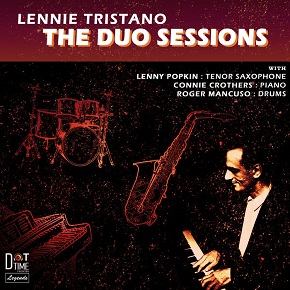
Lennie Tristano • The Duo Sessions
Biography by Chris Kelsey
The
history of jazz is written as a recounting of the lives of its most
famous (and presumably, most influential) artists. Reality is not so
simple, however. Certainly the most important of the music's innovators
are those whose names are known by all -- Armstrong, Parker, Young,
Coltrane. Unfortunately, the jazz critic's tendency to inflate the major
figures' status often comes at the expense of other musicians'
reputations -- men and women who have made significant, even essential,
contributions of their own, who are, for whatever reason, overlooked in
the mad rush to canonize a select few. Lennie Tristano is one of those
who have not yet received their critical due. In the mid-'40s, the
Chicago-born pianist arrived on the scene with a concept that genuinely
expanded the prevailing bop aesthetic. Tristano brought to the music of
Charlie Parker and Bud Powell a harmonic language that adapted the
practices of contemporary classical music; his use of polytonal effects
in tunes like "Out on a Limb" was almost Stravinsky-esque, and his
extensive use of counterpoint was (whether or not he was conscious of it
at the time) in keeping with the trends being set in mid-century art
music. Until relatively recently, it had seldom been acknowledged that
Tristano had been the first to perform and record a type of music that
came to be called "free jazz." In 1949 -- almost a decade before the
making of Ornette Coleman's first records -- Tristano's group (which
included Lee Konitz, Warne Marsh, and Billy Bauer) cut the first
recorded example of freely improvised music in the history of jazz. The
two cuts, "Intuition" and "Digression," were created spontaneously,
without any pre-ordained reference to time, tonality, or melody. The
resultant work was an outgrowth of Tristano's preoccupation with feeling
and spontaneity in the creation of music. It influenced, among others,
Charles Mingus, whose earliest records sound eerily similar to those of
Tristano in terms of style and compositional technique. Mingus came by
the influence honestly; he studied with the pianist for a period in the
early '50s, as did many other well-known jazz musicians, such as Sal
Mosca, Phil Woods, and the aforementioned Konitz and Marsh.
Tristano
was stricken permanently blind as an infant. He first studied music
with his mother, an avocational pianist and opera singer. From
1928-1938, he attended a school for the blind in Chicago, where he
learned music theory and developed proficiency on several wind
instruments. Later, he attended Chicago's American Conservatory of
Music, from which he received a bachelor's degree in 1943. During his
early years as a professional performer and teacher, Tristano worked in
and around Chicago, achieving his first measure of critical attention
and attracting his first important students, Konitz and
composer/arranger Bill Russo.
In 1946, Tristano moved to New
York, where he made something of a big splash, performing with many of
the leading musicians of the day, including Dizzy Gillespie and Charlie
Parker. The influential critic Barry Ulanov took an extreme liking to
Tristano's music and championed his work in the pages of Metronome
magazine; Tristano was named the publication's Musician of the Year for
1947. Tenor saxophonist Warne Marsh began studies with Tristano in 1948,
and when Bauer and Konitz came back aboard, he had the core of his
great sextet. In 1949 -- with the addition of bassist Arnold Fishkin and
alternating drummers Harold Granowsky and Denzil Best -- Tristano,
Bauer, Konitz, and Marsh recorded what was to become the basis of the
band's collective legacy, the Capitol album Crosscurrents. The Capitol
sessions spawned many of Tristano's best-known works, including the
title track, and of course, the freely improvised cuts "Digression" and
"Intuition" (these latter recorded without a drummer). The recordings
synthesized the Tristano approach: long, rhythmically and harmonically
elaborate melodies were played over a smooth, almost uninflected swing
time maintained by the bassist and drummer. Counterpoint, which had been
mostly abandoned by post-New Orleans/Chicago players, made a comeback
in Tristano's music. Tristano's written lines were a great deal more
involved than the already complex melodies typical of bebop; he
subdivided and multiplied the beat in odd groupings, and his harmonies
did not always behave in a manner consistent with functional tonality.
The complexity of his constructs demanded that his rhythm section
provide little more than a solid foundation. Tristano's bassists and
drummers were not expected to interact in the manner of a bop rhythm
section, but to support the music's melodic and harmonic substance. Such
restraint lent Tristano's music an emotionally detached air, which to
this day has been used by unsympathetic critics as a sledgehammer to
pound him.
In 1951, Tristano founded a school of jazz in New
York, the first of its kind. Its faculty consisted of many of his most
prominent students, including Konitz, Bauer, Marsh, and pianist Sal
Mosca. His public performances became fewer and farther between; for the
rest of his life, Tristano was to concentrate on teaching, mostly to
the exclusion of everything else. He shut down his school in 1956, and
began teaching out of his home on Long Island. Thereafter he would play
occasionally at the Half Note in New York City. Recordings became
scarce. He made two albums for Atlantic, Lennie Tristano and The New
Tristano. A compilation of odds and ends entitled Descent into the
Maelstrom was released on Inner City; its title track documents
Tristano's experiments in multi-track recording of the piano. He toured
Europe in 1965; his last public performance in the U.S. was in 1968.
Until
his death in 1978, Tristano continued to teach. A later generation of
his adherents continues to work and thrive in New York to this day.
Musicians like pianist Connie Crothers, saxophonists Lenny Popkin and
Richard Tabnik, and drummer Carol Tristano -- the pianist's daughter --
carry on his work into the next century.
///////
Biografía de Chris Kelsey
La
historia del jazz se escribe como un recuento de las vidas de sus
artistas más famosos (y presumiblemente, más influyentes). Sin embargo,
la realidad no es tan sencilla. Sin duda, los innovadores más
importantes de la música son aquellos cuyos nombres son conocidos por
todos: Armstrong, Parker, Young, Coltrane. Desgraciadamente, la
tendencia de la crítica de jazz a inflar el estatus de las grandes
figuras se produce a menudo a expensas de la reputación de otros
músicos, hombres y mujeres que han hecho contribuciones significativas,
incluso esenciales, y que, por la razón que sea, se pasan por alto en la
loca carrera por canonizar a unos pocos elegidos. Lennie Tristano es
uno de los que aún no han recibido el reconocimiento de la crítica. A
mediados de los años 40, el pianista nacido en Chicago llegó a la escena
con un concepto que ampliaba realmente la estética bop imperante.
Tristano aportó a la música de Charlie Parker y Bud Powell un lenguaje
armónico que adaptaba las prácticas de la música clásica contemporánea;
su uso de efectos politonales en temas como "Out on a Limb" era casi
stravinskiano, y su amplio uso del contrapunto estaba (fuera o no
consciente de ello en aquel momento) en consonancia con las tendencias
que se estaban marcando en la música artística de mediados de siglo.
Hasta hace relativamente poco, rara vez se había reconocido que Tristano
había sido el primero en interpretar y grabar un tipo de música que
llegó a llamarse "free jazz". En 1949, casi una década antes de la
grabación de los primeros discos de Ornette Coleman, el grupo de
Tristano (que incluía a Lee Konitz, Warne Marsh y Billy Bauer) grabó el
primer ejemplo de música improvisada libremente en la historia del jazz.
Los dos cortes, "Intuition" y "Digression", fueron creados
espontáneamente, sin ninguna referencia preestablecida al tiempo, la
tonalidad o la melodía. La obra resultante fue una consecuencia de la
preocupación de Tristano por el sentimiento y la espontaneidad en la
creación musical. Influyó, entre otros, en Charles Mingus, cuyos
primeros discos suenan extrañamente similares a los de Tristano en
términos de estilo y técnica compositiva. Mingus recibió la influencia
de forma honesta; estudió con el pianista durante un periodo a
principios de los años 50, al igual que muchos otros músicos de jazz
conocidos, como Sal Mosca, Phil Woods y los mencionados Konitz y Marsh.
Tristano
sufrió una ceguera permanente cuando era un bebé. Primero estudió
música con su madre, pianista aficionada y cantante de ópera. De 1928 a
1938, asistió a una escuela para ciegos en Chicago, donde aprendió
teoría musical y desarrolló su habilidad con varios instrumentos de
viento. Más tarde, asistió al Conservatorio Americano de Música de
Chicago, donde se licenció en 1943. Durante sus primeros años como
intérprete profesional y profesor, Tristano trabajó en Chicago y sus
alrededores, logrando su primera atención de la crítica y atrayendo a
sus primeros alumnos importantes, Konitz y el compositor y arreglista
Bill Russo.
En 1946, Tristano se trasladó a Nueva York, donde
causó sensación, actuando con muchos de los principales músicos de la
época, como Dizzy Gillespie y Charlie Parker. El influyente crítico
Barry Ulanov se aficionó a la música de Tristano y defendió su trabajo
en las páginas de la revista Metronome; Tristano fue nombrado músico del
año de la publicación en 1947. El saxofonista tenor Warne Marsh comenzó
a estudiar con Tristano en 1948, y cuando Bauer y Konitz volvieron a
bordo, tenía el núcleo de su gran sexteto. En 1949 -con la adición del
bajista Arnold Fishkin y los bateristas alternativos Harold Granowsky y
Denzil Best- Tristano, Bauer, Konitz y Marsh grabaron lo que se
convertiría en la base del legado colectivo de la banda, el álbum
Crosscurrents de Capitol. Las sesiones de Capitol dieron lugar a muchos
de los trabajos más conocidos de Tristano, incluyendo el tema principal
y, por supuesto, los cortes de libre improvisación "Digression" e
"Intuition" (estos últimos grabados sin batería). Las grabaciones
sintetizaban el enfoque de Tristano: melodías largas y rítmica y
armónicamente elaboradas se interpretaban sobre un tiempo de swing
suave, casi sin inflexiones, mantenido por el bajista y el batería. El
contrapunto, que había sido abandonado en su mayor parte por los músicos
posteriores a Nueva Orleans/Chicago, volvió a aparecer en la música de
Tristano. Las líneas escritas por Tristano eran mucho más complicadas
que las ya complejas melodías típicas del bebop; subdividía y
multiplicaba el ritmo en agrupaciones extrañas, y sus armonías no
siempre se comportaban de forma coherente con la tonalidad funcional. La
complejidad de sus construcciones exigía que su sección rítmica
proporcionara poco más que una base sólida. No se esperaba que los
bajistas y bateristas de Tristano interactuaran a la manera de una
sección rítmica de bop, sino que apoyaran la sustancia melódica y
armónica de la música. Esta contención dio a la música de Tristano un
aire emocionalmente distante, que hasta hoy ha sido utilizado por
críticos poco comprensivos como un mazo para machacarlo.
En 1951,
Tristano fundó una escuela de jazz en Nueva York, la primera de este
tipo. Su profesorado estaba formado por muchos de sus alumnos más
destacados, como Konitz, Bauer, Marsh y el pianista Sal Mosca. Sus
actuaciones públicas fueron cada vez menos frecuentes; durante el resto
de su vida, Tristano se concentró en la enseñanza, excluyendo casi todo
lo demás. En 1956 cerró su escuela y comenzó a dar clases en su casa de
Long Island. A partir de entonces, tocaba ocasionalmente en el Half Note
de Nueva York. Las grabaciones empezaron a escasear. Grabó dos álbumes
para Atlantic, Lennie Tristano y The New Tristano. En Inner City se
editó una compilación de rarezas titulada Descent into the Maelstrom,
cuya canción principal documenta los experimentos de Tristano con la
grabación multipista del piano. Realizó una gira por Europa en 1965; su
última actuación pública en Estados Unidos fue en 1968.
Hasta su
muerte en 1978, Tristano siguió dando clases. Una generación posterior
de sus seguidores sigue trabajando y prosperando en Nueva York hasta
hoy. Músicos como la pianista Connie Crothers, los saxofonistas Lenny
Popkin y Richard Tabnik, y la baterista Carol Tristano -la hija del
pianista- continúan su obra en el próximo siglo.
Sunday, September 22, 2024
John Coltrane • Blue Train [expanded edition]
Review by Lindsay Planer
Although never formally signed, an oral agreement between John Coltrane and Blue Note Records founder Alfred Lion was indeed honored on Blue Train -- Coltrane's only collection of sides as a principal artist for the venerable label. The disc is packed solid with sonic evidence of Coltrane's innate leadership abilities. He not only addresses the tunes at hand, but also simultaneously reinvents himself as a multifaceted interpreter of both hard bop as well as sensitive balladry -- touching upon all forms in between. The personnel on Blue Train is arguably as impressive as what they're playing. Joining Coltrane (tenor sax) are Lee Morgan (trumpet), Curtis Fuller (trombone), Kenny Drew (piano), Paul Chambers (bass), and Philly Joe Jones (drums). The triple horn arrangements incorporate an additional sonic density that remains a trademark unique to both this band and album. Of particular note is Fuller's even-toned trombone, which bops throughout the title track as well as the frenetic "Moments Notice." Other solos include Paul Chambers' subtly understated riffs on "Blue Train" as well as the high energy and impact from contributions by Lee Morgan and Kenny Drew during "Locomotion." The track likewise features some brief but vital contributions from Philly Joe Jones -- whose efforts throughout the record stand among his personal best. Of the five sides that comprise the original Blue Train, the Jerome Kern/Johnny Mercer ballad "I'm Old Fashioned" is the only standard; in terms of unadulterated sentiment, this version is arguably untouchable. Fuller's rich tones and Drew's tastefully executed solos cleanly wrap around Jones' steadily languid rhythms. Without reservation, Blue Train can easily be considered in and among the most important and influential entries not only of John Coltrane's career, but of the entire genre of jazz music as well. [In 2003, an expanded edition of Blue Train was released, boasting marginally better sound than previous issues, plus the alternate takes issued on the 1997 version. It failed, however, to include another feature of the 1997 Ultimate Blue Train release, "At Least Listen," an interactive CD-ROM program featuring video clips and interview clips with Fuller circa 1995, as well as many brilliant photographs taken during the recording sessions.]
https://www.allmusic.com/album/release/blue-train-expanded-edition--mr0000275832
///////
Reseña de Lindsay Planer
Aunque nunca se firmó formalmente, un acuerdo verbal entre John Coltrane y el fundador de Blue Note Records, Alfred Lion, se cumplió en Blue Train, la única colección de caras de Coltrane como artista principal del venerable sello. El disco está repleto de pruebas sonoras de la innata capacidad de liderazgo de Coltrane. No sólo aborda los temas en cuestión, sino que también se reinventa a sí mismo como intérprete polifacético tanto del hard bop como de la balada sensible, tocando todas las formas intermedias. El personal de Blue Train es posiblemente tan impresionante como lo que tocan. Junto a Coltrane (saxo tenor) están Lee Morgan (trompeta), Curtis Fuller (trombón), Kenny Drew (piano), Paul Chambers (bajo) y Philly Joe Jones (batería). Los arreglos de triple trompa incorporan una densidad sonora adicional que sigue siendo una marca registrada exclusiva tanto de esta banda como del álbum. Destaca el trombón de Fuller, de tono uniforme, que hace bops a lo largo de la canción que da título al disco, así como en la frenética "Moments Notice". Otros solos son los sutilmente discretos riffs de Paul Chambers en "Blue Train", así como la gran energía e impacto de las contribuciones de Lee Morgan y Kenny Drew durante "Locomotion". La pista también cuenta con algunas contribuciones breves pero vitales de Philly Joe Jones, cuyos esfuerzos a lo largo del disco se encuentran entre sus mejores momentos personales. De las cinco caras que componen el Blue Train original, la balada de Jerome Kern/Johnny Mercer "I'm Old Fashioned" es el único estándar; en términos de sentimiento sin adulterar, esta versión es posiblemente intocable. Los ricos tonos de Fuller y los solos de Drew, ejecutados con buen gusto, envuelven limpiamente los ritmos constantemente lánguidos de Jones. Sin reservas, Blue Train puede considerarse fácilmente en y entre las entradas más importantes e influyentes no sólo de la carrera de John Coltrane, sino también de todo el género de la música de jazz. [En 2003, se publicó una edición ampliada de Blue Train, con un sonido ligeramente mejor que el de las ediciones anteriores, además de las tomas alternativas publicadas en la versión de 1997. Sin embargo, no incluía otra de las características de la edición Ultimate Blue Train de 1997, "At Least Listen", un programa interactivo en CD-ROM que presentaba videoclips y entrevistas con Fuller en torno a 1995, así como muchas fotografías brillantes tomadas durante las sesiones de grabación].
https://www.allmusic.com/album/release/blue-train-expanded-edition--mr0000275832
www.johncoltrane.com ...
Thursday, September 19, 2024
Bill Evans Trio • Portrait In Jazz
The first of two studio albums by the Bill Evans-Scott LaFaro-Paul Motian trio (both of which preceded their famous engagement at the Village Vanguard), this Portrait in Jazz reissue contains some wondrous interplay, particularly between pianist Evans and bassist LaFaro, on the two versions of "Autumn Leaves." Other than introducing Evans' "Peri's Scope," the music is comprised of standards, but the influential interpretations were far from routine or predictable at the time. LaFaro and Motian were nearly equal partners with the pianist in the ensembles and their versions of such tunes as "Come Rain or Come Shine," "When I Fall in Love," and "Someday My Prince Will Come" (which preceded Miles Davis' famous recording by a couple years) are full of subtle and surprising creativity. A gem.
El primero de los dos álbumes de estudio del trío Bill Evans-Scott LaFaro-Paul Motian (ambos precedieron a su famoso compromiso en el Village Vanguard), esta reedición de Portrait in Jazz contiene una maravillosa interacción, especialmente entre el pianista Evans y el bajista LaFaro, en las dos versiones de "Autumn Leaves". Aparte de la introducción de "Peri's Scope" de Evans, la música se compone de estándares, pero las influyentes interpretaciones estaban lejos de ser rutinarias o predecibles en aquella época. LaFaro y Motian eran compañeros casi de igual a igual con el pianista en los conjuntos y sus versiones de melodías como "Come Rain or Come Shine", "When I Fall in Love" y "Someday My Prince Will Come" (que precedió a la famosa grabación de Miles Davis por un par de años) están llenas de creatividad sutil y sorprendente. Una joya.
Wednesday, September 4, 2024
Bill Evans Trio • At Shelly's Manne-Hole
Review by Daniel Gioffre
Although the Scott LaFaro-Paul Motian lineup of the Bill Evans Trio is generally considered to be the strongest, Chuck Israels and Larry Bunker make a strong case of their own on At Shelly's Manne-Hole, a 1964 release that finds the entire band in classic form. This particular trio may lack some of the sheer combustive force of the better-known lineup, but it is, if possible, even more sensitive, melancholic, and nostalgic than the previous band. The leadoff track, "Isn't It Romantic," is one of Evans' finest moments, with the gently swinging theme leading into a strong, if restrained, solo from Israels. Over Bunker's sensitive brush work, Evans comments briefly and beautifully on the theme before returning to the head. The band's readings of such classics as "'Round Midnight," "Stella By Starlight," and "All the Things You Are" are wonderful, but it is the lesser-known tracks, such as "Swedish Pastry" and the aforementioned "Isn't It Romantic," that makes this recording so valuable. Jazz is rarely as sensitive or as melodic as this. Another classic from Bill Evans and company. https://www.allmusic.com/album/at-shellys-manne-hole-live-in-hollywood-ca-may-14-19-1963--mw0000204082
///////
Crítica de Daniel Gioffre
Aunque la formación Scott LaFaro-Paul Motian del Bill Evans Trio se considera generalmente como la más fuerte, Chuck Israels y Larry Bunker hacen un fuerte caso por su cuenta en At Shelly's Manne-Hole, un lanzamiento de 1964 que encuentra a toda la banda en forma clásica. Puede que a este trío en particular le falte algo de la fuerza arrolladora de la formación más conocida, pero es, si cabe, aún más sensible, melancólico y nostálgico que la banda anterior. El tema principal, «Isn't It Romantic», es uno de los mejores momentos de Evans, con un tema de suave balanceo que da paso a un solo potente, aunque contenido, de Israels. Sobre la sensible pincelada de Bunker, Evans comenta breve y bellamente el tema antes de volver a la cabeza. Las lecturas de la banda de clásicos como «'Round Midnight», «Stella By Starlight» y «All the Things You Are» son maravillosas, pero son los temas menos conocidos, como «Swedish Pastry» y el ya mencionado «Isn't It Romantic», los que hacen que esta grabación sea tan valiosa. El jazz rara vez es tan sensible o tan melódico como esto. Otro clásico de Bill Evans y compañía. https://www.allmusic.com/album/at-shellys-manne-hole-live-in-hollywood-ca-may-14-19-1963--mw0000204082
Tuesday, August 20, 2024
Bill Evans • Quintessence
Review
by Scott Yanow
Most of pianist Bill Evans' recordings were in a trio format, making this quintet date a nice change of pace. Evans' all-star group consists of tenor saxophonist Harold Land, guitarist Kenny Burrell, bassist Ray Brown, and drummer Philly Joe Jones and the results are quite tasteful and explorative in a subtle way. This version of Thad Jones' "A Child Is Born" is most memorable.
https://www.allmusic.com/album/quintessence-mw0000188121
///////
Reseña
por Scott Yanow
La mayoría de las grabaciones del pianista Bill Evans eran en formato de trío, por lo que esta cita en quinteto es un buen cambio de ritmo. El grupo de estrellas de Evans está formado por el saxofonista tenor Harold Land, el guitarrista Kenny Burrell, el bajista Ray Brown y el baterista Philly Joe Jones, y los resultados son de muy buen gusto y exploran de manera sutil. Esta versión de "A Child Is Born" de Thad Jones es muy memorable.
https://www.allmusic.com/album/quintessence-mw0000188121
Thursday, August 8, 2024
Bill Evans & Jim Hall • Undercurrent
Review by Scott Yanow
Other than four piano solos from April 4, 1962, this set was pianist Bill Evans' first recordings after a hiatus caused by bassist Scott LaFaro's tragic death in a car accident. The first of two meetings on record in a duo format with guitarist Jim Hall, the collaborations are often exquisite. Both Evans and Hall had introspective and harmonically advanced styles along with roots in hard-swinging bebop. There is more variety than expected on the fine set with some cookers, ballads, waltzes, and even some hints at classical music. Recommended.
https://www.allmusic.com/album/undercurrent-mw0000652581
///////
Reseña de Scott Yanow
Aparte de cuatro solos de piano del 4 de abril de 1962, este conjunto fue la primera grabación del pianista Bill Evans tras un paréntesis causado por la trágica muerte del bajista Scott LaFaro en un accidente de coche. El primero de los dos encuentros en disco en formato dúo con el guitarrista Jim Hall, las colaboraciones son a menudo exquisitas. Tanto Evans como Hall tenían estilos introspectivos y armónicamente avanzados junto con raíces en el bebop duro. Hay más variedad de la esperada en el buen conjunto con algunos cocineros, baladas, valses, e incluso algunos guiños a la música clásica. Recomendado.
https://www.allmusic.com/album/undercurrent-mw0000652581
Wednesday, August 7, 2024
Bill Evans Trio • Moon Beams
Sunday, July 21, 2024
Lee Morgan • City Lights
Review
by Scott Yanow
Benny Golson's writing for this date uplifts it beyond most of the jam session sets of the period. Trumpeter Lee Morgan (then 19) is in excellent form, holding his own with his impressive sidemen (trombonist Curtis Fuller, George Coleman on tenor and alto, pianist Ray Bryant, bassist Paul Chambers and drummer Art Taylor). Highlights include "City Lights," "You're Mine You" and "Just By Myself."
https://www.allmusic.com/album/city-lights-mw0000479466
///////
Reseña
por Scott Yanow
La escritura de Benny Golson para esta fecha lo eleva más allá de la mayoría de los conjuntos de jam session de la época. El trompetista Lee Morgan (entonces de 19 años) está en excelente forma, aguantando el tipo con sus impresionantes acompañantes (el trombonista Curtis Fuller, George Coleman al tenor y contralto, el pianista Ray Bryant, el bajista Paul Chambers y el batería Art Taylor). Destacan "City Lights", "You're Mine You" y "Just By Myself".
https://www.allmusic.com/album/city-lights-mw0000479466
Tuesday, April 2, 2024
Thursday, March 21, 2024
Bill Evans • Empathy
This album came about through a fortuitous convergence of circumstances. Shelly Manne & His Men were appearing at New York's Village Vanguard, sharing the bill with the Bill Evans Trio. Getting Riverside's permission to let the pianist participate, Creed Taylor set up a session at Rudy Van Gelder's studio with Evans and Manne sharing top billing. Manne's bass player, Monty Budwig, made up the trio. This was a busman's holiday for Evans, who was freed from the musical parameters he had set for his then-current trio. The result is that his playing seemed lighter, freer, and more relaxed than it had for a while. The album kicks off with a jaunty version of Irving Berlin's "The Washington Twist" from the unsuccessful Mr. President, with Budwig sharing the honors with Evans as much as Manne. Manne spends most of his time driving Evans into more diminished and sharper playing than was usually Evans' wont. Another relatively unfamiliar Berlin work, "Let's Go Back to the Waltz," gives full reign to Evans' lyricism. The longest tune on the set is an audacious, almost lampooned version of "With a Song in My Heart" with light chordal phrasing that pretty much characterized much of the tone coming from this session. Listening to these three, it's clear that everyone was having a good time and simply enjoying being relieved of their duties with their regular combos, even if for just one day.
https://www.allmusic.com/album/empathy-mw0000531139
Reseña de Dave Nathan
Este álbum surgió de una convergencia fortuita de circunstancias. Shelly Manne & His Men actuaban en el Village Vanguard de Nueva York, compartiendo cartel con el Bill Evans Trio. Con el permiso de Riverside para que el pianista participara, Creed Taylor organizó una sesión en el estudio de Rudy Van Gelder en la que Evans y Manne compartieron cartel. El bajista de Manne, Monty Budwig, formaba el trío. Fueron unas vacaciones para Evans, que se vio liberado de los parámetros musicales que había establecido para su trío de entonces. El resultado es que su forma de tocar parecía más ligera, libre y relajada que hacía tiempo. El álbum arranca con una alegre versión de "The Washington Twist" de Irving Berlin, de la fallida Mr. President, en la que Budwig comparte los honores con Evans tanto como Manne. Manne pasa la mayor parte del tiempo llevando a Evans a tocar más disminuido y agudo de lo que era habitual en Evans. Otra obra berlinesa relativamente desconocida, "Let's Go Back to the Waltz", da rienda suelta al lirismo de Evans. La melodía más larga del conjunto es una versión audaz, casi burlona, de "With a Song in My Heart", con un fraseo de acordes ligeros que caracteriza en gran medida el tono de esta sesión. Escuchando a estos tres, está claro que todo el mundo se lo estaba pasando bien y simplemente disfrutaba de estar liberado de sus obligaciones con sus combos habituales, aunque sólo fuera por un día.
https://www.allmusic.com/album/empathy-mw0000531139
Sunday, March 17, 2024
Bill Evans • From Left To Right
Review by AllMusic
In the '60s the jazz pianist Bill Evans would occasionally record an orchestral "easy listening" session to pay the bills, with predictably mediocre results. But FROM LEFT TO RIGHT, while certainly easy on the ears, is also one of Evans' most intriguing "lost" records, brought to us courtesy of Verve's winning "By Request" series. The novelty is that Evans plays both Fender Rhodes and acoustic piano simultaneously in real time, trading off themes and improvs with deliberative taste and, of course, rare skill. The sessions were produced by Evans' long-time, protective manager Helen Keane, so there was little danger of "selling out."
Unobtrusively arranged by Michael Leonard, this 1969 release resembles nothing so much as famed bossa nova composer Antonio Carlos Jobim's series of shimmering instrumental albums with arranger Claus Ogerman, even without those gently relentless rhythms driving every tune. Still, the highlight of this album is the dancing two-part "The Dolphin - Before & After," a non-Jobim bossa nova which allows Evans his only extended improvisations.
https://www.allmusic.com/album/from-left-to-right-mw0000044685
///////
Reseña de AllMusic
En los años 60, el pianista de jazz Bill Evans grababa ocasionalmente una sesión orquestal "easy listening" para pagar las facturas, con resultados previsiblemente mediocres. Pero FROM LEFT TO RIGHT, aunque ciertamente fácil para los oídos, es también uno de los discos "perdidos" más intrigantes de Evans, que nos llega por cortesía de la serie ganadora "By Request" de Verve. La novedad es que Evans toca simultáneamente el Fender Rhodes y el piano acústico en tiempo real, intercambiando temas e improvisaciones con gusto deliberativo y, por supuesto, una habilidad poco común. Las sesiones fueron producidas por Helen Keane, la protectora mánager de Evans durante muchos años, por lo que había poco peligro de "venderse".
Arreglado discretamente por Michael Leonard, este lanzamiento de 1969 no se parece en nada a la serie de brillantes álbumes instrumentales del famoso compositor de bossa nova Antonio Carlos Jobim con el arreglista Claus Ogerman, incluso sin esos ritmos suavemente implacables que conducen cada melodía. Sin embargo, lo más destacado de este álbum es "The Dolphin - Before & After", una bossa nova que no es de Jobim y que permite a Evans sus únicas improvisaciones prolongadas.
https://www.allmusic.com/album/from-left-to-right-mw0000044685
Wednesday, January 31, 2024
Bill Evans • You Must Believe in Spring
Evans
was born in Plainfield, New Jersey and attended Southeastern Louisiana
University. After a period in the Army, he returned to New York in 1955
and began working and recording with Tony Scott and George Russell. His
subtly swinging, lucidly constructed solos with these leaders quickly
attracted attention, and provided Evans with an opportunity to begin
recording under his own name; but he was modest regarding his gifts, and
for a time was reluctant to push himself into the limelight. All this
changed after he spent several months during 1958 in Miles Davis's band,
where he played alongside John Coltrane and Cannonball Adderley, and
became a central figure in Davis's shift to modal improvisation.
The
period with Davis allowed Evans to organize his own trio, which
featured bassist Scott LaFaro and drummer Paul Motian by the end of
1959. These three players developed a new and more interactive approach
to trio playing, one in which all instruments carried melodic
responsibilities and functioned as equal voices. LaFaro's tragic death
in a July 1961 highway accident ended the existence of this seminal
unit; but not before it had recorded four albums, two in the studio and
two at a Village Vanguard performance shortly before the bassist's
death, that influenced several generations of pianists, bassists, and
drummers.
While Evans excelled in even more intimate playing
situations—he made memorable duet music with guitarist Jim Hall, singer
Tony Bennett, and bassist Eddie Gomez, and on more than one occasion
created fascinating studio recitals of multi-tracked piano—for the
remaining two decades of his life, he continued to work in the trio
format he had established with LaFaro and Motian. Personnel rarely
changed in the Evans trio (Gomez was a member from 1966-1977, while
drummers Marty Morell and Eliot Zigmund performed in the trio alongside
Evans and Gomez from 1968-1974 and 1975-1977, respectively), and the
unit's repertoire slowly grew to include evocative new originals and
worthy standards, as well as the tunes that led to Evans's initial fame.
Despite
this consistency of format and material, Evans remained uncommonly
inspired, able to reach stunning emotional depths with a quiet lucidity
that was unmatched. His lyrical melodic inventions, intricate phrasing,
complex voicings, and beautiful touch remain as unmistakable influences
on pianists more than 40 years after his death.
https://billevansofficial.com/about/
///////
Evans
nació en Plainfield, Nueva Jersey, y estudió en la Southeastern
Louisiana University. Tras un periodo en el ejército, regresó a Nueva
York en 1955 y empezó a trabajar y grabar con Tony Scott y George
Russell. Sus solos sutilmente oscilantes y lúcidamente construidos con
estos líderes llamaron rápidamente la atención, y proporcionaron a Evans
la oportunidad de empezar a grabar con su propio nombre; pero era
modesto en cuanto a sus dotes, y durante un tiempo se mostró reacio a
saltar a la palestra. Todo esto cambió después de pasar varios meses de
1958 en la banda de Miles Davis, donde tocó junto a John Coltrane y
Cannonball Adderley, y se convirtió en una figura central en el cambio
de Davis hacia la improvisación modal.
El periodo con Davis
permitió a Evans organizar su propio trío, que a finales de 1959 contaba
con el bajista Scott LaFaro y el batería Paul Motian. Estos tres
músicos desarrollaron un enfoque nuevo y más interactivo para tocar en
trío, en el que todos los instrumentos tenían responsabilidades
melódicas y funcionaban como voces iguales. La trágica muerte de LaFaro
en un accidente de carretera en julio de 1961 puso fin a la existencia
de esta unidad seminal; pero no antes de que hubiera grabado cuatro
álbumes, dos en el estudio y dos en una actuación en el Village Vanguard
poco antes de la muerte del bajista, que influyeron en varias
generaciones de pianistas, bajistas y bateristas.
Aunque Evans
destacó en situaciones de interpretación aún más íntimas -hizo
memorables duetos con el guitarrista Jim Hall, el cantante Tony Bennett y
el bajista Eddie Gómez, y en más de una ocasión creó fascinantes
recitales en estudio de piano multipista-, durante las dos décadas que
le quedaban de vida siguió trabajando en el formato de trío que había
establecido con LaFaro y Motian. El personal del trío de Evans rara vez
cambió (Gómez fue miembro de 1966 a 1977, mientras que los bateristas
Marty Morell y Eliot Zigmund tocaron en el trío junto a Evans y Gómez de
1968 a 1974 y de 1975 a 1977, respectivamente), y el repertorio de la
unidad creció lentamente para incluir nuevos originales evocadores y
estándares dignos, así como las melodías que llevaron a la fama inicial
de Evans.
A pesar de esta consistencia de formato y material,
Evans seguía estando extraordinariamente inspirado, capaz de alcanzar
profundidades emocionales asombrosas con una lucidez silenciosa que no
tenía parangón. Sus líricas invenciones melódicas, su intrincado fraseo,
sus complejos voicings y su hermoso toque siguen siendo influencias
inconfundibles para los pianistas más de 40 años después de su muerte.
https://billevansofficial.com/about/
Thursday, January 4, 2024
Bill Evans • Trio 64
Evans
was born in Plainfield, New Jersey and attended Southeastern Louisiana
University. After a period in the Army, he returned to New York in 1955
and began working and recording with Tony Scott and George Russell. His
subtly swinging, lucidly constructed solos with these leaders quickly
attracted attention, and provided Evans with an opportunity to begin
recording under his own name; but he was modest regarding his gifts, and
for a time was reluctant to push himself into the limelight. All this
changed after he spent several months during 1958 in Miles Davis's band,
where he played alongside John Coltrane and Cannonball Adderley, and
became a central figure in Davis's shift to modal improvisation.
The
period with Davis allowed Evans to organize his own trio, which
featured bassist Scott LaFaro and drummer Paul Motian by the end of
1959. These three players developed a new and more interactive approach
to trio playing, one in which all instruments carried melodic
responsibilities and functioned as equal voices. LaFaro's tragic death
in a July 1961 highway accident ended the existence of this seminal
unit; but not before it had recorded four albums, two in the studio and
two at a Village Vanguard performance shortly before the bassist's
death, that influenced several generations of pianists, bassists, and
drummers.
While Evans excelled in even more intimate playing
situations—he made memorable duet music with guitarist Jim Hall, singer
Tony Bennett, and bassist Eddie Gomez, and on more than one occasion
created fascinating studio recitals of multi-tracked piano—for the
remaining two decades of his life, he continued to work in the trio
format he had established with LaFaro and Motian. Personnel rarely
changed in the Evans trio (Gomez was a member from 1966-1977, while
drummers Marty Morell and Eliot Zigmund performed in the trio alongside
Evans and Gomez from 1968-1974 and 1975-1977, respectively), and the
unit's repertoire slowly grew to include evocative new originals and
worthy standards, as well as the tunes that led to Evans's initial fame.
Despite
this consistency of format and material, Evans remained uncommonly
inspired, able to reach stunning emotional depths with a quiet lucidity
that was unmatched. His lyrical melodic inventions, intricate phrasing,
complex voicings, and beautiful touch remain as unmistakable influences
on pianists more than 40 years after his death.
https://billevansofficial.com/about/
///////
Evans
nació en Plainfield, Nueva Jersey, y estudió en la Southeastern
Louisiana University. Tras un periodo en el ejército, regresó a Nueva
York en 1955 y empezó a trabajar y grabar con Tony Scott y George
Russell. Sus solos sutilmente oscilantes y lúcidamente construidos con
estos líderes llamaron rápidamente la atención, y proporcionaron a Evans
la oportunidad de empezar a grabar con su propio nombre; pero era
modesto en cuanto a sus dotes, y durante un tiempo se mostró reacio a
saltar a la palestra. Todo esto cambió después de pasar varios meses de
1958 en la banda de Miles Davis, donde tocó junto a John Coltrane y
Cannonball Adderley, y se convirtió en una figura central en el cambio
de Davis hacia la improvisación modal.
El periodo con Davis
permitió a Evans organizar su propio trío, que a finales de 1959 contaba
con el bajista Scott LaFaro y el batería Paul Motian. Estos tres
músicos desarrollaron un enfoque nuevo y más interactivo para tocar en
trío, en el que todos los instrumentos tenían responsabilidades
melódicas y funcionaban como voces iguales. La trágica muerte de LaFaro
en un accidente de carretera en julio de 1961 puso fin a la existencia
de esta unidad seminal; pero no antes de que hubiera grabado cuatro
álbumes, dos en el estudio y dos en una actuación en el Village Vanguard
poco antes de la muerte del bajista, que influyeron en varias
generaciones de pianistas, bajistas y bateristas.
Aunque Evans
destacó en situaciones de interpretación aún más íntimas -hizo
memorables duetos con el guitarrista Jim Hall, el cantante Tony Bennett y
el bajista Eddie Gómez, y en más de una ocasión creó fascinantes
recitales en estudio de piano multipista-, durante las dos décadas que
le quedaban de vida siguió trabajando en el formato de trío que había
establecido con LaFaro y Motian. El personal del trío de Evans rara vez
cambió (Gómez fue miembro de 1966 a 1977, mientras que los bateristas
Marty Morell y Eliot Zigmund tocaron en el trío junto a Evans y Gómez de
1968 a 1974 y de 1975 a 1977, respectivamente), y el repertorio de la
unidad creció lentamente para incluir nuevos originales evocadores y
estándares dignos, así como las melodías que llevaron a la fama inicial
de Evans.
A pesar de esta consistencia de formato y material,
Evans seguía estando extraordinariamente inspirado, capaz de alcanzar
profundidades emocionales asombrosas con una lucidez silenciosa que no
tenía parangón. Sus líricas invenciones melódicas, su intrincado fraseo,
sus complejos voicings y su hermoso toque siguen siendo influencias
inconfundibles para los pianistas más de 40 años después de su muerte.
https://billevansofficial.com/about/