Showing posts with label Freddie Redd. Show all posts

Saturday, February 7, 2026

Freddie Redd Quartet with Jackie McLean • The Music From The Connection


Review by Stephen Thomas Erlewine (AllMusic):
Freddie Redd composed the music for Jack Gelber's The Connection, a gritty play about musician junkies. Gelber had originally thought that the play would feature real musicians who would also double as actors in minor roles, improvising on blues and jazz standards in the tradition of Charlie Parker, but Redd convinced him to use an original score. The two weaved Redd's original compositions into the score, making it an integral part of the play, but the music holds up superbly on its own. Using the direction "in the tradition of Charlie Parker" as a starting point, the pianist wrote seven pieces of straight-ahead bop, wide open for improvisations, and then assembled a sterling quartet.
http://projazz.net/freddie-redd-quartet-with-jackie-mclean-%E2%80%8E-the-music-from-the-connection-full-album/

///////


Reseña de Stephen Thomas Erlewine (AllMusic)
Freddie Redd compuso la música para The Connection de Jack Gelber, una obra cruda sobre músicos adictos. Gelber había pensado originalmente que la obra presentaría músicos reales que también actuarían en papeles menores, improvisando sobre blues y estándares de jazz en la tradición de Charlie Parker, pero Redd lo convenció de usar una partitura original. Los dos entrelazaron las composiciones originales de Redd en la partitura, convirtiéndola en parte integral de la obra, pero la música se sostiene magníficamente por sí sola. Usando la dirección "en la tradición de Charlie Parker" como punto de partida, el pianista escribió siete piezas de bop directo, bien abiertas para improvisaciones, y luego reunió un cuarteto estelar.
http://projazz.net/freddie-redd-quartet-with-jackie-mclean-%E2%80%8E-the-music-from-the-connection-full-album/


Saturday, May 31, 2025

Howard McGhee • The Classic 1960s Albums Vol 1


Among the first bebop jazz trumpeters (along with Dizzy Gillespie, Fats Navarro and Idrees Sulieman), Howard McGhee was known for his fast fingers and very high notes, but is rarely credited for the influence he extended to younger trumpeters in an era when the instrument had come back into vogue among students of jazz. Despite a troubled life and career, Howard McGhee remains a huge inspiration for younger jazz musicians, students and fans alike. The collection here brings together eight of the very finest albums the great man ever released or played on, making it the ideal go-to- compilation for collectors and fans of this pioneering, albeit hugely underrated, musician.

///////


Entre los primeros trompetistas de bebop jazz (junto con Dizzy Gillespie, Fats Navarro e Idrees Sulieman), Howard McGhee era conocido por sus dedos rápidos y sus notas muy agudas, pero rara vez se le reconoce la influencia que ejerció sobre los trompetistas más jóvenes en una época en la que el instrumento había vuelto a ponerse de moda entre los estudiantes de jazz. A pesar de una vida y una carrera problemáticas, Howard McGhee sigue siendo una gran inspiración para los músicos de jazz más jóvenes, los estudiantes y los aficionados. Esta colección reúne ocho de los mejores álbumes que el gran hombre publicó o en los que tocó, lo que la convierte en la compilación ideal para los coleccionistas y aficionados a este músico pionero, aunque enormemente infravalorado.


Howard McGhee • The Classic 1960s Albums Vol 2


Howard McGhee • The Classic 1960s Albums Vol 3


Howard McGhee • The Classic 1960s Albums Vol 4


Tuesday, May 27, 2025

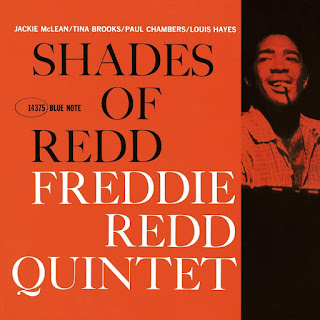
Freddie Redd • Shades Of Redd


Review
by Michael G. Nastos
In an all too small discography, Freddie Redd's Shades of Redd is without a doubt his crowning achievement. Completed after a successful stint composing music for the stage play The Connection, Redd wrote music specifically geared for his two formidable front line saxophonists -- emerging alto giant Jackie McLean and the unsung hero of the tenor, Tina Brooks. Redd, bassist Paul Chambers, and drummer Louis Hayes, fresh out of the Detroit scene, took New York City by storm playing clubs and working with Redd when he was not doing production music. All of these tracks, originals by Redd, are brimming with the hope, optimism, and fresh ideas of the early '60s, music perfectly rendered and representative of the time period. The darting, daring, tart sweet alto of McLean and the robust, lean, protein enriched tenor of Brooks fit beautifully together when they play in unison, and they do that a lot. The calm, lovely, then bursting into bop piece "The Thespian" sets the tone, followed by the swinging, head nodding "Blues-Blues-Blues," and the happy, hip, swing/shuffle "Melanie" brings the cream to the top. The teamwork displayed here rivals any seasoned veteran band of the era. Redd's piano playing, never spectacular or boisterous, is instead literate and street smart, and comes to the forefront in any tempo, whether the fleet hard bopper to Latin tinged near-show tune "Swift" and the spicy calypso to swing strutter "Ole," where Brooks steps up and takes a marvelous John Coltrane cum Hank Mobley solo. McLean's feature on "Just a Ballad for My Baby" illustrates his unique style, slightly but purposefully using microtones that might seem somewhat off-putting to the non-cognoscenti, but is remarkable upon closer inspection. Considering this is 1960, and Ornette Coleman was also making his way beyond conventional means, McLean is innovating just as much. Stretched out alternate takes of "Melanie" and "Ole" are included on this single CD, and are also available on Redd's 1988 Mosaic label reissue of his complete Blue Note efforts. Redd is still alive as of this writing, performing occasionally in his Los Angeles area home and in New York in 2007 for a revisited production of The Connection. Shades of Redd, his zenith as a jazz musician, would be a wonderful addition to any collection, and shows that the lesser known musicians have plenty of music to play, in addition to a unique perspective aside from the giants of this music.
https://www.allmusic.com/album/shades-of-redd-mw0000033103

///////


Reseña
por Michael G. Nastos
En una discografía demasiado pequeña, Shades of Redd de Freddie Redd es sin duda su mayor logro. Completado después de una exitosa temporada componiendo música para la obra de teatro The Connection, Redd escribió música específicamente orientada a sus dos formidables saxofonistas de primera línea - el emergente gigante del alto Jackie McLean y el héroe no reconocido del tenor, Tina Brooks. Redd, el bajista Paul Chambers y el baterista Louis Hayes, recién salidos de la escena de Detroit, tomaron la ciudad de Nueva York por asalto tocando en clubes y trabajando con Redd cuando no estaba haciendo música de producción. Todos estos temas, originales de Redd, rebosan de la esperanza, el optimismo y las ideas frescas de principios de los 60, música perfectamente interpretada y representativa de la época. La aguda, atrevida y dulce contralto de McLean y el robusto, delgado y proteico tenor de Brooks encajan a la perfección cuando tocan al unísono, y lo hacen a menudo. La pieza "The Thespian", tranquila y encantadora, que luego estalla en forma de bop, marca el tono, seguida de "Blues-Blues-Blues", que mueve la cabeza, y "Melanie", alegre, con caderas y swing, pone la guinda al pastel. El trabajo en equipo que se muestra aquí rivaliza con el de cualquier banda veterana de la época. El piano de Redd, que nunca es espectacular ni bullicioso, es más bien culto e inteligente, y se sitúa en primera línea en cualquier tempo, ya sea en el veloz hard bopper, en el tema de tinte latino "Swift" o en el calipso picante y el swing strutter "Ole", en el que Brooks da un paso adelante y hace un maravilloso solo a lo John Coltrane y Hank Mobley. La intervención de McLean en "Just a Ballad for My Baby" ilustra su estilo único, utilizando ligera pero deliberadamente microtonos que podrían parecer algo desagradables para los no entendidos, pero que son notables si se observan con detenimiento. Teniendo en cuenta que estamos en 1960, y que Ornette Coleman también se estaba abriendo camino más allá de los medios convencionales, McLean está innovando igualmente. Las tomas alternativas de "Melanie" y "Ole" se incluyen en este CD, y también están disponibles en la reedición de 1988 del sello Mosaic de los trabajos completos de Redd en Blue Note. Redd sigue vivo en el momento de escribir este artículo, actuando ocasionalmente en su casa de la zona de Los Ángeles y en Nueva York en 2007 para una producción revisada de The Connection. Shades of Redd, su cenit como músico de jazz, sería una maravillosa adición a cualquier colección, y demuestra que los músicos menos conocidos tienen mucha música que tocar, además de una perspectiva única al margen de los gigantes de esta música.
https://www.allmusic.com/album/shades-of-redd-mw0000033103


Monday, March 31, 2025

Art Farmer & Gigi Gryce • When Farmer Met Gryce


Review by Scott Yanow
When Farmer Met Gryce features trumpeter Art Farmer, altoist Gigi Gryce and two rhythm sections with either Horace Silver or Freddie Redd on piano, Percy Heath or Addison Farmer on bass, and Kenny Clarke or Art Taylor on drums. The early hard bop music is highlighted by "Social Call" (one of Gryce's best-known compositions), "Capri," "A Night at Tony's" and "Blue Concept" but all eight numbers will easily be enjoyed by straight-ahead jazz fans.
https://www.allmusic.com/album/when-farmer-met-gryce-mw0000234769

///////


Reseña de Scott Yanow
When Farmer Met Gryce cuenta con el trompetista Art Farmer, la contralto Gigi Gryce y dos secciones rítmicas con Horace Silver o Freddie Redd al piano, Percy Heath o Addison Farmer al bajo, y Kenny Clarke o Art Taylor a la batería. La música hard bop temprana se destaca por «Social Call» (una de las composiciones más conocidas de Gryce), «Capri», «A Night at Tony's» y «Blue Concept», pero los ocho números serán fácilmente disfrutados por los aficionados al jazz directo.
https://www.allmusic.com/album/when-farmer-met-gryce-mw0000234769


Saturday, January 25, 2025

Tommy Potter • Hard Funk In Sweden [recorded 1956]


One of the best-respected bop bass players, Tommy Potter (1918-1988) was well-know as a member of the classic Charlie Parker quintet during the 1947-1950 period. He played alongside soloists such as Miles Davis, Kenny Dorham, J.J. Johnson, Bud Powell, Duke Jordan, Al Haig, Max Roach, Fats Navarro, Stan Getz, and Count Basies group, among many others.

This edition contains the only tracks Tommy Potter recorded as a leader. They were originally issued on various EPs by the Swedish label Metronome, and later reissued on a rare LP (Hard Funk) by the American label East-West, a subsidiary of Atlantic Records.

Recorded in a Stockholm studio in September 1956, during a Sweden twomonth tour by an All-American Bop All-Stars, in addition to bassist Tommy Potter, the remainder players of the sextet are Rolf Ericson on trumpet, Ake Persson on trombone, Gunnar Hacke Bjorksten (alias Woody Birch) or Erik Norstrom on tenor sax, Stig Gabrielsson on baritone sax, Freddie Redd on piano, and Joe Harris on drums.

This CD also includes the only eight titles recorded on the July 1956 concert that took place during the same tour by trumpeter Ericson, baritone sax Lars Gullin, pianist Redd, bassist Potter, and drummer Harris. The program four standards and four originals, one in trio format, and another one featuring the bass in every one of its solos.
https://www.freshsoundrecords.com/tommy-potter-albums/4859-hard-funk-in-sweden.html

///////


Uno de los bajistas de bop más respetados, Tommy Potter (1918-1988) fue muy conocido como miembro del quinteto clásico de Charlie Parker durante el periodo 1947-1950. Tocó junto a solistas como Miles Davis, Kenny Dorham, J.J. Johnson, Bud Powell, Duke Jordan, Al Haig, Max Roach, Fats Navarro, Stan Getz y el grupo Count Basies, entre muchos otros.

Esta edición contiene los únicos temas que Tommy Potter grabó como líder. Se publicaron originalmente en varios EP por el sello sueco Metronome, y más tarde se reeditaron en un raro LP (Hard Funk) por el sello estadounidense East-West, filial de Atlantic Records.

Grabado en un estudio de Estocolmo en septiembre de 1956, durante una gira sueca de dos meses de All-American Bop All-Stars, además del bajista Tommy Potter, el resto de músicos del sexteto son Rolf Ericson a la trompeta, Ake Persson al trombón, Gunnar Hacke Bjorksten (alias Woody Birch) o Erik Norstrom al saxo tenor, Stig Gabrielsson al saxo barítono, Freddie Redd al piano y Joe Harris a la batería.

Este CD también incluye los ocho únicos títulos grabados en el concierto de julio de 1956 que tuvo lugar durante la misma gira por el trompetista Ericson, el saxo barítono Lars Gullin, el pianista Redd, el bajista Potter y el batería Harris. El programa cuatro standards y cuatro originales, uno en formato trío, y otro protagonizado por el bajo en cada uno de sus solos.
https://www.freshsoundrecords.com/tommy-potter-albums/4859-hard-funk-in-sweden.html


www.freshsoundrecords.com ...


Friday, September 6, 2024

Freddie Redd Quartet With Jackie McLean ‎• The Music From ''The Connection''


Review By EDDIE BECTON
December 2, 2005
Curtis Mayfield is often remembered for penning the popular theme "Freddie's Dead." The irony of this title echoes sentiments of out-of-the-loop jazzers who thought iconic Blue Note pianist Freddie Redd made the passage. Redd, the lyrical comrade of Horace Silver and disciple of Bud Powell, is still very much alive and well, performing more regularly in Los Angeles.

The Music from The Connection reflects the turmoil, redemption, and salvation of its characters. The Connection was actually a 1959 play, and the members of the band—Redd, Jackie McLean (alto saxophone), Michael Mattos (bass), and Larry Ritchie (drums)—were cast in it as themselves. Redd astutely suggested that band members play themselves so as to increase their notoriety and recognition.

This disc is valuable not only for its significance as the original score to its namesake play, but also for Redd's ability to musically capture a turbulent social climate. The sensibility and musical articulation are outstanding. And once again, Redd demonstrates his own voice along with giants he's influenced and vice versa. One of the most talented pianists of the hard bop era, Redd is still very much alive and his music always will be.
https://www.allaboutjazz.com/the-music-from-the-connection-freddie-redd-blue-note-records-review-by-eddie-becton.php


Artist Biography by Scott Yanow
A classic bop pianist and a composer of haunting melodies, Freddie Redd has had an episodic career, with high points followed by periods in which he maintained a low profile. After a period in the Army (1946-1949), Redd worked with drummer Johnny Mills and then in New York played with Tiny Grimes (with whom he recorded), Cootie Williams, Oscar Pettiford, and the Jive Bombers. Redd, who appeared with both jazz and early R&B groups, recorded his debut as a leader for Prestige in 1955 (reissued in the OJC series), appeared on dates led by Gene Ammons and Art Farmer, and toured Sweden in 1956 with Ernestine Anderson and Rolf Ericson, cutting an obscure trio set in Sweden for the Metronome label. When he returned to the U.S., Redd settled for a time in San Francisco, where he worked as the house pianist at Bop City and recorded for Riverside. He found his greatest fame when he wrote the music for the play The Connection. He acted and played in the landmark show in New York, London, and Paris, was in the film, and recorded the music for Blue Note, the first of his three sessions for the label (all of which were reissued in a Mosaic limited-edition box set containing either two CDs or three LPs). Unfortunately, there were no encore writing assignments, and Redd soon moved to Europe, where he performed regularly but became quite obscure in the U.S. In 1974 he moved to Los Angeles, but despite worthy sessions for Interplay (1977), Uptown (1985), Triloka (1988), and Milestone (1990), Freddie Redd has remained an underrated great, still playing into his eighties during the 21st century without gaining the level of recognition he most certainly deserves.
https://www.allmusic.com/artist/freddie-redd-mn0000798777/biography
 
Note: Freddie Redd passed away in 2021.

///////

Reseña de EDDIE BECTON
2 de diciembre de 2005
Curtis Mayfield es a menudo recordado por haber escrito el popular tema "Freddie's Dead". La ironía de este título se hace eco de los sentimientos de los jazzistas fuera de onda que pensaban que el icónico pianista de Blue Note Freddie Redd había hecho el pasaje. Redd, camarada lírico de Horace Silver y discípulo de Bud Powell, sigue muy vivo y actuando con más regularidad en Los Ángeles.

La música de The Connection refleja la agitación, la redención y la salvación de sus personajes. The Connection fue en realidad una obra de teatro de 1959, y los miembros de la banda -Redd, Jackie McLean (saxo alto), Michael Mattos (bajo) y Larry Ritchie (batería)- actuaron en ella como ellos mismos. Redd sugirió astutamente que los miembros de la banda se interpretaran a sí mismos para aumentar su notoriedad y reconocimiento.

Este disco es valioso no sólo por su importancia como partitura original de su obra homónima, sino también por la capacidad de Redd para captar musicalmente un clima social turbulento. La sensibilidad y la articulación musical son extraordinarias. Y una vez más, Redd demuestra su propia voz junto con la de los gigantes a los que ha influido y viceversa. Uno de los pianistas con más talento de la era del hard bop, Redd sigue muy vivo y su música siempre lo estará.
https://www.allaboutjazz.com/the-music-from-the-connection-freddie-redd-blue-note-records-review-by-eddie-becton.php


Biografía del artista por Scott Yanow
Pianista de bop clásico y compositor de melodías inquietantes, Freddie Redd ha tenido una carrera episódica, con puntos álgidos seguidos de períodos en los que mantuvo un perfil bajo. Tras un periodo en el ejército (1946-1949), Redd trabajó con el baterista Johnny Mills y luego en Nueva York tocó con Tiny Grimes (con quien grabó), Cootie Williams, Oscar Pettiford y los Jive Bombers. Redd, que apareció tanto en grupos de jazz como de R&B, grabó su debut como líder para Prestige en 1955 (reeditado en la serie OJC), apareció en fechas dirigidas por Gene Ammons y Art Farmer, y realizó una gira por Suecia en 1956 con Ernestine Anderson y Rolf Ericson, grabando un oscuro conjunto de trío en Suecia para el sello Metronome. Cuando regresó a los Estados Unidos, Redd se estableció durante un tiempo en San Francisco, donde trabajó como pianista de la casa en Bop City y grabó para Riverside. Encontró su mayor fama cuando escribió la música para la obra de teatro The Connection. Actuó y tocó en el emblemático espectáculo en Nueva York, Londres y París, participó en la película y grabó la música para Blue Note, la primera de sus tres sesiones para el sello (todas ellas reeditadas en una caja de edición limitada de Mosaic que contiene dos CD o tres LP). En 1974 se trasladó a Los Ángeles, pero a pesar de las valiosas sesiones para Interplay (1977), Uptown (1985), Triloka (1988) y Milestone (1990), Freddie Redd sigue siendo un gran músico infravalorado, que sigue tocando a sus ochenta años en el siglo XXI sin obtener el nivel de reconocimiento que sin duda merece.
https://www.allmusic.com/artist/freddie-redd-mn0000798777/biography

Nota: Freddie Redd falleció en 2021.


Friday, May 17, 2024

Freddie Redd Quartet With Jackie McLean • The Music From The Connection


Review by Stephen Thomas Erlewine
Freddie Redd composed the music for Jack Gelber's The Connection, a gritty play about musician junkies. Gelber had originally thought that the play would feature real musicians -- who would also double as actors in minor roles -- improvising on blues and jazz standards in the tradition of Charlie Parker, but Redd convinced him to use an original score. The two weaved Redd's original compositions into the score, making it an integral part of the play, but the music holds up superbly on its own. Using the direction "in the tradition of Charlie Parker" as a starting point, the pianist wrote seven pieces of straight-ahead bop, wide open for improvisations, and then assembled a sterling quartet featuring himself, alto saxophonist Jackie McLean, bassist Michael Mattos, and drummer Larry Ritchie. The end result was a set of dynamic straight-ahead bop. While both Redd and McLean show signs of their influences -- the pianist blends Monk and Powell, while the saxophonist has built off of Bird's twisting lines -- they have developed their own voices, which gives the driving, bluesy bop on Music From the Connection an edge. McLean's full, robust tone often dominates, but he never overshadows Redd's complex, intricate playing, and both musicians, as well as Mattos and Ritchie, effortlessly keep up with the changes from hard-hitting, up-tempo bop numbers to lyrical, reflective ballads. Musically, Music From the Connection might not offer anything unexpected, but whenever straight-ahead bop is done this well, it should be celebrated.
https://www.allmusic.com/album/the-music-from-the-connection-mw0000665212

///////


Crítica de Stephen Thomas Erlewine
Freddie Redd compuso la música de The Connection, de Jack Gelber, una descarnada obra sobre músicos yonquis. Gelber había pensado originalmente que la obra contaría con músicos reales -que también harían las veces de actores en papeles secundarios- improvisando sobre blues y estándares de jazz en la tradición de Charlie Parker, pero Redd le convenció para que utilizara una partitura original. Ambos entretejieron las composiciones originales de Redd en la partitura, convirtiéndola en parte integrante de la obra, pero la música se sostiene magníficamente por sí sola. Tomando como punto de partida "en la tradición de Charlie Parker", el pianista escribió siete piezas de bop directo, abiertas a la improvisación, y luego reunió a un excelente cuarteto formado por él mismo, el saxofonista alto Jackie McLean, el bajista Michael Mattos y el batería Larry Ritchie. El resultado final fue un conjunto de bop dinámico y directo. Aunque tanto Redd como McLean muestran signos de sus influencias (el pianista mezcla a Monk y Powell, mientras que el saxofonista se ha basado en las líneas retorcidas de Bird), han desarrollado sus propias voces, lo que le da a Music From the Connection una ventaja. El tono lleno y robusto de McLean domina a menudo, pero nunca eclipsa la interpretación compleja e intrincada de Redd, y ambos músicos, así como Mattos y Ritchie, siguen el ritmo sin esfuerzo en los cambios de números bop contundentes y acelerados a baladas líricas y reflexivas. Musicalmente, Music From the Connection puede que no ofrezca nada inesperado, pero siempre que el bop directo se hace así de bien, hay que celebrarlo.
https://www.allmusic.com/album/the-music-from-the-connection-mw0000665212


Sunday, May 12, 2024

Freddie Redd - Hampton Hawes • Piano EastWest


Review by Scott Yanow
This CD reissue has two unrelated early sessions from pianists Hampton Hawes and Freddie Redd. Hawes, heard in a quartet with vibraphonist Larry Bunker, bassist Clarence Jones and drummer Larence Marable, already ranked as one of the top bop-based pianists in 1952. He performs eight straight-ahead numbers (five bop standards and three originals like "Hamp's Paws"), including a two-minute version of "Move" that lives up to its name. Redd, who recorded much less during his longer career, stretches out a bit more on four numbers (including three originals) in a trio with bassist John Ore and drummer Ron Jefferson. Excellent music, easily recommended to bop collectors.
https://www.allmusic.com/album/release/piano-east-west-mr0000111033

///////

Reseña de Scott Yanow
Esta reedición en CD contiene dos sesiones tempranas no relacionadas de los pianistas Hampton Hawes y Freddie Redd. Hawes, en un cuarteto con el vibrafonista Larry Bunker, el bajista Clarence Jones y el batería Larence Marable, ya era uno de los mejores pianistas de bop en 1952. Interpreta ocho temas directos (cinco estándares de bop y tres originales como "Hamp's Paws"), incluida una versión de dos minutos de "Move" que hace honor a su nombre. Redd, que grabó mucho menos durante su larga carrera, se estira un poco más en cuatro números (incluyendo tres originales) en un trío con el bajista John Ore y el batería Ron Jefferson. Música excelente, fácilmente recomendable a los coleccionistas de bop.
https://www.allmusic.com/album/release/piano-east-west-mr0000111033


Tuesday, April 30, 2024

VA • Jazzin' the 60's


Jimmy Smith, Jackie McLean, Kenny Drew, Stanley Turrentine, Freddie Redd, Lou Donaldson, Kenny Burrell, Wayne Shorter, Blue Mitchell, Herbie Hancock, Lee Morgan, Duke Pearson, McCoy Tyner ...


VA • Jazz of the 1950s


Charlie Parker,Sacha Distel,Ornette Coleman,Modern Jazz Quartet,Chico Hamilton,Quincy Jones,Billy Taylor,Nina Simone,Jimmy Raney,Freddie Redd,Clifford Brown,James Moody,Roy Haynes,Tommy Flanagan,Teddy Wilson ...