egroj world: Wynton Kelly
Showing posts with label Wynton Kelly. Show all posts

Sunday, June 22, 2025

Wynton Kelly Trio • Undiluted


 Biography by Scott Yanow
A superb accompanist loved by Miles Davis and Cannonball Adderley, Wynton Kelly was also a distinctive soloist who decades later would be a strong influence on Benny Green. He grew up in Brooklyn and early on played in R&B bands led by Eddie "Cleanhead" Vinson, Hal Singer, and Eddie "Lockjaw" Davis. Kelly, who recorded 14 titles for Blue Note in a trio (1951), worked with Dinah Washington, Dizzy Gillespie, and Lester Young during 1951-1952. After serving in the military, he made a strong impression with Washington (1955-1957), Charles Mingus (1956-1957), and the Dizzy Gillespie big band (1957), but he would be most famous for his stint with Miles Davis (1959-1963), recording such albums with Miles as Kind of Blue, At the Blackhawk, and Someday My Prince Will Come. When he left Davis, Kelly took the rest of the rhythm section (bassist Paul Chambers and drummer Jimmy Cobb) with him to form his trio. The group actually sounded at its best backing Wes Montgomery. Before his early death, Kelly recorded as a leader for Blue Note, Riverside, Vee-Jay, Verve, and Milestone.

///////

Biografía de Scott Yanow
Un magnífico acompañante amado por Miles Davis y Cannonball Adderley, Wynton Kelly fue también un solista distintivo que décadas más tarde sería una fuerte influencia para Benny Green. Creció en Brooklyn y al principio tocó en bandas de R&B lideradas por Eddie "Cleanhead" Vinson, Hal Singer y Eddie "Lockjaw" Davis. Kelly, que grabó 14 títulos para Blue Note en un trío (1951), trabajó con Dinah Washington, Dizzy Gillespie y Lester Young durante 1951-1952. Después de servir en el ejército, causó una fuerte impresión con Washington (1955-1957), Charles Mingus (1956-1957) y la big band Dizzy Gillespie (1957), pero sería más famoso por su paso por Miles Davis (1959-1963), grabando discos con Miles como Kind of Blue, At the Blackhawk y Someday My Prince Will Come. Cuando dejó Davis, Kelly se llevó el resto de la sección rítmica (el bajista Paul Chambers y el baterista Jimmy Cobb) con él para formar su trío. En realidad, el grupo sonó de maravilla respaldando a Wes Montgomery. Antes de su temprana muerte, Kelly grabó como líder para Blue Note, Riverside, Vee-Jay, Verve y Milestone.
https://www.allmusic.com/artist/wynton-kelly-mn0000684253/biography


Saturday, June 21, 2025

Wynton Kelly • Comin' In The Back Door


Biography by Scott Yanow
A superb accompanist loved by Miles Davis and Cannonball Adderley, Wynton Kelly was also a distinctive soloist who decades later would be a strong influence on Benny Green. He grew up in Brooklyn and early on played in R&B bands led by Eddie "Cleanhead" Vinson, Hal Singer, and Eddie "Lockjaw" Davis. Kelly, who recorded 14 titles for Blue Note in a trio (1951), worked with Dinah Washington, Dizzy Gillespie, and Lester Young during 1951-1952. After serving in the military, he made a strong impression with Washington (1955-1957), Charles Mingus (1956-1957), and the Dizzy Gillespie big band (1957), but he would be most famous for his stint with Miles Davis (1959-1963), recording such albums with Miles as Kind of Blue, At the Blackhawk, and Someday My Prince Will Come. When he left Davis, Kelly took the rest of the rhythm section (bassist Paul Chambers and drummer Jimmy Cobb) with him to form his trio. The group actually sounded at its best backing Wes Montgomery. Before his early death, Kelly recorded as a leader for Blue Note, Riverside, Vee-Jay, Verve, and Milestone.

///////

Biografía de Scott Yanow
Un magnífico acompañante amado por Miles Davis y Cannonball Adderley, Wynton Kelly fue también un solista distintivo que décadas más tarde sería una fuerte influencia para Benny Green. Creció en Brooklyn y al principio tocó en bandas de R&B lideradas por Eddie "Cleanhead" Vinson, Hal Singer y Eddie "Lockjaw" Davis. Kelly, que grabó 14 títulos para Blue Note en un trío (1951), trabajó con Dinah Washington, Dizzy Gillespie y Lester Young durante 1951-1952. Después de servir en el ejército, causó una fuerte impresión con Washington (1955-1957), Charles Mingus (1956-1957) y la big band Dizzy Gillespie (1957), pero sería más famoso por su paso por Miles Davis (1959-1963), grabando discos con Miles como Kind of Blue, At the Blackhawk y Someday My Prince Will Come. Cuando dejó Davis, Kelly se llevó el resto de la sección rítmica (el bajista Paul Chambers y el baterista Jimmy Cobb) con él para formar su trío. En realidad, el grupo sonó de maravilla respaldando a Wes Montgomery. Antes de su temprana muerte, Kelly grabó como líder para Blue Note, Riverside, Vee-Jay, Verve y Milestone.


VA • Cool Cats - The Roots of Acid Jazz


Donald Byrd, Jimmy Smith, Kenny Burrell, George Benson, Sergio Mendes, Hal Singer, Roland Kirk, Wynton Kelly, Quincy Jones, Willis Jackson, Milt Jackson, Grant Green, Dave Pike, Wes Montgomery, Cal Tjader,Oscar Peterson, Les McCann ...


Wednesday, June 4, 2025

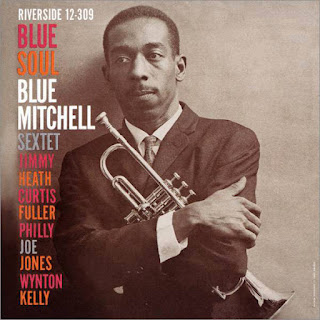
Blue Mitchell Sextet • Blue Soul


Review by Michael G. Nastos  
Trumpeter Blue Mitchell left his home in Miami for a short stint in New York City, headed back to Florida, and then to Los Angeles before his brief but vital career as a jazz trumpeter ended. This sojourn identified his sound, initially branded by the warmth of the Southeast, burnished by the hustle and bustle of the Big Apple, and polished by the West Coast cool school demeanor. In 1959, as Mitchell returned to Miami, he connected with Detroit trombonist Curtis Fuller and Philadelphia tenor saxophonist Jimmy Heath to form one of the most potent three-horn front lines in jazz history. Few knew how good they were until after the fact, but this recording, the third album for Mitchell as a leader, has him and his mates in full flight. Drummer Philly Joe Jones has a lot to do with the solid booster rocket-like propulsion on this primarily hard bop date, and check out his calypso variations on the second chorus of the otherwise easy blues swing and ultra melodic "Waverley Street." Credit Mitchell's street smarts and highly developed melodic inventiveness as the focal point for this definitive session. In many ways, this is a parallel album to the Miles Davis classic Kind of Blue, with subtle undertones driven by fourth-gear swing. The set kicks off with the famous "Minor Vamp," of which Fuller's original take for the Savoy label has been remixed and layered, and is heard in the acid jazz dancehalls. It's a familiar sparse line, a two-note vamp tacked onto a lithe, perky melody that needs no critique -- it's simply great! More concisely rendered hard bop follows on "The Head," not complex by any means, but filled with plenty of soul. The hardest line crops up during "Top Shelf," featuring a memorable, cutting, precise solo by Heath. Fuller and Heath lay out so you can hear in full dimension the cozy and warm persona of Mitchell on the ballad "Park Avenue Petite," but especially on the bright, easy swinger "Blue Soul," which most accurately approaches Kind of Blue. In tribute to his then-boss, Horace Silver, "Nica's Dream" features Mitchell's muted trumpet over an underlying fresh bed of trombone and tenor sax. Even more so, Mitchell's deep blue horn shines on the standard "Polka Dots and Moonbeams," an organ of sheer beauty and one to be studied for those who need to learn that playing fewer notes more musically is an admirable quality. This is one of the most precious jazz recordings of a year that would soon give sway to the Blue Note sound, and is in many real and important ways as much of a prelude as any other statement. It's a must-have for all serious mainstream jazz fans.
https://www.allmusic.com/album/blue-soul-mw0000777916

///////


Reseña de Michael G. Nastos  
El trompetista Blue Mitchell dejó su hogar en Miami para pasar una breve temporada en la ciudad de Nueva York, regresó a Florida y luego a Los Ángeles antes de que terminara su breve pero vital carrera como trompetista de jazz. Esta estancia identificó su sonido, inicialmente marcado por la calidez del sureste, bruñido por el ajetreo de la Gran Manzana y pulido por el comportamiento de la escuela fría de la Costa Oeste. En 1959, cuando Mitchell regresó a Miami, se unió al trombonista de Detroit Curtis Fuller y al saxofonista tenor de Filadelfia Jimmy Heath para formar una de las líneas de tres coros más potentes de la historia del jazz. Pocos sabían lo buenos que eran hasta después, pero esta grabación, el tercer álbum de Mitchell como líder, lo tiene a él y a sus compañeros en pleno vuelo. El batería Philly Joe Jones tiene mucho que ver con la sólida propulsión tipo cohete en esta cita principalmente de hard bop, y fíjate en sus variaciones calipso en el segundo estribillo del por otra parte fácil blues swing y ultra melódico "Waverley Street". Hay que atribuir a la inteligencia callejera de Mitchell y a su desarrollada inventiva melódica el mérito de esta sesión definitiva. En muchos sentidos, se trata de un álbum paralelo al clásico Kind of Blue de Miles Davis, con sutiles matices impulsados por el swing de cuarta marcha. El conjunto arranca con la famosa "Minor Vamp", de la que la toma original de Fuller para el sello Savoy ha sido remezclada y puesta en capas, y se escucha en los salones de baile de jazz ácido. Se trata de una línea escasa y familiar, un vampiro de dos notas que se une a una melodía ágil y alegre que no necesita ser criticada: ¡es simplemente genial! A continuación, "The Head" es un tema de hard bop más conciso, que no es complejo ni mucho menos, pero que está lleno de alma. La línea más dura aparece en "Top Shelf", con un memorable, cortante y preciso solo de Heath. Fuller y Heath se disponen a escuchar en toda su dimensión la acogedora y cálida personalidad de Mitchell en la balada "Park Avenue Petite", pero sobre todo en el brillante y fácil swinger "Blue Soul", que se aproxima con mayor precisión a Kind of Blue. En homenaje a su entonces jefe, Horace Silver, "Nica's Dream" presenta la trompeta silenciada de Mitchell sobre un lecho fresco subyacente de trombón y saxo tenor. Aún más, la trompa azul profundo de Mitchell brilla en el estándar "Polka Dots and Moonbeams", un órgano de pura belleza y que debe ser estudiado por aquellos que necesitan aprender que tocar menos notas de forma más musical es una cualidad admirable. Esta es una de las grabaciones de jazz más preciosas de un año que pronto daría paso al sonido Blue Note, y es en muchos aspectos reales e importantes tanto un preludio como cualquier otra declaración. Es un disco imprescindible para todos los aficionados al jazz mainstream serio.
https://www.allmusic.com/album/blue-soul-mw0000777916


Philly Joe Jones & Elvin Jones • Together!


A stunner of an album -- and one that definitely draws plenty power from the double drummers in the lead! The set's way different than most of Elvin Jones' other work of the time -- and is even more hard-hitting than some of the Philly Joe Jones sessions too -- and, unusual for Atlantic Records at the time, the tracks are all quite long -- with a very open, freewheeling sound! There's some great horn players who really help shape the sound of the tunes -- Hank Mobley on tenor, Blue Mitchell on trumpet, and Curtis Fuller on trombone -- and the piano of Wynton Kelly and bass of Paul Chambers ensure that the music is right in the groove. The set features three long tracks -- "Brown Sugar", "Le Roi", and "Beau-ty". 
https://www.dustygroove.com/item/876551/Philly-Joe-Jones-Elvin-Jones:Philly-Joe-Jones-Elvin-Jones-Together

///////


¡Un álbum impresionante and y uno que definitivamente extrae mucha energía de los bateristas dobles a la cabeza! El set es muy diferente a la mayoría de los otros trabajos de Elvin Jones de la época and y también es aún más contundente que algunas de las sesiones de Philly Joe Jones and y, algo inusual para Atlantic Records en ese momento, las pistas son bastante largas! ¡con un sonido muy abierto y despreocupado! Hay algunos grandes trompetistas que realmente ayudan a dar forma al sonido de las melodías: Hank Mobley al tenor, Blue Mitchell a la trompeta y Curtis Fuller al trombón, y el piano de Wynton Kelly y el bajo de Paul Chambers aseguran que la música esté en el ritmo correcto. El set presenta tres pistas largas :" Brown Sugar", "Le Roi "y"Beau-ty". 
https://www.dustygroove.com/item/876551/Philly-Joe-Jones-Elvin-Jones:Philly-Joe-Jones-Elvin-Jones-Together


Saturday, May 24, 2025

David Fathead Newman • Straight Ahead


Review
by AllMusic
The title of this 1961 release best sums up this quartet album. There is nothing particularly innovative about this recording, but the level of expertise and musical maturity displayed here is truly astonishing. This is simply straight-ahead hard bop performed by some of the finest musicians in 1960s jazz, including saxophonist David "Fathead" Newman and pianist Wynton Kelly.

Newman's playing is not only confident, it is unbelievably inspired. He rips through all six selections here, employing the great bebop vernacular developed by Charlie Parker and Dizzy Gillespie. Newman plays tenor, alto, and flute on STRAIGHT AHEAD, providing some variation to this set. Newman's flute work on his composition "Night of Nisan" is particularly energetic, as is his alto solo on his bluesy "Congo Chant." The highlight of the record, however, is the smoking, Caribbean-flavored opening track, "Batista's Groove."
https://www.allmusic.com/album/straight-ahead-mw0000661652

///////

Reseña
por AllMusic
El título de esta edición de 1961 es el que mejor resume este álbum de cuarteto. No hay nada particularmente innovador en esta grabación, pero el nivel de pericia y madurez musical que se muestra aquí es realmente asombroso. Se trata simplemente de hard bop directo interpretado por algunos de los mejores músicos del jazz de los 60, entre ellos el saxofonista David "Fathead" Newman y el pianista Wynton Kelly.

La interpretación de Newman no sólo es segura, sino increíblemente inspirada. Hace estragos en las seis selecciones, empleando el gran lenguaje del bebop desarrollado por Charlie Parker y Dizzy Gillespie. Newman toca el tenor, el contralto y la flauta en STRAIGHT AHEAD, aportando cierta variación a este conjunto. El trabajo de Newman con la flauta en su composición "Night of Nisan" es especialmente enérgico, al igual que su solo de contralto en su blues "Congo Chant". El punto culminante del disco, sin embargo, es el humeante tema de apertura con sabor caribeño, "Batista's Groove".
https://www.allmusic.com/album/straight-ahead-mw0000661652


Thursday, May 15, 2025

King Curtis • Soul Meeting


    Biography
Curtis 'King Curtis' Ousley was already a well-respected Jazz tenor saxophonist in 1952 when he moved to New York, to concentrate on doing session work for the growing Pop and R&B markets. Over the next decade, saxophone became the pre-eminent lead instrument within Rhythm & Blues/Rock n' Roll, and King Curtis became its leading exponent, spicing up massive numbers of hits with ear catching solos, sealing his reputation as one of the leading instrumentalists of that era. Perhaps he'll be most remembered as blowing that solo on The Coasters 1958 smash “Yakety Yak.”

King Curtis was originally part of the late 40's honking Texas tenor sax brigade, counting Arnett Cobb, Earl Bostic, and Illinois Jacquet as influences. He played in bands of Lionel Hampton and Horace Silver. Upon moving to New York from Fort Worth TX (his 1934 birthplace), he was already well grounded in Jazz, R&B, and Pop. Curtis could play any style on a moment's notice. Curtis had also pursued a highly successful solo career, primarily in contemporary R&B. But he also stretched out with the best Jazzmen: about half of his Prestige output circa 1960-62 he's surrounded by top line players like Jack McDuff, Billy Butler, Billy Gale, Ray Lucas, and Willie Rodriguez. On his classic “Soul Meeting,” the personnel includes: King Curtis (tenor saxophone); Nat Adderly (cornet); Wynton Kelly (piano); Paul Chambers, Sam Jones (bass); Oliver Jackson, Belton Evans (drums)

Recording with Capitol, Epic, and Atlantic, he garnered instrumental hits like 1962's “Soul Twist,” and 1967's “Memphis Soul Stew,” . That same year he did a successful cover of “Ode To Billie Joe.”

He made a big impression in the late 60's, hooking up with artists like Eric Clapton who performed on King's “Teasin'” album in 1970. The saxophonist had meanwhile put together a superb studio group: The Kingpins, with Richard Tee, Cornell Dupree, Jerry Jemmott and Bernard Purdie, all of whom contributed to several of Aretha Franklin's finest records. King Curtis topped the R&B charts in 1971, handling the sax on Aretha Franklin's version of “Bridge Over Troubled Waters,” and played on several tracks on John Lennon's 'Imagine' album that same year.

When King Curtis departed this world in 1971 -the victim of a brutal stabbing outside his apartment- he wasn't yet 40, but was at the apex of his career. In 2000, King Curtis was inducted into the Rock&Roll Hall of Fame.

///////

    Biografía
Curtis 'King Curtis' Ousley ya era un respetado saxofonista tenor de Jazz en 1952 cuando se mudó a Nueva York, para concentrarse en hacer trabajo de sesión para los crecientes mercados de Pop y R&B. Durante la siguiente década, el saxofón se convirtió en el principal instrumento del Rhythm & Blues/Rock n' Roll, y King Curtis se convirtió en su principal exponente, condimentando un gran número de éxitos con solos que atrapan las orejas, sellando su reputación como uno de los principales instrumentistas de esa época. Tal vez sea más recordado por soplar ese solo en Los Posavasos de 1958 y aplastar "Yakety Yak".

King Curtis fue originalmente parte de la brigada de saxos tenor de Texas a finales de los 40, contando a Arnett Cobb, Earl Bostic e Illinois Jacquet como influencias. Tocó en bandas de Lionel Hampton y Horace Silver. Al mudarse a Nueva York desde Fort Worth TX (su lugar de nacimiento en 1934), ya estaba bien arraigado en el Jazz, el R&B y el Pop. Curtis podía tocar cualquier estilo en un momento. Curtis también había desarrollado una exitosa carrera en solitario, principalmente en el R&B contemporáneo. Pero también se extendió con los mejores Jazzmen: alrededor de la mitad de su producción de Prestige alrededor de 1960-62 está rodeado de jugadores de primera línea como Jack McDuff, Billy Butler, Billy Gale, Ray Lucas, y Willie Rodríguez. En su clásico "Soul Meeting", el personal incluye: King Curtis (saxo tenor); Nat Adderly (corneta); Wynton Kelly (piano); Paul Chambers, Sam Jones (bajo); Oliver Jackson, Belton Evans (batería)

Grabando con Capitol, Epic y Atlantic, obtuvo éxitos instrumentales como "Soul Twist" de 1962 y "Memphis Soul Stew" de 1967. Ese mismo año hizo una exitosa portada de "Oda a Billie Joe".

Causó una gran impresión a finales de los 60's, uniéndose a artistas como Eric Clapton, quien actuó en el álbum "Teasin'" de King en 1970. Mientras tanto, el saxofonista había formado un magnífico grupo de estudio: The Kingpins, con Richard Tee, Cornell Dupree, Jerry Jemmott y Bernard Purdie, todos los cuales contribuyeron a varios de los mejores discos de Aretha Franklin. King Curtis encabezó las listas de éxitos de R&B en 1971, manejando el saxo en la versión de "Bridge Over Troubled Waters" de Aretha Franklin, y tocó en varios temas del álbum'Imagine' de John Lennon ese mismo año.

Cuando el rey Curtis partió de este mundo en 1971 -víctima de una brutal puñalada fuera de su apartamento- aún no tenía 40 años, pero estaba en la cúspide de su carrera. En el año 2000, King Curtis fue admitido en el Rock&Roll Hall of Fame. 


Saturday, April 26, 2025

Don Byrd - Gigi Gryce • Modern Jazz Perspective


Review:
by Matt Collar
Trumpeter Donald Byrd's 1957 date Modern Jazz Perspective is a swinging, straight-ahead, bop-infused album featuring pianist Gigi Gryce. Also showcased on the album is vocalist Jackie Paris. Interestingly, Paris is also featured playing banjo on the gospel-inflected opening track, "Medley: Early Morning Blues."
https://www.allmusic.com/album/modern-jazz-perspective-mw0002407411

///////


Reseña:
por Matt Collar
La fecha de 1957 del trompetista Donald Byrd, Modern Jazz Perspective, es un álbum de swing, directo y con una gran influencia del bop, en el que participa la pianista Gigi Gryce. También aparece en el álbum la vocalista Jackie Paris. Curiosamente, Paris también aparece tocando el banjo en el tema de apertura de influencia gospel, "Medley: Early Morning Blues".
https://www.allmusic.com/album/modern-jazz-perspective-mw0002407411


Thursday, March 20, 2025

Jimmy Heath ‎• On The Trail


Review by Scott Yanow
Unlike some of his other Riverside recordings, the accent on this Jimmy Heath CD reissue is very much on his tenor playing (rather than his arrangements).
Heath is in excellent form with a quintet that also includes pianist Wynton Kelly, guitarist Kenny Burrell, bassist Paul Chambers, and drummer Albert "Tootie" Heath. The instantly recognizable hard bop saxophonist performs four standards and three of his own compositions, including the original versions of "Gingerbread Boy" and "Project S." It's a good example of his playing talents.

///////

Reseña de Scott Yanow
A diferencia de algunas de sus otras grabaciones de Riverside, el acento en la reedición de este CD de Jimmy Heath está en su interpretación de tenor (más que en sus arreglos).
Heath está en excelente forma con un quinteto que también incluye al pianista Wynton Kelly, al guitarrista Kenny Burrell, al bajista Paul Chambers y al baterista Albert "Tootie" Heath. El reconocido saxofonista de hard bop interpreta cuatro estándares y tres de sus propias composiciones, incluyendo las versiones originales de "Gingerbread Boy" y "Project S.". Es un buen ejemplo de su talento como músico.


Saturday, March 15, 2025

King Curtis • The new scene of King Curtis


Review by Scott Yanow
At first glance, this would appear to be a CD reissue well worth picking up. R&B tenor saxophonist King Curtis is heard in a rare jazz outing, holding his own with cornetist Nat Adderley (in prime form), pianist Wynton Kelly, bassist Paul Chambers, and drummer Oliver Jackson on four originals and "Willow Weep for Me."


Artist Biography by Bob Porter 
King Curtis was the last of the great R&B tenor sax giants. He came to prominence in the mid-'50s as a session musician in New York, recording, at one time or another, for most East Coast R&B labels. A long association with Atlantic/Atco began in 1958, especially on recordings by the Coasters. He recorded singles for many small labels in the '50s -- his own Atco sessions (1958-1959), then Prestige/New Jazz and Prestige/TruSound for jazz and R&B albums (1960-1961). Curtis also had a number one R&B single with "Soul Twist" on Enjoy Records (1962). He was signed by Capitol (1963-1964), where he cut mostly singles, including "Soul Serenade." Returning to Atlantic in 1965, he remained there for the rest of his life. He had solid R&B single success with "Memphis Soul Stew" and "Ode to Billie Joe" (1967). Beginning in 1967, Curtis started to take a more active studio role at Atlantic, leading and contracting sessions for other artists, producing with Jerry Wexler, and later on his own. He also became the leader of Aretha Franklin's backing unit, the Kingpins. He compiled several albums of singles during this period. All aspects of his career were in full swing at the time he was murdered in 1971.

///////

TraducciónAutomática:
Revisión por Scott Yanow
A primera vista, esto parece ser una reedición de CD que vale la pena recoger. El saxofonista tenor R&B King Curtis se escucha en una rara salida de jazz, presentándose con el cornetista Nat Adderley (en su mejor forma), el pianista Wynton Kelly, el bajista Paul Chambers y el baterista Oliver Jackson en cuatro originales y "Willow Weep for Me".


Biografía del artista por Bob Porter
King Curtis fue el último de los grandes gigantes de saxofón tenor R&B. Llegó a la fama a mediados de los años 50 como músico de sesión en Nueva York, grabando, en un momento u otro, para la mayoría de los sellos de R&B de la costa este. Una larga asociación con Atlantic / Atco comenzó en 1958, especialmente en grabaciones de los Coasters. Grabó singles para muchos sellos pequeños en los años 50: sus propias sesiones de Atco (1958-1959), luego Prestige / New Jazz y Prestige / TruSound para álbumes de jazz y R&B (1960-1961). Curtis también tuvo un sencillo número uno en R&B con "Soul Twist" en Enjoy Records (1962). Fue firmado por Capitol (1963-1964), donde cortó en su mayoría singles, incluido "Soul Serenade". Al regresar al Atlántico en 1965, permaneció allí por el resto de su vida. Tuvo un sólido éxito de R&B con "Memphis Soul Stew" y "Ode to Billie Joe" (1967). A partir de 1967, Curtis comenzó a tomar un papel de estudio más activo en Atlantic, liderando y contratando sesiones para otros artistas, produciendo con Jerry Wexler, y más tarde por su cuenta. También se convirtió en el líder de la unidad de apoyo de Aretha Franklin, los Kingpins. Él compiló varios álbumes de singles durante este período. Todos los aspectos de su carrera estaban en pleno apogeo en el momento de su asesinato en 1971.


Saturday, February 22, 2025

A. K. Salim • Savoy Recordings


A.K. Salim (Ahmad Khatab Atkinson) was an ex-reed man who retired from playing in 1943 to arrange and compose for several jazz and Afro- Cuban bands. This 2-CD set draws together all the recordings he did as a leader for Savoy Records in 1957-1958. Most of his work here reflects Salim’s deep knowledge of blues and his arranger’s talent for setting down relatively simple lines combining down home traditionalism with harmonic sophistication. His unpretentious arrangements have an unmistakably visceral quality and offer a fine framework for the eloquently powerful soloists of both reed and brass sections.
Some of the greatest modern jazz pianists, bassists and drummers round out the rhythm, along with guitar in a few tracks, in both support and solo capacities, while the presence of a conga blends well with the Latino-flavored charts in what is, overall, a satisfying and thoroughly swinging collection.


A. K. Salim, a saxophonist and arranger best known for his scoring for big bands during the forties, wrote Flute Suite for Herbie and Frank Wess. Born Albert Atkinson in 1922, Salim converted to Islam in the 1940s, changing his ñame to Ahmad Khatab Salim. A jaw injury in 1943 resulted in his retirement as a performer, and from then on, he worked strictly as an arranger. For the next five years, he wrote for a variety of big bands, including those of Lucky Millinder, Jimmie Lunceford, and Lionel Hampton. After the American Federation of Musicians’ 1948 strike broke up many of the big bands, Salim returned to working with smaller groups. His arrangements, rooted in blues, also included work in Latin idioms, making his work attractive to bandleaders like Machito, Tito Puente, and Dizzy Gillespie. [Cary Ginell]

///////

A.K. Salim (Ahmad Khatab Atkinson) fue un ex-director de banda que se retiró de la música en 1943 para arreglar y componer para varias bandas de jazz y afro-cubanas. Este juego de 2 CDs reúne todas las grabaciones que hizo como líder de Savoy Records en 1957-1958. La mayoría de su trabajo aquí refleja el profundo conocimiento de Salim sobre el blues y su talento como arreglista para establecer líneas relativamente simples combinando el tradicionalismo casero con la sofisticación armónica. Sus arreglos sin pretensiones tienen una calidad visceral inconfundible y ofrecen un marco fino para los elocuentemente poderosos solistas de las secciones de lengüeta y de metal.
Algunos de los más grandes pianistas, bajistas y bateristas de jazz moderno completan el ritmo, junto con la guitarra en unas pocas pistas, tanto en apoyo como en solitario, mientras que la presencia de una conga se combina bien con las listas de éxitos con sabor latino en lo que es, en general, una colección satisfactoria y completamente de swing.


A. K. Salim, saxofonista y arreglista conocido por sus partituras para grandes bandas durante los años cuarenta, escribió la Suite de Flauta para Herbie y Frank Wess. Nacido como Albert Atkinson en 1922, Salim se convirtió al Islam en la década de 1940, cambiando su ñame a Ahmad Khatab Salim. Una lesión en la mandíbula en 1943 resultó en su retiro como intérprete, y desde entonces trabajó estrictamente como arreglista. Durante los siguientes cinco años, escribió para varias grandes bandas, incluyendo las de Lucky Millinder, Jimmie Lunceford y Lionel Hampton. Después de que la huelga de la Federación Americana de Músicos en 1948 rompiera muchas de las grandes bandas, Salim volvió a trabajar con grupos más pequeños. Sus arreglos, enraizados en el blues, también incluían trabajo en los modismos latinos, haciendo su trabajo atractivo para los directores de orquesta como Machito, Tito Puente, y Dizzy Gillespie. [Cary Ginell]


Wednesday, February 19, 2025

Miles Davis • Live In Zurich [1960]


Review
by AllMusic  
Fresh from recording the epochal Kind Of Blue, Davis took his quintet on the road to Europe. It's hard to top the group presented here--John Coltrane on tenor, Wynton Kelly on piano, Paul Chambers on bass, and Jimmy Cobb on drums--Miles doesn't disappoint in either his own spectacular playing or in leading his ensemble to new exploratory heights. This date was recorded in Zurich in 1960.

The four tracks range from 10 to 20 minutes in length, giving each musician plenty of room to stretch out. The highlights include version of "So What" at an increased tempo and the gorgeous "All Blues" from the Kind Of Blue sessions. As always, Davis exhibits his impeccably cool, poetic use of phrasing and space. But it is Coltrane who really shines here, unfurling chaotic hails of notes in his burning, intense solos. Live In Zurich is a valuable document of one of the most formidable jazz ensembles ever.
https://www.allmusic.com/album/live-in-zurich-mw0000171321

////////


Reseña
por AllMusic  
Recién salido de la grabación del epocal Kind Of Blue, Davis se llevó a su quinteto de gira por Europa. Es difícil superar al grupo presentado aquí -John Coltrane al tenor, Wynton Kelly al piano, Paul Chambers al bajo y Jimmy Cobb a la batería- Miles no defrauda ni en su espectacular interpretación ni en llevar a su conjunto a nuevas cotas de exploración. Esta fecha se grabó en Zurich en 1960.

Los cuatro temas duran entre 10 y 20 minutos, lo que da a cada músico mucho espacio para explayarse. Lo más destacado incluye una versión de "So What" a un tempo aumentado y la preciosa "All Blues" de las sesiones de Kind Of Blue. Como siempre, Davis exhibe su impecable y poético uso del fraseo y el espacio. Pero es Coltrane quien realmente brilla aquí, desplegando caóticas ráfagas de notas en sus ardientes e intensos solos. Live In Zurich es un valioso documento de uno de los conjuntos de jazz más formidables de la historia.
https://www.allmusic.com/album/live-in-zurich-mw0000171321


Sunday, February 16, 2025

Hank Mobley • Another Workout


Review
by Scott Yanow
This LP has material from 1961 that for no real reason went unreleased until 1985. One song, "Three Coins in a Fountain," is from the same session that resulted in tenor saxophonist Hank Mobley's famous Workout session with guitarist Grant Green, pianist Wynton Kelly, bassist Paul Chambers and drummer Philly Joe Jones. The other five numbers -- three obscure Mobley originals, plus "I Should Care" and "Hello Young Lovers" -- are from the previously unheard December 5, 1961 session with the same personnel except for Green. Hank Mobley was in a prime period around this time, and all of his Blue Note recordings are well worth picking up.
https://www.allmusic.com/album/another-workout-mw0000199084

///////


Reseña
por Scott Yanow
Este LP contiene material de 1961 que, sin ningún motivo, permaneció inédito hasta 1985. Una canción, "Three Coins in a Fountain", pertenece a la misma sesión que dio lugar a la famosa sesión Workout del saxofonista tenor Hank Mobley con el guitarrista Grant Green, el pianista Wynton Kelly, el bajista Paul Chambers y el batería Philly Joe Jones. Los otros cinco temas -tres oscuros originales de Mobley, más "I Should Care" y "Hello Young Lovers"- proceden de la sesión inédita del 5 de diciembre de 1961 con el mismo personal excepto Green. Hank Mobley estaba en su mejor momento por aquel entonces, y merece la pena hacerse con todas sus grabaciones para Blue Note.
https://www.allmusic.com/album/another-workout-mw0000199084