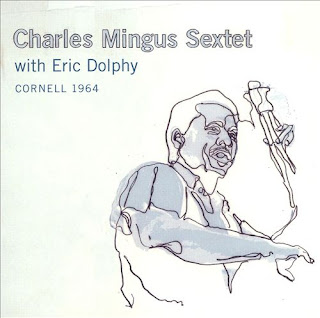
egroj world: Eric Dolphy
Showing posts with label Eric Dolphy. Show all posts

Monday, August 25, 2025

Charles Mingus • Reincarnations


Further rare material from the Charles Mingus sessions for the Candid label in 1960 – work that initially gave the world his two famous albums for the company, both of which were easily some of the most revolutionary work he recorded up to that point in his career! The spirit of the tracks here is very similar – Mingus set free from the more confined modes of Columbia Records, and serving up long tracks that are filled with searing solos from a top-shelf array of young modernists – players who include Eric Dolphy on alto and flute, Jimmy Knepper on trombone, Ted Curson and Lonnie Hillyer on trumpets, Booker Ervin on tenor, and Tommy Flanagan on piano – sounding a lot more dynamic here than on his own recordings. The material here was all unissued at the time – and titles include "Melody From The Drums", "Vassarlean", "Body & Soul (take 2)", "Wrap Your Troubles In Dreams (take 4)", and "Reincarnation Of A Lovebird (first version – take 4)
https://www.dustygroove.com/item/193811/Charles-Mingus:Reincarnations

///////


Más material inédito de las sesiones de Charles Mingus para el sello Candid en 1960, un trabajo que inicialmente dio al mundo sus dos famosos álbumes para la compañía, ¡ambos fácilmente algunos de los trabajos más revolucionarios que había grabado hasta ese momento en su carrera! El espíritu de las pistas aquí es muy similar: Mingus se liberó de los modos más limitados de Columbia Records y nos ofrece largas pistas llenas de solos abrasadores de una selección de jóvenes modernistas de primer nivel, entre los que se encuentran Eric Dolphy al saxo alto y la flauta, Jimmy Knepper al trombón, Ted Curson y Lonnie Hillyer a la trompeta, Booker Ervin al saxo tenor y Tommy Flanagan al piano, que suenan mucho más dinámicos aquí que en sus propias grabaciones. El material aquí incluido no se había publicado en ese momento, y los títulos incluyen «Melody From The Drums», «Vassarlean», «Body & Soul (take 2)», «Wrap Your Troubles In Dreams (take 4)» y «Reincarnation Of A Lovebird (primera versión – take 4)».
https://www.dustygroove.com/item/193811/Charles-Mingus:Reincarnations


Sunday, July 27, 2025

VA • Impulse! 6 Great Jazz Collection


John Coltrane Quartet: Ballads 
John Coltrane (tenor sax), McCoy Tyner (piano), Jimmy Garrison & Reggie Workman (bass), Elvin Jones (drums)

Sonny Rollins: On Impulse! 
Sonny Rollins (tenor sax), Ray Bryant (piano), Walter Booker (bass), Mickey Roker (drums)

Roy Haynes Quartet: Out of the afternoon 
Roy Haynes (drums), Roland Kirk (tenor sax, flute), Tommy Flanagan (piano), Henry Grimes (bass)

Oliver Nelson: The Blues and the Abstract Truth 
Oliver Nelson (alto sax & tenor sax), Eric Dolphy (alto sax & flute), Freddie Hubbard (trumpet), George Barrow (baritone sax), Bill Evans (piano), Paul Chambers (bass), Roy Haynes (drums)

Count Basie: Count Basie and the Kansas City 7 
Count Basie (piano, organ), Thad Jones (trumpet), Frank Wess (flute), Frank Foster (tenor sax, flute), Eric Dixon (tenor sax, flute), Freddie Green (guitar), Ed Jones (bass), Sonny Payne (drums)

John Coltrane and Johnny Hartman: John Coltrane and Johnny Hartman 
John Coltrane (tenor sax), McCoy Tyner (piano), Jimmy Garrison (bass), Elvin Jones (drums), Johnny Hartman (vocals)


Tuesday, June 3, 2025

Eric Dolphy • Out There


Review by Michael G. Nastos  
The follow-up album to Outward Bound, Eric Dolphy's second effort for the Prestige/New Jazz label (and later remastered by Rudy Van Gelder) was equally praised and vilified for many reasons. At a time when the "anti-jazz" tag was being tossed around, Dolphy's nonlinear, harshly harmonic music gave some critics grist for the grinding mill. A second or third listen to Dolphy's music reveals an unrepentant shadowy side, but also depth and purpose that were unprecedented and remain singularly unique. The usage of bassist George Duvivier and cellist Ron Carter (an idea borrowed from Dolphy's days with Chico Hamilton) gives the music its overcast color base, in many ways equally stunning and uninviting. Dolphy's ideas must be fully embraced, taken to heart, and accepted before listening. The music reveals the depth of his thought processes while also expressing his bare-bones sensitive and kind nature. The bluesy "Serene," led by Carter alongside Dolphy's bass clarinet, and the wondrous ballad "Sketch of Melba" provide the sweetest moments, the latter tune identified by the fluttery introspective flute of the leader, clearly indicating where latter-period musicians like James Newton initially heard what would form their concept. Three pieces owe alms to Charles Mingus: his dark, moody, doleful, melodic, and reluctant composition "Eclipse"; the co-written (with Dolphy) craggy and scattered title track featuring Dolphy's emblematic alto held together by the unflappable swing of drummer Roy Haynes; and "The Baron," the leader's dark and dirty, wise and willful tribute to his former boss, accented by a choppy and chatty solo from Carter. "17 West," almost a post-bop standard, is briefly tonal with a patented flute solo and questioning cello inserts, while the unexpected closer written by Hale Smith, "Feathers," is a haunting, soulful ballad of regret where Dolphy's alto is more immediately heard in the foreground. A somber and unusual album by the standards of any style of music, Out There explores Dolphy's vision in approaching the concept of tonality in a way few others -- before, concurrent, or after -- have ever envisioned.
https://www.allmusic.com/album/out-there-mw0002571715

///////


Reseña de Michael G. Nastos  
La continuación de Outward Bound, el segundo trabajo de Eric Dolphy para el sello Prestige/New Jazz (y posteriormente remasterizado por Rudy Van Gelder) fue alabado y vilipendiado a partes iguales por muchas razones. En una época en la que se lanzaba la etiqueta de "antijazz", la música no lineal y duramente armónica de Dolphy proporcionó a algunos críticos materia para el molino. Una segunda o tercera escucha de la música de Dolphy revela un lado sombrío impenitente, pero también una profundidad y un propósito que no tenían precedentes y siguen siendo singularmente únicos. El uso del bajista George Duvivier y del violonchelista Ron Carter (una idea tomada de los días de Dolphy con Chico Hamilton) da a la música su base de color nublado, en muchos sentidos igualmente impresionante y poco atractivo. Las ideas de Dolphy deben ser totalmente asumidas, tomadas en serio y aceptadas antes de escucharlas. La música revela la profundidad de sus procesos de pensamiento a la vez que expresa su naturaleza sensible y amable. El blues "Serene", dirigido por Carter junto al clarinete bajo de Dolphy, y la maravillosa balada "Sketch of Melba" proporcionan los momentos más dulces, esta última melodía identificada por la aleteante flauta introspectiva del líder, indicando claramente dónde músicos de la última época como James Newton escucharon inicialmente lo que formaría su concepto. Tres piezas deben una limosna a Charles Mingus: su oscura, malhumorada, lúgubre, melódica y reticente composición "Eclipse"; el escarpado y disperso tema que da título al disco, escrito conjuntamente con Dolphy, con el emblemático contralto de Dolphy sostenido por el imperturbable swing del batería Roy Haynes; y "The Baron", el oscuro y sucio, sabio y voluntarioso homenaje del líder a su antiguo jefe, acentuado por un solo entrecortado y parlanchín de Carter. "17 West", casi un estándar post-bop, es brevemente tonal, con un solo de flauta patentado e inserciones de violonchelo cuestionadoras, mientras que el inesperado cierre escrito por Hale Smith, "Feathers", es una inquietante y conmovedora balada de arrepentimiento en la que el alto de Dolphy se escucha más inmediatamente en primer plano. Un álbum sombrío e inusual para los estándares de cualquier estilo de música, Out There explora la visión de Dolphy al abordar el concepto de tonalidad de una manera que pocos otros -antes, concurrentes o después- han imaginado.
https://www.allmusic.com/album/out-there-mw0002571715


Saturday, March 15, 2025

Eddie Lockjaw Davis Big Band • Trane Whistle


This CD reissue brings back an Eddie "Lockjaw" Davis session in which the distinctive tenor saxophonist is joined by a 13-piece big band arranged by Oliver Nelson. Most significant is the inclusion of the original version of "Stolen Moments" (here called "The Stolen Moment" and predating the more famous Oliver Nelson recording by several months). Eric Dolphy is in the backup group but is not heard from in a solo capacity. There are some spots for trumpeters Richard Williams, Clark Terry and Bobby Bryant along with Nelson on alto but this is primarily Davis' showcase. On a set comprised of four Oliver Nelson originals, the ballad "You Are Too Beautiful" and the leader's "Jaws," Lockjaw as usual shows plenty of emotion during his driving solos.

///////

Esta reedición de CD trae de regreso una sesión de Eddie "Lockjaw" Davis en la que el saxofonista tenor se une a una banda grande de 13 piezas organizada por Oliver Nelson. Lo más significativo es la inclusión de la versión original de "Stolen Moments" (aquí llamada "The Stolen Moment" y que precede a la grabación más famosa de Oliver Nelson por varios meses). Eric Dolphy está en el grupo de copia de seguridad, pero no se oye de él en forma individual. Hay algunos lugares para los trompetistas Richard Williams, Clark Terry y Bobby Bryant junto con Nelson en alto, pero esto es principalmente el escaparate de Davis. En un set compuesto por cuatro originales de Oliver Nelson, la balada "You Are Too Beautiful" y las "Jaws" del líder, Lockjaw, como siempre, muestra mucha emoción durante sus solos de conducción.


Thursday, February 6, 2025

Eric Dolphy with Booker Little • Far Cry


Review
by Al Campbell
Charlie Parker's influence permeates this 1960 session. Beyond the obvious acknowledgment on song titles ("Mrs. Parker of K.C. ['Bird's Mother']" and "Ode to Charlie Parker"), his restless spirit is utilized as a guiding light for breaking bebop molds. Far Cry finds multi-reedist Eric Dolphy in a transitional phase, relinquishing Parker's governing universal impact and diving into the next controversial phase that critics began calling "anti-jazz." On this date Booker Little's lyrical trumpet and Jackie Byard's confident grasp of multiple piano styles (though both steeped in hard bop) were sympathetic to the burgeoning "avant-garde" approach that Dolphy displays, albeit sparingly, on this session. Far Cry contains the initial performance of Dolphy's future jazz classic "Miss Ann," along with his first recorded solo alto sax performance on "Tenderly," in which Dolphy bridges the gap between the solo saxophone performances of Coleman Hawkins and Anthony Braxton.
https://www.allmusic.com/album/far-cry-mw0000661692

///////


Reseña
por Al Campbell
La influencia de Charlie Parker impregna esta sesión de 1960. Más allá del reconocimiento obvio en los títulos de las canciones ("Mrs. Parker of K.C. ['Bird's Mother']" y "Ode to Charlie Parker"), su espíritu inquieto se utiliza como guía para romper los moldes del bebop. Far Cry encuentra al multireedista Eric Dolphy en una fase de transición, abandonando el impacto universal gobernante de Parker y sumergiéndose en la siguiente fase controvertida que los críticos empezaron a llamar "anti-jazz". En esta fecha, la trompeta lírica de Booker Little y el dominio seguro de Jackie Byard de múltiples estilos de piano (aunque ambos impregnados de hard bop) simpatizaban con el floreciente enfoque "vanguardista" que Dolphy muestra, aunque escasamente, en esta sesión. Far Cry contiene la interpretación inicial del futuro clásico del jazz de Dolphy "Miss Ann", junto con su primera interpretación grabada de saxo alto en solitario en "Tenderly", en la que Dolphy tiende un puente entre las interpretaciones de saxo solo de Coleman Hawkins y Anthony Braxton.
https://www.allmusic.com/album/far-cry-mw0000661692


Tuesday, February 4, 2025

Eric Dolphy • Caribe


Review by
Richard S. Ginell
This record is the equivalent of throwing a stick of dynamite into a sedate, well-ordered dinner party, having the dynamite go off with a bang, and somehow leaving everything in its place. Such is the volatile Eric Dolphy, a serious wailer on the alto sax and even more idiosyncratic and radical on the bass clarinet, who barges into the lair of Juan Amalbert's Latin Jazz Quintet and doesn't perturb them in the least. The title track is sheer schizophrenia, the LJQ ambling along in a conga-accented blues walk while Dolphy fires all over the place on alto sax. Even the more animated "Mambo Ricci" has the same kind of group dynamic; Dolphy on fire, Gene Casey calm and deliberate on piano. Only on "Spring Is Here," where Dolphy switches to a contemplative-toned flute, do we find a balanced meeting ground, though his flute solo on "Sunday Go Meetin'" goes back out on a limb. Not an ideal match, then, but fascinating without a doubt.
https://www.allmusic.com/album/carib%C3%A9-mw0000121703

///////


Reseña por
Richard S. Ginell
Este disco es el equivalente a lanzar un cartucho de dinamita en una cena tranquila y ordenada, hacer que la dinamita explote y, de alguna manera, dejar todo en su sitio. Así es el volátil Eric Dolphy, un serio aullador con el saxo alto y aún más idiosincrásico y radical con el clarinete bajo, que irrumpe en la guarida del Latin Jazz Quintet de Juan Amalbert y no les perturba lo más mínimo. El tema que da título al disco es pura esquizofrenia, el LJQ deambula en un blues con acento de conga mientras Dolphy dispara por todas partes con el saxo alto. Incluso el más animado "Mambo Ricci" tiene el mismo tipo de dinámica de grupo; Dolphy en llamas, Gene Casey tranquilo y deliberado al piano. Sólo en "Spring Is Here", donde Dolphy cambia a una flauta de tono contemplativo, encontramos un punto de encuentro equilibrado, aunque su solo de flauta en "Sunday Go Meetin'" vuelve a la carga. No es pues la pareja ideal, pero sin duda fascinante.
https://www.allmusic.com/album/carib%C3%A9-mw0000121703


Eric Dolphy • Hot And Cool Latin


Friday, January 31, 2025

Ron Carter • Where


Review
by Jim Todd  
This 1961 set has appeared under Eric Dolphy's name, but it is, in fact, bassist Ron Carter's date -- his first as a leader. Carter and Dolphy had played together in Chico Hamilton's group and on Dolphy's important 1960 date Out There. Where? has elements in common with both, but is closer to Hamilton's late-'50s chamber jazz than to the more outward-bound Dolphy date. As on the Dolphy session, Carter is heard on cello for three of the six tracks. Carter's skill is undeniable, but his playing on Where? is a bit polite and monochromatic. The easygoing duet with George Duvivier, for example, is a quiet, back-porch conversation that makes few demands on either of these bass giants. Dolphy -- playing bass clarinet, alto sax, and flute -- is a far more interesting prospect, even if he doesn't blow his face off to the extent he did in other settings. Pianist Mal Waldron is characteristically dry, economical, and swinging. Drummer Charlie Persip quietly impresses with thoughtful, detailed work. Duvivier is on bass when Carter plays cello. The tracks comprise two Carter originals, two standards, and a pair of Randy Weston numbers. Weston's "Saucer Eyes," the album's best track, features a strong group performance, a superbly laconic statement from Waldron, Dolphy's ebullient flute, and captivating brush work from Persip. Carter's "Rally," with Dolphy's freewheeling bass clarinet and the composer's most adventurous cello work on this set, is closest in spirit to Dolphy's own dates from this period.
https://www.allmusic.com/album/where--mw0000654723

///////


Reseña
por Jim Todd  
Este set de 1961 ha aparecido bajo el nombre de Eric Dolphy, pero es, de hecho, la fecha del bajista Ron Carter -- su primera como líder. Carter y Dolphy habían tocado juntos en el grupo de Chico Hamilton y en la importante fecha de Dolphy de 1960 Out There. Where? tiene elementos en común con ambos, pero está más cerca del jazz de cámara de Hamilton de finales de los 50 que de la fecha de Dolphy, más orientada hacia el exterior. Al igual que en la sesión de Dolphy, Carter toca el violonchelo en tres de los seis temas. La habilidad de Carter es innegable, pero su interpretación en Where? es un poco educada y monocromática. El dúo con George Duvivier, por ejemplo, es una conversación tranquila que no exige mucho a ninguno de los dos gigantes del bajo. Dolphy, que toca el clarinete bajo, el saxo alto y la flauta, es una perspectiva mucho más interesante, incluso si no se deja la piel en otros escenarios. El pianista Mal Waldron se caracteriza por su sequedad, economía y swing. El batería Charlie Persip impresiona con su trabajo reflexivo y detallado. Duvivier toca el bajo cuando Carter toca el violonchelo. Los temas incluyen dos originales de Carter, dos estándares y un par de números de Randy Weston. Saucer Eyes" de Weston, el mejor tema del álbum, cuenta con una sólida interpretación de grupo, una declaración magníficamente lacónica de Waldron, la efervescente flauta de Dolphy y el cautivador trabajo de pincel de Persip. Rally" de Carter, con el clarinete bajo desenfadado de Dolphy y el trabajo de violonchelo más aventurero del compositor en este álbum, es el que más se acerca en espíritu a las propias fechas de Dolphy de este periodo.
https://www.allmusic.com/album/where--mw0000654723


www.roncarterbass.com ...


Wednesday, January 29, 2025

George Russell • Ezz-Thetics


Review
by Scott Yanow
This is a true classic. Composer/pianist George Russell gathered together a very versatile group of talents (trumpeter Don Ellis, trombonist Dave Baker, Eric Dolphy on alto and bass clarinet, bassist Steve Swallow, and drummer Joe Hunt) to explore three of his originals, "'Round Midnight" (which is given an extraordinary treatment by Dolphy), Miles Davis' "Nardis," and David Baker's "Honesty." The music is post-bop and although using ideas from avant-garde jazz, it does not fall into any simple category. The improvising is at a very high level and the frameworks (which include free and stop-time sections) really inspire the players. Highly recommended.
https://www.allmusic.com/album/ezz-thetics-mw0000526212

///////


Reseña
por Scott Yanow
Este es un verdadero clásico. El compositor/pianista George Russell reunió a un grupo muy versátil de talentos (el trompetista Don Ellis, el trombonista Dave Baker, Eric Dolphy al clarinete alto y bajo, el bajista Steve Swallow y el batería Joe Hunt) para explorar tres de sus originales, "'Round Midnight" (que recibe un tratamiento extraordinario por parte de Dolphy), "Nardis" de Miles Davis y "Honesty" de David Baker. La música es post-bop y, aunque utiliza ideas del jazz de vanguardia, no entra en ninguna categoría simple. La improvisación está a un nivel muy alto y los marcos (que incluyen secciones libres y a tiempo parado) realmente inspiran a los músicos. Muy recomendable.
https://www.allmusic.com/album/ezz-thetics-mw0000526212


Saturday, January 25, 2025

Freddie Hubbard • The Complete Blue Note & Impulse '60s Studio Sessions Vol 1


This limited edition collection traces Hubbard’s rise to prominence by collecting the entire ten studio albums recorded during his first six years as a leader. All of the music gives evidence of a brilliant player with an ever-more-personal voice, a budding composer who would go on to pen several jazz classics.
https://www.jazzmessengers.com/en/93418/freddie-hubbard/the-complete-blue-note-impulse-studio-sessions

///////

Esta colección de edición limitada recorre el ascenso de Hubbard a la fama recopilando los diez álbumes de estudio grabados durante sus primeros seis años como líder. Toda la música da testimonio de un intérprete brillante con una voz cada vez más personal, un compositor en ciernes que llegaría a escribir varios clásicos del jazz.
https://www.jazzmessengers.com/en/93418/freddie-hubbard/the-complete-blue-note-impulse-studio-sessions


INCLUDES THE ALBUMS:

    • Open Sesame (September 1960)
    • Goin’ Up Blue (April 1961)
    • Hub Cap (September 1961)
    • Ready For Freddie (April 1962)
    • The Artistry Of Freddie Hubbard (February 1963)
    • Hub-Tones (October 1963)
    • Here To Stay (1976)
    • The Body And The Soul (September 1964)
    • Breaking Point (August 1964)
    • Blue Spirits (January 1967)


Freddie Hubbard • The Complete Blue Note & Impulse '60s Studio Sessions Vol 2


Freddie Hubbard • The Complete Blue Note & Impulse '60s Studio Sessions Vol 3


Freddie Hubbard • The Complete Blue Note & Impulse '60s Studio Sessions Vol 4


Freddie Hubbard • The Complete Blue Note & Impulse '60s Studio Sessions Vol 5


Freddie Hubbard • The Complete Blue Note & Impulse '60s Studio Sessions Vol 6


Freddie Hubbard • The Complete Blue Note & Impulse '60s Studio Sessions Vol 7


Monday, January 6, 2025

Eric Dolphy • Other Aspects


Review
by Al Campbell
Other Aspects is unlike any other title in Eric Dolphy's catalog. The startling 15-minute composition "Jim Crow," recorded in 1962 with an unidentified rhythm section and operatic singer, shows his embracing of 20th century classical composition. Strong Indian influence is heard on 1960's "Improvisations and Tukras," featuring Dolphy's flute mixed with tabla and tamboura. The final three pieces were also recorded in 1960: "Inner Flight 1 and 2" are solo flute pieces, while "Dolphy'n" is a collaboration with bassist Ron Carter featuring Dolphy on alto. This music remained in the private collection of Dolphy's friend Hale Smith until the recordings were handed over to Blue Note in 1985. While Other Aspects is fascinating, and in its own way essential, it should be one of the final discs obtained for your Dolphy library.
https://www.allmusic.com/album/other-aspects-mw0000197890

///////


Reseña
por Al Campbell
Other Aspects no se parece a ningún otro título del catálogo de Eric Dolphy. La sorprendente composición de 15 minutos "Jim Crow", grabada en 1962 con una sección rítmica no identificada y un cantante de ópera, muestra su adopción de la composición clásica del siglo XX. En "Improvisations and Tukras", de 1960, se percibe una fuerte influencia india, con la flauta de Dolphy mezclada con tabla y tamboura. Las tres últimas piezas también se grabaron en 1960: "Inner Flight 1 and 2" son piezas para flauta sola, mientras que "Dolphy'n" es una colaboración con el bajista Ron Carter en la que Dolphy toca el alto. Esta música permaneció en la colección privada de Hale Smith, amigo de Dolphy, hasta que las grabaciones pasaron a Blue Note en 1985. Aunque "Other Aspects" es fascinante, y a su manera esencial, debería ser uno de los últimos discos obtenidos para su biblioteca Dolphy.
https://www.allmusic.com/album/other-aspects-mw0000197890